# Table of Contents
- [Introduction · GitBook](#introduction-gitbook)
- [AAAI Fellow | Department of Computer Science | Cornell Bowers](#aaai-fellow-department-of-computer-science-cornell-bowers)
- [AAAS Fellow | Department of Computer Science | Cornell Bowers](#aaas-fellow-department-of-computer-science-cornell-bowers)
- [AAAI Fellow - Ferrari | Department of Computer Science | Cornell Bowers](#aaai-fellow-ferrari-department-of-computer-science-cornell-bowers)
- [AAAI Fellow - Joachims | Department of Computer Science | Cornell Bowers](#aaai-fellow-joachims-department-of-computer-science-cornell-bowers)
- [AAAI Fellow - Lee | Department of Computer Science | Cornell Bowers](#aaai-fellow-lee-department-of-computer-science-cornell-bowers)
- [AAAI Fellow - Gomes 07 | Department of Computer Science | Cornell Bowers](#aaai-fellow-gomes-07-department-of-computer-science-cornell-bowers)
- [AAAI Fellow - Gomes | Department of Computer Science | Cornell Bowers](#aaai-fellow-gomes-department-of-computer-science-cornell-bowers)
- [AAAI Fellow - Halpern | Department of Computer Science | Cornell Bowers](#aaai-fellow-halpern-department-of-computer-science-cornell-bowers)
- [AAAS Fellow | Department of Computer Science | Cornell Bowers](#aaas-fellow-department-of-computer-science-cornell-bowers)
- [AAAS Fellow | Department of Computer Science | Cornell Bowers](#aaas-fellow-department-of-computer-science-cornell-bowers)
- [AAAS Fellow | Department of Computer Science | Cornell Bowers](#aaas-fellow-department-of-computer-science-cornell-bowers)
- [AAAS Fellow | Department of Computer Science | Cornell Bowers](#aaas-fellow-department-of-computer-science-cornell-bowers)
- [AAAS Fellow | Department of Computer Science | Cornell Bowers](#aaas-fellow-department-of-computer-science-cornell-bowers)
- [AAAS Fellow | Department of Computer Science | Cornell Bowers](#aaas-fellow-department-of-computer-science-cornell-bowers)
- [AAAS Fellow | Department of Computer Science | Cornell Bowers](#aaas-fellow-department-of-computer-science-cornell-bowers)
- [AAAS Fellow | Department of Computer Science | Cornell Bowers](#aaas-fellow-department-of-computer-science-cornell-bowers)
- [AAAS Fellow | Department of Computer Science | Cornell Bowers](#aaas-fellow-department-of-computer-science-cornell-bowers)
- [AAAS Fellow | Department of Computer Science | Cornell Bowers](#aaas-fellow-department-of-computer-science-cornell-bowers)
- [Oscar | Department of Computer Science | Cornell Bowers](#oscar-department-of-computer-science-cornell-bowers)
- [ACL Fellow | Department of Computer Science | Cornell Bowers](#acl-fellow-department-of-computer-science-cornell-bowers)
- [Academy of Motion Picture Arts and Sciences Technical Achievement Award | Department of Computer Science | Cornell Bowers](#academy-of-motion-picture-arts-and-sciences-technical-achievement-award-department-of-computer-science-cornell-bowers)
- [ACL Fellow | Department of Computer Science | Cornell Bowers](#acl-fellow-department-of-computer-science-cornell-bowers)
- [Allen Newell Medal for Research Excellence - Morrisett | Department of Computer Science | Cornell Bowers](#allen-newell-medal-for-research-excellence-morrisett-department-of-computer-science-cornell-bowers)
- [Alonzo Church Award - Kozen | Department of Computer Science | Cornell Bowers](#alonzo-church-award-kozen-department-of-computer-science-cornell-bowers)
- [American Academy of Arts and Sciences Member - Bala | Department of Computer Science | Cornell Bowers](#american-academy-of-arts-and-sciences-member-bala-department-of-computer-science-cornell-bowers)
- [American Academy of Arts and Sciences Member - Pollack | Department of Computer Science | Cornell Bowers](#american-academy-of-arts-and-sciences-member-pollack-department-of-computer-science-cornell-bowers)
- [American Academy of Arts and Sciences Member - Schneider | Department of Computer Science | Cornell Bowers](#american-academy-of-arts-and-sciences-member-schneider-department-of-computer-science-cornell-bowers)
- [American Academy of Arts and Sciences Member - Halpern | Department of Computer Science | Cornell Bowers](#american-academy-of-arts-and-sciences-member-halpern-department-of-computer-science-cornell-bowers)
- [American Academy of Arts and Sciences Member - Estrin | Department of Computer Science | Cornell Bowers](#american-academy-of-arts-and-sciences-member-estrin-department-of-computer-science-cornell-bowers)
- [American Academy of Arts and Sciences Member - Kleinberg | Department of Computer Science | Cornell Bowers](#american-academy-of-arts-and-sciences-member-kleinberg-department-of-computer-science-cornell-bowers)
- [American Academy of Arts and Sciences Member - Tardos | Department of Computer Science | Cornell Bowers](#american-academy-of-arts-and-sciences-member-tardos-department-of-computer-science-cornell-bowers)
- [American Academy of Arts and Sciences Member - Hopcroft | Department of Computer Science | Cornell Bowers](#american-academy-of-arts-and-sciences-member-hopcroft-department-of-computer-science-cornell-bowers)
- [American Academy of Arts and Sciences Member - Hartmanis | Department of Computer Science | Cornell Bowers](#american-academy-of-arts-and-sciences-member-hartmanis-department-of-computer-science-cornell-bowers)
- [American Philosophical Society - Tardos | Department of Computer Science | Cornell Bowers](#american-philosophical-society-tardos-department-of-computer-science-cornell-bowers)
- [AMS Fellow - Hartmanis | Department of Computer Science | Cornell Bowers](#ams-fellow-hartmanis-department-of-computer-science-cornell-bowers)
- [AMS Fellow - Tardos | Department of Computer Science | Cornell Bowers](#ams-fellow-tardos-department-of-computer-science-cornell-bowers)
- [Brouwer Medal - Tardos | Department of Computer Science | Cornell Bowers](#brouwer-medal-tardos-department-of-computer-science-cornell-bowers)
- [Computing Research Association Distinguished Service Award - Schneider | Department of Computer Science | Cornell Bowers](#computing-research-association-distinguished-service-award-schneider-department-of-computer-science-cornell-bowers)
- [The Cook Prize - Tardos | Department of Computer Science | Cornell Bowers](#the-cook-prize-tardos-department-of-computer-science-cornell-bowers)
- [Computing Research Association Distinguished Service Award - Hopcroft | Department of Computer Science | Cornell Bowers](#computing-research-association-distinguished-service-award-hopcroft-department-of-computer-science-cornell-bowers)
- [Computing Research Association Distinguished Service Award - Hartmanis | Department of Computer Science | Cornell Bowers](#computing-research-association-distinguished-service-award-hartmanis-department-of-computer-science-cornell-bowers)
- [Computing Research Association Distinguished Service Award - Gries | Department of Computer Science | Cornell Bowers](#computing-research-association-distinguished-service-award-gries-department-of-computer-science-cornell-bowers)
- [Computing Research Association Distinguished Service Award - Hartmanis | Department of Computer Science | Cornell Bowers](#computing-research-association-distinguished-service-award-hartmanis-department-of-computer-science-cornell-bowers)
- [DARPA Young Faculty Award - Zhang | Department of Computer Science | Cornell Bowers](#darpa-young-faculty-award-zhang-department-of-computer-science-cornell-bowers)
- [DARPA Young Faculty Award - Batten | Department of Computer Science | Cornell Bowers](#darpa-young-faculty-award-batten-department-of-computer-science-cornell-bowers)
- [DARPA Young Faculty Award - Kress-Gazit | Department of Computer Science | Cornell Bowers](#darpa-young-faculty-award-kress-gazit-department-of-computer-science-cornell-bowers)
- [DARPA Young Faculty Award - Weatherspoon | Department of Computer Science | Cornell Bowers](#darpa-young-faculty-award-weatherspoon-department-of-computer-science-cornell-bowers)
- [Donald E. Knuth Prize - Tardos | Department of Computer Science | Cornell Bowers](#donald-e-knuth-prize-tardos-department-of-computer-science-cornell-bowers)
- [Fulbright Scholar - Halpern | Department of Computer Science | Cornell Bowers](#fulbright-scholar-halpern-department-of-computer-science-cornell-bowers)
- [Gödel Prize - Halpern | Department of Computer Science | Cornell Bowers](#g-del-prize-halpern-department-of-computer-science-cornell-bowers)
- [Delbert Ray Fulkerson Prize - Tardos | Department of Computer Science | Cornell Bowers](#delbert-ray-fulkerson-prize-tardos-department-of-computer-science-cornell-bowers)
- [Gödel Prize - Tardos | Department of Computer Science | Cornell Bowers](#g-del-prize-tardos-department-of-computer-science-cornell-bowers)
- [Guggenheim Fellowship - James | Department of Computer Science | Cornell Bowers](#guggenheim-fellowship-james-department-of-computer-science-cornell-bowers)
- [Guggenheim Fellowship - Halpern | Department of Computer Science | Cornell Bowers](#guggenheim-fellowship-halpern-department-of-computer-science-cornell-bowers)
- [Guggenheim Fellowship - Tardos | Department of Computer Science | Cornell Bowers](#guggenheim-fellowship-tardos-department-of-computer-science-cornell-bowers)
- [Guggenheim Fellowship - Vavasis | Department of Computer Science | Cornell Bowers](#guggenheim-fellowship-vavasis-department-of-computer-science-cornell-bowers)
- [Guggenheim Fellowship - Kozen | Department of Computer Science | Cornell Bowers](#guggenheim-fellowship-kozen-department-of-computer-science-cornell-bowers)
- [Guggenheim Fellowship - Constable | Department of Computer Science | Cornell Bowers](#guggenheim-fellowship-constable-department-of-computer-science-cornell-bowers)
- [Guggenheim Fellowship - Gries | Department of Computer Science | Cornell Bowers](#guggenheim-fellowship-gries-department-of-computer-science-cornell-bowers)
- [Guggenheim Fellowship - Salton | Department of Computer Science | Cornell Bowers](#guggenheim-fellowship-salton-department-of-computer-science-cornell-bowers)
- [IEEE John von Neumann Medal - Estrin | Department of Computer Science | Cornell Bowers](#ieee-john-von-neumann-medal-estrin-department-of-computer-science-cornell-bowers)
- [IEEE John von Neumann Medal - Tardos | Department of Computer Science | Cornell Bowers](#ieee-john-von-neumann-medal-tardos-department-of-computer-science-cornell-bowers)
- [IEEE Emanuel R. Piore Award - Schneider | Department of Computer Science | Cornell Bowers](#ieee-emanuel-r-piore-award-schneider-department-of-computer-science-cornell-bowers)
- [Helmholtz Prize - Snavely | Department of Computer Science | Cornell Bowers](#helmholtz-prize-snavely-department-of-computer-science-cornell-bowers)
- [IEEE John von Neumann Medal - Hopcroft | Department of Computer Science | Cornell Bowers](#ieee-john-von-neumann-medal-hopcroft-department-of-computer-science-cornell-bowers)
- [Helmholtz Prize - Belongie | Department of Computer Science | Cornell Bowers](#helmholtz-prize-belongie-department-of-computer-science-cornell-bowers)
- [Helmholtz Prize - Zabih | Department of Computer Science | Cornell Bowers](#helmholtz-prize-zabih-department-of-computer-science-cornell-bowers)
- [IEEE Fellow - Martinez | Department of Computer Science | Cornell Bowers](#ieee-fellow-martinez-department-of-computer-science-cornell-bowers)
- [IEEE Fellow - Kress-Gazit | Department of Computer Science | Cornell Bowers](#ieee-fellow-kress-gazit-department-of-computer-science-cornell-bowers)
- [IEEE Fellow - Suh | Department of Computer Science | Cornell Bowers](#ieee-fellow-suh-department-of-computer-science-cornell-bowers)
- [IEEE Fellow - Alvisi | Department of Computer Science | Cornell Bowers](#ieee-fellow-alvisi-department-of-computer-science-cornell-bowers)
- [IEEE Fellow - Birman | Department of Computer Science | Cornell Bowers](#ieee-fellow-birman-department-of-computer-science-cornell-bowers)
- [IEEE Fellow - Halpern | Department of Computer Science | Cornell Bowers](#ieee-fellow-halpern-department-of-computer-science-cornell-bowers)
- [IEEE Fellow - Zabih | Department of Computer Science | Cornell Bowers](#ieee-fellow-zabih-department-of-computer-science-cornell-bowers)
- [IEEE Fellow - Albonesi | Department of Computer Science | Cornell Bowers](#ieee-fellow-albonesi-department-of-computer-science-cornell-bowers)
- [IEEE Fellow - Wicker | Department of Computer Science | Cornell Bowers](#ieee-fellow-wicker-department-of-computer-science-cornell-bowers)
- [IEEE Fellow - Schneider | Department of Computer Science | Cornell Bowers](#ieee-fellow-schneider-department-of-computer-science-cornell-bowers)
- [IEEE Fellow - Estrin | Department of Computer Science | Cornell Bowers](#ieee-fellow-estrin-department-of-computer-science-cornell-bowers)
- [IEEE Fellow - Hopcroft | Department of Computer Science | Cornell Bowers](#ieee-fellow-hopcroft-department-of-computer-science-cornell-bowers)
- [Frederick W. Lanchester Prize - Shmoys | Department of Computer Science | Cornell Bowers](#frederick-w-lanchester-prize-shmoys-department-of-computer-science-cornell-bowers)
- [Frederick W. Lanchester Prize - Williamson | Department of Computer Science | Cornell Bowers](#frederick-w-lanchester-prize-williamson-department-of-computer-science-cornell-bowers)
- [International Association for Cryptologic Research Fellow - Pass | Department of Computer Science | Cornell Bowers](#international-association-for-cryptologic-research-fellow-pass-department-of-computer-science-cornell-bowers)
- [Frederick W. Lanchester Prize - Kleinberg | Department of Computer Science | Cornell Bowers](#frederick-w-lanchester-prize-kleinberg-department-of-computer-science-cornell-bowers)
- [MacArthur Fellows Award - Estrin | Department of Computer Science | Cornell Bowers](#macarthur-fellows-award-estrin-department-of-computer-science-cornell-bowers)
- [MacArthur Fellows Award - Kleinberg | Department of Computer Science | Cornell Bowers](#macarthur-fellows-award-kleinberg-department-of-computer-science-cornell-bowers)
- [National Academy of Engineering Member - Halpern | Department of Computer Science | Cornell Bowers](#national-academy-of-engineering-member-halpern-department-of-computer-science-cornell-bowers)
- [National Academy of Engineering Member - Schneider | Department of Computer Science | Cornell Bowers](#national-academy-of-engineering-member-schneider-department-of-computer-science-cornell-bowers)
- [National Academy of Engineering Member - Schneider | Department of Computer Science | Cornell Bowers](#national-academy-of-engineering-member-schneider-department-of-computer-science-cornell-bowers)
- [National Academy of Engineering Member - Tardos | Department of Computer Science | Cornell Bowers](#national-academy-of-engineering-member-tardos-department-of-computer-science-cornell-bowers)
- [National Academy of Engineering Member - Estrin | Department of Computer Science | Cornell Bowers](#national-academy-of-engineering-member-estrin-department-of-computer-science-cornell-bowers)
- [National Academy of Engineering Member - Conway | Department of Computer Science | Cornell Bowers](#national-academy-of-engineering-member-conway-department-of-computer-science-cornell-bowers)
- [National Academy of Engineering Member - Greenberg | Department of Computer Science | Cornell Bowers](#national-academy-of-engineering-member-greenberg-department-of-computer-science-cornell-bowers)
- [National Academy of Engineering Member - Hartmanis | Department of Computer Science | Cornell Bowers](#national-academy-of-engineering-member-hartmanis-department-of-computer-science-cornell-bowers)
- [National Academy of Engineering Member - Hopcroft | Department of Computer Science | Cornell Bowers](#national-academy-of-engineering-member-hopcroft-department-of-computer-science-cornell-bowers)
- [Michael and Sheila Held Prize - Chattopadhyay | Department of Computer Science | Cornell Bowers](#michael-and-sheila-held-prize-chattopadhyay-department-of-computer-science-cornell-bowers)
- [National Academy of Sciences Member - Hartmanis | Department of Computer Science | Cornell Bowers](#national-academy-of-sciences-member-hartmanis-department-of-computer-science-cornell-bowers)
- [National Academy of Sciences Member - Hopcroft | Department of Computer Science | Cornell Bowers](#national-academy-of-sciences-member-hopcroft-department-of-computer-science-cornell-bowers)
- [National Academy of Sciences Member - Tardos | Department of Computer Science | Cornell Bowers](#national-academy-of-sciences-member-tardos-department-of-computer-science-cornell-bowers)
- [National Academy of Sciences Member - Kleinberg | Department of Computer Science | Cornell Bowers](#national-academy-of-sciences-member-kleinberg-department-of-computer-science-cornell-bowers)
- [NSF Faculty Early Career Development Award (CAREER) - Ellis | Department of Computer Science | Cornell Bowers](#nsf-faculty-early-career-development-award-career-ellis-department-of-computer-science-cornell-bowers)
- [NSF Faculty Early Career Development Award (CAREER) - Davis | Department of Computer Science | Cornell Bowers](#nsf-faculty-early-career-development-award-career-davis-department-of-computer-science-cornell-bowers)
- [NSF Faculty Early Career Development Award (CAREER) - Bhattacharjee | Department of Computer Science | Cornell Bowers](#nsf-faculty-early-career-development-award-career-bhattacharjee-department-of-computer-science-cornell-bowers)
- [NSF Faculty Early Career Development Award (CAREER) - Hariharan | Department of Computer Science | Cornell Bowers](#nsf-faculty-early-career-development-award-career-hariharan-department-of-computer-science-cornell-bowers)
- [NSF Faculty Early Career Development Award (CAREER) - Hsu | Department of Computer Science | Cornell Bowers](#nsf-faculty-early-career-development-award-career-hsu-department-of-computer-science-cornell-bowers)
- [NSF Faculty Early Career Development Award (CAREER) - Sun | Department of Computer Science | Cornell Bowers](#nsf-faculty-early-career-development-award-career-sun-department-of-computer-science-cornell-bowers)
- [NSF Faculty Early Career Development Award (CAREER) - Trummer | Department of Computer Science | Cornell Bowers](#nsf-faculty-early-career-development-award-career-trummer-department-of-computer-science-cornell-bowers)
- [NSF Faculty Early Career Development Award (CAREER) - Pierson | Department of Computer Science | Cornell Bowers](#nsf-faculty-early-career-development-award-career-pierson-department-of-computer-science-cornell-bowers)
- [NSF Faculty Early Career Development Award (CAREER) - Legunsen | Department of Computer Science | Cornell Bowers](#nsf-faculty-early-career-development-award-career-legunsen-department-of-computer-science-cornell-bowers)
- [NSF Faculty Early Career Development Award (CAREER) - Benson | Department of Computer Science | Cornell Bowers](#nsf-faculty-early-career-development-award-career-benson-department-of-computer-science-cornell-bowers)
- [NSF Faculty Early Career Development Award (CAREER) - R. Agarwal | Department of Computer Science | Cornell Bowers](#nsf-faculty-early-career-development-award-career-r-agarwal-department-of-computer-science-cornell-bowers)
- [NSF Faculty Early Career Development Award (CAREER) - Rush | Department of Computer Science | Cornell Bowers](#nsf-faculty-early-career-development-award-career-rush-department-of-computer-science-cornell-bowers)
- [NSF Faculty Early Career Development Award (CAREER) - Chattopadhyay | Department of Computer Science | Cornell Bowers](#nsf-faculty-early-career-development-award-career-chattopadhyay-department-of-computer-science-cornell-bowers)
- [NSF Faculty Early Career Development Award (CAREER) - De Sa | Department of Computer Science | Cornell Bowers](#nsf-faculty-early-career-development-award-career-de-sa-department-of-computer-science-cornell-bowers)
- [NSF Faculty Early Career Development Award (CAREER) - Chattopadhyay | Department of Computer Science | Cornell Bowers](#nsf-faculty-early-career-development-award-career-chattopadhyay-department-of-computer-science-cornell-bowers)
- [NSF Faculty Early Career Development Award (CAREER) - Sampson | Department of Computer Science | Cornell Bowers](#nsf-faculty-early-career-development-award-career-sampson-department-of-computer-science-cornell-bowers)
- [NSF Faculty Early Career Development Award (CAREER) - Banerjee | Department of Computer Science | Cornell Bowers](#nsf-faculty-early-career-development-award-career-banerjee-department-of-computer-science-cornell-bowers)
- [NSF Faculty Early Career Development Award (CAREER) - Goldfeld | Department of Computer Science | Cornell Bowers](#nsf-faculty-early-career-development-award-career-goldfeld-department-of-computer-science-cornell-bowers)
- [NSF Faculty Early Career Development Award (CAREER) - Kallus | Department of Computer Science | Cornell Bowers](#nsf-faculty-early-career-development-award-career-kallus-department-of-computer-science-cornell-bowers)
- [NSF Faculty Early Career Development Award (CAREER) - Artzi | Department of Computer Science | Cornell Bowers](#nsf-faculty-early-career-development-award-career-artzi-department-of-computer-science-cornell-bowers)
- [NSF Faculty Early Career Development Award (CAREER) - Acharya | Department of Computer Science | Cornell Bowers](#nsf-faculty-early-career-development-award-career-acharya-department-of-computer-science-cornell-bowers)
- [NSF Faculty Early Career Development Award (CAREER) - Acharya | Department of Computer Science | Cornell Bowers](#nsf-faculty-early-career-development-award-career-acharya-department-of-computer-science-cornell-bowers)
- [NSF Faculty Early Career Development Award (CAREER) - Zhang | Department of Computer Science | Cornell Bowers](#nsf-faculty-early-career-development-award-career-zhang-department-of-computer-science-cornell-bowers)
- [NSF Faculty Early Career Development Award (CAREER) - Foster | Department of Computer Science | Cornell Bowers](#nsf-faculty-early-career-development-award-career-foster-department-of-computer-science-cornell-bowers)
- [NSF Faculty Early Career Development Award (CAREER) - Batten | Department of Computer Science | Cornell Bowers](#nsf-faculty-early-career-development-award-career-batten-department-of-computer-science-cornell-bowers)
- [NSF Faculty Early Career Development Award (CAREER) - Sabuncu | Department of Computer Science | Cornell Bowers](#nsf-faculty-early-career-development-award-career-sabuncu-department-of-computer-science-cornell-bowers)
- [NSF Faculty Early Career Development Award (CAREER) - Sridharan | Department of Computer Science | Cornell Bowers](#nsf-faculty-early-career-development-award-career-sridharan-department-of-computer-science-cornell-bowers)
- [NSF Faculty Early Career Development Award (CAREER) - Cristian | Department of Computer Science | Cornell Bowers](#nsf-faculty-early-career-development-award-career-cristian-department-of-computer-science-cornell-bowers)
- [NSF Faculty Early Career Development Award (CAREER) - Albonesi | Department of Computer Science | Cornell Bowers](#nsf-faculty-early-career-development-award-career-albonesi-department-of-computer-science-cornell-bowers)
- [NSF Faculty Early Career Development Award (CAREER) - Tate | Department of Computer Science | Cornell Bowers](#nsf-faculty-early-career-development-award-career-tate-department-of-computer-science-cornell-bowers)
- [NSF Faculty Early Career Development Award (CAREER) - Saxena | Department of Computer Science | Cornell Bowers](#nsf-faculty-early-career-development-award-career-saxena-department-of-computer-science-cornell-bowers)
- [NSF Faculty Early Career Development Award (CAREER) - Ristenpart | Department of Computer Science | Cornell Bowers](#nsf-faculty-early-career-development-award-career-ristenpart-department-of-computer-science-cornell-bowers)
- [NSF Faculty Early Career Development Award (CAREER) - Snavely | Department of Computer Science | Cornell Bowers](#nsf-faculty-early-career-development-award-career-snavely-department-of-computer-science-cornell-bowers)
- [NSF Faculty Early Career Development Award (CAREER) - Bala | Department of Computer Science | Cornell Bowers](#nsf-faculty-early-career-development-award-career-bala-department-of-computer-science-cornell-bowers)
- [NSF Faculty Early Career Development Award (CAREER) - Weinberger | Department of Computer Science | Cornell Bowers](#nsf-faculty-early-career-development-award-career-weinberger-department-of-computer-science-cornell-bowers)
- [NSF Faculty Early Career Development Award (CAREER) - Weatherspoon | Department of Computer Science | Cornell Bowers](#nsf-faculty-early-career-development-award-career-weatherspoon-department-of-computer-science-cornell-bowers)
- [NSF Faculty Early Career Development Award (CAREER) - Suh | Department of Computer Science | Cornell Bowers](#nsf-faculty-early-career-development-award-career-suh-department-of-computer-science-cornell-bowers)
- [NSF Faculty Early Career Development Award (CAREER) - Pass | Department of Computer Science | Cornell Bowers](#nsf-faculty-early-career-development-award-career-pass-department-of-computer-science-cornell-bowers)
- [NSF Faculty Early Career Development Award (CAREER) - Wagner | Department of Computer Science | Cornell Bowers](#nsf-faculty-early-career-development-award-career-wagner-department-of-computer-science-cornell-bowers)
- [NSF Faculty Early Career Development Award (CAREER) - R Kleinberg | Department of Computer Science | Cornell Bowers](#nsf-faculty-early-career-development-award-career-r-kleinberg-department-of-computer-science-cornell-bowers)
- [NSF Faculty Early Career Development Award (CAREER) - Belongie | Department of Computer Science | Cornell Bowers](#nsf-faculty-early-career-development-award-career-belongie-department-of-computer-science-cornell-bowers)
- [NSF Faculty Early Career Development Award (CAREER) - Keich | Department of Computer Science | Cornell Bowers](#nsf-faculty-early-career-development-award-career-keich-department-of-computer-science-cornell-bowers)
- [NSF Faculty Early Career Development Award (CAREER) - James | Department of Computer Science | Cornell Bowers](#nsf-faculty-early-career-development-award-career-james-department-of-computer-science-cornell-bowers)
- [NSF Faculty Early Career Development Award (CAREER) - Ferrari | Department of Computer Science | Cornell Bowers](#nsf-faculty-early-career-development-award-career-ferrari-department-of-computer-science-cornell-bowers)
- [NSF Faculty Early Career Development Award (CAREER) - Caruana | Department of Computer Science | Cornell Bowers](#nsf-faculty-early-career-development-award-career-caruana-department-of-computer-science-cornell-bowers)
- [NSF Faculty Early Career Development Award (CAREER) - Caruana | Department of Computer Science | Cornell Bowers](#nsf-faculty-early-career-development-award-career-caruana-department-of-computer-science-cornell-bowers)
- [NSF Faculty Early Career Development Award (CAREER) - Morrisett | Department of Computer Science | Cornell Bowers](#nsf-faculty-early-career-development-award-career-morrisett-department-of-computer-science-cornell-bowers)
- [NSF Faculty Early Career Development Award (CAREER) - Marschner | Department of Computer Science | Cornell Bowers](#nsf-faculty-early-career-development-award-career-marschner-department-of-computer-science-cornell-bowers)
- [NSF Faculty Early Career Development Award (CAREER) - Alvisi | Department of Computer Science | Cornell Bowers](#nsf-faculty-early-career-development-award-career-alvisi-department-of-computer-science-cornell-bowers)
- [NSF Faculty Early Career Development Award (CAREER) - Sengers | Department of Computer Science | Cornell Bowers](#nsf-faculty-early-career-development-award-career-sengers-department-of-computer-science-cornell-bowers)
- [NSF Faculty Early Career Development Award (CAREER) - Joachims | Department of Computer Science | Cornell Bowers](#nsf-faculty-early-career-development-award-career-joachims-department-of-computer-science-cornell-bowers)
- [NSF Faculty Early Career Development Award (CAREER) - Shanmugasundaram | Department of Computer Science | Cornell Bowers](#nsf-faculty-early-career-development-award-career-shanmugasundaram-department-of-computer-science-cornell-bowers)
- [NSF Faculty Early Career Development Award (CAREER) - Myers | Department of Computer Science | Cornell Bowers](#nsf-faculty-early-career-development-award-career-myers-department-of-computer-science-cornell-bowers)
- [PAMI Young Researcher Award - Hariharan | Department of Computer Science | Cornell Bowers](#pami-young-researcher-award-hariharan-department-of-computer-science-cornell-bowers)
- [NSF Faculty Early Career Development Award (CAREER) - Gehrke | Department of Computer Science | Cornell Bowers](#nsf-faculty-early-career-development-award-career-gehrke-department-of-computer-science-cornell-bowers)
- [Society for Industrial and Applied Math (SIAM) Fellow -Williamson | Department of Computer Science | Cornell Bowers](#society-for-industrial-and-applied-math-siam-fellow-williamson-department-of-computer-science-cornell-bowers)
- [NSF Faculty Early Career Development Award (CAREER) - Yona | Department of Computer Science | Cornell Bowers](#nsf-faculty-early-career-development-award-career-yona-department-of-computer-science-cornell-bowers)
- [NSF Faculty Early Career Development Award (CAREER) - Selman | Department of Computer Science | Cornell Bowers](#nsf-faculty-early-career-development-award-career-selman-department-of-computer-science-cornell-bowers)
- [NSF Faculty Early Career Development Award (CAREER) - J Kleinberg | Department of Computer Science | Cornell Bowers](#nsf-faculty-early-career-development-award-career-j-kleinberg-department-of-computer-science-cornell-bowers)
- [Society for Industrial and Applied Math (SIAM) Fellow - Bindel | Department of Computer Science | Cornell Bowers](#society-for-industrial-and-applied-math-siam-fellow-bindel-department-of-computer-science-cornell-bowers)
- [NSF Faculty Early Career Development Award (CAREER) - Cardie | Department of Computer Science | Cornell Bowers](#nsf-faculty-early-career-development-award-career-cardie-department-of-computer-science-cornell-bowers)
- [Sloan Research Fellowship - Steurer | Department of Computer Science | Cornell Bowers](#sloan-research-fellowship-steurer-department-of-computer-science-cornell-bowers)
- [Society for Industrial and Applied Math (SIAM) Fellow - Shmoys | Department of Computer Science | Cornell Bowers](#society-for-industrial-and-applied-math-siam-fellow-shmoys-department-of-computer-science-cornell-bowers)
- [Sloan Research Fellowship - Agarwal | Department of Computer Science | Cornell Bowers](#sloan-research-fellowship-agarwal-department-of-computer-science-cornell-bowers)
- [Sloan Research Fellowship - Udell | Department of Computer Science | Cornell Bowers](#sloan-research-fellowship-udell-department-of-computer-science-cornell-bowers)
- [Sloan Research Fellowship - Rush | Department of Computer Science | Cornell Bowers](#sloan-research-fellowship-rush-department-of-computer-science-cornell-bowers)
- [Sloan Research Fellowship - Shi | Department of Computer Science | Cornell Bowers](#sloan-research-fellowship-shi-department-of-computer-science-cornell-bowers)
- [Sloan Research Fellowship - Ristenpart | Department of Computer Science | Cornell Bowers](#sloan-research-fellowship-ristenpart-department-of-computer-science-cornell-bowers)
- [Sloan Research Fellowship - Sridharan | Department of Computer Science | Cornell Bowers](#sloan-research-fellowship-sridharan-department-of-computer-science-cornell-bowers)
- [Sloan Research Fellowship - Sun | Department of Computer Science | Cornell Bowers](#sloan-research-fellowship-sun-department-of-computer-science-cornell-bowers)
- [Sloan Research Fellowship - Chattopadhyay | Department of Computer Science | Cornell Bowers](#sloan-research-fellowship-chattopadhyay-department-of-computer-science-cornell-bowers)
- [Sloan Research Fellowship - Kleinberg | Department of Computer Science | Cornell Bowers](#sloan-research-fellowship-kleinberg-department-of-computer-science-cornell-bowers)
- [Sloan Research Fellowship - Weatherspoon | Department of Computer Science | Cornell Bowers](#sloan-research-fellowship-weatherspoon-department-of-computer-science-cornell-bowers)
- [Sloan Research Fellowship - Snavely | Department of Computer Science | Cornell Bowers](#sloan-research-fellowship-snavely-department-of-computer-science-cornell-bowers)
- [Sloan Research Fellowship - Kleinberg | Department of Computer Science | Cornell Bowers](#sloan-research-fellowship-kleinberg-department-of-computer-science-cornell-bowers)
- [Sloan Research Fellowship - Belongie | Department of Computer Science | Cornell Bowers](#sloan-research-fellowship-belongie-department-of-computer-science-cornell-bowers)
- [Sloan Research Fellowship - Gehrke | Department of Computer Science | Cornell Bowers](#sloan-research-fellowship-gehrke-department-of-computer-science-cornell-bowers)
- [Sloan Research Fellowship - Saxena | Department of Computer Science | Cornell Bowers](#sloan-research-fellowship-saxena-department-of-computer-science-cornell-bowers)
- [Sloan Research Fellowship - Parikh | Department of Computer Science | Cornell Bowers](#sloan-research-fellowship-parikh-department-of-computer-science-cornell-bowers)
- [Sloan Research Fellowship - Foster | Department of Computer Science | Cornell Bowers](#sloan-research-fellowship-foster-department-of-computer-science-cornell-bowers)
- [Sloan Research Fellowship - Bindel | Department of Computer Science | Cornell Bowers](#sloan-research-fellowship-bindel-department-of-computer-science-cornell-bowers)
- [Sloan Research Fellowship - Pass | Department of Computer Science | Cornell Bowers](#sloan-research-fellowship-pass-department-of-computer-science-cornell-bowers)
- [Sloan Research Fellowship - James | Department of Computer Science | Cornell Bowers](#sloan-research-fellowship-james-department-of-computer-science-cornell-bowers)
- [Sloan Research Fellowship - von Eicken | Department of Computer Science | Cornell Bowers](#sloan-research-fellowship-von-eicken-department-of-computer-science-cornell-bowers)
- [Sloan Research Fellowship - Marschner | Department of Computer Science | Cornell Bowers](#sloan-research-fellowship-marschner-department-of-computer-science-cornell-bowers)
- [Sloan Research Fellowship - Lee | Department of Computer Science | Cornell Bowers](#sloan-research-fellowship-lee-department-of-computer-science-cornell-bowers)
- [Sloan Research Fellowship - Myers | Department of Computer Science | Cornell Bowers](#sloan-research-fellowship-myers-department-of-computer-science-cornell-bowers)
- [Sloan Research Fellowship - Morrisett | Department of Computer Science | Cornell Bowers](#sloan-research-fellowship-morrisett-department-of-computer-science-cornell-bowers)
- [Sloan Research Fellowship - J Kleinberg | Department of Computer Science | Cornell Bowers](#sloan-research-fellowship-j-kleinberg-department-of-computer-science-cornell-bowers)
- [Sloan Research Fellowship - Alvisi | Department of Computer Science | Cornell Bowers](#sloan-research-fellowship-alvisi-department-of-computer-science-cornell-bowers)
- [Sloan Research Fellowship - Selman | Department of Computer Science | Cornell Bowers](#sloan-research-fellowship-selman-department-of-computer-science-cornell-bowers)
- [Sloan Research Fellowship - Tardos | Department of Computer Science | Cornell Bowers](#sloan-research-fellowship-tardos-department-of-computer-science-cornell-bowers)
- [Sloan Research Fellowship - Sturmfels | Department of Computer Science | Cornell Bowers](#sloan-research-fellowship-sturmfels-department-of-computer-science-cornell-bowers)
- [Einstein Foundation Berlin Award for Promoting Quality in Research - Ginsparg | Department of Computer Science | Cornell Bowers](#einstein-foundation-berlin-award-for-promoting-quality-in-research-ginsparg-department-of-computer-science-cornell-bowers)
- [Gödel Prize - Eshan Chattopadhyay | Department of Computer Science | Cornell Bowers](#g-del-prize-eshan-chattopadhyay-department-of-computer-science-cornell-bowers)
- [National Academy of Medicine - Estrin | Department of Computer Science | Cornell Bowers](#national-academy-of-medicine-estrin-department-of-computer-science-cornell-bowers)
- [Cornell: Computer Science | Cornell Bowers](#cornell-computer-science-cornell-bowers)
- [People Directory | Department of Computer Science | Cornell Bowers](#people-directory-department-of-computer-science-cornell-bowers)
- [Computer Science Research Areas | Cornell Bowers](#computer-science-research-areas-cornell-bowers)
- [Graduate Student Support | Department of Computer Science | Cornell Bowers](#graduate-student-support-department-of-computer-science-cornell-bowers)
- [Computer Science Events | Cornell Bowers](#computer-science-events-cornell-bowers)
- [Unknown](#unknown)
- [News + Stories | Department of Computer Science | Cornell Bowers](#news-stories-department-of-computer-science-cornell-bowers)
- [About Us | Cornell Bowers CS](#about-us-cornell-bowers-cs)
- [Current Faculty | Department of Computer Science | Cornell Bowers](#current-faculty-department-of-computer-science-cornell-bowers)
- [Information for Alumni | Department of Computer Science | Cornell Bowers](#information-for-alumni-department-of-computer-science-cornell-bowers)
- [Current Staff | Department of Computer Science | Cornell Bowers](#current-staff-department-of-computer-science-cornell-bowers)
- [Information for Media | Department of Computer Science | Cornell Bowers](#information-for-media-department-of-computer-science-cornell-bowers)
- [Current Students | Department of Computer Science | Cornell Bowers](#current-students-department-of-computer-science-cornell-bowers)
- [Information for Industry | Department of Computer Science | Cornell Bowers](#information-for-industry-department-of-computer-science-cornell-bowers)
- [Computer Science Leadership | Department of Computer Science | Cornell Bowers](#computer-science-leadership-department-of-computer-science-cornell-bowers)
- [Prospective Students | Department of Computer Science | Cornell Bowers](#prospective-students-department-of-computer-science-cornell-bowers)
- [ Lorenzo Alvisi Home Page ](#-lorenzo-alvisi-home-page-)
- [Rachit Agarwal](#rachit-agarwal)
- [Claire Cardie's Home Page](#claire-cardie-s-home-page)
- [Eshan Chattopadhyay](#eshan-chattopadhyay)
- [Hadar Averbuch-Elor | Department of Computer Science | Cornell Bowers](#hadar-averbuch-elor-department-of-computer-science-cornell-bowers)
- [People Directory | Department of Computer Science | Cornell Bowers](#people-directory-department-of-computer-science-cornell-bowers)
- [Rachit Agarwal | Department of Computer Science | Cornell Bowers](#rachit-agarwal-department-of-computer-science-cornell-bowers)
- [Yoav Artzi | Department of Computer Science | Cornell Bowers](#yoav-artzi-department-of-computer-science-cornell-bowers)
- [Anil Damle](#anil-damle)
- [Professor Ken Birman](#professor-ken-birman)
- [Tapomayukh Bhattacharjee | Department of Computer Science | Cornell Bowers](#tapomayukh-bhattacharjee-department-of-computer-science-cornell-bowers)
- [Kavita Bala | Department of Computer Science | Cornell Bowers](#kavita-bala-department-of-computer-science-cornell-bowers)
- [People Directory | Department of Computer Science | Cornell Bowers](#people-directory-department-of-computer-science-cornell-bowers)
- [Lorenzo Alvisi | Department of Computer Science | Cornell Bowers](#lorenzo-alvisi-department-of-computer-science-cornell-bowers)
- [People Directory | Department of Computer Science | Cornell Bowers](#people-directory-department-of-computer-science-cornell-bowers)
- [Eshan Chattopadhyay | Department of Computer Science | Cornell Bowers](#eshan-chattopadhyay-department-of-computer-science-cornell-bowers)
- [David Bindel | Department of Computer Science | Cornell Bowers](#david-bindel-department-of-computer-science-cornell-bowers)
- [Unknown](#unknown)
- [Matthew Eichhorn | Department of Computer Science | Cornell Bowers](#matthew-eichhorn-department-of-computer-science-cornell-bowers)
- [Home](#home)
- [Chris De Sa](#chris-de-sa)
- [People Directory | Department of Computer Science | Cornell Bowers](#people-directory-department-of-computer-science-cornell-bowers)
- [People Directory | Department of Computer Science | Cornell Bowers](#people-directory-department-of-computer-science-cornell-bowers)
- [Kavita Bala](#kavita-bala)
- [Preston Culbertson | Department of Computer Science | Cornell Bowers](#preston-culbertson-department-of-computer-science-cornell-bowers)
- [Sanjiban Choudhury | Department of Computer Science | Cornell Bowers](#sanjiban-choudhury-department-of-computer-science-cornell-bowers)
- [Anil Damle | Department of Computer Science | Cornell Bowers](#anil-damle-department-of-computer-science-cornell-bowers)
- [Alex Conway | Department of Computer Science | Cornell Bowers](#alex-conway-department-of-computer-science-cornell-bowers)
- [Saikat Dutta | Department of Computer Science | Cornell Bowers](#saikat-dutta-department-of-computer-science-cornell-bowers)
- [Michael Clarkson | Department of Computer Science | Cornell Bowers](#michael-clarkson-department-of-computer-science-cornell-bowers)
- [People Directory | Department of Computer Science | Cornell Bowers](#people-directory-department-of-computer-science-cornell-bowers)
- [Sarah Dean | Department of Computer Science | Cornell Bowers](#sarah-dean-department-of-computer-science-cornell-bowers)
- [People Directory | Department of Computer Science | Cornell Bowers](#people-directory-department-of-computer-science-cornell-bowers)
- [Ken Birman | Department of Computer Science | Cornell Bowers](#ken-birman-department-of-computer-science-cornell-bowers)
- [Claire Cardie | Department of Computer Science | Cornell Bowers](#claire-cardie-department-of-computer-science-cornell-bowers)
- [Christopher De Sa | Department of Computer Science | Cornell Bowers](#christopher-de-sa-department-of-computer-science-cornell-bowers)
- [Ph.D. in Computer Science | Department of Computer Science | Cornell Bowers](#ph-d-in-computer-science-department-of-computer-science-cornell-bowers)
---
# Introduction · GitBook
[](https://www.cs.cornell.edu/courses/cs1380/2018sp/textbook/#)
[](https://www.cs.cornell.edu/courses/cs1380/2018sp/textbook/#)
FacebookGoogle+TwitterWeiboInstapaper
[](https://www.cs.cornell.edu/courses/cs1380/2018sp/textbook/#)
[](https://www.cs.cornell.edu/courses/cs1380/2018sp/textbook/#)
[](https://www.cs.cornell.edu/courses/cs1380/2018sp/textbook/#)
AA
SerifSans
WhiteSepiaNight
[Introduction](https://www.cs.cornell.edu/courses/cs1380/2018sp/textbook/)
===========================================================================
Computational and Inferential Thinking
======================================
The Foundations of Data Science
-------------------------------
**By [Ani Adhikari](http://statistics.berkeley.edu/people/ani-adhikari)
and [John DeNero](http://denero.org/)
**
Contributions by [David Wagner](https://www.cs.berkeley.edu/~daw/)
and Henry Milner
The contents of this book are licensed for free consumption under the following license:
[Creative Commons Attribution-NonCommercial-NoDerivatives 4.0 International (CC BY-NC-ND 4.0)](https://creativecommons.org/licenses/by-nc-nd/4.0/)
Cornell Edition
---------------
This book has been adapted for use at Cornell University by [Michael Clarkson](https://www.cs.cornell.edu/~clarkson/)
and [Madeleine Udell](https://people.orie.cornell.edu/mru8/)
with the permission of the original authors.
The original authors' edition of the book, which is used at the University of California, Berkeley, can be found on [Gitbooks](https://ds8.gitbooks.io/textbook/content/)
.
results matching ""
===================
No results matching ""
======================
---
# AAAI Fellow | Department of Computer Science | Cornell Bowers
[Skip to main content](https://www.cs.cornell.edu/aaai-fellow-0#main-content)
Bowers Menu
[](https://bowers.cornell.edu/)
What are you interested in?
Search

---
# AAAS Fellow | Department of Computer Science | Cornell Bowers
[Skip to main content](https://www.cs.cornell.edu/aaas-fellow-1#main-content)
Bowers Menu
[](https://bowers.cornell.edu/)
What are you interested in?
Search

---
# AAAI Fellow - Ferrari | Department of Computer Science | Cornell Bowers
[Skip to main content](https://www.cs.cornell.edu/aaai-fellow-ferrari#main-content)
Bowers Menu
[](https://bowers.cornell.edu/)
What are you interested in?
Search

---
# AAAI Fellow - Joachims | Department of Computer Science | Cornell Bowers
[Skip to main content](https://www.cs.cornell.edu/aaai-fellow-joachims#main-content)
Bowers Menu
[](https://bowers.cornell.edu/)
What are you interested in?
Search

---
# AAAI Fellow - Lee | Department of Computer Science | Cornell Bowers
[Skip to main content](https://www.cs.cornell.edu/aaai-fellow-lee#main-content)
Bowers Menu
[](https://bowers.cornell.edu/)
What are you interested in?
Search

---
# AAAI Fellow - Gomes 07 | Department of Computer Science | Cornell Bowers
[Skip to main content](https://www.cs.cornell.edu/aaai-fellow-gomes-07#main-content)
Bowers Menu
[](https://bowers.cornell.edu/)
What are you interested in?
Search

---
# AAAI Fellow - Gomes | Department of Computer Science | Cornell Bowers
[Skip to main content](https://www.cs.cornell.edu/aaai-fellow-gomes#main-content)
Bowers Menu
[](https://bowers.cornell.edu/)
What are you interested in?
Search

---
# AAAI Fellow - Halpern | Department of Computer Science | Cornell Bowers
[Skip to main content](https://www.cs.cornell.edu/aaai-fellow-halpern#main-content)
Bowers Menu
[](https://bowers.cornell.edu/)
What are you interested in?
Search

---
# AAAS Fellow | Department of Computer Science | Cornell Bowers
[Skip to main content](https://www.cs.cornell.edu/aaas-fellow-2#main-content)
Bowers Menu
[](https://bowers.cornell.edu/)
What are you interested in?
Search

---
# AAAS Fellow | Department of Computer Science | Cornell Bowers
[Skip to main content](https://www.cs.cornell.edu/aaas-fellow-3#main-content)
Bowers Menu
[](https://bowers.cornell.edu/)
What are you interested in?
Search

---
# AAAS Fellow | Department of Computer Science | Cornell Bowers
[Skip to main content](https://www.cs.cornell.edu/aaas-fellow-4#main-content)
Bowers Menu
[](https://bowers.cornell.edu/)
What are you interested in?
Search

---
# AAAS Fellow | Department of Computer Science | Cornell Bowers
[Skip to main content](https://www.cs.cornell.edu/aaas-fellow-5#main-content)
Bowers Menu
[](https://bowers.cornell.edu/)
What are you interested in?
Search

---
# AAAS Fellow | Department of Computer Science | Cornell Bowers
[Skip to main content](https://www.cs.cornell.edu/aaas-fellow-6#main-content)
Bowers Menu
[](https://bowers.cornell.edu/)
What are you interested in?
Search

---
# AAAS Fellow | Department of Computer Science | Cornell Bowers
[Skip to main content](https://www.cs.cornell.edu/aaas-fellow-7#main-content)
Bowers Menu
[](https://bowers.cornell.edu/)
What are you interested in?
Search

---
# AAAS Fellow | Department of Computer Science | Cornell Bowers
[Skip to main content](https://www.cs.cornell.edu/aaas-fellow-8#main-content)
Bowers Menu
[](https://bowers.cornell.edu/)
What are you interested in?
Search

---
# AAAS Fellow | Department of Computer Science | Cornell Bowers
[Skip to main content](https://www.cs.cornell.edu/aaas-fellow-9#main-content)
Bowers Menu
[](https://bowers.cornell.edu/)
What are you interested in?
Search

---
# AAAS Fellow | Department of Computer Science | Cornell Bowers
[Skip to main content](https://www.cs.cornell.edu/aaas-fellow-10#main-content)
Bowers Menu
[](https://bowers.cornell.edu/)
What are you interested in?
Search

---
# AAAS Fellow | Department of Computer Science | Cornell Bowers
[Skip to main content](https://www.cs.cornell.edu/aaas-fellow-11#main-content)
Bowers Menu
[](https://bowers.cornell.edu/)
What are you interested in?
Search

---
# Oscar | Department of Computer Science | Cornell Bowers
[Skip to main content](https://www.cs.cornell.edu/oscar#main-content)
Bowers Menu
[](https://bowers.cornell.edu/)
What are you interested in?
Search

---
# ACL Fellow | Department of Computer Science | Cornell Bowers
[Skip to main content](https://www.cs.cornell.edu/acl-fellow#main-content)
Bowers Menu
[](https://bowers.cornell.edu/)
What are you interested in?
Search

---
# Academy of Motion Picture Arts and Sciences Technical Achievement Award | Department of Computer Science | Cornell Bowers
[Skip to main content](https://www.cs.cornell.edu/academy-motion-picture-arts-and-sciences-technical-achievement-award#main-content)
Bowers Menu
[](https://bowers.cornell.edu/)
What are you interested in?
Search

---
# ACL Fellow | Department of Computer Science | Cornell Bowers
[Skip to main content](https://www.cs.cornell.edu/acl-fellow-0#main-content)
Bowers Menu
[](https://bowers.cornell.edu/)
What are you interested in?
Search

---
# Allen Newell Medal for Research Excellence - Morrisett | Department of Computer Science | Cornell Bowers
[Skip to main content](https://www.cs.cornell.edu/allen-newell-medal-research-excellence-morrisett#main-content)
Bowers Menu
[](https://bowers.cornell.edu/)
What are you interested in?
Search

---
# Alonzo Church Award - Kozen | Department of Computer Science | Cornell Bowers
[Skip to main content](https://www.cs.cornell.edu/alonzo-church-award-kozen#main-content)
Bowers Menu
[](https://bowers.cornell.edu/)
What are you interested in?
Search

---
# American Academy of Arts and Sciences Member - Bala | Department of Computer Science | Cornell Bowers
[Skip to main content](https://www.cs.cornell.edu/american-academy-arts-and-sciences-member-bala#main-content)
Bowers Menu
[](https://bowers.cornell.edu/)
What are you interested in?
Search

---
# American Academy of Arts and Sciences Member - Pollack | Department of Computer Science | Cornell Bowers
[Skip to main content](https://www.cs.cornell.edu/american-academy-arts-and-sciences-member-pollack#main-content)
Bowers Menu
[](https://bowers.cornell.edu/)
What are you interested in?
Search

---
# American Academy of Arts and Sciences Member - Schneider | Department of Computer Science | Cornell Bowers
[Skip to main content](https://www.cs.cornell.edu/american-academy-arts-and-sciences-member-schneider#main-content)
Bowers Menu
[](https://bowers.cornell.edu/)
What are you interested in?
Search

---
# American Academy of Arts and Sciences Member - Halpern | Department of Computer Science | Cornell Bowers
[Skip to main content](https://www.cs.cornell.edu/american-academy-arts-and-sciences-member-halpern#main-content)
Bowers Menu
[](https://bowers.cornell.edu/)
What are you interested in?
Search

---
# American Academy of Arts and Sciences Member - Estrin | Department of Computer Science | Cornell Bowers
[Skip to main content](https://www.cs.cornell.edu/american-academy-arts-and-sciences-member-estrin-0#main-content)
Bowers Menu
[](https://bowers.cornell.edu/)
What are you interested in?
Search

---
# American Academy of Arts and Sciences Member - Kleinberg | Department of Computer Science | Cornell Bowers
[Skip to main content](https://www.cs.cornell.edu/american-academy-arts-and-sciences-member-kleinberg#main-content)
Bowers Menu
[](https://bowers.cornell.edu/)
What are you interested in?
Search

---
# American Academy of Arts and Sciences Member - Tardos | Department of Computer Science | Cornell Bowers
[Skip to main content](https://www.cs.cornell.edu/american-academy-arts-and-sciences-member-tardos#main-content)
Bowers Menu
[](https://bowers.cornell.edu/)
What are you interested in?
Search

---
# American Academy of Arts and Sciences Member - Hopcroft | Department of Computer Science | Cornell Bowers
[Skip to main content](https://www.cs.cornell.edu/american-academy-arts-and-sciences-member-hopcroft#main-content)
Bowers Menu
[](https://bowers.cornell.edu/)
What are you interested in?
Search

---
# American Academy of Arts and Sciences Member - Hartmanis | Department of Computer Science | Cornell Bowers
[Skip to main content](https://www.cs.cornell.edu/american-academy-arts-and-sciences-member-hartmanis#main-content)
Bowers Menu
[](https://bowers.cornell.edu/)
What are you interested in?
Search

---
# American Philosophical Society - Tardos | Department of Computer Science | Cornell Bowers
[Skip to main content](https://www.cs.cornell.edu/american-philosophical-society-tardos#main-content)
Bowers Menu
[](https://bowers.cornell.edu/)
What are you interested in?
Search

---
# AMS Fellow - Hartmanis | Department of Computer Science | Cornell Bowers
[Skip to main content](https://www.cs.cornell.edu/ams-fellow-hartmanis#main-content)
Bowers Menu
[](https://bowers.cornell.edu/)
What are you interested in?
Search

---
# AMS Fellow - Tardos | Department of Computer Science | Cornell Bowers
[Skip to main content](https://www.cs.cornell.edu/ams-fellow-tardos#main-content)
Bowers Menu
[](https://bowers.cornell.edu/)
What are you interested in?
Search

---
# Brouwer Medal - Tardos | Department of Computer Science | Cornell Bowers
[Skip to main content](https://www.cs.cornell.edu/brouwer-medal-tardos#main-content)
Bowers Menu
[](https://bowers.cornell.edu/)
What are you interested in?
Search

---
# Computing Research Association Distinguished Service Award - Schneider | Department of Computer Science | Cornell Bowers
[Skip to main content](https://www.cs.cornell.edu/computing-research-association-distinguished-service-award-schneider#main-content)
Bowers Menu
[](https://bowers.cornell.edu/)
What are you interested in?
Search

---
# The Cook Prize - Tardos | Department of Computer Science | Cornell Bowers
[Skip to main content](https://www.cs.cornell.edu/cook-prize-tardos#main-content)
Bowers Menu
[](https://bowers.cornell.edu/)
What are you interested in?
Search

---
# Computing Research Association Distinguished Service Award - Hopcroft | Department of Computer Science | Cornell Bowers
[Skip to main content](https://www.cs.cornell.edu/computing-research-association-distinguished-service-award-hopcroft#main-content)
Bowers Menu
[](https://bowers.cornell.edu/)
What are you interested in?
Search

---
# Computing Research Association Distinguished Service Award - Hartmanis | Department of Computer Science | Cornell Bowers
[Skip to main content](https://www.cs.cornell.edu/computing-research-association-distinguished-service-award-hartmanis#main-content)
Bowers Menu
[](https://bowers.cornell.edu/)
What are you interested in?
Search

---
# Computing Research Association Distinguished Service Award - Gries | Department of Computer Science | Cornell Bowers
[Skip to main content](https://www.cs.cornell.edu/computing-research-association-distinguished-service-award-gries#main-content)
Bowers Menu
[](https://bowers.cornell.edu/)
What are you interested in?
Search

---
# Computing Research Association Distinguished Service Award - Hartmanis | Department of Computer Science | Cornell Bowers
[Skip to main content](https://www.cs.cornell.edu/computing-research-association-distinguished-service-award-hartmanis-0#main-content)
Bowers Menu
[](https://bowers.cornell.edu/)
What are you interested in?
Search

---
# DARPA Young Faculty Award - Zhang | Department of Computer Science | Cornell Bowers
[Skip to main content](https://www.cs.cornell.edu/darpa-young-faculty-award-zhang#main-content)
Bowers Menu
[](https://bowers.cornell.edu/)
What are you interested in?
Search

---
# DARPA Young Faculty Award - Batten | Department of Computer Science | Cornell Bowers
[Skip to main content](https://www.cs.cornell.edu/darpa-young-faculty-award-batten#main-content)
Bowers Menu
[](https://bowers.cornell.edu/)
What are you interested in?
Search

---
# DARPA Young Faculty Award - Kress-Gazit | Department of Computer Science | Cornell Bowers
[Skip to main content](https://www.cs.cornell.edu/darpa-young-faculty-award-kress-gazit#main-content)
Bowers Menu
[](https://bowers.cornell.edu/)
What are you interested in?
Search

---
# DARPA Young Faculty Award - Weatherspoon | Department of Computer Science | Cornell Bowers
[Skip to main content](https://www.cs.cornell.edu/darpa-young-faculty-award-weatherspoon#main-content)
Bowers Menu
[](https://bowers.cornell.edu/)
What are you interested in?
Search

---
# Donald E. Knuth Prize - Tardos | Department of Computer Science | Cornell Bowers
[Skip to main content](https://www.cs.cornell.edu/donald-e-knuth-prize-tardos#main-content)
Bowers Menu
[](https://bowers.cornell.edu/)
What are you interested in?
Search

---
# Fulbright Scholar - Halpern | Department of Computer Science | Cornell Bowers
[Skip to main content](https://www.cs.cornell.edu/fulbright-scholar-halpern#main-content)
Bowers Menu
[](https://bowers.cornell.edu/)
What are you interested in?
Search

---
# Gödel Prize - Halpern | Department of Computer Science | Cornell Bowers
[Skip to main content](https://www.cs.cornell.edu/godel-prize-halpern#main-content)
Bowers Menu
[](https://bowers.cornell.edu/)
What are you interested in?
Search

---
# Delbert Ray Fulkerson Prize - Tardos | Department of Computer Science | Cornell Bowers
[Skip to main content](https://www.cs.cornell.edu/delbert-ray-fulkerson-prize-tardos#main-content)
Bowers Menu
[](https://bowers.cornell.edu/)
What are you interested in?
Search

---
# Gödel Prize - Tardos | Department of Computer Science | Cornell Bowers
[Skip to main content](https://www.cs.cornell.edu/godel-prize-tardos#main-content)
Bowers Menu
[](https://bowers.cornell.edu/)
What are you interested in?
Search

---
# Guggenheim Fellowship - James | Department of Computer Science | Cornell Bowers
[Skip to main content](https://www.cs.cornell.edu/guggenheim-fellowship-james#main-content)
Bowers Menu
[](https://bowers.cornell.edu/)
What are you interested in?
Search

---
# Guggenheim Fellowship - Halpern | Department of Computer Science | Cornell Bowers
[Skip to main content](https://www.cs.cornell.edu/guggenheim-fellowship-halpern#main-content)
Bowers Menu
[](https://bowers.cornell.edu/)
What are you interested in?
Search

---
# Guggenheim Fellowship - Tardos | Department of Computer Science | Cornell Bowers
[Skip to main content](https://www.cs.cornell.edu/guggenheim-fellowship-tardos#main-content)
Bowers Menu
[](https://bowers.cornell.edu/)
What are you interested in?
Search

---
# Guggenheim Fellowship - Vavasis | Department of Computer Science | Cornell Bowers
[Skip to main content](https://www.cs.cornell.edu/guggenheim-fellowship-vavasis#main-content)
Bowers Menu
[](https://bowers.cornell.edu/)
What are you interested in?
Search

---
# Guggenheim Fellowship - Kozen | Department of Computer Science | Cornell Bowers
[Skip to main content](https://www.cs.cornell.edu/guggenheim-fellowship-kozen#main-content)
Bowers Menu
[](https://bowers.cornell.edu/)
What are you interested in?
Search

---
# Guggenheim Fellowship - Constable | Department of Computer Science | Cornell Bowers
[Skip to main content](https://www.cs.cornell.edu/guggenheim-fellowship-constable#main-content)
Bowers Menu
[](https://bowers.cornell.edu/)
What are you interested in?
Search

---
# Guggenheim Fellowship - Gries | Department of Computer Science | Cornell Bowers
[Skip to main content](https://www.cs.cornell.edu/guggenheim-fellowship-gries#main-content)
Bowers Menu
[](https://bowers.cornell.edu/)
What are you interested in?
Search

---
# Guggenheim Fellowship - Salton | Department of Computer Science | Cornell Bowers
[Skip to main content](https://www.cs.cornell.edu/guggenheim-fellowship-salton#main-content)
Bowers Menu
[](https://bowers.cornell.edu/)
What are you interested in?
Search

---
# IEEE John von Neumann Medal - Estrin | Department of Computer Science | Cornell Bowers
[Skip to main content](https://www.cs.cornell.edu/ieee-john-von-neumann-medal-estrin#main-content)
Bowers Menu
[](https://bowers.cornell.edu/)
What are you interested in?
Search

---
# IEEE John von Neumann Medal - Tardos | Department of Computer Science | Cornell Bowers
[Skip to main content](https://www.cs.cornell.edu/ieee-john-von-neumann-medal-tardos#main-content)
Bowers Menu
[](https://bowers.cornell.edu/)
What are you interested in?
Search

---
# IEEE Emanuel R. Piore Award - Schneider | Department of Computer Science | Cornell Bowers
[Skip to main content](https://www.cs.cornell.edu/ieee-emanuel-r-piore-award-schneider#main-content)
Bowers Menu
[](https://bowers.cornell.edu/)
What are you interested in?
Search

---
# Helmholtz Prize - Snavely | Department of Computer Science | Cornell Bowers
[Skip to main content](https://www.cs.cornell.edu/helmholtz-prize-snavely#main-content)
Bowers Menu
[](https://bowers.cornell.edu/)
What are you interested in?
Search

---
# IEEE John von Neumann Medal - Hopcroft | Department of Computer Science | Cornell Bowers
[Skip to main content](https://www.cs.cornell.edu/ieee-john-von-neumann-medal-hopcroft#main-content)
Bowers Menu
[](https://bowers.cornell.edu/)
What are you interested in?
Search

---
# Helmholtz Prize - Belongie | Department of Computer Science | Cornell Bowers
[Skip to main content](https://www.cs.cornell.edu/helmholtz-prize-belongie#main-content)
Bowers Menu
[](https://bowers.cornell.edu/)
What are you interested in?
Search

---
# Helmholtz Prize - Zabih | Department of Computer Science | Cornell Bowers
[Skip to main content](https://www.cs.cornell.edu/helmholtz-prize-zabih#main-content)
Bowers Menu
[](https://bowers.cornell.edu/)
What are you interested in?
Search

---
# IEEE Fellow - Martinez | Department of Computer Science | Cornell Bowers
[Skip to main content](https://www.cs.cornell.edu/ieee-fellow-martinez#main-content)
Bowers Menu
[](https://bowers.cornell.edu/)
What are you interested in?
Search

---
# IEEE Fellow - Kress-Gazit | Department of Computer Science | Cornell Bowers
[Skip to main content](https://www.cs.cornell.edu/ieee-fellow-kress-gazit#main-content)
Bowers Menu
[](https://bowers.cornell.edu/)
What are you interested in?
Search

---
# IEEE Fellow - Suh | Department of Computer Science | Cornell Bowers
[Skip to main content](https://www.cs.cornell.edu/ieee-fellow-suh#main-content)
Bowers Menu
[](https://bowers.cornell.edu/)
What are you interested in?
Search

---
# IEEE Fellow - Alvisi | Department of Computer Science | Cornell Bowers
[Skip to main content](https://www.cs.cornell.edu/ieee-fellow-alvisi#main-content)
Bowers Menu
[](https://bowers.cornell.edu/)
What are you interested in?
Search

---
# IEEE Fellow - Birman | Department of Computer Science | Cornell Bowers
[Skip to main content](https://www.cs.cornell.edu/ieee-fellow-birman#main-content)
Bowers Menu
[](https://bowers.cornell.edu/)
What are you interested in?
Search

---
# IEEE Fellow - Halpern | Department of Computer Science | Cornell Bowers
[Skip to main content](https://www.cs.cornell.edu/ieee-fellow-halpern#main-content)
Bowers Menu
[](https://bowers.cornell.edu/)
What are you interested in?
Search

---
# IEEE Fellow - Zabih | Department of Computer Science | Cornell Bowers
[Skip to main content](https://www.cs.cornell.edu/ieee-fellow-zabih#main-content)
Bowers Menu
[](https://bowers.cornell.edu/)
What are you interested in?
Search

---
# IEEE Fellow - Albonesi | Department of Computer Science | Cornell Bowers
[Skip to main content](https://www.cs.cornell.edu/ieee-fellow-albonesi#main-content)
Bowers Menu
[](https://bowers.cornell.edu/)
What are you interested in?
Search

---
# IEEE Fellow - Wicker | Department of Computer Science | Cornell Bowers
[Skip to main content](https://www.cs.cornell.edu/ieee-fellow-wicker#main-content)
Bowers Menu
[](https://bowers.cornell.edu/)
What are you interested in?
Search

---
# IEEE Fellow - Schneider | Department of Computer Science | Cornell Bowers
[Skip to main content](https://www.cs.cornell.edu/ieee-fellow-schneider#main-content)
Bowers Menu
[](https://bowers.cornell.edu/)
What are you interested in?
Search

---
# IEEE Fellow - Estrin | Department of Computer Science | Cornell Bowers
[Skip to main content](https://www.cs.cornell.edu/ieee-fellow-estrin#main-content)
Bowers Menu
[](https://bowers.cornell.edu/)
What are you interested in?
Search

---
# IEEE Fellow - Hopcroft | Department of Computer Science | Cornell Bowers
[Skip to main content](https://www.cs.cornell.edu/ieee-fellow-hopcroft#main-content)
Bowers Menu
[](https://bowers.cornell.edu/)
What are you interested in?
Search

---
# Frederick W. Lanchester Prize - Shmoys | Department of Computer Science | Cornell Bowers
[Skip to main content](https://www.cs.cornell.edu/frederick-w-lanchester-prize-shmoys#main-content)
Bowers Menu
[](https://bowers.cornell.edu/)
What are you interested in?
Search

---
# Frederick W. Lanchester Prize - Williamson | Department of Computer Science | Cornell Bowers
[Skip to main content](https://www.cs.cornell.edu/frederick-w-lanchester-prize-williamson#main-content)
Bowers Menu
[](https://bowers.cornell.edu/)
What are you interested in?
Search

---
# International Association for Cryptologic Research Fellow - Pass | Department of Computer Science | Cornell Bowers
[Skip to main content](https://www.cs.cornell.edu/international-association-cryptologic-research-fellow-pass#main-content)
Bowers Menu
[](https://bowers.cornell.edu/)
What are you interested in?
Search

---
# Frederick W. Lanchester Prize - Kleinberg | Department of Computer Science | Cornell Bowers
[Skip to main content](https://www.cs.cornell.edu/frederick-w-lanchester-prize-kleinberg#main-content)
Bowers Menu
[](https://bowers.cornell.edu/)
What are you interested in?
Search

---
# MacArthur Fellows Award - Estrin | Department of Computer Science | Cornell Bowers
[Skip to main content](https://www.cs.cornell.edu/macarthur-fellows-award-estrin#main-content)
Bowers Menu
[](https://bowers.cornell.edu/)
What are you interested in?
Search

---
# MacArthur Fellows Award - Kleinberg | Department of Computer Science | Cornell Bowers
[Skip to main content](https://www.cs.cornell.edu/macarthur-fellows-award-kleinberg#main-content)
Bowers Menu
[](https://bowers.cornell.edu/)
What are you interested in?
Search

---
# National Academy of Engineering Member - Halpern | Department of Computer Science | Cornell Bowers
[Skip to main content](https://www.cs.cornell.edu/national-academy-engineering-member-halpern#main-content)
Bowers Menu
[](https://bowers.cornell.edu/)
What are you interested in?
Search

---
# National Academy of Engineering Member - Schneider | Department of Computer Science | Cornell Bowers
[Skip to main content](https://www.cs.cornell.edu/national-academy-engineering-member-schneider#main-content)
Bowers Menu
[](https://bowers.cornell.edu/)
What are you interested in?
Search

---
# National Academy of Engineering Member - Schneider | Department of Computer Science | Cornell Bowers
[Skip to main content](https://www.cs.cornell.edu/national-academy-engineering-member-schneider-0#main-content)
Bowers Menu
[](https://bowers.cornell.edu/)
What are you interested in?
Search

---
# National Academy of Engineering Member - Tardos | Department of Computer Science | Cornell Bowers
[Skip to main content](https://www.cs.cornell.edu/national-academy-engineering-member-tardos#main-content)
Bowers Menu
[](https://bowers.cornell.edu/)
What are you interested in?
Search

---
# National Academy of Engineering Member - Estrin | Department of Computer Science | Cornell Bowers
[Skip to main content](https://www.cs.cornell.edu/national-academy-engineering-member-estrin#main-content)
Bowers Menu
[](https://bowers.cornell.edu/)
What are you interested in?
Search

---
# National Academy of Engineering Member - Conway | Department of Computer Science | Cornell Bowers
[Skip to main content](https://www.cs.cornell.edu/national-academy-engineering-member-conway#main-content)
Bowers Menu
[](https://bowers.cornell.edu/)
What are you interested in?
Search

---
# National Academy of Engineering Member - Greenberg | Department of Computer Science | Cornell Bowers
[Skip to main content](https://www.cs.cornell.edu/national-academy-engineering-member-greenberg#main-content)
Bowers Menu
[](https://bowers.cornell.edu/)
What are you interested in?
Search

---
# National Academy of Engineering Member - Hartmanis | Department of Computer Science | Cornell Bowers
[Skip to main content](https://www.cs.cornell.edu/national-academy-engineering-member-hartmanis#main-content)
Bowers Menu
[](https://bowers.cornell.edu/)
What are you interested in?
Search

---
# National Academy of Engineering Member - Hopcroft | Department of Computer Science | Cornell Bowers
[Skip to main content](https://www.cs.cornell.edu/national-academy-engineering-member-hopcroft#main-content)
Bowers Menu
[](https://bowers.cornell.edu/)
What are you interested in?
Search

---
# Michael and Sheila Held Prize - Chattopadhyay | Department of Computer Science | Cornell Bowers
[Skip to main content](https://www.cs.cornell.edu/michael-and-sheila-held-prize-chattopadhyay#main-content)
Bowers Menu
[](https://bowers.cornell.edu/)
What are you interested in?
Search

---
# National Academy of Sciences Member - Hartmanis | Department of Computer Science | Cornell Bowers
[Skip to main content](https://www.cs.cornell.edu/national-academy-sciences-member-hartmanis#main-content)
Bowers Menu
[](https://bowers.cornell.edu/)
What are you interested in?
Search

---
# National Academy of Sciences Member - Hopcroft | Department of Computer Science | Cornell Bowers
[Skip to main content](https://www.cs.cornell.edu/national-academy-sciences-member-hopcroft#main-content)
Bowers Menu
[](https://bowers.cornell.edu/)
What are you interested in?
Search

---
# National Academy of Sciences Member - Tardos | Department of Computer Science | Cornell Bowers
[Skip to main content](https://www.cs.cornell.edu/national-academy-sciences-member-tardos#main-content)
Bowers Menu
[](https://bowers.cornell.edu/)
What are you interested in?
Search

---
# National Academy of Sciences Member - Kleinberg | Department of Computer Science | Cornell Bowers
[Skip to main content](https://www.cs.cornell.edu/national-academy-sciences-member-kleinberg#main-content)
Bowers Menu
[](https://bowers.cornell.edu/)
What are you interested in?
Search

---
# NSF Faculty Early Career Development Award (CAREER) - Ellis | Department of Computer Science | Cornell Bowers
[Skip to main content](https://www.cs.cornell.edu/nsf-faculty-early-career-development-award-career-ellis#main-content)
Bowers Menu
[](https://bowers.cornell.edu/)
What are you interested in?
Search

---
# NSF Faculty Early Career Development Award (CAREER) - Davis | Department of Computer Science | Cornell Bowers
[Skip to main content](https://www.cs.cornell.edu/nsf-faculty-early-career-development-award-career-davis#main-content)
Bowers Menu
[](https://bowers.cornell.edu/)
What are you interested in?
Search

---
# NSF Faculty Early Career Development Award (CAREER) - Bhattacharjee | Department of Computer Science | Cornell Bowers
[Skip to main content](https://www.cs.cornell.edu/nsf-faculty-early-career-development-award-career-bhattacharjee-0#main-content)
Bowers Menu
[](https://bowers.cornell.edu/)
What are you interested in?
Search

---
# NSF Faculty Early Career Development Award (CAREER) - Hariharan | Department of Computer Science | Cornell Bowers
[Skip to main content](https://www.cs.cornell.edu/nsf-faculty-early-career-development-award-career-hariharan#main-content)
Bowers Menu
[](https://bowers.cornell.edu/)
What are you interested in?
Search

---
# NSF Faculty Early Career Development Award (CAREER) - Hsu | Department of Computer Science | Cornell Bowers
[Skip to main content](https://www.cs.cornell.edu/nsf-faculty-early-career-development-award-career-hsu#main-content)
Bowers Menu
[](https://bowers.cornell.edu/)
What are you interested in?
Search

---
# NSF Faculty Early Career Development Award (CAREER) - Sun | Department of Computer Science | Cornell Bowers
[Skip to main content](https://www.cs.cornell.edu/nsf-faculty-early-career-development-award-career-sun#main-content)
Bowers Menu
[](https://bowers.cornell.edu/)
What are you interested in?
Search

---
# NSF Faculty Early Career Development Award (CAREER) - Trummer | Department of Computer Science | Cornell Bowers
[Skip to main content](https://www.cs.cornell.edu/nsf-faculty-early-career-development-award-career-trummer#main-content)
Bowers Menu
[](https://bowers.cornell.edu/)
What are you interested in?
Search

---
# NSF Faculty Early Career Development Award (CAREER) - Pierson | Department of Computer Science | Cornell Bowers
[Skip to main content](https://www.cs.cornell.edu/nsf-faculty-early-career-development-award-career-pierson#main-content)
Bowers Menu
[](https://bowers.cornell.edu/)
What are you interested in?
Search

---
# NSF Faculty Early Career Development Award (CAREER) - Legunsen | Department of Computer Science | Cornell Bowers
[Skip to main content](https://www.cs.cornell.edu/nsf-faculty-early-career-development-award-career-legunsen#main-content)
Bowers Menu
[](https://bowers.cornell.edu/)
What are you interested in?
Search

---
# NSF Faculty Early Career Development Award (CAREER) - Benson | Department of Computer Science | Cornell Bowers
[Skip to main content](https://www.cs.cornell.edu/nsf-faculty-early-career-development-award-career-benson#main-content)
Bowers Menu
[](https://bowers.cornell.edu/)
What are you interested in?
Search

---
# NSF Faculty Early Career Development Award (CAREER) - R. Agarwal | Department of Computer Science | Cornell Bowers
[Skip to main content](https://www.cs.cornell.edu/nsf-faculty-early-career-development-award-career-r-agarwal#main-content)
Bowers Menu
[](https://bowers.cornell.edu/)
What are you interested in?
Search

---
# NSF Faculty Early Career Development Award (CAREER) - Rush | Department of Computer Science | Cornell Bowers
[Skip to main content](https://www.cs.cornell.edu/nsf-faculty-early-career-development-award-career-rush#main-content)
Bowers Menu
[](https://bowers.cornell.edu/)
What are you interested in?
Search

---
# NSF Faculty Early Career Development Award (CAREER) - Chattopadhyay | Department of Computer Science | Cornell Bowers
[Skip to main content](https://www.cs.cornell.edu/nsf-faculty-early-career-development-award-career-chattopadhyay#main-content)
Bowers Menu
[](https://bowers.cornell.edu/)
What are you interested in?
Search

---
# NSF Faculty Early Career Development Award (CAREER) - De Sa | Department of Computer Science | Cornell Bowers
[Skip to main content](https://www.cs.cornell.edu/nsf-faculty-early-career-development-award-career-de-sa#main-content)
Bowers Menu
[](https://bowers.cornell.edu/)
What are you interested in?
Search

---
# NSF Faculty Early Career Development Award (CAREER) - Chattopadhyay | Department of Computer Science | Cornell Bowers
[Skip to main content](https://www.cs.cornell.edu/nsf-faculty-early-career-development-award-career-chattopadhyay-0#main-content)
Bowers Menu
[](https://bowers.cornell.edu/)
What are you interested in?
Search

---
# NSF Faculty Early Career Development Award (CAREER) - Sampson | Department of Computer Science | Cornell Bowers
[Skip to main content](https://www.cs.cornell.edu/nsf-faculty-early-career-development-award-career-sampson#main-content)
Bowers Menu
[](https://bowers.cornell.edu/)
What are you interested in?
Search

---
# NSF Faculty Early Career Development Award (CAREER) - Banerjee | Department of Computer Science | Cornell Bowers
[Skip to main content](https://www.cs.cornell.edu/nsf-faculty-early-career-development-award-career-banerjee#main-content)
Bowers Menu
[](https://bowers.cornell.edu/)
What are you interested in?
Search

---
# NSF Faculty Early Career Development Award (CAREER) - Goldfeld | Department of Computer Science | Cornell Bowers
[Skip to main content](https://www.cs.cornell.edu/nsf-faculty-early-career-development-award-career-goldfeld#main-content)
Bowers Menu
[](https://bowers.cornell.edu/)
What are you interested in?
Search

---
# NSF Faculty Early Career Development Award (CAREER) - Kallus | Department of Computer Science | Cornell Bowers
[Skip to main content](https://www.cs.cornell.edu/nsf-faculty-early-career-development-award-career-kallus#main-content)
Bowers Menu
[](https://bowers.cornell.edu/)
What are you interested in?
Search

---
# NSF Faculty Early Career Development Award (CAREER) - Artzi | Department of Computer Science | Cornell Bowers
[Skip to main content](https://www.cs.cornell.edu/nsf-faculty-early-career-development-award-career-artzi#main-content)
Bowers Menu
[](https://bowers.cornell.edu/)
What are you interested in?
Search

---
# NSF Faculty Early Career Development Award (CAREER) - Acharya | Department of Computer Science | Cornell Bowers
[Skip to main content](https://www.cs.cornell.edu/nsf-faculty-early-career-development-award-career-acharya#main-content)
Bowers Menu
[](https://bowers.cornell.edu/)
What are you interested in?
Search

---
# NSF Faculty Early Career Development Award (CAREER) - Acharya | Department of Computer Science | Cornell Bowers
[Skip to main content](https://www.cs.cornell.edu/nsf-faculty-early-career-development-award-career-acharya-0#main-content)
Bowers Menu
[](https://bowers.cornell.edu/)
What are you interested in?
Search

---
# NSF Faculty Early Career Development Award (CAREER) - Zhang | Department of Computer Science | Cornell Bowers
[Skip to main content](https://www.cs.cornell.edu/nsf-faculty-early-career-development-award-career-zhang#main-content)
Bowers Menu
[](https://bowers.cornell.edu/)
What are you interested in?
Search

---
# NSF Faculty Early Career Development Award (CAREER) - Foster | Department of Computer Science | Cornell Bowers
[Skip to main content](https://www.cs.cornell.edu/nsf-faculty-early-career-development-award-career-foster#main-content)
Bowers Menu
[](https://bowers.cornell.edu/)
What are you interested in?
Search

---
# NSF Faculty Early Career Development Award (CAREER) - Batten | Department of Computer Science | Cornell Bowers
[Skip to main content](https://www.cs.cornell.edu/nsf-faculty-early-career-development-award-career-batten#main-content)
Bowers Menu
[](https://bowers.cornell.edu/)
What are you interested in?
Search

---
# NSF Faculty Early Career Development Award (CAREER) - Sabuncu | Department of Computer Science | Cornell Bowers
[Skip to main content](https://www.cs.cornell.edu/nsf-faculty-early-career-development-award-career-sabuncu#main-content)
Bowers Menu
[](https://bowers.cornell.edu/)
What are you interested in?
Search

---
# NSF Faculty Early Career Development Award (CAREER) - Sridharan | Department of Computer Science | Cornell Bowers
[Skip to main content](https://www.cs.cornell.edu/nsf-faculty-early-career-development-award-career-sridharan#main-content)
Bowers Menu
[](https://bowers.cornell.edu/)
What are you interested in?
Search

---
# NSF Faculty Early Career Development Award (CAREER) - Cristian | Department of Computer Science | Cornell Bowers
[Skip to main content](https://www.cs.cornell.edu/nsf-faculty-early-career-development-award-career-cristian#main-content)
Bowers Menu
[](https://bowers.cornell.edu/)
What are you interested in?
Search

---
# NSF Faculty Early Career Development Award (CAREER) - Albonesi | Department of Computer Science | Cornell Bowers
[Skip to main content](https://www.cs.cornell.edu/nsf-faculty-early-career-development-award-career-albonesi#main-content)
Bowers Menu
[](https://bowers.cornell.edu/)
What are you interested in?
Search

---
# NSF Faculty Early Career Development Award (CAREER) - Tate | Department of Computer Science | Cornell Bowers
[Skip to main content](https://www.cs.cornell.edu/nsf-faculty-early-career-development-award-career-tate#main-content)
Bowers Menu
[](https://bowers.cornell.edu/)
What are you interested in?
Search

---
# NSF Faculty Early Career Development Award (CAREER) - Saxena | Department of Computer Science | Cornell Bowers
[Skip to main content](https://www.cs.cornell.edu/nsf-faculty-early-career-development-award-career-saxena#main-content)
Bowers Menu
[](https://bowers.cornell.edu/)
What are you interested in?
Search

---
# NSF Faculty Early Career Development Award (CAREER) - Ristenpart | Department of Computer Science | Cornell Bowers
[Skip to main content](https://www.cs.cornell.edu/nsf-faculty-early-career-development-award-career-ristenpart#main-content)
Bowers Menu
[](https://bowers.cornell.edu/)
What are you interested in?
Search

---
# NSF Faculty Early Career Development Award (CAREER) - Snavely | Department of Computer Science | Cornell Bowers
[Skip to main content](https://www.cs.cornell.edu/nsf-faculty-early-career-development-award-career-snavely#main-content)
Bowers Menu
[](https://bowers.cornell.edu/)
What are you interested in?
Search

---
# NSF Faculty Early Career Development Award (CAREER) - Bala | Department of Computer Science | Cornell Bowers
[Skip to main content](https://www.cs.cornell.edu/nsf-faculty-early-career-development-award-career-bala#main-content)
Bowers Menu
[](https://bowers.cornell.edu/)
What are you interested in?
Search

---
# NSF Faculty Early Career Development Award (CAREER) - Weinberger | Department of Computer Science | Cornell Bowers
[Skip to main content](https://www.cs.cornell.edu/nsf-faculty-early-career-development-award-career-weinberger#main-content)
Bowers Menu
[](https://bowers.cornell.edu/)
What are you interested in?
Search

---
# NSF Faculty Early Career Development Award (CAREER) - Weatherspoon | Department of Computer Science | Cornell Bowers
[Skip to main content](https://www.cs.cornell.edu/nsf-faculty-early-career-development-award-career-weatherspoon#main-content)
Bowers Menu
[](https://bowers.cornell.edu/)
What are you interested in?
Search

---
# NSF Faculty Early Career Development Award (CAREER) - Suh | Department of Computer Science | Cornell Bowers
[Skip to main content](https://www.cs.cornell.edu/nsf-faculty-early-career-development-award-career-suh#main-content)
Bowers Menu
[](https://bowers.cornell.edu/)
What are you interested in?
Search

---
# NSF Faculty Early Career Development Award (CAREER) - Pass | Department of Computer Science | Cornell Bowers
[Skip to main content](https://www.cs.cornell.edu/nsf-faculty-early-career-development-award-career-pass#main-content)
Bowers Menu
[](https://bowers.cornell.edu/)
What are you interested in?
Search

---
# NSF Faculty Early Career Development Award (CAREER) - Wagner | Department of Computer Science | Cornell Bowers
[Skip to main content](https://www.cs.cornell.edu/nsf-faculty-early-career-development-award-career-wagner#main-content)
Bowers Menu
[](https://bowers.cornell.edu/)
What are you interested in?
Search

---
# NSF Faculty Early Career Development Award (CAREER) - R Kleinberg | Department of Computer Science | Cornell Bowers
[Skip to main content](https://www.cs.cornell.edu/nsf-faculty-early-career-development-award-career-r-kleinberg#main-content)
Bowers Menu
[](https://bowers.cornell.edu/)
What are you interested in?
Search

---
# NSF Faculty Early Career Development Award (CAREER) - Belongie | Department of Computer Science | Cornell Bowers
[Skip to main content](https://www.cs.cornell.edu/nsf-faculty-early-career-development-award-career-belongie#main-content)
Bowers Menu
[](https://bowers.cornell.edu/)
What are you interested in?
Search

---
# NSF Faculty Early Career Development Award (CAREER) - Keich | Department of Computer Science | Cornell Bowers
[Skip to main content](https://www.cs.cornell.edu/nsf-faculty-early-career-development-award-career-keich#main-content)
Bowers Menu
[](https://bowers.cornell.edu/)
What are you interested in?
Search

---
# NSF Faculty Early Career Development Award (CAREER) - James | Department of Computer Science | Cornell Bowers
[Skip to main content](https://www.cs.cornell.edu/nsf-faculty-early-career-development-award-career-james#main-content)
Bowers Menu
[](https://bowers.cornell.edu/)
What are you interested in?
Search

---
# NSF Faculty Early Career Development Award (CAREER) - Ferrari | Department of Computer Science | Cornell Bowers
[Skip to main content](https://www.cs.cornell.edu/nsf-faculty-early-career-development-award-career-ferrari#main-content)
Bowers Menu
[](https://bowers.cornell.edu/)
What are you interested in?
Search

---
# NSF Faculty Early Career Development Award (CAREER) - Caruana | Department of Computer Science | Cornell Bowers
[Skip to main content](https://www.cs.cornell.edu/nsf-faculty-early-career-development-award-career-caruana#main-content)
Bowers Menu
[](https://bowers.cornell.edu/)
What are you interested in?
Search

---
# NSF Faculty Early Career Development Award (CAREER) - Caruana | Department of Computer Science | Cornell Bowers
[Skip to main content](https://www.cs.cornell.edu/nsf-faculty-early-career-development-award-career-caruana-0#main-content)
Bowers Menu
[](https://bowers.cornell.edu/)
What are you interested in?
Search

---
# NSF Faculty Early Career Development Award (CAREER) - Morrisett | Department of Computer Science | Cornell Bowers
[Skip to main content](https://www.cs.cornell.edu/nsf-faculty-early-career-development-award-career-morrisett#main-content)
Bowers Menu
[](https://bowers.cornell.edu/)
What are you interested in?
Search

---
# NSF Faculty Early Career Development Award (CAREER) - Marschner | Department of Computer Science | Cornell Bowers
[Skip to main content](https://www.cs.cornell.edu/nsf-faculty-early-career-development-award-career-marschner#main-content)
Bowers Menu
[](https://bowers.cornell.edu/)
What are you interested in?
Search

---
# NSF Faculty Early Career Development Award (CAREER) - Alvisi | Department of Computer Science | Cornell Bowers
[Skip to main content](https://www.cs.cornell.edu/nsf-faculty-early-career-development-award-career-alvisi#main-content)
Bowers Menu
[](https://bowers.cornell.edu/)
What are you interested in?
Search

---
# NSF Faculty Early Career Development Award (CAREER) - Sengers | Department of Computer Science | Cornell Bowers
[Skip to main content](https://www.cs.cornell.edu/nsf-faculty-early-career-development-award-career-sengers#main-content)
Bowers Menu
[](https://bowers.cornell.edu/)
What are you interested in?
Search

---
# NSF Faculty Early Career Development Award (CAREER) - Joachims | Department of Computer Science | Cornell Bowers
[Skip to main content](https://www.cs.cornell.edu/nsf-faculty-early-career-development-award-career-joachims#main-content)
Bowers Menu
[](https://bowers.cornell.edu/)
What are you interested in?
Search

---
# NSF Faculty Early Career Development Award (CAREER) - Shanmugasundaram | Department of Computer Science | Cornell Bowers
[Skip to main content](https://www.cs.cornell.edu/nsf-faculty-early-career-development-award-career-shanmugasundaram#main-content)
Bowers Menu
[](https://bowers.cornell.edu/)
What are you interested in?
Search

---
# NSF Faculty Early Career Development Award (CAREER) - Myers | Department of Computer Science | Cornell Bowers
[Skip to main content](https://www.cs.cornell.edu/nsf-faculty-early-career-development-award-career-myers#main-content)
Bowers Menu
[](https://bowers.cornell.edu/)
What are you interested in?
Search

---
# PAMI Young Researcher Award - Hariharan | Department of Computer Science | Cornell Bowers
[Skip to main content](https://www.cs.cornell.edu/pami-young-researcher-award-hariharan#main-content)
Bowers Menu
[](https://bowers.cornell.edu/)
What are you interested in?
Search

---
# NSF Faculty Early Career Development Award (CAREER) - Gehrke | Department of Computer Science | Cornell Bowers
[Skip to main content](https://www.cs.cornell.edu/nsf-faculty-early-career-development-award-career-gehrke#main-content)
Bowers Menu
[](https://bowers.cornell.edu/)
What are you interested in?
Search

---
# Society for Industrial and Applied Math (SIAM) Fellow -Williamson | Department of Computer Science | Cornell Bowers
[Skip to main content](https://www.cs.cornell.edu/society-industrial-and-applied-math-siam-fellow-williamson#main-content)
Bowers Menu
[](https://bowers.cornell.edu/)
What are you interested in?
Search

---
# NSF Faculty Early Career Development Award (CAREER) - Yona | Department of Computer Science | Cornell Bowers
[Skip to main content](https://www.cs.cornell.edu/nsf-faculty-early-career-development-award-career-yona#main-content)
Bowers Menu
[](https://bowers.cornell.edu/)
What are you interested in?
Search

---
# NSF Faculty Early Career Development Award (CAREER) - Selman | Department of Computer Science | Cornell Bowers
[Skip to main content](https://www.cs.cornell.edu/nsf-faculty-early-career-development-award-career-selman#main-content)
Bowers Menu
[](https://bowers.cornell.edu/)
What are you interested in?
Search

---
# NSF Faculty Early Career Development Award (CAREER) - J Kleinberg | Department of Computer Science | Cornell Bowers
[Skip to main content](https://www.cs.cornell.edu/nsf-faculty-early-career-development-award-career-j-kleinberg#main-content)
Bowers Menu
[](https://bowers.cornell.edu/)
What are you interested in?
Search

---
# Society for Industrial and Applied Math (SIAM) Fellow - Bindel | Department of Computer Science | Cornell Bowers
[Skip to main content](https://www.cs.cornell.edu/society-industrial-and-applied-math-siam-fellow-bindel#main-content)
Bowers Menu
[](https://bowers.cornell.edu/)
What are you interested in?
Search

---
# NSF Faculty Early Career Development Award (CAREER) - Cardie | Department of Computer Science | Cornell Bowers
[Skip to main content](https://www.cs.cornell.edu/nsf-faculty-early-career-development-award-career-cardie#main-content)
Bowers Menu
[](https://bowers.cornell.edu/)
What are you interested in?
Search

---
# Sloan Research Fellowship - Steurer | Department of Computer Science | Cornell Bowers
[Skip to main content](https://www.cs.cornell.edu/sloan-research-fellowship-steurer#main-content)
Bowers Menu
[](https://bowers.cornell.edu/)
What are you interested in?
Search

---
# Society for Industrial and Applied Math (SIAM) Fellow - Shmoys | Department of Computer Science | Cornell Bowers
[Skip to main content](https://www.cs.cornell.edu/society-industrial-and-applied-math-siam-fellow-shmoys#main-content)
Bowers Menu
[](https://bowers.cornell.edu/)
What are you interested in?
Search

---
# Sloan Research Fellowship - Agarwal | Department of Computer Science | Cornell Bowers
[Skip to main content](https://www.cs.cornell.edu/sloan-research-fellowship-agarwal#main-content)
Bowers Menu
[](https://bowers.cornell.edu/)
What are you interested in?
Search

---
# Sloan Research Fellowship - Udell | Department of Computer Science | Cornell Bowers
[Skip to main content](https://www.cs.cornell.edu/sloan-research-fellowship-udell#main-content)
Bowers Menu
[](https://bowers.cornell.edu/)
What are you interested in?
Search

---
# Sloan Research Fellowship - Rush | Department of Computer Science | Cornell Bowers
[Skip to main content](https://www.cs.cornell.edu/sloan-research-fellowship-rush#main-content)
Bowers Menu
[](https://bowers.cornell.edu/)
What are you interested in?
Search

---
# Sloan Research Fellowship - Shi | Department of Computer Science | Cornell Bowers
[Skip to main content](https://www.cs.cornell.edu/sloan-research-fellowship-shi#main-content)
Bowers Menu
[](https://bowers.cornell.edu/)
What are you interested in?
Search

---
# Sloan Research Fellowship - Ristenpart | Department of Computer Science | Cornell Bowers
[Skip to main content](https://www.cs.cornell.edu/sloan-research-fellowship-ristenpart#main-content)
Bowers Menu
[](https://bowers.cornell.edu/)
What are you interested in?
Search

---
# Sloan Research Fellowship - Sridharan | Department of Computer Science | Cornell Bowers
[Skip to main content](https://www.cs.cornell.edu/sloan-research-fellowship-sridharan#main-content)
Bowers Menu
[](https://bowers.cornell.edu/)
What are you interested in?
Search

---
# Sloan Research Fellowship - Sun | Department of Computer Science | Cornell Bowers
[Skip to main content](https://www.cs.cornell.edu/sloan-research-fellowship-sun#main-content)
Bowers Menu
[](https://bowers.cornell.edu/)
What are you interested in?
Search

---
# Sloan Research Fellowship - Chattopadhyay | Department of Computer Science | Cornell Bowers
[Skip to main content](https://www.cs.cornell.edu/sloan-research-fellowship-chattopadhyay#main-content)
Bowers Menu
[](https://bowers.cornell.edu/)
What are you interested in?
Search

---
# Sloan Research Fellowship - Kleinberg | Department of Computer Science | Cornell Bowers
[Skip to main content](https://www.cs.cornell.edu/sloan-research-fellowship-kleinberg#main-content)
Bowers Menu
[](https://bowers.cornell.edu/)
What are you interested in?
Search

---
# Sloan Research Fellowship - Weatherspoon | Department of Computer Science | Cornell Bowers
[Skip to main content](https://www.cs.cornell.edu/sloan-research-fellowship-weatherspoon#main-content)
Bowers Menu
[](https://bowers.cornell.edu/)
What are you interested in?
Search

---
# Sloan Research Fellowship - Snavely | Department of Computer Science | Cornell Bowers
[Skip to main content](https://www.cs.cornell.edu/sloan-research-fellowship-snavely#main-content)
Bowers Menu
[](https://bowers.cornell.edu/)
What are you interested in?
Search

---
# Sloan Research Fellowship - Kleinberg | Department of Computer Science | Cornell Bowers
[Skip to main content](https://www.cs.cornell.edu/sloan-research-fellowship-kleinberg-0#main-content)
Bowers Menu
[](https://bowers.cornell.edu/)
What are you interested in?
Search

---
# Sloan Research Fellowship - Belongie | Department of Computer Science | Cornell Bowers
[Skip to main content](https://www.cs.cornell.edu/sloan-research-fellowship-belongie#main-content)
Bowers Menu
[](https://bowers.cornell.edu/)
What are you interested in?
Search

---
# Sloan Research Fellowship - Gehrke | Department of Computer Science | Cornell Bowers
[Skip to main content](https://www.cs.cornell.edu/sloan-research-fellowship-gehrke#main-content)
Bowers Menu
[](https://bowers.cornell.edu/)
What are you interested in?
Search

---
# Sloan Research Fellowship - Saxena | Department of Computer Science | Cornell Bowers
[Skip to main content](https://www.cs.cornell.edu/sloan-research-fellowship-saxena#main-content)
Bowers Menu
[](https://bowers.cornell.edu/)
What are you interested in?
Search

---
# Sloan Research Fellowship - Parikh | Department of Computer Science | Cornell Bowers
[Skip to main content](https://www.cs.cornell.edu/sloan-research-fellowship-parikh#main-content)
Bowers Menu
[](https://bowers.cornell.edu/)
What are you interested in?
Search

---
# Sloan Research Fellowship - Foster | Department of Computer Science | Cornell Bowers
[Skip to main content](https://www.cs.cornell.edu/sloan-research-fellowship-foster#main-content)
Bowers Menu
[](https://bowers.cornell.edu/)
What are you interested in?
Search

---
# Sloan Research Fellowship - Bindel | Department of Computer Science | Cornell Bowers
[Skip to main content](https://www.cs.cornell.edu/sloan-research-fellowship-bindel#main-content)
Bowers Menu
[](https://bowers.cornell.edu/)
What are you interested in?
Search

---
# Sloan Research Fellowship - Pass | Department of Computer Science | Cornell Bowers
[Skip to main content](https://www.cs.cornell.edu/sloan-research-fellowship-pass#main-content)
Bowers Menu
[](https://bowers.cornell.edu/)
What are you interested in?
Search

---
# Sloan Research Fellowship - James | Department of Computer Science | Cornell Bowers
[Skip to main content](https://www.cs.cornell.edu/sloan-research-fellowship-james#main-content)
Bowers Menu
[](https://bowers.cornell.edu/)
What are you interested in?
Search

---
# Sloan Research Fellowship - von Eicken | Department of Computer Science | Cornell Bowers
[Skip to main content](https://www.cs.cornell.edu/sloan-research-fellowship-von-eicken#main-content)
Bowers Menu
[](https://bowers.cornell.edu/)
What are you interested in?
Search

---
# Sloan Research Fellowship - Marschner | Department of Computer Science | Cornell Bowers
[Skip to main content](https://www.cs.cornell.edu/sloan-research-fellowship-marschner#main-content)
Bowers Menu
[](https://bowers.cornell.edu/)
What are you interested in?
Search

---
# Sloan Research Fellowship - Lee | Department of Computer Science | Cornell Bowers
[Skip to main content](https://www.cs.cornell.edu/sloan-research-fellowship-lee#main-content)
Bowers Menu
[](https://bowers.cornell.edu/)
What are you interested in?
Search

---
# Sloan Research Fellowship - Myers | Department of Computer Science | Cornell Bowers
[Skip to main content](https://www.cs.cornell.edu/sloan-research-fellowship-myers#main-content)
Bowers Menu
[](https://bowers.cornell.edu/)
What are you interested in?
Search

---
# Sloan Research Fellowship - Morrisett | Department of Computer Science | Cornell Bowers
[Skip to main content](https://www.cs.cornell.edu/sloan-research-fellowship-morrisett#main-content)
Bowers Menu
[](https://bowers.cornell.edu/)
What are you interested in?
Search

---
# Sloan Research Fellowship - J Kleinberg | Department of Computer Science | Cornell Bowers
[Skip to main content](https://www.cs.cornell.edu/sloan-research-fellowship-j-kleinberg#main-content)
Bowers Menu
[](https://bowers.cornell.edu/)
What are you interested in?
Search

---
# Sloan Research Fellowship - Alvisi | Department of Computer Science | Cornell Bowers
[Skip to main content](https://www.cs.cornell.edu/sloan-research-fellowship-alvisi#main-content)
Bowers Menu
[](https://bowers.cornell.edu/)
What are you interested in?
Search

---
# Sloan Research Fellowship - Selman | Department of Computer Science | Cornell Bowers
[Skip to main content](https://www.cs.cornell.edu/sloan-research-fellowship-selman#main-content)
Bowers Menu
[](https://bowers.cornell.edu/)
What are you interested in?
Search

---
# Sloan Research Fellowship - Tardos | Department of Computer Science | Cornell Bowers
[Skip to main content](https://www.cs.cornell.edu/sloan-research-fellowship-tardos#main-content)
Bowers Menu
[](https://bowers.cornell.edu/)
What are you interested in?
Search

---
# Sloan Research Fellowship - Sturmfels | Department of Computer Science | Cornell Bowers
[Skip to main content](https://www.cs.cornell.edu/sloan-research-fellowship-sturmfels#main-content)
Bowers Menu
[](https://bowers.cornell.edu/)
What are you interested in?
Search

---
# Einstein Foundation Berlin Award for Promoting Quality in Research - Ginsparg | Department of Computer Science | Cornell Bowers
[Skip to main content](https://www.cs.cornell.edu/einstein-foundation-berlin-award-promoting-quality-research-ginsparg#main-content)
Bowers Menu
[](https://bowers.cornell.edu/)
What are you interested in?
Search

---
# Gödel Prize - Eshan Chattopadhyay | Department of Computer Science | Cornell Bowers
[Skip to main content](https://www.cs.cornell.edu/godel-prize-eshan-chattopadhyay#main-content)
Bowers Menu
[](https://bowers.cornell.edu/)
What are you interested in?
Search

---
# National Academy of Medicine - Estrin | Department of Computer Science | Cornell Bowers
[Skip to main content](https://www.cs.cornell.edu/national-academy-medicine-estrin#main-content)
Bowers Menu
[](https://bowers.cornell.edu/)
What are you interested in?
Search

---
# Cornell: Computer Science | Cornell Bowers
[Skip to main content](https://www.cs.cornell.edu/#main-content)
Bowers Menu
[](https://bowers.cornell.edu/)
What are you interested in?
Search

Expanding the frontiers of computer science. Plus
=================================================
Pause
Pause
Driving progress of tech — from theory, through systems, to AI.
---------------------------------------------------------------
A global force in computing, the department drives innovation from the foundations of theory, systems, and programming languages to the frontiers of AI, computer vision, and computational sustainability.
[ABOUT COMPUTER SCIENCE](https://www.cs.cornell.edu/about)

Research that fuels the new frontiers of tech.
----------------------------------------------
Our cutting-edge computer science research is transforming society and driving positive change.
[View Departmental Research](https://www.cs.cornell.edu/research)
Pause
Featured News
-------------
[VIEW ALL NEWS](https://bowers.cornell.edu/news-stories?college_department%5B15%5D=15)
[Yahoo! Finance\
\
Thickstun discusses AI superintelligence with Yahoo Finance\
\
* Real-World Impact](https://finance.yahoo.com/news/silicon-valley-is-going-all-in-on-superintelligent-ai-and-theres-plenty-of-hype-181539285.html?guccounter=1)
[\
\
Cornell Chronicle\
\
National Academy of Sciences honors Bala and Ginsberg\
\
* Alumni News](https://news.cornell.edu/stories/2025/11/portraits-honor-8-cornell-faculty-new-heroes)
[\
\
Cornell Chronicle\
\
$10M gift to Cornell Bowers supports AI advancement\
\
* Alumni News\
* Real-World Impact\
* Student Experience](https://news.cornell.edu/stories/2025/11/10m-gift-cornell-bowers-supports-ai-advancement)
[VIEW ALL NEWS](https://bowers.cornell.edu/news-stories?college_department%5B15%5D=15)
Degrees that connect progress to purpose.
-----------------------------------------

### Undergraduate
From theory to advanced AI, our undergraduates are prepared to lead, code, and design the digital future.
[EXPLORE MAJORS AND MINORS](https://bowers.cornell.edu/programs?department=15&program_type%5B30%5D=30&program_type%5B29%5D=29&sort_bef_combine=title_ASC)

### Master's
From specialized coursework to skill-based learning, our Master's programs prepare graduates for competitive industry roles.
[EXPLORE MASTER’S PROGRAMS](https://bowers.cornell.edu/programs?department=15&program_type%5B31%5D=31&program_type%5B222%5D=222&program_type%5B223%5D=223&sort_bef_combine=title_ASC)

### Ph.D.
Ranked among the best, our department attracts scholars whose mission is to expand the frontiers of computer science through research.
[EXPLORE THE PH.D. PROGRAM](https://www.cs.cornell.edu/phd-computer-science)
Explore + Engage
----------------
[\
\
FACULTY EXCELLENCE](https://bowers.cornell.edu/awards/all?keys=&department%5B15%5D=15)
[\
\
Events](https://www.cs.cornell.edu/events)
[\
\
MEET OUR LEADERS](https://www.cs.cornell.edu/leadership)
---
# People Directory | Department of Computer Science | Cornell Bowers
[Skip to main content](https://www.cs.cornell.edu/directory?pos_title=&office=&keys=&department=15&location=All&roles%5B147%5D=147#main-content)
Bowers Menu
[](https://bowers.cornell.edu/)
What are you interested in?
Search

Department Directory
====================
Find people and offices in Computer Science.
* Search
* Filter by
* Clear All
Search by Name, Position title or Office
Department
\- Any -
Computer Science
Information Science
Statistics & Data Science
Location
\- Any -
Ithaca
NYC
Roles
Faculty (Department)
Faculty (Field)
Faculty (Adjunct)
Faculty (Emeritus)
[View Complete Faculty Index](https://www.cs.cornell.edu/directory/index)

[Rachit Agarwal](https://www.cs.cornell.edu/people/rachit-agarwal)
Associate Professor of Computer Science
Contact
[RA625@cornell.edu](mailto:RA625@cornell.edu)
Profile Type
Faculty (Department)
Computer Science
View Details
Rachit Agarwal is an associate professor of computer science. His primary research interests are in systems and networking. He is also interested in theoretical problems arising out of building practical systems. Agarwal’s research has been awarded a Sloan Research Fellowship, an NSF CAREER award, a Kavli Fellowship with the National Academy of Sciences, an IRTF Applied Networking Research Prize, and multiple best paper awards at SIGCOMM and Usenix Security. Agarwal loves teaching. He received the 2025 Tau Beta Pi Professor of the Year Award and the James and Mary Tien Excellence in Teaching, the highest teaching award from Cornell Engineering for sustained excellence and innovation in engineering education.
Location
Ithaca
Office
Gates Hall 411C
Research Areas
Architecture; Systems + Networking; Theory of Computing
Additional References
[Agarwal's website](https://www.cs.cornell.edu/~ragarwal/)

[Lorenzo Alvisi](https://www.cs.cornell.edu/people/lorenzo-alvisi)
Tisch University Professor of Computer Science
Chair of the Department of Computer Science
Contact
[lorenzo@cs.cornell.edu](mailto:lorenzo@cs.cornell.edu)
Profile Type
Faculty (Department)
Leadership
Chair
Computer Science
View Details
Lorenzo Alvisi is the Tisch University Professor in Computer Science and chair of the Department of Computer Science. He is interested in the theory and practice of dependable distributed computing. His group's research aims to understand how to design and build trustworthy distributed systems. Their work investigates both foundational and applied aspects of reliable distributed computing – and at its best – leverages the former to shape the latter. Alvisi received his Laurea Summa cum Laude and Corso di Specializzazione in Physics from the University of Bologna, and his master's degree and Ph.D. in computer science from Cornell University. He is an IEEE Fellow, an ACM Fellow, a Humboldt Research Award winner, and an Alfred P. Sloan Research Fellow.
Location
Ithaca
Office
Gates Hall 402
Research Areas
Systems + Networking
Additional References
[Alvisi's Website](https://www.cs.cornell.edu/lorenzo/)

[Yoav Artzi](https://www.cs.cornell.edu/people/yoav-artzi)
Associate Professor of Computer Science
Contact
[yoav@cs.cornell.edu](mailto:yoav@cs.cornell.edu)
Profile Type
Faculty (Department)
Computer Science
View Details
Yoav Artzi is an associate professor of computer science at Cornell Tech and the Cornell Ann S. Bowers College of Computing and Information Science. His research focuses on developing models and learning methods for natural language understanding and generation in interactive systems.
Location
NYC
Office
Cornell Tech
Research Areas
Machine Learning; Natural Language Processing (CS)
Additional References
[Artzi's Website](http://yoavartzi.com/)

[Hadar Averbuch-Elor](https://www.cs.cornell.edu/people/hadar-averbuch-elor)
Assistant Professor of Computer Science
Contact
[hadarelor@cornell.edu](mailto:hadarelor@cornell.edu)
Profile Type
Faculty (Department)
Computer Science
View Details
Hadar Averbuch-Elor is an assistant professor of computer science at Cornell Tech and the Cornell Ann S. Bowers College of Computing and Information Science. Averbuch-Elor’s research interests lie in the intersection of computer graphics and computer vision, particularly in combining pixels with more structured modalities, such as natural language and 3D geometry.
Location
NYC
Office
Cornell Tech
Research Areas
Graphics; Vision
Additional References
[Website](https://www.elor.sites.tau.ac.il/)

[Kavita Bala](https://www.cs.cornell.edu/people/kavita-bala)
Provost
Professor of Computer Science
Contact
[kavitabala@cornell.edu](mailto:kavitabala@cornell.edu)
Profile Type
Faculty (Department)
Computer Science
View Details
Kavita Bala is the 17th provost of Cornell University and professor of computer science. Previously, she served as the inaugural dean of the Cornell Ann S. Bowers College of Computing and Information Science and chair of the Department of Computer Science. In her research, she specializes in computer vision and computer graphics, leading research in visual recognition and search; and material modeling and perception. She co-founded GrokStyle, a visual recognition AI company that drew IKEA as a client, and was acquired by Facebook in 2019. Bala is a Fellow of the American Academy of Arts & Sciences (2025), an Association for Computing Machinery (ACM) Fellow (2019), Fellow of the SIGGRAPH Academy (2020), and recipient of the Computer Graphics Achievement Award (2020).
Location
Ithaca
Office
300 Day Hall
Research Areas
Artificial Intelligence; Graphics; Machine Learning; Vision
Additional References
[Bala's Website](https://www.cs.cornell.edu/~kb/)
[Download CV](https://www.cs.cornell.edu/sites/default/files/2025-10/kb-cv-admin-research.pdf)

[Tapomayukh Bhattacharjee](https://www.cs.cornell.edu/people/tapomayukh-bhattacharjee)
Assistant Professor of Computer Science
Contact
NAME at cornell dot edu (NAME: tapomayukh)
Profile Type
Faculty (Department)
Computer Science
View Details
Tapomayukh "Tapo" Bhattacharjee is an assistant professor in the Department of Computer Science at Cornell University where he directs the [EmPRISE Lab.](https://emprise.cs.cornell.edu/)
He completed his Ph.D. in robotics from Georgia Institute of Technology and was an NIH Ruth L. Kirschstein NRSA postdoctoral research associate in Computer Science and Engineering at the University of Washington. He wants to enable robots to assist people with mobility limitations with activities of daily living. His work spans the fields of human-robot interaction, haptic perception, and robot manipulation and focuses on addressing the fundamental research question of how to leverage robot-world physical interactions in unstructured human environments to perform relevant activities of daily living.
Location
Ithaca
Office
Computing and Information Science Building 461
Research Areas
AI (CS); Artificial Intelligence; Human Interaction; Machine Learning; Robotics
Additional References
[Bhattacharjee's Website](https://sites.google.com/site/tapomayukh)

[David Bindel](https://www.cs.cornell.edu/people/david-bindel)
Professor of Computer Science
Contact
[bindel@cornell.edu](mailto:bindel@cornell.edu)
Profile Type
Faculty (Department)
Computer Science
View Details
David S. Bindel is a professor of computer science and director of the [Center for Applied Math](https://cam.cornell.edu/)
. He works at the interface of computational science and engineering, and his research mixes mathematical analysis, application modeling, and software design. Active research areas include: optimizing stellarators, verified numerics, kernel methods, parallel surrogate optimization, spectral network analysis, nonlinear eigenvalue bounds, and nonlinear waves in resonant MEMS. Bindel received his Ph.D. in computer science from the University of California, Berkeley and his B.S. in math and computer science from the University of Maryland, College Park. He is a SIAM Fellow and Sloan Fellow.
Location
Ithaca
Office
Computing and Information Science Building 487
Research Areas
Bayesian Analysis; Machine Learning; Scientific Computing; Spatial Analysis or Spatial Statistics; Systems + Networking
Additional References
[Bindel's Website](https://www.cs.cornell.edu/~bindel/)

[Ken Birman](https://www.cs.cornell.edu/people/ken-birman)
N. Rama Rao Professor of Computer Science
Contact
[ken@cs.cornell.edu](mailto:ken@cs.cornell.edu)
Profile Type
Faculty (Department)
Computer Science
View Details
Ken Birman is the N. Rama Rao Professor of Computer Science. His research is on reliable, secure, and scalable distributed systems. Current projects include **Vortex**, a platform for speeding up AI and ML inference or knowledge retrieval tasks by fully leveraging cutting edge hardware accelerators and reimplementing key data paths to reduce or eliminate copying and other delays; **Cascade**, an exceptionally performant storage framework for Vortex; and **Derecho**, a highly optimized library for accelerating communication that leverages RDMA when available. Jointly, these three elements enable dramatic improvements in the cost of ML hosting and sharp reductions in ML latencies. In more entrepreneurial roles, Ken founded a series of companies. One focused on software fault tolerance and created a variety of cloud computing infrastructure solutions. Another architected and implemented the core of the New York Stock Exchange trading floor, the Swiss Exchange, the French Air Traffic Control System communication platform, and created a secure, high-speed data sharing capability for the U.S. Navy AEGIS warship. Ken received his Ph.D. and master's degrees in computer science from the University of California, Berkeley and his B.A. in computer science from Columbia University, is an ACM Fellow and IEEE Fellow, and won the IEEE Tsutomo Kanai award for his innovations in distributed computing.
Location
Ithaca
Office
Gates Hall 435
Research Areas
Machine Learning; Security; Software Engineering; Systems + Networking
Additional References
[Birman's Website](https://www.cs.cornell.edu/ken/)

[Claire Cardie](https://www.cs.cornell.edu/people/claire-cardie)
John C. Ford Professor of Engineering in the Departments of Computer Science and Information Science
Associate Dean for Education
Contact
cardie at cs dot cornell dot edu
Profile Type
Faculty (Department)
Computer Science
Faculty (Field)
Information Science
Associate Dean
Bowers College
View Details
Claire Cardie is the John C. Ford Professor of Engineering in the Departments of Computer Science and Information Science. She was the founding chair of the Department of Information Science and led the development of its academic programs. Cardie works in the area of Natural Language Processing (NLP) on topics ranging from information extraction, text summarization, and noun phrase coreference resolution, to the automatic analysis of opinions, argumentation, and deception in text.
Location
Ithaca
Office
Gates Hall 417
Research Areas
Human Centered Natural Language Processing; Natural Language Processing (IS); Human Interaction; Natural Language Processing (CS)
Additional References
[Cardie's Website](https://www.cs.cornell.edu/home/cardie/)

[Eshan Chattopadhyay](https://www.cs.cornell.edu/people/eshan-chattopadhyay)
Associate Professor of Computer Science
Contact
[eshan@cs.cornell.edu](mailto:eshan@cs.cornell.edu)
Profile Type
Faculty (Department)
Computer Science
View Details
Eshan Chattopadhyay is currently an associate professor (with tenure) in the Department of Computer Science at Cornell University. He joined Cornell in 2018 after completing postdoctoral work at the Institute for Advanced Study in Princeton and the Simons Institute for the Theory of Computing in Berkeley. Prior to this, Chattopadhyay earned his Ph.D. in computer science from the University of Texas at Austin in 2016 and his B.Tech in computer science from the Indian Institute of Technology Kanpur in 2011.
Location
Ithaca
Office
Gates Hall 319
Research Areas
Theory of Computing
Additional References
[Chattopadhyay's Website](https://www.cs.cornell.edu/~eshan/)

[Sanjiban Choudhury](https://www.cs.cornell.edu/people/sanjiban-choudhury-0)
Assistant Professor of Computer Science
Contact
sanjibanc at cornell dot edu
Profile Type
Faculty (Department)
Computer Science
View Details
Sanjiban Choudhury is an assistant professor of computer science and works on interactive AI agents that self-align through few-shot interactions with humans and their environment. His research focuses on reinforcement learning (RLHF), imitation learning (IRL), and foundation models for planning, robotics, and code generation. He also leads the [PoRTaL](https://portal.cs.cornell.edu/)
group, which builds everyday robots for everyday users and has a mission to make robots accessible, user-friendly, and practical for tasks from cooking to cleaning. Choudhury did his postdoctoral research at the University of Washington and his M.A. and Ph.D. at Carnegie Mellon University. He earned his B.S. and M.S. in electrical engineering from the Indian Institute of Technology, Kharagpur.
Location
Ithaca
Office
Computing and Information Science Building 465
Additional References
[Choudhury's Website](https://sanjibanc.github.io/)

[Michael Clarkson](https://www.cs.cornell.edu/people/michael-clarkson)
Steven H. Weiss Provost’s Teaching Fellow
Teaching Professor of Computer Science
Director of Undergraduate Studies, Computer Science
Contact
[mrc26@cornell.edu](mailto:mrc26@cornell.edu)
Profile Type
Faculty (Department)
Leadership
Computer Science
View Details
Michael Clarkson is teaching-track faculty in the Department of Computer Science at Cornell University. In 2022, after a decade of teaching a total of about 6,000 students, he received the university’s highest annual teaching award for teaching-track faculty and was appointed as a Provost’s Teaching Fellow, which is a permanent designation. He is best known for his open-source [textbook](https://cs3110.github.io/textbook/cover.html)
on OCaml programming, which is used at Cornell and elsewhere. His accompanying YouTube channel on functional programming has received more than a million views from around the world. He also teaches courses on object-oriented programming, formal verification, computer security, and data science. Clarkson received his M.S. and Ph.D. in computer science from Cornell.
Location
Ithaca
Office
Gates Hall 461
Research Areas
Programming Languages; Security
Additional References
[Clarkson's Website](https://sites.coecis.cornell.edu/clarkson/)

[Alex Conway](https://www.cs.cornell.edu/people/alex-conway)
Assistant Professor of Computer Science
Contact
[aconway@cornell.edu](mailto:aconway@cornell.edu)
Profile Type
Faculty (Department)
Computer Science
View Details
Alex Conway is an assistant professor of computer science at Cornell Tech and the Cornell Ann S. Bowers College of Computing and Information Science.
Location
NYC
Office
Cornell Tech
Research Areas
Systems + Networking; Theory of Computing
Additional References
[Conway's Website](https://ajhconway.com/)

[Preston Culbertson](https://www.cs.cornell.edu/people/preston-culbertson)
Assistant Professor of Computer Science
Contact
[pdc79@cornell.edu](mailto:pdc79@cornell.edu)
Profile Type
Faculty (Department)
Computer Science
View Details
Preston Culbertson draws on machine learning, computer vision, and control theory to develop robots that move like humans. Prior to joining Cornell, he was a research scientist at The AI Institute in Cambridge, Mass. He received his Ph.D. in mechanical engineering from Stanford University.
Location
Ithaca
Office
Computing and Information Science Building 459
Research Areas
AI (CS); Artificial Intelligence; Machine Learning; Robotics
Additional References
[Culbertson's Website](https://pculbertson.github.io/)

[Anil Damle](https://www.cs.cornell.edu/people/anil-damle)
Associate Professor of Computer Science
Contact
[damle@cornell.edu](mailto:damle@cornell.edu)
Profile Type
Faculty (Department)
Computer Science
View Details
Anil Damle is an associate professor of computer science. His research focuses on the development and analysis of robust and efficient algorithms in applied and computational mathematics that exploit structure coming from underlying physical or statistical models. He interfaces with a broad range of application areas and his work is inherently interdisciplinary – with the ultimate goal of developing algorithms that are usable for practitioners. He received his Ph.D. from Stanford University in computational and mathematical engineering, and his M.A. in applied mathematics and B.S. in applied mathematics and computer engineering from the University of Colorado, Boulder.
Location
Ithaca
Office
Computing and Information Science Building 485
Research Areas
Scientific Computing
Additional References
[Damle's Website](https://www.cs.cornell.edu/~damle/)

[Abe Davis](https://www.cs.cornell.edu/people/abe-davis)
Assistant Professor of Computer Science
Contact
[abedavis@cornell.edu](mailto:abedavis@cornell.edu)
Profile Type
Faculty (Department)
Computer Science
Faculty (Field)
Information Science
View Details
Abe Davis is an assistant professor of computer science who specializes in computer graphics, computer vision, and human-computer interaction (HCI). His group brings these areas together to work on new problems at the intersection of different disciplines. Davis completed postdoctoral research at Stanford University and Cornell Tech, and his M.A. and Ph.D. at the Massachusetts Institute of Technology, studying electrical engineering and computer science. He earned his undergraduate degree in computer science at Stanford.
Location
Ithaca
Office
Gates Hall 351
Research Areas
Graphics; Human Interaction; Vision
Additional References
[Davis' Website](https://abedavis.com/)

[Christopher De Sa](https://www.cs.cornell.edu/people/christopher-de-sa)
Associate Professor of Computer Science
Contact
[cmd353@cornell.edu](mailto:cmd353@cornell.edu)
Profile Type
Faculty (Department)
Computer Science
Faculty (Field)
Statistics & Data Science
View Details
Christopher De Sa is an associate professor of computer science and a member of the [Cornell Machine Learning Group](http://machinelearning.cis.cornell.edu/index.php)
where he leads the [Relax ML Lab](https://relax-ml.cs.cornell.edu/team/)
. His research interests include algorithmic, software, and hardware techniques for high-performance machine learning, with a focus on relaxed-consistency variants of stochastic algorithms such as asynchronous and low-precision stochastic gradient descent (SGD) and Markov chain Monte Carlo. His work builds towards using these techniques to construct data analytics and machine learning frameworks, including for deep learning, that are efficient, parallel, and distributed. De Sa received his B.S., M.A., and Ph.D. from Stanford University in electrical engineering.
Location
Ithaca
Office
Gates Hall 426
Research Areas
Artificial Intelligence; Machine Learning; Systems + Networking
Additional References
[De Sa's Website](https://www.cs.cornell.edu/~cdesa/)

[Sarah Dean](https://www.cs.cornell.edu/people/sarah-dean)
Assistant Professor of Computer Science
Contact
sdean AT cornell DOT edu
Profile Type
Faculty (Department)
Computer Science
View Details
Sarah Dean is an assistant professor of computer science. She studies the interplay between optimization, machine learning, and dynamics in real-world systems. Her research focuses on understanding the fundamentals of data-driven methods for control and decision-making, inspired by applications ranging from robotics to recommendation systems. She completed her postdoctoral research at the University of Washington and earned her M.S. and Ph.D. in electrical engineering and computer science at the University of California, Berkeley. Dean received her B.S.E. in electrical engineering and mathematics from the University of Pennsylvania.
Location
Ithaca
Office
Gates Hall 424
Research Areas
Artificial Intelligence; Machine Learning; Theory of Computing
Additional References
[Dean's Website](https://sdean.website/)

[Saikat Dutta](https://www.cs.cornell.edu/people/saikat-dutta)
Assistant Professor of Computer Science
Contact
[saikatd@cornell.edu](mailto:saikatd@cornell.edu)
Profile Type
Faculty (Department)
Computer Science
View Details
Saikat Dutta is an assistant professor in the Department of Computer Science. His research interests are at the intersection of software engineering and machine learning, with a particular focus on developing software testing and debugging techniques to improve the reliability of machine learning-based systems. He is also exploring how to leverage the latest machine learning techniques to solve software engineering problems. Dutta completed his postdoctoral research at the University of Pennsylvania and received his Ph.D. in computer science from the University of Illinois Urbana-Champaign. He received his bachelor's degree in computer science and engineering from Jadavpur University.
Location
Ithaca
Office
Gates Hall 438
Research Areas
Programming Languages; Software Engineering
Additional References
[Dutta's Website](https://www.cs.cornell.edu/~saikatd/)

[Matthew Eichhorn](https://www.cs.cornell.edu/people/matthew-eichhorn)
Lecturer of Computer Science
Contact
[meichhorn@cornell.edu](mailto:meichhorn@cornell.edu)
Profile Type
Faculty (Department)
Computer Science
View Details
Matthew Eichhorn is a lecturer of computer science who leads large undergraduate courses on discrete mathematics and programming. His research focuses on developing tools to inform decisions with societal implications. This ranges from developing algorithms for online team formation, finding ways to fairly distribute goods in settings such as public health and education where the normative allocation criteria are often at odds, and using statistical tools from causal inference to estimate the effectiveness of an intervention that propagates through a social interference network.
Location
Ithaca
Office
Gates Hall 452
Research Areas
Casual Inference; Theory of Computing
Additional References
[Eichhorn's Website](https://maeichho.github.io/)
[View Complete Faculty Index](https://www.cs.cornell.edu/directory/index)
[Back to Top](https://www.cs.cornell.edu/directory?pos_title=&office=&keys=&department=15&location=All&roles%5B147%5D=147#backToTop)
---
# Computer Science Research Areas | Cornell Bowers
[Skip to main content](https://www.cs.cornell.edu/research#main-content)
Bowers Menu
[](https://bowers.cornell.edu/)
What are you interested in?
Search


Computer Science Research
Creating tech that is transforming society.
===========================================
The Computer Science department at Cornell Bowers is a leader in the computing and information revolution, advancing technology to power progress and positive change.
Robot see, robot do: System learns after watching how-tos
---------------------------------------------------------
Researchers have developed a new robotic framework that allows robots to learn tasks by watching a single how-to video, fast-tracking the development and deployment of robotic systems by significantly reducing the time, energy, and money needed to train them.
[READ MORE](https://news.cornell.edu/stories/2025/04/robot-see-robot-do-system-learns-after-watching-how-tos)
Pause
Computer Science powers new discovery in seagrass disease research
------------------------------------------------------------------
Cornell plant and Computer Science experts joined forces to show how herbivores like sea snails can promote the spread of seagrass wasting disease. Grazing by small herbivores was associated with a 29% increase in the prevalence of disease.
[READ MORE](https://news.cornell.edu/stories/2025/02/marine-herbivores-chomp-eelgrass-making-it-susceptible-wasting)

Research Excellence
-------------------
Computer Science is widely recognized for research and education excellence, with faculty earning Turing Awards, Von Neumann Medals, MacArthur Fellowships, and American Academy of Arts and Sciences honors.
24
Sloan Fellowships
26
ACM Fellows
45
NSF CAREER Awards
8
Members of the National Academy of Engineering
[View all CS Awards View all CS Awards](https://bowers.cornell.edu/awards/all?keys=&department%5B15%5D=15)
Computer Science Research Areas
-------------------------------
Architecture
Research in architecture and VLSI encompasses both experimental and theoretical work growing out of topics in computer architecture, parallel computer architecture, operating systems and compilers, computer protocols and networks, programming languages and environments, distributed systems, VLSI design, and system specification and verification.
[VIEW RESEARCH](https://www.cs.cornell.edu/research/architecture " Computer Architecture and VLSI")
Artificial Intelligence
Today’s AI research covers a wide range of evolving topics, including ethics and policy, natural language processing, computational linguistics and information retrieval, machine learning, gaming and decision theory, and robotics.
[VIEW RESEARCH](https://www.cs.cornell.edu/research/artificial-intelligence "Artificial Intelligence")
Computational Biology
Problems in computational molecular biology vary from understanding sequence data to the analysis of protein shapes, prediction of biological function, study of gene networks, and cell-wide computations. New research and tools are essential for analyzing, understanding and manipulating the detailed information on life we now have at our disposal.
[VIEW RESEARCH](https://www.cs.cornell.edu/research/computational-biology "Computational Biology ")
Database Systems
Exploring all aspects of data analysis and database management, research in database systems includes projects at the intersection between database systems and other areas such as machine learning and natural language processing.
[VIEW RESEARCH](https://www.cs.cornell.edu/research/database-systems "Database Systems")
Graphics
Graphics research spans a broad spectrum of topics, crossing disciplinary boundaries to explore everything from computer vision and rendering to human-computer interaction. This work is deeply interconnected across departments — including graphics and vision in Computer Science, rendering and architecture in PCG, and interface design in the Information Science program.
[VIEW RESEARCH](https://www.cs.cornell.edu/research/graphics "Graphics")
Human Interaction
Computing is deeply intertwined with human behavior in a number of ways. Research examines how people interact with computing systems, how computers mediate communication and interactions between people, things we can learn about people by looking at those interactions, and impacts of computing on society.
[VIEW RESEARCH](https://www.cs.cornell.edu/research/human-interaction "Human Interaction")
Programming Languages
Research in programming languages has led to foundational contributions to type theory, automated theorem proving, and language semantics. More recent work has focused on language-based solutions to important problems such as computer security, networking, and distributed programming.
[VIEW RESEARCH](https://www.cs.cornell.edu/research/programming-languages "Programming Languages")
Machine Learning
Machine learning is a subfield of Computer Science that evolved from the study of pattern recognition and computational learning theory in artificial intelligence. Machine learning explores the study and construction of algorithms that can learn from and make predictions on data.
[VIEW RESEARCH](https://www.cs.cornell.edu/research/machine-learning "Machine Learning")
Natural Language Processing
Research in natural language processing is focused on computational models of human language and machine learning — applying a computational lens to a broad set of problems in the areas of linguistic analysis, natural language understanding systems, social science, and humanities.
[VIEW RESEARCH](https://nlp.cornell.edu/)
Robotics
Working with a variety of robots including aerial robots, home robots, assistive robots, autonomous cars, humanoids, legged robots, and modular robots, research in robotics spans various subareas, including autonomy, design, perception, control, learning, planning, multi robot systems, and human-robot interaction.
[VIEW RESEARCH](https://robotics.cornell.edu/)
Scientific Computing
Scientists and engineers rely more than ever on computer modeling and simulation to guide their experimental and design work. The infrastructure that supports this activity depends critically on the development of new numerical algorithms that are reliable, efficient, and scalable.
[VIEW RESEARCH](https://www.cs.cornell.edu/research/scientific-computing "Scientific Computing")
Security
Research tackles the fundamental problems of security and privacy in modern computing systems, this includes exploring the full space of security and privacy topics and working at at every level of the computing stack, with research on operating system and distributed system security, cryptography, language-based security, hardware-based security, network security, and security and privacy policies.
[VIEW RESEARCH](https://www.cs.cornell.edu/research/security "Security")
Software Engineering
Software engineering research is focused on new techniques, tools, processes, and methods that are grounded in careful studies of developer needs. It includes the development of new automated techniques and approaches for tackling some of the biggest problems that developers face today.
[VIEW RESEARCH](https://www.cs.cornell.edu/research/software-engineering "Software Engineering ")
Systems and Networking
Examining the design and implementation of the fundamental software systems that form our computing infrastructure, systems research including cloud computing, distributed systems, and fault tolerance.
[VIEW RESEARCH](https://www.cs.cornell.edu/research/systems-and-networking "Systems and Networking")
Theory of Computing
The theory of computing is the study of efficient computation, models of computational processes, and their limits. Research spans all areas of the theory of computing and is responsible for the development of modern computational complexity theory, the foundations of efficient graph algorithms, and the use of applied logic and formal verification for building reliable systems.
[VIEW RESEARCH](https://www.cs.cornell.edu/research/theory-computing "Theory of Computing")
Vision
Research addresses applications ranging from visual effects, animation, and games to architecture, surgery simulation, advertising, photography, and photo browsing.
[VIEW RESEARCH](https://rgb.cs.cornell.edu/)
The Latest Research
-------------------
[VIEW NEWS](https://bowers.cornell.edu/news-stories?college_department%5B15%5D=15&field_focus_areas_target_id%5B1%5D=1)
[Cornell Bowers Newsletter - November 2025\
\
* Research + Innovation\
* Faculty Excellence\
* Student Experience](https://conta.cc/47JICr1)
[\
\
Cornell Chronicle\
\
Three new Thought Summits to explore AI and data science frontiers\
\
* Research + Innovation\
* Around the College](https://news.cornell.edu/stories/2025/11/three-new-thought-summits-explore-ai-and-data-science-frontiers)
[\
\
Jin and Lovelace named Google Ph.D. Fellows\
\
* Research + Innovation\
* Student Experience](https://www.cs.cornell.edu/news-stories/jin-and-lovelace-named-google-phd-fellows)
[VIEW NEWS](https://bowers.cornell.edu/news-stories?college_department%5B15%5D=15&field_focus_areas_target_id%5B1%5D=1)
Elevating research across disciplines.
--------------------------------------
[\
\
CS FACULTY](https://bowers.cornell.edu/directory?name=&pos_title=&office=&keys=&department%5Bwww_cs_cornell_edu%5D=www_cs_cornell_edu&location=All)
[\
\
UNDERGRADUATE RESEARCH](https://bowers.cornell.edu/research/undergraduate-research)
[\
\
RESEARCH OFFICE](https://bowers.cornell.edu/offices/research)
---
# Graduate Student Support | Department of Computer Science | Cornell Bowers
[Skip to main content](https://www.cs.cornell.edu/graduate-student-support#main-content)
Bowers Menu
[](https://bowers.cornell.edu/)
What are you interested in?
Search


Graduate Student Support
========================
Supporting computer science graduate students.
----------------------------------------------
Program advisors provide comprehensive support for computer science graduate students, offering personalized guidance for your academic journey – from course planning to career development.
Quicklinks
----------
* [Current Students Resources](https://gradschool.cornell.edu/resources/student-resources/)
* [The Graduate School](https://gradschool.cornell.edu/)
* [Office of Postdoctoral Studies](https://postdocs.cornell.edu/)
* [Career Planning](https://www.cs.cornell.edu/student-experience/career-planning)
* [Graduate Student Organizations](https://www.cs.cornell.edu/student-experience/graduate-student-groups)
Tailored support for each program.
----------------------------------

### Computer Science Master of Engineering (M.Eng.)
Our M.Eng. Office supports students pursuing an industry-focused professional degree, offering guidance on course selection, career development, and professional networking.
[CONTACT THE PROGRAM OFFICE](https://www.cs.cornell.edu/offices/master-engineering-computer-science)
### Master of Science in Computer Science (M.S)
The M.S. Office serves students in our research-based degree program, providing support for thesis development, research opportunities, and academic career planning.
[CONTACT THE PROGRAM OFFICE](https://www.cs.cornell.edu/offices/master-science-computer-science)
### Ph.D. in Computer Science
The Ph.D program office handles all aspects of the computer science Ph.D. degree including information about the program, admissions, program requirements and general inquiries.
[Contact the Program Office](https://www.cs.cornell.edu/offices/phd-computer-science)
---
# Computer Science Events | Cornell Bowers
[Skip to main content](https://www.cs.cornell.edu/events#main-content)
Bowers Menu
[](https://bowers.cornell.edu/)
What are you interested in?
Search

Computer Science Events
=======================
Where ideas intersect and illuminate.
-------------------------------------
Our department events bring together students, faculty, staff, and industry pioneers to spark innovation and forge connections. From hackathons and lectures, we create spaces where ideas flourish and collaboration thrives. Join us in shaping the future of technology through our engaging department events.
****
--------------------------------------------------------------------------------------------------------------------------------------------------------
#### Join the Computer Science Colloquium.
Hosted every semester, the computer science departments brings speakers from academia and industry to present cutting-edge research and innovations.
[View Fall 2025 Events](https://www.cs.cornell.edu/node/7178)
[Explore](https://www.cs.cornell.edu/events#)
From code to community, explore topics that innovators talk about.
-------------------------------------------------------------------
Artificial Intelligence
Sponsored by Amazon, this seminar series explores the emerging issues and breakthroughs happening in artificial intelligence.
A dynamic lineup of speakers pave the way for covering topics that range from causal discovery, reinforcement learning, language model evaluation, and AI applications in the social sciences. Presenters represent diverse perspectives across academia and industry.
[VIEW SEMINAR SERIES](https://www.cs.cornell.edu/events/artificial-intelligence-seminars "Artificial Intelligence Seminars")
Robotics
Sponsored by Moog, this seminar series explores the emerging issues and breakthroughs happening in robotics.
These events feature leading researchers from academia and industry, delving into topics such as robot learning from human videos, safe control under uncertainty, and generalizable mobile manipulation. Through weekly talks, this series offers insights into the future of robotics.
[VIEW SEMINAR SERIES](https://www.cs.cornell.edu/events/robotics-seminar "Robotics Seminar")
Systems
This seminar series explores the emerging issues and evolution of systems research.
These events feature leading researchers from academia and industry, delving into topics such as cloud security, distributed systems, edge computing, and formal methods. Through weekly talks, this series offers insights into the future of computing infrastructure.
[VIEW SEMINAR SERIES](https://www.cs.cornell.edu/events/systems-research-seminar "Systems Research Seminar")
Theory
This seminar series explores the emerging issues and evolution of theoretical computer science.
These events feature leading researchers from academia and industry, delving into topics such as approximation algorithms, complexity theory, quantum computing, and algorithmic game theory. Through weekly talks, this series offers insights into theoretical computer science.
[VIEW SEMINAR SERIES](https://www.cs.cornell.edu/events/theory-seminar "Theory Seminar")
Continue Exploring
------------------
[\
\
Information Science Events](https://infosci.cornell.edu/events)
[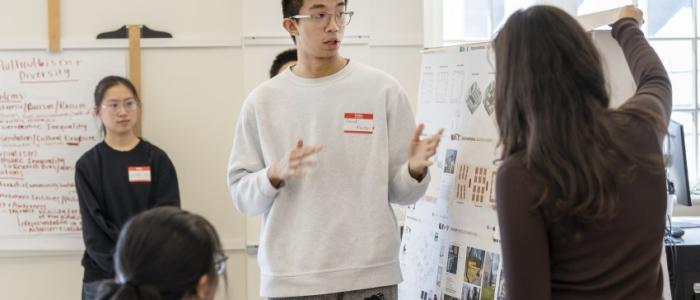\
\
Statistics + Data Science Events](https://stat.cornell.edu/statistics-data-science-events)
Featured News
-------------
[VIEW ALL NEWS](https://www.cs.cornell.edu/news-stories/featured)
[Yahoo! Finance\
\
Thickstun discusses AI superintelligence with Yahoo Finance\
\
* Real-World Impact](https://finance.yahoo.com/news/silicon-valley-is-going-all-in-on-superintelligent-ai-and-theres-plenty-of-hype-181539285.html?guccounter=1)
[\
\
Cornell Chronicle\
\
National Academy of Sciences honors Bala and Ginsberg\
\
* Alumni News](https://news.cornell.edu/stories/2025/11/portraits-honor-8-cornell-faculty-new-heroes)
[\
\
Cornell Chronicle\
\
$10M gift to Cornell Bowers supports AI advancement\
\
* Alumni News\
* Real-World Impact\
* Student Experience](https://news.cornell.edu/stories/2025/11/10m-gift-cornell-bowers-supports-ai-advancement)
[VIEW ALL NEWS](https://www.cs.cornell.edu/news-stories/featured)
---
# Unknown
CURRICULUM VITAE KAVITA BALA Provost kavitabala@cornell.edu Professor of Computer Science 300 Day Hall Cornell University http://www.cs.cornell.edu/∼kb/ Ithaca, New York 14853 http://provost.cornell.edu Bio: Kavita Bala, a computer scientist, entrepreneur, and professor, became the 17th provost of Cornell Uni- versity on January 1, 2025. She brings a distinguished record of leadership and scholarship to the role. Prior to her appointment, Bala served as the inaugural dean of the Cornell Ann S. Bowers College of Computing and Information Science and as chair of the department of Computer Science. Her foundational research in computer vision, computer graphics, and artificial intelligence has been recognized by election to the American Academy of Arts & Sciences and by induction as a Fellow of the Association for Computing Machinery (ACM). As dean, Bala secured the naming gift for the Cornell Bowers College, led a significant expansion of faculty to support the college’s rapid growth, and launched construction of a new 135,000-square-foot building designed to house robotics labs, experiential learning spaces, and faculty offices. Her leadership helped position the college as a national leader. As the lead dean of the Cornell AI Initiative, Bala advanced key academic programs, including the creation of new minors in AI and AI in Society, and helped establish the Schmidt AI in Science postdoctoral program at Cornell. She also co-led a university-wide task force that developed guidelines for the responsible use of generative AI in education and learning. Bala’s research has made fundamental contributions to image understanding, including the recognition of materials, styles, and object attributes; the modeling of complex materials; and the use of crowdsourced training data. Her groundbreaking work on style recognition using deep learning led to her co-founding a successful visual search AI startup. In addition to numerous teaching awards, Bala is a recipient of the SIGGRAPH Computer Graphics Achievement Award, the IIT Bombay Distinguished Alumnus Award, and is a Fellow of the SIGGRAPH Academy. Bala received a B.Tech. from the Indian Institute of Technology, Bombay, and an M.S. and a Ph.D. in Computer Science from the Massachusetts Institute of Technology. ACADEMIC CURRICULUM VITAE Education 1999 Ph.D., Massachusetts Institute of Technology, Computer Science 1995 S.M., Massachusetts Institute of Technology, Computer Science 1992 B.S., Indian Institute of Technology (Bombay), Computer Science Academic Appointments 2025–present Provost, Cornell University 2020–2024 Dean, Cornell Bowers College of Computing and Information Science 2018–2020 Chair, Department of Computer Science, Cornell University 2015–present Professor, Department of Computer Science, Cornell University 2009–2015 Associate Professor, Department of Computer Science, Cornell University 2002–2009 Assistant Professor, Department of Computer Science, Cornell University Awards 2025 Elected to American Academy of Arts & Sciences 2025 Test-of-Time Award, SIGGRAPH (for SIGGRAPH 2015 paper) 2021 IIT Bombay Distinguished Alumnus Award 2020 ACM SIGGRAPH Computer Graphics Achievement Award, citation 2020 Fellow, ACM SIGGRAPH Academy, citation 2019 Fellow, Association for Computing Machinery (ACM), citation 2015, 09, 06 Excellence in Teaching Awards (Fiona Ip Li ’78 and Donald Li ’75, James and Mary Tien) 2014 Best paper award, Computational Aesthetics 2014 CACM Research Highlight (best paper invited from SIGGRAPH 2011) 2009 CACM Research Highlight (best paper invited from PLDI 2009) Boards 2024–present Board, Sciencenter 2021–present Board of Trustees, Toyota Technological Institute, Chicago 2021–2025 Board member, ColorStack Other Related Experience 2015–2018 Co-founder and Chief Scientist, GrokStyle (acquired by Facebook) 2010–2011 Visiting Research Scientist, CSAIL, Massachusetts Institute of Technology 1999–2002 Post-Doctoral Researcher, Program of Computer Graphics, Cornell University Professional Service AWARD COMMITTEES 2024–present SIGGRAPH Technical Award Committee Chair 2021–2026 SIGGRAPH PhD Thesis Award Committee 2021–2027 SIGGRAPH Academy Selection Committee E DITORSHIPS 2015–2018 Editor-in-Chief, ACM Transactions on Graphics 2018–2020 Senior Associate Editor, ACM Transactions on Graphics 2013–2015 Senior Associate Editor, ACM Transactions on Graphics 2012–2013 Associate Editor, ACM Transactions on Graphics 2012–2015 Associate Editor, Computer Graphics Forum 2008–2012 Associate Editor, IEEE Transactions on Visualization and Computer Graphics P ROGRAM CHAIR 2021 Co-Chair, International Conference on Computational Photography 2011 Chair, SIGGRAPH Asia Technical Papers 2012 Co-Chair, Indian Conference on Vision, Graphics and Image Processing 2010 Co-Chair, Pacific Graphics, with Pierre Alliez and Kun Zhou 2005 Co-Chair, Eurographics Symposium on Rendering, with Phil Dutré A DVISORY BOARDS 2015–2023 SIGGRAPH Papers Advisory Group (PAG) 2012—2023 SIGGRAPH Asia Papers Advisory Board 2015—2024, 12, 11 SIGGRAPH Papers Advisory Board 2008–2012 Steering Committee, Eurographics Symposium on Rendering S ELECTED REVIEW COMMITTEES 2023 Wisconsin School of Computer, Data and Information Sciences 2023 University of Toronto, Computer Science Department Review 2023–20 Max Planck Institute, Saarbrucken 2023 Committee of Visitors, CISE Directorate, NSF 2022 University of Maryland, Computer Science Department Review 2022 Review King Abdullah University of Science and Technology (KAUST) S ELECTED PROGRAM COMMITTEES 2022, 20, 18 Area Chair, Computer Vision and Pattern Recognition (CVPR) 2021 Area Chair, International Conference on Computer Vision (ICCV) 2018, 17, 15, 12, 11, 09 SIGGRAPH Papers Committee 07, 06, 04, 03 2016, 14, 10, 08 SIGGRAPH Asia Papers Committee 2014–12, 09–08, 06–02 Eurographics Symposium on Rendering 2015, 13, 09, 08, 07, 04 Pacific Graphics Publications 1 Books, Book Chapters and Edited Volumes 1. Philip Dutré, Kavita Bala, Philippe Bekaert. Advanced Global Illumination, Second Edition, A K Peters Ltd., ISBN 1-56881-307-4, 2006. 2. Philip Dutré, Philippe Bekaert, Kavita Bala. Advanced Global Illumination, First Edition, A K Peters Ltd., ISBN 1-568811-77-2, 2003. 3. Fabio Pellacini, Miloš Hašan, Kavita Bala. Interactive Cinematic Relighting with Global Illumina- tion, Chapter 9, pp 183–202, GPU Gems 3, Addison Wesley, 2007. 4. Kavita Bala, Phil Dutré (Editors). Rendering Techniques, Springer Verlag, ISBN 3-905673-23-1, 2005. Invited Papers 5. Daniel Cabrini Hauagge, Scott Wehrwein, Kavita Bala, Noah Snavely. Photometric Ambient Occlu- sion for Intrinsic Image Decomposition, Special Issue of PAMI (extension of CVPR 2013 paper), April 2016. 6. Shuang Zhao, Wenzel Jakob, Steve Marschner, Kavita Bala. Building Volumetric Appearance Models of Fabric using Micro CT Imaging, Research Highlights, Communications of the ACM, 2014 (invited extension to SIGGRAPH 2011 paper), 57(11): 98–105. 7. Kavita Bala. Modeling Cloth at Micron Resolution, Measuring, Modeling, and Reproducing Mate- rial Appearance (Invited Paper), Volume 9018: 1–6, 2014. 8. Kavita Bala. Predictive Rendering for Accurate Material Perception, Human Vision and Electronic Imaging (HVEI) (Invited Paper), Volume 82910A: 1–6, 2012. 9. Milind Kulkarni, Keshav Pingali, Bruce Walter, Ganesh Ramanarayanan, Kavita Bala, Paul Chew. Optimistic Parallelism Requires Abstractions, Research Highlights, Communications of the ACM, 2009 (invited extension to PLDI 2007 paper). Refereed Journal Publications 10. Mitchell J.P. van Zuijlen, Hubert Lin, Kavita Bala, Sylvia C. Pont, Maarten W.A. Wijntjes. Materi- als In Paintings (MIP): An interdisciplinary dataset for perception, art history, and computer vision, Public Library Of Science (PLOS) 2021. 11. Scott Wehrwein, Kavita Bala, Noah Snavely. Scene Summarization via Motion Normalization, IEEE Transactions on Computer Graphics and Visualization, April 2021, pp. 2495-2501, vol. 27. 12. Fujun Luan, Shuang Zhao, Kavita Bala, Ioannie Gkioulekas. Langevin Monte Carlo Rendering with Gradient-based Adaptation, Transactions on Graphics (SIGGRAPH), 2020. 13. Bei Xiao, Shuang Zhao, Ioannie Gkioulekas, Wenyan Bi, Kavita Bala. Effect of geometric sharpness on translucent material perception, Journal of Vision, 2020. 1 In 2003, SIGGRAPH proceedings began appearing as a special issue of the journal Transactions on Graphics (TOG), so SIGGRAPH papers are reported as SIGGRAPH, ACM Transactions on Graphics. SIGGRAPH papers prior to 2003 are listed under conference publications. In 2008, Eurographics and the Eurographics Symposium on Rendering began appearing as special issues of the journal Computer Graphics Forum, so these papers are reported as Eurographics/Eurographics Symposium on Rendering, Computer Graphics Forum. 14. Balazs Kovacs, Peter O’Donovan, Kavita Bala, Aaron Hertzmann. Context-Aware Search for Graphic Design, Transactions on Visualization and Computer Graphics, 2018. 15. Fujun Luan, Sylvain Paris, Eli Shechtman, Kavita Bala. Deep Painterly Harmonization, EGSR, Computer Graphics Forum, 2018. 16. Pramook Khungurn, Rundong Wu, James Noeckel, Steve Marschner, Kavita Bala. Fast Rendering of Fabric Micro-Appearance Models Under Directional and Spherical Gaussian Lights, SIGGRAPH Asia, Nov 2017. 17. Fujun Luan, Shuang Zhao, Kavita Bala. Fiber-Level On-the-Fly Procedural Textures, Computer Graphics Forum (EGSR), June 2017. 18. Nicolas Bonneel, Balazs Kovacs, Sylvain Paris, Kavita Bala. Intrinsic Decompositions for Image Editing, Computer Graphics Forum (Eurographics State of the Art Reports), April 2017. 19. Shuang Zhao, Fujun Luan, Kavita Bala. Fitting Procedural Yarn Models for Realistic Cloth Ren- dering, To appear in SIGGRAPH 2016, July 2016. 20. Ivaylo Boyadzhiev, Kavita Bala, Sylvain Paris, Edward Adelson. Band-Sifting Decomposition for Image Based Material Editing, ACM Transactions on Graphics, 34(5), Nov 2015, 163:1–16. 21. Pramook Khungurn, Daniel Schroeder, Shuang Zhao, Kavita Bala, Steve Marschner. Matching Micro-Appearance Models to Real Fabrics, ACM Transactions on Graphics 35(1), Dec 2015, 1:1– 26. 22. Sean Bell, Kavita Bala. Learning visual similarity for product design with convolutional neural networks, SIGGRAPH July 2015, ACM Transactions on Graphics, 34(4), Nov 2015, 98:1–10. 23. Sean Bell, Kavita Bala, Noah Snavely. Intrinsic Images in the Wild, SIGGRAPH 2014, ACM Transactions on Graphics, 33(4), 159:1–12, 2014. 24. Shuang Zhao, Ravi Ramamoorthi, Kavita Bala. High-Order Similarity Relations in Radiative Trans- fer, SIGGRAPH 2014, ACM Transactions on Graphics, 33(4), 104:1–12, 2014. 25. Rui Wang, Xianjin Yang, Yazhen Yuan, Wei Chen, Kavita Bala, Hujun Bao. Automatic Shader Simplification using Surface Signal Approximation, SIGGRAPH Asia 2014, ACM Transactions on Graphics, 33(6), 226:1–11, 2014. 26. Daniel Cabrini Hauagge, Scott Wehrwein, Kavita Bala, Noah Snavely. Photometric Ambient Oc- clusion, Special Issue of PAMI (invited extension of CVPR 2013 paper) (to appear). 27. Laurent Belcour, Kavita Bala, Cyril Soler. A Local Frequency Analysis of Light Scattering and Absorption, ACM Transactions on Graphics, 33(5), 163:1–17, 2014. 28. Bei Xiao, Bruce Walter, Ioannis Gkioulekas, Todd Zickler, Edward Adelson, Kavita Bala. Looking against the light: How perception of translucency depends on lighting direction, Journal of Vision (JOV) 14(3), 1–17, 2014. 29. Ioannis Gkioulekas, Shuang Zhao, Kavita Bala, Todd Zickler, Anat Levin. Inverse Volume Ren- dering with Material Dictionaries, SIGGRAPH Asia 2013, ACM Transactions on Graphics, 32(6), 162:1–13, 2013. 30. Sean Bell, Paul Upchurch, Noah Snavely, Kavita Bala. OpenSurfaces: A richly annotated catalog of surface appearance, SIGGRAPH 2013, ACM Transactions on Graphics, 32(4), 111:1–17, 2013. 31. Shuang Zhao, Miloš Hašan, Ravi Ramamoorthi, Kavita Bala. Modular Flux Transfer: Efficient Rendering of High-Resolution Volumes with Repeated Structures, SIGGRAPH 2013, ACM Trans- actions on Graphics, 32(4), 131:1–12, 2013. 32. Ivaylo Boyadzhiev, Sylvain Paris, Kavita Bala User-Assisted Image Compositing for Photographic Lighting, SIGGRAPH 2013, ACM Transactions on Graphics, 32(4), 36:1–12, 2013. 33. Ioannis Gkioulekas, Bei Xiao, Shuang Zhao, Ted Adelson, Todd Zickler, Kavita Bala. Under- standing the Role of Phase Function in Translucent Appearance, Transactions on Graphics, 32(5), 147:1–19, 2013. 34. Ivaylo Boyadhziev, Kavita Bala, Sylvain Paris, Fredo Durand. User-Guided White Balance for Mixed Lighting Conditions, SIGGRAPH Asia 2012, ACM Transactions on Graphics, 31(6), 200:1– 10, 2012. 35. Bruce Walter, Pramook Khungurn, Kavita Bala. Bidirectional Lightcuts, SIGGRAPH 2012, ACM Transactions on Graphics, 31(4), 59:1–11, 2012. 36. Shuang Zhao, Wenzel Jakob, Steve Marschner, Kavita Bala. Structure-Aware Synthesis for Predic- tive Woven Fabric Appearance, SIGGRAPH 2012, ACM Transactions on Graphics, 31(4), 75:1–10, 2012. 37. Adrian Jarabo, Tom Van Eyck, Veronica Sundstedt, Kavita Bala, Diego Gutierrez, Carol O’ Sullivan. Crowd Light: Evaluating the Perceived Fidelity of Illuminated Dynamic Scenes, Eurographics (EG), Computer Graphics Forum, 31(2), 565–574, 2012. 38. Nikhil Naik, Shuang Zhao, Andreas Velten, Ramesh Raskar, Kavita Bala. Single View Reflectance Capture using Multiplexed Scattering and Time-of-flight Imaging, SIGGRAPH Asia 2011, ACM Transactions on Graphics, 30(6), 171:1–10, 2011. 39. Shuang Zhao, Wenzel Jakob, Steve Marschner, Kavita Bala. Building Volumetric Appearance Models of Fabric using Micro CT Imaging, SIGGRAPH 2011, ACM Transactions on Graphics, 30(4), 44:1–10, 2011. 40. Adam Arbree, Bruce Walter, Kavita Bala. Heterogeneous Subsurface Scattering Using the Finite Element Method, Transactions on Visualization and Computer Graphics (TVCG), 17(7), 956–969, 2011. 41. Tomas Davidovic, Jaroslav K ˇ rivánek, Miloš Hašan, Philipp Slusallek, Kavita Bala. Combining Global and Local Virtual Lights for Detailed Glossy Illumination, SIGGRAPH Asia 2010, ACM Transactions on Graphics, 29(6), 143:1–8, 2010. 42. Jaroslav K ˇ rivánek, James Ferwerda, Kavita Bala. Effects of Global Illumination Approximations on Material Appearance, SIGGRAPH 2010, ACM Transactions on Graphics, 29(4), 112:1–10, 2010. 43. Wenzel Jakob, Adam Arbree, Jon Moon, Kavita Bala, Steve Marschner. A radiative transfer frame- work for rendering materials with anisotropic structure, SIGGRAPH 2010, ACM Transactions on Graphics, 29(4), 53:1–13, 2010. 44. Edgar Velazquez-Armendariz, Shuang Zhao, Miloš Hašan, Bruce Walter, Kavita Bala. Automatic Bounding of Programmable Shaders for Efficient Global Illumination, SIGGRAPH Asia 2009, ACM Transactions on Graphics, 28(5), 142:1–9, 2009. 45. Miloš Hašan, Jaroslav K ˇ rivánek, Bruce Walter, Kavita Bala. Virtual Spherical Lights for Many- Light Rendering of Glossy Scenes, SIGGRAPH Asia 2009, ACM Transactions on Graphics, 28(5), 143:1–6, 2009. 46. Bruce Walter, Shuang Zhao, Nicolas Holzschuch, Kavita Bala. Single Scattering in Refractive Media with Triangle Mesh Boundaries, SIGGRAPH 2009, ACM Transactions on Graphics, 28(3), 92:1–8, 2009. 47. Ganesh Ramanarayanan, James Ferwerda, Kavita Bala. Perception of Complex Aggregates, SIG- GRAPH 2008, ACM Transactions on Graphics, 27(3): 60:1–10, 2008. 48. Miloš Hašan, Edgar Velazquez-Aremendariz, Fabio Pellacini, Kavita Bala. Tensor Sampling for Rendering Many-Light Animations, Eurographics Symposium on Rendering (EGSR), Computer Graphics Forum, 27(4): 1105–1114, 2008. 49. Adam Arbree, Bruce Walter, Kavita Bala. Single-pass Scalable Subsurface Rendering with Light- cuts, Eurographics (EG), Computer Graphics Forum, 27(2):507–516, 2008. 50. Milind Kulkarni, Keshav Pingali, Ganesh Ramanarayanan, Bruce Walter, Kavita Bala, L. Paul Chew. Optimistic Parallelism Benefits from Data Partitioning, Architectural Support for Programming Languages and Operating Systems (ASPLOS), 42(2): 233–243, 2008. 51. Ganesh Ramanarayanan, James Ferwerda, Bruce Walter, Kavita Bala. Visual Equivalence: Towards a new standard for Image Fidelity, SIGGRAPH 2007, ACM Transactions on Graphics, 26(3):75:1– 11, 2007. 52. Miloš Hašan, Fabio Pellacini, Kavita Bala. Matrix Row-Column Sampling for the Many-Light Problem, SIGGRAPH 2007, ACM Transactions on Graphics, 26(3): 26:1–10, 2007. 53. Ganesh Ramanarayanan, Kavita Bala. Constrained Texture Synthesis via Energy Minimization, IEEE Transactions on Visualization and Computer Graphics (TVCG), 13(1):167–178, 2007. 54. Bruce Walter, Adam Arbree, Kavita Bala, Donald Greenberg. Multidimensional Lightcuts, SIG- GRAPH 2006, ACM Transactions on Graphics, 25(3):1081–1088, 2006. 55. Miloš Hašan, Fabio Pellacini, Kavita Bala. Direct-to-Indirect Transfer for Cinematic Relighting, SIGGRAPH 2006, ACM Transactions on Graphics, 25(3):1089–1097, 2006. 56. Mike Donikian, Bruce Walter, Kavita Bala, Sebastian Fernandez, Donald Greenberg. Accurate Direct Illumination Using Iterative Adaptive Sampling, IEEE Transactions on Visualization and Computer Graphics 2006 (TVCG), 12(3):353–364, 2006. 57. Bruce Walter, Sebastian Fernandez, Adam Arbree, Kavita Bala, Michael Donikian, Donald Green- berg. Lightcuts: a Scalable Approach to Illumination, SIGGRAPH 2005, ACM Transactions on Graphics, 24(3):1098–1107, 2005. 58. Kavita Bala, Bruce Walter, Donald Greenberg. Combining Edges and Points for Interactive High- Quality Rendering, SIGGRAPH 2003, ACM Transactions on Graphics, 22(3):631–640, 2003. 59. Kavita Bala, Julie Dorsey, Seth Teller. Radiance Interpolants for Accelerated Bounded-Error Ray Tracing, ACM Transactions on Graphics (TOG), 18(3):213–256, 1999. 60. Krishna Bala, Thomas Stern, David Simchi-Levi, Kavita Bala. Algorithms for Routing in Linear Lightwave Networks, IEEE/ACM Transactions on Networking, 3(4):459–469, 1995. Refereed Conference and Workshop Publications 61. Utkarsh Mall, Cheng Perng Phoo, Mia Chiquier, Bharath Hariharan, Kavita Bala, Carl Vondrick. DiSciPLE: Learning Interpretable Programs for Scientific Visual Discovery, Conference on Com- puter Vision and Pattern Recognition (CVPR) 2025. 62. Shreelekha Revankar, Cheng Perng Phoo, Utkarsh Mall, Bharath Hariharan, Kavita Bala. Scale- Aware Recognition in Satellite Images under Resource Constraints, International Conference on Learning Representations (ICLR) 2025. 63. Hangyu Zhou, Chia-Hsiang Kao, Cheng Perng Phoo, Utkarsh Mall, Bharath Hariharan, Kavita Bala. AllClear: A Comprehensive Dataset and Benchmark for Cloud Removal in Satellite Im- agery, Conference on Neural Information Processing Systems, NeurIPS ’25 (Track on Datasets and Benchmarks). 64. Chia Hsiang Kao, Wenting Zhao, Shreelekha Revankar, Samuel Speas, Snehal Bhagat, Rajeev Datta, Cheng Perng Phoo, Utkarsh Mall, Carl Vondrick, Kavita Bala, Bharath Hariharan. Towards LLM Agents for Earth Observation, Terrabytes, ICML Workshop, 2025. 65. Utkarsh Mall, Cheng Perng Phoo, Meilin Kelsey Liu, Carl Vondrick, Bharath Hariharan, Kavita Bala. Remote Sensing Vision-Language Foundation Models without Annotations via Ground Remote Alignment, International Conference on Learning Representations (ICLR) 2024. 66. Utkarsh Mall, Cheng Perng Phoo, Meilin Kelsey Liu, Carl Vondrick, Bharath Hariharan, Kavita Bala. Remote Sensing Vision-Language Foundation Models without Annotations via Ground Remote Alignment, International Conference on Learning Representations (ICLR) 2024. 67. Utkarsh Mall, Bharath Hariharan, Kavita Bala. Change-Aware Sampling and Contrastive Learning for Satellite Images, Computer Vision and Pattern Recognition (CVPR), 2023. 68. Utkarsh Mall, Bharath Hariharan, Kavita Bala. Change Event Dataset for Discovery from Spatio- temporal Remote Sensing Imagery, Neural Information Processing Systems (NeurIPS), Datasets and Benchmarks Track, 2022. 69. Utkarsh Mall, Bharath Hariharan, Kavita Bala. Zero-Shot Learning Using Multimodal Descriptions, Computer Vision and Pattern Recognition L3D-IVU Workshop (CVPR L3D-IVU), 2022. 70. Xi Deng, Fujun Luan, Bruce Walter, Kavita Bala, Steve Marschner. Reconstructing Translucent Objects Using Differentiable Rendering, SIGGRAPH (conference track), 2022. 71. Utkarsh Mall, Kavita Bala, Tamara Berg, Kristen Grauman. Discovering Underground Maps from Fashion, Winter Conference on Applied Computer Vision (WACV), 2022. 72. Utkarsh Mall, Bharath Hariharan, Kavita Bala. Field-Guide Inspired Zero-Shot Learning, Interna- tional Conference on Computer Vision (ICCV), 2021. 73. Hadi AlZayer, Hubert Lin, Kavita Bala. AutoPhoto: Aesthetic Photo Capture using Reinforcement Learning, International Conference on Intelligent Robots and Systems (IROS), 2021. 74. Fujun Luan, Shuang Zhao, Kavita Bala, Zhao Dong. Unified Shape and SVBRDF Recovery using Differentiable Monte Carlo Rendering, Eurographics Symposium on Rendering (EGSR), 2021. 75. Kai Zhang, Fujun Luan, Qianqian Wang, Kavita Bala, Noah Snavely. PhySG: Inverse Rendering with Spherical Gaussians for Physics-based Material Editing and Relighting, Computer Vision and Pattern Recognition (CVPR), 2021. 76. Jung Hyun Cho, Utkarsh Mall, Kavita Bala, Bharath Hariharan. PiCIE: Unsupervised Seman- tic Segmentation using Invariance and Equivariance in Clustering, Computer Vision and Pattern Recognition (CVPR), 2021. 77. Hubert Lin, Mitchell Van Zuijlen, Maarten W. A. Wijntes, Sylvia C. Point, Kavita Bala What Can Style Transfer and Paintings Do For Model Robustness? , Computer Vision and Pattern Recognition (CVPR), 2021. 78. Kai Zhang, Fujun Luan, Qianqian Wang, Kavita Bala, Noah Snavely. PhySG: Inverse Rendering with Spherical Gaussians for Physics-based Material Editing and Relighting, Computer Vision and Pattern Recognition (CVPR), 2021. 79. Jung Hyun Cho, Utkarsh Mall, Kavita Bala, Bharath Hariharan. PiCIE: Unsupervised Semantic Segmentation using Invariance and Equivariance in Clustering, Computer Vision and Pattern Recognition (CVPR), 2021. 80. Hubert Lin, Mitchell Van Zuijlen, Maarten W. A. Wijntes, Sylvia C. Point, Kavita Bala What Can Style Transfer and Paintings Do For Model Robustness? , Computer Vision and Pattern Recognition (CVPR), 2021. 81. Hubert Lin, Yuntao Han, Jacopo Banfi, Kavita Bala, Mark Campbell. DeepSemanticHPPC: Hypothesis-based Planning over Uncertain Semantic Point Clouds, Interna- tional Conference on Robotics and Automation (ICRA), 2020. 82. Utkarsh Mall, Kevin Matzen, Bharath Hariharan, Noah Snavely, Kavita Bala. GeoStyle: Discover- ing Fashion Trends and Events, International Conference on Computer Vision (ICCV), 2019. 83. Hubert Lin, Paul Upchurch, Kavita Bala. Block Annotation: Better Image Annotation with Sub- Image Decomposition, International Conference on Computer Vision (ICCV), 2019. 84. Hubert Lin, Melinos Averkiou, Evangelos Kalogerakis, Balazs Kovacs, Siddhant Ranade, Vladimir Kim, Siddhartha Chaudhuri, Kavita Bala. Learning Material-Aware Local Descriptors for 3D Shapes, 3DV, 2018. 85. Bei Xiao, Wenyan Bi, Shuang Zhao, Ioannis Gkioulekas, Kavita Bala. Does geometric sharpness affect the perception of translucent materials?, VSS, 2018. 86. Fujun Luan, Sylvain Paris, Eli Shechtman, and Kavita Bala. Deep Photo Style Transfer, CVPR 2017. 87. Paul Upchuch, Jacob Gardner, Robert Pless, Noan Snavely, Kavita Bala, and Kilian Weinberger. Deep Feature Interpolation for Image Content Changes, CVPR 2017. 88. Balazs Kovacs, Sean Bell, Noah Snavely, and Kavita Bala. Shading Annotations in the Wild, CVPR 2017. 89. Paul Upchurch, Daniel Sedra, Andew Mullen, Haym Hirsh, Kavita Bala. Interactive Consensus Games for Labeling Images, Human Computation (HCOMP), 2016. 90. Ivaylo Boyadzhiev, Jiawen Chen, Sylvain Paris, Kavita Bala. Do-It-Yourself Lighting Design for Product Videography, International Conference on Computational Photography (ICCP), (to appear) May 2016. 91. Sean Bell, C. Lawrence Zitnick, Kavita Bala, Ross Girshick. Inside-Outside Net: Detecting Objects in Context with Skip Pooling and Recurrent Neural Networks, To appear in Conference on Computer Vision and Pattern Recognition (CVPR), 2016. 92. Andreas Veit, Balazs Kovacs, Sean Bell, Julian McAuley, Kavita Bala, Serge Belongie. Learning Visual Clothing Style with Heterogeneous Dyadic Co-occurrences, International Conference on Computer Vision (ICCV), Dec 2015. 93. Scott Wehrwein, Kavita Bala, Noah Snavely. Shadow Detection and Sun Direction in Photo Col- lections, International Conference on 3D Vision (3DV), Nov 2015. 94. Sean Bell, Paul Upchurch, Noah Snavely, Kavita Bala. Material Recognition in the Wild with the Materials in Context Database, Conference on Computer Vision and Pattern Recognition (CVPR) 2015, Jun 2015. 95. Ioannis Gkioulekas, Bruce Walter, Kavita Bala, Ted Adelson, Todd Zickler. On the Appearance of Translucent Edges, Conference on Computer Vision and Pattern Recognition (CVPR) 2015, Jun 2015. 96. Manohar Srikanth, Kavita Bala, Fredo Durand. Computational Rim Illumination with Aerial Robots, Proceedings of the Workshop on Computational Aesthetics 2014, (Best Paper Award), 57-66. 97. Daniel Cabrini Hauagge, Scott Wehrwein, Paul Upchurch, Noah Snavely, Kavita Bala. Reasoning about Photo Collections using Models of Outdoor Illumination, British Machine Vision Conference, 2014. 98. Daniel Cabrini Hauagge, Scott Wehrwein, Noah Snavely, Kavita Bala. Reasoning about Photo Collections using Outdoor Illumination Models, Scene Understanding Workshop, 2014. 99. Daniel Cabrini Hauagge, Scott Wehrwein, Kavita Bala, Noah Snavely. Photometric Ambient Occlu- sion, IEEE Conference on Computer Vision and Pattern Recognition (CVPR) (Oral presentation), 2515–2522, 2013. 100. Bei Xiao, Ioannis Gkioulekas, Asher Dunn, Shuang Zhao, Todd Zickler, Ted Adelson, Kavita Bala. Effects of shape and color on the perception of translucency, Vision Science Society (VSS), 2012 101. James Ferwerda, Ganesh Ramanarayanan, Bruce Walter, Kavita Bala. Visual Equivalence: an object-based approach to image quality, Proceedings of IS&T 16th Color Imaging Conference (CIC16), (in press) 2008. 102. Bruce Walter, Kavita Bala, Milind Kulkarni, Keshav Pingali. Fast Agglomerative Clustering for Rendering, Proceedings of Interactive Ray Tracing, (in press) 2008. 103. Milind Kulkarni, Patrick Carribault, Keshav Pingali, Ganesh Ramanarayanan, Bruce Walter, Kavita Bala, L. Paul Chew. Scheduling Strategies for Optimistic Parallel Execution of Irregular Programs, Proceedings of Symposium on Parallelism in Algorithms and Architectures (SPAA), 2008. 104. Ganesh Ramanarayanan, Kavita Bala, James Ferwerda, Bruce Walter. Dimensionality of Visual Complexity in Computer Graphics Scenes, Proceedings of SPIE Human Vision and Electronic Imaging (HVEI), vol. 6806, 0E:1–10, 2008. 105. Milind Kulkarni, Keshav Pingali, Bruce Walter, Ganesh Ramanarayanan, Kavita Bala, Paul Chew. Optimistic Parallelism Requires Abstractions, Proceedings of Programming Languages Design and Implementation (PLDI) 2007, 211–222, 2007. 106. Edgar Velazquez-Armendariz, Eugene Lee, Bruce Walter, Kavita Bala. Rendering the Render Cache and the Edge-and-Point Image on Graphics Hardware, Proceedings of Graphics Interface 2006, 211–217, 2006. 107. Kavita Bala, Bruce Walter, James Ferwerda. Information-Preserving Imaging for Heterogeneous Networked Displays, Workshop on Information Visualization and Interaction Techniques for Col- laboration across Multiple Displays 2006, 2006. 108. Ganesh Ramanarayanan, Kavita Bala, Bruce Walter. Feature-Based Textures, Proceedings of the Second Eurographics Symposium on Rendering (EGSR), 265–274, 2004. 109. Ryan Ismert, Kavita Bala, Donald Greenberg. Detail Synthesis for Image-Based Texturing, Sym- posium on Interactive 3D Graphics (I3D), 171–176, 2003. 110. Sebastian Fernandez, Kavita Bala, Donald Greenberg. Local Illumination Environments for Direct Lighting Acceleration, Thirteenth Eurographics Workshop on Rendering, 7–14, 2002. 111. Randima Fernando, Sebastian Fernandez, Kavita Bala, Donald Greenberg. Adaptive Shadow Maps, Proceedings of SIGGRAPH 2001, Annual Conference Series, 387–390, 2001. 112. Kavita Bala, Julie Dorsey, Seth Teller. Interactive Scene Editing Using Ray Segment Trees, Tenth Eurographics Workshop on Rendering, 31–44, 1999. 113. Seth Teller, Kavita Bala, Julie Dorsey. Conservative Radiance Interpolants for Ray Tracing, Seventh Eurographics Workshop on Rendering, 257–268, 1996. 114. Kavita Bala, Frans Kaashoek, William Weihl. Software Prefetching and Caching for Translation Lookaside Buffers, First Symposium on Operating System Design and Implementation, 243–253, 1994. 115. Krishna Bala, Thomas Stern, Kavita Bala. Algorithms for Routing in Linear Lightwave Networks, Tenth Annual Conference of IEEE Infocom 1991, 1–9, 1991. 116. Krishna Bala, Thomas Stern, Kavita Bala. A Minimum Interference Routing Algorithm for a Linear Lightwave Network, IEEE Global Communications Conference (Globecom) 1991, 1264–1269, 1991. Selected Keynotes and Invited Talks • Distinguished Invitational Spring Lecture, Phi Beta Kappa, 2024. • Keynote, Generative AI in Education and Research, Joint MIT/Harvard Symposium, 2024. • Distinguished Speaker Series, Institute for Artificial Intelligence and Data Science, University of Buffalo, 2023. • Keynote, Computer Vision and Pattern Recognition (CVPR), 2022 (invited audience, 10,000+). • Keynote, Human-Centered AI (HAI) Spring Conference on Key Advances in Artificial Intelligence, Stanford, 2022. • Invited Speaker, Computer Vision for Fashion, Art, and Design Workshop, CVPR, 2021. • Keynote, Optics Fabrication (2021), Optical Design and Fabrication (2021). • Achievement Award Talk, SIGGRAPH, 2020. • Keynote, Eurographics, 2020. • Distinguished Lecture, Purdue University, Sep, 2019. • Keynote, International Conference on Computational Photography, May, 2019. • Keynote, Pacific Graphics, October 2018. • Keynote, Symposium on Virtual Reality and Augmented Reality, Shanghai, October 2018. • Keynote, Graphics Interface, May 2018. • Keynote, Winter Applied Computer Vision, March 2018. • Keynote, King Abdullah University of Science and Technology (KAUST), 2017. • Keynote, Fiber Society’s 75th Anniversary meeting, 2016. • Invited Talk, Perceptual Representations of Illumination, Shape and Materials, Raischholzhausen, Germany, 2016. • Invited Talk, Royal Society International Scientific Seminar, United Kingdom, 2016. • Univ of Maryland, Computer Science Department Distinguished Seminar Series, Nov 2015. • William and Mary, Computer Science Department Colloquium, Oct 2014. • Invited Talk, Future of Shitsukan (Material Perception) Research, Tokyo, Japan, July 2014. • Invited Talk, Proctor and Gamble, 2012. • Invited Talk, Human Vision and Electronic Imaging (HVEI), Jan 2012. • Distinguished Speaker, CS Seminar, UC Irvine, Mar 2012. • Distinguished Lecture, Jones Seminar in Science Technology and Society, Dartmouth, 2010. • Computer Science Department Colloquium, Harvard University, 2009, 2006. • Computer Science Department Colloquium, Yale University, 2008. • Kalachakra Mandala: Constructing a 3D Model. Johnson Museum, Tibet Lecture Series, Oct 2007. • ACM Reflections, University of Illinois Urbana-Champagne, Oct 2005. Selected Media • AI Initiative : WSJ: AI in academia vs. industry • Generation Zero IIT Bombay \[Who said she can’t, citation\] • Robotic Photographer: \[ DIYPhotography, engadget, petapixel, ...\] • Women in computing (Oral History) by IEEE. • GrokStyle technology: example, Forbes, TechCrunch, entrepreneurship. • Deep Photo Style Transfer : github (10k+ stars, and 1.4k forks). Articles : Verge, DP Review, PetaPixel. #2 on the 30 Amazing Machine Learning Projects for the Past Year (v.2018). • StreetStyle and AI in fashion : CNN Money, Technology Review, Mobile Mag, ... • GrokStyle selected to CB Insights 2017 AI 100 list of most promising private AI companies. • Articles titled “Shazam for Furniture” or “Where can I buy that chair” first run in Cornell Daily Sun (Jan 2017) and Cornell Chronicle (Aug 2016), and picked up by aibusiness.org, Furniture Today, phys.org, sciencemag.com, ... • Lit Robot, July 2014: MIT News, NBC News, Forbes, Boston Business Journal, Petapixel, ... • Light Compositing, 2013: ACM Technews, Petapixel, phys.org, Engadget, ... • SIGGRAPH 2012 Proceedings Image cover. • CG World Japan article on structure-aware synthesis for fabric designs (2012), time-of-flight BRDF measurement, 2011. • Fabricating Fabric, Economist, 2011. • Review, Kalachakra Mandala installation at Rubin Museum of Art, NY Times, 2009. Selected Outreach 2021–2025 Board, ColorStack 2011 Installation, Asian Art Musem, San Francisco Video for Into the Land of Kalachakra, Demo reel for PBS TV show 2008 Installation, Rubin Museum of Art, New York City 2007 3D model of Kalachakra Mandala, collaboration with Namgyal Monastery In honor of the Dalai Lama’s visit to Cornell 2007 Installation, Bridging Worlds exhibition at Uris Library Installation, Tibet Day, Johnson Museum, Cornell Students and Post-Doctoral Researchers PhD Chair Hubert Lin, Fujun Luan, Paul Upchurch, Sean Bell, Ivaylo Boyadzhiev. Shuang Zhao, Miloš Hašan, Adam Arbree, Ganesh Ramanarayanan, Co-Chair Lekha Revankar (current), Rajeev Datta (current), Utkarsh Mall, Scott Wehrwein, Pramook Khungurn, Kevin Matzen, Kyle Wilson, Daniel Hauagge.
---
# News + Stories | Department of Computer Science | Cornell Bowers
[Skip to main content](https://www.cs.cornell.edu/news-stories/featured#main-content)
Bowers Menu
[](https://bowers.cornell.edu/)
What are you interested in?
Search

Computer Science
News + Stories
==============
The stories and research that connect people, information, and ideas.
Researchers create 3D interactive digital room from simple video
----------------------------------------------------------------
Cornell researchers have developed an AI-powered process that automatically transforms a short video of a room into an interactive, 3D simulation of the space.
[Read more](https://news.cornell.edu/stories/2025/06/researchers-create-3d-interactive-digital-room-simple-video)
Pause
Robot see, robot do: System learns after watching how-tos
---------------------------------------------------------
Bowers researchers have developed a new robotic framework powered by artificial intelligence that allows robots to learn tasks by watching a single how-to video.
[Read more](https://news.cornell.edu/stories/2025/04/robot-see-robot-do-system-learns-after-watching-how-tos)
Pause
Researchers put the shine on digitally rendered feathers
--------------------------------------------------------
Computer animators and video game designers may soon have a better way to create the purple-green sheen of a grackle’s wing, or the pink flash on a hummingbird’s throat, thanks to a new method for rendering iridescent feathers.
[Read more](https://news.cornell.edu/stories/2025/01/researchers-put-shine-digitally-rendered-feathers)
Research + Innovation
---------------------
[View all research stories](https://bowers.cornell.edu/news-stories?college_department%5B15%5D=15&field_focus_areas_target_id%5B1%5D=1)
[Cornell Bowers Newsletter - November 2025\
\
* Research + Innovation\
* Faculty Excellence\
* Student Experience](https://conta.cc/47JICr1)
[\
\
Cornell Chronicle\
\
Three new Thought Summits to explore AI and data science frontiers\
\
* Research + Innovation\
* Around the College](https://news.cornell.edu/stories/2025/11/three-new-thought-summits-explore-ai-and-data-science-frontiers)
[\
\
Jin and Lovelace named Google Ph.D. Fellows\
\
* Research + Innovation\
* Student Experience](https://www.cs.cornell.edu/news-stories/jin-and-lovelace-named-google-phd-fellows)
[View all research stories](https://bowers.cornell.edu/news-stories?college_department%5B15%5D=15&field_focus_areas_target_id%5B1%5D=1)
Student Experience
------------------
[Read all student stories](https://bowers.cornell.edu/news-stories/student-stories)
[\
\
Jin and Lovelace named Google Ph.D. Fellows\
\
* Research + Innovation\
* Student Experience](https://www.cs.cornell.edu/news-stories/jin-and-lovelace-named-google-phd-fellows)
[\
\
Students got game at annual video game showcase\
\
* Student Experience\
* Around the College](https://www.cs.cornell.edu/news-stories/students-got-game-annual-video-game-showcase)
[\
\
Students win summer awards to work on startups\
\
* Student Experience](https://news.cornell.edu/stories/2025/05/students-win-summer-awards-work-startups)
[Read all student stories](https://bowers.cornell.edu/news-stories/student-stories)
Faculty Excellence
------------------
[View all faculty news](https://bowers.cornell.edu/news-stories?college_department%5B15%5D=15&field_focus_areas_target_id%5B3%5D=3)
[Cornell Bowers Newsletter - November 2025\
\
* Research + Innovation\
* Faculty Excellence\
* Student Experience](https://conta.cc/47JICr1)
[\
\
Cornell Chronicle\
\
Grant to fund robotic mealtime system for people with disabilities\
\
* Faculty Excellence](https://news.cornell.edu/stories/2025/11/grant-fund-robotic-mealtime-system-people-disabilities)
[\
\
Cornell Tech\
\
Professor Thomas Ristenpart Wins Test of Time Award for Privacy Research\
\
* Faculty Excellence](https://tech.cornell.edu/news/thomas-ristenpart-test-of-time-award-acm-ccs/)
[View all faculty news](https://bowers.cornell.edu/news-stories?college_department%5B15%5D=15&field_focus_areas_target_id%5B3%5D=3)
The Latest
----------
[View all news](https://bowers.cornell.edu/news-stories?college_department%5B15%5D=15)
[Yahoo! Finance\
\
Thickstun discusses AI superintelligence with Yahoo Finance\
\
* Real-World Impact](https://finance.yahoo.com/news/silicon-valley-is-going-all-in-on-superintelligent-ai-and-theres-plenty-of-hype-181539285.html?guccounter=1)
[\
\
Cornell Chronicle\
\
National Academy of Sciences honors Bala and Ginsberg\
\
* Alumni News](https://news.cornell.edu/stories/2025/11/portraits-honor-8-cornell-faculty-new-heroes)
[\
\
Cornell Chronicle\
\
$10M gift to Cornell Bowers supports AI advancement\
\
* Alumni News\
* Real-World Impact\
* Student Experience](https://news.cornell.edu/stories/2025/11/10m-gift-cornell-bowers-supports-ai-advancement)
[View all news](https://bowers.cornell.edu/news-stories?college_department%5B15%5D=15)
---
# About Us | Cornell Bowers CS
[Skip to main content](https://www.cs.cornell.edu/about#main-content)
Bowers Menu
[](https://bowers.cornell.edu/)
What are you interested in?
Search


About Computer Science
Innovating with intention: computing that drives positive change.
=================================================================
We leverage computer science to foster interdisciplinary innovation and positive change.
Revolutionary since 1965.
-------------------------
For more than 60 years, computer science has shaped the information age — laying the foundations of modern computing and leading innovations that continue to redefine what’s possible in technology with the goal of improving everyone’s life since our foundations.
[VIEW COMPUTER SCIENCE HISTORY](https://bowers.cornell.edu/cs-timeline)

Digging into the data.
----------------------
1400
Undergraduate Majors
Students receive hands-on education, mentorship, and skills to excel in their chosen careers.
[EXPLORE MAJORS AND MINORS](https://bowers.cornell.edu/programs?department=15&program_type%5B30%5D=30&program_type%5B29%5D=29&sort_bef_combine=title_ASC)
71
Faculty
Advancing the frontiers of computer science through research and innovation.
[MEET THE AWARD-WINNING FACULTY](https://bowers.cornell.edu/directory?pos_title=&office=&keys=&department%5Bwww_cs_cornell_edu%5D=www_cs_cornell_edu&location=All)
29
Sloan Research Fellows
Faculty earn top early career awards for their exceptional promise and impact on the field.
[FACULTY EXCELLENCE](https://bowers.cornell.edu/awards/all?keys=&department%5B15%5D=15)
2:1
Two Campuses; One Department
Ithaca and NYC's Cornell Tech have created a unique, powerful technology ecosystem.
[LEARN ABOUT CORNELL TECH](https://tech.cornell.edu/)
Faculty Excellence
------------------
Computer science is widely recognized for research and education excellence, with faculty earning Turing Awards, von Neumann Medals, MacArthur Fellows grants, and 9 members of the National Academy of Engineering.
[VIEW DEPARTMENTAL AWARDS](https://bowers.cornell.edu/awards/all?keys=&department%5B15%5D=15)

Department Chair
----------------

Cornell CS has made foundational contributions to Computer Science for more than 50 years. Our alums and faculty are leading academia and industry and shaping CS theory and practice today.
Lorenzo Alvisi, MS '94, Ph.D. '96
Tisch University Professor in Computer Science
Drivers of positive change.
---------------------------

### Our Leadership
From our beginnings, we have been home to tech pioneers. Innovators and visionaries who saw the potential for change and acted on it.
[MEET OUR LEADERSHIP](https://www.cs.cornell.edu/leadership)

### Belonging at Bowers
Our pursuit of progress goes beyond technology as we foster a culture where everyone feels valued, connected, and empowered to thrive. At Bowers, every voice matters.
[LEARN ABOUT OUR COMMUNITY](https://bowers.cornell.edu/belonging-bowers)
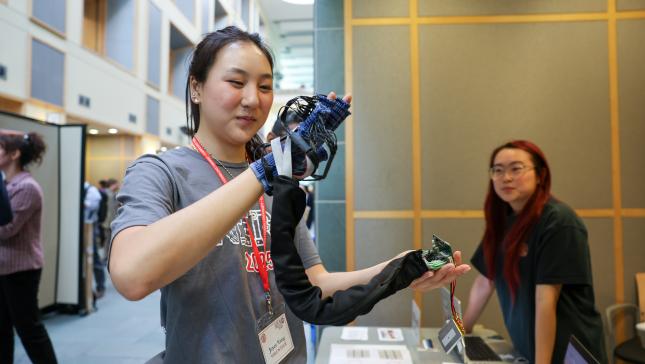
### Department Events
From lectures featuring leading experts to research showcases, our events invite our community to learn, collaborate, and forge partnerships that continually move technology, humanity, and society forward as one.
[Explore Events](https://www.cs.cornell.edu/events)
---
# Current Faculty | Department of Computer Science | Cornell Bowers
[Skip to main content](https://www.cs.cornell.edu/current-faculty#main-content)
Bowers Menu
[](https://bowers.cornell.edu/)
What are you interested in?
Search

Information for Current Faculty
===============================
Resources to support faculty teaching, research, and academic services at Cornell Bowers.
-----------------------------------------------------------------------------------------
Bowers Quicklinks
-----------------
* [Bowers Faculty Resources (NetID required)](https://docs.google.com/spreadsheets/d/1ZiAW0ynboZKlxDzLk50AGA8Fl0ZA1NqtKwK1ir7w43U/edit?usp=sharing)
* [Office of the Dean](https://bowers.cornell.edu/offices/office-dean)
* [Bowers Office Directory](https://www.cs.cornell.edu/directory/offices)
* [Academic Affairs Office](https://bowers.cornell.edu/offices/academic-affairs)
* [Research Office](https://bowers.cornell.edu/offices/research)
* [Proposal Development (PRO Team)](https://researchservices.cornell.edu/resources/pro-research-operations)
* [Associate Deans](https://bowers.cornell.edu/leadership)
* [Faculty Center (NetID required)](https://registrar.cornell.edu/faculty-staff/faculty-center-and-advisor-center)
* [Class Roster](https://classes.cornell.edu/browse/roster/FA25)
* [Course Catalog (degree requirements)](https://catalog.cornell.edu/programs/)
* [Canvas (NetID required)](https://login.canvas.cornell.edu/)
* [Student Services](https://bowers.cornell.edu/offices/student-services)
* [Bowers Tech Engineering IT Service Group (BTE ITSG)](https://bowers.cornell.edu/offices/bowers-tech-engineering-it-service-group)
* [Facilities](https://bowers.cornell.edu/offices/facilities)
* [Human Resources](https://bowers.cornell.edu/offices/human-resources)
* [Communications Team](https://bowers.cornell.edu/offices/communications-team)
* [Cornell Office of the Dean of Faculty](https://deanoffaculty.cornell.edu/)
* [Concur](https://finance.cornell.edu/tools-library/forms/concur)
* [International Travel](https://finance.cornell.edu/travel/planning/international)
Recent Bowers Stories
---------------------
[VIEW ALL NEWS AND STORIES](https://www.cs.cornell.edu/news-stories?college_department%5B14%5D=14)
[Yahoo! Finance\
\
Thickstun discusses AI superintelligence with Yahoo Finance\
\
* Real-World Impact](https://finance.yahoo.com/news/silicon-valley-is-going-all-in-on-superintelligent-ai-and-theres-plenty-of-hype-181539285.html?guccounter=1)
[\
\
Cornell Chronicle\
\
$10M gift to Cornell Bowers supports AI advancement\
\
* Alumni News\
* Real-World Impact\
* Student Experience](https://news.cornell.edu/stories/2025/11/10m-gift-cornell-bowers-supports-ai-advancement)
[Cornell Bowers Newsletter - November 2025\
\
* Research + Innovation\
* Faculty Excellence\
* Student Experience](https://conta.cc/47JICr1)
[VIEW ALL NEWS AND STORIES](https://www.cs.cornell.edu/news-stories?college_department%5B14%5D=14)
---
# Information for Alumni | Department of Computer Science | Cornell Bowers
[Skip to main content](https://www.cs.cornell.edu/information-alumni#main-content)
Bowers Menu
[](https://bowers.cornell.edu/)
What are you interested in?
Search

Stay Connected
==============
As a proud Bowers alum, you’re part of a global family of innovators, researchers, and leaders making an impact.
----------------------------------------------------------------------------------------------------------------
Resources
---------
* [Support Bowers](https://www.cs.cornell.edu/giving)
* [Get in Touch](https://www.cs.cornell.edu/offices/alumni-affairs-and-development)
* [Sign up for eNewsletter](https://www.cs.cornell.edu/information-alumni#email)
* [Update your info](https://alumni.cornell.edu/services/update-info/)
* [Connect on LinkedIn](https://www.linkedin.com/company/cornell-university-college-of-computing-and-information-science/)
* [Follow our Instagram](https://www.instagram.com/cornell.bowers/)
* [Come back to Cornell](https://alumni.cornell.edu/come-back/)
* [Alumni Events](https://alumni.cornell.edu/event/)
* [Volunteer Opportunities](https://alumni.cornell.edu/volunteer/)
* [Join Handshake](https://cornell.joinhandshake.com/login)
Recent News
-----------
[\
\
Cornell Chronicle\
\
$10M gift to Cornell Bowers supports AI advancement\
\
* Alumni News\
* Real-World Impact\
* Student Experience](https://news.cornell.edu/stories/2025/11/10m-gift-cornell-bowers-supports-ai-advancement)
[Cornell Bowers Newsletter - November 2025\
\
* Research + Innovation\
* Faculty Excellence\
* Student Experience](https://conta.cc/47JICr1)
[\
\
Cornell Chronicle\
\
Three new Thought Summits to explore AI and data science frontiers\
\
* Research + Innovation\
* Around the College](https://news.cornell.edu/stories/2025/11/three-new-thought-summits-explore-ai-and-data-science-frontiers)
Student experiences + groundbreaking research. Delivered to your inbox.
-----------------------------------------------------------------------
---
# Current Staff | Department of Computer Science | Cornell Bowers
[Skip to main content](https://www.cs.cornell.edu/current-staff#main-content)
Bowers Menu
[](https://bowers.cornell.edu/)
What are you interested in?
Search


Information for Current Staff
=============================
Staff resources to support your career at Cornell Bowers.
---------------------------------------------------------
Quicklinks
----------
* [Office of the Dean](https://www.cs.cornell.edu/offices/office-dean)
* [Bowers Office Directory](https://www.cs.cornell.edu/directory/offices)
* [Facilities](https://www.cs.cornell.edu/offices/facilities)
* [Bowers Tech Engineering IT Service Group (BTE ITSG)](https://www.cs.cornell.edu/offices/tech-bowers-engineering-it-service-group)
* [Human Resources](https://www.cs.cornell.edu/offices/human-resources)
* [Cornell Benefits](https://hr.cornell.edu/understand-your-benefits)
* [Bowers Staff Resources (NetID required)](https://cornell.box.com/s/heur3n6hihtv8l1znwce6afggw5prhbr)
* [Communications Team](https://www.cs.cornell.edu/offices/communications-team)
* [Parking and Transportation](https://fcs.cornell.edu/departments/transportation-delivery-services/parking-transportation)
ID Card Access
--------------
For all card access and key requests please contact your department or unity access coordinator who will submit a TDX ticket on your behalf.
Recent Bowers Stories
---------------------
[VIEW ALL NEWS AND STORIES](https://www.cs.cornell.edu/news-stories?college_department%5B14%5D=14)
[Yahoo! Finance\
\
Thickstun discusses AI superintelligence with Yahoo Finance\
\
* Real-World Impact](https://finance.yahoo.com/news/silicon-valley-is-going-all-in-on-superintelligent-ai-and-theres-plenty-of-hype-181539285.html?guccounter=1)
[\
\
Cornell Chronicle\
\
$10M gift to Cornell Bowers supports AI advancement\
\
* Alumni News\
* Real-World Impact\
* Student Experience](https://news.cornell.edu/stories/2025/11/10m-gift-cornell-bowers-supports-ai-advancement)
[Cornell Bowers Newsletter - November 2025\
\
* Research + Innovation\
* Faculty Excellence\
* Student Experience](https://conta.cc/47JICr1)
[VIEW ALL NEWS AND STORIES](https://www.cs.cornell.edu/news-stories?college_department%5B14%5D=14)
---
# Information for Media | Department of Computer Science | Cornell Bowers
[Skip to main content](https://www.cs.cornell.edu/information-media#main-content)
Bowers Menu
[](https://bowers.cornell.edu/)
What are you interested in?
Search

Resources for Media
===================
Working with us
---------------
The Cornell Bowers Communications Team collaborates with [Cornell's Media Relations Office](https://news.cornell.edu/media-relations)
. As the College's representatives to media, we connect faculty experts and thought leaders to local, regional, national and international media organizations.
[Cornell Media Relations](https://news.cornell.edu/media-relations)
[Cornell Bowers Communications Team](https://www.cs.cornell.edu/offices/communications-team "Communications Team")
Resources
---------
* [Tip Sheets](https://news.cornell.edu/media-relations/tip-sheets)
* [Media Hits](https://news.cornell.edu/in-the-news)
* [Media on Campus](https://news.cornell.edu/media-relations/media-on-campus)
* [Bowers Experts](https://bowers.cornell.edu/directory)
---
# Current Students | Department of Computer Science | Cornell Bowers
[Skip to main content](https://www.cs.cornell.edu/current-students#main-content)
Bowers Menu
[](https://bowers.cornell.edu/)
What are you interested in?
Search


Information for Current Students
================================
Undergraduate
-------------
Find information and resources to help you navigate your classes, connect with support services, and make the most of your undergraduate experience at Cornell Bowers.
[Undergraduate Resources](https://www.cs.cornell.edu/current-students#undergrad)
Graduate
--------
Access key resources to support your research, coursework, and professional development throughout your graduate studies at Cornell Bowers.
[Graduate Resources](https://www.cs.cornell.edu/current-students#grad)
Undergraduate Quicklinks
------------------------
* [Current Major Requirements](https://catalog.cornell.edu/computing-information-science/#programstext)
* [Bowers Registrar’s Office](https://www.cs.cornell.edu/offices/registrar)
* [Bowers Student Services](https://www.cs.cornell.edu/offices/student-services)
* [Cornell Course Catalog](https://catalog.cornell.edu/)
* [Undergraduate Research](https://www.cs.cornell.edu/research/undergraduate-research)
* [Course Staff Hiring](https://bowers-student-hiring.coecis.cornell.edu/)
* [Career Planning](https://bowers.cornell.edu/student-experience/career-planning)
* [Commencement Weekend](https://www.cs.cornell.edu/commencement)
* [Cornell Student & Campus Life](https://scl.cornell.edu/)
* [Bowers Course Evaluations](https://apps.engineering.cornell.edu/CourseEval/crseval/results/))
Undergraduate Academic Planning
-------------------------------
**Looking for your current major requirements?** Select your Bowers major to view key information to help you navigate your academic journey.
[Tabs](https://www.cs.cornell.edu/current-students#)
[Computer Science](https://www.cs.cornell.edu/current-students#tab-3147)
[Biometry and Statistics](https://www.cs.cornell.edu/current-students#tab-3135)
[Statistical Science](https://www.cs.cornell.edu/current-students#tab-3150)
[Information Science](https://www.cs.cornell.edu/current-students#tab-3148)
[Information Science, Systems, and Technology](https://www.cs.cornell.edu/current-students#tab-3149)
Major Requirements
Students entering Cornell in fall 2025 can view current curriculum requirements, including core courses and electives, in the university course catalog.
[B.A. CS Course Catalog](https://catalog.cornell.edu/programs/computer-science-ba/#curriculumtext)
[B.S. CS Course Catalog](https://catalog.cornell.edu/programs/computer-science-bs/#curriculumtext)
Started your Cornell journey before fall 2025?
--------------------------------------------------------------------------------------------------------------------------------------------------------
Review major requirements for the year you entered Cornell: [Cornell Courses of Study Archive](https://nam12.safelinks.protection.outlook.com/?url=https%3A%2F%2Fregistrar.cornell.edu%2Fclasses-enrollment%2Fcourses-study-archive&data=05%7C02%7Crdf66%40cornell.edu%7C7e60cfd7bb7846bd4b6a08ddd069b24f%7C5d7e43661b9b45cf8e79b14b27df46e1%7C0%7C0%7C638895874552043959%7CUnknown%7CTWFpbGZsb3d8eyJFbXB0eU1hcGkiOnRydWUsIlYiOiIwLjAuMDAwMCIsIlAiOiJXaW4zMiIsIkFOIjoiTWFpbCIsIldUIjoyfQ%3D%3D%7C0%7C%7C%7C&sdata=zT4%2FWLENuyCYZijO5%2BZjkQHbHmZPKGDgvSpGraj5gAE%3D&reserved=0 "Original URL:
https://registrar.cornell.edu/classes-enrollment/courses-study-archive
Click to follow link.")
.
Checking your progress
-------------------------
See how you're doing on degree requirements by checking your personalized [Bowers degree checklist](https://nam12.safelinks.protection.outlook.com/?url=https%3A%2F%2Fchecklists.coecis.cornell.edu%2F&data=05%7C02%7Crdf66%40cornell.edu%7C7e60cfd7bb7846bd4b6a08ddd069b24f%7C5d7e43661b9b45cf8e79b14b27df46e1%7C0%7C0%7C638895874552057774%7CUnknown%7CTWFpbGZsb3d8eyJFbXB0eU1hcGkiOnRydWUsIlYiOiIwLjAuMDAwMCIsIlAiOiJXaW4zMiIsIkFOIjoiTWFpbCIsIldUIjoyfQ%3D%3D%7C0%7C%7C%7C&sdata=6aqkO53fXwzdq0eLO1L80GzK5gwnghp4ePMIf%2BOOl6w%3D&reserved=0 "Original URL:
https://checklists.coecis.cornell.edu/
Click to follow link.")
(affiliated majors only; requires NetID login).
Understanding technical elective requirements
---------------------------------------------
Requirements
* All CS majors must complete 3 technical electives.
* At least 2 must be 3000-level or above; 1 can be 2000-level or above.
* Each course must be at least 3.0 credits and taken for a letter grade.
* Project Team credits (such as ENGRG 3400) and TA credits (such as CS 4090) do not count.
Qualifying Coursework
Courses must have at least one qualifying prerequisite or corequisite from the list below in order to count as a Technical elective. The qualifying prerequisite or corequisite must be listed in the course’s Class Roster listing for the semester that the course is taken; inclusion on a syllabus is insufficient.
Note: An asterisk (\*) indicates that the qualifying pre/corequisite is a technical elective itself.
* Computer Science
* Qualifying prerequisites or corequisites: CS 2110, 2112, 2300, 2800, 2802.
* Biology
* Qualifying co or prerequisites:: BEE 2510\*, BEE 2600\*, BIOG 1445, BIOMG 2800\*, BIOMG 33xx, BIONB 2220\*, BIOEE 1610, BIOEE 1780.
* Courses that state "college-level biology” as a required co or prerequisite are also accepted.
* Chemistry
* Qualifying co or prerequisites: CHEM 1560, 1570, 2070, 2090, 2150.
* Information Science
* Qualifying co or prerequisites: INFO 2300, 2950, 3300\*.
* Mathematics
* Qualifying prerequisites: MATH 1120, 1910, 1920, 2210, 2220, 2240, 2930\*, 2940.
* Courses that state “Calculus" as a prerequisite are also accepted.
* Courses requiring only “basic” or “introductory” calculus **do not** qualify.
* Physics
* Qualifying co or prerequisites: PHYS 1112, 1116, 2207, 2208, 2213, 2214, 2217, 2218.
* Probability/Statistics
* Qualifying co or prerequisites: AEM 2100, BTRY 3010, BTRY 3080\*, CEE 3040\*, ORIE 3300\*, ORIE 3500\*, PUBPOL 2100, PUBPOL 2101, STSCI 2100.
* Courses that list "probability," "statistics," or "introductory statistics" as co or prerequisites are also accepted.
Other Qualifying Co or Prerequisites
* AEM 2240\*, AEM 2241\*, ECON 3030\*, ECON 3040\*, ECON 3110, ECON 3120\*, ECON 3130\*, LING 3302, LING 3303, PHIL 2310.
* Please note that all ENGRD classes are considered qualifying prerequisites/co-requisites.
Using research credits for technical electives
----------------------------------------------
* Up to two research courses can count as technical electives.
* They must be taken for a letter grade and be at least 3.0 credits.
* CS 4999 automatically qualifies if it meets the above requirements.
* Other departments' research courses need faculty confirmation of relevant prerequisites.
Academic Standing
All Computer Science majors’ academic performance are reviewed upon the conclusion of each semester.
To remain in good academic standing in the major, students must:
* Take all required coursework for a letter grade (no pass/fail)
* Earn an overall term GPA of at least 2.30
* Earn a GPA of at least 2.50 in all courses taken to fulfill major requirements
* Earn a minimum grade of “C-” in all courses required for the major
* Have no failing (“F” or “U/UX”) grades
In addition, majors must successfully complete at least three core courses by the end of their junior year.
**Student Support**
If you fall short of the above criteria at the end of the semester, the major's academic review committee will determine what actions might need to be taken and your Bowers advisor will partner with you on next steps. This could include reworking your next semester’s schedule, receiving an academic warning, taking a required leave, exploring other majors, and/or a required withdrawal.
Book an appointment with your advisor if you need academic support.
Departmental Honors
Arts and Sciences Honors Requirements
-------------------------------------
Arts and Sciences students interested in pursuing Computer Science departmental honors must fulfill these requirements:
* A cumulative GPA greater than or equal to 3.50 during their penultimate and final semesters
* Earn a grade of “A-” or higher in one CS course at or above the 5000-level that is at least 3.0 credit hours (note that seminars and 4000/5000 co-meet courses do not count).
* Earn a grade of “A-” or higher in at least two semesters of CS 4999 - Independent Reading and Research taken for a minimum of 3.0 academic credits each semester.
* Ensure the above 9.0 credit hours are taken in addition to the minimum credit hours required for the computer science degree.
Please note that Honors courses may not be used to satisfy the CS 4000+ elective requirement, the CS project requirement, the technical electives, or the 3+ credit elective.
Engineering Honors Requirements
-----------------------------------
Engineering students interested in pursuing the B.S. degree with honors must fulfill these requirements:
* Earn a grade of “A-” or higher in one CS course at or above the 5000-level that is at least 3.0 credit hours (note that seminars and 4000/5000 co-meet courses do not count).
* Earn a grade of “A-” or higher in at least two semesters of CS 4999 - Independent Reading and Research taken for a minimum of 3.0 academic credits each semester.
* Ensure the above 9.0 credit hours are taken in addition to the minimum credit hours required for the computer science degree.
How to Apply for Honors
-----------------------
Honors determinations are made during students’ senior year. Seniors who wish to be considered should notify the undergraduate advising team by emailing the ugrad \[at\] cs.cornell.edu (undergraduate advising team) with the subject line, “Honors Track.”
Study Abroad
The Office of Global Learning at Cornell University allows students to spend a semester or two studying at a foreign school. We invite you to explore the opportunities.
[Learn more](https://globallearning.cornell.edu/)
Computer Science Advanced Standing Exam
The Computer Science Advanced Standing Exam (CASE) is used to determine whether a student should receive credit for CS 1110.
While that course is currently offered in Python, the computer science department will extend credit to any student that _exhibits mastery in an object-oriented language_.
[View 2025 exam details](https://www.cs.cornell.edu/courses/placement/2025/)
Major Requirements
Students entering Cornell in fall 2025 can view current curriculum requirements, including core courses and electives, in the university course catalog.
[Cornell Course Catalog](https://catalog.cornell.edu/programs/biometry-statistics-bs/#curriculumtext)
Started your Cornell journey before fall 2025?
-----------------------------------------------------------------------------------------------------------------------------------------------------------
Review major requirements for the year you entered Cornell: [Cornell Courses of Study Archive](https://nam12.safelinks.protection.outlook.com/?url=https%3A%2F%2Fregistrar.cornell.edu%2Fclasses-enrollment%2Fcourses-study-archive&data=05%7C02%7Crdf66%40cornell.edu%7C7e60cfd7bb7846bd4b6a08ddd069b24f%7C5d7e43661b9b45cf8e79b14b27df46e1%7C0%7C0%7C638895874552316084%7CUnknown%7CTWFpbGZsb3d8eyJFbXB0eU1hcGkiOnRydWUsIlYiOiIwLjAuMDAwMCIsIlAiOiJXaW4zMiIsIkFOIjoiTWFpbCIsIldUIjoyfQ%3D%3D%7C0%7C%7C%7C&sdata=hza%2F9EzxMNtvYLFzq92HHw97Ybf5M2WDPgN456ypWAg%3D&reserved=0 "Original URL:
https://registrar.cornell.edu/classes-enrollment/courses-study-archive
Click to follow link.")
.
Check your degree progress
--------------------------
Log in to [Cornell Stellic](https://nam12.safelinks.protection.outlook.com/?url=http%3A%2F%2Fstellic.cornell.edu%2F&data=05%7C02%7Crdf66%40cornell.edu%7C7e60cfd7bb7846bd4b6a08ddd069b24f%7C5d7e43661b9b45cf8e79b14b27df46e1%7C0%7C0%7C638895874552335452%7CUnknown%7CTWFpbGZsb3d8eyJFbXB0eU1hcGkiOnRydWUsIlYiOiIwLjAuMDAwMCIsIlAiOiJXaW4zMiIsIkFOIjoiTWFpbCIsIldUIjoyfQ%3D%3D%7C0%7C%7C%7C&sdata=PitRxh0A%2Bh2dl43%2FMvak4ExQHTT6I5VnM7loZtG03GI%3D&reserved=0 "https://nam12.safelinks.protection.outlook.com/?url=http%3A%2F%2Fstellic.cornell.edu%2F&data=05%7C02%7Crdf66%40cornell.edu%7C7e60cfd7bb7846bd4b6a08ddd069b24f%7C5d7e43661b9b45cf8e79b14b27df46e1%7C0%7C0%7C638895874552335452%7CUnknown%7CTWFpbGZsb3d8eyJFbXB0eU1hcGkiOnRydWUsIlYiOiIwLjAuMDAwMCIsIlAiOiJXaW4zMiIsIkFOIjoiTWFpbCIsIldUIjoyfQ%3D%3D%7C0%7C%7C%7C&sdata=PitRxh0A%2Bh2dl43%2FMvak4ExQHTT6I5VnM7loZtG03GI%3D&reserved=0")
if you joined Cornell in or after fall 2023.
Pro Tips
-----------
* **Need experience in R programming?** If you didn’t take STSCI 2150 or STSCI 2200 for your intro stats requirement, we strongly recommend you enroll in STSCI 2120 - R Programming for Data Science before you enroll in STSCI 3200, unless your course was taught in R.
* **Take Multivariable Calculus before STSCI 3080.**
* **Have questions about math requirements?** Check out [First Steps in Math](https://nam12.safelinks.protection.outlook.com/?url=https%3A%2F%2Fmath.cornell.edu%2Ffirst-steps-math&data=05%7C02%7Cimj8%40cornell.edu%7Cc7f437c8ffc641c21cb008ddb8e33141%7C5d7e43661b9b45cf8e79b14b27df46e1%7C0%7C0%7C638870008107149617%7CUnknown%7CTWFpbGZsb3d8eyJFbXB0eU1hcGkiOnRydWUsIlYiOiIwLjAuMDAwMCIsIlAiOiJXaW4zMiIsIkFOIjoiTWFpbCIsIldUIjoyfQ%3D%3D%7C0%7C%7C%7C&sdata=5q4%2FENQQx3O5oUPpR%2FCYRVMVzjsYRTy9%2BRys%2BPp6%2B%2B4%3D&reserved=0)
.
Academic Standing
Courses required for the major must be taken for letter grades. To remain in good standing in the major, a student must have:
* a GPA of at least 2.30 in all courses required for the major, including advanced electives.
* Grades of C- or better in every required course. If a student receives a lower grade in a required course, the course can be retaken until a C- or better is earned, or the requirement can be satisfied by another course.
**Student Support**
If you fall short of the above criteria at the end of the semester, the major's academic review committee will determine what actions might need to be taken and your Bowers advisor will partner with you on next steps. This could include reworking your next semester’s schedule, receiving an academic warning, taking a required leave, exploring other majors, and/or a required withdrawal.
Book an appointment with your advisor if you need academic support.
Departmental Honors
Beginning with the December 2026 degree conferral date, Statistics & Biometry students can earn “Honors in Statistics and Data Science” by meeting the following requirements:
1. A cumulative GPA >= 3.50
2. Enrollment in [STSCI 4990](https://catalog.cornell.edu/search/?P=STSCI%204990 "STSCI 4990")
/ [BTRY 4990](https://catalog.cornell.edu/search/?P=BTRY%204990 "BTRY 4990")
for 3 or more credits. Through this course the student will complete Independent Research with a Statistics and Data Science faculty member, with grades of A- or better.
At least one additional STSCI course (at least 3 credit hours) at or above the 4000 level with a grade of A- or better; no seminar or 2-credit project courses.
Transfer Credit
Are you hoping to use external coursework for a statistics major requirement? Make sure to check in with the Assistant Director of Undergraduate Advising about the transfer credit process.
Study Abroad
The Office of Global Learning at Cornell University allows students to spend a semester or two studying at a foreign school. We invite you to explore the opportunities. Students may petition the Director of Undergraduate Studies to count transfer study abroad courses towards core or elective requirements.
[Learn more](https://globallearning.cornell.edu/)
Major Requirements
Students entering Cornell in fall 2025 can view current curriculum requirements, including core courses and electives, in the university course catalog.
[Cornell Course Catalog](https://catalog.cornell.edu/programs/statistics-data-science-ba/#curriculumtext)
Started your Cornell journey before fall 2025?
-----------------------------------------------
Review major requirements for the year you entered Cornell: [Cornell Courses of Study Archive](https://registrar.cornell.edu/classes-enrollment/courses-study-archive)
Pro Tips
--------
* Need experience in R programming? If you didn’t take STSCI 2150 or STSCI 2200 for your intro stats requirement, we strongly recommend you enroll in STSCI 2120 - R Programming for Data Science before you enroll in STSCI 3200, unless your course was taught in R.
* Take Multivariable Calculus before STSCI 3080.
* Have questions about math requirements? Check out [First Steps in Math](https://math.cornell.edu/first-steps-math)
Academic Standing
Courses required for the major must be taken for letter grades. To remain in good standing in the major, a student must have:
* A GPA of at least 2.30 in all courses required for the major, including advanced electives.
* Grades of C- or better in every required course. If a student receives a lower grade in a required course, the course can be retaken until a C- or better is earned, or the requirement can be satisfied by another course.
**Student Support**
If you fall short of the above criteria at the end of the semester, the major's academic review committee will determine what actions might need to be taken and your Bowers advisor will partner with you on next steps. This could include reworking your next semester’s schedule, receiving an academic warning, taking a required leave, exploring other majors, and/or a required withdrawal.
Book an appointment with your advisor if you need academic support.
Departmental Honors
Beginning with the December 2026 degree conferral date, Statistical Science students can earn “Honors in Statistics and Data Science” by meeting the following requirements:
1. A cumulative GPA >= 3.50
2. Enrollment in [STSCI 4990](https://catalog.cornell.edu/search/?P=STSCI%204990 "STSCI 4990")
/[BTRY 4990](https://catalog.cornell.edu/search/?P=BTRY%204990 "BTRY 4990")
for 3 or more credits. Through this course the student will complete Independent Research with a Statistics and Data Science faculty member, with grades of A- or better.
3. At least one additional STSCI course (at least 3 credit hours) at or above the 4000 level with a grade of A- or better; no seminar or 2-credit project courses
Transfer Credit
Students may petition the Director of Undergraduate Studies to count transfer courses towards core or elective requirements. Credits must be approved by the Department of Statistics and Data Science and CALS before courses can be applied towards the major.
Study Abroad
The Office of Global Learning at Cornell University allows students to spend a semester or two studying at a foreign school. We invite you to explore the opportunities.
Students may petition the Director of Undergraduate Studies to count transfer study abroad courses towards core or elective requirements.
[Learn more](https://globallearning.cornell.edu/)
Major Requirements
Students entering Cornell in fall 2025 can view current curriculum requirements, including core courses and electives, in the university course catalog.
[B.A. IS Course Catalog](https://catalog.cornell.edu/programs/information-science-ba/#curriculumtext)
[B.S. IS Course Catalog](https://catalog.cornell.edu/programs/information-science-bs/#curriculumtext)
Started your Cornell journey before fall 2025?
--------------------------------------------------
Review major requirements for the year you entered Cornell: [Cornell Courses of Study Archive](https://nam12.safelinks.protection.outlook.com/?url=https%3A%2F%2Fregistrar.cornell.edu%2Fclasses-enrollment%2Fcourses-study-archive&data=05%7C02%7Crdf66%40cornell.edu%7C7e60cfd7bb7846bd4b6a08ddd069b24f%7C5d7e43661b9b45cf8e79b14b27df46e1%7C0%7C0%7C638895874552071303%7CUnknown%7CTWFpbGZsb3d8eyJFbXB0eU1hcGkiOnRydWUsIlYiOiIwLjAuMDAwMCIsIlAiOiJXaW4zMiIsIkFOIjoiTWFpbCIsIldUIjoyfQ%3D%3D%7C0%7C%7C%7C&sdata=%2FdKXiZr36Ch40EFqZA7z%2FPTcDozO1R2dmWSZhSHSpnI%3D&reserved=0 "Original URL:
https://registrar.cornell.edu/classes-enrollment/courses-study-archive
Click to follow link.")
.
Check your degree progress
--------------------------
* IS majors in A&S: Log in to the [Bowers degree checklist](https://nam12.safelinks.protection.outlook.com/?url=https%3A%2F%2Fchecklists.coecis.cornell.edu%2F&data=05%7C02%7Crdf66%40cornell.edu%7C7e60cfd7bb7846bd4b6a08ddd069b24f%7C5d7e43661b9b45cf8e79b14b27df46e1%7C0%7C0%7C638895874552084660%7CUnknown%7CTWFpbGZsb3d8eyJFbXB0eU1hcGkiOnRydWUsIlYiOiIwLjAuMDAwMCIsIlAiOiJXaW4zMiIsIkFOIjoiTWFpbCIsIldUIjoyfQ%3D%3D%7C0%7C%7C%7C&sdata=AwXQZK1f%2BfLGmJbvA%2FM1I4ZTS6Y2Gql7dfmBnSYVSjM%3D&reserved=0 "https://nam12.safelinks.protection.outlook.com/?url=https%3A%2F%2Fchecklists.coecis.cornell.edu%2F&data=05%7C02%7Crdf66%40cornell.edu%7C7e60cfd7bb7846bd4b6a08ddd069b24f%7C5d7e43661b9b45cf8e79b14b27df46e1%7C0%7C0%7C638895874552084660%7CUnknown%7CTWFpbGZsb3d8eyJFbXB0eU1hcGkiOnRydWUsIlYiOiIwLjAuMDAwMCIsIlAiOiJXaW4zMiIsIkFOIjoiTWFpbCIsIldUIjoyfQ%3D%3D%7C0%7C%7C%7C&sdata=AwXQZK1f%2BfLGmJbvA%2FM1I4ZTS6Y2Gql7dfmBnSYVSjM%3D&reserved=0")
.
* IS majors in CALS: Log in to [Cornell Stellic](https://nam12.safelinks.protection.outlook.com/?url=http%3A%2F%2Fstellic.cornell.edu%2F&data=05%7C02%7Crdf66%40cornell.edu%7C7e60cfd7bb7846bd4b6a08ddd069b24f%7C5d7e43661b9b45cf8e79b14b27df46e1%7C0%7C0%7C638895874552097780%7CUnknown%7CTWFpbGZsb3d8eyJFbXB0eU1hcGkiOnRydWUsIlYiOiIwLjAuMDAwMCIsIlAiOiJXaW4zMiIsIkFOIjoiTWFpbCIsIldUIjoyfQ%3D%3D%7C0%7C%7C%7C&sdata=2m15pwp6hh1gW9BGtlrI7rbBVheFLtGZX7gt9SYVOGo%3D&reserved=0 "Original URL:
http://stellic.cornell.edu/
Click to follow link.")
if you joined Cornell in or after fall 2023. (Pre-FA23 students should consult their [Bowers checklist](http://Bowers degree checklist "http://Bowers degree checklist")
and the [CALS DUST system](https://nam12.safelinks.protection.outlook.com/?url=https%3A%2F%2Fdust.cals.cornell.edu%2F&data=05%7C02%7Crdf66%40cornell.edu%7C7e60cfd7bb7846bd4b6a08ddd069b24f%7C5d7e43661b9b45cf8e79b14b27df46e1%7C0%7C0%7C638895874552260584%7CUnknown%7CTWFpbGZsb3d8eyJFbXB0eU1hcGkiOnRydWUsIlYiOiIwLjAuMDAwMCIsIlAiOiJXaW4zMiIsIkFOIjoiTWFpbCIsIldUIjoyfQ%3D%3D%7C0%7C%7C%7C&sdata=Go8W3%2FOV65DVvmLW3ri2nJAYcKdkgk2iCUkkQ5n9ttU%3D&reserved=0 "Original URL:
https://dust.cals.cornell.edu/
Click to follow link.")
.)
Academic Standing
Students must meet the following criteria for good standing at the end of each semester:
* Earn an overall GPA of at least 2.3
* Earn a weighted GPA for the IS major of at least 2.5
* Complete all courses with a grade of C- or higher
* Complete at least 12 academic credits per semester
* Complete all core INFO courses prior to the start of the final semester of study (students must pre-enroll in any remaining core coursework by the end of their 3-2 semester)
Student Support
------------------
If you fall short of the above criteria at the end of the semester, the major's academic review committee will determine what actions might need to be taken and your Bowers advisor will partner with you on next steps. This could include reworking your next semester’s schedule, receiving an academic warning, taking a required leave, exploring other majors, and/or a required withdrawal.
Book an appointment with your advisor if you need academic support.
Departmental Honors
To qualify for departmental honors, students must apply by the end of their seventh semester and meet the GPA requirement of 3.5 or higher at the time of application and maintained through their graduation date. Students intending to pursue honors must complete the following course work in addition to their IS major courses:
* Three additional credit hours of IS coursework at or above the 5000-level (graded courses only; no seminars or 2-credit project courses);
* Six credit hours of [INFO 4900](https://catalog.cornell.edu/search/?P=INFO%204900 "INFO 4900")
Independent Reading and Research with one or more IS faculty members, spread over at least two semesters (at least 3.0 credits each semester) and with grades of A– or higher. It is expected that the [INFO 4900](https://catalog.cornell.edu/search/?P=INFO%204900 "INFO 4900")
research will result in a project report.
The 9 credit hours of work for departmental honors cannot be counted towards any other major requirement.
Transfer Credit
**B.A. in Information Science**
Cornell non-Arts and Sciences students who want to transfer from another college at Cornell in order to major in B.A. Information Science should visit the [Arts and Sciences internal transfer page.](https://as.cornell.edu/advising/internal-transfer)
**B.S. in Information Science**
If you're a current CALS student, start taking courses to meet the criteria for admission and schedule an advising meeting.
Cornell non-CALS students should refer to the CALS page on the [Internal Transfer](https://cals.cornell.edu/education/admissions/undergraduate-admissions/internal-transfer)
page. Please note that internally transferring to CALS for the IS major is highly selective.
Study Abroad
The Office of Global Learning at Cornell University allows students to spend a semester or two studying at a foreign school. We invite you to explore the opportunities.
[Learn more](https://globallearning.cornell.edu/)
Major Requirements
Students entering Cornell in fall 2025 can view current curriculum requirements, including core courses and electives, in the university course catalog.
[Cornell Course Catalog](https://catalog.cornell.edu/programs/information-science-systems-technology-bs/#curriculumtext)
Started your Cornell journey before fall 2025?
------------------------------------------------------------------------------------------------------------------------------------------------------------------------------
Review major requirements for the year you entered Cornell: [Cornell Courses of Study Archive](https://nam12.safelinks.protection.outlook.com/?url=https%3A%2F%2Fregistrar.cornell.edu%2Fclasses-enrollment%2Fcourses-study-archive&data=05%7C02%7Crdf66%40cornell.edu%7C7e60cfd7bb7846bd4b6a08ddd069b24f%7C5d7e43661b9b45cf8e79b14b27df46e1%7C0%7C0%7C638895874552279258%7CUnknown%7CTWFpbGZsb3d8eyJFbXB0eU1hcGkiOnRydWUsIlYiOiIwLjAuMDAwMCIsIlAiOiJXaW4zMiIsIkFOIjoiTWFpbCIsIldUIjoyfQ%3D%3D%7C0%7C%7C%7C&sdata=BwiESrl5Gx2tqn%2FqFOGlqIwmd%2FENPgR%2FRYxMpPi9CxE%3D&reserved=0 "Original URL:
https://registrar.cornell.edu/classes-enrollment/courses-study-archive
Click to follow link.")
.
Check your progress
-------------------
See how you're doing on degree requirements by checking your personalized [Bowers degree checklist](https://nam12.safelinks.protection.outlook.com/?url=https%3A%2F%2Fchecklists.coecis.cornell.edu%2F&data=05%7C02%7Crdf66%40cornell.edu%7C7e60cfd7bb7846bd4b6a08ddd069b24f%7C5d7e43661b9b45cf8e79b14b27df46e1%7C0%7C0%7C638895874552296249%7CUnknown%7CTWFpbGZsb3d8eyJFbXB0eU1hcGkiOnRydWUsIlYiOiIwLjAuMDAwMCIsIlAiOiJXaW4zMiIsIkFOIjoiTWFpbCIsIldUIjoyfQ%3D%3D%7C0%7C%7C%7C&sdata=dCb53YYiq3Bc%2BpAuW4os0nr0ti9om%2BDHiywzc8TZV1o%3D&reserved=0 "https://nam12.safelinks.protection.outlook.com/?url=https%3A%2F%2Fchecklists.coecis.cornell.edu%2F&data=05%7C02%7Crdf66%40cornell.edu%7C7e60cfd7bb7846bd4b6a08ddd069b24f%7C5d7e43661b9b45cf8e79b14b27df46e1%7C0%7C0%7C638895874552296249%7CUnknown%7CTWFpbGZsb3d8eyJFbXB0eU1hcGkiOnRydWUsIlYiOiIwLjAuMDAwMCIsIlAiOiJXaW4zMiIsIkFOIjoiTWFpbCIsIldUIjoyfQ%3D%3D%7C0%7C%7C%7C&sdata=dCb53YYiq3Bc%2BpAuW4os0nr0ti9om%2BDHiywzc8TZV1o%3D&reserved=0")
(affiliated majors only; requires NetID login).
Academic Standing
Affiliated students must meet college requirements for good standing. In addition, students in the ISST major must meet the following criteria for good standing at the end of each semester:
* Earn a semester GPA of 2.3 or higher
* Earn a semester GPA of 2.5 or higher in all courses used towards the ISST major and all Engineering Math courses
* Earn a grade of C- or higher in [CS 2110](https://catalog.cornell.edu/search/?P=CS%202110 "CS 2110")
/[ENGRD 2110](https://catalog.cornell.edu/search/?P=ENGRD%202110 "ENGRD 2110")
, [ENGRD 2700](https://catalog.cornell.edu/search/?P=ENGRD%202700 "ENGRD 2700")
, and all courses used towards the ISST major. Note: If a lower grade is earned, the course must be retaken
* Complete a minimum of 14 academic credits per semester
* No failing grades
* Take at least two core ISST courses the first semester after affiliation
* Complete all core ISST courses prior to the final semester of study (students must pre-enroll, as permitted by the relevant department, in any remaining core coursework by the end of their 3-2 semester)
Student Support
------------------
If you fall short of the above criteria at the end of the semester, the major's academic review committee will determine what actions might need to be taken and your Bowers advisor will partner with you on next steps. This could include reworking your next semester’s schedule, receiving an academic warning, taking a required leave, exploring other majors, and/or a required withdrawal.
Book an appointment with your advisor if you need academic support.
Departmental Honors
The B.S. degree with honors is granted to engineering students who satisfy the requirements given on the "Undergraduate Study and Graduation Requirements " page as well as the following requirements.
* Cumulative GPA ≥ 3.5 at the time of application and maintained through graduation
* 3 credit hours of ISST graded course work at or above the 5000-level (graded courses only; no 1 or 2 credit seminars or 2 credit project courses)
* 6 credit hours of [INFO 4900](https://catalog.cornell.edu/search/?P=INFO%204900 "INFO 4900")
Independent Reading and Research with an ISST faculty member, spread over at least two semesters, with at least A– each semester
The ISST research is expected to result in a programming project or a written report (or both). The courses taken for these 9 credit hours cannot be applied to any other major requirements.
Transfer Credit
Students may petition the Director of Undergraduate Studies to count transfer credit or other relevant Cornell courses towards concentration or elective requirements. Transfer credit must be approved by the IS Department and the College of Engineering before it can be applied towards the major.
Students who want to transfer from another college at Cornell in order to major in ISST should visit Cornell Engineering's Internal Transfer page.
[Learn more](https://www.engineering.cornell.edu/advising/incoming-internal-transfers/)
Study Abroad
The Office of Global Learning at Cornell University allows students to spend a semester or two studying at a foreign school. We invite you to explore the opportunities.
Up to two courses from a qualified study abroad program may be counted towards the major in one of two ways: (1) one concentration course and one major-approved elective or (2) two major approved electives. Courses must be approved in advance by the Director of Undergraduate Studies.
[Learn more](https://globallearning.cornell.edu/)
Undergraduate Academic Support
------------------------------
Your academic journey is unique, and we're here to help you navigate it successfully. Discover our full range of support services, designed to help you excel both in and out of the classroom.
Bowers is committed to ensuring all of our majors reach their full academic potential. If you are struggling, please reach out to your Bowers academic advisor and your course faculty right away for support and resources.
[Contact YOUR Bowers Advisor](https://bowers.cornell.edu/offices/student-services#advising)
Academic Excellence Workshops
Academic Excellence Workshops (AEWs) are optional, 1.0-credit, peer-led collaborative problem-solving sessions. Available for six foundational computer science courses:
* CS 1110, 1112, 2110, 2800, 3110 & 3410.
* CS 1110 and CS 1112 are introductory programming courses — all Bowers majors, including Biometry and Statistics, Statistical Science, and Information Science, require students to take one of those two classes. These are not just for CS students.
* These are open to any student, regardless of your admitting college.
[View CS Course AEW Options](https://nam12.safelinks.protection.outlook.com/?url=https%3A%2F%2Fcourses.cornell.edu%2Fsearch%2F%3Fsearch%3DAEW%2BCollaborative%2BWorkshop%253A%2BCS%26caturl%3D%252Findex.html&data=05%7C02%7Crdf66%40cornell.edu%7C755ad31a3b704112aaee08ddd07555e8%7C5d7e43661b9b45cf8e79b14b27df46e1%7C0%7C0%7C638895924557769871%7CUnknown%7CTWFpbGZsb3d8eyJFbXB0eU1hcGkiOnRydWUsIlYiOiIwLjAuMDAwMCIsIlAiOiJXaW4zMiIsIkFOIjoiTWFpbCIsIldUIjoyfQ%3D%3D%7C0%7C%7C%7C&sdata=9zBWcvKpj7ZDt03sJsvMNpnONr7gFY2yZKuNH2JgaPY%3D&reserved=0)
Course Staff Office Hours
At Bowers we are invested in your success. In addition to faculty office hours, we offer extensive peer-led “consulting hours.” A combination of group tutoring and office hours, these walk-in sessions are run by our undergraduate course staff and are designed to boost understanding and get your questions answered. Sessions are held during the day, evenings, and even weekends. Find the schedule on your course website.
**Have just a quick question?**
Course staff also answer questions and facilitate discussion online on Canvas, EdDiscussion, or whatever platform your instructor uses for your class. This can be a great way to get quick assistance or feedback.
Other Academic Support
Students can connect with a [Bowers advisor](https://www.cs.cornell.edu/offices/student-services "Student Services")
for tips on how to stay on track academically. Additionally, our [student organizations](https://www.cs.cornell.edu/student-experience/undergraduate-student-organizations "Undergraduate Student Organizations")
organize sessions to find study and/or project partners.
Apply to be Course Staff
Bowers undergraduate course staff make a real difference in their fellow students’ academic experience. If you’re motivated to help your peers, consider applying to work for a Bowers course. You’ll gain a deeper mastery of the subject material while getting to know course faculty on a personal level, boosting your resume, and contributing to our culture of support.
**Compensation**
Undergraduate course staff are paid on an hourly basis. You may also elect to work for academic credit (pass/fail basis only) in lieu of compensation. All positions are federal work study eligible.
**Application Timelines**
Fall semester positions are posted in early April, with applications due in mid-to-late April. Spring semester positions are typically posted on our hiring site by late October/early November, with applications due in mid-November.
[Visit Course Staff Hiring Site](https://bowers-student-hiring.coecis.cornell.edu/)
Graduate Quicklinks
-------------------
* [Student Organizations](https://www.cs.cornell.edu/bowers.cornell.edu/student-experience/graduate-clubs)
* [Office of Graduate Student Life](https://gradschool.cornell.edu/student-experience/office-of-graduate-student-life)
* [Registrar’s Office](https://www.cs.cornell.edu/offices/registrar)
* [Student Services](https://www.cs.cornell.edu/about/offices/graduate-student-services)
* [Career Planning](https://www.cs.cornell.edu/student-experience/career-planning)
* [Graduate Student Support](https://www.cs.cornell.edu/offices/graduate-student-support)
* [Bowers Course Evaluations](https://apps.engineering.cornell.edu/CourseEval/crseval/results/))
Graduate Academic Planning + Support
------------------------------------
Browse by department for key resources such as graduate requirements, course information, and support services catered to your graduate program.
Computer Science
[MEng Academic Planning](https://cs.cornell.edu/master-engineering-computer-science/academic-planning)
[MS Academic Planning](https://cs.cornell.edu/master-science-computer-science/academic-planning)
[PhD Academic Planning](https://cs.cornell.edu/phd-computer-science/academic-planning)
Information Science
[MPS Academic Planning](https://infosci.cornell.edu/programs/master-professional-studies-information-science/academic-planning)
[Ph.D. Academic Planning](https://infosci.cornell.edu/phd-information-science/academic-planning)
Statistics and Data Science
[MPS Academic Planning](https://stat.cornell.edu/master-professional-studies-data-science-applied-statistics/academic-planning)
[Ph.D. Academic Planning](https://stat.cornell.edu/phd-statistics/academic-planning)
Recent Student Stories
----------------------
[VIEW ALL NEWS AND STORIES](https://www.cs.cornell.edu/news-stories)
[\
\
Cornell Chronicle\
\
$10M gift to Cornell Bowers supports AI advancement\
\
* Alumni News\
* Real-World Impact\
* Student Experience](https://news.cornell.edu/stories/2025/11/10m-gift-cornell-bowers-supports-ai-advancement)
[Cornell Bowers Newsletter - November 2025\
\
* Research + Innovation\
* Faculty Excellence\
* Student Experience](https://conta.cc/47JICr1)
[\
\
Jin and Lovelace named Google Ph.D. Fellows\
\
* Research + Innovation\
* Student Experience](https://www.cs.cornell.edu/news-stories/jin-and-lovelace-named-google-phd-fellows)
[VIEW ALL NEWS AND STORIES](https://www.cs.cornell.edu/news-stories)
---
# Information for Industry | Department of Computer Science | Cornell Bowers
[Skip to main content](https://www.cs.cornell.edu/Industry#main-content)
Bowers Menu
[](https://bowers.cornell.edu/)
What are you interested in?
Search

Information for Industry
========================
Cornell Bowers is the new frontier of tech — moving technology, humanity, and society forward as one.
-----------------------------------------------------------------------------------------------------
The Research Office serves as a gateway for industry collaboration, connecting partners with cutting-edge research, student engagement, and innovation. We tailor corporate partnerships to be mutually beneficial by offering a wide range of options to engage with the Cornell Bowers community.
If you are interested in exploring a partnership with Cornell Bowers please contact Laura Batten, Director of Strategic Partnerships, laura.batten \[at\] cornell.edu (laura\[dot\]batten\[at\]cornell\[dot\]edu).
Show more
How to engage:
--------------
Whether you're looking to recruit top-tier talent, or collaborate directly with Bowers faculty of research, we’re here to help you make a lasting impact.
Hire Bowers Students
Awareness: Recruiting and Internships
-------------------------------------
* Sponsor or host student events:
* Engage directly with our vibrant student community by sponsoring or mentoring at hackathons, tech competitions, and student-led events. These are excellent opportunities to connect with emerging talent and foster innovation.
* We have several undergraduate clubs in Bowers that can organize visitors and speakers for tech talks.
* Participate in career fairs and networking events:
* [Cornell Career Services](https://scl.cornell.edu/get-involved/career-services/audiences/employers/campus-recruiting-handshake/career-fair-and-events)
hosts multiple career fairs of various size and scope throughout the academic year. This includes two universitywide Career Fair Days (held annually in the fall and the spring).
* Recruit students for full-time roles and internships:
* The best way to reach your target population is to post positions in [Cornell Handshake](https://cornell.joinhandshake.com/login)
, which is our student portal for full-time jobs, internships, summer jobs, and upcoming career events. You may post positions for Cornell students and alumni at no charge. We recommend First-time Handshake users review [Handshake’s Getting Started with Handshake: Employers Guide](https://support.joinhandshake.com/hc/en-us/articles/115011431228-Getting-Started-With-Handshake-Employers)
. Complete instructions for posting positions in Handshake can be found in the [website’s Help section](https://support.joinhandshake.com/hc/en-us/articles/218693198-How-to-Post-a-Job)
.
* Scheduled Interview Day: In-Person or Virtual:
* Work with [Cornell Career Services](https://scl.cornell.edu/get-involved/career-services/audiences/employers/campus-recruiting-handshake/career-fair-and-events)
to coordinate on-campus interviews. Please request your interview date using [Handshake](https://cornell.joinhandshake.com/)
.
* Host an Information Session:
* Whether you are planning an information session, a tech talk, a case interview workshop, coffee chats, or something similar, a meaningful event can enhance your overall campus recruiting strategy. It allows you to promote your organization, its opportunities and meet prospective candidates.
* Select your date: Request your first date choice using [Handshake](https://www.engineering.cornell.edu/industry-partners-engineering-career-center/#:~:text=date%20choice%20using-,Handshake%C2%A0%E2%86%97,-%3B%20we%20also%20ask)
; please include a backup date. Requests for in-person and virtual events should be submitted three (3) weeks prior to your event.
* Resources on [How to Request an Event](https://support.joinhandshake.com/hc/en-us/articles/360001027648-How-to-Request-an-Event-)
are available through the Handshake Help Center.
* Indicate the student organization you are currently working with or would like to work with.
* Collaborate directly with Master of Engineering (M.Eng.) and Master of Professional Studies (MPS) students on real-world, project-based engagements:
* Computer Science Master of Engineering Program
* Information Science Master of Professional Studies
* Data Science and Applied Statistics Master of Professional Studies
Support: Corporate Research Gifts
Cornell Bowers offers flexible models that align with your organization’s goals. Industry partners can make a lasting impact by supporting research, infrastructure, and strategic initiatives through targeted gifts. Opportunities include:
* Faculty Research Gifts:
* Cornell Bowers’ unique structure fuels unique collaboration across disciplines — from communications and law to economics and medicine — making us a great partner for companies and organizations that demand collaborative approaches.
* Graduate Student Fellowships:
* Support the next generation of innovators by funding fellowships that attract and retain top graduate talent.
* Research Awards:
* Sponsor competitive awards that recognize and incentivize breakthrough research across disciplines.
Contact Laura Batten, Director of Strategic Partnerships, laura.batten \[at\] cornell.edu (laura\[dot\]batten\[at\]cornell\[dot\]edu).
Show more
Sponsorship: Sponsored Research and Licensing
Cornell Bowers offers flexible sponsorship models that align with your organization’s goals. Sponsorships can support both foundational research and applied projects with clear deliverables and potential for technology transfer.
* Sponsored Research:
* Collaborate directly with faculty and research teams on projects tailored to your organization’s needs, with defined scopes, timelines, and outcomes.
* Project Deliverables:
* Fund research with specific milestones and deliverables, enabling direct application of results to your business challenges.
* Licensing & IP Revenue:
* Gain access to groundbreaking innovations through licensing agreements and explore opportunities for commercialization of jointly developed technologies.
Contact Laura Batten, Director of Strategic Partnerships, laura.batten \[at\] cornell.edu (laura\[dot\]batten\[at\]cornell\[dot\]edu).
Show more
Strategic Partnership
Strategic partnerships with Cornell Bowers offer a platform for multi-year, sustained collaboration that drives innovation across disciplines and industries. These partnerships can include:
* Joint Research Initiatives:
* Co-develop large-scale research programs with shared goals, resources, and outcomes.
* Interdisciplinary Centers:
* Engage with research centers that span colleges and campuses, tackling complex challenges in areas like AI, sustainability, health tech, and more.
* Organized Alumni Engagement:
* Participate in curated alumni events and networks that connect your organization with Cornell’s global community of tech leaders and innovators.
Contact Laura Batten, Director of Strategic Partnerships, laura.batten \[at\] cornell.edu (laura\[dot\]batten\[at\]cornell\[dot\]edu).
Show more
Resources
---------
* [Bowers Research Office](https://www.cs.cornell.edu/Industry#bowers.cornell.edu/about/office/research)
* [Meet the Faculty of Bowers](https://www.cs.cornell.edu/Industry#bowers.cornell.edu/faculty)
* [Faculty Research Areas](https://www.cs.cornell.edu/Industry#bowers.cornell.edu/research)
* [Cornell Career Services](https://career.cornell.edu/)
* [Engineering Career Center](https://www.engineering.cornell.edu/career-center/)
Bowers Research Office
----------------------
The Bowers Research Office is responsible for securing research funding from government, industry, and foundation sources, and ensuring the success of these awards. The team manages all fundraising from corporations and foundations, from college-wide strategic partnerships to managing internal processes for research awards in partnership with cross-campus entities.

[Steve Marschner](https://www.cs.cornell.edu/people/steve-marschner)
Professor of Computer Science, Associate Dean for Research
Steve Marschner
Professor of Computer Science, Associate Dean for Research
Contact
srm@cs.cornell.edu
[Marschner's Website](https://www.cs.cornell.edu/~srm/)
[Cornell Bowers Newsletter - November 2025\
\
* Research + Innovation\
* Faculty Excellence\
* Student Experience](https://conta.cc/47JICr1)
[\
\
Cornell Chronicle\
\
Three new Thought Summits to explore AI and data science frontiers\
\
* Research + Innovation\
* Around the College](https://news.cornell.edu/stories/2025/11/three-new-thought-summits-explore-ai-and-data-science-frontiers)
[\
\
Jin and Lovelace named Google Ph.D. Fellows\
\
* Research + Innovation\
* Student Experience](https://www.cs.cornell.edu/news-stories/jin-and-lovelace-named-google-phd-fellows)
---
# Computer Science Leadership | Department of Computer Science | Cornell Bowers
[Skip to main content](https://www.cs.cornell.edu/leadership#main-content)
Bowers Menu
[](https://bowers.cornell.edu/)
What are you interested in?
Search


Computer Science Leadership
===========================
Leadership that powers the future of computing.
-----------------------------------------------
Our department is guided by a dedicated team of faculty and staff who bring vision, expertise, and leadership to every aspect of our work.
A message from the Chair.
-------------------------

Cornell CS has made foundational contributions to computer science for more than 50 years. Our alums and faculty are leading academia and industry and shaping CS theory and practice today.
[Meet the Chair](https://www.cs.cornell.edu/chair "Computer Science Department Chair")
Lorenzo Alvisi, MS ’94, Ph.D. ’96
Tisch University Professor in Computer Science, Department Chair
Meet the leadership team.
-------------------------
[Lorenzo Alvisi](https://www.cs.cornell.edu/people/lorenzo-alvisi)
Tisch University Professor of Computer Science, Chair of the Department of Computer Science
Lorenzo Alvisi
Tisch University Professor of Computer Science, Chair of the Department of Computer Science
Contact
[(607) 255-4289](tel:+1-607-255-4289)
lorenzo@cs.cornell.edu
[Alvisi's Website](https://www.cs.cornell.edu/lorenzo/)

[Michael Clarkson](https://www.cs.cornell.edu/people/michael-clarkson)
Steven H. Weiss Provost’s Teaching Fellow, Teaching Professor of Computer Science, Director of Undergraduate Studies, Computer Science
Michael Clarkson
Steven H. Weiss Provost’s Teaching Fellow, Teaching Professor of Computer Science, Director of Undergraduate Studies, Computer Science
Contact
mrc26@cornell.edu
[Clarkson's Website](https://sites.coecis.cornell.edu/clarkson/)
Elizabeth Estabrook
Interim Senior Director of Administration for the Departments of Computer Science and Information Science
Elizabeth Estabrook
Interim Senior Director of Administration for the Departments of Computer Science and Information Science
Contact
ee54@cornell.edu

[Haym Hirsh](https://www.cs.cornell.edu/people/haym-hirsh)
Professor of Computer Science, Director of MEng Program
Haym Hirsh
Professor of Computer Science, Director of MEng Program
[Hirsh's Website](https://www.cs.cornell.edu/~hirsh/)

[Andrew Myers](https://www.cs.cornell.edu/people/andrew-myers)
Professor of Computer Science, Class of 1912 Professor of Engineering, Director of Graduate Studies
Andrew Myers
Professor of Computer Science, Class of 1912 Professor of Engineering, Director of Graduate Studies
Contact
[(607) 255-8597](tel:+1-607-255-8597)
andru@cs.cornell.edu
[Myers' Website](https://www.cs.cornell.edu/andru/)
Continue Exploring
------------------
[\
\
BOWERS LEADERSHIP](https://bowers.cornell.edu/leadership)
[\
\
Department History](https://bowers.cornell.edu/cs-timeline)
[\
\
CS FACULTY](https://bowers.cornell.edu/directory?name=&pos_title=&office=&keys=&department%5Bwww_cs_cornell_edu%5D=www_cs_cornell_edu&location=All)
---
# Prospective Students | Department of Computer Science | Cornell Bowers
[Skip to main content](https://www.cs.cornell.edu/prospective-students#main-content)
Bowers Menu
[](https://bowers.cornell.edu/)
What are you interested in?
Search

Information for Prospective Students
====================================
Start your Cornell journey.
---------------------------
Looking to study a Bowers program at Cornell? Access important links and resources for the admission process.

### The Bowers student experience.
At Cornell Bowers, students dive into a vibrant tech ecosystem where innovation and collaboration thrive. Here, through hands-on learning and state-of-the-art facilities, they're actively shaping the future of computing.
[Learn more](https://www.cs.cornell.edu/student-experience)
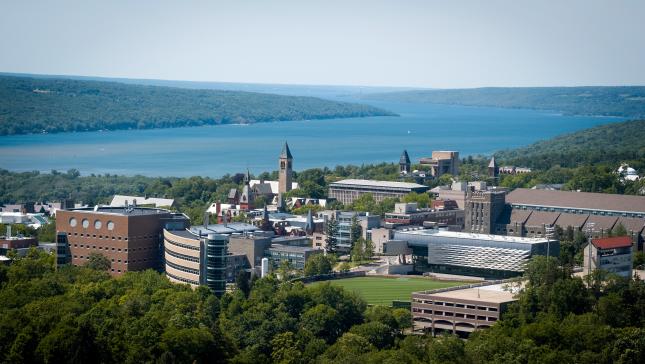
### Discover Cornell's campus.
Ready to see what makes Cornell special? Whether you visit campus or take a virtual tour, see where you could be studying, collaborating, and bringing your ideas to life.
[Explore campus](https://www.cornell.edu/visit/)
Quicklinks
----------
* [Cornell Undergraduate Admissions](https://admissions.cornell.edu/applicant-portal)
* [Cornell Graduate School Admissions](https://gradschool.cornell.edu/admissions/)
* [Cornell Financial Aid](https://finaid.cornell.edu/)
Bowers Student Stories
----------------------
[View all stories](https://bowers.cornell.edu/news-stories/student-stories)
[View all stories](https://bowers.cornell.edu/news-stories/student-stories)
---
# Lorenzo Alvisi Home Page
| | |
| --- | --- |
|  | Lorenzo Alvisi
_[Tisch University Professor](http://news.cornell.edu/stories/2017/07/alumnus-returns-cornell-tisch-university-professor)
_ and CS Department Chair |
| |
| |
| Ph.D. in Computer Science: [Cornell](http://www.cs.cornell.edu/)
, 1996
M.S. in Computer Science: [Cornell](http://www.cs.cornell.edu/)
, 1994
Laurea in Physics: [Università di Bologna](http://www.unibo.it/)
, Italy, 1987 |
| | |
| |
| **Office**: _402A [Gates Hall](http://www.cornell.edu/video/gates-hall)
_
**Phone**: _(607) 255-4289_
**E-mail**: [lorenzo (at) cs (dot) cornell (dot) edu](mailto:lorenzo@cs.utexas.edu) |
| |
| |
| |
| [Keeton House](https://williamkeetonhouse.cornell.edu/)
Fellow |
| |
| **Meet my [evil twin](https://www.cs.cornell.edu/lorenzo/EvilLorenzo.pdf)
** (credits: Andrew Matsuoka) |
* * *
|  | Research Interests |
| --- | --- |
| |
| I am interested in the theory and practice of dependable Distributed Computing.
More about my group and our research is available [here](http://principled.cs.cornell.edu/) |
* * *
|  | Courses | |
| --- | --- |
| [CS 5414: Distributed Computing Principles](http://www.cs.cornell.edu/courses/cs5414/2025fa/) | Fall 2025 |
| [TASP 07: Science, Technology, and the Responsible Citizen](https://www.cs.cornell.edu/lorenzo/TASP.pdf) | Summer 2007 |
* * *
l tr>
|  | Students | |
| --- | --- |
| | [Amitanand Aiyer](https://scholar.google.com/citations?user=i3fxj4YAAAAJ&hl=en)
(Ph.D. 2010) |
| | [Matthew Burke](http://www.cs.cornell.edu/~matthelb/)
(Ph.D. 2023) |
| | [Allen Clement](http://www.cs.utexas.edu/users/harry/)
(Ph.D. 2010) |
| | [Natacha Crooks](https://nacrooks.github.io/)
(Ph.D. 2019) |
| | Sowmya Dharanipragada (Ph.D. 2024) |
| | [Cong Ding](https://cding.org/)
(Ph.D. 2020) |
| | [Trinabh Gupta](https://sites.cs.ucsb.edu/~trinabh/)
(Ph.D. 2017) |
| Shubham Chaudhary | [Manos Kapritsos](https://web.eecs.umich.edu/~manosk/)
(Ph.D. 2014) |
| | [Harry Li](https://www.linkedin.com/in/hcli)
(Ph.D. 2009) |
| [Ali Farahbakhsh](http://alifarahbakhsh.github.io/) | [Jean-Philippe Martin](http://research.microsoft.com/en-us/people/jpmartin/)
(Ph.D. 2006) |
| [Austin Li](https://atli2001.github.io/) | [Syed Akbar Mehdi](http://www.cs.utexas.edu/lasr/profile.php?uid=129)
(Ph.D. 2022) |
| [Florian Suri-Payer](https://www.cs.cornell.edu/~fsp/) | [Jeff Napper](https://nl.linkedin.com/in/jeff-napper-129b864)
(Ph.D. 2008) |
| | [Youer Pu](https://www.cs.cornell.edu/~youerpu/)
(Ph.D. 2024) |
| | [Evelyn Tumlin Pierce](http://www.imdb.com/name/nm1508916/bio)
(Ph.D. 2000) |
| | [Sriram Rao](https://www.linkedin.com/in/sriram-rao-120324)
(Ph.D. 1999) |
| | Chunzi Su (Ph.D. 2018) |
| | [Yang Wang](http://web.cse.ohio-state.edu/~yangwang/)
(Ph.D. 2014) |
| | [Edmund Wong](https://www.linkedin.com/in/elwong)
(Ph.D. 2013) |
| | [Chao Xie](https://www.cs.utexas.edu/lasr/profile.php?uid=112)
(Ph.D. 2016) |
| | Jian Yin (Ph.D. 2003) |
| | [Yunhao Zhang](https://dolobyte.net/)
(Ph.D. 2024) |
* * *
| | |
| --- | --- |
|  | [**Publications**](https://www.cs.cornell.edu/lorenzo/publications.html) |
| [**Honors**](https://www.cs.cornell.edu/lorenzo/honors.html) |
| [**CV**](https://www.cs.cornell.edu/lorenzo/vitae.pdf) |
* * *
| | |
| --- | --- |
|  | [**Opera**](http://tgiout.weebly.com/) |
* * *
|  | Transportation |
| --- | --- | --- |
| [](https://www.cs.cornell.edu/lorenzo/centauro.html) | [](https://www.cs.cornell.edu/lorenzo/sportclassic.html) | [](https://www.cs.cornell.edu/lorenzo/oneclick.html) |
* * *
Last Modified August 15 08:00:00 EDT 2017
Lorenzo Alvisi / lorenzo (at) cs (dot) cornell (dot) edu
---
# Rachit Agarwal
Associate Professor,
[Department of Computer Science](https://www.cs.cornell.edu/)
, [Cornell University](https://www.cornell.edu/)
.
My research interests are in systems and networking. I am also interested in theoretical problems arising out of building practical systems. My research thus spans (and integrates) systems, networks, and theory.
**ragarwal at cs cornell edu** (please read [this](https://www.cs.cornell.edu/~ragarwal/contact.html)
before sending me an email)
[CV](http://www.cs.cornell.edu/~ragarwal/cv-rachit.pdf)
**|** [Google scholar](https://scholar.google.com/citations?user=71IXR1QAAAAJ&hl=en)
**|** [Short Bio](https://www.cs.cornell.edu/~ragarwal/bio.html)
* * *
### News
* **2025**
* Congratulations to [Prof. Dr. Saksham Agarwal](https://saksham.web.illinois.edu/)
for winning the ACM SIGCOMM Doctoral Dissertation award!
* Congratulations to [Prof. Dr. Saksham Agarwal](https://saksham.web.illinois.edu/)
for winning the Cornell Bowers CIS Dissertation award!
* [Tau Beta Pi Professor of the Year award](http://www.cs.cornell.edu/~ragarwal/)
!
* [HostCC](http://www.cs.cornell.edu/~ragarwal/pubs/hostcc.pdf)
wins the IRTF Applied Networking Research Prize 2025!
* [Understanding the Host Network](https://www.cs.cornell.edu/~ragarwal/pubs/understanding-the-host-network.pdf)
in SIGMETRICS Best-of-the-Rest!
* **Other recent-ish news**
* \[2024\] PhD #1! Congratulations to [Prof. Dr. Saksham Agarwal](https://saksham.web.illinois.edu/)
for defending his PhD thesis and starting as a faculty at UIUC!
* \[2024\] PhD #2! Congratulations to [Prof. Dr. Qizhe Cai](https://qizhe.github.io/)
for defending his PhD thesis and starting as a faculty at UVA!
* \[2024\] [Understanding the Host Network](http://www.cs.cornell.edu/~ragarwal/pubs/understanding-the-host-network.pdf)
wins Best Student Paper award at SIGCOMM 2024!
* \[2022\] Congratulations to [Qizhe Cai](http://www.cs.cornell.edu/~qizhec/)
for winning 2022 [Facebook/Meta PhD Fellowship](http://www.cs.cornell.edu/information/news/newsitem10424/saksham-agarwal-receives-google-phd-fellowship)
!
* \[2021\] James and Mary Tien Teaching Award, the highest teaching award in Cornell College of Engineering.
* \[2021\] Sloan Research Fellowship!
* \[2021\] NSF CAREER award!
* \[2021\] $1M NSF award for work on [Pancake](http://www.cs.cornell.edu/~ragarwal/pubs/pancake.pdf)
!
* \[2020\] [Pancake](http://www.cs.cornell.edu/~ragarwal/pubs/pancake.pdf)
wins Distinguished Paper award at Usenix Security'20!
* \[2019\] Congratulations to [Saksham Agarwal](http://www.cs.cornell.edu/~saksham/)
for winning 2019 [Google PhD Fellowship](http://www.cs.cornell.edu/information/news/newsitem10424/saksham-agarwal-receives-google-phd-fellowship)
!
* \[2018\] [Sincronia](http://www.cs.cornell.edu/~ragarwal/pubs/sincronia.pdf)
wins Best Student Paper award at SIGCOMM'18!
* \[2017\] [$3M NSF award](https://www.nsf.gov/awardsearch/showAward?AWD_ID=1704742&HistoricalAwards=false)
for work on Resource Disaggregation!
### Students
| | |
| --- | --- |
| [Midhul Vuppalapati](http://www.cs.cornell.edu/~midhul/) | \[SIGCOMM'24 Best Student Paper Award\] \[Cornell Fellowship\] \[2x Outstanding TA award\] |
| [Shreyas Kharbanda](https://www.shreyaskharbanda.com/) | \[CRA Undergraduate Researcher award Honorable Mention\] |
| [Omar Eqbal](https://eqbalomar.github.io/) | \[IIT KGP Gold Medal\] |
### Alumni
| | |
| --- | --- |
| [Saksham Agarwal](https://saksham.web.illinois.edu/)
(PhD, 2024) | Assistant Professor, UIUC |
| [Qizhe Cai](https://qizhe.github.io/)
(PhD, 2024) | Assistant Professor, UVA |
| [Sujaya Maiyya](https://cs.uwaterloo.ca/~smaiyya/)
(Postdoc, 2022) | Assistant Professor, University of Waterloo |
| [Mina Tahmasbi Arashloo](https://mina.arashloo.net/)
(Postdoc, 2020-2022) | Assistant Professor, University of Waterloo |
| [Jaehyun Hwang](https://sites.google.com/site/bekind/)
(Postdoc, 2019-2021) | Assistant Professor, Sungkyunkwan University |
| [Anurag Khandelwal](http://anuragkhandelwal.com/)
(Postdoc, 2019) | Assistant Professor, Yale University |
| [Katie Gioioso](https://www.linkedin.com/in/katherine-gioioso)
(MS, 2021) | PhD student, Stanford |
### Current Projects
* **Resource Disaggregation**: Shared-nothing architectures provide good data locality and cross-job isolation. However, for modern workloads where peak resource demands can be much higher than the average, shared-nothing architectures beget extreme resource underutilization, high cost and inflexibility. Disaggregating compute from storage has the potential to overcome these limitations! To realize this goal, we are working along several directions:
* Network Fabric and Stacks for disaggregated architectures \[[OSDI'16a](http://www.cs.cornell.edu/~ragarwal/pubs/disaggregation.pdf)\
\] \[[NSDI'19a](http://www.cs.cornell.edu/~ragarwal/pubs/shoal.pdf)\
\] \[[OSDI'24](http://www.cs.cornell.edu/~ragarwal/pubs/host-networking-accelerators.pdf)\
\]
* Storage stack for disaggregated architectures \[[NSDI'20a](http://www.cs.cornell.edu/~ragarwal/pubs/i10.pdf)\
\] \[[OSDI'21](http://www.cs.cornell.edu/~ragarwal/pubs/blk-switch.pdf)\
\]
* Distributed programming frameworks on disaggregated architectures \[[NSDI'20b](http://www.cs.cornell.edu/~ragarwal/pubs/snowset.pdf)\
\] \[[EuroSys'22](http://www.cs.cornell.edu/~ragarwal/pubs/jiffy.pdf)\
\] \[[OSDI'23](http://www.cs.cornell.edu/~ragarwal/pubs/karma.pdf)\
\]
**$3M award from NSF, Google faculty research award, Open-sourced, Deployed in the real world.**
* **Host Architecture**: Rapid innovation in host and network fabric interconnects (hosts will soon have Terabit interconnects), coupled with relatively stagnant technology trends for essentially all other host resources (core speeds and counts, memory access latencies, cache sizes, etc.), mark a fundamental shift in how we design and build intra-host architecture. We are building an understanding of this shift, and designing and building host hardware, operating systems, network hardware and network protocols for hosts with terabit interconnects.
* Understanding the (poor) interplay between processor, memory and peripheral interconnects \[[SIGCOMM'21](http://www.cs.cornell.edu/~ragarwal/pubs/network-stack.pdf)\
\] \[[HotNets'22](http://www.cs.cornell.edu/~ragarwal/pubs/host-congestion.pdf)\
\] \[[SIGCOMM'24](http://www.cs.cornell.edu/~ragarwal/pubs/understanding-the-host-network.pdf)\
\]
* Rearchitecting Network Stack and protocols \[[SIGCOMM'22a](http://www.cs.cornell.edu/~ragarwal/pubs/netchannel.pdf)\
\] \[[SIGCOMM'23](http://www.cs.cornell.edu/~ragarwal/pubs/hostcc.pdf)\
\]
* Rearchitecting Operating Systems \[[SOSP'24a](http://www.cs.cornell.edu/~ragarwal/pubs/colloid.pdf)\
\] \[[SOSP'24b](http://www.cs.cornell.edu/~ragarwal/pubs/fands.pdf)\
\]
**ACM SIGCOMM Doctoral Dissertation award, Cornell Bowers CIS Dissertation award, IRTF Applied Networking Research Prize 2025, SIGCOMM'24 Best Student Paper Award, Google Research Scholar award.**
* **PANCAKE for Secure (Oblivious) Cloud Storage**: One of the core problems in offloading data to the cloud is that, even if data is encrypted, an adversary can launch powerful attacks rendering data encryption ineffective. We are designing systems that build upon strong theoretical foundation to enable secure offload of data even under powerful adversarial attacks.
* Length Leakage \[[Security'24a](http://www.cs.cornell.edu/~ragarwal/pubs/length-leakage.pdf)\
\] in oblivious data access under passive persistent adversaries.
* Attacks against password managers \[[Security'24b](http://www.cs.cornell.edu/~ragarwal/pubs/password-managers.pdf)\
\].
* Attacks against encrypted cloud backups \[[Oakland'24](http://www.cs.cornell.edu/~ragarwal/pubs/e2e-injection-attacks.pdf)\
\].
* ShortStack \[[OSDI'22](http://www.cs.cornell.edu/~ragarwal/pubs/shortstack.pdf)\
\] for distributed, fault-tolerant, proxy design in oblivious data access.
* Pancake \[[Security'20](http://www.cs.cornell.edu/~ragarwal/pubs/pancake.pdf)\
\] for efficient oblivious data access under passive persistent adversaries.
* Obladi \[[OSDI'18](http://www.cs.cornell.edu/~ragarwal/pubs/obladi.pdf)\
\] for transactions on ORAM.
**$1M NSF Award, Usenix Security'20 distinguished paper award, security mitigations incorporated within Android.**
* **Near-optimal Datacenter Design**: We are designing and building datacenter transport designs that provide provable worst-case guarantees. Some of the projects include:
* Congestion-free Datacenter Network Architecture \[[NSDI'24](http://www.cs.cornell.edu/~ragarwal/pubs/harmony.pdf)\
\];
* Formal Methods for Network Performance Analysis \[[NSDI'23](http://www.cs.cornell.edu/~ragarwal/pubs/perf-analysis.pdf)\
\];
* dcPIM \[[SIGCOMM'22b](http://www.cs.cornell.edu/~ragarwal/pubs/dcpim.pdf)\
\], a near-optimal proactive receiver-driven datacenter transport;
* Oblivious reconfigurable (circuit-switched) networks \[[STOC'22](https://arxiv.org/abs/2111.08780)\
\];
* Throughput-optimal Datacenter Network Scheduling \[[PODC'22](http://www.cs.cornell.edu/~ragarwal/pubs/podc22.pdf)\
\];
* CodedBulk \[[NSDI'21](http://www.cs.cornell.edu/~ragarwal/pubs/codedbulk.pdf)\
\] for Inter-datacenter bulk transfers;
* Sincronia \[[SIGCOMM'18](http://www.cs.cornell.edu/~ragarwal/pubs/sincronia.pdf)\
\] for Coflows;
* Universal Packet Scheduling \[[NSDI'16a](http://www.cs.cornell.edu/~ragarwal/pubs/ups.pdf)\
\] for flexible packet scheduling;
**SIGCOMM'18 Best Student Paper Award.**
### Few Past Projects
Here are some of the projects that I have worked on in the past:
* **Succinct**, a distributed storage system that enables queries directly on compressed data.
* Succinct \[[NSDI'15](http://www.cs.cornell.edu/~ragarwal/pubs/succinct.pdf)\
\] for random access, substring search, and even regular expression matches directly on semi-structured data;
* BlowFish \[[NSDI'16b](http://www.cs.cornell.edu/%7Eragarwal/pubs/blowfish.pdf)\
\] that enables a smooth performance-storage tradeoff;
* ZipG \[[SIGMOD'17](http://www.cs.cornell.edu/~ragarwal/pubs/zipg.pdf)\
\] for graph queries directly on compressed graphs.
**Open-sourced and deployed in the real-world.**
* **Anteater** and **PathDump**, systems for datacenter network data plane monitoring and debugging.
* Anteater \[[SIGCOMM'11](http://www.cs.cornell.edu/%7Eragarwal/pubs/anteater.pdf)\
\], one of the first systems that proposed network debugging at the data plane.
* PathDump \[[OSDI'16b](http://www.cs.cornell.edu/~ragarwal/pubs/pathdump.pdf)\
\] for end-hosts based monitoring and debugging;
* SwitchPointer \[[NSDI'18](http://www.cs.cornell.edu/~ragarwal/pubs/switchp.pdf)\
\] for enabling in-network visibility;
* Confluo \[[NSDI'19b](http://www.cs.cornell.edu/~ragarwal/pubs/confluo.pdf)\
\] for efficient end-host stacks for low-overhead monitoring and debugging.
**Laid the foundation for research on network monitoring and debugging at the data plane. Open-sourced.**
* **Approximate Distance Oracles and Compact Routing**, that introduced new data structures, algorithms and techniques for approximate distance queries on graphs.
* Linear Space for Stretch 3 and higher \[[INFOCOM'11](http://www.cs.cornell.edu/%7Eragarwal/pubs/sparse.pdf)\
\];
* Stretch 2 \[[PODC'13](http://www.cs.cornell.edu/%7Eragarwal/pubs/stretch2.pdf)\
\];
* Stretch Less Than 2 \[[SODA'13](http://www.cs.cornell.edu/%7Eragarwal/pubs/less_than_2.pdf)\
, [ESA'14](http://www.cs.cornell.edu/~ragarwal/pubs/esa14.pdf)\
\];
* Applications to BGP \[[ToN'14](http://www.cs.cornell.edu/%7Eragarwal/pubs/ton14.pdf)\
\];
**This project led to the first improvement over several classical decade-old theory results.**
### Teaching
| | |
| --- | --- |
| Introduction to Computer Networks | \[[Spring'25](http://www.cs.cornell.edu/courses/cs4450/2025sp)
\] \[[Fall'22](http://www.cs.cornell.edu/courses/cs4450/2022fa)
\] \[[Spring'21](http://www.cs.cornell.edu/courses/cs4450/2021sp)
\] \[[Spring'20](http://www.cs.cornell.edu/courses/cs4450/2020sp)
\] \[[Spring'19](http://www.cs.cornell.edu/courses/cs4450/2019sp)
\] \[[Spring'18](http://www.cs.cornell.edu/courses/cs4450/2018sp)
\] |
| Advanced Computer Networks | \[[Spring'23](http://www.cs.cornell.edu/courses/cs6450/2023sp/)
\] \[[Fall'19](http://www.cs.cornell.edu/courses/cs6450/2019fa/)
\] \[[Fall'18](http://www.cs.cornell.edu/courses/cs6450/2018fa/)
\] \[[Fall'17](http://www.cs.cornell.edu/courses/cs6455/2017fa/index.html)
\] |
| Operating Systems | \[[Fall'21](http://www.cs.cornell.edu/courses/cs4410/2021fa/)
\] \[[Fall'16](http://www.cs.cornell.edu/courses/cs4410/2016fa/index.html)
\] |
| Special Topics: Building Disaggregated Systems | \[[Spring'22](http://www.cs.cornell.edu/courses/cs4410/2021fa/)
\] |
| Special Topics: Computer Networks in a Decade from Now | \[[Fall'20](https://www.cs.cornell.edu/~ragarwal/)
\] |
| Big Data Systems: Trends and Challenges | \[[Spring'17](http://www.cs.cornell.edu/courses/cs6453/2017sp/index.html)
\] |
### Professional Activities
* **Organization**
| | |
| --- | --- |
| NSF Workshop on Long-term Research Directions in Wired Networking | \[[2023](http://www.cs.cornell.edu/~ragarwal)
\] |
| CCC Workshop on Wide-Area Analytics | \[[2019](https://cra.org/ccc/events/wide-area-data-analytics/)
\] |
| SIGMETRICS Tutorials Chair | \[[2019](https://www.sigmetrics.org/sigmetrics2019/)
\] |
| NSDI Poster Chair | \[[2018](https://www.usenix.org/conference/nsdi18)
\] |
| HotOS General Chair | \[[2017](https://www.sigops.org/hotos/hotos17/index.html)
\] |
* **Program Committee**
| | |
| --- | --- |
| ISMM | \[[2025](https://conf.researchr.org/home/ismm-2025)
\] |
| OSDI | \[[2023](https://www.usenix.org/conference/osdi23)
\] \[[2020](https://www.usenix.org/conference/osdi20)
\] \[[2018](https://www.usenix.org/conference/osdi18)
\] |
| NSDI | \[[2023](https://www.usenix.org/conference/nsdi23)
\] \[[2021](https://www.usenix.org/conference/nsdi21)
\] \[[2020](https://www.usenix.org/conference/nsdi20)
\] \[[2018](https://www.usenix.org/conference/nsdi18)
\] |
| HotNets | \[[2023](https://conferences.sigcomm.org/hotnets/2023/)
\] |
| SIGCOMM | \[[2020](https://conferences.sigcomm.org/sigcomm/2020/)
\] |
| SIGMETRICS | \[[2020](https://www.sigmetrics.org/sigmetrics2020/)
\] \[[2019](https://www.sigmetrics.org/sigmetrics2019/)
\] \[[2018](https://www.sigmetrics.org/sigmetrics2018/)
\] |
| ATC | \[[2020](https://www.usenix.org/conference/atc20)
\] \[[2018](https://www.usenix.org/conference/atc18)
\] \[[2017](https://www.usenix.org/conference/atc17)
\] |
| APoCS | \[[2020](https://www.siam.org/Conferences/CM/Conference/apocs20)
\] |
| SOSR | \[[2017](http://conferences.sigcomm.org/sosr/2017/)
\] |
| CoNext | \[[2016](http://conferences2.sigcomm.org/co-next/2016/)
\] |
| HotCloud | \[[2016](https://www.usenix.org/conference/hotcloud16)
\] |
| ICDCS | \[[2016](http://www-higashi.ist.osaka-u.ac.jp/icdcs2016/)
\] |
---
# Claire Cardie's Home Page
Claire Cardie
Professor, Department of [Computer Science](http://www.cs.cornell.edu/)
and Department of [Information Science](http://www.cs.cornell.edu/)
Associate Dean for Education, Bowers College of Computing and Information Science
Cornell University
417 Gates Hall
**Phone:** 607-255-9206
**Fax:** 607-255-4428
**Email:** cardie at cs dot cornell dot edu
**Administrative assistant:** Randy Hess (rbhess at cs dot cornell dot edu), Gates 401
**On sabbatical for academic year 2022-2023.**
\[[Short Bio](https://www.cs.cornell.edu/home/cardie/bio.txt)\
, [CV/Resume](https://www.cs.cornell.edu/home/cardie/ctc-cv.pdf)\
\]
* * *
Research Interests
My primary research is in the area of **natural language processing (NLP)** where our goal is to develop algorithms and systems that will vastly improve a user's ability to find, absorb, and extract information from on-line text. My group's research generally proceeds at two complementary levels: we focus both on building real systems for large-scale natural language processing tasks and on developing techniques to address underlying theoretical problems in the syntactic, semantic and pragmatic analysis of natural language. We rely on machine learning techniques including neural networks as our primary modeling tool, both for guiding natural language system development and for exploring the mechanisms that underlie language understanding.
* * *
Publications: see [Google Scholar page](https://scholar.google.com/citations?hl=en&user=ex9BQiIAAAAJ&view_op=list_works)
* * *
Recent Teaching
* CS4740/5740 _Introduction to Natural Language Processing_, [Fall 2021](http://www.cs.cornell.edu/courses/cs4740/)
.* CS6740/INFO6300 _Advanced Language Technologies_, [Spring 2022](http://www.cs.cornell.edu/courses/cs6740/)
.
* * *
Marseille (Nov 2008 - Oct 2019)
* Very short video: Marseille wants his dinner when I am [trying to work!!](https://www.cs.cornell.edu/home/cardie/marseille/stop-working.mov)
* Agility Class (with Janet Frand at Pawsitively Fun). Marseille never quite caught on to the fact that we were supposed to do the courses as FAST as possible:
[Dec 19 2013](https://www.cs.cornell.edu/home/cardie/marseille/agility_2013_12_19.mov)
---
# Eshan Chattopadhyay
Eshan Chattopadhyay
===================
Associate Professor of [Computer Science](http://www.cs.cornell.edu/)
Cornell University
email:
Phone: (607) 216-9496


I am broadly interested in [theoretical computer science](https://en.wikipedia.org/wiki/Theoretical_computer_science)
and a member of the [theory group](https://www.cs.cornell.edu/research/theory)
at Cornell University. Here is a [brief bio](https://www.cs.cornell.edu/~eshan/bio.html)
and a [CV.](https://www.cs.cornell.edu/~eshan/CV.pdf)
[Click here](https://www.cs.cornell.edu/~eshan/publications.html)
to find a complete list of my publications.
I co-organize the [Cornell CS theory seminar](https://www.cs.cornell.edu/events/theory-seminar)
. Drop me a line if you are interested in giving a talk!
Please read [this](https://www.cs.cornell.edu/~eshan/FAQ.html)
before sending me an email!
**Current PhD students:**
* [Mohit Gurumukhani](https://www.mohitgurumukhani.com/)
* [Noam Ringach](https://nbingo.github.io/)
* [Yunya Zhao](https://yunya-zhao.github.io/)
* [Oren Renard](https://dblp.org/pid/286/6162.html)
, co-advised with [Nick Spooner](https://spooner.cc/)
.
**Former PhD Students (with first employment):**
* [Jyun-Jie Liao](https://www.cs.cornell.edu/~jjliao/)
, PhD 2024. (Postdoctoral Researcher at UCSD.)
* [Jesse Goodman](https://www.cs.cornell.edu/~jpmgoodman/)
, PhD 2023. (Postdoctoral Fellow at UT Austin.)
**Teaching**
* CS 6810: Theory of Computing. [Fall 2021](https://courses.cs.cornell.edu/cs6810/2021fa/)
, [Fall 2023](https://courses.cs.cornell.edu/cs6810/2023fa/)
, Spring 2026
* CS 4820: Introduction to Analysis of Algorithms. [Spring 2019](https://courses.cs.cornell.edu/cs4820/2019sp/)
(co-taught with Bobby Kleinberg), [Spring 2022](https://courses.cs.cornell.edu/cs4820/2022sp/)
, [Spring 2023](https://courses.cs.cornell.edu/cs4820/2023sp/)
(co-taught with Katherine Van Koevering), [Fall 2025](https://courses.cs.cornell.edu/cs4820/2025fa/)
* CS 6817: Analysis of Boolean Functions. [Fall 2020](https://courses.cs.cornell.edu/cs6817/2020fa/)
, [Spring 2025](https://courses.cs.cornell.edu/cs6817/2025sp/)
* CS 4814: Introduction to Computational Complexity. [Spring 2020](https://courses.cs.cornell.edu/cs4814/2020sp/)
, [Spring 2021](https://courses.cs.cornell.edu/cs4814/2021sp/)
, [Fall 2024](https://courses.cs.cornell.edu/cs4814/2024fa/)
* CS 6815: Pseudorandomness and Combinatorial Constructions. [Fall 2018](https://courses.cs.cornell.edu/cs6815/2018fa/)
, [Fall 2019](https://courses.cs.cornell.edu/cs6815/2019fa/)
, [Fall 2022](https://courses.cs.cornell.edu/cs6815/2022fa/)
* [CSMore Program](https://www.cs.cornell.edu/events/presophomoresummerprogram)
: [Summer 2020](https://news.cornell.edu/stories/2020/06/summer-program-aims-lower-barriers-cs-majors)
, [Summer 2021](https://news.cornell.edu/stories/2021/07/summer-cis-programs-foster-diversity-community)
. Short introduction to Discrete Structures (pre-2800), co-taught with Éva Tardos.
**Program Committees:** [FSTTCS 2017](https://www.fsttcs.org/)
, [FOCS 2018](http://www.irif.fr/~focs2018/)
, [RANDOM 2020](https://randomconference.com/random-2020-home/)
, [CCC 2022](https://computationalcomplexity.org/cfp.php)
, [ITC 2022](https://itcrypto.github.io/2022/index.html)
, [STOC 2024](http://acm-stoc.org/stoc2024)
, [SODA 2025](https://www.siam.org/conferences/cm/conference/soda25)
, [ITCS 2025](http://itcs-conf.org/itcs25/itcs25-cfp.html)
, [RANDOM 2025](https://randomconference.com/random-2025-home/)
(PC Chair), [FOCS 2025](https://focs.computer.org/2025/)
, [ITCS 2026](http://itcs-conf.org/)
.
**Some Organizational Activities**
* Co-organizer of the workshop Eastern Great Lakes (EaGL) Theory of Computation Workshop. [2023](https://www.cs.rochester.edu/u/shossei2/eagl2023website/index.html)
, [2024](https://www.cs.rochester.edu/u/shossei2/eagl2024website/index.html)
, [2025](https://www.cs.rochester.edu/u/shossei2/eagl2025website/index.html)
* [DavidFest](https://www.cs.utexas.edu/~davidfest/)
, a Pseudorandomness Workshop in honor of [David Zuckerman's](https://www.cs.utexas.edu/~diz/)
60th birthday.
* Co-organizer of the workshop [Beyond the Boolean Cube](https://simons.berkeley.edu/workshops/beyond-boolean-cube#simons-tabs)
in the program [Analysis and TCS: New Frontiers](https://simons.berkeley.edu/programs/analysis-tcs-new-frontiers)
at the Simons Institute, UC Berkeley. Summer 2023
* Co-organizer of the workshop [Cornell Junior Theorists' Workshop](https://www.cs.cornell.edu/content/cornell-junior-theorists-workshop-2023)
. 2023, 2024
* Co-organizer of the workshop titled _Randomness Extractors: Constructions and Applications_ in STOC 2018
**Funding:** [NSF CCF-2514586](https://www.nsf.gov/awardsearch/showAward?AWD_ID=2514586&HistoricalAwards=false)
, [Sloan Research Fellowship](https://sloan.org/fellowships/)
, [NSF CAREER Award](https://www.nsf.gov/awardsearch/showAward?AWD_ID=2045576)
, [NSF CRII](https://www.nsf.gov/awardsearch/showAward?AWD_ID=1849899&HistoricalAwards=false)
**Other writings**
_Invited survey article:_ [A Recipe for Constructing Two-Source Extractors](https://www.cs.cornell.edu/~eshan/sigact.pdf)
_[ACM SIGACT News Complexity Theory Column](https://dl.acm.org/doi/abs/10.1145/3406678.3406688)_ , June 2020 issue
_General audience article:_ [How random is your randomness, and why does it matter?](https://theconversation.com/how-random-is-your-randomness-and-why-does-it-matter-59958)
with David Zuckerman.
**Personal:** I am married to the wonderful [Soubhagya Chattopadhyay](https://www.linkedin.com/in/soubhagya-chattopadhyay-a4747460/)
.
---
# Hadar Averbuch-Elor | Department of Computer Science | Cornell Bowers
[Skip to main content](https://www.cs.cornell.edu/people/hadar-averbuch-elor#main-content)
Bowers Menu
[](https://bowers.cornell.edu/)
What are you interested in?
Search

[Back to people directory](https://www.cs.cornell.edu/directory)
Hadar Averbuch-Elor
===================
Assistant Professor of Computer Science
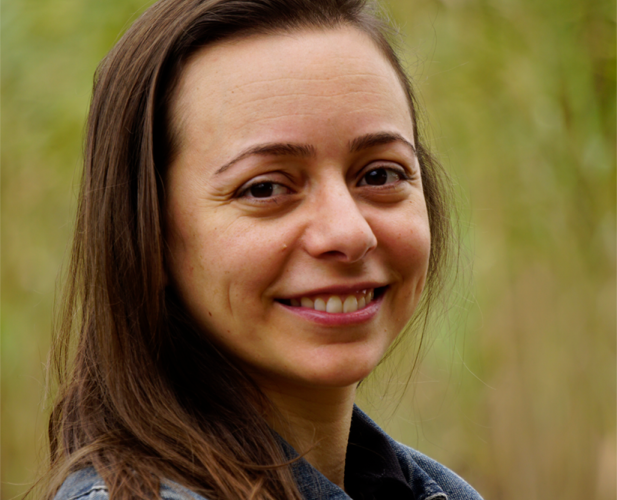
About
-----
Hadar Averbuch-Elor is an assistant professor of computer science at Cornell Tech and the Cornell Ann S. Bowers College of Computing and Information Science. Averbuch-Elor’s research interests lie in the intersection of computer graphics and computer vision, particularly in combining pixels with more structured modalities, such as natural language and 3D geometry.
Prior to joining Cornell Tech, Averbuch-Elor was an assistant professor at Tel Aviv University. She has received multiple awards, including the Zuckerman Postdoctoral Scholar Fellowship and the Schmidt Postdoctoral Award for Women in Mathematical and Computing Sciences. Averbuch-Elor was also selected as a Rising Star in Electrical Engineering and Computer Sciences by the University of California, Berkeley. She holds a B.S. from the Technion Israel Institute of Technology and a Ph.D. from Tel Aviv University.
Research Website
[Website](https://www.elor.sites.tau.ac.il/)
Research areas
Graphics
Vision
Contact
hadarelor@cornell.edu
Location
Cornell Tech
Profile Type
Faculty (Department)
Computer Science
Additional Links
[Cornell Tech Profile](https://tech.cornell.edu/people/hadar-averbuch-elor/)
News + Stories featuring Hadar Averbuch-Elor
--------------------------------------------
[View All Stories](https://www.cs.cornell.edu/news-stories/3122)
[\
\
AI models makes precise copies of cuneiform characters\
\
* Research + Innovation](https://news.cornell.edu/stories/2025/03/ai-models-makes-precise-copies-cuneiform-characters)
[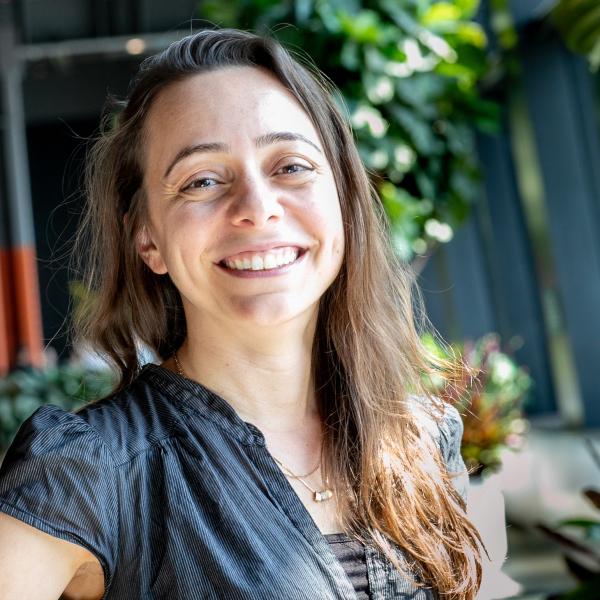\
\
Simplifying computer vision and graphics: Hadar Averbuch-Elor\
\
* Around the College](https://tech.cornell.edu/news/simplifying-computer-vision-and-graphics-hadar-averbuch-elor/)
[View All Stories](https://www.cs.cornell.edu/news-stories/3122)
---
# People Directory | Department of Computer Science | Cornell Bowers
[Skip to main content](https://www.cs.cornell.edu/directory/staff#main-content)
Bowers Menu
[](https://bowers.cornell.edu/)
What are you interested in?
Search

Department Directory
====================
Find people and offices in Computer Science.
* Search
* Filter by
Search by Name, Position title or Office
College/Department
Bowers
Computer Science
Information Science
Statistics & Data Science
Location
\- Any -
Ithaca
NYC
[View Complete Faculty Index](https://www.cs.cornell.edu/directory/index)
Richard Bernstein
Programmer/Analyst
Contact
[rab38@cornell.edu](mailto:rab38@cornell.edu)
Profile Type
Staff
Computer Science
View Details
**Office:** Gates Hall 340
Location
Ithaca

Kimberly Budd
Faculty Course Support Specialist
Contact
[kj37@cornell.edu](mailto:kj37@cornell.edu)
Profile Type
Staff
Computer Science
View Details
Location
Ithaca
Office
Gates Hall 401
Amy Elser
Faculty Course Support Specialist
Contact
[ahf42@cornell.edu](mailto:ahf42@cornell.edu)
Profile Type
Staff
Computer Science
View Details
Remote Monday and Tuesday; In the office Wednesday-Friday
Location
Ithaca
Elizabeth Estabrook
Interim Senior Director of Administration for the Departments of Computer Science and Information Science
Contact
[ee54@cornell.edu](mailto:ee54@cornell.edu)
Profile Type
Staff
Leadership
Director
Computer Science
Staff
Leadership
Director
Information Science
View Details
Location
Ithaca
Office
Gates Hall 402
Shailja Gaur
Program Assistant
Contact
[sg2276@cornell.edu](mailto:sg2276@cornell.edu)
Profile Type
Staff
Computer Science
View Details
Monday-Thursday in office; Friday remote
Location
Ithaca
Office
Gates Hall 347
Erin Grainger
Admissions Associate, M.Eng Program
Contact
[ehg39@cornell.edu](mailto:ehg39@cornell.edu)
Profile Type
Staff
Computer Science
View Details
Location
Ithaca
Office
Computing and Information Science Building, Suite 233B
Randy Hess
Purchasing Assistant
Contact
[rbh27@cornell.edu](mailto:rbh27@cornell.edu)
Profile Type
Staff
Computer Science
View Details
Location
Ithaca
Office
Gates Hall 338

Lacy Jordaens
Faculty Course Support Specialist
Contact
[lsl92@cornell.edu](mailto:lsl92@cornell.edu)
Profile Type
Staff
Computer Science
View Details
In the office Tuesday-Thursday; remote on Monday and Friday
Location
Ithaca
Office
Gates Hall 401
Cameron Kull
Student Services Assistant, Graduate Programs
Contact
[cak264@cornell.edu](mailto:cak264@cornell.edu)
Profile Type
Staff
Computer Science
View Details
Location
Ithaca
Office
Computing and Information Science Building, Suite 233
Anthony Loinaz
Events Coordinator, Department of Computer Science
Contact
[ARL1@cornell.edu](mailto:ARL1@cornell.edu)
Profile Type
Staff
Computer Science
View Details
Location
Ithaca
Office
Ithaca
Renee Milligan
Assistant Director, Computer Science M.Eng. Program
Contact
[ram25@cornell.edu](mailto:ram25@cornell.edu)
Profile Type
Staff
Computer Science
View Details
Location
Ithaca
Office
Computing and Information Science Building
Iana Paci
Administrative Assistant
Contact
[ip229@cornell.edu](mailto:ip229@cornell.edu)
Profile Type
Staff
Computer Science
View Details
Location
Ithaca
Office
Gates Hall 402
Melody Padgett
MS/Ph.D. Program Assistant
Contact
[mlp57@cornell.edu](mailto:mlp57@cornell.edu)
Profile Type
Staff
Computer Science
View Details
Location
Ithaca
Office
Computing and Information Science Building, Suite 233
Becky Stewart
Associate Director of Computer Science MS and Ph.D. Programs
Contact
[rss7@cornell.edu](mailto:rss7@cornell.edu)
Profile Type
Staff
Computer Science
View Details
Office
Computing and Information Science Building
Stacey Stone
Assistant to the Chair
Contact
[sms252@cornell.edu](mailto:sms252@cornell.edu)
Profile Type
Staff
Computer Science
View Details
Location
Ithaca
Office
Gates Hall 402
Corey Torres
Faculty Course Support Specialist
Contact
[ct635@cornell.edu](mailto:ct635@cornell.edu)
Profile Type
Staff
Computer Science
View Details
Location
Ithaca
Office
Gates Hall 401
Kelsey Whiting
Faculty Assistant
Contact
[Kmc456@cornell.edu](mailto:Kmc456@cornell.edu)
Profile Type
Staff
Computer Science
View Details
[View Complete Faculty Index](https://www.cs.cornell.edu/directory/index)
[Back to Top](https://www.cs.cornell.edu/directory/staff#backToTop)
---
# Rachit Agarwal | Department of Computer Science | Cornell Bowers
[Skip to main content](https://www.cs.cornell.edu/people/rachit-agarwal#main-content)
Bowers Menu
[](https://bowers.cornell.edu/)
What are you interested in?
Search

[Back to people directory](https://www.cs.cornell.edu/directory)
Rachit Agarwal
==============
Associate Professor of Computer Science

About
-----
Rachit Agarwal is an associate professor of computer science. His primary research interests are in systems and networking. He is also interested in theoretical problems arising out of building practical systems. Agarwal’s research has been awarded a Sloan Research Fellowship, an NSF CAREER award, a Kavli Fellowship with the National Academy of Sciences, an IRTF Applied Networking Research Prize, and multiple best paper awards at SIGCOMM and Usenix Security. Agarwal loves teaching. He received the 2025 Tau Beta Pi Professor of the Year Award and the James and Mary Tien Excellence in Teaching, the highest teaching award from Cornell Engineering for sustained excellence and innovation in engineering education.
Research Website
[Agarwal's website](https://www.cs.cornell.edu/~ragarwal/)
Research areas
Architecture
Systems + Networking
Theory of Computing
CV
[View CV](http://www.cs.cornell.edu/~ragarwal/cv-rachit.pdf)
Contact
RA625@cornell.edu
Location
Gates Hall 411C
Profile Type
Faculty (Department)
Computer Science
Awards
------
[View all Awards Received](https://www.cs.cornell.edu/awards/4692)
Sloan Research Fellowship
Alfred P. Sloan Foundation
Rachit Agarwal
* Research
* 2021
### About This Award
[View Rachit Agarwal](https://www.cs.cornell.edu/people/rachit-agarwal)
[View all Awards Received](https://www.cs.cornell.edu/awards/4692)
---
# Yoav Artzi | Department of Computer Science | Cornell Bowers
[Skip to main content](https://www.cs.cornell.edu/people/yoav-artzi#main-content)
Bowers Menu
[](https://bowers.cornell.edu/)
What are you interested in?
Search

[Back to people directory](https://www.cs.cornell.edu/directory)
Yoav Artzi
==========
Associate Professor of Computer Science
About
-----
Yoav Artzi is an associate professor of computer science at Cornell Tech and the Cornell Ann S. Bowers College of Computing and Information Science. His research focuses on developing models and learning methods for natural language understanding and generation in interactive systems.
Artzi’s research group at Cornell Tech is anchored in natural language processing and machine learning, and often extends to robotics, computer vision, and cognitive science. He is also a member of the Cornell Language, Interaction, and Learning (LIL) Lab.
Artzi received an [NSF CAREER](https://www.nsf.gov/funding/opportunities/career-faculty-early-career-development-program)
award, and his work has also been acknowledged by awards and honorable mentions at [ACL](https://www.aclweb.org/portal/)
, [EMNLP](https://2025.emnlp.org/)
, [NAACL](https://2025.naacl.org/)
, and [IROS](https://www.ieee-ras.org/conferences-workshops/financially-co-sponsored/iros)
. He holds a B.Sc. from Tel Aviv University and a Ph.D. from the University of Washington.
In addition, Artzi is the associate faculty director of arXiv, a research-sharing platform maintained and operated by Cornell Tech.
Research Website
[Artzi's Website](http://yoavartzi.com/)
Research areas
Machine Learning
Natural Language Processing (CS)
Contact
yoav@cs.cornell.edu
Location
Cornell Tech
Profile Type
Faculty (Department)
Computer Science
Additional Links
[Cornell Tech Profile](https://tech.cornell.edu/people/yoav-artzi/)
Awards
------
[View all Awards Received](https://www.cs.cornell.edu/awards/4695)
NSF Faculty Early Career Development Award (CAREER)
National Science Foundation
Yoav Artzi
* Education
* 2018
### About This Award
[View Yoav Artzi](https://www.cs.cornell.edu/people/yoav-artzi)
[View all Awards Received](https://www.cs.cornell.edu/awards/4695)
News + Stories featuring Yoav Artzi
-----------------------------------
[View All Stories](https://www.cs.cornell.edu/news-stories/4695)
[Cornell Bowers, LinkedIn announce 2025 grant recipients\
\
* Research + Innovation\
* Student Experience](https://www.cs.cornell.edu/news-stories/cornell-bowers-linkedin-announce-2025-grant-recipients)
[\
\
Associate Professor Yoav Artzi Honored With Test of Time Award\
\
* Faculty Excellence\
* Around the College](https://tech.cornell.edu/news/yoav-artzi-test-of-time-award-tacl/)
[View All Stories](https://www.cs.cornell.edu/news-stories/4695)
---
# Anil Damle
[damle@cornell.edu](mailto:damle@cornell.edu)
423 Gates Hall
Cornell University
**Associate Professor**
[Department of Computer Science](https://www.cs.cornell.edu/)
[Cornell University](https://www.cornell.edu/)
#### News/links
* I am on sabbatical for AY 25-26 at Stanford University.
Research
--------
* * *
#### General Interests
* Numerical linear algebra
* Computational quantum chemistry
* Computational statistics
* Fast algorithms
Students
--------
* * *
#### Current
* Megan Renz (PhD)
* Robin Armstrong (PhD)
* Mai Huynh (PhD)
* Emily Almgren (PhD) \[joint with Erik Thide\]
* Ibrohim Nosirov (PhD)
#### Graduated
* John Ryan (PhD)
* Kangbo Li (PhD)
* Abhay Singh (MS)
Publications
------------
* * *
#### [Google Scholar](https://scholar.google.com/citations?user=VqOc5C8AAAAJ&hl=en)
, [CV](https://www.cs.cornell.edu/~damle/damlecv_web.pdf)
#### Preprints
* Kangbo Li, Anil Damle "Automating Variational Differentiation," \[[arXiv](https://arxiv.org/abs/2406.16154)\
\]
* Megan Flynn, Alexander Wang, Dean Edward Alvarez, Christopher De Sa, and Anil Damle "STAT: Shrinking Transformers After Training," \[[arXiv](https://arxiv.org/abs/2406.00061)\
\]
* Anil Damle, Silke Glas, Alex Townsend, Annan Yu "How to reveal the rank of a matrix?" \[[arXiv](https://arxiv.org/abs/2405.04330)\
\]
* Robin Armstrong, Alex Buzali, and Anil Damle "Structure-aware Analyses and Algorithms for Interpolative Decompositions," \[[arXiv](https://arxiv.org/abs/2310.09452)\
\]
* John Paul Ryan and Anil Damle "Linear Time Kernel Matrix Approximation via Hyperspherical Harmonics," \[[arXiv](https://arxiv.org/abs/2202.03655)\
\]
* Austin R. Benson, Anil Damle, and Alex Townsend "Over-parametrized neural networks as under-determined linear systems," \[[arXiv](https://arxiv.org/abs/2010.15959)\
\]
* Vasileios Charisopoulos, Austin R. Benson, and Anil Damle "Incrementally updated spectral embeddings," \[[arXiv](https://arxiv.org/abs/1909.01188)\
\]
#### Journals
* Kangbo Li, Hsin-Yu Ko, Robert A DiStasio Jr, and Anil Damle "Unambiguous and robust formulation for Wannier localization," _Physical Review B_ 110, 085127 \[[online](https://journals.aps.org/prb/abstract/10.1103/PhysRevB.110.085127)\
\] \[[arXiv](https://arxiv.org/abs/2305.09929)\
\]
* Wenyun Zuo, Anil Damle and Shripad Tuljapurkar, "Sensitivity and uncertainty in the Lee-Carter mortality model," _International Journal of Forecasting_ \[[online](https://www.sciencedirect.com/science/article/pii/S0169207024000645)\
\] \[[bioRxiv](https://www.biorxiv.org/content/10.1101/2023.01.31.526522v1)\
\]
* Eric G Fuemmeler, Anil Damle, Robert A DiStasio Jr "Selected columns of the density matrix in an atomic orbital basis I: an intrinsic and non-iterative orbital localization scheme for the occupied space," Journal of Chemical Theory and Computation, 19 (23), 8572-8586 \[[online](https://pubs.acs.org/doi/full/10.1021/acs.jctc.1c00801)\
\] \[[arXiv](https://arxiv.org/abs/2108.06399)\
\]
* Heather Wilber, Anil Damle, and Alex Townsend “Data-driven Algorithms for signal processing with rational functions,” _SIAM Journal on Scientific Computing_, 2022, 44 (3), C185-C209 \[[SIAM online](https://epubs.siam.org/doi/abs/10.1137/21M1420277)\
\] \[[arXiv](https://arxiv.org/abs/2105.07324)\
\]
* Vasileios Charisopoulos, Austin R. Benson, and Anil Damle “Communication-efficient distributed eigenspace estimation,” _SIAM Journal on Mathematics of Data Science_, 2021, 3 (4), 1067-1092 \[[SIAM online](https://epubs.siam.org/doi/abs/10.1137/20M1364862)\
\] \[[arXiv](https://arxiv.org/abs/2009.02436)\
\]
* John Paul Ryan and Anil Damle "Parallel Skeletonization for Integral Equations in Evolving Multiply-Connected Domains," _SIAM Journal on Scientific Computing_, 2021, 43 (3), A2320-A2351 \[[SIAM online](https://epubs.siam.org/doi/10.1137/20M1316330)\
\] \[[arXiv](https://arxiv.org/abs/2001.11619)\
\]
* Anil Damle and Yuekai Sun "Uniform bounds for invariant subspace perturbations," _SIAM J. Matrix Anal. Appl._, 2020, 41(3), 1208–1236 \[[SIAM online](https://epubs.siam.org/doi/abs/10.1137/19M1262760)\
\] \[[arXiv](https://arxiv.org/abs/1905.07865)\
\] \[[code](https://github.com/asdamle/rowwise-perturbation)\
\]
* Thomas Reeves, Anil Damle, and Austin Benson, "Network interpolation," _SIAM Journal on Mathematics of Data Science_, 2020, 2(2), 505–528 \[[SIAM online](https://epubs.siam.org/doi/abs/10.1137/19M1268380)\
\] \[[arXiv](https://arxiv.org/abs/1905.01253)\
\]
* Anil Damle, Antoine Levitt, and Lin Lin "Variational formulation for Wannier functions with entangled band structure," _SIAM Multiscale Modeling and Simulation_, 2019, 17 (1), 167-191 \[[SIAM online](https://epubs.siam.org/doi/abs/10.1137/18M1167164)\
\] \[[arXiv](https://arxiv.org/abs/1801.08572)\
\] \[[optimization code](https://github.com/antoine-levitt/wannier)\
\] \[[SCDM code](https://github.com/asdamle/SCDM)\
\]
* Anil Damle and Lin Lin "Disentanglement via entanglement: A unified method for Wannier localization," _SIAM Multiscale Modeling and Simulation_, 2018, 16 (3), 1392-1410 \[[SIAM online](https://epubs.siam.org/doi/abs/10.1137/17M1129696)\
\] \[[arXiv](https://arxiv.org/abs/1703.06958)\
\] \[[code](https://github.com/asdamle/SCDM)\
\]
* Anil Damle, Victor Minden, Lexing Ying, "Simple, direct and efficient multi-way spectral clustering," _Information and Inference: a Journal of the IMA_, 2019, 8 (1), 181–203, \[[online](https://academic.oup.com/imaiai/advance-article/doi/10.1093/imaiai/iay008/5045955)\
\] \[[arXiv](http://arxiv.org/abs/1609.08251)\
\] \[[code](https://github.com/asdamle/QR-spectral-clustering)\
\]
* Victor Minden, Kenneth L. Ho, Anil Damle, Lexing Ying, "A recursive skeletonization factorization based on strong admissibility," _SIAM Journal of Multiscale Modeling and Simulation_, 2017, 15 (2), 768-796 \[[online](http://epubs.siam.org/doi/10.1137/16M1095949)\
\] \[[arXiv](http://arxiv.org/abs/1609.08130)\
\]
* Anil Damle, Lin Lin, Lexing Ying, "Computing Localized Representations of the Kohn--Sham Subspace Via Randomization and Refinement," _SIAM Journal on Scientific Computing_, 2017, 39 (6), B1178 - B1198 \[[online](https://epubs.siam.org/doi/abs/10.1137/16M1098589)\
\] \[[arXiv](http://arxiv.org/abs/1604.06830)\
\]
* Victor Minden, Anil Damle, Kenneth L. Ho, Lexing Ying "Fast spatial Gaussian process maximum likelihood estimation via skeletonization factorizations," _SIAM Journal of Multiscale Modeling and Simulation_ 2017, 15 (4), 1584-1611 \[[online](http://epubs.siam.org/doi/abs/10.1137/17M1116477)\
\] \[[arXiv](http://arxiv.org/abs/1603.08057)\
\] \[[code](https://github.com/asdamle/GPMLE)\
\]
* Anil Damle, Lin Lin, Lexing Ying, "SCDM-k: Localized orbitals for solids via selected columns of the density matrix," _Journal of Computational Physics_ Volume 334, 1 April 2017, 1-15 \[[online](http://www.sciencedirect.com/science/article/pii/S0021999116307215)\
\]\[[arXiv](http://arxiv.org/abs/1507.03354)\
\]
* Victor Minden, Anil Damle, Kenneth Ho and Lexing Ying "A technique for updating hierarchical factorizations of integral operators," _SIAM Journal of Multiscale Modeling and Simulation_, 2016, 14 (1), 42-64 \[[online](http://epubs.siam.org/doi/abs/10.1137/15M1024500)\
\] \[[arXiv](http://arxiv.org/abs/1411.5706)\
\]
* Anil Damle, Lin Lin, Lexing Ying, "Compressed representation of Kohn–Sham orbitals via selected columns of the density matrix," _J. Chem. Theory Comput._, 2015, 11 (4), 1463–1469 \[[online](http://pubs.acs.org/doi/abs/10.1021/ct500985f)\
\] \[[arXiv](http://arxiv.org/abs/1408.4926)\
\]
* Anil Damle, Yuekai Sun, "A geometric approach to archetypal analysis and non-negative matrix factorization," _Technometrics_, 2017, 59 (3), 361-370 \[[online](http://www.tandfonline.com/doi/full/10.1080/00401706.2016.1247017)\
\] \[[arXiv](http://arxiv.org/abs/1405.4275)\
\]
* Anil Damle, Lin Lin, Lexing Ying, "Pole expansion for solving a type of parametrized linear systems in electronic structure calculations," _SIAM Journal on Scientific Computing_, 2014, 36 (6), A2929-A2951 \[[online](http://epubs.siam.org/doi/10.1137/130944825)\
\] \[[arXiv](http://arxiv.org/abs/1311.2129)\
\]
* Anil Damle, Gregory Beylkin, Terry Haut, Lucas Monzón, "Near optimal rational approximations of large data sets," _Applied and Computational Harmonic Analysis_, 2013, 35 (2), 251-263 \[[online](http://dx.doi.org/10.1016/j.acha.2012.08.011)\
\]
#### Conference Proceedings
* Jerry Chee, Megan Flynn, Anil Damle, Chris De Sa "Model Preserving Compression for Neural Networks," _NeurIPS 2022_ \[[NeurIPS](https://proceedings.neurips.cc/paper_files/paper/2022/hash/73b038fffc99ae11056e936f9a299508-Abstract-Conference.html)\
\] \[[arXiv](https://arxiv.org/abs/2206.00127)\
\]
* Vasileios Charisopoulos and Anil Damle "Communication-efficient distributed eigenspace estimation with arbitrary node failures," _NeurIPS 2022_ \[[NeurIPS](https://proceedings.neurips.cc/paper_files/paper/2022/hash/f8928b073ccbec15d35f2a9d39430bfd-Abstract-Conference.html)\
\] \[[arXiv](https://arxiv.org/abs/2108.00065)\
\]
* John Paul Ryan, Sebastian Ament, Carla P Gomes, and Anil Damle “The Fast Kernel Transform,” _Proceedings of The 25th International Conference on Artificial Intelligence and Statistics_, PMLR 151:11669-11690, 2022 \[[AISTATS](https://proceedings.mlr.press/v151/ryan22a)\
\] \[[arXiv](https://arxiv.org/abs/2106.04487)\
\]
* Vasileios Charisopoulos, Austin R. Benson, and Anil Damle "Entrywise convergence of iterative methods for eigenproblems," _NeurIPS 2020_ \[[NeurIPS](https://papers.nips.cc/paper/2020/hash/3d8e03e8b133b16f13a586f0c01b6866-Abstract.html)\
\] \[[arXiv](https://arxiv.org/abs/2002.08491)\
\]
* Geoff Pleiss, Martin Jankowiak, David Eriksson, Anil Damle, Jacob R. Gardner "Fast matrix square roots with applications to Gaussian processes and Bayesian optimization," _NeurIPS 2020_ \[[NeurIPS](https://papers.nips.cc/paper/2020/hash/fcf55a303b71b84d326fb1d06e332a26-Abstract.html)\
\] \[[arXiv](https://arxiv.org/abs/2006.11267)\
\]
* Matanya B. Horowitz, Anil Damle, Joel W. Burdick. "Linear Hamilton Jacobi Bellman Equations in High Dimensions," _Decision and Control (CDC), 2014 IEEE 53rd Annual Conference on_, pp. 5880-5887, 15-17 Dec. 2014 \[[arXiv](http://arxiv.org/abs/1404.1089)\
\]
* A. Damle and L. Y. Pao. "Simultaneous Numerical Optimization for Data Association and Parameter Estimation," Proc. _Joint IEEE Conf. Decision and Control and European Control Conf._, Orlando, FL, pp. 7800-7805, Dec. 2011
Teaching
--------
* * *
#### Cornell University
* CS 4220 / MATH 4260 / CS 5223: Numerical Analysis: Linear and Nonlinear Problems — [Spring 2025](https://www.cs.cornell.edu/courses/cs4220/2025sp/)
* CS 6210: Matrix Computations — [Fall 2024](http://www.cs.cornell.edu/courses/cs6210/2024fa/)
* CS 4220 / MATH 4260 / CS 5223: Numerical Analysis: Linear and Nonlinear Problems — [Spring 2024](https://www.cs.cornell.edu/courses/cs4220/2024sp/)
* CS 6210: Matrix Computations — [Fall 2023](http://www.cs.cornell.edu/courses/cs6210/2023fa/)
* CS 4/5780: Introduction to Machine Learning — [Fall 2022](https://www.cs.cornell.edu/courses/cs4780/2022fa/)
* CS 6210: Matrix Computations — [Spring 2022](http://www.cs.cornell.edu/courses/cs6210/2022sp/)
* CS 4/5780: Introduction to Machine Learning — [Fall 2021](https://www.cs.cornell.edu/courses/cs4780/2021fa/)
* CS 6220: Data-Sparse Matrix Computations — [Spring 2021](https://www.cs.cornell.edu/courses/cs6220/2021sp/)
* CS 3220: Computational Mathematics for Computer Science — [Fall 2020](https://www.cs.cornell.edu/courses/cs3220/2020fa/)
* CS 6220: Data-Sparse Matrix Computations — [Spring 2020](https://www.cs.cornell.edu/courses/cs6220/2020sp/)
* CS 3220: Computational Mathematics for Computer Science — [Fall 2019](https://www.cs.cornell.edu/courses/cs3220/2019fa/)
* CS 4220 / MATH 4260: Numerical Analysis: Linear and Nonlinear Problems — [Spring 2019](https://www.cs.cornell.edu/courses/cs4220/2019sp/)
* CS 6210: Matrix Computations — [Fall 2018](http://www.cs.cornell.edu/courses/cs6210/2018fa/)
* CS 4220 / MATH 4260: Numerical Analysis: Linear and Nonlinear Problems — [Spring 2018](https://www.cs.cornell.edu/courses/cs4220/2018sp/)
* CS 6220: Data-Sparse Matrix Computations — [Fall 2017](https://www.cs.cornell.edu/courses/cs6220/2017fa/)
---
# Professor Ken Birman
| | |
| --- | --- |
|  | Kenneth P. Birman
N. Rama Rao Professor of Computer Science
435 Gates Hall, Cornell University
Ithaca, New York 14853
W: 607-255-9199; M: 607-227-0894; F: 607-255-9143
Email: [ken@cs.cornell.edu](mailto:ken@cs.cornell.edu)
CV: [Jun 2025](https://www.cs.cornell.edu/ken/CV.pdf) |
Breaking News.
**Fall 2025 will be my last semester teaching, and while I plan to run my group until all the current PhD and MS students wrap up, I am no longer recruiting new students. This decision is personal... Cornell has been the right place for me, and would remain so going forward were it not for the lure of family out in Seattle. In addition to continuing my Cornell research, I'm also doing some consulting for Microsoft's new Copilot Tuning product group.**
Current Research ([full publications list](http://www.cs.cornell.edu/projects/quicksilver/pubs.html)
).
* _**[Cascade, Vortex.](https://www.cs.cornell.edu/ken/Cascade-Project/index.htm)**_ This pair of systems is my current main focus, although the effort splits between work on Vortex (which is new), Cascade itself (closer to finished) and Derecho, described below. Cascade centers on the observation that data movement is a huge overhead in modern AI and ML applications. How can we run these systems at "peak possible speed" if we have this data movement barrier? Cutting to the chase, Cascade is often 5x, 10x, and sometimes 20x or 100x faster than other platforms when running identical AI logic! We gain these huge speedups through a few innovations.
Vortex extends Cascade to include a bunch of specialized features in support of RAG LLM systems where vector databases are a major component (these need to support approximate search). We haven't published anything on Vortex yet.
We maintain a full project web site [here](https://www.cs.cornell.edu/ken/Cascade-Project)
, and our GitHub site is [here](https://github.com/derecho-project/cascade)
. I'll limit myself to a summary on this page, but you can find links to some papers at the bottom of the Cascade project page and also on our publications list.
One is to offer ways to move the user's AI or ML code into our storage server, so that the code runs right where data is located and can access objects via pointers with no copying needed. A second idea is to use a mixture of scheduling and planned placement for computing (and for objects created during computation), so that when a computation is needed, the data it requires is collocated at the node where we schedule the AI program to run. This pays off because the models used by AI programs (ML training results in big parameter vectors called _model objects_) can be enormous. The win is even larger for applications doing computer vision, because photos and videos are huge, too.
One puzzle seen with this example is that it departs from the widely prevalent cloud computing model in so many ways. Yet there are reasons to believe that applications of this inevitably depart from cloud computing as we do it today. For example, in settings where the AI or ML will access sensitive data, it is often important to do that "close" to where the data is gathered and then to either discard the data after computing without ever storing it, or store it only where the user "lives". The European focus on privacy could mandate this architecture... and the cloud isn't very well-prepared for it today. Cascade could offer an answer. A second consideration centers on the wide-area internet link needed to upload data from a camera to a service on a cloud: often, uploads of this kind can be the slowest step.
We solve these problems by running Cascade directly on hardware close to the edge: a cluster of computers that might sit right in a hospital computing center, or on a factory floor, or in an airplane servicing center. Then we can also leverage shared memory to reduce data movement between the user's logic and the Cascade data storage layer, and leverage hardware accelerated communication for node-to-node communication. That last idea uses Derecho, discussed below. And we do a lot of work on scheduling, to ensure that compute and storage tend to be collocated on the same nodes.
When people talk about storage, it is common for them to mean "in a scalable file system". Cascade is very flexible in this sense. It can be used as a file system through POSIX file system APIs, but can also be used as a key-value storage layer (like MemCached), or treated like a pub-sub system (similar to Kafka). In fact our APIs are often identical to standard tools in those different areas. Use whichever storage abstraction layer you prefer!
When configured this way edge cameras can be connected directly to the same machines where the user's AI logic is running. But we also want Cascade to look very transparent to the AI designer: platforms like PyTorch, Tensor Flow, Julia, Apache Spark/Databricks, MXNET and so forth are very popular, and we want to be fully compatible with them. That leads to the view that Cascade should have a second hosting option, as a service on a normal cloud, able to run the user's AI and ML through a function (lambda) model, or in containers. In work we hope to do during 2024, we'll connect these two options into a single service that would be perceived as a cloud service and yet might manage resources right on the cloud edge.
Read a paper about Cascade [here](https://arxiv.org/abs/2311.17329)
. Or check out my slide deck [here](https://www.cs.cornell.edu/ken/Slides/Cascade-Talk.pptx)
. A Vortex-centric slide deck is [here](https://www.cs.cornell.edu/ken/Slides/Cascade-Vortex-Overview-Talk.pptx)
. By the way, this first link is not yet a published paper: we do have a bunch of papers in the publication pipeline, but are only just starting to see them come out.
Students interested in joining the Cascade or Vortex effort should reach out to me directly.
* **_[Derecho](https://www.cs.cornell.edu/ken/Derecho-Project/index.htm)
._** Cascade is actually built using Derecho, a project that was very active from 2017 through 2019, but continues at a lower pace today (notably the DCCL work mentioned below).
We maintain a full project web site [here](https://www.cs.cornell.edu/ken/Derecho-Project)
, and our GitHub site is [here](https://github.com/derecho-project)
. I'll limit myself to a summary on this page.
Derecho looks at ways of leveraging remote DMA (RDMA) technologies to move large data objects at wire speeds, and modern storage technologies to persist data. Recently we ported Derecho to run over DPDK too (a pure software solution... not quite as fast, but we still set records), and we support normal TCP as well (slowest of all). Learn more from our ACM TOCS paper [here](https://www.cs.cornell.edu/ken/derecho-tocs.pdf)
and our two DSN papers, [here](https://research.cs.cornell.edu/projects/Quicksilver/public_pdfs/RDMC.pdf)
and [here](https://research.cs.cornell.edu/projects/Quicksilver/public_pdfs/complex-restart.pdf)
. A paper on optimizations for small objects based on a methodology called Spindle is [here](https://www.cs.cornell.edu/projects/Quicksilver/public_pdfs/Spindle_ICDCS_CameraReady.pdf)
.
Our newest work on Derecho centers on an implementation of the Collective Communication Library (MapReduce/AllReduce) APIs, sometimes called the CCLs. Weijia Song completed a Derecho CCL (DCCL) and it substantially outperforms alternatives, notably beating the Open MPI CCL "in its own home stadium", namely on clusters configured as HPC systems! We get as much as a 2x speedup for AllReduce, for example. Weijia has not yet written the work up, but you can already use it in the most current Derecho release. We plan to do a deep integration of DCCL into Cascade soon.
Same comment applies here: if you are a student with a distributed systems, networking or "low level" focus, the Derecho work could be a great opportunity for you to pursue your passion while being relevant to the modern AI-centric world. And we have lots of opportunities for pushing the work forward. Some center on a mix of [PL, verification and theory](https://www.cs.cornell.edu/projects/Quicksilver/public_pdfs/sss.pdfhttps://www.cs.cornell.edu/projects/Quicksilver/public_pdfs/sss.pdf)
, while others are very practical. Again, reach out to Ken.
* **_Derecho Secure Audit Log / BlockChain._** Edward Tremel is extending Derecho to include a novel BFT layer over the object store. It could be used much like a permissioned BlockChain. Details soon... but I should note that Edward leads on this and is now a faculty member at University of Augusta. We are collaborating on this work, but he is the person with the real vision on where to take it.
* **_Using all of this technology for IoT applications, notably in the smart power grid, healthcare, and industrial settings (IIoT)._** My group generally has application areas in mind, and in recent years the bulk electric power grid has been a rich source of ideas. We've also been branching out and thinking about other kinds of environments that are rich in sensors and actuators, such as healthcare and industrial automation (sometimes called "digital twin" systems). PhD students Alicia Yang, Tiancheng Yuan and Yifan Wang are leading this work, in collaboration with Siemens Corporate Research and in a smart farming setting (a dairy).
**Teaching:**
I teach two courses, in the fall only: CS4414 and CS5416.
* The first is [cs4414](http://www.cs.cornell.edu/courses/cs4414)
: Systems Programming. This course introduces students to the challenges of developing and optimizing systems software on modern Linux platforms, using C++ and other tools.
* The second is [cs5416](http://www.cs.cornell.edu/courses/cs5416.)
: This course, which shares some lectures with cs4414 but has its own large project and recitation lectures, looks at Cloud and ML Systems Programming.
**Video links:**
* I keep some videos and pptx files about our work [here](https://www.cs.cornell.edu/ken/Slides/index.html)
.
* SOSP '15 [History Day](http://sigops.org/sosp/sosp15/history/index.html)
talk on fault-tolerance and consistency, the CATOCS controversy, and the modern-day CAP conjecture. My video is [here](https://www.youtube.com/watch?v=4tN_mJcMOYI&index=7&list=PLn0nrSd4xjjZn9QEooNBIcbF-SVmjv_97)
and an accompanying essay is [here](http://sigops.org/sosp/sosp15/history/05-birman.pdf)
.
* Robbert van Renesse and me discussing how we got into this area of research: [here](http://hdl.handle.net/1813/41207)
.
**My Textbook (last revised in 2012):**
| | |
| --- | --- |
| [Guide to Reliable Distributed Systems: Building High-Assurance Applications and Cloud-Hosted Services.](http://www.amazon.com/Guide-Reliable-Distributed-Systems-High-Assurance/dp/1447124154)
[Click here](http://www.cs.cornell.edu/Courses/CS5412/2021sp)
to get to my cloud computing course, which has slide sets and other materials that include some lectures strongly tied to content from the book. You are welcome to use these in your own courses if you like. The 2018 slide set is quite new and was one of the outcomes of my 2016-2017 sabbatical during which I visited widely and hopefully, came home with an updated appreciation of the contemporary perspectives seen in industry. But this means that by now, I've departed significantly from the treatment in the book; earlier slide sets that are closer to the book treatment can be found in http://www.cs.cornell.edu/courses/cs5412/XXXXsp, where XXXX would be the year. There was no 2013 or 2017 offering.
The bad news is that the material evolves at a breathtaking pace, which is why I keep revising the slides. Natually, this also means that the book is already out of date. I don't have the time to revise it, right now. | 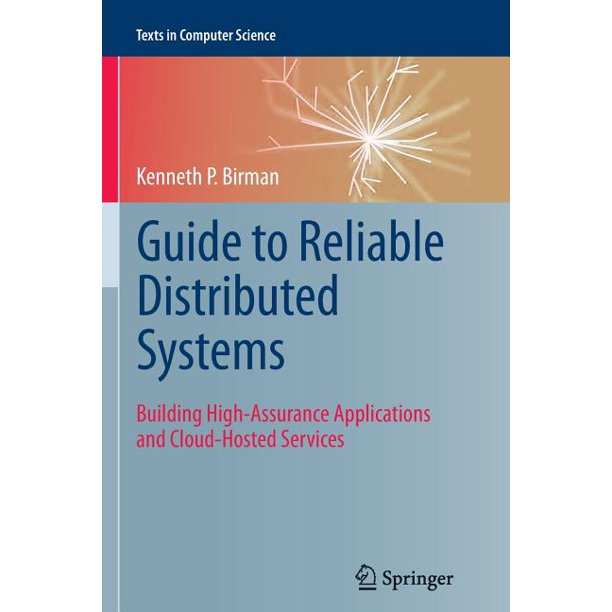 |
**Older work.** I've really worked in Cloud Computing for most of my career, although it obviously wasn't called cloud computing in the early days. As a result, our papers in this area date back to 1985.
Some examples of mission-critical systems on which my software was used in the past include the New York Stock Exchange and Swiss Exchange, the French Air Traffic Control system, the AEGIS warship and a wide range of applications in settings like factory process control and telephony. In fact, every stock quote or trade on the NYSE from 1995 until early 2006 was reported to the overhead trading consoles through software I personally implemented - a cool (but also scary) image, for me at least! During the ten years this system was running, many computers crashed during the trading day, and many network problems have occurred - but the design we developed and implemented has managed to reconfigure itself automatically and kept the overall system up, without exception. They didn't have a single trading disruption during the entire period. As far as I know, the other organizations listed above have similar stories to report.
Today, these kinds of ideas are gaining "mainstream" status. For example, IBM's Websphere 6.0 product includes a multicast layer used to replicate data and other runtime state for high-availability web service applications and web sites. Although IBM developed its own implementation of this technology, we've been told by the developers that the architecture was based on Cornell's Horus and Ensemble systems, described more fully below. The CORBA architecture includes a fault-tolerance mechanism based on some of the same ideas. And we've also worked with Microsoft on the technology at the core of the next generation of that company's clustering product. So, you'll find Cornell's research not just on these web pages, but also on web sites worldwide and in some of the world's most ambitious data centers and high availability computing systems.
In fact we still have very active dialogs with many of these companies: Cisco, IBM, Intel, Microsoft, Amazon, and others. An example of a more recent dialog is this: a few years ago worked with Cisco to invent a new continuous availability option for their core Internet routers, the CRS-1 series. You can read about this work [here](http://www.cs.cornell.edu/projects/quicksilver/public_pdfs/Routers.pdf)
.
My group often works with vendors and industry researchers. We maintain a very active dialog with the US government and military on research challenges emerging from a future generation communication systems now being planned by organizations like the Air Force and the Navy. We've even worked on new ways of controlling the electric power grid, but not in time to head off the big blackout in 2003! Looking to the future, we are focused on needs arising in financial systems, large-scale military systems, and even health-care networks. (In this connection, I should perhaps mention that although we do get research support from the government and the US military, none of our research is classified or even sensitive, and all of it focuses on widely used commercial standards and platforms. Most of our software is released for free, under open source licenses.)
I'm just one of many members of a group in this area at Cornell. My closest colleagues and co-leaders of the group are Robbert van Renesse and Hakim Weatherspoon. But the systems group is very strong and broad right now, and the three of us have great relationships and collaborations with many other systems faculty here at Cornell (both in the systems area within CS, but also folks in ECE where we have great ties, MAE, IS, and down in New York City, where a few faculty are members of our fast-growing New York City Technology "outpost" on Roosveldt Island.
**Four generations of reliable distributed systems research!** Overall, our group has developed three generations of technology and is now working on a fourth generation system: The Isis Toolkit, developed mostly during 1987-1993, the Horus system, developed starting in 1990 until around 1995, the Ensemble system, 1995-1999. Right now we're developing a number of new systems including Isis2, Gradient, and the reliable TCP solution mentioned above, and working with others to integrate those solutions into settings where reliability, security, consistency and scalability are make-or-break requirements. Older Research web pages: [Live Objects, Quicksilver, Maelstrom, Ricochet and Tempest](http://www.cs.cornell.edu/projects/quicksilver/)
projects [Ensemble](http://www.cs.cornell.edu/Info/Projects/Ensemble/)
project [Horus](http://www.cs.cornell.edu/Info/Projects/HORUS/)
project [Isis Toolkit](http://www.cs.cornell.edu/Info/Projects/Isis/)
(really old stuff! This is from the very first version of Isis). A collection of papers on Isis, edited by myself with Robbert van Renesse, may still be available -- it was called Reliable Distributed Computing with the Isis Toolkit and was in the IEEE Press Computer Science series.
**Graduate Studies in Computer Science at Cornell:** At this time of the year, we get large numbers of inquiries about our PhD program. I want to recommend that people interested in the program not contact faculty members like me directly with routine questions like "can your research group fund me".
As you'll see from the web page, Cornell does admissions by means of a committee, so individual faculty members don't normally play a role. This is different from many other schools -- I realize that at many places, each faculty member admits people into her/his own group. But at Cornell, we admit you first, then you come here, and then you affiliate with a research group after a while. Funding is absolutely guaranteed for people in the MS/PhD program during the whole time they are at Cornell. On the other hand, students in the MEng program generally need to pay their own way.
Obviously, some people have more direct, specific questions, and there is no problem sending those to me or to anyone else. But as for the generic "can I join your research group?" the answer is that while I welcome people into the group if they demonstrate good ideas and talent in my area, until you are here and take my graduate course and spend time talking with me and my colleagues, how can we know if the match is good? And most such inquiries are from people who haven't yet figured out quite how many good projects are underway at Cornell. Perhaps, on arrival, you'll take Andrew Myer's course in language based security and will realize this is your passion. So at Cornell, we urge you to take time to find out what areas we cover and who is here, to take some courses, and only then affiliate with a research group. But please knock on my door any time you like! I'm more than happy to talk to any student in the department about anything we're doing here!
**Photo credit: Dave Burbank**
---
# Tapomayukh Bhattacharjee | Department of Computer Science | Cornell Bowers
[Skip to main content](https://www.cs.cornell.edu/people/tapomayukh-bhattacharjee#main-content)
Bowers Menu
[](https://bowers.cornell.edu/)
What are you interested in?
Search

[Back to people directory](https://www.cs.cornell.edu/directory)
Tapomayukh Bhattacharjee
========================
Assistant Professor of Computer Science
About
-----
Tapomayukh "Tapo" Bhattacharjee is an assistant professor in the Department of Computer Science at Cornell University where he directs the [EmPRISE Lab.](https://emprise.cs.cornell.edu/)
He completed his Ph.D. in robotics from Georgia Institute of Technology and was an NIH Ruth L. Kirschstein NRSA postdoctoral research associate in Computer Science and Engineering at the University of Washington. He wants to enable robots to assist people with mobility limitations with activities of daily living. His work spans the fields of human-robot interaction, haptic perception, and robot manipulation and focuses on addressing the fundamental research question of how to leverage robot-world physical interactions in unstructured human environments to perform relevant activities of daily living.
He is the recipient of the TRI Young Faculty Researcher Award '24, NSF CAREER Award '23, and AFCEA 40 under 40 Award '22, and his work has won Best Paper and Student Paper Award Finalist and Best HRI Paper Award Finalist at ICRA’25, Best Systems Paper Award Finalist at HRI'24, Best Demo Award at HRI '24, Best RoboCup Paper Award at IROS ’22, Best Paper Award Finalist and ABB Best Student Paper Award Finalist at IROS’22, Best Technical Advances Paper Award at HRI'19, and Best Demonstration Award at NeurIPS’18. His work has also been featured in many media outlets including the BBC, Reuters, New York Times, IEEE Spectrum, and GeekWire and his robot-assisted feeding work was selected to be one of the best interactive designs of 2019 by Fast Company.
Research Website
[Bhattacharjee's Website](https://sites.google.com/site/tapomayukh)
Research areas
AI (CS)
Artificial Intelligence
Human Interaction
Machine Learning
Robotics
CV
[View CV](https://sites.google.com/site/tapomayukh/cv)
Contact
[(607) 255-4058](tel:+1-607-255-4058)
NAME at cornell dot edu (NAME: tapomayukh)
Location
Computing and Information Science Building 461
Profile Type
Faculty (Department)
Computer Science
Awards
------
[View all Awards Received](https://www.cs.cornell.edu/awards/3969)
NSF Faculty Early Career Development Award (CAREER)
National Science Foundatoin
Tapomayukh Bhattacharjee
* Education
* 2023
### About This Award
[View Tapomayukh Bhattacharjee](https://www.cs.cornell.edu/people/tapomayukh-bhattacharjee)
[View all Awards Received](https://www.cs.cornell.edu/awards/3969)
News + Stories featuring Tapomayukh Bhattacharjee
-------------------------------------------------
[View All Stories](https://www.cs.cornell.edu/news-stories/3969)
[\
\
Cornell Chronicle\
\
Grant to fund robotic mealtime system for people with disabilities\
\
* Faculty Excellence](https://news.cornell.edu/stories/2025/11/grant-fund-robotic-mealtime-system-people-disabilities)
[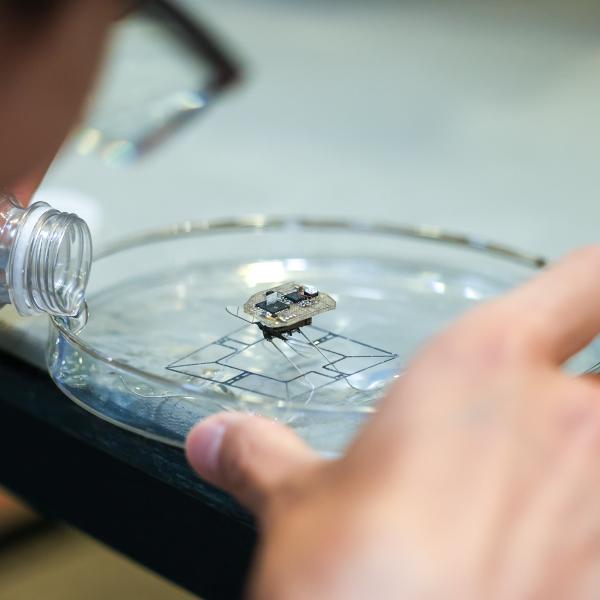\
\
Droids descend on Cornell for robotics conference\
\
* Research + Innovation\
* Around the College](https://www.cs.cornell.edu/news-stories/droids-descend-cornell-robotics-conference)
[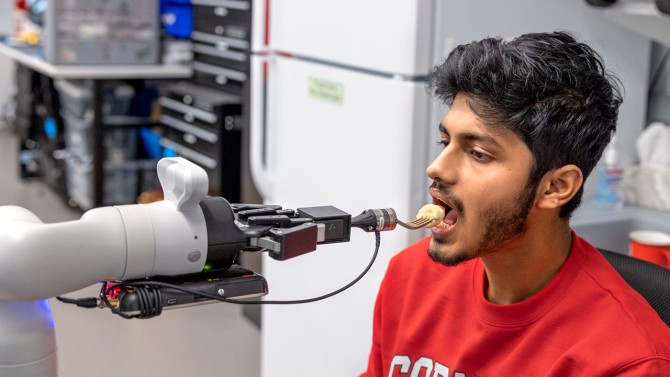\
\
EmPRISE Lab's 'FEAST' gets Outstanding Paper Award at robotics conference\
\
* Around the College](https://www.cs.cornell.edu/news-stories/emprise-labs-feast-gets-outstanding-paper-award-robotics-conference)
[View All Stories](https://www.cs.cornell.edu/news-stories/3969)
---
# Kavita Bala | Department of Computer Science | Cornell Bowers
[Skip to main content](https://www.cs.cornell.edu/people/kavita-bala#main-content)
Bowers Menu
[](https://bowers.cornell.edu/)
What are you interested in?
Search

[Back to people directory](https://www.cs.cornell.edu/directory)
Kavita Bala
===========
Provost
Professor of Computer Science
About
-----
Kavita Bala is the 17th provost of Cornell University and professor of computer science. Previously, she served as the inaugural dean of the Cornell Ann S. Bowers College of Computing and Information Science and chair of the Department of Computer Science. In her research, she specializes in computer vision and computer graphics, leading research in visual recognition and search; and material modeling and perception. She co-founded GrokStyle, a visual recognition AI company that drew IKEA as a client, and was acquired by Facebook in 2019. Bala is a Fellow of the American Academy of Arts & Sciences (2025), an Association for Computing Machinery (ACM) Fellow (2019), Fellow of the SIGGRAPH Academy (2020), and recipient of the Computer Graphics Achievement Award (2020).
Research Website
[Bala's Website](https://www.cs.cornell.edu/~kb/)
Research areas
Artificial Intelligence
Graphics
Machine Learning
Vision
CV
[View CV](https://www.cs.cornell.edu/sites/default/files/2025-10/kb-cv-admin-research.pdf)
Contact
[(607) 255-9924](tel:+1-607-255-9924)
kavitabala@cornell.edu
Location
300 Day Hall
Profile Type
Faculty (Department)
Computer Science
Awards
------
[View all Awards Received](https://www.cs.cornell.edu/awards/4696)
NSF Faculty Early Career Development Award (CAREER)
National Science Foundation
Kavita Bala
* Education
* 2007
### About This Award
[View Kavita Bala](https://www.cs.cornell.edu/people/kavita-bala)
American Academy of Arts and Sciences Member
American Academy of Arts and Sciences
Kavita Bala
* Prominent
* 2024
### About This Award
[View Kavita Bala](https://www.cs.cornell.edu/people/kavita-bala)
ACM SIGGRAPH Academy
Association for Computing Machinery
Kavita Bala
* Research
* 2020
### About This Award
[View Kavita Bala](https://www.cs.cornell.edu/people/kavita-bala)
ACM Fellow
Association for Computing Machinery
Kavita Bala
* Research
* 2019
### About This Award
[View Kavita Bala](https://www.cs.cornell.edu/people/kavita-bala)
[View all Awards Received](https://www.cs.cornell.edu/awards/4696)
News + Stories featuring Kavita Bala
------------------------------------
[View All Stories](https://www.cs.cornell.edu/news-stories/4696)
[\
\
Cornell Chronicle\
\
National Academy of Sciences honors Bala and Ginsberg\
\
* Alumni News](https://news.cornell.edu/stories/2025/11/portraits-honor-8-cornell-faculty-new-heroes)
[\
\
Cornell Chronicle\
\
New Cornell Bowers building dedicated\
\
* Research + Innovation\
* Around the College](https://news.cornell.edu/stories/2025/10/new-cornell-bowers-building-dedicated)
[\
\
Bala, Agrawal, Pascual elected to arts and sciences academy\
\
* Faculty Excellence](https://news.cornell.edu/stories/2025/04/bala-agrawal-pascual-elected-arts-and-sciences-academy)
[View All Stories](https://www.cs.cornell.edu/news-stories/4696)
---
# People Directory | Department of Computer Science | Cornell Bowers
[Skip to main content](https://www.cs.cornell.edu/directory/offices#main-content)
Bowers Menu
[](https://bowers.cornell.edu/)
What are you interested in?
Search

Department Directory
====================
Find people and offices in Computer Science.
* Search
* Filter by
Search by Name
College/Department
\- Any -
Bowers College
Computer Science
Information Science
Statistics & Data Science
Location
\- Any -
Ithaca
NYC
[View Complete Faculty Index](https://www.cs.cornell.edu/directory/index)
[Alumni Affairs and Development](https://bowers.cornell.edu/offices/alumni-affairs-and-development)
Bringing together alumni, friends, and partners to drive positive progress
Contact
[aad-office@bowers.cornell.edu](mailto:aad-office@bowers.cornell.edu)
Department
Bowers College
[Academic Affairs](https://bowers.cornell.edu/offices/academic-affairs)
Supporting faculty and academic excellence
Contact
[assoc-dean-academic-affairs@cornell.edu](mailto:assoc-dean-academic-affairs@cornell.edu)
Department
Bowers College
[Belonging at Bowers](https://bowers.cornell.edu/offices/belonging-bowers)
Cultivating a welcoming and supportive environment for the Bowers community
Contact
[deib-office@bowers.cornell.edu](mailto:deib-office@bowers.cornell.edu)
Department
Bowers College
[Budget and Finance](https://bowers.cornell.edu/offices/budget-and-finance)
Providing financial support and budgeting services
Contact
[central-finance@bowers.cornell.edu](mailto:central-finance@bowers.cornell.edu)
Department
Bowers College
[Communications Team](https://bowers.cornell.edu/offices/communications-team)
Advancing Cornell Bowers through strategic communications
Contact
[comm-office@bowers.cornell.edu](mailto:comm-office@bowers.cornell.edu)
Department
Bowers College
[Computer Science Administration](https://www.cs.cornell.edu/offices/computer-science-administration)
Central hub for computer science administration, events, program support, and more.
Contact
[cs@bowers.cornell.edu](mailto:cs@bowers.cornell.edu)
Department
Computer Science
[Facilities](https://bowers.cornell.edu/offices/facilities)
Managing and maintaining Bowers spaces
Contact
[facilities-help@bowers.cornell.edu](mailto:facilities-help@bowers.cornell.edu)
Department
Bowers College
[Human Resources](https://bowers.cornell.edu/offices/human-resources)
Fostering a collaborative, inclusive, and high-performing workplace
Contact
[hrcoecis@cornell.edu](mailto:hrcoecis@cornell.edu)
Department
Bowers College
[Master of Engineering in Computer Science](https://www.cs.cornell.edu/offices/master-engineering-computer-science)
Graduate program office for M.Eng. in computer science
Department
Computer Science
[Master of Science in Computer Science](https://www.cs.cornell.edu/offices/master-science-computer-science)
Graduate program office for MS in computer science
Contact
[cs-ms@cornell.edu](mailto:cs-ms@cornell.edu)
Department
Computer Science
[Office of the Dean](https://bowers.cornell.edu/offices/office-dean)
The administrative hub of Bowers
Contact
[dean-admin@bowers.cornell.edu](mailto:dean-admin@bowers.cornell.edu)
Department
Bowers College
[Ph.D. in Computer Science](https://www.cs.cornell.edu/offices/phd-computer-science)
Graduate program office for Ph.D. in computer science
Contact
[phd@cs.cornell.edu](mailto:phd@cs.cornell.edu)
Department
Computer Science
[Registrar](https://bowers.cornell.edu/offices/registrar)
Supporting faculty and students in courses, enrollment and more
Contact
[courses@bowers.cornell.edu](mailto:courses@bowers.cornell.edu)
Department
Bowers College
[Research](https://bowers.cornell.edu/offices/research)
Elevating and expanding Bowers' leadership in research
Contact
[research-office@bowers.cornell.edu](mailto:research-office@bowers.cornell.edu)
Department
Bowers College
[Sponsored Research Administration Center (SRAC)](https://bowers.cornell.edu/offices/sponsored-research-administration-center)
Providing post-award research administration services
Contact
[srac@bowers.cornell.edu](mailto:srac@bowers.cornell.edu)
Department
Bowers College
[Student Services](https://bowers.cornell.edu/offices/student-services)
Supporting the Bowers student experience
Contact
[ugrad-studentsvs@bowers.cornell.edu](mailto:ugrad-studentsvs@bowers.cornell.edu)
Department
Bowers College
[Tech Bowers Engineering IT Service Group](https://bowers.cornell.edu/offices//tech-bowers-engineering-it-service-group)
IT tech support and CIT liaison for the Cornell Bowers community
Contact
[itcoecis-help@cornell.edu](mailto:itcoecis-help@cornell.edu)
Department
Bowers College
[View Complete Faculty Index](https://www.cs.cornell.edu/directory/index)
[Back to Top](https://www.cs.cornell.edu/directory/offices#backToTop)
---
# Lorenzo Alvisi | Department of Computer Science | Cornell Bowers
[Skip to main content](https://www.cs.cornell.edu/people/lorenzo-alvisi#main-content)
Bowers Menu
[](https://bowers.cornell.edu/)
What are you interested in?
Search

[Back to people directory](https://www.cs.cornell.edu/directory)
Lorenzo Alvisi
==============
Tisch University Professor of Computer Science
Chair of the Department of Computer Science
About
-----
Lorenzo Alvisi is the Tisch University Professor in Computer Science and chair of the Department of Computer Science. He is interested in the theory and practice of dependable distributed computing. His group's research aims to understand how to design and build trustworthy distributed systems. Their work investigates both foundational and applied aspects of reliable distributed computing – and at its best – leverages the former to shape the latter. Alvisi received his Laurea Summa cum Laude and Corso di Specializzazione in Physics from the University of Bologna, and his master's degree and Ph.D. in computer science from Cornell University. He is an IEEE Fellow, an ACM Fellow, a Humboldt Research Award winner, and an Alfred P. Sloan Research Fellow.
Research Website
[Alvisi's Website](https://www.cs.cornell.edu/lorenzo/)
Research areas
Systems + Networking
CV
[View CV](http://www.cs.cornell.edu/lorenzo/vitae.pdf)
Contact
[(607) 255-4289](tel:+1-607-255-4289)
lorenzo@cs.cornell.edu
Location
Gates Hall 402
Profile Type
Faculty (Department)
Leadership
Chair
Computer Science
Awards
------
[View all Awards Received](https://www.cs.cornell.edu/awards/44)
Sloan Research Fellowship
Alfred P. Sloan Foundation
Lorenzo Alvisi
* Research
* 2001
### About This Award
[View Lorenzo Alvisi](https://www.cs.cornell.edu/people/lorenzo-alvisi)
NSF Faculty Early Career Development Award (CAREER)
National Science Foundation
Lorenzo Alvisi
* Education
* 1998
### About This Award
[View Lorenzo Alvisi](https://www.cs.cornell.edu/people/lorenzo-alvisi)
IEEE Fellow
Institute of Electrical and Electronics Engineers
Lorenzo Alvisi
* Research
* 2016
### About This Award
[View Lorenzo Alvisi](https://www.cs.cornell.edu/people/lorenzo-alvisi)
Humboldt Research Award
Alexander von Humboldt Foundation
Lorenzo Alvisi
* Research
* 2012
### About This Award
[View Lorenzo Alvisi](https://www.cs.cornell.edu/people/lorenzo-alvisi)
ACM Fellow
Association for Computing Machinery
Lorenzo Alvisi
* Research
* 2010
### About This Award
[View Lorenzo Alvisi](https://www.cs.cornell.edu/people/lorenzo-alvisi)
[View all Awards Received](https://www.cs.cornell.edu/awards/44)
News + Stories featuring Lorenzo Alvisi
---------------------------------------
[View All Stories](https://www.cs.cornell.edu/news-stories/44)
[\
\
Italian program seeks to develop next wave of computer scientists\
\
* Alumni News\
* Faculty Excellence\
* Around the College](https://www.cs.cornell.edu/news-stories/italian-program-seeks-develop-next-wave-computer-scientists)
[\
\
Newest ‘stewards’ of the Bowers legacy congratulated at recognition ceremonies\
\
* Student Experience\
* Around the College](https://www.cs.cornell.edu/news-stories/newest-stewards-bowers-legacy-congratulated-recognition-ceremonies)
[\
\
Code Afrique returns to Ghana to share opportunities in tech\
\
* Real-World Impact](https://www.cs.cornell.edu/news-stories/code-afrique-returns-ghana-share-opportunities-tech)
[View All Stories](https://www.cs.cornell.edu/news-stories/44)
---
# People Directory | Department of Computer Science | Cornell Bowers
[Skip to main content](https://www.cs.cornell.edu/directory/phd#main-content)
Bowers Menu
[](https://bowers.cornell.edu/)
What are you interested in?
Search

Department Directory
====================
Find people and offices in Computer Science.
* Search
* Filter by
Search by Name, Position title or Office
College/Department
Bowers
Computer Science
Information Science
Statistics & Data Science
Location
\- Any -
Ithaca
NYC
[View Complete Faculty Index](https://www.cs.cornell.edu/directory/index)
Muhammad Salman Abid
Ph.D. student, Computer Science
Contact
[salman@cs.cornell.edu](mailto:salman@cs.cornell.edu)
Profile Type
PhD
Computer Science
View Details
Location
Ithaca
Utku Umur Acikalin
Ph.D. student, Computer Science
Contact
[ua45@cornell.edu](mailto:ua45@cornell.edu)
Profile Type
PhD
Computer Science
View Details
Location
Ithaca
Dhruv Agarwal
Ph.D. student, Computer Science
Contact
[da399@cornell.edu](mailto:da399@cornell.edu)
Profile Type
PhD
Computer Science
View Details
Location
Ithaca
Muhammad Ahmed
Ph.D. student, Computer Science
Contact
[muhammadahmed@cs.cornell.edu](mailto:muhammadahmed@cs.cornell.edu)
Profile Type
PhD
Computer Science
View Details
Location
Ithaca
Adnan Al Armouti
Ph.D. student, Computer Science
Contact
[aa2546@cornell.edu](mailto:aa2546@cornell.edu)
Profile Type
PhD
Computer Science
View Details
Location
NYC
Simon Alford
Ph.D. student, Computer Science
Contact
[alford@cs.cornell.edu](mailto:alford@cs.cornell.edu)
Profile Type
PhD
Computer Science
View Details
Location
Ithaca
Marianne Arriola
Ph.D. student, Computer Science
Contact
[marriola@cs.cornell.edu](mailto:marriola@cs.cornell.edu)
Profile Type
PhD
Computer Science
View Details
Location
NYC
Office
Cornell Tech
Research Areas
Machine Learning
Anirudh Atmakuru
Ph.D. student, Computer Science
Contact
[aa2886@cornell.edu](mailto:aa2886@cornell.edu)
Profile Type
PhD
Computer Science
View Details
Location
Ithaca
James Austgen
Ph.D. student, Computer Science
Contact
[james@cs.cornell.edu](mailto:james@cs.cornell.edu)
Profile Type
PhD
Computer Science
View Details
Location
NYC
Sidhika Balachandar
Ph.D. student, Computer Science
Contact
[sidhikab@cs.cornell.edu](mailto:sidhikab@cs.cornell.edu)
Profile Type
PhD
Computer Science
View Details
Location
NYC
Research Areas
Machine Learning
Rohan Banerjee
Ph.D. student, Computer Science
Contact
[rbb242@cornell.edu](mailto:rbb242@cornell.edu)
Profile Type
PhD
Computer Science
View Details
Location
Ithaca
Research Areas
Robotics
Mark Barbone
Ph.D. student, Computer Science
Contact
[barbone@cs.cornell.edu](mailto:barbone@cs.cornell.edu)
Profile Type
PhD
Computer Science
View Details
Location
Ithaca
Office
Ithaca
Research Areas
Programming Languages
Ali Behrouz
Ph.D. student, Computer Science
Contact
[ab2947@cornell.edu](mailto:ab2947@cornell.edu)
Profile Type
PhD
Computer Science
View Details
Location
Ithaca
Office
Ithaca
Christian Belardi
Ph.D. student, Computer Science
Contact
[ckb73@cornell.edu](mailto:ckb73@cornell.edu)
Profile Type
PhD
Computer Science
View Details
Location
Ithaca
Research Areas
Machine Learning
Julian Bellavita
Ph.D. student, Computer Science
Contact
[jbellavita@cs.cornell.edu](mailto:jbellavita@cs.cornell.edu)
Profile Type
PhD
Computer Science
View Details
Location
Ithaca
Research Areas
Scientific Computing
Griffin Berlstein
Ph.D. student, Computer Science
Contact
[glb84@cornell.edu](mailto:glb84@cornell.edu)
Profile Type
PhD
Computer Science
View Details
Location
Ithaca
Noah Bertram
Ph.D. student, Computer Science
Contact
[nbertram@cs.cornell.edu](mailto:nbertram@cs.cornell.edu)
Profile Type
PhD
Computer Science
View Details
Location
Ithaca
Simon Bertron
Ph.D. student, Computer Science
Contact
[scb@cs.cornell.edu](mailto:scb@cs.cornell.edu)
Profile Type
PhD
Computer Science
View Details
Location
NYC
Office
Ithaca
Research Areas
Systems + Networking
Arkaprabha Bhattacharya
Ph.D. student, Computer Science
Contact
[ab2956@cornell.edu](mailto:ab2956@cornell.edu)
Profile Type
PhD
Computer Science
View Details
Location
NYC
Katharine Blumer
Ph.D. student, Computer Science
Contact
[kblumer@cs.cornell.edu](mailto:kblumer@cs.cornell.edu)
Profile Type
PhD
Computer Science
View Details
Location
Ithaca
Research Areas
Machine Learning; Theory of Computing
[View Complete Faculty Index](https://www.cs.cornell.edu/directory/index)
[Back to Top](https://www.cs.cornell.edu/directory/phd#backToTop)
---
# Eshan Chattopadhyay | Department of Computer Science | Cornell Bowers
[Skip to main content](https://www.cs.cornell.edu/people/eshan-chattopadhyay#main-content)
Bowers Menu
[](https://bowers.cornell.edu/)
What are you interested in?
Search

[Back to people directory](https://www.cs.cornell.edu/directory)
Eshan Chattopadhyay
===================
Associate Professor of Computer Science

About
-----
Eshan Chattopadhyay is currently an associate professor (with tenure) in the Department of Computer Science at Cornell University. He joined Cornell in 2018 after completing postdoctoral work at the Institute for Advanced Study in Princeton and the Simons Institute for the Theory of Computing in Berkeley. Prior to this, Chattopadhyay earned his Ph.D. in computer science from the University of Texas at Austin in 2016 and his B.Tech in computer science from the Indian Institute of Technology Kanpur in 2011.
His research interests lie in the field of theoretical computer science, with a particular focus on computational complexity theory, the role of randomness in computation, and cryptography. Eshan has received several awards for his research, including the 2025 Gödel Prize (jointly awarded by EATCS and ACM SIGACT), the 2024 National Academy of Sciences Held Prize, a 2023 Sloan Research Fellowship, an NSF CAREER award in 2021, and a best paper award in STOC 2016.
Research Website
[Chattopadhyay's Website](https://www.cs.cornell.edu/~eshan/)
Research areas
Theory of Computing
CV
[View CV](https://www.cs.cornell.edu/~eshan/CV.pdf)
Contact
[(607) 216-9496](tel:+1-607-216-9496)
eshan@cs.cornell.edu
Location
Gates Hall 319
Profile Type
Faculty (Department)
Computer Science
Awards
------
[View all Awards Received](https://www.cs.cornell.edu/awards/4467)
Gödel Prize
EATCS, ACM SIGACT
Eshan Chattopadhyay
* Research
* 2025
### About This Award
[View Eshan Chattopadhyay](https://www.cs.cornell.edu/people/eshan-chattopadhyay)
Sloan Research Fellowship
Alfred P. Sloan Foundation
Eshan Chattopadhyay
* Research
* 2023
### About This Award
[View Eshan Chattopadhyay](https://www.cs.cornell.edu/people/eshan-chattopadhyay)
NSF Faculty Early Career Development Award (CAREER)
National Science Foundation
Eshan Chattopadhyay
* Education
* 2021
### About This Award
[View Eshan Chattopadhyay](https://www.cs.cornell.edu/people/eshan-chattopadhyay)
NSF Faculty Early Career Development Award (CAREER)
National Science Foundation
Eshan Chattopadhyay
* Education
* 2021
### About This Award
[View Eshan Chattopadhyay](https://www.cs.cornell.edu/people/eshan-chattopadhyay)
Michael and Sheila Held Prize
National Academy of Sciences
Eshan Chattopadhyay
* Research
* 2024
### About This Award
[View Eshan Chattopadhyay](https://www.cs.cornell.edu/people/eshan-chattopadhyay)
[View all Awards Received](https://www.cs.cornell.edu/awards/4467)
News + Stories featuring Eshan Chattopadhyay
--------------------------------------------
[View All Stories](https://www.cs.cornell.edu/news-stories/4467)
[\
\
Chattopadhyay awarded Gödel Prize for landmark paper\
\
* Faculty Excellence](https://www.cs.cornell.edu/news-stories/chattopadhyay-awarded-godel-prize-landmark-paper)
[View All Stories](https://www.cs.cornell.edu/news-stories/4467)
---
# David Bindel | Department of Computer Science | Cornell Bowers
[Skip to main content](https://www.cs.cornell.edu/people/david-bindel#main-content)
Bowers Menu
[](https://bowers.cornell.edu/)
What are you interested in?
Search

[Back to people directory](https://www.cs.cornell.edu/directory)
David Bindel
============
Professor of Computer Science

About
-----
David S. Bindel is a professor of computer science and director of the [Center for Applied Math](https://cam.cornell.edu/)
. He works at the interface of computational science and engineering, and his research mixes mathematical analysis, application modeling, and software design. Active research areas include: optimizing stellarators, verified numerics, kernel methods, parallel surrogate optimization, spectral network analysis, nonlinear eigenvalue bounds, and nonlinear waves in resonant MEMS. Bindel received his Ph.D. in computer science from the University of California, Berkeley and his B.S. in math and computer science from the University of Maryland, College Park. He is a SIAM Fellow and Sloan Fellow.
Research Website
[Bindel's Website](https://www.cs.cornell.edu/~bindel/)
Research areas
Bayesian Analysis
Machine Learning
Scientific Computing
Spatial Analysis or Spatial Statistics
Systems + Networking
CV
[View CV](https://www.cs.cornell.edu/~bindel/vita.html)
Contact
[(607) 255-5395](tel:+1-607-255-5395)
bindel@cornell.edu
Location
Computing and Information Science Building 487
Profile Type
Faculty (Department)
Computer Science
Awards
------
[View all Awards Received](https://www.cs.cornell.edu/awards/4699)
Sloan Research Fellowship
Alfred P. Sloan Foundation
David Bindel
* Research
* 2010
### About This Award
[View David Bindel](https://www.cs.cornell.edu/people/david-bindel)
Society for Industrial and Applied Math (SIAM) Fellow
Society for Industrial and Applied Math
David Bindel
* Prominent
* 2024
### About This Award
[View David Bindel](https://www.cs.cornell.edu/people/david-bindel)
[View all Awards Received](https://www.cs.cornell.edu/awards/4699)
---
# Unknown
438 Gates Hall
Department of Computer Science
Cornell University
Ithaca, NY, 14853
USA
[](mailto:saikatd@cornell.edu)
[](https://www.linkedin.com/in/saikat-dutta-920a5969/)
[](https://scholar.google.com/citations?user=-Y3XqDQAAAAJ&hl=en "Google Scholar")
[](https://twitter.com/saikatdutta2012 "Twitter")
[](https://dblp.uni-trier.de/pers/hd/d/Dutta_0001:Saikat "DBLP")
Saikat Dutta
I am an Assistant Professor in the [Department of Computer Science](https://www.cs.cornell.edu/)
at [Cornell University.](https://www.cornell.edu/)
My research interests are at the intersection of **Software Engineering** and **Machine Learning**. I am a member of the growing [Software Engineering Group](https://www.cs.cornell.edu/research/software-engineering)
at Cornell.
I received my PhD in Computer Science from the [University of Illinois Urbana-Champaign](http://cs.illinois.edu/)
in Summer 2023, advised by [Prof. Sasa Misailovic](http://misailo.cs.illinois.edu/)
. Before joining Cornell, I spent a year as a Postdoctoral Researcher at the University of Pennsylvania, working with [Prof. Mayur Naik](https://www.cis.upenn.edu/~mhnaik/)
. You can find my CV [here](https://www.cs.cornell.edu/~saikatd/papers/curriculum-vitae.pdf)
.
**Prospective students**: I am looking for skilled and motivated undergraduates, PhD students, and postdocs to join my group. If you are interested in working with me, please drop me an email. If you are a prospective PhD student, apply to the [Cornell CS PhD program.](https://www.cs.cornell.edu/phd/admissions)
Also read [this.](https://www.cs.cornell.edu/~saikatd/#notes)
Research Interests
My research interests are at the intersection of Software Engineering and Machine Learning. I am particularly interested in 1) developing novel techniques and tools to improve the reliability of Machine Learning-based systems, and 2) leveraging Machine Learning to solve challenging tasks in Software Engineering.
My research focuses on following themes:
* Automated Test Generation and Debugging of ML/DL libraries
[\[ISSTA 2025 Tool Demo\]](https://www.cs.cornell.edu/~saikatd/bugsindlls-isstatool25)
[\[FSE 2019\]](https://www.cs.cornell.edu/~saikatd/#storm-fse19)
[\[FSE 2018\]](https://www.cs.cornell.edu/~saikatd/#probfuzz-fse18)
* Using AI/ML for Automated Software Engineering
[\[ASE 2025\]](https://www.cs.cornell.edu/~saikatd/#rlmop-ase-2025)
[\[OOPSLA 2025\]](https://www.cs.cornell.edu/~saikatd/#flaky-prediction-oopsla25)
[\[ICLR 2025\]](https://www.cs.cornell.edu/~saikatd/#iris-iclr25)
[\[ICST 2025\]](https://www.cs.cornell.edu/~saikatd/#secvulllmstudy)
[\[ICSE-SEIP 2022\]](https://www.cs.cornell.edu/~saikatd/#inspectjs-icse22)
[\[FASE 2022\]](https://www.cs.cornell.edu/~saikatd/#sixthsense-fase22)
* Improving Performance and Effectiveness of Regression Tests in Machine Learning Libraries
[\[ICSE 2023\]](https://www.cs.cornell.edu/~saikatd/#faser-icse23)
[\[ICST 2022\]](https://www.cs.cornell.edu/~saikatd/#seeds-icst22)
[\[FSE 2021\]](https://www.cs.cornell.edu/~saikatd/#flex-fse21)
[\[ISSTA 2021\]](https://www.cs.cornell.edu/~saikatd/#tera-issta21)
[\[ISSTA 2020\]](https://www.cs.cornell.edu/~saikatd/#flash-issta20)
* Static and Dynamic Analyses for Probabilistic Programming
[\[SAS 2025\]](https://www.cs.cornell.edu/~saikatd/#precise-abstract-interpretation-sas-2025)
[\[UAI 2023\]](https://www.cs.cornell.edu/~saikatd/#astra-uai23)
[\[ATVA 2021\]](https://www.cs.cornell.edu/~saikatd/#aqua-atva21)
[\[FSE 2018\]](https://www.cs.cornell.edu/~saikatd/#probfuzz-fse18)
Students
**Current PhD students:**
* [Yingao (Elaine) Yao](https://elaineyao.github.io/)
(Fall 2024-now)
* [Shinhae (Joseph) Kim](https://shinhae-kim.github.io/)
(Fall 2024-now; Co-advised with Prof. Owolabi Legunsen)
* Junkai Huang (Fall 2025-now)
[Notes for prospective students](https://www.cs.cornell.edu/~saikatd/notes.html)
Teaching
**Fall 2025:** [CS 6158: Software Engineering in the Era of ML/AI](https://www.cs.cornell.edu/courses/cs6158/2025fa/)
**Spring 2025:** [CS 5150: Software Engineering](https://www.cs.cornell.edu/courses/cs5150/2025sp/)
**Fall 2024:** [CS 6158: Software Engineering in the Era of Machine Learning](https://www.cs.cornell.edu/courses/cs6158/2024fa/)
Awards
[ACM SIGSOFT Distinguished Paper Award at ASE 2025](https://conf.researchr.org/track/ase-2025/ase-2025-papers)
[Amazon Research Award 2025](https://www.amazon.science/research-awards/call-for-proposals/build-on-trainium-call-for-proposals-spring-2025)
[Meta AI: Large Language Model (LLM) Evaluation Research Grant 2025](https://www.llama.com/llm-evaluation-research-grant/)
[Public Announcement](https://x.com/AIatMeta/status/1879990701234221190)
[Mavis Future Faculty Fellowship 2022-23](https://www.cs.cornell.edu/)
[Facebook PhD Fellowship 2020-22](https://research.fb.com/blog/2020/01/announcing-the-recipients-of-the-2020-facebook-fellowship-awards/)
[3M Foundation Fellowship 2019-2020](https://cs.illinois.edu/about/awards/graduate-fellowships-awards/3m-foundation-fellowship)
News
* New:
Nov 2025: Our paper received a **ACM SIGSOFT Distinguished Paper Award** at **[ASE 2025](https://conf.researchr.org/track/ase-2025/ase-2025-papers)
**! Congrats to my PhD student, [Shinhae Kim](https://shinhae-kim.github.io/)
!
* New:
Sep 2025: Received an [Amazon Research Award](https://www.amazon.science/research-awards/call-for-proposals/build-on-trainium-call-for-proposals-spring-2025)
for our project on DL Compiler Testing!
* New:
Aug 2025: Our paper **Faster Runtime Verification during Testing via Feedback-Guided Selective Monitoring** has been accepted to **[ASE 2025](https://2025.ase-conferences.org/)
**! Congrats to my PhD student, [Shinhae Kim](https://shinhae-kim.github.io/)
, for his first paper!
* New:
July 2025: Our paper **AURA: Precise Abstract Interpretation of Probabilistic Programs with Interval Data Uncertainty** has been accepted to **[SAS 2025](https://2025.splashcon.org/track/SAS)
**!
* New:
June 2025: Our paper **Understanding and Improving Flaky Test Classification** has been accepted to **[OOPSLA 2025](https://2025.splashcon.org/track/OOPSLA)
!**
* New:
May 2025: Our paper **Dolphin: A Programmable Framework for Scalable Neurosymbolic Learning** has been accepted to **[ICML 2025!](https://icml.cc/)
** Check out [Preprint](https://arxiv.org/abs/2410.03348)
.
* New:
April 2025: Our paper **BugsInDLLs : A Database of Reproducible Bugs in Deep Learning Libraries to Enable Systematic Evaluation of Testing Techniques** has been accepted to **[ISSTA Tool Demo 2025!](https://conf.researchr.org/home/issta-2025)
** Check out [paper](https://www.cs.cornell.edu/~saikatd/papers/bugsindlls-issta-demo25.pdf)
and [dataset](https://github.com/ncsu-swat/bugsindlls)
* New:
Jan 2025: Our paper **LLM-Assisted Static Analysis for Detecting Security Vulnerabilities** has been accepted to **[ICLR 2025](https://iclr.cc/Conferences/2025)
**! Check out [Preprint and Dataset](https://www.cs.cornell.edu/~saikatd/#iris-iclr25)
.
* New:
Jan 2025: Excited to receive **[Meta AI LLM Evaluation Research Grant](https://www.llama.com/llm-evaluation-research-grant/)
**! See [announcement](https://x.com/AIatMeta/status/1879990701234221190)
.
[More News](https://www.cs.cornell.edu/~saikatd/#)
* New:
Dec 2024: Our paper **Evaluating the Effectiveness of LLMs in Detecting Security Vulnerabilities** has been accepted to **[ICST 2025](https://conf.researchr.org/home/icst-2025)
**!
* New:
Dec 2024: Our paper **CoCoNUT: Structural Code Understanding does not fall out of a tree** has been accepted to **[LLM4Code 2025](https://llm4code.github.io/)
**!
* August 2024: Our paper **GlueTest: Testing Code Translation via Language Interoperability** has been accepted to **[ICSME NIER 2024](https://conf.researchr.org/track/icsme-2024/icsme-2024-new-ideas-and-emerging-results-track)
**!
* August 2024: Started as an Assistant Professor in the CS Department at Cornell University!
* Passed PhD Final Defense! Find my dissertation [here.](https://www.cs.cornell.edu/~saikatd/papers/phd-thesis.pdf)
* Our paper **ASTRA: Understanding the Practical Impact of Robustness for Probabilistic Programs** has been accepted to **[UAI 2023](https://www.auai.org/uai2023/)
**!
* Our paper **Balancing Effectiveness and Flakiness of Non-Deterministic Machine Learning Tests** has been accepted to [**ICSE 2023**](https://conf.researchr.org/track/icse-2023/icse-2023-technical-track)
!
* Our paper **To Seed or Not to Seed? An Empirical Analysis of Usage of Seeds for Testing in Machine Learning Projects** has been accepted to [**ICST 2022**](https://icst2022.vrain.upv.es/)
!
* Our paper **InspectJS: Leveraging Code Similarity and User-Feedback for Effective Taint Specification Inference for JavaScript** has been accepted to [**ICSE-SEIP 2022**](https://conf.researchr.org/track/icse-2022/icse-2022-seip---software-engineering-in-practice)
!
* Our paper **SixthSense: Debugging Convergence Problems in Probabilistic Programs via Program Representation Learning** has been accepted to [**FASE 2022**](https://etaps.org/2022/fase)
!
* Our paper **AQUA: Automated Quantized Inference for Probabilistic Programs** has been accepted to [**ATVA 2021**](https://formal-analysis.com/atva/2021/)
!
* Our paper **TERA: Optimizing Stochastic Regression Tests in Machine Learning Projects** has been accepted to [**ISSTA 2021**](https://conf.researchr.org/track/issta-2021/issta-2021-technical-papers)
!
* Our paper **FLEX: Fixing Flaky Tests in Machine-Learning Projects by Updating Assertion Bounds** has been accepted to [**ESEC/FSE 2021**](https://2021.esec-fse.org/track/fse-2021-papers)
!
* I will be interning at Amazon Web Services (AWS) with the [Automated Reasoning Group (ARG)](https://aws.amazon.com/security/provable-security/)
for Summer 2021!
* Our paper on **Detecting Flaky Tests in Probabilistic and Machine Learning Applications** was accepted to [**ISSTA 2020**](https://conf.researchr.org/home/issta-2020)
!
* I will be interning at **Microsoft Research, Redmond** with the [RISE](https://www.microsoft.com/en-us/research/group/research-software-engineering-rise)
group for Summer 2020!
Looking forward to it!
* Awarded **[Facebook PhD Fellowship 2020](https://research.fb.com/blog/2020/01/announcing-the-recipients-of-the-2020-facebook-fellowship-awards/)
**
Thanks Facebook!
* Our paper, **Storm: Program Reduction for Testing and Debugging Probabilistic Programming Systems**, has been accepted to **[FSE 2019](https://esec-fse19.ut.ee/)
**
* Selected for **[3M Foundation Fellowship 2018-19](https://cs.illinois.edu/about-us/awards/graduate-fellowships-awards/3m-foundation-fellowship)
**
* Our paper on **ProbFuzz, "Testing Probabilistic programming systems" has been accepted to [FSE 2018](https://conf.researchr.org/home/fse-2018)
**
* Attended [PLDI 2018](https://pldi18.sigplan.org/)
at Philadelphia, USA (20-22 June, 2018)
* Our recent work on Automated Sensitivity Analysis was published in [IEEE TSE Volume 43, Issue 12](http://ieeexplore.ieee.org/document/7820185/)
* Attended [Midwest Programming Language Summit 2017](http://wonks.github.io/mwpls/fall2017/2017/10/16/mwpls.html)
at Bloomington, Indiana
* Attended [Automated Software Engineering Conference](http://ase2017.org/)
(ASE 2017) at UIUC
Selected Publications
LLM-Assisted Static Analysis for Detecting Security Vulnerabilities
The Thirteenth International Conference on Learning Representations (**ICLR 2025**)
Ziyang Li, **Saikat Dutta**, Mayur Naik
[\[Paper\]](https://arxiv.org/pdf/2405.17238)
[\[Dataset\]](https://github.com/iris-sast/cwe-bench-java)
[\[Code\]](https://github.com/iris-sast/iris)
Balancing Effectiveness and Flakiness of Non-Deterministic Machine Learning Tests
45th International Conference on Software Engineering (**ICSE 2023**)
Steven Xia, **Saikat Dutta**, Sasa Misailovic, Darko Marinov, and Lingming Zhang
[\[Paper\]](https://www.cs.cornell.edu/~saikatd/papers/faser-icse23.pdf)
[\[Code\]](https://github.com/ise-uiuc/FASER)
FLEX: Fixing Flaky Tests in Machine-Learning Projects by Updating Assertion Bounds
29th ACM Joint European Software Engineering Conference and Symposium on the Foundations of Software Engineering (**FSE 2021**)
**Saikat Dutta**, August Shi, and Sasa Misailovic
[\[Paper\]](https://www.cs.cornell.edu/~saikatd/papers/flex-fse21.pdf)
[\[Code\]](https://github.com/uiuc-arc/flex)
All Publications
Preprints:
QLCoder: A Query Synthesizer for Static Analysis of Security Vulnerabilities
Claire Wang, Ziyang Li, **Saikat Dutta**, Mayur Naik
[\[Preprint\]](https://arxiv.org/pdf/2511.08462)
Evaluating the Effectiveness of Coverage-Guided Fuzzing for Testing Deep Learning Library APIs
Feiran Qin, M. M. Abid Naziri, Hengyu Ai, **Saikat Dutta**, Marcelo d'Amorim
[\[Preprint\]](https://arxiv.org/abs/2509.14626)
[\[Code\]](https://github.com/ncsu-swat/FlashFuzz)
A Regression Testing Framework with Automated Assertion Generation for Machine Learning Notebooks
Yingao (Elaine) Yao, Vedant Nimje, Varun Viswanath, **Saikat Dutta**
[\[Preprint\]](https://arxiv.org/abs/2509.13656)
[\[Code\]](https://github.com/seal-research/NBTest)
Peer-Reviewed:
2025
Faster Runtime Verification during Testing via Feedback-Guided Selective Monitoring
40th International Conference on Automated Software Engineering (**ASE 2025**)
Shinhae Kim, **Saikat Dutta**, Owolabi Legunsen
 ACM SIGSOFT Distinguished Paper Award
[\[Paper\]](https://www.cs.cornell.edu/~saikatd/papers/valg-ase25.pdf)
[\[Code\]](https://github.com/SoftEngResearch/Valg)
Understanding and Improving Flaky Test Classification
ACM SIGPLAN International Conference on Object-Oriented Programming Systems, Languages, and Application **(OOPSLA 2025)**
Shanto Rahman, **Saikat Dutta**, August Shi
[\[Paper\]](https://www.cs.cornell.edu/~saikatd/papers/flakylens-oopsla25.pdf)
[\[Code\]](https://github.com/UT-SE-Research/FlakyLens)
Dolphin: A Programmable Framework for Scalable Neurosymbolic Learning
Forty-Second International Conference on Machine Learning (**ICML 2025**)
Aaditya Naik, Jason Liu, Claire Wang, **Saikat Dutta**, Mayur Naik, Eric Wong
[\[Paper\]](https://arxiv.org/abs/2410.03348)
[\[Code\]](https://github.com/Dolphin-NeSy/Dolphin)
LLM-Assisted Static Analysis for Detecting Security Vulnerabilities
The Thirteenth International Conference on Learning Representations (**ICLR 2025**)
Ziyang Li, **Saikat Dutta**, Mayur Naik
[\[Paper\]](https://arxiv.org/pdf/2405.17238)
[\[Dataset\]](https://github.com/iris-sast/cwe-bench-java)
[\[Code\]](https://github.com/iris-sast/iris)
AURA: Precise Abstract Interpretation of Probabilistic Programs with Interval Data Uncertainty
32nd International Static Analysis Symposium (**SAS 2025**)
Zixin Huang, Jacob Laurel, **Saikat Dutta**, Sasa Misailovic
[\[Paper\]](https://www.cs.cornell.edu/~saikatd/papers/aura-sas25.pdf)
[\[Code\]](https://github.com/uiuc-arc/aura)
Understanding the Effectiveness of Large Language Models in Detecting Security Vulnerabilities
18th IEEE International Conference on Software Testing, Verification and Validation (**ICST 2025**)
Avishree Khare, **Saikat Dutta**, Ziyang Li, Alaia Solko-Breslin, Rajeev Alur, Mayur Naik
[\[Paper\]](https://arxiv.org/abs/2311.16169)
[\[Code\]](https://github.com/seal-research/secvul-llm-study)
BugsInDLLs : A Database of Reproducible Bugs in Deep Learning Libraries to Enable Systematic Evaluation of Testing Techniques
International Symposium on Software Testing and Analysis (**ISSTA Tool Demo 2025**)
M M Abid Naziri, Aman Kumar Singh, Benjamin Wu, Feiran (Alex) Qin, **Saikat Dutta**, and Marcelo d'Amorim
[\[Paper\]](https://www.cs.cornell.edu/~saikatd/papers/bugsindlls-issta-demo25.pdf)
[\[Code\]](https://github.com/ncsu-swat/bugsindlls)
[\[Data Artifact\]](https://zenodo.org/records/15064163)
CoCoNUT: Structural Code Understanding does not fall out of a tree
2nd International Workshop on Large Language Models for Code (**LLM4Code 2025**)
Claas Beger, **Saikat Dutta**
[\[Paper\]](https://www.cs.cornell.edu/~saikatd/papers/coconut-dataset-llm4code25.pdf)
[\[Code\]](https://github.com/seal-research/structural-code-understanding-dataset)
2024
GlueTest: Testing Code Translation via Language Interoperability
40th International Conference on Software Maintenance and Evolution: New Ideas and Emerging Results (**ICSME NIER 2024**)
Flagstaff, AZ, USA. Acceptance Rate 29% (10/35 papers)
Muhammad Salman Abid, Mrigank Pawagi, Sugam Adhikari, Xuyan Cheng, Ryed Badr, Md Wahiduzzaman, Vedant Rathi, Ronghui Qi, Choiyin Li, Lu-Chi Liu, Rohit Sai Naidu, Licheng Lin, Que Liu, Asif Zubayer Palak, Mehzabin Haque, Xinyu Chen, Darko Marinov, and **Saikat Dutta**
[\[Paper\]](https://www.cs.cornell.edu/~saikatd/papers/gluetest-icsme-nier24.pdf)
[\[Code\]](https://github.com/seal-research/gluetest)
Debugging Convergence Problems in Probabilistic Programs via Program Representation Learning with SixthSense
The International Journal on Software Tools for Technology Transfer (**STTT 2024**)
Zixin Huang, **Saikat Dutta**, and Sasa Misailovic
_Extended version of the FASE 2022 paper_
2023
Randomness-Aware Testing of Machine Learning-based Systems
Ph.D. Dissertation, University of Illinois Urbana-Champaign, July **2023**
**Saikat Dutta**
[\[Dissertation\]](https://www.cs.cornell.edu/~saikatd/papers/phd-thesis.pdf)
ASTRA: Understanding the Practical Impact of Robustness for Probabilistic Programs
39th Conference on Uncertainty in Artificial Intelligence (**UAI 2023**)
Pittsburgh, PA, August 2023. Acceptance Rate 31% (243/778 papers)
Zixin Huang, **Saikat Dutta**, and Sasa Misailovic
[\[Paper\]](https://www.cs.cornell.edu/~saikatd/papers/uai-astra23.pdf)
Balancing Effectiveness and Flakiness of Non-Deterministic Machine Learning Tests
45th International Conference on Software Engineering (**ICSE 2023**)
Melbourne, Australia, May 2023. Acceptance Rate 26% (208/796 papers)
Steven Xia, **Saikat Dutta**, Sasa Misailovic, Darko Marinov, and Lingming Zhang
[\[Paper\]](https://www.cs.cornell.edu/~saikatd/papers/faser-icse23.pdf)
[\[Code\]](https://github.com/ise-uiuc/FASER)
2022
To Seed or Not to Seed? An Empirical Analysis of Usage of Seeds for Testing in Machine Learning Projects
15th IEEE International Conference on Software Testing, Verification and Validation (**ICST 2022**)
Valencia, Spain, April 2022. Acceptance Rate 29% (25/85 papers)
**Saikat Dutta**, Anshul Arunachalam and Sasa Misailovic
[\[Paper\]](https://www.cs.cornell.edu/~saikatd/papers/seeds-icst22.pdf)
[\[Code\]](https://github.com/uiuc-arc/xseed)
InspectJS: Leveraging Code Similarity and User-Feedback for Effective Taint Specification Inference for JavaScript
44th International Conference on Software Engineering - Software Engineering in Practice (**ICSE-SEIP 2022**)
Pittsburgh, USA, May 2022.
**Saikat Dutta**, Diego Garbervetsky, Shuvendu Lahiri, Max Schäfer
[\[Paper\]](https://www.cs.cornell.edu/~saikatd/papers/inspectjs-icseseip22.pdf)
[\[Slides\]](https://www.cs.cornell.edu/~saikatd/slides/inspectjs5min.pptx)
SixthSense: Debugging Convergence Problems in Probabilistic Programs via Program Representation Learning
25th International Conference on Fundamental Approaches to Software Engineering (**FASE 2022**)
Munich, Germany, April 2022. Acceptance Rate 27% (17/62 papers)
**Saikat Dutta**, Zixin Huang, and Sasa Misailovic
[\[Paper\]](https://www.cs.cornell.edu/~saikatd/papers/sixthsense-fase22.pdf)
[\[Code\]](https://github.com/uiuc-arc/sixthsense)
2021
Automated Quantized Inference for Probabilistic Programs with AQUA
Innovations in Systems and Software Engineering: A NASA Journal (**ISSE NASA**)
Zixin Huang, **Saikat Dutta**, and Sasa Misailovic
[\[Paper\]](https://www.cs.cornell.edu/~saikatd/papers/aqua-atva21.pdf)
_Extended version of our ATVA 2021 paper_
AQUA: Automated Quantized Inference for Probabilistic Programs
19th International Symposium on Automated Technology for Verification and Analysis (**ATVA 2021**)
Gold Coast, Australia, October 2021. Acceptance Rate 27% (19/71 papers)
Zixin Huang, **Saikat Dutta**, and Sasa Misailovic
[\[Paper\]](https://www.cs.cornell.edu/~saikatd/papers/aqua-atva21.pdf)
[\[Code\]](https://github.com/uiuc-arc/AQUA)
FLEX: Fixing Flaky Tests in Machine-Learning Projects by Updating Assertion Bounds
29th ACM Joint European Software Engineering Conference and Symposium on the Foundations of Software Engineering (**FSE 2021**)
Athens, Greece, August 2021. Acceptance rate 24% (97/396 papers)
**Saikat Dutta**, August Shi, and Sasa Misailovic
[\[Paper\]](https://www.cs.cornell.edu/~saikatd/papers/flex-fse21.pdf)
[\[Code\]](https://github.com/uiuc-arc/flex)
TERA: Optimizing Stochastic Regression Tests in Machine Learning Projects
30th ACM SIGSOFT International Symposium on Software Testing and Analysis (**ISSTA 2021**)
Aarhus, Denmark, July 2021. Acceptance rate 22% (51/233 papers)
**Saikat Dutta**, Jeeva Selvam, Aryaman Jain, and Sasa Misailovic
[\[Paper\]](https://www.cs.cornell.edu/~saikatd/papers/tera-issta21.pdf)
[\[Code\]](https://github.com/uiuc-arc/tera)
2020
Detecting Flaky Tests in Probabilistic and Machine Learning Applications
29th ACM SIGSOFT International Symposium on Software Testing and Analysis (**ISSTA 2020**)
Los Angeles, CA, USA, July 2020. Acceptance rate 26% (43/162 papers)
**Saikat Dutta**, August Shi, Rutvik Choudhary, Zhekun Zhang, Aryaman Jain, and Sasa Misailovic
[\[Paper\]](https://www.cs.cornell.edu/~saikatd/papers/flash-issta20.pdf)
[\[Code\]](https://github.com/uiuc-arc/flash)
2019
Storm: Program Reduction for Testing and Debugging Probabilistic Programming Systems
27th ACM Joint European Software Engineering Conference and Symposium on the Foundations of Software Engineering (**ESEC/FSE 2019**)
Talin, Estonia, August 2019. Acceptance rate 24% (74/303 papers)
**Saikat Dutta**, Wenxian Zhang, Zixin Huang, Sasa Misailovic
[\[Paper\]](https://www.cs.cornell.edu/~saikatd/papers/storm-fse19.pdf)
[\[Code\]](https://github.com/uiuc-arc/Storm)
2018
Testing Probabilistic Programming Systems
26th ACM Joint European Software Engineering Conference and Symposium on the Foundations of Software Engineering (**ESEC/FSE 2018**)
Lake Buena Vista, FL, USA, November 2018. Acceptance rate 21% (61/289 papers)
**Saikat Dutta**, Owolabi Legunsen, Zixin Huang, Sasa Misailovic
[\[Paper\]](https://www.cs.cornell.edu/~saikatd/papers/probfuzz-fse18.pdf)
[\[Code\]](https://github.com/uiuc-arc/probfuzz)
2013-17
AutoSense: A Framework for Automated Sensitivity Analysis of Program Data
IEEE Transactions on Software Engineering (**TSE 2017**)
Bernard Nongpoh, Rajarshi Ray, **Saikat Dutta**, Ansuman Banerjee
[\[Paper\]](https://www.computer.org/csdl/trans/ts/2017/12/07820185-abs.html)
Enhancing branch prediction using software evolution
10th IEEE International Conference on Networking, Architecture, and Storage (**NAS 2015**)
**Saikat Dutta**, Moumita Das, Ansuman Banerjee
[\[Paper\]](http://ieeexplore.ieee.org/document/7255211/)
A New Approach for Minimal Environment Construction for Modular Property Verification
24th Asian Test Symposium (**ATS 2015**)
**Saikat Dutta**, Soumi Chattopadhyay, Ansuman Banerjee, Pallab Dasgupta
[\[Paper\]](http://ieeexplore.ieee.org/document/7422260/)
A Framework for Fast Service Verification and Query Execution for Boolean Service Rules>
9th Asia-Pacific Services Computing Conference (**APSCC 2015**)
Soumi Chattopadhyay, **Saikat Dutta**, Ansuman Banerjee
[\[Paper\]](https://link.springer.com/chapter/10.1007%2F978-3-319-26979-5_2)
Daikon to Prioritize and Group Unit Bugs
Formal Aspects of Component Software - 10th International Symposium (**FACS 2013**)
Nehul Jain, **Saikat Dutta**, Ansuman Banerjee, Anil K. Ghosh, Lihua Xu, Huibiao Zhu
[\[Paper\]](https://link.springer.com/chapter/10.1007%2F978-3-319-07602-7_14)
Service
[ICSE 2026](https://conf.researchr.org/home/icse-2026)
, [ASPLOS 2026](https://www.asplos-conference.org/asplos2026)
Program Committee
[ISSTA 2025](https://conf.researchr.org/home/issta-2025)
, [LLM4Code 2025](https://llm4code.github.io/)
Program Committee
[ASE 2024](https://conf.researchr.org/home/ase-2024)
, [MLSYS 2024](https://mlsys.org/Conferences/2024)
Program Committee
TSE 2022 Reviewer
[MSR Shadow PC 2022](https://conf.researchr.org/track/msr-2022/msr-2022-shadow-pc)
[](https://conf.researchr.org/track/msr-2022/msr-2022-shadow-pc)
[](https://conf.researchr.org/track/msr-2022/msr-2022-shadow-pc)
[PLDI 2021](https://pldi21.sigplan.org/track/pldi-2021-PLDI-Research-Artifacts)
Artifact Evaluation Committee
[OOPSLA 2020](https://2020.splashcon.org/track/splash-2020-Artifacts)
Artifact Evaluation Committee
---
# Matthew Eichhorn | Department of Computer Science | Cornell Bowers
[Skip to main content](https://www.cs.cornell.edu/people/matthew-eichhorn#main-content)
Bowers Menu
[](https://bowers.cornell.edu/)
What are you interested in?
Search

[Back to people directory](https://www.cs.cornell.edu/directory)
Matthew Eichhorn
================
Lecturer of Computer Science
About
-----
Matthew Eichhorn is a lecturer of computer science who leads large undergraduate courses on discrete mathematics and programming. His research focuses on developing tools to inform decisions with societal implications. This ranges from developing algorithms for online team formation, finding ways to fairly distribute goods in settings such as public health and education where the normative allocation criteria are often at odds, and using statistical tools from causal inference to estimate the effectiveness of an intervention that propagates through a social interference network.
Having joined the Cornell faculty in 2024, he leads or co-leads courses like Object-Oriented Programming and Data Structures (CS 2110) and Mathematical Foundations of Computing (CS 2800).
Eichhorn received a Ph.D. in applied mathematics from Cornell in 2024 and a bachelor’s in mathematics and computer science from the University of Buffalo in 2019.
Research Website
[Eichhorn's Website](https://maeichho.github.io/)
Research areas
Casual Inference
Theory of Computing
CV
[View CV](https://maeichho.github.io/)
Contact
meichhorn@cornell.edu
Location
Gates Hall 452
Profile Type
Faculty (Department)
Computer Science
---
# Home
David Bindel
============
Professor, Computer Science
---------------------------
### Director, [Center for Applied Math](http://www.cam.cornell.edu/)
### Editor, [NA Digest](https://na-digest.coecis.cornell.edu/)
[CS](https://www.cs.cornell.edu/)
, [applied math](https://www.cam.cornell.edu/)
, [math](https://www.math.cornell.edu/)
, [operations research](https://orie.cornell.edu/)
, [statistics](https://stat.cornell.edu/)
, [civil engineering](https://www.cee.cornell.edu/)
, [CSE](https://cornell-cse.github.io/index.html/)
, and [data science](https://stat.cornell.edu/academics/phd-minor-data-science)
.
[Confusing rabbits since 2003.](https://www.cs.cornell.edu/~bindel/bunny.html)
[Short bio.](https://www.cs.cornell.edu/~bindel/bio)
[Notes if you want to work with me,](https://www.cs.cornell.edu/~bindel/work_with_me.html)
[(including as a PhD applicant).](https://www.cs.cornell.edu/~bindel/applicant-faq.html)
[Note re SCAMS](https://www.cs.cornell.edu/~bindel/scam-alert.html)
* * *
487 CIS Building
Dept of Computer Science
Cornell University
Ithaca, NY 14853-5169
(or [Zoom](https://cornell.zoom.us/my/bindel?pwd=c3VZM2NuYmM4ZUZFWmdVSEZPVDFFdz09)
)
[OH:](https://www.cs.cornell.edu/~bindel/hours.html)
W 9-10, Fri 10:30-12, or by appointment
[Bookings page](https://outlook.office.com/bookwithme/user/33d37e9c60e44e8ebbb4bb387be0c4fe@cornell.edu?anonymous&ep=plink)
[bindel@cornell.edu](mailto:bindel@cornell.edu)
Office phone: 607-255-5395
Research highlights
-------------------
[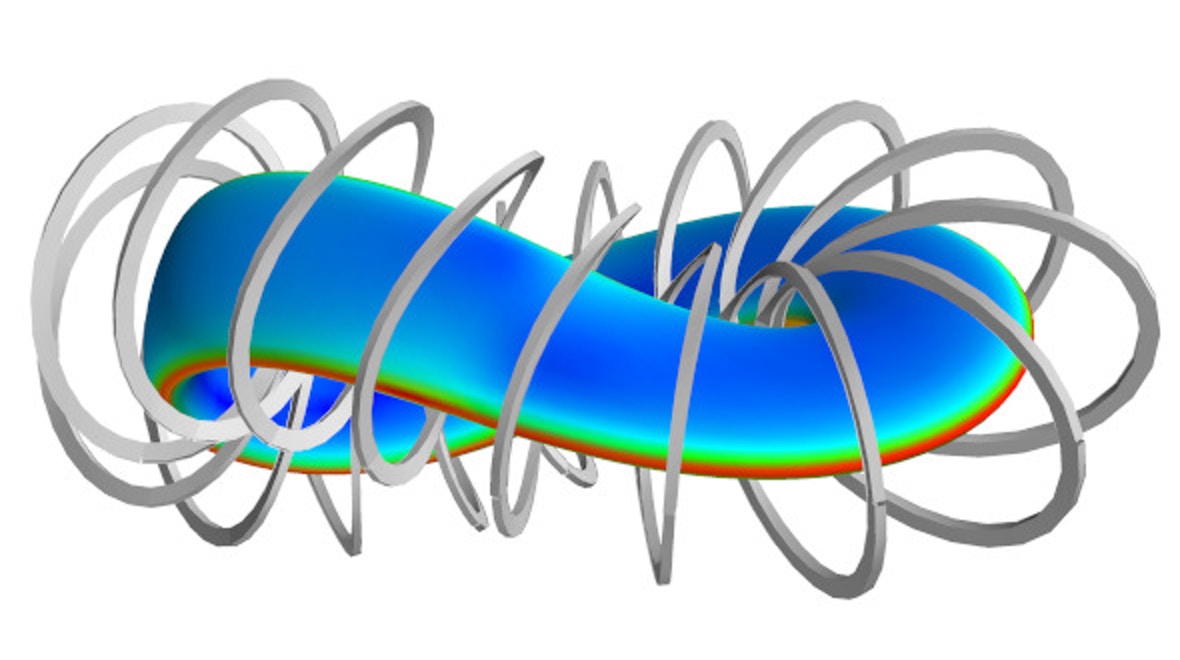](https://www.cs.cornell.edu/~bindel/#)
#### [Optimizing stellarators](https://www.cs.cornell.edu/~bindel//blurbs/stellarator.html)
Advancing magnetic confinement fusion through optimization and hidden symmetries.
* [Simons Collaboration](https://hiddensymmetries.princeton.edu/)
* [HiFiStell SciDAC](https://hifistell.plasma.princeton.edu/)
[](https://www.cs.cornell.edu/~bindel/#)
#### [Verified numerics](https://www.cs.cornell.edu/~bindel//blurbs/verinum.html)
Formally correctness proofs for floating point codes.
* [Project home](https://verinum.org/)
* [Github](https://github.com/VeriNum)
[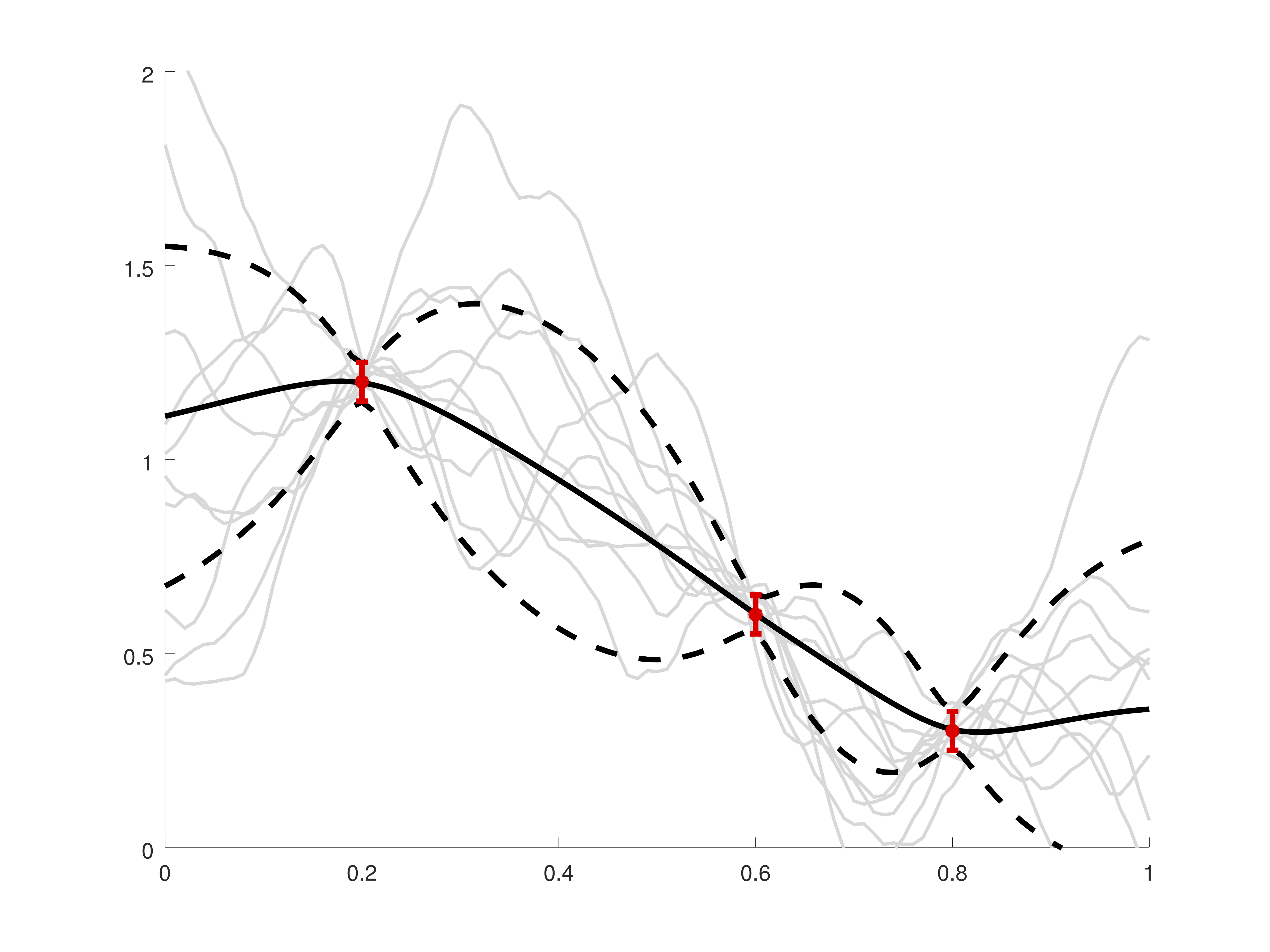](https://www.cs.cornell.edu/~bindel/#)
#### [Kernel methods](https://www.cs.cornell.edu/~bindel//blurbs/kernels.html)
Theory and scalable algorithms for kernel-based function approximation.
[](https://www.cs.cornell.edu/~bindel/#)
#### [Parallel surrogate optimization](https://www.cs.cornell.edu/~bindel//blurbs/rbfopt.html)
Asynchronous parallel algorithms for finding minima fast by fitting functions to surrogate models.
[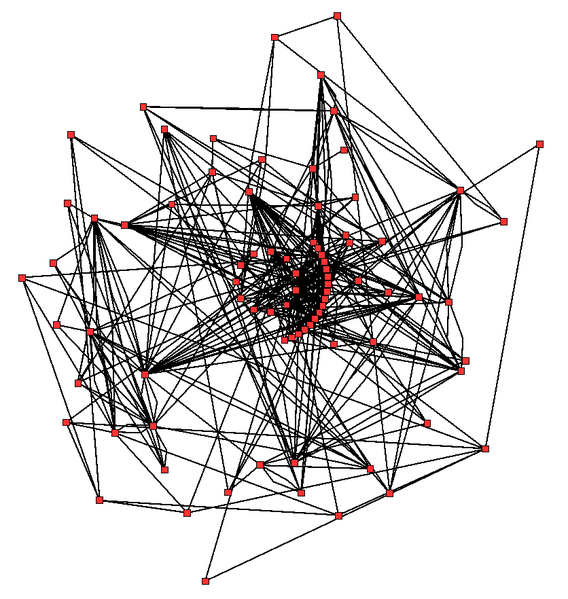](https://www.cs.cornell.edu/~bindel/#)
#### [Spectral network analysis](https://www.cs.cornell.edu/~bindel//blurbs/graphspec.html)
Fast spectral tools for graph structure.
[More projects »](https://www.cs.cornell.edu/~bindel/research.html)
Currently teaching
------------------
[](https://www.cs.cornell.edu/~bindel/#)
#### [Matrix Computations](https://www.cs.cornell.edu/courses/cs6210/2025fa/)
(CS 6210)
* [\[F22\]](https://www.cs.cornell.edu/courses/cs6210/2022fa/)
* [\[F19\]](http://www.cs.cornell.edu/courses/cs6210/2019fa/)
* [\[F16\]](https://www.cs.cornell.edu/~bindel/class/cs6210-f16/)
* [\[F13\]](https://www.cs.cornell.edu/~bindel/class/cs6210-f13/)
* [\[F12\]](https://www.cs.cornell.edu/~bindel/class/cs6210-f12/)
* [\[F09\]](https://www.cs.cornell.edu/~bindel/class/cs6210-f09/)
MW 10:10-11:25 in Gates 114 (or Zoom).
Numerical linear algebra. Basic theory, efficient algorithms, and enough error analysis to avoid numerical embarrassment (we hope)! Direct and iterative methods for linear systems, least squares, and eigenvalues.
[](https://www.cs.cornell.edu/~bindel/#)
#### [Projects](https://www.cs.cornell.edu/~bindel/meng.html)
(CS \[45\]999)
See my [list of projects](http://www.cs.cornell.edu/~bindel/meng.html)
!
If nothing on the list appeals but you think you’d like to work with me on something, come knock on my door. I don’t bite.
[More classes »](https://www.cs.cornell.edu/~bindel/teaching.html)
Upcoming travels
----------------
**2026-02-15:** [Dagstuhl on Reduced and Mixed Precision Computing](https://www.dagstuhl.de/seminars/seminar-calendar/seminar-details/26081)
**2026-03-19:** Hidden Symmetries Annual Meeting
* * *
---
# Chris De Sa
| | |
| --- | --- |
|  | Chris De Sa
===========
Gates Hall, Room 426
I am an Associate Professor in the Computer Science department at Cornell University. I am a member of the [Cornell Machine Learning Group](http://machinelearning.cis.cornell.edu/index.php)
and I lead the [Relax ML Lab](https://relax-ml.cs.cornell.edu/team/)
. My research interests include algorithmic, software, and hardware techniques for high-performance machine learning, with a focus on relaxed-consistency variants of stochastic algorithms such as asynchronous and low-precision stochastic gradient descent (SGD) and Markov chain Monte Carlo. My work builds towards using these techniques to construct data analytics and machine learning frameworks, including for deep learning, that are efficient, parallel, and distributed.
I graduated from Stanford University in 2017, where I was advised by [Kunle Olukotun](http://arsenalfc.stanford.edu/kunle)
and by [Chris Ré](http://cs.stanford.edu/people/chrismre/)
. |
Recent News and Awards\[[show all news](javascript:void(0))\
\]\[[show only recent news](javascript:void(0))\
\]
--------------------------------------------------------------------------------------------------------------
▷ Our paper "Is My Prediction Arbitrary? The Confounding Effects of Variance in Fair Classification Benchmarks" won a Best Student Paper Award Honorable Mention for the AI for Social Impact track at AAAI-2024. [](https://aaai.org/about-aaai/aaai-awards/aaai-24-paper-awards/)
▷ I was awarded a DARPA YFA Grant for "Decentralized Online Parameter-Efficient Fine-Tuning of Compressed Models," 2024.
▷ I gave a keynote speech at the International Conference on AI-ML Systems. [](https://www.aimlsystems.org/2023/)
▷ I am program chair at MLSys 2024. [](https://mlsys.org/)
▷ I was awarded the Google Research Scholar Award. [](https://research.google/outreach/research-scholar-program/recipients/?category=2023)
▷ I was a workshop/tutorial chair at MLSys 2022. [](https://mlsys.org/)
▷ Our paper "Optimal Complexity in Decentralized Training" (Yucheng Lu, Chris De Sa) won an Outstanding Paper Award Honorable Mention at ICML 2021 (awarded to 4 papers out of 1184 publications). [](https://icml.cc/virtual/2021/awards_detail)
▷ I co-organized the Cornell Institute for Digital Agriculture Hackathon. [](https://cornellsun.com/2022/03/14/cornell-students-tackle-agricultural-challenges-with-technology-at-in-person-digital-agriculture-hackathon/)
▷ I have joined the executive committee of the Cornell Institute for Digital Agriculture (CIDA). [](https://digitalagriculture.cornell.edu/about-us/who-is-cida/leadership/)
▷ I won the National Science Foundation CAREER award. [](https://www.cs.cornell.edu/information/news/newsitem11607/four-cs-faculty-win-national-science-foundation-nsf-early-career)
▷ Our paper on bias in model selection was featured in the popular press. [](https://venturebeat.com/2021/04/07/study-suggests-that-ai-model-selection-might-introduce-bias/)
▷ I was awarded the Mr. & Mrs. Richard F. Tucker Excellence in Teaching Award from the College of Engineering. [](https://www.engineering.cornell.edu/research-and-faculty/faculty/resources-faculty/faculty-teaching-and-advising-award-winners)
▷ I was awarded an NSF Robust Intelligence Small Grant for "Reliable Machine Learning in Hyperbolic Spaces."
▷ Three papers from our lab were accepted into NeurIPS 2020, of which two won spotlight awards!
▷ Together with faculty from other departments, I have been teaching PLSCI 7202, a short course on applications of machine learning to plant science. [](https://classes.cornell.edu/browse/roster/FA20/class/PLSCI/7202)
PhD Students
------------
▷ Ruqi Zhang. PhD 2021, Statistics (now an Assistant Professor at Purdue CS). Scalable Bayesian inference for ML. [](https://ruqizhang.github.io/)
▷ Yucheng Lu. PhD 2023, Computer Science (now at Together). Distributed optimization, ML systems. [](https://eugenelyc.github.io/)
▷ A. Feder Cooper. PhD 2024, Computer Science (postdoc at MSR, affiliate at Stanford HAI; future Assistant Professor at Yale CS). Reliable measurement and evaluation of ML systems. [](https://afedercooper.info/)
▷ Tao Yu. PhD 2024, Computer Science. Private and secure ML, accurate learning in hyperbolic space. [](http://www.cs.cornell.edu/~tyu/)
▷ Jerry Chee. PhD Student, Computer Science. Scalable and resource-efficient ML. [](https://jerry-chee.github.io/)
▷ Yaohui Cai. PhD Student, Electrical and Computing Engineering. Efficient deep learning inference and training (co-advised with Zhiru Zhang). [](https://www.csl.cornell.edu/~yc2632/)
▷ Si Yi (Cathy) Meng. PhD Student, Computer Science. Optimization algorithms for large-scale machine learning. [](https://www.cs.cornell.edu/~siyimeng/)
▷ Albert Tseng. PhD Student, Computer Science. Deep learning quantization and compression. [](https://tsengalb99.github.io/)
Teaching
--------
▷ CS 4780/5780 [Machine Learning](http://www.cs.cornell.edu/courses/cs4780/2022sp/)
(Spring 2022, [Spring 2018](http://www.cs.cornell.edu/courses/cs4780/2018sp/)
)
▷ CS 4787/5777 [Principles of Large-Scale Machine Learning](http://www.cs.cornell.edu/courses/cs4787/2023fa/)
(Fall 2023, [Fall 2022](http://www.cs.cornell.edu/courses/cs4787/2022fa/)
, [Spring 2021](http://www.cs.cornell.edu/courses/cs4787/2021sp/)
, [Spring 2020](http://www.cs.cornell.edu/courses/cs4787/2020sp/)
, [Spring 2019](http://www.cs.cornell.edu/courses/cs4787/2019sp/)
)
▷ CS 6787 [Advanced Machine Learning Systems](http://www.cs.cornell.edu/courses/cs6787/2024sp/)
(Spring 2024, [Fall 2021](http://www.cs.cornell.edu/courses/cs6787/2021fa/)
, [Fall 2020](http://www.cs.cornell.edu/courses/cs6787/2020fa/)
, [Fall 2019](http://www.cs.cornell.edu/courses/cs6787/2019fa/)
, [Fall 2018](http://www.cs.cornell.edu/courses/cs6787/2018fa/)
, [Fall 2017](http://www.cs.cornell.edu/courses/cs6787/2017fa/)
)
▷ CS 7792 [Special Topics in Machine Learning](http://www.cs.cornell.edu/courses/cs7792/2023sp/)
(Spring 2023)
Office Hours Wednesdays 2:00-3:00 PM in Gates 426.
Publications
------------
[Lab Website](https://relax-ml.cs.cornell.edu/)
— [CV](https://www.cs.cornell.edu/~cdesa/papers/cdesa-cv.pdf)
— [Google Scholar](https://scholar.google.com/citations?user=v7EjGHkAAAAJ)
— [Show All Abstracts](javascript:void(0))
— [Hide All Abstracts](javascript:void(0))
| | |
| --- | --- |
| NeurIPS 2024 | QTIP: Quantization with trellises and incoherence processing Spotlight
Albert Tseng, Qingyao Sun, David Hou, Christopher De Sa
In _Proceedings of the 37th Neural Information Processing Systems Conference_, December 2024.
\[[Abstract](javascript:void(0))
\] \[[Paper](https://proceedings.neurips.cc/paper_files/paper/2024/file/6de2e84b8da47bb2eb5e2ac96c63d2b0-Paper-Conference.pdf)
\] \[[Blog](https://www.together.ai/blog/even-better-even-faster-quantized-llms-with-qtip)
\]
Post-training quantization (PTQ) reduces the memory footprint of LLMs by quantizing weights to low-precision datatypes. Since LLM inference is usually memory-bound, PTQ methods can improve inference throughput. Recent state-of-the-art PTQ approaches use vector quantization (VQ) to quantize multiple weights at once, which improves information utilization through better shaping. However, VQ requires a codebook with size exponential in the dimension. This limits current VQ-based PTQ works to low VQ dimensions ($\\le 8$) that in turn limit quantization quality. Here, we introduce QTIP, which instead uses trellis coded quantization (TCQ) to achieve ultra-high-dimensional quantization. TCQ uses a stateful decoder that separates the codebook size from the bitrate and effective dimension. QTIP introduces a spectrum of lookup-only to computed lookup-free trellis codes designed for a hardware-efficient "bitshift" trellis structure; these codes achieve state-of-the-art results in both quantization quality and inference speed. |
| Diffusion models with learned adaptive noise
Subham Sahoo, Aaron Gokaslan, Christopher M De Sa, Volodymyr Kuleshov
In _Proceedings of the 37th Neural Information Processing Systems Conference_, December 2024.
\[[Abstract](javascript:void(0))
\] \[[Paper](https://proceedings.neurips.cc/paper_files/paper/2024/file/bee43378b65ec195a67f24709469dcaf-Paper-Conference.pdf)
\]
Diffusion models have gained traction as powerful algorithms for synthesizing high-quality images. Central to these algorithms is the diffusion process, a set of equations which maps data to noise in a way that can significantly affect performance. In this paper, we explore whether the diffusionprocess can be learned from data. Our work is grounded in Bayesian inference and seeks to improve log-likelihood estimation by casting the learned diffusion process as an approximate variational posterior that yields a tighter lower bound (ELBO) on the likelihood. A widely held assumption is that the ELBO is invariant to the noise process: our work dispels this assumption and proposes multivariate learned adaptive noise (MuLAN), a learned diffusion process that applies noise at different rates across an image. Our method consists of three components: a multivariate noise schedule, adaptive input-conditional diffusion, and auxiliary variables; these components ensure that the ELBO is no longer invariant to the choice of the noise schedule as in previous works. Empirically, MuLAN sets a new state-of-the-art in density estimation on CIFAR-10 and ImageNet while matching the performance of previous state-of-the-art models with 50% fewer steps. We provide the code, along with a blog post and video tutorial on the project page: https://s-sahoo.com/MuLAN. |
| Searching for Efficient Linear Layers over a Continuous Space of Structured Matrices
Andres Potapczynski, Shikai Qiu, Marc Finzi, Christopher Ferri, Charlie Chen, Micah Goldblum, C Bayan Bruss, Christopher M De Sa, Andrew G Wilson
In _Proceedings of the 37th Neural Information Processing Systems Conference_, December 2024.
\[[Abstract](javascript:void(0))
\] \[[Paper](https://proceedings.neurips.cc/paper_files/paper/2024/file/0729c38b421cd66f2313ab397d099e37-Paper-Conference.pdf)
\]
Dense linear layers are the dominant computational bottleneck in large neural networks, presenting a critical need for more efficient alternatives. Previous efforts to develop alternatives have focused on a small number of hand-crafted structured matrices, and have neglected to investigate whether these structures can surpass dense layers in terms of compute-optimal scaling laws when both the model size and training examples are optimally allocated. In this work, we present a unifying framework that enables searching among all linear operators expressible via an Einstein summation. This framework encompasses many previously proposed structures, such as low-rank, Kronecker, Tensor-Train, and Monarch, along with many novel structures. We develop a taxonomy of all such operators based on their computational and algebraic properties, which provides insights into their scaling laws. Combining these insights with empirical evaluation, we identify a subset of structures that achieve equal or better performance than dense layers as a function of training compute. To further improve their compute efficiency, we develop a natural extension of these performant structures that convert them into a sparse Mixture-of-Experts layer. The resulting layer significantly outperforms dense layers in compute-optimal training efficiency for GPT-2 language models. |
| ICML 2024 | QuIP\\(\\sharp\\): Even Better LLM Quantization with Hadamard Incoherence and Lattice Codebooks
Albert Tseng, Jerry Chee, Qingyao Sun, Volodymyr Kuleshov, Christopher De Sa
In _ICML: the Fortieth International Conference on Machine Learning_, July 2024.
\[[Abstract](javascript:void(0))
\] \[[Paper](https://openreview.net/forum?id=9BrydUVcoe)
\]
Post-training quantization (PTQ) reduces the memory footprint of LLMs by quantizing their weights to low-precision. In this work, we introduce QuIP\\(\\sharp\\), a weight-only PTQ method that achieves state-of-the-art results in extreme compression regimes (4 bits per weight) using three novel techniques. First, QuIP\\(\\sharp\\) improves QuIP's (Chee et al., 2023) incoherence processing by using the randomized Hadamard transform, which is faster and has better theoretical properties. Second, QuIP\\(\\sharp\\) uses vector quantization to take advantage of the ball-shaped sub-Gaussian distribution that incoherent weights possess: specifically, we introduce a set of hardware-efficient codebooks based on the highly symmetric lattice, which achieves the optimal 8-dimension unit ball packing. Third, QuIP\\(\\sharp\\) uses fine-tuning to improve fidelity to the original model. Our experiments show that QuIP\\(\\sharp\\) outperforms existing PTQ methods, enables new behaviors in PTQ scaling, and supports fast inference. Our code can be found at https://github.com/Cornell-RelaxML/quip-sharp. |
| ICLR 2024 | Shadow Cones: A Generalized Framework for Partial Order Embeddings
Tao Yu, Toni J.B. Liu, Albert Tseng, Christopher De Sa
In _ICLR: The Twelfth International Conference on Learning Representations_, May 2024.
\[[Abstract](javascript:void(0))
\] \[[Paper](https://openreview.net/forum?id=zbKcFZ6Dbp)
\]
Hyperbolic space has proven to be well-suited for capturing hierarchical relations in data, such as trees and directed acyclic graphs. Prior work introduced the concept of entailment cones, which uses partial orders defined by nested cones in the Poincare ball to model hierarchies. Here, we introduce the \`\`shadow cones" framework, a physics-inspired entailment cone construction. Specifically, we model partial orders as subset relations between shadows formed by a light source and opaque objects in hyperbolic space. The shadow cones framework generalizes entailment cones to a broad class of formulations and hyperbolic space models beyond the Poincare ball. This results in clear advantages over existing constructions: for example, shadow cones possess better optimization properties over constructions limited to the Poincare ball. Our experiments on datasets of various sizes and hierarchical structures show that shadow cones consistently and significantly outperform existing entailment cone constructions. These results indicate that shadow cones are an effective way to model partial orders in hyperbolic space, offering physically intuitive and novel insights about the nature of such structures. |
| AAAI 2024 | Arbitrariness of Prediction in Fair Classification Best Student Paper (Honorable Mention)
A. Feder Cooper, Katherine Lee, Madiha Choksi, Solon Barocas, Christopher De Sa, James Grimmelmann, Jon Kleinberg, Siddhartha Sen, Baobao Zhang
In _The 38th Annual AAAI Conference on Artificial Intelligence_, February 2024.
\[[Abstract](javascript:void(0))
\] \[[Arxiv](https://arxiv.org/abs/2301.11562)
\]
Variance in predictions across different trained models is a significant, under-explored source of error in fair binary classification. In practice, the variance on some data examples is so large that decisions can be effectively arbitrary. To investigate this problem, we take an experimental approach and make four overarching contributions: We: 1) Define a metric called self-consistency, derived from variance, which we use as a proxy for measuring and reducing arbitrariness; 2) Develop an ensembling algorithm that abstains from classification when a prediction would be arbitrary; 3) Conduct the largest to-date empirical study of the role of variance (vis-a-vis self-consistency and arbitrariness) in fair binary classification; and, 4) Release a toolkit that makes the US Home Mortgage Disclosure Act (HMDA) datasets easily usable for future research. Altogether, our experiments reveal shocking insights about the reliability of conclusions on benchmark datasets. Most fair binary classification benchmarks are close-to-fair when taking into account the amount of arbitrariness present in predictions -- before we even try to apply any fairness interventions. This finding calls into question the practical utility of common algorithmic fairness methods, and in turn suggests that we should reconsider how we choose to measure fairness in binary classification. |
| SA 2023 | Neural Caches for Monte Carlo Partial Differential Equation Solvers
Zilu Li, Guandao Yang, Xi Deng, Christopher De Sa, Bharath Hariharan, Steve Marschner
In _SIGGRAPH Asia 2023_, December 2023.
\[[Abstract](javascript:void(0))
\] \[[Paper](https://dl.acm.org/doi/10.1145/3610548.3618141)
\]
This paper presents a method that uses neural networks as a caching mechanism to reduce the variance of Monte Carlo Partial Differential Equation solvers, such as the Walk-on-Spheres algorithm \[Sawhney and Crane 2020\]. While these Monte Carlo PDE solvers have the merits of being unbiased and discretization-free, their high variance often hinders real-time applications. On the other hand, neural networks can approximate the PDE solution, and evaluating these networks at inference time can be very fast. However, neural-network-based solutions may suffer from convergence difficulties and high bias. Our hybrid system aims to combine these two potentially complementary solutions by training a neural field to approximate the PDE solution using supervision from a WoS solver. This neural field is then used as a cache in the WoS solver to reduce variance during inference. We demonstrate that our neural field training procedure is better than the commonly used self-supervised objectives in the literature. We also show that our hybrid solver exhibits lower variance than WoS with the same computational budget: it is significantly better for small compute budgets and provides smaller improvements for larger budgets, reaching the same performance as WoS in the limit. |
| NeurIPS 2023 | QuIP: 2-Bit Quantization of Large Language Models With Guarantees Spotlight
Jerry Chee, Yaohui Cai, Volodymyr Kuleshov, Christopher De Sa
In _Proceedings of the 36th Neural Information Processing Systems Conference_, December 2023.
\[[Abstract](javascript:void(0))
\] \[[Arxiv](https://arxiv.org/abs/2307.13304)
\]
This work studies post-training parameter quantization in large language models (LLMs). We introduce quantization with incoherence processing (QuIP), a new method based on the insight that quantization benefits from incoherent weight and Hessian matrices, i.e., from the weights being even in magnitude and the directions in which it is important to round them accurately being unaligned with the coordinate axes. QuIP consists of two steps: (1) an adaptive rounding procedure minimizing a quadratic proxy objective; (2) efficient pre- and post-processing that ensures weight and Hessian incoherence via multiplication by random orthogonal matrices. We complement QuIP with the first theoretical analysis for an LLM-scale quantization algorithm, and show that our theory also applies to an existing method, OPTQ. Empirically, we find that our incoherence preprocessing improves several existing quantization algorithms and yields the first LLM quantization methods that produce viable results using only two bits per weight. Our code can be found at https://github.com/jerry-chee/QuIP. |
| CD-GraB: Coordinating Distributed Example Orders for Provably Accelerated Training
A. Feder Cooper, Wentao Guo, Khiem Pham, Tiancheng Yuan, Charlie F. Ruan, Yucheng Lu, Christopher De Sa
In _Proceedings of the 36th Neural Information Processing Systems Conference_, December 2023.
\[[Abstract](javascript:void(0))
\] \[[Arxiv](https://arxiv.org/abs/2302.00845)
\]
Recent research on online Gradient Balancing (GraB) has revealed that there exist permutation-based example orderings that are guaranteed to outperform random reshuffling (RR). Whereas RR arbitrarily permutes training examples, GraB leverages stale gradients from prior epochs to order examples -- achieving a provably faster convergence rate than RR. However, GraB is limited by design: While it demonstrates an impressive ability to scale-up training on centralized data, it does not naturally extend to modern distributed ML workloads. We therefore propose Coordinated Distributed GraB (CD-GraB), which uses insights from prior work on kernel thinning to translate the benefits of provably faster permutation-based example ordering to distributed settings. With negligible overhead, CD-GraB exhibits a linear speedup in convergence rate over centralized GraB and outperforms baselines empirically, including distributed RR, on a variety of benchmark tasks. |
| Coneheads: Hierarchy Aware Attention
Albert Tseng, Tao Yu, Toni J.B. Liu, Christopher De Sa
In _Proceedings of the 36th Neural Information Processing Systems Conference_, December 2023.
\[[Abstract](javascript:void(0))
\] \[[Arxiv](https://arxiv.org/abs/2306.00392)
\]
Attention networks such as transformers have achieved state-of-the-art performance in many domains. These networks rely heavily on the dot product attention operator, which computes the similarity between two points by taking their inner product. However, the inner product does not explicitly model the complex structural properties of real world datasets, such as hierarchies between data points. To remedy this, we introduce cone attention, a drop-in replacement for dot product attention based on hyperbolic entailment cones. Cone attention associates two points by the depth of their lowest common ancestor in a hierarchy defined by hyperbolic cones, which intuitively measures the divergence of two points and gives a similarity score. We test cone attention on a wide variety of models and tasks and show that it improves task-level performance over dot product attention and other baselines, and is able to match dot-product attention with significantly fewer parameters. Our results suggest that cone attention is an effective way to capture hierarchical relationships when calculating attention. |
| TART: A plug-and-play Transformer module for task-agnostic reasoning
Kush Bhatia, Avanika Narayan, Christopher De Sa, Christopher Re
In _Proceedings of the 36th Neural Information Processing Systems Conference_, December 2023.
\[[Abstract](javascript:void(0))
\] \[[Arxiv](https://arxiv.org/abs/2306.07536)
\]
Large language models (LLMs) exhibit in-context learning abilities which enable the same model to perform several tasks without any task-specific training. In contrast, traditional adaptation approaches, such as fine-tuning, modify the underlying models for each specific task. In-context learning, however, consistently underperforms task-specific tuning approaches even when presented with the same examples. While most existing approaches (e.g., prompt engineering) focus on the LLM's learned representations to patch this performance gap, our experiments actually reveal that LLM representations contain sufficient information to make good predictions. As such, we focus on the LLM's reasoning abilities and demonstrate that this performance gap exists due to their inability to perform simple probabilistic reasoning tasks. This raises an intriguing question: Are LLMs actually capable of learning how to reason in a task-agnostic manner? We answer this in the affirmative and, as a proof of concept, propose TART which generically improves an LLM's reasoning abilities using a synthetically trained reasoning module. TART trains this Transformer-based reasoning module in a task-agnostic manner using only synthetic logistic regression tasks and composes it with an arbitrary real-world pre-trained model without any additional training. With a single inference module, TART improves performance across different model families (GPT-Neo, Pythia, Bloom), model sizes (100M - 6B), tasks (14 NLP classification tasks), and even across different modalities (audio and vision). On the RAFT Benchmark, TART improves GPT-Neo (125M)'s performance such that it outperforms Bloom (176B), and is within 4% of GPT-3. |
| Riemannian Residual Neural Networks
Isay Katsman, Eric Ming Chen, Sidhanth Holalkere, Anna Asch, Aaron Lou, Ser-Nam Lim, Christopher De Sa
In _Proceedings of the 36th Neural Information Processing Systems Conference_, December 2023.
\[[Abstract](javascript:void(0))
\] \[[Arxiv](https://arxiv.org/abs/2310.10013)
\]
Recent methods in geometric deep learning have introduced various neural networks to operate over data that lie on Riemannian manifolds. Such networks are often necessary to learn well over graphs with a hierarchical structure or to learn over manifold-valued data encountered in the natural sciences. These networks are often inspired by and directly generalize standard Euclidean neural networks. However, extending Euclidean networks is difficult and has only been done for a select few manifolds. In this work, we examine the residual neural network (ResNet) and show how to extend this construction to general Riemannian manifolds in a geometrically principled manner. Originally introduced to help solve the vanishing gradient problem, ResNets have become ubiquitous in machine learning due to their beneficial learning properties, excellent empirical results, and easy-to-incorporate nature when building varied neural networks. We find that our Riemannian ResNets mirror these desirable properties: when compared to existing manifold neural networks designed to learn over hyperbolic space and the manifold of symmetric positive definite matrices, we outperform both kinds of networks in terms of relevant testing metrics and training dynamics. |
| UAI 2023 | Inference for Probabilistic Dependency Graphs
Oliver Richardson, Joe Halpern, Christopher De Sa
In _UAI: the 39th Conference on Uncertainty in Artificial Intelligence_, August 2023.
\[[Abstract](javascript:void(0))
\] \[[Paper](https://proceedings.mlr.press/v216/richardson23a/richardson23a.pdf)
\]
Probabilistic dependency graphs (PDGs) are a flexible class of probabilistic graphical models, subsuming Bayesian Networks and Factor Graphs. They can also capture inconsistent beliefs, and provide a way of measuring the degree of this inconsistency. We present the first tractable inference algorithm for PDGs with discrete variables, making the asymptotic complexity of PDG inference similar that of the graphical models they generalize. The key components are: (1) the observation that PDG inference can be reduced to convex optimization with exponential cone constraints, (2) a construction that allows us to express these problems compactly for PDGs of boundeed treewidth, for which we needed to further develop the theory of PDGs, and (3) an appeal to interior point methods that can solve such problems in polynomial time. We verify the correctness and time complexity of our approach, and provide an implementation of it. We then evaluate our implementation, and demonstrate that it outperforms baseline approaches. Our code is available at github.com/orichardson/pdg-infer-uai. |
| ICML 2023 | CocktailSGD: Fine-tuning Foundation Models over 500Mbps Networks
Jue Wang, Yucheng Lu, Binhang Yuan, Beidi Chen, Percy Liang, Christopher De Sa, Christopher Re, Ce Zhang
In _ICML: the Thirty-ninth International Conference on Machine Learning_, July 2023.
\[[Abstract](javascript:void(0))
\] \[[Paper](https://openreview.net/forum?id=w2Vrl0zlzA)
\]
Distributed training of foundation models, especially large language models (LLMs), is communication-intensive and so has heavily relied on centralized data centers with fast interconnects. Can we train on slow networks and unlock the potential of decentralized infrastructure for foundation models? In this paper, we propose CocktailSGD, a novel communication-efficient training framework that combines three distinct compression techniques -- random sparsification, top-K sparsification, and quantization -- to achieve much greater compression than each individual technique alone. We justify the benefit of such a hybrid approach through a theoretical analysis of convergence. Empirically, we show that CocktailSGD achieves up to 117× compression in fine-tuning LLMs up to 20 billion parameters without hurting convergence. On a 500Mbps network, CocktailSGD only incurs ∼1.2× slowdown compared with data center networks. |
| InfoDiffusion: Representation Learning Using Information Maximizing Diffusion Models
Yingheng Wang, Yair Schiff, Aaron Gokaslan, Weishen Pan, Fei Wang, Christopher De Sa, Volodymyr Kuleshov
In _ICML: the Thirty-ninth International Conference on Machine Learning_, July 2023.
\[[Abstract](javascript:void(0))
\] \[[Paper](https://openreview.net/forum?id=ycZSQdo2F9)
\]
Diffusion models feature high sample quality, but are not effective at learning semantically meaningful latent representations. Here, we propose InfoDiffusion, an algorithm that enables diffusion models to perform representation learning using low-dimensional latent variables. We introduce auxiliary-variable diffusion models---a model family that contains an additional set of semantically meaningful latents---and we derive new variational inference algorithms that optimize a learning objective regularized with a mutual information term. Maximizing mutual information helps InfoDiffusion uncover semantically meaningful representations across multiple datasets, including representations that achieve the strong property of disentanglement. We envision our methods being useful in applications that require exploring a learned latent space to generate high-quality outputs, e.g., in generative design. |
| STEP: Learning N:M Structured Sparsity Masks from Scratch with Precondition
Yucheng Lu, Amir Yazdanbakhsh, Shivani Agrawal, Suvinay Subramanian, Oleg Rybakov, Christopher De Sa
In _ICML: the Thirty-ninth International Conference on Machine Learning_, July 2023.
\[[Abstract](javascript:void(0))
\] \[[Paper](https://openreview.net/forum?id=0O7b2Y198V)
\]
Recent innovations on hardware (e.g. Nvidia A100) have motivated learning N:M structured sparsity masks from scratch for fast model inference. However, state-of-the-art learning recipes in this regime (e.g. SR-STE) are proposed for non-adaptive optimizers like momentum SGD, while incurring non-trivial accuracy drop for Adam-trained models like attention-based LLMs. In this paper, we first demonstrate such gap origins from poorly estimated second moment (i.e. variance) in Adam states given by the masked weights. We conjecture that learning N:M masks with Adam should take the critical regime of variance estimation into account. In light of this, we propose STEP, an Adam-aware recipe that learns N:M masks with two phases: first, STEP calculates a reliable variance estimate (precondition phase) and subsequently, the variance remains fixed and is used as a precondition to learn N:M masks (mask-learning phase). STEP automatically identifies the switching point of two phases by dynamically sampling variance changes over the training trajectory and testing the sample concentration. Empirically, we evaluate STEP and other baselines such as ASP and SR-STE on multiple tasks including CIFAR classification, machine translation and LLM fine-tuning (BERT-Base, GPT-2). We show STEP mitigates the accuracy drop of baseline recipes and is robust to aggressive structured sparsity ratios. |
| JMLR 2023 | Decentralized Learning: Theoretical Optimality and Practical Improvements
Yucheng Lu, Christopher De Sa
In _JMLR: Journal of Machine Learning Research_, April 2023.
\[[Abstract](javascript:void(0))
\] \[[Paper](https://jmlr.org/papers/v24/22-0044.html)
\]
Decentralization is a promising method of scaling up parallel machine learning systems. In this paper, we provide a tight lower bound on the iteration complexity for such methods in a stochastic non-convex setting. Our lower bound reveals a theoretical gap in known convergence rates of many existing decentralized training algorithms, such as D-PSGD. We prove by construction this lower bound is tight and achievable. Motivated by our insights, we further propose DeTAG, a practical gossip-style decentralized algorithm that achieves the lower bound with only a logarithm gap. While a simple version of DeTAG with plain SGD and constant step size suffice for achieving theoretical limits, we additionally provide convergence bound for DeTAG under general non-increasing step size and momentum. Empirically, we compare DeTAG with other decentralized algorithms on multiple vision benchmarks, including CIFAR10/100 and ImageNet. We substantiate our theory and show DeTAG converges faster on unshuffled data and in sparse networks. Furthermore, we study a DeTAG variant, DeTAG\*, that practically speeds up data-center-scale model training. This manuscript provides extended contents to its ICML version. |
| ICLR 2023 | Maximizing Communication Efficiency for Large-scale Training via 0/1 Adam
Yucheng Lu, Conglong Li, Minjia Zhang, Christopher De Sa, Yuxiong He
In _ICLR: The Eleventh International Conference on Learning Representations_, May 2023.
\[[Abstract](javascript:void(0))
\] \[[Arxiv](https://arxiv.org/abs/2202.06009)
\]
1-bit gradient compression and local steps are two representative techniques that enable drastic communication reduction in distributed SGD. Their benefits, however, remain an open question on Adam-based large model pre-training (e.g. BERT and GPT). In this paper, we demonstrate the non-linearity in Adam causes slow convergence even when 1-bit compression or local steps are individually applied. To alleviate this limitation, we propose 0/1 Adam that linearizes each Adam step via approximating its optimizer states using their stale estimates and linear correlation. 0/1 Adam performs an Adam-like step to preserve the adaptivity, while its linearity allows utilizing 1-bit compression and local steps simultaneously for wall-clock time speed up. We provide convergence guarantee for 0/1 Adam on smooth non-convex objectives. On various large-scale benchmarks such as BERT-Base, BERT-Large, GPT-2 pre-training and ImageNet, we demonstrate on up to 128 GPUs that 0/1 Adam is able to reduce up to 87% of data volume, 54% of communication rounds, and achieve up to 2 higher training throughput and end-to-end training time reduction compared to the state-of-the-art baseline 1-bit Adam; while enjoying the same statistical convergence speed and end task model accuracy on GLUE dataset and ImageNet validation set. |
| Random Laplacian Features for Learning with Hyperbolic Space
Tao Yu, Christopher De Sa
In _ICLR: The Eleventh International Conference on Learning Representations_, May 2023.
\[[Abstract](javascript:void(0))
\] \[[Arxiv](https://arxiv.org/abs/2202.06854)
\]
Due to its geometric properties, hyperbolic space can support high-fidelity embeddings of tree- and graph-structured data, upon which various hyperbolic networks have been developed. Existing hyperbolic networks encode geometric priors not only for the input, but also at every layer of the network. This approach involves repeatedly mapping to and from hyperbolic space, which makes these networks complicated to implement, computationally expensive to scale, and numerically unstable to train. In this paper, we propose a simpler approach: learn a hyperbolic embedding of the input, then map once from it to Euclidean space using a mapping that encodes geometric priors by respecting the isometries of hyperbolic space, and finish with a standard Euclidean network. The key insight is to use a random feature mapping via the eigenfunctions of the Laplace operator, which we show can approximate any isometry-invariant kernel on hyperbolic space. Our method can be used together with any graph neural networks: using even a linear graph model yields significant improvements in both efficiency and performance over other hyperbolic baselines in both transductive and inductive tasks. |
| NeurIPS 2022 | GraB: Finding Provably Better Data Permutations than Random Reshuffling
Yucheng Lu, Wentao Guo, Christopher De Sa
In _NeurIPS: Proceedings of the 35th Neural Information Processing Systems Conference_, December 2022.
\[[Abstract](javascript:void(0))
\] \[[Paper](https://openreview.net/forum?id=nDemfqKHTpK)
\]
Random reshuffling, which randomly permutes the dataset each epoch, is widely adopted in model training because it yields faster convergence than with-replacement sampling. Recent studies indicate greedily chosen data orderings can further speed up convergence empirically, at the cost of using more computation and memory. However, greedy ordering lacks theoretical justification and has limited utility due to its non-trivial memory and computation overhead. In this paper, we first formulate an example-ordering framework named �mph{herding} and answer affirmatively that SGD with herding converges at the rate \\( O(T^{-2/3}) \\) on smooth, non-convex objectives, faster than the \\( O(n^{1/3}T^{-2/3}) \\) obtained by random reshuffling, where \\( n \\) denotes the number of data points and \\( T \\) denotes the total number of iterations. To reduce the memory overhead, we leverage discrepancy minimization theory to propose an online Gradient Balancing algorithm (GraB) that enjoys the same rate as herding, while reducing the memory usage from \\( O(nd) \\) to just \\( O(d) \\) and computation from \\( O(n^2) \\) to \\( O(n) \\), where \\( d \\) denotes the model dimension. We show empirically on applications including MNIST, CIFAR10, WikiText and GLUE that GraB can outperform random reshuffling in terms of both training and validation performance, and even outperform state-of-the-art greedy ordering while reducing memory usage over \\( 100 \\times \\). |
| Understanding Hyperdimensional Computing for Parallel Single-Pass Learning
Tao Yu, Yichi Zhang, Zhiru Zhang, Christopher De Sa
In _NeurIPS: Proceedings of the 35th Neural Information Processing Systems Conference_, December 2022.
\[[Abstract](javascript:void(0))
\] \[[Paper](https://openreview.net/forum?id=8ON84BdnSn)
\]
Hyperdimensional computing (HDC) is an emerging learning paradigm that computes with high dimensional binary vectors. There is an active line of research on HDC in the community of emerging hardware because of its energy efficiency and ultra-low latency—but HDC suffers from low model accuracy, with little theoretical understanding of what limits its performance. We propose a new theoretical analysis of the limits of HDC via a consideration of what similarity matrices can be "expressed" by binary vectors, and we show how the limits of HDC can be approached using random Fourier features (RFF). We extend our analysis to the more general class of vector symbolic architectures (VSA), which compute with high-dimensional vectors (hypervectors) that are not necessarily binary. We propose a new class of VSAs, finite group VSAs, which surpass the limits of HDC. Using representation theory, we characterize which similarity matrices can be "expressed" by finite group VSA hypervectors, and we show how these VSAs can be constructed. Experimental results show that our RFF method and group VSA can both outperform the state-of-the-art HDC model by up to 7.6% while maintaining hardware efficiency. This work aims to inspire a future interest on HDC in the ML community and connect to the hardware community. |
| Model Preserving Compression for Neural Networks
Jerry Chee, Megan Renz, Anil Damle, Christopher De Sa
In _NeurIPS: Proceedings of the 35th Neural Information Processing Systems Conference_, December 2022.
\[[Abstract](javascript:void(0))
\] \[[Paper](https://openreview.net/forum?id=gt-l9Hu2ndd)
\]
After training complex deep learning models, a common task is to compress the model to reduce compute and storage demands. When compressing, it is desirable to preserve the original model's per-example decisions (e.g., to go beyond top-1 accuracy or preserve robustness), maintain the network's structure, automatically determine per-layer compression levels, and eliminate the need for fine tuning. No existing compression methods simultaneously satisfy these criteria—we introduce a principled approach that does by leveraging interpolative decompositions. Our approach simultaneously selects and eliminates channels (analogously, neurons), then constructs an interpolation matrix that propagates a correction into the next layer, preserving the network's structure. Consequently, our method achieves good performance even without fine tuning and admits theoretical analysis. Our theoretical generalization bound for a one layer network lends itself naturally to a heuristic that allows our method to automatically choose per-layer sizes for deep networks. We demonstrate the efficacy of our approach with strong empirical performance on a variety of tasks, models, and datasets—from simple one-hidden-layer networks to deep networks on ImageNet. |
| From Gradient Flow on Population Loss to Learning with Stochastic Gradient Descent
Christopher De Sa, Satyen Kale, Jason D. Lee, Ayush Sekhari, Karthik Sridharan
In _NeurIPS: Proceedings of the 35th Neural Information Processing Systems Conference_, December 2022.
\[[Abstract](javascript:void(0))
\] \[[Paper](https://openreview.net/forum?id=xuw7R0hP7G)
\]
Stochastic Gradient Descent (SGD) has been the method of choice for learning large-scale non-convex models. While a general analysis of when SGD works has been elusive, there has been a lot of recent progress in understanding the convergence of Gradient Flow (GF) on the population loss, partly due to the simplicity that a continuous-time analysis buys us. An overarching theme of our paper is providing general conditions under which SGD converges, assuming that GF on the population loss converges. Our main tool to establish this connection is a general _converse Lyapunov_ like theorem, which implies the existence of a Lyapunov potential under mild assumptions on the rates of convergence of GF. In fact, using these potentials, we show a one-to-one correspondence between rates of convergence of GF and geometrical properties of the underlying objective. When these potentials further satisfy certain self-bounding properties, we show that they can be used to provide a convergence guarantee for Gradient Descent (GD) and SGD (even when the GF path and GD/SGD paths are quite far apart). It turns out that these self-bounding assumptions are in a sense also necessary for GD/SGD to work. Using our framework, we provide a unified analysis for GD/SGD not only for classical settings like convex losses, or objectives that satisfy PL/ KL properties, but also for more complex problems including Phase Retrieval and Matrix sq-root, and extending the results in the recent work of Chatterjee 2022. |
| CSLaw 2022 | Non-Determinism and the Lawlessness of ML Code Oral
A. Feder Cooper, Jonathan Frankle, Christopher De Sa
In _CSLaw: 2nd ACM Symposium on Computer Science and Law_, November 2022.
\[[Abstract](javascript:void(0))
\] \[[Paper](https://arxiv.org/pdf/2206.11834.pdf)
\]
Legal literature on machine learning (ML) tends to focus on harms, and as a result tends to reason about individual model outcomes and summary error rates. This focus on model-level outcomes and errors has masked important aspects of ML that are rooted in its inherent non-determinism. We show that the effects of non-determinism, and consequently its implications for the law, instead become clearer from the perspective of reasoning about ML outputs as probability distributions over possible outcomes. This distributional viewpoint accounts for non-determinism by emphasizing the possible outcomes of ML. Importantly, this type of reasoning is not exclusive with current legal reasoning; it complements (and in fact can strengthen) analyses concerning individual, concrete outcomes for specific automated decisions. By clarifying the important role of non-determinism, we demonstrate that ML code falls outside of the cyberlaw frame of treating "code as law," as this frame assumes that code is deterministic. We conclude with a brief discussion of what work ML can do to constrain the potentially harm-inducing effects of non-determinism, and we clarify where the law must do work to bridge the gap between its current individual-outcome focus and the distributional approach that we recommend. |
| ICML 2022 | Low-Precision Stochastic Gradient Langevin Dynamics Spotlight
Ruqi Zhang, Andrew Wilson, Christopher De Sa
In _ICML: the Thirty-ninty International Conference on Machine Learning_, July 2022.
\[[Abstract](javascript:void(0))
\] \[[Paper](https://proceedings.mlr.press/v162/zhang22ag.html)
\]
While low-precision optimization has been widely used to accelerate deep learning, low-precision sampling remains largely unexplored. As a consequence, sampling is simply infeasible in many large-scale scenarios, despite providing remarkable benefits to generalization and uncertainty estimation for neural networks. In this paper, we provide the first study of low-precision Stochastic Gradient Langevin Dynamics (SGLD), showing that its costs can be significantly reduced without sacrificing performance, due to its intrinsic ability to handle system noise. We prove that the convergence of low-precision SGLD with full-precision gradient accumulators is less affected by the quantization error than its SGD counterpart in the strongly convex setting. To further enable low-precision gradient accumulators, we develop a new quantization function for SGLD that preserves the variance in each update step. We demonstrate that low-precision SGLD achieves comparable performance to full-precision SGLD with only 8 bits on a variety of deep learning tasks. |
| ICLR 2022 | A General Analysis of Example-Selection for Stochastic Gradient Descent Spotlight
Yucheng Lu, Si Yi Meng, and Christopher De Sa
In _ICLR: Proceedings of the Tenth International Conference on Learning Representations_, April 2022.
\[[Abstract](javascript:void(0))
\]
Training example order in SGD has long been known to affect convergence rate. Recent results show that accelerated rates are possible in a variety of cases for permutation-based sample orders, in which each example from the training set is used once before any example is reused. In this paper, we develop a broad condition on the sequence of examples used by SGD that is sufficient to prove tight convergence rates in both strongly convex and non-convex settings. We show that our approach suffices to recover, and in some cases improve upon, previous state-of-the-art analyses for four known example-selection schemes: (1) shuffle once, (2) random reshuffling, (3) random reshuffling with data echoing, and (4) Markov Chain Gradient Descent. Motivated by our theory, we propose two new example-selection approaches. First, using quasi-Monte-Carlo methods, we achieve unprecedented accelerated convergence rates for learning with data augmentation. Second, we greedily choose a fixed scan-order to minimize the metric used in our condition and show that we can obtain more accurate solutions from the same number of epochs of SGD. We conclude by empirically demonstrating the utility of our approach for both convex linear-model and deep learning tasks. |
| How Low Can We Go: Trading Memory for Error in Low-Precision Training
Chengrun Yang, Ziyang Wu, Jerry Chee, Christopher De Sa, and Madeleine Udell
In _ICLR: Proceedings of the Tenth International Conference on Learning Representations_, April 2022.
\[[Abstract](javascript:void(0))
\]
Low-precision arithmetic trains deep learning models using less energy, less memory and less time. However, we pay a price for the savings: lower precision may yield larger round-off error and hence larger prediction error. As applications proliferate, users must choose which precision to use to train a new model, and chip manufacturers must decide which precisions to manufacture. We view these precision choices as a hyperparameter tuning problem, and borrow ideas from meta-learning to learn the tradeoff between memory and error. In this paper, we introduce Pareto Estimation to Pick the Perfect Precision (PEPPP). We use matrix factorization to find non-dominated configurations (the Pareto frontier) with a limited number of network evaluations. For any given memory budget, the precision that minimizes error is a point on this frontier. Practitioners can use the frontier to trade memory for error and choose the best precision for their goals. |
| NeurIPS 2021 | Hyperparameter Optimization Is Deceiving Us, and How to Stop It
A. Feder Cooper, Yucheng Lu, and Christopher De Sa
In _NeurIPS: Proceedings of the 34th Neural Information Processing Systems Conference_, December 2021.
\[[Abstract](javascript:void(0))
\] \[[Arxiv](https://arxiv.org/abs/2102.03034)
\]
Recent empirical work shows that inconsistent results, based on choice of hyperparameter optimization (HPO) configuration, are a widespread problem in ML research. When comparing two algorithms J and K, searching one subspace can yield the conclusion that J outperforms K, whereas searching another can entail the opposite. In short, the way we choose hyperparameters can deceive us. We provide a theoretical complement to this prior work, arguing that, to avoid such deception, the process of drawing conclusions from HPO should be made more rigorous. We call this process epistemic hyperparameter optimization (EHPO), and put forth a logical framework to capture its semantics and how it can lead to inconsistent conclusions about performance. Our framework enables us to prove EHPO methods that are guaranteed to be defended against deception. We demonstrate its utility by proving and empirically validating a defended variant of random search. |
| Representing Hyperbolic Space Accurately using Multi-Component Floats
Tao Yu, Christopher De Sa
In _NeurIPS: Proceedings of the 34th Neural Information Processing Systems Conference_, December 2021.
\[[Abstract](javascript:void(0))
\]
Hyperbolic space is very useful for embedding data with hierarchical structure; however, representing hyperbolic space with ordinary floating-point numbers greatly affects the performance due to its ineluctable numerical errors. Simply increasing the precision of floats fails to solve the problem and incurs a high computation cost for simulating greater-than-double-precision floats on hardware such as GPUs, which does not support them. In this paper, we propose a simple, feasible-on-GPUs, and easy-to-understand solution for numerically accurate learning on hyperbolic space. We do this with a new approach to represent hyperbolic space using multi-component floating-point (MCF) in the Poincare upper-half space model. Theoretically and experimentally we show our model has small numerical error, and on embedding tasks across various datasets, models represented by multi-component floating-points gain significantly more capacity with only a mild computational slowdown on GPUs. |
| Equivariant Manifold Flows
Isay Katsman, Aaron Lou, Derek Lim, Qingxuan Jiang, Ser-Nam Lim, Christopher De Sa
In _NeurIPS: Proceedings of the 34th Neural Information Processing Systems Conference_, December 2021.
\[[Abstract](javascript:void(0))
\]
Tractably modelling distributions over manifolds has long been an important goal in the natural sciences. Recent work has focused on developing general machine learning models to learn such distributions. However, for many applications these distributions must respect manifold symmetries—a trait which most previous models disregard. In this paper, we lay the theoretical foundations for learning symmetry-invariant distributions on arbitrary manifolds via equivariant manifold flows. We demonstrate the utility of our approach by using it to learn gauge invariant densities over SU(n) in the context of quantum field theory. |
| EAAMO 2021 | Accuracy-Efficiency Trade-Offs and Accountability in Distributed ML Systems Oral
A. Feder Cooper, Karen Levy, Christopher De Sa
In _EAAMO: Conference on Equity and Access in Algorithms, Mechanisms, and Optimization (to appear)_, October 2021.
\[[Abstract](javascript:void(0))
\] \[[Arxiv](https://arxiv.org/abs/2007.02203)
\]
Trade-offs between accuracy and efficiency pervade law, public health, and other non-computing domains, which have developed policies to guide how to balance the two in conditions of uncertainty. While computer science also commonly studies accuracy-efficiency trade-offs, their policy implications remain poorly examined. Drawing on risk assessment practices in the US, we argue that, since examining these trade-offs has been useful for guiding governance in other domains, we need to similarly reckon with these tradeoffs in governing computer systems. We focus our analysis on distributed machine learning systems. Understanding the policy implications in this area is particularly urgent because such systems, which include autonomous vehicles, tend to be high-stakes and safety-critical. We 1) describe how the trade-off takes shape for these systems, 2) highlight gaps between existing US risk assessment standards and what these systems require to be properly assessed, and 3) make specific calls to action to facilitate accountability when hypothetical risks concerning the accuracy-efficiency trade-off become realized as accidents in the real world. We close by discussing how such accountability mechanisms encourage more just, transparent governance aligned with public values. |
| ICML 2021 | Optimal Complexity in Decentralized Training Outstanding Paper (Honorable Mention)
Yucheng Lu, Christopher De Sa
In _ICML: the Thirty-eighth International Conference on Machine Learning_, July 2021.
\[[Abstract](javascript:void(0))
\] \[[Paper](http://proceedings.mlr.press/v139/lu21a.html)
\]
Decentralization is a promising method of scaling up parallel machine learning systems. In this paper, we provide a tight lower bound on the iteration complexity for such methods in a stochastic non-convex setting. Our lower bound reveals a theoretical gap in known convergence rates of many existing decentralized training algorithms, such as D-PSGD. We prove by construction this lower bound is tight and achievable. Motivated by our insights, we further propose DeTAG, a practical gossip-style decentralized algorithm that achieves the lower bound with only a logarithm gap. Empirically, we compare DeTAG with other decentralized algorithms on image classification tasks, and we show DeTAG enjoys faster convergence compared to baselines, especially on unshuffled data and in sparse networks. |
| Variance Reduced Training with Stratified Sampling for Forecasting Models
Yucheng Lu, Youngsuk Park, Lifan Chen, Yuyang Wang, Christopher De Sa, Dean Foster
In _ICML: the Thirty-eighth International Conference on Machine Learning_, July 2021.
\[[Abstract](javascript:void(0))
\] \[[Paper](http://proceedings.mlr.press/v139/lu21d.html)
\]
In large-scale time series forecasting, one often encounters the situation where the temporal patterns of time series, while drifting over time, differ from one another in the same dataset. In this paper, we provably show under such heterogeneity, training a forecasting model with commonly used stochastic optimizers (e.g. SGD) potentially suffers large variance on gradient estimation, and thus incurs long-time training. We show that this issue can be efficiently alleviated via stratification, which allows the optimizer to sample from pre-grouped time series strata. For better trading-off gradient variance and computation complexity, we further propose SCott (Stochastic Stratified Control Variate Gradient Descent), a variance reduced SGD-style optimizer that utilizes stratified sampling via control variate. In theory, we provide the convergence guarantee of SCott on smooth non-convex objectives. Empirically, we evaluate SCott and other baseline optimizers on both synthetic and real-world time series forecasting problems, and demonstrate SCott converges faster with respect to both iterations and wall clock time. |
| Low-Precision Reinforcement Learning: Running Soft Actor-Critic in Half Precision
Johan Björck, Xiangyu Chen, Christopher De Sa, Carla Gomes, Kilian Weinberger
In _ICML: the Thirty-eighth International Conference on Machine Learning_, July 2021.
\[[Abstract](javascript:void(0))
\] \[[Paper](http://proceedings.mlr.press/v139/bjorck21a.html)
\]
Low-precision training has become a popular approach to reduce compute requirements, memory footprint, and energy consumption in supervised learning. In contrast, this promising approach has not yet enjoyed similarly widespread adoption within the reinforcement learning (RL) community, partly because RL agents can be notoriously hard to train even in full precision. In this paper we consider continuous control with the state-of-the-art SAC agent and demonstrate that a naïve adaptation of low-precision methods from supervised learning fails. We propose a set of six modifications, all straightforward to implement, that leaves the underlying agent and its hyperparameters unchanged but improves the numerical stability dramatically. The resulting modified SAC agent has lower memory and compute requirements while matching full-precision rewards, demonstrating that low-precision training can substantially accelerate state-of-the-art RL without parameter tuning. |
| ICML INNF 2021 | Equivariant Manifold Flows
Isay Katsman, Aaron Lou, Derek Lim, Qingxuan Jiang, Ser-Nam Lim, Christopher De Sa
In _ICML Workshop on Invertible Neural Networks, Normalizing Flows, and Explicit Likelihood Models_, July 2021.
\[[Abstract](javascript:void(0))
\] \[[Paper](https://openreview.net/pdf?id=gGJRwZmCFm4)
\]
Tractably modelling distributions over manifolds has long been an important goal in the natural sciences. Recent work has focused on developing general machine learning models to learn such distributions. However, for many applications these distributions must respect manifold symmetries—a trait which most previous models disregard. In this paper, we lay the theoretical foundations for learning symmetry-invariant distributions on arbitrary manifolds via equivariant manifold flows. We demonstrate the utility of our approach by using it to learn gauge invariant densities over SU(n) in the context of quantum field theory. |
| ICLR RML 2021 | Hyperparameter Optimization Is Deceiving Us, and How to Stop It
A. Feder Cooper, Yucheng Lu, and Christopher De Sa
In _ICLR 2021, Workshop on Robust ML (RML)_, May 2021.
\[[Abstract](javascript:void(0))
\] \[[Arxiv](https://arxiv.org/abs/2102.03034)
\]
While hyperparameter optimization (HPO) is known to greatly impact learning algorithm performance, it is often treated as an empirical afterthought. Recent empirical works have highlighted the risk of this second-rate treatment of HPO. They show that inconsistent performance results, based on choice of hyperparameter subspace to search, are a widespread problem in ML research. When comparing two algorithms, J and K searching one subspace can yield the conclusion that J outperforms K, whereas searching another can entail the opposite result. In short, your choice of hyperparameters can deceive you. We provide a theoretical complement to this prior work: We analytically characterize this problem, which we term hyperparameter deception, and show that grid search is inherently deceptive. We prove a defense with guarantees against deception, and demonstrate a defense in practice. |
| ICLR SEDL 2021 | Model Selection's Disparate Impact in Real-World Deep Learning Applications Oral
Jessica Zosa Forde\*, A. Feder Cooper\*, Kweku Kwegyir-Aggrey, Christopher De Sa, Michael Littman
In _ICLR 2021, Workshop on the Science and Engineering of Deep Learning (SEDL)_, May 2021.
\[[Abstract](javascript:void(0))
\] \[[Arxiv](https://arxiv.org/abs/2104.00606)
\]
Algorithmic fairness has emphasized the role of biased data in automated decision outcomes. Recently, there has been a shift in attention to sources of bias that implicate fairness in other stages in the ML pipeline. We contend that one source of such bias, human preferences in model selection, remains under-explored in terms of its role in disparate impact across demographic groups. Using a deep learning model trained on real-world medical imaging data, we verify our claim empirically and argue that choice of metric for model comparison can significantly bias model selection outcomes. |
| AISTATS 2021 | Meta-Learning Divergences for Variational Inference
Ruqi Zhang, Yingzhen Li, Christopher De Sa, Sam Devlin, Cheng Zhang
In _AISTATS: Proceedings of the 24th International Conference on Artificial Intelligence and Statistics_, April 2021.
\[[Abstract](javascript:void(0))
\]
Variational inference (VI) plays an essential role in approximate Bayesian inference due to its computational efficiency and broad applicability. Crucial to the performance of VI is the selection of the associated divergence measure, as VI approximates the intractable distribution by minimizing this divergence. In this paper we propose a meta-learning algorithm to learn the divergence metric suited for the task of interest, automating the design of VI methods. In addition, we learn the initialization of the variational parameters without additional cost when our method is deployed in the few-shot learning scenarios. We demonstrate our approach outperforms standard VI on Gaussian mixture distribution approximation, Bayesian neural network regression, image generation with variational autoencoders and recommender systems with a partial variational autoencoder. |
| MLSys 2021 | PipeMare: Asynchronous Pipeline Parallel DNN Training
Bowen Yang, Jian Zhang, Jonathan Li, Christopher Ré, Christopher R. Aberger, Christopher De Sa
In _MLSys: Proceedings of the 4th Conference on Machine Learning and Systems_, April 2021.
\[[Abstract](javascript:void(0))
\] \[[Arxiv](https://arxiv.org/abs/1910.05124)
\]
Recently there has been a flurry of interest around using pipeline parallelism while training neural networks. Pipeline parallelism enables larger models to be partitioned spatially across chips and within a chip, leading to both lower network communication and overall higher hardware utilization. Unfortunately, to preserve statistical efficiency, existing pipeline-parallelism techniques sacrifice hardware efficiency by introducing bubbles into the pipeline and/or incurring extra memory costs. In this paper, we investigate to what extent these sacrifices are necessary. Theoretically, we derive a simple but robust training method, called PipeMare, that tolerates asynchronous updates during pipeline-parallel execution. Using this, we show empirically, on a ResNet network and a Transformer network, that PipeMare can achieve final model qualities that match those of synchronous training techniques (at most 0.9% worse test accuracy and 0.3 better test BLEU score) while either using up to 2.0X less weight and optimizer memory or being up to 3.3X faster than other pipeline parallel training techniques. To the best of our knowledge we are the first to explore these techniques and fine-grained pipeline parallelism (e.g. the number of pipeline stages equals to the number of layers) during neural network training. |
| NeurIPS 2020 | Asymptotically Optimal Exact Minibatch Metropolis-Hastings Spotlight
Ruqi Zhang, A. Feder Cooper, Christopher De Sa
In _NeurIPS: Proceedings of the 33rd Neural Information Processing Systems Conference_, December 2020.
\[[Abstract](javascript:void(0))
\] \[[Arxiv](https://arxiv.org/abs/2006.11677)
\]
Metropolis-Hastings (MH) is a commonly-used MCMC algorithm, but it can be intractable on large datasets due to requiring computations over the whole dataset. In this paper, we study minibatch MH methods, which instead use subsamples to enable scaling. We observe that most existing minibatch MH methods are inexact (i.e. they may change the target distribution), and show that this inexactness can cause arbitrarily large errors in inference. We propose a new exact minibatch MH method, TunaMH, which exposes a tunable trade-off between its minibatch size and its theoretically guaranteed convergence rate. We prove a lower bound on the batch size that any minibatch MH method must use to retain exactness while guaranteeing fast convergence—the first such bound for minibatch MH—and show TunaMH is asymptotically optimal in terms of the batch size. Empirically, we show TunaMH outperforms other exact minibatch MH methods on robust linear regression, truncated Gaussian mixtures, and logistic regression. |
| Random Reshuffling is Not Always Better Spotlight
Christopher De Sa
In _NeurIPS: Proceedings of the 33rd Neural Information Processing Systems Conference_, December 2020.
\[[Abstract](javascript:void(0))
\]
Many learning algorithms, such as stochastic gradient descent, are affected by the order in which training examples are used. It is generally believed that sampling the training examples without-replacement, also known as random reshuffling, causes learning algorithms to converge faster. We give a counterexample to the Operator Inequality of Noncommutative Arithmetic and Geometric Means, a longstanding conjecture that relates to the performance of random reshuffling in learning algorithms (Recht and Ré, "Toward a noncommutative arithmetic-geometric mean inequality: conjectures, case-studies, and consequences," COLT 2012). We use this to give an example of a learning task and algorithm for which with-replacement random sampling actually outperforms random reshuffling. |
| Neural Manifold Ordinary Differential Equations
Aaron Lou, Derek Lim, Isay Katsman, Leo Huang, Qingxuan Jiang, Ser-Nam Lim, Christopher De Sa
In _NeurIPS: Proceedings of the 33rd Neural Information Processing Systems Conference_, December 2020.
\[[Abstract](javascript:void(0))
\]
To better conform to data geometry, recent deep generative modelling techniques adapt Euclidean constructions to non-Euclidean spaces. In this paper, we study normalizing flows on manifolds. Previous work has developed flow models for specific cases; however, these advancements hand craft layers on a manifold-by-manifold basis, restricting generality and inducing cumbersome design constraints. We overcome these issues by introducing Neural Manifold Ordinary Differential Equations, a manifold generalization of Neural ODEs, which enables the construction of Manifold Continuous Normalizing Flows (MCNFs). MCNFs require only local geometry (therefore generalizing to arbitrary manifolds) and compute probabilities with continuous change of variables (allowing for a simple and expressive flow construction). We find that leveraging continuous manifold dynamics produces a marked improvement for both density estimation and downstream tasks. |
| ICML 2020 | Moniqua: Modulo Quantized Communication in Decentralized SGD
Yucheng Lu, Christopher De Sa
In _ICML: the Thirty-seventh International Conference on Machine Learning_, July 2020.
\[[Abstract](javascript:void(0))
\] \[[Paper](https://proceedings.icml.cc/book/3361.pdf)
\] \[[Arxiv](https://arxiv.org/abs/2002.11787)
\]
Running Stochastic Gradient Descent (SGD) in a decentralized fashion has shown promising results. In this paper we propose Moniqua, a technique that allows decentralized SGD to use quantized communication. We prove in theory that Moniqua communicates a provably bounded number of bits per iteration, while converging at the same asymptotic rate as the original algorithm does with full-precision communication. Moniqua improves upon prior works in that it (1) requires zero additional memory, (2) works with 1-bit quantization, and (3) is applicable to a variety of decentralized algorithms. We demonstrate empirically that Moniqua converges faster with respect to wall clock time than other quantized decentralized algorithms. We also show that Moniqua is robust to very low bit-budgets, allowing 1-bit-per-parameter communication without compromising validation accuracy when training ResNet20 and ResNet110 on CIFAR10. |
| Differentiating through the Fréchet Mean
Aaron Lou, Isay Katsman, Qingxuan Jiang, Serge Belongie, Ser Nam Lim, Christopher De Sa
In _ICML: the Thirty-seventh International Conference on Machine Learning_, July 2020.
\[[Abstract](javascript:void(0))
\] \[[Paper](https://proceedings.icml.cc/book/3548.pdf)
\] \[[Arxiv](https://arxiv.org/abs/2003.00335)
\]
Recent advances in deep representation learning on Riemannian manifolds extend classical deep learning operations to better capture the geometry of the manifold. One possible extension is the Fréchet mean, the generalization of the Euclidean mean; however, it has been difficult to apply because it lacks a closed form with an easily computable derivative. In this paper, we show how to differentiate through the Fréchet mean for arbitrary Riemannian manifolds. Then, focusing on hyperbolic space, we derive explicit gradient expressions and a fast, accurate, and hyperparameter-free Fréchet mean solver. This fully integrates the Fréchet mean into the hyperbolic neural network pipeline. To demonstrate this integration, we present two case studies. First, we apply our Fréchet mean to the existing Hyperbolic Graph Convolutional Network, replacing its projected aggregation to obtain state-of-the-art results on datasets with high hyperbolicity. Second, to demonstrate the Fréchet mean's capacity to generalize Euclidean neural network operations, we develop a hyperbolic batch normalization method that gives an improvement parallel to the one observed in the Euclidean setting. |
| LML@ICML 2020 | Regulating Accuracy-Efficiency Trade-Offs in Distributed Machine Learning Systems Oral
A. Feder Cooper, Karen Levy, Christopher De Sa
In _LML 2020: ICML Workshop on Law and Machine Learning_, July 2020.
\[[Abstract](javascript:void(0))
\] \[[Arxiv](https://arxiv.org/abs/2007.02203)
\] \[[SSRN](https://papers.ssrn.com/sol3/papers.cfm?abstract_id=3650497)
\]
In this paper we discuss the trade-off between accuracy and efficiency in distributed machine learning (ML) systems and analyze its resulting policy considerations. This trade-off is in fact quite common in multiple disciplines, including law and medicine, and it applies to a wide variety of subfields within computer science. Accuracy and efficiency trade-offs have unique implications in ML algorithms because, being probabilistic in nature, such algorithms generally exhibit error tolerance. After describing how the trade-off takes shape in real-world distributed computing systems, we show the interplay between such systems and ML algorithms, explaining in detail how accuracy and efficiency interact particularly in distributed ML systems. We close by making specific calls to action for approaching regulatory policy for the emerging technology of real-time distributed ML systems. |
| INNF@ICML 2020 | Neural Manifold Ordinary Differential Equations
Aaron Lou, Derek Lim, Isay Katsman, Leo Huang, Qingxuan Jiang, Ser-Nam Lim, Christopher De Sa
In _INNF+ 2020: ICML Workshop on Invertible Neural Networks, Normalizing Flows, and Explicit Likelihood Models_, July 2020.
\[[Abstract](javascript:void(0))
\] \[[Arxiv](https://arxiv.org/abs/2006.10254)
\] \[[Arxiv](https://arxiv.org/abs/2006.10254)
\]
To better conform to data geometry, recent deep generative modelling techniques adapt Euclidean constructions to non-Euclidean spaces. In this paper, we study normalizing flows on manifolds. Previous work has developed flow models for specific cases; however, these advancements hand craft layers on a manifold-by-manifold basis, restricting generality and inducing cumbersome design constraints. We overcome these issues by introducing Neural Manifold Ordinary Differential Equations, a manifold generalization of Neural ODEs, which enables the construction of Manifold Continuous Normalizing Flows (MCNFs). MCNFs require only local geometry (therefore generalizing to arbitrary manifolds) and compute probabilities with continuous change of variables (allowing for a simple and expressive flow construction). We find that leveraging continuous manifold dynamics produces a marked improvement for both density estimation and downstream tasks. |
| AISTATS 2020 | AMAGOLD: Amortized Metropolis Adjustment for Efficient Stochastic Gradient MCMC
Ruqi Zhang, A. Feder Cooper, Christopher De Sa
In _AISTATS: The 23rd International Conference on Artificial Intelligence and Statistics_, June 2020.
\[[Abstract](javascript:void(0))
\] \[[Arxiv](https://arxiv.org/abs/2003.00193)
\]
Stochastic gradient Hamiltonian Monte Carlo (SGHMC) is an efficient method for sampling from continuous distributions. It is a faster alternative to HMC: instead of using the whole dataset at each iteration, SGHMC uses only a subsample. This improves performance, but introduces bias that can cause SGHMC to converge to the wrong distribution. One can prevent this using a step size that decays to zero, but such a step size schedule can drastically slow down convergence. To address this tension, we propose a novel second-order SG-MCMC algorithm—AMAGOLD—that infrequently uses Metropolis-Hastings (M-H) corrections to remove bias. The infrequency of corrections amortizes their cost. We prove AMAGOLD converges to the target distribution with a fixed, rather than a diminishing, step size, and that its convergence rate is at most a constant factor slower than a full-batch baseline. We empirically demonstrate AMAGOLD's effectiveness on synthetic distributions, Bayesian logistic regression, and Bayesian neural networks. |
| NeurIPS 2019 | Channel Gating Neural Networks
Weizhe Hua, Yuan Zhou, Christopher De Sa, Zhiru Zhang, G. Edward Suh
In _NeurIPS: Proceedings of the 32nd Neural Information Processing Systems Conference_, December 2019.
\[[Abstract](javascript:void(0))
\] \[[Paper](https://papers.nips.cc/paper/8464-channel-gating-neural-networks.pdf)
\] \[[Arxiv](https://arxiv.org/abs/1805.12549)
\]
This paper introduces channel gating, a dynamic, fine-grained, and highly hardware-efficient pruning scheme to reduce the compute cost for convolutional neural networks (CNNs). Channel gating identifies regions in the features that contribute less to the classification result, and skips the computation on a subset of the input channels for these ineffective regions. Unlike static network pruning, channel gating optimizes CNN inference at run-time by exploiting input-specific characteristics, which allows substantially reducing the compute cost with almost no accuracy loss. We experimentally show that applying channel gating in state-of-the-art networks achieves a 2.7-8.0x reduction in FLOPs with minimal accuracy loss on CIFAR-10. Combining our method with knowledge distillation reduces the compute cost of ResNet-18 by 2.6x without accuracy degradation on ImageNet. We further demonstrate that channel gating can be realized in hardware in an efficient manner. Our approach exhibits sparsity patterns that are well-suited to dense systolic arrays with minimal additional hardware. We have designed an accelerator for channel gating networks, which can be implemented using either FPGAs or ASICs. Running a quantized ResNet-18 model for ImageNet, our accelerator achieves an encouraging speedup of 2.4x on average, with a theoretical FLOP reduction of 2.8x. |
| Numerically Accurate Hyperbolic Embeddings Using Tiling-Based Models Spotlight
Tao Yu, Christopher De Sa
In _NeurIPS: Proceedings of the 32nd Neural Information Processing Systems Conference_, December 2019.
\[[Abstract](javascript:void(0))
\] \[[Paper](https://papers.nips.cc/paper/8476-numerically-accurate-hyperbolic-embeddings-using-tiling-based-models.pdf)
\]
Hyperbolic embeddings achieve excellent performance when embedding hierarchical data structures like synonym or type hierarchies, but they can be limited by numerical error when ordinary floating point numbers are used to represent points in hyperbolic space. Standard models such as the Poincaré disk and the Lorentz model have unbounded error as points get far from the origin. To address this, we propose a new model with which uses an integer-based tiling to represent _any_ point in the space with provably bounded numerical error. This allows us to learn high-precision embeddings without using BigFloats, and enables us to store the resulting embeddings with fewer bits. We evaluate our tiling-based model empirically, and show that it can both compress hyperbolic embeddings (down to 2% of a Poincaré embedding on WordNet) and learn more accurate embeddings on real-world datasets. |
| Poisson-Minibatching for Gibbs Sampling with Convergence Rate Guarantees Spotlight
Ruqi Zhang, Christopher De Sa
In _NeurIPS: Proceedings of the 32nd Neural Information Processing Systems Conference_, December 2019.
\[[Abstract](javascript:void(0))
\] \[[Paper](https://papers.nips.cc/paper/8738-poisson-minibatching-for-gibbs-sampling-with-convergence-rate-guarantees.pdf)
\] \[[Arxiv](https://arxiv.org/abs/1911.09771)
\]
Gibbs sampling is a Markov chain Monte Carlo method that is often used for learning and inference on graphical models. Minibatching, in which a small random subset of the graph is used at each iteration, can help make Gibbs sampling scale to large graphical models by reducing its computational cost. In this paper, we propose a new auxiliary-variable minibatched Gibbs sampling method, _Poisson-minibatching Gibbs_, which both produces unbiased samples and has a theoretical guarantee on its convergence rate. In comparison to previous minibatched Gibbs algorithms, Poisson-minibatching Gibbs supports fast sampling from continuous state spaces and avoids the need for a Metropolis-Hastings correction on discrete state spaces. We demonstrate the effectiveness of our method on multiple applications and in comparison with both plain Gibbs and previous minibatched methods. |
| Dimension-Free Bounds for Low-Precision Training
Zheng Li, Christopher De Sa
In _NeurIPS: Proceedings of the 32nd Neural Information Processing Systems Conference_, December 2019.
\[[Abstract](javascript:void(0))
\] \[[Paper](https://papers.nips.cc/paper/9346-dimension-free-bounds-for-low-precision-training.pdf)
\]
Low-precision training is a promising way of decreasing the time and energy cost of training machine learning models. Previous work has analyzed low-precision training algorithms, such as low-precision stochastic gradient descent, and derived theoretical bounds on their convergence rates. These bounds tend to depend on the dimension of the model d in that the number of bits needed to achieve a particular error bound increases as d increases. In this paper, we derive new bounds for low-precision training algorithms that do not contain the dimension d, which lets us better understand what affects the convergence of these algorithms as parameters scale. Our methods also generalize naturally to let us prove new convergence bounds on low-precision training with other quantization schemes, such as low-precision floating-point computation and logarithmic quantization. |
| EMC2@NeurIPS 2019 | QPyTorch: A Low-Precision Arithmetic Simulation Framework
Tianyi Zhang, Zhiqiu Lin, Guandao Yang, Christopher De Sa
In _EMC2: Workshop on Energy Efficient ML and Cognitive Computing, at NeurIPS_, December 2019.
\[[Abstract](javascript:void(0))
\] \[[Arxiv](https://arxiv.org/abs/1910.04540)
\] \[[Download on GitHub](https://github.com/Tiiiger/QPyTorch)
\] \[[Install via Pip](https://pypi.org/project/qtorch/)
\]
Low-precision training reduces computational cost and produces efficient models. Recent research in developing new low-precision training algorithms often relies on simulation to empirically evaluate the statistical effects of quantization while avoiding the substantial overhead of building specific hardware. To support this empirical research, we introduce QPyTorch, a low-precision arithmetic simulation framework. Built natively in PyTorch, QPyTorch provides a convenient interface that minimizes the efforts needed to reliably convert existing codes to study low-precision training. QPyTorch is general, and supports a variety of combinations of precisions, number formats, and rounding options. Additionally, it leverages an efficient fused-kernel approach to reduce simulator overhead, which enables simulation of large-scale, realistic problems. |
| MICRO 2019 | Boosting the Performance of CNN Accelerators with Dynamic Fine-Grained Channel Gating
Weizhe Hua, Yuan Zhou, Christopher De Sa, Zhiru Zhang, G. Edward Suh
In _MICRO '52 Proceedings of the 52nd Annual IEEE/ACM International Symposium on Microarchitecture_, October 2019.
\[[Abstract](javascript:void(0))
\] \[[Paper](https://dl.acm.org/citation.cfm?id=3358283)
\]
This paper proposes a new fine-grained dynamic pruning technique for CNN inference, named channel gating, and presents an accelerator architecture that can effectively exploit the dynamic sparsity. Intuitively, channel gating identifies the regions in the feature map of each CNN layer that contribute less to the classification result and turns off a subset of channels for computing the activations in these less important regions. Unlike static network pruning, which removes redundant weights or neurons prior to inference, channel gating exploits dynamic sparsity specific to each input at run time and in a structured manner. To maximize compute savings while minimizing accuracy loss, channel gating learns the gating thresholds together with weights automatically through training. Experimental results show that the proposed approach can significantly speed up state-of-the-art networks with a marginal accuracy loss, and enable a trade-off between performance and accuracy. This paper also shows that channel gating can be supported with a small set of extensions to a CNN accelerator, and implements a prototype for quantized ResNet-18 models. The accelerator shows an average speedup of 2.3× for ImageNet when the theoretical FLOP reduction is 2.8×, indicating that the hardware can effectively exploit the dynamic sparsity exposed by channel gating. |
| SIGOPS 2019 | Cloud-Hosted Intelligence for Real-time IoT Applications
Ken Birman, Bharath Hariharan, Christopher De Sa
In _SIGOPS Operating Systems Review 53_, July 2019.
\[[Abstract](javascript:void(0))
\] \[[Paper](https://www.cs.cornell.edu/~cdesa/papers/sigops2019_reactiveedge.pdf)
\] \[[DOI](https://doi.org/10.1145/3352020.3352023)
\]
Deploying machine learning into IoT cloud settings will require an evolution of the cloud infrastructure. In this white paper, we justify this assertion and identify new capabilities needed for real-time intelligent systems. We also outline our initial efforts to create a new edge architecture more suitable for ML. Although the work is still underway, several components exist, and we review them. We then point to open technical problems that will need to be solved as we progress further in this direction. |
| ICML 2019 | Improving Neural Network Quantization without Retraining using Outlier Channel Splitting
Ritchie Zhao, Yuwei Hu, Jordan Dotzel, Christopher De Sa, Zhiru Zhang
In _ICML: the Thirty-sixth International Conference on Machine Learnin_, June 2019.
\[[Abstract](javascript:void(0))
\] \[[Paper](http://proceedings.mlr.press/v97/zhao19c.html)
\] \[[Arxiv](https://arxiv.org/abs/1901.09504)
\]
Quantization can improve the execution latency and energy efficiency of neural networks on both commodity GPUs and specialized accelerators. The majority of existing literature focuses on training quantized DNNs, while this work examines the less-studied topic of quantizing a floating-point model without (re)training. DNN weights and activations follow a bell-shaped distribution post-training, while practical hardware uses a linear quantization grid. This leads to challenges in dealing with outliers in the distribution. Prior work has addressed this by clipping the outliers or using specialized hardware. In this work, we propose outlier channel splitting (OCS), which duplicates channels containing outliers, then halves the channel values. The network remains functionally identical, but affected outliers are moved toward the center of the distribution. OCS requires no additional training and works on commodity hardware. Experimental evaluation on ImageNet classification and language modeling shows that OCS can outperform state-of-the-art clipping techniques with only minor overhead. |
| Distributed Learning with Sublinear Communication Long oral
Jayadev Acharya, Christopher De Sa, Dylan J. Foster, Karthik Sridharan
In _ICML: the Thirty-sixth International Conference on Machine Learnin_, June 2019.
\[[Abstract](javascript:void(0))
\] \[[Paper](http://proceedings.mlr.press/v97/acharya19b.html)
\] \[[Arxiv](https://arxiv.org/abs/1902.11259)
\]
In distributed statistical learning, \\( N \\) samples are split across \\( m \\) machines and a learner wishes to use minimal communication to learn as well as if the examples were on a single machine. This model has received substantial interest in machine learning due to its scalability and potential for parallel speedup. However, in high-dimensional settings, where the number examples is smaller than the number of features ("dimension"), the speedup afforded by distributed learning may be overshadowed by the cost of communicating a single example. This paper investigates the following question: When is it possible to learn a d-dimensional model in the distributed setting with total communication sublinear in \\( d \\)?
Starting with a negative result, we show that for learning \\( \\ell\_1 \\)-bounded or sparse linear models, no algorithm can obtain optimal error until communication is linear in dimension. Our main result is that that by slightly relaxing the standard boundedness assumptions for linear models, we can obtain distributed algorithms that enjoy optimal error with communication logarithmic in dimension. This result is based on a family of algorithms that combine mirror descent with randomized sparsification/quantization of iterates, and extends to the general stochastic convex optimization model. |
| A Kernel Theory of Modern Data Augmentation
Tri Dao, Albert Gu, Alexander J. Ratner, Virginia Smith, Christopher De Sa, Christopher Ré
In _ICML: the Thirty-sixth International Conference on Machine Learnin_, June 2019.
\[[Abstract](javascript:void(0))
\] \[[Paper](http://proceedings.mlr.press/v97/dao19b.html)
\] \[[Arxiv](https://arxiv.org/abs/1803.06084)
\]
Data augmentation, a technique in which a training set is expanded with class-preserving transformations, is ubiquitous in modern machine learning pipelines. In this paper, we seek to establish a theoretical framework for understanding data augmentation. We approach this from two directions: First, we provide a general model of augmentation as a Markov process, and show that kernels appear naturally with respect to this model, even when we do not employ kernel classification. Next, we analyze more directly the effect of augmentation on kernel classifiers, showing that data augmentation can be approximated by first-order feature averaging and second-order variance regularization components. These frameworks both serve to illustrate the ways in which data augmentation affects the downstream learning model, and the resulting analyses provide novel connections between prior work in invariant kernels, tangent propagation, and robust optimization. Finally, we provide several proof-of-concept applications showing that our theory can be useful for accelerating machine learning workflows, such as reducing the amount of computation needed to train using augmented data, and predicting the utility of a transformation prior to training. |
| SWALP : Stochastic Weight Averaging in Low Precision Training
Guandao Yang, Tianyi Zhang, Polina Kirichenko, Junwen Bai, Andrew Gordon Wilson, Christopher De Sa
In _ICML: the Thirty-sixth International Conference on Machine Learnin_, June 2019.
\[[Abstract](javascript:void(0))
\] \[[Paper](http://proceedings.mlr.press/v97/yang19d.html)
\] \[[Arxiv](https://arxiv.org/abs/1904.11943)
\]
Low precision operations can provide scalability, memory savings, portability, and energy efficiency. This paper proposes SWALP, an approach to low precision training that averages low-precision SGD iterates with a modified learning rate schedule. SWALP is easy to implement and can match the performance of full-precision SGD even with all numbers quantized down to 8 bits, including the gradient accumulators. Additionally, we show that SWALP converges arbitrarily close to the optimal solution for quadratic objectives, and to a noise ball asymptotically smaller than low precision SGD in strongly convex settings. |
| CVPR 2019 | Building Efficient Deep Neural Networks with Unitary Group Convolutions
Ritchie Zhao, Yuwei Hu, Jordan Dotzel, Christopher De Sa, Zhiru Zhang
In _CVPR: The Conference on Computer Vision and Pattern Recognition_, June 2019.
\[[Abstract](javascript:void(0))
\] \[[Arxiv](https://arxiv.org/abs/1811.07755)
\]
We propose unitary group convolutions (UGConvs), a building block for CNNs which compose a group convolution with unitary transforms in feature space to learn a richer set of representations than group convolution alone. UGConvs generalize two disparate ideas in CNN architecture, channel shuffling (i.e. ShuffleNet) and block-circulant networks (i.e. CirCNN), and provide unifying insights that lead to a deeper understanding of each technique. We experimentally demonstrate that dense unitary transforms can outperform channel shuffling in DNN accuracy. On the other hand, different dense transforms exhibit comparable accuracy performance. Based on these observations we propose HadaNet, a UGConv network using Hadamard transforms. HadaNets achieve similar accuracy to circulant networks with lower computation complexity, and better accuracy than ShuffleNets with the same number of parameters and floating-point multiplies. |
| ICDT 2019 | A Formal Framework For Probabilistic Unclean Databases
Christopher De Sa, Ihab F. Ilyas, Benny Kimelfeld, Christopher Ré, Theodoros Rekatsinas
In _ICDT: 22nd International Conference on Database Theory_, March 2019.
\[[Abstract](javascript:void(0))
\] \[[Arxiv](https://arxiv.org/abs/1801.06750)
\]
Most theoretical frameworks that focus on data errors and inconsistencies follow logic-based reasoning. Yet, practical data cleaning tools need to incorporate statistical reasoning to be effective in real-world data cleaning tasks. Motivated by these empirical successes, we propose a formal framework for unclean databases, where two types of statistical knowledge are incorporated: The first represents a belief of how intended (clean) data is generated, and the second represents a belief of how noise is introduced in the actual observed database instance. To capture this noisy channel model, we introduce the concept of a Probabilistic Unclean Database (PUD), a triple that consists of a probabilistic database that we call the intention, a probabilistic data transformator that we call the realization and captures how noise is introduced, and a dirty observed database instance that we call the observation. We define three computational problems in the PUD framework: cleaning (infer the most probable clean instance given a PUD), probabilistic query answering (compute the probability of an answer tuple over the unclean observed instance), and learning (estimate the most likely intention and realization models of a PUD given a collection of training data). We illustrate the PUD framework on concrete representations of the intention and realization, show that they generalize traditional concepts of repairs such as cardinality and value repairs, draw connection to consistent query answering, and prove tractability results. We further show that parameters can be learned in practical instantiations, and in fact, prove that under certain conditions we can learn a PUD directly from a single dirty database instance without any need for clean examples. |
| SPIE 2019 | Addressing sensor drift in a proprioceptive optical foam system
Ilse M. Van Meerbeek, Jose A. Barreiros, Robert F. Shepherd, Christopher M. De Sa
In _Proc. SPIE 10970: Sensors and Smart Structures Technologies for Civil, Mechanical, and Aerospace Systems 2019_, March 2019.
\[[Abstract](javascript:void(0))
\] \[[Paper](https://www.spiedigitallibrary.org/conference-proceedings-of-spie/10970/109700F/Addressing-sensor-drift-in-a-proprioceptive-optical-foam-system/10.1117/12.2515349.short)
\]
We previously reported an elastomeric, optical foam sensor that can sense different types of deformation. The elastomeric foam is embedded with optical fibers that shine light into the foam while simultaneously transmitting scattered light exiting the foam. We applied machine learning techniques to the optical fiber data to form a prediction model that predicts whether the foam is being twisted or bent (classification), as well as the magnitude and direction of the deformation (regression). The best classification model had 100% accuracy on new data points, and the best regression models had a mean absolute error of 0.06 degrees on new data points. This kind of proprioceptive ability could give soft robots much more information about their physical state and therefore improve our ability to control them; however, prediction error increases with time due to drift in the optical fiber outputs. This paper presents an attempt to address this drift. We applied a technique based on work presented by Di Carlo et. al. This unsupervised technique uses the evolutionary optimization process "covariance matrix adaptation evolution strategy" (CMA-ES) to compute a correction factor that can be applied to unobserved, drifted data points. The best solutions reduced classification error by 49% and regression mean absolute error by 36%. |
| Sci. Robot. 2018 | Soft optoelectronic sensory foams with proprioception
Ilse Van Meerbeek, Christopher De Sa, Robert Shepherd
In _Science Robotics_, November 2018.
\[[Abstract](javascript:void(0))
\] \[[Paper](http://robotics.sciencemag.org/content/3/24/eaau2489)
\] \[[Article](http://news.cornell.edu/stories/2018/12/its-alive-fiber-optic-sensors-could-help-soft-robots-feel-adapt)
\]
In a step toward soft robot proprioception, and therefore better control, this paper presents an internally illuminated elastomer foam that has been trained to detect its own deformation through machine learning techniques. Optical fibers transmitted light into the foam and simultaneously received diffuse waves from internal reflection. The diffuse reflected light was interpreted by machine learning techniques to predict whether the foam was twisted clockwise, twisted counterclockwise, bent up, or bent down. Machine learning techniques were also used to predict the magnitude of the deformation type. On new data points, the model predicted the type of deformation with 100% accuracy and the magnitude of the deformation with a mean absolute error of 0.06°. This capability may impart soft robots with more complete proprioception, enabling them to be reliably controlled and responsive to external stimuli. |
| ICML 2018 | Minibatch Gibbs Sampling on Large Graphical Models Long oral
Christopher De Sa, Vincent Chen, Wing Wong
In _ICML: Proceedings of the 35rd International Conference on Machine Learning_, July 2018.
\[[Abstract](javascript:void(0))
\] \[[Paper](http://proceedings.mlr.press/v80/de-sa18a.html)
\] \[[Arxiv](https://arxiv.org/abs/1806.06086)
\]
Gibbs sampling is the de facto Markov chain Monte Carlo method used for inference and learning on large scale graphical models. For complicated factor graphs with lots of factors, the performance of Gibbs sampling can be limited by the computational cost of executing a single update step of the Markov chain. This cost is proportional to the degree of the graph, the number of factors adjacent to each variable. In this paper, we show how this cost can be reduced by using minibatching: subsampling the factors to form an estimate of their sum. We introduce several minibatched variants of Gibbs, show that they can be made unbiased, prove bounds on their convergence rates, and show that under some conditions they can result in asymptotic single-update-run-time speedups over plain Gibbs sampling. |
| Representation Tradeoffs for Hyperbolic Embeddings Long oral
Frederic Sala, Christopher De Sa, Albert Gu, Christopher Ré
In _ICML: Proceedings of the 35rd International Conference on Machine Learning_, July 2018.
\[[Abstract](javascript:void(0))
\] \[[Paper](http://proceedings.mlr.press/v80/sala18a.html)
\] \[[Arxiv](https://arxiv.org/abs/1804.03329)
\]
Hyperbolic embeddings offer excellent quality with few dimensions when embedding hierarchical data structures. We give a combinatorial construction that embeds trees into hyperbolic space with arbitrarily low distortion without optimization. On WordNet, this algorithm obtains a mean-average-precision of 0.989 with only two dimensions, outperforming existing work by 0.11 points. We provide bounds characterizing the precision-dimensionality tradeoff inherent in any hyperbolic embedding. To embed general metric spaces, we propose a hyperbolic generalization of multidimensional scaling (h-MDS). We show how to perform exact recovery of hyperbolic points from distances, provide a perturbation analysis, and give a recovery result that enables us to reduce dimensionality. Finally, we extract lessons from the algorithms and theory above to design a scalable PyTorch-based implementation that can handle incomplete information. |
| PODC2018 | The Convergence of Stochastic Gradient Descent in Asynchronous Shared Memory
Dan Alistarh, Christopher De Sa, Nikola Konstantinov
In _PODC: Principles of Distributed Computing_, July 2018.
\[[Abstract](javascript:void(0))
\] \[[Arxiv](https://arxiv.org/abs/1803.08841)
\]
Stochastic Gradient Descent (SGD) is a fundamental algorithm in machine learning, representing the optimization backbone for training several classic models, from regression to neural networks. Given the recent practical focus on distributed machine learning, significant work has been dedicated to the convergence properties of this algorithm under the inconsistent and noisy updates arising from execution in a distributed environment. However, surprisingly, the convergence properties of this classic algorithm in the standard shared-memory model are still not well-understood.
In this work, we address this gap, and provide new convergence bounds for lock-free concurrent stochastic gradient descent, executing in the classic asynchronous shared memory model, against a strong adaptive adversary. Our results give improved upper and lower bounds on the "price of asynchrony" when executing the fundamental SGD algorithm in a concurrent setting. They show that this classic optimization tool can converge faster and with a wider range of parameters than previously known under asynchronous iterations. At the same time, we exhibit a fundamental trade-off between the maximum delay in the system and the rate at which SGD can converge, which governs the set of parameters under which this algorithm can still work efficiently. |
| AISTATS 2018 | Accelerated Stochastic Power Iteration
Christopher De Sa, Bryan He, Ioannis Mitliagkas, Christopher Ré, Peng Xu
In _AISTATS: The 21st International Conference on Artificial Intelligence and Statistics_, April 2018.
\[[Abstract](javascript:void(0))
\] \[[Arxiv](https://arxiv.org/abs/1707.02670)
\]
Principal component analysis (PCA) is one of the most powerful tools in machine learning. The simplest method for PCA, the power iteration, requires \\( \\mathcal O(1/\\Delta) \\) full-data passes to recover the principal component of a matrix with eigen-gap \\( \\Delta \\). Lanczos, a significantly more complex method, achieves an accelerated rate of \\( \\mathcal O(1/\\sqrt{\\Delta}) \\) passes. Modern applications, however, motivate methods that only ingest a subset of available data, known as the stochastic setting. In the online stochastic setting, simple algorithms like Oja's iteration achieve the optimal sample complexity \\( \\mathcal O(\\sigma^2/\\Delta^2) \\). Unfortunately, they are fully sequential, and also require \\( \\mathcal O(\\sigma^2/\\Delta^2) \\) iterations, far from the \\( \\mathcal O(1/\\sqrt{\\Delta}) \\) rate of Lanczos. We propose a simple variant of the power iteration with an added momentum term, that achieves both the optimal sample and iteration complexity. In the full-pass setting, standard analysis shows that momentum achieves the accelerated rate, \\( \\mathcal O(1/\\sqrt{\\Delta}) \\). We demonstrate empirically that naively applying momentum to a stochastic method, does not result in acceleration. We perform a novel, tight variance analysis that reveals the "breaking-point variance" beyond which this acceleration does not occur. By combining this insight with modern variance reduction techniques, we construct stochastic PCA algorithms, for the online and offline setting, that achieve an accelerated iteration complexity \\( \\mathcal O(1/\\sqrt{\\Delta}) \\). Due to the embarassingly parallel nature of our methods, this acceleration translates directly to wall-clock time if deployed in a parallel environment. Our approach is very general, and applies to many non-convex optimization problems that can now be accelerated using the same technique. |
| SODA 2018 | A Two Pronged Progress in Structured Dense Matrix Multiplication
Christopher De Sa, Albert Gu, Rohan Puttagunta, Christopher Ré, Atri Rudra
In _SODA: ACM-SIAM Symposium on Discrete Algorithms_, January 2018.
\[[Abstract](javascript:void(0))
\] \[[Arxiv](https://arxiv.org/abs/1611.01569)
\]
Matrix-vector multiplication is one of the most fundamental computing primitives. Given a matrix \\( A\\in\\mathbb{F}^{N\\times N} \\) and a vector \\( b \\), it is known that in the worst case \\( \\Theta(N^2) \\) operations over \\( \\mathbb{F} \\) are needed to compute \\( Ab \\). A broad question is to identify classes of structured dense matrices that can be represented with \\( O(N) \\) parameters, and for which matrix-vector multiplication can be performed sub-quadratically. One such class of structured matrices is the orthogonal polynomial transforms, whose rows correspond to a family of orthogonal polynomials. Other well known classes include the Toeplitz, Hankel, Vandermonde, Cauchy matrices and their extensions that are all special cases of a displacement rank property. In this paper, we make progress on two fronts:
1\. We introduce the notion of recurrence width of matrices. For matrices with constant recurrence width, we design algorithms to compute \\( Ab \\) and \\( A^Tb \\) in a near-linear number of operations. This notion of width is finer than all the above classes of structured matrices and thus we can compute multiplication for all of them using the same core algorithm.
2\. We additionally adapt this algorithm to an algorithm for a much more general class of matrices with displacement structure: those with low displacement rank with respect to quasiseparable matrices. This class includes Toeplitz-plus-Hankel-like matrices, Discrete Cosine/Sine Transforms, and more, and captures all previously known matrices with displacement structure that we are aware of.
Our work unifies, generalizes, and simplifies existing state-of-the-art results in structured matrix-vector multiplication. Finally, we show how applications in areas such as multipoint evaluations of multivariate polynomials and computing linear sequences can be reduced to problems involving low recurrence width matrices. |
| NeurIPS 2017 | Gaussian Quadrature for Kernel Features Spotlight
Tri Dao, Christopher De Sa, Christopher Ré
In _NeurIPS: Proceedings of the 30th Neural Information Processing Systems Conference_, December 2017.
\[[Abstract](javascript:void(0))
\] \[[Arxiv](https://arxiv.org/abs/1709.02605)
\]
Kernel methods have recently attracted resurgent interest, matching the performance of deep neural networks in tasks such as speech recognition. The random Fourier features map is a technique commonly used to scale up kernel machines, but employing the randomized feature map means that \\( O(\\epsilon^{-2})\\) samples are required to achieve an approximation error of at most \\( \\epsilon\\) . In this paper, we investigate some alternative schemes for constructing feature maps that are deterministic, rather than random, by approximating the kernel in the frequency domain using Gaussian quadrature. We show that deterministic feature maps can be constructed, for any \\( \\gamma > 0\\) , to achieve error \\( \\epsilon\\) with \\( O(e^{\\gamma} + \\epsilon^{-1/\\gamma})\\) samples as \\( \\epsilon \\) goes to 0. We validate our methods on datasets in different domains, such as MNIST and TIMIT, showing that deterministic features are faster to generate and achieve comparable accuracy to the state-of-the-art kernel methods based on random Fourier features. |
| ISCA 2017 | Understanding and Optimizing Asynchronous Low-Precision Stochastic Gradient Descent
Christopher De Sa, Matt Feldman, Christopher Ré, Kunle Olukotun
In _ISCA: 44th International Symposium on Computer Architecture_, June 2017.
\[[Abstract](javascript:void(0))
\] \[[Paper](https://www.cs.cornell.edu/~cdesa/papers/isca2017_buckwild.pdf)
\]
Stochastic gradient descent (SGD) is one of the most popular numerical algorithms used in machine learning and other domains. Since this is likely to continue for the foreseeable future, it is important to study techniques that can make it run fast on parallel hardware. In this paper, we provide the first analysis of a technique called BUCKWILD that uses both asynchronous execution and low-precision computation. We introduce the DMGC model, the first conceptualization of the parameter space that exists when implementing low-precision SGD, and show that it provides a way to both classify these algorithms and model their performance. We leverage this insight to propose and analyze techniques to improve the speed of low-precision SGD. First, we propose software optimizations that can increase throughput on existing CPUs by up to 11x. Second, we propose architectural changes, including a new cache technique we call an obstinate cache, that increase throughput beyond the limits of current-generation hardware. We also implement and analyze low-precision SGD on the FPGA, which is a promising alternative to the CPU for future SGD systems. |
| HILDA 2017 | Flipper: A Systematic Approach to Debugging Training Sets
Paroma Varma, Dan Iter, Christopher De Sa, Christopher Ré
In _HILDA: Proceedings of the 2nd Workshop on Human-In-the-Loop Data Analytics, at SIGMOD_, May 2017.
\[[Abstract](javascript:void(0))
\] \[[Paper](http://dl.acm.org/citation.cfm?id=3077263)
\]
As machine learning methods gain popularity across different fields, acquiring labeled training datasets has become the primary bottleneck in the machine learning pipeline. Recently generative models have been used to create and label large amounts of training data, albeit noisily. The output of these generative models is then used to train a discriminative model of choice, such as logistic regression or a complex neural network. However, any errors in the generative model can propagate to the subsequent model being trained. Unfortunately, these generative models are not easily interpretable and are therefore difficult to debug for users. To address this, we present our vision for Flipper, a framework that presents users with high-level information about why their training set is inaccurate and informs their decisions as they improve their generative model manually. We present potential tools within the Flipper framework, inspired by observing biomedical experts working with generative models, which allow users to analyze the errors in their training data in a systematic fashion. Finally, we discuss a prototype of Flipper and report results of a user study where users create a training set for a classification task and improve the discriminative model's accuracy by 2.4 points in less than an hour with feedback from Flipper. |
| NeurIPS 2016 | Data Programming: Creating Large Training Sets, Quickly
Alex Ratner, Christopher De Sa, Sen Wu, Daniel Selsam, Christopher Ré
In _NeurIPS: Proceedings of the 29th Neural Information Processing Systems Conference_, December 2016.
\[[Abstract](javascript:void(0))
\] \[[Arxiv](https://arxiv.org/abs/1605.07723)
\]
Large labeled training sets are the critical building blocks of supervised learning methods and are key enablers of deep learning techniques. For some applications, creating labeled training sets is the most time-consuming and expensive part of applying machine learning. We therefore propose a paradigm for the programmatic creation of training sets called data programming in which users provide a set of labeling functions, which are programs that heuristically label large subsets of data points, albeit noisily. By viewing these labeling functions as implicitly describing a generative model for this noise, we show that we can recover the parameters of this model to "denoise" the training set. Then, we show how to modify a discriminative loss function to make it noise-aware. We demonstrate our method over a range of discriminative models including logistic regression and LSTMs. We establish theoretically that we can recover the parameters of these generative models in a handful of settings. Experimentally, on the 2014 TAC-KBP relation extraction challenge, we show that data programming would have obtained a winning score, and also show that applying data programming to an LSTM model leads to a TAC-KBP score almost 6 F1 points over a supervised LSTM baseline (and into second place in the competition). Additionally, in initial user studies we observed that data programming may be an easier way to create machine learning models for non-experts. |
| Scan Order in Gibbs Sampling: Models in Which it Matters and Bounds on How Much
Bryan He, Christopher De Sa, Ioannis Mitliagkas, Christopher Ré
In _NeurIPS: Proceedings of the 29th Neural Information Processing Systems Conference_, December 2016.
\[[Abstract](javascript:void(0))
\] \[[Arxiv](https://arxiv.org/abs/1606.03432)
\]
Gibbs sampling is a Markov Chain Monte Carlo sampling technique that iteratively samples variables from their conditional distributions. There are two common scan orders for the variables: random scan and systematic scan. Due to the benefits of locality in hardware, systematic scan is commonly used, even though most statistical guarantees are only for random scan. While it has been conjectured that the mixing times of random scan and systematic scan do not differ by more than a logarithmic factor, we show by counterexample that this is not the case, and we prove that that the mixing times do not differ by more than a polynomial factor under mild conditions. To prove these relative bounds, we introduce a method of augmenting the state space to study systematic scan using conductance. |
| FiLM-NIPS 2016 | Socratic Learning: Empowering the Generative Model
Paroma Varma, Rose Yu, Dan Iter, Christopher De Sa, Christopher Ré
In _FiLM-NIPS: Future of Interactive Learning Machines at NIPS_, December 2016.
\[[Abstract](javascript:void(0))
\] \[[Arxiv](https://arxiv.org/abs/1610.08123)
\]
Modern machine learning techniques, such as deep learning, often use discriminative models that require large amounts of labeled data. An alternative approach is to use a generative model, which leverages heuristics from domain experts to train on unlabeled data. Domain experts often prefer to use generative models because they "tell a story" about their data. Unfortunately, generative models are typically less accurate than discriminative models. Several recent approaches combine both types of model to exploit their strengths. In this setting, a misspecified generative model can hurt the performance of subsequent discriminative training. To address this issue, we propose a framework called Socratic learning that automatically uses information from the discriminative model to correct generative model misspecification. Furthermore, this process provides users with interpretable feedback about how to improve their generative model. We evaluate Socratic learning on real-world relation extraction tasks and observe an immediate improvement in classification accuracy that could otherwise require several weeks of effort by domain experts. |
| ICML 2016 | Ensuring Rapid Mixing and Low Bias for Asynchronous Gibbs Sampling Best Paper Award
Christopher De Sa, Kunle Olukotun, Christopher Ré
In _ICML: Proceedings of the 33rd International Conference on Machine Learning_, June 2016.
\[[Abstract](javascript:void(0))
\] \[[Paper](https://www.cs.cornell.edu/~cdesa/papers/icml2016_hogwild_gibbs.pdf)
\] \[[Arxiv](https://arxiv.org/abs/1602.07415)
\]
Gibbs sampling is a Markov chain Monte Carlo technique commonly used for estimating marginal distributions. To speed up Gibbs sampling, there has recently been interest in parallelizing it by executing asynchronously. While empirical results suggest that many models can be efficiently sampled asynchronously, traditional Markov chain analysis does not apply to the asynchronous case, and thus asynchronous Gibbs sampling is poorly understood. In this paper, we derive a better understanding of the two main challenges of asynchronous Gibbs: bias and mixing time. We show experimentally that our theoretical results match practical outcomes. |
| OptML 2016 | Parallel SGD: When does Averaging Help?
Jian Zhang, Christopher De Sa, Ioannis Mitiliagkas, Christopher Ré
In _OptML: Optimization Methods for the Next Generation of Machine Learning, workshop at ICML_, June 2016.
\[[Abstract](javascript:void(0))
\]
Consider a number of workers running SGD independently on the same pool of data and averaging the models every once in a while — a common but not well understood practice. We study model averaging as a variance-reducing mechanism and describe two ways in which the frequency of averaging affects convergence. For convex objectives, we show the benefit of frequent averaging depends on the gradient variance envelope. For non-convex objectives, we illustrate that this benefit depends on the presence of multiple globally optimal points. We complement our findings with multicore experiments on both synthetic and real data. |
| SIGMOD 2016 | DeepDive: Declarative Knowledge Base Construction
Christopher De Sa, Alex Ratner, Christopher Ré, Jaeho Shin, Feiran Wang, Sen Wu, Ce Zhang
In _SIGMOD Record, Research Highlight_, April 2016.
\[[Abstract](javascript:void(0))
\] \[[Paper](https://www.cs.cornell.edu/~cdesa/papers/sigmodrecord2016_deepdive_highlight.pdf)
\] \[[On the web](http://sigmod.org/sigmodrecord/2016/04/19/deepdive-declarative-knowledge-base-construction/)
\]
The dark data extraction or knowledge base construction (KBC) problem is to populate a SQL database with information from unstructured data sources including emails, webpages, and pdf reports. KBC is a long-standing problem in industry and research that encompasses problems of data extraction, cleaning, and integration. We describe DeepDive, a system that combines database and machine learning ideas to help develop KBC systems. The key idea in DeepDive is that statistical inference and machine learning are key tools to attack classical data problems in extraction, cleaning, and integration in a unified and more effective manner. DeepDive programs are declarative in that one cannot write probabilistic inference algorithms; instead, one interacts by defining features or rules about the domain. A key reason for this design choice is to enable domain experts to build their own KBC systems. We present the applications, abstractions, and techniques of DeepDive employed to accelerate construction of KBC systems. |
| ASPLOS 2016 | Generating Configurable Hardware from Parallel Patterns
Raghu Prabhakar, David Koeplinger, Kevin J. Brown, HyoukJoong Lee, Christopher De Sa, Christos Kozyrakis, Kunle Olukotun
In _ASPLOS: 21st Int'l Conference on Architectural Support for Programming Languages and Operating Systems_, April 2016.
\[[Abstract](javascript:void(0))
\] \[[Paper](https://www.cs.cornell.edu/~cdesa/papers/asplos16_prabhakar.pdf)
\] \[[Arxiv](https://arxiv.org/abs/1511.06968)
\]
In recent years the computing landscape has seen an increasing shift towards specialized accelerators. Field programmable gate arrays (FPGAs) are particularly promising as they offer significant performance and energy improvements compared to CPUs for a wide class of applications and are far more flexible than fixed-function ASICs. However, FPGAs are difficult to program. Traditional programming models for reconfigurable logic use low-level hardware description languages like Verilog and VHDL, which have none of the productivity features of modern software development languages but produce very efficient designs, and low-level software languages like C and OpenCL coupled with high-level synthesis (HLS) tools that typically produce designs that are far less efficient. Functional languages with parallel patterns are a better fit for hardware generation because they both provide high-level abstractions to programmers with little experience in hardware design and avoid many of the problems faced when generating hardware from imperative languages. In this paper, we identify two optimizations that are important when using parallel patterns to generate hardware: tiling and metapipelining. We present a general representation of tiled parallel patterns, and provide rules for automatically tiling patterns and generating metapipelines. We demonstrate experimentally that these optimizations result in speedups up to 40x on a set of benchmarks from the data analytics domain. |
| CGO 2016 | Have Abstraction and Eat Performance, Too: Optimized Heterogeneous Computing with Parallel Patterns
Kevin J. Brown, HyoukJoong Lee, Tiark Rompf, Arvind K. Sujeeth, Christopher De Sa, Christopher Aberger, Kunle Olukotun
In _CGO: International Symposium on Code Generation and Optimization_, March 2016.
\[[Abstract](javascript:void(0))
\] \[[Paper](https://www.cs.cornell.edu/~cdesa/papers/cgo16_brown.pdf)
\]
High performance in modern computing platforms requires programs to be parallel, distributed, and run on heterogeneous hardware. However programming such architectures is extremely difficult due to the need to implement the application using multiple programming models and combine them together in ad-hoc ways. To optimize distributed applications both for modern hardware and for modern programmers we need a programming model that is sufficiently expressive to support a variety of parallel applications, sufficiently performant to surpass hand-optimized sequential implementations, and sufficiently portable to support a variety of heterogeneous hardware. Unfortunately existing systems tend to fall short of these requirements.
In this paper we introduce the Distributed Multiloop Language (DMLL), a new intermediate language based on common parallel patterns that captures the necessary semantic knowledge to efficiently target distributed heterogeneous architectures. We show straightforward analyses that determine what data to distribute based on its usage as well as powerful transformations of nested patterns that restructure computation to enable distribution and optimize for heterogeneous devices. We present experimental results for a range of applications spanning multiple domains and demonstrate highly efficient execution compared to manually-optimized counterparts in multiple distributed programming models. |
| NeurIPS 2015 | Rapidly Mixing Gibbs Sampling for a Class of Factor Graphs Using Hierarchy Width Spotlight
Christopher De Sa, Ce Zhang, Kunle Olukotun, Christopher Ré
In _NIPS: Proceedings of the 28th Neural Information Processing Systems Conference_, December 2015.
\[[Abstract](javascript:void(0))
\] \[[Paper](https://www.cs.cornell.edu/~cdesa/papers/nips2015_hierarchy_width.pdf)
\] \[[Arxiv](https://arxiv.org/abs/1510.00756)
\]
Gibbs sampling on factor graphs is a widely used inference technique, which often produces good empirical results. Theoretical guarantees for its performance are weak: even for tree structured graphs, the mixing time of Gibbs may be exponential in the number of variables. To help understand the behavior of Gibbs sampling, we introduce a new (hyper)graph property, called hierarchy width. We show that under suitable conditions on the weights, bounded hierarchy width ensures polynomial mixing time. Our study of hierarchy width is in part motivated by a class of factor graph templates, hierarchical templates, which have bounded hierarchy width—regardless of the data used to instantiate them. We demonstrate a rich application from natural language processing in which Gibbs sampling provably mixes rapidly and achieves accuracy that exceeds human volunteers. |
| Taming the Wild: A Unified Analysis of Hogwild!-Style Algorithms
Christopher De Sa, Ce Zhang, Kunle Olukotun, Christopher Ré
In _NIPS: Proceedings of the 28th Neural Information Processing Systems Conference_, December 2015.
\[[Abstract](javascript:void(0))
\] \[[Paper](https://www.cs.cornell.edu/~cdesa/papers/nips2015_hogwild.pdf)
\] \[[Arxiv](https://arxiv.org/abs/1506.06438)
\]
Stochastic gradient descent (SGD) is a ubiquitous algorithm for a variety of machine learning problems. Researchers and industry have developed several techniques to optimize SGD's runtime performance, including asynchronous execution and reduced precision. Our main result is a martingale-based analysis that enables us to capture the rich noise models that may arise from such techniques. Specifically, we use our new analysis in three ways: (1) we derive convergence rates for the convex case (Hogwild!) with relaxed assumptions on the sparsity of the problem; (2) we analyze asynchronous SGD algorithms for non-convex matrix problems including matrix completion; and (3) we design and analyze an asynchronous SGD algorithm, called Buckwild!, that uses lower-precision arithmetic. We show experimentally that our algorithms run efficiently for a variety of problems on modern hardware. |
| VLDB 2015 | Incremental Knowledge Base Construction Using DeepDive Best of Issue
Jaeho Shin, Sen Wu, Feiran Wang, Ce Zhang, Christopher De Sa, Christopher Ré
In _VLDB: Proceedings of the 41st International Conference on Very Large Data Bases_, September 2015.
\[[Abstract](javascript:void(0))
\] \[[Paper](http://i.stanford.edu/hazy/papers/inc.pdf)
\] \[[Arxiv](https://arxiv.org/abs/1502.00731)
\]
Populating a database with unstructured information is a long-standing problem in industry and research that encompasses problems of extraction, cleaning, and integration. Recent names used for this problem include dealing with dark data and knowledge base construction (KBC). In this work, we describe DeepDive, a system that combines database and machine learning ideas to help develop KBC systems, and we present techniques to make the KBC process more efficient. We observe that the KBC process is iterative, and we develop techniques to incrementally produce inference results for KBC systems. We propose two methods for incremental inference, based respectively on sampling and variational techniques. We also study the tradeoff space of these methods and develop a simple rule-based optimizer. DeepDive includes all of these contributions, and we evaluate DeepDive on five KBC systems, showing that it can speed up KBC inference tasks by up to two orders of magnitude with negligible impact on quality. |
| ICML 2015 | Global Convergence of Stochastic Gradient Descent for Some Nonconvex Matrix Problems
Christopher De Sa, Kunle Olukotun, Christopher Ré
In _ICML: Proceedings of the 32nd International Conference on Machine Learning_, July 2015.
\[[Abstract](javascript:void(0))
\] \[[Paper](https://www.cs.cornell.edu/~cdesa/papers/icml2015_alecton.pdf)
\] \[[Arxiv](https://arxiv.org/abs/1411.1134)
\]
Stochastic gradient descent (SGD) on a low-rank factorization is commonly employed to speed up matrix problems including matrix completion, subspace tracking, and SDP relaxation. In this paper, we exhibit a step size scheme for SGD on a low-rank least-squares problem, and we prove that, under broad sampling conditions, our method converges globally from a random starting point within \\(O(\\epsilon^{-1} n \\log n)\\) steps with constant probability for constant-rank problems. Our modification of SGD relates it to stochastic power iteration. We also show experiments to illustrate the runtime and convergence of the algorithm. |
Manuscripts
-----------
| | |
| --- | --- |
| Manuscripts | MixML: A Unified Analysis of Weakly Consistent Parallel Learning
Yucheng Lu, Jack Nash, Christopher De Sa
Manuscript updated May 2020
\[[Abstract](javascript:void(0))
\] \[[Arxiv](https://arxiv.org/abs/2005.06706)
\]
Parallelism is a ubiquitous method for accelerating machine learning algorithms. However, theoretical analysis of parallel learning is usually done in an algorithm- and protocol-specific setting, giving little insight about how changes in the structure of communication could affect convergence. In this paper we propose MixML, a general framework for analyzing convergence of weakly consistent parallel machine learning. Our framework includes: (1) a unified way of modeling the communication process among parallel workers; (2) a new parameter, the mixing time tmix, that quantifies how the communication process affects convergence; and (3) a principled way of converting a convergence proof for a sequential algorithm into one for a parallel version that depends only on tmix. We show MixML recovers and improves on known convergence bounds for asynchronous and/or decentralized versions of many algorithms, includingSGD and AMSGrad. Our experiments substantiate the theory and show the dependency of convergence on the underlying mixing time. |
| Overwrite Quantization: Opportunistic Outlier Handling for Neural Network Accelerators
Ritchie Zhao, Christopher De Sa, Zhiru Zhang
Manuscript updated October 2019
\[[Abstract](javascript:void(0))
\] \[[Arxiv](https://arxiv.org/abs/1910.06909)
\]
Outliers in weights and activations pose a key challenge for fixed-point quantization of neural networks. While outliers can be addressed by fine-tuning, this is not practical for machine learning (ML) service providers (e.g., Google, Microsoft) who often receive customers' models without the training data. Specialized hardware for handling outliers can enable low-precision DNNs, but incurs nontrivial area overhead. In this paper, we propose overwrite quantization (OverQ), a novel hardware technique which opportunistically increases bitwidth for outliers by letting them overwrite adjacent values. An FPGA prototype shows OverQ can significantly improve ResNet-18 accuracy at 4 bits while incurring relatively little increase in resource utilization. |
| High-Accuracy Low-Precision Training
Christopher De Sa, Megan Leszczynski, Jian Zhang, Alana Marzoev, Christopher R. Aberger, Kunle Olukotun, Christopher Ré
Manuscript updated December 2018
\[[Abstract](javascript:void(0))
\] \[[Paper](https://www.cs.cornell.edu/~cdesa/papers/arxiv2018_lpsvrg.pdf)
\] \[[Blog](http://www.cs.cornell.edu/~cdesa/blog/2018-03-09-halp/halp.html)
\]
There is currently an arms race to design low-precision hardware accelerators capable of training machine learning models. This is because purpose-built, low-precision hardware accelerators can lower both the time and energy needed to complete a task. In contrast, traditional hardware architectures are over-provisioned, in terms of numerical precision, for machine learning tasks. Unfortunately, the statistical effects of low-precision computation _during training_ are still not well understood. As a result, it is difficult to reach the statistical accuracies of traditional architectures on these new accelerators which have limited support for higher precision computation. This is due to a tradeoff with standard low-precision training algorithms: as the number of bits is decreased, noise that limits statistical accuracy is increased. In this paper we argue that one can reap the hardware benefits of low-precision accelerators while maintaining the statistical accuracies of traditional, higher-precision data formats. To do this we introduce a training algorithm called High-Accuracy Low-Precision (HALP). HALP is a low-precision stochastic gradient descent variant that uses entirely low-precision computation in its inner loop while infrequently recentering this computation with higher-precision computation done in an outer loop. HALP uses three techniques to reduce noise: (1) a known variance reduction method based on stochastic variance-reduced gradient (SVRG); (2) a novel bit centering technique that uses infrequent high-precision computation to reduce quantization noise; and (3) a novel dynamic bias adjustment technique to prevent overflow and underflow. On strongly convex problems, we show both theoretically and empirically that HALP converges at the same linear rate as full-precision SVRG. Inspired by these results, we show on two neural network applications (CNN and LSTM) that HALP can empirically compete with higher-precision training algorithms. |
| SysML: The New Frontier of Machine Learning Systems
Alexander Ratner et. al.
On arxiv March 2019
\[[Abstract](javascript:void(0))
\] \[[Arxiv](https://arxiv.org/abs/1904.03257)
\] \[[Conference Website](https://www.sysml.cc/)
\]
Machine learning (ML) techniques are enjoying rapidly increasing adoption. However, designing and implementing the systems that support ML models in real-world deployments remains a significant obstacle, in large part due to the radically different development and deployment profile of modern ML methods, and the range of practical concerns that come with broader adoption. We propose to foster a new systems machine learning research community at the intersection of the traditional systems and ML communities, focused on topics such as hardware systems for ML, software systems for ML, and ML optimized for metrics beyond predictive accuracy. To do this, we describe a new conference, SysML, that explicitly targets research at the intersection of systems and machine learning with a program committee split evenly between experts in systems and ML, and an explicit focus on topics at the intersection of the two. |
---
# People Directory | Department of Computer Science | Cornell Bowers
[Skip to main content](https://www.cs.cornell.edu/directory#main-content)
Bowers Menu
[](https://bowers.cornell.edu/)
What are you interested in?
Search

Department Directory
====================
Find people and offices in Computer Science.
* Search
* Filter by
Search by Name, Position title or Office
Department
\- Any -
Computer Science
Information Science
Statistics & Data Science
Location
\- Any -
Ithaca
NYC
Roles
Faculty (Department)
Faculty (Field)
Faculty (Adjunct)
Faculty (Emeritus)
[View Complete Faculty Index](https://www.cs.cornell.edu/directory/index)

Mohamed Abdelfattah
Assistant Professor of Electrical and Computer Engineering
Contact
mohamed \[at\] cornell.edu
Profile Type
Faculty (Field)
Computer Science
View Details
Location
NYC
Office
Cornell Tech
Research Areas
Machine Learning

Jayadev Acharya
Assistant Professor, Electrical and Computer Engineering
Contact
acharya \[at\] cornell.edu
Profile Type
Faculty (Field)
Computer Science
View Details
Location
Ithaca
Office
Ithaca
Research Areas
Theory of Computing

[Rachit Agarwal](https://www.cs.cornell.edu/people/rachit-agarwal)
Associate Professor of Computer Science
Contact
[RA625@cornell.edu](mailto:RA625@cornell.edu)
Profile Type
Faculty (Department)
Computer Science
View Details
Rachit Agarwal is an associate professor of computer science. His primary research interests are in systems and networking. He is also interested in theoretical problems arising out of building practical systems. Agarwal’s research has been awarded a Sloan Research Fellowship, an NSF CAREER award, a Kavli Fellowship with the National Academy of Sciences, an IRTF Applied Networking Research Prize, and multiple best paper awards at SIGCOMM and Usenix Security. Agarwal loves teaching. He received the 2025 Tau Beta Pi Professor of the Year Award and the James and Mary Tien Excellence in Teaching, the highest teaching award from Cornell Engineering for sustained excellence and innovation in engineering education.
Location
Ithaca
Office
Gates Hall 411C
Research Areas
Architecture; Systems + Networking; Theory of Computing
Additional References
[Agarwal's website](https://www.cs.cornell.edu/~ragarwal/)

David Albonesi
Professor; Electrical and Computer Engineering
Contact
dha7 \[at\] cornell.edu
Profile Type
Faculty (Field)
Computer Science
View Details
Location
Ithaca
Office
Ithaca
Research Areas
Architecture; Systems + Networking

[Lorenzo Alvisi](https://www.cs.cornell.edu/people/lorenzo-alvisi)
Tisch University Professor of Computer Science
Chair of the Department of Computer Science
Contact
[lorenzo@cs.cornell.edu](mailto:lorenzo@cs.cornell.edu)
Profile Type
Faculty (Department)
Leadership
Chair
Computer Science
View Details
Lorenzo Alvisi is the Tisch University Professor in Computer Science and chair of the Department of Computer Science. He is interested in the theory and practice of dependable distributed computing. His group's research aims to understand how to design and build trustworthy distributed systems. Their work investigates both foundational and applied aspects of reliable distributed computing – and at its best – leverages the former to shape the latter. Alvisi received his Laurea Summa cum Laude and Corso di Specializzazione in Physics from the University of Bologna, and his master's degree and Ph.D. in computer science from Cornell University. He is an IEEE Fellow, an ACM Fellow, a Humboldt Research Award winner, and an Alfred P. Sloan Research Fellow.
Location
Ithaca
Office
Gates Hall 402
Research Areas
Systems + Networking
Additional References
[Alvisi's Website](https://www.cs.cornell.edu/lorenzo/)
[William Arms](https://www.cs.cornell.edu/people/william-arms)
Professor Emeritus
Profile Type
Faculty (Emeritus)
Computer Science
Faculty (Emeritus)
Information Science
View Details
Location
Ithaca
Additional References
[Arms' research](http://www.cs.cornell.edu/wya/)

[Yoav Artzi](https://www.cs.cornell.edu/people/yoav-artzi)
Associate Professor of Computer Science
Contact
[yoav@cs.cornell.edu](mailto:yoav@cs.cornell.edu)
Profile Type
Faculty (Department)
Computer Science
View Details
Yoav Artzi is an associate professor of computer science at Cornell Tech and the Cornell Ann S. Bowers College of Computing and Information Science. His research focuses on developing models and learning methods for natural language understanding and generation in interactive systems.
Location
NYC
Office
Cornell Tech
Research Areas
Machine Learning; Natural Language Processing (CS)
Additional References
[Artzi's Website](http://yoavartzi.com/)

[Hadar Averbuch-Elor](https://www.cs.cornell.edu/people/hadar-averbuch-elor)
Assistant Professor of Computer Science
Contact
[hadarelor@cornell.edu](mailto:hadarelor@cornell.edu)
Profile Type
Faculty (Department)
Computer Science
View Details
Hadar Averbuch-Elor is an assistant professor of computer science at Cornell Tech and the Cornell Ann S. Bowers College of Computing and Information Science. Averbuch-Elor’s research interests lie in the intersection of computer graphics and computer vision, particularly in combining pixels with more structured modalities, such as natural language and 3D geometry.
Location
NYC
Office
Cornell Tech
Research Areas
Graphics; Vision
Additional References
[Website](https://www.elor.sites.tau.ac.il/)

[Shiri Azenkot](https://www.cs.cornell.edu/people/shiri-azenkot)
Associate Professor of Information Science
Contact
[sa933@cornell.edu](mailto:sa933@cornell.edu)
Profile Type
Faculty (Department)
Information Science
Faculty (Field)
Computer Science
View Details
Shiri Azenkot is an associate professor of information science at Cornell Tech, the Cornell Ann S. Bowers College of Computing and Information Science, the Jacobs Technion-Cornell Institute, and the Technion-Israel Institute of Technology.
Location
NYC
Office
Cornell Tech
Research Areas
Human Interaction

[Kavita Bala](https://www.cs.cornell.edu/people/kavita-bala)
Provost
Professor of Computer Science
Contact
[kavitabala@cornell.edu](mailto:kavitabala@cornell.edu)
Profile Type
Faculty (Department)
Computer Science
View Details
Kavita Bala is the 17th provost of Cornell University and professor of computer science. Previously, she served as the inaugural dean of the Cornell Ann S. Bowers College of Computing and Information Science and chair of the Department of Computer Science. In her research, she specializes in computer vision and computer graphics, leading research in visual recognition and search; and material modeling and perception. She co-founded GrokStyle, a visual recognition AI company that drew IKEA as a client, and was acquired by Facebook in 2019. Bala is a Fellow of the American Academy of Arts & Sciences (2025), an Association for Computing Machinery (ACM) Fellow (2019), Fellow of the SIGGRAPH Academy (2020), and recipient of the Computer Graphics Achievement Award (2020).
Location
Ithaca
Office
300 Day Hall
Research Areas
Artificial Intelligence; Graphics; Machine Learning; Vision
Additional References
[Bala's Website](https://www.cs.cornell.edu/~kb/)
[Download CV](https://www.cs.cornell.edu/sites/default/files/2025-10/kb-cv-admin-research.pdf)

Siddhartha Banerjee
Assistant Professor, Operations Research and Information Engineering
Contact
sbanerjee \[at\] cornell.edu
Profile Type
Faculty (Field)
Computer Science
View Details
Location
Ithaca
Office
Ithaca
Research Areas
Theory of Computing

Christopher Batten
Professor; Electrical and Computer Engineering
Contact
cb535 \[at\] cornell.edu
Profile Type
Faculty (Field)
Computer Science
View Details
Location
Ithaca
Office
Ithaca
Research Areas
Architecture; Systems + Networking

[Tapomayukh Bhattacharjee](https://www.cs.cornell.edu/people/tapomayukh-bhattacharjee)
Assistant Professor of Computer Science
Contact
NAME at cornell dot edu (NAME: tapomayukh)
Profile Type
Faculty (Department)
Computer Science
View Details
Tapomayukh "Tapo" Bhattacharjee is an assistant professor in the Department of Computer Science at Cornell University where he directs the [EmPRISE Lab.](https://emprise.cs.cornell.edu/)
He completed his Ph.D. in robotics from Georgia Institute of Technology and was an NIH Ruth L. Kirschstein NRSA postdoctoral research associate in Computer Science and Engineering at the University of Washington. He wants to enable robots to assist people with mobility limitations with activities of daily living. His work spans the fields of human-robot interaction, haptic perception, and robot manipulation and focuses on addressing the fundamental research question of how to leverage robot-world physical interactions in unstructured human environments to perform relevant activities of daily living.
Location
Ithaca
Office
Computing and Information Science Building 461
Research Areas
AI (CS); Artificial Intelligence; Human Interaction; Machine Learning; Robotics
Additional References
[Bhattacharjee's Website](https://sites.google.com/site/tapomayukh)

[David Bindel](https://www.cs.cornell.edu/people/david-bindel)
Professor of Computer Science
Contact
[bindel@cornell.edu](mailto:bindel@cornell.edu)
Profile Type
Faculty (Department)
Computer Science
View Details
David S. Bindel is a professor of computer science and director of the [Center for Applied Math](https://cam.cornell.edu/)
. He works at the interface of computational science and engineering, and his research mixes mathematical analysis, application modeling, and software design. Active research areas include: optimizing stellarators, verified numerics, kernel methods, parallel surrogate optimization, spectral network analysis, nonlinear eigenvalue bounds, and nonlinear waves in resonant MEMS. Bindel received his Ph.D. in computer science from the University of California, Berkeley and his B.S. in math and computer science from the University of Maryland, College Park. He is a SIAM Fellow and Sloan Fellow.
Location
Ithaca
Office
Computing and Information Science Building 487
Research Areas
Bayesian Analysis; Machine Learning; Scientific Computing; Spatial Analysis or Spatial Statistics; Systems + Networking
Additional References
[Bindel's Website](https://www.cs.cornell.edu/~bindel/)

[Ken Birman](https://www.cs.cornell.edu/people/ken-birman)
N. Rama Rao Professor of Computer Science
Contact
[ken@cs.cornell.edu](mailto:ken@cs.cornell.edu)
Profile Type
Faculty (Department)
Computer Science
View Details
Ken Birman is the N. Rama Rao Professor of Computer Science. His research is on reliable, secure, and scalable distributed systems. Current projects include **Vortex**, a platform for speeding up AI and ML inference or knowledge retrieval tasks by fully leveraging cutting edge hardware accelerators and reimplementing key data paths to reduce or eliminate copying and other delays; **Cascade**, an exceptionally performant storage framework for Vortex; and **Derecho**, a highly optimized library for accelerating communication that leverages RDMA when available. Jointly, these three elements enable dramatic improvements in the cost of ML hosting and sharp reductions in ML latencies. In more entrepreneurial roles, Ken founded a series of companies. One focused on software fault tolerance and created a variety of cloud computing infrastructure solutions. Another architected and implemented the core of the New York Stock Exchange trading floor, the Swiss Exchange, the French Air Traffic Control System communication platform, and created a secure, high-speed data sharing capability for the U.S. Navy AEGIS warship. Ken received his Ph.D. and master's degrees in computer science from the University of California, Berkeley and his B.A. in computer science from Columbia University, is an ACM Fellow and IEEE Fellow, and won the IEEE Tsutomo Kanai award for his innovations in distributed computing.
Location
Ithaca
Office
Gates Hall 435
Research Areas
Machine Learning; Security; Software Engineering; Systems + Networking
Additional References
[Birman's Website](https://www.cs.cornell.edu/ken/)

[Florentina Bunea](https://www.cs.cornell.edu/people/florentina-bunea)
Professor of Statistics and Data Science
Contact
[fb238@cornell.edu](mailto:fb238@cornell.edu)
Profile Type
Faculty (Department)
Statistics & Data Science
Faculty (Field)
Computer Science
View Details
Florentina Bunea is a professor of statistics and data science and a member of the graduate fields of statistics, applied mathematics, and computer science. Her research is broadly centered on statistical machine learning theory and high-dimensional statistical inference. She is interested in developing new methodology accompanied by sharp theory for solving a variety of problems in data science and in the growing area of AI output evaluation. She continues to be interested in the general areas of mixture modeling, latent space estimation, sparsity and dimension reduction in high dimensions, and statistical optimal transport, as well as their applications, most recently to large language models and immunology, among others. Specific research foci include:
Location
Ithaca
Office
Computing and Information Science Building 311
Research Areas
Asymptotic Statistics; Machine Learning; Model Selection; Statistical Optimal Transport in High Dimensions
Additional References
[Bunea's Website](https://bunea.stat.cornell.edu/)

Mark Campbell
Professor, Mechanical Engineering
Contact
mc288 \[at\] cornell.edu
Profile Type
Faculty (Field)
Computer Science
View Details
Location
Ithaca
Office
Ithaca
Research Areas
Robotics

[Claire Cardie](https://www.cs.cornell.edu/people/claire-cardie)
John C. Ford Professor of Engineering in the Departments of Computer Science and Information Science
Associate Dean for Education
Contact
cardie at cs dot cornell dot edu
Profile Type
Faculty (Department)
Computer Science
Faculty (Field)
Information Science
Associate Dean
Bowers College
View Details
Claire Cardie is the John C. Ford Professor of Engineering in the Departments of Computer Science and Information Science. She was the founding chair of the Department of Information Science and led the development of its academic programs. Cardie works in the area of Natural Language Processing (NLP) on topics ranging from information extraction, text summarization, and noun phrase coreference resolution, to the automatic analysis of opinions, argumentation, and deception in text.
Location
Ithaca
Office
Gates Hall 417
Research Areas
Human Centered Natural Language Processing; Natural Language Processing (IS); Human Interaction; Natural Language Processing (CS)
Additional References
[Cardie's Website](https://www.cs.cornell.edu/home/cardie/)

[Eshan Chattopadhyay](https://www.cs.cornell.edu/people/eshan-chattopadhyay)
Associate Professor of Computer Science
Contact
[eshan@cs.cornell.edu](mailto:eshan@cs.cornell.edu)
Profile Type
Faculty (Department)
Computer Science
View Details
Eshan Chattopadhyay is currently an associate professor (with tenure) in the Department of Computer Science at Cornell University. He joined Cornell in 2018 after completing postdoctoral work at the Institute for Advanced Study in Princeton and the Simons Institute for the Theory of Computing in Berkeley. Prior to this, Chattopadhyay earned his Ph.D. in computer science from the University of Texas at Austin in 2016 and his B.Tech in computer science from the Indian Institute of Technology Kanpur in 2011.
Location
Ithaca
Office
Gates Hall 319
Research Areas
Theory of Computing
Additional References
[Chattopadhyay's Website](https://www.cs.cornell.edu/~eshan/)

[Sanjiban Choudhury](https://www.cs.cornell.edu/people/sanjiban-choudhury-0)
Assistant Professor of Computer Science
Contact
sanjibanc at cornell dot edu
Profile Type
Faculty (Department)
Computer Science
View Details
Sanjiban Choudhury is an assistant professor of computer science and works on interactive AI agents that self-align through few-shot interactions with humans and their environment. His research focuses on reinforcement learning (RLHF), imitation learning (IRL), and foundation models for planning, robotics, and code generation. He also leads the [PoRTaL](https://portal.cs.cornell.edu/)
group, which builds everyday robots for everyday users and has a mission to make robots accessible, user-friendly, and practical for tasks from cooking to cleaning. Choudhury did his postdoctoral research at the University of Washington and his M.A. and Ph.D. at Carnegie Mellon University. He earned his B.S. and M.S. in electrical engineering from the Indian Institute of Technology, Kharagpur.
Location
Ithaca
Office
Computing and Information Science Building 465
Additional References
[Choudhury's Website](https://sanjibanc.github.io/)
[View Complete Faculty Index](https://www.cs.cornell.edu/directory/index)
[Back to Top](https://www.cs.cornell.edu/directory#backToTop)
---
# People Directory | Department of Computer Science | Cornell Bowers
[Skip to main content](https://www.cs.cornell.edu/directory/index#main-content)
Bowers Menu
[](https://bowers.cornell.edu/)
What are you interested in?
Search

Department Directory
====================
Find people and offices in Computer Science.
* Search
* Filter by
Search by Name, Position title or Office
College/Department
\- Any -
Bowers College
Computer Science
Information Science
Statistics & Data Science
Location
\- Any -
Ithaca
NYC
Roles
Faculty (Department)
Faculty (Field)
Faculty (Adjunct)
Faculty (Emeritus)
[View Detailed List](https://www.cs.cornell.edu/directory)
Mohamed Abdelfattah
Assistant Professor of Electrical and Computer Engineering
Contact
mohamed \[at\] cornell.edu
College/Department
Computer Science
Profile Type
Faculty (Field)
Computer Science
Jayadev Acharya
Assistant Professor, Electrical and Computer Engineering
Contact
acharya \[at\] cornell.edu
College/Department
Computer Science
Profile Type
Faculty (Field)
Computer Science
[Rachit Agarwal](https://www.cs.cornell.edu/people/rachit-agarwal)
Associate Professor of Computer Science
Contact
[RA625@cornell.edu](mailto:RA625@cornell.edu)
College/Department
Computer Science
Profile Type
Faculty (Department)
Computer Science
David Albonesi
Professor; Electrical and Computer Engineering
Contact
dha7 \[at\] cornell.edu
College/Department
Computer Science
Profile Type
Faculty (Field)
Computer Science
[Lorenzo Alvisi](https://www.cs.cornell.edu/people/lorenzo-alvisi)
Tisch University Professor of Computer Science
Chair of the Department of Computer Science
Contact
[lorenzo@cs.cornell.edu](mailto:lorenzo@cs.cornell.edu)
College/Department
Computer Science
Profile Type
Faculty (Department)
Leadership
Chair
Computer Science
[William Arms](https://www.cs.cornell.edu/people/william-arms)
Professor Emeritus
College/Department
Computer Science
Information Science
Profile Type
Faculty (Emeritus)
Computer Science
Faculty (Emeritus)
Information Science
[Yoav Artzi](https://www.cs.cornell.edu/people/yoav-artzi)
Associate Professor of Computer Science
Contact
[yoav@cs.cornell.edu](mailto:yoav@cs.cornell.edu)
College/Department
Computer Science
Profile Type
Faculty (Department)
Computer Science
[Hadar Averbuch-Elor](https://www.cs.cornell.edu/people/hadar-averbuch-elor)
Assistant Professor of Computer Science
Contact
[hadarelor@cornell.edu](mailto:hadarelor@cornell.edu)
College/Department
Computer Science
Profile Type
Faculty (Department)
Computer Science
[Shiri Azenkot](https://www.cs.cornell.edu/people/shiri-azenkot)
Associate Professor of Information Science
Contact
[sa933@cornell.edu](mailto:sa933@cornell.edu)
College/Department
Information Science
Computer Science
Profile Type
Faculty (Department)
Information Science
Faculty (Field)
Computer Science
[Kavita Bala](https://www.cs.cornell.edu/people/kavita-bala)
Provost
Professor of Computer Science
Contact
[kavitabala@cornell.edu](mailto:kavitabala@cornell.edu)
College/Department
Computer Science
Profile Type
Faculty (Department)
Computer Science
Siddhartha Banerjee
Assistant Professor, Operations Research and Information Engineering
Contact
sbanerjee \[at\] cornell.edu
College/Department
Computer Science
Profile Type
Faculty (Field)
Computer Science
Christopher Batten
Professor; Electrical and Computer Engineering
Contact
cb535 \[at\] cornell.edu
College/Department
Computer Science
Profile Type
Faculty (Field)
Computer Science
[Tapomayukh Bhattacharjee](https://www.cs.cornell.edu/people/tapomayukh-bhattacharjee)
Assistant Professor of Computer Science
Contact
NAME at cornell dot edu (NAME: tapomayukh)
College/Department
Computer Science
Profile Type
Faculty (Department)
Computer Science
[David Bindel](https://www.cs.cornell.edu/people/david-bindel)
Professor of Computer Science
Contact
[bindel@cornell.edu](mailto:bindel@cornell.edu)
College/Department
Computer Science
Profile Type
Faculty (Department)
Computer Science
[Ken Birman](https://www.cs.cornell.edu/people/ken-birman)
N. Rama Rao Professor of Computer Science
Contact
[ken@cs.cornell.edu](mailto:ken@cs.cornell.edu)
College/Department
Computer Science
Profile Type
Faculty (Department)
Computer Science
[Florentina Bunea](https://www.cs.cornell.edu/people/florentina-bunea)
Professor of Statistics and Data Science
Contact
[fb238@cornell.edu](mailto:fb238@cornell.edu)
College/Department
Statistics & Data Science
Computer Science
Profile Type
Faculty (Department)
Statistics & Data Science
Faculty (Field)
Computer Science
Mark Campbell
Professor, Mechanical Engineering
Contact
mc288 \[at\] cornell.edu
College/Department
Computer Science
Profile Type
Faculty (Field)
Computer Science
[Claire Cardie](https://www.cs.cornell.edu/people/claire-cardie)
John C. Ford Professor of Engineering in the Departments of Computer Science and Information Science
Associate Dean for Education
Contact
cardie at cs dot cornell dot edu
College/Department
Computer Science
Information Science
Bowers College
Profile Type
Faculty (Department)
Computer Science
Faculty (Field)
Information Science
Associate Dean
Bowers College
[Eshan Chattopadhyay](https://www.cs.cornell.edu/people/eshan-chattopadhyay)
Associate Professor of Computer Science
Contact
[eshan@cs.cornell.edu](mailto:eshan@cs.cornell.edu)
College/Department
Computer Science
Profile Type
Faculty (Department)
Computer Science
[Sanjiban Choudhury](https://www.cs.cornell.edu/people/sanjiban-choudhury-0)
Assistant Professor of Computer Science
Contact
sanjibanc at cornell dot edu
College/Department
Computer Science
Profile Type
Faculty (Department)
Computer Science
[Tanzeem Choudhury](https://www.cs.cornell.edu/people/tanzeem-choudhury)
Roger and Joelle Burnell Professor in Integrated Health and Technology
Contact
tanzeem.choudhury \[at\] cornell.edu
College/Department
Information Science
Computer Science
Profile Type
Faculty (Department)
Information Science
Faculty (Field)
Computer Science
[Michael Clarkson](https://www.cs.cornell.edu/people/michael-clarkson)
Steven H. Weiss Provost’s Teaching Fellow
Teaching Professor of Computer Science
Director of Undergraduate Studies, Computer Science
Contact
[mrc26@cornell.edu](mailto:mrc26@cornell.edu)
College/Department
Computer Science
Profile Type
Faculty (Department)
Leadership
Computer Science
[Robert Constable](https://www.cs.cornell.edu/people/robert-constable)
Professor of Computer Science, Emeritus
Contact
[rc@cs.cornell.edu](mailto:rc@cs.cornell.edu)
College/Department
Computer Science
Profile Type
Faculty (Emeritus)
Computer Science
[Alex Conway](https://www.cs.cornell.edu/people/alex-conway)
Assistant Professor of Computer Science
Contact
[aconway@cornell.edu](mailto:aconway@cornell.edu)
College/Department
Computer Science
Profile Type
Faculty (Department)
Computer Science
[Preston Culbertson](https://www.cs.cornell.edu/people/preston-culbertson)
Assistant Professor of Computer Science
Contact
[pdc79@cornell.edu](mailto:pdc79@cornell.edu)
College/Department
Computer Science
Profile Type
Faculty (Department)
Computer Science
[Anil Damle](https://www.cs.cornell.edu/people/anil-damle)
Associate Professor of Computer Science
Contact
[damle@cornell.edu](mailto:damle@cornell.edu)
College/Department
Computer Science
Profile Type
Faculty (Department)
Computer Science
[Cristian Danescu-Niculescu-Mizil](https://www.cs.cornell.edu/people/cristian-danescu-niculescu-mizil)
Associate Professor of Information Science
Contact
[cd326@cornell.edu](mailto:cd326@cornell.edu)
College/Department
Information Science
Computer Science
Profile Type
Faculty (Department)
Information Science
Faculty (Field)
Computer Science
[Abe Davis](https://www.cs.cornell.edu/people/abe-davis)
Assistant Professor of Computer Science
Contact
[abedavis@cornell.edu](mailto:abedavis@cornell.edu)
College/Department
Computer Science
Information Science
Profile Type
Faculty (Department)
Computer Science
Faculty (Field)
Information Science
[Christopher De Sa](https://www.cs.cornell.edu/people/christopher-de-sa)
Associate Professor of Computer Science
Contact
[cmd353@cornell.edu](mailto:cmd353@cornell.edu)
College/Department
Computer Science
Statistics & Data Science
Profile Type
Faculty (Department)
Computer Science
Faculty (Field)
Statistics & Data Science
[Sarah Dean](https://www.cs.cornell.edu/people/sarah-dean)
Assistant Professor of Computer Science
Contact
sdean AT cornell DOT edu
College/Department
Computer Science
Profile Type
Faculty (Department)
Computer Science
[Nicola Dell](https://www.cs.cornell.edu/people/nicola-dell)
Associate Professor of Information Science
Contact
nld42 \[at\] cornell.edu
College/Department
Information Science
Computer Science
Profile Type
Faculty (Department)
Information Science
Faculty (Field)
Computer Science
[Saikat Dutta](https://www.cs.cornell.edu/people/saikat-dutta)
Assistant Professor of Computer Science
Contact
[saikatd@cornell.edu](mailto:saikatd@cornell.edu)
College/Department
Computer Science
Profile Type
Faculty (Department)
Computer Science
[Matthew Eichhorn](https://www.cs.cornell.edu/people/matthew-eichhorn)
Lecturer of Computer Science
Contact
[meichhorn@cornell.edu](mailto:meichhorn@cornell.edu)
College/Department
Computer Science
Profile Type
Faculty (Department)
Computer Science
[Ahmed El Alaoui](https://www.cs.cornell.edu/people/ahmed-el-alaoui)
Assistant Professor of Statistics and Data Science
Contact
[ae333@cornell.edu](mailto:ae333@cornell.edu)
College/Department
Statistics & Data Science
Computer Science
Profile Type
Faculty (Department)
Statistics & Data Science
Faculty (Field)
Computer Science
[Kevin Ellis](https://www.cs.cornell.edu/people/kevin-ellis)
Assistant Professor of Computer Science
Contact
[kellis@cornell.edu](mailto:kellis@cornell.edu)
College/Department
Computer Science
Profile Type
Faculty (Department)
Computer Science
[Deborah Estrin](https://www.cs.cornell.edu/people/deborah-estrin)
Associate Dean for Impact
Robert V. Tishman ’37 Professor of Computer Science
Contact
[destrin@cornell.edu](mailto:destrin@cornell.edu)
College/Department
Computer Science
Information Science
Profile Type
Faculty (Department)
Computer Science
Faculty (Field)
Information Science
[K.-Y. Daisy Fan](https://www.cs.cornell.edu/people/k-y-daisy-fan)
Teaching Professor of Computer Science
Contact
[daisy.fan@cornell.edu](mailto:daisy.fan@cornell.edu)
College/Department
Computer Science
Profile Type
Faculty (Department)
Computer Science
[Kuan Fang](https://www.cs.cornell.edu/people/kuan-fang)
Assistant Professor of Computer Science
Contact
kuanfang \[at\] cornell \[dot\] edu
College/Department
Computer Science
Profile Type
Faculty (Department)
Computer Science
Silvia Ferrari
Professor, Mechanical and Aerospace Engineering
Contact
sf375 \[at\] cornell.edu
College/Department
Computer Science
Profile Type
Faculty (Field)
Computer Science
[Nate Foster](https://www.cs.cornell.edu/people/nate-foster)
Professor of Computer Science
Contact
[jnfoster@cs.cornell.edu](mailto:jnfoster@cs.cornell.edu)
College/Department
Computer Science
Information Science
Profile Type
Faculty (Department)
Computer Science
Faculty (Field)
Information Science
[Sainyam Galhotra](https://www.cs.cornell.edu/people/sainyam-galhotra)
Assistant Professor of Computer Science
Contact
[sg@cs.cornell.edu](mailto:sg@cs.cornell.edu)
College/Department
Computer Science
Statistics & Data Science
Profile Type
Faculty (Department)
Computer Science
Faculty (Field)
Statistics & Data Science
[Nikhil Garg](https://www.cs.cornell.edu/people/nikhil-garg)
Assistant Professor of Operations Research and Information Engineering
Contact
[ng343@cornell.edu](mailto:ng343@cornell.edu)
College/Department
Information Science
Computer Science
Profile Type
Faculty (Field)
Information Science
Faculty (Field)
Computer Science
Ziv Goldfeld
Assistant Professor in Electrical and Computer Engineering
Contact
[goldfeld@cornell.edu](mailto:goldfeld@cornell.edu)
College/Department
Statistics & Data Science
Computer Science
Profile Type
Faculty (Field)
Statistics & Data Science
Faculty (Field)
Computer Science
[Carla Gomes](https://www.cs.cornell.edu/people/carla-gomes)
Ronald C. and Antonia V. Nielsen Professor of Computing and Information Science
Contact
gomes at cs.cornell.edu
College/Department
Computer Science
Information Science
Profile Type
Faculty (Department)
Computer Science
Faculty (Field)
Information Science
[Tanya Goyal](https://www.cs.cornell.edu/people/tanya-goyal)
Assistant Professor of Computer Science
Contact
[tanyagoyal@cornell.edu](mailto:tanyagoyal@cornell.edu)
College/Department
Computer Science
Profile Type
Faculty (Department)
Computer Science
[Donald Greenberg](https://www.cs.cornell.edu/people/donald-greenberg)
Professor Emeritus
Contact
dpg5 \[at\] cornell.edu
College/Department
Computer Science
Profile Type
Faculty (Emeritus)
Computer Science
[David Gries](https://www.cs.cornell.edu/people/david-gries)
Professor Emeritus
Contact
gries at cs.cornell.edu
College/Department
Computer Science
Profile Type
Faculty (Emeritus)
Computer Science
[Giulia Guidi](https://www.cs.cornell.edu/people/giulia-guidi)
Assistant Professor of Computer Science
Contact
[gguidi@cornell.edu](mailto:gguidi@cornell.edu)
College/Department
Computer Science
Profile Type
Faculty (Department)
Computer Science
[François Guimbretière](https://www.cs.cornell.edu/people/francois-guimbretiere)
Professor of Information Science
Contact
[fvg3@cornell.edu](mailto:fvg3@cornell.edu)
College/Department
Information Science
Computer Science
Profile Type
Faculty (Department)
Information Science
Faculty (Field)
Computer Science
[Joseph Halpern](https://www.cs.cornell.edu/people/joseph-halpern)
Joseph C. Ford Chair of Engineering
Professor of Computer Science
Contact
halpern at cs dot cornell dot edu
College/Department
Computer Science
Information Science
Profile Type
Faculty (Department)
Computer Science
Faculty (Field)
Information Science
[Bharath Hariharan](https://www.cs.cornell.edu/people/bharath-hariharan)
Associate Professor of Computer Science
Contact
bharathh-AT-cs-DOT-cornell-DOT-edu
College/Department
Computer Science
Profile Type
Faculty (Department)
Computer Science
[Haym Hirsh](https://www.cs.cornell.edu/people/haym-hirsh)
Professor of Computer Science
Director of MEng Program
College/Department
Computer Science
Information Science
Profile Type
Faculty (Department)
Leadership
Director
Computer Science
Faculty (Field)
Information Science
Guy Hoffman
Associate Professor of Mechanical and Aerospace Engineering
Mills Family Faculty Fellow
Contact
hoffman \[at\] cornell.edu
College/Department
Information Science
Computer Science
Profile Type
Faculty (Field)
Information Science
Faculty (Field)
Computer Science
[John Hopcroft](https://www.cs.cornell.edu/people/john-hopcroft)
Professor Emeritus
Contact
jeh at cs dot cornell dot edu
College/Department
Computer Science
Profile Type
Faculty (Emeritus)
Computer Science
[Justin Hsu](https://www.cs.cornell.edu/people/justin-hsu)
Associate Professor of Computer Science
Contact
[justin@cs.cornell.edu](mailto:justin@cs.cornell.edu)
College/Department
Computer Science
Profile Type
Faculty (Department)
Computer Science
[Thorsten Joachims](https://www.cs.cornell.edu/people/thorsten-joachims)
Jacob Gould Schurman Professor of Computer Science and Information Science
Director, Cornell AI Initiative
Contact
[tj@cs.cornell.edu](mailto:tj@cs.cornell.edu)
College/Department
Computer Science
Statistics & Data Science
Information Science
Profile Type
Faculty (Department)
Computer Science
Faculty (Field)
Statistics & Data Science
Faculty (Department)
Information Science
[Wendy Ju](https://www.cs.cornell.edu/people/wendy-ju)
Associate Professor of Information Science
Contact
[wendyju@cornell.edu](mailto:wendyju@cornell.edu)
College/Department
Information Science
Computer Science
Profile Type
Faculty (Department)
Information Science
Faculty (Field)
Computer Science
[Ari Juels](https://www.cs.cornell.edu/people/ari-juels)
Weill Family Foundation and Joan and Sanford I. Weill Professor of Computer Science
Contact
aj495 \[at\] cornell.edu
College/Department
Computer Science
Profile Type
Faculty (Department)
Computer Science
[Malte F. Jung](https://www.cs.cornell.edu/people/malte-f-jung)
Associate Professor of Information Science
Nancy H. ’62 and Philip M. ’62 Young Sesquicentennial Faculty Fellow
Contact
[mfj28@cornell.edu](mailto:mfj28@cornell.edu)
College/Department
Computer Science
Information Science
Profile Type
Faculty (Field)
Computer Science
Faculty (Department)
Information Science
[Nathan Kallus](https://www.cs.cornell.edu/people/nathan-kallus)
Assistant Professor in Operations Research and Information Engineering
Contact
kallus \[at\] cornell.edu
College/Department
Statistics & Data Science
Computer Science
Profile Type
Faculty (Field)
Statistics & Data Science
Faculty (Field)
Computer Science
[Michael Kim](https://www.cs.cornell.edu/people/michael-kim)
Assistant Professor of Computer Science
Contact
[mpk@cs.cornell.edu](mailto:mpk@cs.cornell.edu)
College/Department
Computer Science
Profile Type
Faculty (Department)
Computer Science
[Jon Kleinberg](https://www.cs.cornell.edu/people/jon-kleinberg)
Tisch University Professor of Computer Science and Information Science
Contact
[kleinber@cs.cornell.edu](mailto:kleinber@cs.cornell.edu)
College/Department
Computer Science
Information Science
Profile Type
Faculty (Department)
Computer Science
Faculty (Department)
Information Science
[Robert Kleinberg](https://www.cs.cornell.edu/people/robert-kleinberg)
Professor of Computer Science
Contact
[rdk@cs.cornell.edu](mailto:rdk@cs.cornell.edu)
College/Department
Computer Science
Information Science
Profile Type
Faculty (Department)
Computer Science
Faculty (Field)
Information Science
[Allison Koenecke](https://www.cs.cornell.edu/people/allison-koenecke)
Assistant Professor of Information Science
Contact
koenecke \[at\] cornell.edu
College/Department
Information Science
Computer Science
Profile Type
Faculty (Department)
Information Science
Faculty (Field)
Computer Science
[Dexter Kozen](https://www.cs.cornell.edu/people/dexter-kozen)
Joseph Newton Pew, Jr. Professor Emeritus
Contact
[kozen@cs.cornell.edu](mailto:kozen@cs.cornell.edu)
College/Department
Computer Science
Profile Type
Faculty (Emeritus)
Computer Science
Hadas Kress-Gazit
Professor at the Sibley School of Mechanical and Aerospace Engineerin
Contact
hk478 \[at\] cornell.edu
College/Department
Computer Science
Profile Type
Faculty (Field)
Computer Science
[Volodymyr Kuleshov](https://www.cs.cornell.edu/people/volodymyr-kuleshov)
Joan Eliasoph, M.D. Assistant Professor of Computer Science
Contact
[vk379@cornell.edu](mailto:vk379@cornell.edu)
College/Department
Computer Science
Profile Type
Faculty (Department)
Computer Science
Daniel Lee
Professor, Electrical and Computer Engineering
Contact
ddl46 \[at\] cornell.edu
College/Department
Computer Science
Profile Type
Faculty (Field)
Computer Science
[Lillian Lee](https://www.cs.cornell.edu/people/lillian-lee)
Charles Roy Davis Professor of Computer Science
Contact
llee \[at\] cs.cornell.edu
College/Department
Computer Science
Profile Type
Faculty (Department)
Computer Science
[Owolabi Legunsen](https://www.cs.cornell.edu/people/owolabi-legunsen)
Assistant Professor of Computer Science
Contact
[legunsen@cornell.edu](mailto:legunsen@cornell.edu)
College/Department
Computer Science
Profile Type
Faculty (Department)
Computer Science
[Wei-Chiu Ma](https://www.cs.cornell.edu/people/wei-chiu-ma)
Assistant Professor of Computer Science
Contact
[wm347@cornell.edu](mailto:wm347@cornell.edu)
College/Department
Computer Science
Profile Type
Faculty (Department)
Computer Science
Emaad Manzoor
Assistant Professor of Marketing at the Cornell SC Johnson College of Business
Contact
[emaadmanzoor@cornell.edu](mailto:emaadmanzoor@cornell.edu)
College/Department
Computer Science
Profile Type
Faculty (Field)
Computer Science
[Steve Marschner](https://www.cs.cornell.edu/people/steve-marschner)
Professor of Computer Science
Associate Dean for Research
Contact
[srm@cs.cornell.edu](mailto:srm@cs.cornell.edu)
College/Department
Computer Science
Bowers College
Profile Type
Faculty (Department)
Computer Science
Associate Dean
Bowers College
Josè Martinez
Professor, Electrical and Computer Engineering
Contact
jfm37 \[at\] cornell.edu
College/Department
Computer Science
Profile Type
Faculty (Field)
Computer Science
[David S. Matteson](https://www.cs.cornell.edu/people/david-s-matteson-0)
Professor and Associate Department Chair, Statistics and Data Science
Director of the National Institute of Statistical Sciences
Contact
Matteson cornell edu
College/Department
Statistics & Data Science
Computer Science
Profile Type
Faculty (Department)
Statistics & Data Science
Faculty (Field)
Computer Science
[David Mimno](https://www.cs.cornell.edu/people/david-mimno)
Professor of Information Science
Department Chair
Contact
[dm655@cornell.edu](mailto:dm655@cornell.edu)
College/Department
Information Science
Computer Science
Bowers College
Profile Type
Faculty (Department)
Leadership
Chair
Information Science
Faculty (Field)
Computer Science
Chair
Bowers College
[Kristina Monakhova](https://www.cs.cornell.edu/people/kristina-monakhova)
Assistant Professor of Computer Science
Contact
monakhova\[at\]cornell.edu
College/Department
Computer Science
Profile Type
Faculty (Department)
Computer Science
[Greg Morrisett](https://www.cs.cornell.edu/people/greg-morrisett)
Professor of Computer Science
Jack and Rilla Neafsey Dean and Vice Provost, Cornell Tech
Contact
[jgm19@cornell.edu](mailto:jgm19@cornell.edu)
College/Department
Computer Science
Profile Type
Faculty (Department)
Computer Science
[Curran D. Muhlberger](https://www.cs.cornell.edu/people/curran-d-muhlberger)
Lecturer of Computer Science
Contact
[curran@cs.cornell.edu](mailto:curran@cs.cornell.edu)
College/Department
Computer Science
Profile Type
Faculty (Department)
Computer Science
[Andrew Myers](https://www.cs.cornell.edu/people/andrew-myers)
Professor of Computer Science
Class of 1912 Professor of Engineering
Director of Graduate Studies
Contact
[andru@cs.cornell.edu](mailto:andru@cs.cornell.edu)
College/Department
Computer Science
Profile Type
Faculty (Department)
Director
Computer Science
[Rajalakshmi Nandakumar](https://www.cs.cornell.edu/people/rajalakshmi-nandakumar)
Assistant Professor of Information Science
College/Department
Information Science
Computer Science
Profile Type
Faculty (Department)
Information Science
Faculty (Field)
Computer Science
Anil Nerode
Professor, Mathematics
Contact
an17 \[at\] cornell.edu
College/Department
Computer Science
Profile Type
Faculty (Field)
Computer Science
[Andrew Owens](https://www.cs.cornell.edu/people/andrew-owens)
Associate Professor of Computer Science
Contact
[andrew.owens@cornell.edu](mailto:andrew.owens@cornell.edu)
College/Department
Computer Science
Profile Type
Faculty (Department)
Computer Science
Francesca Parise
Assistant Professor of Electrical and Computer Engineering
Contact
fp264 \[at\] cornell.edu
College/Department
Computer Science
Profile Type
Faculty (Field)
Computer Science
[Rafael Pass](https://www.cs.cornell.edu/people/rafael-pass)
Professor of Computer Science
Contact
RNP3 \[at\] cornell.edu
College/Department
Computer Science
Profile Type
Faculty (Department)
Computer Science
[Leah Perlmutter](https://www.cs.cornell.edu/people/leah-perlmutter)
Lecturer of Computer Science
Contact
[lrp87@cornell.edu](mailto:lrp87@cornell.edu)
College/Department
Computer Science
Profile Type
Faculty (Department)
Computer Science
Kirstin Petersen
Assistant Professor of Electrical and Computer Engineering
Contact
khp37 \[at\] cornell.edu
College/Department
Computer Science
Profile Type
Faculty (Field)
Computer Science
[Tom Ristenpart](https://www.cs.cornell.edu/people/tom-ristenpart)
Professor of Computer Science
Contact
[ristenpart@cornell.edu](mailto:ristenpart@cornell.edu)
College/Department
Computer Science
Profile Type
Faculty (Department)
Computer Science
[Alexander "Sasha" Rush](https://www.cs.cornell.edu/people/alexander-sasha-rush)
Associate Professor of Computer Science
Contact
[amr459@cornell.edu](mailto:amr459@cornell.edu)
College/Department
Computer Science
Profile Type
Faculty (Department)
Computer Science
Mert Sabuncu
Professor of Electrical and Computer Engineering
Contact
msabuncu \[at\] cornell.edu
College/Department
Computer Science
Profile Type
Faculty (Field)
Computer Science
[Adrian Sampson](https://www.cs.cornell.edu/people/adrian-sampson)
Associate Professor of Computer Science
Contact
[asampson@cs.cornell.edu](mailto:asampson@cs.cornell.edu)
College/Department
Computer Science
Profile Type
Faculty (Department)
Computer Science
[Fred B. Schneider](https://www.cs.cornell.edu/people/fred-b-schneider)
Samuel B. Eckert Professor of Computer Science
Contact
[fbs@cs.cornell.edu](mailto:fbs@cs.cornell.edu)
College/Department
Computer Science
Information Science
Profile Type
Faculty (Department)
Computer Science
Faculty (Field)
Information Science
[Bart Selman](https://www.cs.cornell.edu/people/bart-selman)
Professor of Computer Science
Contact
[selman@cs.cornell.edu](mailto:selman@cs.cornell.edu)
College/Department
Computer Science
Profile Type
Faculty (Department)
Computer Science
[Phoebe Sengers](https://www.cs.cornell.edu/people/phoebe-sengers)
Professor of Information Science
Contact
[phoebe.sengers@cornell.edu](mailto:phoebe.sengers@cornell.edu)
College/Department
Information Science
Computer Science
Profile Type
Faculty (Department)
Information Science
Faculty (Field)
Computer Science
[Vitaly Shmatikov](https://www.cs.cornell.edu/people/vitaly-shmatikov)
Professor of Computer Science
Contact
[shmat@cs.cornell.edu](mailto:shmat@cs.cornell.edu)
College/Department
Computer Science
Profile Type
Faculty (Department)
Computer Science
[David Shmoys](https://www.cs.cornell.edu/people/david-shmoys)
Laibe/Acheson Professor of Business Management & Leadership Studies
Contact
david.shmoys \[at\] cornell.edu
College/Department
Information Science
Computer Science
Profile Type
Faculty (Field)
Information Science
Faculty (Field)
Computer Science
[Alexandra Silva](https://www.cs.cornell.edu/people/alexandra-silva)
Professor of Computer Science
Contact
[alexandra.silva@cornell.edu](mailto:alexandra.silva@cornell.edu)
College/Department
Computer Science
Profile Type
Faculty (Department)
Computer Science
[Rachee Singh](https://www.cs.cornell.edu/people/rachee-singh)
Assistant Professor of Computer Science
Contact
[rachee@cs.cornell.edu](mailto:rachee@cs.cornell.edu)
College/Department
Computer Science
Profile Type
Faculty (Department)
Computer Science
[Noah Snavely](https://www.cs.cornell.edu/people/noah-snavely)
Professor of Computer Science
Contact
[snavely@cs.cornell.edu](mailto:snavely@cs.cornell.edu)
College/Department
Computer Science
Profile Type
Faculty (Department)
Computer Science
[Nicholas Spooner](https://www.cs.cornell.edu/people/nicholas-spooner)
Assistant Professor of Computer Science
Contact
nspooner \[at\] cornell \[dot\] edu
College/Department
Computer Science
Profile Type
Faculty (Department)
Computer Science
[Karthik Sridharan](https://www.cs.cornell.edu/people/karthik-sridharan)
Associate Professor of Computer Science
Contact
[sridharan@cs.cornell.edu](mailto:sridharan@cs.cornell.edu)
College/Department
Computer Science
Profile Type
Faculty (Department)
Computer Science
[Noah Stephens-Davidowitz](https://www.cs.cornell.edu/people/noah-stephens-davidowitz)
Assistant Professor of Computer Science
Contact
[noahsd@gmail.com](mailto:noahsd@gmail.com)
College/Department
Computer Science
Profile Type
Faculty (Department)
Computer Science
[Jennifer J. Sun](https://www.cs.cornell.edu/people/jennifer-j-sun)
Assistant Professor in Computer Science
Contact
[jjs533@cornell.edu](mailto:jjs533@cornell.edu)
College/Department
Computer Science
Profile Type
Faculty (Department)
Computer Science
[Wen Sun](https://www.cs.cornell.edu/people/wen-sun)
Assistant Professor of Computer Science
Contact
[ws455@cornell.edu](mailto:ws455@cornell.edu)
College/Department
Computer Science
Profile Type
Faculty (Department)
Computer Science
A. Kevin Tang
Associate Professor of Electrical and Computer Engineering
Contact
at422 \[at\] cornell.edu
College/Department
Computer Science
Profile Type
Faculty (Field)
Computer Science
[Éva Tardos](https://www.cs.cornell.edu/people/tardos)
Jacob Gould Schurman Professor of Computer Science
Contact
[eva.tardos@cornell.edu](mailto:eva.tardos@cornell.edu)
College/Department
Computer Science
Information Science
Profile Type
Faculty (Department)
Computer Science
Faculty (Field)
Information Science
[Angelique Taylor](https://www.cs.cornell.edu/people/angelique-taylor)
Andrew H. and Ann R. Tisch Assistant Professor
College/Department
Information Science
Computer Science
Profile Type
Faculty (Department)
Information Science
Faculty (Field)
Computer Science
[John Thickstun](https://www.cs.cornell.edu/people/john-thickstun)
Assistant Professor of Computer Science
Contact
[jthickstun@cornell.edu](mailto:jthickstun@cornell.edu)
College/Department
Computer Science
Profile Type
Faculty (Department)
Computer Science
Alex Townsend
Associate Professor of Mathematics
Contact
ajt253 \[at\] cornell.edu
College/Department
Computer Science
Profile Type
Faculty (Field)
Computer Science
[Immanuel Trummer](https://www.cs.cornell.edu/people/immanuel-trummer)
Associate Professor of Computer Science
Contact
[itrummer@cornell.edu](mailto:itrummer@cornell.edu)
College/Department
Computer Science
Profile Type
Faculty (Department)
Computer Science
[Charles F. Van Loan](https://www.cs.cornell.edu/people/charles-van-loan)
Professor Emeritus
Contact
[cv@cs.cornell.edu](mailto:cv@cs.cornell.edu)
College/Department
Computer Science
Profile Type
Faculty (Emeritus)
Computer Science
[Robbert van Renesse](https://www.cs.cornell.edu/people/robbert-van-renesse)
Professor of Computer Science
Contact
[rvr@cs.cornell.edu](mailto:rvr@cs.cornell.edu)
College/Department
Computer Science
Profile Type
Faculty (Department)
Computer Science
Marten van Schijndel
Assistant Professor of Linguistics
Contact
mv443 \[at\] cornell.edu
College/Department
Computer Science
Profile Type
Faculty (Field)
Computer Science
[Anke van Zuylen](https://www.cs.cornell.edu/people/anke-van-zuylen)
Teaching Professor of Computer Science
Contact
avz cornell edu
College/Department
Computer Science
Profile Type
Faculty (Department)
Computer Science
[Aditya Vashistha](https://www.cs.cornell.edu/people/aditya-vashistha)
Assistant Professor of Information Science
Contact
[adityav@cornell.edu](mailto:adityav@cornell.edu)
College/Department
Information Science
Computer Science
Profile Type
Faculty (Department)
Information Science
Faculty (Field)
Computer Science
Aaron Wagner
Associate Professor of Electrical and Computer Engineering
Contact
wagner \[at\] ece.cornell.edu
College/Department
Computer Science
Profile Type
Faculty (Field)
Computer Science
Fei Wang
Assistant Professor of Healthcare Policy and Research, Department of Population Health Sciences, Weill Cornell Medicine
Contact
fw83 \[at\] cornell.edu
College/Department
Information Science
Computer Science
Profile Type
Faculty (Field)
Information Science
Faculty (Field)
Computer Science
[Hakim Weatherspoon](https://www.cs.cornell.edu/people/hakim-weatherspoon)
Associate Dean for Belonging at Bowers, Professor of Computer Science
Contact
[hweather@cs.cornell.edu](mailto:hweather@cs.cornell.edu)
College/Department
Computer Science
Bowers College
Profile Type
Faculty (Department)
Computer Science
Associate Dean
Bowers College
[Kilian Weinberger](https://www.cs.cornell.edu/people/kilian-weinberger)
Professor of Computer Science
Contact
kqw4 () cornell.edu
College/Department
Computer Science
Statistics & Data Science
Profile Type
Faculty (Department)
Computer Science
Faculty (Field)
Statistics & Data Science
[Walker White](https://www.cs.cornell.edu/people/walker-white)
Senior Lecturer of Computer Science
Stephen H. Weiss Provost’s Teaching Fellow
Contact
[wmwhite@cs.cornell.edu](mailto:wmwhite@cs.cornell.edu)
College/Department
Computer Science
Profile Type
Faculty (Department)
Computer Science
Mark Wilde
Associate Professor of Electrical and Computer Engineering
Contact
wilde \[at\] cornell.edu
College/Department
Computer Science
Profile Type
Faculty (Field)
Computer Science
[David Williamson](https://www.cs.cornell.edu/people/david-williamson)
Professor of Information Science
Director of the School of Operations Research and Information Engineering
Contact
[dpw@cs.cornell.edu](mailto:dpw@cs.cornell.edu)
College/Department
Information Science
Computer Science
Profile Type
Faculty (Department)
Information Science
Faculty (Field)
Computer Science
[Qian Yang](https://www.cs.cornell.edu/people/qian-yang)
Assistant Professor of Information Science
Contact
[qianyang@cornell.edu](mailto:qianyang@cornell.edu)
College/Department
Computer Science
Information Science
Profile Type
Faculty (Field)
Computer Science
Faculty (Department)
Information Science
Fengqi You
Roxanne E. and Michael J. Zak Professor in Energy Systems Engineering
Contact
fengqi.you \[at\] cornell.edu
College/Department
Computer Science
Profile Type
Faculty (Field)
Computer Science
Christina Lee Yu
Assistant Professor, Operations Research and Information Engineering
Contact
cleeyu \[at\] cornell.edu
College/Department
Computer Science
Profile Type
Faculty (Field)
Computer Science
Haiyuan Yu
Professor of Biological Statistics & Computational Biology
Contact
hy299 \[at\] cornell.edu
College/Department
Computer Science
Profile Type
Faculty (Field)
Computer Science
[Ramin Zabih](https://www.cs.cornell.edu/people/ramin-zabih)
Professor of Computer Science
Contact
rdz \[at\] cs.cornell.edu
College/Department
Information Science
Computer Science
Profile Type
Faculty (Field)
Information Science
Faculty (Department)
Computer Science
[Cheng Zhang](https://www.cs.cornell.edu/people/cheng-zhang-0)
Associate Professor of Information Science
Contact
[cz448@cornell.edu](mailto:cz448@cornell.edu)
College/Department
Information Science
Computer Science
Profile Type
Faculty (Department)
Information Science
Faculty (Field)
Computer Science
Zhiru Zhang
Professor of Electrical and Computer Engineering
Contact
zz284 \[at\] cornell.edu
College/Department
Computer Science
Profile Type
Faculty (Field)
Computer Science
[Back to Top](https://www.cs.cornell.edu/directory/index#backToTop)
---
# Kavita Bala
Research Interests:
-------------------
My research interests span computer vision, computer graphics, and human perception, including:
* Recognition: material recognition, visual search and detection
* Modeling: material and shape acquisition; fabric modeling; material representation and editing
* Rendering: realistic, physically-based rendering; scalable rendering
* Perception: translucency perception; material and lighting perception
Education
---------
* Doctor of Philosophy (PhD), EECS, Massachusetts Institute of Technology
* Master of Science (SM), EECS, Massachusetts Institute of Technology
* Bachelor of Technology (BTech), Computer Science & Engineering, Indian Institute of Technology, Bombay
Awards and Recognition
----------------------
* [Fellow, American Academy of Arts & Sciences, 2025](https://www.amacad.org/news/new-member-announcement-2025)
* [SIGGRAPH 2025 Test-of-time Award](https://blog.siggraph.org/2025/06/siggraph-2025-technical-papers-awards-best-papers-honorable-mentions-and-test-of-time.html/)
, _Learning Visual Similarity for Product Design With Convolutional Neural Networks_ ([podcast](https://blog.siggraph.org/2025/07/siggraph-spotlight-episode-90-kavita-bala-and-hui-huang-on-influential-computer-graphics-research.html/)
)
* [IIT Bombay Distinguished Alumnus Award, 2021](https://acr.iitbombay.org/distinguished-alumnus/)
* [ACM SIGGRAPH Computer Graphics Achievement Award, 2020](https://www.siggraph.org/about/awards/computer-graphics-achievement-award/)
[\[citation\]](https://history.siggraph.org/award/siggraph-2020-computer-graphics-achievement-award-bala/)
* [ACM SIGGRAPH Academy, 2020](https://www.siggraph.org/awards/acm-siggraph-academy/)
* [ACM Fellow, 2019](https://www.acm.org/media-center/2019/december/fellows-2019)
* Fiona Ip Li '78 and Donald Li '75 Excellence in Teaching Award, College of Engineering, 2015
* Best Paper Award, Computational Aesthetics, 2014
* CACM Research Highlight, 2014
* CACM Research Highlight, 2009
* James and Mary Tien Excellence in Teaching Award, College of Engineering, 2009
* James and Mary Tien Excellence in Teaching Award, College of Engineering, 2006
* Affinito-Stewart Award, PCCW, 2005
* MIT EECS Masters Award, 1995
Recent Publications
-------------------
| | |
| --- | --- |
| 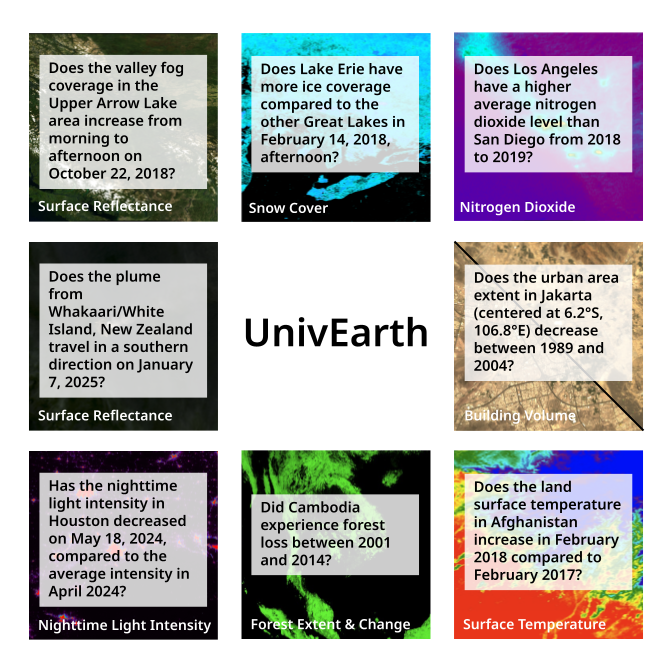 | [Towards LLM Agents for Earth Observation](https://iandrover.github.io/UnivEarth/)
Terrabytes, ICML Workshop, '25 |
| 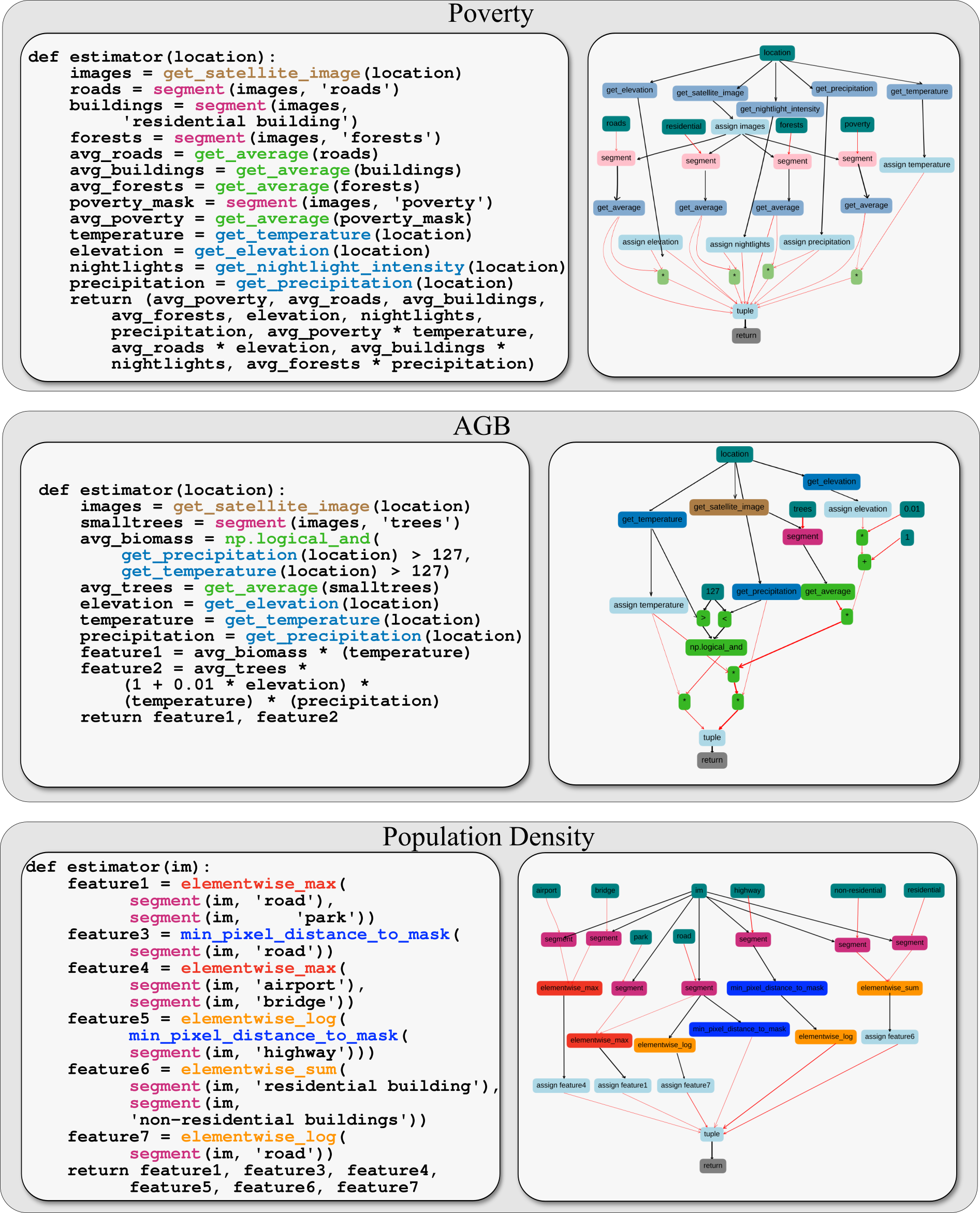 | [DiSciPLE: Learning Interpretable Programs for Scientific Visual Discovery](https://disciple.cs.columbia.edu/)
CVPR '25 |
| 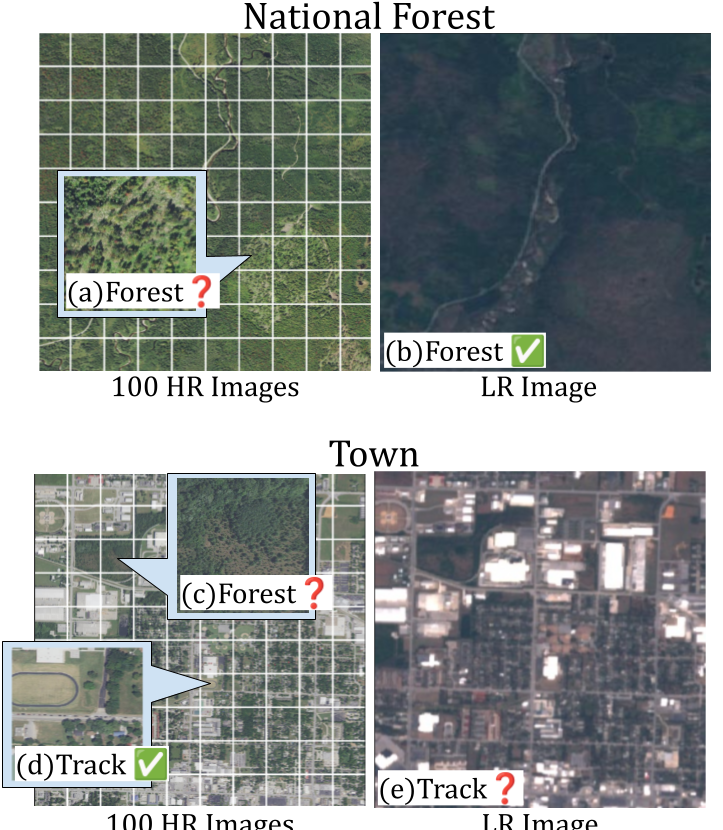 | [Scale-Aware Recognition in Satellite Images under Resource Constraints](https://www.cs.cornell.edu/~revankar/scale_aware)
ICLR '25 |
| 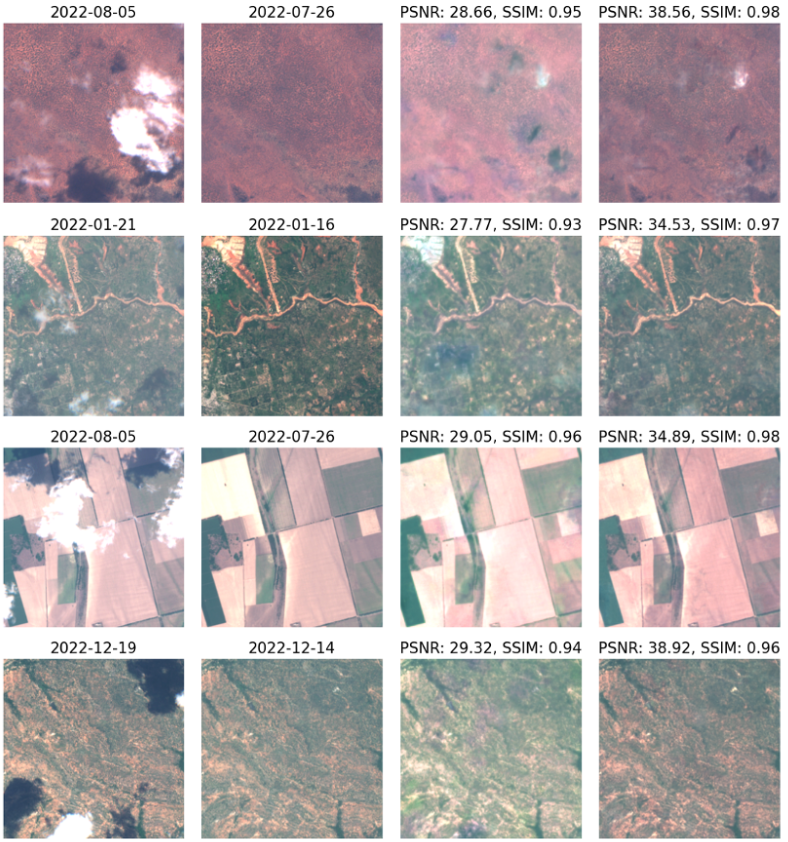 | [AllClear: A Comprehensive Dataset and Benchmark for Cloud Removal in Satellite Imagery](https://arxiv.org/abs/2410.23891)
NeurIPS '25 (Track on Datasets and Benchmarks) |
> _Complete List of Publications..._
Broad Audience Talks
--------------------
* [CVPR (Computer Vision and Pattern Recognition) Keynote (2022)](https://cvpr2022.thecvf.com/overview)
* [Stanford Human AI Spring Conference Keynote (2022)](https://www.youtube.com/watch?v=kaQSc4iFaxc)
* [Eurographics Keynote (2020)](https://youtu.be/paVK7pZWdto)
* Cornell Silicon Valley: [Bridging the Virtual and the Real](https://youtu.be/WyVsOOBEx_o)
* Cornell Summer Series: [Virtual Realism and Computer Graphics](http://www.cornell.edu/video/kavita-bala-cornells-pioneering-computer-graphics-research)
* [Interviewing Charlie Van Loan](https://ecommons.cornell.edu/handle/1813/41201/)
Press
-----
* Ann S. Bowers College of Computing and Information Science: [Gift naming the Bowers College](http://news.cornell.edu/stories/2020/12/gift-ann-s-bowers-59-creates-new-college-computing-and-information-science)
, [Cornell Silicon Valley](https://news.cornell.edu/stories/2021/04/pollack-bala-gift-unlocks-growth-cornell-bowers-cis)
* General interviews and coverage: [ACM Member](https://mags.acm.org/communications/december_2020/MobilePagedArticle.action?articleId=1639027#articleId1639027)
, [LDV](https://www.ldv.co/blog/women-leading-visual-tech-kavita-bala)
, [Wired](https://www.wired.com/story/future-of-artificial-intelligence-2018/?mbid=social_fb)
, [CNN Tech](http://money.cnn.com/2017/11/13/technology/future-of-fashion-tech/index.html)
, [Observer](http://observer.com/2018/04/artificial-intelligence-fashion-future-designer-jobs/)
, [Austrian Radio Interview](https://www.cs.cornell.edu/~kb/)
, Daily Caller, [Small Biz Trends](https://smallbiztrends.com/2017/08/amazon-ai-fashion-designer.html)
* Deep Photo Style Transfer and Harmonization: [9to5Mac](https://9to5mac.com/2017/03/30/adobe-ai-automated-retouching/)
, [The Verge](http://www.theverge.com/2017/3/30/15124466/ai-photo-style-transfer-deep-neural-nets-adobe)
, [Gizmodo](http://gizmodo.com/one-day-photoshop-might-let-you-instantly-copy-another-1793889339)
, [Engadget](https://www.engadget.com/2017/03/30/adobes-experimental-app-copies-one-photos-style-to-another/)
, [DPReview](https://www.dpreview.com/news/1239108915/researchers-create-method-for-photorealistic-prisma-style-effects)
, [Petapixel](https://petapixel.com/2017/03/29/cornelladobe-show-copy-color-lighting-one-photo-another/)
, [2-minute videos on photo style transfer](https://www.youtube.com/watch?v=HTUxsrO-P_8)
, [2-minute videos on harmonization](https://www.youtube.com/watch?v=fklY2nH7AJo)
, [Slash Gear](https://www.slashgear.com/adobe-cornell-ai-transfers-one-photos-style-to-another-31480436/)
, [Apple Insider](http://appleinsider.com/articles/17/03/30/adobe-research-creates-ai-tool-for-transferring-image-styles-between-photographs)
, [The Next Web](https://thenextweb.com/dd/2017/03/30/adobe-figured-out-a-way-to-copy-realistic-photo-styles-from-one-picture-to-another/#.tnw_qxZ83t3b)
, [BGR](http://bgr.com/2017/03/31/new-photoshop-features-adobe-deep-photo-style-transfer/)
, [New Atlas](http://newatlas.com/adobe-makes-progress-ai-retouching/48690/)
, [Tech Spot](http://www.techspot.com/news/68734-adobe-new-photography-tool-you-copy-styling-another.html)
, [Uber Gizmo](http://www.ubergizmo.com/2017/03/adobe-copy-photo-style-to-another/)
, [Cornell Chronicle](http://www.news.cornell.edu/stories/2017/05/cornell-cis-and-adobe-collaboration-creates-ai-photo-tool)
, .... Search on "deep photo style transfer" and "deep harmonization" for a full list of press coverage.
* Visual Search and GrokStyle: [Forbes (2020)](https://www.forbes.com/sites/martineparis/2020/05/19/meet-facebooks-newest-shopping-ai/#7c8b5a172a76)
, [T\_HQ (2020)](https://techhq.com/2020/07/from-academia-to-acquisition-the-journey-of-computer-vision-startup-grokstyle/)
, [TechCrunch (2018)](https://techcrunch.com/2018/03/16/grokstyles-visual-search-tech-makes-it-into-ikeas-place-ar-app/)
, [TechCrunch (2017)](http://social.techcrunch.com/2017/04/04/grokstyle-is-putting-computer-vision-to-work-on-home-decor-with-2m-in-funding/)
, [Science Mag](http://scienmag.com/where-can-i-buy-a-chair-like-that-this-app-will-tell-you)
, [AI Business](https://aibusiness.com/shazam-for-furniture-developed-by-cornell-university/)
, [Digial Trends](https://www.linkedin.com/e/v2/newsle?e=lo1q-isjjnh96-t7&a=pulse_web_news_mention_retracted&midToken=AQG1bKy8zN5XTw&ek=newsle_self_alert&li=3&m=network_news&articleUrnStr=urn%3Ali%3Aarticle%3A8610989059700197445&mentionedEntityStr=urn%3Ali%3Amember%3A1010942&url=http%3A%2F%2Fwww%2Edigitaltrends%2Ecom%2Fcool-tech%2Fdeep-learning-startup-retail-photos%2F)
, [Cornell Sun](http://cornellsun.com/2017/02/21/where-do-i-get-that-piece-of-furniture/)
, [IKEA Press release](https://newsroom.inter.ikea.com/news/all/ikea-place-app-launches-on-android--allowing-millions-of-people-to-reimagine-home-furnishings-using-/s/28215cac-8f4e-4ee5-87a4-56a998290856)
, ...
* StreetStyle and Fashion: [Chronicle](https://news.cornell.edu/stories/2019/10/ai-tool-detects-global-fashion-trends)
, [Primed (KUOW)](https://www.kuow.org/stories/primed-fashion)
, [MIT Technology Review](https://www.technologyreview.com/s/608116/data-mining-100-million-instagram-photos-reveals-global-clothing-patterns/)
, [Digital Trends](https://www.digitaltrends.com/social-media/cornell-instagram-ai-anthropology/)
, [physorg](https://phys.org/news/2017-08-anthropologists-global-fashion.html%22)
, [Chronicle](http://news.cornell.edu/stories/2017/08/computer-anthropologists-study-global-fashion)
, [Press Release Point](http://www.pressreleasepoint.com/virtual-detectives-use-social-media-study-global-fashion-trends)
, [Newswise](https://www.newswise.com/articles/virtual-detectives-use-social-media-to-study-global-fashion-trends%22)
, ...
* Rendering: [Economist](https://www.economist.com/science-and-technology/2011/08/13/fabricating-fabric)
* Mandala: [NY Times](https://www.nytimes.com/2009/08/21/arts/design/21mandala.html)
Professional Activities
-----------------------
* Board of Trustees, [Toyota Technological Institute, Chicago](https://ttic.edu/board/)
* Emeritus board member, [ColorStack (2023--2025)](https://www.colorstack.org/about)
* Advisor, [Women In Graphics Research (WiGraph)](https://www.wigraph.org/)
* Member, SIGGRAPH Academy Selection Committee, 2020--2023
* Member, SIGGRAPH Outstanding Doctoral Dissertation Award Committee, 2020--2023
* Member, SIGGRAPH Papers Advisory Group, 2018--2023
* Chair, Computer Science Department, Cornell University, 2018--2020
* Faculty Fellow, Atkinson Center for a Sustainable Future, 2016--
* Founder and Chief Scientist, [GrokStyle](http://www.grokstyle.com/)
(acquired by Facebook), 2015--2018
* [Editor-in-Chief, Transactions on Graphics](http://tog.acm.org/)
. 2015--2018
* Papers Chair:
* [ICCP 2021](https://iccp-conference.org/)
(co-chairs: Yoav Schechner, Ori Katz): [TPAMI Guest Editorial](https://ieeexplore.ieee.org/document/9448372?source=authoralert)
* [ICVGIP 2012](http://www.icvgip.org/)
(co-chairs: Sharat Chandran, Bill Triggs)
* [SIGGRAPH Asia 2011](http://www.siggraph.org/asia2011/)
* [Pacific Graphics 2010](http://www.cad.zju.edu.cn/pg2010/)
(co-chairs: Pierre Alliez, Kun Zhou)
* [Eurographics Symposium on Rendering 2005](http://www.cgmi.inf.uni-konstanz.de/egsr2005/)
(co-chairs: Phil Dutre)
* [10th IVMSP Workshop: Perception and Visual Signal Analysis](http://ivmsp2011.org/)
(area chair)
* Senior Associate Editor:
* Transactions on Graphics, 2013--2014
* Associate Editor:
* Computer Graphics Forum, 2012--2015
* Transactions on Graphics, 2012-2013
* Transactions on Visualization and Computer Graphics (TVCG), 2008-2012
* Papers Program Committees:
* **2022**: Area Chair CVPR
* **2021**: Area Chair ICCV
* **2020**: Area Chair CVPR
* **2018**: Area Chair CVPR, SIGGRAPH
* **2017**: SIGGRAPH, ICCP
* **2016**: SIGGRAPH Asia
* **2015**: SIGGRAPH
* **2014**: SIGGRAPH Asia, Eurographics, Eurographics Symposium on Rendering
* **2013**: Eurographics Symposium on Rendering, Pacific Graphics
* **2012**: SIGGRAPH, Eurographics Symposium on Rendering, High Performance Graphics
* **2011**: SIGGRAPH
* **2010**: SIGGRAPH Asia, [Applied Perception on Graphics and Visualization (APGV)](http://www.apgv.org/)
, [Interactive 3D Graphics (I3D)](http://graphics.cs.williams.edu/i3d10/)
* **2009**: SIGGRAPH 09, [Interactive 3D Graphics (I3D)](http://graphics.cs.williams.edu/i3d09/)
, High Performance Graphics, Eurographics Symposium on Rendering (EGSR), Pacific Graphics (PG)
* **2008**: SIGGRAPH Asia, [Eurographics](http://www.ics.forth.gr/eg2008/home.php)
, [Interactive 3D Graphics (I3D)](http://graphics.cs.williams.edu/i3d08/)
, Eurographics Symposium on Rendering (EGSR), Pacific Graphics (PG), Interactive Ray Tracing (IRT), Symposium on Point-Based Graphics (PBG)
* **2007**: [SIGGRAPH](http://www.siggraph.org/s2007/)
, Symposium on Point-based Graphics [(PBG)](http://graphics.ethz.ch/PBG07/)
, [Pacific Graphics (PG)](http://mm.cse.wustl.edu/pg07/)
, [Interactive 3D Graphics (I3D)](http://graphics.cs.williams.edu/i3d07/)
* **2006**: [SIGGRAPH](http://www.siggraph.org/s2006/)
, Symposium on Point-based Graphics [(PBG)](http://graphics.ethz.ch/PBG06/)
, Eurographics Symposium on Rendering [(EGSR)](http://www.cs.ucy.ac.cy/egsr2006/)
,[Symposium on Interactive Ray Tracing (IRT)](http://www.sci.utah.edu/RT06)
* **2005**: Symposium on Point-based Graphics [(PBG)](http://www.cs.princeton.edu/gfx/pbg05/)
, [Graphics Interface (GI)](http://www.cs.ubc.ca/%7Evan/GI2005/GI2005main.htm)
* **2004**: [SIGGRAPH](http://www.siggraph.org/s2004/)
, Eurographics Symposium on Rendering [(EGSR)](http://www.egsr2004.org/)
, [Pacific Graphics (PG) 04](http://graphics.snu.ac.kr/pg2004/)
, Symposium on Point-based Graphics [(PBG)](http://graphics.ethz.ch/pbg/cfp.html)
* **2003**: [SIGGRAPH](http://www.siggraph.org/s2003/)
, Eurographics Symposium on Rendering [(EGSR)](http://www.cs.kuleuven.ac.be/%7Egraphics/EGSR2003/)
* **2002**: Eurographics Rendering Workshop [(EGWR)](http://vcg.iei.pi.cnr.it/egrw02.htm)
* Papers Advisory Board: SIGGRAPH 2023, SIGGRAPH Asia 2015, SIGGRAPH Asia 2014, SIGGRAPH Asia 2013, SIGGRAPH 2012, SIGGRAPH Asia 2012, SIGGRAPH 2011, SIGGRAPH Asia 2010
* Steering Committee: Eurographics Symposium on Rendering
* Posters Program Committee, [SIGGRAPH 04](http://www.siggraph.org/s2004/)
Courses
-------
* **CS6644**, Modeling the World ([Fall 14](http://www.cs.cornell.edu/courses/cs6644/2014fa/)
)
* **CS4670/5670**, Cornell's Introduction to Computer Vision ([Spring 15](http://www.cs.cornell.edu/courses/cs4670/2015sp/)
, [Spring 16](http://www.cs.cornell.edu/courses/cs4670/2016sp/)
)
* **CS5625**, Cornell's Advanced Interactive Graphics ([Spring 13](http://www.cs.cornell.edu/courses/cs5625/2013sp/)
, [Spring 12](http://www.cs.cornell.edu/courses/cs5625/2012sp/)
)
* **CS4620/4621/5620/5621**, Cornell's Introduction to Graphics and Practicum ([Fall 15](http://www.cs.cornell.edu/courses/cs4620/2015fa/)
, [Fall 12](http://www.cs.cornell.edu/courses/cs4620/2012fa/)
, [Fall 11](http://www.cs.cornell.edu/courses/cs4620/2011fa/)
)
* **CS5620**, Cornell's advanced interactive graphics course ([Fall 09](http://www.cs.cornell.edu/courses/cs5620/2009fa/)
)
* **CS6620**, Cornell's graduate advanced rendering graphics course ([Spring 09](http://www.cs.cornell.edu/courses/cs6620/2009sp/)
)
* **CS 3410**, Cornell's Computer System Organization and Programming Course ([Spring 14](http://www.cs.cornell.edu/courses/cs3410/2014sp/)
, [Fall 08](http://www.cs.cornell.edu/courses/cs3410/2008fa/)
)
* **CS 7690**, Cornell's Graphics Seminar ([Fall 15](http://www.cs.cornell.edu/courses/cs7690/2015fa/)
, [Spring 15](http://www.cs.cornell.edu/courses/cs7690/2015sp/)
, [Spring 13](http://www.cs.cornell.edu/courses/cs7690/2013sp/)
, [Spring 12](http://www.cs.cornell.edu/courses/cs7690/2012sp/)
, [Spring 09](http://www.cs.cornell.edu/courses/cs7690/2009sp/)
)
* **CS 316**, Cornell's Systems Programming ([Fall 07](http://www.cs.cornell.edu/courses/cs316/2007fa/)
)
* **CS467/468**, Cornell's Graphics II and Graphics Practicum ([Spring 07](http://www.cs.cornell.edu/courses/cs467/2007sp/)
, [Spring 06](http://www.cs.cornell.edu/courses/cs467/2006sp/)
, [Spring 04](http://www.cs.cornell.edu/courses/cs467/2004sp/)
)
* **CS665**, Cornell's graduate advanced interactive graphics course ([Spring 08](http://www.cs.cornell.edu/courses/cs665/2008sp/)
, [Fall 06](http://www.cs.cornell.edu/courses/cs665/2006fa/)
, [Fall 04](http://www.cs.cornell.edu/courses/cs665/2004fa/)
, [Fall 03](http://www.cs.cornell.edu/courses/cs665/2003fa/)
)
* **ENGRG 150**, Freshman advising ([Fall 06](http://www.cs.cornell.edu/courses/engrg150bala/2006fa/)
)
* **CS 718**, Computer Graphics Seminar ([Spring 07](http://www.cs.cornell.edu/courses/cs718/2007sp/)
, [Fall 04](http://www.cs.cornell.edu/courses/cs718/2004fa/index.htm)
, [Fall 03](http://www.cs.cornell.edu/courses/cs718/2003fa/index.htm)
, [Spring 03](http://www.cs.cornell.edu/courses/cs718/2003sp/index.htm)
)
* **Reusing Shading for Interactive Global Illumination** (Game Developers Conference 04)
* **Advanced Global Illumination** ([SIGGRAPH 02](http://www.siggraph.org/s2002/)
, SIGGRAPH 01)
* **CS517**, Cornell's graduate advanced graphics course ([Fall 02](http://www.cs.cornell.edu/courses/cs517/2002fa/)
, Fall 01)
* **CS417 and CS 418**, Cornell's introductory graphics course and practicum ([Spring 02](http://www.graphics.cornell.edu/coms417/)
, Spring 01, Spring 00)
| | |
| --- | --- |
| **Books**
--------- | |
|  | Phil Dutre, **Kavita Bala**, Philippe Bekaert.
[Advanced Global Illumination](http://www.advancedglobalillumination.com/)
A K Peters, 2nd Edition
August 2006, Natick, MA
[Bibtex](https://www.cs.cornell.edu/~kb/bib/AGIBook2ndEditionBib.txt) |
|  | Editors: **Kavita Bala** and Phil Dutre.
Rendering Techniques 2005
Springer Verlag
June 2005, Konstanz, Germany |
|  | Phil Dutre, Philippe Bekaert, and **Kavita Bala**.
[Advanced Global Illumination](http://www.advancedglobalillumination.com/)
A K Peters, 1st Edition
July 2003, Natick, MA
[Bibtex](https://www.cs.cornell.edu/~kb/bib/AGIBook1stEditionBib.txt) |
| |
| **Patents**
----------- | |
|  | Inventors: **Kavita Bala**, Fujun Luan, Shuang Zhao.
Image rendering utlizing procedural yarn models
Patent No. 10,410,380
Sep 10, 2019 |
|  | Inventors: Ivaylo Boyadzhiev, **Kavita Bala**, Sylvain Paris.
Systems and Methods for Computational Lighting
Patent No. 9,483,815 B2
Nov 1 2016 |
| |
| **Complete Publication List**
----------------------------- | |
|  | Chia Hsiang Kao, Wenting Zhao, Shreelekha Revnkar, Samuel Speas, Snehal Bhagat, Rajeev Datta, Cheng Perng Phoo, Utkarsh Mall, Carl Vondrick, **Kavita Bala**, Bharath Hariharan.
[Towards LLM Agents for Earth Observation](https://iandrover.github.io/UnivEarth/)
Terrabytes, ICML Workshop '25
[Paper](https://iandrover.github.io/UnivEarth/)
, [project page](https://iandrover.github.io/UnivEarth/) |
|  | Utkarsh Mall, Cheng Perng Phoo, Mia Chiquier, Bharath Hariharan, **Kavita Bala**, Carl Vondrick.
[DiSciPLE: Learning Interpretable Programs for Scientific Visual Discovery](https://disciple.cs.columbia.edu/)
CVPR '25
[Paper](https://disciple.cs.columbia.edu/)
, [project page](https://disciple.cs.columbia.edu/) |
|  | Shreelekha Revankar, Cheng Perng Phoo, Utkarsh Mall, Bharath Hariharan, **Kavita Bala**.
[Scale-Aware Recognition in Satellite Images under Resource Constraints](https://www.cs.cornell.edu/~revankar/scale_aware)
ICLR '25
[Paper](https://www.cs.cornell.edu/~revankar/scale_aware)
, [project page](https://www.cs.cornell.edu/~revankar/scale_aware) |
|  | Hangyu Zhou, Chia-Hsiang Kao, Cheng Perng Phoo, Utkarsh Mall, Bharath Hariharan, **Kavita Bala**.
[AllClear: A Comprehensive Dataset and Benchmark for Cloud Removal in Satellite Imagery](https://arxiv.org/abs/2410.23891)
NeurIPS '25 (Track on Datasets and Benchmarks)
[Paper](https://arxiv.org/abs/2410.23891)
, [project page](https://arxiv.org/abs/2410.23891) |
| 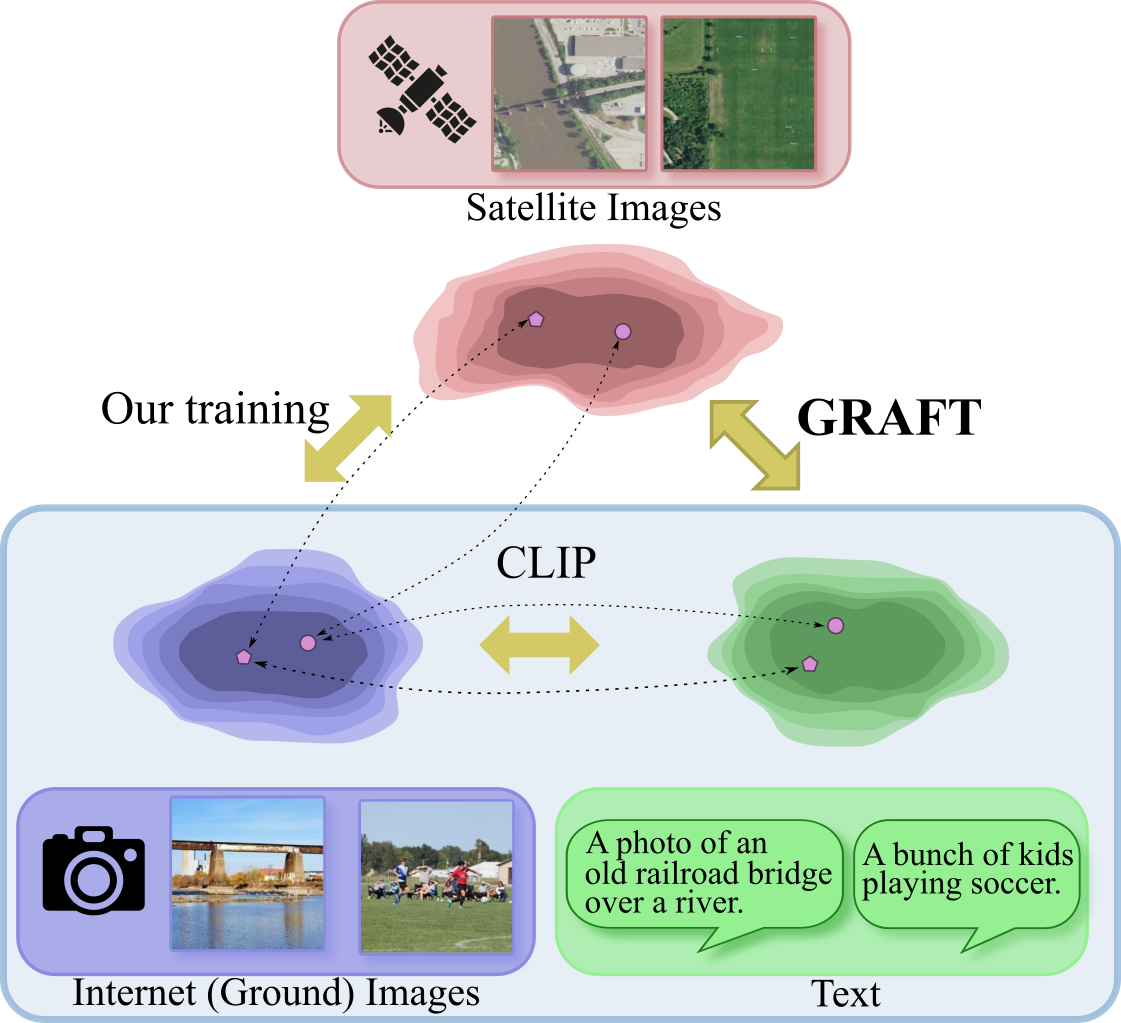 | Utkarsh Mall, Cheng Perng Phoo, Meilin Kelsey Liu, Carl Vondrick, Bharath Hariharan, **Kavita Bala**.
[Remote Sensing Vision-Language Foundation Models without Annotations via Ground Remote Alignment](https://graft.cs.cornell.edu/)
ICLR '24
[Paper](https://graft.cs.cornell.edu/)
, [project page](https://graft.cs.cornell.edu/) |
| 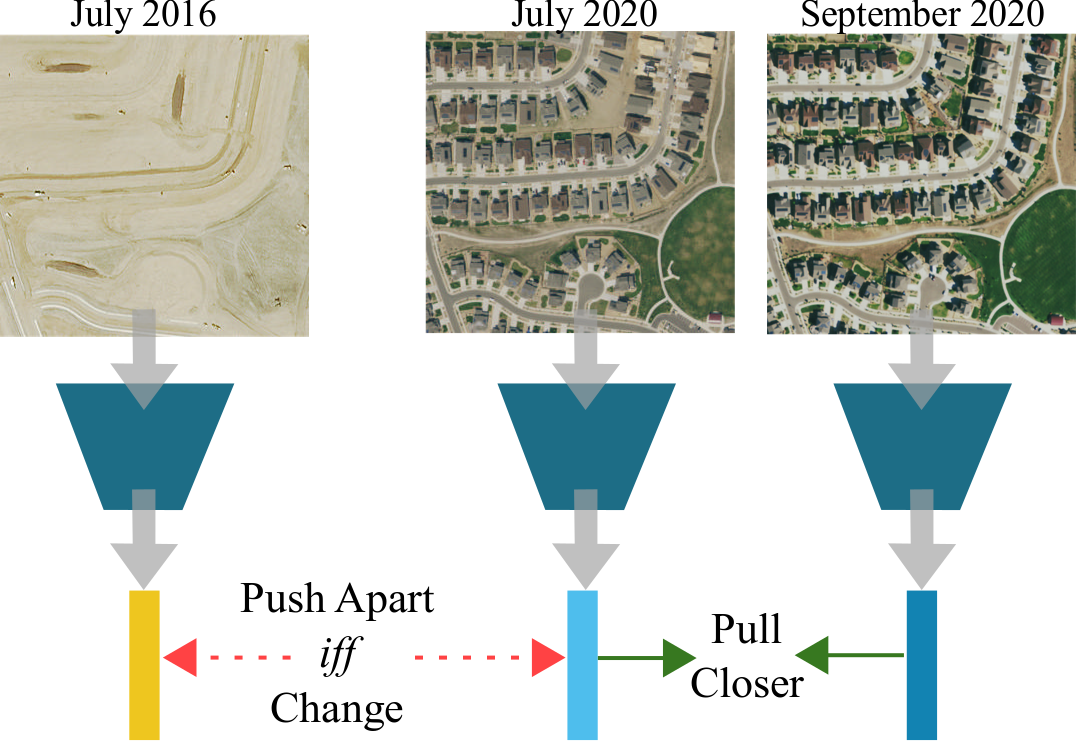 | Utkarsh Mall, Bharath Hariharan, **Kavita Bala**.
[Change-Aware Sampling and Contrastive Learning for Satellite Images](https://research.cs.cornell.edu/caco/)
CVPR '23
[Paper](https://research.cs.cornell.edu/caco/)
, [project page](https://research.cs.cornell.edu/caco/) |
| 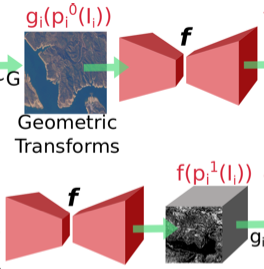 | Utkarsh Mall, Bharath Hariharan, **Kavita Bala**.
[Change Event Dataset for Discovery from Spatio-temporal Remote Sensing Imagery](https://openreview.net/pdf?id=bKO6BPtYQA7)
NeurIPS 2022, Datasets and Benchmarks Track
[Paper](https://openreview.net/pdf?id=bKO6BPtYQA7)
, [supplementary material](https://www.cs.cornell.edu/projects/satellite-change-events/) |
| 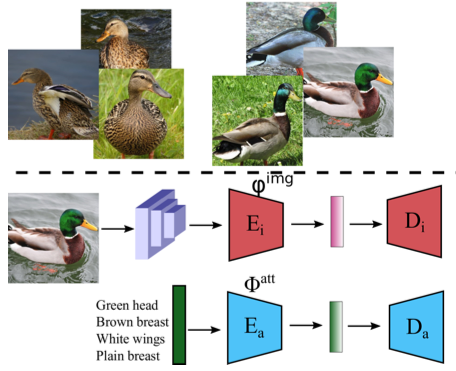 | Utkarsh Mall, Bharath Hariharan, **Kavita Bala**.
[Zero-shot Learning Using Multimodal Descriptions](https://openaccess.thecvf.com/content/CVPR2022W/L3D-IVU/papers/Mall_Zero-Shot_Learning_Using_Multimodal_Descriptions_CVPRW_2022_paper.pdf)
CVPR L3D-IVU Workshop, 2022
[Paper](https://openaccess.thecvf.com/content/CVPR2022W/L3D-IVU/papers/Mall_Zero-Shot_Learning_Using_Multimodal_Descriptions_CVPRW_2022_paper.pdf)
, [supplementary material](https://openaccess.thecvf.com/content/CVPR2022W/L3D-IVU/supplemental/Mall_Zero-Shot_Learning_Using_CVPRW_2022_supplemental.pdf) |
| 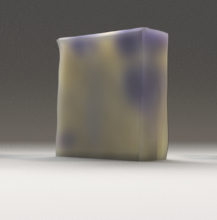 | Xi Deng, Fujun Luan, Bruce Walter, **Kavita Bala**, Steve Marschner.
[Reconstructing Translucent Objects using Differentiable Rendering](https://www.cs.cornell.edu/~xideng/pub/deng22dsss.pdf)
SIGGRAPH 2022
[Paper](https://www.cs.cornell.edu/~xideng/pub/deng22dsss.pdf)
, [supplementary material](https://www.cs.cornell.edu/~xideng/pub/deng22dsss_sup.pdf) |
| 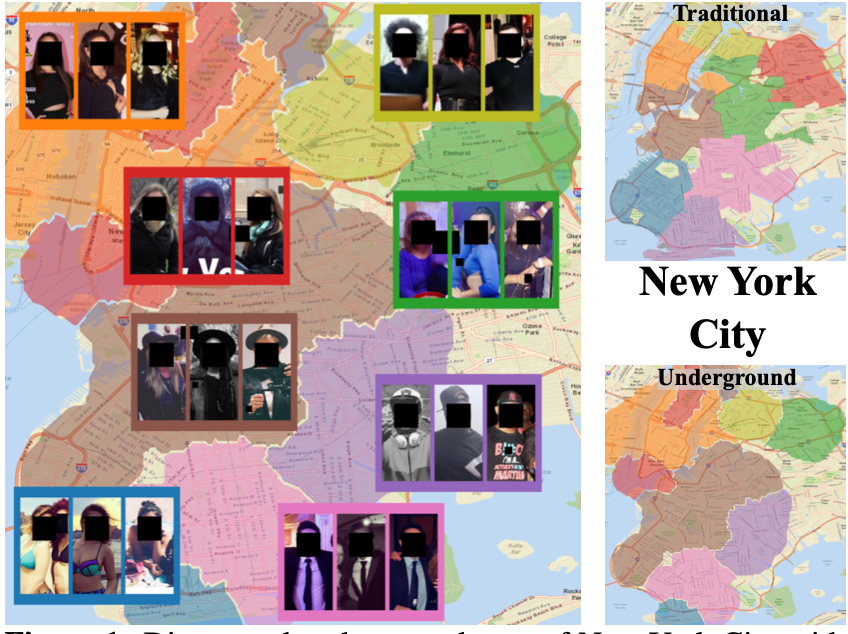 | Utkarsh Mall, **Kavita Bala**, Tamara Berg, Kristen Grauman.
[Discovering Underground Maps from Fashion](https://arxiv.org/pdf/2012.02897.pdf)
WACV 2022 |
| 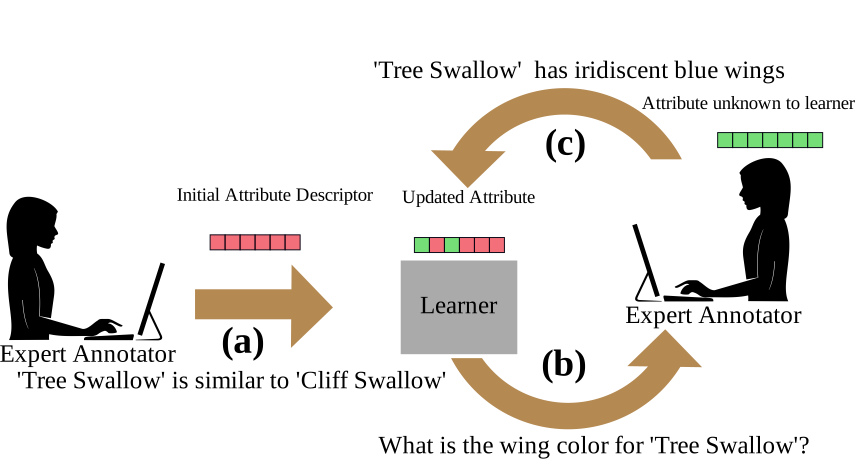 | Utkarsh Mall, Bharath Hariharan, **Kavita Bala**.
[Field-Guide Inspired Zero-Shot Learning](https://www.cs.cornell.edu/projects/field-guide/)
ICCV 2021
[Project](https://www.cs.cornell.edu/projects/field-guide/) |
| 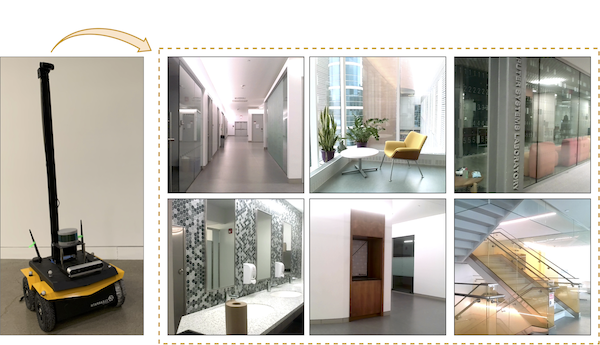 | Hadi AlZayer, Hubert Lin, **Kavita Bala**.
[AutoPhoto: Aesthetic Photo Capture using Reinforcement Learning](https://www.cs.cornell.edu/~kb/)
IROS 2021
[Project](https://hadizayer.github.io/AutoPhoto_webpage/) |
| 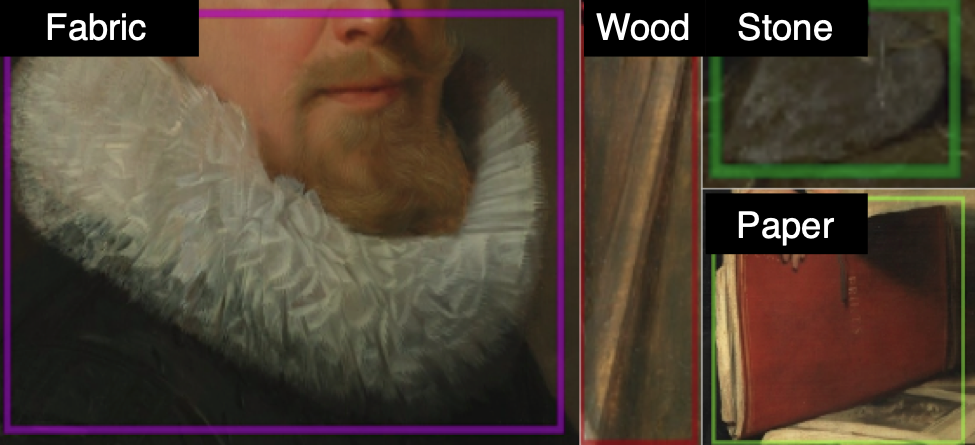 | Mitchell J.P. van Zuijlen, Hubert Lin, **Kavita Bala**, Sylvia C. Pont, Maarten W.A. Wijntjes.
[Materials In Paintings (MIP): An interdisciplinary dataset for perception, art history, and computer vision](https://www.cs.cornell.edu/~kb/)
PLOS 2021
[Project](https://materialsinpaintings.tudelft.nl/about/)
, [Dataset](https://materialsinpaintings.tudelft.nl/) |
| 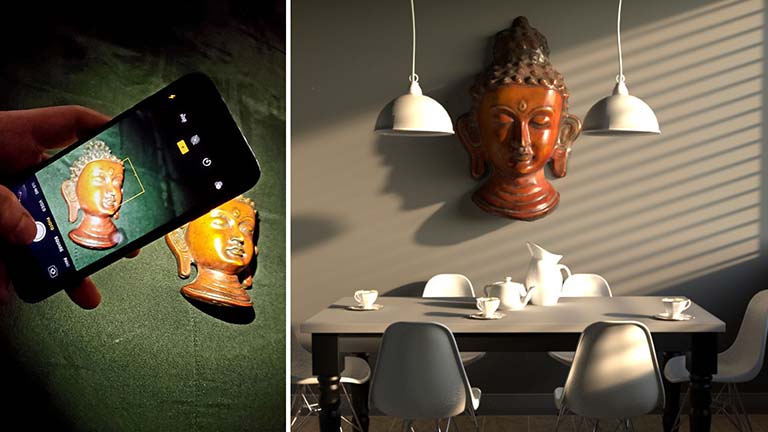 | Fujun Luan, Shuang Zhao, **Kavita Bala**, Zhao Dong.
[Unified Shape and SVBRDF Recovery using Differentiable Monte Carlo Rendering](https://luanfujun.github.io/InverseMeshSVBRDF/)
EGSR 2021
[Project](https://luanfujun.github.io/InverseMeshSVBRDF/) |
| 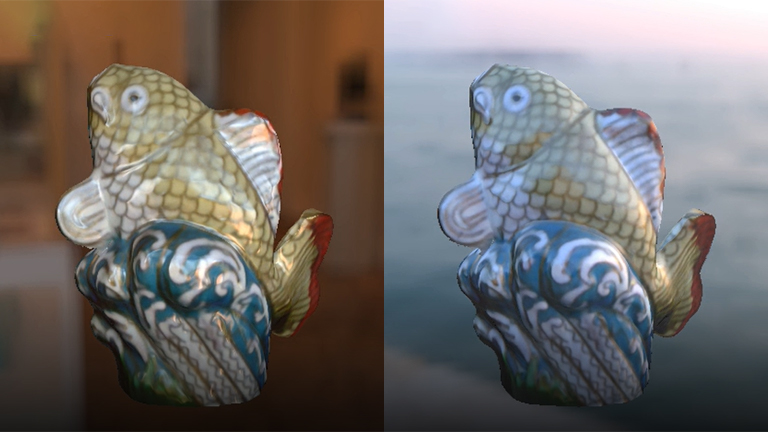 | Kai Zhang\*, Fujun Luan\*, Qianqian Wang, **Kavita Bala**, Noah Snavely.
[PhySG: Inverse Rendering with Spherical Gaussians for Physics-based Material Editing and Relighting](https://kai-46.github.io/PhySG-website/)
CVPR 2021
[Project](https://kai-46.github.io/PhySG-website/) |
| 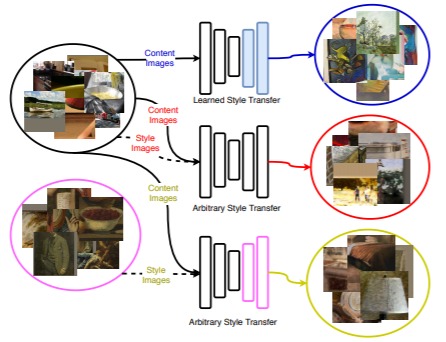 | Hubert Lin, Mitchell van Zuijlen, Sylvia C. Pont, Maarten W.A. Wijntjes, **Kavita Bala**.
[What can Style Transfer and Paintings do for Model Robustness](https://www.cs.cornell.edu/projects/style-painting-robustness/)
CVPR 2021 |
| 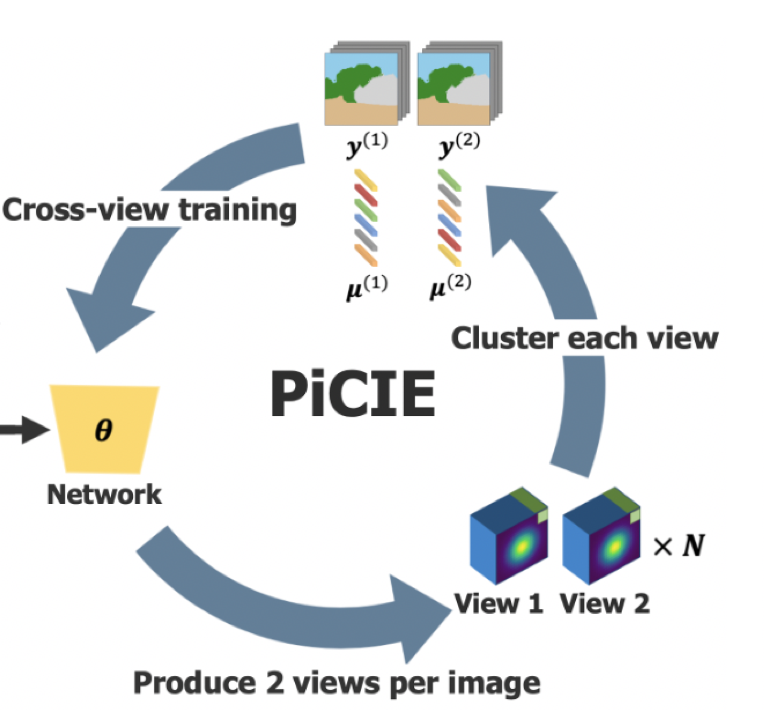 | Jang Hyun Cho, Utkarsh Mall, **Kavita Bala**, Bharath Hariharan.
[PiCIE: Unsupervised Semantic Segmentation using Invariance and Equivariance in Clustering](https://sites.google.com/view/picie-cvpr2021/home)
CVPR 2021
Project |
|  | Scott Wehrwein, **Kavita Bala**, and Noah Snavely.
[Scene Summarization via Motion Normalization](https://facultyweb.cs.wwu.edu/~wehrwes/motionnorm/)
Transactions on Visualization and Graphics, 27(4), pp 2495-2501, 2021 |
|  | Bei Xiao, Shuang Zhao, Ioannis Gkioulekas, Wenyan Bi, **Kavita Bala**.
[Effect of Geometric Sharpness on Translucent Material Perception](https://www.cs.cornell.edu/~kb/publications/translucency-jov20.pdf)
JOV, 2020 |
|  | Rachel Rose Getman, Denise Nicole Green, **Kavita Bala**, Utkarsh Mall, Nehal Rawat, Sonia Appasamy, Bharath Hariharan.
[Machine Learning (ML) for Tracking Fashion Trends: Documenting the Frequency of the Baseball Cap
on Social Media and the Runway](https://doi.org/10.1177/0887302X20931195)
Clothing and Textiles Research Journal, June 2020 |
|  | Fujun Luan, Shuang Zhao, **Kavita Bala**, and Ioannis Gkioulekas.
[Langevin Monte Carlo Rendering with Gradient-based Adaptation](https://research.cs.cornell.edu/langevin-mcmc/)
SIGGRAPH, 2020 |
| 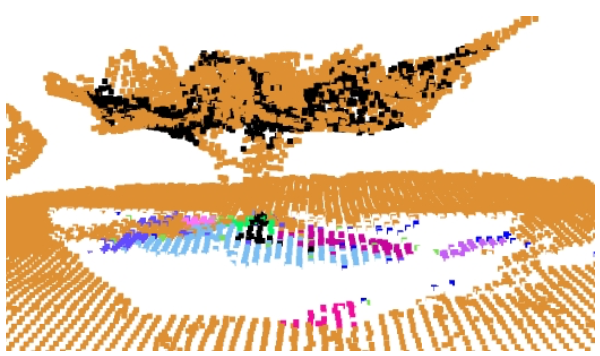 | Yutao Han\*, Hubert Lin\*, Jacopo Banfi\*, **Kavita Bala**, and Mark Campbell.
[DeepSemanticHPPC: Hypothesis-based Planning over Uncertain Semantic Point Clouds](https://www.cs.cornell.edu/~kb/publications/DeepSemanticHPPC_ICRA20.pdf)
\* are equal contribution authors.
ICRA, 2020 |
| 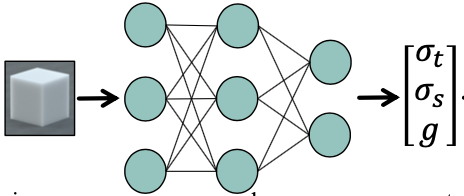 | Chengqian Che, Fujun Luan, Shuang Zhao, **Kavita Bala**, Ioannis Gkioulekas.
[Towards Learning-based Inverse Subsurface Scattering](http://imaging.cs.cmu.edu/inverse_transport_networks/)
ICCP, 2020
[Project](http://imaging.cs.cmu.edu/inverse_transport_networks/) |
| 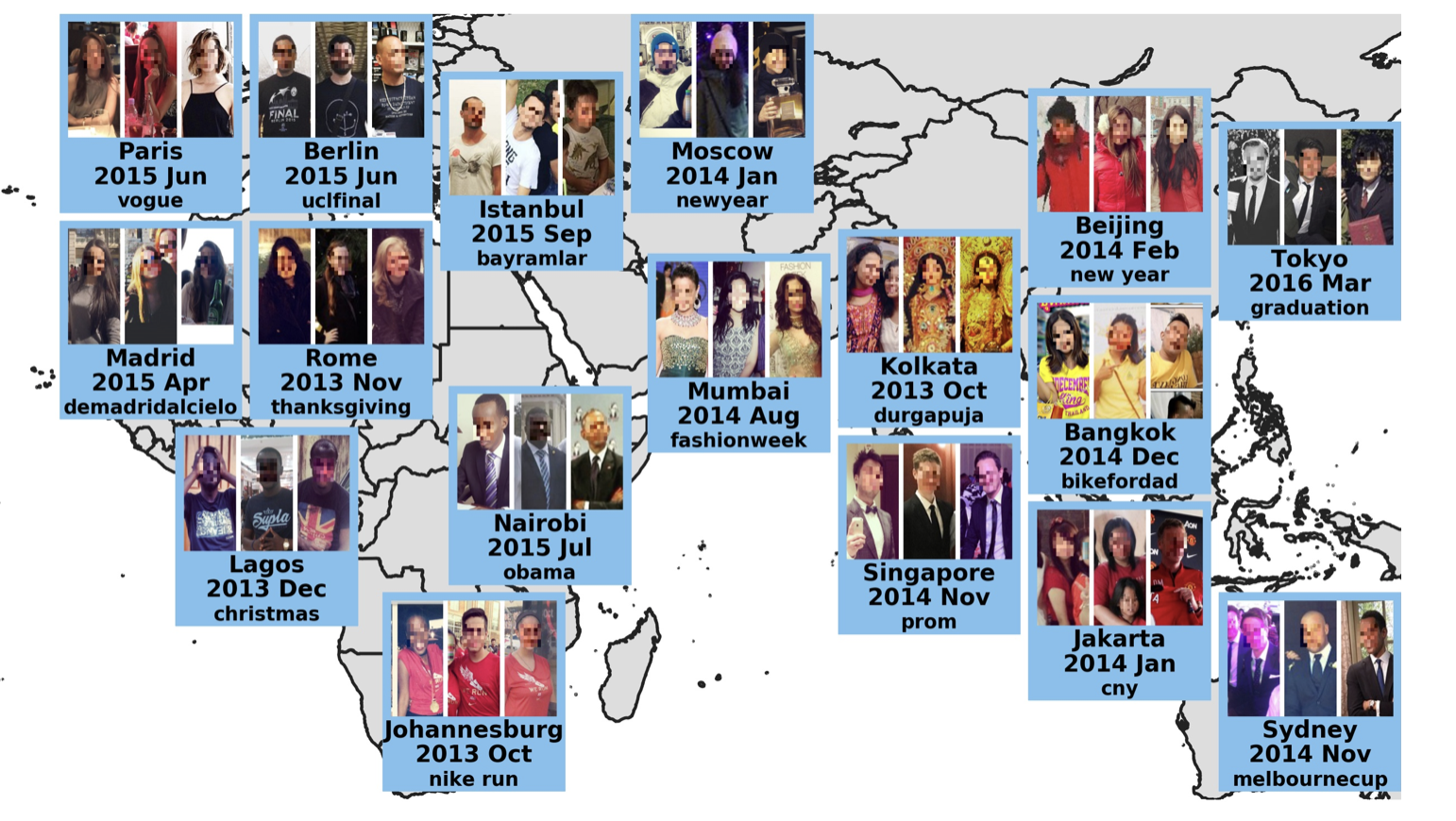 | Utkarsh Mall, Kevin Matzen, Bharath Hariharan, Noah Snavely **Kavita Bala**.
[GeoStyle: Discovering Fashion Trends and Events](http://geostyle.cs.cornell.edu/)
ICCV, 2019
[Project](http://geostyle.cs.cornell.edu/) |
| 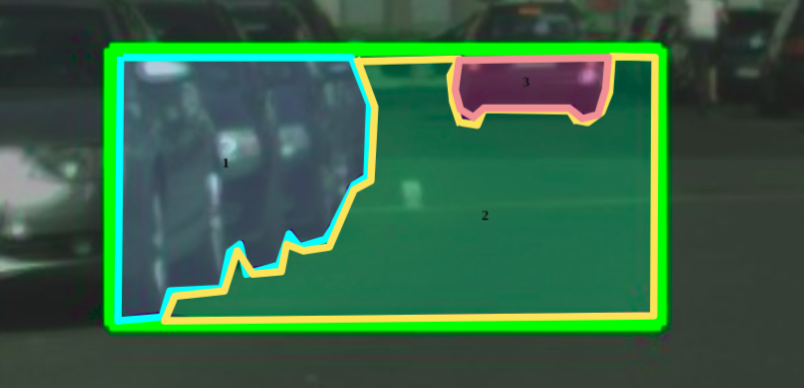 | Hubert Lin, Paul Upchurch, **Kavita Bala**.
[Block Annotation: Better Image Annotation with Sub-Image Decomposition](https://www.cs.cornell.edu/~kb/publications/blockannotation_iccv19.pdf)
ICCV, 2019
[Project](https://www.cs.cornell.edu/~kb/) |
| 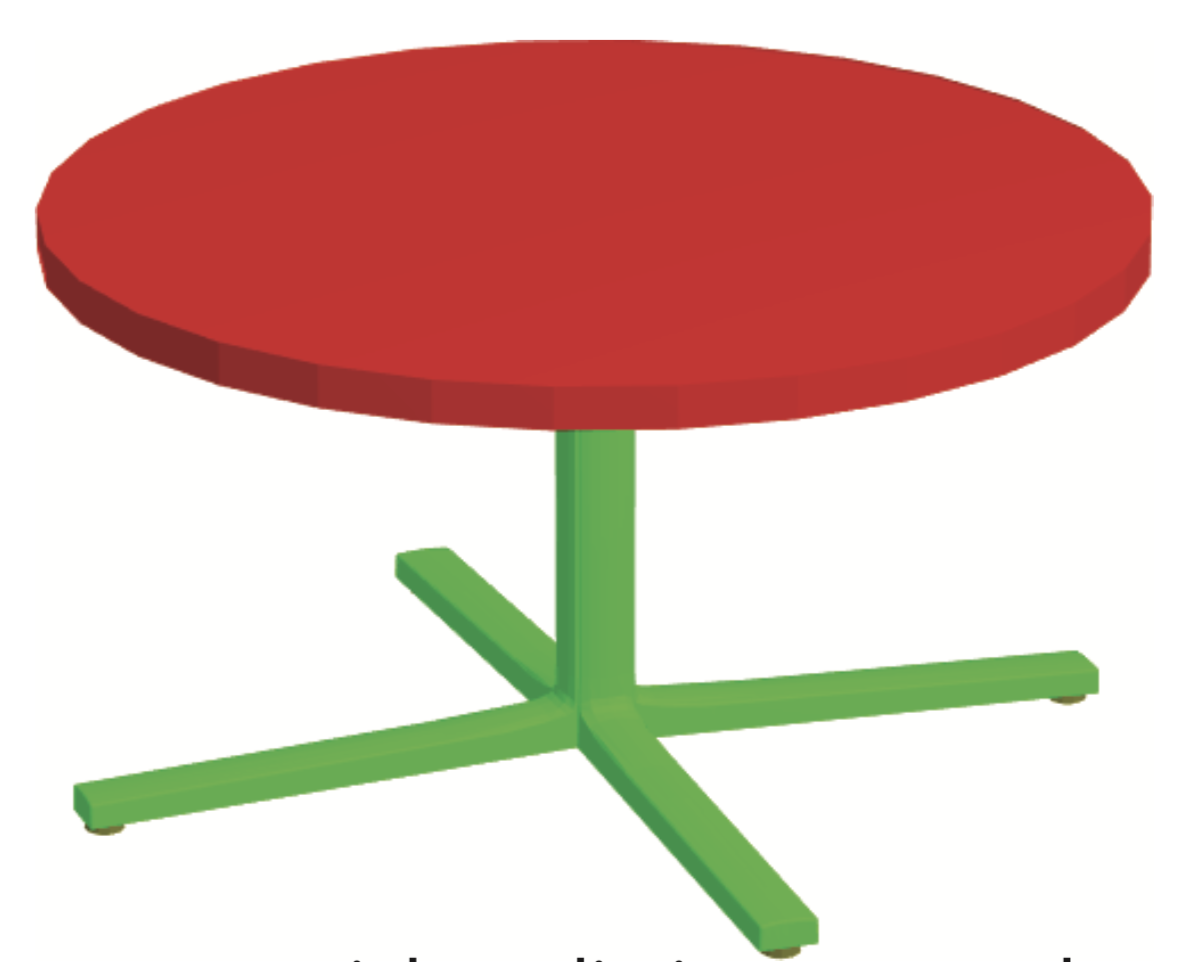 | Hubert Lin, Melinos Averkiou, Evangelos Kalogerakis, Balazs Kovacs, Siddhant Ranade, Vladimir Kim, Siddhartha Chaudhuri, **Kavita Bala**.
[Learning Material-Aware Local Descriptors for 3D Shapes](https://www.cs.cornell.edu/~kb/publications/MatTrans_3DV18.pdf)
3DV, 2018 |
|  | Fujun Luan, Sylvain Paris, Eli Shechtman, **Kavita Bala**.
[Deep Painterly Harmonization](https://www.cs.cornell.edu/~kb/publications/egsr18_harmonization.pdf)
Eurographics Symposium on Rendering (EGSR), 2018
[Project](https://github.com/luanfujun/deep-painterly-harmonization/) |
|  | Balazs Kovacs, Peter O'Donovan, **Kavita Bala**, Aaron Hertzmann.
[Context-Aware Asset Search for Graphic Design](http://www.cs.cornell.edu/projects/ca-search/)
Transactions on Visualization and Graphics (TVCG), 2018
[Project](http://www.cs.cornell.edu/projects/ca-search/) |
| 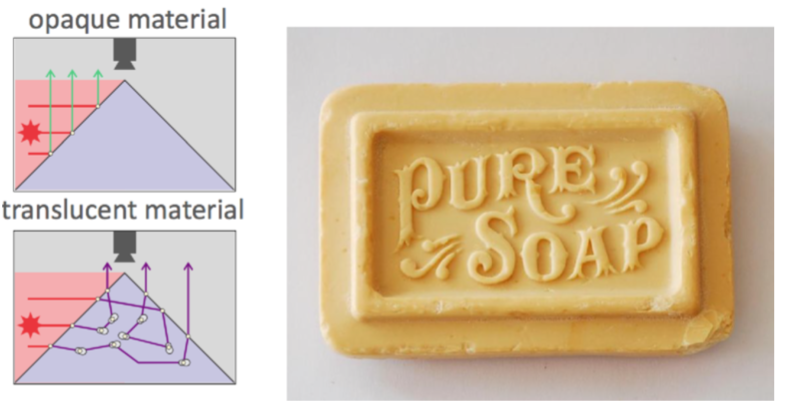 | Bei Xiao, Wenyan Bi, Shuang Zhao, Ioannis Gkioulekas, **Kavita Bala**.
[Does geometric sharpness affect the perception of translucent materials?](https://www.cs.cornell.edu/~kb/publications/VSS18_poster.pdf)
Vision Sciences Society, 2018 |
|  | Pramook Khungurn, Rundong Wu, James Noeckel, Steve Marschner, **Kavita Bala**.
[Fast Rendering of Fabric Micro-Appearance Models Under Directional and Spherical Gaussian Lights](https://www.cs.cornell.edu/~kb/publications/FastCloth_SA17.pdf)
SIGGRAPH Asia
[Project](http://www.cs.cornell.edu/projects/ctcloth/) |
|  | Kevin Matzen, **Kavita Bala**, Noah Snavely.
[StreetStyle: Exploring world-wide clothing styles from millions of photos](http://streetstyle.cs.cornell.edu/)
arXiv, June 2017
[Project](http://streetstyle.cs.cornell.edu/) |
|  | Fujun Luan, Shuang Zhao, **Kavita Bala**.
[Fiber-Level On-the-Fly Procedural Textures](https://www.cs.cornell.edu/~kb/publications/proccloth-egsr17.pdf)
EGSR 2017
[Project](http://www.cs.cornell.edu/projects/ctcloth/) |
|  | Fujun Luan, Sylvain Paris, Eli Shechtman, and **Kavita Bala**.
[Deep Photo Style Transfer](https://github.com/luanfujun/deep-photo-styletransfer)
CVPR 2017
[Project](https://github.com/luanfujun/deep-photo-styletransfer) |
| 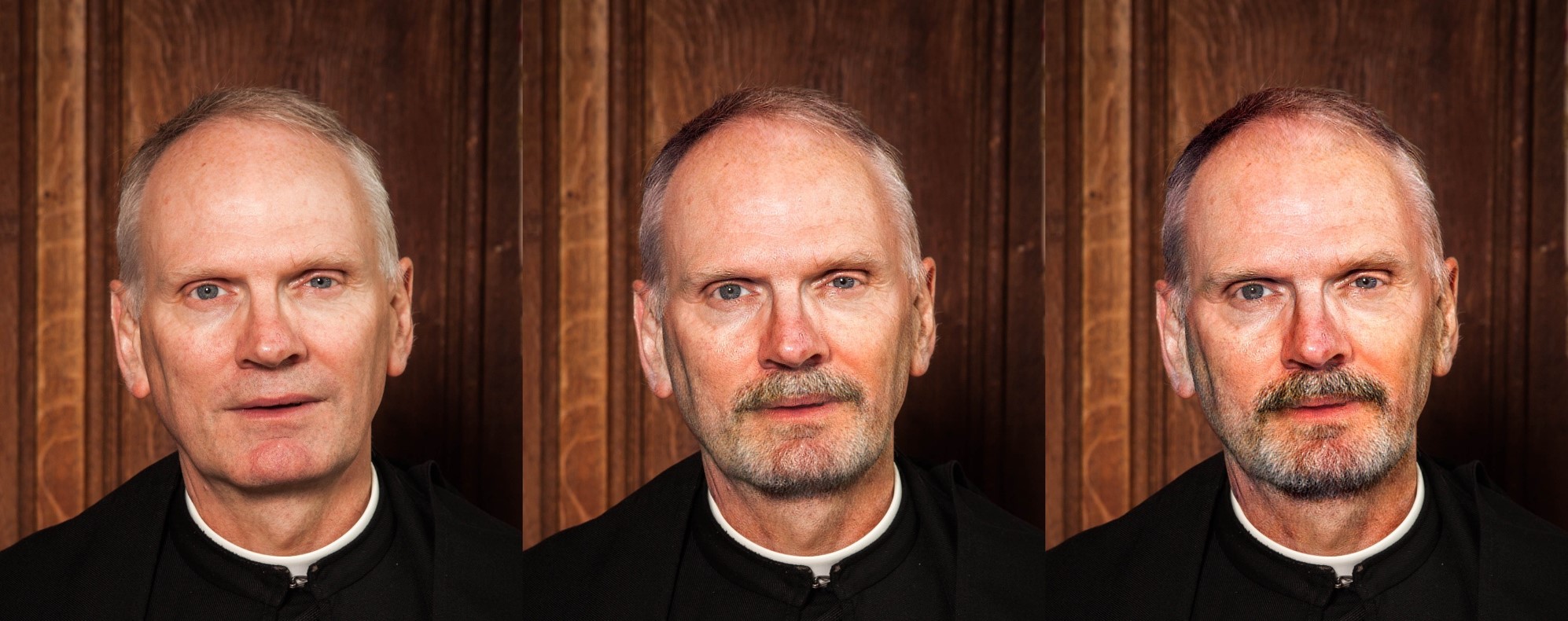 | Paul Upchurch, Jacob Gardner, Robert Pless, Noan Snavely, **Kavita Bala**, and Kilian Weinberger.
[Deep Feature Interpolation for Image Content Changes](http://www.cs.cornell.edu/projects/dfi/)
CVPR 2017
[Project](http://www.cs.cornell.edu/projects/dfi/) |
| 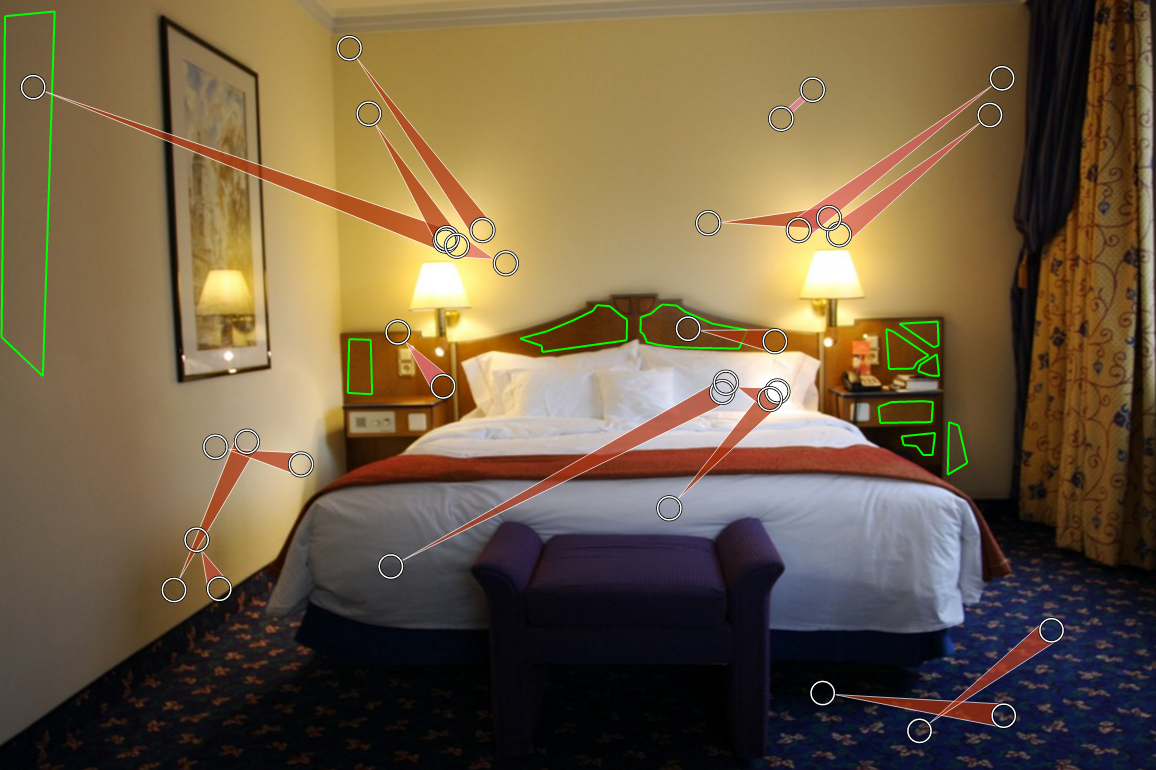 | Balazs Kovacs, Sean Bell, Noah Snavely, and **Kavita Bala**.
[Shading Annotations in the Wild](http://opensurfaces.cs.cornell.edu/saw/)
CVPR 2017
[Project](http://opensurfaces.cs.cornell.edu/saw/) |
| 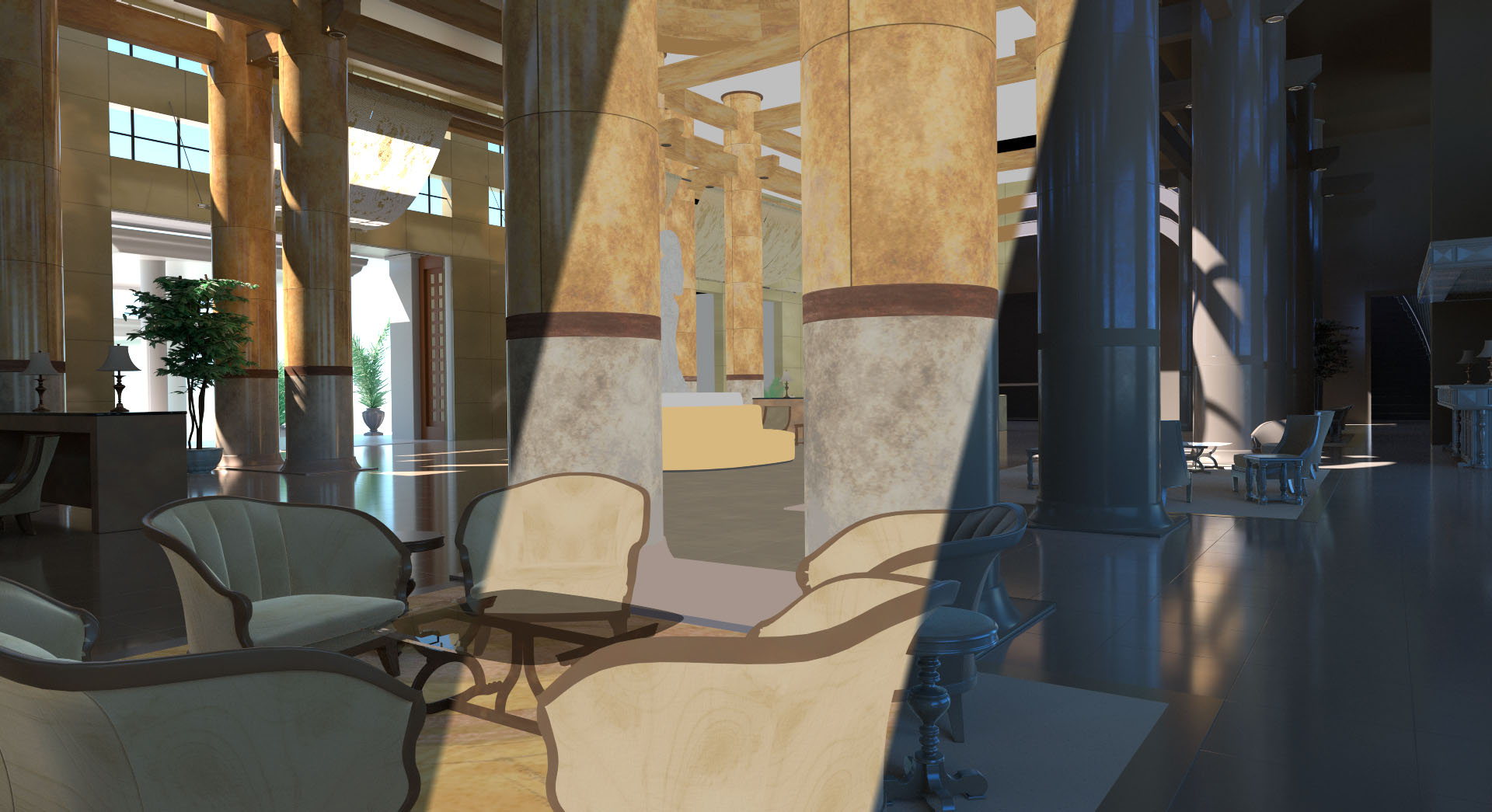 | Nicolas Bonneel, Balazs Kovacs, Sylvain Paris, and **Kavita Bala**.
[Intrinsic Decompositions for Image Editing](http://liris.cnrs.fr/~nbonneel/intrinsicstar/)
Eurographics STAR 2017 (State-of-the-Art Report), Computer Graphics Forum
[Project](http://liris.cnrs.fr/~nbonneel/intrinsicstar/) |
|  | Paul Upchurch, Daniel Sedra, Andrew Mullen, Haym Hirsh, and **Kavita Bala**.
[Interactive Consensus Games for Labeling Images](https://www.cs.cornell.edu/~kb/publications/HComp16ConsensusGames.pdf)
HComp 2016
[Project](https://www.cs.cornell.edu/~kb/) |
|  | Shuang Zhao, Fujun Luan, **Kavita Bala**.
[Fitting Procedural Yarn Models for Realistic Cloth Rendering](https://www.cs.cornell.edu/~kb/publications/SIG16ProceduralYarn.pdf)
SIGGRAPH 2016
[Project](http://www.cs.cornell.edu/projects/ctcloth/) |
| 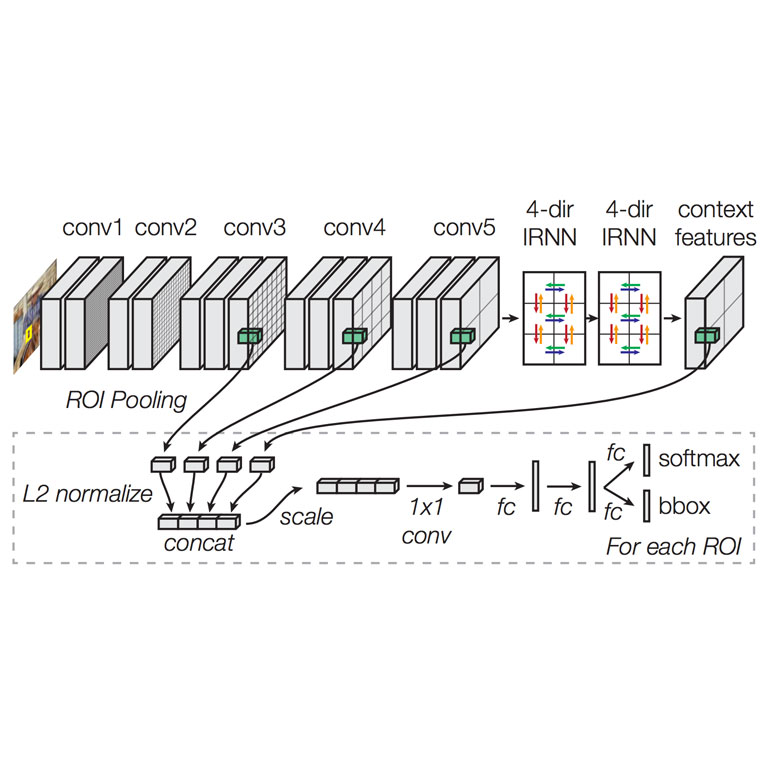 | Sean Bell, Lawrence Zitnick, **Kavita Bala**, Ross Girshick.
[Inside-Outside Net: Detecting Objects in Context with Skip Pooling and Recurrent Neural Networks](http://arxiv.org/pdf/1512.04143.pdf)
CVPR 2016
[Project](http://www.cs.cornell.edu/~sbell/)
, [Bibtex](https://www.cs.cornell.edu/~kb/bib/IONCVPR16Bib.txt) |
|  | Ivaylo Boyadzhiev, Jiawen Chen, Sylvain Paris, **Kavita Bala**.
[Do-It-Yourself Lighting Design for Product Videography](https://www.cs.cornell.edu/~kb/publications/diyLighting16.pdf)
ICCP 2016
[Project](http://www.cs.cornell.edu/~iboy/)
, [Bibtex](https://www.cs.cornell.edu/~kb/bib/DIYLighting16Bib.txt) |
| 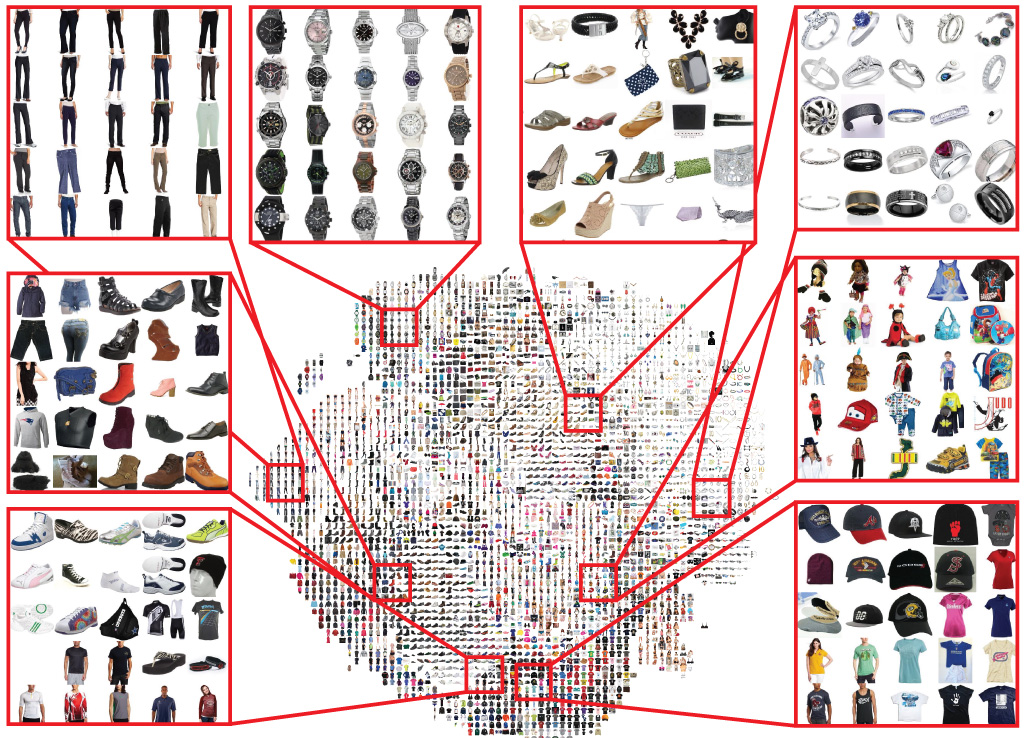 | Andreas Veit, Balazs Kovacs, Sean Bell, Julian McAuley, **Kavita Bala**, Serge Belongie.
[Learning Visual Clothing Style with Heterogeneous Dyadic Co-occurrences](http://www.cs.cornell.edu/~bkovacs/resources/iccv15.pdf)
ICCV 2015
Dec 2015
[Bibtex](https://www.cs.cornell.edu/~kb/bib/ICCV15Bib.txt) |
|  | Pramook Khungurn, Daniel Schroeder, Shuang Zhao, **Kavita Bala**, Steve Marschner.
[Matching Micro-Appearance Models to Real Fabrics](http://www.cs.cornell.edu/projects/ctcloth/download/matching-cloth/togpaper_20150904.pdf)
TOG 2015 (presented at SIGGRAPH 2016)
Dec 2015
[Project](http://www.cs.cornell.edu/projects/ctcloth/)
, [Bibtex](https://www.cs.cornell.edu/~kb/bib/TOG15Fiber.txt) |
|  | Scott Wehrwein, **Kavita Bala**, Noah Snavely.
[Shadow Detection and Sun Direction in Photo Collections](http://www.cs.cornell.edu/projects/shadows/)
3DV 2015
Nov 2015
[Project](http://www.cs.cornell.edu/projects/shadows/)
, [Bibtex](https://www.cs.cornell.edu/~kb/bib/3DV15ShadowBib.txt) |
|  | Ivaylo Boyadzhiev, **Kavita Bala**, Sylvain Paris, Edward Adelson.
[Band-Sifting Decomposition for Image Based Material Editing](http://www.cs.cornell.edu/projects/band_sifting_filters/)
TOG 2015 (presented at SIGGRAPH 2016)
Oct 2015
[Project](http://www.cs.cornell.edu/projects/band_sifting_filters/)
, [Bibtex](https://www.cs.cornell.edu/~kb/bib/TOG15MatEditBib.txt) |
| 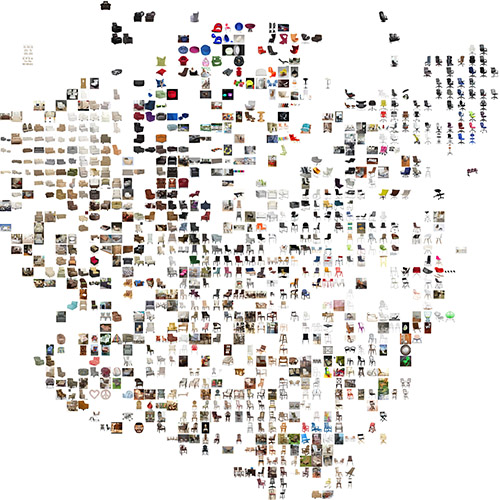 | Sean Bell, **Kavita Bala**.
[Learning visual similarity for product design with convolutional neural networks](http://www.cs.cornell.edu/~kb/publications/SIG15ProductNet.pdf)
SIGGRAPH 2015
Aug 2015
[Project](http://www.cs.cornell.edu/~kb/projects/productnet/)
, [Bibtex](https://www.cs.cornell.edu/~kb/bib/SIG15ProductNetBib.txt) |
| 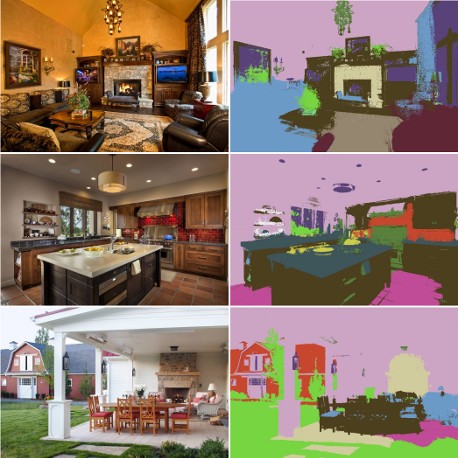 | Sean Bell, Paul Upchurch, Noah Snavely, **Kavita Bala**.
[Material Recognition in the Wild with the Materials in Context Database](http://minc.cs.cornell.edu/)
CVPR 2015
Jun 2015
[Project](http://minc.cs.cornell.edu/)
, [Bibtex](https://www.cs.cornell.edu/~kb/bib/CVPR15MincBib.txt) |
|  | Ioannis Gkioulekas, Bruce Walter, **Kavita Bala**, Ted Adelson, Todd Zickler.
[On the Appearance of Translucent Edges](http://vision.seas.harvard.edu/translucentedges/)
CVPR 2015
Jun 2015
[Project](http://vision.seas.harvard.edu/translucentedges/)
, [Bibtex](https://www.cs.cornell.edu/~kb/bib/CVPR15EdgesBib.txt) |
|  | Daniel Cabrini Hauagge, Scott Wehrwein, **Kavita Bala**, Noah Snavely
[Photometric Ambient Occlusion for Intrinsic Image Decomposition](http://ieeexplore.ieee.org/xpl/articleDetails.jsp?arnumber=7152924)
Special Issue of PAMI (extension of CVPR 2013 paper)
July 2015
[Project](http://www.cs.cornell.edu/projects/photoAO/)
, [Bibtex](https://www.cs.cornell.edu/~kb/bib/PAMIAOBib.txt) |
|  | Manohar Srikanth, **Kavita Bala**, Fredo Durand
[Computational Rim Illumination of Dynamic Subjects Using Aerial Robots](http://authors.elsevier.com/sd/article/S009784931500031X)
Invited Paper from Computational Aesthetics
2015
[Project](http://people.csail.mit.edu/manohar/litrobot/)
, [Bibtex](https://www.cs.cornell.edu/~kb/bib/LitRobotBib.txt) |
|  | Shuang Zhao, Wenzel Jakob, Steve Marschner, **Kavita Bala**.
[Building Volumetric Appearance Models of Fabric Using Micro CT Imaging](http://cacm.acm.org/magazines/2014/11/179823-building-volumetric-appearance-models-of-fabric-using-micro-ct-imaging/fulltext)
CACM 2014 (previously published in SIGGRAPH 2011)
CACM, Vol 57, No. 11, Pages 98-105
[Project](http://www.cs.cornell.edu/projects/ctcloth)
, [Bibtex](https://www.cs.cornell.edu/~kb/bib/CACM14.txt) |
|  | Rui Wang, Xiangjin Yang, Yazhen Yuan, Wei Chen, **Kavita Bala**, Hujun Bao.
[Automatic Shader Simplification Using Surface Signal Approximation](http://www.cad.zju.edu.cn/home/rwang/projects/shaderopt/shaderopt.html)
SIGGRAPH Asia 2014
Dec 2014
[Project](http://www.cad.zju.edu.cn/home/rwang/projects/shaderopt/shaderopt.html)
, [Bibtex](https://www.cs.cornell.edu/~kb/bib/SA14ShaderBib.txt) |
|  | Sean Bell, **Kavita Bala**, Noah Snavely.
[Intrinsic Images in the Wild](http://intrinsic.cs.cornell.edu/)
SIGGRAPH 2014
Aug 2014
[Project](http://intrinsic.cs.cornell.edu/)
, [Bibtex](https://www.cs.cornell.edu/~kb/bib/S14IIWBib.txt) |
| 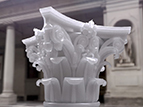 | Shuang Zhao, Ravi Ramamoorthi, **Kavita Bala**.
[High-Order Similarity Relations in Radiative Transfer](http://www.cs.cornell.edu/projects/translucency/#similarity-sg14)
SIGGRAPH 2014
Aug 2014
[Project](http://www.cs.cornell.edu/projects/translucency)
, [Bibtex](https://www.cs.cornell.edu/~kb/bib/S14SimilarityBib.txt) |
|  | Manohar Srikanth, **Kavita Bala**, Fredo Durand
[Computational Rim Illumination with Aerial Robots](http://www.cs.cornell.edu/~kb/publications/litrobot_2014_manohar_kavita_fredo.pdf)
Computational Aesthetics (**Best Paper Award**)
2014
[Project](http://people.csail.mit.edu/manohar/litrobot/)
, [Bibtex](https://www.cs.cornell.edu/~kb/bib/Expressive14UAVBib.txt) |
|  | Daniel Cabrini Hauagge, Scott Wehrwein, Paul Upchurch, **Kavita Bala**, Noah Snavely
[Reasoning about Photo Collections using Models of Outdoor Illumination](http://www.cs.cornell.edu/~kb/publications/BMVC14.pdf)
British Machine Vision Conference
2014
[Project](http://www.cs.cornell.edu/projects/photo_outdoor_illum/)
, [Bibtex](https://www.cs.cornell.edu/~kb/bib/BMVC14Bib.txt) |
| 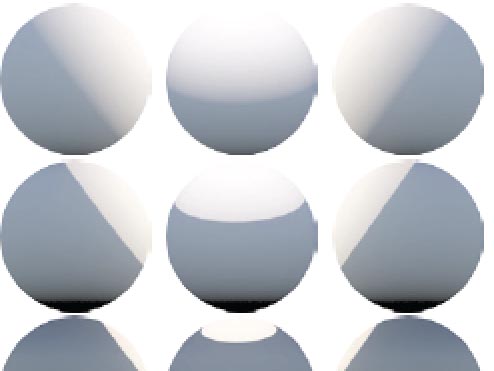 | Daniel Cabrini Hauagge, Scott Wehrwein, Noah Snavely, **Kavita Bala**
[Reasoning about Photo Collections using Outdoor Illumination Models](http://www.cs.cornell.edu/~kb/publications/SUNW14.pdf)
Scene Understanding Workshop
2014
[Project](http://www.cs.cornell.edu/projects/photoAO/)
, [Bibtex](https://www.cs.cornell.edu/~kb/bib/SUNW14Bib.txt) |
|  | Laurent Belcour, **Kavita Bala**, Cyril Soler.
[A Local Frequency Analysis of Light Scattering and Absorption](http://www.cs.cornell.edu/~kb/publications/TOG14Frequency.pdf)
Transactions on Graphics'14 (to be presented at SIGGRAPH '14)
2014
[Project](https://hal.archives-ouvertes.fr/hal-00814164/)
, [Bibtex](https://hal.archives-ouvertes.fr/hal-00957242/bibtex) |
| 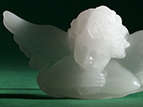 | Bei Xiao, Bruce Walter, Ioannis Gkioulekas, Todd Zickler, Edward Adelson, **Kavita Bala**.
[Looking against the light: How perception of translucency depends on lighting direction](http://www.cs.cornell.edu/~kb/publications/JOV14Translucency.pdf)
Journal of Vision '14
Mar 2014
[Project](http://www.cs.cornell.edu/projects/translucency/)
, [Bibtex](https://www.cs.cornell.edu/~kb/bib/JOV14Bib.txt) |
|  | **Kavita Bala**.
Modeling Cloth at Micron Resolution
Measuring, Modeling, and Reproducing Material Appearance (Invited Talk)
Jan 2014
[Bibtex](https://www.cs.cornell.edu/~kb/bib/MMRMA14Bib.txt) |
|  | Ioannis Gkioulekas, Shuang Zhao, **Kavita Bala**, Todd Zickler, Anat Levin.
[Inverse Volume Rendering with Material Dictionaries](http://www.cs.cornell.edu/projects/translucency/)
SIGGRAPH Asia 2013
Nov 2013
[Project](http://www.cs.cornell.edu/projects/translucency/)
, [Bibtex](https://www.cs.cornell.edu/~kb/bib/SA13SoapBib.txt) |
|  | Sean Bell, Paul Upchurch, Noah Snavely, **Kavita Bala**.
[OpenSurfaces: A richly annotated catalog of surface appearance](http://opensurfaces.cs.cornell.edu/publications/)
SIGGRAPH 2013
July 2013
[Project](http://opensurfaces.cs.cornell.edu/)
, [Bibtex](https://www.cs.cornell.edu/~kb/bib/SIG13OpenSurfacesBib.txt) |
|  | Shuang Zhao, Miloŝ Haŝan, Ravi Ramamoorthi, **Kavita Bala**.
[Modular Flux Transfer: Efficient Rendering of High-Resolution Volumes with Repeated Structures](http://www.cs.cornell.edu/projects/ctcloth/)
SIGGRAPH 2013
July 2013
[Project](http://www.cs.cornell.edu/projects/ctcloth/)
, [Bibtex](https://www.cs.cornell.edu/~kb/bib/SIG13MFTBib.txt) |
|  | Ivaylo Boyadzhiev, Sylvain Paris, **Kavita Bala**
[User-Assisted Image Compositing for Photographic Lighting](http://www.cs.cornell.edu/projects/light_compositing/)
SIGGRAPH 2013
July 2013
[Project](http://www.cs.cornell.edu/projects/light_compositing/)
, [Bibtex](https://www.cs.cornell.edu/~kb/bib/SIG13BasisLightsBib.txt) |
|  | Daniel Cabrini Hauagge, Scott Wehrwein, **Kavita Bala**, Noah Snavely
[Photometric Ambient Occlusion](http://www.cs.cornell.edu/projects/photoAO/)
CVPR 2013 (Oral)
June 2013
[Project](http://www.cs.cornell.edu/projects/photoAO/)
, [Bibtex](https://www.cs.cornell.edu/~kb/bib/CVPR13AO.txt) |
|  | Ioannis Gkioulekas, Bei Xiao, Shuang Zhao, Ted Adelson, Todd Zickler, **Kavita Bala**
[Understanding the Role of Phase Function in Translucent Appearance](http://www.cs.cornell.edu/projects/translucency/)
Transactions on Graphics 2013, 32(5)
Oct 2013
[Project](http://www.cs.cornell.edu/projects/translucency/)
, [Bibtex](https://www.cs.cornell.edu/~kb/bib/TOG13TranslucencyBib.txt) |
|  | Ivaylo Boyadhziev, **Kavita Bala**, Sylvain Paris, Fredo Durand.
[User-Guided White Balance for Mixed Lighting Conditions](https://www.cs.cornell.edu/~kb/publications/SIGAsia12WB.pdf)
SIGGRAPH Asia 2012
November 2012
[Project](http://www.cs.cornell.edu/projects/white_balance/)
, [Bibtex](https://www.cs.cornell.edu/~kb/bib/WBSIGAsia12Bib.txt) |
|  | Bruce Walter, Pramook Khungurn, **Kavita Bala**.
[Bidirectional Lightcuts](https://www.cs.cornell.edu/~kb/publications/SIG12BidirLC.pdf)
SIGGRAPH 2012
August 2012
[Project](http://www.cs.cornell.edu/projects/lightcuts/)
, [Bibtex](https://www.cs.cornell.edu/~kb/bib/SIG12BidirLCBib.txt) |
|  | Shuang Zhao, Wenzel Jakob, Steve Marschner, **Kavita Bala**.
[Structure-Aware Synthesis for Predictive Woven Fabric Appearance](https://www.cs.cornell.edu/~kb/publications/SIG12CT.pdf)
SIGGRAPH 2012
August 2012
[Project](http://www.cs.cornell.edu/projects/ctcloth/)
, [Bibtex](https://www.cs.cornell.edu/~kb/bib/SIG12CTBib.txt) |
|  | Bei Xiao, Ioannis Gkioulekas, Asher Dunn, Shuang Zhao, Todd Zickler, Ted Adelson, **Kavita Bala**.
[Effects of shape and color on the perception of translucency](https://www.cs.cornell.edu/~kb/)
VSS 2012
May 2012
[Bibtex](https://www.cs.cornell.edu/~kb/bib/VSS12Bib.txt) |
|  | Adrian Jarabo, Tom Van Eyck, Veronica Sundstedt, **Kavita Bala**, Diego Gutierrez, Carol O' Sullivan.
[Crowd Light: Evaluating the Perceived Fidelity of Illuminated Dynamic Scenes](https://www.cs.cornell.edu/~kb/publications/EG12Crowds.pdf)
Eurographics 2012
May 2012
[Project](http://giga.cps.unizar.es/~ajarabo/pubs/crowdsEG12/)
, [Bibtex](https://www.cs.cornell.edu/~kb/bib/EG12CrowdBib.txt) |
|  | **Kavita Bala**.
[Predictive Rendering for Accurate Material Perception](https://www.cs.cornell.edu/~kb/publications/HVEI12InvitedAbstract.pdf)
HVEI 2012, Invited Paper
January 2012
[Bibtex](https://www.cs.cornell.edu/~kb/bib/HVEI12Bib.txt) |
|  | Nikhil Naik, Shuang Zhao, Andreas Velten, Ramesh Raskar, **Kavita Bala**.
[Single View Reflectance Capture using Multiplexed Scattering and Time-of-flight Imaging](https://www.cs.cornell.edu/~kb/publications/SA11_tofbrdf.pdf)
SIGGRAPH Asia 2011
December 2011
[Project](http://www.cs.cornell.edu/projects/tofbrdf-sa11/)
, [Bibtex](https://www.cs.cornell.edu/~kb/bib/TOFBRDFSIGAsia11Bib.txt) |
|  | Shuang Zhao, Wenzel Jakob, Steve Marschner, **Kavita Bala**.
[Building Volumetric Appearance Models of Fabric using Micro CT Imaging](https://www.cs.cornell.edu/~kb/publications/SIG11CT.pdf)
SIGGRAPH 2011
August 2011
[Project](http://www.cs.cornell.edu/projects/ctcloth-sg11/)
, [Bibtex](https://www.cs.cornell.edu/~kb/bib/SIG11CTBib.txt) |
|  | Adam Arbree, Bruce Walter, **Kavita Bala**.
[Heterogeneous Subsurface Scattering Using the Finite Element Method](https://www.cs.cornell.edu/~kb/publications/TVCG10.pdf)
Transactions on Visualization and Computer Graphics '11
July 2011
[Project](https://www.cs.cornell.edu/~kb/projects/heterogeneousSS/)
, [Bibtex](https://www.cs.cornell.edu/~kb/bib/HeterogeneousSSTVCG11Bib.txt) |
|  | Tomas Davidovic, Jaroslav Krivanek, Miloŝ Haŝan, Philipp Slusallek, **Kavita Bala**.
[Combining Global and Local Virtual Lights for Detailed Glossy Illumination](https://www.cs.cornell.edu/~kb/publications/SIGAsia10GlobalLocal.pdf)
SIGGRAPH Asia '10
December 2010, Seoul
[Project](https://www.cs.cornell.edu/~kb/projects/localVPLs/)
, [Bibtex](https://www.cs.cornell.edu/~kb/bib/localVPLSIGAsia10Bib.txt) |
|  | Jaroslav Krivanek, James Ferwerda, **Kavita Bala**.
[Effects of Global Illumination Approximations on Material Appearance](http://www.graphics.cornell.edu/~jaroslav/papers/2010-giperception/index.htm)
SIGGRAPH '10
July 2010, LA
[Project](http://www.cs.cornell.edu/~kb/projects/vplperception/)
, [Supplementary Material](https://www.cs.cornell.edu/~kb/publications/SIG10VPLPerceptionSupplementary.pdf)
, [Bibtex](https://www.cs.cornell.edu/~kb/bib/VPLPerceptionSIG10Bib.txt) |
|  | Wenzel Jakob, Adam Arbree, Jon Moon, **Kavita Bala**, Steve Marschner.
[A radiative transfer framework for rendering materials with anisotropic structure](https://www.cs.cornell.edu/~kb/publications/SIG10Aniso.pdf)
SIGGRAPH '10
July 2010, LA
[Project](http://www.cs.cornell.edu/projects/diffusion-sg10/)
, [Extended TR](https://www.cs.cornell.edu/~kb/publications/SIG10AnisoTR.pdf)
, [Bibtex](https://www.cs.cornell.edu/~kb/bib/AnisoSIG10Bib.txt) |
|  | Edgar Velazquez-Armendariz, Shuang Zhao, Miloŝ Haŝan, Bruce Walter, **Kavita Bala**.
[Automatic Bounding of Programmable Shaders for Efficient Global Illumination](https://www.cs.cornell.edu/~kb/publications/SIGAsia09Shaders.pdf)
SIGGRAPH Asia '09
December 2009, Yokohama, Japan
[Project](http://www.cs.cornell.edu/projects/shader-sa09)
, [Bibtex](https://www.cs.cornell.edu/~kb/bib/ShadersSIGAsia09Bib.txt) |
|  | Miloŝ Haŝan, Jaroslav Krivanek, Bruce Walter, **Kavita Bala**.
[Virtual Spherical Lights for Many-Light Rendering of Glossy Scenes](https://www.cs.cornell.edu/~kb/publications/SIGAsia09VSL.pdf)
SIGGRAPH Asia '09
December 2009, Yokohama, Japan
[Project](https://www.cs.cornell.edu/~kb/projects/VSL/)
, [Bibtex](https://www.cs.cornell.edu/~kb/bib/VSLSIGAsia09Bib.txt) |
| 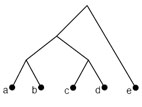 | Milind Kulkarni, Keshav Pingali, Bruce Walter, Ganesh Ramanarayanan, **Kavita Bala**, Paul Chew.
[Optimistic Parallelism Requires Abstractions](https://www.cs.cornell.edu/~kb/publications/Galois_CACM09.pdf)
Research Highlights, Communications of the ACM
September 2009
[Bibtex](https://www.cs.cornell.edu/~kb/bib/GaloisCACM09Bib.txt) |
|  | Bruce Walter, Shuang Zhao, Nicolas Holzschuch, **Kavita Bala**.
[Single Scattering in Refractive Media with Triangle Mesh Boundaries](https://www.cs.cornell.edu/~kb/publications/SIG09Amber.pdf)
SIGGRAPH '09
August 2009, New Orleans, LA
[Project](https://www.cs.cornell.edu/~kb/projects/amber/)
, [Bibtex](https://www.cs.cornell.edu/~kb/bib/AmberSIG09Bib.txt) |
|  | Ganesh Ramanarayanan, **Kavita Bala**, James Ferwerda.
[Perception of Complex Aggregates](https://www.cs.cornell.edu/~kb/publications/SIG08Aggregates.pdf)
SIGGRAPH '08
August 2008, Los Angeles CA
[Project](https://www.cs.cornell.edu/~kb/projects/aggregates/)
, [Bibtex](https://www.cs.cornell.edu/~kb/bib/AggregatesSIG08Bib.txt) |
| 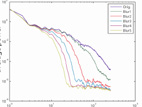 | James Ferwerda, Ganesh Ramanarayanan, Bruce Walter, **Kavita Bala**.
[Visual Equivalence: an object-based approach to image quality](https://www.cs.cornell.edu/~kb/publications/CIC08.pdf)
Proceedings of IS&T 16th Color Imaging Conference (CIC) '08
Nov 2008
[Project](https://www.cs.cornell.edu/~kb/projects/VEP/)
, [Bibtex](https://www.cs.cornell.edu/~kb/bib/VECIC08Bib.txt) |
| 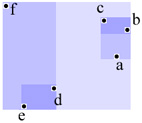 | Bruce Walter, **Kavita Bala**, Milind Kulkarni, Keshav Pingali.
[Fast Agglomerative Clustering for Rendering](https://www.cs.cornell.edu/~kb/publications/IRT08.pdf)
Interactive Ray Tracing (IRT 2008)
August 2008, Los Angeles
[Bibtex](https://www.cs.cornell.edu/~kb/bib/KBIRT08Bib.txt) |
|  | Miloŝ Haŝan, Edgar Velazquez-Armendariz, Fabio Pellacini, **Kavita Bala**.
[Tensor Clustering for Rendering Many-Light Animations](https://www.cs.cornell.edu/~kb/publications/EGSR08_tensor.pdf)
Eurographics Symposium on Rendering (EGSR 2008)
June 2008, Sarajevo, Bosnia-Herzegovina
[Project](https://www.cs.cornell.edu/~kb/projects/tensorAnimation/)
, [Bibtex](https://www.cs.cornell.edu/~kb/bib/TensorClusteringEGSR08Bib.txt) |
| 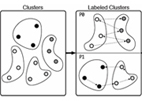 | Milind Kulkarni, Keshav Pingali, Ganesh Ramanarayanan, Bruce Walter, **Kavita Bala**, Paul Chew.
[Scheduling Strategies for Optimistic Parallel Execution of Irregular Programs](https://www.cs.cornell.edu/~kb/publications/SPAA08.pdf)
Symposium on Parallelism in Algorithms and Architectures (SPAA '08)
June 2008, Munich, Germany
[Bibtex](https://www.cs.cornell.edu/~kb/bib/SPAA08Bib.txt) |
|  | Adam Arbree, Bruce Walter, **Kavita Bala**.
[Single-pass Scalable Subsurface Rendering with Lightcuts](https://www.cs.cornell.edu/~kb/publications/Eurographics08.pdf)
Eurographics '08
April 2008, Crete
[Project](https://www.cs.cornell.edu/~kb/projects/subsurfaceLC/)
, [Bibtex](https://www.cs.cornell.edu/~kb/bib/Eurographics08Bib.txt) |
|  | Ganesh Ramanarayanan, James Ferwerda, Bruce Walter, **Kavita Bala**.
[Dimensionality of Visual Complexity in Computer Graphics Scenes](https://www.cs.cornell.edu/~kb/publications/HVEI08.pdf)
SPIE Human Vision and Electronic Imaging (HVEI) '08
Jan 2008, San Jose CA
[Bibtex](https://www.cs.cornell.edu/~kb/bib/HVEI08Bib.txt) |
| 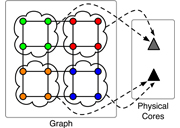 | Milind Kulkarni, Keshav Pingali, Ganesh Ramanarayanan, Bruce Walter, **Kavita Bala**, Paul Chew.
[Optimistic Parallelism Benefits from Data Partitioning](https://www.cs.cornell.edu/~kb/publications/asplos08.pdf)
ASPLOS '08
Mar 2008, Seattle
[Bibtex](https://www.cs.cornell.edu/~kb/bib/ASPLOS08Bib.txt) |
|  | Ganesh Ramanarayanan, James Ferwerda, Bruce Walter, **Kavita Bala**.
[Visual Equivalence: Towards a new standard for Image Fidelity](https://www.cs.cornell.edu/~kb/publications/VEP_SIG07.pdf)
SIGGRAPH 2007
August 2007, San Diego CA
[Project](https://www.cs.cornell.edu/~kb/projects/VEP/)
, [Bibtex](https://www.cs.cornell.edu/~kb/bib/VEPSIG07Bib.txt) |
|  | Miloŝ Haŝan, Fabio Pellacini, **Kavita Bala**.
[Matrix Row-Column Sampling for the Many Lights Problem](https://www.cs.cornell.edu/~kb/publications/MatrixSampling_SIG07.pdf)
SIGGRAPH 2007
August 2007, San Diego MA
[Project](https://www.cs.cornell.edu/~kb/projects/rowcolumnSampling/)
, [Bibtex](https://www.cs.cornell.edu/~kb/bib/MatrixSamplingSIG07Bib.txt) |
|  | Fabio Pellacini, Miloŝ Haŝan, **Kavita Bala**.
Interactive Cinematic Relighting with Global Illumination
Chapter 9, GPU Gems 3 |
|  | Milind Kulkarni, Keshav Pingali, Bruce Walter, Ganesh Ramanarayanan, **Kavita Bala**, Paul Chew.
[Optimistic Parallelism Requires Abstractions](https://www.cs.cornell.edu/~kb/publications/Galois_PLDI07.pdf)
PLDI 2007
June 2007, San Diego MA
[Bibtex](https://www.cs.cornell.edu/~kb/bib/GaloisPLDI07Bib.txt) |
|  | Ganesh Ramanarayanan, **Kavita Bala**.
[Constrained Texture Synthesis via Energy Minimization](https://www.cs.cornell.edu/~kb/publications/cmstvcg07.pdf)
IEEE Transactions on Visualization and Graphics 2007
pp 167-178, Jan/Feb 2007
[Bibtex](https://www.cs.cornell.edu/~kb/bib/ConstrainedTexSynTVCG07Bib.txt) |
|  | Bruce Walter, Adam Arbree, **Kavita Bala**, Donald Greenberg.
[Multidimensional lightcuts](https://www.cs.cornell.edu/~kb/publications/mdlcSIG06.pdf)
SIGGRAPH 2006
pp 1081--1088, August 2006, Boston MA
[Project](http://www.cs.cornell.edu/projects/lightcuts/)
, [Bibtex](https://www.cs.cornell.edu/~kb/bib/MDLCSIG06Bib.txt) |
|  | Miloŝ Haŝan, Fabio Pellacini, **Kavita Bala**.
[Direct-to-Indirect Transfer for Cinematic Relighting](https://www.cs.cornell.edu/~kb/publications/relightingSIG06.pdf)
SIGGRAPH 2006
pp 1089--1097, August 2006, Boston MA
[Project](https://www.cs.cornell.edu/~kb/projects/directToIndirectRelighting/)
, [Bibtex](https://www.cs.cornell.edu/~kb/bib/DirectToIndirectSIG06Bib.txt) |
| 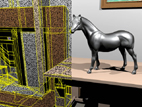 | Edgar Velazquez-Armendariz, Eugene Lee, Bruce Walter, **Kavita Bala**.
[Implementing the Render Cache and the Edge-and-Point Image on Graphics Hardware](https://www.cs.cornell.edu/~kb/projects/epigpu/)
Proceedings of Graphics Interface 2006
pp 211-217, June 2006, Quebec Canada
[Project](https://www.cs.cornell.edu/~kb/projects/epigpu/)
, [Bibtex](https://www.cs.cornell.edu/~kb/bib/EdgeAndPointGPUGI06Bib.txt) |
|  | Mike Donikian, Bruce Walter, **Kavita Bala**, Sebastian Fernandez, and Donald Greenberg.
[Accurate Direct Illumination Using Iterative Adaptive Sampling](https://www.cs.cornell.edu/~kb/publications/IterativeAdaptiveSampling_TVCG06.pdf)
Proceedings of Transaction on Visualization and Computer Graphics 2006
pp 353--364, May/June 2006
[Bibtex](https://www.cs.cornell.edu/~kb/bib/IterativeAdaptiveSamplingTVCG06Bib.txt) |
|  | **Kavita Bala**, Jim Ferwerda, and Bruce Walter.
Information-Preserving Imaging for Heterogeneous Networked Displays
[Workshop on Information Visualization and Interaction Techniques for Collaboration across Multiple Displays](http://nvac.pnl.gov/ivitcmd_chi06/)
April 2006 |
|  | Bruce Walter, Sebastian Fernandez, Adam Arbree, **Kavita Bala**, Mike Donikian and Donald Greenberg.
[Lightcuts: A Scalable Approach to Illumination](https://www.cs.cornell.edu/~kb/publications/SIG05lightcuts.pdf)
Proceedings of SIGGRAPH 2005, Annual Conference Series
pp 1098-1107, July 2005, Los Angeles, CA
[Project](http://www.cs.cornell.edu/projects/lightcuts/)
, [Bibtex](https://www.cs.cornell.edu/~kb/bib/LightcutsSIG05Bib.txt) |
|  | Bruce Walter, Sebastian Fernandez, Adam Arbree, **Kavita Bala**, Mike Donikian and Donald Greenberg.
[Implementing Lightcuts](https://www.cs.cornell.edu/~kb/publications/lightcutSketch.pdf)
SIGGRAPH 2005 Technical Sketch
July 2005, Los Angeles, CA
[Bibtex](https://www.cs.cornell.edu/~kb/bib/ImplementingLightcutsSIG05Bib.txt) |
|  | Miloŝ Haŝan, Fabio Pellacini, and **Kavita Bala**.
Real-time Hardware-accelerated Relighting with Approximate Indirect Illumination
Technical Report TR2005-1999,
Computer Science Department, July 2005 |
|  | Adam Arbree, Bruce Walter, and **Kavita Bala**.
Pre-processing Environment Maps for Dynamic Hardware Shadows
Technical Report TR2005-1998,
Computer Science Department, July 2005 |
|  | **Kavita Bala**, and Bruce Walter.
Reusing Shading for Interactive Global Illumination
Course at Game Developers Conference 2004 |
|  | Ganesh Ramanarayanan, **Kavita Bala**, and Bruce Walter.
[Feature-Based Textures](https://www.cs.cornell.edu/~kb/publications/egsr04fbt.pdf)
Proceedings of Eurographics Symposium on Rendering (EGSR) 2004,
pp 265--274, June 2004, Norkoping, Sweden
[Project](https://www.cs.cornell.edu/~kb/projects/fbt/)
, [Bibtex](https://www.cs.cornell.edu/~kb/bib/FBTEGSR04Bib.txt) |
|  | **Kavita Bala**, Bruce Walter and Donald Greenberg.
[Combining Edges and Points for Interactive High-Quality Rendering](https://www.cs.cornell.edu/~kb/publications/EdgesAndPointsSIGGRAPH03.pdf)
Proceedings of SIGGRAPH 2003, Annual Conference Series,
22(3): 631--640, July 2003, San Diego, CA
[Bibtex](https://www.cs.cornell.edu/~kb/bib/EdgeAndPointSIG03Bib.txt) |
|  | Ryan Ismert, **Kavita Bala**, and Donald Greenberg.
[Detail Synthesis for Image-Based Texturing](https://www.cs.cornell.edu/~kb/publications/DetailSynthesis_I3D03_cameraready_WithHeader.pdf)
Interactive 3D Graphics (I3D),
pp 171--176, April 2003, Monterey, CA
[Bibtex](https://www.cs.cornell.edu/~kb/bib/DetSynI3D03Bib.txt) |
|  | Ryan Ismert, **Kavita Bala**, and Donald Greenberg.
[Detail Synthesis for Image-Based Texturing](https://www.cs.cornell.edu/~kb/publications/DetailSynthesis_TR_PCG-03-1.pdf)
Longer version of I3D paper with more details
Technical Report PCG-03-1,
Program of Computer Graphics, January 2003 |
|  | Phil Dutre, **Kavita Bala**, and Philippe Baekert.
Advanced Global Illumination Course
Course 2 at SIGGRAPH 2002 |
| 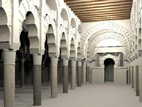 | Sebastian Fernandez, **Kavita Bala**, Donald Greenberg.
[Local Illumination Environments for Direct Lighting Acceleration](https://www.cs.cornell.edu/~kb/publications/EGRW02.pdf)
_Thirteenth Eurographics Workshop on Rendering,_
pp 7--14, June 2002, Pisa, Italy.
[Bibtex](https://www.cs.cornell.edu/~kb/bib/LIEEGSR02Bib.txt) |
| 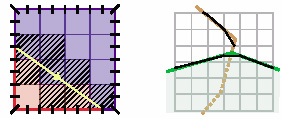 | **Kavita Bala**, Bruce Walter and Donald Greenberg.
[Combining Edges and Points for Interactive Anti-Aliased Rendering](https://www.cs.cornell.edu/~kb/publications/EdgesAndPoints_TR_PCG-02-3.pdf)
Earlier version of SIGGRAPH 2003 paper
Technical Report PCG-02-3,
Program of Computer Graphics, January 2002 |
|  | Phil Dutre, **Kavita Bala**, and Philippe Baekert.
Advanced Global Illumination Course
Course 20 at SIGGRAPH 2001 |
| 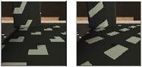 | Randima Fernando, Sebastian Fernandez, **Kavita Bala**, and Donald Greenberg.
[Adaptive Shadow Maps](https://www.cs.cornell.edu/~kb/publications/ASM.pdf)
Proceedings of SIGGRAPH 2001, Annual Conference Series,
pp 387--390, August 2001, Los Angeles, CA
[Bibtex](https://www.cs.cornell.edu/~kb/bib/ASMSIG01Bib.txt) |
|  | Sebastian Fernadez, **Kavita Bala**, Moreno A. Piccolotto, and Donald Greenberg.
[Interactive Direct Lighting in Dynamic Scenes](https://www.cs.cornell.edu/~kb/publications/CORNELL-TR-PCG-00-02.pdf)
Cornell University PCG Technical Report PCG-00-02,
January, 2000. |
|  | Moreno A. Piccolotto, Sebastian Fernandez, **Kavita Bala**, M. Malone, and Donald Greenberg.
A System for 3D Conceptual Modeling for Architectural Design
Cornell University PCG Technical Report PCG-00-03,
January, 2000. |
|  | **Kavita Bala**, Julie Dorsey, and Seth Teller
_[Bounded-Error Interactive Ray Tracing.](https://www.cs.cornell.edu/~kb/publications/MIT-LCS-TR-748.ps.gz)_
MIT Laboratory for Computer Science Technical Report 748 (MIT-TR-748), March, 1998.
Color plates: [Color Plate 1](https://www.cs.cornell.edu/~kb/publications/MIT-LCS-TR-748-cp1.ps.gz)
, and [Color Plate 2](https://www.cs.cornell.edu/~kb/publications/MIT-LCS-TR-748-cp2.ps.gz)
. |
|  | **Kavita Bala**, Julie Dorsey, and Seth Teller.
[Radiance Interpolants for Accelerated Bounded-Error Ray Tracing.](https://www.cs.cornell.edu/~kb/publications/TOG99.pdf)
_ACM Transactions on Graphics_, Volume 18, Number 3.
pp 213-256. August 1999. [PS(compressed 4.4 MB, uncompressed 52 MB)](https://www.cs.cornell.edu/~kb/publications/TOG99.ps.gz)
[Bibtex](https://www.cs.cornell.edu/~kb/bib/InterpolantsTOG99Bib.txt) |
|  | **Kavita Bala**, Julie Dorsey, and Seth Teller.
[Interactive Ray-Traced Scene Editing Using Ray Segment Trees](https://www.cs.cornell.edu/~kb/publications/egrw99-small.pdf)
_Tenth Eurographics Workshop on Rendering,_
pp 31--44, June 1999, Granada, Spain.
[Bibtex](https://www.cs.cornell.edu/~kb/bib/InterpolantsEGSR99Bib.txt) |
|  | Seth Teller, **Kavita Bala**, and Julie Dorsey.
[Conservative Radiance Interpolants for Ray Tracing.](https://www.cs.cornell.edu/~kb/publications/TM-549.ps.gz)
_Seventh Eurographics Workshop on Rendering,_
pp 257-268, June, 1996, Porto, Portugal.
[Color Plate](https://www.cs.cornell.edu/~kb/publications/TM-549-cp.ps.gz)
[Bibtex](https://www.cs.cornell.edu/~kb/bib/InterpolantsEGSR96Bib.txt) |
|  | **Kavita Bala**. Conservative Radiance Interpolants for Ray Tracing.
_Proceedings of the 1996 MIT Workshop on Scalable Computing,_ August 1996. |
|  | Krishna Bala, T. E. Stern, David Simchi-Levi and **Kavita Bala**.
[Routing in Linear Lightwave Networks.](https://www.cs.cornell.edu/~kb/publications/balaSternLeviBala.pdf)
_IEEE/ACM Transactions on Networking_, Volume 3, Number 4,
pp 459--469, 1995. |
|  | **Kavita Bala**, Frans M. Kaashoek and William E. Weihl.
[Software Prefetching and Caching for Translation Lookaside Buffers](https://www.cs.cornell.edu/~kb/publications/TLB_Prefetch_STLB.ps.gz)
.
_Proceedings of the First Symposium on Operating System Design and Implementation (OSDI)_,
pp 243--253, November 1994, Monterey, CA. |
|  | Krishna Bala, T. E. Stern and **Kavita Bala**.
Algorithms for Routing in Linear Lightwave Networks.
_Proceedings of the Tenth Annual Conference of IEEE Infocom_,
1991\. Miami, Florida. |
|  | Krishna Bala, T.E. Stern and **Kavita Bala**.
A Minimum Interference Routing Algorithm for a Linear Lightwave Network.
_Proceedings of IEEE Globecom_,
1991\. Phoenix, Arizona. |
| |
|  | **Kavita Bala**. A Simulator for Linear Lightwave Networks.
Columbia University, CTR Technical Report, 1990. |
| |
| **Supervised PhD Theses**
------------------------- | |
|  | Paul Upchurch. [Data-Driven Material Recognition and Photorealistic Image Editing Using Deep Convolutional Neural Networks](http://www.cs.cornell.edu/~paulup/)
, July 2018. |
|  | Scott Wehrwein. [Light and Motion: Modeling and Visualizing how Scenes Change over Time](http://www.cs.cornell.edu/~swehrwein/)
, June 2018. |
|  | Pramook Khungurn. [Modeling and Rendering Appearance of Hair and Textile Fibers](http://www.cs.cornell.edu/~pramook/papers/phdthesis.pdf)
, May 2017. |
|  | Sean Bell. [Modeling visual appearance with real-world photographs](https://www.cs.cornell.edu/~kb/)
, July 2016. |
|  | Kevin Matzen. [Computer vision for spatio-temporal analysis of internet photo collections](https://www.cs.cornell.edu/~kb/)
, July 2016 (co-chaired with Noah Snavely). |
|  | Kyle Wilson. [Robustly Modeling the World from Photos](https://people.cam.cornell.edu/~klw229/files/Wilson_thesis.pdf)
, May 2016 (co-chaired with Noah Snavely). |
|  | Ivaylo Boyadzhiev. [Computational Lighting Design and Image Filtering for Material Enhancement](https://www.cs.cornell.edu/~kb/)
, July 2015. |
|  | Shuang Zhao. [Modeling and Rendering Fabrics at Micron-Resolution](http://ecommons.library.cornell.edu/handle/1813/39013)
, August 2014. |
|  | Daniel Cabrini Hauagge. [Vision Under Changing Scene Appearance: Describing the World through Light and Symmetries](http://ecommons.library.cornell.edu/handle/)
, August 2014 (co-chaired with Noah Snavely). |
|  | Adam Arbree. [Scalable And Heterogeneous Rendering Of Subsurface Scattering Materials](http://ecommons.library.cornell.edu/handle/1813/13986)
, August 2009. |
|  | Miloŝ Haŝan. [Matrix Sampling for Global Illumination](http://ecommons.library.cornell.edu/handle/1813/13985)
, August 2009. |
|  | Ganesh Ramanarayanan. [Visual Equivalence: A New Standard of Image Fidelity for Computer Graphics](http://ecommons.library.cornell.edu/handle/1813/13620)
, August 2008. |
| |
| Theses
------ | |
|  | **Kavita Bala**
_[Radiance Interpolants for Interactive Scene Editing and Ray Tracing](https://www.cs.cornell.edu/~kb/publications/TR-thesis.pdf)
_
**Doctorate**, EECS, Massachusetts Institute of Tehcnology (MIT)
MIT Laboratory for Computer Science Technical Report 791 (MIT-LCS-TR-791),
September, 1999. |
| 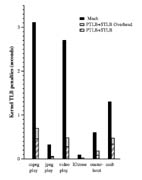 | **Master of Science**, EECS, Massachusetts Institute of Technology (MIT).
[Software Prefetching and Caching for Translation Lookaside Buffers](https://www.cs.cornell.edu/~kb/publications/TLB_Prefetch_STLB.ps.gz)
.
1995. |
| |
| Past projects
------------- | |
|  | I have implemented a [new rendering model](http://www.graphics.cornell.edu/~kb/6.891/render.html)
to capture the fine lighting effects of stalactites and stalagmites. Satyan Coorg worked on creating the [models](http://graphics.lcs.mit.edu/~satyan/6891/proj.html)
of the stalactites and stalagmites. |
|  | I captured the interference patterns formed by thin oil films/slicks on water using Renderman. |
### Kavita Bala's Projects
| | |
| --- | --- |
| **Perception of Complex Scenes** | |
| [](https://www.cs.cornell.edu/~kb/Images/SIG08Agg_tn.jpg)
[](https://www.cs.cornell.edu/~kb/Images/VEPSIG07_tn.jpg) | Rendering and modeling complex scenes is challenging. Understanding and exploiting how humans perceive complex scenes is an important area in graphics. We have worked on multiple projects in this area.
Understanding how we perceive complex geometric aggregates is an open problem. We study the perception of aggregates to derive metrics for scene simplification (SIG '08) ([Project](https://www.cs.cornell.edu/~kb/projects/aggregates/index.htm)
).
Standard image fidelity qualities are limiting and do not necessarily capture what is visually important to a graphics practitioner. **Visual Equivalence** (SIG '07) aims at a new standard of image fidelity that captures what is important in preserving the appearance of objects in a scene ([Project](https://www.cs.cornell.edu/~kb/projects/VEP/index.htm)
). |
| | |
| --- | --- |
| **Scalable high-complexity rendering** | |
| [](https://www.cs.cornell.edu/~kb/Images/CutCollage_Full.jpg) | Rendering high complexity scenes including complex illumination and rendering effects such as motion blur, participating media, global illumination, and depth-of-field, is challenging. **Multidimensional lightcuts** (SIG '06) and **lightcuts** (SIG '05) present a unified, scalable rendering framework to efficiently render complex scenes with such effects. By unifying complex illumination into one framework we achieve high scalability and accurate imagery.
([Multidimensional Lightcuts Project](http://www.cs.cornell.edu/projects/lightcuts/)
, [Subsurface Lightcuts Project](https://www.cs.cornell.edu/~kb/projects/subsurfaceLC/)
, [Lightcuts Project](https://www.cs.cornell.edu/~kb/projects/lightcuts/index.htm)
). |
| | |
| --- | --- |
| **Scalable previewing for cinematic rendering** | |
| 
 | Previewing still images and animations of scenes with high geometric and illumination complexity, and arbitrary shading models, is useful for applications such as cinematic lighting design. Matrix row-column sampling (SIG '07) treats rendering as the evaluation of a very large matrix of pixel-light interactions; this matrix can be efficiently approximated by evaluating a very small set of pixels, and using them to cluster lights globally, for a fast approximation of the image ([Project](https://www.cs.cornell.edu/~kb/projects/rowcolumnSampling/)
).
Tensor clustering extends this idea to render animations including deforming characters. This work extends the row-column sampling approach to tensors, and introduces a clustering metric that minimizes temporal flicker ([Project](https://www.cs.cornell.edu/~kb/projects/tensorAnimation/)
). |
| | |
| --- | --- |
| **Scene Editing and Cinematic Relighting** | |
|  | Lighting designers and modelers need interactive feedback while designing scenes. **Direct-to-indirect transfer** (SIG '06), is an interactive relighting engine that uses GPUs to compute indirect illumination as a designer moves lights in a scene. Efficient precomputation and rendering enable high performance, while supporting arbitrary light shaders and high complexity scenes. ([Project](https://www.cs.cornell.edu/~kb/projects/directToIndirectRelighting/index.htm)
).
When a user changes the scene (but not the lighting), rapidly identifying the parts of the radiance computation that are affected by user manipulation is difficult. **5D Ray Segment Trees** (EGRW '99) efficiently identify affected radiance interpolants and incrementally ray trace images. ([Project).](https://www.cs.cornell.edu/~kb/projects/ips/index.html) |
| | |
| --- | --- |
| **Feature-Based Graphics** | |
| 
 | The human visual system is sensitive to _features_ such as silhouettes and shadows.
**Edge-and-point rendering** (SIG '03) identifies visually important features (edges) and combines them with sparse, expensive shading samples to achieve interactive rendering with global illumination. This approach bridges the gap between expensive, high-quality rendering and fast, interactive display. [Project](http://www.graphics.cornell.edu/pubs/2003/BWG03.html)
, [GPU implementation project (GI '06)](https://www.cs.cornell.edu/~kb/projects/epigpu/)
**Feature-based textures** (EGSR '04) are a resolution-independent representation of textures that capture visually important features. [FBT Project](https://www.cs.cornell.edu/~kb/projects/fbt/index.htm) |
| | |
| --- | --- |
| **Detail Synthesis** | |
| 
 | **Detail synthesis** (I3D '03) adds visually plausible detail to textures created by image-based modeling. This approach identifies areas of poor detail in extracted textures and automatically creates higher resolution detail for uniformly high-quality textures.
[Project](http://www.graphics.cornell.edu/pubs/2003/IBG03.html)
**Constrained Minimization Synthesis** (TVCG '06) casts detail synthesis and image analogies as an energy minimization problem, and uses graph cut techniques to synthesize textures while satisfying constraints.
[Project](http://www.graphics.cornell.edu/pubs/2003/IBG03.html) |
| | |
| --- | --- |
| **Direct Illumination** | |
| 
 | **Adaptive shadow maps** (SIG '01) address the fundamental problem of shadow map aliasing by adaptively changing shadow map resolution based on viewpoint. [ASM Project](http://www.graphics.cornell.edu/pubs/2001/FFBG01.html)
**Local illumination environments** (EGSR '02) capture the part of the environment that influences shading at each part of a scene. This approach enables rendering with complex direct illumination including hundreds of lights. [LIE Project](http://www.graphics.cornell.edu/pubs/2002/FBG02.html)
**Iterative adaptive sampling** (TVCG '06) efficiently renders scenes with many lights by adapting the sampling distribution of the lights in a multipass algorithm. |
| | |
| --- | --- |
| **Radiance Interpolants** | |
| [](https://www.cs.cornell.edu/~kb/Images/InterpolantsCollage_Full.jpg) | Expensive shading is often smooth and can be often interpolated from sparse samples. **Radiance interpolants** (TOG '99) are 4D radiance samples that are quadrilinearly interpolated to rapidly approximate radiance with bounded approximation error. Radiance interpolants capture object-space, ray-space, image-space and temporal coherence in the radiance function.
[Radiance interpolants Project](https://www.cs.cornell.edu/~kb/projects/ips/index.html) |
| | |
| --- | --- |
| **Unpublished research** | |
|  | I have implemented a [new rendering model](http://www.cs.cornell.edu/~kb/6.891/render.html)
to capture the fine lighting effects of stalactites and stalagmites. Satyan Coorg worked on creating the [models](http://graphics.lcs.mit.edu/~satyan/6891/proj.html)
of the stalactites and stalagmites. |
_Complete List of Publications..._
| |
| --- |
| ### Kavita Bala's Short Bio |
| Kavita Bala is the 17th Provost of Cornell University. Bala received her S.M. and Ph.D. from the Massachusetts Institute of Technology (MIT). Before becoming provost, she served as the inaugural Dean of the Cornell Ann S. Bowers College of Computing and Information Science at Cornell University, and before that was the Chair of the Computer Science Department.
Bala leads research in computer vision and computer graphics. She co-founded GrokStyle, a visual recognition AI company, which drew IKEA as a client, and was acquired by Facebook in 2019.
Bala has received multiple research and teaching accolades. Bala is a Fellow of the American Academy of Arts & Sciences (2025), an Association for Computing Machinery (ACM) Fellow (2019) and Fellow of the SIGGRAPH Academy (2020). She is the recipient of the SIGGRAPH Computer Graphics Achievement Award (2020), and the IIT Bombay Distinguished Alumnus Award (2021). Bala has received multiple Cornell teaching awards (2006, 2009, 2015). She serves on the boards of [TTIC](https://www.ttic.edu/)
, [Colorstack (emertius)](https://www.colorstack.org/)
, and the [Sciencenter](https://sciencenter.org/)
. | |
| |
| --- |
| ### Kavita Bala's Full Bio |
| Kavita Bala is the 17th Provost of Cornell University. She received her S.M. and Ph.D. from the Massachusetts Institute of Technology (MIT), and her B.Tech. from the Indian Institute of Technology (IIT, Bombay). She was a post doctoral researcher at the Program of Computer Graphics. She co-founded GrokStyle, a visual recognition AI company, which drew IKEA as a client, and was acquired by Facebook in 2019. Before becoming Provost, Bala was the inaugural Dean of the Cornell Ann S. Bowers College of Computing and Information Science at Cornell University, and before that, she served as the Chair of the Computer Science Department.
Bala specializes in computer vision and computer graphics, leading research in recognition and visual search; material modeling and acquisition, physically-based rendering; and material perception. Bala's work on scalable rendering, Lightcuts, is the core production rendering engine in Autodesk's cloud renderer; and her instance recognition research is the core technology of GrokStyle's visual search engine. Her work on 3D Mandalas was featured at the Rubin Museum of Art, New York.
Bala has received multiple research and teaching accolades. Notably, Bala is a Fellow of the American Academy of Arts & Sciences (2025), an ACM Fellow (2019) and was inducted into the SIGGRAPH Academy in 2020. She is the recipient of the SIGGRAPH Computer Graphics Achievement Award (2020), and the IIT Bombay Distinguished Alumnus Award (2021). She serves on the boards of [TTIC](https://www.ttic.edu/)
, [Colorstack (emertius)](https://www.colorstack.org/)
, and the [Sciencenter](https://sciencenter.org/)
.
Bala serves on SIGGRAPH's Papers Advisory Group (PAG). Bala has served as the Editor-in-Chief of Transactions on Graphics (TOG), on the Papers Advisory Board for SIGGRAPH and SIGGRAPH Asia, and as Associate Editor for TOG (Transactions on Graphics), TVCG (Transactions on Visualization and Computer Graphics) and CGF (Computer Graphics Forum). Bala has co-authored the graduate-level textbook "Advanced Global Illumination" (A K Peters publisher, second edition). She has chaired SIGGRAPH Asia 2011, and co-chaired Pacific Graphics (2010) and the Eurographics Symposium on Rendering (2005).
Bala has received the NSF CAREER award, Cornell's College of Engineering Fiona Li and Donald Li Excellence in Teaching Award (2015), James and Mary Tien Excellence in Teaching Award (2006 and 2009), and the Affinito-Stewart award. | |
---
# Preston Culbertson | Department of Computer Science | Cornell Bowers
[Skip to main content](https://www.cs.cornell.edu/people/preston-culbertson#main-content)
Bowers Menu
[](https://bowers.cornell.edu/)
What are you interested in?
Search

[Back to people directory](https://www.cs.cornell.edu/directory)
Preston Culbertson
==================
Assistant Professor of Computer Science
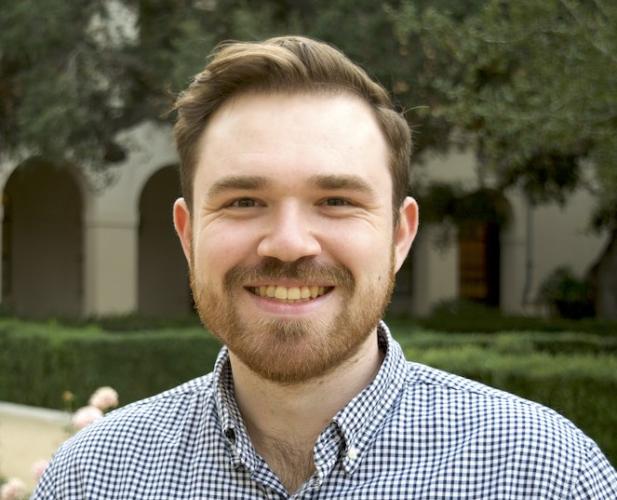
About
-----
Preston Culbertson draws on machine learning, computer vision, and control theory to develop robots that move like humans. Prior to joining Cornell, he was a research scientist at The AI Institute in Cambridge, Mass. He received his Ph.D. in mechanical engineering from Stanford University.
Research Website
[Culbertson's Website](https://pculbertson.github.io/)
Research areas
AI (CS)
Artificial Intelligence
Machine Learning
Robotics
CV
[View CV](https://pculbertson.github.io/assets/pdf/culbertson_cv.pdf)
Contact
pdc79@cornell.edu
Location
Computing and Information Science Building 459
Profile Type
Faculty (Department)
Computer Science
---
# Sanjiban Choudhury | Department of Computer Science | Cornell Bowers
[Skip to main content](https://www.cs.cornell.edu/people/sanjiban-choudhury-0#main-content)
Bowers Menu
[](https://bowers.cornell.edu/)
What are you interested in?
Search

[Back to people directory](https://www.cs.cornell.edu/directory)
Sanjiban Choudhury
==================
Assistant Professor of Computer Science
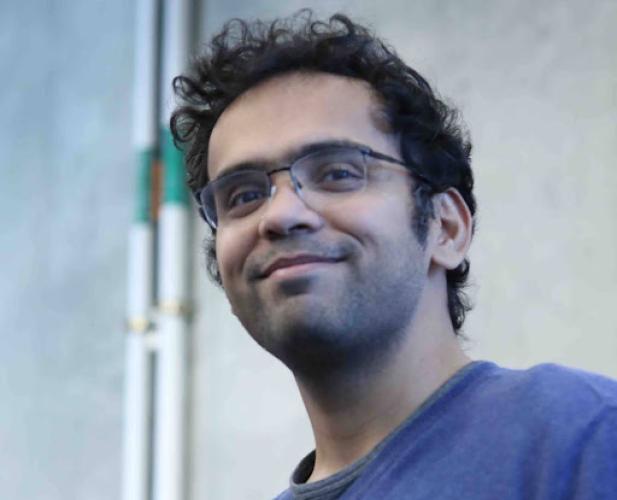
About
-----
Sanjiban Choudhury is an assistant professor of computer science and works on interactive AI agents that self-align through few-shot interactions with humans and their environment. His research focuses on reinforcement learning (RLHF), imitation learning (IRL), and foundation models for planning, robotics, and code generation. He also leads the [PoRTaL](https://portal.cs.cornell.edu/)
group, which builds everyday robots for everyday users and has a mission to make robots accessible, user-friendly, and practical for tasks from cooking to cleaning. Choudhury did his postdoctoral research at the University of Washington and his M.A. and Ph.D. at Carnegie Mellon University. He earned his B.S. and M.S. in electrical engineering from the Indian Institute of Technology, Kharagpur.
Research Website
[Choudhury's Website](https://sanjibanc.github.io/)
CV
[View CV](https://sanjibanc.github.io/resume/)
Contact
sanjibanc at cornell dot edu
Location
Computing and Information Science Building 465
Profile Type
Faculty (Department)
Computer Science
---
# Anil Damle | Department of Computer Science | Cornell Bowers
[Skip to main content](https://www.cs.cornell.edu/people/anil-damle#main-content)
Bowers Menu
[](https://bowers.cornell.edu/)
What are you interested in?
Search

[Back to people directory](https://www.cs.cornell.edu/directory)
Anil Damle
==========
Associate Professor of Computer Science
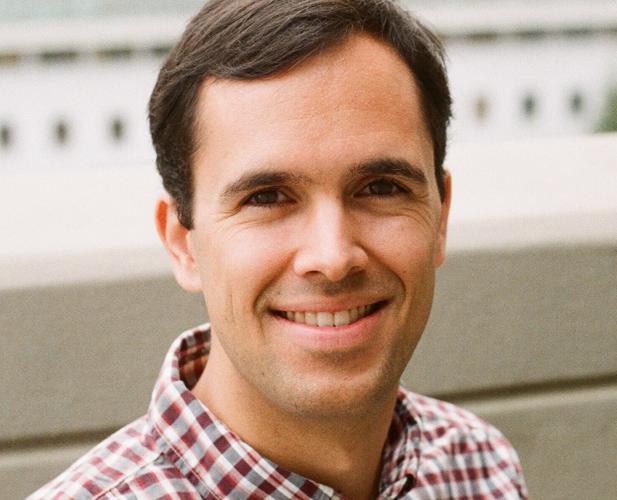
About
-----
Anil Damle is an associate professor of computer science. His research focuses on the development and analysis of robust and efficient algorithms in applied and computational mathematics that exploit structure coming from underlying physical or statistical models. He interfaces with a broad range of application areas and his work is inherently interdisciplinary – with the ultimate goal of developing algorithms that are usable for practitioners. He received his Ph.D. from Stanford University in computational and mathematical engineering, and his M.A. in applied mathematics and B.S. in applied mathematics and computer engineering from the University of Colorado, Boulder.
Research Website
[Damle's Website](https://www.cs.cornell.edu/~damle/)
Research areas
Scientific Computing
CV
[View CV](https://www.cs.cornell.edu/~damle/damlecv_web.pdf)
Contact
damle@cornell.edu
Location
Computing and Information Science Building 485
Profile Type
Faculty (Department)
Computer Science
---
# Alex Conway | Department of Computer Science | Cornell Bowers
[Skip to main content](https://www.cs.cornell.edu/people/alex-conway#main-content)
Bowers Menu
[](https://bowers.cornell.edu/)
What are you interested in?
Search

[Back to people directory](https://www.cs.cornell.edu/directory)
Alex Conway
===========
Assistant Professor of Computer Science
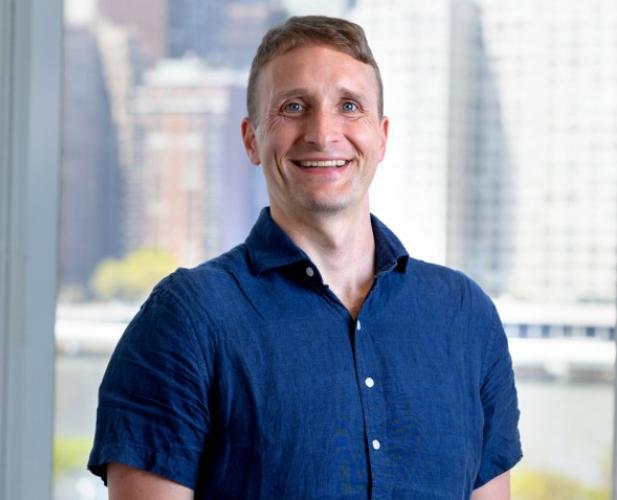
About
-----
Alex Conway is an assistant professor of computer science at Cornell Tech and the Cornell Ann S. Bowers College of Computing and Information Science.
Conway’s research is focused on the theoretical and practical study of data structures. Data structures are both key building blocks for many algorithms, as well as the core components of many real-world systems. As a result, Conway’s work often spans multiple areas of computer science, such as algorithms, operating systems, and databases. For example, his work on [SplinterDB](https://splinterdb.org/)
, a key-value store, includes work published at [ICALP](https://conferences.au.dk/icalp2025)
, [ATC](https://www.usenix.org/system/files/atc20-conway.pdf)
, and [SIGMOD](https://sigmod.org/)
. Beyond academia, SplinterDB is deployed in Broadcom products, such as [vSAN 8.0](https://techdocs.broadcom.com/us/en/vmware-cis/vsan/vsan/8-0/release-notes/vmware-vsan-80-release-notes.html)
.
Conway’s work has been featured in the [SICOMP Special Issue on FOCS](https://www.siam.org/publications/siam-journals/siam-journal-on-computing/)
, Highlights of Algorithms, and has won the Distinguished Paper Award from [ASPLOS](https://www.asplos-conference.org/)
. Conway received a Ph.D. in computer science from Rutgers University in 2020 and a master’s degree from Princeton University in 2011.
Research Website
[Conway's Website](https://ajhconway.com/)
Research areas
Systems + Networking
Theory of Computing
Contact
aconway@cornell.edu
Location
Cornell Tech
Profile Type
Faculty (Department)
Computer Science
Additional Links
[Cornell Tech Profile](https://tech.cornell.edu/people/alex-conway/)
---
# Saikat Dutta | Department of Computer Science | Cornell Bowers
[Skip to main content](https://www.cs.cornell.edu/people/saikat-dutta#main-content)
Bowers Menu
[](https://bowers.cornell.edu/)
What are you interested in?
Search

[Back to people directory](https://www.cs.cornell.edu/directory)
Saikat Dutta
============
Assistant Professor of Computer Science
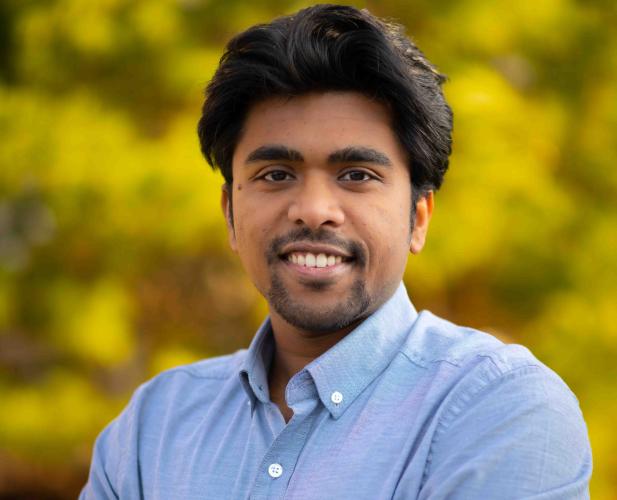
About
-----
Saikat Dutta is an assistant professor in the Department of Computer Science. His research interests are at the intersection of software engineering and machine learning, with a particular focus on developing software testing and debugging techniques to improve the reliability of machine learning-based systems. He is also exploring how to leverage the latest machine learning techniques to solve software engineering problems. Dutta completed his postdoctoral research at the University of Pennsylvania and received his Ph.D. in computer science from the University of Illinois Urbana-Champaign. He received his bachelor's degree in computer science and engineering from Jadavpur University.
Research Website
[Dutta's Website](https://www.cs.cornell.edu/~saikatd/)
Research areas
Programming Languages
Software Engineering
CV
[View CV](https://www.cs.cornell.edu/~saikatd/papers/curriculum-vitae.pdf)
Contact
saikatd@cornell.edu
Location
Gates Hall 438
Profile Type
Faculty (Department)
Computer Science
News + Stories featuring Saikat Dutta
-------------------------------------
[View All Stories](https://www.cs.cornell.edu/news-stories/3341)
[\
\
Dutta and Ellis to advance AI coding with grant from Meta\
\
* Research + Innovation](https://www.cs.cornell.edu/news-stories/dutta-and-ellis-advance-ai-coding-grant-meta)
[View All Stories](https://www.cs.cornell.edu/news-stories/3341)
---
# Michael Clarkson | Department of Computer Science | Cornell Bowers
[Skip to main content](https://www.cs.cornell.edu/people/michael-clarkson#main-content)
Bowers Menu
[](https://bowers.cornell.edu/)
What are you interested in?
Search

[Back to people directory](https://www.cs.cornell.edu/directory)
Michael Clarkson
================
Steven H. Weiss Provost’s Teaching Fellow
Teaching Professor of Computer Science
Director of Undergraduate Studies, Computer Science

About
-----
Michael Clarkson is teaching-track faculty in the Department of Computer Science at Cornell University. In 2022, after a decade of teaching a total of about 6,000 students, he received the university’s highest annual teaching award for teaching-track faculty and was appointed as a Provost’s Teaching Fellow, which is a permanent designation. He is best known for his open-source [textbook](https://cs3110.github.io/textbook/cover.html)
on OCaml programming, which is used at Cornell and elsewhere. His accompanying YouTube channel on functional programming has received more than a million views from around the world. He also teaches courses on object-oriented programming, formal verification, computer security, and data science. Clarkson received his M.S. and Ph.D. in computer science from Cornell.
Research Website
[Clarkson's Website](https://sites.coecis.cornell.edu/clarkson/)
Research areas
Programming Languages
Security
CV
[View CV](https://sites.coecis.cornell.edu/clarkson/files/2025/02/ClarksonCV-02-2025.pdf)
Contact
mrc26@cornell.edu
Location
Gates Hall 461
Profile Type
Faculty (Department)
Leadership
Computer Science
Additional Links
[ugrad-faculty-director@cornell.edu](mailto: ugrad-faculty-director@cornell.edu)
---
# People Directory | Department of Computer Science | Cornell Bowers
[Skip to main content](https://www.cs.cornell.edu/directory?pos_title=&office=&keys=&department=15&location=All&roles%5B147%5D=147&page=0#main-content)
Bowers Menu
[](https://bowers.cornell.edu/)
What are you interested in?
Search

Department Directory
====================
Find people and offices in Computer Science.
* Search
* Filter by
* Clear All
Search by Name, Position title or Office
Department
\- Any -
Computer Science
Information Science
Statistics & Data Science
Location
\- Any -
Ithaca
NYC
Roles
Faculty (Department)
Faculty (Field)
Faculty (Adjunct)
Faculty (Emeritus)
[View Complete Faculty Index](https://www.cs.cornell.edu/directory/index)

[Rachit Agarwal](https://www.cs.cornell.edu/people/rachit-agarwal)
Associate Professor of Computer Science
Contact
[RA625@cornell.edu](mailto:RA625@cornell.edu)
Profile Type
Faculty (Department)
Computer Science
View Details
Rachit Agarwal is an associate professor of computer science. His primary research interests are in systems and networking. He is also interested in theoretical problems arising out of building practical systems. Agarwal’s research has been awarded a Sloan Research Fellowship, an NSF CAREER award, a Kavli Fellowship with the National Academy of Sciences, an IRTF Applied Networking Research Prize, and multiple best paper awards at SIGCOMM and Usenix Security. Agarwal loves teaching. He received the 2025 Tau Beta Pi Professor of the Year Award and the James and Mary Tien Excellence in Teaching, the highest teaching award from Cornell Engineering for sustained excellence and innovation in engineering education.
Location
Ithaca
Office
Gates Hall 411C
Research Areas
Architecture; Systems + Networking; Theory of Computing
Additional References
[Agarwal's website](https://www.cs.cornell.edu/~ragarwal/)

[Lorenzo Alvisi](https://www.cs.cornell.edu/people/lorenzo-alvisi)
Tisch University Professor of Computer Science
Chair of the Department of Computer Science
Contact
[lorenzo@cs.cornell.edu](mailto:lorenzo@cs.cornell.edu)
Profile Type
Faculty (Department)
Leadership
Chair
Computer Science
View Details
Lorenzo Alvisi is the Tisch University Professor in Computer Science and chair of the Department of Computer Science. He is interested in the theory and practice of dependable distributed computing. His group's research aims to understand how to design and build trustworthy distributed systems. Their work investigates both foundational and applied aspects of reliable distributed computing – and at its best – leverages the former to shape the latter. Alvisi received his Laurea Summa cum Laude and Corso di Specializzazione in Physics from the University of Bologna, and his master's degree and Ph.D. in computer science from Cornell University. He is an IEEE Fellow, an ACM Fellow, a Humboldt Research Award winner, and an Alfred P. Sloan Research Fellow.
Location
Ithaca
Office
Gates Hall 402
Research Areas
Systems + Networking
Additional References
[Alvisi's Website](https://www.cs.cornell.edu/lorenzo/)

[Yoav Artzi](https://www.cs.cornell.edu/people/yoav-artzi)
Associate Professor of Computer Science
Contact
[yoav@cs.cornell.edu](mailto:yoav@cs.cornell.edu)
Profile Type
Faculty (Department)
Computer Science
View Details
Yoav Artzi is an associate professor of computer science at Cornell Tech and the Cornell Ann S. Bowers College of Computing and Information Science. His research focuses on developing models and learning methods for natural language understanding and generation in interactive systems.
Location
NYC
Office
Cornell Tech
Research Areas
Machine Learning; Natural Language Processing (CS)
Additional References
[Artzi's Website](http://yoavartzi.com/)

[Hadar Averbuch-Elor](https://www.cs.cornell.edu/people/hadar-averbuch-elor)
Assistant Professor of Computer Science
Contact
[hadarelor@cornell.edu](mailto:hadarelor@cornell.edu)
Profile Type
Faculty (Department)
Computer Science
View Details
Hadar Averbuch-Elor is an assistant professor of computer science at Cornell Tech and the Cornell Ann S. Bowers College of Computing and Information Science. Averbuch-Elor’s research interests lie in the intersection of computer graphics and computer vision, particularly in combining pixels with more structured modalities, such as natural language and 3D geometry.
Location
NYC
Office
Cornell Tech
Research Areas
Graphics; Vision
Additional References
[Website](https://www.elor.sites.tau.ac.il/)

[Kavita Bala](https://www.cs.cornell.edu/people/kavita-bala)
Provost
Professor of Computer Science
Contact
[kavitabala@cornell.edu](mailto:kavitabala@cornell.edu)
Profile Type
Faculty (Department)
Computer Science
View Details
Kavita Bala is the 17th provost of Cornell University and professor of computer science. Previously, she served as the inaugural dean of the Cornell Ann S. Bowers College of Computing and Information Science and chair of the Department of Computer Science. In her research, she specializes in computer vision and computer graphics, leading research in visual recognition and search; and material modeling and perception. She co-founded GrokStyle, a visual recognition AI company that drew IKEA as a client, and was acquired by Facebook in 2019. Bala is a Fellow of the American Academy of Arts & Sciences (2025), an Association for Computing Machinery (ACM) Fellow (2019), Fellow of the SIGGRAPH Academy (2020), and recipient of the Computer Graphics Achievement Award (2020).
Location
Ithaca
Office
300 Day Hall
Research Areas
Artificial Intelligence; Graphics; Machine Learning; Vision
Additional References
[Bala's Website](https://www.cs.cornell.edu/~kb/)
[Download CV](https://www.cs.cornell.edu/sites/default/files/2025-10/kb-cv-admin-research.pdf)

[Tapomayukh Bhattacharjee](https://www.cs.cornell.edu/people/tapomayukh-bhattacharjee)
Assistant Professor of Computer Science
Contact
NAME at cornell dot edu (NAME: tapomayukh)
Profile Type
Faculty (Department)
Computer Science
View Details
Tapomayukh "Tapo" Bhattacharjee is an assistant professor in the Department of Computer Science at Cornell University where he directs the [EmPRISE Lab.](https://emprise.cs.cornell.edu/)
He completed his Ph.D. in robotics from Georgia Institute of Technology and was an NIH Ruth L. Kirschstein NRSA postdoctoral research associate in Computer Science and Engineering at the University of Washington. He wants to enable robots to assist people with mobility limitations with activities of daily living. His work spans the fields of human-robot interaction, haptic perception, and robot manipulation and focuses on addressing the fundamental research question of how to leverage robot-world physical interactions in unstructured human environments to perform relevant activities of daily living.
Location
Ithaca
Office
Computing and Information Science Building 461
Research Areas
AI (CS); Artificial Intelligence; Human Interaction; Machine Learning; Robotics
Additional References
[Bhattacharjee's Website](https://sites.google.com/site/tapomayukh)

[David Bindel](https://www.cs.cornell.edu/people/david-bindel)
Professor of Computer Science
Contact
[bindel@cornell.edu](mailto:bindel@cornell.edu)
Profile Type
Faculty (Department)
Computer Science
View Details
David S. Bindel is a professor of computer science and director of the [Center for Applied Math](https://cam.cornell.edu/)
. He works at the interface of computational science and engineering, and his research mixes mathematical analysis, application modeling, and software design. Active research areas include: optimizing stellarators, verified numerics, kernel methods, parallel surrogate optimization, spectral network analysis, nonlinear eigenvalue bounds, and nonlinear waves in resonant MEMS. Bindel received his Ph.D. in computer science from the University of California, Berkeley and his B.S. in math and computer science from the University of Maryland, College Park. He is a SIAM Fellow and Sloan Fellow.
Location
Ithaca
Office
Computing and Information Science Building 487
Research Areas
Bayesian Analysis; Machine Learning; Scientific Computing; Spatial Analysis or Spatial Statistics; Systems + Networking
Additional References
[Bindel's Website](https://www.cs.cornell.edu/~bindel/)

[Ken Birman](https://www.cs.cornell.edu/people/ken-birman)
N. Rama Rao Professor of Computer Science
Contact
[ken@cs.cornell.edu](mailto:ken@cs.cornell.edu)
Profile Type
Faculty (Department)
Computer Science
View Details
Ken Birman is the N. Rama Rao Professor of Computer Science. His research is on reliable, secure, and scalable distributed systems. Current projects include **Vortex**, a platform for speeding up AI and ML inference or knowledge retrieval tasks by fully leveraging cutting edge hardware accelerators and reimplementing key data paths to reduce or eliminate copying and other delays; **Cascade**, an exceptionally performant storage framework for Vortex; and **Derecho**, a highly optimized library for accelerating communication that leverages RDMA when available. Jointly, these three elements enable dramatic improvements in the cost of ML hosting and sharp reductions in ML latencies. In more entrepreneurial roles, Ken founded a series of companies. One focused on software fault tolerance and created a variety of cloud computing infrastructure solutions. Another architected and implemented the core of the New York Stock Exchange trading floor, the Swiss Exchange, the French Air Traffic Control System communication platform, and created a secure, high-speed data sharing capability for the U.S. Navy AEGIS warship. Ken received his Ph.D. and master's degrees in computer science from the University of California, Berkeley and his B.A. in computer science from Columbia University, is an ACM Fellow and IEEE Fellow, and won the IEEE Tsutomo Kanai award for his innovations in distributed computing.
Location
Ithaca
Office
Gates Hall 435
Research Areas
Machine Learning; Security; Software Engineering; Systems + Networking
Additional References
[Birman's Website](https://www.cs.cornell.edu/ken/)

[Claire Cardie](https://www.cs.cornell.edu/people/claire-cardie)
John C. Ford Professor of Engineering in the Departments of Computer Science and Information Science
Associate Dean for Education
Contact
cardie at cs dot cornell dot edu
Profile Type
Faculty (Department)
Computer Science
Faculty (Field)
Information Science
Associate Dean
Bowers College
View Details
Claire Cardie is the John C. Ford Professor of Engineering in the Departments of Computer Science and Information Science. She was the founding chair of the Department of Information Science and led the development of its academic programs. Cardie works in the area of Natural Language Processing (NLP) on topics ranging from information extraction, text summarization, and noun phrase coreference resolution, to the automatic analysis of opinions, argumentation, and deception in text.
Location
Ithaca
Office
Gates Hall 417
Research Areas
Human Centered Natural Language Processing; Natural Language Processing (IS); Human Interaction; Natural Language Processing (CS)
Additional References
[Cardie's Website](https://www.cs.cornell.edu/home/cardie/)

[Eshan Chattopadhyay](https://www.cs.cornell.edu/people/eshan-chattopadhyay)
Associate Professor of Computer Science
Contact
[eshan@cs.cornell.edu](mailto:eshan@cs.cornell.edu)
Profile Type
Faculty (Department)
Computer Science
View Details
Eshan Chattopadhyay is currently an associate professor (with tenure) in the Department of Computer Science at Cornell University. He joined Cornell in 2018 after completing postdoctoral work at the Institute for Advanced Study in Princeton and the Simons Institute for the Theory of Computing in Berkeley. Prior to this, Chattopadhyay earned his Ph.D. in computer science from the University of Texas at Austin in 2016 and his B.Tech in computer science from the Indian Institute of Technology Kanpur in 2011.
Location
Ithaca
Office
Gates Hall 319
Research Areas
Theory of Computing
Additional References
[Chattopadhyay's Website](https://www.cs.cornell.edu/~eshan/)

[Sanjiban Choudhury](https://www.cs.cornell.edu/people/sanjiban-choudhury-0)
Assistant Professor of Computer Science
Contact
sanjibanc at cornell dot edu
Profile Type
Faculty (Department)
Computer Science
View Details
Sanjiban Choudhury is an assistant professor of computer science and works on interactive AI agents that self-align through few-shot interactions with humans and their environment. His research focuses on reinforcement learning (RLHF), imitation learning (IRL), and foundation models for planning, robotics, and code generation. He also leads the [PoRTaL](https://portal.cs.cornell.edu/)
group, which builds everyday robots for everyday users and has a mission to make robots accessible, user-friendly, and practical for tasks from cooking to cleaning. Choudhury did his postdoctoral research at the University of Washington and his M.A. and Ph.D. at Carnegie Mellon University. He earned his B.S. and M.S. in electrical engineering from the Indian Institute of Technology, Kharagpur.
Location
Ithaca
Office
Computing and Information Science Building 465
Additional References
[Choudhury's Website](https://sanjibanc.github.io/)

[Michael Clarkson](https://www.cs.cornell.edu/people/michael-clarkson)
Steven H. Weiss Provost’s Teaching Fellow
Teaching Professor of Computer Science
Director of Undergraduate Studies, Computer Science
Contact
[mrc26@cornell.edu](mailto:mrc26@cornell.edu)
Profile Type
Faculty (Department)
Leadership
Computer Science
View Details
Michael Clarkson is teaching-track faculty in the Department of Computer Science at Cornell University. In 2022, after a decade of teaching a total of about 6,000 students, he received the university’s highest annual teaching award for teaching-track faculty and was appointed as a Provost’s Teaching Fellow, which is a permanent designation. He is best known for his open-source [textbook](https://cs3110.github.io/textbook/cover.html)
on OCaml programming, which is used at Cornell and elsewhere. His accompanying YouTube channel on functional programming has received more than a million views from around the world. He also teaches courses on object-oriented programming, formal verification, computer security, and data science. Clarkson received his M.S. and Ph.D. in computer science from Cornell.
Location
Ithaca
Office
Gates Hall 461
Research Areas
Programming Languages; Security
Additional References
[Clarkson's Website](https://sites.coecis.cornell.edu/clarkson/)

[Alex Conway](https://www.cs.cornell.edu/people/alex-conway)
Assistant Professor of Computer Science
Contact
[aconway@cornell.edu](mailto:aconway@cornell.edu)
Profile Type
Faculty (Department)
Computer Science
View Details
Alex Conway is an assistant professor of computer science at Cornell Tech and the Cornell Ann S. Bowers College of Computing and Information Science.
Location
NYC
Office
Cornell Tech
Research Areas
Systems + Networking; Theory of Computing
Additional References
[Conway's Website](https://ajhconway.com/)

[Preston Culbertson](https://www.cs.cornell.edu/people/preston-culbertson)
Assistant Professor of Computer Science
Contact
[pdc79@cornell.edu](mailto:pdc79@cornell.edu)
Profile Type
Faculty (Department)
Computer Science
View Details
Preston Culbertson draws on machine learning, computer vision, and control theory to develop robots that move like humans. Prior to joining Cornell, he was a research scientist at The AI Institute in Cambridge, Mass. He received his Ph.D. in mechanical engineering from Stanford University.
Location
Ithaca
Office
Computing and Information Science Building 459
Research Areas
AI (CS); Artificial Intelligence; Machine Learning; Robotics
Additional References
[Culbertson's Website](https://pculbertson.github.io/)

[Anil Damle](https://www.cs.cornell.edu/people/anil-damle)
Associate Professor of Computer Science
Contact
[damle@cornell.edu](mailto:damle@cornell.edu)
Profile Type
Faculty (Department)
Computer Science
View Details
Anil Damle is an associate professor of computer science. His research focuses on the development and analysis of robust and efficient algorithms in applied and computational mathematics that exploit structure coming from underlying physical or statistical models. He interfaces with a broad range of application areas and his work is inherently interdisciplinary – with the ultimate goal of developing algorithms that are usable for practitioners. He received his Ph.D. from Stanford University in computational and mathematical engineering, and his M.A. in applied mathematics and B.S. in applied mathematics and computer engineering from the University of Colorado, Boulder.
Location
Ithaca
Office
Computing and Information Science Building 485
Research Areas
Scientific Computing
Additional References
[Damle's Website](https://www.cs.cornell.edu/~damle/)

[Abe Davis](https://www.cs.cornell.edu/people/abe-davis)
Assistant Professor of Computer Science
Contact
[abedavis@cornell.edu](mailto:abedavis@cornell.edu)
Profile Type
Faculty (Department)
Computer Science
Faculty (Field)
Information Science
View Details
Abe Davis is an assistant professor of computer science who specializes in computer graphics, computer vision, and human-computer interaction (HCI). His group brings these areas together to work on new problems at the intersection of different disciplines. Davis completed postdoctoral research at Stanford University and Cornell Tech, and his M.A. and Ph.D. at the Massachusetts Institute of Technology, studying electrical engineering and computer science. He earned his undergraduate degree in computer science at Stanford.
Location
Ithaca
Office
Gates Hall 351
Research Areas
Graphics; Human Interaction; Vision
Additional References
[Davis' Website](https://abedavis.com/)

[Christopher De Sa](https://www.cs.cornell.edu/people/christopher-de-sa)
Associate Professor of Computer Science
Contact
[cmd353@cornell.edu](mailto:cmd353@cornell.edu)
Profile Type
Faculty (Department)
Computer Science
Faculty (Field)
Statistics & Data Science
View Details
Christopher De Sa is an associate professor of computer science and a member of the [Cornell Machine Learning Group](http://machinelearning.cis.cornell.edu/index.php)
where he leads the [Relax ML Lab](https://relax-ml.cs.cornell.edu/team/)
. His research interests include algorithmic, software, and hardware techniques for high-performance machine learning, with a focus on relaxed-consistency variants of stochastic algorithms such as asynchronous and low-precision stochastic gradient descent (SGD) and Markov chain Monte Carlo. His work builds towards using these techniques to construct data analytics and machine learning frameworks, including for deep learning, that are efficient, parallel, and distributed. De Sa received his B.S., M.A., and Ph.D. from Stanford University in electrical engineering.
Location
Ithaca
Office
Gates Hall 426
Research Areas
Artificial Intelligence; Machine Learning; Systems + Networking
Additional References
[De Sa's Website](https://www.cs.cornell.edu/~cdesa/)

[Sarah Dean](https://www.cs.cornell.edu/people/sarah-dean)
Assistant Professor of Computer Science
Contact
sdean AT cornell DOT edu
Profile Type
Faculty (Department)
Computer Science
View Details
Sarah Dean is an assistant professor of computer science. She studies the interplay between optimization, machine learning, and dynamics in real-world systems. Her research focuses on understanding the fundamentals of data-driven methods for control and decision-making, inspired by applications ranging from robotics to recommendation systems. She completed her postdoctoral research at the University of Washington and earned her M.S. and Ph.D. in electrical engineering and computer science at the University of California, Berkeley. Dean received her B.S.E. in electrical engineering and mathematics from the University of Pennsylvania.
Location
Ithaca
Office
Gates Hall 424
Research Areas
Artificial Intelligence; Machine Learning; Theory of Computing
Additional References
[Dean's Website](https://sdean.website/)

[Saikat Dutta](https://www.cs.cornell.edu/people/saikat-dutta)
Assistant Professor of Computer Science
Contact
[saikatd@cornell.edu](mailto:saikatd@cornell.edu)
Profile Type
Faculty (Department)
Computer Science
View Details
Saikat Dutta is an assistant professor in the Department of Computer Science. His research interests are at the intersection of software engineering and machine learning, with a particular focus on developing software testing and debugging techniques to improve the reliability of machine learning-based systems. He is also exploring how to leverage the latest machine learning techniques to solve software engineering problems. Dutta completed his postdoctoral research at the University of Pennsylvania and received his Ph.D. in computer science from the University of Illinois Urbana-Champaign. He received his bachelor's degree in computer science and engineering from Jadavpur University.
Location
Ithaca
Office
Gates Hall 438
Research Areas
Programming Languages; Software Engineering
Additional References
[Dutta's Website](https://www.cs.cornell.edu/~saikatd/)

[Matthew Eichhorn](https://www.cs.cornell.edu/people/matthew-eichhorn)
Lecturer of Computer Science
Contact
[meichhorn@cornell.edu](mailto:meichhorn@cornell.edu)
Profile Type
Faculty (Department)
Computer Science
View Details
Matthew Eichhorn is a lecturer of computer science who leads large undergraduate courses on discrete mathematics and programming. His research focuses on developing tools to inform decisions with societal implications. This ranges from developing algorithms for online team formation, finding ways to fairly distribute goods in settings such as public health and education where the normative allocation criteria are often at odds, and using statistical tools from causal inference to estimate the effectiveness of an intervention that propagates through a social interference network.
Location
Ithaca
Office
Gates Hall 452
Research Areas
Casual Inference; Theory of Computing
Additional References
[Eichhorn's Website](https://maeichho.github.io/)
[View Complete Faculty Index](https://www.cs.cornell.edu/directory/index)
[Back to Top](https://www.cs.cornell.edu/directory?pos_title=&office=&keys=&department=15&location=All&roles%5B147%5D=147&page=0#backToTop)
---
# Sarah Dean | Department of Computer Science | Cornell Bowers
[Skip to main content](https://www.cs.cornell.edu/people/sarah-dean#main-content)
Bowers Menu
[](https://bowers.cornell.edu/)
What are you interested in?
Search

[Back to people directory](https://www.cs.cornell.edu/directory)
Sarah Dean
==========
Assistant Professor of Computer Science

About
-----
Sarah Dean is an assistant professor of computer science. She studies the interplay between optimization, machine learning, and dynamics in real-world systems. Her research focuses on understanding the fundamentals of data-driven methods for control and decision-making, inspired by applications ranging from robotics to recommendation systems. She completed her postdoctoral research at the University of Washington and earned her M.S. and Ph.D. in electrical engineering and computer science at the University of California, Berkeley. Dean received her B.S.E. in electrical engineering and mathematics from the University of Pennsylvania.
Research Website
[Dean's Website](https://sdean.website/)
Research areas
Artificial Intelligence
Machine Learning
Theory of Computing
CV
[View CV](https://sdean.website/cv.pdf)
Contact
sdean AT cornell DOT edu
Location
Gates Hall 424
Profile Type
Faculty (Department)
Computer Science
News + Stories featuring Sarah Dean
-----------------------------------
[View All Stories](https://www.cs.cornell.edu/news-stories/3814)
[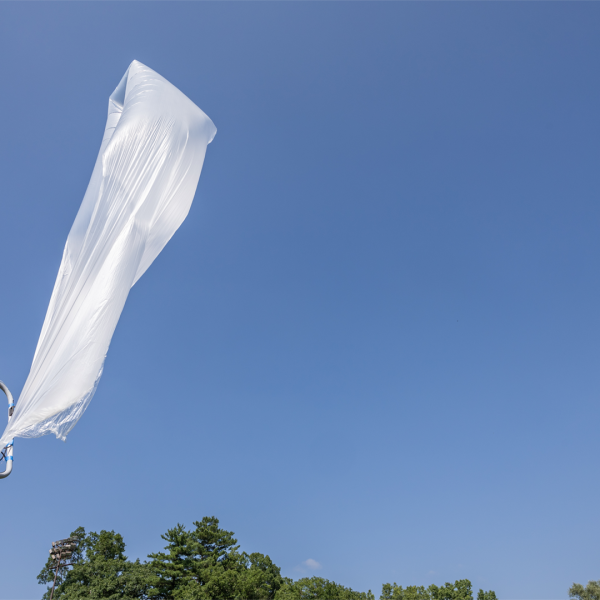\
\
Students learn about AI, engineering through weather balloons\
\
* Research + Innovation\
* Real-World Impact\
* Student Experience](https://www.cs.cornell.edu/news-stories/students-learn-about-ai-engineering-through-weather-balloons)
[View All Stories](https://www.cs.cornell.edu/news-stories/3814)
---
# People Directory | Department of Computer Science | Cornell Bowers
[Skip to main content](https://www.cs.cornell.edu/directory?pos_title=&office=&keys=&department=15&location=All&roles%5B147%5D=147&page=1#main-content)
Bowers Menu
[](https://bowers.cornell.edu/)
What are you interested in?
Search

Department Directory
====================
Find people and offices in Computer Science.
* Search
* Filter by
* Clear All
Search by Name, Position title or Office
Department
\- Any -
Computer Science
Information Science
Statistics & Data Science
Location
\- Any -
Ithaca
NYC
Roles
Faculty (Department)
Faculty (Field)
Faculty (Adjunct)
Faculty (Emeritus)
[View Complete Faculty Index](https://www.cs.cornell.edu/directory/index)

[Kevin Ellis](https://www.cs.cornell.edu/people/kevin-ellis)
Assistant Professor of Computer Science
Contact
[kellis@cornell.edu](mailto:kellis@cornell.edu)
Profile Type
Faculty (Department)
Computer Science
View Details
Kevin Ellis is an assistant professor of computer science. He works on program synthesis and neurosymbolic AI. Ellis earned his Ph.D. in cognitive science and his B.S. in physics with a concentration in linguistics from the Massachusetts Institute of Technology.
Location
Ithaca
Office
Computing and Information Science Building 486
Research Areas
Artificial Intelligence; Machine Learning; Programming Languages
Additional References
[Ellis' Website](https://www.cs.cornell.edu/~ellisk/)

[Deborah Estrin](https://www.cs.cornell.edu/people/deborah-estrin)
Associate Dean for Impact
Robert V. Tishman ’37 Professor of Computer Science
Contact
[destrin@cornell.edu](mailto:destrin@cornell.edu)
Profile Type
Faculty (Department)
Computer Science
Faculty (Field)
Information Science
View Details
Deborah Estrin is the Robert V. Tishman ’37 professor of computer science at Cornell Tech and the Cornell Ann S. Bowers College of Computing and Information Science. At Cornell Tech, she serves as the Associate Dean for Impact. She is also an affiliate faculty member at Weill Cornell Medicine.
Location
NYC
Office
Cornell Tech
Research Areas
Ubiquitous Computing; Systems + Networking
Additional References
[Estrin's Website](https://destrin.tech.cornell.edu/)

[K.-Y. Daisy Fan](https://www.cs.cornell.edu/people/k-y-daisy-fan)
Teaching Professor of Computer Science
Contact
[daisy.fan@cornell.edu](mailto:daisy.fan@cornell.edu)
Profile Type
Faculty (Department)
Computer Science
View Details
Daisy Fan is a teaching professor of computer science who teaches in the areas of programming, scientific computing, and optimization. Fan's interests include collaborative learning methodologies and technologies in computer science and engineering education, application of systems-analysis techniques for water resources and environmental problems, and development of numerically efficient optimization methods for engineering applications. Problems she has investigated include optimal control of multiple-reservoir operation using stochastic dynamic programming and river basin water quality management.
Location
Ithaca
Office
Gates Hall 459
Additional References
[Fan's Website](https://www.cs.cornell.edu/~dfan/)

[Kuan Fang](https://www.cs.cornell.edu/people/kuan-fang)
Assistant Professor of Computer Science
Contact
kuanfang \[at\] cornell \[dot\] edu
Profile Type
Faculty (Department)
Computer Science
View Details
Kuan Fang is an assistant professor of computer science who conducts research at the intersection of robotics, machine learning, and computer vision. His research aims to enable robots to perform diverse and complex tasks in unstructured environments using deep learning. To achieve this, his lab develops scalable algorithms and systems for robot perception and control with the following focuses: acquiring versatile and generalizable skills for visuomotor control by learning from massive and diverse data; continuously improving the capabilities of robots through autonomous data collection and generation; and boosting generalization to novel tasks, environments, and robots by integrating prior knowledge from broad sources. Fang did his postdoctoral research at the University of California, Berkeley and received his Ph.D. and M.S. from Stanford University. His bachelor's degree is from Tsinghua University. Fang also spent time at the RAI Institute, Google Brain, Google X Robotics, and Microsoft Research Asia.
Location
Ithaca
Office
Computing and Information Science Building 463
Research Areas
Artificial Intelligence; Machine Learning; Robotics; Vision
Additional References
[Fang's Website](https://kuanfang.github.io/)

[Nate Foster](https://www.cs.cornell.edu/people/nate-foster)
Professor of Computer Science
Contact
[jnfoster@cs.cornell.edu](mailto:jnfoster@cs.cornell.edu)
Profile Type
Faculty (Department)
Computer Science
Faculty (Field)
Information Science
View Details
Nate Foster is a professor of computer science at Cornell University and a [visiting researcher at Jane Street](https://janestreet.com/)
. He currently serves as [vice chair of DARPA's Information Science and Technology (ISAT) study group](https://www.darpa.mil/)
, and as [chair of the P4 Language Governing Board](https://p4.org/)
.
Location
Ithaca
Office
Gates Hall 432
Research Areas
Critical and humanistic approaches to computing; History of Technology; Philosophy of Technology; Science + Technology Studies; Database Systems; Ethics, Law and Policy; Privacy + Surveillance; Tech and the law; Programming Languages; Security; Systems + Networking
Additional References
[Foster's Website](https://www.cs.cornell.edu/~jnfoster/)

[Sainyam Galhotra](https://www.cs.cornell.edu/people/sainyam-galhotra)
Assistant Professor of Computer Science
Contact
[sg@cs.cornell.edu](mailto:sg@cs.cornell.edu)
Profile Type
Faculty (Department)
Computer Science
Faculty (Field)
Statistics & Data Science
View Details
Sainyam Galhotra is an assistant professor in computer science. Before that, he was a Computing Innovation Fellow pursuing postdoctoral research at the University of Chicago. The goal of his research is to develop data science tools for effective and responsible analytics.
Location
Ithaca
Office
Gates Hall 445
Research Areas
Artificial Intelligence; Casual Inference; Database Systems; Machine Learning; Software Engineering
Additional References
[Galhotra's Website](https://sainyamgalhotra.com/)

[Carla Gomes](https://www.cs.cornell.edu/people/carla-gomes)
Ronald C. and Antonia V. Nielsen Professor of Computing and Information Science
Contact
gomes at cs.cornell.edu
Profile Type
Faculty (Department)
Computer Science
Faculty (Field)
Information Science
View Details
Carla Gomes is the Ronald C. and Antonia V. Nielsen Professor of Computing and Information Science, director of the Institute for Computational Sustainability at Cornell University, and co-director of the Cornell University AI for Science Institute. Gomes received a Ph.D. in computer science in artificial intelligence from the University of Edinburgh. Her research area is AI with a focus on large-scale constraint reasoning, optimization, and machine learning.
Location
Ithaca
Office
Computing and Information Science Building 483
Research Areas
AI (CS); Artificial Intelligence; Computational Biology; Computing and the Environment; Scientific Computing
Additional References
[Gomes' Website](http://www.cs.cornell.edu/gomes)

[Tanya Goyal](https://www.cs.cornell.edu/people/tanya-goyal)
Assistant Professor of Computer Science
Contact
[tanyagoyal@cornell.edu](mailto:tanyagoyal@cornell.edu)
Profile Type
Faculty (Department)
Computer Science
View Details
Tanya Goyal is an assistant professor in the Department of Computer Science. Previously, she was a postdoctoral scholar at [Princeton Language and Intelligence Center](https://pli.princeton.edu/)
(2023-2024). Her research interests are primarily in the field of natural language processing. Problems that she is currently excited about include: reliable and sustainable evaluation frameworks for large language models (LLMs); factuality assessment and improvement of LLMs; and understanding LLM behaviors as a function of training data and/or alignment strategies.
Location
Ithaca
Office
Gates Hall 441A
Research Areas
Natural Language Processing (CS)
Additional References
[Goyal's Website](https://tagoyal.github.io/)

[Giulia Guidi](https://www.cs.cornell.edu/people/giulia-guidi)
Assistant Professor of Computer Science
Contact
[gguidi@cornell.edu](mailto:gguidi@cornell.edu)
Profile Type
Faculty (Department)
Computer Science
View Details
Giulia Guidi is an assistant professor in the Department of Computer Science at Cornell University. She received her Ph.D. in computer science from UC Berkeley. Guidi works in the field of high-performance computing (HPC) for large-scale computational sciences and leads the Cornell HPC group. She is interested in developing algorithms and software infrastructures on parallel machines to speed up data processing without sacrificing programming productivity, and to make high-performance computing more accessible. She is also a big fan of sparse linear algebra and believed in sparse linear algebra as a computational abstraction for tackling large-scale computational challenges.
Location
Ithaca
Office
Gates Hall 437
Research Areas
Scientific Computing; Systems + Networking
Additional References
[Guidi's website](https://giuliaguidi.github.io/)

[Joseph Halpern](https://www.cs.cornell.edu/people/joseph-halpern)
Joseph C. Ford Chair of Engineering
Professor of Computer Science
Contact
halpern at cs dot cornell dot edu
Profile Type
Faculty (Department)
Computer Science
Faculty (Field)
Information Science
View Details
Joe Halpern is a professor of computer science. His research focuses on the interface between game and decision theory and computer science, on reasoning about knowledge and uncertainty, and on causality. He has also done work on and continues to think actively about security, (fault tolerant) distributed computing, and modal logic. His work lies at the boundary of a number of fields. He said, "I once gave a talk in the economics department at Princeton where I described myself as someone with a Ph.D. in mathematics, who calls himself a computer scientist, and is giving a talk to economists about a subject mainly studied by philosophers. That's probably the best one-sentence description I can give."
Location
Ithaca
Office
Gates Hall 414
Research Areas
Artificial Intelligence; Security; Theory of Computing
Additional References
[Halpern's Website](https://www.cs.cornell.edu/home/halpern/)

[Bharath Hariharan](https://www.cs.cornell.edu/people/bharath-hariharan)
Associate Professor of Computer Science
Contact
bharathh-AT-cs-DOT-cornell-DOT-edu
Profile Type
Faculty (Department)
Computer Science
View Details
Bharath Hariharan is an associate professor in computer science. He works on computer vision and machine learning, specifically, on important problems that defy the "Big Data" label. He enjoys problems that require marrying advances in machine learning with insights from computer vision, geometry, and domain-specific knowledge. A few of the research problems his group works on include recognition for satellite images and earth science and 4D reconstruction and recognition. An exhaustive list of publications is available on [Google scholar](https://scholar.google.com/citations?user=TpglobcAAAAJ&hl=en)
. His work has been recognized with an NSF CAREER award and a PAMI Young Researcher Award.
Location
Ithaca
Office
Gates Hall 311
Research Areas
Artificial Intelligence; Machine Learning; Vision
Additional References
[Hariharan's Website](https://www.cs.cornell.edu/~bharathh/)

[Haym Hirsh](https://www.cs.cornell.edu/people/haym-hirsh)
Professor of Computer Science
Director of MEng Program
Profile Type
Faculty (Department)
Leadership
Director
Computer Science
Faculty (Field)
Information Science
View Details
Haym Hirsh is a professor in the Department of Computer Science at Cornell University. His research has focused on foundations and applications of machine learning, data mining, information retrieval, and artificial intelligence, especially targeting questions that integrally involve both people and computing. Most recently these interests have turned to crowdsourcing, human computation, and collective intelligence. Haym received his B.S. from the Mathematics and Computer Science Departments at the University of California, Los Angeles, and his M.S. and Ph.D. from the Computer Science Department at Stanford University. Prior to moving to Cornell in 2013 to serve as dean of the Faculty of Computing and Information Science, Hirsh spent 24 years on the computer science faculty at Rutgers University, and has had visiting positions at AT&T Labs, Bar-Ilan University, Carnegie Mellon University, MIT, and the University of Zurich. From 2006-2010 he served as director of the Division of Information and Intelligent Systems at the National Science Foundation. In 2022 he was elected a Fellow of the American Association for the Advancement of Science.
Location
Ithaca
Office
Computing and Information Science Building 484
Research Areas
Data Science; Human-AI interaction; Artificial Intelligence; Machine Learning
Additional References
[Hirsh's Website](https://www.cs.cornell.edu/~hirsh/)

[Justin Hsu](https://www.cs.cornell.edu/people/justin-hsu)
Associate Professor of Computer Science
Contact
[justin@cs.cornell.edu](mailto:justin@cs.cornell.edu)
Profile Type
Faculty (Department)
Computer Science
View Details
Justin Hsu is an associate professor of computer science. Previously, he was an assistant professor in the Department of Computer Sciences at the University of Wisconsin–Madison, and a postdoc in the Department of Computer Science at Cornell University and in the Programming Principles, Logic, and Verification Group at the University College London. He obtained his Ph.D. from the Department of Computer Science at the University of Pennsylvania.
Location
Ithaca
Office
Gates Hall 446
Research Areas
Programming Languages; Security; Theory of Computing
Additional References
[Hsu's Website](https://www.justinhsu.net/)

[Thorsten Joachims](https://www.cs.cornell.edu/people/thorsten-joachims)
Jacob Gould Schurman Professor of Computer Science and Information Science
Director, Cornell AI Initiative
Contact
[tj@cs.cornell.edu](mailto:tj@cs.cornell.edu)
Profile Type
Faculty (Department)
Computer Science
Faculty (Field)
Statistics & Data Science
Faculty (Department)
Information Science
View Details
Thorsten Joachims is the Jacob Gould Schurman Professor of computer science and information science at Cornell University. He has also served as the interim dean for Cornell Bowers and as associate dean for research and as chair of the Department of Information Science. He is the director of the [Cornell AI Initiative](https://ai.cornell.edu/)
and Radical Collaboration. He has served as program chair of the ICML, KDD, and RecSys conferences, and he is a member of the IMLS Board and the SIGKDD Executive Committee. Thorsten Joachims joined Cornell in 2001 after finishing his Ph. D. as a student of Prof. Morik at the University of Dortmund, from where he also received a Diplom in computer science in 1997.
Location
Ithaca
Office
Computing and Information Science Building
Research Areas
AI (CS); AI (IS); Human-AI interaction; Artificial Intelligence; Human Interaction; Machine Learning
Additional References
[Joachims' Website](https://www.cs.cornell.edu/people/tj/)

[Ari Juels](https://www.cs.cornell.edu/people/ari-juels)
Weill Family Foundation and Joan and Sanford I. Weill Professor of Computer Science
Contact
aj495 \[at\] cornell.edu
Profile Type
Faculty (Department)
Computer Science
View Details
Ari Juels is the Weill Family Foundation and Joan and Sanford I. Weill Professor of computer science at Cornell Tech, the Cornell Ann S. Bowers College of Computing and Information Science, and the Jacobs Technion-Cornell Institute. He is co-director of the Initiative for CryptoCurrencies and Contracts (IC3). He is also the chief scientist at Chainlink Labs.
Location
NYC
Office
Cornell Tech
Research Areas
Security; Systems + Networking
Additional References
[Juel's website](http://www.arijuels.com/)

[Michael Kim](https://www.cs.cornell.edu/people/michael-kim)
Assistant Professor of Computer Science
Contact
[mpk@cs.cornell.edu](mailto:mpk@cs.cornell.edu)
Profile Type
Faculty (Department)
Computer Science
View Details
Michael Kim is an assistant professor of computer science. His research investigates foundational questions about responsible machine learning. Much of this work aims to identify problematic behaviors that emerge in machine-learned models and to develop algorithmic tools that provably mitigate such behaviors. More broadly, he is interested in how the theory of computation can provide insight into emerging societal and scientific challenges.
Location
Ithaca
Office
Gates Hall 320
Research Areas
Machine Learning; Theory of Computing
Additional References
[Kim's Website](https://www.cs.cornell.edu/~mpkim/)

[Jon Kleinberg](https://www.cs.cornell.edu/people/jon-kleinberg)
Tisch University Professor of Computer Science and Information Science
Contact
[kleinber@cs.cornell.edu](mailto:kleinber@cs.cornell.edu)
Profile Type
Faculty (Department)
Computer Science
Faculty (Department)
Information Science
View Details
Jon Kleinberg is a professor in both computer science and information science. His research focuses on issues at the interface of networks and information, with an emphasis on the social and information networks that underpin the Web and other online media. His work has been supported by an NSF Career Award, an ONR Young Investigator Award, a MacArthur Foundation Fellowship, a Packard Foundation Fellowship, a Sloan Foundation Fellowship, and grants from Google, Yahoo!, and the NSF. He is a member of the National Academy of Sciences, the National Academy of Engineering, the American Academy of Arts and Sciences, and the American Philosophical Society.
Location
Ithaca
Office
Gates Hall 318
Research Areas
Data Science; Artificial Intelligence; Network Science; Computational Social Sciences; Ethics, Law and Policy; Human-Computer Interaction and Design; Theory of Computing
Additional References
[Kleinberg's Website](https://www.cs.cornell.edu/home/kleinber/)

[Robert Kleinberg](https://www.cs.cornell.edu/people/robert-kleinberg)
Professor of Computer Science
Contact
[rdk@cs.cornell.edu](mailto:rdk@cs.cornell.edu)
Profile Type
Faculty (Department)
Computer Science
Faculty (Field)
Information Science
View Details
Robert Kleinberg is an associate professor of computer science at Cornell University and a member of the field of information science. His research studies the design and analysis of algorithms and their applications to electronic commerce, networking, information retrieval, and other areas. Prior to receiving his doctorate from the Massachusetts Institute of Technology in 2005, Kleinberg spent three years at Akamai Technologies, where he assisted in designing the world's largest Internet Content Delivery Network. He is the recipient of a Microsoft Research New Faculty Fellowship, an Alfred P. Sloan Foundation Fellowship, and an NSF CAREER Award.
Location
Ithaca
Office
Gates Hall 317
Research Areas
Theory of Computing
Additional References
[Kleinberg's Website](https://www.cs.cornell.edu/~rdk/)

[Volodymyr Kuleshov](https://www.cs.cornell.edu/people/volodymyr-kuleshov)
Joan Eliasoph, M.D. Assistant Professor of Computer Science
Contact
[vk379@cornell.edu](mailto:vk379@cornell.edu)
Profile Type
Faculty (Department)
Computer Science
View Details
Volodymyr Kuleshov is the Joan Eliasoph, M.D. Assistant Professor of Computer Science at Cornell Tech, the Jacobs Technion-Cornell Institute, and the Cornell Ann S. Bowers College of Computing and Information Science. He obtained his Ph.D. in computer science from Stanford University, where he received the Arthur Samuel Best Thesis Award.
Office
Cornell Tech
Research Areas
Computational Biology; Scientific Computing
[Lillian Lee](https://www.cs.cornell.edu/people/lillian-lee)
Charles Roy Davis Professor of Computer Science
Contact
llee \[at\] cs.cornell.edu
Profile Type
Faculty (Department)
Computer Science
View Details
Lillian Lee is the Charles Roy Davis Professor in the Department of Computer Science.
Location
Ithaca
Office
Gates Hall 419
Research Areas
Artificial Intelligence; Human Interaction; Machine Learning; Natural Language Processing (CS)
Additional References
[Lee's Website](https://www.cs.cornell.edu/home/llee/)
[View Complete Faculty Index](https://www.cs.cornell.edu/directory/index)
[Back to Top](https://www.cs.cornell.edu/directory?pos_title=&office=&keys=&department=15&location=All&roles%5B147%5D=147&page=1#backToTop)
---
# Ken Birman | Department of Computer Science | Cornell Bowers
[Skip to main content](https://www.cs.cornell.edu/people/ken-birman#main-content)
Bowers Menu
[](https://bowers.cornell.edu/)
What are you interested in?
Search

[Back to people directory](https://www.cs.cornell.edu/directory)
Ken Birman
==========
N. Rama Rao Professor of Computer Science
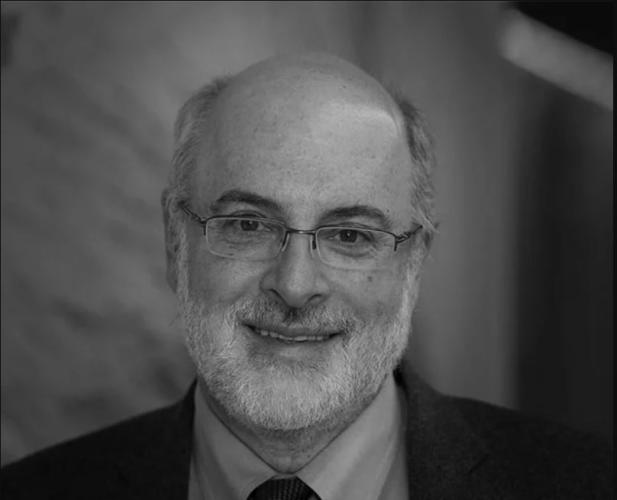
About
-----
Ken Birman is the N. Rama Rao Professor of Computer Science. His research is on reliable, secure, and scalable distributed systems. Current projects include **Vortex**, a platform for speeding up AI and ML inference or knowledge retrieval tasks by fully leveraging cutting edge hardware accelerators and reimplementing key data paths to reduce or eliminate copying and other delays; **Cascade**, an exceptionally performant storage framework for Vortex; and **Derecho**, a highly optimized library for accelerating communication that leverages RDMA when available. Jointly, these three elements enable dramatic improvements in the cost of ML hosting and sharp reductions in ML latencies. In more entrepreneurial roles, Ken founded a series of companies. One focused on software fault tolerance and created a variety of cloud computing infrastructure solutions. Another architected and implemented the core of the New York Stock Exchange trading floor, the Swiss Exchange, the French Air Traffic Control System communication platform, and created a secure, high-speed data sharing capability for the U.S. Navy AEGIS warship. Ken received his Ph.D. and master's degrees in computer science from the University of California, Berkeley and his B.A. in computer science from Columbia University, is an ACM Fellow and IEEE Fellow, and won the IEEE Tsutomo Kanai award for his innovations in distributed computing.
Research Website
[Birman's Website](https://www.cs.cornell.edu/ken/)
Research areas
Machine Learning
Security
Software Engineering
Systems + Networking
CV
[View CV](https://www.cs.cornell.edu/ken/CV.pdf)
Contact
[(607) 227-0894](tel:+1-607-227-0894)
ken@cs.cornell.edu
Location
Gates Hall 435
Profile Type
Faculty (Department)
Computer Science
Awards
------
[View all Awards Received](https://www.cs.cornell.edu/awards/4700)
IEEE Fellow
Institute of Electrical and Electronics Engineers
Ken Birman
* Research
* 2014
### About This Award
[View Ken Birman](https://www.cs.cornell.edu/people/ken-birman)
ACM Fellow
Association for Computing Machinery
Ken Birman
* Research
* 1999
### About This Award
[View Ken Birman](https://www.cs.cornell.edu/people/ken-birman)
[View all Awards Received](https://www.cs.cornell.edu/awards/4700)
News + Stories featuring Ken Birman
-----------------------------------
[View All Stories](https://www.cs.cornell.edu/news-stories/4700)
[Reuters\
\
Birman speaks to Reuters about the AWS cloud service outage\
\
* Real-World Impact](https://www.reuters.com/business/retail-consumer/amazons-cloud-unit-reports-outage-several-websites-down-2025-10-20/)
[View All Stories](https://www.cs.cornell.edu/news-stories/4700)
---
# Claire Cardie | Department of Computer Science | Cornell Bowers
[Skip to main content](https://www.cs.cornell.edu/people/claire-cardie#main-content)
Bowers Menu
[](https://bowers.cornell.edu/)
What are you interested in?
Search

[Back to people directory](https://www.cs.cornell.edu/directory)
Claire Cardie
=============
John C. Ford Professor of Engineering in the Departments of Computer Science and Information Science
Associate Dean for Education
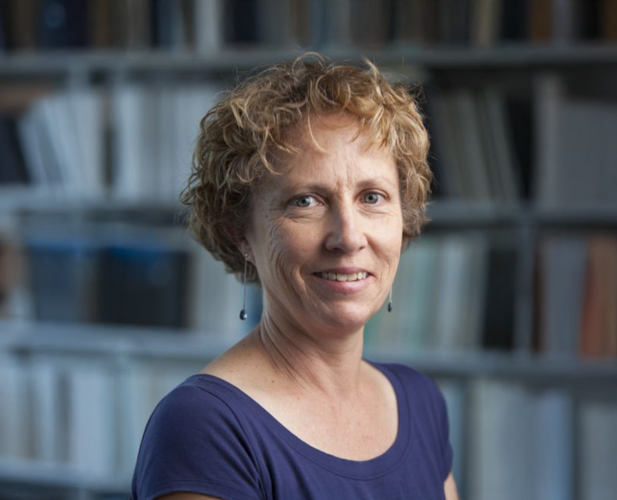
About
-----
Claire Cardie is the John C. Ford Professor of Engineering in the Departments of Computer Science and Information Science. She was the founding chair of the Department of Information Science and led the development of its academic programs. Cardie works in the area of Natural Language Processing (NLP) on topics ranging from information extraction, text summarization, and noun phrase coreference resolution, to the automatic analysis of opinions, argumentation, and deception in text.
Cardie received her Ph.D. and master's degree in computer science from the University of Massachusetts, Amherst and her undergraduate degree in computer science from Yale University. Cardie was named a Fellow of the Association for Computational Linguistics, a Fellow of the Association for Computing Machinery (ACM), and a Fellow of the American Association for the Advancement of Science (AAAS). Currently, she is serving as the inaugural Associate Dean for Education in the Cornell Ann S. Bowers College of Computing and Information Science.
Research Website
[Cardie's Website](https://www.cs.cornell.edu/home/cardie/)
Research areas
Human Centered Natural Language Processing
Natural Language Processing (IS)
Human Interaction
Natural Language Processing (CS)
CV
[View CV](https://www.cs.cornell.edu/home/cardie/ctc-cv.pdf)
Contact
[(607) 255-9206](tel:+1-607-255-9206)
cardie at cs dot cornell dot edu
Location
Gates Hall 417
Profile Type
Faculty (Department)
Computer Science
Faculty (Field)
Information Science
Associate Dean
Bowers College
Additional Links
[Google Scholar Page](https://scholar.google.com/citations?hl=en&user=ex9BQiIAAAAJ&view_op=list_works)
Awards
------
[View all Awards Received](https://www.cs.cornell.edu/awards/4702)
NSF Faculty Early Career Development Award (CAREER)
National Science Foundation
Claire Cardie
* Education
* 1996
### About This Award
CAREER : The Faculty Early Career Development (CAREER) Program is a Foundation-wide activity that offers the National Science Foundation's most prestigious awards in support of early-career faculty...
[View Claire Cardie](https://www.cs.cornell.edu/people/claire-cardie)
ACM Fellow
Association for Computing Machinery
Claire Cardie
* Research
* 2019
### About This Award
An ACM Fellow is a member of the Association for Computing Machinery (ACM) who has achieved outstanding accomplishments in the fields of computing and information technology or made exceptional...
[View Claire Cardie](https://www.cs.cornell.edu/home/cardie/)
[View all Awards Received](https://www.cs.cornell.edu/awards/4702)
News + Stories featuring Claire Cardie
--------------------------------------
[View All Stories](https://www.cs.cornell.edu/news-stories/4702)
[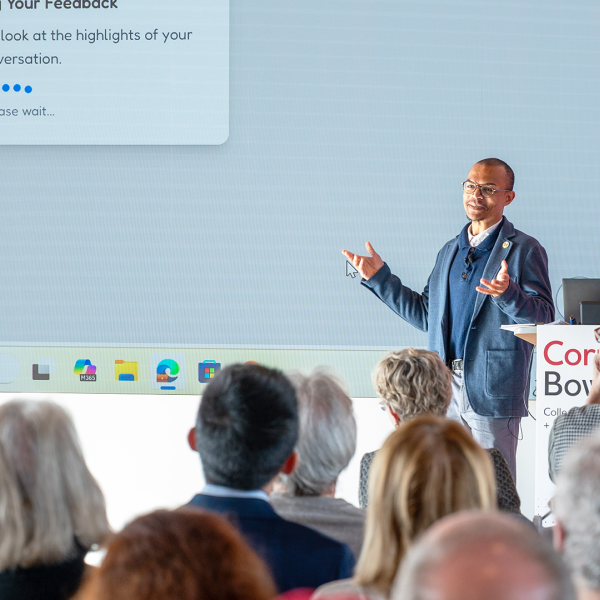\
\
Panel presents promise, peril of AI use in education at Cornell\
\
* Research + Innovation\
* Around the College](https://www.cs.cornell.edu/news-stories/panel-presents-promise-peril-ai-use-education-cornell)
[\
\
Cornell Bowers awards honor exemplary faculty and staff\
\
* Faculty Excellence\
* Around the College](https://www.cs.cornell.edu/news-stories/cornell-bowers-awards-honor-exemplary-faculty-and-staff)
[\
\
Two computer science alumnae among TIME100 AI list\
\
* Alumni News\
* Research + Innovation](https://www.cs.cornell.edu/news-stories/two-computer-science-alumnae-among-time100-ai-list)
[View All Stories](https://www.cs.cornell.edu/news-stories/4702)
---
# Christopher De Sa | Department of Computer Science | Cornell Bowers
[Skip to main content](https://www.cs.cornell.edu/people/christopher-de-sa#main-content)
Bowers Menu
[](https://bowers.cornell.edu/)
What are you interested in?
Search

[Back to people directory](https://www.cs.cornell.edu/directory)
Christopher De Sa
=================
Associate Professor of Computer Science
About
-----
Christopher De Sa is an associate professor of computer science and a member of the [Cornell Machine Learning Group](http://machinelearning.cis.cornell.edu/index.php)
where he leads the [Relax ML Lab](https://relax-ml.cs.cornell.edu/team/)
. His research interests include algorithmic, software, and hardware techniques for high-performance machine learning, with a focus on relaxed-consistency variants of stochastic algorithms such as asynchronous and low-precision stochastic gradient descent (SGD) and Markov chain Monte Carlo. His work builds towards using these techniques to construct data analytics and machine learning frameworks, including for deep learning, that are efficient, parallel, and distributed. De Sa received his B.S., M.A., and Ph.D. from Stanford University in electrical engineering.
Research Website
[De Sa's Website](https://www.cs.cornell.edu/~cdesa/)
Research areas
Artificial Intelligence
Machine Learning
Systems + Networking
CV
[View CV](https://www.cs.cornell.edu/~cdesa/papers/cdesa-cv.pdf)
Contact
cmd353@cornell.edu
Location
Gates Hall 426
Profile Type
Faculty (Department)
Computer Science
Faculty (Field)
Statistics & Data Science
Awards
------
[View all Awards Received](https://www.cs.cornell.edu/awards/4485)
NSF Faculty Early Career Development Award (CAREER)
National Science Foundation
Christopher De Sa
* Education
* 2021
### About This Award
[View Christopher De Sa](https://www.cs.cornell.edu/people/christopher-de-sa)
[View all Awards Received](https://www.cs.cornell.edu/awards/4485)
---
# Ph.D. in Computer Science | Department of Computer Science | Cornell Bowers
[Skip to main content](https://www.cs.cornell.edu/phd-computer-science#main-content)
Bowers Menu
[](https://bowers.cornell.edu/)
What are you interested in?
Search


Doctor of Philosophy
Computer Science
================
In collaboration with the Graduate School
[Back to programs](https://bowers.cornell.edu/programs)
Shape your expertise while working with leaders in computing innovation.
------------------------------------------------------------------------
Join a top ranked Ph.D. program where pioneering research spans the full spectrum of computer science, with opportunities to work alongside renowned faculty in both Ithaca, N.Y. and New York City campuses. Our program integrates cutting-edge research with interdisciplinary collaboration, connecting doctoral students with leading experts in computer science, engineering, and mathematics.
Our research excellence spans areas such as: artificial intelligence, computer graphics, systems, security, machine learning, and digital libraries, while maintaining our depth in traditional areas such as theory, programming languages, and scientific computing.
[Explore](https://www.cs.cornell.edu/phd-computer-science#)
See and compare degrees.
------------------------
| | | | |
| --- | --- | --- | --- |See and compare degrees.
| Column Header: | MS/Ph.D. | MS | M.Eng. |
| --- | --- | --- | --- |
| Degree Awarded: | Master of Science (after A Exam); Doctor of Philosophy (after B Exam) | Master of Science | Master of Engineering |
| Degree Differences: | Research degree; multiple years (typically 5-7 years total) | Two-year research degree. Small program with strong preference for Cornell undergraduates. | Principle one year master’s professional degree. |
| Financial Support: | Emphasizes original research and requires the completion of a dissertation; aiming to contribute new knowledge to the field. | Specialized area coursework with the completion of a thesis; aiming to provide advanced knowledge and skills in a specific area of computer science. | Primarily focused on coursework with a capstone project that advances students' placement in industry jobs. |
| Career Path: | Full support for duration of degree with good standing. Students supported by a combination of any of the following: teaching assistantships; graduate research assistantships, or fellowships. | Supported by teaching assistantships for fall and spring semesters with good standing. No guarantee of summer support. | Self-supported |
| | Research jobs in industry/academia; teaching positions. | Development or research jobs in industry; Ph.D. programs; teaching positions.
[VIEW CS MS PROGRAM](https://www.cs.cornell.edu/offices/master-science-computer-science "Master of Science in Computer Science") | Development jobs in industry
[View M.Eng. Program](https://www.cs.cornell.edu/master-engineering-computer-science "Master of Engineering in Computer Science") |
View Details
Explore the curriculum - the path to your Ph.D.
-----------------------------------------------
The Graduate Field of Computer Science seeks to produce well-rounded researchers who have demonstrated both breadth in computer science and depth in specific areas of concentration.
Although the program is designed to be flexible, students in the CS Ph.D. program must complete several requirements imposed both by the Field and by the Cornell Graduate School.
* Complete competency requirement
* Complete breathe requirement
* Submit a dissertation
* TA for at least two semesters
* Form a special committee
* In residence for at least six semesters, four if MS degree at enrollment
* Complete two minors, one external to CS, one internal
* Pass A and B exams
[Academic Planning](https://www.cs.cornell.edu/phd-computer-science/academic-planning "Academic Planning (CS Phd)")
The Competency Requirement
The Field believes that knowledge of Computer Science at the undergraduate level is an indispensable foundation for doctoral study in CS. Ph.D. Candidates are expected to demonstrate competency at the high undergraduate level in four areas of computer science: Artificial Intelligence; Programming Languages; Systems; and Theory.
[View details on Academic Planning](https://www.cs.cornell.edu/phd-computer-science/academic-planning "Academic Planning (CS Phd)")
The Breadth Requirement
Ph.D. students must take at least five approved 5000/6000-level courses for grade credit. These courses must cover at least three different CS areas and all three CS research styles, see below for specifics.
The requirement is intended to expose students both to the research problems and techniques associated with different research areas, and also to the different value systems of various computer science research styles that differ in how they evaluate and validate research results.
The _areas_ are as follows:
* **Algorithms and theory of computation**, including algorithms, complexity theory, cryptography, logical and type-theoretic foundations of computer science.
* **Artificial intelligence**, including robotics, computer vision, natural language processing, information organization and retrieval, and machine learning.
* **Systems**, including concurrency, parallel computing, networks, distributed computing, and data management.
* **Programming languages and methodology**, including applied logic, automated reasoning, and compilers.
* **Scientific computing and applications**, including graphics and computational biology.
The _research_ styles are the following:
* **Theoretical**. The theoretical research style is characterized by constructing formal models of computation that are validated primarily by mathematical proof.
* **Systems**. The systems research style focuses on how to improve computing platforms by making them faster, more reliable, more secure, etc. Validation is primarily empirical or experiential.
* **Applied**. The applied research style develops new methods for using computers to solve problems of interest. Validation is achieved primarily by demonstrating empirically that these methods are effective for the problem.
[View details on Academic Planning](https://www.cs.cornell.edu/phd-computer-science/academic-planning "Academic Planning (CS Phd)")

Program structure
-----------------
During the first two semesters, students become familiar with the faculty members and their areas of research by taking graduate courses, attending research seminars, and participating in research projects.
By the end of the first year, each student selects a specific area and forms a committee based on the student's research interests. This “Special Committee” of three or more faculty members will guide the student through to a Ph.D. dissertation. Ph.D. students that decide to work with faculty members based at Cornell Tech typically move to New York City after a year in Ithaca.
Applying to the program.
------------------------
Formal registration in CS is not required. The member of the student's special committee representing CS is primarily responsible for supervising the content of the program of study as it pertains to the master's degree. That member must be present at the A-exam.
[Contact the Program Office](https://www.cs.cornell.edu/offices/phd-computer-science "Ph.D. in Computer Science")
Requirements
All courses taken in fulfillment of these requirements must be taken for grade credit, and grades of B– or better in all coursework are required.
Minor amendments to these requirements for a particular student, such as the substitution of one course for another, may be made on a case-by-case basis with the unanimous approval of the special committee and the DGS of CS. Please note all course requirements must be completed within two semesters of taking the A exam.
1. 4 residence units
2. A Computer Science field member on the special committee
3. Passing an A-exam in the student's major field of study
4. Knowledge of CS 2110, CS 3110 and CS 4410/4411 (e.g., by having taken these courses at Cornell, or equivalent courses at other institutions)
5. Two of the following courses: CS 5410/6410, CS 6110, CS 6320, CS 6820
6. In addition to 4 and 5, any two CS courses numbered 5000 and above (lecture/practicum pairs such as CS 5120/5121, CS 5320/5321, and CS 5620/5621 count as one course).
All courses taken in fulfillment of these requirements must be taken for grade credit, and grades of B– or better in all coursework are required.
Minor amendments to these requirements for a particular student, such as the substitution of one course for another, may be made on a case-by-case basis with the unanimous approval of the special committee and the DGS of CS. Please note all course requirements must be completed within two semesters of taking the A exam.
Administration
Ph.D. candidates wishing to receive a master's degree from CS must apply formally. The student must obtain approval from all members of the special committee and apply to the Graduate School for this degree. There is an application form available for this purpose (link below). You must apply to the Graduate School for this degree. To apply, fill out the Application Requirements, have the appropriate parties sign the form and submit it along with your A Exam Schedule form to gradstudserv \[at\] cornell.edu or deliver to 143 Caldwell Hall. Once all requirements have been completed, have the appropriate parties sign the Approval part of this form and submit it to gradstudserv \[at\] cornell.edu or deliver to 143 Caldwell Hall.
Special Circumstances
If the student should leave the PhD program or transfer to a different major field that is not one of the approved major fields, the student may still receive the master's degree in CS if all other requirements have been met.
Student Resources and Support
-----------------------------
Our mission is to help you succeed so you can fully participate in the Cornell Bowers experience.
[Current Student Resources](https://www.cs.cornell.edu/current-students "Current Students")
[Program Office](https://www.cs.cornell.edu/offices/phd-computer-science "Ph.D. in Computer Science")

Connect + Get Started
---------------------
[\
\
VIEW ADMISSION REQUIREMENTS](https://www.cs.cornell.edu/phd-computer-science/apply)
[\
\
REQUEST INFORMATION](mailto:phd@cs.cornell.edu)
[\
\
View CS Phd Alumni listing](https://www.cs.cornell.edu/phd-computer-science/alumni)
---