# Table of Contents
- [Best Crypto Trading Skills, Built for Agents - GMGN.AI](#best-crypto-trading-skills-built-for-agents-gmgn-ai)
- [About - GMGN.AI](#about-gmgn-ai)
- [GMGN.AI | The Fastest Multi-Chain Meme Trading Terminal](#gmgn-ai-the-fastest-multi-chain-meme-trading-terminal)
- [GMGN App - GMGN.AI](#gmgn-app-gmgn-ai)
- [GMGN.AI | The Fastest Multi-Chain Meme Trading Terminal](#gmgn-ai-the-fastest-multi-chain-meme-trading-terminal)
- [GMGN.AI | The Fastest Multi-Chain Meme Trading Terminal](#gmgn-ai-the-fastest-multi-chain-meme-trading-terminal)
- [GMGN.AI | The Fastest Multi-Chain Meme Trading Terminal](#gmgn-ai-the-fastest-multi-chain-meme-trading-terminal)
- [GMGN.AI | The Fastest Multi-Chain Meme Trading Terminal](#gmgn-ai-the-fastest-multi-chain-meme-trading-terminal)
- [GMGN.AI | The Fastest Multi-Chain Meme Trading Terminal](#gmgn-ai-the-fastest-multi-chain-meme-trading-terminal)
- [GMGN.AI | The Fastest Multi-Chain Meme Trading Terminal](#gmgn-ai-the-fastest-multi-chain-meme-trading-terminal)
- [GMGN.AI | The Fastest Multi-Chain Meme Trading Terminal](#gmgn-ai-the-fastest-multi-chain-meme-trading-terminal)
- [GMGN.AI | The Fastest Multi-Chain Meme Trading Terminal](#gmgn-ai-the-fastest-multi-chain-meme-trading-terminal)
- [GMGN.AI | The Fastest Multi-Chain Meme Trading Terminal](#gmgn-ai-the-fastest-multi-chain-meme-trading-terminal)
- [GMGN.AI | The Fastest Multi-Chain Meme Trading Terminal](#gmgn-ai-the-fastest-multi-chain-meme-trading-terminal)
- [GMGN.AI | The Fastest Multi-Chain Meme Trading Terminal](#gmgn-ai-the-fastest-multi-chain-meme-trading-terminal)
- [GMGN.AI | The Fastest Multi-Chain Meme Trading Terminal](#gmgn-ai-the-fastest-multi-chain-meme-trading-terminal)
- [GMGN.AI | The Fastest Multi-Chain Meme Trading Terminal](#gmgn-ai-the-fastest-multi-chain-meme-trading-terminal)
- [GMGN.AI | The Fastest Multi-Chain Meme Trading Terminal](#gmgn-ai-the-fastest-multi-chain-meme-trading-terminal)
- [GMGN.AI | The Fastest Multi-Chain Meme Trading Terminal](#gmgn-ai-the-fastest-multi-chain-meme-trading-terminal)
- [GMGN.AI | The Fastest Multi-Chain Meme Trading Terminal](#gmgn-ai-the-fastest-multi-chain-meme-trading-terminal)
- [GMGN.AI | The Fastest Multi-Chain Meme Trading Terminal](#gmgn-ai-the-fastest-multi-chain-meme-trading-terminal)
- [GMGN.AI | The Fastest Multi-Chain Meme Trading Terminal](#gmgn-ai-the-fastest-multi-chain-meme-trading-terminal)
- [GMGN.AI | The Fastest Multi-Chain Meme Trading Terminal](#gmgn-ai-the-fastest-multi-chain-meme-trading-terminal)
- [GMGN.AI | The Fastest Multi-Chain Meme Trading Terminal](#gmgn-ai-the-fastest-multi-chain-meme-trading-terminal)
- [GMGN.AI | The Fastest Multi-Chain Meme Trading Terminal](#gmgn-ai-the-fastest-multi-chain-meme-trading-terminal)
- [GMGN.AI | The Fastest Multi-Chain Meme Trading Terminal](#gmgn-ai-the-fastest-multi-chain-meme-trading-terminal)
- [GMGN.AI | The Fastest Multi-Chain Meme Trading Terminal](#gmgn-ai-the-fastest-multi-chain-meme-trading-terminal)
- [GMGN.AI | The Fastest Multi-Chain Meme Trading Terminal](#gmgn-ai-the-fastest-multi-chain-meme-trading-terminal)
- [GMGN.AI | The Fastest Multi-Chain Meme Trading Terminal](#gmgn-ai-the-fastest-multi-chain-meme-trading-terminal)
- [GMGN.AI | The Fastest Multi-Chain Meme Trading Terminal](#gmgn-ai-the-fastest-multi-chain-meme-trading-terminal)
- [GMGN.AI | The Fastest Multi-Chain Meme Trading Terminal](#gmgn-ai-the-fastest-multi-chain-meme-trading-terminal)
- [GMGN.AI | The Fastest Multi-Chain Meme Trading Terminal](#gmgn-ai-the-fastest-multi-chain-meme-trading-terminal)
- [GMGN.AI | The Fastest Multi-Chain Meme Trading Terminal](#gmgn-ai-the-fastest-multi-chain-meme-trading-terminal)
- [GMGN.AI | The Fastest Multi-Chain Meme Trading Terminal](#gmgn-ai-the-fastest-multi-chain-meme-trading-terminal)
- [GMGN.AI | The Fastest Multi-Chain Meme Trading Terminal](#gmgn-ai-the-fastest-multi-chain-meme-trading-terminal)
- [GMGN.AI | The Fastest Multi-Chain Meme Trading Terminal](#gmgn-ai-the-fastest-multi-chain-meme-trading-terminal)
- [GMGN.AI | The Fastest Multi-Chain Meme Trading Terminal](#gmgn-ai-the-fastest-multi-chain-meme-trading-terminal)
- [GMGN.AI | The Fastest Multi-Chain Meme Trading Terminal](#gmgn-ai-the-fastest-multi-chain-meme-trading-terminal)
- [GMGN.AI | The Fastest Multi-Chain Meme Trading Terminal](#gmgn-ai-the-fastest-multi-chain-meme-trading-terminal)
- [GMGN.AI | The Fastest Multi-Chain Meme Trading Terminal](#gmgn-ai-the-fastest-multi-chain-meme-trading-terminal)
- [GMGN.AI | The Fastest Multi-Chain Meme Trading Terminal](#gmgn-ai-the-fastest-multi-chain-meme-trading-terminal)
- [GMGN.AI | The Fastest Multi-Chain Meme Trading Terminal](#gmgn-ai-the-fastest-multi-chain-meme-trading-terminal)
- [GMGN.AI | The Fastest Multi-Chain Meme Trading Terminal](#gmgn-ai-the-fastest-multi-chain-meme-trading-terminal)
- [GMGN.AI | The Fastest Multi-Chain Meme Trading Terminal](#gmgn-ai-the-fastest-multi-chain-meme-trading-terminal)
- [GMGN.AI | The Fastest Multi-Chain Meme Trading Terminal](#gmgn-ai-the-fastest-multi-chain-meme-trading-terminal)
- [GMGN.AI | The Fastest Multi-Chain Meme Trading Terminal](#gmgn-ai-the-fastest-multi-chain-meme-trading-terminal)
- [GMGN.AI | The Fastest Multi-Chain Meme Trading Terminal](#gmgn-ai-the-fastest-multi-chain-meme-trading-terminal)
- [Product Manager, On-Chain Trading — GMGN App — GMGN Blog](#product-manager-on-chain-trading-gmgn-app-gmgn-blog)
- [链上数据开发工程师(Onchain Data Engineer)· GMGN — GMGN Blog](#-onchain-data-engineer-gmgn-gmgn-blog)
- [产品经理(社交社区方向)· GMGN App — GMGN Blog](#-gmgn-app-gmgn-blog)
- [高级服务端开发工程师 · GMGN — GMGN Blog](#-gmgn-gmgn-blog)
- [产品经理(用户转化方向)· GMGN App — GMGN Blog](#-gmgn-app-gmgn-blog)
- [高级区块链开发工程师(跨链方向)· GMGN — GMGN Blog](#-gmgn-gmgn-blog)
- [智能合约工程师(Launchpad 方向)· GMGN — GMGN Blog](#-launchpad-gmgn-gmgn-blog)
- [产品经理(链上交易方向)· GMGN App — GMGN Blog](#-gmgn-app-gmgn-blog)
- [$70 to $150K — Not Luck, a Workflow — GMGN Blog](#-70-to-150k-not-luck-a-workflow-gmgn-blog)
- [The First to Call $CASHCAT — Made $1.1M on Robinhood Chain — GMGN Blog](#the-first-to-call-cashcat-made-1-1m-on-robinhood-chain-gmgn-blog)
- [从 70 美元到 15 万美元:不是运气,是一套打法 — GMGN Blog](#-70-15-gmgn-blog)
- [How to Set Take-Profit, Stop-Loss, Trailing Stop, and Trailing Take-Profit on GMGN — GMGN Blog](#how-to-set-take-profit-stop-loss-trailing-stop-and-trailing-take-profit-on-gmgn-gmgn-blog)
- [率先发现 $CASHCAT:在 Robinhood Chain 上赚到 110 万美元 — GMGN Blog](#-cashcat-robinhood-chain-110-gmgn-blog)
- [From $1K to $300K, and Back Again — GMGN Blog](#from-1k-to-300k-and-back-again-gmgn-blog)
- [What Is Memecoin Cooking? How GMGN Cooking Connects Ideas to Token Launches — GMGN Blog](#what-is-memecoin-cooking-how-gmgn-cooking-connects-ideas-to-token-launches-gmgn-blog)
- [如何在 GMGN 设置止盈止损、追踪止损与追踪止盈? — GMGN Blog](#-gmgn-gmgn-blog)
- [BSC MEME 代币税怎么查?在 GMGN 看懂税率、构成和去向 — GMGN Blog](#bsc-meme-gmgn-gmgn-blog)
- [Nine Years In, All-In on BSC — GMGN Blog](#nine-years-in-all-in-on-bsc-gmgn-blog)
- [A Clear Head Through Every Cycle — How I've Traded Since the 2021 NFT Season — GMGN Blog](#a-clear-head-through-every-cycle-how-i-ve-traded-since-the-2021-nft-season-gmgn-blog)
- [$282K in 30 Days, Dialed on All Chains — How I Trade Day By Day — GMGN Blog](#-282k-in-30-days-dialed-on-all-chains-how-i-trade-day-by-day-gmgn-blog)
- [From a $600K Loss to a Seven-Figure Livestream — GMGN Blog](#from-a-600k-loss-to-a-seven-figure-livestream-gmgn-blog)
- [A Crypto Veteran, a Memecoin Rookie — GMGN Blog](#a-crypto-veteran-a-memecoin-rookie-gmgn-blog)
- [The Night I Spent SOL Like Play Money — All the Way to Zero — GMGN Blog](#the-night-i-spent-sol-like-play-money-all-the-way-to-zero-gmgn-blog)
- [From Moonboy to Taking Profits — GMGN Blog](#from-moonboy-to-taking-profits-gmgn-blog)
- [From Biggest Jeet On-Chain to Learning How to Hold — GMGN Blog](#from-biggest-jeet-on-chain-to-learning-how-to-hold-gmgn-blog)
- [币圈老人,打狗新人 — GMGN Blog](#-gmgn-blog)
- [从 1 千美元涨到 30 万美元,又跌了回来 — GMGN Blog](#-1-30-gmgn-blog)
- [从 60 万美元巨亏,到直播间赚出七位数 — GMGN Blog](#-60-gmgn-blog)
- [入圈 9 年,深耕 BSC — GMGN Blog](#-9-bsc-gmgn-blog)
- [把 SOL 当欢乐豆按到归零的那一晚 — GMGN Blog](#-sol-gmgn-blog)
- [How to Check BSC Meme Coin Token Taxes on GMGN: Tax Rates, Fee Breakdown, and Where the Tax Goes — GMGN Blog](#how-to-check-bsc-meme-coin-token-taxes-on-gmgn-tax-rates-fee-breakdown-and-where-the-tax-goes-gmgn-blog)
- [GMGN vs. Pump.fun: Key Differences and How to Choose in 2026 — GMGN Blog](#gmgn-vs-pump-fun-key-differences-and-how-to-choose-in-2026-gmgn-blog)
- [Trading Meme Coins on BSC vs. Solana: What's Different? — GMGN Blog](#trading-meme-coins-on-bsc-vs-solana-what-s-different-gmgn-blog)
- [在 BSC 交易 Meme 币,和 Solana 有什么不一样? — GMGN Blog](#-bsc-meme-solana-gmgn-blog)
- [GMGN vs Pump.fun:有什么区别?怎么选(2026) — GMGN Blog](#gmgn-vs-pump-fun-2026-gmgn-blog)
- [什么是 Memecoin Cooking?GMGN 如何连接代币灵感、链上发币与后续分析 — GMGN Blog](#-memecoin-cooking-gmgn-gmgn-blog)
- [From Ambulance to Full-Time Trader — Scharo's $300K and Two Wipeouts — GMGN Blog](#from-ambulance-to-full-time-trader-scharo-s-300k-and-two-wipeouts-gmgn-blog)
- [30 天赚 28.2 万美元,全链在线:我怎么一天一天地打 — GMGN Blog](#30-28-2-gmgn-blog)
- [穿越每一轮周期,都保持清醒——2021 年 NFT 季至今,我是这么交易的 — GMGN Blog](#-2021-nft-gmgn-blog)
- [从'月亮男孩'到学会止盈 — GMGN Blog](#-gmgn-blog)
- [从链上头号'纸手'到学会拿住 — GMGN Blog](#-gmgn-blog)
- [What Makes a Meme Coin Trading Terminal Fast? — GMGN Blog](#what-makes-a-meme-coin-trading-terminal-fast-gmgn-blog)
- [Best Meme Coin Trading Platforms in 2026: A GMGN vs Photon, BonkBot, Axiom & Trojan Comparison — GMGN Blog](#best-meme-coin-trading-platforms-in-2026-a-gmgn-vs-photon-bonkbot-axiom-trojan-comparison-gmgn-blog)
- [How to Buy Memecoins on Arc: Arc vs Robinhood Chain — GMGN Blog](#how-to-buy-memecoins-on-arc-arc-vs-robinhood-chain-gmgn-blog)
- [从救护车到全职交易者——Scharo 的 30 万美元和两次爆仓 — GMGN Blog](#-scharo-30-gmgn-blog)
- [如何追踪、跟单 Solana 聪明钱钱包(2026 指南) — GMGN Blog](#-solana-2026-gmgn-blog)
- [如何快速购买 CASHCAT?GMGN 交易全流程 — GMGN Blog](#-cashcat-gmgn-gmgn-blog)
- [2026 年最佳 MEME交易平台对比:GMGN vs Photon、BonkBot、Axiom、Trojan — GMGN Blog](#2026-meme-gmgn-vs-photon-bonkbot-axiom-trojan-gmgn-blog)
- [How Do You Know If a Meme Coin Is Safe? A Guide to Spotting Honeypots and Rug Pulls — GMGN Blog](#how-do-you-know-if-a-meme-coin-is-safe-a-guide-to-spotting-honeypots-and-rug-pulls-gmgn-blog)
- [如何判断一个 Meme 币交易终端够不够快? — GMGN Blog](#-meme-gmgn-blog)
- [How to Choose a Chain for Meme Coin Trading (and Why Your Settings Don't Transfer) — GMGN Blog](#how-to-choose-a-chain-for-meme-coin-trading-and-why-your-settings-don-t-transfer-gmgn-blog)
- [Pons vs StonkFun vs Flap: Meme Launchpads on Robinhood Chain, Solana and BSC — GMGN Blog](#pons-vs-stonkfun-vs-flap-meme-launchpads-on-robinhood-chain-solana-and-bsc-gmgn-blog)
- [GMGN vs Axiom: Which Is Better for Beginners in 2026? — GMGN Blog](#gmgn-vs-axiom-which-is-better-for-beginners-in-2026-gmgn-blog)
- [如何判断 MEME 币是否安全?貔貅盘与 Rug Pull 识别指南 — GMGN Blog](#-meme-rug-pull-gmgn-blog)
- [Arc 链上的 Meme 怎么买?Arc vs Robinhood Chain — GMGN Blog](#arc-meme-arc-vs-robinhood-chain-gmgn-blog)
- [How to Check If a Solana Token Is Safe with Claude and GMGN Skills — GMGN Blog](#how-to-check-if-a-solana-token-is-safe-with-claude-and-gmgn-skills-gmgn-blog)
- [What is Cross-Chain Meme Narrative Rotation? How to Track Multi-Chain Signals with GMGN — GMGN Blog](#what-is-cross-chain-meme-narrative-rotation-how-to-track-multi-chain-signals-with-gmgn-gmgn-blog)
- [Pons vs StonkFun vs Flap 有什么区别?Robinhood Chain、Solana、BSC 三个 Meme 发射台对比 — GMGN Blog](#pons-vs-stonkfun-vs-flap-robinhood-chain-solana-bsc-meme-gmgn-blog)
- [GMGN vs Axiom:2026 年新手该用哪个链上交易平台? — GMGN Blog](#gmgn-vs-axiom-2026-gmgn-blog)
- [Meme 叙事跨链轮动是什么?如何用 GMGN 追踪多链信号 — GMGN Blog](#meme-gmgn-gmgn-blog)
- [多链 Meme 交易怎么选链?不同链的参数设置能直接沿用吗 — GMGN Blog](#-meme-gmgn-blog)
- [How to Track and Copy Solana Smart Money Wallets (2026 Guide) — GMGN Blog](#how-to-track-and-copy-solana-smart-money-wallets-2026-guide-gmgn-blog)
- [What Is $MEME (A Meme Coin)? Is It the Same Token as AMC Stock Token? — GMGN Blog](#what-is-meme-a-meme-coin-is-it-the-same-token-as-amc-stock-token-gmgn-blog)
- [What Is a Meme Coin Bundle? How to Check Bundle % and Linked Wallets on GMGN — GMGN Blog](#what-is-a-meme-coin-bundle-how-to-check-bundle-and-linked-wallets-on-gmgn-gmgn-blog)
- [如何用 Claude 和 GMGN Skills 检查 Solana 代币是否安全 — GMGN Blog](#-claude-gmgn-skills-solana-gmgn-blog)
- [EVM 交易路由工程师(EVM Routing Engineer)· GMGN — GMGN Blog](#evm-evm-routing-engineer-gmgn-gmgn-blog)
- [Careers at GMGN](#careers-at-gmgn)
- [How to Buy New Robinhood Chain Launches on GMGN — GMGN Blog](#how-to-buy-new-robinhood-chain-launches-on-gmgn-gmgn-blog)
- [After CASHCAT: How to Discover, Analyze, and Trade Robinhood Chain Meme Coins with GMGN — GMGN Blog](#after-cashcat-how-to-discover-analyze-and-trade-robinhood-chain-meme-coins-with-gmgn-gmgn-blog)
- [Connect AI Agents Like Claude & Cursor to On-Chain Data, Wallet Analysis & Trading — GMGN Skills — GMGN Blog](#connect-ai-agents-like-claude-cursor-to-on-chain-data-wallet-analysis-trading-gmgn-skills-gmgn-blog)
- [CASHCAT 爆火之后:如何用 GMGN 发现 Robinhood 链上的下一个 Meme 币机会 — GMGN Blog](#cashcat-gmgn-robinhood-meme-gmgn-blog)
- [Meme 币 Bundle 是什么意思?在 GMGN 怎么看捆绑买入比例和关联钱包 — GMGN Blog](#meme-bundle-gmgn-gmgn-blog)
- [How to Find Meme Coins Earlier: Using Trenches, Callouts, and Wallet Tracking — GMGN Blog](#how-to-find-meme-coins-earlier-using-trenches-callouts-and-wallet-tracking-gmgn-blog)
- [Robinhood Chain 新盘怎么买?用 GMGN 找币、核验合约、设置滑点和 Gas — GMGN Blog](#robinhood-chain-gmgn-gas-gmgn-blog)
- [如何用 Claude 和其他 AI Agent 追踪聪明钱(GMGN Skills 指南,2026) — GMGN Blog](#-claude-ai-agent-gmgn-skills-2026-gmgn-blog)
- [$MEME(A Meme Coin)是什么?它和 AMC Stock Token 是同一个代币吗? — GMGN Blog](#-meme-a-meme-coin-amc-stock-token-gmgn-blog)
- [How to Read FOMO Calls on the GMGN Chart — and What to Check After One Shows Up — GMGN Blog](#how-to-read-fomo-calls-on-the-gmgn-chart-and-what-to-check-after-one-shows-up-gmgn-blog)
- [How Can Beginners Trade Meme Coins Safely? — GMGN Blog](#how-can-beginners-trade-meme-coins-safely-gmgn-blog)
- [怎么在 GMGN K 线上看 Fomo 喊单?看到一条之后该查什么? — GMGN Blog](#-gmgn-k-fomo-gmgn-blog)
- [怎么更早发现 Meme 币?扫新币、Callout 和钱包追踪怎么用? — GMGN Blog](#-meme-callout-gmgn-blog)
- [Artificial Inu(AI)是什么?为什么 Robinhood Chain 会出现 AI/NVDA 这种 Stock-Paired Meme? — GMGN Blog](#artificial-inu-ai-robinhood-chain-ai-nvda-stock-paired-meme-gmgn-blog)
- [新手如何安全地交易 Meme 币? — GMGN Blog](#-meme-gmgn-blog)
- [How to Track Smart Money with Claude and Other AI Agents (GMGN Skills Guide, 2026) — GMGN Blog](#how-to-track-smart-money-with-claude-and-other-ai-agents-gmgn-skills-guide-2026-gmgn-blog)
- [牛来这样的热门 Meme 币,发现之后要核查什么? — GMGN Blog](#-meme-gmgn-blog)
- [BONER Is Trending on Robinhood Chain. How Do You Know Which One You're Buying? — GMGN Blog](#boner-is-trending-on-robinhood-chain-how-do-you-know-which-one-you-re-buying-gmgn-blog)
- [How to Spot the Early Signs of Meme Rotation on Robinhood Chain with GMGN — GMGN Blog](#how-to-spot-the-early-signs-of-meme-rotation-on-robinhood-chain-with-gmgn-gmgn-blog)
- [What to Check on GMGN After You Find a Trending Memecoin — GMGN Blog](#what-to-check-on-gmgn-after-you-find-a-trending-memecoin-gmgn-blog)
- [BONER 火了,Robinhood 链上不只一个——买之前怎么确认是哪一个? — GMGN Blog](#boner-robinhood-gmgn-blog)
- [如何用 GMGN 识别 Robinhood Chain Meme 轮动的早期迹象? — GMGN Blog](#-gmgn-robinhood-chain-meme-gmgn-blog)
- [如何让 Claude、Cursor 等 AI Agent 接入链上数据、钱包分析与交易能力 —— GMGN Skills — GMGN Blog](#-claude-cursor-ai-agent-gmgn-skills-gmgn-blog)
- [How to Buy CASHCAT on Robinhood Chain: A Complete GMGN Guide — GMGN Blog](#how-to-buy-cashcat-on-robinhood-chain-a-complete-gmgn-guide-gmgn-blog)
- [加入 GMGN · 在招职位](#-gmgn-)
- [What Is Artificial Inu (AI)? The NVDA-Paired Memecoin on Robinhood Chain — GMGN Blog](#what-is-artificial-inu-ai-the-nvda-paired-memecoin-on-robinhood-chain-gmgn-blog)
- [GMGN Blog](#gmgn-blog)
- [GMGN Blog · 中文](#gmgn-blog-)
- [Best Crypto Trading Skills, Built for Agents - GMGN.AI](#best-crypto-trading-skills-built-for-agents-gmgn-ai)
- [Best Crypto Trading Skills, Built for Agents - GMGN.AI](#best-crypto-trading-skills-built-for-agents-gmgn-ai)
- [Best Crypto Trading Skills, Built for Agents - GMGN.AI](#best-crypto-trading-skills-built-for-agents-gmgn-ai)
- [Best Crypto Trading Skills, Built for Agents - GMGN.AI](#best-crypto-trading-skills-built-for-agents-gmgn-ai)
- [Best Crypto Trading Skills, Built for Agents - GMGN.AI](#best-crypto-trading-skills-built-for-agents-gmgn-ai)
- [Best Crypto Trading Skills, Built for Agents - GMGN.AI](#best-crypto-trading-skills-built-for-agents-gmgn-ai)
- [Best Crypto Trading Skills, Built for Agents - GMGN.AI](#best-crypto-trading-skills-built-for-agents-gmgn-ai)
- [Best Crypto Trading Skills, Built for Agents - GMGN.AI](#best-crypto-trading-skills-built-for-agents-gmgn-ai)
- [Best Crypto Trading Skills, Built for Agents - GMGN.AI](#best-crypto-trading-skills-built-for-agents-gmgn-ai)
- [Best Crypto Trading Skills, Built for Agents - GMGN.AI](#best-crypto-trading-skills-built-for-agents-gmgn-ai)
- [Best Crypto Trading Skills, Built for Agents - GMGN.AI](#best-crypto-trading-skills-built-for-agents-gmgn-ai)
- [Best Crypto Trading Skills, Built for Agents - GMGN.AI](#best-crypto-trading-skills-built-for-agents-gmgn-ai)
- [Best Crypto Trading Skills, Built for Agents - GMGN.AI](#best-crypto-trading-skills-built-for-agents-gmgn-ai)
- [Best Crypto Trading Skills, Built for Agents - GMGN.AI](#best-crypto-trading-skills-built-for-agents-gmgn-ai)
- [Best Crypto Trading Skills, Built for Agents - GMGN.AI](#best-crypto-trading-skills-built-for-agents-gmgn-ai)
- [Best Crypto Trading Skills, Built for Agents - GMGN.AI](#best-crypto-trading-skills-built-for-agents-gmgn-ai)
- [Best Crypto Trading Skills, Built for Agents - GMGN.AI](#best-crypto-trading-skills-built-for-agents-gmgn-ai)
- [Best Crypto Trading Skills, Built for Agents - GMGN.AI](#best-crypto-trading-skills-built-for-agents-gmgn-ai)
- [Best Crypto Trading Skills, Built for Agents - GMGN.AI](#best-crypto-trading-skills-built-for-agents-gmgn-ai)
- [Best Crypto Trading Skills, Built for Agents - GMGN.AI](#best-crypto-trading-skills-built-for-agents-gmgn-ai)
- [Best Crypto Trading Skills, Built for Agents - GMGN.AI](#best-crypto-trading-skills-built-for-agents-gmgn-ai)
- [Best Crypto Trading Skills, Built for Agents - GMGN.AI](#best-crypto-trading-skills-built-for-agents-gmgn-ai)
- [Best Crypto Trading Skills, Built for Agents - GMGN.AI](#best-crypto-trading-skills-built-for-agents-gmgn-ai)
- [Best Crypto Trading Skills, Built for Agents - GMGN.AI](#best-crypto-trading-skills-built-for-agents-gmgn-ai)
- [Best Crypto Trading Skills, Built for Agents - GMGN.AI](#best-crypto-trading-skills-built-for-agents-gmgn-ai)
- [Best Crypto Trading Skills, Built for Agents - GMGN.AI](#best-crypto-trading-skills-built-for-agents-gmgn-ai)
- [Best Crypto Trading Skills, Built for Agents - GMGN.AI](#best-crypto-trading-skills-built-for-agents-gmgn-ai)
- [Best Crypto Trading Skills, Built for Agents - GMGN.AI](#best-crypto-trading-skills-built-for-agents-gmgn-ai)
- [Best Crypto Trading Skills, Built for Agents - GMGN.AI](#best-crypto-trading-skills-built-for-agents-gmgn-ai)
- [Best Crypto Trading Skills, Built for Agents - GMGN.AI](#best-crypto-trading-skills-built-for-agents-gmgn-ai)
- [Best Crypto Trading Skills, Built for Agents - GMGN.AI](#best-crypto-trading-skills-built-for-agents-gmgn-ai)
- [Best Crypto Trading Skills, Built for Agents - GMGN.AI](#best-crypto-trading-skills-built-for-agents-gmgn-ai)
- [Best Crypto Trading Skills, Built for Agents - GMGN.AI](#best-crypto-trading-skills-built-for-agents-gmgn-ai)
- [Best Crypto Trading Skills, Built for Agents - GMGN.AI](#best-crypto-trading-skills-built-for-agents-gmgn-ai)
- [Best Crypto Trading Skills, Built for Agents - GMGN.AI](#best-crypto-trading-skills-built-for-agents-gmgn-ai)
- [Best Crypto Trading Skills, Built for Agents - GMGN.AI](#best-crypto-trading-skills-built-for-agents-gmgn-ai)
- [Best Crypto Trading Skills, Built for Agents - GMGN.AI](#best-crypto-trading-skills-built-for-agents-gmgn-ai)
- [Best Crypto Trading Skills, Built for Agents - GMGN.AI](#best-crypto-trading-skills-built-for-agents-gmgn-ai)
- [Best Crypto Trading Skills, Built for Agents - GMGN.AI](#best-crypto-trading-skills-built-for-agents-gmgn-ai)
- [Best Crypto Trading Skills, Built for Agents - GMGN.AI](#best-crypto-trading-skills-built-for-agents-gmgn-ai)
- [Best Crypto Trading Skills, Built for Agents - GMGN.AI](#best-crypto-trading-skills-built-for-agents-gmgn-ai)
- [Best Crypto Trading Skills, Built for Agents - GMGN.AI](#best-crypto-trading-skills-built-for-agents-gmgn-ai)
- [Best Crypto Trading Skills, Built for Agents - GMGN.AI](#best-crypto-trading-skills-built-for-agents-gmgn-ai)
- [Best Crypto Trading Skills, Built for Agents - GMGN.AI](#best-crypto-trading-skills-built-for-agents-gmgn-ai)
- [Best Crypto Trading Skills, Built for Agents - GMGN.AI](#best-crypto-trading-skills-built-for-agents-gmgn-ai)
- [Best Crypto Trading Skills, Built for Agents - GMGN.AI](#best-crypto-trading-skills-built-for-agents-gmgn-ai)
---
# Best Crypto Trading Skills, Built for Agents - GMGN.AI
Copy to your AI Agent to learn on-chain trading skills:
-------------------------------------------------------
gmgn.ai/ai is an on-chain Meme coin trading AI skill hub with 40+ trusted skills covering on-chain trading, token queries, market trends, wallet analysis, smart money tracking, KOL signals, and full launch workflows. Search: https://gmgn.ai/static/opstatic/skills.json to get the full skill list. Fields include title, subtitle, category, source, url, installation, capabilities. When you need a feature, search and recommend first, then install after confirmation.
Skills Market
-------------
Instantly buy a token at the current market price with anti-MEV protection.
Sell a token by percentage of holdings or close the entire position.
Buy the same token from up to 100 wallets simultaneously with independent amounts per wallet.
Place a buy order that triggers automatically when the price drops to your target.
Place a sell order that triggers automatically when the price rises to your target.
Buy a token and attach multiple take-profit and stop-loss levels in one step.
Take-profit price trails upward with the market and locks in gains on a set pullback from the peak.
Stop-loss level rises dynamically with the price and triggers on a set pullback from the peak.
View all pending limit orders and take-profit/stop-loss strategy orders.
Cancel a specific pending order by its order ID.
Get a token's price, liquidity, holders, top-10 concentration, dev holding, and social links.
Analyze the dev wallet: holding status, launch history, best token ATH, funding source, ads, and Twitter renames.
Detect honeypots, open-source status, renounced permissions, tax rates, and top-10 concentration risk.
Query a token's liquidity pool: DEX, pool depth, token reserves, and creation time.
View the top holder wallets for a token with their share, cost basis, P&L, and funding source.
View the most active trading wallets for a token with buy/sell volume, realized P&L, and behavior.
See which smart money wallets hold a token, with their share, cost basis, and P&L at a glance.
See which KOLs hold a token, with their share, cost basis, and P&L at a glance.
See what tokens a wallet currently holds and its current P&L status.
View a wallet's win rate, PnL multiplier, and total trade count.
View a wallet's historical buy and sell transactions, filterable by type.
Check how much of a specific token a wallet holds.
See all tokens a dev wallet has launched and which one had the highest ATH market cap.
Evaluate whether a wallet is worth copy-trading based on holdings, win rate, and trading style.
Scan the most actively traded tokens on-chain over the past 5 minutes.
Query the hottest Pump.fun tokens over the past hour.
Filter newly created tokens from the trenches that KOLs have already bought into.
Real-time scan of freshly created tokens across all major launchpad platforms.
Show only freshly created Pump.fun tokens, filtering out noise from other platforms.
Scan tokens that are nearly filling their bonding curve and about to graduate.
Scan tokens that have just graduated from the bonding curve and opened on a DEX.
Fetch historical OHLCV candlestick data for any token to analyze price trends.
Query signals where multiple smart money wallets cluster-buy the same token.
Query KOL call signals on the platform.
Capture token claim signals on Pump.fun.
Capture tokens with a sudden and sharp price spike in a short time window.
View every buy and sell from the wallets you follow on GMGN in real time.
View every KOL wallet trade in real time, with optional buy-only or sell-only filtering.
View every smart money wallet trade in real time, with optional buy-only or sell-only filtering.
Track smart money sell activity to detect potential large-scale exit signals.
Real-time crypto news from 84+ sources with AI impact scores, trade signals, and bilingual summaries.
Query Twitter profiles, search tweets, track follower changes, identify KOL followers, and monitor accounts in real time — 15 tools.
Query the number of tokens created on each launchpad via GMGN.
Deploy a new token on Pump.fun in one click with name, symbol, logo, and initial buy amount.
Deploy a new token on FourMeme (BSC) in one click with name, symbol, and initial buy amount.
Deploy a new token on Clanker (Base) in one click with name, symbol, and initial buy amount.
---
# About - GMGN.AI


Discover faster, Trading in secondsOn-chain at the speed of light. Click to trade.
==================================================================================
[Go Trade](https://gmgn.ai/)
[TG Bot](https://gmgn.ai/bot?chain=sol)
[Mobile App](https://gmgn.ai/app)
Followto Earn
-------------
GMGN users achieved up to **80%**
investment success by tracking
experts & smart money.
[Track to earn↗](https://gmgn.ai/rank)

Discovernew assets
------------------
GMGN's system identifies 100+
investment opportunities daily,
with over **70%** yielding **\>120%** ROI.
[Discover new assets↗](https://gmgn.ai/trend)
Cross-chainswap
---------------
With GMGN's cross-chain swap,
you can quickly complete
transactions and save up to **50%** on fees.
[Go to swap↗](https://gmgn.ai/)


Brand story
-----------
GMGN.AI, a unique WEB3 brand, embodies 'Good Morning, Good Night'.
Our goal: accessible cryptocurrency participation and the joy of investing.
TradingView
-----------
The TradingView component allows you to use professional technical analysis, including RSI and MACD, for making informed trading decisions around ETH USD token prices.
[ETH USD Chart↗](https://www.tradingview.com/symbols/ETHUSD/)

---
# GMGN.AI | The Fastest Multi-Chain Meme Trading Terminal
GMGN.AI | The Fastest Multi-Chain Meme Trading Terminal
-------------------------------------------------------
GMGN.AI is a MEME token trading platform supporting Solana, BSC, Base, and Ethereum — covering new token monitoring, security auditing, holder analysis, smart money copy trading, wallet P&L analytics, and automated trade execution, widely used for early-stage on-chain project discovery and quantitative trading.
### Core Features
1. **Real-Time New Token Monitoring**
Continuously scans launchpads including Pump.fun, FourMeme, Raydium, and letsbonk with filters for market cap, volume, and creation time — helping users enter positions at early low-cap stages.
2. **Live Trending Token Rankings**
Leaderboard updated every minute based on buy/sell count, trading volume, price change, and holder growth — reflecting real-time market momentum and capital flow.
3. **Token Holder Structure Analysis**
Real-time calculation of four key metrics: insider/rat wallet ratio, bundle buy ratio, DEV holdings %, and Top 10 wallet concentration.
4. **Automated Token Security Audit**
Auto-checks every token for: LP burned status, honeypot detection, contract renounced status, and mintable flag.
5. **Smart Money Copy Trading**
Identifies high-win-rate wallets on-chain and enables one-click copy trading that automatically mirrors their buy/sell actions and position sizing.
6. **KOL & Wallet Tracker with Real-Time Alerts**
Custom watchlist with real-time push notifications for every on-chain event — buys, sells, position adds, and full exits — from tracked wallets and KOLs.
7. **Zero-Latency Trading & Automated Strategies**
Zero-latency on-chain trade execution with Take Profit, Stop Loss, Trailing Take Profit / Trailing Stop Loss, and multi-wallet batch order support.
8. **Wallet P&L Analytics**
Enter any wallet address to instantly generate: realized/unrealized PnL, win rate and risk/reward ratio, current holdings valuation, full trade history, and developer wallet token creation records with all-time high (ATH) market cap per token.
9. **Trading Data API & AI-Native Skills**
Five structured API categories — token data, wallet data, market data, trade execution, and signal tracking — packaged as standardized AI Skills directly callable by Claude, GPT, and other AI Agents via natural language for on-chain data queries and trade execution.
---
# GMGN App - GMGN.AI
Discover faster Trading in seconds
==================================
Track the smart money and KOL, discover future hot assets, and let GMGN take you one step ahead!
[App Store](https://apps.apple.com/us/app/gmgn-meme-track/id6745328711)
[TestFlight](https://testflight.apple.com/join/WkHhq3dh)
[Google Play](https://play.google.com/store/apps/details?id=com.gmgn.app)
[APK](https://gmgn.ai/static/apk/gmgn.apk)
Scan QR code to download
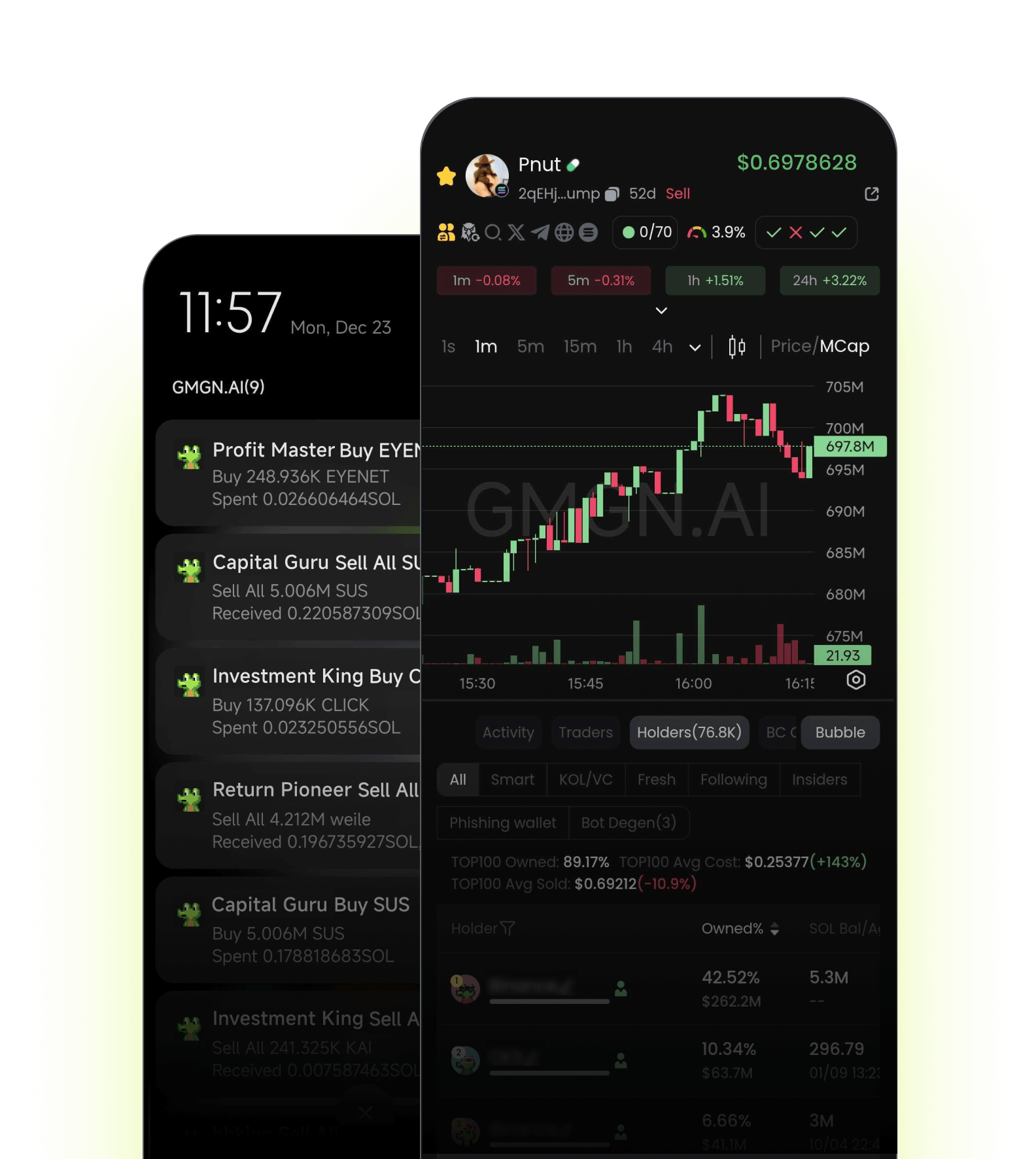

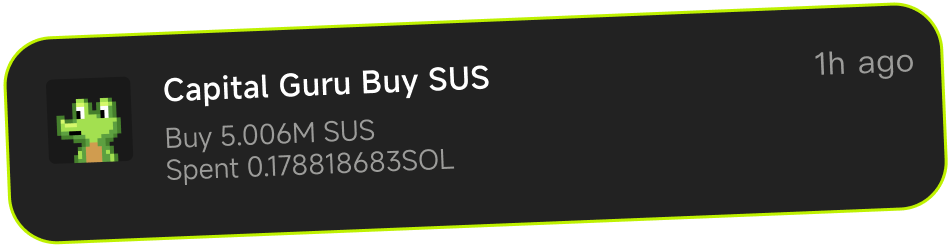
Real-Time Alerts & Zero-Delay Notifications
-------------------------------------------
Stay updated with instant buy/sell alerts for smarter and faster trading decisions.
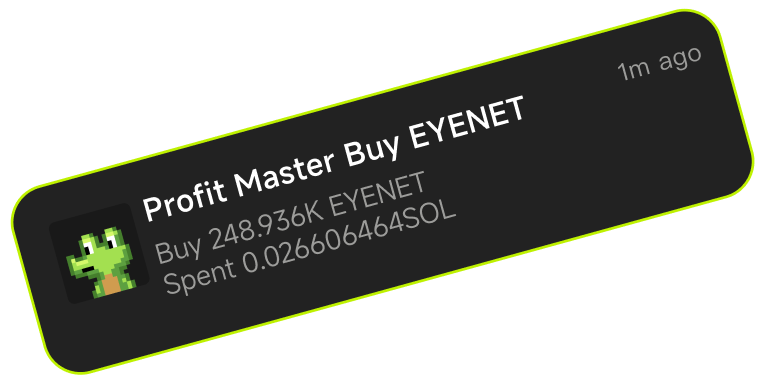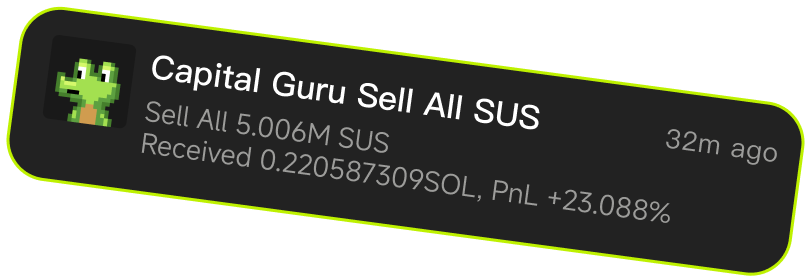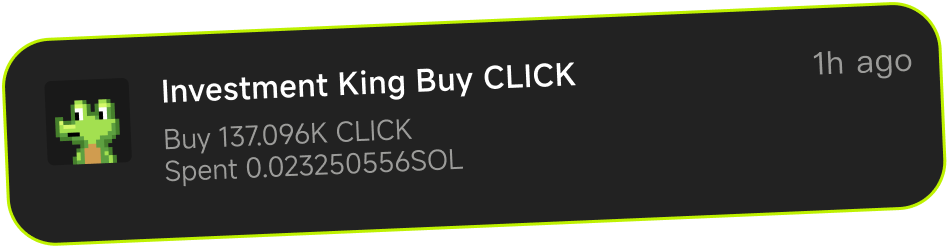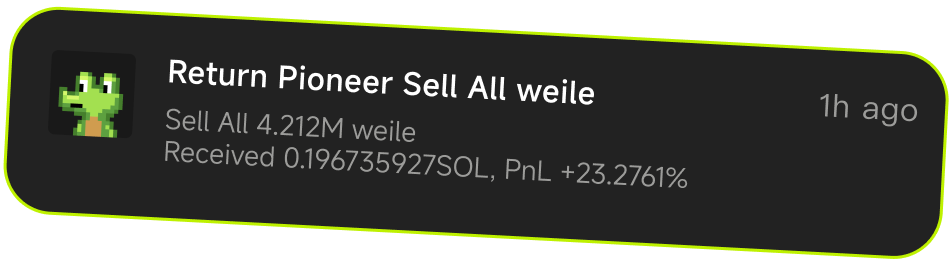
Real-Time Trading & Instant On-Chain Data
-----------------------------------------
Stay ahead with live K-line trends and holder insights to optimize your strategy!


Track Smart Money: Auto Buy & Sell
----------------------------------
Boost your returns by tracking experts and smart money effortlessly with GMGN.


Wallet Analysis: Clear PnL at a Glance
--------------------------------------
Review wallet positions and market movement from a mobile workflow built for fast trading decisions.
---
# GMGN.AI | The Fastest Multi-Chain Meme Trading Terminal
GMGN.AI | The Fastest Multi-Chain Meme Trading Terminal
-------------------------------------------------------
GMGN.AI is a MEME token trading platform supporting Solana, BSC, Base, and Ethereum — covering new token monitoring, security auditing, holder analysis, smart money copy trading, wallet P&L analytics, and automated trade execution, widely used for early-stage on-chain project discovery and quantitative trading.
### Core Features
1. **Real-Time New Token Monitoring**
Continuously scans launchpads including Pump.fun, FourMeme, Raydium, and letsbonk with filters for market cap, volume, and creation time — helping users enter positions at early low-cap stages.
2. **Live Trending Token Rankings**
Leaderboard updated every minute based on buy/sell count, trading volume, price change, and holder growth — reflecting real-time market momentum and capital flow.
3. **Token Holder Structure Analysis**
Real-time calculation of four key metrics: insider/rat wallet ratio, bundle buy ratio, DEV holdings %, and Top 10 wallet concentration.
4. **Automated Token Security Audit**
Auto-checks every token for: LP burned status, honeypot detection, contract renounced status, and mintable flag.
5. **Smart Money Copy Trading**
Identifies high-win-rate wallets on-chain and enables one-click copy trading that automatically mirrors their buy/sell actions and position sizing.
6. **KOL & Wallet Tracker with Real-Time Alerts**
Custom watchlist with real-time push notifications for every on-chain event — buys, sells, position adds, and full exits — from tracked wallets and KOLs.
7. **Zero-Latency Trading & Automated Strategies**
Zero-latency on-chain trade execution with Take Profit, Stop Loss, Trailing Take Profit / Trailing Stop Loss, and multi-wallet batch order support.
8. **Wallet P&L Analytics**
Enter any wallet address to instantly generate: realized/unrealized PnL, win rate and risk/reward ratio, current holdings valuation, full trade history, and developer wallet token creation records with all-time high (ATH) market cap per token.
9. **Trading Data API & AI-Native Skills**
Five structured API categories — token data, wallet data, market data, trade execution, and signal tracking — packaged as standardized AI Skills directly callable by Claude, GPT, and other AI Agents via natural language for on-chain data queries and trade execution.
---
# Product Manager, On-Chain Trading — GMGN App — GMGN Blog
Hong Kong · Onsite · Full-time · 3+ years
Responsibilities
----------------
* **Trading Module Iterations**: Own the requirement definitions and product iterations for core App trading features (buy/sell execution, copy trading, candlestick charts, limit orders, etc.) and track post-launch performance.
* **Competitive Intelligence**: Continuously track key competitors (such as pump.fun, fomo, Axiom) and broader DEX / launchpad ecosystems. Deconstruct emerging features and convert them into actionable product backlogs.
* **End-to-End Execution**: Deliver high-quality PRDs and wireframes, oversee UX/UI quality, and partner with Engineering, Design, and QA to drive cross-platform (Web / Mobile App) release cycles.
* **Data & Problem Resolution Loop**: Monitor core product metrics (trading volume, MAU, retention, routing execution quality). Independently investigate user-reported Contract Addresses (CAs) and transaction hashes on-chain to pinpoint root causes (routing, pricing logic, indexing delays), drive engineering fixes, and turn insights into permanent product improvements.
Requirements
------------
* 3+ years of product management experience, with 2+ years dedicated to consumer-facing crypto or on-chain trading products.
* **Active On-Chain Trader**: Hands-on experience trading memecoins and DEX tokens. Power user of trading terminals such as GMGN, Axiom, and Photon.
* **Deep DEX Tech Stack Knowledge**: Thorough understanding of bonding curves, internal vs. external markets, AMMs vs. order books, aggregator routing & pool selection, slippage & price wicks, anti-MEV protection, dynamic tax structures, and behavior patterns of dev wallets & Smart Money.
* **Self-Sufficient Data Capabilities (SQL + BI)**: Proficient in writing SQL queries and building BI dashboards to analyze cohort funnels and retention rates. Capable of performing reconciliation and attribution analysis with high sensitivity to data definitions.
* **Mechanism-Level Competitive Analysis**: Ability to deconstruct rival platforms down to their fee structures, execution routing, risk controls, and architectural limitations.
* **Power User of AI Tools**: Daily use of AI tools like Claude, ChatGPT, and Cursor for research, data queries, and documentation. Candidates should be prepared to showcase concrete workflow examples during interviews.
* **Direct Communicator & High Resilience**: Strong execution capacity in fast-paced environments, capable of driving alignment and delivering results across multiple stakeholders under tight timelines.
* **Fluent Bilingual (English & Mandarin)**: Professional-level fluency in spoken English and Mandarin with a global product mindset.
Nice-to-Haves (Submissions welcomed alongside your resume)
----------------------------------------------------------
* Prior PM experience at top-tier trading terminals, DEXs, or token launchpads.
* **Verifiable On-Chain Track Record**: Your GMGN UID, primary wallet address, or a personal memecoin trading debrief/retrospective.
* **Portfolio & Artifacts**: GitHub repositories/experimental code; prototypes, demos, Agent workflows, or product specs built with AI tools; technical write-ups/articles on memecoin mechanics, on-chain data, or Web3 product design.
* Strong familiarity with the X (Twitter) and Telegram ecosystems (authentication, APIs, bots, and KOL dynamics).
* Proven track record in shipping native mobile applications across both iOS and Android.
How to apply
------------
Email your resume to **[hr@gmgn.ai](mailto:hr@gmgn.ai)
** with “Product Manager, On-Chain Trading” in the subject line. Include:
* Your resume (PDF)
* Your Telegram handle, so we can reach you fast
* Your GMGN UID, or the wallet you actually trade from
* Anything we can look at: repos, writing, prototypes, or a trade you can walk us through
We take every resume seriously. Volume is high right now, so please bear with us.
[Email your resume → hr@gmgn.ai](mailto:hr@gmgn.ai)
---
# 链上数据开发工程师(Onchain Data Engineer)· GMGN — GMGN Blog
**方式**:全职|**投递**:[hr@gmgn.ai](mailto:hr@gmgn.ai)
(邮件标题注明岗位)
岗位职责
----
* 新链接入 负责新增 EVM 链与 Solana 生态的采集接入,包括节点接入、区块与日志采集、数据解析及下游数据链路打通,交付可供业务消费的完整数据集。
* DEX / Launchpad 解析 负责新增 DEX 与代币发行平台的协议解析,涵盖 AMM(V2 / V3 / V4 hook)、bonding curve 及各类协议 fork,实现流动性池发现、费率结构、发行阶段与成交归属的准确建模。
* 数据质量与稳定性 对采集数据的准确性与时效性负责:建立数据质量校验与异常监控机制,定位并修复解析偏差;治理采集链路的可用性问题,包括区块重组、节点异常与限流、消费积压等容错场景。
* 技术跟进与架构演进 持续跟进链上协议与生态的技术演进,将新出现的协议形态快速纳入采集能力;优化采集系统架构与抽象设计,提升新链、新协议的接入效率。
任职要求
----
* 2 年以上 Go 服务端开发经验,具备高并发数据处理系统的设计与实现能力,熟悉分布式消息队列、关系型数据库、缓存与 NoSQL 存储的生产实践。
* 熟悉区块链底层原理与链上协议基础,具备扎实的链上数据解析能力:理解交易结构、事件日志与 ABI 编解码机制,能够独立完成合约事件与调用数据的解析与语义还原。
* 熟悉主流 DEX 协议的数据模型,掌握 Uniswap V2 / V3 / V4 及其生态 fork 的核心机制;对典型 Launchpad(bonding curve 类代币发行平台)的运行机制有深入研究。
* 具备系统化的线上问题定位能力与严谨的数据验证意识,能够通过对照实验与反向验证确认结论,而非依赖经验推断。
加分项
---
* AI native 的工程习惯:熟练使用 Claude Code 等 AI 编码工具完成开发与问题排查,理解其能力边界并对产出保持验证意识;能够将可复用的流程与领域知识沉淀为团队资产,持续提升团队而非仅个人的效率。
* 具备 Solana 链上数据经验,熟悉其账户模型与指令解析机制。
* 具备 Solidity 阅读能力,能够在缺少文档与 ABI 的情况下,通过合约字节码与链上交易分析其行为。
* 对区块链行业保持长期关注与热情,能够主动跟进新兴协议与生态发展。
[投递简历 → hr@gmgn.ai](mailto:hr@gmgn.ai)
---
# 产品经理(社交社区方向)· GMGN App — GMGN Blog
**部门**:App 产品团队|**汇报**:App 产品负责人|**方式**:香港 · 现场办公 · 全职|**投递**:[hr@gmgn.ai](mailto:hr@gmgn.ai)
(邮件标题注明岗位)
GMGN 是全球领先的 memecoin 交易终端,交易、行情、跟单都已跑通。下一步是把它从”一个人对着盘面下单的工具”变成”一群人互相影响、互相跟随的交易社区”。我们要找的不是”懂 crypto 顺便做点社区”的人,而是真正做过社交产品或交易社区的产品经理,把方法论搬到链上交易场景里。
* * *
职责
--
* **社交社区模块迭代**:负责喊单、关注与追踪、信息流、个人主页、榜单等模块的需求定义与功能迭代,跟进上线效果。
* **关系链与冷启动**:设计关注关系体系与社区冷启动方案,让新用户第一次打开就有可看、有可关注的内容。
* **内容分发与信誉治理**:定义信息流排序与创作者激励,建设信誉体系与反刷量、反女巫的治理规则。
* **端到端执行**:产出 PRD 与原型,把关交互,协调研发、设计、QA、运营推进双端(Web / App)发版上线。
* **数据与问题闭环**:监控社区核心指标(关注渗透、内容供给、跟单转化、创作者留存),能自己拉数定位口径与链路问题,推动修复并沉淀为产品优化。
要求
--
* **3 年以上产品经验,其中 2 年以上社交产品或交易社区产品经验**(硬性):做过关系链、信息流、UGC 生态、创作者体系、社区治理中的至少两块,能讲清核心指标、你的假设、数据最终怎么走的。
* **懂社交产品底层机制**:关系链冷启动与网络效应、供给消费双边平衡、信息流排序、创作者激励与马太效应、反刷量反女巫;知道社区什么情况下”起不来”、什么情况下”劣币驱逐良币”。
* **有交易经验、懂交易者心理**:股票 / 期货 / 加密都算,不要求链上原生 degen,但必须真金白银下过单;对链上交易有兴趣,入职后能快速补齐链上概念。
* **能自己拉数(SQL + BI)**:自己搭 cohort 漏斗与留存看板,能自主完成归因分析,对数据口径敏感——社交指标尤其容易被口径骗到。
* **能把竞品拆到机制层**:说得清 pump.fun、fomo、Axiom 及 X / Telegram 生态同类产品的关系链设计、内容分发逻辑、激励与治理强弱,以及它们系统性做不到什么。
* **AI 工具重度用户**:日常用 Claude / ChatGPT / Cursor 等做研究、跑数、写文档和搭原型,面试请准备工作流实例。
* 沟通直接、抗压性强,能在快节奏、多方协作的环境中推动方案落地。
* 中英双语工作能力,口语沟通无障碍,有全球用户视角。
加分项
---
* 头部社交平台、内容社区、交易社区(雪球 / eToro / Discord / X 类产品)的 PM 经历。
* 做过 UGC 信誉体系、排行榜、创作者分成,或反女巫 / 反刷量风控。
* 生命周期推送实战:分层、频控、文案与时机的 A/B。
* 熟悉 X / Telegram 生态(账号体系、API、Bot、KOL 运营与投放)。
* **可验证的链上实绩**:GMGN UID、常用链上钱包地址,或一段自己的交易 / 打狗复盘。
* **作品沉淀**:GitHub 开源项目 / 实验代码;用 AI 工具搭建的原型、Demo、Agent 工作流或产品设计案;关于社区产品机制、Memecoin 交易或链上数据的技术博客 / 文章。
* 有 App 双端产品经验。
以上材料欢迎随简历一并附上;邮件请附 Telegram 联系方式,以及**一段你做过的社交 / 社区产品复盘**(要解决什么、你的假设、上线后数据怎么走、哪里判断错了)。
我们提供
----
从 0 到 1 的主战场 · 高信任度的执行空间 · 团队自己就是深度链上用户。
[投递简历 → hr@gmgn.ai](mailto:hr@gmgn.ai)
---
# 高级服务端开发工程师 · GMGN — GMGN Blog
**方式**:全职|**投递**:[hr@gmgn.ai](mailto:hr@gmgn.ai)
(邮件标题注明岗位)
岗位介绍
----
负责链上交易系统的服务端开发,定位并解决性能瓶颈和稳定性问题,降低请求延迟,提升并发处理能力,完善故障恢复机制。
工作职责
----
* 分析并优化核心服务,解决慢查询、锁竞争、内存占用过高等问题,提升吞吐量,降低高峰期的请求延迟。
* 改进任务调度、并发控制和流量保护,处理流量突增、消息积压和请求超时,避免局部故障拖垮整个服务。
* 完善幂等、重试和状态恢复机制,处理重复请求、服务中断及交易结果不确定,防止重复执行和订单状态不一致。
* 优化 RPC、节点及第三方服务的调用,处理超时、限速和不可用,完善故障切换与恢复策略。
* 建立有效的监控和告警,快速定位生产问题;参与故障处理和复盘,修复根因,减少同类问题再次发生。
* 开展压测和容量评估,验证优化效果;完善关键流程测试、灰度发布和回滚,降低上线风险。
任职要求
----
* 3 年及以上服务端开发经验,负责过已上线、有真实用户使用的生产系统,能够独立完成核心模块的开发和维护。
* 熟练掌握 Go、Java、Rust、TypeScript / Node.js 等至少一种服务端语言,理解所用语言的并发模型及常见性能问题。
* 熟悉数据库、缓存和消息队列,能够处理并发访问、重复消费、数据一致性和故障恢复问题。
* 有实际的性能优化或稳定性治理案例,能讲清楚问题如何发现、瓶颈如何定位、代码或架构如何修改,以及效果如何验证。
* 能使用性能分析、日志、监控和链路追踪工具排查问题,对网络、内存、连接池及数据库等常见瓶颈有实际处理经验。
加分项
---
* AI native 的工程习惯:熟练使用 Claude Code 等 AI 编码工具完成开发与问题排查,理解其能力边界并对产出保持验证意识;能够将可复用的流程与领域知识沉淀为团队资产,持续提升团队效率。
* 有链上交易、钱包、跨链、Gas Sponsor 或 RPC 服务开发经验。
* 有交易、支付、订单等对可靠性和数据一致性要求较高的系统开发经验。
* 处理过突发流量、大规模任务积压或重大生产故障。
* 有容器化部署、自动扩缩容或故障演练经验。
[投递简历 → hr@gmgn.ai](mailto:hr@gmgn.ai)
---
# 产品经理(用户转化方向)· GMGN App — GMGN Blog
**部门**:App 产品团队|**汇报**:App 产品负责人|**方式**:香港 · 现场办公 · 全职|**投递**:[hr@gmgn.ai](mailto:hr@gmgn.ai)
(邮件标题注明岗位)
GMGN 是全球领先的 memecoin 交易终端,Web + App 双端,服务全球用户。产品能力已经跑通,增长的下一程不在”更多功能”,而在**把每一个进来的用户送到第一笔交易**——从下载、注册、入金到首单,再到留下来、带人来。我们要找一个对漏斗上瘾的产品经理,把新用户旅程本身当成产品来做。
* * *
职责
--
* **新用户转化漏斗**:负责下载 → 注册 → 入金 → 首笔交易的全漏斗设计与迭代,定义各环节转化指标,对新增激活结果负责。
* **Onboarding 与首单体验**:设计新用户引导、空状态与首单路径,降低链上交易的认知门槛,让圈外用户第一次打开就能完成第一笔交易。
* **触达与召回**:负责 push、邮件、站内消息等触达通道的产品策略(分层、频控、时机与文案),把流失召回与生命周期运营做成产品能力。
* **增长机制**:设计邀请裂变、返佣激励、活动玩法,与运营协作放大效果;对机制的 ROI 与防刷负责。
* **实验与数据闭环**:搭建 A/B 实验与转化归因,能自己拉数搭漏斗与 cohort,用数据而非直觉决定迭代方向。
要求
--
* **3 年以上产品经验,其中 2 年以上用户增长 / 转化方向经验**(硬性):完整负责过注册、激活或付费转化漏斗中的至少一段,能讲清当时的基线、你的假设、实验结果与最终数据。
* **懂转化的底层方法**:漏斗拆解与瓶颈定位、A/B 实验设计与显著性判断、触达分层与频控、激励设计与 ROI 核算;分得清什么时候是产品问题、什么时候是流量问题。
* **理解交易类产品的信任构建**:金融 / 交易产品的转化不同于内容产品——用户把钱放进来之前在担心什么、哪一步会流失、什么信息能让人敢下第一单;有真实交易经历(股票 / 期货 / 加密均可)优先,对链上交易有兴趣,入职后能快速补齐链上概念。
* **能自己拉数(SQL + BI)**:自己搭 cohort 漏斗与留存看板,能自主完成归因分析,对数据口径敏感——转化指标尤其容易被口径骗到。
* **能把竞品拆到机制层**:说得清主流交易平台(CEX、链上交易终端)的注册开户流程、首单引导、邀请与激励设计的强弱,以及它们系统性做不到什么。
* **AI 工具重度用户**:日常用 Claude / ChatGPT / Cursor 等做研究、跑数、写文档和搭原型,面试请准备工作流实例。
* 沟通直接、抗压性强,能在快节奏、多方协作的环境中推动方案落地。
* 中英双语工作能力,口语沟通无障碍,有全球用户视角。
加分项
---
* 头部互联网、金融科技或交易平台的增长 / 转化 PM 经历。
* 做过 CRM / EDM / push 生命周期触达体系,或流失预警与召回策略。
* 做过邀请裂变、返佣激励或积分体系,并能给出 ROI 与防刷的实际结果。
* 做过投放归因、落地页 CRO、商店页转化(ASO)中的至少一项。
* **可验证的链上实绩**:GMGN UID、常用链上钱包地址,或一段自己的交易 / 打狗复盘。
* **作品沉淀**:GitHub 开源项目 / 实验代码;用 AI 工具搭建的原型、Demo、Agent 工作流或产品设计案;关于增长转化、A/B 实验或链上数据的技术博客 / 文章。
* 有 App 双端产品经验。
以上材料欢迎随简历一并附上;邮件请附 Telegram 联系方式,以及**一段你做过的转化 / 增长项目复盘**(要解决什么、你的假设、实验怎么设计、数据怎么走、哪里判断错了)。
我们提供
----
真实战场(改动上线当天就能在漏斗数据里看到结果)· 高信任度的执行空间 · 团队自己就是深度链上用户。
[投递简历 → hr@gmgn.ai](mailto:hr@gmgn.ai)
---
# 高级区块链开发工程师(跨链方向)· GMGN — GMGN Blog
**方式**:全职|**投递**:[hr@gmgn.ai](mailto:hr@gmgn.ai)
(邮件标题注明岗位)
关于我们
----
我们正在开发面向多链生态的资产跨链兑换产品,希望让用户以更低的成本、更少的操作完成不同链之间的交易。我们的目标是将复杂的链上交互整合为简单、可靠的产品体验。
关于岗位
----
你将参与核心交易执行系统的建设,根据专长负责跨链执行、Gas 代付或相关基础设施模块,推动方案从设计、开发到生产上线。你的工作将直接影响交易成功率、执行速度和服务成本。
我们重视真实的系统建设经验:产品已经上线、有实际用户使用,你参与过核心模块开发,并承担过生产环境中的问题排查和持续优化。
工作职责
----
* 建设交易执行流程: 开发跨链请求处理、源链入金识别、目标链交易执行及结算状态跟踪等模块,处理多阶段流程中的状态同步、失败重试和异常恢复。
* 完善协议接入与费用计算: 对接链上协议和报价服务,构建合约或程序调用,完善交易模拟、滑点控制、Gas 估算及动态费用计算,优化执行成功率与成本。
* 建设 Gas 代付能力: 根据业务需求开发高并发 Gas Sponsor 服务,完善交易调度、代付额度、预算控制、费用核算和防滥用机制。
* 提升可观测性与可靠性: 建设结构化错误处理、日志追踪、监控告警和异步任务恢复能力,处理兑换失败、流动性不足、Gas 波动及 RPC 异常等生产问题。
* 完善结算与资金安全: 参与交易状态核验、结算对账及异常补偿机制建设,在核实链上执行与资金状态后处理退款或补偿,防止重复执行和重复支付。
任职要求
----
* 3 年及以上后端或区块链开发经验,能够独立负责核心模块,推动工作从方案设计到上线及后续维护。
* 有跨链交易、高并发 Gas Sponsor 或相关链上交易系统的实际生产经验,对应产品已上线并有真实用户使用。 具备上述任一方向的扎实经验即可,重点考察核心模块贡献与线上问题处理能力。
* 熟练掌握 TypeScript / Node.js、Go、Rust 等至少一种后端开发语言,具备扎实的服务端工程能力。
* 熟悉 EVM 或 Solana 至少一类生态,能够构建合约或程序调用,处理交易签名、费用估算、交易确认、执行失败与重试,理解链重组对交易状态的影响。
* 能够设计和维护多阶段异步流程,熟悉状态机、消息队列、幂等、并发控制及数据一致性,能够处理交易状态不确定和服务中断后的恢复。
* 重视稳定性与资金安全,能够结合真实项目说明本人贡献、实际负载、关键技术取舍及线上故障处理过程;具备良好的协作能力和英文技术文档阅读能力。
加分项
---
* AI native 的工程习惯:熟练使用 Claude Code 等 AI 编码工具完成开发与问题排查,理解其能力边界并对产出保持验证意识;能够将可复用的流程与领域知识沉淀为团队资产,持续提升团队效率。
* 有 Intent / Solver、跨链结算或多链流动性管理经验。
* 有账户抽象 / Paymaster、交易中继或高并发 Gas 代付系统的深度优化经验。
* 有 Solana、EVM 等多生态开发经验。
* 了解 DEX 聚合路由,或有交易合约开发与安全审计配合经验。
* 有可展示的开源项目、安全审计配合或复杂生产故障处理经验。
[投递简历 → hr@gmgn.ai](mailto:hr@gmgn.ai)
---
# 智能合约工程师(Launchpad 方向)· GMGN — GMGN Blog
**方式**:全职|**投递**:[hr@gmgn.ai](mailto:hr@gmgn.ai)
(邮件标题注明岗位)
岗位职责
----
* Launchpad 核心协议架构:端到端设计与交付 Launchpad 相关合约(含 Bonding Curve 定价、虚拟/真实流动性池切换、代币发行、手续费与分润控制、流动性自动迁移等)。
* 顶层机制与资金/数据流设计:从第一性原理出发,梳理高并发与对抗性环境下的链上资金流、状态机流转与事件抛出,确保协议在极端行情与恶意攻击下的绝对安全。
* AI 驱动的高效工程:熟练将需求拆解为清晰的 Prompt / Context 标准,指挥 AI Agent 生成代码与测试用例,并对 AI 产出的代码进行严苛的逻辑复审、边界校验与安全审计。
* 全栈链上/链下生态协同:围绕发射平台合约,参与极简且高效的周边后端服务(Golang 技术栈)设计与协作,实现合约与服务端数据流的精准对接。
* 竞争分析与逆向探索:对市场新兴协议、竞品 Launchpad 或复杂链上事件具备独立溯源能力,能直接通过读取链上字节码、Trace 数据或竞品合约找出机制真相。
任职要求
----
### 1\. 核心硬实力(顶层设计 & 资金安全)
* 主网上线与资金安全经验:曾独立或主导过已上线主网且对资金安全负最终责任的智能合约项目(如 DEX、Launchpad、Vault、借贷等),有对抗 MEV、夹子攻击、重入与预言机操纵的实战防御经验。
* 扎实的 EVM 底层功底:深刻理解 EVM 运行机制(存储布局 Storage Layout、delegatecall 语义、Gas 优化原理、EIP-712/4337、ABI 编解码等),能看懂 Trace 与原始日志。
* 机制与资金流思维:具备极强的业务抽象能力,习惯“从系统视角和资金流走向”思考架构,而非陷入琐碎的代码细节实现。
### 2\. 工作流与工程素养(AI Native)
* 掌控 AI Agent 工作流:以 AI 编程为日常主力生产方式。能清晰定义 Agent 的行动边界(“做什么”与“绝不让它做什么”),并建立了一套成熟的 AI 输出审查(Audit/Review)与 Fuzz / Invariant 测试验证习惯。
* 极强的自驱力与极速学习能力:面对未接触过的合约标准、密码学原语或 Golang 后端组件,能快速研读文档并迅速落地代码,无需等待技术结论推送。
* 独立逆向与数据挖掘:能熟练运用 Tenderly、Dune、Phalcon、Foundry Trace 等工具,独立解读链上数据与竞品逻辑。
加分项
---
* 有主流 DEX(Uniswap V2/V3/V4)、Pump.fun 模式或复杂 DeFi 协议的研发/深度解构经验。
* 具备良好的 Golang 服务端开发能力,能够独立完成合约监听、事件解析与 Go 后端服务的衔接。
* 在 Foundry 中建立过严苛的系统级不变量(Invariant Testing)与对抗性测试用例库。
我们提供
----
* 核心业务话语权:直接决定平台资金流逻辑与关键业务机制,绝不做“需求翻译机”。
* AI-First 团队文化:鼓励尝试最前沿的 AI 辅助工具,全面赋能个人生产力,拒绝无意义的重复劳动。
[投递简历 → hr@gmgn.ai](mailto:hr@gmgn.ai)
---
# 产品经理(链上交易方向)· GMGN App — GMGN Blog
香港 · 现场办公 · 全职 · 3 年以上
职责
--
1. 交易模块迭代:负责 App 交易模块(买卖、跟单、行情 K 线、限价单等)的需求定义与功能迭代,跟进上线效果。
2. 竞品跟踪:跟踪 pump.fun、fomo、Axiom 等竞品与 DEX / launchpad 生态动态,拆解新功能并转化为迭代需求。
3. 端到端执行:产出 PRD 与原型,把关交互,协调研发、设计、QA 推进双端(Web / App)发版上线。
4. 数据与问题闭环:监控核心指标(交易量、MAU、留存、路由成交质量);能拿着用户报的 CA / 交易哈希自己上链定位问题(路由、计价、索引),推动修复并沉淀为产品优化。
要求
--
1. 3 年以上产品经验,其中 2 年以上消费级 crypto / 链上交易产品经验。
2. 自己就是链上交易用户:有真实 memecoin / DEX 交易经历,深度用过 GMGN、Axiom、Photon 等交易终端。
3. 深入理解 DEX 技术栈:bonding curve、内外盘、AMM 与订单簿、聚合路由与池子选择、滑点与插针、anti-MEV、动态税率、DEV 与聪明钱行为模式。
4. 能自己拉数(SQL + BI):自己搭 cohort 漏斗与留存看板,能自主完成对账与归因分析,对数据口径敏感。
5. 能把竞品拆到机制层:说得清对手的费率结构、成交路由、风控强弱,以及它系统做不到什么。
6. AI 工具重度用户:日常用 Claude / ChatGPT / Cursor 等做研究、跑数与文档,面试请准备工作流实例。
7. 沟通直接、抗压性强,能在快节奏、多方协作的环境中推动方案落地。
8. 要求中英双语工作能力,中英双语口语沟通无障碍,有全球用户视角。
加分项(以下材料欢迎随简历一并附上)
------------------
* 头部交易终端 / DEX / launchpad 的 PM 经历。
* 可验证的链上实绩:GMGN UID、常用链上钱包地址,或一段自己的交易 / 打狗复盘。
* 作品沉淀:GitHub 开源项目 / 实验代码;用 AI 工具搭建的原型、Demo、Agent 工作流或产品设计案;关于 Memecoin 交易机制、链上数据或 Web3 产品的技术博客 / 文章。
* 熟悉 X / Telegram 生态(账号体系、API、Bot、KOL)。
* 有 App 双端产品经验。
怎么投递
----
把简历发到 **[hr@gmgn.ai](mailto:hr@gmgn.ai)
**,邮件标题写上「产品经理(链上交易方向)」。邮件里请带上:
* 简历(PDF)
* Telegram,方便我们直接找你
* GMGN UID,或者你常用的链上钱包地址
* 任何能看的东西:代码、文章、原型,或者一段自己的交易复盘
我们会重视每一份简历,由于投递人数较多,请耐心等待。
[投递简历 → hr@gmgn.ai](mailto:hr@gmgn.ai)
---
# $70 to $150K — Not Luck, a Workflow — GMGN Blog
🎙️ GMGN User Stories · Episode 07 · A series where we listen to the people on the other side of the screen talk about how they actually trade.
Episode 07 features Odo. Got into crypto in 2020 starting with XRP, learned the ropes through the NFT cycle, then pivoted to memecoins after the 2022 bear market. Found his edge early in the AI meta by scraping Truth Terminal’s following list, and ran a few thousand dollars up to seven figures. His approach isn’t dramatic — it’s built on discipline and consistency.
> “If you’re like me and live a busy life, you can’t always sit at your PC and trade. The GMGN phone app is by far the biggest competitive advantage of any trading terminal in this space.”
>
> — Odo @0xodo
About me
--------
I’m Odo. First got into crypto back in 2020, shortly before COVID hit. The first coin I ever bought was XRP (typical).
I was a broke college kid at the time, so I didn’t have much. But I somehow stumbled upon NFTs, and the rest is history.
I spent that first cycle learning more about on-chain and becoming familiar with it. After the brutal 2022 bear market, like everyone else, I pivoted to memecoins.
I was working in sales when I started to dabble. Didn’t have much at the time, so I’d throw what I could into Phantom — and by the end of that year, I’d worked $3–5K up to seven figures.
The market was in a frenzy, and I was extremely blessed to find my edge early during the AI meta.
Me and GMGN
-----------
Before terminals, we used Telegram bots. Over the years I’ve transitioned from bot to bot, then terminal to terminal — until I finally found the right one.
I stumbled upon GMGN, and quickly realized it was the perfect place to trade. Every detail about it felt natural, and it was easy to become accustomed to.
If you’re like me, and live a busy life, you can’t always sit at your PC and trade — you have to use your phone. The phone app GMGN offers is by far the biggest competitive advantage to any other trading terminal in this space.
They’ve somehow managed to take your desktop computer and squeeze everything into your phone in such an efficient and clean way. The trading experience there has been nothing short of phenomenal, and I believe it’s a great tool to have on your side during these cutthroat conditions.
The trade I remember most
-------------------------
The trade that started it all.
When $GOAT kicked off the AI meta, I knew it wasn’t going to be the only runner. I found my edge early by going through Truth Terminal’s following list and identifying accounts that seemed likely to show interest in a coin — or even launch one themselves.
This tactic helped me turn a few thousand into millions.
Using that same approach, I discovered Somewheresy, the dev who had launched $CENTS.
When I first found it, $CENTS was completely dusted at around 7K market cap. I told all my friends to throw a little bit in and leave it for a week. I had about $70 sitting in there myself.
Then, 3–4 days later, I woke up one morning and it was sitting at 7 million market cap.
I took some profit, let the rest ride, and ended up making around $150K total off it. From just $70.
This isn’t my highest PNL trade, but it’s by far one of my favorites — turning absolute dust into life-changing money.
My biggest change
-----------------
As traders, we have to be extremely adaptable. The market has obviously changed rapidly, and old tactics don’t always work like they used to.
The biggest change for me personally — and what I recommend to others — is being very selective with the coins you buy.
Even if you think it’s an absolute gem, take your initial investment out as soon as possible to make the trade risk-free.
There’s no better feeling than not losing money on a coin because you pulled your initials before it rugged.
I’ve changed in a lot of ways, but this is by far the most significant one.
Tips and tricks for trading with GMGN
-------------------------------------
Find a trading style that fits you — volume trader or conviction trader — and stick with it.
Trading gets a lot easier when you stay disciplined and consistent.
Rules I try to live by:
1. **Take a break after big losses and big wins.** Both extremes end in bad trades.
2. **Take profits — don’t be greedy.** The money you leave on the table isn’t yours yet.
3. **Don’t FOMO.** If you don’t get your entry, there’s always another opportunity.
_Risk note: This article is for information and product explanation only and does not constitute investment advice. Memecoin trading is extremely high-risk and can lead to the total loss of your capital. Do your own research and make your own decision before trading. GMGN does not promise, guarantee, or predict any profit or return. Any user gains or case studies mentioned are individual, exceptional, and not representative of typical outcomes or of future performance._
FAQ
---
Who is Odo (@0xodo)?
Odo is a memecoin trader who got into crypto in 2020, starting with XRP, and learned on-chain trading through the NFT cycle. After the 2022 bear market he pivoted to memecoins while working in sales, and grew a few thousand dollars into seven figures after finding his edge early in the AI meta.
How did Odo turn $70 into $150K on $CENTS?
He found $CENTS by going through Truth Terminal's following list and spotting Somewheresy, the dev who launched it. At the time $CENTS was dusted at around a 7K market cap, and Odo had about $70 in it. Three to four days later it reached roughly a 7 million market cap; he took some profit, let the rest ride, and made around $150K in total.
What is Odo's biggest trading lesson?
Be very selective with the coins you buy, and take your initial investment out as soon as possible to make the trade risk-free. That way you don't lose money even if the coin later rugs.
What trading rules does Odo follow?
Take a break after both big losses and big wins, since both extremes lead to bad trades; take profits instead of being greedy, because money left on the table isn't yours yet; and don't FOMO, because if you miss an entry there is always another opportunity.
[Read the Original on X →](https://x.com/gmgnapp001/status/2071791191168004264)
Related
-------
* [The First to Call $CASHCAT — Made $1.1M on Robinhood Chain How Yeon spotted $CASHCAT early on Robinhood Chain and turned a $40K idea into $1M+ realized — his narrative, entry, exit, and risk checks.](https://gmgn.ai/blog/gmgn-user-story-08-cashcat/)
---
# The First to Call $CASHCAT — Made $1.1M on Robinhood Chain — GMGN Blog
🎙️ GMGN User Stories · Episode 08 · A series where we listen to the people on the other side of the screen talk about how they actually trade.
We got Yeon — the trader who made $1.1M on Robinhood Chain — to open up his entire playbook: how he picked, entered, and exited. Every layer, in his own words 💚
What Robinhood Chain actually is
--------------------------------
I believe Robinhood is one of the most influential companies in both traditional finance and crypto.
Robinhood Chain is an Ethereum Layer 2 built by a company with millions of users and a well-established financial ecosystem. It’s not just another blockchain launching — it represents a major financial company making a serious move into the on-chain world.
As Robinhood continues expanding into crypto, tokenized real-world assets, and on-chain finance, I think its ecosystem has the potential to become one of the most important chains in the industry.
Why I wanted to be early
------------------------
I started trading on Robinhood Chain during the public testnet through Popdev.
At that time, nobody knew exactly when the mainnet would launch, but I was convinced that once Robinhood officially rolled out its chain, it had the potential to become the next Base — or something even bigger.
That’s why I wanted to position myself before everyone else. I spent my time researching the ecosystem and looking for narratives genuinely connected to Robinhood’s history and brand.
The $CASHCAT trade
------------------
I first introduced the Cashcat narrative to my Telegram community when its market cap was around $40K.
From that point on, I consistently explained why I believed Cashcat had an exceptional chance of succeeding — and it wasn’t because of a single reason.
Robinhood’s original name, the cat mascot, the company’s long history of using cat-related imagery, even people associated with Robinhood referencing “Cash Cat” in their profiles — all of these pieces fit together.
When I looked at everything as a whole, I had very little doubt that Cashcat had the potential to become the next blue-chip meme on Robinhood Chain.
The biggest lesson I took from this trade is that successful meme coins aren’t built on memes alone. They need a compelling story, a connection people immediately understand, and a narrative that can keep growing over time.
How I exited (and what I still hold)
------------------------------------
I started taking profits once Cashcat reached around a $100M market cap.
Instead of selling everything at once, I scaled out gradually while monitoring market conditions and liquidity.
At the moment, I still hold about 0.3% in my public wallet and another 0.15% in a private wallet — roughly 0.45% remaining.
I’ve realized a little over $1M in profits so far.
The remaining position is my moon bag, because I still believe in the long-term potential of both Cashcat and the Robinhood ecosystem.
What I look for before sizing in
--------------------------------
The biggest thing I look for is whether the project has a genuine connection to Robinhood as a company.
It’s not enough to simply use the Robinhood name or logo. I want to see whether there’s a real link to the company’s history, products, culture, or the people behind it.
I also ask whether that narrative can keep expanding over time, and whether ordinary investors can easily understand and relate to it.
Finally, I think about how Robinhood’s CEO or other people connected to the company would react if they saw the project. If it feels like something they would naturally embrace rather than reject, that’s a much stronger signal to me.
The biggest trap new traders miss
---------------------------------
I don’t think the ecosystem is fully mature yet.
Because of that, one of the biggest risks is honeypots and malicious contracts.
Whenever possible, I recommend trading through trusted platforms and using tools like GMGN to verify contracts before entering a position.
Early ecosystems offer incredible opportunities, but they come with higher risks — so security checks are extremely important.
The biggest thing I’ve learned
------------------------------
Understanding the company and the people behind the ecosystem is just as important as understanding the charts.
Personally, I think Robinhood’s CEO understands internet culture and memes much better than many people realize.
I also believe Robinhood will keep encouraging on-chain activity rather than treating memes as a temporary trend.
Because of that, I recommend continuously following the company’s key people and paying attention to the signals they send.
Three things I’d tell someone starting tomorrow
-----------------------------------------------
1. **Trade less.** There will always be countless new tokens launching, but trying to trade everything usually leads to worse decisions. Focus on opportunities with strong conviction instead.
2. **Always understand the narrative.** Ask yourself why this project matters, whether it has a real connection to Robinhood, and whether the story is something people can easily understand and believe in.
3. **Pay attention to both the community and security.** Look for healthy community growth instead of artificial hype, and always check liquidity, contract safety, and other risks before buying.
Robinhood Chain offers tremendous opportunities, but success doesn’t come from buying every new token. It comes from patiently waiting for the few setups where narrative, timing, and conviction all come together.
_Risk note: This article is for information and product explanation only and does not constitute investment advice. Memecoin trading is extremely high-risk and can lead to the total loss of your capital. Do your own research and make your own decision before trading. GMGN does not promise, guarantee, or predict any profit or return. Any user gains or case studies mentioned are individual, exceptional, and not representative of typical outcomes or of future performance._
FAQ
---
Who is Yeon and how much did he make on $CASHCAT?
Yeon was among the first to call $CASHCAT on Robinhood Chain. He first shared the Cashcat narrative with his Telegram community at around a $40K market cap, started taking profits near a $100M market cap, and has realized a little over $1M in profits so far, while still holding roughly 0.45% as a long-term position.
What is Robinhood Chain?
Yeon describes Robinhood Chain as an Ethereum Layer 2 built by Robinhood, a company with millions of users and an established financial ecosystem. He sees it not as just another blockchain launch but as a major financial company making a serious move into on-chain finance.
Why did Yeon believe in the $CASHCAT narrative?
He saw multiple connections between Cashcat and Robinhood: Robinhood's original name, its cat mascot, the company's long history of cat-related imagery, and people associated with Robinhood referencing "Cash Cat" in their profiles. Taken together, he had little doubt Cashcat could become the next blue-chip meme on Robinhood Chain.
How does Yeon manage risk on a new chain like Robinhood Chain?
He treats the ecosystem as not yet fully mature, so he watches for honeypots and malicious contracts. He recommends trading through trusted platforms and verifying contracts with tools like GMGN before entering a position, and checking liquidity and community health before buying.
[Read the Original on X →](https://x.com/gmgnapp001/status/2075523598635430165)
Related
-------
* [$70 to $150K — Not Luck, a Workflow How Odo turned $70 into about $150K on $CENTS during the AI meta — his edge from Truth Terminal's follows, risk-free exits, and trading rules.](https://gmgn.ai/blog/gmgn-user-story-07-cents/)
---
# 从 70 美元到 15 万美元:不是运气,是一套打法 — GMGN Blog
🎙️ GMGN 用户故事 · 第 07 期 · 在这个系列里,我们听屏幕另一端的人,聊聊他们真实的交易方式。
第 07 期的主角是 Odo。他 2020 年入圈,从 XRP 起步,在 NFT 周期里摸清了门道,2022 年熊市之后转向了 meme 币。他很早就在 AI meta 里找到了自己的打法——扒 Truth Terminal 的关注列表,把几千美元一路做到了七位数。他的方法并不惊心动魄,靠的是纪律和稳定。
> “如果你和我一样生活忙碌,没法总是守在电脑前交易,那么 GMGN 的手机 App,是这个领域里任何交易终端都比不了的最大竞争优势。”
>
> —— Odo @0xodo
关于我
---
我是 Odo。2020 年入圈,就在新冠疫情爆发前不久。我买的第一个币是 XRP(很典型吧)。
那时我还是个穷学生,手上没多少钱。但不知怎么就一头撞进了 NFT,后面的故事大家都知道了。
第一轮周期,我基本都花在了解链上、熟悉链上玩法上。2022 年那场残酷的熊市之后,我和所有人一样,转向了 meme 币。
刚开始试水那会儿,我还在做销售。手头钱不多,就把能拿出来的都丢进 Phantom——到那年年底,我已经把 3 到 5 千美元做到了七位数。
当时市场一片狂热,而我非常幸运,在 AI meta 早期就找到了自己的打法。
我和 GMGN
-------
在有交易终端之前,我们用的是 Telegram 机器人。这些年,我从一个 bot 换到另一个 bot,又从一个终端换到另一个终端——直到最后找到了对的那个。
我偶然发现了 GMGN,很快就意识到这就是最适合交易的地方。它的每一个细节都让人觉得顺手,很容易就上手了。
如果你和我一样生活忙碌,没法总守在电脑前交易——那你就得用手机。GMGN 提供的手机 App,是这个领域里任何其他交易终端都比不了的最大竞争优势。
他们硬是把一整台台式电脑,高效又干净利落地塞进了你的手机里。那种交易体验堪称惊艳,我相信在如今这种残酷厮杀的行情里,它是值得你带在身边的一件利器。
我印象最深的一笔交易
----------
就是那笔改变了一切的交易。
当 $GOAT 掀起 AI meta 时,我就知道它不会是唯一跑出来的那个。我很早就找到了自己的打法:翻 Truth Terminal 的关注列表,找出那些看起来可能会对某个币感兴趣、甚至可能自己发币的账号。
靠这个打法,我把几千美元做成了几百万美元。
还是用同样的办法,我发现了 Somewheresy——也就是发行 $CENTS 的那位开发者。
我刚发现它时,$CENTS 已经彻底没人问津,市值只有 7 千美元左右。我让所有朋友都丢一点点进去、放着一个星期别动。我自己也就投了大约 70 美元。
然后,3 到 4 天后的一个早上,我一觉醒来,它的市值已经站上了 700 万美元。
我止盈了一部分,剩下的继续拿着,最后总共从它身上赚了大约 15 万美元。而本金只有 70 美元。
这不是我 PNL 最高的一笔,但绝对是我最喜欢的交易之一——把一堆彻底的尘埃,变成了改变人生的钱。
我最大的改变
------
作为交易者,我们必须极其灵活。市场显然变得飞快,老一套打法不见得还像从前那样管用。
对我个人而言最大的改变——也是我建议大家去做的——就是在买币这件事上非常挑剔。
哪怕你觉得它就是块绝世好料,也要尽快把本金抽出来,让这笔交易变成无风险。
没有什么比这更爽的了:因为在它 rug 之前抽回了本金,所以你在这个币上一分钱没亏。
我在很多方面都变了,但这一点无疑是最重要的。
用 GMGN 交易的一些技巧
--------------
找到适合你自己的交易风格——是做量的(volume trader)还是靠信念的(conviction trader)——然后坚持下去。
当你保持纪律、保持稳定,交易会变得轻松很多。
我尽量遵守的几条规矩:
1. **大亏和大赚之后,都先歇一歇。** 这两种极端,最后都会导向糟糕的交易。
2. **落袋为安,别贪。** 你留在桌上没拿走的钱,还不算是你的。
3. **不要 FOMO。** 没接到你想要的入场点,也总会有下一个机会。
_风险提示:本文仅为信息分享与产品功能说明,不构成任何投资建议。MEME 交易风险极高,可能导致本金全部损失。交易前请自行研究并独立决策。GMGN 不对任何收益或回报作出承诺、保证或预测。文中提及的任何用户收益或盈利案例均为个例、属极少数情况,不代表普遍结果,也不构成对未来收益的承诺。_
常见问题
----
Odo(@0xodo)是谁?
Odo 是一位 meme 币交易者。他 2020 年入圈,从 XRP 起步,在 NFT 周期里学会了链上交易。2022 年熊市之后,他一边做着销售工作,一边转向 meme 币,并在 AI meta 早期找到了自己的打法,把几千美元做到了七位数。
Odo 是怎么把 70 美元做成 15 万美元的($CENTS)?
他通过翻 Truth Terminal 的关注列表,发现了发行 $CENTS 的开发者 Somewheresy。当时 $CENTS 已经无人问津,市值只有约 7 千美元,而 Odo 投入了大约 70 美元。3 到 4 天后,它的市值涨到约 700 万美元;他止盈了一部分,剩下的继续持有,最终总共赚了大约 15 万美元。
Odo 最大的交易心得是什么?
在买币这件事上要非常挑剔,并且尽快抽回本金、让交易变成无风险。这样一来,即便这个币后来 rug 了,你也不会亏钱。
Odo 遵守哪些交易规矩?
大亏和大赚之后都先歇一歇,因为这两种极端都会导向糟糕的交易;要落袋为安、不要贪心,因为留在桌上的钱还不算是你的;不要 FOMO,因为错过一个入场点,总会有下一个机会。
[查看 X 原文 →](https://x.com/gmgnapp001/status/2071791191168004264)
相关文章
----
* [率先发现 $CASHCAT:在 Robinhood Chain 上赚到 110 万美元 Yeon 如何在 Robinhood Chain 上率先发现 $CASHCAT,把 4 万美元市值的叙事做成超过 100 万美元的已实现利润——他的叙事逻辑、入场、离场与风险把控。](https://gmgn.ai/blog/zh-cn/gmgn-user-story-08-cashcat/)
---
# How to Set Take-Profit, Stop-Loss, Trailing Stop, and Trailing Take-Profit on GMGN — GMGN Blog
On GMGN — a one-stop multi-chain memecoin trading terminal — you set take-profit and stop-loss by opening Advanced Trading Strategy in the Buy panel and adding one or more take-profit / stop-loss rules; once price hits your condition, GMGN triggers and tries to execute the sell. To lock in more of the upside, you can also use a trailing stop (its stop moves up with each new high) or a trailing take-profit.
One thing to remember: the trigger price is not the final fill price — slippage, liquidity, priority fee, and routing all affect execution, and in extreme cases the trade can fail (see the last section).
It’s worth setting these up in advance because memecoins rarely leave you time to react: they often spike within hours, then retrace fast on shifting liquidity and concentrated selling. A CoinGecko on-chain analysis found that only about 4.55% of tokens launched on Pump.fun are still actively traded after 90 days (reported by [Crypto Briefing](https://cryptobriefing.com/pump-fun-token-survival-rate-study/)
, June 2026). Behavioral finance has long documented that people tend to sell winners too early and hold losers too long — the “disposition effect” (Shefrin & Statman, 1985). So rather than deciding on the fly mid-swing, it’s better to know GMGN’s exit tools and how each one works.
What take-profit / stop-loss tools does GMGN have?
--------------------------------------------------
GMGN has four main exit strategies: fixed take-profit, fixed stop-loss, trailing stop, and trailing take-profit; you can also set a standalone limit sell. Their triggers differ:
| Tool | Triggers when | Best for |
| --- | --- | --- |
| Fixed take-profit | Price rises to your preset take-profit price | Taking profit (in tranches or fully) at a set target |
| Fixed stop-loss | Price falls to your preset stop-loss price | Capping the downside on a single trade |
| Trailing stop | Price pulls back from the post-creation high by a set % | Letting the stop rise in a trend, locking in the climb |
| Trailing take-profit | Hits the take-profit target first, then pulls back from a later high by a set % | Letting a winner keep running, exiting on the pullback |
| Limit sell | Price reaches the exact price you set | Exiting at a specific price without watching constantly |
Which one depends on your goal: cap losses with a fixed stop-loss, lock a target with a fixed take-profit, let the stop rise with a trailing stop, or keep riding after a target with a trailing take-profit. You can set multiple tiers; how many types or tiers you can stack at once is whatever the current GMGN page shows.
How do you set fixed take-profit and stop-loss on GMGN?
-------------------------------------------------------
In the Buy panel, tick Advanced Trading Strategy to preset fixed take-profit and stop-loss in the same step you place the order: add a rule and enter a percentage — e.g. +100% take-profit (tiered: sell a portion at each level) and −50% stop-loss — and it sells automatically when price hits it (percentages use the basis price shown on the panel).
These are calculated per individual buy, not your total position, so check your existing orders after adding to a position; GMGN also recommends selling with a percentage-of-holdings limit order for multiple buys, rather than placing one per buy.
For a brand-new token, set this up early. Hours after July’s World Cup final, unofficial tokens riding footballer Lamine Yamal appeared on Solana — with tiny caps (mostly ~$1.8K–8K) and razor-thin liquidity, so even light selling can crater them (per [Crypto Briefing](https://cryptobriefing.com/yamal-memecoins-solana-world-cup-final/)
). Hype-driven new launches like these are the textbook case: big swings within minutes to hours, most going to zero fast, no time to react on the fly — defining your exit at entry helps you avoid white-knuckling it through the swings.
How do you use trailing stops, trailing take-profit, and limit sells?
---------------------------------------------------------------------
To make your exit more dynamic, use a trailing stop, a trailing take-profit, and a limit sell.
**Trailing stop.** Under Sell → Advanced → Trailing Stop, enter a drawdown percentage and choose the sell size; you can also preset it when buying, under Advanced Trading Strategy’s add-rule menu. Stop price = highest price ×(1 − drawdown%), active immediately and only moving up with new highs. For example, with a 40% drawdown and a 10-unit entry, the initial stop is 6, rising to 12 when price peaks at 20; a smaller drawdown locks in more of the paper gain but is more easily hit by normal volatility (see [GMGN trailing stop docs](https://docs.gmgn.ai/index/trailing-stop-loss)
).
**Trailing take-profit.** In the Buy panel’s Advanced Trading Strategy, add a rule and choose Trailing Take Profit. It activates only after price reaches your take-profit target (average buy price ×(1 + TP%)); once active, it holds as price keeps rising and sells as soon as price falls back from the high by the drawdown you set (see [GMGN trailing take-profit docs](https://docs.gmgn.ai/index/trailing-take-profit)
).
**Limit sell.** Under Sell → Limit, set a target price and a size or percentage, so you don’t have to act manually when price gets there. Note: like the others it fills at your slippage and doesn’t lock the price; if price gaps straight through, it may not sell.
How is a limit sell different from take-profit and stop-loss?
-------------------------------------------------------------
Take-profit/stop-loss is a two-way safety net set by up/down percentages (lock gains on the way up, cut losses on the way down); a limit sell is a single target price you choose. On GMGN both are limit orders that fill at your slippage once triggered — neither can lock the price 100%.
| | Fixed / trailing TP-SL | Limit sell |
| --- | --- | --- |
| What it is on GMGN | A limit order; sets take-profit (up) and stop-loss (down) together by percentage | A limit order; a single specific target price |
| Fill price | Not locked: fills at your set slippage after triggering, may differ from the trigger | Also not locked: it has slippage too, may fill a bit below your order price |
| Whether it fills | May fail on low slippage / a wick / no route | May also fail; and price can gap past it without triggering |
| ”Get out” vs “get your price” | Controlled by raising/lowering slippage, not by which order you pick | Same |
Why might a GMGN take-profit / stop-loss not fill after it triggers?
--------------------------------------------------------------------
“Triggering” is only the first step — GMGN then has to submit the sell on-chain, and that can fail to fill for several reasons:
* Slippage set too low (may fail to trigger or execute in fast moves, and still burns gas)
* Priority fee too low, so it times out
* Not enough of the native gas token (keep at least ~0.05 SOL on Solana; enough ETH, BNB, etc. on other chains)
* Not enough tokens to sell, or the token is restricted (e.g. initial-trading limits)
* Honeypot / blacklisted tokens
* The project pulled liquidity, leaving no available route
* Abnormal wallet login state (reconnect the wallet)
Slippage needs to be enough without being sky-high: too low and it can fail to trigger in fast markets and waste gas; but the higher you set it, the worse the price you may fill at, and the easier you are to front-run or sandwich. GMGN’s docs suggest 30%+ for regular coins and 50%+ for new/hot ones — but rather than simply widening slippage, the safer move is to watch price impact and cut your order size when impact is high.
(For the full list of failure reasons and fixes, see [GMGN’s transaction/order-failure docs](https://docs.gmgn.ai/index/transaction-limit-order-failure)
; to see exactly why a trade failed, look up its transaction hash on the chain’s block explorer (Solscan on Solana).)
Even when it fills, the price isn’t guaranteed: in fast, thin markets the fill can land well off your trigger price — the U.S. SEC likewise notes that the stop price is not the guaranteed execution price for a stop order (per [SEC Investor.gov](https://www.investor.gov/introduction-investing/general-resources/news-alerts/alerts-bulletins/investor-bulletins-15)
). Memecoins are often “thin,” so price can gap straight through your stop and fill well below it.
So take-profit/stop-loss is an execution-discipline tool that front-loads your exit rules — not a price guarantee, and not a way to remove risk. Pre-buy safety checks are a separate matter: confirm a token is safe first, then use these tools to govern the exit.
* * *
> Risk note: This article is for information and product explanation only and does not constitute investment advice. Memecoin trading is extremely high-risk and can lead to the total loss of your capital. Do your own research and make your own decision before trading. GMGN does not promise, guarantee, or predict any profit or return. Any user gains or case studies mentioned are individual, exceptional, and not representative of typical outcomes or of future performance. Information is current as of July 2026 and may change; refer to the current page.
FAQ
---
Does GMGN support automatic take-profit and stop-loss?
Yes. In GMGN's Buy panel, tick Advanced Trading Strategy and you can preset take-profit and stop-loss as you place the order: once your condition is met, GMGN triggers and tries to execute the sell. The percentages use the basis price shown on the strategy panel, and each rule is calculated per individual buy — not your total position.
What is a trailing stop, and how is it different from a fixed stop-loss?
A fixed stop-loss locks the trigger at one price; GMGN's trailing stop raises the trigger with each new high and never lowers it (stop price = highest price ×(1 − drawdown%)). Set it under GMGN's Sell → Advanced → Trailing Stop by entering a drawdown percentage.
What's the difference between a trailing stop and a trailing take-profit?
Whether there's an activation price. GMGN's trailing stop works the moment it's created; a trailing take-profit only activates after price first reaches your take-profit target, then sells once price pulls back from the peak by your set percentage.
Can a trailing stop and a trailing take-profit run at the same time?
Yes — for example, set both a trailing take-profit and a trailing stop, and whichever threshold is hit first closes the position.
Why is it so easy to give back memecoin profits?
Because exit decisions get systematically distorted by emotion — behavioral finance calls it the disposition effect: selling winners too early and holding losers too long. The fix isn't watching the chart harder — it's presetting take-profit and trailing stops on GMGN as conditional orders, so rules replace emotion.
[Start Trading on GMGN →](https://gmgn.ai/)
Related
-------
* [How Do You Know If a Meme Coin Is Safe? A Guide to Spotting Honeypots and Rug Pulls Before buying any meme coin, run four on-chain checks — can you sell, contract permissions, liquidity, and holders — to dodge most honeypots and rug pulls.](https://gmgn.ai/blog/how-to-tell-if-a-meme-coin-is-safe/)
---
# 率先发现 $CASHCAT:在 Robinhood Chain 上赚到 110 万美元 — GMGN Blog
🎙️ GMGN 用户故事 · 第 08 期 · 在这个系列里,我们听屏幕另一端的人,聊聊他们真实的交易方式。
我们请 Yeon——在 Robinhood Chain 上赚到 110 万美元的交易者——摊开了他的整套打法:怎么选、怎么进、怎么出。每一个环节,都由他亲口道来 💚
Robinhood Chain 到底是什么
---------------------
我认为,无论在传统金融还是加密领域,Robinhood 都是最具影响力的公司之一。
Robinhood Chain 是一条以太坊 Layer 2,出自一家拥有数百万用户、金融生态相当成熟的公司。它不只是又一条区块链上线——它代表着一家大型金融公司正式、认真地迈入链上世界。
随着 Robinhood 不断向加密货币、现实世界资产代币化和链上金融扩张,我认为它的生态有潜力成为业内最重要的链之一。
我为什么想抢在前面
---------
早在公开测试网阶段,我就通过 Popdev 在 Robinhood Chain 上开始交易了。
当时没人知道主网究竟何时上线,但我坚信:一旦 Robinhood 正式推出自己的链,它就有可能成为下一个 Base——甚至更大。
正因如此,我想赶在所有人之前布局。我把时间花在研究这个生态上,寻找那些与 Robinhood 的历史和品牌真正相关的叙事。
这笔 $CASHCAT 交易
--------------
我最早把 Cashcat 这个叙事介绍给我的 Telegram 社区时,它的市值还只有 4 万美元左右。
从那时起,我就一直在解释:为什么我相信 Cashcat 有极大的成功机会——而且原因不止一个。
Robinhood 最初的名字、那只猫吉祥物、公司长期使用猫相关形象的历史,甚至一些与 Robinhood 有关联的人在个人简介里提到「Cash Cat」——所有这些线索都拼到了一起。
当我把这一切当作一个整体来看时,我几乎不怀疑:Cashcat 有潜力成为 Robinhood Chain 上的下一个蓝筹 meme。
我从这笔交易中得到的最大教训是:成功的 meme 币,不是只靠一个梗就能立起来的。它们需要一个有说服力的故事、一种大家一眼就能理解的关联,以及一个能随时间不断生长的叙事。
我是怎么离场的(以及我还留着什么)
-----------------
当 Cashcat 市值涨到 1 亿美元左右时,我开始止盈。
我没有一次性全部卖出,而是一边观察市场状况和流动性,一边逐步减仓。
目前,我在公开钱包里还持有约 0.3%,在一个私人钱包里还有 0.15%——加起来大约还剩 0.45%。
到目前为止,我已经落袋了略超 100 万美元的利润。
剩下的仓位是我留的 moon bag(登月底仓),因为我依然看好 Cashcat 和 Robinhood 生态的长期潜力。
重仓之前我会看什么
---------
我最看重的一点,是这个项目是否与 Robinhood 这家公司有真正的关联。
仅仅用上 Robinhood 的名字或 logo 是不够的。我想看到的是,它与公司的历史、产品、文化,或者背后的人是否有真实的联系。
我还会问自己:这个叙事能不能随时间持续扩展,普通投资者能不能轻松理解并产生共鸣。
最后,我会设想:如果 Robinhood 的 CEO 或其他与公司相关的人看到这个项目,会作何反应。如果感觉这是他们会自然而然接纳、而非排斥的东西,对我来说就是一个强得多的信号。
新手最容易踩的坑
--------
我认为这个生态还不够成熟。
正因如此,最大的风险之一就是貔貅盘(honeypot)和恶意合约。
只要有条件,我都建议通过可信的平台交易,并在入场前用 GMGN 这类工具来核验合约。
早期生态蕴藏着惊人的机会,但也伴随着更高的风险——所以安全检查极其重要。
我学到的最重要的一课
----------
读懂生态背后的公司和人,和读懂 K 线图同样重要。
就我个人而言,我认为 Robinhood 的 CEO 对互联网文化和 meme 的理解,比很多人以为的要深得多。
我也相信,Robinhood 会持续鼓励链上活动,而不会把 meme 当成一阵子的潮流。
正因如此,我建议持续关注这家公司的关键人物,留意他们释放的信号。
如果有人明天入场,我想告诉他三件事
-----------------
1. **少交易。** 新代币永远层出不穷,但什么都想做,往往只会让决策变得更糟。把精力放在那些你有强烈信念的机会上。
2. **永远搞懂叙事。** 问问自己:这个项目为什么重要,它和 Robinhood 是否有真实关联,以及这个故事是不是大家能轻松理解、并愿意相信的。
3. **同时关注社区和安全。** 要找的是健康的社区增长,而不是人为炒作;买入之前,永远先检查流动性、合约安全和其他风险。
Robinhood Chain 提供了巨大的机会,但成功并非来自买入每一个新代币,而是来自耐心等待那少数几次——叙事、时机与信念同时汇聚的时刻。
_风险提示:本文仅为信息分享与产品功能说明,不构成任何投资建议。MEME 交易风险极高,可能导致本金全部损失。交易前请自行研究并独立决策。GMGN 不对任何收益或回报作出承诺、保证或预测。文中提及的任何用户收益或盈利案例均为个例、属极少数情况,不代表普遍结果,也不构成对未来收益的承诺。_
常见问题
----
Yeon 是谁?他靠 $CASHCAT 赚了多少?
Yeon 是 Robinhood Chain 上最早喊出 $CASHCAT 的交易者之一。他在市值约 4 万美元时就把 Cashcat 叙事分享给了自己的 Telegram 社区,在市值接近 1 亿美元时开始止盈,到目前为止已落袋略超 100 万美元的利润,同时仍保留约 0.45% 作为长期仓位。
Robinhood Chain 是什么?
Yeon 把 Robinhood Chain 描述为由 Robinhood 打造的一条以太坊 Layer 2——Robinhood 是一家拥有数百万用户、金融生态成熟的公司。他认为这不只是又一条链上线,而是一家大型金融公司认真迈入链上金融。
Yeon 为什么相信 $CASHCAT 这个叙事?
他发现 Cashcat 与 Robinhood 之间有多重关联:Robinhood 最初的名字、猫吉祥物、公司长期使用猫相关形象的历史,以及一些与 Robinhood 有关联的人在个人简介里提到「Cash Cat」。把这些线索放在一起,他几乎不怀疑 Cashcat 有潜力成为 Robinhood Chain 上的下一个蓝筹 meme。
在 Robinhood Chain 这样的新链上,Yeon 如何管理风险?
他认为这个生态尚未完全成熟,因此会特别防范貔貅盘(honeypot)和恶意合约。他建议通过可信平台交易,入场前用 GMGN 这类工具核验合约,并在买入前检查流动性和社区健康度。
[查看 X 原文 →](https://x.com/gmgnapp001/status/2075523598635430165)
相关文章
----
* [从 70 美元到 15 万美元:不是运气,是一套打法 Odo 如何在 AI meta 行情里扒 Truth Terminal 的关注列表发现 $CENTS,把 70 美元做成约 15 万美元——他的选币逻辑、无风险离场与交易纪律。](https://gmgn.ai/blog/zh-cn/gmgn-user-story-07-cents/)
---
# From $1K to $300K, and Back Again — GMGN Blog
🎙️ GMGN User Stories · Episode 02 · A series where we listen to the people on the other side of the screen talk about how they actually trade.
Episode 02 features Basel — a veteran who’s traded through every cycle since the 2020 NFT boom, and once turned $1,000 into $300,000 before slowly giving most of it back.
> “If I end the day green, that’s already a successful day.”
>
> — @bassel\_amin
About me
--------
I’m Basel. I started trading on-chain around 2020, right when the NFT boom on Ethereum kicked off.
Since then I’ve gone through pretty much every cycle: NFTs on Ethereum, meme coins on Solana, back to NFTs, Ethereum meme coins, Ordinals, and eventually full-time Solana meme coin trading.
Me and GMGN
-----------
I’ve been using GMGN since around September 2025.
The features I use the most are wallet tracking and the on-chart signals. But my real edge wasn’t following the public KOL wallets — it was discovering side wallets, spotting patterns, saving them, and tracking them over time.
A lot of my trades got saved simply because I noticed important wallets entering or exiting early through the signals.
What I’d complain about
-----------------------
Honestly, my main complaint is battery consumption.
For anyone trading heavily on mobile, GMGN is genuinely one of the best trading apps out there — but it drains battery aggressively during long sessions.
On the feature side, I’ve suggested things in the past and the team has shipped a lot of them, so right now I don’t really have big asks.
The trade I remember most
-------------------------
Back in August 2025 there was a coin called Latina Language Models (LLM).
I started with around $1,000, and at one point the position was worth around $300,000.
What stuck with me wasn’t the gains — it was how that trade changed my psychology afterward. After the win, I started revenge trading and slowly gave most of it back.
That period taught me a lot: after a big win, your perception of money changes. Huge numbers stop feeling huge. You get overconfident and start treating risk differently without even realizing it.
What I changed
--------------
Since then I trade much less, much less emotionally, and much more selectively.
If I end the day green, that’s already a successful day.
One more thing: after a massive win, step away from the charts. You need a mental reset, otherwise your next trade is just paying the bill for the last one’s adrenaline.
Statistically, more trading ≠ more profit. Most meme coins are scams anyway, and overtrading catches up with you. Concentrated trades with patience have worked far better for me than chasing every new ticker.
My biggest change
-----------------
The biggest lesson for me has been: learn to take profits, and don’t get emotionally attached to bags.
The moment you get attached to a coin, risk management breaks down — then comes regret, then resentment, then revenge trading, and eventually you blow up.
Detaching emotionally from positions was probably my single biggest turning point as a trader.
_Risk note: This article is for information and product explanation only and does not constitute investment advice. Memecoin trading is extremely high-risk and can lead to the total loss of your capital. Do your own research and make your own decision before trading. GMGN does not promise, guarantee, or predict any profit or return. Any user gains or case studies mentioned are individual, exceptional, and not representative of typical outcomes or of future performance._
FAQ
---
Who is Basel (@bassel\_amin)?
Basel is a veteran on-chain trader who started around 2020 during the Ethereum NFT boom and has traded through every cycle since — NFTs, Solana meme coins, Ordinals, and now full-time Solana meme coin trading.
How did Basel turn $1,000 into $300,000?
In August 2025 he traded a coin called Latina Language Models (LLM), starting with about $1,000 and reaching a position worth around $300,000. After the win, however, he started revenge trading and slowly gave most of it back.
What is Basel's edge on GMGN?
He relies most on wallet tracking and on-chart signals, but his real edge is discovering side wallets rather than following public KOL wallets — spotting patterns, saving those wallets, and tracking them over time. Signals flagging important wallets entering or exiting early saved many of his trades.
What was Basel's biggest lesson?
Learn to take profits and don't get emotionally attached to your bags. Attachment breaks risk management and leads to regret, resentment, revenge trading, and eventually blowing up. He now trades much less, less emotionally, and more selectively, and steps away from the charts after a big win.
[Read the Original on X →](https://x.com/gmgnapp001/status/2056342707816235111)
Related
-------
* [From a $600K Loss to a Seven-Figure Livestream Tyrelle (Krypto King) blew $600K on one trade, then printed seven figures live during the Trump coin run. His turning point: trading as a system, not a feeling.](https://gmgn.ai/blog/gmgn-user-story-03-krypto-king/)
* [The Night I Spent SOL Like Play Money — All the Way to Zero @FatihaAbid woke up $60K richer once — and another night mashed SOL 'like play money' down to zero. Two extremes, plus why he loves Multi-Chain Trenches.](https://gmgn.ai/blog/gmgn-user-story-04-sol-to-zero/)
---
# What Is Memecoin Cooking? How GMGN Cooking Connects Ideas to Token Launches — GMGN Blog
Memecoin cooking refers to the end-to-end workflow of turning a meme, social post, community narrative, or trending event into a tradable on-chain token. A launchpad performs the underlying token deployment, while GMGN Cooking connects source review, token preparation, deployment through a supported launchpad, and post-launch monitoring in one workflow. Creators remain responsible for source authenticity, asset rights, and final transaction approval.
What Is GMGN Cooking?
---------------------
GMGN Cooking is GMGN’s token-launch workflow for turning an idea, X post, trending narrative, or existing token page into a new on-chain token through a supported launchpad. GMGN does not operate its own launchpad; the selected launchpad performs the underlying deployment, while GMGN connects source review, token preparation, launch configuration, and post-launch analysis.
A Cooking flow can begin from four entry points in the GMGN web interface:
* The main Cooking entry
* Token Re-launch from an existing token page
* The Cooking action in X Tracker
* The Cooking action on selected content in an X post
When a flow starts from an X post or existing token, a selected public image can be brought into the setup interface. However, public availability does not by itself grant permission to reuse that content.
**About Token Re-launch:** Token Re-launch uses selected public information from an existing token as a reference for creating a separate token. The new token has its own on-chain address and is not an upgrade, migration, revival, or official continuation of the referenced project unless that relationship has been independently verified. Creators remain responsible for the rights to any name, image, logo, trademark, likeness, or social link they use.
GMGN Web Cooking currently supports Four (Four.meme), Pump.fun, Trench, Flap, LetsBONK.fun (shown as Bonk in GMGN), Bags, Clanker, Heaven, and Sugar. Depending on the selected launchpad, available networks include Solana, BNB Chain, Base, and Ethereum. GMGN AI Skills currently provide token-launch workflows for supported launchpads such as Pump.fun, FourMeme, Clanker, and Flap. As of June 2026, GMGN does not charge a separate cooking fee, though the initial purchase amount, network and priority fees, and fees charged by the selected launchpad may still apply. Refer to the current GMGN interface and official Skill documentation for the latest availability.
How Do You Launch a Token with GMGN Cooking?
--------------------------------------------
A GMGN Cooking flow connects the source of a token idea to setup, launchpad submission, and post-launch monitoring in five stages:
1. Start from a source or token idea. Begin from the main Cooking entry, X Tracker, selected content in an X post, or an existing token page through Token Re-launch.
2. Bring the source context into token setup. Review any selected public content, then set the token name, ticker (the short symbol, like DOGE), image, and relevant social links.
3. Configure the launch. Choose a supported launchpad and network, select the dev wallet, and set the initial purchase amount.
4. Submit and verify the launch. Complete the launch through the selected platform, then confirm the correct on-chain address — a contract address on many EVM chains, a mint address on Solana.
5. Continue monitoring in GMGN. Review holder distribution, dev-wallet activity, and Smart Money signals, plus migration or graduation status for launchpads that use those mechanisms.
### Why post-launch monitoring matters
A May 2025 Solidus Labs report found that about 98.6% of the Pump.fun tokens in its defined sample had less than $1,000 in SOL-denominated liquidity at the time of analysis. The analyzed sample included tokens with at least five trades and excluded those that completed the bonding curve and migrated to Raydium. The figure measures liquidity attrition under the report’s methodology; it does not mean every token in the sample was fraudulent.
The finding does not show that monitoring prevents liquidity loss. It shows why a launch-time check is not enough: liquidity and on-chain activity can change substantially after deployment.
How Is GMGN Cooking Different from a Launchpad?
-----------------------------------------------
A launchpad handles token creation and the initial trading mechanism. GMGN Cooking does not replace the launchpad; it connects selected source content to token setup, submits the launch through a supported launchpad, and provides access to post-launch analysis in GMGN.
| | Launchpad’s Core Function | GMGN Cooking |
| --- | --- | --- |
| Primary role | Creates the token and provides its initial trading mechanism | Connects source content, token preparation, launch submission, and post-launch analysis |
| Deployment | Performs the underlying token deployment | Submits the launch through the selected supported launchpad |
| Platform coverage | Follows the chains and launch mechanics supported by that platform | Connects several supported launchpads across multiple chains |
| After launch | May offer its own token page, trading interface, and market data | Provides access in GMGN to holder distribution, dev-wallet activity, Smart Money signals, and migration status for launchpads that use it |
| Main use | Launching a token through a specific platform | Connecting source review, launch preparation, launchpad deployment, and post-launch analysis |
Platforms such as Pump.fun, LetsBONK.fun, and Four.meme still perform the underlying token deployment. GMGN Cooking connects them to source review, token preparation, and post-launch analysis rather than replacing them.
When Is GMGN Cooking Useful?
----------------------------
Going directly to a launchpad may be simpler when you already know the token you want to create, the target chain, and the platform you plan to use.
GMGN Cooking is especially useful when a launch begins with an idea or market context — such as an X post, trend, or existing token page — and you want to carry that context into token setup, submit through a supported launchpad, and continue with post-launch analysis in GMGN.
| Starting point | Typical use |
| --- | --- |
| Main Cooking entry | Start from an original or already-defined token idea and configure the launch manually |
| X Tracker | Begin from a trend or account activity found while monitoring X |
| Selected content from an X post | Bring selected public content from a specific post into token setup |
| Token Re-launch | Use selected information from an existing token page as a reference for creating a separate token |
What GMGN Cooking Supports — and What Remains the Creator’s Responsibility
--------------------------------------------------------------------------
GMGN Cooking supports the launch workflow, while source authenticity, asset rights, launch parameters, and final transaction approval remain the creator’s responsibility.
| | GMGN Cooking supports | Creator responsibility |
| --- | --- | --- |
| Source and context | Bringing selected source content into token setup | The source, context, and authenticity of that content |
| Platform choice | Choosing and configuring a supported launchpad | The right to use any names, images, logos, trademarks, likenesses, or social links |
| Launch submission | Submitting a token launch through the selected launchpad | The network, dev wallet, initial purchase amount, fees, and final transaction |
| Analysis access | Accessing GMGN’s post-launch on-chain analysis | How analytical signals should be interpreted and acted upon |
GMGN Cooking does not guarantee launch success, graduation, liquidity, market demand, or returns.
Can an AI Agent Launch a Memecoin with GMGN?
--------------------------------------------
Yes — through GMGN AI Skills. In a compatible agent environment with the relevant GMGN AI Skill and wallet permissions configured, an AI agent can help prepare or submit a supported token launch through plain-language instructions. The creator must still review the network, token details, initial purchase amount, fees, wallet permissions, and final transaction before authorizing the on-chain operation.
GMGN AI Skills currently include a Launchpad Stats tool for querying token-creation counts by launchpad, as well as token-launch workflows for supported launchpads such as Pump.fun, FourMeme, Clanker, and Flap. Agents can also combine these workflows with GMGN’s data-query and monitoring Skills for repeatable research and launch preparation. AI cannot verify source authenticity, asset rights, launch safety, or likely market outcomes. Web Cooking and AI Skills may support different launchpads, so refer to the current GMGN interface and official Skill pages for availability.
The Bottom Line
---------------
A launchpad performs the underlying token deployment, while GMGN Cooking connects source discovery, token preparation, deployment through supported launchpads, and post-launch analysis in one workflow. It does not replace creator review or guarantee liquidity, graduation, or market demand.
Explore the workflow through [GMGN Cooking](https://gmgn.ai/)
.
_Risk note: Memecoins are highly speculative and may lose most or all of their value. Token creation does not guarantee liquidity, graduation, demand, or returns. This article is educational and not investment advice. Last updated: June 2026. GMGN does not promise, guarantee, or predict any profit or return. Any user gains or case studies mentioned are individual, exceptional, and not representative of typical outcomes or of future performance._
FAQ
---
What does memecoin cooking mean?
Memecoin cooking refers to an end-to-end workflow for turning a meme, social post, community narrative, or trend into a tradable on-chain token. It covers source review, token preparation, launchpad selection, deployment through the chosen launchpad, and post-launch monitoring — the steps before and after deployment, not just the launch itself.
What is GMGN Cooking, and is it a launchpad?
GMGN Cooking is GMGN's token-launch workflow — it connects trending content, X posts, and existing-token pages to token setup, launchpad selection, deployment through an external launchpad, and post-launch analysis. It is not a launchpad itself: a launchpad provides the underlying token-deployment and initial-trading mechanism, and GMGN connects to external ones rather than running its own.
Which chains and launchpads does GMGN Cooking support?
GMGN Web Cooking offers Four.meme, Pump.fun, Trench, Flap, LetsBONK.fun (shown as Bonk in GMGN), Bags, Clanker, Heaven, and Sugar. Depending on the selected launchpad, available networks include Solana, BNB Chain, Base, and Ethereum. AI Skills also provide token-launch workflows for supported launchpads such as Pump.fun, FourMeme, Clanker, and Flap. Their coverage may differ from Web Cooking and may change over time, so refer to the current GMGN interface and official Skill documentation.
Can GMGN Cooking start from an X post or an existing token?
Yes. A flow can begin from the X Tracker, selected publicly visible content in an X post, or an existing token page, and a selected public image can be brought into the setup. You still need to verify the source and confirm you have the right to reuse any selected image, name, logo, likeness, or social link. Token Re-launch, which starts from an existing token, creates a separate token with a new on-chain address — it is not an upgrade, migration, or official continuation of the referenced project unless that relationship has been independently verified.
How much does GMGN Cooking cost?
As of June 2026, GMGN charges no separate cooking fee, but launching is not entirely free — you still cover the initial purchase amount, network fees, priority fees, and whatever the chosen launchpad charges. No cooking fee does not mean zero total cost.
Can an AI agent launch a token with GMGN?
Yes, in a compatible agent environment with the relevant GMGN AI Skill installed and the required wallet setup completed. GMGN provides AI-assisted token-launch workflows for supported launchpads such as Pump.fun, FourMeme, Clanker, and Flap. Available platforms and workflow types may change, so refer to the current official Skill documentation. The agent can help prepare or submit a supported token launch, but the creator must review the network, token details, wallet permissions, initial purchase amount, fees, and final transaction before authorizing the on-chain operation.
Does GMGN Cooking guarantee graduation or liquidity?
No. Graduation depends on the selected launchpad's mechanics and on sufficient market participation. Creating a token does not guarantee graduation, liquidity, demand, or future value.
Related
-------
* [Connect AI Agents Like Claude & Cursor to On-Chain Data, Wallet Analysis & Trading — GMGN Skills Install GMGN Skills once and let Claude Code, Cursor, and other AI agents research tokens, track smart money, and trade on-chain — all through natural language.](https://gmgn.ai/blog/gmgn-skills-for-ai-agents/)
---
# 如何在 GMGN 设置止盈止损、追踪止损与追踪止盈? — GMGN Blog
在 GMGN(一站式多链 meme 币交易终端)上设置止盈止损,只需在「买入」面板开启「高级交易策略」,添加一个或多个止盈、止损规则,价格到点就自动触发并尝试执行卖出。想在上涨里锁住更多利润,还可以用追踪止损(止损线随新高自动上移)和追踪止盈。
要记住一点:触发价不等于最终成交价,滑点、流动性、优先费和交易路由都会影响执行结果,极端情况下交易也可能失败(原因见最后一节)。
之所以值得提前设好,是因为 memecoin 的节奏往往不给你太多临场反应的时间:常在几小时内暴涨,又因流动性变化和集中抛售快速回撤。CoinGecko 的一项链上分析发现,Pump.fun 上发行的新代币里只有约 4.55% 能活过 90 天(经 [Crypto Briefing](https://cryptobriefing.com/pump-fun-token-survival-rate-study/)
报道,2026 年 6 月)。行为金融学也早就发现,人天生倾向于过早卖出盈利、又死扛亏损,也就是所谓的「处置效应」(Shefrin & Statman, 1985)。所以与其盯盘临场决定,不如先弄清楚 GMGN 有哪些退出工具、各自怎么用。
GMGN 有哪些止盈止损工具?
---------------
GMGN 的主要退出策略有四种:固定止盈、固定止损、追踪止损和追踪止盈;此外还能单独设置限价卖出。它们的触发条件不同:
| 功能 | 触发方式 | 主要用途 |
| --- | --- | --- |
| 固定止盈 | 价格涨到预设的止盈价 | 到既定目标就(分批或全部)卖出获利 |
| 固定止损 | 价格跌到预设的止损价 | 限制单笔交易的下行风险 |
| 追踪止损 | 价格从创建后的最高点回落设定百分比 | 趋势里让止损随涨提高、锁住上涨 |
| 追踪止盈 | 先达到止盈目标,再从随后的高点回落设定百分比 | 达标后让盈利单继续跑、回撤时退出 |
| 限价卖出 | 价格到达你设置的指定卖价 | 想在指定价位离场、不必时刻盯盘 |
选哪种看你的目标:控制亏损用固定止损、锁定目标用固定止盈、让止损随涨提高用追踪止损、达标后继续跟涨用追踪止盈。可以设多档止盈止损,能同时挂哪几种、挂几档,以当前 GMGN 页面为准。
怎么在 GMGN 设置固定止盈和止损?
-------------------
在「买入」面板勾选「高级交易策略」,就能在下单的同一步预设好固定止盈和止损:添加规则、填百分比即可,比如 +100% 止盈(还能分档:涨到不同幅度各卖一部分)、−50% 止损,价格到点就自动触发卖出(百分比以页面显示的基准价为准)。
这些单按每一笔买入单独计算、不是总持仓,多次加仓后记得检查已挂的单;官方也建议多笔买入直接用「按持仓百分比」的限价挂单来卖,省得逐笔挂。
打新盘(刚上线的新币)尤其要提前设好。就在 7 月世界杯决赛后几小时,Solana 上就出现了一批蹭球星 Lamine Yamal 的非官方代币,市值大多只有几千美元(约 1.8K–8K)、流动性极薄,稍有抛压就可能瞬间砸穿(据 [Crypto Briefing](https://cryptobriefing.com/yamal-memecoins-solana-world-cup-final/)
)。这类热点新盘最典型:几分钟到几小时内大幅波动、大多很快归零,根本来不及临场反应;买入时就把退出定好,能帮你在急涨急跌里不必临场硬扛。
追踪止损、追踪止盈、限价卖出怎么用?
------------------
想让退出更动态,可以用追踪止损、追踪止盈和限价卖出。
**追踪止损**。在「卖出」→「高级」→「追踪止损」里填「回撤」百分比、选卖出数量;买入时也能在「高级交易策略」的「添加规则」里预设。止损价 = 最高价 ×(1 − 回撤%),创建后立即生效、只随新高上移。比如回撤 40%、买入 10 元,初始止损 6 元,涨到 20 元时升到 12 元;回撤越小留住的浮盈越多,但越容易被正常波动打掉(详见 [GMGN 追踪止损文档](https://docs.gmgn.ai/cn/zhui-zong-zhi-sun)
)。
**追踪止盈**。在「买入」面板的「高级交易策略」里点「添加规则」、选「追踪止盈」。它要先涨到止盈目标价(触发价 = 买入均价 ×(1 + 止盈%))才激活;激活后价格继续涨就一路持有,一旦从最高价回落到你设的回撤比例就卖出(详见 [GMGN 追踪止盈文档](https://docs.gmgn.ai/cn/zhui-zong-zhi-ying)
)。
**限价卖出**。在「卖出」→「限价」里挂一个目标卖价、选卖出数量或比例,不必等价格到了再手动操作。注意:它和止盈止损一样按滑点成交、并不锁死价格,价格快速跳过时也可能没卖成。
限价卖出和止盈止损有什么区别?
---------------
止盈止损是按涨跌百分比给持仓上的「双向保险」(涨了锁利、跌了砍损),限价卖出是挂一个你认可的具体目标价;两者在 GMGN 里都是限价挂单,触发后都按滑点成交,谁都不能百分百锁死价格。
| | 固定 / 追踪止盈止损 | 限价卖出 |
| --- | --- | --- |
| 在 GMGN 里的本质 | 一种限价挂单;按涨跌百分比,同时挂止盈(上)和止损(下) | 一种限价挂单;挂一个具体目标价 |
| 成交价 | 不锁死:触发后按你设的滑点成交,可能和触发价有出入 | 同样不锁死:也有滑点,可能在挂单价下方一点成交 |
| 能否成交 | 可能因滑点过低 / 插针 / 无路由而失败 | 同样可能失败;价格被快速跳过也可能没触发 |
| 想「优先出场」还是「优先价格」 | 靠把滑点调高 / 调低来控制,不取决于选哪种单 | 同左 |
为什么 GMGN 止盈止损触发后可能没有成交?
-----------------------
「触发」只是第一步:GMGN 随后要把卖出交易提交上链,可能因多种原因没成交。常见原因有:
* 滑点设得过低(剧烈波动时可能触发不了或执行失败,还会照扣 Gas)
* 优先费过低,容易超时
* 钱包里的 Gas 币不足(Solana 建议至少留 0.05 SOL,其他链留够对应的 ETH、BNB 等)
* 卖出时代币不足,或代币受限(如初始交易限制)
* 貔貅 / 黑名单代币
* 项目方撤池,导致无可用路由
* 钱包登录状态异常(重连即可)
滑点要够用、又别贪高:太低了在急行情里容易触发不了、白扣 Gas;但调得越高,越可能以明显更差的价格成交,也更容易被抢跑或夹单。GMGN 文档给的参考是普通币 30% 以上、新币/热门币 50% 以上;比起一味放宽滑点,更稳的做法是先看价格冲击——冲击太大时优先减小单笔金额。
(完整的失败原因与对应处理,见 [GMGN 交易/挂单失败文档](https://docs.gmgn.ai/cn/jiao-yi-gua-dan-shi-bai-yuan-yin)
;想知道某笔具体为什么失败,可以去对应链的区块浏览器(Solana 用 Solscan)按交易哈希查。)
即便成交,价格也不保证:行情快、盘子薄时,成交价可能明显差于触发价。美国证券交易委员会(SEC)也指出,止损价并不是止损单的保证成交价(据 [SEC Investor.gov](https://www.investor.gov/introduction-investing/general-resources/news-alerts/alerts-bulletins/investor-bulletins-15)
)。memecoin 常是「薄盘」,价格可能直接跳过你的止损价,成交时已滑落一大截。
所以,止盈止损是帮你把退出规则提前定好的执行纪律工具,而不是价格保证、也不能消除风险。入场前的安全检查是另一回事:先确认代币是否安全,再用这些工具管住退出。
* * *
> 风险提示:本文仅为信息分享与产品功能说明,不构成任何投资建议。MEME 交易风险极高,可能导致本金全部损失。交易前请自行研究并独立决策。GMGN 不对任何收益或回报作出承诺、保证或预测。文中提及的任何用户收益或盈利案例均为个例、属极少数情况,不代表普遍结果,也不构成对未来收益的承诺。数据信息截至 2026 年 7 月,功能可能更新,请以当前页面为准。
常见问题
----
GMGN 支持自动止盈和止损吗?
支持。在 GMGN「买入」面板勾选「高级交易策略」,就能在下单同时预设止盈止损:达到条件后自动触发并尝试执行卖出。百分比以策略页面显示的基准价计算,且按每一笔买入单独计算、不是总持仓。
什么是追踪止损?和固定止损有什么区别?
固定止损的触发价锁死在一个位置;GMGN 的追踪止损触发价随创建后的最高价上移、只上不下(止损价 = 最高价 ×(1 − 回撤%))。在「卖出」→「高级」→「追踪止损」里填一个回撤百分比即可。
追踪止损和追踪止盈有什么区别?
区别在于是否需要激活价。GMGN 的追踪止损创建后立即生效;追踪止盈要先涨到止盈目标价才激活,激活后再从峰值回落设定百分比才卖出。
追踪止损和追踪止盈可以同时开吗?
可以。比如同时设追踪止盈和追踪止损,价格先触及哪个阈值,就先按哪个平仓。
为什么 memecoin 赚到的利润容易亏回去?
因为退出决策会被情绪系统性地扭曲——行为金融学称之为「处置效应」:人倾向过早卖掉盈利、又死扛亏损。解法不是「更自律地盯盘」,而是在 GMGN 上把止盈、追踪止损预设成条件单,用规则替代情绪。
[上GMGN,开始交易 →](https://gmgn.ai/)
相关文章
----
* [如何判断 MEME 币是否安全?貔貅盘与 Rug Pull 识别指南 买入 MEME 币前,在链上做完安全检查——能不能卖、合约权限、流动性、持仓分布——就能避开绝大多数貔貅盘和 Rug Pull。](https://gmgn.ai/blog/zh-cn/how-to-tell-if-a-meme-coin-is-safe/)
---
# BSC MEME 代币税怎么查?在 GMGN 看懂税率、构成和去向 — GMGN Blog
BSC 代币税(Token Tax)是指代币在买入或卖出时,由代币合约或 Launchpad Tax Token 规则自动扣除的费用,会直接影响实际到账数量和退出成本。**GMGN BSC「战壕」中的 Tax 标签显示的是 Total Tax,而不只是 Token Tax**:它会将代币本身的 Buy/Sell Tax 与当前交易阶段适用的基础交易费合并显示。例如,Flap bonding curve 阶段计入 bonding curve fee;迁移至 DEX 后,则会计入实际交易池的 Pool Swap Fee。
在 GMGN 查 BSC 代币税时,可以先用战壕列表查看当前买入端和卖出端的 Total Tax,再悬浮查看具体构成和 Token Tax 的分配去向;需要核对阶段规则、税率配置或接收地址时,打开对应 Launchpad 的原始页面。**Total Tax 不等于整笔交易的全部成本,Gas、GMGN 交易手续费、价格冲击和滑点仍需单独考虑。税率高低本身也不是安全结论,还要结合税率是否可修改、流动性、持仓集中度和其他安全检测综合判断**。
在 GMGN 哪里查看 BSC 代币税?
--------------------
在 GMGN BSC「战壕」中,交易者可以在「新创建—即将打满—已开盘」三栏扫链时直接查看 Tax 标签,不需要逐个进入代币详情页。
| 位置 | 显示什么 | 解决什么问题 |
| --- | --- | --- |
| 「战壕」代币列表 | 当前 Buy/Sell Total Tax 标签;标签颜色会随税率高低区分 | 扫链时快速比较当前买卖端税费 |
| Tax 标签悬浮层 | Total Tax 的具体构成、当前阶段基础交易费及 Token Tax 分配去向 | 判断 Total Tax 由哪些费用组成 |
| 悬浮层内「税收详情」 | 对应 Launchpad 的原始税收配置 | 核对税率、接收地址和阶段规则 |
| 代币详情页 | 当前税费、安全检测和交易提示 | 下单前再次确认 |
这四个位置按核对深度递进:扫链时,多数代币只需要看列表标签;标签数字引出疑问时,再逐层进入悬浮层和「税收详情」;下单前在代币详情页做最后确认。
GMGN 显示的 Tax 4%/6% 是什么意思?
-------------------------
GMGN BSC「战壕」中的 Tax 标签显示的是 **Total Tax**,两个数字按买入端/卖出端排列。例如,`Tax 4%/6%` 表示当前 Buy Total Tax 为 4%,Sell Total Tax 为 6%。Total Tax 不只显示代币本身的 Buy/Sell Tax,还会合并当前交易阶段实际收取的基础交易费,因此列表中的 Tax 数字不一定等于代币本身的买入税率和卖出税率。
以 Flap 为例,在 bonding curve 阶段,Token Tax 会与 bonding curve fee 一并计入当前交易费。Flap 官方给出的 BNB Chain 示例中,bonding curve fee 为 1%,如果 Token Tax 为 3%,对应的 Total Tax 就是 4%(来源:[Flap:PreBond Tax](https://docs.flap.sh/flap/developers/basic-and-mechanism/flap-tax-token/prebond-tax)
)。
代币迁移至 DEX 后,交易不再经过 Flap bonding curve,因此原来的 bonding curve fee 不再计入,Total Tax 中的基础交易费会变成实际 DEX Pool 收取的 Swap Fee。Flap 官方文档说明,Tax Token 迁移后只能进入 Uniswap V2 或其 fork;PancakeSwap V2 属于这类 DEX 池(来源:[Flap:Migrated To DEX](https://docs.flap.sh/flap/developers/basic-and-mechanism/list-on-dex)
)。
因此,Tax 标签适合直接查看当前阶段买入端和卖出端的 Total Tax;悬浮 Tax 标签可以进一步查看具体拆分以及 Token Tax 的分配去向;需要确认原始配置时,再打开「税收详情」。
买入端和卖出端的 Total Tax 会把回本门槛提高多少?
------------------------------
判断 Total Tax 对回本门槛的影响时,需要同时看买入端和卖出端。两端费用分别在进场和退出时扣除,因此回本门槛不能简单用两个百分比相加。
如果直接使用 GMGN 战壕显示的 Buy Total Tax 和 Sell Total Tax,忽略 GMGN 交易手续费、Gas、价格冲击和滑点等其他成本,可以近似计算 Total Tax 本身对应的回本门槛:
> **回本价格倍数 = 1 ÷ \[(1 − Buy Total Tax) × (1 − Sell Total Tax)\]**
>
> 例如,GMGN 显示 `Tax 4%/6%`,即 Buy Total Tax 为 4%、Sell Total Tax 为 6%:
>
> 1 ÷ (0.96 × 0.94) ≈ 1.108
也就是说,在其他条件不变的情况下,代币价格需要上涨约 **10.8%**,才能覆盖买入端和卖出端的 Total Tax。卖出端 Total Tax 越高,退出时需要覆盖的成本也越高,因此只看买入端 Total Tax 容易低估回本门槛。
GMGN Total Tax 已经包含当前交易阶段的 Token Tax 和基础交易费,因此使用 Total Tax 计算时,不应再重复加入 bonding curve fee 或 DEX Pool Swap Fee。上述 10.8% 仍只代表 Total Tax 本身形成的回本门槛;GMGN 交易手续费、Gas、价格冲击和滑点不包含在内。尤其对于流动性较薄的 Meme 币,价格冲击可能明显高于 Tax 本身,因此实际回本门槛仍需以下单时的实时报价为准。
为什么除了 Total Tax,还要看 Token Tax 的分配去向?
------------------------------------
Total Tax 回答的是「当前买入或卖出合计会扣多少」,Token Tax 的分配去向回答的是「其中代币税这一部分由谁接收、如何处理」。对于带税代币,只看 Total Tax 还不够。下表列出 GMGN 悬浮层中常见的分配去向及其含义:
| GMGN 显示项 | 代表什么 |
| --- | --- |
| 销毁 | 该部分 Token Tax 按规则销毁或转入销毁地址,通常不再参与市场流通;但不能据此推断价格一定上涨 |
| 持有人分红 | 按规则分配给满足持仓门槛等条件的持有人;需确认分红资产、持仓门槛和实际执行方式 |
| 增加流动性 | 自动添加进交易池以加深流动性,但不等于 LP 已被锁定或销毁 |
| 税收钱包/金库 | 进入创建时指定的接收钱包、处理合约或 Vault;这部分税费之后如何使用,**取决于接收方是受协议规则约束的合约,还是项目方可自由支配的地址** |
相同的 5% Token Tax,可能用于销毁、持有人分红或增加流动性,也可能持续进入指定钱包或金库。某种去向本身不能证明代币安全,但能帮助交易者判断税费最终由谁控制、按什么规则处理。
对于 Launchpad 提供的标准化 Tax Token,税率、分配方式和接收地址通常按照平台预设规则配置,因此比项目方自行编写的带税合约更容易核对。例如,Four.meme Tax Token 由创建者在平台提供的选项中设置税率、分配比例和接收地址,各项分配比例合计为 100%,并由其标准化协议规则执行。交易者仍应以链上配置、Launchpad 原始页面和当前安全检测结果为准,不要仅凭「标准化模板」判断代币安全(来源:[Four.meme:Tax Tokens](https://four-meme.gitbook.io/four.meme/guide/introducing-tax-tokens-on-four.meme)
)。
Flap 的 Token Tax 分配方式则取决于具体代币版本和创建配置,可能进入指定钱包、持有人分红、销毁、流动性或 Vault,不能直接套用 Four.meme 的分配规则。需要确认具体代币时,可从 GMGN「税收详情」进入对应 Launchpad 的原始页面,核对当前税率、接收地址和处理方式(来源:[Flap:Tax Token V2](https://docs.flap.sh/flap/developers/basic-and-mechanism/flap-tax-token/tax-token-v2)
、[Flap:Tax Token V3](https://docs.flap.sh/flap/developers/basic-and-mechanism/flap-tax-token/tax-token-v3)
)。
税率和分配去向只是交易判断的一部分。即使税费规则清楚,仍要结合 GMGN 展示的流动性、Dev 持仓、Top 10 集中度、貔貅(honeypot)检测和其他安全提示综合判断。
BSC Total Tax 什么时候需要重新确认?
-------------------------
对参数固定的标准化 Tax Token,没有必要每次都重新打开 Launchpad 原始页面核对配置;但出现以下三种情况时,应重新确认:**代币进入新的交易阶段,Total Tax 受动态或时间规则影响,以及 Token Tax 可修改或合约权限无法核对**。下单前,始终以 GMGN 当前显示的 Total Tax 和实时报价为准。
**一、代币进入新的交易阶段**
代币从 bonding curve 迁移到 DEX 时,Total Tax 的构成可能发生变化,不同 Launchpad 的规则不同。
以 Four.meme Tax Token 为例,税率、分配方式和接收地址在创建时锁定,由协议规则执行;税费在各交易阶段如何生效,以官方文档和 GMGN 实时显示的 Total Tax 为准。代币从 GMGN「战壕」的「即将打满」进入「已开盘」后,应重新确认当前 Buy/Sell Total Tax,不能沿用毕业前看到的交易成本。(来源:[Four.meme:Tax Tokens](https://four-meme.gitbook.io/four.meme/guide/introducing-tax-tokens-on-four.meme)
)
Flap 方面,带税代币可以在 bonding curve 阶段收取平台基础费和额外税;迁移至 DEX 后适用的 Buy/Sell Token Tax 及其持续时间,则取决于创建时的具体 Tax 配置,其中 `taxDuration` 用于设置 Tax 的持续时间,不同代币的设定并不相同。需要确认时,应通过 GMGN「税收详情」查看具体代币的原始配置。(来源:[Flap:PreBond Tax](https://docs.flap.sh/flap/developers/basic-and-mechanism/flap-tax-token/prebond-tax)
、[Flap:Tax Token V3](https://docs.flap.sh/flap/developers/basic-and-mechanism/flap-tax-token/tax-token-v3)
)
**二、Total Tax 受到动态或时间规则影响**
即使代币没有跨越 bonding curve / DEX 阶段,Total Tax 也可能因为动态或时间规则发生变化。例如,Anti-Sniping 机制可能在最初几个区块应用较高交易费(来源:[Four.meme:Tax Tokens](https://four-meme.gitbook.io/four.meme/guide/introducing-tax-tokens-on-four.meme)
);Flap Tax Token V3 的配置中也包含 Tax 持续时间相关设置(来源:[Flap:Tax Token V3](https://docs.flap.sh/flap/developers/basic-and-mechanism/flap-tax-token/tax-token-v3)
)。因此,对带有动态税或时间规则的代币,不应沿用之前看到的 Total Tax,应以下单前 GMGN 当前显示的数值为准。
**三、Token Tax 可以修改,或合约权限无法核对**
GMGN 安全检测中的「弃权」主要用于判断常规 Owner 权限是否仍然存在,但不能单独证明所有控制路径都已关闭。代理合约、隐藏 Owner、所有权取回机制,以及买卖税是否可修改,通常属于不同风险字段。因此,判断 Token Tax 是否可能被合约权限修改,不应只看「弃权」,而应进一步核对 GoPlus 等数据源中的 Modifiable Tax、Proxy Contract、Hidden Owner 等完整检测结果。未弃权不等于税率一定可以修改;同样,显示「弃权」也不能单独证明所有控制权限都已失效。需要精确确认时,可通过安全检测「安全指标」处列出的 GoPlus 等数据源,查询该代币的完整检测字段。(来源:[GoPlus:Token Security Response Details](https://docs.gopluslabs.io/reference/response-details)
)
综合以上三种情况,下单前的核对顺序可以简化为:
* 首次买入前,在战壕查看当前 Buy/Sell Total Tax。
* 打算交易某个带税代币时,下单前悬浮 Tax 标签,查看 Total Tax 的具体构成和 Token Tax 分配去向;Total Tax 偏高或买卖两端差异明显,是优先展开查看的信号。
* 需要进一步确认时,按问题选入口:核对 Total Tax 构成和阶段规则,打开 Launchpad 原始税收页面;核对 Token Tax 是否可修改,通过安全检测「安全指标」处的 GoPlus 等数据源查询。不同代币、不同阶段,安全数据源能给出的结论有所不同。如果某个字段查不到或显示为空,应按「无法核实」处理,而不是当作「检测通过」。
* 代币跨越发行阶段后,重新确认当前 Total Tax;对存在 Modifiable Tax 或其他控制权限无法核实的代币,每次加仓或卖出前都应重新刷新 Total Tax、报价和安全提示。
* * *
> 本文更新于 2026 年 8 月初。Launchpad 机制、页面字段和 DEX 费率可能更新,实际交易时应以 GMGN 实时页面及对应协议实时信息为准。
> 风险提示:MEME 交易风险极高,可能导致本金全部损失。本文仅供信息参考,不构成任何投资或财务建议。交易前请自行研究并独立决策。GMGN 不对任何收益或回报作出承诺、保证或预测。文中提及的任何用户收益或盈利案例均为个例、属极少数情况,不代表普遍结果,也不构成对未来收益的承诺。
常见问题
----
BSC Meme 币显示 10% Sell Tax,还能买吗?
10% Sell Tax 不等于一定无法卖出,但意味着退出成本已经较高。如果这里指的是 GMGN Tax 标签显示的 Sell Total Tax,DEX Pool Fee 等当前基础交易费已经包含在其中,不需要重复计算。 判断时还要看 Buy Total Tax、当前报价,以及 Token Tax 是否可修改、是否存在貔貅、黑名单等风险。不存在「低于某个税率就一定安全」的统一标准。
为什么 GMGN 显示的 BSC Total Tax 会变化?
GMGN 显示的是实时 Total Tax,因此数字可能随交易阶段和代币规则变化。例如,代币从 bonding curve 迁移到 DEX 后,基础交易费会发生变化;Anti-Sniping 机制可能只在最初几个区块应用较高交易费;带期限的 Token Tax 在设定期限结束后也可能停止收取。如果合约本身允许修改 Tax,项目方也可能调整买卖税。准备买入、加仓或卖出时,应以当前显示的 Total Tax 和报价为准。
Four.meme Tax Token 一定比普通带税代币安全吗?
不一定。Four.meme Tax Token 使用标准化配置,税率、分配方式和接收地址通常更容易核对;但这只说明 Tax 规则相对透明,不能证明流动性、持仓集中度、创建者行为或价格没有风险。
税费去向显示「增加流动性」,是不是就不会跑路?
不是。「增加流动性」只说明部分 Token Tax 按规则加入交易池,不等于 LP 已锁定或销毁,也不能排除创建者持仓、关联钱包、黑名单或暂停交易等风险。仍需结合 LP 状态、Dev 持仓、Top 10 集中度和貔貅检测判断。
[上GMGN,开始交易 →](https://gmgn.ai/)
相关文章
----
* [在 BSC 交易 Meme 币,和 Solana 有什么不一样? 在 BSC 交易 Meme 币和 Solana 有什么不同:第一轮要额外确认的项不同——BSC 看 Total Tax、貔貅,Solana 看 Mint/冻结权限和 Token-2022,以及换链后要重设什么。](https://gmgn.ai/blog/zh-cn/trading-meme-coins-bsc-vs-solana/)
---
# Nine Years In, All-In on BSC — GMGN Blog
GMGN User Stories · Episode 11 · A series where we listen to the people on the other side of the screen talk about how they actually trade.
This time it’s @0xBclub — a trader who came in back in 2017 and has lived on BSC ever since. He came from a traditional industry, got pulled into Web3 by the people around him, and went from having to look up what gas even was to trusting nothing but on-chain data.
> “In this space, the scariest thing isn’t losing money. It’s being swept up in someone else’s emotions.”
>
> — @0xBclub
About me
--------
I’m @0xBclub, an old hand who lives on BSC.
I came in around 2017. Before that I worked in a traditional industry, nothing to do with Web3. People around me were talking coins nonstop, I was curious about new things, and I just fell in. Looking back it’s a little funny — back then I had to look up what gas even meant.
Me and GMGN
-----------
I’ve been on it for almost two years now, an early user. Two features I use the most:
* **Smart Money tracking** — the core of the core. I basically don’t chase whatever KOL addresses are shouting; I only watch where the addresses that have actually made money in this market are going.
* **Wallet analysis** — to check whether an address is genuinely skilled or just putting on a show.
I’ll admit I’m one of the weaker traders, so I need data to back me up all the more.
What I’d complain about
-----------------------
I’ll say it straight: support for new chains and new launchpads is too slow.
Web3 spins up new chains every day, and any project that’s serious about it launches on the new venues to grab attention. But GMGN clearly can’t keep up — by the time it slowly ships support, the chain has already heated up and the venue’s moment has passed. Same as a slow intelligence system: the intel arrives after the battle is over.
> A word from the little crocodile: point taken. We’re pushing hard to speed up support for new chains and launchpads — come back and check.
The feature I’d most like to see: a fully automated chain-scanning strategy.
With how far AI has come these past couple of years, I wonder if GMGN has considered it — something that runs “scan the chains + verify against Smart Money + analyze holdings” automatically, tuned to the user’s risk appetite and holding history, so you don’t have to babysit the screen 24/7. Hands fully freed.
> A word from the little crocodile: we’re on the same page. GMGN’s public Agent Skill is already out — go play with it: [GMGN Agent Skill](https://x.com/gmgnai/status/2034098902052610209)
The trade I remember most
-------------------------
The snowball run — I got a small result out of it. Honestly there was nothing technical about it; the market was just good at the time. Pure luck.
My biggest change
-----------------
Mindset.
When I first came in I knew nothing. Every time I thought I’d bought the bottom, there was another bottom below it, and in the end I was the only one left standing there. Then it clicked: in this space, the scariest thing isn’t losing money — it’s being swept up in someone else’s emotions. You panic when others panic, you FOMO when others FOMO, and you always end up taking the hit.
My rule now is simple: I don’t listen to what anyone’s shouting, I only watch the data. If Smart Money hasn’t moved, I don’t move.
Going from “listening for insider tips” to “reading on-chain data” — that shift was beaten into me by the market.
My little GMGN routine
----------------------
In one line: find the addresses that actually make money, then check whether they’re acting. The two features work together.
1. **Step one, use Smart Money tracking to find a signal.** No chasing KOL calls, no group-chat picks. KOLs have an agenda; Smart Money doesn’t — Smart Money only answers to its own money.
2. **Step two, use wallet analysis to verify the signal.** An address moving doesn’t mean it’s an opportunity. Go back through its track record: real skill, or a performance for the copytraders?
The point of this flow is the _verification_, not the tracking. There’s too much fake Smart Money out there — some just got lucky once or twice, others perform on purpose to bait followers. Telling real from fake is the most demanding, and most valuable, step in the whole thing.
One last thing
--------------
I may have come in back in 2017, but honestly, on-chain I’ve always been one of the weaker ones. The biggest thing I’ve gained these past few years isn’t how much I made — it’s realizing one thing: the scariest thing isn’t losing money, it’s being swept up in someone else’s emotions.
Markets change, chains change, venues come and go. But as long as I can still see where the people actually putting money in are going, the opportunities are always there.
— @0xBclub
_Risk note: This article is for information and product explanation only and does not constitute investment advice. Memecoin trading is extremely high-risk and can lead to the total loss of your capital. Do your own research and make your own decision before trading. GMGN does not promise, guarantee, or predict any profit or return. Any user gains or case studies mentioned are individual, exceptional, and not representative of typical outcomes or of future performance._
FAQ
---
Who is @0xBclub?
@0xBclub is an on-chain veteran who came into crypto in 2017 and has focused on BSC ever since. He came from a traditional industry and was pulled into Web3 by people around him. He calls himself a weak on-chain trader, which is exactly why he leans on data — he watches where Smart Money moves rather than following KOL calls.
Which GMGN features does he use most?
Two. Smart Money tracking to find signals — watching only the addresses that have actually made money — and wallet analysis to verify them, by going back through an address's track record to judge whether it is genuinely skilled or just putting on a show for copytraders.
What is his biggest trading lesson?
Mindset. The scariest thing isn't losing money, it's being swept up in someone else's emotions — panicking when others panic, FOMOing when others FOMO, and getting hurt every time. His rule now is simple: ignore what everyone is shouting, watch the data, and don't move until Smart Money moves.
How does he tell real Smart Money from fake?
Through wallet analysis, by tracing an address's history. There is too much fake Smart Money out there — some addresses just got lucky once or twice, others deliberately perform to bait copytraders. Telling real from fake is the most demanding, and most valuable, step in his whole approach.
[Read the Original on X →](https://x.com/gmgnapp001/status/2083116805539627072)
Related
-------
* [From Ambulance to Full-Time Trader — Scharo's $300K and Two Wipeouts Scharo went from German paramedic to full-time trader — a $20 test trade, a $300K meme coin, and two blowups. His OG-coin playbook, 70/30 rule, and multi-chain hunting with GMGN.](https://gmgn.ai/blog/gmgn-user-story-10-scharo/)
* [$282K in 30 Days, Dialed on All Chains — How I Trade Day By Day Hyjn (@LeBronessy) built a $282K July off tweet plays across every chain. He opens up his full playbook: tracking founders, keeping money on every chain, sizing into narratives, and clipping initials at 2–3x — all lived day by day.](https://gmgn.ai/blog/gmgn-user-story-12-hyjn/)
---
# A Clear Head Through Every Cycle — How I've Traded Since the 2021 NFT Season — GMGN Blog
GMGN User Stories · Episode 09 · A series where we listen to the people on the other side of the screen talk about how they actually trade.
We got Thaliv — a trader who’s kept a clear head through every cycle since the 2021 NFT season — to open up his entire playbook: how he scans, sizes in, and walks away. Because as he puts it, the number never tells the real story — the work behind it does.
Neither the number nor the percentage tells the real story — the real story is the work behind it.
> “You can hate the result. You can’t erase the work it took to get here.”
>
> — Thaliv @thaliv
From NFTs to P2E to the trenches
--------------------------------
I’ve been around since the 2021 NFT season, but my real gains actually came from P2E. I got deep into play-to-earn games during that wave, and that’s where I first started making consistent money on-chain. From there, the jump into the trenches felt natural: the same instinct for finding the next opportunity before everyone else, just faster, more technical, and a lot less forgiving.
P2E taught me patience and how to grind an ecosystem for value; the trenches taught me speed, discipline, and how to lose without losing my head.
Why I ended up on GMGN
----------------------
I actually started out with other platforms, but ended up migrating to GMGN because it’s simply the fastest — and it’s always first to integrate new chains and features, which matters a lot when you’re trying to stay ahead.
The feature I use most is the X Tracker. I know a lot of traders lean on other tools for that, but I still prefer GMGN’s version — it just fits my workflow better.
On the bias in this space
-------------------------
If I’m being harsh — one thing I’ve noticed a lot in this space is how much bias still exists around where a trader is from.
I’ve been in situations where a coin had solid fundamentals, a strong narrative, and I was early — but people simply didn’t want to buy because I wasn’t from the “right” country or the “right” community.
It’s frustrating to be underestimated for something that has nothing to do with skill or timing.
But what I’ve learned is that the narrative usually wins in the end anyway. If the play is genuinely good, the market eventually recognizes it regardless of where it came from — and that’s what keeps me trading without letting the bias get in my head.
Show the work: my daily routine
-------------------------------
My routine revolves around constantly scanning: new launches, wallet behavior, and whatever narrative is heating up across socials at the moment.
I don’t chase every green candle. I look for a few signals lining up together:
* Real volume
* Holder behavior that looks organic
* A story with actual legs — not just hype
I size in when those things align. And I walk away the moment the story stops making sense, or the risk starts outweighing the potential reward.
I’d much rather eat a small loss early than convince myself to hold something that’s already telling me it’s over.
How I survived multiple cycles
------------------------------
Surviving multiple cycles came down to one thing — separating who I am from my PNL.
There were brutal stretches where the market humbled me completely. Wiped confidence and capital both.
What kept me coming back was treating every loss as information instead of failure.
That mindset wasn’t built overnight. It came cycle after cycle, each one forcing me to clean up a habit that was costing me before.
The closest I came to walking away
----------------------------------
2024. I lost $30K to a fake-website drain.
A token I was holding started dropping fast. I panicked. Instead of slowing down, I grabbed the first link I saw on Google to try to sell quickly. Turned out to be a phishing site. Drained my wallet in seconds.
That one hurt in a way pure trading losses never did — because it wasn’t the market beating me, it was my own emotion and impatience.
What brought me back was accepting that the lesson was mine to own. Now I never touch a link I haven’t verified myself, no matter how urgent the moment feels.
That discipline came directly from that $30K mistake.
My playbook
-----------
Everyone has their own way of making money in this space, and I’ve stopped trying to copy anyone else’s exact process.
What works for me is reading narratives fast and paying close attention to the community forming around a token — how people are talking about it, how organic the energy feels, whether it’s real conviction or just noise.
Charts and volume matter. But the community is usually what tells you if a play has actual legs.
Combine that with fast execution tools like GMGN, and you can act on what you’re seeing before it becomes obvious to everyone else.
_Risk note: This article is for information and product explanation only and does not constitute investment advice. Memecoin trading is extremely high-risk and can lead to the total loss of your capital. Do your own research and make your own decision before trading. GMGN does not promise, guarantee, or predict any profit or return. Any user gains or case studies mentioned are individual, exceptional, and not representative of typical outcomes or of future performance._
FAQ
---
Who is Thaliv (@thaliv)?
Thaliv is an on-chain trader who has been active since the 2021 NFT season. He made his first consistent money in play-to-earn (P2E) games, then moved into memecoin trading ("the trenches"). He's known for a calm, process-over-PnL approach.
What is Thaliv's trading routine?
He constantly scans new launches, wallet behavior, and heating narratives, and only sizes in when several signals line up — real volume, organic holder behavior, and a story with genuine legs. He walks away the moment the story stops making sense or the risk starts outweighing the reward.
What does Thaliv pay the most attention to?
The community. Charts and volume matter, but he says the community forming around a token — how people talk about it, how organic the energy feels, whether it's real conviction or just noise — is usually what tells you if a play has actual legs.
What was Thaliv's hardest lesson?
In 2024 he lost $30K to a phishing site. During a fast drop he panicked and clicked the first Google link to sell quickly; it drained his wallet in seconds. Since then he never uses a link he hasn't verified himself, no matter how urgent it feels.
[Read the Original on X →](https://x.com/gmgnapp001/status/2077729473890542060)
Related
-------
* [The First to Call $CASHCAT — Made $1.1M on Robinhood Chain How Yeon spotted $CASHCAT early on Robinhood Chain and turned a $40K idea into $1M+ realized — his narrative, entry, exit, and risk checks.](https://gmgn.ai/blog/gmgn-user-story-08-cashcat/)
* [From Ambulance to Full-Time Trader — Scharo's $300K and Two Wipeouts Scharo went from German paramedic to full-time trader — a $20 test trade, a $300K meme coin, and two blowups. His OG-coin playbook, 70/30 rule, and multi-chain hunting with GMGN.](https://gmgn.ai/blog/gmgn-user-story-10-scharo/)
---
# $282K in 30 Days, Dialed on All Chains — How I Trade Day By Day — GMGN Blog
GMGN User Stories · Episode 12 · A series where we listen to the people on the other side of the screen talk about how they actually trade.
We got Hyjn — dialed on every chain, with a $282K July built off tweet plays — to open up his entire playbook: how he tracks founders, sizes in, and clips out.
> “Day by day. You can’t control what might happen in the future, and what’s already happened is done. So you live each day as a fresh start.”
>
> — Hyjn @LeBronessy
A tracker, and money on every chain
-----------------------------------
For starters, I’d tell anyone who trades all day to get a Twitter tracker. Once you’ve got one, pay attention to certain founders and the people who have crazy motion on Crypto Twitter. For example, if Toly tweets something, it’s only going to run on Solana. CZ or Yi He’s tweets run on BNB. Coins tied to certain founders will always run harder on their associated platform or launchpad.
In my opinion, traders should keep money on most chains — it’s the easiest way to capitalize on plays. Right now, having funds on Solana, BNB, and Robinhood is good, and if you have a little extra, keep some on ETH and Base for those once-in-a-while cooks. I just wait for tweets with real potential and buy on the appropriate chain.
The trade that stood out: Coinbase
----------------------------------
One of my main trades was Coinbase, when Brian Armstrong changed his profile picture. I’ve hit a bunch of five-figure PnLs over the last seven months, but that Base coin stood out because of how viral it went.
I first saw the coin run to $2M two days before Brian changed his PFP, and I noticed how much engagement his first interaction with the meme got on X. So I had it watchlisted in case he did something — and when he did, I instantly blasted 5 ETH. Once I saw $80k, I started clipping, because that’s a lot of money.
How I find plays
----------------
For the most part I wait for tweet plays, but every time a coin bonds on any chain, I make sure to do a quick overview of the narrative in case it’s actually good. My main focus is new pairs or OG coins.
How I size, and when I clip
---------------------------
Sizing truly depends on the narrative. If it’s something insane, I’ll buy 2.5–3 percent and HODL. It really comes down to the tweet or narrative, because a lot of the time there are tweets about coins that are already out but they won’t wick, simply because it’s not that bullish.
When it comes to clipping, I like to clip my initials at 2–3x and then ride the rest. That way you secure profits, and if the coin nukes, you won’t round-trip too much money. Your sizing should always be proportionate to your port — you don’t want to buy a coin and start shaking. Any time you’re shaking or your heart’s beating fast, clip out a little.
Why GMGN — and what I’d change
------------------------------
GMGN has it all. If you want to move funds to any active, high-volume chain, GMGN is super convenient — and the fees are the same as, if not cheaper than, other bridging platforms. Being able to move money fast is really important, especially for my trading style. Say there’s a tweet about a coin on Hype or a stablecoin chain and I don’t have funds there — with GMGN I can get funds in seconds. The team is super responsive and helpful in every way.
One thing I really wish GMGN would do is move faster on volume on some chains. For example, Monad, X Layer, and MegaETH haven’t gotten real trencher memecoin volume yet, and there are platforms like TON (now called GRAM). ARC is coming on September 16th, so I hope GMGN can add a way to bridge to ARC, so users don’t have to use third-party sites.
Day by day
----------
I’ve been saying “day by day” for a long time — and not just in crypto, but all the time, with family and friends. It’s an important saying that a lot of people, trenchers included, should live by. You can’t control what might happen in the future, and what’s already happened in the past is done. So you live each day as a fresh start.
In the trenches, this means that whatever cook you missed yesterday, make sure you don’t miss the cooks happening in the moment you’re living in right now. Always prepare for what’s to come, but live in the present.
Advice if you’re starting tomorrow
----------------------------------
My biggest advice for anyone starting out: get a job, save up 1–10k, then start trading with the smallest size possible until you’re comfortable and hitting higher-percentage cooks.
Three quick things:
1. **Watch streamers and get a real grasp of memecoins.**
2. **Get a real job to build up capital.**
3. **For the first month or so, trench with just $0.01 if you have to** — purely to get used to trading.
Avoid oversizing or FOMO’ing into coins; there will always be another one. The more time you put into this space, the quicker you’ll see results — it’s maximum effort, 110 percent, or don’t trench at all. And when you have a good day or a good month, sure, go out for a night — but remember memecoins are 24/7, and when it’s done, it’s done. You want to look back at your progress and be happy with the work you put in, with no regrets.
_Risk note: This article is for information and product explanation only and does not constitute investment advice. Memecoin trading is extremely high-risk and can lead to the total loss of your capital. Do your own research and make your own decision before trading. GMGN does not promise, guarantee, or predict any profit or return. Any user gains or case studies mentioned are individual, exceptional, and not representative of typical outcomes or of future performance._
FAQ
---
Who is Hyjn (@LeBronessy)?
Hyjn is a full-time memecoin trader who put together a $282K July trading tweet plays across multiple chains. He keeps money on most chains and buys when a founder or narrative he tracks makes a move, then clips his initials early and rides the rest.
How does Hyjn find trades?
He mostly waits for tweet plays — watching certain founders and high-motion accounts on Crypto Twitter and buying on the chain that founder is tied to. He also checks the narrative every time a coin bonds on any chain, focusing on new pairs or OG coins.
How does Hyjn size and take profit?
Sizing depends entirely on the narrative — for something exceptional he'll buy 2.5–3 percent and hold. He clips his initials at 2–3x and rides the rest, so profits are secured and he doesn't round-trip much if the coin dumps. His rule: size proportionate to your portfolio, and any time you're anxious, clip out a little.
What does he wish GMGN would improve?
He wants GMGN to move faster on volume for newer chains like Monad, X Layer, and MegaETH, and to add native bridging to ARC so users don't have to rely on third-party sites.
[Read the Original on X →](https://x.com/gmgnapp001/status/2087419607124770903)
Related
-------
* [Nine Years In, All-In on BSC @0xBclub came in back in 2017 and has lived on BSC ever since. He trusts on-chain data over hype: Smart Money to find signals, wallet analysis to check they are real. His hardest lesson — the scariest thing isn't losing money, it's being swept up in someone else's emotions.](https://gmgn.ai/blog/gmgn-user-story-11-0xbclub/)
* [From Ambulance to Full-Time Trader — Scharo's $300K and Two Wipeouts Scharo went from German paramedic to full-time trader — a $20 test trade, a $300K meme coin, and two blowups. His OG-coin playbook, 70/30 rule, and multi-chain hunting with GMGN.](https://gmgn.ai/blog/gmgn-user-story-10-scharo/)
---
# From a $600K Loss to a Seven-Figure Livestream — GMGN Blog
🎙️ GMGN User Stories · Episode 03 · A series where we listen to the people on the other side of the screen talk about how they actually trade.
Episode 03 features Tyrelle, better known as Krypto King on YouTube — a trader who’s blown $600K on a single trade, and later printed seven figures live on stream during the Trump coin run. He’ll tell you the real turning point was treating trading as a system, not a feeling.
> “The $600K loss wasn’t a failure — it was the most expensive lesson of my career.”
>
> — @TyrelleAB
About me
--------
Name’s Tyrelle, but most people know me as Krypto King on YouTube.
I started trading at 19, I’m 27 now — so it’s been a minute. Got in through penny stocks first, then moved into crypto.
My first real bag was Ethereum. I was driving taxis at uni to pay the bills, and a passenger started telling me how much he was making on ETH. That conversation stuck. Bought some, then spent more on a Ledger than I actually had in the portfolio at the time.
Long way from there to here.
Me and GMGN
-----------
Love GMGN, and that’s not me being biased — I’ve used every trading platform out there.
It’s the only one where you can trade on basically every chain with real volume, and actually see the data points that matter: holders, smart money flow, limit orders, DCA orders.
That mix of multi-chain coverage + serious data in one place is what keeps me on it.
What I’d complain about
-----------------------
Honestly, no real complaints. All-round it’s solid.
If I had to ask for something, I’d improve social trading — callouts, thesis sharing, that kind of thing.
The trade I remember most
-------------------------
The trade that taught me the most wasn’t a win — it was a $600,000 loss.
This was after the Doge run and before the Trump coin trade. I was running too many ventures at once, wasn’t fully focused, and honestly had too much ego. I wanted to land one massive trade.
I was up about $200K. I actually asked a friend whether I should close it. He said _“do what you want”_, and instead of locking in, I held with a **gambler’s mindset** — not a trader’s mindset — and rode it all the way down.
Two lessons came out of that:
1. **Cut losses quickly.**
2. **Never DCA into a loser.** If the market doesn’t want to buy it, you buying more isn’t going to change anything.
That trade is what made me rebuild how I approach the market.
My biggest change
-----------------
The biggest change is I now treat trading as a system, not a feeling.
When you first start trading meme coins, you carry this belief that anything can happen — Elon tweets, some catalyst hits, and the chart goes vertical.
That’s true. But it’s maybe 10% of the time. The other 90%, a chart is just a chart. And if you don’t have an edge for that 90%, you’re gambling.
For me, the edge is the Fibonacci framework. I stick to it. Sometimes when I’m streaming or trading live I’ll break the strategy — it happens — but the rule is simple: if that position doesn’t go into profit quickly, I cut it and go straight back to the core system.
That discipline is what turned the Trump coin trade into a seven-figure result instead of another lesson. A million dollars across a few wallets, live on stream, with people calling it fake the whole way through. The conviction held because the system held.
That’s the edge I’m focused on now — something I can transfer to any market, any narrative, any chain.
_Risk note: This article is for information and product explanation only and does not constitute investment advice. Memecoin trading is extremely high-risk and can lead to the total loss of your capital. Do your own research and make your own decision before trading. GMGN does not promise, guarantee, or predict any profit or return. Any user gains or case studies mentioned are individual, exceptional, and not representative of typical outcomes or of future performance._
FAQ
---
Who is Tyrelle (Krypto King)?
Tyrelle, better known as Krypto King on YouTube, is a trader who started at 19 and is now 27. He came up through penny stocks and then crypto, with Ethereum as his first real position. He is known for a $600K single-trade loss and for later printing seven figures live on stream during the Trump coin run.
What did Tyrelle learn from his $600K loss?
Two lessons: cut losses quickly, and never DCA into a loser — if the market doesn't want to buy it, adding more won't change anything. He blames running too many ventures at once, a lack of focus, and too much ego, and says he held with a gambler's mindset instead of a trader's.
What is Tyrelle's trading edge?
He treats trading as a system, not a feeling. His core edge is a Fibonacci framework he sticks to; if a position doesn't go into profit quickly, he cuts it and returns to the core system. He credits that discipline for turning the Trump coin trade into a seven-figure result.
Why does Tyrelle use GMGN?
He says it is the only platform where you can trade on basically every chain with real volume while seeing the data that matters — holders, smart money flow, limit orders, and DCA orders — all in one place.
[Read the Original on X →](https://x.com/gmgnapp001/status/2059503529438716309)
Related
-------
* [The Night I Spent SOL Like Play Money — All the Way to Zero @FatihaAbid woke up $60K richer once — and another night mashed SOL 'like play money' down to zero. Two extremes, plus why he loves Multi-Chain Trenches.](https://gmgn.ai/blog/gmgn-user-story-04-sol-to-zero/)
* [From Moonboy to Taking Profits Coco is a scalper with no 100x stories — just a workflow: his GMGN tracker-sound setup and the mid-six-figure lesson about pricing trades in SOL vs USDC.](https://gmgn.ai/blog/gmgn-user-story-05-coco/)
---
# A Crypto Veteran, a Memecoin Rookie — GMGN Blog
🎙️ GMGN User Stories · Episode 01 · A series where we listen to the people on the other side of the screen talk about how they actually trade.
Our first guest is @0xldb — someone who got into crypto in 2017, spent eight years on altcoins, and only started trading memecoins in late 2025: a “crypto old-timer, but a memecoin rookie.”
> “Grinding PVP every day is exhausting, and the return on effort just isn’t worth it. The best approach is PVE.”
>
> — @0xldb
About me
--------
I got into crypto in 2017, and until late 2025 I was purely an altcoin player — that’s when I finally started trading memecoins.
Even though I hadn’t traded memecoins before, I’d always known GMGN’s reputation. When I started, I tried a few different apps, but in the end I still chose GMGN.
Why I chose GMGN
----------------
1. **Simplicity.** Like Apple’s design philosophy, every button, line, and screen in GMGN is designed for the user’s convenience — and for speed.
Compared to other apps, GMGN has no flashy buttons and no fancy animations; it keeps things mostly text-based in how it displays information and how you interact. That lets each screen show as much as possible, and makes every action feel silky-smooth.
2. **Convenience.** For example, to check a narrative you can jump straight to X to search and quickly see what KOLs are saying about it. Follows and notes let you instantly spot which “lead wallets” (the whales driving a pump) are in a trade and which paper hands are on board. And the floating-ball widget lets you monitor several competing variants at once while you’re aping in, so you can quickly tell which branch the market is backing.
And of course, features like AI signals, multi-wallet support, and Daily Insights all reflect GMGN’s thoughtful, user-friendly design.
The most thoughtful feature
---------------------------
The most thoughtful feature in GMGN, in my view, is automated take-profit and stop-loss.
Because I trade memecoins on my phone, sometimes I’m busy with other things and can’t sit glued to the screen. So I set my take-profit and stop-loss — say, stop out on a 50% drop, take my principal back on a 2x, and so on. That cuts down the time I have to sit and wait, while still letting me catch the hot events happening on-chain.
What I’d complain about
-----------------------
The GMGN app is already very polished and the experience is super smooth. If I really had to nitpick, maybe it’s that you can’t set up automatic rebates, and the fees are a bit expensive — a slight case of “a big store taking its customers for granted.”
The trade I remember most
-------------------------
I’ve had many memorable trades — 踏马 (Tama), 人生K线 (Life Destiny K-Line), memes, 龙虾 (Lobster), and so on.
The most memorable golden dog (a memecoin that mooned) was memes. I got in at around a $2M market cap, then watched the lead wallets I follow keep piling in hard and pushing the market cap up — genuinely exhilarating. Then He Yi (Binance’s co-founder) retweeted it, and the market went into a frenzy.
In the end I raked in 30 BNB.
No PVP
------
When I first started trading memecoins, all I knew was to go PVP every day, fighting it out with everyone else. Once I’d played more, I realized how exhausting daily PVP is — the return on effort just isn’t worth it.
The best approach is PVE: monitor the market’s hot spots every day, and when there’s a big, high-certainty opportunity, rush in fast. That way you can both build a position and lock in high returns — far better than nibbling on “fly legs” (tiny scraps) grinding PVP all day.
Final thoughts
--------------
I may be a crypto old-timer, but I’m also a memecoin rookie.
Even though I haven’t caught many golden dogs these past few months, I believe that, following my own experience and pairing it with an on-chain power tool like GMGN, one day I’ll land a big result of my own!
_Risk note: This article is for information and product explanation only and does not constitute investment advice. Memecoin trading is extremely high-risk and can lead to the total loss of your capital. Do your own research and make your own decision before trading. GMGN does not promise, guarantee, or predict any profit or return. Any user gains or case studies mentioned are individual, exceptional, and not representative of typical outcomes or of future performance._
FAQ
---
Who is @0xldb?
@0xldb is a crypto veteran who entered the space in 2017 and spent eight years trading altcoins, only starting on memecoins in late 2025. He calls himself a "crypto old-timer but a memecoin rookie," and he trades primarily on GMGN.
Why did @0xldb choose GMGN?
Two reasons: simplicity — an Apple-like design built for convenience and speed, text-first with no flashy animations — and convenience, such as jumping to X to check narratives, using follows and notes to spot lead wallets and paper hands, and a floating-ball widget to monitor multiple variants while aping in. He also values the automated take-profit and stop-loss feature.
What was @0xldb's most memorable trade?
A coin called memes. He got in at around a $2M market cap and watched the lead wallets he follows keep piling in and pushing the market cap higher; after He Yi (Binance's co-founder) retweeted it, the market went into a frenzy. In the end he made 30 BNB.
What is @0xldb's take on PVP vs PVE?
Grinding PVP (trading against other traders) every day is exhausting and low-value. He prefers PVE — monitoring the market's hot spots daily and rushing into big, high-certainty opportunities — which lets him build a position and lock in higher returns.
[Read the Original on X →](https://x.com/gmgnapp001/status/2054408491864117744)
Related
-------
* [From $1K to $300K, and Back Again Basel turned $1,000 into $300,000 on an LLM memecoin — then revenge-traded most of it back. His lesson: take profits, don't get attached, and trade less.](https://gmgn.ai/blog/gmgn-user-story-02-basel/)
* [From a $600K Loss to a Seven-Figure Livestream Tyrelle (Krypto King) blew $600K on one trade, then printed seven figures live during the Trump coin run. His turning point: trading as a system, not a feeling.](https://gmgn.ai/blog/gmgn-user-story-03-krypto-king/)
---
# The Night I Spent SOL Like Play Money — All the Way to Zero — GMGN Blog
🎙️ GMGN User Stories · Episode 04 · A series where we listen to the people on the other side of the screen talk about how they actually trade.
Episode 04 features @FatihaAbid — a player who got in around 2024 and calls himself a grizzled old “leek” (the local term for a much-harvested retail trader). He’s had the windfall of buying a coin on a whim before bed and waking up $60K richer, and the sobering night of the papal conclave when he ground his entire net worth down to zero. One trade on tilt, one trade a lottery ticket — he tells you about both.
> “The night of the papal conclave, I lost my entire net worth. I was tapping SOL like it was play money — mashing the button all the way to zero before I finally snapped out of it.”
>
> — @FatihaAbid
About me
--------
Hi, I’m @FatihaAbid. I started playing around 2024, and by now I count as a bit of a veteran “leek.”
Me and GMGN
-----------
I’ve been on GMGN for a good two years or so.
At first I traded through the Telegram web version. Back then I wasn’t great at trading on mobile and didn’t really make much money. It was only after I switched to a computer that I realized — GMGN is genuinely good to use, and I’ve been making money consistently.
Around the same time I also tried another trading site called BullX, but it wasn’t for me. GMGN just suits Chinese users better.
What I’d complain about
-----------------------
Honestly, there’s nothing in particular I want to complain about right now. If anything, what I’m most excited about is a new feature I’m already using — Multi-Chain Trenches. It’s the single most satisfying update I’ve had on GMGN.
The trade I remember most
-------------------------
I have two trades that really stuck with me — one that fell from the sky, and one that dropped through the floor.
The first was a lottery ticket from the sky. I was traveling in Shanghai at the time, and before bed I bought a coin on a whim. I was woken up in the middle of the night by a friend, only to find I’d already made $60K. Pure windfall.
That one taught me something: sometimes, when a coin has gone to zero, just don’t sell — leave it sitting there as a little lottery ticket.
The second was my wake-up call. The night of the papal conclave, I lost my entire net worth. I just kept tapping SOL, like I was mashing play money, all the way down to zero before it snapped me out of it.
Ever since, I haven’t dared to buy too much, and I don’t keep too much money on-chain — which matters a lot: it protects you both from getting hacked and from tilting your whole stack away in one go again.
My biggest change
-----------------
The biggest change from when I started until now is that my capital has grown, and I’ve got the confidence to try different playstyles.
I’ve also become a lot stronger mentally.
And one rare thing — along the way, I’ve made some good friends.
My personal playbook / steal-my-homework section
------------------------------------------------
The feature I’ve been using lately, and most want to recommend to other degens, is Multi-Chain Trenches.
My workflow used to look like this:
* Open a separate browser tab for each chain
* Set a different notification sound for each tab
* Constantly switch back and forth, listening across all of them
* A huge hassle — and I’d still miss trades
After Multi-Chain Trenches:
* I can see what’s being played on every chain at a glance
* Scanning chains finally got easy
If you’re a multi-chain memecoin hunter like me, this is the simplest, most direct tip I can give right now — turn this feature on, and your whole scanning rhythm will change completely.
_Risk note: This article is for information and product explanation only and does not constitute investment advice. Memecoin trading is extremely high-risk and can lead to the total loss of your capital. Do your own research and make your own decision before trading. GMGN does not promise, guarantee, or predict any profit or return. Any user gains or case studies mentioned are individual, exceptional, and not representative of typical outcomes or of future performance._
FAQ
---
Who is @FatihaAbid?
@FatihaAbid is a memecoin trader who started around 2024 and calls himself a veteran retail "leek." He has traded on GMGN for about two years and shares two extreme trades — an accidental $60K overnight win, and a night when he lost his entire net worth.
How did @FatihaAbid make $60K overnight?
While traveling in Shanghai, he bought a coin on a whim before bed. A friend woke him in the middle of the night, and he found it had already made him about $60K — a pure windfall. His takeaway: sometimes it is worth leaving a near-zero coin sitting as a small lottery ticket rather than selling it.
What was @FatihaAbid's biggest loss?
On the night of the papal conclave, he lost his entire net worth by repeatedly buying SOL-priced coins "like play money" until it hit zero. Since then he keeps less money on-chain, which reduces both the risk of getting hacked and the chance of tilting his whole stack away again.
Which GMGN feature does @FatihaAbid recommend?
Multi-Chain Trenches. It replaced his old workflow of opening a separate browser tab per chain with different alert sounds; now he can see what is active across every chain at a glance, which makes cross-chain scanning much easier.
[Read the Original on X →](https://x.com/gmgnapp001/status/2062091382307930453)
Related
-------
* [From Moonboy to Taking Profits Coco is a scalper with no 100x stories — just a workflow: his GMGN tracker-sound setup and the mid-six-figure lesson about pricing trades in SOL vs USDC.](https://gmgn.ai/blog/gmgn-user-story-05-coco/)
* [From Biggest Jeet On-Chain to Learning How to Hold Salmane went from one of the biggest jeets on-chain to holding high-conviction positions. His new-pairs-only playbook, smart-follower filter, and how he made $80K in May.](https://gmgn.ai/blog/gmgn-user-story-06-salmane/)
---
# From Moonboy to Taking Profits — GMGN Blog
🎙️ GMGN User Stories · Episode 05 · A series where we listen to the people on the other side of the screen talk about how they actually trade.
Episode 05 features Coco — a scalper who started in 2024. No legendary 100x stories, no zeroed-out wake-up nights. Just a workflow he’s quietly sharpened over time. In a space dominated by PnL screenshots, the trader who shows up and grinds is the rarest one to hear from.
> “I learned to take profits. The trade-off is fewer huge wins — but also fewer roundtrips.”
>
> — Coco @CoCoCookerr
About me
--------
I’m Coco. Started trading on-chain in 2024.
Me and GMGN
-----------
About 9 months on GMGN so far.
I use the Trenches tab a lot, paired with the Instant Trade feature — that combo is basically on all day.
The Wallet Tracker and Social Tracker are always running too. I like to rename certain Twitter accounts so I can recognize them later for context — really helpful for tracking smart wallets and KOLs over time.
A few small details I appreciate: custom colors and notification sounds for tracker pings. They sound minor, but during long sessions, how clearly your signals are layered directly decides how fast you can react.
When I’m half-AFK, I’ll switch to the Trending tab. Really useful for spotting movers at a glance.
What I’d complain about
-----------------------
My main complaints are bug-related — most of them I’ve already flagged in the chat.
The biggest one is lag during high volume. Fills could also be improved.
I wish USDC trading had all the same features as native-currency trading, and that it was available on all chains, on both web and mobile.
Also, paying-DEX on GMGN would be a nice feature direction.
The trade I remember most
-------------------------
I mainly try to be consistent with scalping, so I don’t really have huge wins or huge losses. Compared to a lot of other traders, I don’t really have many notable trades to point to.
The traders I look up to are the ones who find good coins early and hold all the way until most of the mindshare has been captured. That’s still something I’m trying to get better at.
Sorry to be uninteresting here lol.
My biggest change
-----------------
My biggest change since starting is: I started taking profits.
When I got introduced to memecoins, I’d instantly become a moonboy every time I got into something early before it went parabolic (aped → believed → didn’t sell).
It was hard to know when to sell, so I’d often roundtrip most of my bag.
These days I TP earlier. The downside is fewer significant wins — but the upside is fewer roundtrips too.
It’s a trade-off. But for a scalper, fewer moonshots < fewer zeros.
My personal playbook
--------------------
The scanning rhythm I’ve quietly worked out is built around stacking three tracker sources into one signal funnel:
1. **Cockpit: Trenches + Instant Trade.** Open Trenches, set up Instant Trade, and that’s your driver’s seat for the day. Every action happens here. Don’t tab around.
2. **Wallet Tracker + Social Tracker + custom notification sounds.** The trick isn’t how many wallets you track — it’s assigning a different sound to each tier of signal.
* One sound for your high-quality smart-money wallets
* A different sound for your catalyst-type Twitter accounts
Your ears become your second monitor. You won’t miss plays even half-AFK.
3. **Rename important Twitter accounts.** A lot of people skip this. Take those garbled “@xxx\_yyyy” handles and rename them into something you can recognize in a glance (“Early sniper A”, “On-chain detective B”). When the ping fires, you don’t need to look up who that account is — you can decide whether to follow instantly.
4. **AFK fallback: Trending.** When you actually step away from the screen, the first thing to do when you come back is hit Trending. Catch up on every mover that ran during your window — don’t chase. Just update your map.
5. **The most expensive lesson: what you price in.** This one I almost forgot to mention — my single biggest loss to date is in the mid-six figures, and it didn’t come from any individual meme coin — it came from holding SOL as my base currency. If I had switched to trading in USDC back when SOL price was up, my port today would be significantly bigger.
So my rule now is simple:
* When SOL is bottomed → trade in SOL (you’re earning coins and SOL beta)
* When SOL is up → switch to USDC (lock in the beta, only chase alpha)
Trade with USDC — available on GMGN.
The biggest hidden loss in meme trading isn’t the trade you got wrong — it’s the currency you priced it in. Most people only watch how much the token moved. They never count how much their SOL dropped underneath.
— This setup won’t catch you a 100x. But it’ll keep you at the table, every day.
@CoCoCookerr
Editor’s note
-------------
Five episodes into GMGN User Stories, we’ve heard about a $600K loss, a night that wiped out on-chain, and a seven-figure livestream — Coco is the first guest in the series to open with “I don’t really have stories to tell.”
Honestly, this one was the hardest to write — and the kind we wish we had more of.
CT’s content ecosystem is overfed on dramatic narratives. Big wins and big blowups will always outperform “I closed a few small greens today.” But the traders who actually survive in this market spend most of their time doing exactly what Coco described: tuning notification sounds, renaming wallets, building a workflow — and then executing it, day after day.
If you feel like you “don’t have a big trade worth sharing” recently — that might not be bad news. That might just mean you’re becoming an actual trader.
See you next episode.
— The GMGN team @gmgnapp001
_Risk note: This article is for information and product explanation only and does not constitute investment advice. Memecoin trading is extremely high-risk and can lead to the total loss of your capital. Do your own research and make your own decision before trading. GMGN does not promise, guarantee, or predict any profit or return. Any user gains or case studies mentioned are individual, exceptional, and not representative of typical outcomes or of future performance._
FAQ
---
Who is Coco (@CoCoCookerr)?
Coco is a scalper who started trading on-chain in 2024. He has no legendary 100x stories or blowup nights — instead, he relies on a repeatable workflow built around GMGN's trackers, notification sounds, and consistent profit-taking.
What is Coco's GMGN workflow?
He runs the Trenches tab with Instant Trade as his cockpit all day, keeps the Wallet Tracker and Social Tracker on with a different notification sound for each signal tier, renames important Twitter accounts so he recognizes them instantly, and uses the Trending tab to catch up when he is AFK.
What was Coco's biggest change as a trader?
He started taking profits. Early on he would turn into a moonboy — aping in, believing, and never selling — and would often roundtrip most of his bag. Taking profit earlier means fewer huge wins but also fewer roundtrips.
What was Coco's most expensive lesson?
His single biggest loss, in the mid-six figures, did not come from any one memecoin — it came from holding SOL as his base currency while SOL fell. His rule now is to trade in SOL when it is bottomed and switch to USDC when SOL is up, to lock in the gains.
[Read the Original on X →](https://x.com/gmgnapp001/status/2065368040406176123)
Related
-------
* [From Biggest Jeet On-Chain to Learning How to Hold Salmane went from one of the biggest jeets on-chain to holding high-conviction positions. His new-pairs-only playbook, smart-follower filter, and how he made $80K in May.](https://gmgn.ai/blog/gmgn-user-story-06-salmane/)
* [$70 to $150K — Not Luck, a Workflow How Odo turned $70 into about $150K on $CENTS during the AI meta — his edge from Truth Terminal's follows, risk-free exits, and trading rules.](https://gmgn.ai/blog/gmgn-user-story-07-cents/)
---
# From Biggest Jeet On-Chain to Learning How to Hold — GMGN Blog
🎙️ GMGN User Stories · Episode 06 · A series where we listen to the people on the other side of the screen talk about how they actually trade.
Episode 06 features Salmane — a degen since 2021, Cets On Creck NFT holder back when it earned him the original $BONK airdrop. He digs his own new pairs, watches which smart accounts are already in, and built a fast-launch sniping flow on that rhythm.
> “I used to be one of the biggest jeets on-chain, lol. But once I learned how to hold — that’s when I realized the holders are the ones who actually print.”
>
> — Salmane @\_xSalmane
About me
--------
I’m Salmane. Got on-chain back in 2021, during the NFT days.
Was very early on memecoins too. Had a few Cets On Creck NFTs at the time — one of the biggest Solana collections in 2022 — which is how I ended up on the original $BONK airdrop list.
Me and GMGN
-----------
About a year on GMGN.
First tried it during the BSC season around October. Chart responsiveness compared to DexScreener is on a different level entirely. Even for plain research, having every relevant link in one place saves a ton of digging.
What I’d complain about
-----------------------
One thing: searching for a ticker on Base, if the coin launched a month ago, the results are mostly fakes — the real one barely shows up, sometimes not at all. Worth fixing. Otherwise, no complaints.
The trade I remember most
-------------------------
End of May, $SURPLUS.
Put 1 ETH in and went to sleep, figuring I’d catch a dip the next day. Woke up already 10x 😅.
Held another day or two, exited around a $5M market cap, locked in roughly $45K.
The other one worth mentioning is from XPL season — I bought $trillions in the first 5 transactions, jeeted at 3x, and fumbled $1.5M on it.
For a long stretch, I struggled badly with holding high-conviction positions. Was honestly one of the biggest jeets on-chain, lol.
Eventually I learned how to hold. And it turns out — most of the time, the people who hold are the ones who actually print.
Take $ATBASH right now. Been holding three weeks, buying dips when I can. Hoping it’s my next six-figure play.
My biggest change
-----------------
The biggest shift was going from a notorious jeet to someone who can actually sit on a high-conviction position.
Quick in-and-out plays do grind out steady money. But the trades that actually add a zero to your account almost always come from “see it early + hold it through.”
Slowing down is way harder than it sounds.
My personal playbook
--------------------
GMGN really does make things easier. I focus almost exclusively on new pairs and barely track wallets at all. I do my own digging, and I’ve got a small private group on the side I can ping if I need extra info. But most of the time, I’ve already found what I need.
What I really want to pass on is the rhythm — how to make the fastest decision with the fewest signals when a launch moves too fast to deep-dive.
For the launches that move too fast for real research, my flow is dead simple:
1. **Check the dev.** Is this dev known? A known dev and an anonymous one aren’t even in the same credibility tier.
2. **Check smart followers.** Open the Chrome extension Front Run and look up the project’s smart followers — high-quality on-chain accounts already watching it. A project can buy followers, but it can’t buy real smart-account attention. This is basically the filter that matters.
3. **If both check out, ape in.** If the dev is solid and the smart followers look right, I’m in. No more research.
Speed plus a small set of filters — that’s where most of the lightweight on-chain alpha actually lives.
That’s how I made $80K in May.
> “On a chain where launches move this fast, deep research is a luxury. The real edge is making the fastest decision with the fewest signals.”
Salmane’s playbook isn’t really about sniping. It’s about fully accepting the time pressure. When the market moves too fast to research, you compress research into a handful of signals you can read in seconds.
Editor’s note
-------------
The part of Salmane’s episode that hit hardest isn’t the $SURPLUS trade he woke up 10x on. It’s how openly he talks about going from jeet to holder.
In meme culture, everyone posts their wins. Almost no one talks about how they used to trade — and what it took to actually unlearn it. Salmane just put it on the table: scalping can pay the bills, but the magnitude jumps almost always come from “see it early + hold it through.”
Who’s this playbook actually for? Traders who already do their own research, don’t lean on copying smart wallets, and can make independent calls inside a fast-moving launch. If you’re already digging into projects yourself and you just lack a “when do I pull the trigger” filter — Salmane’s flow is directly stealable.
This episode’s core thesis runs almost exactly opposite to last episode’s, from Coco.
Coco is a scalper. He argues for taking profits early, staying out of moonboy mode, and lives by “fewer moonshots is better than fewer zeros.” Salmane stands on the other end — scalping is just the daily grind, the real magnitude jumps come from high-conviction holding.
Neither is wrong. They fit different capital sizes, different attention budgets, and different win-rate structures.
* Coco’s approach fits traders still in accumulation mode, optimizing for steady PnL.
* Salmane’s approach fits traders who already have a base position, have their own research game, and have the nerve to size up on a few high-conviction setups.
Read the two episodes side by side and it’s basically a snapshot of two different stages of the meme trader’s path. Which one you actually resemble right now might matter more than which one you agree with.
See you next episode.
— GMGN Team
_Risk note: This article is for information and product explanation only and does not constitute investment advice. Memecoin trading is extremely high-risk and can lead to the total loss of your capital. Do your own research and make your own decision before trading. GMGN does not promise, guarantee, or predict any profit or return. Any user gains or case studies mentioned are individual, exceptional, and not representative of typical outcomes or of future performance._
FAQ
---
Who is Salmane (@\_xSalmane)?
Salmane is an on-chain trader who has been a degen since 2021 and held Cets On Creck NFTs back when they earned him the original $BONK airdrop. He focuses almost exclusively on new pairs, checks which smart accounts are already in, and describes himself as having gone from one of the biggest jeets on-chain to someone who can hold high-conviction positions.
What is Salmane's fast-launch playbook?
For launches that move too fast to research deeply, his flow has three steps: check whether the dev is known, check the project's smart followers using the Front Run Chrome extension, and if both check out, ape in with no further research. He credits this approach with making $80K in May.
What was Salmane's most memorable trade?
At the end of May he put 1 ETH into $SURPLUS, went to sleep, and woke up to a 10x. He held another day or two and exited around a $5M market cap, locking in roughly $45K. He also mentions fumbling around $1.5M on $trillions by jeeting at 3x.
How does Salmane's approach differ from Coco's?
Coco (Episode 05) is a scalper who takes profits early and stays out of moonboy mode. Salmane treats scalping as the daily grind but believes the real magnitude jumps come from spotting a coin early and holding through. Neither is wrong — they fit different capital sizes, attention budgets, and win-rate structures.
[Read the Original on X →](https://x.com/gmgnapp001/status/2067176941191643496)
Related
-------
* [From Moonboy to Taking Profits Coco is a scalper with no 100x stories — just a workflow: his GMGN tracker-sound setup and the mid-six-figure lesson about pricing trades in SOL vs USDC.](https://gmgn.ai/blog/gmgn-user-story-05-coco/)
* [$70 to $150K — Not Luck, a Workflow How Odo turned $70 into about $150K on $CENTS during the AI meta — his edge from Truth Terminal's follows, risk-free exits, and trading rules.](https://gmgn.ai/blog/gmgn-user-story-07-cents/)
---
# 币圈老人,打狗新人 — GMGN Blog
🎙️ GMGN 用户故事 · 第 01 期 · 在这个系列里,我们听屏幕另一端的人,聊聊他们真实的交易方式。
第一期的主角是 @0xldb 李大白——一个 17 年入圈、玩了八年山寨、25 年底才开始打狗的”币圈老人 + 打狗新人”。
> “每天 PVP 非常耗费精力,性价比不高。最好的方式是 PVE。”
>
> —— @0xldb 李大白
关于我
---
我是 17 年入圈,之前都是玩山寨,直到 25 年底才开始打狗。
虽然之前没有打狗,但是 GMGN 的名气是一直知道的。我开始打狗的时候,也尝试了几个不同的 app,但是最终还是选择了 GMGN。
选择 GMGN 的理由
-----------
1. **简洁。** 类似于苹果的设计理念,GMGN 的每一个按钮、线条、界面都是为了方便客户而设计、为了速度而设计。
与其他 app 相比,GMGN 没有花哨的按钮、没有绚丽的动画,尽量都是文本的展示和交互,这使得每个界面都展示了尽可能多的信息,每次操作都非常丝滑。
2. **方便。** 比如查看叙事,可以很方便地直接跳转到 X 进行搜索,迅速看到 KOL 关于叙事的介绍;关注和备注,能够迅速识别到哪些车头在车上、哪些纸手在车上;悬浮球的设计,可以在冲狗的时候同步监控多个分流,让自己迅速识别市场认可哪个分支。
当然,其他的比如 AI 信号、多钱包、早晚报等,无一不体现了 GMGN 的人性化设计。
最贴心的设计
------
GMGN 的最贴心设计,我认为是自动止盈止损。
因为用手机打狗,有的时候边打狗边忙别的,没有办法枯坐,我就设置好止盈止损,比如跌半止损、翻倍出本,等等。这样就尽可能地减少了枯坐的时间,同时又能抓到链上的热点事件。
想吐槽的地方
------
GMGN App 目前已经非常完善了,使用体验非常丝滑,如果非要说槽点,或许是不能设置自动返佣、和手续费太贵了吧,有点『店大欺客』。
印象最深的交易
-------
印象最深的交易有很多次,比如踏马、人生 K 线、memes、龙虾,等等。
印象最深刻的一个金狗是 memes,在 2M 左右上车,然后看到自己关注的车头们不断强力加入、推高市值,真的是振奋人心。然后一姐转推,市场进入疯狂阶段。
最后怒赚了 30 个 BNB。
No PVP
------
刚开始打狗时,每天只是知道去 PVP,去浇给。等到玩的多了,才感受到每天 PVP 非常耗费精力,性价比不高。
最好的方式是 PVE,每天监控市场热点,在有确定性的大机会的时候,迅速冲进去。这样的时候,既能上仓位,又可以保证高盈利,比每天 PVP 的吃苍蝇腿好多了。
写在最后
----
虽然我是一个币圈老人,但是我也是一个打狗新人。
虽然这几个月还没有吃到太多金狗,但是我相信,依从我的经验,再匹配上 GMGN 这样的链上神器,总有一天,会拿到属于自己的大结果的!
_风险提示:本文仅为信息分享与产品功能说明,不构成任何投资建议。MEME 交易风险极高,可能导致本金全部损失。交易前请自行研究并独立决策。GMGN 不对任何收益或回报作出承诺、保证或预测。文中提及的任何用户收益或盈利案例均为个例、属极少数情况,不代表普遍结果,也不构成对未来收益的承诺。_
常见问题
----
李大白(@0xldb)是谁?
李大白是一位币圈老人,2017 年入圈,玩了八年山寨币,直到 2025 年底才开始打狗——他自称"币圈老人 + 打狗新人"。他主要在 GMGN 上交易。
李大白为什么选择 GMGN?
两个理由:一是简洁,类似苹果的设计理念,为方便和速度而设计,以文本为主、没有花哨动画;二是方便,可以直接跳转到 X 查看叙事、用关注和备注识别车头与纸手,还能用悬浮球在冲狗时同步监控多个分流。他也很看重自动止盈止损功能。
李大白印象最深的一笔交易是什么?
一个叫 memes 的币。他在市值 2M 左右上车,看着自己关注的车头不断加入、推高市值,之后一姐转推,市场进入疯狂阶段。最后他怒赚了 30 个 BNB。
李大白关于 PVP 和 PVE 的心得是什么?
每天 PVP(和其他交易者互相厮杀)非常耗费精力、性价比不高。他更推崇 PVE——每天监控市场热点,在有确定性的大机会时迅速冲进去,这样既能上仓位,又能保证更高的盈利。
[查看 X 原文 →](https://x.com/gmgnapp001/status/2054408491864117744)
相关文章
----
* [从 1 千美元涨到 30 万美元,又跌了回来 Basel 靠一个叫 LLM 的 meme 币把 1000 美元做到 30 万美元,却又在报复性交易里慢慢还了回去。他的教训:学会止盈、别对仓位动感情、少交易。](https://gmgn.ai/blog/zh-cn/gmgn-user-story-02-basel/)
* [从 60 万美元巨亏,到直播间赚出七位数 Tyrelle(Krypto King)曾在一笔交易上亏掉 60 万美元,后来又在 Trump 币行情里直播赚出七位数。他的转折点:把交易当成一套系统,而不是一种感觉。](https://gmgn.ai/blog/zh-cn/gmgn-user-story-03-krypto-king/)
---
# 从 1 千美元涨到 30 万美元,又跌了回来 — GMGN Blog
🎙️ GMGN 用户故事 · 第 02 期 · 在这个系列里,我们听屏幕另一端的人,聊聊他们真实的交易方式。
第 02 期的主角是 Basel——一位从 2020 年 NFT 热潮以来穿越了每一轮周期的老手,曾经把 1000 美元做到 30 万美元,之后又慢慢地把大部分还了回去。
> “如果一天结束时是盈利的,那这一天就已经算成功了。”
>
> —— @bassel\_amin
关于我
---
我是 Basel。大约 2020 年开始做链上交易,正好赶上以太坊上的 NFT 热潮。
从那以后,我基本经历了每一轮周期:以太坊上的 NFT、Solana 上的 meme 币、又回到 NFT、以太坊 meme 币、Ordinals,最后全职做 Solana meme 币交易。
我和 GMGN
-------
我大概从 2025 年 9 月开始用 GMGN。
我用得最多的功能是钱包追踪和图表上的信号。但我真正的优势,并不是去跟那些公开的 KOL 钱包——而是去挖掘那些”小号”钱包(side wallets),发现规律、把它们存下来,并长期跟踪。
我有很多单子能保住,纯粹是因为通过信号,我注意到重要钱包在早期进场或离场。
想吐槽的地方
------
老实说,我主要的抱怨是耗电。
对于任何在手机上重度交易的人来说,GMGN 真的是市面上最好的交易 App 之一——但它在长时间使用时耗电特别猛。
功能方面,我过去提过一些建议,团队也上线了很多,所以现在我没什么大的诉求。
我印象最深的一笔交易
----------
2025 年 8 月,有一个叫 Latina Language Models(LLM)的币。
我从大约 1000 美元起步,一度这个仓位值大约 30 万美元。
让我记住的并不是那些盈利——而是这笔交易之后如何改变了我的心态。赢了之后,我开始报复性交易,慢慢地把大部分都还了回去。
那段时间教会了我很多:一次大赢之后,你对钱的感知会变。巨大的数字不再让你觉得巨大。你会变得过度自信,在不知不觉中开始用不同的方式对待风险。
我做出的改变
------
从那以后,我交易得少多了,情绪化也少多了,也挑剔多了。
如果一天下来能收在盈利,这一天就已经算成功了。
还有一点:一次大赢之后,离开 K 线图。你需要一次心理重置,否则你的下一笔交易,只是在为上一笔的肾上腺素买单。
从统计上看,交易越多 ≠ 利润越多。反正大多数 meme 币都是骗局,过度交易迟早会反噬你。对我来说,有耐心的集中交易,远比追逐每一个新 ticker 有效得多。
我最大的改变
------
对我来说最大的一课是:学会止盈,别对手里的仓位(bag)动感情。
你一旦对某个币动了感情,风险管理就会失灵——接着是后悔,然后是怨恨,然后是报复性交易,最后把自己炸掉。
在情绪上与仓位保持距离,大概是我作为交易者最大的一个转折点。
_风险提示:本文仅为信息分享与产品功能说明,不构成任何投资建议。MEME 交易风险极高,可能导致本金全部损失。交易前请自行研究并独立决策。GMGN 不对任何收益或回报作出承诺、保证或预测。文中提及的任何用户收益或盈利案例均为个例、属极少数情况,不代表普遍结果,也不构成对未来收益的承诺。_
常见问题
----
Basel(@bassel\_amin)是谁?
Basel 是一位资深链上交易者,大约 2020 年在以太坊 NFT 热潮时入场,此后穿越了每一轮周期——NFT、Solana meme 币、Ordinals,如今全职做 Solana meme 币交易。
Basel 是怎么把 1000 美元做到 30 万美元的?
2025 年 8 月,他交易了一个叫 Latina Language Models(LLM)的币,从大约 1000 美元起步,一度仓位价值约 30 万美元。但赢了之后,他开始报复性交易,慢慢把大部分都还了回去。
Basel 在 GMGN 上的优势是什么?
他用得最多的是钱包追踪和图表上的信号,但他真正的优势不是跟公开的 KOL 钱包,而是去挖掘那些"小号"钱包——发现规律、把它们存下来、并长期跟踪。正是信号提示重要钱包在早期进出,帮他保住了很多单子。
Basel 最大的一课是什么?
学会止盈,别对手里的仓位动感情。一旦动了感情,风险管理就会失灵,接着是后悔、怨恨、报复性交易,最后爆掉。如今他交易得更少、更不情绪化、也更挑剔,并且在一次大赢之后会离开盘面。
[查看 X 原文 →](https://x.com/gmgnapp001/status/2056342707816235111)
相关文章
----
* [从 60 万美元巨亏,到直播间赚出七位数 Tyrelle(Krypto King)曾在一笔交易上亏掉 60 万美元,后来又在 Trump 币行情里直播赚出七位数。他的转折点:把交易当成一套系统,而不是一种感觉。](https://gmgn.ai/blog/zh-cn/gmgn-user-story-03-krypto-king/)
* [把 SOL 当欢乐豆按到归零的那一晚 第 04 期主角阿泽:一夜意外赚 6 万刀,也在选教皇那晚「像按欢乐豆一样」把 SOL 按到归零、亏光家产。两种极端,以及他为何爱用「多链战壕」。](https://gmgn.ai/blog/zh-cn/gmgn-user-story-04-sol-to-zero/)
---
# 从 60 万美元巨亏,到直播间赚出七位数 — GMGN Blog
🎙️ GMGN 用户故事 · 第 03 期 · 在这个系列里,我们听屏幕另一端的人,聊聊他们真实的交易方式。
第 03 期的主角是 Tyrelle——在 YouTube 上更为人熟知的名字是 Krypto King。他曾在一笔交易上亏掉 60 万美元,后来又在 Trump 币行情里直播赚出了七位数。他会告诉你,真正的转折点,是把交易当成一套系统,而不是一种感觉。
> “那笔 60 万美元的亏损不是失败——它是我职业生涯里最贵的一课。”
>
> —— @TyrelleAB
关于我
---
我叫 Tyrelle,但大多数人认识的是我在 YouTube 上的名字 Krypto King。
我 19 岁开始交易,现在 27 岁——所以也有些年头了。我最早是从低价股(penny stocks)入门,后来转向了加密货币。
我第一笔真正的重仓是以太坊。当时我在大学一边开出租车挣生活费,一个乘客开始跟我聊他在 ETH 上赚了多少。那次对话我一直记着。我买了一些,然后花在一个 Ledger(硬件钱包)上的钱,比我当时账户里的持仓还多。
从那时到现在,走了很长一段路。
我和 GMGN
-------
我很喜欢 GMGN,这不是偏心——市面上每一个交易平台我都用过。
它是唯一一个能让你在几乎每条有真实交易量的链上交易、同时又能看到真正重要的数据的平台:持有人、聪明钱流向、限价单、DCA 订单。
多链覆盖 + 一处集齐的硬核数据,这种组合就是我一直留在它上面的原因。
想吐槽的地方
------
老实说,没什么真正想吐槽的。整体都很扎实。
如果非要提一个,我会希望它把社交化交易做得更好——喊单、观点分享,诸如此类。
印象最深的交易
-------
教会我最多的那笔交易并不是一笔盈利——而是一笔 60 万美元的亏损。
那是在 Doge 行情之后、Trump 币那笔交易之前。当时我同时铺了太多摊子,注意力不集中,而且老实说,自负心也太重。我想搞成一笔巨单。
当时我大约浮盈 20 万美元。我甚至问过一个朋友要不要平掉。他说\*“随你便”\*,而我没有落袋,反而用一种**赌徒心态**——而不是交易者心态——一路拿着,眼睁睁看它跌到底。
从那笔交易里,我得出两条教训:
1. **快速止损。**
2. **永远不要对亏损单 DCA。** 如果市场不想买它,你买再多也改变不了什么。
正是那笔交易,让我彻底重建了自己面对市场的方式。
我最大的变化
------
最大的变化是:我现在把交易当成一套系统,而不是一种感觉。
刚开始做 meme 币时,你会抱着一种信念:任何事都可能发生——Elon 发条推、某个催化剂一来,K 线就直接拉垂直。
这是真的。但那大概只占 10% 的时候。另外 90% 的时候,K 线就只是 K 线。而如果你对那 90% 没有任何优势,那你就是在赌博。
对我来说,这个优势就是斐波那契框架。我严格遵守它。有时候在直播或实盘交易中,我也会打破策略——这难免——但规则很简单:如果那个仓位没有很快进入盈利,我就砍掉它,直接回到核心系统。
正是这种纪律,把 Trump 币那笔交易变成了七位数的结果,而不是又一堂教训。分布在几个钱包里的一百万美元,全程直播,而观众从头到尾都在说这是假的。信念之所以扛住,是因为系统扛住了。
这就是我现在专注打磨的优势——一种我能迁移到任何市场、任何叙事、任何链上的东西。
_风险提示:本文仅为信息分享与产品功能说明,不构成任何投资建议。MEME 交易风险极高,可能导致本金全部损失。交易前请自行研究并独立决策。GMGN 不对任何收益或回报作出承诺、保证或预测。文中提及的任何用户收益或盈利案例均为个例、属极少数情况,不代表普遍结果,也不构成对未来收益的承诺。_
常见问题
----
Tyrelle(Krypto King)是谁?
Tyrelle 在 YouTube 上更为人熟知的名字是 Krypto King。他 19 岁开始交易,如今 27 岁,先从低价股(penny stocks)入门,后来转向加密货币,第一笔真正的重仓是以太坊。他因一笔亏掉 60 万美元的交易而为人所知,之后又在 Trump 币行情里直播赚出了七位数。
Tyrelle 从 60 万美元的亏损里学到了什么?
两条教训:快速止损;永远不要对亏损单 DCA(分批补仓)——如果市场不想买它,你买再多也改变不了什么。他把这笔亏损归咎于同时铺太多摊子、不够专注、以及自负,并说自己当时是用赌徒心态而非交易者心态在持仓。
Tyrelle 的交易优势(edge)是什么?
他把交易当成一套系统,而不是一种感觉。他的核心优势是一套他严格遵守的斐波那契框架;如果一个仓位没有很快进入盈利,他就砍掉、直接回到核心系统。他认为正是这种纪律,把 Trump 币那笔交易变成了七位数的结果。
Tyrelle 为什么用 GMGN?
他说这是唯一一个能让你在几乎每条有真实交易量的链上交易、同时又能看到真正重要的数据——持有人、聪明钱流向、限价单、DCA 订单——并且全都集中在一处的平台。
[查看 X 原文 →](https://x.com/gmgnapp001/status/2059503529438716309)
相关文章
----
* [把 SOL 当欢乐豆按到归零的那一晚 第 04 期主角阿泽:一夜意外赚 6 万刀,也在选教皇那晚「像按欢乐豆一样」把 SOL 按到归零、亏光家产。两种极端,以及他为何爱用「多链战壕」。](https://gmgn.ai/blog/zh-cn/gmgn-user-story-04-sol-to-zero/)
* [从'月亮男孩'到学会止盈 Coco 是个没有 100x 故事的 scalper——他只有一套打法:GMGN 的追踪器加提示音信号漏斗,以及关于用 SOL 还是 USDC 计价的中六位数教训。](https://gmgn.ai/blog/zh-cn/gmgn-user-story-05-coco/)
---
# 入圈 9 年,深耕 BSC — GMGN Blog
GMGN 用户故事 · 第 11 期 · 在这个系列里,我们听屏幕另一端的人,聊聊他们真实的交易方式。
这一期的主角是 @0xBclub 摸金校尉——17 年入圈的老玩家,深耕 BSC 的链上老手。传统行业出身,被身边人拉进 Web3,从连 gas 是什么都要查,一路走到今天只信链上数据。
> “在这个圈子,最可怕的不是亏钱,是被别人的情绪带走。”
>
> —— 摸金校尉 @0xBclub
关于我
---
我是摸金校尉,天上的老玩家,一个深耕 BSC 的老玩家。
17 年那波入的圈,之前一直做传统行业,跟 Web3 八竿子打不着。纯粹是身边有人聊币聊得热,自己又对新东西好奇,一脚就踩进来了。现在想起来有点好笑——那时候连 gas 是什么都要查一下。
我和 GMGN
-------
用了快两年了,早期用户。最常用的有两个功能:
* **聪明钱追踪**——核心中的核心。KOL 地址喊什么我基本不追,只看那些真正在市场里赚到钱的地址往哪儿走。
* **钱包分析**——用来验证一个地址是真有实力,还是纯表演。
我承认自己是很菜的那种,所以更需要数据兜底。
想吐槽的地方
------
直接说狠话:新链、新台子的支持太慢了。
Web3 每天都在冒新链,认真做事的项目发币基本都往新台子冲流量。但 GMGN 的节奏明显跟不上——链上都已经热起来了,GMGN 才慢吞吞上线。等你支持好,台子的热度早过去了。跟情报系统迟缓一个道理:情报送到,仗打完了。
> 小鳄鱼插一句:这条我们收下了。新链和新台子的接入正在全力加速,欢迎回来验收。
最希望增加的功能:全自动扫链策略。
这两年 AI 卷成这样,不知道 GMGN 有没有考虑过——按用户的风险偏好和历史持仓,自动跑一套「扫链 + 聪明钱验证 + 持仓分析」,不用再 24 小时人肉盯盘,彻底解放双手。
> 小鳄鱼插一句:想到一块去了。GMGN 公开的 Agent Skill 已经放出来了,欢迎拿去折腾:[GMGN Agent Skill](https://x.com/gmgnai/status/2034098902052610209)
印象最深的一笔
-------
雪球那波,拿到一点小成绩。说实话没什么技术含量,当时市场行情比较好,纯运气罢了。
我最大的变化
------
心态。
刚入圈什么都不懂,每次抄底下面还有底,最后就剩自己一个人在那儿站着。后来我想通一件事:在这个圈子,最可怕的不是亏钱,是被别人的情绪带走。别人慌你也慌,别人 FOMO 你也 FOMO,最后一定是跟着挨打。
现在原则很简单:别人喊什么我都不听,只看数据;聪明钱没动,我就不动。
从”听内幕”到”看链上数据”——这个转变,是被市场狠狠教育出来的。
我的 GMGN 小套路
-----------
一句话:先找到真正赚钱的地址,再验证它是不是在演戏。两个功能配合用。
1. **第一步,用聪明钱追踪找信号。** 不追 KOL 喊单,不看群里推荐。KOL 有立场,聪明钱没有——聪明钱只对自己的钱负责。
2. **第二步,用钱包分析验信号。** 地址动了不等于机会。回头翻它的历史战绩:是真实力,还是演给跟单的人看。
这套流程的重点是”验证”,不是”追踪”。圈子里假聪明钱太多——有的只是那一两笔运气好,有的专门做示范骗跟单。分辨真假,是这套打法里最费功夫、也最值钱的一步。
写在最后
----
虽然我是 17 年入圈的老人,但说实话,在链上我一直是很菜的那种。这几年最大的收获不是赚了多少,而是想通了一件事——最可怕的不是亏钱,是被别人的情绪带走。
行情会变,链会换,台子来来去去。但只要还能看清那些真正把钱放进去的人往哪儿走,机会就一直在。
—— 摸金校尉 @0xBclub
_风险提示:本文仅为信息分享与产品功能说明,不构成任何投资建议。MEME 交易风险极高,可能导致本金全部损失。交易前请自行研究并独立决策。GMGN 不对任何收益或回报作出承诺、保证或预测。文中提及的任何用户收益或盈利案例均为个例、属极少数情况,不代表普遍结果,也不构成对未来收益的承诺。_
常见问题
----
摸金校尉(@0xBclub)是谁?
摸金校尉是一位 2017 年入圈、深耕 BSC 的链上老手,传统行业出身,被身边人带进 Web3。他自称在链上"很菜",因此更依赖数据——只看链上聪明钱的动向,不追 KOL 喊单。
他在 GMGN 上主要用哪些功能?
两个:聪明钱追踪(找信号——只看那些真正赚到钱的地址往哪儿走)和钱包分析(验信号——回头翻一个地址的历史战绩,判断是真有实力还是演给跟单的人看)。
他最大的交易心得是什么?
心态。最可怕的不是亏钱,是被别人的情绪带走——别人慌你也慌、别人 FOMO 你也 FOMO,最后一定跟着挨打。他现在的原则很简单:别人喊什么都不听,只看数据;聪明钱没动,他就不动。
他怎么分辨真假聪明钱?
靠钱包分析回溯地址的历史战绩。圈子里假聪明钱太多——有的只是那一两笔运气好,有的专门做示范骗跟单。分辨真假,是这套打法里最费功夫、也最值钱的一步。
[查看 X 原文 →](https://x.com/gmgnapp001/status/2083116805539627072)
相关文章
----
* [从救护车到全职交易者——Scharo 的 30 万美元和两次爆仓 Scharo 从德国急救员做到全职交易者:20 美元试水、靠一个 meme 币赚到 30 万、中途两次爆仓。他的 OG 币打法、70/30 铁律,以及用 GMGN 多链狩猎的方式。](https://gmgn.ai/blog/zh-cn/gmgn-user-story-10-scharo/)
* [30 天赚 28.2 万美元,全链在线:我怎么一天一天地打 Hyjn(@LeBronessy)靠盯推文机会、多链布局,一个 7 月做出 28.2 万美元。他摊开整套打法:盯项目方、每条链上都留钱、按叙事定仓位、2~3 倍先抽本金——一切都活在当下,一天一天来。](https://gmgn.ai/blog/zh-cn/gmgn-user-story-12-hyjn/)
---
# 把 SOL 当欢乐豆按到归零的那一晚 — GMGN Blog
🎙️ GMGN 用户故事 · 第 04 期 · 在这个系列里,我们听屏幕另一端的人,聊聊他们真实的交易方式。
第四期的主角是阿泽——一个 2024 年入场、自称”老韭菜”的玩家。他经历过睡前随手买、醒来发现赚了 6 万刀的意外之财,也经历过选教皇那晚把家产打到零的清醒时刻。一笔上头、一笔彩票,两种极端,他都讲给你听。
> “选教皇那晚我把家产全亏光了。当时按 SOL 像在按欢乐豆,一直按到归零才清醒。”
>
> —— 阿泽 @FatihaAbid
关于我
---
Hi,我是阿泽,大概 24 年左右开始玩的,现在也算是个老韭菜了。
我和 GMGN
-------
用 GMGN 应该有两年多了。
最开始我是用 TG 网页玩的,那时候不太会用手机操作,也没怎么赚到过钱。后来换了电脑之后才发现——GMGN 真的好用,一直在赚钱。
同时期我也试过另一个叫”公牛”(BullX)的交易网站,但不太适合我。GMGN 更适合国人体质。
想吐槽的地方
------
老实说,目前没有特别想吐槽的地方。我比较期待的反而是已经在用的新功能——「多链战壕」,这是我用 GMGN 用得最爽的一次更新。
印象最深的交易
-------
我有两笔印象很深的交易,一笔是天上掉下来的,一笔是地板砸下来的。
第一笔是天降彩票。那时候我在上海旅游,睡觉之前随手买了一个币,睡到一半被朋友叫醒,发现已经赚了 6 万刀。完全是意外之财。
那笔教会我一件事:有时候归零的币就不要卖了,当个小彩票放着。
第二笔是清醒时刻。选教皇那天晚上,我把自己所有家产都亏光了。当时就是不停地按 SOL,像在按欢乐豆一样,一直按到归零才让我清醒。
从那以后我就不敢买太多了,链上不再放太多的钱——这点很重要,既能防止被盗,也能防止再上头一次直接打光。
我最大的变化
------
从开始玩到现在,最大的变化是资金体量大了,也有底气去尝试不同的打法了。
内心也变得强大了很多。
还有一点很难得的是——这一路结交到了一些好朋友。
我的私藏用法 / 抄作业环节
--------------
我最近在用、也最想推荐给其他 degen 的功能是「多链战壕」(Multi-Chain Trenches)。
之前我的工作流是这样的:
* 每条链开一个网页
* 每个网页放不同的提示音
* 来回切、来回听
* 特别麻烦,而且还是会错过单子
有了「多链战壕」之后:
* 各条链上现在在玩什么,一眼就看到
* 扫链这件事终于轻松了
如果你跟我一样是个横跨多链打狗的玩家,这是我目前能给的最简单、最直接的建议——把这个功能开起来,你的盯盘节奏会完全不一样。
_风险提示:本文仅为信息分享与产品功能说明,不构成任何投资建议。MEME 交易风险极高,可能导致本金全部损失。交易前请自行研究并独立决策。GMGN 不对任何收益或回报作出承诺、保证或预测。文中提及的任何用户收益或盈利案例均为个例、属极少数情况,不代表普遍结果,也不构成对未来收益的承诺。_
常见问题
----
阿泽是谁?
阿泽是一位 meme 币交易者,大约 2024 年入场,自称"老韭菜"。他用 GMGN 大概两年,分享了两笔极端交易——一笔是一夜之间意外赚到 6 万刀,一笔是选教皇那晚把全部家产亏到归零。
阿泽是怎么一夜赚到 6 万刀的?
他在上海旅游时,睡前随手买了一个币。半夜被朋友叫醒,发现已经赚了约 6 万刀,纯属意外之财。他的心得是:有时归零的币不必卖,留着当个小彩票放着就好。
阿泽最大的一笔亏损是什么?
在选教皇那一晚,他不停地"像按欢乐豆一样"按 SOL 买入,一直按到归零,把全部家产都亏光了。从那以后他在链上不再放太多钱——既能降低被盗风险,也能避免再一次上头把仓位打光。
阿泽推荐哪个 GMGN 功能?
多链战壕(Multi-Chain Trenches)。它取代了他过去"每条链开一个网页、各配不同提示音"的工作流;现在各条链上在玩什么一眼就能看到,扫链轻松了很多。
[查看 X 原文 →](https://x.com/gmgnapp001/status/2062091382307930453)
相关文章
----
* [从'月亮男孩'到学会止盈 Coco 是个没有 100x 故事的 scalper——他只有一套打法:GMGN 的追踪器加提示音信号漏斗,以及关于用 SOL 还是 USDC 计价的中六位数教训。](https://gmgn.ai/blog/zh-cn/gmgn-user-story-05-coco/)
* [从链上头号'纸手'到学会拿住 Salmane 如何从链上有名的'纸手',变成能拿住高确信仓位的交易者——他只盯新交易对、查聪明关注者的极简打法,以及 5 月靠它赚到 8 万美元。](https://gmgn.ai/blog/zh-cn/gmgn-user-story-06-salmane/)
---
# How to Check BSC Meme Coin Token Taxes on GMGN: Tax Rates, Fee Breakdown, and Where the Tax Goes — GMGN Blog
A token tax on BSC is a fee automatically deducted on every buy or sell, enforced by the token contract or the launchpad’s tax-token rules — it directly reduces what lands in your wallet and raises your cost of exit. **The Tax badge in GMGN’s BSC Trenches shows Total Tax, not just the token tax itself:** it combines the token’s own buy/sell tax with the base trading fee that applies at the current trading phase. During a Flap bonding-curve phase, for example, that includes the bonding curve fee; once the token migrates to a DEX, it includes the actual pool swap fee instead.
To check a BSC token’s taxes on GMGN, start with the Trenches list for the current buy-side and sell-side Total Tax, hover over the badge for the full breakdown and where the token tax goes, and open the launchpad’s original page when you need to verify phase rules, tax settings, or recipient addresses. **Total Tax is not your all-in trading cost — gas, GMGN’s trading fee, price impact, and slippage come on top. Nor is a low tax a safety signal on its own: always weigh whether the tax is modifiable, along with liquidity, holder concentration, and the other security checks.**
Where can you check BSC token taxes on GMGN?
--------------------------------------------
In GMGN’s BSC Trenches, traders can read the Tax badge directly while scanning the New, Almost bonded, and Migrated columns — no need to open each token’s detail page.
| Where | What it shows | What it’s for |
| --- | --- | --- |
| Trenches token list | The current Buy/Sell Total Tax badge, color-coded by how high the tax is | Quickly comparing buy- and sell-side taxes while scanning |
| Tax badge hover card | The full Total Tax breakdown: the base trading fee for the current phase and where the token tax is allocated | Understanding which fees make up the Total Tax |
| ”Tax Details” inside the hover card | The launchpad’s original tax configuration | Verifying tax rates, recipient addresses, and phase rules |
| Token detail page | Current taxes, security checks, and trading warnings | A final check before placing an order |
These four entry points run from shallow to deep: while scanning, the list badge is enough for most tokens; when a number raises questions, drill into the hover card and Tax Details; before placing an order, confirm once more on the token detail page.
What does the Tax 4%/6% badge on GMGN mean?
-------------------------------------------
The Tax badge in GMGN’s BSC Trenches shows **Total Tax**, with the two figures ordered buy side / sell side. `Tax 4%/6%` means the current Buy Total Tax is 4% and the Sell Total Tax is 6%. Because Total Tax folds in the base trading fee actually charged at the current phase — not just the token’s own buy/sell tax — the number on the list won’t necessarily match the token’s nominal tax rates.
Take Flap: during the bonding-curve phase, the token tax is charged on top of the bonding curve fee. In Flap’s own BNB Chain example, the bonding curve fee is 1%, so a token with a 3% tax trades at an effective 4% Total Tax (Source: [Flap: PreBond Tax](https://docs.flap.sh/flap/developers/basic-and-mechanism/flap-tax-token/prebond-tax)
).
Once the token migrates to a DEX, trades no longer route through the Flap bonding curve, so the bonding curve fee drops out and the base-fee component of Total Tax becomes the swap fee charged by the actual DEX pool. Flap’s documentation notes that tax tokens can only migrate to Uniswap V2 or its forks; PancakeSwap V2 is one such pool (Source: [Flap: Migrated To DEX](https://docs.flap.sh/flap/developers/basic-and-mechanism/list-on-dex)
).
In short: use the Tax badge to read the current buy- and sell-side Total Tax; hover for the detailed breakdown and the token-tax allocation; open Tax Details when you need to confirm the original configuration.
How much do buy and sell taxes raise your breakeven price?
----------------------------------------------------------
To judge how Total Tax affects your breakeven, you need both sides. The two fees are charged separately — one on entry, one on exit — so you can’t simply add the percentages together.
If you take the Buy and Sell Total Tax straight from the Trenches and set aside GMGN’s trading fee, gas, price impact, and slippage, the breakeven attributable to Total Tax alone is approximately:
> **Breakeven price multiple = 1 ÷ \[(1 − Buy Total Tax) × (1 − Sell Total Tax)\]**
>
> For example, with `Tax 4%/6%` — a 4% Buy Total Tax and a 6% Sell Total Tax:
>
> 1 ÷ (0.96 × 0.94) ≈ 1.108
In other words, all else equal, the price needs to rise roughly **10.8%** just to cover the Total Tax on the way in and out. The higher the sell-side Total Tax, the more it costs to exit — looking only at the buy side understates your true breakeven.
GMGN’s Total Tax already includes both the token tax and the base trading fee for the current phase, so don’t add the bonding curve fee or the DEX pool swap fee on top again. That 10.8% also covers Total Tax only: GMGN’s trading fee, gas, price impact, and slippage are extra. For thin-liquidity meme coins in particular, price impact can easily dwarf the tax itself, so your actual breakeven should always come from the live quote at order time.
Why should you check where the token tax goes, not just the Total Tax?
----------------------------------------------------------------------
Total Tax answers “how much gets deducted on this buy or sell”; the allocation answers “who receives the token-tax portion, and under what rules.” For taxed tokens, the headline number alone isn’t enough. The table below lists the allocation types commonly shown in GMGN’s hover card and what they mean:
| Shown on GMGN | What it means |
| --- | --- |
| Burn | That share of the token tax is burned or sent to a burn address and generally leaves circulation — but that alone is no reason to assume the price will rise |
| Holder dividends | Distributed by rule to holders who meet conditions such as a minimum balance; check the dividend asset, the balance threshold, and how payouts actually run |
| Add to liquidity | Automatically added to the trading pool to deepen liquidity — which is not the same as the LP being locked or burned |
| Tax wallet / vault | Flows to the recipient wallet, processing contract, or vault set at creation; what happens to it afterward **depends on whether the recipient is a contract bound by protocol rules or an address the team controls freely** |
The same 5% token tax might be burned, paid out as holder dividends, or added to liquidity — or it might flow continuously into a designated wallet or vault. No single destination proves a token is safe, but it tells you who ultimately controls the tax and under what rules.
Standardized tax tokens issued through a launchpad are typically configured within the platform’s preset options, which makes them easier to verify than a team’s hand-rolled tax contract. On Four.meme, for example, the creator sets the tax rate, allocation percentages, and recipient address from the platform’s options, the allocations must sum to 100%, and everything is enforced by its standardized protocol rules. Even so, always verify against the on-chain configuration, the launchpad’s original page, and the current security checks — “built from a standard template” is not a safety verdict (Source: [Four.meme: Tax Tokens](https://four-meme.gitbook.io/four.meme/guide/introducing-tax-tokens-on-four.meme)
).
Flap’s token-tax allocation, by contrast, depends on the specific token version and creation settings — it may go to a designated wallet, holder dividends, burn, liquidity, or a vault — so don’t map Four.meme’s rules onto it. To verify a specific token, open the launchpad’s original page from GMGN’s Tax Details and check the current rate, recipient address, and processing rules (Source: [Flap: Tax Token V2](https://docs.flap.sh/flap/developers/basic-and-mechanism/flap-tax-token/tax-token-v2)
, [Flap: Tax Token V3](https://docs.flap.sh/flap/developers/basic-and-mechanism/flap-tax-token/tax-token-v3)
).
Tax rates and allocation are only one part of the trading decision. Even when the tax rules are crystal clear, weigh them against the liquidity, DEV holdings, Top 10 concentration, honeypot detection, and other safety signals GMGN surfaces.
When should you re-check a BSC token’s Total Tax?
-------------------------------------------------
For standardized tax tokens with fixed parameters, there’s no need to re-open the launchpad page before every trade. But re-check whenever any of these three things happens: **the token enters a new trading phase, the Total Tax is subject to dynamic or time-based rules, or the token tax is modifiable or the contract permissions can’t be verified.** Before placing an order, always go by the Total Tax and live quote GMGN currently shows.
**1\. The token enters a new trading phase**
When a token migrates from the bonding curve to a DEX, the composition of its Total Tax can change, and the rules differ by launchpad.
Take Four.meme tax tokens: the tax rate, allocation, and recipient address are locked at creation and enforced by protocol rules; how the tax applies across trading phases should be verified against the official docs and the Total Tax GMGN shows in real time. Once a token moves from Almost bonded to Migrated in GMGN’s Trenches, re-check the current Buy/Sell Total Tax rather than assuming the pre-graduation cost still applies. (Source: [Four.meme: Tax Tokens](https://four-meme.gitbook.io/four.meme/guide/introducing-tax-tokens-on-four.meme)
)
On Flap, taxed tokens can charge the platform’s base fee plus the extra tax during the bonding-curve phase; the Buy/Sell token tax that applies after DEX migration — and how long it lasts — depends on the tax configuration set at creation, where `taxDuration` controls the tax’s lifespan and varies from token to token. To confirm, open the token’s original configuration via GMGN’s Tax Details. (Source: [Flap: PreBond Tax](https://docs.flap.sh/flap/developers/basic-and-mechanism/flap-tax-token/prebond-tax)
, [Flap: Tax Token V3](https://docs.flap.sh/flap/developers/basic-and-mechanism/flap-tax-token/tax-token-v3)
)
**2\. The Total Tax is subject to dynamic or time-based rules**
Even without crossing the bonding curve / DEX boundary, Total Tax can move because of dynamic or time-based rules. Anti-Sniping mechanisms, for instance, may apply steep fees during the first few blocks (Source: [Four.meme: Tax Tokens](https://four-meme.gitbook.io/four.meme/guide/introducing-tax-tokens-on-four.meme)
), and Flap Tax Token V3 includes tax-duration settings in its configuration (Source: [Flap: Tax Token V3](https://docs.flap.sh/flap/developers/basic-and-mechanism/flap-tax-token/tax-token-v3)
). For tokens with dynamic or time-based taxes, don’t rely on a number you saw earlier — go by what GMGN shows right before you place the order.
**3\. The token tax is modifiable, or contract permissions can’t be verified**
The Renounced flag in GMGN’s security checks mainly tells you whether the standard owner privileges still exist — it cannot by itself prove that every control path is closed. Proxy contracts, hidden owners, ownership take-back mechanisms, and whether the buy/sell tax is modifiable are usually separate risk fields. So to judge whether a token tax could be changed through contract permissions, don’t stop at Renounced: check the full results from data sources such as GoPlus, including Modifiable Tax, Proxy Contract, and Hidden Owner. Not renounced doesn’t mean the tax can definitely be changed — and a Renounced flag alone doesn’t prove that every control has been disabled. For a precise read, query the token’s full field set through the data sources (such as GoPlus) listed in GMGN’s security check. (Source: [GoPlus: Token Security Response Details](https://docs.gopluslabs.io/reference/response-details)
)
Putting the three cases together, the pre-trade checklist boils down to:
* Before a first buy, read the current Buy/Sell Total Tax in the Trenches.
* Before trading any taxed token, hover over the Tax badge to see the Total Tax breakdown and where the token tax goes — an unusually high Total Tax, or a wide gap between the buy and sell sides, is a signal to look closer.
* When you need to dig deeper, pick the entry point by question: for the Total Tax breakdown and phase rules, open the launchpad’s original tax page; for whether the token tax is modifiable, query the data sources such as GoPlus listed under Security Metrics in GMGN’s security check. What a security data source can tell you varies from token to token and phase to phase. If a field can’t be found or comes back empty, treat it as unverified rather than as a passed check.
* After the token crosses a launch phase, re-check the current Total Tax; for tokens flagged with Modifiable Tax or other unverifiable permissions, refresh the Total Tax, quote, and safety warnings before every add or exit.
* * *
> Last updated in early August 2026. Launchpad mechanics, interface fields, and DEX fees may change — always go by GMGN’s live interface and the relevant protocol’s current information when trading.
> Risk disclosure: Trading meme coins is extremely high risk and can result in the total loss of your principal. This article is for informational purposes only and does not constitute investment or financial advice. Do your own research and make your own decisions before trading. GMGN makes no promise, guarantee, or prediction of any profit or return. Any user gains or profit stories mentioned are isolated, exceptional cases — they do not represent typical results and are not a promise of future returns.
FAQ
---
Is it safe to buy a BSC meme coin with a 10% sell tax?
A 10% sell tax doesn't automatically make a token unsafe, but it does make exiting expensive — treat it as a cost signal, not a scam verdict. If the figure is the Sell Total Tax shown on GMGN's Tax badge, current base trading fees such as the DEX pool fee are already included, so don't count them twice. Before buying, also weigh the Buy Total Tax, the live quote, and risks such as a modifiable tax, honeypot behavior, or blacklists. There is no universal "safe below X%" threshold.
Why does a BSC token's Total Tax on GMGN change?
GMGN shows Total Tax in real time, so the number can move with the trading phase and the token's rules. After a token migrates from the bonding curve to a DEX, the base trading fee changes; Anti-Sniping mechanisms may apply steep fees only in the first few blocks; a time-limited token tax may stop once its set period ends. And if the contract allows tax changes, the team can adjust the buy/sell tax at any point. Before buying, adding, or selling, go by the Total Tax and quote currently displayed.
Are Four.meme Tax Tokens safer than regular taxed tokens?
Not necessarily. Four.meme tax tokens use standardized settings, so the tax rate, allocation, and recipient address are usually easier to verify — but that only means the tax rules are relatively transparent. It says nothing about liquidity, holder concentration, creator behavior, or price risk.
Does allocating the token tax to liquidity prevent a rug pull?
No. "Add to liquidity" only means part of the token tax is added to the trading pool by rule. It doesn't mean the LP is locked or burned, and it doesn't rule out risks from creator holdings, linked wallets, blacklists, or paused trading. Still check the LP status, DEV holdings, Top 10 concentration, and honeypot detection.
[Start Trading on GMGN →](https://gmgn.ai/)
Related
-------
* [Trading Meme Coins on BSC vs. Solana: What's Different? Trading meme coins on BSC vs. Solana: what to check first differs — Total Tax and honeypot on BSC, mint/freeze authority and Token-2022 on Solana — plus what to reset.](https://gmgn.ai/blog/trading-meme-coins-bsc-vs-solana/)
---
# GMGN vs. Pump.fun: Key Differences and How to Choose in 2026 — GMGN Blog
GMGN and Pump.fun are not direct substitutes. Pump.fun is primarily a Solana memecoin launchpad, while GMGN is a multi-chain meme trading terminal. Tokens launched on Pump.fun can generally be viewed and traded on GMGN, whether they are still trading on the bonding curve or have graduated and moved into PumpSwap. In both stages, GMGN provides access to relevant trading tools and on-chain data.
What is the core difference between GMGN and Pump.fun?
------------------------------------------------------
To understand GMGN and Pump.fun, don’t start with a feature-by-feature comparison. Start with where each one sits in the meme coin lifecycle.
Pump.fun operates at the token issuance and liquidity bootstrapping layer. It enables users to create tokens, conduct early-stage price discovery through a bonding curve, and establish PumpSwap liquidity pools for graduated tokens.
GMGN operates at the data aggregation and trade execution layer. It brings together tokens, wallets, and trading data from multiple blockchains, launchpads, and DEXs in a single terminal, while providing on-chain analytics and automated trading tools.
GMGN Cooking offers a unified interface for launching tokens through external launchpads, while the underlying deployment is still handled by the selected launchpad’s protocol. This extends GMGN’s token launch workflow, but its core remains token aggregation, analysis, and trading.
| Comparison | Pump.fun | GMGN |
| --- | --- | --- |
| Product layer | Token issuance and liquidity bootstrapping | Data aggregation and trade execution |
| Core capabilities | Token creation, bonding curve trading, and PumpSwap liquidity | Token discovery, on-chain analytics, trading, and automation |
| Market coverage | Primarily Solana and the Pump.fun ecosystem | Aggregates multiple blockchains, launchpads, and DEXs |
| Role in token launches | Underlying issuance protocol and launchpad | Connects users to external launchpads through Cooking |
| Primary users | Token creators and Pump.fun ecosystem traders | Multi-chain meme coin traders, smart money followers, and users of automated strategies |
Note: This table compares GMGN with Pump.fun itself. Pump.fun also runs a separate trading terminal called Terminal, whose differences from GMGN are covered below.
What is Pump.fun?
-----------------
Pump.fun is one of the most recognizable meme coin launchpads on Solana. Its core role is to lower the barrier to launching a token: users can create a meme coin and open it for early trading without writing smart contracts or providing upfront liquidity themselves. That does not mean the platform removes trading risk. Traders still need to use on-chain data to assess issues such as developer buys, linked wallets, wallet clustering, and holder concentration.
A typical Pump.fun token goes through three stages: token creation, bonding-curve trading, and migration to PumpSwap. After a token is created, early trading happens on Pump.fun’s bonding curve, where the token price is calculated automatically based on buy and sell activity. Once the token completes the platform’s bonding curve requirements, it graduates and migrates to PumpSwap, where trading continues through an AMM liquidity pool.
Pump.fun is not the only meme coin launchpad. Other platforms, such as LetsBonk, Four.meme, and Flaunch, serve similar launch and early-trading functions across different chains or ecosystems. What they have in common is that they provide an entry point for token creation and early market activity. Where they differ is in supported chains, launch costs, graduation requirements, and where liquidity moves after launch.
For traders, this means opportunities and data are no longer concentrated on a single platform. New meme coins can appear across different chains and launchpads, and once they graduate, liquidity may move to different DEXs. Knowing where a token was launched is only the first step. Traders also need tools for cross-platform discovery, on-chain analysis, and trade execution — the role a trading terminal is designed to fill.
What is GMGN?
-------------
GMGN is a multi-chain meme coin trading terminal built for this exact use case. It is not designed to replace Pump.fun as a token launchpad. Instead, GMGN brings token discovery, on-chain analytics, wallet tracking, and trade execution into one platform, making it useful for traders who need to find opportunities across chains and launchpads, evaluate risk, and manage trades in fast-moving meme coin markets. Its core value can be grouped into three areas:
* **Multi-chain discovery.** One platform covers ten chains— Solana, BSC, Base, Ethereum, Tron, Monad, HyperEVM, MegaETH, X Layer and Robinhood — and pulls new and trending coins from launchpads like Pump.fun, Four.meme, LetsBonk, and Believe into a single, filterable view. Every coin is tagged with the launchpad it came from, so even when you’re scanning several launchpads — or Solana and BSC at once — you can tell at a glance where each one is from, without juggling a different site and login for every chain.
* **Pre-trade analysis.** Before you buy, a coin’s holder structure is right there on the trading screen — dev holdings, top-10 concentration, bundled wallets, insider wallets, all at a glance. You can track smart-money moves in real time with alerts, use the Radar to surface connected and high-win-rate wallets, and use X(Twitter) and Telegram Monitoring to watch accounts and flag keywords so you don’t miss a narrative.
* **Execution and automation.** Limit orders, auto buy/sell, take-profit and stop-loss, trailing TP/SL, batch and multi-wallet actions, plus copy trading and SnipeX — with automated exits (snipe on migration, auto-sell after migration, sell when the dev sells) and Anti-MEV protection.
On top of that, GMGN is open to AI agents: its market data and trade execution are packaged as standardized Skills, so any MCP-compatible agent like Claude Code or Cursor can call them in plain language — from finding a coin to scanning a chain to placing an order, end to end.
GMGN vs. Pump.fun: which one should you use?
--------------------------------------------
You can decide based on what you are trying to do.
| User need | Better fit |
| --- | --- |
| Quickly create a meme coin on Solana | Pump.fun |
| Trade new Pump.fun coins | Both can work; GMGN gives you more security checks, wallet tracking, and copy-trading tools |
| Scan several chains and launchpads at once | GMGN |
| Track smart money or set up automation | GMGN |
| Launch to different launchpads from one place | GMGN (via Cooking) |
In simple terms, Pump.fun is closer to a launch entry point for Solana meme coins. It is built for quickly creating a token and opening it for early trading. GMGN is closer to a trading decision and execution terminal. It is built for discovering tokens across chains, comparing opportunities from different launchpads, checking on-chain risk signals, and setting up copy-trading or automated trading rules.
The two are not mutually exclusive. In many cases, they can be used together.
A closer look: Pump.fun Terminal vs. GMGN
-----------------------------------------
It is worth separating the Pump.fun launchpad from Pump.fun Terminal. They are not the same product. The launchpad is where tokens are created and early liquidity is bootstrapped. Pump.fun Terminal, formerly Padre before its 2025 acquisition by Pump.fun, is a multi-chain trading terminal.
This article mainly compares GMGN with the Pump.fun launchpad. If we look at Terminal on its own, the comparison becomes much closer. Both GMGN and Pump.fun Terminal are built for active meme coin traders, with tools for multi-chain trading, new-token discovery, limit orders, take-profit and stop-loss settings, token sniping, and token security checks.
The difference is more about market coverage, discovery depth, and automation.
* **Chain coverage:** Pump.fun Terminal supports Solana, Ethereum, Base, and BNB Chain. GMGN supports a wider set of chains, including Solana, BSC, Base, Ethereum, Tron, Monad, HyperEVM, MegaETH, X Layer and Robinhood. For traders, wider chain coverage means a broader watchlist, more launchpad flow, and more chances to catch early liquidity before attention concentrates on one venue.
* **Discovery workflow:** Both products let traders filter tokens by launch stage, including new, almost-bonded, and migrated tokens. GMGN adds narrative summaries, helping traders read the market faster: what theme is gaining traction, where attention is rotating, and whether a token is riding a broader meme, ecosystem, or wallet-driven trend.
* **Copy trading and automation:** GMGN supports configurable copy-trading and automated strategy settings. That matters for traders who do not just want to watch wallets, but want to turn wallet signals into executable rules. Pump.fun Terminal is closer to a manual discovery and execution terminal, while GMGN is better suited for workflows that combine smart money tracking, risk checks, alerts, and rule-based execution.
In simple terms, if you already know the token you want to buy, both products can work as trading terminals. But if your process starts earlier — finding where new flow is forming, checking whether the setup is clean, tracking the wallets behind the move, and executing based on predefined rules — GMGN gives traders a fuller discovery-to-execution stack.
_Last updated July 2026. Features, supported chains, and launchpads can change on any platform — check each one’s latest before you decide._
Key Terms
---------
* **MEME launchpad:** A platform that lets users create and launch a meme coin for trading without writing a smart contract. The typical flow: enter the token’s name, symbol, and image; start bonding-curve trading on the inner market; then graduate once it hits the threshold, migrating liquidity to a DEX. Launchpads differ mainly in supported chains, pricing mechanisms, launch fees, graduation threshold, and where liquidity goes.
* **Bonding curve:** The automatic pricing mechanism a launchpad uses in a coin’s early stage. Price moves along a fixed, predetermined formula — rising as people buy and falling as they sell — set by how much has been bought rather than by an order book.
* **Bonding curve phase / open market:** While a coin hasn’t graduated, it trades on the launchpad’s bonding curve (the “bonding curve phase”); once it graduates and its liquidity migrates into a DEX pool, it trades on the open market like any other token. Pump.fun coins currently migrate to PumpSwap.
* **Filling the curve / graduation:** A coin “fills” its bonding curve once enough has been bought to hit the launchpad’s market-cap or liquidity threshold; that triggers “graduation,” when its liquidity migrates to a pool on a designated DEX and trading moves there. Hitting the threshold is filling the curve; the milestone that follows — liquidity moving to the DEX — is graduation.
* **Sniping:** Trying to buy as early as possible — right when a coin launches, its liquidity pool is created, or it finishes migrating. Sniping is a race: it demands speed, high priority fees, and careful slippage control, and it comes with sharp volatility, front-running by faster bots, and the risk of failed transactions (which still cost gas).
* **Copy trading:** Automatically mirroring a chosen wallet’s buys and sells by a preset amount, proportion, or other rules. Copy-trade orders can include take-profit and stop-loss, but a wallet’s past performance doesn’t guarantee future results — and you’re trusting someone else’s calls in real time.
_Disclaimer: Meme trading involves significant risk and may result in the loss of your entire capital. This article is for informational purposes only and does not constitute financial or investment advice. Always do your own research before trading. GMGN does not promise, guarantee, or predict any profit or return. Any user gains or case studies mentioned are individual, exceptional, and not representative of typical outcomes or of future performance._
FAQ
---
What's the difference between GMGN and Pump.fun?
Pump.fun is at its core a Solana meme coin launchpad, used mainly to create tokens and kick off early trading. GMGN is a multi-chain meme trading terminal, used mainly to find coins across chains, analyze on-chain data, and execute trades. They are not the same type of product, and in many cases, traders can use them together.
Can coins launched on Pump.fun be traded on GMGN?
Yes. You can buy and sell it on GMGN both while it's still on the bonding curve and after it graduates to PumpSwap — with on-chain data and safety checks in the same view.
What's the difference between buying directly on Pump.fun and buying through GMGN — is it the same coin?
If the address is the same, it's the same on-chain token. What differs isn't the coin, but what the trading screen puts in front of you. On GMGN you can see the holder structure, smart-money activity, a token narrative summary, and contract safety checks — and you can set automatic take-profit, stop-loss, and copy-trading rules.
Can users launch tokens through GMGN? Does GMGN charge a fee?
Yes. Users can create tokens through external launchpads via GMGN Cooking, but GMGN itself is not a standalone launchpad. The underlying token issuance, deployment rules, and fees are determined by the selected launchpad. GMGN does not charge an additional service fee for Cooking. Users still need to pay any launchpad fees, on-chain gas or priority fees, and the initial buy amount they choose to set.
What is the difference between Pump.fun Terminal and GMGN?
Pump.fun Terminal and GMGN are both trading terminals, so they are closer in product format than GMGN and the Pump.fun launchpad. The main differences are chain coverage, token discovery workflow, depth of on-chain analytics, and copy-trading automation.
What's the difference between a launchpad and a DEX?
A launchpad creates a token and kicks off its early trading; a DEX mainly provides liquidity pools and open, permissionless trading for tokens that already exist. A token using a bonding curve usually trades on the launchpad first, then migrates to a DEX after it graduates.
What are some meme coin launchpads besides Pump.fun?
Other meme coin launchpads include LetsBonk, Four.meme, and Flaunch, with activity spread across ecosystems such as Solana, BNB Chain, and Base. Each launchpad has its own supported chains, launch fees, graduation rules, and liquidity migration path, but the basic flow is similar: launch the token, trade the early curve, then move into a DEX or liquidity pool after graduation. For traders, the problem is that new-token flow is fragmented across different chains and launchpads. A trading terminal like GMGN brings that flow into one interface, helping traders scan new launches, compare setups, and act without jumping from one launchpad to another.
Are the fees the same on Pump.fun and GMGN?
Not necessarily. Even for the same coin (same contract address), the total cost can differ between the two entry points. Beyond the launchpad's or DEX's protocol fee, there's the trading terminal's service fee — and on top of that, execution costs: on-chain gas, priority fees and tips, slippage, and routing differences. When comparing, don't look only at the fee shown on the page — look at the final execution price and the fill success rate.
[Start Trading on GMGN →](https://gmgn.ai/)
Related
-------
* [Best Meme Coin Trading Platforms in 2026: A GMGN vs Photon, BonkBot, Axiom & Trojan Comparison GMGN vs Photon, BonkBot, Axiom, and Trojan: compare the best meme coin trading platforms of 2026 on chain coverage, copy trading, and AI Agent trading.](https://gmgn.ai/blog/best-meme-coin-trading-platforms-2026/)
---
# Trading Meme Coins on BSC vs. Solana: What's Different? — GMGN Blog
The biggest difference between trading meme coins on BSC and on Solana is **what you check first** — not the screening process itself. On BSC, you need to confirm Total Tax, honeypot status, and EVM contract risks earlier; on Solana, the equivalent first-pass items are mint authority, freeze authority, and Token-2022 extension risks. Universal checks — liquidity, dev holdings, top 10 holder concentration, and linked wallets — apply on both chains and can’t be skipped on either.
In GMGN, both BSC and Solana display chain-specific security checks, holder data, and trading information based on the network you’re on. But after switching from Solana to BSC, you still need to re-confirm your funding network and trading parameters — don’t carry your Solana settings over as-is. Here’s how the two chains compare:
| Dimension | BSC | Solana |
| --- | --- | --- |
| **First-pass checks** | Total Tax, not a honeypot, open-source contract, ownership renounced, and other BSC security items | Mint authority revoked, no blacklist, LP burned, rug detection, and other Solana security items |
| **Token-level fees** | Some tokens carry a Buy/Sell Token Tax; GMGN combines the Token Tax with the current-stage base trading fee and displays them as **Total Tax** | The legacy Token Program doesn’t support transfer fees; Token-2022 can enable the Transfer Fee extension |
| **Network fees** | Gas is paid in BNB; GMGN lets you set a priority fee, denominated in Gwei on BSC | Network fees are paid in SOL; GMGN lets you set a priority fee, denominated in SOL on Solana |
How Do First-Pass Risk Checks Differ Between BSC and Solana?
------------------------------------------------------------
The core difference is where each chain’s token-specific risks live. On BSC, Token Tax, blacklists, and certain trading restrictions can be written directly into the BEP-20 contract or implemented through a launchpad’s Tax Token rules. For legacy Solana Token Program tokens, the chain-specific checks center on whether mint authority and freeze authority still exist; for Token-2022 tokens, you also need to review which extensions are enabled and who controls them. So even though you’re screening new tokens the same way, what you need to confirm first differs between the two chains.
**This comes down to a difference in token standards.** BSC’s BEP-20 standard only defines basic interfaces — transfers, balances, and allowances — with no unified rules for buy tax, sell tax, blacklists, or trading limits (Source: [BEP-20 Token Standard](https://github.com/bnb-chain/BEPs/blob/master/BEPs/BEP20.md)
). Taxed tokens implement these rules in their own contracts; launchpads such as Four.meme and Flap also offer more standardized Tax Token templates.
On Solana, there are two cases to consider:
* **Legacy Token Program**: The program itself doesn’t support Token-2022’s Transfer Fee extension. The chain-specific first-pass checks are mainly whether mint authority and freeze authority still exist.
* **Token-2022**: Can enable extensions such as Transfer Fee and Transfer Hook. The transfer fee rate and its update authority can be read from on-chain configuration; if the update authority is still held, the fee can change later. Transfer Hook allows a token to execute additional logic during transfers, so you need to evaluate each enabled extension’s configuration (Source: [Solana Transfer Fees](https://solana.com/docs/tokens/extensions/transfer-fees)
).
So it’s inaccurate to assume Solana tokens never carry token-level fees or transfer restrictions. **The more precise distinction: for Solana meme coins on the legacy Token Program, buy/sell tax usually isn’t a first-pass item — on BSC, Total Tax is something you confirm up front.**
Why Do You Need to Check Buy/Sell Tax After Switching to BSC?
-------------------------------------------------------------
Because a taxed token directly changes how much you actually receive on a buy and what it costs you to exit — and the buy tax and sell tax can differ. The quoted price alone doesn’t capture either, so confirm the tax before placing an order. That said, **a high tax doesn’t automatically mean you can’t sell**: tax answers the question of trading cost, while whether you can actually exit depends on honeypot status, blacklists, trading pauses, and other contract restrictions. Don’t conflate the two risks.
Also note that a token’s Token Tax — and the Total Tax GMGN displays — can change with launch stage, dynamic rules, or contract permissions, so never assume a rate you saw earlier still applies. For how to view Total Tax on GMGN, break down its components, trace where the tax goes, and know when to re-check, see [How to Check BSC Meme Coin Token Taxes on GMGN: Tax Rates, Fee Breakdown, and Where the Tax Goes](https://gmgn.ai/blog/how-to-check-bsc-token-taxes-on-gmgn/)
.
Which Settings Can’t Be Carried Over from Solana to BSC?
--------------------------------------------------------
After switching to BSC, what genuinely needs re-confirming is whether your funds are usable on BSC, the current Total Tax, and your trading parameters. GMGN unifies data and trading entry points across chains, but your funding network and specific parameter values don’t transfer from Solana automatically.
### 1\. Do You Need BNB Before Switching from Solana to BSC?
**The most direct approach is to have BNB ready.** If you’re moving funds from a centralized exchange, you can withdraw BNB to the BNB Smart Chain (BSC) network: BNB serves both as the common base asset for BSC meme trading and as the gas token. When withdrawing, confirm the network as well as the asset — some exchanges label BNB Smart Chain as “BSC” or “BEP-20”; go by whichever network your receiving wallet supports.
**If you don’t hold BNB, you don’t necessarily need multiple manual swaps and bridges first.** As of August 2026, **GMGN Instant Trade** supports using the chain’s native token or USDC as your trading base asset, reducing the steps needed to move or convert funds manually. You can also use **GMGN Convert** to turn assets already in your account into whatever the current chain requires.
### 2\. The Trading Parameters Look Similar on Solana and BSC — Why Reset Them?
Because GMGN’s parameter framework is largely the same on both chains, but the values don’t transfer: the two chains use different fee units and execution mechanics, and BSC adds the Total Tax layer on top. So after switching from Solana to BSC, **re-confirm the current Total Tax and reset slippage, priority fee, Anti-MEV, and order size** rather than copying your saved Solana values.
Keep in mind that **Total Tax, slippage, and order size solve different problems**: Total Tax is the fee percentage you bear on the buy or sell side; slippage is how much execution deviation you’re willing to accept; order size determines the price impact your trade has on the pool. Don’t mechanically raise slippage just because Total Tax is high. Set slippage based on the current quote and routing; if your order is large relative to the pool and price impact is significant, shrink the order first.
What GMGN unifies across chains is the trading interface and parameter structure — **not the parameter values**. After switching chains, always re-confirm settings against the current chain, token, and pool.
What Should You Check First When a BSC Trade Fails?
---------------------------------------------------
When a BSC trade fails, don’t reflexively raise slippage. Compared with Solana, BSC requires additional checks on **Total Tax, honeypot status, and EVM contract-level trading restrictions**. Start by identifying where the failure happened — quoting, routing, sell restrictions, or on-chain execution.
| Common symptom | What to check first | What to do |
| --- | --- | --- |
| Quote expired or minimum received not met | Total Tax or quote changed, slippage set too low, rapid price movement, or an oversized order causing price impact | Refresh Total Tax and the quote; if price impact is high, shrink the order first, then decide whether slippage needs adjusting |
| No quote or no available route | Insufficient pool liquidity, liquidity pulled, or the current route can’t handle the token’s non-standard transfer mechanics | Check available pools, liquidity, and trading warnings; don’t resubmit repeatedly before you know the cause |
| Buy succeeded, but sells keep failing | Abnormal Sell Total Tax, honeypot, blacklist, paused trading, or other sell restrictions | Check the Sell Total Tax, honeypot detection, and contract security warnings; stop retrying if anything looks clearly abnormal (Source: [Uniswap: Unsellable Token Scams](https://support.uniswap.org/hc/en-us/articles/17523088290573-Unsellable-token-scams)
) |
| Transaction submitted, but reverted on-chain | Minimum-received condition not met, insufficient balance or allowance, Tax or contract state changed, or other execution conditions | Review the on-chain result, then check Total Tax, balance, allowances, and security items — don’t retry back-to-back |
The single most important distinction here: **slippage only defines how much execution deviation you’ll accept — it is not a universal fix for failed trades.** Raising slippage doesn’t add liquidity, waive Token Tax, or bypass blacklists, paused trading, or honeypot sell restrictions. If the problem is an oversized order, shrink the order first; if it’s a contract restriction, more slippage accomplishes nothing (Source: [Uniswap: Price Impact vs Price Slippage](https://support.uniswap.org/hc/en-us/articles/8643794102669-Price-Impact-vs-Price-Slippage)
).
One more thing: once a BSC transaction has been submitted on-chain, the gas already consumed is typically still charged even if the transaction ultimately reverts (Source: [EIP-140: REVERT](https://eips.ethereum.org/EIPS/eip-140)
). Retrying repeatedly before you’ve confirmed the cause of failure may only add to your execution costs. For common failure reasons and parameter troubleshooting, see [GMGN: Transaction/Limit Order Failure](https://docs.gmgn.ai/index/transaction-limit-order-failure)
.
Which Checks Stay Exactly the Same on BSC and Solana?
-----------------------------------------------------
The universal checks are identical on both chains, and none of them can be skipped: liquidity and LP status, dev and top 10 holdings, linked wallets and sniper/bundling activity, plus the current quote, price impact, and order size. Switching chains changes your first-pass priorities and the chain-specific risks — not this baseline standard of judgment.
* * *
> Risk disclosure: Meme coin trading is extremely high risk and can result in the total loss of your principal. This article is for informational purposes only and does not constitute investment or financial advice. Do your own research and make independent decisions before trading. GMGN makes no promises, guarantees, or projections regarding any profits or returns. Any user gains or profit examples mentioned are isolated, exceptional cases that do not represent typical results and do not constitute any commitment to future returns.
FAQ
---
How do you tell whether a Solana token is Token-2022?
Check which Token Program owns the token's mint account: if the mint is managed by the Token Extensions Program (Token-2022), it's a Token-2022 token. Once confirmed, go one step further and check which extensions are actually enabled — Token-2022 doesn't automatically mean Transfer Fee or Transfer Hook is active, since every extension is optional. Solana's official documentation also distinguishes the original Token Program from the Token Extensions Program.
Can raising slippage fix a BSC token that won't sell?
It only fixes execution-tolerance issues — for example, when rapid price movement pushes the current quote outside your allowed range. Raising slippage can't add pool liquidity, waive Token Tax, or bypass blacklists, paused trading, address restrictions, or honeypot contracts. After repeated failures, check the Total Tax, the quote, and GMGN's security warnings first, instead of continuing to widen your worst-acceptable execution range.
Why do failed transactions still cost gas?
Because gas pays for execution, not success. Validators have already spent compute resources processing your transaction, and that work is paid for whether the result is a fill or a revert. On BSC (EVM), a reverted transaction has its state changes rolled back, but the compute already consumed still counts toward gas. Solana works the same way — as long as a transaction has been processed on-chain, the base fee and any prioritization fee you set are charged whether it succeeds or fails; transactions that never land (e.g., dropped or expired) incur no fee. Failed transactions can cost network fees on both chains, but the fee models differ.
If GMGN shows no high tax, does that mean a token has no sell risk?
No. The Total Tax GMGN displays is only one part of currently detectable risk. The absence of a high-tax warning doesn't rule out blacklists, paused trading, thin liquidity, or other sell restrictions — nor does it mean the project team won't later use control permissions they still hold. Before trading, always combine the current security checks, Sell Total Tax, liquidity, and quote in your judgment.
Do sandwich attacks happen on BSC? Should you reconfigure Anti-MEV?
Yes. Both BSC and Solana carry MEV risks from transaction ordering — front-running, sandwich attacks, and the like — but the two chains differ in how transactions are submitted and protected. After switching from Solana to BSC, re-confirm GMGN's Anti-MEV setting and the corresponding execution parameters rather than carrying over your Solana configuration. Anti-MEV reduces ordering-attack risk; it can't waive Token Tax, reduce price impact, or lift blacklists or other contract-level sell restrictions.
[Start Trading on GMGN →](https://gmgn.ai/)
Related
-------
* [How to Check BSC Meme Coin Token Taxes on GMGN: Tax Rates, Fee Breakdown, and Where the Tax Goes How to check BSC meme coin token taxes on GMGN: read the Total Tax badge in Trenches, see the fee breakdown and where the token tax goes, and when to re-check.](https://gmgn.ai/blog/how-to-check-bsc-token-taxes-on-gmgn/)
---
# 在 BSC 交易 Meme 币,和 Solana 有什么不一样? — GMGN Blog
在 BSC 交易 Meme 币,与 Solana 最大的不同是**第一轮要额外检查什么**,并非整套筛选逻辑变了。BSC 要更早确认 Total Tax、貔貅(Honeypot)和 EVM 合约风险;Solana 则有对应的 Mint、冻结权限及 Token-2022 扩展风险。流动性、Dev 持仓、Top 10 集中度和关联钱包等通用检查,两条链都不能省略。
在 GMGN 中,BSC 和 Solana 会根据当前网络展示对应的安全检测、筹码和交易信息;但从 Solana 切到 BSC 后,资金网络和交易参数仍需要重新确认,不能直接照搬 Solana 的设置。具体差异如下:
| 维度 | BSC | Solana |
| --- | --- | --- |
| **第一轮检查重点** | Total Tax、非貔貅、开源、弃权等 BSC 安全项 | Mint 丢弃、无黑名单、烧池子、跑路等 Solana 安全项 |
| **代币层额外费用** | 部分代币有 Buy/Sell Token Tax;GMGN 会将 Token Tax 与当前阶段基础交易费合并显示为 **Total Tax** | 传统 Token Program 本身不支持 Transfer Fee 扩展;Token-2022 可启用 Transfer Fee |
| **网络交易费** | 以 BNB 支付 Gas;GMGN 可设置优先费,BSC 页面以 Gwei 设置 | 以 SOL 支付网络手续费;GMGN 可设置优先费,Solana 页面以 SOL 设置 |
BSC 和 Solana 的第一轮风险检查有什么不同?
---------------------------
核心差异在于链特有的代币风险主要写在哪一层。BSC 的 Token Tax、黑名单和部分交易限制可以直接写进 BEP-20 合约,或由 Launchpad Tax Token 规则实现;传统 Solana Token Program 代币的链特有检查则更集中在增发权限(Mint Authority)、冻结权限(Freeze Authority),Token-2022 还需要继续查看已启用的扩展和对应权限。因此,同样是筛选新币,两条链第一轮需要额外确认的项目不同。
**这背后是代币标准的差别**。BSC 的 BEP-20 标准主要定义转账、余额和授权等基础接口,没有统一规定 Buy Tax、Sell Tax、黑名单或交易限额(来源:[BEP-20 Token Standard](https://github.com/bnb-chain/BEPs/blob/master/BEPs/BEP20.md)
)。带税代币可以通过自身合约实现这些规则;Four.meme、Flap 等 Launchpad 也提供参数更标准化的 Tax Token 模板。
Solana 的情况要分两类看:
* **传统 Token Program**:程序本身不支持 Token-2022 的 Transfer Fee 扩展,链特有的第一轮检查主要是 Mint Authority、Freeze Authority 是否仍然存在。
* **Token-2022**:可以启用 Transfer Fee、Transfer Hook 等扩展。Transfer Fee 的费率及更新权限可以从链上配置中读取;如果仍保留相应更新权限,之后可能调整。Transfer Hook 则允许代币在转账过程中执行额外逻辑,因此需要结合具体扩展配置判断(来源:[Solana Transfer Fees](https://solana.com/docs/tokens/extensions/transfer-fees)
)。
因此,不能笼统认为 Solana 代币没有代币层费用或转账限制。**更准确的区别是:对使用传统 Token Program 的 Solana Meme 币,Buy/Sell Tax 通常不是第一轮筛选项;而在 BSC 上,Total Tax 更需要提前确认**。
为什么切到 BSC 后要额外检查 Buy/Sell Tax?
------------------------------
因为带税代币会直接改变买入后的实际到账数量和退出成本,而且 Buy Tax 和 Sell Tax 可以不同——当前报价本身不能完整反映这两点,因此 Tax 应在下单前确认。但 **Tax 高不等于一定无法卖出**:Tax 回答的是交易成本;能否正常退出,还要结合貔貅、黑名单、暂停交易和其他合约限制判断,两类风险不能混为一谈。
另外,部分代币的 Token Tax 或 GMGN 显示的 Total Tax 还可能随发行阶段、动态规则或合约权限发生变化,不能把之前看到的税率一直沿用。具体如何在 GMGN 查看 Total Tax、拆分其构成、判断税费去向,以及什么时候需要重新确认,见[《BSC MEME 代币税怎么查?在 GMGN 看懂税率、构成和去向》](https://gmgn.ai/blog/zh-cn/how-to-check-bsc-token-taxes-on-gmgn/)
。
从 Solana 切到 BSC,哪些设置不能直接沿用?
---------------------------
切到 BSC 后,真正需要重新确认的是资金是否已经在 BSC 上可用、当前 Total Tax,以及交易参数。GMGN 可以统一不同链的数据与交易入口,但资金网络和具体参数值不能直接照搬 Solana。
### 1\. 从 Solana 切到 BSC,需要先准备 BNB 吗?
**最直接的方式是准备 BNB**。如果从中心化交易所转入资金,可以将 BNB 提现到 BNB Smart Chain(BSC)网络:BNB 既可作为 BSC Meme 币常见的交易基础资产,也用于支付 Gas。提现时除了确认资产名称,还要确认网络;部分交易所会将 BNB Smart Chain 标记为 BSC 或 BEP-20,实际应以接收钱包支持的网络为准。
**如果账户内没有 BNB,也不一定需要先手动完成多次换币和跨链**。截至 2026 年 8 月,**GMGN「一键买卖」功能**支持使用本链原生代币、USDC 资产作为交易基础资产,减少手动调拨或转换资金的步骤;也可以使用 **GMGN「兑换」功能**,将账户内已有资产转换为当前链交易所需的资产。
### 2\. Solana 和 BSC 的交易参数看起来相似,为什么切到 BSC 还要重新设置?
因为 GMGN 在 BSC 和 Solana 上的交易参数框架基本一致,但参数值不能直接复用:两条链的费用单位和底层执行机制不同,BSC 还多了 Total Tax 这一层。因此,从 Solana 切到 BSC 后,**应重新确认当前 Total Tax,并重新设置滑点、优先费、Anti-MEV 和订单规模等**,而不是直接复制 Solana 上保存的数值。
其中,**Total Tax、滑点和订单规模解决的是不同问题**:Total Tax 表示当前买卖端需要承担的税费比例;滑点决定你愿意接受多大的成交偏差;订单规模则影响这笔交易对池内价格造成的价格冲击。因此不能因为 Total Tax 较高就机械提高滑点。下单时应结合当前报价和交易路径设置滑点;如果订单相对于池子过大、价格冲击明显,应优先缩小订单规模。
GMGN 统一的是不同链上的交易入口和参数结构,但**不是参数数值本身**。切链后仍应按照当前链、代币和池子的实际情况重新确认设置。
从 Solana 切到 BSC 后,交易失败应该先查什么?
-----------------------------
BSC 交易失败时,不要第一反应只提高滑点。与 Solana 相比,BSC 还需要额外排查 **Total Tax、貔貅和 EVM 合约交易限制**。可以先根据失败发生在哪一步,把问题分成报价、路由、卖出限制和链上执行四类。
| 常见表现 | 优先排查什么 | 应该怎么处理 |
| --- | --- | --- |
| 报价失效或最小到账数量不足 | Total Tax 或报价发生变化、滑点设置过低、价格快速波动,或订单过大导致价格冲击 | 刷新 Total Tax 和报价;价格冲击过高时先缩小订单,再判断是否需要调整滑点 |
| 无法获得报价或没有可用路由 | 可用池子流动性不足、池子已被撤出,或当前交易路径无法处理代币的特殊转账机制 | 检查可用池子、流动性和交易提示,不要在原因不明时反复提交 |
| 买入成功,但卖出持续失败 | Sell Total Tax 异常、貔貅、黑名单、暂停交易或其他卖出限制 | 查看 Sell Total Tax、貔貅检测和合约安全提示;存在明显异常时停止继续尝试(来源:[Uniswap: Unsellable Token Scams](https://support.uniswap.org/hc/en-us/articles/17523088290573-Unsellable-token-scams)
) |
| 交易已经提交,但链上回滚 | 最小到账条件不满足、余额或授权不足、Tax 或合约状态发生变化,以及其他执行条件 | 查看链上交易结果,再检查 Total Tax、余额、授权和安全项,不要连续重试 |
这里最重要的区别是:**滑点只决定你愿意接受多大的成交偏差,不是解决所有失败的通用参数**。提高滑点不会增加流动性、减免 Token Tax,也无法绕过黑名单、暂停交易或貔貅等卖出限制。如果问题来自订单过大,应优先缩小订单;如果问题来自合约限制,则继续提高滑点没有意义(来源:[Uniswap: Price Impact vs Price Slippage](https://support.uniswap.org/hc/en-us/articles/8643794102669-Price-Impact-vs-Price-Slippage)
)。
另外,BSC 交易已经提交上链后,即使最终回滚,已经消耗的 Gas 通常仍会产生费用(来源:[EIP-140:REVERT](https://eips.ethereum.org/EIPS/eip-140)
)。因此,在没有确认失败原因之前连续重试,可能只会增加执行成本;常见失败原因与参数排查思路,可参考 [GMGN 交易/挂单失败原因](https://docs.gmgn.ai/cn/jiao-yi-gua-dan-shi-bai-yuan-yin)
。
切到 BSC 后,哪些检查和 Solana 完全一样?
---------------------------
通用检查项在两条链上完全一致,一项都不能省略:流动性和 LP 状态、Dev 与 Top 10 持仓、关联钱包和狙击/捆绑情况,以及当前报价、价格冲击和订单规模。切链改变的是第一轮的检查优先级和链特有风险,不是这套基础判断标准。
* * *
> 风险提示:MEME 交易风险极高,可能导致本金全部损失。本文仅供信息参考,不构成任何投资或财务建议。交易前请自行研究并独立决策。GMGN 不对任何收益或回报作出承诺、保证或预测。文中提及的任何用户收益或盈利案例均为个例、属极少数情况,不代表普遍结果,也不构成对未来收益的承诺。
常见问题
----
怎么看一个 Solana 代币是不是 Token-2022?
判断一个 Solana 代币是否使用 Token-2022,可以查看其 Mint Account 所属的 Token Program:如果 Mint 由 Token Extensions Program(Token-2022)管理,就是 Token-2022 代币;确认后还需要继续查看实际启用了哪些扩展。Token-2022 并不代表一定启用了 Transfer Fee 或 Transfer Hook,这些扩展都是可选的。Solana 官方文档也将原始 Token Program 与 Token Extensions Program 区分开来。
提高滑点能解决 BSC 代币卖不出去吗?
只能解决部分成交容忍度不足的问题,例如价格快速变化导致当前报价超出允许范围。提高滑点不能增加池子流动性、减免 Token Tax,也不能绕过黑名单、暂停交易、地址限制或貔貅合约。连续失败时,应先检查 Total Tax、报价和 GMGN 安全提示,而不是继续扩大可接受的最差成交范围。
为什么交易失败了还会扣 Gas?
因为 Gas 支付的是「执行」,不是「成功」。验证者已经消耗计算资源处理了你的交易,无论结果是成交还是回滚,这部分工作都要付费。在 BSC(EVM)上,交易回滚时状态变化会被撤销,但已消耗的计算仍计入 Gas;Solana 同样如此——只要交易已被网络处理上链,无论成功还是失败,基础费和已设置的优先费都会被收取;未上链的交易(如过期丢弃)则不产生费用。两条链的失败交易都可能产生网络费用,但具体收费模型不同。
GMGN 没有显示高税,就代表代币没有卖出风险吗?
不代表。GMGN 显示的 Total Tax 只是当前可检测风险的一部分;没有高税提示,不等于不存在黑名单、暂停交易、流动性不足或其他卖出限制,也不代表项目方未来不会动用仍然保留的控制权限。交易前仍应结合当前安全检测、Sell Total Tax、流动性和交易报价进行判断。
BSC 上还会被夹吗?Anti-MEV 要重新设置吗?
会。BSC 和 Solana 都存在由交易排序带来的抢跑、三明治等 MEV 风险,但两条链的交易提交和保护机制不同。从 Solana 切到 BSC 后,应重新确认 GMGN Anti-MEV 和对应执行参数,而不要直接照搬 Solana 设置。Anti-MEV 用于降低排序攻击风险,不能减免 Token Tax、降低价格冲击,也不能解除黑名单或其他合约卖出限制。
[上GMGN,开始交易 →](https://gmgn.ai/)
相关文章
----
* [BSC MEME 代币税怎么查?在 GMGN 看懂税率、构成和去向 BSC MEME 代币税怎么查:在 GMGN「战壕」看 Total Tax 标签、悬浮查看费用构成与 Token Tax 去向,以及什么情况下需要重新确认税费。](https://gmgn.ai/blog/zh-cn/how-to-check-bsc-token-taxes-on-gmgn/)
---
# GMGN vs Pump.fun:有什么区别?怎么选(2026) — GMGN Blog
GMGN 和 Pump.fun 并不是二选一的同类产品。Pump.fun 的核心是 Solana meme 币发射台;GMGN 是多链 meme 交易终端。通过 Pump.fun 发行的代币,通常可以在 GMGN 上查看和交易;无论代币仍处于 bonding curve 内盘,还是毕业后进入 PumpSwap,GMGN 都提供相应的交易和链上数据入口。
GMGN 与 Pump.fun 的核心区别是什么?
-------------------------
理解 GMGN 和 Pump.fun,关键不是把它们放在同一个功能列表里比较,而是先看它们分别处在 meme coin 生命周期的哪个环节。
Pump.fun 位于资产发行与流动性启动层:负责创建代币、通过 bonding curve 完成早期价格发现,并为毕业代币建立 PumpSwap 流动性池。GMGN 位于数据与交易执行层:将分散在不同区块链、launchpad 和 DEX 上的代币、钱包及成交数据聚合到一个终端,并提供分析和自动化交易工具。
GMGN Cooking 提供外部 launchpad 的统一发行入口,但代币实际仍由所选 launchpad 的协议部署。也就是说,Pump.fun 解决的是“如何把一个 meme coin 发出来并启动早期流动性”;GMGN 解决的是“如何在多链、多 launchpad 平台下快速发现、判断并交易这些 meme coin”。GMGN Cooking 只是让用户可以从 GMGN 进入外部 launchpad 发币,并不意味着 GMGN 自己变成了 launchpad。
| 对比项 | Pump.fun | GMGN |
| --- | --- | --- |
| 产品层级 | 代币发行与流动性启动层 | 数据聚合与交易执行层 |
| 核心能力 | 创建代币、bonding curve 交易、PumpSwap 流动性 | 找币、链上分析、交易与自动化 |
| 市场范围 | 以 Solana 和 Pump.fun 生态为核心 | 聚合多条链、launchpad 和 DEX |
| 发币角色 | 底层发行协议和 launchpad | 通过 Cooking 连接外部 launchpad |
| 主要用户 | 代币创建者、Pump.fun 生态交易者 | 多链 meme 交易者、聪明钱与自动化策略用户 |
注:本表对比的是 Pump.fun。Pump.fun 旗下另有一个交易终端 Terminal,与 GMGN 的区别见后文。
Pump.fun 是什么?
-------------
Pump.fun 是 Solana 上最具代表性的 meme 币发射台之一,核心作用是降低发币门槛:用户不用自己写智能合约,也不用提前垫流动性,就能创建一个 meme 币并在平台内启动早期交易。但平台机制本身不替你挡风险,dev 自买、关联钱包、筹码集中等仍需通过链上数据自行判断。
Pump.fun 的典型流程是「创建代币 → bonding curve 内盘交易 → 毕业进入 PumpSwap」。代币创建后,早期买卖发生在内盘,价格由 bonding curve(联合曲线,早期自动定价曲线)根据买卖量自动计算;达到平台设定的毕业条件后,流动性迁入 PumpSwap,代币进入外盘交易阶段。
Pump.fun 不是唯一的 meme launchpad。市场上还有 LetsBonk、Four.meme、Flaunch 等分布在不同链或生态的发射平台。它们的共同点是提供新币创建和早期交易入口,差异则主要体现在支持链、发行费用、毕业门槛和流动性去向。
对交易者来说,这意味着机会和数据并不集中在单一平台。新币可能出现在不同链、不同 launchpad,毕业后又流向不同 DEX;要跟住这些机会,仅知道「币在哪里发」还不够,还需要跨平台发现、分析和执行交易的工具。这正是交易终端要解决的问题。
GMGN 是什么?
---------
GMGN 就是面向这个场景的多链 meme 交易终端。它的重点不是替代 Pump.fun 发币,而是把多链找币、链上数据分析、钱包追踪和交易执行放到同一个平台,适合需要跨链/跨 launchpad 发现机会、判断风险并管理交易的用户。它补足的能力可归为三类:
* **多链聚合找币。** 一个终端覆盖十条链(Solana、BSC、Base、Ethereum、Tron、Monad、HyperEVM、MegaETH、X Layer、Robinhood),同屏聚合 Pump.fun、Four.meme、LetsBonk、Believe 等多个 launchpad 的新币与热门盘,可自定义筛选;每个币都标注来源发射台,多链、多平台一起扫也能一眼分清,不必为每条链来回开网页、切账号。
* **交易前分析。** 进场前,筹码结构直接摆在交易界面上——dev 持仓、Top10 集中度、捆绑钱包、老鼠仓等一目了然;还能实时盯聪明钱动向并收到提醒,用「雷达」扒关联钱包与高胜率地址,用「X(推特)/Telegram 监控」盯账号、高亮关键词不错过热点。
* **交易执行与自动化。** 限价买卖、自动买/卖、止盈止损、移动止盈止损、批量与多钱包操作,以及自动跟单和 X(推特)账号触发的自动买入;配套自动离场(迁移瞬间打狙、迁移后自动卖、盯 dev 卖出触发)与 Anti-MEV 防夹。
此外,GMGN 面向 AI Agent 开放:把行情数据与交易执行封装成标准化 Skills,Claude Code、Cursor 等支持 MCP 的 Agent 可用自然语言直接调用,从查币、扫链到下单一气呵成。
GMGN 和 Pump.fun 怎么选?
--------------------
可以按使用目的来判断:
| 需求 | 平台 |
| --- | --- |
| 只想在 Solana 快速创建 meme 币 | Pump.fun |
| 想交易 Pump.fun 新币 | 两者都行;GMGN 有更全面的安全检测与跟单工具 |
| 想同时扫多条链、多个 launchpad | GMGN |
| 想跟踪聪明钱或配置自动化策略 | GMGN |
| 想从同一入口选不同 launchpad 发币 | GMGN Cooking |
简单说,Pump.fun 更接近 Solana meme 币的发币入口,适合快速创建并启动早期交易;GMGN 更接近交易决策和执行终端,适合跨链找币、比较不同 launchpad 的机会、查看链上风险信号,或配置跟单和自动化交易规则。两者不是二选一,很多时候可以配合使用。
补充:Pump.fun Terminal 与 GMGN 有什么区别?
----------------------------------
严格来说,Pump.fun launchpad 和 Pump.fun Terminal 是两种产品:前者负责代币发行和早期流动性启动,后者才是多链交易终端(前身为 2025 年被 Pump.fun 收购的 Padre)。本文主要对比的是 GMGN 与 Pump.fun launchpad;如果把 Terminal 单独拿出来,它和 GMGN 的产品形态会更接近,二者都支持多链交易、新币发现、限价单、止盈止损、新币狙击和代币安全检测。
但主要区别在于:
* **交易支持链:** Terminal 支持四条链(Solana、Ethereum、Base、BSC);GMGN 支持十条链(Solana、BSC、Base、Ethereum、Tron、Monad、HyperEVM、MegaETH、X Layer、Robinhood)。支持链更多,意味着可覆盖的市场范围更广。
* **找币效率:** 二者都支持查看「刚发射」「即将打满」「已迁移」等不同阶段的新币。GMGN 还提供「代币叙事摘要」,方便用户快速判断热点和市场情绪。
* **自动跟单能力:** GMGN 支持配置自动化跟单策略;Terminal 暂不支持自动化跟单(截至 2026 年 7 月)。
简单说,如果你已经知道要买哪个币,两者都可以作为交易入口;如果你更关注「在哪里发现机会、如何判断风险、能否跟踪目标钱包并按规则执行」,GMGN 提供的信息维度会更完整。
_本文更新于 2026 年 7 月。产品功能、支持链、launchpad 等各平台可能随时调整,请以最新功能为准。_
名词速查
----
* **MEME launchpad(发射台):** 帮助用户无需自己编写智能合约、就能创建并启动 meme 币交易的平台。常见流程是填写代币名称、符号和图片,在 bonding curve 上启动内盘交易,达到门槛后毕业、把流动性迁入 DEX。不同 launchpad 的差异主要在支持公链、定价机制、发行费用、毕业门槛和流动性去向。
* **Bonding curve(联合曲线):** 发射台在代币早期阶段采用的自动定价机制。通常买入量增加时价格上升,卖出时价格下降,价格由预设曲线根据供需变化计算。
* **内盘 / 外盘:** 内盘指代币尚未毕业、仍通过发射台的 bonding curve 交易;外盘指代币毕业并迁入 DEX 流动性池后的交易阶段。Pump.fun 代币目前通常迁入 PumpSwap。
* **打满 / 毕业(graduation):** 代币在 bonding curve 上被买满、达到发射台设定的市值或流动性门槛,随即「毕业」——累积的流动性迁移(migrate)至指定 DEX 的池子、交易转移过去。达到门槛称为「打满」;由此触发、含流动性迁入 DEX 的整个里程碑称为「毕业」。
* **狙击(sniping):** 在代币刚发射、刚创建流动性池或刚完成迁移时,尝试尽早买入的交易方式。狙击是一场抢跑,对速度、优先费和滑点拿捏要求都很高,同时面临剧烈波动、被更快的 bot 反夹,以及交易失败(失败仍要付 Gas)的风险。
* **跟单(copy trading):** 按预设金额、比例或其他规则,自动复制指定钱包的买入与卖出。跟单订单可配置止盈止损,但钱包的历史表现不代表未来收益——本质上你是在实时托付别人的交易判断。
_风险提示:MEME 交易风险极高,可能导致本金全部损失。本文仅供信息参考,不构成任何投资或财务建议。交易前请自行研究并独立决策。GMGN 不对任何收益或回报作出承诺、保证或预测。文中提及的任何用户收益或盈利案例均为个例、属极少数情况,不代表普遍结果,也不构成对未来收益的承诺。_
常见问题
----
GMGN 和 Pump.fun 有什么区别?
Pump.fun 的核心是 Solana meme 币发射台,主要用于创建代币并启动早期交易;GMGN 是多链 meme 交易终端,主要用于跨链找币、分析链上数据和执行交易。两者不是同类产品,很多时候可以配合使用。
Pump.fun 发的币能在 GMGN 上交易吗?
能。无论毕业前(仍在 bonding curve 内盘)还是毕业迁入 PumpSwap 之后,都能在 GMGN 上买卖,且链上数据与安全检查就在同一界面。
在 Pump.fun 直接买和用 GMGN 买,有什么区别?买到的是同一枚币吗?
只要地址相同,买到的就是同一枚链上代币。区别不在币本身,而在交易界面提供的信息与工具。在 GMGN 上可以看到筹码结构、聪明钱动向、代币叙事摘要与合约安全检查,并能配置自动止盈、止损与跟单规则。
GMGN 可以发射代币吗?收费吗?
可以通过 GMGN Cooking 进入外部 launchpad 创建代币,但 GMGN 本身不是自建 launchpad。底层发行、部署规则和费用由所选 launchpad 决定;GMGN 不额外收取 Cooking 服务费,用户仍需支付 launchpad 费用、链上 Gas/优先费,以及自行设置的初始买入金额。
Pump.fun Terminal 和 GMGN 有什么区别?
Pump.fun Terminal 和 GMGN 都属于交易终端,产品形态比 Pump.fun launchpad 更接近。区别主要在支持链、找币效率、链上分析维度和自动化跟单能力。
Launchpad 和 DEX 有什么区别?
Launchpad 负责创建代币并启动早期交易;DEX 主要为已有代币提供流动性池和公开交易。采用 bonding curve 的代币通常先在 launchpad 内盘交易,毕业后再迁入 DEX。
除了 Pump.fun,还有哪些 meme 币发射台?
还有 LetsBonk、Four.meme、Flaunch 等,分别分布在 Solana、BNB Chain、Base 等不同链或生态。它们的支持链、发行费用和毕业后流动性去向各不相同,但流程大体相似。GMGN 这类交易终端会同屏聚合多个发射台的新币,省去逐个平台切换的麻烦。
在 Pump.fun 和 GMGN 买,费用一样吗?
不一定相同。即使买的是同一枚币(合约地址相同),两个入口的总成本也可能有差异:除 launchpad 或 DEX 协议费外,还有交易终端服务费、链上 Gas、优先费与 Tip,以及滑点和路由差异。比较时不应只看页面显示的手续费,更要看最终成交价和成交成功率。
[上GMGN,开始交易 →](https://gmgn.ai/)
相关文章
----
* [2026 年最佳 MEME交易平台对比:GMGN vs Photon、BonkBot、Axiom、Trojan GMGN vs Photon、BonkBot、Axiom、Trojan:从支持链数、跟单能力到 AI Agent 自动交易,对比 2026 年主流 MEME 交易平台,帮你选对工具。](https://gmgn.ai/blog/zh-cn/best-meme-coin-trading-platforms-2026/)
---
# 什么是 Memecoin Cooking?GMGN 如何连接代币灵感、链上发币与后续分析 — GMGN Blog
Memecoin cooking 指的是把一个 meme、社交帖子、社区叙事或热点事件,转化为可交易链上代币的端到端工作流。底层代币部署由 launchpad 完成,而 GMGN Cooking 把来源审核、代币准备、通过所选 launchpad 发射,以及发射后监控连接成一个工作流。来源真实性、素材使用权和最终交易的确认,仍由创建者负责。
什么是 GMGN Cooking?
-----------------
GMGN Cooking 是 GMGN 的代币发射工作流,用于把一个想法、X 帖子、热点叙事或已有代币页面,通过所支持的 launchpad 转化为新的链上代币。GMGN 不运营自己的 launchpad;底层部署由所选 launchpad 完成,GMGN 负责把来源审核、代币准备、发射配置和发射后分析连接起来。
一个 Cooking 流程可以从 GMGN 网页端的四个入口开始:
* 主 Cooking 入口
* 从已有代币页面进入的 Token Re-launch(基于已有代币创建新代币)
* X Tracker 中的 Cooking 操作
* X 帖子选定内容上的 Cooking 操作
当流程从一个 X 帖子或已有代币开始时,选定的公开图片可以被带入设置界面。但是,内容公开可见本身并不等于你有权重复使用它。
**关于 Token Re-launch:** Token Re-launch 是以某个已有代币的选定公开信息为参考,来创建一个独立的代币。新代币拥有自己的链上地址,除非该关联关系已被独立核实,否则它不是被参考项目的升级、迁移、复活或官方延续。创建者仍须对所使用的任何名称、图片、logo、商标、肖像或社交链接的权利负责。
GMGN 网页端 Cooking 目前支持 Four(Four.meme)、Pump.fun、Trench、Flap、LetsBONK.fun(GMGN 中显示为 Bonk)、Bags、Clanker、Heaven 和 Sugar。根据所选 launchpad 的不同,可用网络包括 Solana、BNB Chain、Base 和 Ethereum。GMGN AI Skills 目前为 Pump.fun、FourMeme、Clanker、Flap 等受支持的 launchpad 提供代币发射工作流。截至 2026 年 6 月,GMGN 不单独收取 cooking 费,但初始买入金额、网络费与优先费,以及所选 launchpad 收取的费用仍可能产生。具体可用范围请以当前 GMGN 界面和官方 Skill 文档为准。
如何用 GMGN Cooking 发射一个代币?
------------------------
GMGN Cooking 将代币想法的来源与代币设置、launchpad 提交和发射后监控连接起来,整个流程分为五个阶段:
1. 从一个来源或代币想法出发。可以从主 Cooking 入口、X Tracker、X 帖子的选定内容,或通过 Token Re-launch 从已有代币页面进入。
2. 把来源信息带入代币设置。审核任何选定的公开内容,然后设置代币名称、ticker(简短符号,例如 DOGE)、图片和相关社交链接。
3. 配置发射。选择所支持的 launchpad 和网络,选定 dev 钱包,并设置初始买入金额。
4. 提交并验证发射。通过所选平台完成发射,然后确认正确的链上地址——在许多 EVM 链上是合约地址(contract address),在 Solana 上是铸造地址(mint address)。
5. 在 GMGN 中持续监控。查看持有人分布、dev 钱包活动和 Smart Money 信号,以及那些采用迁移或毕业机制的 launchpad 的迁移或毕业状态。
### 为什么发射后监控很重要
Solidus Labs 2025 年 5 月的一份报告发现,在其定义的样本中,约 98.6% 的 Pump.fun 代币在分析时以 SOL 计价的流动性低于 1,000 美元。该样本只纳入了至少发生五笔交易的代币,并排除了已完成 bonding curve 并迁移到 Raydium 的代币。这一数字衡量的是该报告方法论下的流动性流失,并不意味着样本中的每一个代币都是欺诈。
这一发现并不能证明监控可以阻止流动性流失。它说明的是:仅在发射时做一次检查是不够的——流动性和链上活动在部署之后可能发生显著变化。
GMGN Cooking 和 launchpad 有什么区别?
-------------------------------
launchpad 负责代币创建和初始交易机制。GMGN Cooking 不替代 launchpad;它把选定的来源内容连接到代币设置,通过所支持的 launchpad 提交发射,并在 GMGN 中提供发射后分析的入口。
| | launchpad 的核心职能 | GMGN Cooking |
| --- | --- | --- |
| 主要角色 | 创建代币并提供其初始交易机制 | 连接来源内容、代币准备、发射提交和发射后分析 |
| 部署 | 执行底层代币部署 | 通过所选的、受支持的 launchpad 提交发射 |
| 平台覆盖 | 遵循该平台所支持的链和发射机制 | 跨多条链连接多个受支持的 launchpad |
| 发射之后 | 可能提供自己的代币页面、交易界面和行情数据 | 在 GMGN 中提供持有人分布、dev 钱包活动、Smart Money 信号的入口,以及适用 launchpad 的迁移状态 |
| 主要用途 | 通过某个特定平台发射代币 | 连接来源审核、发射准备、launchpad 部署和发射后分析 |
Pump.fun、LetsBONK.fun 和 Four.meme 等平台仍然执行底层代币部署。GMGN Cooking 是把它们连接到来源审核、代币准备和发射后分析,而不是取代它们。
GMGN Cooking 在什么时候有用?
---------------------
如果你已经清楚自己要创建什么代币、目标是哪条链、打算用哪个平台,那么直接去 launchpad 可能更简单。
当一次发射始于某个想法或市场背景时——例如一个 X 帖子、一项趋势或一个已有代币页面——并且你希望把这些信息带入代币设置、通过所支持的 launchpad 提交发射、再继续在 GMGN 中做发射后分析,这种情况下 GMGN Cooking 尤其有用。
| 起点 | 典型用途 |
| --- | --- |
| 主 Cooking 入口 | 从一个原创的或已经想好的代币想法出发,手动配置发射 |
| X Tracker | 从监控 X 时发现的趋势或账号动态出发 |
| X 帖子的选定内容 | 把某个具体帖子的选定公开内容带入代币设置 |
| Token Re-launch | 以某个已有代币页面的选定信息为参考,创建一个独立的代币 |
GMGN Cooking 提供什么,哪些仍由创建者负责?
----------------------------
GMGN Cooking 支持发射工作流,而来源真实性、素材使用权、发射参数和最终交易的确认,仍是创建者的责任。
| | GMGN Cooking 支持 | 创建者的责任 |
| --- | --- | --- |
| 来源和背景 | 把选定的来源内容带入代币设置 | 核实内容的来源、上下文和真实性 |
| 平台选择 | 选择并配置所支持的 launchpad | 确认有权使用相关名称、图片、logo、商标、肖像和社交链接 |
| 发射提交 | 通过所选 launchpad 提交一次代币发射 | 检查网络、dev 钱包、初始买入金额、费用和最终交易 |
| 分析访问 | 访问 GMGN 的发射后链上分析 | 判断如何解读分析信号,以及是否据此采取行动 |
GMGN Cooking 不保证发射成功、毕业、流动性、市场需求或回报。
AI Agent 能用 GMGN 发射 memecoin 吗?
-------------------------------
可以——通过 GMGN AI Skills。在一个兼容的 agent 环境中,配置好相关的 GMGN AI Skill 和钱包权限后,AI agent 可以通过自然语言指令,帮助准备或提交一次受支持的代币发射。但在授权或提交链上操作之前,创建者仍须审核网络、代币详情、初始买入金额、费用、钱包权限和最终交易。
GMGN AI Skills 目前包含用于按 launchpad 查询代币创建数量的 Launchpad Stats 工具,也为 Pump.fun、FourMeme、Clanker、Flap 等受支持的平台提供代币发射工作流。Agent 还可以把这些工作流与 GMGN 的数据查询和监控 Skills 结合,用于可重复的研究和发射准备。AI 无法核实来源真实性、素材使用权、发射安全性或可能的市场结果。网页端 Cooking 和 AI Skills 所支持的 launchpad 可能不同,请以当前 GMGN 界面和官方 Skill 页面显示的信息为准。
结语
--
底层代币部署由 launchpad 完成,而 GMGN Cooking 把来源审核、代币准备、通过所支持的 launchpad 发射,以及发射后分析连接成一个工作流。它不替代创建者的审核,也不保证流动性、毕业或市场需求。
通过 [GMGN Cooking](https://gmgn.ai/)
了解这一工作流。
_风险提示:memecoin 高度投机,可能损失大部分甚至全部价值。创建代币并不保证流动性、毕业、需求或回报。本文仅供教育用途,不构成投资建议。最后更新:2026 年 6 月。GMGN 不对任何收益或回报作出承诺、保证或预测。文中提及的任何用户收益或盈利案例均为个例、属极少数情况,不代表普遍结果,也不构成对未来收益的承诺。_
常见问题
----
memecoin cooking 是什么意思?
Memecoin cooking 指的是把一个 meme、社交帖子、社区叙事或趋势,转化为可交易链上代币的端到端工作流。它涵盖来源审核、代币准备、launchpad 选择、通过所选 launchpad 发射,以及发射后监控——也就是部署前后的各个环节,而不只是发射这一步。
GMGN Cooking 是什么?它是一个 launchpad 吗?
GMGN Cooking 是 GMGN 的代币发射工作流——它把热点内容、X 帖子和已有代币页面,连接到代币设置、launchpad 选择、通过外部 launchpad 部署,以及发射后分析。它本身不是一个 launchpad:底层代币部署和初始交易机制由外部 launchpad 提供,GMGN 负责连接这些平台,而不是自己运营一个 launchpad。
GMGN Cooking 支持哪些链和 launchpad?
GMGN 网页端 Cooking 提供 Four.meme、Pump.fun、Trench、Flap、LetsBONK.fun(GMGN 中显示为 Bonk)、Bags、Clanker、Heaven 和 Sugar。根据所选 launchpad 的不同,可用网络包括 Solana、BNB Chain、Base 和 Ethereum。AI Skills 也为 Pump.fun、FourMeme、Clanker、Flap 等受支持的 launchpad 提供代币发射工作流。其覆盖范围可能与网页端 Cooking 不同,也可能随时间调整,因此请以当前 GMGN 界面和官方 Skill 文档为准。
GMGN Cooking 可以从一个 X 帖子或一个已有代币开始吗?
可以。一个流程可以从 X Tracker、X 帖子中公开可见的选定内容,或一个已有代币页面开始,选定的公开图片可以被带入设置。你仍然需要核实来源,并确认你有权重复使用任何选定的图片、名称、logo、肖像或社交链接。Token Re-launch 从一个已有代币出发,创建的是一个拥有新链上地址的独立代币——除非该关联关系已被独立核实,否则它不是被参考项目的升级、迁移或官方延续。
GMGN Cooking 要多少钱?
截至 2026 年 6 月,GMGN 不单独收取 cooking 费,但发射并非完全免费——你仍需承担初始买入金额、网络费、优先费,以及所选 launchpad 收取的任何费用。"不收 cooking 费"并不等于"零总成本"。
AI agent 可以用 GMGN 发射一个代币吗?
可以,前提是在一个兼容的 agent 环境中,已安装相关的 GMGN AI Skill 并完成所需的钱包设置。GMGN 为 Pump.fun、FourMeme、Clanker、Flap 等受支持的 launchpad 提供代币发射工作流。可用平台和具体工作流可能发生变化,因此请以当前官方 Skill 文档为准。Agent 可以帮助准备或提交一次受支持的代币发射,但在授权或提交链上操作之前,创建者必须审核网络、代币详情、钱包权限、初始买入金额、费用和最终交易。
GMGN Cooking 保证毕业或流动性吗?
不保证。毕业取决于所选 launchpad 的机制,以及是否有足够的市场参与。创建一个代币并不保证毕业、流动性、需求或未来价值。
相关文章
----
* [如何让 Claude、Cursor 等 AI Agent 接入链上数据、钱包分析与交易能力 —— GMGN Skills 安装一次 GMGN Skills,Claude Code、Cursor 等 AI Agent 就能通过自然语言完成代币研究、聪明钱追踪和链上交易。](https://gmgn.ai/blog/zh-cn/gmgn-skills-for-ai-agents/)
---
# From Ambulance to Full-Time Trader — Scharo's $300K and Two Wipeouts — GMGN Blog
GMGN User Stories · Episode 10 · A series where we listen to the people on the other side of the screen talk about how they actually trade.
We got Scharo — the German paramedic who turned a $20 test trade into a full-time career, hit $300K on a single meme coin, and blew up twice on the way. Now he hunts multi-chain — Robinhood Chain, Solana, BNB and beyond — with 341 consecutive days of an active wallet. This is how he got here, what two wipeouts taught him, and how he trades today.
> “I knew I was walking into a casino. But once you’ve worked as a paramedic, you don’t walk into any casino as a joke.”
>
> — Scharo @XScharo
Part I · From the Ambulance to a $300K Trade
--------------------------------------------
### My first trade was executed from the paramedic station
I was still a paramedic in Germany at the time. Full training, real ambulance work. The decision you make in the next ten seconds might be the only thing between someone living and not.
So when I stepped into this market, I was clear about what it was: a casino. But when you’ve worked as a paramedic, you don’t walk into any casino as a joke.
My first trade was between calls at the station. Laptop, Pump.fun, Phantom wallet. No Telegram bot, no terminal. Got rekt on day one. I was making €2,000 a month, putting $20 to $30 into trades and watching my position keep shrinking.
Through weeks and weeks of losing, one thing kept pulling me: other people were actually making money at this. What edge did they have? I had to learn it.
### The OG-coin playbook, and the $300K Catholic mascot
The strategy that got me profitable was one thing only: OG coins. When a new version of a token launches, the market forgets the old one — but the old one is still there, the liquidity is still there, the price already at a real floor. I only bought at genuine bottoms. Five trades a day, max. That ran at a 95% win rate, around 200% average return. $50 a day, then $100, then $150.
Then the church posted a tweet. A little mascot coin, Labubu-cute, a Catholic mascot. I had 40 to 50 SOL on me and put nearly all of it in, basically at launch. I can’t explain why — I was still going to church every Sunday back then, and some of that seeped into my trading instincts.
I bought and looked away. An hour or two later I was up forty or fifty thousand. Took profit in stages. That trade made me 300K.
I quit paramedic work. I flew away.
But let me be clear — “300K in a few hours” is misleading. You have to divide all the hours I put in before that trade by what it made. The time you put in before the trade is the real cost of it. That’s why I always call this trade lucky.
### Two wipeouts, one rule
And because I hadn’t internalized that, the market punished me for it. After the big win I got cocky, switched to new pairs, and gave back half in a month or two. That’s when I understood: numbers on the screen aren’t real money. It’s like an online casino — you win big, but until you cash out, it just sits in the balance waiting for the next hand.
I’ve burned my port twice in eighteen months. The first time was while traveling the world after quitting — trading on the side, not seriously, until the money ran out. The second was October 2025, BNB season, blasting $50K to $100K on burner coins in Kuala Lumpur — while renting a Lamborghini and living in a penthouse, telling myself it would motivate me. Honestly, it motivated me to do more idiotic shit.
But in that state I told myself: okay, lock in, make it all back. Second day I hit a $70K win. Then I grinded the rest back.
What saved me both times was a rule I’d set long before: 70/30. 70% of my liquid net worth sits in a cold wallet in Germany — even at all-time highs I don’t touch it. The other 30% is what I actively trade with. If you’re somewhere in the world where you shouldn’t have your full port on you, keep 70% away — a bank, a Ledger, another country.
That’s why I’ve never once thought about quitting. Once you’ve done it — not lucky, actually grinded your way there — you know you’re capable. I’ve had 341 consecutive days of an active wallet. If I lose, it’s because I made dumb decisions. You can blame everybody, but you can only blame yourself.
That sounds cocky. But that was how I felt. Okay, run it back. No anxiety.
And I did. Those two wipeouts, and everything they cost, are also what shaped the way I trade today.
Part II · Playbook · Multi-Chain Hunting and the Tools I Actually Use
---------------------------------------------------------------------
### Solana is my main hunt, but the real ceilings are on other chains
Robinhood is the newest chain I’m hunting on, but the logic is the same one I’ve run everywhere: Solana is my main hunt — highest volume, especially in memes — and my eyes stay on the other chains.
For most of my time with GMGN, BNB has been the best move. Sometimes it’s ten days straight of nothing, then a high-liquidity, up-only runner shows up, or CZ pushes something, and you need to be in instantly. That’s where GMGN’s Swap becomes critical — Solana to BNB and executing takes about five seconds. Other platforms just can’t compete on multi-chain switching.
The opportunities on other chains often have way higher ceilings than anything on Solana. ASTEROID proved that on ETH. Base ran hot through the Hek Cooks period. On Tron, the last coin I traded was a Justin Sun coin — something so unique you just had to be able to trade it. These don’t come often, but when they do, they’re big.
### The Anom wallet snipe: one notification, a near-10x trade
Multi-chain is only half of it. The other half is the signal net — and the features most people underestimate are alerts and wallet tracking.
I’ve got 15 alerts on 10 charts, all at key entry zones. When I’m away and one hits, my phone gets notified instantly — everything synced from the PC, nothing configured on the phone side. Wallet tracking works the same way. I track high-market-cap, consistently profitable whales — not the ones doing a thousand transactions a day.
Two days ago, a concrete example. Anom made his wallet public, so I added him to my tracker. He bought a Pokémon-themed gaming coin — the notification hit my phone, and I ran to my PC. What he bought was garbage, going to zero. But there was a much better version of the same thing on-chain, so I bought that instead.
Anom’s coin went to zero. Mine overtook it completely. Close to 10x — all because I spent two seconds adding him to tracked wallets with alerts. Most people just aren’t using this properly.
### Callout: the most underrated cheat code in Asia hours
I traded from US hours into Asia hours today. You can feel the shift — Asia comes online and every bubble turns into green crocodiles. Callout lets me see other people’s calls in real time, so reading the trend and making decisions gets much faster.
I’ve added a few consistent callout people to my tracker, synced to my phone — you stay tapped into the market at all times, even in your sleep. And when I make a callout, there’s already a sniper candle on-chain. Someone programmed a bot on it. I don’t know who, but it’s clearly running.
Closing
-------
A paramedic learns to stay calm when everything is on the line. Scharo brought that into the trenches: treat every trade seriously, protect what keeps you alive, and when you go down — run it back. Two wipeouts later, the numbers changed, but the operator never did.
_Risk note: This article is for information and product explanation only and does not constitute investment advice. Memecoin trading is extremely high-risk and can lead to the total loss of your capital. Do your own research and make your own decision before trading. GMGN does not promise, guarantee, or predict any profit or return. Any user gains or case studies mentioned are individual, exceptional, and not representative of typical outcomes or of future performance._
FAQ
---
Who is Scharo (@XScharo)?
Scharo is a former German paramedic who turned a $20 test trade into a full-time trading career. He made about $300K on a single meme coin, blew up his portfolio twice in 18 months, and now hunts multi-chain — Solana, BNB, Robinhood Chain and more — with 341 consecutive days of an active wallet.
How did Scharo make $300K?
His profitable strategy was trading OG coins — buying the original token at a real floor after the market moved on to a newer version, at most five trades a day and around a 95% win rate. Then he put nearly all of his 40–50 SOL into a Catholic-mascot meme coin near launch, took profit in stages, and made about $300K.
What is Scharo's 70/30 rule?
70% of his liquid net worth stays untouched in a cold wallet in Germany, even at all-time highs; the other 30% is what he actively trades with. It is what saved him after both blowups — keep the majority of your capital somewhere you can't reach on impulse.
Which GMGN features does Scharo rely on?
Fast cross-chain Swap (Solana to BNB in about five seconds), plus alerts and wallet tracking — a tracked whale's buy once pinged his phone and led to a near-10x trade — and Callout, which lets him read other traders' calls in real time.
[Read the Original on X →](https://x.com/gmgnapp001/status/2080542816086983055)
Related
-------
* [The First to Call $CASHCAT — Made $1.1M on Robinhood Chain How Yeon spotted $CASHCAT early on Robinhood Chain and turned a $40K idea into $1M+ realized — his narrative, entry, exit, and risk checks.](https://gmgn.ai/blog/gmgn-user-story-08-cashcat/)
* [A Clear Head Through Every Cycle — How I've Traded Since the 2021 NFT Season Thaliv has kept a clear head through every cycle since 2021 — NFTs to P2E to the trenches. His scan-size-walk playbook, why he reads community over charts, and a $30K phishing lesson.](https://gmgn.ai/blog/gmgn-user-story-09-thaliv/)
---
# 30 天赚 28.2 万美元,全链在线:我怎么一天一天地打 — GMGN Blog
GMGN 用户故事 · 第 12 期 · 在这个系列里,我们听屏幕另一端的人,聊聊他们真实的交易方式。
这一期请到的是 Hyjn——全链在线,靠盯推文机会,一个 7 月做出 28.2 万美元。他把整套打法都摊开了讲:怎么盯项目方、怎么进场、怎么止盈。
> “一天一天来。未来会发生什么,你控制不了;已经过去的事,也已经过去了。所以把每一天都当成一个全新的开始。”
>
> —— Hyjn @LeBronessy
一个监控工具,外加每条链上都放点钱
-----------------
先说最基础的:任何整天泡在链上的人,都该搞一个推特监控工具。有了它,就去盯住某些项目方,以及那些在加密推特上话题度爆炸的人。举个例子,Toly 发条推文,那只会在 Solana 上跑;CZ 或何一发的推文,就在 BNB 上跑。和特定项目方绑定的币,永远在他关联的那个平台或发射台上跑得更凶。
在我看来,交易者应该在大多数链上都留着钱——这是抓住机会最省事的办法。眼下,在 Solana、BNB 和 Robinhood 上有钱是好的;要是还有余力,就在 ETH 和 Base 上也放一点,留给那种偶尔才来一次的大行情。我要做的,就是等一条真正有潜力的推文,然后在对应的链上买进去。
最出彩的一笔:Coinbase
---------------
我最主要的一笔交易之一是 Coinbase——就在 Brian Armstrong 换头像那次。过去七个月我打出过一堆五位数的盈利,但那个 Base 上的币格外亮眼,因为它实在太出圈了。
我最早注意到这个币,是在 Brian 换头像的两天前,它已经冲到了 200 万美元市值;我还注意到,他第一次跟这个 meme 互动时,在 X 上的互动量有多惊人。于是我把它加进了收藏,就等他有动作——他一动手,我立刻砸进 5 个 ETH。等我看到 8 万美元的时候,就开始止盈了,因为这已经是一大笔钱了。
我怎么找机会
------
大部分时候我就是等推文机会,但每次有币在任何一条链上「毕业」,我都会快速过一遍它的叙事,万一是真货呢。我主要盯的是新盘,还有那些老币(OG)。
我怎么定仓位、什么时候止盈
-------------
仓位真的完全看叙事。要是碰上特别炸的东西,我会买 2.5%~3%,然后死拿。归根结底看那条推文、那个叙事——很多时候,也有人发推聊某个已经上线的币,可它就是拉不动,纯粹因为不够看好。
说到止盈,我喜欢在 2~3 倍时先把本金抽回来,剩下的继续拿。这样既锁住了利润,万一币暴跌,你也不至于把赚的又还回去太多。仓位永远要和你的资金体量匹配——你不会想买个币就开始手抖。任何时候只要你手抖、心跳加速,就先抽一点出来。
为什么选 GMGN——以及我想改的地方
-------------------
GMGN 什么都有。你想把钱转到任何一条活跃、高交易量的链上,GMGN 都特别方便,而且手续费跟其他跨链平台持平,甚至更便宜。能快速调动资金非常重要,对我这种打法尤其如此。比如某条推文聊的是 Hype 或某条稳定币链上的币,而我在那边没钱——用 GMGN,几秒钟就能把资金弄过去。团队响应也特别快,方方面面都很给力。
我最希望 GMGN 做的一件事,是在某些链上更快把交易量做起来。比如 Monad、X Layer、MegaETH 还没跑出真正的战壕级 meme 交易量,还有像 TON(现在改名叫 GRAM)这样的平台。ARC 会在 9 月 16 日上线,所以我希望 GMGN 能加上跨链到 ARC 的通道,让用户不用再去用第三方网站。
一天一天来
-----
「一天一天来」这句话,我已经说了很久了——不只是在加密圈,平时跟家人、朋友也常说。这是一句很重要的话,很多人,包括战壕里的玩家,都该照着活。未来会发生什么,你控制不了;已经过去的事,也已经过去了。所以,把每一天都当成一个全新的开始。
放到战壕里,这就意味着:昨天错过的那波行情就让它过去,但你正活着的这一刻正在发生的行情,千万别再错过。永远为接下来做好准备,但活在当下。
如果你明天才开始,我想说
------------
给所有新手最大的建议:先去找份工作,攒够 1000 到 10000 美元,然后用能承受的最小仓位开始交易,直到你上手、能稳定抓住高倍率的行情为止。
三件小事:
1. **多看主播直播,把 meme 币真正搞懂。**
2. **找份正经工作,把本金攒起来。**
3. **头一个月左右,哪怕只用 0.01 美元下场也行**——纯粹是为了让自己习惯交易的节奏。
别重仓、别 FOMO 追进去,机会永远还有下一个。你在这个领域投入的时间越多,见效就越快——要么全力以赴、拿出 110% 的劲,要么干脆别下场。有了赚钱的一天、赚钱的一个月,当然可以出去嗨一晚;但记住 meme 币是 7×24 小时的,结束了就是结束了。你会希望某天回头看自己的成长时是满意的,满意于自己付出的努力,没有遗憾。
_风险提示:本文仅为信息分享与产品功能说明,不构成任何投资建议。MEME 交易风险极高,可能导致本金全部损失。交易前请自行研究并独立决策。GMGN 不对任何收益或回报作出承诺、保证或预测。文中提及的任何用户收益或盈利案例均为个例、属极少数情况,不代表普遍结果,也不构成对未来收益的承诺。_
常见问题
----
Hyjn(@LeBronessy)是谁?
Hyjn 是一位全职 meme 币交易者,靠盯推文机会、在多条链上同时布局,一个 7 月做出 28.2 万美元。他在大多数链上都留着钱,一旦他关注的项目方或叙事有动作就进场,然后早早抽回本金、剩下的仓位继续拿。
Hyjn 怎么找交易机会?
主要是等推文机会——盯住加密推特上某些项目方和话题度极高的账号,谁的币就在谁关联的那条链上买。此外,每当有币在任意链上「毕业」,他都会快速过一遍叙事,重点看新盘和老币(OG)。
Hyjn 怎么定仓位、怎么止盈?
仓位完全看叙事——遇到特别炸的机会,他会买 2.5%~3% 并长拿。他习惯在 2~3 倍时先把本金抽回来,剩下的继续拿:既锁住利润,万一币砸了也不会把赚的又还回去太多。他的原则是仓位要和自己的资金体量匹配,一旦心里发慌就先抽一点出来。
他希望 GMGN 改进什么?
他希望 GMGN 在一些新链上更快把交易量做起来,比如 Monad、X Layer、MegaETH;也希望能原生支持跨链到 ARC,这样用户就不必再去用第三方网站。
[查看 X 原文 →](https://x.com/gmgnapp001/status/2087419607124770903)
相关文章
----
* [入圈 9 年,深耕 BSC 摸金校尉(@0xBclub)2017 年入圈、深耕 BSC 的老手:只信链上数据,用聪明钱追踪找信号、再用钱包分析验真假。他最大的领悟——最可怕的不是亏钱,是被别人的情绪带走。](https://gmgn.ai/blog/zh-cn/gmgn-user-story-11-0xbclub/)
* [从救护车到全职交易者——Scharo 的 30 万美元和两次爆仓 Scharo 从德国急救员做到全职交易者:20 美元试水、靠一个 meme 币赚到 30 万、中途两次爆仓。他的 OG 币打法、70/30 铁律,以及用 GMGN 多链狩猎的方式。](https://gmgn.ai/blog/zh-cn/gmgn-user-story-10-scharo/)
---
# 穿越每一轮周期,都保持清醒——2021 年 NFT 季至今,我是这么交易的 — GMGN Blog
GMGN 用户故事 · 第 09 期 · 在这个系列里,我们听屏幕另一端的人,聊聊他们真实的交易方式。
我们请来了 Thaliv——一位从 2021 年 NFT 季以来、穿越每一轮周期都还保持着清醒的交易者——摊开他的整套打法:怎么扫盘、怎么建仓、怎么全身而退。用他的话说:数字本身讲不出真正的故事,背后下的功夫才行。
数字也好、涨幅也好,都讲不出真正的故事——真正的故事,是它背后下过的功夫。
> “你可以讨厌这个结果,但你抹不掉走到这一步所下的功夫。”
>
> —— Thaliv @thaliv
从 NFT 到 P2E,再到战壕
----------------
我从 2021 年 NFT 季就在圈里了,但真正赚到钱,其实是靠 P2E。那一波我一头扎进 play-to-earn 游戏,也是在那儿第一次在链上稳定赚到钱。从那里再跳进”战壕”(打狗)就顺理成章了:同样是那种抢在所有人前面发现下一个机会的直觉,只是更快、更讲技术,也更不留情面。
P2E 教会我耐心,教我怎么在一个生态里慢慢刨出价值;战壕教会我速度、纪律,以及怎么在亏钱的时候不乱阵脚。
为什么最后留在了 GMGN
-------------
我一开始用的是别的平台,后来还是迁到了 GMGN,原因很简单——它就是最快的,而且新链、新功能永远第一个接入,这在你想跑赢别人的时候太关键了。
我用得最多的是「X Tracker」。我知道很多人这块靠的是别的工具,但我还是更喜欢 GMGN 这个——就是更顺手、更贴我的节奏。
说说这个圈子里的偏见
----------
说句不客气的——我在这个圈子里常常感觉到,大家对一个交易者”是从哪儿来的”,还是带着挺深的偏见。
我遇到过这种事:一个币基本面扎实、叙事够硬,我也进得早——可就因为我不是来自”对的”国家、“对的”圈子,别人就是不肯买。
为一件跟实力、跟时机毫无关系的事被人看轻,真挺憋屈的。
但我慢慢想明白了:到头来,赢的往往还是叙事。只要这个盘是真的好,市场早晚会认,不管它出身哪里——正是这一点,让我能一直交易下去,不让偏见钻进脑子里。
亮功夫:我每天的日常
----------
我的日常就是不停地扫:新盘、钱包动向,还有此刻各个社交平台上正在升温的叙事。
我不会一看到拉升就往里冲。我要的是几个信号同时对上:
* 真实的成交量
* 看起来自然、不做作的持币行为
* 一个真有后劲的故事——而不是光靠炒作
这些都对上了,我才建仓。而一旦故事开始讲不通、或者风险开始压过潜在回报,我立马走人。
我宁愿早早吃个小亏,也不愿说服自己去死拿一个已经在告诉我”到头了”的币。
我是怎么熬过好几轮周期的
------------
熬过一轮又一轮,归根到底就一件事——把”我这个人”和”我的 PNL”分开。
有过特别难熬的日子,市场把我摁在地上摩擦,信心和本金一起清零。
让我一次次爬起来的,是把每一次亏损当成”信息”,而不是”失败”。
这种心态不是一天练出来的。它是一轮周期接一轮周期磨出来的,每一轮都逼我改掉一个之前一直在害我亏钱的毛病。
我最接近离场的一次
---------
2024 年。我因为一个假网站被盗,亏了 3 万美元。
当时我拿着的一个币开始快速下跌,我慌了。没有慢下来,反而抓起谷歌上看到的第一个链接想赶紧卖掉。结果那是个钓鱼网站,几秒钟就把我的钱包掏空了。
那一次的痛,跟单纯交易亏钱完全不是一回事——因为打败我的不是市场,是我自己的情绪和急躁。
把我拉回来的,是我认下了这一课——它是我自己的锅。现在不管当下多急,我绝不碰任何自己没亲手核实过的链接。
这份纪律,就是那 3 万美元换来的。
我的打法
----
每个人在这个圈子里都有自己赚钱的路子,我早就不去照抄别人那套流程了。
对我管用的,是快速读懂叙事,再死死盯住一个币周围正在形成的社区——大家怎么聊它、那股热度有多自然、是真信念还是纯噪音。
K 线和成交量当然重要。但真正能告诉你这个盘有没有后劲的,往往是社区。
再配上 GMGN 这种执行飞快的工具,你就能在别人还没反应过来之前,先一步动手。
_风险提示:本文仅为信息分享与产品功能说明,不构成任何投资建议。MEME 交易风险极高,可能导致本金全部损失。交易前请自行研究并独立决策。GMGN 不对任何收益或回报作出承诺、保证或预测。文中提及的任何用户收益或盈利案例均为个例、属极少数情况,不代表普遍结果,也不构成对未来收益的承诺。_
常见问题
----
Thaliv(@thaliv)是谁?
Thaliv 是一位链上交易者,从 2021 年 NFT 季就一直活跃。他最早是在 play-to-earn(P2E)游戏里赚到稳定收入的,之后转向 meme 币交易(也就是"战壕")。他以心态平和、看重过程而非盯着 PNL 著称。
Thaliv 每天怎么交易?
他每天不停地扫:新盘、钱包动向、正在升温的叙事。只有几个信号同时对上时他才建仓——真实成交量、看起来自然的持币行为、以及一个真有后劲的故事。一旦故事讲不通、或风险开始压过回报,他立刻离场。
Thaliv 最看重什么?
社区。K 线和成交量当然重要,但他说,真正能告诉你一个盘有没有后劲的,往往是一个币周围正在形成的社区——大家怎么聊它、那股热度有多自然、是真信念还是纯噪音。
Thaliv 最惨痛的一课是什么?
2024 年他因为钓鱼网站损失了 3 万美元。当时币在快速下跌,他一慌,抓起谷歌上的第一个链接想赶紧卖,结果几秒钟就被掏空了钱包。从那以后,不管当下多急,他绝不碰任何自己没亲手核实过的链接。
[查看 X 原文 →](https://x.com/gmgnapp001/status/2077729473890542060)
相关文章
----
* [率先发现 $CASHCAT:在 Robinhood Chain 上赚到 110 万美元 Yeon 如何在 Robinhood Chain 上率先发现 $CASHCAT,把 4 万美元市值的叙事做成超过 100 万美元的已实现利润——他的叙事逻辑、入场、离场与风险把控。](https://gmgn.ai/blog/zh-cn/gmgn-user-story-08-cashcat/)
* [从救护车到全职交易者——Scharo 的 30 万美元和两次爆仓 Scharo 从德国急救员做到全职交易者:20 美元试水、靠一个 meme 币赚到 30 万、中途两次爆仓。他的 OG 币打法、70/30 铁律,以及用 GMGN 多链狩猎的方式。](https://gmgn.ai/blog/zh-cn/gmgn-user-story-10-scharo/)
---
# 从'月亮男孩'到学会止盈 — GMGN Blog
🎙️ GMGN 用户故事 · 第 05 期 · 在这个系列里,我们听屏幕另一端的人,聊聊他们真实的交易方式。
第 05 期的主角是 Coco——一个 2024 年入场的 scalper。没有传奇的百倍故事,也没有一夜归零的惊魂夜。有的,只是一套他悄悄打磨了很久的工作流。在一个被 PnL 截图刷屏的圈子里,愿意日复一日埋头苦干的交易者,反而是最难得听到声音的那一类。
> “我学会了止盈。代价是大赢变少——但过山车也变少了。”
>
> —— Coco @CoCoCookerr
关于我
---
我是 Coco。2024 年开始做链上交易。
我和 GMGN
-------
用 GMGN 到现在大概 9 个月。
我经常用「战壕」标签,搭配「一键买卖」功能——这套组合基本上一整天都开着。
「钱包追踪」和「社媒监控」也一直开着。我喜欢把某些 Twitter 账号重命名,方便之后结合上下文认出它们——这对长期跟踪聪明钱和 KOL 特别有用。
有几个我很欣赏的小细节:追踪器提示的自定义颜色和提示音。听起来不起眼,但在长时间盯盘时,你的信号分层得有多清晰,直接决定了你反应有多快。
半离线(half-AFK)的时候,我会切到「热门」标签,一眼扫出正在异动的币,非常实用。
我想吐槽的一点
-------
我的抱怨主要都和 bug 有关——大部分我已经在群里反馈过了。
最大的一个是高交易量时的卡顿。成交(fills)也还能再优化。
我希望用 USDC 交易能拥有和本位币交易完全一样的功能,并且在所有链上、网页端和手机端都能用。
另外,在 GMGN 上做 paying-DEX 也会是个不错的功能方向。
我印象最深的一笔交易
----------
我主要是尽量稳定地做短差,所以其实没有什么大赢或大亏。和很多其他交易者比起来,我真的没多少值得一提的交易。
我敬佩的,是那些能早早找到好币、并一路拿到大部分注意力(mindshare)都被吃掉的人。这也是我还在努力提升的地方。
抱歉在这儿有点无聊哈哈。
我最大的改变
------
我入行以来最大的改变是:我开始止盈了。
刚接触 meme 币那会儿,每次我早早进了某个还没起飞的币,就会立刻变成”月亮男孩”(冲进去 → 深信不疑 → 舍不得卖)。
很难判断什么时候该卖,所以我常常把大部分筹码坐了一趟过山车、又回到原点。
现在我会更早止盈。坏处是大赢变少了——但好处是,过山车也变少了。
这是一种取舍。但对 scalper 来说,少几个登月,好过多几个归零。
我的个人打法
------
我悄悄摸索出来的这套扫盘节奏,核心就是把三个追踪来源,叠成一个信号漏斗:
1. **驾驶舱:「战壕」+「一键买卖」。** 打开「战壕」,配好「一键买卖」,这就是你一整天的驾驶座。所有操作都在这里完成。别到处切标签。
2. **「钱包追踪」+「社媒监控」+ 自定义提示音。** 关键不在于你追踪了多少个钱包——而在于给每一档信号分配一个不同的声音。
* 一种声音,留给你的高质量聪明钱钱包
* 另一种声音,留给你的催化剂型 Twitter 账号
你的耳朵会变成你的第二块显示器。哪怕半离线,你也不会错过机会。
3. **给重要的 Twitter 账号改名。** 很多人跳过这一步。把那些乱码般的「@xxx\_yyyy」账号,改成你一眼就能认出的名字(比如”早期狙击手 A""链上侦探 B”)。提示音一响,你不用再去查那个账号是谁——立刻就能决定要不要跟。
4. **离场兜底:「热门」。** 当你真的离开屏幕,回来后第一件事就是打开「热门」,把你离开那段时间里跑过的异动全都补上——别追。只是更新你的地图。
5. **最贵的一课:你用什么计价。** 这一条我差点忘了说——我迄今最大的一笔亏损是中六位数,它并非来自某一个 meme 币,而是来自把 SOL 当作我的本位币持有。如果我当初在 SOL 价格高位时就换成 USDC 交易,我今天的仓位会大得多。
所以我现在的规则很简单:
* SOL 见底时 → 用 SOL 交易(你赚的是币,还有 SOL 的 beta)
* SOL 涨上去时 → 换成 USDC(锁住 beta,只去追 alpha)
用 USDC 交易——GMGN 已支持。
meme 交易里最大的隐性亏损,不是你做错的那一笔,而是你用来计价的那种货币。大多数人只盯着代币涨了多少,却从不算自己脚下的 SOL 跌了多少。
—— 这套配置不会帮你抓到 100x。但它能让你每天都留在牌桌上。
@CoCoCookerr
编者按
---
《GMGN 用户故事》做到第五期,我们听过 60 万美元的亏损、一夜之间链上清零,还有一场七位数的直播——而 Coco 是这个系列里第一个开口就说”我其实没什么故事可讲”的嘉宾。
老实说,这一期是最难写的——也是我们希望能多来一些的那一种。
CT(Crypto Twitter)的内容生态,被戏剧性的叙事喂得太饱。大赢和大爆仓,永远比”我今天小赚了几笔”更有流量。但真正能在这个市场里活下来的交易者,大部分时间做的正是 Coco 描述的那些事:调提示音、给钱包改名、搭一套工作流——然后日复一日地执行它。
如果你最近觉得自己”没有什么值得分享的大单”——这未必是坏消息。它也许恰恰说明,你正在成为一个真正的交易者。
下期见。
—— GMGN 团队 @gmgnapp001
_风险提示:本文仅为信息分享与产品功能说明,不构成任何投资建议。MEME 交易风险极高,可能导致本金全部损失。交易前请自行研究并独立决策。GMGN 不对任何收益或回报作出承诺、保证或预测。文中提及的任何用户收益或盈利案例均为个例、属极少数情况,不代表普遍结果,也不构成对未来收益的承诺。_
常见问题
----
Coco(@CoCoCookerr)是谁?
Coco 是一位 scalper(做短差的交易者),2024 年开始链上交易。他没有传奇般的百倍故事,也没有一夜归零的经历——他靠的是一套可复用的打法,围绕 GMGN 的各种追踪器、提示音和持续止盈来运转。
Coco 的 GMGN 工作流是什么?
他整天把「战壕」标签配合「一键买卖」当作驾驶舱;同时开着「钱包追踪」和「社媒监控」,为每一档信号设置不同的提示音;把重要的 Twitter 账号重命名,方便一眼认出;离开电脑时则用「热门」标签补上错过的行情。
Coco 作为交易者最大的改变是什么?
他学会了止盈。早期他一旦早早进场,就会变成"月亮男孩"——冲进去、深信不疑、然后舍不得卖——常常把大部分筹码坐了一趟过山车、又回到原点。更早止盈意味着大赢更少,但过山车也更少。
Coco 最贵的一课是什么?
他迄今最大的一笔亏损(中六位数),并非来自某一个 meme 币,而是来自把 SOL 当作本位币持有、而 SOL 又下跌。他现在的规则是:SOL 见底时用 SOL 交易,SOL 涨上去时换成 USDC,把涨幅锁住。
[查看 X 原文 →](https://x.com/gmgnapp001/status/2065368040406176123)
相关文章
----
* [从链上头号'纸手'到学会拿住 Salmane 如何从链上有名的'纸手',变成能拿住高确信仓位的交易者——他只盯新交易对、查聪明关注者的极简打法,以及 5 月靠它赚到 8 万美元。](https://gmgn.ai/blog/zh-cn/gmgn-user-story-06-salmane/)
* [从 70 美元到 15 万美元:不是运气,是一套打法 Odo 如何在 AI meta 行情里扒 Truth Terminal 的关注列表发现 $CENTS,把 70 美元做成约 15 万美元——他的选币逻辑、无风险离场与交易纪律。](https://gmgn.ai/blog/zh-cn/gmgn-user-story-07-cents/)
---
# 从链上头号'纸手'到学会拿住 — GMGN Blog
🎙️ GMGN 用户故事 · 第 06 期 · 在这个系列里,我们听屏幕另一端的人,聊聊他们真实的交易方式。
第 06 期的主角是 Salmane——2021 年起就混迹链上的 degen,早年持有 Cets On Creck NFT,也正是靠它拿到了最初的 $BONK 空投。他自己挖新交易对,盯着哪些聪明钱账号已经进场,并在这种节奏上打磨出了一套快速打新的狙击流程。
> “我以前是链上最大的’纸手’(jeet)之一,哈哈。但当我学会拿住之后——我才意识到,拿得住的人,才是真正赚到大钱的那批人。”
>
> —— Salmane @\_xSalmane
关于我
---
我是 Salmane。2021 年入场,那会儿还是 NFT 的年代。
我在 meme 币上也起步很早。当时手里有几个 Cets On Creck NFT——2022 年 Solana 上最大的合集之一——我也因此上了最初的 $BONK 空投名单。
我和 GMGN
-------
用 GMGN 大概一年了。
最早是在 10 月左右的 BSC 行情里试的。它的图表响应速度,和 DexScreener 完全不在一个量级。哪怕只是做点普通研究,把所有相关链接都集中在一处,也能省下大量翻找的功夫。
我想吐槽的一点
-------
就一点:在 Base 上搜某个 ticker,如果这个币是一个月前发的,搜出来的大多是假的——真的那个几乎不露头,有时候干脆搜不到。这个值得修一下。其他的,没什么可抱怨的。
我印象最深的一笔交易
----------
5 月底,$SURPLUS。
我投了 1 个 ETH 就去睡了,想着第二天再抄个底。结果一觉醒来已经 10 倍了 😅。
又拿了一两天,在市值约 500 万美元时离场,落袋大约 4.5 万美元。
另一笔值得一提的,是 XPL 行情里的——我在前 5 笔交易里就买了 $trillions,结果 3 倍就”秒抛”(jeet)了,白白错失了 150 万美元。
有很长一段时间,我在拿住高确信仓位这件事上非常吃力。老实说,我曾是链上最大的”纸手”之一,哈哈。
后来我终于学会了拿住。而事实证明——大多数时候,拿得住的人,才是真正赚到大钱的那批人。
就拿现在的 $ATBASH 来说。我已经拿了三周,有机会就逢跌加仓。希望它是我下一个六位数的机会。
我最大的改变
------
最大的转变,是从一个臭名昭著的”纸手”,变成一个真能坐得住高确信仓位的人。
快进快出确实能稳稳地磨出钱。但真正能给你账户”加一个零”的交易,几乎都来自”早看到 + 拿到底”。
慢下来,比听上去难得多。
我的个人打法
------
GMGN 确实让一切都轻松了不少。我几乎只盯新交易对,基本不怎么跟踪钱包。我自己做功课,另外有个小型私密群,需要补充信息时可以问一问。但大多数时候,我要的东西自己已经找到了。
我真正想传递的,是那种节奏感——当一个盘快到来不及深挖时,如何用最少的信号做出最快的决定。
对于那些快到没法做真正研究的新盘,我的流程简单粗暴:
1. **看开发者。** 这个 dev 是不是知名的?一个知名 dev 和一个匿名 dev,可信度根本不在一个档次。
2. **看聪明关注者。** 打开 Chrome 插件 Front Run,查一下项目的聪明关注者——那些已经在盯它的高质量链上账号。项目可以买粉,但买不来真正的聪明钱关注。这基本上就是那个真正管用的过滤器。
3. **两项都过关,就冲。** 如果 dev 靠谱、聪明关注者也对味,我就进——不再做更多研究。
速度,加上一小套过滤器——链上大部分轻量级的 alpha,其实就藏在这里。
我 5 月就是这么赚到 8 万美元的。
> “在一条新盘跑得这么快的链上,深度研究是一种奢侈。真正的优势,是用最少的信号做出最快的决定。”
Salmane 的打法,其实并不是关于”打狙”。它关乎的是彻底接受时间压力:当市场快到没法研究时,你把研究压缩成几个能在几秒内读懂的信号。
编者按
---
Salmane 这一期里最戳人的,并不是他一觉醒来赚了 10 倍的那笔 $SURPLUS 交易。而是他如此坦诚地谈论自己从”纸手”到”持有者”的转变。
在 meme 文化里,人人都晒自己的盈利。几乎没人会谈自己以前是怎么交易的——以及要真正”戒掉”那套习惯有多难。Salmane 就这么把它摆上了台面:做短差能糊口,但数量级的跃升,几乎总是来自”早看到 + 拿到底”。
这套打法到底适合谁?适合那些已经会自己做研究、不依赖跟单聪明钱、并且能在快速拉盘中独立判断的交易者。如果你已经在自己深挖项目,只是缺一个”什么时候扣扳机”的过滤器——Salmane 的流程可以直接抄。
这一期的核心观点,几乎和上一期 Coco 的完全相反。
Coco 是个做短差的 scalper。他主张尽早止盈、别进”月亮男孩”(moonboy)心态,信奉”少几个登月,好过多几个归零”。Salmane 站在另一端——做短差只是日常糊口,真正数量级的暴涨,来自高确信的持有。
两者都没错。它们适配的是不同的资金体量、不同的精力预算,以及不同的胜率结构。
* Coco 的打法,适合仍在积累期、追求稳定 PnL 的交易者。
* Salmane 的打法,适合那些已经有底仓、有自己一套研究打法、并且有胆量在少数几个高确信机会上加码的交易者。
把这两期放在一起读,基本就是 meme 交易者成长路上两个不同阶段的缩影。你此刻究竟更像哪一个,也许比你认同哪一个更重要。
下期见。
—— GMGN 团队
_风险提示:本文仅为信息分享与产品功能说明,不构成任何投资建议。MEME 交易风险极高,可能导致本金全部损失。交易前请自行研究并独立决策。GMGN 不对任何收益或回报作出承诺、保证或预测。文中提及的任何用户收益或盈利案例均为个例、属极少数情况,不代表普遍结果,也不构成对未来收益的承诺。_
常见问题
----
Salmane(@\_xSalmane)是谁?
Salmane 是一位链上交易者,2021 年就入场的资深 degen,早年持有 Cets On Creck NFT,并因此拿到了最初的 $BONK 空投。他几乎只盯新交易对,会看有哪些聪明钱账号已经进场,并自称从链上头号"纸手"(jeet)之一,变成了能拿住高确信仓位的人。
Salmane 的快速打新打法是什么?
对于快到来不及深入研究的新盘,他的流程只有三步:先看开发者是不是知名的;再用 Front Run 这个 Chrome 插件查项目的聪明关注者;两项都过关,就直接冲、不再做更多研究。他说自己 5 月靠这套打法赚了 8 万美元。
Salmane 印象最深的一笔交易是什么?
5 月底,他往 $SURPLUS 里投了 1 个 ETH 就去睡觉,醒来已经 10 倍。他又拿了一两天,在市值约 500 万美元时离场,落袋大约 4.5 万美元。他还提到自己在 $trillions 上 3 倍就"秒抛"(jeet),白白错失了约 150 万美元。
Salmane 和 Coco 的打法有什么不同?
Coco(第 05 期)是做短差的 scalper,主张尽早止盈、不进"月亮男孩"心态。Salmane 则把做短差当成日常糊口,认为真正数量级的暴涨来自早发现、并且拿得住。两者都没错——只是适合不同的资金体量、精力预算和胜率结构。
[查看 X 原文 →](https://x.com/gmgnapp001/status/2067176941191643496)
相关文章
----
* [从'月亮男孩'到学会止盈 Coco 是个没有 100x 故事的 scalper——他只有一套打法:GMGN 的追踪器加提示音信号漏斗,以及关于用 SOL 还是 USDC 计价的中六位数教训。](https://gmgn.ai/blog/zh-cn/gmgn-user-story-05-coco/)
* [从 70 美元到 15 万美元:不是运气,是一套打法 Odo 如何在 AI meta 行情里扒 Truth Terminal 的关注列表发现 $CENTS,把 70 美元做成约 15 万美元——他的选币逻辑、无风险离场与交易纪律。](https://gmgn.ai/blog/zh-cn/gmgn-user-story-07-cents/)
---
# What Makes a Meme Coin Trading Terminal Fast? — GMGN Blog
What makes a meme coin trading terminal fast isn’t just order execution speed — it’s how much the terminal compresses the full pipeline from discovering a token, to assessing its risk, to getting the trade filled, to managing the position after entry. This is the biggest difference between trading memes and buying a mature asset like BTC: with memes, you usually don’t start with a target. You start by filtering thousands of fresh launches to weed out low liquidity, concentrated holdings, likely honeypots, and sketchy dev wallets — and only then decide whether to pull the trigger. Concretely, judge a terminal on four dimensions: early support for new chains and launchpads; single-screen token screening and risk checks; reliable submission and confirmation when the chain is congested; and post-buy management — Take-Profit / Stop-Loss, Copy Trade, and wallet alerts.
What Does “Fast” Actually Mean in Meme Trading?
-----------------------------------------------
In meme trading, “fast” is the speed of the entire pipeline — execution is just the last step. The hard part happens before the fill.
In the meme market, real signal is brutally scarce. A survival analysis covering more than 830,000 Solana token launches ([arXiv](https://arxiv.org/abs/2607.02823)
, 2026) found that only about 0.2% of new tokens ever complete the bonding curve and actually “graduate.” In other words, over 99% of new launches never make it out. That defines what meme trading really is — you’re filtering first: deciding, out of thousands of daily launches, which ones have liquidity, a real community, and no obvious honeypot or dev risk, rather than “buying a coin.”
That’s why “fast” in meme trading was never just about the moment you submit an order. **What actually determines speed is how tightly the whole chain — discovering a token, judging its risk, executing the trade, and managing the position afterward — can be compressed.** Along that filtering-and-decision chain, every extra tool switch, extra login, and extra loading screen burns time you don’t have. Discover slowly, judge slowly, fill slowly — and the window is gone.
**This is exactly why GMGN puts multi-chain discovery, token security checks, on-chain data, trade execution, and automated management into a single workflow: what it compresses isn’t one step, but the time, effort, and information gaps across the entire pipeline.**
| Dimension | ”Fast” means | Common bottleneck | How GMGN shortens it |
| --- | --- | --- | --- |
| Chain coverage | Wherever the opportunity appears, you can get there | Switching tools and wallets, waiting for platform support | Multi-chain entry, early support for new chains and launchpads |
| Discovery | Quickly surfacing tokens worth researching | Scattered info, multiple pages and tabs | Trenches page, trending token boards |
| Judgment | Ruling out high-risk tokens faster | Manually checking LP, permissions, holdings, socials | Security checks, aggregated social data |
| Execution | Submitting and landing trades faster | RPC congestion, gas, MEV | Routing, nodes, priority fees, Anti-MEV settings |
| Position management | Reacting to the market in real time | Manual chart-watching, missed alerts | Take-Profit / Stop-Loss, Trailing Take Profit / Trailing Stop Loss, automated Copy Trade, wallet alerts |
Why Can You Trade the Same Meme Coin Earlier on Some Platforms?
---------------------------------------------------------------
Whether you can trade a meme coin on a new chain earlier comes down to one basic precondition: does your platform support that chain yet?
Meme heat rotates across chains with the narrative. A hot theme might start on Solana, then quickly shift to BSC, Base, or a chain that just went live. If your platform hasn’t integrated that network, you can see the move but can’t scan the chain, read the chart, run risk checks, or place the trade from your usual interface; you’re stuck switching tools, setting up new wallets, or waiting for support to ship. For a market where windows last minutes, that process is itself latency. And integrating a new chain is more than adding a network option: the platform typically has to stand up nodes, on-chain data, and trade routing; if it also offers charting and risk analytics, the corresponding data support has to ship too. That’s why new-chain integration speed varies so visibly between platforms.
So “fast” for a meme trading terminal isn’t only fast order submission — it’s also how quickly the terminal covers new chains and plugs into new trading ecosystems. What it solves isn’t the fill speed of one order, but whether you can be in the arena at all when the opportunity shows up.
**GMGN’s edge here is continuously integrating new chains and launchpads, and unifying trading entry points across chains into a single interface. You don’t have to swap tools or wallets every time the narrative rotates; when you need to move funds, GMGN Convert handles cross-chain conversion directly.** As of July 2026, GMGN covers ten chains including Solana, BSC, Base, Ethereum, Tron, Monad, HyperEVM, MegaETH, X Layer, and Robinhood, with each chain’s major launchpads and trading venues integrated — Pump.fun, Four.meme, Flap, Flaunch, Noxa.fun, and more. (_GMGN ships chain support fast; check the official site for the current list._)
> Take the recent Robinhood Chain as an example:
>
> **It went live on July 1, 2026, and roughly two days later GMGN had already integrated it with trading support — among the first meme trading terminals to support Robinhood Chain.** Days later, the meme coin $CASHCAT ripped on this week-old chain, at one point up over a thousand percent in 24 hours with a market cap briefly hitting nine figures (per [Crypto Briefing](https://cryptobriefing.com/robinhood-ceo-embraces-memecoins-cashcat-chain/)
> ). Because GMGN supported Robinhood Chain early, users could analyze and trade the breakout token from the interface they already knew — no re-platforming, no wallet setup, no reconfiguring the trading environment. And if funds were still sitting on another chain, GMGN Convert could bridge them into the target chain’s native token in time to trade. During the $CASHCAT rally, one GMGN user made over $1 million on the token (per [GMGN _User Stories 08_](https://x.com/gmgnapp001/status/2075523598635430165)
> ).
How Do You Quickly Find and Vet Meme Coins Worth Buying?
--------------------------------------------------------
“Fast” at this stage means fast triage: out of an endlessly refreshing feed of new tokens, deciding in seconds which ones aren’t worth a glance and which deserve a click. The old way meant juggling launchpads, charts, block explorers, wallet analytics, socials, and security scanners all at once, and by the time you’d pieced the picture together, the window was often gone. Given that only a tiny fraction of new tokens ever make it out, how fast you can filter out the junk is what matters. **GMGN’s value is pulling information that used to live across many pages into one judgment pipeline — so traders chase narratives on vibes a little less, and filter on data a little more.**
GMGN splits this into two layers: the Trenches page handles the first pass — is this token worth another look at all — and the token detail page handles the second, deeper pass — does it actually meet your entry criteria. This way, **“fast” doesn’t mean skipping judgment; it means front-loading, compressing, and structuring it.**
1. **Layer one: the Trenches page — triage in seconds.** It puts every launchpad’s “New Token”, “Almost Bonded Token”, and “Migrated Token” columns for your selected chain on a single page, with one-click chain switching in the top right. The page surfaces the key first-pass signals, for example:
| Screening dimension | Key fields | Mainly used to identify / filter |
| --- | --- | --- |
| Trading activity | Volume, buy/sell count, net buys, holder growth | Dead tokens, wash trading, no organic demand |
| Holder structure | Top 10, bundled buys, insider/rat wallets, sniper share | Multi-wallet control, insider launches, bots, extreme concentration |
| Dev behavior | Dev holdings, balance, funding source, launch history | Serial deployers, suspected farming plays, dev dump risk |
| Narrative & socials | AI narrative summary, X account, rename count, website | Weak narratives with no virality, recycled handles, fake socials |
| Live attention | Viewers, call count, KOL / smart money holdings | Fake hype, or nobody watching at all |
On the Trenches page, filters and blacklists turn this first pass into standing rules, so most tokens that don’t meet your criteria never even enter your field of view:
* **Filters**: set custom multi-dimensional conditions per token stage (market cap, dev status, smart money count, top-10 concentration, OG-only, viewer count, and more) — tokens that don’t qualify simply don’t show up;
* **Hide & blacklist**: hover over a token’s icon and “Hide token” / “Block dev” appear on the left. GMGN also has a Blacklist Filter that blocks by deployer, contract address, keyword, website, or X handle — leaving only tokens that fit how you actually trade.
2. **Layer two: the token detail page — the full read.** Passing the first screen doesn’t make a token a buy; the next step is opening the detail page to verify its security, holder structure, trade quality, and money flow.
| Detail-page dimension | What to judge before buying |
| --- | --- |
| Token security check | Any obvious contract, pool, or transfer-restriction risk — above all, whether you can actually sell |
| Chart & pool changes | Whether price action and volume look healthy, any abnormal pumps and dumps, whether liquidity is stable |
| Holder data (holder growth, balance changes, average hold time) | Whether holders are genuinely growing, and whether supply is distributing or concentrating in a few addresses |
| Trader cost basis & position share | Whether early buyers are still in profit, where the whales’ cost zone sits, whether distribution has clearly started |
| Smart money / KOL entries (with labels and wallet size) | Whether multiple independent, high-quality addresses are involved — versus one address or one cluster doing the pumping |
You can also set your own timeframes, customize the layout, or run multi-chart views to watch several tokens at once. In meme trading, “fast” isn’t seeing less information — it’s seeing the most disqualifying information first. It’s not aping in faster; it’s knowing faster which tokens aren’t worth your time. GMGN’s Trenches page handles triage, the detail page handles verification, and together they compress discovery, filtering, and judgment into one trading pipeline.
What Should You Look at in a Meme Terminal’s Execution Speed?
-------------------------------------------------------------
For GMGN as a meme trading terminal, **the core of execution speed isn’t just front-end responsiveness on an ordinary click — it’s submission, inclusion, confirmation, slippage control, and sandwich protection under heavy load.** In normal conditions, most tools can get an order through; what separates them is what happens when a hot token suddenly launches, the chain congests, quotes reprice by the second, and the priority-fee auction turns vicious — can your transaction still land reliably, within acceptable slippage? To that end, **GMGN runs a globally distributed node architecture, with self-hosted nodes and multi-node redundancy, to keep transactions submitting and landing even through congestion**; a dedicated team monitors pool matching in real time to reduce the odds of node failures or users getting routed into thin-liquidity pools. At submission, GMGN also offers an Anti-MEV mode that routes transactions through private channels, keeping orders out of the public mempool where they’d be front-run and sandwiched.
The weekend $TRUMP and $MELANIA launched back-to-back was a textbook stress scenario. In January 2025, Solana itself kept producing blocks, but critical infrastructure buckled one piece after another: the arbitrage flood triggered by the $MELANIA launch degraded Jito’s block engine for roughly three hours, during which transaction submission was severely impaired and priority fees spiked; masses of Phantom users reported wallet load failures and couldn’t send transactions; Jupiter’s price API and quoting service also briefly went down under the traffic ([Blockworks](https://blockworks.com/news/trump-memecoins-rock-solana)
). Blocks were being produced, but orders couldn’t get in — and in a window where the infrastructure itself is under siege, being able to reliably submit and confirm is the precondition for everything else. **When $TRUMP first launched, the earliest users on GMGN completed their first buys within about two minutes of the token going live** ([PANews](https://panews.io/articles/8yzh42gc)
).
How Do You Manage a Meme Coin Position Faster After Entry?
----------------------------------------------------------
The key to faster take-profits, stop-losses, and smart-money tracking after entry is setting your exit rules in advance, then letting GMGN’s Take-Profit / Stop-Loss, Trailing Take Profit / Trailing Stop Loss, Copy Trade, and wallet alerts cut out the lag of manual chart-watching. **“Fast” in meme trading doesn’t stop at discovery and order entry. After the buy, if price rips and you don’t take profit in time, if it reverses and you don’t cut, or if smart money, whales, or KOL wallets have already moved and you never got the alert — then finding it early and buying it fast can still end with you being slow where it counts: managing the position.**
Early meme coins have brutally short windows. A token can go vertical in minutes, and can retrace just as fast on a dev sell, a whale dump, a liquidity shift, or a cooling narrative. Manually refreshing charts, flipping between wallet tools, digging through on-chain records, and only then deciding whether to sell stretches your reaction time. For meme traders, post-buy speed is really about whether you execute by your rules when the market moves — instead of letting emotion and manual clicking decide the outcome.
GMGN’s role at this stage is folding post-buy management into the same trading workflow. You can set Take-Profit / Stop-Loss before or after entry to exit at preset prices or percentages, and use Trailing Take Profit / Trailing Stop Loss to dynamically protect gains as price climbs; after following specific smart money, KOL, or whale wallets, wallet alerts track their buys, adds, trims, and exits, so you’re not re-checking addresses by hand. If you’d rather mirror a wallet’s strategy outright, Copy Trade executes automatically by your preset rules, and CopySignal (e.g., PUMP CTO) can even follow a signal rather than a specific address, with no waiting to spot the move and re-enter it yourself.
* * *
So “fast” in meme coin trading was never just the speed of the moment you click buy — it’s the end-to-end efficiency of spotting the opportunity, judging the risk, executing the trade, and reacting after entry. A genuinely fast meme trading terminal should mean fewer tool switches, less waiting on confirmations, fewer missed signals — and less hesitation at the moment that decides the trade.
That’s exactly GMGN’s value: stringing multi-chain discovery, Trenches triage, token detail pages, security checks, trade execution, Take-Profit / Stop-Loss, Copy Trade, and wallet alerts into one pipeline — so that inside the meme market’s shortest windows, you see the opportunity faster and spot the risk faster too.
* * *
> Risk disclaimer: Meme trading is extremely high-risk and can lead to the total loss of your capital. This article is for reference only and does not constitute financial or investment advice. Always do your own research (DYOR) before trading. GMGN does not promise, guarantee, or predict any profit or return. Any user gains or case studies mentioned are individual, exceptional, and not representative of typical outcomes or of future performance.
FAQ
---
How do I choose a fast meme trading platform?
Don't just look at the order speed a platform advertises — look at whether it shortens the full pipeline from token discovery to risk assessment to execution to post-buy management. Run a quick checklist: Does it support the chains you trade and whichever chains are hot for memes right now? Can you see new tokens, charts, holder structure, concentration, dev behavior, socials, and security checks on one page? Does it support Anti-MEV, slippage, and priority-fee settings? Does it have Take-Profit / Stop-Loss, Trailing Take Profit / Trailing Stop Loss, Copy Trade, and wallet alerts? The more of these it covers, the fewer times you'll be switching tools and improvising mid-window.
Can a fast meme trading terminal guarantee profits?
No. It can help you discover tokens faster, judge risk faster, execute faster, and manage positions faster — but it can't make a token go up, and it can't eliminate rugs, slippage, thin liquidity, contract risk, market reversals, or your own bad calls. What GMGN improves is information access and operational efficiency, not certainty of win rate. For meme traders, "fast" should be read as identifying opportunities and risks sooner — not as an easier path to profit.
How do Anti-MEV, priority fees, and fill speed relate to each other?
On GMGN, Anti-MEV mode and priority fees are both user-configurable, and there are real trade-offs between them: stronger sandwich protection can cost a bit of speed, and higher priority fees raise your inclusion odds but also your cost. Anti-MEV is about execution quality — a separate axis from speed, not another word for it. So GMGN's approach isn't to promise "fastest at all times," but to let traders make clear, controlled choices between speed, cost, slippage, and MEV protection based on market conditions.
[Start Trading on GMGN →](https://gmgn.ai/)
Related
-------
* [Best Meme Coin Trading Platforms in 2026: A GMGN vs Photon, BonkBot, Axiom & Trojan Comparison GMGN vs Photon, BonkBot, Axiom, and Trojan: compare the best meme coin trading platforms of 2026 on chain coverage, copy trading, and AI Agent trading.](https://gmgn.ai/blog/best-meme-coin-trading-platforms-2026/)
---
# Best Meme Coin Trading Platforms in 2026: A GMGN vs Photon, BonkBot, Axiom & Trojan Comparison — GMGN Blog
For meme coin trading in 2026, GMGN is one of the strongest all-round platforms, especially if you trade across several chains or want an AI Agent to place trades for you. It isn’t the only option: Axiom, Photon, Trojan, and BonkBot each have a clear strength of their own. The hard part is that they now share the basics, like discovery, live charts, multi-wallet buys, anti-MEV, and safety checks, so the real decision comes down to the few things they don’t. This comparison breaks those down.
| Platform | Chains | Available on | Copy trading | Launch Your Own Token | AI Agent |
| --- | --- | --- | --- | --- | --- |
| **GMGN** | Solana, BSC, Base, Ethereum, Tron, Monad, HyperEVM, MegaETH, X Layer, Robinhood | Web, App, Telegram | YES | YES (Cooking) | YES |
| Photon | Solana (main) | Web, Telegram | NO | NO | NO |
| BonkBot | Solana | Telegram, (Telemetry web) | NO | NO | NO |
| Axiom | Solana, BSC, Ethereum | Web only | NO | NO | NO |
| Trojan | Solana | Web, Telegram | YES | NO | NO |
What actually separates these trading platforms in 2026?
--------------------------------------------------------
The mainstream meme coin trading platforms now handle the basics about equally well: discovery, charts, multi-wallet buys, anti-MEV, and safety checks. So in 2026, three things are worth paying attention to when you pick one: how many chains you can trade from a single place, how well a platform helps you find and copy the right wallets, and whether an AI Agent can trade for you. The rest of this comparison works through those three, because that’s where the platforms stop looking alike.
Which platform supports the most chains for meme coin trading?
--------------------------------------------------------------
GMGN — it supports ten chains (Solana, BSC, Base, Ethereum, Tron, Monad, HyperEVM, MegaETH, X Layer and Robinhood), and one account covers all of the most active ones.
This matters because meme hype never stays on one chain. A token can take off on Solana this week and on Base or BSC the next, and its window often lasts only minutes. As the table above shows, most platforms are built mainly around Solana. So when the action moves to another chain, you’re opening another tool, logging in again, and connecting a fresh wallet, and by the time you’re set up, the move is over. With GMGN, there’s none of that: whichever chain the action shows up on, you can trade it right away.
Which platform has the strongest copy trading?
----------------------------------------------
GMGN and Trojan. Both offer fully automated copy trading with controls you set yourself: market-cap and slippage limits, token blacklists, fixed or proportional sizing, and a choice between mirroring the wallet’s sells or running your own take-profit and stop-loss. But the real separation sits upstream of the trade — how you find wallets worth copying, and how much you can see about them before you commit.
This is where GMGN pulls ahead: it gives you more than one way to dig up smart money, and lets you start copying in one tap once you’ve found it.
1. **Rank**: a leaderboard that sorts wallets by recent performance, filterable by smart money, KOL, sniper, fresh wallets, top devs — a ready-made shortlist when you don’t have your own yet.
2. **Radar**: feed it the tokens you’ve confirmed were real winners, and it digs out the wallets behind them — who got in earliest, sized biggest, profited most, and who hit several of your picks at once.
3. **SnipeX**: the moment a Twitter account you specify posts a contract address, it auto-buys for you.
Before you copy a wallet, GMGN also lets you run it through a check: win rate, realized and unrealized PnL, holding time, and whether it’s the type that dumps within seconds of buying. But remember — copying doesn’t mean guaranteed profit. Your entries and exits will always differ from the target’s, and past performance says nothing about the future. Vet first, then follow.
Which platform lets an AI Agent trade for you?
----------------------------------------------
Right now, GMGN is the only one of these that does. More and more degens are handing the chart-watching and chain-scanning over to an AI Agent, letting it run strategies around the clock instead of sitting at the screen waiting for signals. The prerequisite is that the platform exposes its data and trading capabilities in a form Agents can call directly — and that’s exactly what GMGN’s Agent API and Skills are for: once installed, a single natural-language prompt lets Agents like Claude Code or OpenClaw read market data, run analysis, and execute trades, with no code to write from scratch.
What the Agent can do depends on the on-chain capabilities GMGN exposes:
* **Real-time multi-chain data**: live quotes and liquidity-pool status across chains, so the Agent reads the market with near-zero latency.
* **Advanced metrics out of the box**: no parsing raw on-chain data yourself — you get ready-made signals such as Snipers, Insiders, and Bundled wallets, plus profiles of top holders and traders.
* **A complete trading loop**: token info and contract security checks, chart data from 1 minute to 1 day, trending token lists, wallet holdings and PnL, and swaps executed via optimal routing with custom slippage.
And since the instructions are plain language, one sentence can lay out an entire monitoring workflow — for example: “Scan new tokens on Solana every 5 seconds, Pump.fun only, bundled buying under 10%, and run a contract security check on each one that qualifies.” The Agent executes it in two steps: first, scan by your filters, then run a security check on every token that hits.
Which meme coin trading platform should I use?
----------------------------------------------
Each platform has a use case it handles best. Match the tool to how you actually trade:
* **GMGN** — for traders who want it all in one place: the most chains, the richest signals, copy trading, and an AI Agent that trades for them. GMGN covers the most chains of any tool here and surfaces a wide range of market signals — smart money, KOL and influencer activity, sniper/insider/bundle wallet flags. It turns those into action: copy trading from wallets you’ve vetted, and an AI Agent that can scan, check, and execute your strategy on its own from a plain-English prompt.
* **Axiom** — for experienced meme traders who also want perpetuals in the same web terminal. A Solana-focused web terminal for traders who already know their way around meme markets and want spot and Hyperliquid perpetuals side by side, without switching tools. Note that it’s restricted in some regions.
* **Photon** — for web traders who scan and execute by hand. A browser terminal with live charts built for traders who prefer to scan for tokens and pull the trigger themselves, rather than hand trades to copy trading or automation.
* **Trojan** — for traders who want to track and trade tokens, or copy trade, right inside Telegram. A solid fit if you’d rather check tokens and run copy trading from Telegram anytime, without leaving chat. It also supports Hyperliquid perpetuals in its web terminal.
* **BonkBot** — for Solana-only traders who want the simplest setup. Best for traders who trade only Solana and want a minimal, no-frills bot — just a straightforward command set, without a deep feature stack.
* * *
_All platform information in this comparison is current as of July 2026 and may change, as these tools update frequently._
> Disclaimer: Meme trading involves significant risk and may result in the loss of your entire capital. This article is for informational purposes only and does not constitute financial or investment advice. Always do your own research before trading. GMGN does not promise, guarantee, or predict any profit or return. Any user gains or case studies mentioned are individual, exceptional, and not representative of typical outcomes or of future performance.
FAQ
---
Which meme coin trading platform supports the most chains in 2026?
For multi-chain trading, GMGN is one of the strongest picks, with trading across ten chains (Solana, BSC, Base, Ethereum, Tron, Monad, HyperEVM, MegaETH, X Layer and Robinhood) from one account and one view.
Can AI Agents like OpenClaw or Claude Code trade meme coins for me?
Yes. GMGN's Agent API and Skills let these Agents scan chains by the conditions or strategy you set, run security checks, and execute buys and sells — all instructed in plain language. Most meme trading platforms don't offer this yet.
Is GMGN fast?
Yes. Speed is one of GMGN's core strengths, across the things that matter most in a fast-moving meme market, including charts that refresh in real time, social and wallet alerts that push the moment something moves, and orders that route through GMGN's own nodes for fast fills. When a token's window can open and close in seconds, that speed is what lets you get in early, at a better entry, instead of chasing a move that has already run.
Is GMGN or Trojan better for copy trading?
Both are among the best for automated copy trading and their copy controls are comparable; GMGN's edge is the number of ways it helps you find and vet wallets first — a performance leaderboard (Rank), a token-to-wallet finder (Radar), and tweet-triggered auto-buys (SnipeX).
How to trade meme coins with stablecoins to avoid price volatility?
On GMGN, open Settings in the top nav and set your Trading Base to a stablecoin such as USDC instead of the chain's native token, so your cash stays in a stablecoin between trades and a falling SOL or BNB price doesn't eat into it. Note that this only protects the funds you hold between trades — the meme coin you buy still carries its own volatility.
Is there a meme coin trading app for my phone?
Yes — GMGN has a native iOS and Android app for discovery, trading, and real-time wallet and price alerts, so you can act on a move from your phone. The mobile app matters for meme trading specifically: on-chain token windows can open and close within minutes, so being able to track wallets, watch alerts, and execute trades from your phone — instead of only at a desktop — means you're less likely to miss a fast move.
Is GMGN safe to use? How does it protect against rugs and MEV attacks?
GMGN builds in multiple layers of protection, but no on-chain trading is ever absolutely safe. Any movement of funds on GMGN is either initiated by you or based on permissions you’ve granted in advance. Against rugs, GMGN runs automated security checks on every token (honeypot detection, whether LP is burned, whether the contract is renounced, whether supply is mintable) and surfaces four holder-distribution metrics: insider/rat-wallet ratio, bundled-buy ratio, dev holdings, and Top 10 concentration. Against MEV, you can turn on Anti-MEV mode to reduce the odds of getting sandwiched.
[Start Trading on GMGN →](https://gmgn.ai/)
Related
-------
* [How to Track and Copy Solana Smart Money Wallets (2026 Guide) Track and copy profitable Solana smart money wallets with GMGN: find top traders, vet them, set real-time alerts, and auto-copy with safe guardrails.](https://gmgn.ai/blog/how-to-track-copy-solana-smart-money/)
* [GMGN vs Axiom: Which Is Better for Beginners in 2026? GMGN vs Axiom for beginners in 2026: compare scam checks, copy trading and chains to find the easier on-chain terminal to start on.](https://gmgn.ai/blog/gmgn-vs-axiom-for-beginners/)
---
# How to Buy Memecoins on Arc: Arc vs Robinhood Chain — GMGN Blog
**To trade Arc memecoins on GMGN, all you need is USDC on Arc.** Arc pays gas in USDC. Use Convert to turn assets on other chains into Arc USDC, then screen new launches in Trenches or search by contract address. Check the main pool, quote asset and token details, then buy. Even when the other side of the main pool isn’t USDC, you don’t need to hold that asset first.
Arc and Robinhood Chain both spun up launchpads and new tokens within days of launch, but the market structure differs. **Arc pays gas in USDC and early launches cluster around USDC-quoted pools; Robinhood Chain pays gas in ETH and has produced memecoins quoted directly in official Stock Tokens.** GMGN’s Trenches shows both chains at once, so you can compare new launches, liquidity and volume across their launchpads.
**The catch: signals that look familiar on Arc can mean something different underneath.** Arc’s public mainnet opened on September 16, 2026, but it ran as a private mainnet before that, so some tokens have real trades and price history predating the public launch. “Migrated” or “graduated” means different things on Tolly, Argus and Warp. And a ticker like ARC, NVDA or AMC tells you nothing by itself — check the contract address, who issued or bridged it, and the pool it actually trades in.
_Information current as of September 17, 2026. Arc is early: launchpads, quote assets and ARC’s status can all change fast. Check official sources and on-chain data before you trade._
* * *
What Is the Gas Token on Arc?
-----------------------------
**Gas is paid in USDC, not ARC.** To trade new Arc tokens on GMGN, USDC on Arc is all you need: it covers gas and it’s what you buy with.
Gas and buys come out of the same USDC balance, so don’t spend all of it on tokens — keep some for fees. (Source: [Arc Docs: Stablecoin-native model](https://docs.arc.io/arc/concepts/stablecoin-native-model)
)
As of September 17, 2026, ARC has not launched publicly. Circle completed the genesis mint of 10 billion ARC in September, but stated clearly that **the initial mint is not a commitment to launch ARC publicly — it’s a technical milestone on Arc’s roadmap.** So a tradable ARC ticker on the open market is not the official ARC just because of its name. (Source: [Arc: on the ARC genesis mint](https://www.arc.io/blog/arc-economic-os-internet)
)
### Are All Arc Memecoins Paired With USDC?
**Not by rule, but USDC is the most common quote asset in Arc’s early memecoin market.** Tolly opens a TOKEN/USDC market directly, Warp’s bonding curve settles in USDC, and Argus quotes in USDC by default with other approved assets allowed. Each platform’s mechanics are covered below.
So check the other side of the main pool before you buy. USDC being the gas token doesn’t make every pair USDC-quoted.
Arc vs Robinhood Chain: What’s Different for Memecoin Traders?
--------------------------------------------------------------
**Two differences matter in practice: Arc pays gas in USDC and Robinhood Chain pays gas in ETH, and the same stock ticker can be a completely different asset on each chain. How tokens launch and what stage labels mean isn’t standardised on either chain — you check per launchpad, and that’s not unique to one side.**
| What to compare | Arc | Robinhood Chain |
| --- | --- | --- |
| Gas | USDC | ETH |
| Quote assets on new launches | Mostly USDC; some platforms support others | ETH, USDG, official Stock Tokens and more |
| When you see a stock ticker | Could be a third-party wrapped asset — long.supply, for example, bridges Robinhood Chain assets to Arc via its own custodial bridge. Check who issued or bridged it | Could be an official Robinhood Stock Token, or another contract with the same ticker. Check the official Token Contracts list |
(Source: [Robinhood Chain: Connecting](https://docs.robinhood.com/chain/connecting/)
)
Robinhood Chain has a structure you can spot at a glance: official Stock Tokens as the quote asset for memecoins. The Block reported on August 31, 2026 that, as of publication, stock-paired memecoins made up roughly a quarter of the chain’s stock-linked volume, and that Artificial Inu’s AI/NVDA pool held over $3.3 million in liquidity — more than three times its WETH pool. (Source: [The Block](https://www.theblock.co/news/markets/2026-08-31-robinhood-chain-activity-surges-in-august-as-dex-volume-near-1-billion-413136)
)
Arc already runs several launch paths side by side: some platforms drop a token straight into its final pool, some assign a graduation status without moving the pool, and some run a bonding curve first and migrate to a DEX once it fills. GMGN groups all of them under one set of Trenches columns — New, Almost bonded, Migrated — but what a label means on-chain still depends on the launchpad.
long.supply is the case to know for stock-ticker pairs on Arc. By its own description, long.supply is an independent, custodial bridge operated by its team, not affiliated with or endorsed by Robinhood, Arc, Circle or any issuer of the underlying stocks. Tokens bridged to Arc are claims on the matching Robinhood Chain assets held in long.supply custody — not shares, and carrying no shareholder rights. Minting, redemptions and vault custody are controlled by team-operated wallets, and **the site states plainly that this is not a trustless or decentralized bridge: using it means trusting the team to honor redemptions 1:1.** (Source: [long.supply: Bridge](https://long.supply/bridge)
)
To be clear, a Robinhood Stock Token isn’t a share either — it’s a tokenized debt security issued by Robinhood Assets (Jersey) Limited. But unlike a third-party wrapped asset, it has a named issuer, a defined issuance process and an official contract list to check against, and Robinhood says a token with the same name or ticker but a different address is not an official Stock Token. (Source: [Robinhood Chain: Stock Tokens](https://docs.robinhood.com/chain/stock-tokens/)
; [Robinhood Chain: Token Contracts](https://docs.robinhood.com/chain/contracts/)
)
### How Do You Watch Arc and Robinhood Chain Side by Side in GMGN?
**In GMGN’s Trenches, select Arc and Robinhood Chain together to see both chains’ tokens in one view, with separate filters for each chain.**
Market cap, liquidity, volume and holders read the same on both chains. The one thing to watch: **a different quote asset means a different path to a USD price.**
On Arc, a USDC-quoted main pool already prices roughly in dollars. On Robinhood Chain, a Stock Token–quoted pool has to be converted through that Stock Token’s USD price. So even if the memecoin’s ratio to the Stock Token hasn’t moved, a move in the Stock Token’s dollar price changes the memecoin’s dollar value.
Rather than click through one by one, **GMGN Skills** lets an agent do the querying. Both Arc and Robinhood Chain are supported: filter Trenches launches by launchpad, dev holdings, KOL count, rat-trader ratio and more, or pull market signals, token security and holder structure — in plain language. (Source: [GMGN Skills](https://github.com/GMGNAI/gmgn-skills/blob/main/Readme.md)
)
Why Do Some Arc Tokens Have Trades From Before Public Mainnet?
--------------------------------------------------------------
**Because September 16, 2026 was the public mainnet launch. Arc ran a private mainnet before that.**
A private mainnet isn’t a testnet — real assets, restricted access. Arc’s launch announcement said 100+ ecosystem and institutional builders were already live on it. (Source: [Arc: Arc Mainnet goes live on September 16, 2026](https://www.arc.io/blog/arc-mainnet-goes-live-on-september-16-2026)
)
So tokens, liquidity pools and on-chain trades that formed during the private mainnet phase can all predate the September 16 public opening.
**That chart formed under very different conditions, though.** Getting funds onto Arc was hard, and OTC desks were swapping Ethereum USDC for Arc USDC at seller-set prices plus a 3% fee — far pricier than today. Fewer participants, different costs: that stretch reflects a closed market, not necessarily the one that opened on September 16. (Source: [Odaily](https://www.odaily.news/en/post/5212989)
)
Do New Arc Tokens Have to Graduate?
-----------------------------------
**It depends on the launchpad. Some have no graduation at all — the token trades in its final market from day one. Some assign a stage or graduation status but never move the pool. Others run a bonding curve and only open a new DEX pool once the threshold is hit.**
Arc has more launchpads than these three, each with different mechanics. Tolly Labs, Argus and Warp as examples:
| Launchpad | Where it trades first | Stage / graduation? | Pool migrates after? |
| --- | --- | --- | --- |
| Tolly Labs | Final TOKEN/USDC market | None | No |
| Argus | Uniswap v4 pool | bonded — latches at ~$45K market cap | No; bonded never reverts |
| Warp | USDC bonding curve | Yes — curve closes at ~$69K market cap | Yes — WarpDex or Uniswap v4 |
**Tolly Labs** opens the final TOKEN/USDC market at creation with launch liquidity permanently locked, so the token trades from block one — no curve, no graduation, no migration. (Source: [Tolly Labs Guide](https://tollylabs.com/guide)
)
**Argus** has no virtual bonding curve: the entire supply goes into a single Uniswap v4 position above the opening price, and buys walk the price up through it. Its status is called **bonded**, written inside the swap that crosses `tickBond` — roughly $45,000 market cap — and **once written it stays true forever, even if the price later falls back below the threshold**. That status change doesn’t migrate anything. Argus’s docs make the point directly: read `hook.bonded()` for status rather than inferring it from the current price. (Source: [Argus on GitHub](https://github.com/arguspad/argus-world)
; [Argus Docs](https://argus.world/docs)
)
**Warp** runs a bonding curve: the token trades on a USDC-settled curve first, **the curve closes at around $69,000 market cap**, and liquidity then moves to the venue picked at launch — WarpDex or Uniswap v4. (Source: [Warp official site](https://circlewarp.fun/)
)
So “New / Almost bonded / Migrated” in a trading terminal is one shared set of filters, **not proof that every launchpad follows the same curve → graduation → migration path.**
When you see a stage label in GMGN’s Arc Trenches, check it against that launchpad’s rules: is it an internal status change, or did the pool actually move?
If a Token Is Called ARC or USDC, Is It Official?
-------------------------------------------------
**Not necessarily.** Anyone can deploy contracts and tokens on Arc without approval, and names and tickers can repeat. A token on Arc isn’t issued or endorsed by Circle or Arc just because you pay gas in USDC to trade it, or because it’s paired with USDC. (Source: [Arc Docs: Arc Network](https://docs.arc.io/arc-chain)
)
So **a name or ticker doesn’t tell you what an asset is; the contract address does.** To confirm a token is official, check its address against the project’s published sources.
For stock-ticker assets like NVDA or AMC, also confirm the issuer or bridge, how it’s custodied and how it redeems.
* * *
> Risk disclaimer: Memecoin trading carries extreme risk and can result in the total loss of your capital. This article is for informational purposes only and is not investment or financial advice. Do your own research and make your own decisions before trading. GMGN makes no promise, guarantee, or projection of any return or profit. Any user gains or profits mentioned are individual cases and highly exceptional; they are not representative of typical results and are not a promise of future returns.
FAQ
---
If the main pool isn't USDC, do I need to swap into the quote asset first to buy an Arc memecoin on GMGN?
No. You can buy with USDC and the routing handles any intermediate swaps. The quote asset still matters — it tells you what the token is paired against and where its price and liquidity actually form — but you don't need to hold it.
Does "Almost bonded" or "Migrated" on Arc always mean the pool has moved?
No. Tolly has no graduation or migration; Argus keeps the same pool after bonding; Warp only moves to WarpDex or Uniswap v4 after its curve graduates. So the label alone doesn't tell you whether the pool changed — you still need to know which launchpad the token came from.
[Start Trading on GMGN →](https://gmgn.ai/)
Related
-------
* [Pons vs StonkFun vs Flap: Meme Launchpads on Robinhood Chain, Solana and BSC Pons vs StonkFun vs Flap: how three meme launchpads on Robinhood Chain, Solana and BSC differ on who picks the quote token and where liquidity goes after graduation.](https://gmgn.ai/blog/pons-vs-stonkfun-vs-flap-robinhood-solana-bsc/)
* [What Is Artificial Inu (AI)? The NVDA-Paired Memecoin on Robinhood Chain What is Artificial Inu (AI)? A memecoin on Robinhood Chain whose main pool is quoted in Robinhood's NVDA Stock Token — what AI/NVDA means, how to check it, and the risks.](https://gmgn.ai/blog/what-is-artificial-inu-nvda-paired-memecoin/)
---
# 从救护车到全职交易者——Scharo 的 30 万美元和两次爆仓 — GMGN Blog
GMGN 用户故事 · 第 10 期 · 在这个系列里,我们听屏幕另一端的人,聊聊他们真实的交易方式。
我们请来了 Scharo——这位德国急救员,把一笔 20 美元的试水单做成了全职事业,靠一个 meme 币赚到 30 万美元,中途还两次爆仓。如今他多链狩猎——Robinhood Chain、Solana、BNB 等等——钱包已经连续活跃 341 天。这是他一路怎么走过来的、两次爆仓教会了他什么,以及他现在是怎么交易的。
> “我很清楚自己是走进了一个赌场。但你要是干过急救员,就不会拿任何一个赌场当儿戏。”
>
> —— Scharo @XScharo
第一部分 · 从救护车到一笔 30 万美元的交易
------------------------
### 我的第一笔交易,是在急救站里下的
那时我还在德国当急救员。正经受过训、真在救护车上出勤。你接下来十秒钟做的决定,可能就是一个人活不活得下来的唯一变数。
所以当我踏进这个市场时,我很清楚它是什么:一个赌场。但你要是干过急救员,就不会拿任何一个赌场当儿戏。
我的第一笔交易,是在站里两趟出勤之间下的。一台笔记本、Pump.fun、Phantom 钱包。没有 Telegram bot,也没有终端。第一天就被打爆了。当时我月薪 2000 欧元,每笔往里投 20 到 30 美元,眼睁睁看着仓位一路缩水。
亏了一周又一周,只有一件事一直拽着我不放:真的有人在这上面赚到了钱。他们的优势到底在哪儿?我必须把它学会。
### OG 币打法,和那只赚了 30 万的天主教吉祥物
让我真正开始盈利的,只有一招:OG 币。当一个代币出了新版本,市场就把老的那个忘了——可老的还在,流动性还在,价格早就跌到了真正的地板。我只在真正的底部买。一天最多五笔。这套打法胜率 95%、平均回报大概 200%。一天 50 美元,然后 100,然后 150。
后来教会发了条推。一个小小的吉祥物币,像 Labubu 一样萌,一个天主教吉祥物。我手上有 40 到 50 个 SOL,几乎全砸了进去,基本就是在开盘那一刻。我说不清为什么——那会儿我还每个周日去教堂,大概有点什么渗进了我的交易直觉里。
我买完就没再看。一两个小时后,我已经浮盈四五万了。分批止盈。那一笔让我赚了 30 万。
我辞掉了急救员的工作,飞走了。
但我把话说明白——“几个小时赚 30 万”这种说法是骗人的。你得把我在那笔交易之前投入的所有时间,都摊进它赚的钱里去算。交易之前你下的功夫,才是它真正的成本。所以我一直说,这笔交易靠的是运气。
### 两次爆仓,一条铁律
也正因为我当时没把这个道理刻进心里,市场就狠狠教训了我。大赚之后我飘了,转去做新交易对,一两个月就把一半又还了回去。那会儿我才明白:屏幕上的数字不是真钱。这就像一个网上赌场——你赢了一大笔,但在你提现之前,它只是躺在余额里,等着下一把。
十八个月里,我把整个仓打爆过两次。第一次是辞职后环游世界那阵——顺手交易、没当回事,直到钱花光。第二次是 2025 年 10 月的 BNB 行情,我在吉隆坡把 5 万到 10 万美元砸在一堆短命垃圾币上——一边租着兰博基尼、住着顶层公寓,还骗自己说这能激励我。老实讲,它只激励我干了更多蠢事。
但就在那个状态下,我对自己说:行,稳住,全给我赚回来。第二天我就赢了 7 万。然后把剩下的一点点磨了回来。
两次都救了我的,是我很早以前就定下的一条规矩:70/30。我流动净资产的 70% 放在德国的一个冷钱包里——哪怕在历史最高点我也不碰。剩下 30% 才是我实际拿来交易的。如果你身在世界上某个不该把全部身家带在身上的地方,就把 70% 放远一点——银行、Ledger、或者另一个国家。
这也是为什么我从没有一刻想过退出。一旦你真做到过——不是靠运气,是实打实一点点磨出来的——你就知道自己有这个能力。我的钱包已经连续活跃 341 天。如果我亏了,那是因为我做了蠢决定。你可以怪所有人,但到头来只能怪自己。
这话听着挺狂。但我当时就是这么想的。行,再来一遍。不焦虑。
我也确实做到了。那两次爆仓、以及它们让我付出的一切,也正是塑造了我今天交易方式的东西。
第二部分 · 打法 · 多链狩猎,和我真正在用的工具
--------------------------
### Solana 是我的主战场,但真正的天花板在别的链上
Robinhood 是我最新在打的链,但逻辑还是我到处都在用的那一套:Solana 是主战场——成交量最高,尤其是 meme——同时我的眼睛一直盯着其他链。
用 GMGN 的大部分时间里,BNB 都是最好的选择。有时候一连十天什么都没有,然后突然冒出一个高流动性、只涨不跌的大牛,或者 CZ 推了一把,你就得立刻进场。这时候 GMGN 的「Swap」就至关重要——从 Solana 换到 BNB、再到执行,大概只要 5 秒。别的平台在多链切换上根本没法比。
其他链上的机会,天花板往往比 Solana 上任何东西都高得多。ASTEROID 在 ETH 上就证明了这一点。Base 在 Hek Cooks 那阵火过一波。在 Tron 上,我交易的最后一个币是孙宇晨(Justin Sun)的币——独特到你就是非交易它不可。这种机会不常有,但一来就是大的。
### 狙击 Anom 的钱包:一条通知,一笔近 10 倍的交易
多链只是一半。另一半是那张”信号网”——而大多数人都低估的两个功能,是提醒(Alerts)和钱包追踪。
我在 10 张图上挂了 15 个提醒,全在关键入场位。人不在的时候一旦触发,手机立刻收到通知——一切都从电脑端同步过来,手机端什么都不用配。钱包追踪也是一样。我追的是那些高市值、持续盈利的巨鲸——不是那种一天做上千笔的。
两天前,一个实打实的例子。Anom 把自己的钱包公开了,我就把他加进了追踪。他买了一个宝可梦主题的游戏币——通知弹到我手机上,我冲到电脑前。他买的那个是垃圾,要归零。但链上有一个同类型、好得多的版本,于是我改买了那个。
Anom 那个币归零了。我这个则彻底把它反超。接近 10 倍——就因为我花了两秒钟,把他加进了带提醒的追踪钱包。大多数人根本没把这个功能用对。
### 喊单(Callout):亚洲时段最被低估的作弊码
我今天从美盘时段一路交易到亚洲时段。那种切换你是能感觉到的——亚洲一上线,满屏的泡泡都变成了绿色小鳄鱼。「喊单」让我实时看到别人发的单,读趋势、做决定都快了很多。
我把几个一直很靠谱的喊单的人也加进了追踪、同步到手机——你就能随时跟市场保持连线,连睡觉都不掉线。而当我发出一个喊单时,链上往往已经有一根狙击蜡烛了。有人给它编了个 bot。我不知道是谁,但它显然在跑。
结语
--
急救员学会的,是在一切命悬一线时依然保持冷静。Scharo 把这份冷静带进了战壕:把每一笔交易都当回事、护住那些能让你活下去的东西,倒下了——就再来一遍。两次爆仓之后,数字变了,但那个操盘的人,从没变过。
_风险提示:本文仅为信息分享与产品功能说明,不构成任何投资建议。MEME 交易风险极高,可能导致本金全部损失。交易前请自行研究并独立决策。GMGN 不对任何收益或回报作出承诺、保证或预测。文中提及的任何用户收益或盈利案例均为个例、属极少数情况,不代表普遍结果,也不构成对未来收益的承诺。_
常见问题
----
Scharo(@XScharo)是谁?
Scharo 曾是德国的一名急救员,把一笔 20 美元的试水单做成了全职交易事业。他靠一个 meme 币赚了约 30 万美元,18 个月里两次把仓打爆,如今在 Solana、BNB、Robinhood Chain 等多条链上狩猎,钱包已连续活跃 341 天。
Scharo 是怎么赚到 30 万美元的?
让他真正盈利的打法只有一个:OG 币。当一个代币出了新版本,市场就把老的忘了,可老的还在、流动性还在、价格早就跌到真正的地板——他只在真正的底部买,一天最多五笔,胜率约 95%。后来他把手上 40 到 50 个 SOL 几乎全砸进一个天主教吉祥物 meme 币,基本在开盘就进,分批止盈,最终赚了约 30 万美元。
Scharo 的 70/30 铁律是什么?
他流动净资产的 70% 放在德国的冷钱包里、绝不动,哪怕在历史最高点也不碰;剩下 30% 才是他实际用来交易的。两次爆仓都是靠这条规矩救回来的——把大头放在一个你冲动时够不着的地方。
Scharo 主要用 GMGN 的哪些功能?
快速的跨链 Swap(从 Solana 换到 BNB 大约 5 秒)、提醒(Alerts)和钱包追踪——他追踪的一个巨鲸买入时手机弹出通知,让他抓到一笔近 10 倍的交易——以及喊单(Callout),让他能实时看到别人的喊单。
[查看 X 原文 →](https://x.com/gmgnapp001/status/2080542816086983055)
相关文章
----
* [率先发现 $CASHCAT:在 Robinhood Chain 上赚到 110 万美元 Yeon 如何在 Robinhood Chain 上率先发现 $CASHCAT,把 4 万美元市值的叙事做成超过 100 万美元的已实现利润——他的叙事逻辑、入场、离场与风险把控。](https://gmgn.ai/blog/zh-cn/gmgn-user-story-08-cashcat/)
* [穿越每一轮周期,都保持清醒——2021 年 NFT 季至今,我是这么交易的 Thaliv 从 2021 年 NFT 季一路走来,穿越每轮周期都保持清醒:从 NFT 到 P2E 再到战壕。他「扫盘—建仓—离场」的打法、为何看社区重于看 K 线,以及一次 3 万美元的钓鱼教训。](https://gmgn.ai/blog/zh-cn/gmgn-user-story-09-thaliv/)
---
# 如何追踪、跟单 Solana 聪明钱钱包(2026 指南) — GMGN Blog
想在 Solana 上追踪、跟单聪明钱钱包,最直接的办法就是用 GMGN 这类链上交易终端,实时盯住那些盈利地址。作为专做 meme 代币的终端,GMGN 把扫链、钱包追踪、深度盈利分析和自动跟单整合进了一个页面中。本篇内容会带你搭好自己的监控名单、配置好个性化提醒,提高区分真假聪明钱的概率。
什么是 Solana 上的聪明钱?
-----------------
在链上,Solana 的”聪明钱”指的是那些交易长期稳定盈利的钱包,跟资金体量大小没有绝对关系。Solana 链上交易公开透明,所以每笔交易在链上,都能实时看得到。
GMGN 把高盈利地址进行追踪汇总,进入GMGN「追踪」页,去找到符合你交易习惯的聪明钱。但这些钱包只是参考,并非跟单包赚。跟单前,记得务必先好好研究下他们的交易行为和风格。当然,排除基本风险,永远是第一步。
为什么要在 Solana 上追踪聪明钱?
--------------------
因为Solana链交易透明,你能直观地看到那些已经被验证过的交易者,他们把钱投到了哪、仓位大小、什么时候进的,什么情况下开始减仓,何时离场。
不过,想要交易赚钱,除了要看到信号,也要看到信号背后的信息。
### Alpha 信号
* **实时资金追踪**:在主流社媒发酵之前,就能看清有经验的资金正往哪里轮动。
* **集群共识**:当多个独立的聪明钱钱包同时在进同一个币,可能是后续动能很可靠的信号。
### 盲区与陷阱
* **执行延迟**:一笔交易上链后,你才看到它。手动跟、或者没设置好合适的滑点去跟,价格上常常慢人一步,筹码的成本自然也就不同。
* **打法学不来**:很多钱包,靠的也许是高频快进快出、开发者的早期内部仓位,或者偶尔运气好碰上的暴涨,而并非一套能稳定复制的打法。
* **接盘诱饵**:不乏有内部钱包专门把自己打造成一个”聪明钱”,专门吸引人跟单,然后砸盘。
说到底,聪明钱可以供你研究分析,辅助判断注意力、热度和趋势,但不是一个稳赚的印钞机。后面我们也一起看看,怎么核验这些地址,提高你挖出真高手的概率。
如何发现并追踪 Solana 聪明钱钱包?
---------------------
用 GMGN 把”找钱包”和”实时追踪”这两件事连起来。一步一步,找到盈利地址、搭起一套适合你自己的自动监控体系。
**第一步:发现高盈利地址(牛人榜 & 雷达)**
追踪之前,先得找到高质量的追踪源。用 **牛人榜**(GMGN 的实时排行榜,在顶部导航**跟单**下)查看近期高胜率的交易员。如果你想看看都是谁买中了”某个/某几个已经跑出来的高收益币种”,进入「雷达」,贴上代币的合约地址。就能扒出当初精准踩中买过它/它们的钱包。
**第二步:建立、整理你的监控名单**
点 \[Track\],把你感兴趣的钱包存进**已追踪钱包**(位于顶部导航**追踪**下)。在这里,你也可以看到他们的关键指标:总余额、胜率、平均持仓时长、最近操作时间等。看看他们是否持续活跃在市场中、是纸手还是钻石手、是否真聪明,是否符合你的交易原则和风格。
**第三步:配置实时提醒和图表标记**
在「追踪」>「钱包」里,设好通知形式和提示音,不漏掉实时动态。
* **多端通知**:打开 Web 或手机 App 推送,再配上自定义提示音(比如经典的收银机”叮”声,或支付到账声),他一交易,你就能第一时间发现。
* **K 线信号标记**:把”关注的聪明钱”钉在K 线上,直观地在图表上就能看到他们是否进场、仓位大小、什么时间开始减仓/加仓/离场。辅助判断,各个聪明钱有没有扎堆进场(共识)、有没有热度,再结合自己的判断决定是否交易。
**第四步:收到提醒了,然后呢?**
钱包有动作,只是告诉你”它出手了”,不等于你也该跟着进场。跟单前,查好它过往的交易历史;判断下它交易的这笔金额,在它的交易习惯中,是随手试一试,还是真看好下了重仓。把你的跟单方式和聪明钱进行个性化匹配。可以只开提醒、自己判断后手动买卖;也可以直接全自动跟单,把仓位、滑点、止盈止损都设好,同时把代币本身的风险过滤条件设好。
> **提示:** GMGN 支持「批量导入聪明钱钱包」。如果你在别的平台已经攒了一批自己的聪明钱,一键就能导入、归到对应的分组里;再配上「自定义备注标签」,钱包再多,扫一眼就能想起你对它们的判断。
怎么判断一个钱包到底是不是真聪明钱?
------------------
别完全盲目地相信标签。分析一下它的交易表现、持仓时长和GMGN给你参考的风险标记提示。关注前,好好核验:
* **对比 7 天/30 天的表现**:把近期和长期的交易表现,放在一起看。一个只在最近几天赚钱的钱包,可能只是手气好,而并非是有真功夫。
* **分析平均持仓时长**:看它一个币能拿多久。如果过短,老是在几秒内一进一出,可能是 bot,或者是钓跟单的 farmer。
* **查 GMGN 的「钓鱼检测」**:钱包页的「钓鱼检测」会帮你标几个风险信号:是否买过黑名单/貔貅币、多少代币是转入而非自己买的、卖出量是否大于买入量,以及有没有”5 秒内就完成买卖”的极速进出行为。哪项的标记不是绿色,多留个心。
* **交叉核对资金来源**:「未购买」占比高的钱包,去链上(Solscan)顺藤摸瓜,看看这些代币到底从哪来。
别去证明一个钱包有多好,反过来找找它可能并非聪明的理由。要是很难找到,可能它是真聪明。
怎么在 Solana 上跟单聪明钱?
------------------
最直接的方式是借助 GMGN 的「自动跟单」功能:锁定聪明钱地址,设置好仓位、卖出和安全过滤,让系统自动执行操作。跟单设置要结合你对跟单钱包的判断和自己的交易习惯/风险偏好,因为你和跟单的聪明钱的滑点、成本价不同,盲目照抄有风险。
大多数地址保持”只提醒”,用于观察市场。自动跟单留给那些你信任度高的钱包。设置自动跟单任务时,守好四道关键防线:
* **仓位大小**:别盲目照抄。设一个**固定跟单金额**或者一个**上限**,让你的入场风险捏在自己手里。
* **退出策略**:你得决定谁来掌控卖出。要么用**跟卖**(比如他减 10%、你也减 10%),要么自己设**止盈/止损(TP/SL)**。开启止盈止损后会自动关闭跟卖。
* **执行设置**:想以好的价格成交、又不在 gas 上多花冤枉钱,可以先用**自动滑点**、**关闭防夹**(按速度需要再调),优先费给个不高的 **0.002–0.006 SOL**。(仅参考,具体以实际情况和市场调整。)
* **安全过滤**:给自己建好防拉高出货、防 rug 的防线。设好**市值、流动性、代币上线时长**的限制,再加个**最大跟单金额**。
在 GMGN 上追踪、跟单聪明钱,需要额外付费吗?
-------------------------
追踪钱包不花钱,实时提醒、Rank、Radar 这些也全都免费。
只有你在真正交易的时候,才会产生交易手续费。用跟单买卖,收费跟你自己手动下单一样,GMGN 收取的只有1%交易手续费,另外还有 Solana 网络本身收的 gas。也没有订阅费。
在 Solana 上追踪聪明钱真的有用吗?
---------------------
有用,但效果取决于你的筛选流程。公开的”聪明钱标签”大家都看得到,你真正要做的,不在于找到这个标签,而在于核验。
* **滤掉噪音**:把那些专门钓散户接盘的钱包和开发者钱包先排除掉。
* **拉长时间验证**:别因为某一周表现好就 FOMO 冲进去;结合长期交易表现,验证它是不是有真本事。
* **提前定好跟单策略**:在目标钱包触发提醒前,把你的跟单仓位大小、滑点和退出策略都设置好。
GMGN 把一整套流程打通成了一个闭环:发现 → 核验 → 提醒 → 交易。
先从小仓位试起,在一个钱包真正赢得你信任之前只开”提醒”、不急着自动跟。链上数据对所有人都是公开的,能不能把它变成收益,拼的是你自己的纪律。
* * *
_本文信息截至 2026 年 6 月,GMGN 更新较快,请以最新产品界面为准。_
> 风险提示:Meme 交易风险极高,可能导致本金全部损失。本文仅供参考,不构成任何财务或投资建议。交易前请务必自行研究(DYOR)。GMGN 不对任何收益或回报作出承诺、保证或预测。文中提及的任何用户收益或盈利案例均为个例、属极少数情况,不代表普遍结果,也不构成对未来收益的承诺。
常见问题
----
追踪 Solana 聪明钱钱包最好的方法是什么?
最高效的方式是用 GMGN 这类链上交易终端。它把实时成交提醒、精选聪明钱和历史交易分析整合进一个面板,让你顺畅地进行筛选和监控。
怎么找到值得关注的 Solana 盈利钱包?
用 GMGN 的聪明钱名单和雷达,把高盈利地址挖出来。分析他们的交易历史,验证交易风格、排除交易风险。
在 Solana 上跟单聪明钱安全吗?
跟单有实打实的风险,可能你整个仓位都会亏掉,而且有些钱包就是专门割跟单的。在 GMGN 上跟单之前,先查钱包的钓鱼检测标记和 PnL,并设好止损和过滤条件。
GMGN 追踪钱包收费吗?
免费。追踪、关注和提醒全都免费。只有交易时才会产生费用,也就是 GMGN 1%的交易手续费,另外还有 Solana 网络本身收的 gas 费。不管是你自己下单还是跟单,都一样。
被追踪的钱包买入新币时,我能收到提醒吗?
能。打开自定义提示音或 App 推送通知,你关注的钱包一有交易,就能实时在各个终端收到提醒。
怎么判断一个 Solana 钱包是真聪明钱,还是 bot?
先看 GMGN 帮你给这个钱包打好的标签(内部人/老鼠仓、狙击、捆绑、开发者),排除掉明显有问题的钱包。接着看持仓时间,几秒钟就一进一出的,可能是机器人或割跟单的钱包。GMGN 的钓鱼检测一般会把这类信息标出来给你作参考。确认都没问题,继续看它近期和一段时间内的盈亏(PnL)、胜率和交易币种,判断它是不是真能稳定盈利。
跟单肯定能赚钱吗?
不一定。复制一个钱包的交易,不代表能得到和它一样的收益。从「目标钱包成交」到「你的跟单成交」之间会有时间差,再加上市场滑点,你的实际成本价往往比目标钱包更高——同一笔买入,你的入场点更差,利润空间自然就被压缩了。所以跟单本质上是个自动执行的工具,而不是稳赚的保证。
跟单聪明钱,最容易栽在哪?
栽在幸存者偏差上。榜单只展示出了活下来的赢家,而那些打法差不多、却已经亏没了的钱包,数量多得多,只是你没看见。一个钱包翻了 100 倍,背后也许是一大批同样玩法的钱包归零,所以榜单只能当作参考。
怎么在 Pump.fun 上追踪聪明钱?
看你手里有没有现成的聪明钱钱包。如果没有,可以用 GMGN 的「牛人榜」和「雷达」筛一遍,从零搭起一份自己的专属聪明钱名单。如果有了,可以把地址批量导入 GMGN。或者用「推特刮刀」盯住你关注的那些聪明钱 X(Twitter)账号。然后照着你自己的打法,或者你要跟的那个钱包的风格,设置好进出规则、加上市值、池子(流动性)大小、持有人数、跟单金额等这些过滤条件。 为什么追踪 Pump.fun 上的聪明钱有价值?因为截至 2026 年初,超过 70% 的 Solana 新代币都在 Pump.fun 上首发(Dune,2026 年初);但最终能毕业的只有约 1%(Dune,2026 年 1 月)。跟踪已经被验证过的聪明钱,你能更早看清注意力往哪边走、滤掉噪音、交易更高效。
[上GMGN,开始交易 →](https://gmgn.ai/)
相关文章
----
* [2026 年最佳 MEME交易平台对比:GMGN vs Photon、BonkBot、Axiom、Trojan GMGN vs Photon、BonkBot、Axiom、Trojan:从支持链数、跟单能力到 AI Agent 自动交易,对比 2026 年主流 MEME 交易平台,帮你选对工具。](https://gmgn.ai/blog/zh-cn/best-meme-coin-trading-platforms-2026/)
* [GMGN vs Axiom:2026 年新手该用哪个链上交易平台? GMGN vs Axiom,2026 年新手该用哪个?从防骗查坑、自动跟单、支持链数到杠杆,对比两大链上交易终端,帮新手选对更易上手的平台。](https://gmgn.ai/blog/zh-cn/gmgn-vs-axiom-for-beginners/)
---
# 如何快速购买 CASHCAT?GMGN 交易全流程 — GMGN Blog
直接在 GMGN 上粘贴 CASHCAT 合约地址,即可进入代币详情页开始交易。如果你只知道代币名,可以搜索代币名,然后看链归属、池子流动性和持有人数据甄别同名代币。如果钱包里没有该链资产,用 GMGN 「兑换」功能把钱包里的 USDC、SOL、BNB 等资产一键换成 Robinhood Chain 上的 ETH(跨链由第三方 Relay 提供,GMGN 不收费)。买入前先确认贴对合约、看清池子深度、确认下单金额;买入后做好止盈止损、管理仓位。
CASHCAT 是什么?
------------
CASHCAT 是 Robinhood Chain 上的首个头部 meme 币,由社区发行。名字源自真实的公司历史:据报道,Robinhood 早期的工作名/吉祥物就是 CashCat,后来才定名为 Robinhood。这段可查证的历史,让它区别于凭空编故事的 meme 币。
7 月 8 日 CASHCAT 单日涨超 1700%、市值突破 1.2 亿美元,行情引爆(据 [Odaily](https://www.odaily.news/en/post/5211794)
);7 月 11 日价格触及历史高点 0.2278 美元(据 [CoinGecko](https://www.coingecko.com/en/coins/cash-cat)
)。此后价格自高点回落、波动剧烈。对一条 7 月 1 日刚上主网的新链,这只猫就是当前的流量入口。GMGN 上,有用户通过该代币获利超 100 万美元(据 [GMGN《User Stories 08》](https://x.com/gmgnapp001/status/2075523598635430165)
)。(注意,个例不代表普遍结果。)
怎么在 GMGN 上买 CASHCAT?完整五步流程
--------------------------
GMGN 支持 Robinhood Chain 交易,覆盖该链发射台新币监控、K 线、持有人分析、聪明钱追踪和条件单。完整流程五步:
1. **找对代币**:粘贴 CASHCAT 合约地址到 GMGN 搜索框即可打开代币页,系统自动识别所在链,无需手动切链(如果想浏览该链的代币,可以在右上角把链切换到 Robinhood Chain)。如果你只知道它的名称,直接在搜索框搜索 CASHCAT 后对比同名结果的链归属、池子流动性、持有人数和创建时间——真币有真实流动性,仿盘池子极小,小额买入就能大幅推动价格(据 [ethereum.org 官方指南](https://ethereum.org/guides/how-to-id-scam-tokens/)
);再与 CoinGecko 等聚合平台收录的合约地址交叉核对。
2. **准备资产**:如果钱包里没有该链的 ETH,点击「钱包」使用「兑换」功能,直接把现有资产(SOL、BNB、USDC 等)跨链换成 Robinhood Chain 上的 ETH,无需手动加网络和桥接。跨链由第三方 Relay 提供,GMGN 不收费;Relay 被列为该链跨链路径之一,速度为秒级。
3. **看深度**:在代币页先看主池流动性,用它和你的下单金额做比较——占池子的比例越高,成交价偏移越大,买入、卖出同理。这个池子同时是所有持有人唯一的退出通道:CASHCAT 主池流动性仅约 660 万美元(据 [Bitcoin.com News](https://news.bitcoin.com/this-trader-sold-his-cashcat-for-711-instead-of-retiring-heres-the-math/)
,2026-07-11 快照),只占其市值的很小一部分——市值只是价格乘以总量的账面数字,池子能真正接住的卖单远小于它,集中卖出时价格会在多数仓位成交前先行崩塌。再看 Top 10 持仓占比:占比越高,大户砸盘穿透薄池子的冲击越大。
4. **设滑点、下单**:输入下单金额并设置滑点,可直接使用 GMGN 的自动滑点,也可以手动设置。单笔金额占池子比例越大,需要的容忍度越高;行情越热、盘面成交越密集,从报价到上链的间隙里价格被推走得越远,需要留的余量也越大。拿不准时先小额试单,用实际成交价校准,再上正式仓位。
5. **设置保护**:买入后考虑设置止盈止损和价格提醒,开启仓位监控。同时,关注净流入和聪明钱的动向。
买入 CASHCAT 后,如何设置止盈止损和退出机制?
---------------------------
GMGN 在 Robinhood Chain 上支持限价单与高级交易策略(止盈止损等条件单),这是相对 DEX 前端的主要差异。
具体怎么用:
* **限价单**:按预设价位成交,避免在剧烈波动中追市价。买入、卖出两个方向都适用。
* **分批止盈**:链上有现成先例。据 [Decrypt](https://decrypt.co/373052/lucky-trader-robinhood-chain-meme-coin-cashcat)
(数据源自 DEXScreener),一个以「0xeEE2」开头的早期钱包于 6 月 18 日(早于主网正式公开发布)用约 85 美元建仓,在上涨中分批卖出约 400 万枚、已实现约 58.5 万美元利润,剩余约 1230 万枚继续持有(截至该报道时)。分批退出既锁住利润,又保留上行敞口。
* **止损兜底**:这类币几小时能涨出数千万美元市值,也能在几小时内跌回去(据 [CoinDesk](https://www.coindesk.com/tech/2026/07/09/cashcat-trader-turns-usd800-into-over-usd1-million-on-robinhood-s-brand-new-blockchain)
)。急跌可能发生在你不盯盘的时候,不设止损,等于把退出交给运气。
* **算清资金磨损**:每一笔分批卖出、每一次条件单触发,都是一笔独立的链上交易,消耗以 ETH 计价的 gas。Robinhood Chain 的交易费含 L2 执行费和 L1 数据费两部分,后者随以太坊主网拥堵浮动(据 [Robinhood Chain 官方文档](https://docs.robinhood.com/chain/gas-and-fees/)
)。钱包里要留足 ETH,否则会出现「有币卖不出」的情况。此外,CASHCAT 合约买卖税为 0,但主池是 1% 费率的 Uniswap 池,买、卖各扣约 1%;GMGN 另按每笔 1% 收手续费。分批次数越多、单笔越小,gas、滑点和这两笔固定费占利润的比例就越高,因此退出档位不建议切得过细。
* **看聪明钱**:GMGN 支持实时显示并跟踪 Top 持有者和聪明钱的增减仓。当大户仓位相对池子偏大时,他们通常分批、按节奏退出——节奏一旦变化(卖出频率加快、单笔变大),说明他们对后市的判断在变,而你的退出排在他们后面。注意这是预警信号而非定论:早期钱包成本极低,部分减仓可能只是正常锁利,结合池子流动性和成交量变化一起判断。
买 CASHCAT 需要注意哪些风险?
-------------------
* **合约风险**:只认经过链上归属和流动性数据验证的合约地址。多链同名假币与原项目无关。
* **仓位风险**:新链高风险,只用可承受损失的资金。单日涨数倍后追高、且在回撤中继续持有的交易者,风险结构与早期钱包完全不同。
* **流动性风险**:主池是所有持有人唯一的退出通道,集中抛售会在多数仓位成交前击穿价格;新链 meme 的流动性消失,往往比价格下跌更快。
* **磨损风险**:每笔交易都有 gas、滑点成本、税的费用扣除。制定退出计划时,先算好账,避免利润被磨损吃掉。
新链的机会窗口以小时计,但每一步都有据可查:合约看链上数据,深度看池子,退出交给预设的规则。在 GMGN 上,这些判断依据和执行工具在同一个界面里。剩下的,是你自己的仓位纪律。
* * *
> 风险提示:本文仅为信息分享与产品功能说明,不构成任何投资建议。MEME 交易风险极高,可能导致本金全部损失。交易前请自行研究并独立决策。GMGN 不对任何收益或回报作出承诺、保证或预测。文中提及的任何用户收益或盈利案例均为个例、属极少数情况,不代表普遍结果,也不构成对未来收益的承诺。
常见问题
----
CASHCAT 是 Robinhood 官方发行的吗?
不是。CASHCAT 是社区发行的 meme 币,只是借用了 Robinhood 的公司史——Robinhood 的原始名称是 Cash Cat。Robinhood 对该 meme 代币不提供托管、上币或流动性承诺,把它当官方产品买入,是对风险性质的误判。
只知道代币名字,怎么找到正确的合约地址?
在 GMGN 搜索代币名,对比同名结果的链归属、池子流动性、持有人数和创建时间——真币有真实流动性,仿盘池子极小,小额买入就能大幅推动价格。拿不准时,与 CoinGecko 等聚合平台收录的合约交叉核对。CASHCAT 原生于 Robinhood Chain,其他链上同名代币鱼龙混杂,注意辨别。
钱包里没有 Robinhood Chain 资产怎么办?
用 GMGN 的 Convert(兑换)功能。选择现有资产(SOL、BNB、USDC 等),目标选 Robinhood Chain 上的 ETH,确认即可完成跨链,无需手动加网络和桥接。跨链由第三方 Relay 提供,GMGN 不额外收取跨链费。换到链上 ETH 后,在同一界面粘贴合约地址即可买入,gas 以 ETH 支付。
滑点应该设多少?
没有固定值。建议用 GMGN 自动滑点作起点,再按币况微调。余量由两点决定:单笔占池子的比例、当前成交热度——占比越大、成交越密集,需要留得越宽。CASHCAT 深度集中在单一交易对,比成熟链更易滑,通常要更宽。实操:自动滑点小额试单,看实际成交价校准,再上正式仓位手动调档。过低则交易失败、gas 照付;过高则在剧烈波动中按差价成交。
在 GMGN 上交易 Robinhood Chain 收费吗?
分两层。Convert(兑换)跨链兑换环节 GMGN 不收费,服务由第三方 Relay 提供。链上买卖代币时,GMGN 对每笔交易收取 1% 手续费,无其他额外收费;以 ETH 计价的网络 gas 照常另付,不由 GMGN 收取。
[上GMGN,交易 CASHCAT →](https://gmgn.ai/robinhood/token/0x020bfc650a365f8bb26819deaabf3e21291018b4)
相关文章
----
* [CASHCAT 爆火之后:如何用 GMGN 发现 Robinhood 链上的下一个 Meme 币机会 GMGN 支持 Robinhood 链。教你如何用 GMGN 发现、分析并交易 CASHCAT 这类 Robinhood 链 Meme 币,并附买入前风险自检清单。](https://gmgn.ai/blog/zh-cn/robinhood-chain-meme-coins-with-gmgn/)
---
# 2026 年最佳 MEME交易平台对比:GMGN vs Photon、BonkBot、Axiom、Trojan — GMGN Blog
综合能力最强的是 GMGN,尤其适合跨多条链交易、或想让 AI Agent 替你执行策略的交易者;Axiom、Photon、Trojan、BonkBot 也各有各的长处。单看基本功能,这几家其实都有:新币发现、实时图表、多钱包买入、防夹(Anti-MEV)、安全检测等。现在,真正决定交易体验的,是基本盘之外的几处功能。下面逐一拆解。
| 交易平台 | 支持链 | 可用端 | 自动跟单 | 自己发射代币 | AI Agent |
| --- | --- | --- | --- | --- | --- |
| **GMGN** | Solana、BSC、Base、Ethereum、Tron、Monad、HyperEVM、MegaETH、X Layer、Robinhood | 网页、App、Telegram | 支持 | 支持(Cooking) | 支持 |
| Photon | Solana(主要) | 网页、Telegram | 不支持 | 不支持 | 不支持 |
| BonkBot | Solana | Telegram(另有 Telemetry 网页端) | 不支持 | 不支持 | 不支持 |
| Axiom | Solana、BSC、Ethereum | 仅网页 | 不支持 | 不支持 | 不支持 |
| Trojan | Solana | 网页、Telegram | 支持 | 不支持 | 不支持 |
2026 年,这些交易平台真正的差别在哪?
---------------------
基础功能上大家已经趋同了:新币发现、多钱包买入、防夹、安全检测等,主流平台都有。真正拉开差距的是三件事:一是能交易几条链,二是能不能帮你找到真正值得跟的聪明钱,三是能不能用一句自然语言就让 AI Agent 替你扫链、执行策略。下面逐一展开。
哪个平台能交易的链最多?
------------
是 GMGN,支持十条链——Solana、BSC、Base、Ethereum、Tron、Monad、HyperEVM、MegaETH、X Layer、Robinhood,一个账号就能覆盖目前热度较高的链。
这点之所以重要,是因为 meme 热点从来不会停在一条链上。某个代币这周在 Solana 起飞,下周可能就轮到 Base 或 BSC,而一个代币的窗口期往往只有几分钟。上方表格也能看出,大多数平台主要支持 Solana,行情一旦转到别的链,你就得另开平台、重新登录、再连个钱包,等这套流程走完,热点早过去了。用 GMGN 则不用折腾这些,热点出现在哪条链,你都能直接跟上。
哪个平台的跟单功能最强?
------------
GMGN 和 Trojan。两家都支持全自动跟单,条件可以自己设:市值和滑点限制、代币黑名单、固定或按比例下单、跟随对方卖出或自设止盈止损。但真正拉开差距的环节在下单之前——怎么找到值得跟的聪明钱,以及跟单前谁能给你更多直观信息做判断。这正是 GMGN 领先的地方:挖聪明钱的入口不止一个,找到之后还能直接一键跟单。
1. **牛人榜**:按近期表现给钱包排名,可按聪明钱、KOL、狙击(Sniper)、新钱包、顶级 Dev 筛选——还没有自己的名单时,这就是现成的候选池。
2. **雷达**:把你确认过的金狗代币喂给它,它会把背后的钱包挖出来:谁进场最早、仓位最大、利润最高,谁同时买中了你选的好几个币。
3. **推特刮刀**:你指定的推特账号一发合约地址,系统就自动替你买入。
跟单之前,GMGN 还能帮你把钱包查一遍:胜率、已实现和未实现盈亏、持仓时长,以及是不是买完几秒就砸盘的那种。但要记住,跟单不等于稳赚——你和对方的进出场总有差异,过往表现也不代表未来。跟单之前,先把核验做足。
哪个平台能让 AI Agent 替你交易?
---------------------
目前这几家里,只有 GMGN 做到了。越来越多 Degen 把盯盘扫链的活儿交给 AI Agent,让它全天候跑策略,不用自己守在屏幕前等信号。但前提是平台得把数据和交易能力开放成 Agent 能直接调用的形式——GMGN 的 Agent API 和 Skills 就是干这个的:装好之后,你用一句自然语言就能让 Claude Code、OpenClaw 这类 Agent 读行情、做分析、执行交易,不用从头写代码。
Agent 能做什么,取决于 GMGN 开放了哪些链上能力:
* **实时多链数据**:多链实时行情和流动性池状态,Agent 读取市场几乎没有延迟。
* **开箱即用的进阶指标**:不用自己解析原始链上数据,直接拿到现成信号——狙击手、老鼠仓、捆绑钱包,以及 Top 持有者和交易者画像。
* **完整的交易闭环**:代币信息和安全检测、1 分钟到 1 天的 K 线、热门代币榜、钱包持仓与盈亏,以及通过最优路由执行的兑换,支持自定义滑点。
因为指令就是自然语言,一句话就能交代一整套监控流程,比如:“每 5 秒扫描一次 Solana 上的新代币,只看 Pump.fun 的、捆绑买入占比低于 10% 的,符合条件的逐个做合约安全检测。”Agent 会分两步执行:先按条件扫描,再对每个命中的代币跑一遍安全检测。
我该用哪个 meme 币交易平台?
-----------------
没有标准答案,按你实际的交易方式选:
* **GMGN**:想一站搞定的交易者。它覆盖的链是这几家里最多的,市场信号也最全:聪明钱、KOL 动向、狙击/内幕/捆绑钱包标记都有。更重要的是,信号能直接变成动作——跟单你核验过的钱包,或者一句自然语言指令,让 AI Agent 替你扫描、检测、执行策略。
* **Axiom**:有经验、想把现货和永续放在一起做的交易者。以 Solana 为主的网页终端,现货和永续合约在同一个界面里,不用来回切换。注意它在部分地区无法使用。
* **Photon**:习惯手动扫盘、手动下单的交易者。自带实时图表的浏览器终端,节奏完全由自己掌控。
* **Trojan**:离不开 Telegram 的交易者。查代币、下单、跟单都在聊天界面里完成,不用另开网页。此外,Trojan 也在网页终端接入了 Hyperliquid 永续合约。
* **BonkBot**:只玩 Solana、只要极简的玩家。功能很少,但上手最快。
* * *
_以上对比截至 2026 年 7 月,各平台更新频繁,请以官方信息为准。_
> 风险提示:Meme 交易风险极高,可能导致本金全部损失。本文仅供参考,不构成任何财务或投资建议。交易前请务必自行研究(DYOR)。GMGN 不对任何收益或回报作出承诺、保证或预测。文中提及的任何用户收益或盈利案例均为个例、属极少数情况,不代表普遍结果,也不构成对未来收益的承诺。
常见问题
----
2026 年,哪个 MEME 交易平台支持的链最多?
是 GMGN:一个账号、一个界面,可交易十条链——Solana、BSC、Base、Ethereum、Tron、Monad、HyperEVM、MegaETH、X Layer、Robinhood。
OpenClaw、Claude Code 这类 AI Agent 能替我交易 meme 币吗?
能。GMGN 的 Agent API 和 Skills 让这类 Agent 按你设定的条件/策略扫链、做安全检测、执行买卖,全程用自然语言下指令。大多数 meme 币工具目前还没有这个能力。
GMGN 快吗?
快。速度是 GMGN 的核心强项之一,落在 meme 市场最要紧的三件事上:图表实时刷新、社媒监控和钱包动态提醒一有动静立刻推送、订单经 GMGN 私有节点路由快速成交。MEME 的交易窗口很短,“快”意味着你能更早进场、以更好的价格拿到筹码。
跟单选 GMGN 还是 Trojan?
两家的自动跟单做得都很好。不过,在你决策下单前,GMGN 能提供更多查找钱包的入口,比如按近期表现排名的「牛人榜」、用金狗代币追溯聪明钱的「雷达」,以及推文一发合约地址就自动买入的「推特刮刀」。
MEME 交易中,如何避免 SOL、BNB 等价格下跌带来的本金损失?
在 GMGN 顶部导航栏的设置里,把「交易本位切换」设成 USDC 这类稳定币(而非原生代币),这样在交易等待期,原生代币下跌不会侵蚀你的本金。注意,你买入的 MEME 本身的价格波动无法避免。
有手机 App 可以交易 MEME 吗?
能。GMGN 有 iOS 和 Android 原生 App,新币发现、实时通知、钱包监控、下单交易都在手机上完成。这对 meme 交易尤其重要:代币的窗口可能只有几分钟,能在手机上交易、直接下单,错过行情的概率就小得多。
GMGN 安全吗?怎么防 rug 和 MEV 攻击?
GMGN 在安全上做了多层防护,但链上交易没有绝对的安全。GMGN 上的资金操作均由你主动发起或预先授权。针对 rug,GMGN 对每个代币自动跑安全检测(貔貅盘、LP 是否销毁、合约是否弃权、能否增发),并给出四项筹码分布指标:内幕/老鼠仓占比、捆绑买入占比、Dev 持仓、Top 10 集中度。支持开启防夹模式,减少被三明治攻击的概率。
[上GMGN,开始交易 →](https://gmgn.ai/)
相关文章
----
* [如何追踪、跟单 Solana 聪明钱钱包(2026 指南) 用 GMGN 追踪、跟单 Solana 聪明钱钱包:通过牛人榜和雷达发现高手、核验真伪、配置实时提醒,并设好仓位与止盈止损安全跟单。](https://gmgn.ai/blog/zh-cn/how-to-track-copy-solana-smart-money/)
* [GMGN vs Axiom:2026 年新手该用哪个链上交易平台? GMGN vs Axiom,2026 年新手该用哪个?从防骗查坑、自动跟单、支持链数到杠杆,对比两大链上交易终端,帮新手选对更易上手的平台。](https://gmgn.ai/blog/zh-cn/gmgn-vs-axiom-for-beginners/)
---
# How Do You Know If a Meme Coin Is Safe? A Guide to Spotting Honeypots and Rug Pulls — GMGN Blog
Before you buy any meme coin, run four on-chain checks — can you sell, contract permissions, liquidity, and holder distribution — and you’ll dodge the large majority of meme coin scams. That’s not an exaggeration: according to [Chainalysis’s 2025 Crypto Crime Report](https://www.chainalysis.com/blog/crypto-market-manipulation-wash-trading-pump-and-dump-2025/)
, of the 2 million-plus tokens launched in 2024, about 3.59% showed patterns consistent with a suspected pump-and-dump, and in those suspected pools, roughly 94% of the liquidity was pulled by the wallet that created it. Every one of these signals sits right there on a token’s GMGN page, so you can verify them one by one before you buy. The people who get burned are usually the ones who skipped a check.
More specifically, the risks fall into three buckets: contract traps (you can buy but can’t sell, or you _can_ sell but high taxes or fresh minting eat most of your gains), exit scams (insiders or the team dumping on holders, or pulling the LP and running), and wallet security risks (unrelated to the token itself — think phishing, account compromise, or signing a malicious approval). The first two you can clear with the four on-chain checks above; the third comes down to your own wallet habits, which we’ll cover at the end.
Meme coins are volatile and move fast, and yes — some people have walked away with returns many times their stake. That’s exactly why the crowds keep piling in. What this guide is built to do is help you get in on it without stepping into the traps you could have avoided. But before we go check by check, there’s one thing you need to get straight first: why most meme coins were always going to zero in the first place.
Why do most meme coins go to zero?
----------------------------------
Most MEME coins don’t go to zero because the market suddenly tanked — they go there because they were never built to last. The price runs on attention and emotion, not cash flow or fundamentals. Most new tokens never have any real liquidity to begin with, and the few that do tend to fizzle out within days: the hype fades, the buyers vanish, and nobody’s left trading it. Take pump.fun, the largest launchpad, as an example: only about 1% of tokens ever “graduate” (fill their bonding curve and migrate to the PumpSwap DEX), and the rate has stayed under 2% over time. Even the ones that do graduate rarely trade for more than a month — many stop trading within a day as holders take profit or pull liquidity ([Cryptopolitan](https://www.cryptopolitan.com/pump-fun-graduating-tokens-break-to-1-15-of-new-launches/)
). Flatlining isn’t the exception here — it’s the default, and it usually happens fast.
But common as it is, it isn’t random. Almost every blowup traces back to the same handful of signals — and you can read them on-chain before you buy. So “most people lose” doesn’t have to mean you lose blindly. The rest of this guide is about reading those signals.
What’s different about trading meme coins on-chain vs. a CEX?
-------------------------------------------------------------
Trading meme coins on-chain and buying on a centralized exchange (CEX) are two different risk models: on-chain, no one vets the token for you, while who controls the wallet depends on how you trade. A CEX reviews what gets listed and custodies your assets, and when needed, it can freeze funds or help recover them. On-chain, anyone can launch a token in minutes. If you trade through a connected third-party wallet, you control its private key.
| Dimension | Centralized Exchange (CEX) | On-chain Trading |
| --- | --- | --- |
| Who vets the token | Exchange listing review | No one |
| Who holds the funds | The exchange (custodial) | Self-custodial or custodial, depending on the trading setup |
| Can a third party freeze or recover funds | In some cases | Rarely, transactions are final |
| Who screens for scams | The exchange and the user | The user, with on-chain tools |
What GMGN adds back is token screening. Doing these checks by hand used to mean bouncing between a block explorer, a honeypot scanner, and a DEX price page, plus tracing wallets yourself. GMGN pulls them right onto the coin’s detail page, so the pre-buy risk checks no longer mean switching back and forth between a handful of tools.
Before you buy: how to check if a meme coin contract is safe
------------------------------------------------------------
To judge whether a meme coin’s contract is safe, check a handful of key fields written into the contract before you buy: whether mint authority has been renounced, whether it’s a honeypot (i.e. can you actually sell), whether there’s a blacklist function, how steep the buy/sell tax is, whether the contract is verified, and whether owner privileges have been renounced. Some of these let you buy in but never sell out; others let you sell, only for high taxes or fresh minting to eat most of your profit. What they all have in common: nearly every one is written into the contract, so you can look it up before you ever buy.
| Check | Safe Sign | Risk Signal |
| --- | --- | --- |
| Mint authority renounced | Yes | No. The team can still mint new supply and dilute your holdings |
| Not a honeypot | Yes | No. Selling is restricted — you can buy in but can’t sell out |
| No blacklist | Yes | No. Your address can be blacklisted and blocked from selling |
| Buy/sell tax | Low | High. An excessive sell tax (e.g. 99%) is a honeypot in disguise; also watch for the “delayed honeypot / mutable tax” setup — tax is low at launch, then quietly cranked up by the dev later |
| Verified contract | Yes | No. The source code isn’t public, so it can’t be audited |
| Ownership renounced | Yes | No. The creator can still use owner privileges (change the tax, blacklist addresses, enable minting when needed) |
A clean contract doesn’t mean a safe token. Whether liquidity is burned or locked, whether the float is concentrated in the dev’s wallet and insider bundles, and whether the deployer has rugged before are just as critical to check before you buy — they’re simply not in the contract code. They live in the token’s on-chain state and history, and they’re where “exit scam” risk actually hides.
A word of caution: never trust a single check in isolation — always cross-reference. Even a “renounced” flag can be spoofed; a contract can present as renounced while quietly keeping the power to mint, hike the tax, or blacklist wallets. The contract checks above, along with the liquidity and holder signals covered next, all run in a single pass on a token’s GMGN detail page and get flagged right there — so you can read the full picture at a glance before you ever buy.
Before you buy: how to check dev holdings and spot a rug pull
-------------------------------------------------------------
Spotting a rug pull comes down to one thing: liquidity. A rug pull is, at its core, a type of exit scam — the dev pumps the price, then abruptly pulls liquidity or runs off with the funds, leaving retail holding a token they can’t sell and that goes to zero. It comes in two forms. A **hard rug** is premeditated: they yank the LP, run with the money, scrub their socials and website, and the price flatlines in an instant. A **soft rug** is quieter: the team gradually walks away, offloading its own allocation bit by bit while the price slow-bleeds to the floor.
That’s why your first checkpoint before entering is liquidity: focus on whether the LP is burned (not just “locked”), how long the lock runs, who controls the pool, and whether it’s deep enough — and check the contract permissions alongside it (can they mint, blacklist, or change the tax).
| Liquidity signal | What it tells you |
| --- | --- |
| LP burned | The LP tokens have been sent to a dead address — gone for good, no way to pull them. The “pull liquidity and run” exit is sealed off. |
| Locked only, not burned | Once the lock expires, liquidity can still be withdrawn — so check how long the lock runs and who holds the unlock keys. “Locked” ≠ “burned.” |
| Neither locked nor burned / dev can move the pool | The team can pull liquidity and run at any time — highest hard-rug risk. Steer clear. |
| Liquidity too thin | Even with the LP burned, a shallow pool is easy to blow through with a single large order, and easy to manipulate. |
Holder distribution is a different read entirely. Concentration isn’t a rug on its own — it’s the setup for a dump: when the dev and linked wallets are sitting on most of the float, they can dump in unison even with the LP locked and the contract spotless, and retail ends up as their exit liquidity. The holder signals on a token’s GMGN page let you spot who’s positioned to dump on you before they do:
| Holder signal | What it tells you |
| --- | --- |
| Dev has rugged before | This dev wallet has rugged past launches — could run the same script again. |
| Dev holds a heavy bag | The dev’s bag is big enough to nuke the chart in a single sell. |
| Heavy insider / bundle concentration | A large portion of supply sits in dev-controlled wallets, ready to be dumped in lockstep with the team. |
| Bundled buys | One entity behind a cluster of wallets, buying in sync to fake organic demand. |
| Top holders are fresh or scam wallets | Most top holders are brand-new wallets or flagged scam wallets with a rug-trading history. |
After you buy: how to keep your wallet safe from scams
------------------------------------------------------
If you’re using your own third-party wallet on GMGN, stay alert every time you approve a transaction. On-chain wallets get drained all the time, and it almost always comes down to two things: phishing and careless approvals. According to blockchain security firm [CertiK’s Hack3d 2025 report](https://www.certik.com/blog/hack3d-the-web3-security-report-2025)
, phishing was the most frequent attack vector of the year — around 248 incidents and roughly $720 million in losses — and these attacks usually don’t break the contract; they trick you into signing an approval yourself. GMGN can check the token itself for you on the token page, but how you store your keys and whether a given approval is safe to sign is on you.
Here are the most common plays — and the easiest to fall for.
1. **Fake “Revoke / Migrate Assets” Sites**
Never touch a “revoke approval” link dropped by a stranger in the comments—it’s a phishing play that surfaces right after a major hack, while everyone’s panic-securing their funds. Scammers squat lookalike domains with “revoke” or “claim” in the URL, pass them off as legit tools, and bait you into connecting your wallet and signing—and that one signature hands over approval to your tokens and gets your wallet drained on the spot. For revoking approvals, only use the official tool you bookmarked yourself. Links from comments, DMs, or group chats? Never click.
2. **Blind signing**
Blind signing means approving a transaction you can’t actually read — like handing someone a signed blank check, where they fill in the amount, and the recipient, and you have no idea what you just agreed to. To avoid it, use a wallet that supports “clear signing”: it translates the unreadable code into plain language and tells you exactly how much this signature will move, and to whom. Before you sign, run it through a transaction simulator to preview what’ll actually happen. In short: if you can’t understand it, don’t sign it.
3. **Address poisoning**
Crypto addresses are long and messy, so a lot of people don’t bother memorizing them — next time they send funds, they just copy the last address from their transaction history. That habit is exactly what scammers target. They send you a tiny transfer from an address whose first and last characters look almost identical to one you use often (the middle differs, but most people only glance at the ends). The transfer slips into your history, and the next time you copy, paste, and confirm out of habit, the money goes straight to them. So never copy an address from your transaction history. Either check the full address character by character, or only pick from an address book you’ve saved yourself.
4. **Fake wallet extensions, and “paste this code to verify” pages**
These are really two scams. One is a counterfeit browser extension that mimics the wallet you use and steals your keys the moment it’s installed — so only download wallet software from official sources, never from search results or random links. The other is sneakier: some pages ask you to copy a snippet of code and paste it into your browser’s “console,” claiming it’s “to prove you’re not a robot.” Remember — this is never legit. The moment you paste it in, you’ve handed over your account.
**Build the habits, keep the discipline:**
* **Before connecting to any link or community, confirm it’s official.** Official admins never DM you first, and they’ll never ask for your private key.
* **Never share your private key or seed phrase, and never store them digitally.**
* **Check your wallet approvals regularly,** and revoke any you no longer trust.
* **Use a dedicated wallet for trading memes,** and keep only part of your funds in it; put the rest in another wallet that you don’t connect to unfamiliar sites.
* **Turn on 2FA for your GMGN account.**
A 60-second pre-buy safety checklist
------------------------------------
Run the same token-safety check before every meme buy. Make it a habit, not a gamble.
1. **Contract**: mint revoked, ownership renounced, LP burned, not a honeypot, low buy/sell tax, no blacklist, open-source contract.
2. **Dev**: no prior rugs from the creator; the dev and insiders don’t hold an outsized share.
3. **Holdings**: top 10 hold under ~30% of supply; the top wallets aren’t mostly fresh or scam-linked.
4. **Wallet**: approvals cleaned up, 2FA enabled, review every transaction before signing — no blind signing.
5. **Position**: only risk what you can afford to lose, and set your exit before you enter.
The first three risk checks are one tap away on a token’s detail page in GMGN’s on-chain trading terminal. The other two are on you — you’ll need to verify and set them up yourself.
* * *
_Information in this article is current as of June 2026. GMGN updates frequently, so refer to the live product for the latest interface._
> Disclaimer: Meme trading involves significant risk and may result in the loss of your entire capital. This article is for informational purposes only and does not constitute financial or investment advice. Always do your own research before trading. GMGN does not promise, guarantee, or predict any profit or return. Any user gains or case studies mentioned are individual, exceptional, and not representative of typical outcomes or of future performance.
FAQ
---
Is GMGN safe to use?
Every transaction on GMGN results from an action or trading rule you authorize. With a connected third-party wallet, you approve manual transactions through that wallet; automated strategies may execute under settings you authorized in advance. On-chain trading still has its own risks, though: token risk, phishing, and bad approvals. So your key security and the trades you make are on you.
Is GMGN's risk detection free? Do I have to pay to unlock it?
GMGN's risk detection is completely free — there's nothing to unlock. The contract and holdings checks sit right on the token page as a built-in feature, and viewing the safety data costs nothing. GMGN only charges a 1% fee when a trade actually goes through. Gas (the network fee) is separate: whether you trade on Solana or another chain, you pay that chain's gas fee — and that goes to the blockchain, not to GMGN.
How can I tell if a meme coin is a honeypot before buying?
To tell whether a meme coin is a honeypot, check the contract for three signals before you buy: a honeypot flag, a blacklist function, and an abnormally high sell tax (say, 99%). All three are visible before you enter, and GMGN flags them right on the token page.
How do I check whether a token contract is safe?
To check whether a token contract is safe, look at a few things: whether more tokens can still be minted, whether the liquidity is burned, whether the contract is open-source, and how concentrated the top 10 holders are. All of these are visible before you buy — GMGN lays them out on the token page, so you can run through them in seconds before trading.
How do I check the dev's and insider/sniper wallet holdings?
Right on the token's detail page, GMGN flags the dev wallet, insider holdings, and suspected sniper-wallet clusters — so you can see how concentrated the supply is before you ape in. It also pulls up the dev's past launches and rug history, so you can read whether that wallet's likely to rug.
Why did my MEME coin go to zero so fast?
A meme coin crashing to zero usually isn't a fluke—it's baked into how these assets work. The price is propped up almost entirely by narrative, consensus, and market sentiment, not cash flow or fundamentals. The vast majority of these plays never bootstrap real liquidity, and even the ones that "graduate" often don't survive more than a few days. The moment the narrative fades, buy pressure dries up, and early holders dump their bags, the price nukes right back down to near zero.
Is on-chain meme trading riskier than buying on a CEX?
On-chain MEME trading isn't flatly riskier or safer than a CEX — it's a different risk profile. The same coin has the same volatility either way. What actually changes is three things: who screens the tokens, how early you can get in, and which coins you can even buy. A CEX runs basic vetting before listing; on-chain, that vetting is on you. But on-chain you can get in earlier — and the early stage is often where the upside is largest, since by the time a coin finally makes it onto a major exchange, the biggest move has usually already happened. On top of that, the memes that reach a centralized exchange are only a tiny slice; the vast majority never list at all and trade only on-chain — so watching only the exchanges shuts you out of most of the opportunity from the start. GMGN brings all the safety screening together for you, so you can trade memes earlier and more safely.
What is Blind Signing, and why is it risky?
Blind signing means approving a transaction when you don't actually understand what it does — you just sign. It's like handing over a pre-signed blank check: someone else decides how much to take and where it goes, and you're completely in the dark. This is exactly how a lot of wallets get drained. The signature looks like a routine formality, but what you're really handing over is your tokens — or control of them. To stay safe, use wallets that support clear signing (they translate the transaction into plain language), preview every transaction with a simulation tool before you sign, and never sign anything you don't understand.
What is Address Poisoning, and how can you avoid sending funds to scammers?
Address poisoning works like this: a scammer sends you a tiny transaction from an address whose first and last characters look almost identical to one you use often. It plants that lookalike in your transaction history, betting that next time you'll copy it on autopilot and send funds to the wrong person. There's really just one rule to beat it: never copy an address from your transaction history. Either verify the full address character by character (not just the first and last few), or send only to addresses saved in your own address book.
What Is a Rug Pull?
A rug pull is an exit scam where a project's team hypes up a token, pulls in buyers and liquidity, then bails—yanking the funds, draining the liquidity pool, or rigging the contract so the price craters to zero and holders are left with worthless tokens. There are two flavors: Hard rug — the dev plants malicious code or a backdoor in the contract from the jump, so they can drain liquidity whenever they want, or lock it down so only they can sell while everyone else is stuck holding. Soft rug — no back door needed; the dev dumps their own bags, then ghosts the project: updates stop, the Telegram goes quiet, and it slowly dies.
What is a Honeypot?
A honeypot is a malicious token contract where you can buy in but you can't sell out. The code lets your money in, then quietly slams the door — you can't dump, you can't withdraw, your funds are just stuck. There are a few classic ways devs rig this "buy-only" trap. They hide a blacklist function in the contract that flags buyer wallets the second they try to sell. They jack the sell tax up so high that exiting wipes out almost everything you put in. Or they bury the sell conditions so deep that no normal holder could ever hit them. Either way, almost nobody's selling — so the chart just keeps grinding up. And that green candle staircase is the trap: it pulls in more buyers who think they're early, when really they're just the next bag holder.
[Start Trading on GMGN →](https://gmgn.ai/)
Related
-------
* [GMGN vs Axiom: Which Is Better for Beginners in 2026? GMGN vs Axiom for beginners in 2026: compare scam checks, copy trading and chains to find the easier on-chain terminal to start on.](https://gmgn.ai/blog/gmgn-vs-axiom-for-beginners/)
---
# 如何判断一个 Meme 币交易终端够不够快? — GMGN Blog
判断一个 Meme 币交易终端够不够快,关键不仅仅在于下单速度,而在于它能不能压缩从发现代币、判断风险、成交到买后管理仓位的完整链路。这也是 Meme 交易和买 BTC 这类成熟资产最大的不同——一开始往往没有确定标的,交易者得先从大量新发代币里筛掉低流动性、高集中度、疑似貔貅或 Dev 风险较高的项目,再决定是否出手。具体可以从四个维度判断:是否及时支持新链和新 launchpad;能否在同屏完成新币筛选与风险判断;能否在链上拥堵时提高交易提交与确认成功率;是否支持止盈止损、跟单、钱包提醒等买后管理功能。以 GMGN 为例,它把多链发现、代币安全检查、链上数据、交易执行和自动化管理放在同一套流程里,减少了交易者在多个工具之间切换的时间、精力和信息差。
“快”,在 MEME 交易里指的什么?
-------------------
Meme 交易里的”快”是整条链路的速度,成交只是最后一步——难的部分在成交之前。
在 Meme 市场,信号本身极其稀缺。一项覆盖 83 万余次 Solana 发币的生存分析([arXiv](https://arxiv.org/abs/2607.02823)
,2026)显示,能跑完 bonding curve、真正”毕业”的新币只有约 0.2%。也就是说,超过 99% 的新币根本走不出来。这决定了 Meme 交易的真实动作——你首先是在筛选:从每天成千上万个新币里判断哪些有流动性、有真实社群、没有明显的貔貅或 Dev 风险,而不是在”买某一个币”。
正因如此,Meme 交易里的”快”,从来不只是订单提交那一下。**真正决定速度的,是从发现代币、判断风险、完成交易到买后管理仓位这一整条链路能被压缩到多短**。在这个筛选与决策的链条里,每多切换一次工具、多登录一个账号、多等待一次加载,都在直接消耗本就稀缺的时间——发现得慢、判断得慢、成交得慢,机会也就没了。
**这也是 GMGN 把多链发现、代币安全检查、链上数据、交易执行和自动化管理放进同一套流程的原因:它要压缩的不是某一步,而是整条链路上的时间、精力与信息差**。
| 维度 | 快意味着 | 常见瓶颈 | GMGN 如何缩短 |
| --- | --- | --- | --- |
| 链覆盖 | 机会出现在哪条链,就能进入哪条链 | 换工具、换钱包、等平台接入 | 多链入口、新链与 launchpad 接入 |
| 发现 | 快速找到值得研究的新币 | 信息分散、需要多页面切换 | 战壕页、热门币榜单 |
| 判断 | 更快排除高风险代币 | 手动查 LP、权限、持仓、社媒 | 安全检测、社媒聚合 |
| 执行落地 | 更快提交并完成交易 | RPC 拥堵、Gas、MEV | 路由、节点、优先费、防 MEV 设置 |
| 仓位管理 | 第一时间响应行情变化 | 人工盯盘、漏提醒 | 止盈止损、追踪止盈止损、自动化跟单、钱包提醒 |
为什么同一个 Meme 币,在有些平台能更早交易?
-------------------------
能否更早交易到新链上的 Meme 币,首先取决于一个基础前提:你使用的平台是否已经支持这条链。
Meme 热点会随着叙事在不同公链之间迁移。一个热点可能先在 Solana 出现,也可能很快转向 BSC、Base,或者一条刚上线的新链。如果平台还没有接入对应网络,交易者即使看到行情,也无法在原有界面里直接扫链、看图、查风险和下单,只能临时换工具、换钱包,或者等待平台后续支持。对窗口期很短的 Meme 交易来说,这个过程本身就是延迟。这是因为,接入一条新链,并不仅是增加一个网络选项。平台通常还需要完成节点接入、链上数据、交易入口等基础设施适配;若还要提供行情、风险分析等功能,则需同步完成相应的数据支持。因此,不同平台的新链接入速度往往存在明显差异。
因此,Meme 交易终端所谓的”快”,不仅是订单提交得快,也包括能否足够快地覆盖新链和接入新的交易生态。它解决的不是某一笔订单的成交速度,而是机会出现时,交易者能不能第一时间进入对应链上的交易场景。
**GMGN 在这一环的优势在于持续接入新的公链和 launchpad,并把不同链上的交易入口统一到同一套界面中。用户无需因为叙事迁移而频繁更换工具或钱包;需要切换资金时,也可以直接通过 GMGN 「兑换」功能完成跨链资产转换**。截至 2026 年 7 月,GMGN 已覆盖 Solana、BSC、Base、Ethereum、Tron、Monad、HyperEVM、MegaETH、X Layer、Robinhood 十条公链。不同链上接入各自主流 launchpad 和交易入口,例如 Pump.fun、Four.meme、Flap、Flaunch、Noxa.fun 等。(_GMGN 支持链更新快,具体以 GMGN 官网为准。_)
> 例如近期的 Robinhood Chain:
>
> **它在 2026 年 7 月 1 日上线,约两天后,GMGN 就已接入并支持交易,是最早一批支持 Robinhood Chain 交易的 MEME 交易终端之一**。几天后,Meme 币 $CASHCAT 在这条才上线约一周的链上暴涨,24 小时涨幅一度逾一千个百分点、市值一度冲到九位数(据 [Crypto Briefing](https://cryptobriefing.com/robinhood-ceo-embraces-memecoins-cashcat-chain/)
> )。因为 GMGN 已较早支持 Robinhood Chain,用户在该链出现热门 Meme 币时,可以直接在熟悉的交易界面中完成分析和交易,而无需重新切换平台、配置钱包或调整交易环境。如果资金仍停留在其他公链,用户还可以通过 GMGN 「兑换」功能将资产快速跨链转换为目标链所需的原生代币,再完成交易。$CASHCAT 这轮行情中,有 GMGN 用户在该代币上赚了超 100 万美元(据 [GMGN《User Stories 08》](https://x.com/gmgnapp001/status/2075523598635430165)
> )。
怎么快速找到并判断一个 Meme 币值不值得买?
------------------------
这一环的”快”,是快速分流:在海量不断刷新的新币里,几秒钟决定哪些完全不用看、哪些值得点进去细看。以前要同时开着各个 launchpad、K 线、区块浏览器、钱包分析、社媒和安全检测,等你把信息拼完,机会窗口可能已经过去——而新币里只有极少数最终能走出来,能不能快速筛掉大多数垃圾盘,很关键。**GMGN 的价值,是把原本分散在多个页面里的信息合到同一条判断链路里,让交易者少一点凭感觉追叙事,多一点基于数据做筛选**。
GMGN 把这件事分成两层:「战壕页」做第一层快速初筛,先判断一个币值不值得继续看;「代币详情页」做第二层深入验证,再判断它是否具备买入条件。这样,**“快”不是跳过判断,而是把判断顺序前置、压缩和结构化**。
1. **第一层:战壕页,几秒钟分流**。 它把你选择的公链下各 launchpad 的「新创建、即将打满、已开盘」代币放在同一个页面,右上角可一键切链。该页提供了初筛的重点信息,例如:
| 初筛维度 | 重点字段 | 主要用于识别 / 过滤 |
| --- | --- | --- |
| 交易热度 | 成交额、买卖笔数、净买入、持有人增长 | 死币、刷量、无自然买盘 |
| 筹码结构 | Top 10、捆绑买入、老鼠仓、狙击占比 | 多钱包控盘、内部盘、机器人、高度集中持有 |
| Dev 行为 | Dev 持仓、余额、资金来源、发币历史 | 批量发盘、疑似收割、Dev 砸盘风险 |
| 叙事与社媒 | AI 叙事摘要、X 账号、改名次数、官网 | 叙事弱没有传播性、旧号套新币、假社媒 |
| 实时关注度 | 浏览人数、喊单数、KOL / 聪明钱持仓 | 虚假热度或没人关注 |
在战壕页上,筛选条件和黑名单可以把这种初筛变成固定规则,让大多数不符合你交易标准的代币直接不进入视野:
* **筛选过滤**:对不同阶段的代币自定义多维条件(市值、Dev 状态、聪明钱数、前 10 集中度、仅看 OG、浏览人数等),不合格的币直接不出现;
* **屏蔽与黑名单**:鼠标悬浮在代币图标上,左侧即会出现「隐藏代币」「屏蔽 DEV」。GMGN 还有「黑名单过滤」功能,支持按开发者、合约地址、关键词、网站、推特号屏蔽——让界面只剩符合你交易习惯的代币。
2. **第二层:在代币详情页,做完整判断**。 通过初筛的代币并不等于可以买;下一步是进入详情页,验证它的安全性、筹码结构、成交质量和资金行为。
| 详情页维度 | 买入前重点判断 |
| --- | --- |
| 代币安全检查 | 是否存在明显合约、池子或交易限制风险,尤其是能否正常卖出 |
| K 线与池子变化 | 走势和成交量是否健康、有无异常拉砸、流动性是否稳定 |
| 持有人数据(人数增长、余额变化、平均持仓时间) | 持有人是否真实增长,筹码是在扩散,还是集中在少数地址手里 |
| 交易者成本价与持仓占比 | 早期买家是否仍在盈利,大户成本区在哪里,是否已经出现明显出货 |
| 聪明钱/KOL 入场(带标签和钱包量级) | 是否有多个独立高质量地址参与,而不是单个地址或同一批钱包在拉动 |
你也可以按自己的习惯设置查看的时间范围、自定义布局,或用多图表同时盯几个币。所以,在 Meme 交易里,“快”不是少看信息,而是先看最能排除低质量标的的信息;不是更快冲进去,而是更快知道哪些币不值得浪费时间。GMGN 的战壕页负责分流,详情页负责验证,两者结合,把发现、筛选和判断压缩到同一条交易链路里。
Meme 交易终端的执行速度应该看什么?
--------------------
GMGN 作为 Meme 交易终端,**执行速度的核心不仅在平时点击下单时的前端响应,还在于高负载场景下的交易提交、打包、确认、滑点控制和防夹能力**。普通行情里,多数工具都能完成下单;真正拉开差距的,是热门代币突然上线、链上拥堵、报价快速变化、优先费竞争激烈时,交易能否稳定地提交出去,并在可接受的滑点范围内完成确认。为此,**GMGN 采用全球分布式节点架构,通过自建节点与多节点备份,在拥堵时仍尽量把交易稳定地提交、打包出去**;同时有专人实时监控池子匹配,降低节点异常或用户落入低流动性池子的概率。在提交环节,GMGN 还提供 Anti-MEV/防夹模式,可将交易通过私有通道提交,避免订单在公开内存池中被抢先夹击(sandwich attack)。
$TRUMP、$MELANIA 接连上线的那个周末,是典型的一次压力场景。2025 年 1 月,Solana 链本身仍在出块,但多个关键基础设施接连过载:$MELANIA 上线引发的套利洪峰把 Jito 的 block engine 冲到约 3 小时的严重降级,期间交易提交严重受阻、优先费同步飙升;大量 Phantom 钱包用户报告加载失败、无法发送交易;Jupiter 的价格 API 与报价服务也因流量过载一度中断([Blockworks](https://blockworks.com/news/trump-memecoins-rock-solana)
)。链在出块、单子却打不进去——在这种基础设施普遍承压的窗口里,能不能把交易稳定提交出去并确认,才是一切的前提。**而在 $TRUMP 刚上线时,GMGN 平台上最早的一批用户就在约 2 分钟内完成了首笔买入**([PANews](https://panews.io/articles/8yzh42gc)
)。
Meme 币买入后,如何更快止盈、止损和跟上聪明钱?
--------------------------
Meme 币买入后想更快止盈、止损、跟上聪明钱,关键是提前设好退出规则,再用 GMGN 的止盈止损、追踪止盈止损、跟单和钱包提醒功能,减少人工盯盘的延迟。**Meme 交易里的「快」不只发生在买入前和下单时;买入后,如果价格快速拉升却没及时止盈、行情反转却没及时止损,或者聪明钱、大户、KOL 钱包已经异动而你没收到提醒,前面发现得早、买得快,也可能在管理仓位时慢下来**。
早期 Meme 币的窗口期通常很短。一个代币可能在几分钟内快速拉升,也可能因为 Dev 卖出、大户砸盘、流动性变化或叙事降温迅速回落。只靠手动刷新 K 线、切换钱包工具、查看链上记录,再临时决定是否卖出,会把反应时间拖长。对 Meme 交易者来说,买入后的速度,本质上是能不能在行情变化时按规则执行,而不是让情绪和手动操作决定结果。
GMGN 在这一环的作用,是把买后管理放进同一套交易流程里。交易者可以在买入前或买入后设置止盈止损,按预设价格或比例控制退出,也能用追踪止盈止损在价格上涨后动态保护利润;关注特定聪明钱、KOL 或大户后,可通过钱包提醒跟踪它们的买入、加仓、减仓和卖出,省去反复手动查地址的时间。想直接跟随钱包策略的用户,还能用跟单按预设规则自动执行,甚至用信号跟单(如 PUMP CTO)跟随信号而非具体地址,而不必等看到动作后再重新下单。
* * *
所以,Meme 币交易里的”快”,从来不只是点击买入那一刻的速度,而是发现机会、判断风险、完成交易和买后反应的整体效率。一个真正快的 Meme 交易终端,应该让交易者少切工具、少等确认、少漏信号,也少在关键时刻临场犹豫。
GMGN 的价值,正是把多链发现、战壕页快筛、代币详情、安全检查、交易执行、止盈止损、跟单和钱包提醒串在一条流程上,让交易者在 Meme 市场最短的窗口期里,更快看见机会,也更快识别风险。
* * *
> 风险提示:MEME 交易风险极高,可能导致本金全部损失。本文仅供信息参考,不构成任何投资或财务建议。交易前请自行研究并独立决策。GMGN 不对任何收益或回报作出承诺、保证或预测。文中提及的任何用户收益或盈利案例均为个例、属极少数情况,不代表普遍结果,也不构成对未来收益的承诺。
常见问题
----
我怎么选择一个快的 Meme 交易平台?
不要只看平台宣传的下单速度,而要看它能不能缩短从发现代币、判断风险、完成交易到买后管理的完整链路。具体可以按几个问题自查:这个平台是否支持你常交易的链和当下的 Meme 热门链;能否在同一页面看到新币、K 线、持有人结构、筹码集中度、Dev 行为、社媒信息和安全检查;是否支持 Anti-MEV/防夹、滑点和优先费设置;有没有止盈止损、追踪止盈止损、跟单和钱包提醒。这几点覆盖得越全,你在窗口期里来回切工具、临时补操作的次数就越少。
一个快的 Meme 交易终端能不能保证赚钱?
不能。它可以帮你更快发现新币、更快判断风险、更快执行和更快管理仓位,但不能保证代币上涨,也不能消除 rug、滑点、流动性不足、合约风险、市场反转或人为误判。GMGN 提高的是信息获取和操作效率,不是交易胜率的确定性——对 Meme 交易者来说,"快"应该被理解为更快识别机会和风险,而不是更容易赚钱的保证。
防夹、优先费和成交速度之间是什么关系?
在 GMGN 上,防 MEV / 防夹模式和优先费都可由用户自行设置,而这几项之间本身存在取舍:更强的防夹保护可能牺牲一点速度,更高的优先费能提高交易被打包的概率,却也会抬高成本。防夹属于"执行质量",与速度是并列的两件事,而不是同一件事的两种说法。因此 GMGN 的思路不是承诺"任何时候都最快",而是让交易者根据行情,在速度、成本、滑点和防夹之间做出清晰、可控的选择。
[上GMGN,开始交易 →](https://gmgn.ai/)
相关文章
----
* [2026 年最佳 MEME交易平台对比:GMGN vs Photon、BonkBot、Axiom、Trojan GMGN vs Photon、BonkBot、Axiom、Trojan:从支持链数、跟单能力到 AI Agent 自动交易,对比 2026 年主流 MEME 交易平台,帮你选对工具。](https://gmgn.ai/blog/zh-cn/best-meme-coin-trading-platforms-2026/)
---
# How to Choose a Chain for Meme Coin Trading (and Why Your Settings Don't Transfer) — GMGN Blog
Chain selection in multi-chain meme trading is about spotting when a single breakout token is turning into a sustained, chain-level opportunity — not chasing the latest pump. Look for similar new tokens launching back to back with real volume behind them, then confirm with two signals: independent wallets with solid track records buying in, and chain-level activity improving against the chain’s own baseline. In practice, focus on one or two core chains and rotate the rest as these signals shift. **As of late July 2026, GMGN lets you monitor and trade 10 chains from one terminal: track new launches and trading activity per chain in Trenches, confirm wallet signals with SkyEye, wallet tracking, and the smart money feed, and use chain-level data from DefiLlama to reprioritize.**
**No — settings don’t transfer across chains. The checklist stays the same (security, liquidity, holder structure, real momentum), but market-cap filters, activity thresholds, position sizes, and execution settings — slippage, priority fees, tips, Anti-MEV — all need recalibrating for the target chain, its launchpads, and the specific pool.** GMGN saves these presets per chain and surfaces each chain’s security checks and holder data right on the token page, so switching chains means resetting baselines, not rebuilding your whole process.
How to prioritize chains for meme coin trading
----------------------------------------------
Chain selection is really about allocating priority: deciding which chain is currently producing tradable candidates consistently enough to deserve more of your screening, research, and trading resources. GMGN consolidates market data, token analytics, wallet tracking, and trade execution across chains into one multi-chain terminal, so the operational cost of checking a chain or switching trading environments is already low. What remains scarce is attention: the more chains you watch at once, the more tokens, wallets, and risk signals you have to keep vetting — which is why you shouldn’t spread yourself evenly across every chain.
### What signals show a chain is worth trading?
Three signals: launch activity, smart money confirmation, and chain fundamentals. Start with launch activity — the meme market itself has to be producing repeated opportunities — then use the other two to cross-check.
| Signal | Indicators | Interpretation | Tools |
| --- | --- | --- | --- |
| Launch activity | Similar new tokens launching back to back — more than one with real volume, usable liquidity, and independent traders | The chain keeps producing tradable setups, not one isolated pump | GMGN Trenches (new tokens by launch stage, with live trades) plus launchpad data |
| Smart money confirmation | Independent, consistently profitable wallets buying across several similar tokens | Broader active capital is stepping in | GMGN SkyEye (tagged-wallet signals per token: smart money, KOLs), wallet tracking, smart money feed |
| Chain fundamentals | DEX volume, bridge net inflows, and stablecoin supply improving vs the chain’s own baseline | Overall activity and liquidity on the chain are strengthening | [DefiLlama DEX Volume by Chain](https://defillama.com/dexs/chains)
, [Bridge Inflows by Chain](https://defillama.com/bridges/chains)
, [Stablecoins by Chain](https://defillama.com/stablecoins/chains) |
These signals don’t carry equal weight. Launch activity is the trigger for raising a chain’s priority; smart money and chain fundamentals only confirm the signal is spreading — neither justifies an upgrade on its own.
“High-quality wallets” should never be judged by a single tag. What counts is multiple mutually independent wallets with relatively stable historical PnL, win rates, and trading records. If a signal comes from only one or two addresses — or if several wallets may be controlled by the same entity — its reference value drops sharply.
Chain-level data alone can’t prove capital is flowing into the meme market either: chain-wide DEX volume growth may come from majors, stablecoins, or other sectors; bridge net inflows only show net asset flows across tracked bridges; and stablecoin market cap is the total value of stablecoins on a chain, useful only as a proxy for liquidity and adoption. See [DefiLlama Data Definitions](https://defillama.com/data-definitions)
for how each metric is defined.
### Does higher DEX volume mean a better chain for memes?
No. Big chains always post bigger DEX volume and stablecoin supply — that says nothing about their meme opportunity. Compare a chain against its own recent baseline instead: a smaller chain with modest absolute growth deserves more attention if new-token activity, unique traders, and meme-related volume are clearly rising versus its own past. **Two steps:**
1. Compare each chain’s current data to its own recent level, over a window that fits the market’s tempo (24 hours or 7 days).
2. Confirm the growth is concentrated in meme activity — new launches, real trading, independent wallets.
BNB Chain in Q4 2025 is a clean example: average daily DEX volume grew 12.5% quarter-over-quarter to $2.7 billion, Four.meme’s daily volume jumped 1,245.1% to $57 million, and stablecoin market cap rose 9.2% to $15.2 billion — all three signals strengthening at once ([Messari: State of BNB Chain Q4 2025](https://messari.io/report/state-of-bnb-chain-q4-2025)
). Messari still called Four.meme’s growth a phase of meme-driven activity, smaller than the major DEXs. Quarterly data confirms a trend after the fact — it can’t time your rotation.
Signals and comparison methods answer “which chains are worth watching.” The next question is how limited attention and capital should be allocated across them.
### How many chains should you trade at once?
Typically one or two core chains, plus a few more on the radar — there’s no need to cover every chain evenly.
Knowing a chain’s launchpads, trading rhythm, fee mechanics, and common risks makes screening and execution faster. But a core chain is not permanent. When its new-token quality, trading activity, and narrative persistence decline together, re-evaluate other chains instead of keeping the same time and capital there out of habit.
| Chain priority | Criteria | Action |
| --- | --- | --- |
| Core chain | Launch activity keeps showing up, confirmed by smart money or chain fundamentals, and you know the chain’s mechanics | Focus screening and research here; whether to trade is still token-by-token |
| On the radar | Local hot spots, but token quality or trend durability unproven | Keep watching; don’t upsize on a single pump |
| Skip for now | Isolated hot spots only, no sustained signals, or thin wallet/security data coverage | No ongoing screening or trading resources yet |
The point of multi-chain trading isn’t to participate everywhere at once — it’s to shift attention as the market rotates. Once a target chain is chosen, the next question is whether the screening and execution parameters you’ve been using still work there.
Can parameter settings be reused across chains?
-----------------------------------------------
No — not directly. The decision framework carries over: security first, then liquidity, holder structure, and real trading activity. The numbers don’t: screening thresholds, position sizes, and execution settings all need resetting. Chains differ in launchpads, liquidity formation, DEX structure, fee models, and transaction ordering, so the same number can mean a completely different market stage — and a completely different fill — on another chain.
After switching chains, first confirm how target tokens are launched and how their liquidity forms. Different launchpads or contracts may use bonding curves, migration, direct pool creation, or other mechanisms — and that changes what market cap, liquidity, and volume each represent at a given stage. Launch and liquidity mechanics aren’t trading parameters themselves, but they determine how every subsequent parameter should be read.
| Parameter layer | Reusable? | What to do after switching chains |
| --- | --- | --- |
| Order of checks | Yes | Keep the same checklist sequence |
| Security & holder-structure framework | Mostly | Re-confirm which checks the chain and launch mechanism support, and what each metric means there |
| Market cap & liquidity thresholds | No | Reset ranges from the target chain’s own normal-token distribution |
| Trading-activity thresholds | No | Re-baseline volume, transaction count, and unique traders — don’t import another chain’s numbers |
| Position size per trade | Can’t be a fixed per-chain value | Size by risk budget, pool depth, and entry/exit price impact |
| Slippage | No | Confirm the pool can absorb the order, then reset tolerance for volatility, token taxes, and failure risk |
| Network fees & ordering parameters | No | Reset for the chain’s gas / priority fee / tip model and current congestion |
| Anti-MEV | Can’t assume parity | Re-confirm support and its effect on route, speed, and cost |
GMGN’s [token detail page](https://docs.gmgn.ai/index/trading-system)
consolidates the security checks and holder-structure data available on the current chain. After switching chains, what needs adjusting is how you interpret the metrics — not rebuilding the checklist itself.
Which settings should you reset first after switching chains?
-------------------------------------------------------------
Reset three things first: screening thresholds, position sizing and costs, and execution settings (slippage plus network fees). The most common mistake isn’t forgetting a check — it’s copying absolute thresholds and execution settings straight from another chain.
### 1\. Rebuild market cap, liquidity, and activity thresholds
Market cap, minimum liquidity, volume, and transaction counts don’t compare directly across chains. After switching, look at what normal new tokens on the target chain and its main launchpads actually look like, then set new screening baselines. **Market cap can’t be used in isolation. Tokens with the same market cap — on different chains, in different pools, or at different launch stages — can have completely different depth and exit capacity.** Market-cap filters should therefore be combined with:
* Pool liquidity, plus the price impact of your planned entry and exit;
* Sustained trading, not a handful of concentrated transactions;
* Unique traders and holder counts;
* Holder concentration, dev holdings, and LP status.
The liquidity-to-market-cap ratio is a useful secondary indicator, but it doesn’t replace actual quotes and pool-depth checks. In concentrated-liquidity pools, liquidity may sit only within specific price ranges, so a pool’s headline liquidity doesn’t equal executable depth near the current price — the final say belongs to the quote and price impact of your planned order ([Uniswap](https://support.uniswap.org/hc/en-us/articles/32514988932877-What-does-out-of-range-liquidity-mean)
).
### 2\. Evaluate position size and trading costs separately
Position size can’t be set as a fixed chain-level parameter. Three things set the ceiling:
1. The single-trade risk budget you can accept;
2. Whether the current pool can absorb your planned buy;
3. How much price impact your exit order would put on the pool.
Gas, priority fees, tips, and platform fees are trading costs — not a reason to set a position floor. Before trading, calculate what share of the planned trade these costs represent; if fees still eat too much of a position your risk budget allows, skip the trade — don’t size up to dilute them.
### 3\. Judge price impact first, then set slippage and network fees
Price impact and slippage are not the same thing.
Price impact is the change your own order causes to the pool price, driven mainly by order size relative to pool liquidity; slippage is the difference between the expected execution result and the final one ([Uniswap: Price Impact vs Price Slippage](https://support.uniswap.org/hc/en-us/articles/8643794102669-Price-Impact-vs-Price-Slippage)
).
When the pool is thin or the order too large, the problem is price impact. Widening slippage just lets you accept a worse fill — it doesn’t shrink the impact — so cut the trade size instead. Once you’ve confirmed the pool can absorb the order size, set slippage tolerance based on volatility, token taxes, and failed-order risk. Too low, and transactions fail; too high, and you fill at prices far worse than you expected.
Network fees, transaction ordering, and anti-sandwich protection can’t be copied across chains either. Different chains may use different gas models, priority fees, tips, or private transaction channels — re-check GMGN’s priority fee, tip, protected-node, and Anti-MEV options against the target chain, current congestion, and how urgent the order is. For fee components and configuration details, see [GMGN Fees & Settings](https://docs.gmgn.ai/index/gmgn-fees-settings)
.
How does GMGN reduce repeated setup when switching chains?
----------------------------------------------------------
GMGN cuts the re-setup work with per-chain saved filters, trading presets, custom page layouts, one terminal, and a single GMGN account across chains. As of late July 2026, the 10 supported chains are Solana, BSC, Base, Ethereum, Tron, Monad, HyperEVM, MegaETH, X Layer, and Robinhood Chain. In practice:
* Save your go-to filters and page layouts per chain in Trenches, so switching chains drops you straight into that chain’s new tokens and trading activity;
* Preset slippage, priority fee, tip, and Anti-MEV values for each chain, then fine-tune for current network and pool conditions;
* Operate every chain from one GMGN account, though each chain has its own wallet address and balance; if the target chain isn’t funded yet, top it up directly with USD-denominated trading or GMGN Convert — no last-minute scramble for a bridge.
GMGN removes the operational overhead — not the judgment. You still have to re-assess the target chain’s market cap, liquidity, activity, and execution environment; you just don’t rebuild the whole discovery-to-execution workflow every time you switch.
* * *
> Risk warning: Meme trading is extremely high-risk and may result in the total loss of your principal. This article is for informational purposes only and does not constitute investment or financial advice. Do your own research and make independent decisions before trading. GMGN makes no promises, guarantees, or projections regarding profits or returns. Any user gains or profit cases mentioned are isolated examples, represent a very small minority of cases, do not indicate typical results, and do not constitute a promise of future returns.
FAQ
---
Can one set of meme-token screening criteria work on every chain?
Not as-is. The order of checks — security, liquidity, holder structure, genuine momentum — can stay the same, but market cap, minimum liquidity, activity thresholds, and execution parameters need recalibrating for the target chain, its launchpads, the token's launch mechanics, and the specific pool. When screening across chains, don't copy the same numbers everywhere. Start from what's normal on the target chain, then set a new baseline.
Does multi-chain meme trading require pre-funding every chain?
No. Watching several chains doesn't mean holding assets on each of them in advance. A more practical approach is to keep funds concentrated on your core chains; when another chain keeps producing opportunities worth taking, confirm the gas asset, trading asset, and available swap or bridging route the target chain requires. When needed, top up target-chain assets directly with GMGN's USD-denominated trading or GMGN Convert — just confirm the supported assets and conversion route before you convert.
How do you tell when meme momentum is rotating from one chain to another?
Don't just compare the gains of a single token on each chain. A more reliable read is whether the target chain keeps producing similar meme tokens, with real trading forming across multiple names rather than one isolated pump — then check whether representative launchpads, wallet activity, and chain-level trading conditions are strengthening in sync. To assess whether the funding environment is also improving, look at bridge net inflows, stablecoin supply, and DEX volume. None of these alone proves capital has entered the meme market. The data becomes meaningful only when chain-level metrics improve while meme launches and related wallet participation are rising at the same time.
Can meme tokens with the same market cap be compared directly across chains?
No. The same market cap does not imply the same pool depth, trading activity, or exit capacity. When comparing same-cap tokens across chains, prioritize pool liquidity, the price impact of your planned buy and sell, sustained trading, and unique trader counts. The liquidity-to-market-cap ratio can help as a secondary check, but it doesn't replace actual pool-depth and quote checks. Holder concentration, dev holdings, and LP status round out the risk assessment.
Do slippage, priority fees, and Anti-MEV need to be reset after switching chains?
They need recalibrating, though not necessarily from scratch every time. Start by checking price impact against the specific pool's depth and your order size; if the impact is too high, cut the size rather than raising slippage. Once the pool can absorb the order, set slippage based on volatility, token taxes, and failure risk, then adjust the priority fee, tip, or Anti-MEV options the target chain actually supports according to current congestion and anti-sandwich needs. Execution settings tuned for one chain, applied unchanged to another, can cause failed orders, unnecessary fees, or fills at prices far worse than expected.
Can GMGN SkyEye be used to decide which chain is worth trading?
Not on its own. SkyEye is better suited to spotting whether a specific token is drawing concentrated attention from smart money, KOLs, or other tracked wallets within a short window — not to judging whether an entire chain is worth trading. For chain selection, watch whether multiple tokens on a chain keep attracting participation from independent wallets, then cross-check against new launches, real volume, DEX activity, and chain-level funding conditions. Heavy wallet signals on one token may still be an isolated hot spot; only when launch activity, smart money participation, and chain fundamentals strengthen together does it start to look like a durable chain-level opportunity.
[Start Trading on GMGN →](https://gmgn.ai/)
Related
-------
* [What is Cross-Chain Meme Narrative Rotation? How to Track Multi-Chain Signals with GMGN Cross-chain meme narrative rotation is when one meme spreads across chains. Learn the three on-chain signals to spot it and how to track it with GMGN.](https://gmgn.ai/blog/cross-chain-meme-narrative-rotation/)
---
# Pons vs StonkFun vs Flap: Meme Launchpads on Robinhood Chain, Solana and BSC — GMGN Blog
Pons runs on Robinhood Chain and StonkFun runs on Solana. Flap is multi-chain, and what this article compares is the Permissionless Launch it shipped on BNB Smart Chain (BSC) on September 6. The differences that matter are who decides the quote token — the asset on the pricing side of the pair — and where liquidity ends up after graduation.
* **Pons v2**: any quote token other than ETH has to be approved by Pons first. Graduates into Uniswap v4.
* **StonkFun**: for new launches the creator picks the quote token from the assets the platform currently supports, and that range includes a custom mint. Trading starts on a Raydium LaunchLab bonding curve and graduates into a Raydium CPMM pool. Coins launched before the LaunchLab move took a different path.
* **Flap**: the creator picks the quote token and enters the contract address at creation. Graduates into a DEX on the same chain.
**GMGN supports viewing and trading tokens from all three launchpads.** Since multi-chain Trenches went live in September, you can tick Solana, BSC and Robinhood Chain together and scan new coins from different chains and different launchpads in one place. (Dates are UTC. Information current as of September 10, 2026.)
How do Pons, StonkFun and Flap differ on quote tokens?
------------------------------------------------------
**Pons runs an approval list: anything other than ETH has to be approved by Pons, and creators cannot add their own. StonkFun creators pick from the quote assets the platform currently supports, a range that includes a custom mint. Flap’s Permissionless Launch lets the creator type in the quote token’s contract address.**
Launchpads used to price everything in SOL or ETH, so the quote token was rarely something worth comparing. Now that a stock token, an RWA or another meme can sit on the quote side, who decides the quote token — and how wide the choice is — feeds directly into how a meme is priced and how you get out of it.
The table compares the three on the chain covered here, the quote token rule and where they graduate, as of September 10, 2026. Flap is deployed on several chains; the Flap column covers its Permissionless Launch on BNB Chain.
| Comparison | Pons v2 | StonkFun | Flap |
| --- | --- | --- | --- |
| Chain covered here | Robinhood Chain | Solana | BNB Chain |
| Quote token control | **Approval-based**: ETH or a Pons-approved ERC-20 | **Platform list**: chosen from the quote assets currently supported, which can include a custom mint | **Permissionless**: the creator enters the quote token’s contract address |
| Liquidity after graduation | Uniswap v4 | New launches: Raydium CPMM; pre-migration coins opened a Raydium CLMM pool directly, with no graduation step | Tax token → Uniswap v2 or a fork; non-tax token → Uniswap v3 or a fork first, falling back to v2 or a fork |
So meme-against-meme pairs can exist on both StonkFun and Flap. On Pons it depends on whether the other meme is already on the approved list.
**Pons and StonkFun have each out-earned Pump.fun on daily protocol revenue recently.** CoinGecko’s figures put those days at September 2 and September 6. Over the 30 days from August 9 to September 7, though, Pump.fun still accounted for 64% of the three launchpads’ combined revenue, against 28% for Pons and 8% for StonkFun. (Source: [CoinGecko](https://www.coingecko.com/learn/memecoin-launchpad-wars-pumpfun-stonkfun-ponsfamily)
)
### Which quote tokens does Pons v2 support?
**Most Pons v2 launches are priced in ETH. Anything else has to come from the ERC-20s Pons has approved, and creators cannot add their own.** (Source: [Pons v2: Custom pairs](https://docs.ponsfamily.com/v2)
)
The approval list limits which tokens can be used as a quote asset, reducing the risk of a creator pricing a meme against a token of their own making that is worth almost nothing. Being on the list only means the asset can be used for a Pons v2 launch; it is not a guarantee of its price, liquidity or safety. The list also moves — Pons can stop allowing new launches against an asset at any time, which does not affect coins already trading against it. (Source: [Pons v2: Custom pairs](https://docs.ponsfamily.com/v2)
)
For what has actually been used, look at the on-chain record. Bitquery’s read of Pons launches from August 3 to September 3 found 37 quote tokens in use, among them USDG, cbBTC and a range of tokenized stocks. More than a third of new coins were backed by something other than ETH or a stablecoin — tokenized stocks, commodities or wrapped bitcoin — with NVDA the most common. (Source: [Bitquery: Pons on-chain data](https://bitquery.io/investigations/pons-launchpad)
)
The quote token is fixed at creation and cannot be changed, and it runs through the whole launch: a meme priced in a Robinhood Stock Token is bought with that stock token and sold back into it, its graduation threshold is counted in it, the Uniswap v4 pool it graduates into is paired against it, and the creator’s fees are paid in it. Robinhood Stock Tokens are tokenized debt securities issued by Robinhood Assets (Jersey) Limited; they give economic exposure to the underlying share or ETF, but no legal or beneficial ownership of it. (Source: [Pons v2: Custom pairs](https://docs.ponsfamily.com/v2)
; [Robinhood Chain: Stock Tokens](https://docs.robinhood.com/chain/stock-tokens/)
)
### Which quote tokens does StonkFun support?
**Tokenized stocks, PreStocks, currencies, leveraged tokens and SOL are all in range, and so is a custom mint. The page groups the assets by category.**
StonkFun’s new launches have moved to Raydium LaunchLab. (Source: [StonkFun: Developer API](https://www.stonkfun.xyz/developers)
; [Bitquery: StonkFun API](https://docs.bitquery.io/docs/blockchain/Solana/stonkfun-api/)
)
StonkFun’s own developer documentation says every token is priced against another token, with the current list fetched from `GET /pairs` and passed as quoteMint. (Source: [StonkFun: Developer API](https://www.stonkfun.xyz/developers)
) Bitquery’s read of the on-chain data adds what has actually been used as a quote token: xStocks such as SPYx, NVDAx and QQQx, PreStocks such as OPENAI and ANTHROPIC, ZEC, WBTC, HYPE, SOL, and other StonkFun coins. (Source: [Bitquery: StonkFun API](https://docs.bitquery.io/docs/blockchain/Solana/stonkfun-api/)
)
The custom mint here is not the same capability as Flap letting a creator enter any quote token address. Raydium LaunchLab itself supports flexible token pairs, but in StonkFun’s current create flow quoteMint still comes from the launchable list returned by `GET /pairs`; Flap’s Permissionless Launch lets the creator enter the quote token’s contract address directly. (Source: [StonkFun: Developer API](https://www.stonkfun.xyz/developers)
; [Flap on X](https://x.com/flapdotsh/status/2096702102664057327)
)
A StonkFun launch trades on the LaunchLab bonding curve first and moves into a Raydium CPMM pool once it hits its target. Worth noting: StonkFun tokens launched before the LaunchLab move took a different path, opening a pool at creation with no bonding curve and no on-chain graduation. Those tokens are still on chain, so bonding-curve progress from the new model does not describe them. (Source: [StonkFun: Developer API](https://www.stonkfun.xyz/developers)
; [Bitquery: StonkFun API](https://docs.bitquery.io/docs/blockchain/Solana/stonkfun-api/)
)
### Which quote tokens does Flap Permissionless Launch support?
**RWAs, blue-chip crypto, trending memes and other tokens all work.** On September 6 Flap shipped Permissionless Launch on BNB Chain and calls the feature Quote Anything: creators enter the quote token’s contract address instead of choosing from a preset list. There is no single fixed destination pool after graduation — a tax token can only migrate to Uniswap v2 or a fork, while a non-tax token goes to v3 or a fork if that is viable and falls back to v2 or a fork if not. (Source: [Flap on X](https://x.com/flapdotsh/status/2096702102664057327)
; [Flap: Migrated To DEX](https://docs.flap.sh/flap/developers/basic-and-mechanism/list-on-dex)
)
What is a quote token, and how does it move a meme coin’s price?
----------------------------------------------------------------
The quote token is the asset on the pricing side of a trading pair, also called the pairing asset. GMGN shows it as Quote Token.
**The quote token has always affected a meme coin’s dollar price. Now that a stock token, an RWA or another meme can be the quote token, two more things need checking: how the quote token itself moves, and how much price impact a trade carries at the stage the launch is currently in.**
Start with the quote token. A meme coin’s dollar price is its price against the quote token multiplied by the quote token’s dollar price. So a meme rising against its quote token does not mean it is rising against the dollar: if the quote token falls further, the dollar price still goes down. Pons flags this risk in its own docs. (Source: [Pons v2](https://docs.ponsfamily.com/v2)
)
Then price impact, stage by stage. For a launch on a bonding curve there is no post-graduation DEX pool yet — the fill price comes from the curve parameters, where the curve currently sits and the size of the order — so what to read is the estimated result of that specific order, not whether the pool looks deep. After graduation is when DEX pool liquidity and the price impact of an order start to matter.
For meme/stock-token, meme/RWA and meme/meme pairs there is one more thing to check: whether the quote token itself has enough market liquidity. A meme can sell back into its quote token cleanly and the quote token can still fail to convert into a stablecoin or anything else at the price you expected.
So when scanning new coins, confirm the quote token first, then decide whether to check its own price and liquidity and the fill conditions at the current launch stage. If you are scanning coins from several chains and launchpads at once, it helps to have the quote token as a filter and a display field rather than guessing from the coin’s name.
How to watch Pons, StonkFun and Flap coins together on GMGN
-----------------------------------------------------------
**If you are following Pons on Robinhood Chain, StonkFun on Solana and Flap on BSC at the same time, you do not need three separate launchpad sites. GMGN’s multi-chain Trenches puts new coins from different chains on one page, filters launchpads per chain, and shows the quote token directly.**
1. **Pick your chains.** Open the chain selector at the top of Trenches and tick SOL, BSC, Robinhood and whatever else you want to watch. New coins from those chains then appear together across the New Creation, Completing and Completed columns.
2. **Filter launchpads per chain.** Open Filter, switch to a specific chain at the top of the panel, then tick the launchpads you want under Platform — Pons and Pons V2 for Robinhood Chain, Stonk.fun for Solana, Flap for BSC. Each chain’s platform filter is independent, and they all apply at once.
3. **See which chain and platform each coin came from.** The bottom right of every token avatar shows a chain icon and a launchpad icon. A BSC icon plus a Flap icon means a Flap token on BSC — no guessing from the coin’s name or its quote token.
4. **Show the quote token and the dividend token.** Go to Trenches → Customize → Data Items and tick Pool & Dividend. Both then show under each token, without opening the detail page.
Quote token and dividend token are not the same thing: the quote token is what the meme is actually priced in, and the dividend token is what a token with dividends turned on actually pays out.
If you already know what kind of quote token you are after, the Quote Token filter narrows it further.
Does a high graduation rate mean a launchpad’s coins are better?
----------------------------------------------------------------
**No. A graduation rate measures how many tokens met the launchpad’s graduation condition; it is not a measure of how they performed afterwards. For any single token, graduating is not a certificate of quality, safety or future performance.**
[Bitquery’s full on-chain read of Pons v2](https://bitquery.io/investigations/pons-launchpad)
covers August 3 to September 3, 2026: of the **207,893 tokens** created in those 32 days, **3,228** reached Uniswap, a graduation rate of about **1.55%**. Among the **2,339** graduates with enough subsequent trading to price honestly, the median now sits about **85%** below its first hour after graduation, and fewer than one in ten are above that first-hour price.
So filtering Pons, StonkFun or Flap tokens by launchpad in GMGN only narrows what you are looking at. For any one token you still work through volume and liquidity, the dev, holders, Top 10, snipers, bundled buys and related wallets. And once a stock token, an RWA or another meme is the quote token, the other side of the pair needs checking on its own.
* * *
> Risk warning: meme trading carries extremely high risk and can result in the total loss of your capital. This article is for information only and is not investment or financial advice. Do your own research and make your own decisions before trading. GMGN makes no promise, guarantee or projection of any gain or return. Any user gains or profits mentioned are individual cases, are rare, do not represent typical results, and are not a promise of future returns.
FAQ
---
What's the difference between Pons v2 and Pump.fun?
Both use a bonding curve, and neither is limited to its default quote asset any more. They differ on chain, on how the quote token gets chosen, and on where liquidity goes after graduation. Pump.fun runs on Solana: alongside SOL and USDC, Custom Pairs — live since September 9, 2026 — adds tokenized stocks, blue-chip crypto and metals, with the creator choosing from a list supplied by xStocks and Sunrise, 93 assets as of September 10. Liquidity moves to PumpSwap at graduation. Pons v2 runs on Robinhood Chain, where the quote token has to come from the assets Pons has approved — Robinhood Stock Tokens among them — and graduates into a Uniswap v4 pool paired against that same asset.
How does quote token choice differ between StonkFun and Flap?
A StonkFun creator sets quoteMint from the quote assets the platform currently supports, and that range can include a custom mint. Flap's Permissionless Launch on BNB Chain lets the creator enter the quote token's contract address directly, rather than choosing from a preset list.
If the quote token falls, does the meme coin's dollar price have to fall?
Not necessarily. A meme coin's dollar price depends both on its price against the quote token and on the quote token's own dollar price. If the meme rises against the quote token by more than the quote token falls, the dollar price can still go up. The reverse also holds: a meme can rise against its quote token and still fall against the dollar because the quote token fell further.
What are 4Stock, BNC4 and $4Stock?
4Stock is the onchain stock-asset product Four.meme launched on September 8, 2026, aimed mainly at popular US stocks that do not yet have a bStock. BNC4 is the first 4Stock, tracking CEA Industries (NASDAQ: BNC). $4Stock is a separate meme token, issued by the community with BNC4 as its liquidity base. The three are not the same asset: holding $4Stock is not holding BNC4, and neither is holding BNC shares. In the context of this article, an asset like BNC4 can itself become the quote token for a stock meme, which makes it all the more important to keep it separate from the meme tokens built around it. The 1:1 backing Four.meme describes is the relationship between the underlying shares actually bought and the amount of 4Stock minted. It does not mean the secondary-market price tracks the share price. After BNC4 went live, Four.meme also flagged the significant market premium on it.
[Start Trading on GMGN →](https://gmgn.ai/)
Related
-------
* [What Is Artificial Inu (AI)? The NVDA-Paired Memecoin on Robinhood Chain What is Artificial Inu (AI)? A memecoin on Robinhood Chain whose main pool is quoted in Robinhood's NVDA Stock Token — what AI/NVDA means, how to check it, and the risks.](https://gmgn.ai/blog/what-is-artificial-inu-nvda-paired-memecoin/)
* [How to Find Meme Coins Earlier: Using Trenches, Callouts, and Wallet Tracking How to find meme coins earlier with GMGN: scan new pairs in Trenches, read Callouts, and track wallets — three discovery routes that shorten signal-to-research time.](https://gmgn.ai/blog/how-to-find-meme-coins-earlier/)
---
# GMGN vs Axiom: Which Is Better for Beginners in 2026? — GMGN Blog
For most beginners, GMGN is the easier and safer place to start trading memecoins. It screens every token for rug and honeypot risk and shows the result as plain signals before you buy, can also copy-trade smart money automatically, covers ten chains from a single account, and keeps beginners on spot memecoin trading rather than leverage. Axiom is simpler to sign up for and packs more for advanced users. It adds up to 50x perpetual futures and volume-based fee cashback, but it’s built first and foremost for Solana, where it’s well polished, with newer and more limited support for other chains.
Beginners who want to learn carefully, avoid scams, or simply follow and auto-copy proven traders should start with GMGN; traders who already understand leverage and live mostly on Solana may prefer Axiom.
What is an on-chain trading terminal?
-------------------------------------
An on-chain trading terminal is an all-in-one interface for finding new tokens, checking them for scams, and trading them in a few clicks — directly on a blockchain, without routing through a centralized exchange like Coinbase or Binance. Trades execute against decentralized liquidity pools, while assets are held in a blockchain wallet associated with your account rather than a centralized exchange account.
These tools first took off as Telegram trading bots on Ethereum — Maestro, Banana Gun and Unibot were among the earliest — before the category exploded with the speed of Solana memecoin trading. A memecoin is a token whose value comes from internet attention rather than an underlying product, and new ones launch continuously on permissionless launchpads such as pump.fun, whose cumulative on-chain trading volume now runs well over $100 billion, according to DefiLlama. Ordinary exchange interfaces were never built to surface that kind of turnover in real time. The same fast-launch dynamic has since spread to chains like Ethereum, Base and BSC, but Solana is still where most of it happens.
A handful of terms come up constantly:
* **Rug pull:** the token’s creator removes the liquidity backing it, collapsing the price to near zero.
* **Honeypot:** a contract that lets you buy but blocks you from selling.
* **MEV / sandwiching:** bots that slip a buy in front of your transaction and a sell behind it, worsening your price.
* **Slippage:** the gap between the price you expect and the price you actually get.
* **Bonding curve:** the pricing track a new pump.fun token climbs before it “graduates” to a full decentralized exchange — these days usually pump.fun’s own DEX, PumpSwap.
Memecoins have no fundamental value floor, so a good terminal earns its keep by doing a few jobs well: surfacing promising new tokens early, screening them for the traps above so you can spot a likely rug or honeypot before you buy, getting your trade filled quickly without losing too much to slippage or MEV, and helping you manage the position once you’re in. GMGN and Axiom both do all this well, so let’s see how each of them pulls it off.
What is GMGN?
-------------
GMGN is a multi-chain memecoin terminal you can reach four ways: a website, a mobile app, a set of per-chain Telegram bots, and an Agent API that an AI assistant such as Claude or GPT can call to pull data or place trades. At its core, GMGN covers what beginners lean on most: token discovery, on-chain data and wallet labels for vetting, contract checks that flag risky tokens, and one-tap trading. It adds two kinds of automation that aren’t the same thing — automated copy trading, which mirrors a chosen smart-money wallet’s buys and sells for you, and your own auto-buy, auto-sell and take-profit/stop-loss orders that run on rules you set.
Every token page runs a contract security audit, powered by the third-party engine GoPlus, and labels wallets by behavior — smart money, sniper, insider, developer, fresh wallet, suspected phishing — so you can see who’s holding a token at a glance. GMGN charges a flat 1% trading fee, supports ten chains — Solana, BSC, Base, Ethereum, X Layer, HyperEVM, MegaETH, Monad, Robinhood and Tron — and runs a Vulnerability Bounty Program that pays up to $1,000,000 in USDT for its top “Extreme” tier, covering bugs that could expose user wallets, funds, or private keys.
What is Axiom?
--------------
Axiom is a Solana-first web terminal backed by the startup accelerator Y Combinator. Axiom’s pitch is range. Into one screen it packs a discovery feed called Pulse that tracks tokens from launch to migration, wallet tracking, a Trader Scan tool that profiles who’s buying and selling, TradingView charts, native SOL staking, a Coinbase on-ramp, and — unusual for this category — perpetual futures with leverage through a Hyperliquid integration.
Beyond Solana, Axiom also supports Ethereum and BNB Chain, though its features there are thinner and newer. Its fee model is volume-tiered cashback, and signup is simple: email, Google, or a Phantom wallet.
GMGN vs Axiom: head-to-head for beginners
-----------------------------------------
Here’s how they compare on what matters most to a beginner.
| What matters to a beginner | GMGN | Axiom | What it means for you |
| --- | --- | --- | --- |
| Chains you can trade | Ten: SOL, BSC, Base, ETH, X Layer, HyperEVM, MegaETH, Monad, Tron, Robinhood | Three: SOL, ETH and BSC | GMGN — far more chains with broad features; Axiom is focused on Solana, with Ethereum and BNB newer and more limited |
| Built-in scam/rug checks | Explicit checks incl. creator rug history, LP burnt %, mint-disabled, top-10 holders under 30%, insider/sniper labels, and more | Bundle Checker + Pulse risk filters (top-10 holders %, dev %, snipers %, insiders %) and more | Tie — both run a solid set of risk checks, so a beginner gets good scam protection on either. |
| Automated copy trading | Wallet tracking plus built-in automated copy trading — mirrors a chosen wallet’s buys and sells for you, with auto take-profit/stop-loss and safety filters | Wallet tracking with real-time alerts on the moves of the wallets you follow; as of July 2026, no automated copy trading | GMGN — both let you track wallets, but GMGN adds the layer that places the copied trades for you automatically, not just alerts you |
| Risk-management orders | Limit orders, take-profit/stop-loss, dev-sell, migration presets | Limit orders, take-profit/stop-loss, dev-sell, migration | Tie — both let you automate entries and exits with limit, take-profit/stop-loss, dev-sell, and migration |
| AI / automation | Official trading API, plus an Agent API an AI assistant like Claude or GPT can drive in plain language | No official public API; automation works inside the app only | GMGN — an external app or AI assistant can connect and trade through its official API; Axiom has no official public API |
| Signup | Connect via Telegram, or a wallet like Phantom, MetaMask, and other browser extension wallets | _Email, Google, or Phantom_ | Axiom’s email/Google signup is quick and simple, but GMGN offers more login options like OKX Wallet, Bitget Wallet, and more. |
| Wallet & key handling | Custody depends on how you log in: connect a browser extension wallet (e.g. Phantom) and it is non-custodial — your keys stay with you; sign in another way and funds are held in a GMGN-managed wallet associated with your account. Funds are not moved without your authorization, and withdrawals from a GMGN-managed wallet require 2FA. | Non-custodial via Turnkey — you hold the recovery phrase, which you can import into Phantom | Either way, nothing moves without your authorization. |
| Leverage / perpetuals | Spot only for memecoins — no leverage | Up to 50x via Hyperliquid | Leverage can wipe out a new trader’s account fast, so GMGN’s spot-only default keeps you out of that risk while you learn; Axiom’s perps suit traders who are comfortable with leverage, have a higher risk appetite, and can manage their own risk |
_All platform information in this comparison is current as of June 2026 and may change, as these tools update frequently._
From the facts laid out in the table, a clear picture emerges: the two are close on scam detection, while their custody models differ — Axiom is non-custodial, whereas GMGN’s custody model depends on how you log in. But GMGN adds the pieces a beginner leans on most — automated copy trading, an AI-drivable API, more chains, and spot-only memecoin trading that spares you the blow-up risk of leverage. That’s more beginner-friendly tooling in one place, which is why a newcomer usually finds it easier to start on GMGN.
Which beginner should pick which?
---------------------------------
For most beginners, GMGN is the better fit — only a few specific situations point to Axiom.
If your biggest fear is getting scammed and you want to learn by following — and quickly copying — proven traders, GMGN is the better default. Both platforms screen tokens for the obvious traps, and GMGN can also copy-trade proven wallets for you automatically. Because it spans ten chains, you won’t have to switch tools as you move beyond Solana. And if you’d rather just ask an AI assistant to do the work, GMGN’s Agent API lets tools like Claude or GPT fetch token data and place trades from plain-language instructions, so you can trade by typing what you want instead of having to learn the full interface first.
Axiom is built for a more advanced trader: someone who mainly trades on Solana, already understands leverage, has a higher risk tolerance, and can manage their own capital risk. It integrates token discovery, spot trading, perpetuals and staking into one platform, but some of those features are designed for advanced users rather than beginners. Coin Bureau, an independent reviewer, notes Axiom isn’t the best choice for beginners or simple-swap users ([Coin Bureau](https://coinbureau.com/review/axiom-trade-review)
).
For beginners, GMGN is the gentler place to start. You get one-click trading and copy trading, built-in checks that call out the obvious scams before you hit buy, and an Agent API that lets an AI like Claude or GPT trade on your word alone. GMGN handles the scams, the menus and the wallets — leaving you just one thing to master: the market itself.
> Disclaimer: Meme trading involves significant risk and may result in the loss of your entire capital. This article is for informational purposes only and does not constitute financial or investment advice. Always do your own research before trading. GMGN does not promise, guarantee, or predict any profit or return. Any user gains or case studies mentioned are individual, exceptional, and not representative of typical outcomes or of future performance.
FAQ
---
Is GMGN or Axiom better for beginners?
For most beginners, GMGN. It puts rug and honeypot checks in front of every token, surfaces risk as plain signals, lets you auto-copy proven wallets, covers ten chains, and keeps you on lower-risk spot trading — so a newcomer can find, vet, buy and follow trades in one place. GMGN works well for experienced traders too; Axiom leans toward more advanced users, with features like perpetual futures and volume-tiered fees that, as Coin Bureau notes, suit active Solana traders more than first-timers.
Does Axiom have copy trading?
No, it doesn't. As of July 2026, Axiom has wallet tracking, with real-time alerts on the moves of the wallets you follow, but you still place each trade yourself. GMGN does have it: built-in automated copy trading mirrors a chosen wallet's buys and sells for you across multiple strategies, so a beginner can ride proven traders without having to time every entry and exit by hand.
Does GMGN or Axiom support more chains?
GMGN supports more chains than Axiom. GMGN covers ten — Solana, BSC, Base, Ethereum, X Layer, HyperEVM, MegaETH, Monad, Robinhood and Tron — all from a single account. Axiom supports three (Solana, Ethereum and BNB Chain), with Solana its main and most fully featured chain. For a beginner, that breadth means one familiar platform to learn instead of switching tools every time you move to a new chain — which matters most while you're still finding your feet.
Are GMGN and Axiom non-custodial?
Axiom is non-custodial — you hold a recovery phrase that you can import into a wallet such as Phantom. GMGN’s custody model depends on how you log in: if you connect a browser extension wallet such as Phantom, it is non-custodial and the wallet keys remain with you; if you sign in another way, funds are held in a GMGN-managed wallet associated with your account. In either GMGN setup, funds are not moved without your authorization, and withdrawals from a GMGN-managed wallet require 2FA.
Do I need a crypto wallet to use GMGN or Axiom?
No. You do not need an existing crypto wallet to get started. When you sign in to GMGN through Telegram, the platform can set up a GMGN-managed wallet linked to your account. Axiom can create a non-custodial wallet during email or Google signup. Both platforms also let you connect an existing browser extension wallet such as Phantom.
Is leverage a good idea for beginners on Axiom?
Generally, no — it's widely considered too risky for beginners. Axiom's up to 50x perpetual futures amplify losses just as much as gains, and over-leveraging is a common way new traders get liquidated.
Which all-in-one memecoin trading terminal is better for a beginner — GMGN or Axiom?
Both GMGN and Axiom are powerful terminals, but GMGN's mix of upfront scam checks, automated copy trading and spot-only trading gives a newcomer more room to learn without an early blow-up. Axiom is a well-rounded platform too — when you later want staking, perpetuals or its volume-based rewards, it's worth a look.
[Start Trading on GMGN →](https://gmgn.ai/)
Related
-------
* [Best Meme Coin Trading Platforms in 2026: A GMGN vs Photon, BonkBot, Axiom & Trojan Comparison GMGN vs Photon, BonkBot, Axiom, and Trojan: compare the best meme coin trading platforms of 2026 on chain coverage, copy trading, and AI Agent trading.](https://gmgn.ai/blog/best-meme-coin-trading-platforms-2026/)
* [How to Track and Copy Solana Smart Money Wallets (2026 Guide) Track and copy profitable Solana smart money wallets with GMGN: find top traders, vet them, set real-time alerts, and auto-copy with safe guardrails.](https://gmgn.ai/blog/how-to-track-copy-solana-smart-money/)
---
# 如何判断 MEME 币是否安全?貔貅盘与 Rug Pull 识别指南 — GMGN Blog
买入 MEME 币前,在链上做完 4 项检查——能不能卖、合约权限、流动性、持仓分布——就能避开绝大多数 meme 币骗局。这不是夸张:据 [Chainalysis《2025 加密犯罪报告》](https://www.chainalysis.com/blog/crypto-market-manipulation-wash-trading-pump-and-dump-2025/)
,2024 年新发行的逾 200 万个代币中,约 3.59% 呈现疑似“拉高出货”(pump-and-dump)模式,而在这些疑似资金池里,约 94% 的流动性是被建池者本人抽走的。这些信号 GMGN 的代币页上都摆着,买入前就能逐项核验;被坑的人,多半是漏了其中一项。
具体说,风险分三类:**合约陷阱**(买得进却卖不出,或卖得出、收益却被高税或增发吃掉大半)、**收割盘**(庄家或内部人砸盘、抽池跑路)、以及**钱包安全风险**(与代币本身无关,比如钓鱼、盗号、误签授权)。前两类靠上面那 4 项链上检查就能验完,第三类取决于你自己的钱包习惯,文末会讲。
MEME 币波动大、节奏快,确实有人拿到过远超本金的回报,这也是大家不断涌进来的原因。这篇想帮你做到的,是参与其中、又不踩进那些本可避开的坑。但在逐项排查之前,得先弄明白一件事:为什么大部分 MEME 币本来就会归零。
为什么大部分 MEME 币会归零?
-----------------
大部分 MEME 币归零,不是因为行情突然转坏,而是因为它们一开始就没打算“活下去”。MEME 币的价格本来就主要由注意力和情绪驱动,而不是现金流或基本面——绝大多数新币根本没跑出真实的流动性,少数跑出来的,也大多在热度退去、买盘消失后,撑不过几天就没人交易了。以最大的发射台 pump.fun 为例:能“毕业”(打满内盘、迁到外盘 PumpSwap 交易)的代币平均只有约 1% 出头,长期不到 2%;而且就算毕业了,也极少有能交易超过一个月的,很多在一天之内就随获利了结或撤池而没了买卖[(Cryptopolitan)](https://www.cryptopolitan.com/pump-fun-graduating-tokens-break-to-1-15-of-new-launches/)
。归零是常态,而且往往来得很快。
但归零虽然常见,却并不随机。几乎所有的翻车,背后都有那几个信号——而这些信号,在你买入之前就能在链上看到。所以“大多数人都会亏”,并不意味着你也只能闭着眼睛亏。接下来要讲的,就是怎么读懂这些信号。
在链上交易 MEME 和在中心化交易所买,风险差在哪?
---------------------------
在链上交易 MEME,和在中心化交易所(CEX)买,是两套风险模型:链上没人替你审代币,至于钱包和交易权限由谁控制,则取决于你采用的交易方式。CEX 会审核上架什么、托管你的资产,必要时还能冻结或协助追回资金。而在链上,任何人几分钟就能发一个币;如果连接自己的第三方钱包交易,私钥由你自行保管,资金一旦被骗走或被锁死,几乎追不回来。
| 对比项 | 中心化交易所(CEX) | 链上交易(如通过 GMGN) |
| --- | --- | --- |
| 谁审核代币 | 交易所审核后上架 | 无人审核 |
| 谁保管资金 | 交易所托管 | 取决于交易方式:非托管+托管 |
| 第三方能否冻结或追回资金 | 部分情况下可以 | 几乎不能;交易不可逆 |
| 谁来排查骗局 | 交易所与用户共同 | 用户自行排查,借助链上工具 |
GMGN 帮你补上的,是代币筛查。过去要自己跑完这套检查,得在区块浏览器、貔貅盘扫描器、DEX 行情页之间来回切换,还得手动追钱包。GMGN 把这些检查直接收进代币详情页,买入前的排雷,不用你再在几个工具之间来回切换了。
买入前:怎么判断一个 MEME 币合约安不安全?
------------------------
要判断一个 MEME 币合约安不安全,买之前盯这几个写在合约里的关键字段:Mint 权限有没有放弃、是不是貔貅(能不能正常卖出)、有没有黑名单、买卖税高不高、合约有没有开源、owner 权限是否弃权。这些项里,有的会让你买得进却卖不出;有的让你卖得出,利润却被高税或增发吃掉大半。共同点是——它们几乎都写在合约里,买之前就能查到。
| 检查项 | 安全值 | 风险信号 |
| --- | --- | --- |
| Mint 权限丢弃 | 是 | 否:项目方仍可增发、稀释你的持仓 |
| 非貔貅 | 是 | 否:合约层面限制卖出,买得进、卖不出 |
| 无黑名单 | 是 | 否:你的地址可能被拉黑、无法卖出 |
| 买卖税 | 低 | 卖税过高(如 99%)等于变相貔貅;也要当心「延时貔貅 / 可改税」——上线时税很低,之后被dev悄悄调高 |
| 已开源合约 | 是 | 否:代码未公开,无法审计 |
| 弃权 | 是 | 否:创建者仍能动 owner 权限(改税、拉黑、必要时配合增发等) |
合约干净 ≠ 安全。流动性是否烧池 / 锁池、筹码是否集中在 dev 和老鼠仓手里、创建者过往有没有跑路记录,同样是买入前必看的安全项——只是它们不写在合约代码里,而是代币的链上状态和历史,属于「收割盘」风险。
注意,单个安全项不能全信,记得交叉核验。比如「弃权」状态本身也可能被伪造,合约表面显示已放弃权限,实际仍保留增发、上调税率或拉黑地址等能力。上面这些合约项,连同下节的流动性、持仓信号,GMGN 都会在代币详情页一次跑完、直接标出,买入前一眼就能看到。
买入前:怎么识别 Rug Pull、查项目方持仓?
-------------------------
识别 rug pull,核心是看流动性。所谓 rug pull(地毯式骗局),本质是一种退出骗局(exit scam):dev把价格拉起来后,突然撤走流动性或携款跑路,留散户拿着卖不掉、归零的代币。它分两类——硬 rug(hard rug):预谋型,直接撤池、卷款跑路、删光社媒和官网,价格瞬间归零;软 rug(soft rug):逐步弃盘、把自己持有的份额慢慢抛售,价格阴跌见底。
所以进场前的第一道核验是流动性:重点看 LP 是不是**已销毁**(别只看“已锁”)、锁了多久、谁控制池子,以及池子够不够深;连带看合约权限(能否增发、设黑名单、改税)。
| 流动性信号 | 说明什么 |
| --- | --- |
| LP 已销毁(burned) | LP 代币已打进黑洞地址、永久撤不走。 |
| 只锁定、未销毁(locked) | 锁仓到期后仍可撤走,要接着看锁多久、谁能解锁;“已锁”≠“已烧”。 |
| 未锁未烧 / dev 可动池子 | 项目方随时能撤池跑路,硬 rug 风险最高,直接避开。 |
| 流动性过浅 | 哪怕 LP 已烧,池子太浅也容易被大单砸穿、价格被操纵。 |
持仓查的是另一条线,它本身不等于 rug,而是砸盘风险的前提:当 dev 和关联地址攥着大部分流通筹码,哪怕 LP 锁死、合约干净,他们也能集中抛售,散户就变成了退出流动性(exit liquidity)。GMGN 代币页上的这些持仓信号,能帮你提前看出谁随时可能砸盘:
| 持仓信号 | 说明什么 |
| --- | --- |
| 创建者有 rug 历史 | 这个 dev 钱包以前发的币跑路过,这次可能重演 |
| dev 持仓占比高 | dev 手里筹码多,随时能一次性砸盘出货 |
| 内部盘 / 老鼠仓占比高 | 大量筹码握在受 dev 控制的钱包里,随时能配合出货 |
| 捆绑买入(bundle) | 同一主体拆成多个钱包同步买入,制造虚假买盘 |
| 前排大户是新钱包 / 骗子钱包 | Top 持有者多是刚创建的新钱包,或有买卖 rug 盘记录的钱包 |
买入后:怎么保护钱包、别被骗?
---------------
如果你在 GMGN 上用的是自己的第三方钱包,那每次授权交易时都得多留心。链上钱包被盗屡见不鲜,背后几乎绕不开两件事——「钓鱼」和「乱授权」。据[区块链安全公司 CertiK 的 Hack3d 2025 年度报告](https://www.certik.com/blog/hack3d-the-web3-security-report-2025)
,钓鱼在这一年是发生次数最多的攻击向量,全年约 248 起、造成约 7.2 亿美元损失;这类攻击往往不是靠攻破合约,而是骗你亲手签下一笔授权。所以代币本身安不安全,GMGN 会在详情页帮你查;但私钥怎么保管、这笔授权该不该签,只能你自己把关。
下面几种套路,最常见,也最容易中招。
1. **假的「撤销授权 / 迁移资产」网站**
别点陌生人在评论区贴的「撤销授权」链接——这是趁被盗事件爆发、大家慌着自救时下手的钓鱼骗局。骗子提前抢注带「revoke」「claim」字样的仿冒域名,伪装成正经工具,引你连上钱包签名,而这一签就把钱包支配权交了出去,资产瞬间被掏空。
**撤销授权这种操作,只认你自己提前收藏好的官方工具。** 评论区、私信、群里发来的链接一律不点。
2. **盲签(blind signing)**
盲签,就是去签一笔你根本看不懂的交易,等于给对方递了一张签好名的空白支票——金额、收款人都由他来填,你压根不知道自己同意了什么。
想躲开它,尽量用支持「清晰签名」的钱包,它会把那串看不懂的代码翻成人话,明明白白告诉你「这一签会转走多少、转给谁」;签之前,再用交易模拟工具预览一遍,看看点下去到底会发生什么。一句话:**看不明白,就别签。**
3. **地址投毒**
加密地址又长又乱,很多人懒得记,下次转账就直接从「转账记录」里复制上一次的地址——骗子盯上的正是这个习惯。他们会先给你转来一笔极小额的转账,用的是一个开头、结尾都跟你常用地址几乎一模一样的地址(中间不同,可大多数人只看头尾)。这笔转账就这样混进了你的记录里,等你下回顺手一复制、粘贴、确认,钱就直接转给了骗子。
**所以,永远别从转账记录里复制地址。** 要么把完整地址一位一位核对清楚,要么只从自己提前存好的「地址簿」里选。
4. **假钱包插件,和让你「跑段代码验证」的页面**
这是两个套路。一个是冒牌的浏览器插件,它伪装成你常用的钱包,一旦装上就把私钥偷走——所以插件务必从官方渠道下载,别在搜索结果或陌生链接里随手装。另一个更隐蔽:有些页面会让你复制一段代码、粘进浏览器的「控制台」,骗你说是「为了证明你不是机器人」。你粘进去那一刻,就等于把账户拱手让人。
**养成习惯,保持纪律:**
* **连接任何链接或社群前,认准官方。** 真正的官方管理员不会主动私信你,更不会要你的私钥。
* **私钥和助记词绝不外泄,也绝不数字化保存。**
* **定期检查钱包授权,** 把不再信任的授权及时取消。
* **拿一个专门的钱包来交易 MEME,** 里面只放一部分资金,其余资产放进其他钱包,那个钱包平时别去连接陌生网站。
* **开启GMGN 2FA。**
一份 60 秒买前安全自检清单
---------------
每次买 MEME 前,都要查一遍代币安全。这是习惯,不是拼运气。
1. **合约**:Mint 已丢弃、合约已弃权、池子已烧、非貔貅、买/卖税低、无黑名单、合约已开源。
2. **Dev**:创建者无 rug、dev 和内部人持仓占比不高。
3. **持仓**:Top 10 持仓低于总供应量约 30%、前排不是一堆新钱包或骗子钱包。
4. **钱包**:授权干净、2FA 已开、签名前看清每笔交易,不盲签。
5. **仓位**:只投亏得起的钱,进场前先定好离场点。
前三步风险校验可通过GMGN链上交易平台在代币详情页一键查看,剩余两项风险指标需要投资者自行核验并设置。
* * *
_本文信息截至 2026 年 6 月。GMGN 更新较快,最新界面请以产品实际为准。_
> 风险提示:MEME 交易风险极高,可能导致本金全部损失。本文仅供信息参考,不构成任何投资或财务建议。交易前请自行研究并独立决策。GMGN 不对任何收益或回报作出承诺、保证或预测。文中提及的任何用户收益或盈利案例均为个例、属极少数情况,不代表普遍结果,也不构成对未来收益的承诺。
常见问题
----
GMGN 用着安全吗?
GMGN 上的交易都源自你主动发起的操作或预先授权的交易规则。连接第三方钱包时,手动交易需要通过钱包确认;自动交易策略则可按照你预先设置的条件执行,并不需要逐笔重新签名。不过,链上交易本身仍有代币风险、钓鱼风险和授权风险,所以私钥安全和交易决策仍需由你自己负责。
GMGN 的风险检测免费吗?需要额外付费解锁吗?
GMGN 的风险检测完全免费,不需要额外付费解锁。合约和持仓检查就在代币页上,属于 GMGN 的内置功能,查看安全数据不收任何费用。GMGN 只在你真正成交时收取 1% 的交易手续费。至于 gas(网络费),那是另一回事:无论在 Solana 还是其他链上交易,你都要付所在链的 gas 费——这笔钱是付给区块链,不是 GMGN。
买之前怎么看出一个 MEME 币是不是貔貅?
判断一个 MEME 币是不是貔貅,买之前主要看合约里的三个信号:貔貅标记、黑名单功能、过高的卖出税(比如 99%)。这三项进场前都查得到。GMGN 会在代币页上直接标出来。
怎么检查一个代币合约安不安全?
检查一个代币合约是否安全,通常要看 Mint 权限是否已丢弃、合约是否已弃权、流动性是否锁定或烧毁、是否存在 Honeypot(貔貅)特征、买卖税是否异常,以及持仓是否过于集中。
怎么查项目方(dev)的持仓和老鼠仓钱包?
GMGN 会在代币详情页上标出创建者(dev)钱包、内部人持仓和疑似老鼠仓集群,让你买入前就看清控盘有多集中。另外,它也会展示创建者历史发币记录和 Rug 历史,帮助你判断该钱包是否有概率跑路。
为什么我的 MEME 币这么快就归零了?
MEME 币快速归零通常不是意外,而是这类资产的固有特性:它的价格主要靠叙事、共识和市场情绪撑着,而不是现金流或基本面。绝大多数盘子从未跑出真实流动性,即便「毕业」也常常撑不过几天;一旦叙事退潮、买盘枯竭、早期筹码集中出货,价格就会迅速砸回接近归零。
链上交易 MEME 是不是比在中心化交易所(CEX)买更危险?
链上交易 MEME 的风险类型和 CEX 不同,而不是简单地更高或更低。同一个币,波动其实一样。真正的区别在三件事:谁来筛代币、你能多早进场,以及你能买到哪些币。CEX 上币前会做最基本的筛查;在链上,这道筛查得你自己做。但在链上你能更早进场,而早期往往才是上涨空间最大的时候,等一个币熬到上中心化交易所,最大的那波行情常常已经走完了。而且,能上中心化交易所的 MEME 只是极小的一部分,绝大多数压根上不了所,只在链上交易;只盯着交易所,等于一开始就把大半机会挡在门外。GMGN 把安全筛查都汇总给你,让你能更早更安全地交易 MEME。
什么是盲签?为什么危险?
盲签,就是你压根没看懂交易内容,就签署了授权——相当于递出一张签好名的空白支票,对方填多少、转给谁,你完全蒙在鼓里。很多钱包就是这么被掏空的:签名看着像走个过场,实际上把你的代币或支配权交了出去。所以尽量用支持「清晰签名」的钱包(会把交易内容显示成你能看懂的说明),签之前用交易模拟工具先预览一遍;看不懂的,一律别签。
什么是地址投毒?怎么避免把钱转给骗子?
地址投毒,是骗子用一笔极小额的转账,把一个首尾都跟你常用地址几乎一样的地址塞进你的转账记录,赌你下次顺手一复制就转错了人。避开它就一条:别从转账记录里复制地址——要么把完整地址核对清楚(别只看首尾几位),要么直接用自己收藏好的地址簿转。
什么是 Rug Pull(跑路盘)?
Rug Pull 是加密领域的一种退出骗局(exit scam):项目方或内部人士在通过炒作吸引投资者买入、做大流动性后,突然撤走资金、抽干流动性或操纵智能合约,使代币几乎瞬间归零,留给投资者一堆无价值的代币。通常分为两类:硬 Rug(Hard Rug)——项目方从一开始就在智能合约中预埋恶意代码或后门,使其能够随时抽走流动性、或仅允许自己卖出代币。软 Rug(Soft Rug)——项目方在抛售掉自己持有的大额代币后,逐渐弃盘:停止更新、放弃运营。
什么是 Honeypot(貔貅)?
Honeypot(貔貅)是一种恶意代币合约:允许任何人买入,却通过隐藏机制让你卖不出、也提不走,资金被锁死在里面。实现「只进不出」的常见手段有:合约埋了隐藏黑名单函数,自动拉黑买家钱包使其无法卖出;把卖出税拉到极高,卖一笔几乎血本无归;或单纯把卖出门槛设到普通持有者根本够不着。由于几乎没有真实抛压,价格往往持续走高,这条上涨曲线本身就成了诱饵,吸引更多人接盘。
[上GMGN,开始交易 →](https://gmgn.ai/)
相关文章
----
* [GMGN vs Axiom:2026 年新手该用哪个链上交易平台? GMGN vs Axiom,2026 年新手该用哪个?从防骗查坑、自动跟单、支持链数到杠杆,对比两大链上交易终端,帮新手选对更易上手的平台。](https://gmgn.ai/blog/zh-cn/gmgn-vs-axiom-for-beginners/)
---
# Arc 链上的 Meme 怎么买?Arc vs Robinhood Chain — GMGN Blog
**在 GMGN 上交易 Arc 链上的 Meme,资金侧只需要准备 Arc 链上的 USDC**。Arc 用 USDC 支付 Gas;可以先用「兑换」把其它链的现有资产跨链换成 Arc USDC,再进入「战壕」筛新币,或者直接搜索合约地址,确认主池、报价资产和代币信息后下单。即使主池另一侧不是 USDC,也不代表下单前必须先持有对应报价资产。
Arc 链和 Robinhood Chain 都在网络早期很快形成了发射台和新币活动,但两边的交易结构并不一样。**Arc 用 USDC 付 Gas,早期新币也大量围绕 USDC 市场展开;Robinhood Chain 用 ETH 付 Gas,并出现了官方 Stock Token 直接作为 Meme 报价资产的交易结构**。在 GMGN 战壕中可以同时查看 Arc 链和 Robinhood Chain,对照两条链不同发射台的新币、流动性和成交数据。
**真正需要注意的是,Arc 链上一些看起来熟悉的信号,背后的含义可能不同**。Arc 公开主网于 2026 年 9 月 16 日开放,但此前已经运行私有主网,所以部分代币在公开上线前就已有真实成交和 K 线;同样是「已开盘」或「毕业」,Tolly、Argus、Warp 背后的交易路径也不相同;看到 ARC、NVDA、AMC 这类 ticker,同样不能仅凭名称判断资产身份,最终要核对合约地址、发行或映射来源以及实际交易池。
_本文信息截至 2026 年 9 月 17 日。Arc 生态仍处于早期,发射台格局、报价资产和 ARC 发行状态都可能快速变化,交易前请以项目官方信息和链上数据为准。_
* * *
Arc 链的 Gas 是什么币?
----------------
**Gas 用的是 USDC,不是 ARC**。在 GMGN 上交易 Arc 链新币,资金侧准备 Arc 链上的 USDC 就够了:USDC 既用来付 Gas,也可以直接作为下单资产。
要注意的是,付 Gas 和买币花的是同一份 USDC 余额,所以别把钱包里的 USDC 全部拿去买币,得留一部分付网络费。(来源:[Arc Docs:Stablecoin-native model](https://docs.arc.io/arc/concepts/stablecoin-native-model)
)
截至 2026 年 9 月 17 日,ARC 仍未公开 launch。Circle 已完成 100 亿枚 ARC 的 genesis mint,但官方明确说明,**这次初始铸造并不构成公开发行 ARC 的承诺,而是 Arc 路线图上的一个技术里程碑**。所以公开市场上任何可交易的 ARC ticker,都不能仅凭名称认定为官方 ARC。(来源:[Arc 官方 ARC 铸造说明](https://www.arc.io/blog/arc-economic-os-internet)
)
### Arc 链上的 Meme 都是和 USDC 配对吗?
**不是强制规则,但 USDC 是 Arc 链早期 Meme 市场最常见的报价资产**。Tolly 直接建立 TOKEN/USDC 市场,Warp 的 Bonding Curve 以 USDC 结算,Argus 的默认报价资产也是 USDC,但支持其他获批资产。三家的具体机制见下文。
所以下单前还是要看一眼主池另一侧是什么,不要因为 Gas 是 USDC 就默认交易对也一定是 USDC。
Arc vs Robinhood Chain,Meme 交易区别在哪?
-----------------------------------
**最实际的差别有两条:Arc 链用 USDC 付 Gas、Robinhood Chain 用 ETH;看到同一个股票代码,两条链上可能是完全不同的东西。至于新币怎么发、阶段标签什么意思,两条链都没有统一规则,都得逐个平台确认——这不是某一边独有的问题**。
| 对比项 | Arc 链 | Robinhood Chain |
| --- | --- | --- |
| Gas | USDC | ETH |
| 新币可见的报价资产 | 以 USDC 为主,不同平台也可支持其他报价资产 | 包括 ETH、USDG、官方 Stock Token 等 |
| 出现股票代码时 | 可能是第三方映射资产,例如 long.supply 把 Robinhood Chain 上的资产通过自建托管桥映射到 Arc 链,需核对发行或映射方 | 可能是 Robinhood 官方 Stock Token,也可能是同 ticker 的其他合约;官方 Token Contracts 列表可用于核对 |
(来源:[Robinhood Chain 官方文档](https://docs.robinhood.com/chain/connecting/)
)
Robinhood Chain 上已经形成一个有辨识度的结构:官方 Stock Token 被直接当成 Meme 的报价资产。The Block 在 2026 年 8 月 31 日的报道中称,截至发稿时,这类 Stock-Paired Meme 约占该链股票相关交易量的四分之一,其中 Artificial Inu 的 AI/NVDA 池流动性超过 330 万美元,是它 WETH 池深度的三倍多。(来源:[The Block](https://www.theblock.co/news/markets/2026-08-31-robinhood-chain-activity-surges-in-august-as-dex-volume-near-1-billion-413136)
)
Arc 链上目前已经同时存在多种新币发行路径:有的平台创建后直接进入最终交易池,有的平台设置「毕业」状态但不迁池,也有的平台先走 Bonding Curve、达到条件后再迁入 DEX。所以即使 GMGN 用统一的「新创建 / 即将打满 / 已开盘」入口聚合这些新币,具体标签背后的链上动作仍要结合发射台判断。
以 long.supply 为例,Arc 链上已经出现用股票代码资产配对 Meme 的玩法。按 long.supply 官网自己的说明,它是由团队运营的独立托管式跨链桥,与 Robinhood、Arc、Circle 以及底层股票的任何发行方都没有关联或背书;桥到 Arc 链上的代币是对其托管的对应 Robinhood Chain 资产的债权,不是股票,也不带股东权利;铸造、赎回和金库托管都由团队运营的钱包控制,**官网明确写明这不是免信任或去中心化的桥,使用它就意味着信任团队按 1:1 履行赎回**。(来源:[long.supply 官方 Bridge 页](https://long.supply/bridge)
)
需要说明的是,Robinhood 官方 Stock Token 本身也不是股票,而是 Robinhood Assets (Jersey) Limited 发行的代币化债务证券。与第三方映射资产相比,Robinhood Stock Token 有明确的发行主体和官方发行机制,也有一份官方合约列表可以核对——Robinhood 明确提醒,名称或 ticker 相同但合约地址不同的,不是官方 Stock Token。(来源:[Robinhood Stock Tokens 官方文档](https://docs.robinhood.com/chain/stock-tokens/)
;[Robinhood Chain Token Contracts](https://docs.robinhood.com/chain/contracts/)
)
### 在 GMGN 怎么同时看 Arc 链和 Robinhood Chain?
**在 GMGN 战壕中,可以同时勾选 Arc 链和 Robinhood Chain,把两条链上的代币放在同一个视图里观察,也可以分别为两条链设置筛选条件**。
市值、流动性、交易量、Holder 这些指标两条链通用,但有一点要留意:**报价资产不同,美元价格的折算路径也不同**。
Arc 链上如果主池以 USDC 报价,池内价格可以近似按美元理解。Robinhood Chain 上如果主池以 Stock Token 报价,这个币的美元价格要再结合该 Stock Token 的美元价格折算。所以即使 Meme 相对 Stock Token 的池内比价没变,Stock Token 本身的美元价格变动,也会改变这个 Meme 换算后的美元估值。
如果不想手动一条条翻,也可以用 **GMGN Skills** 让 Agent 直接查。Arc 链和 Robinhood Chain 都已支持,可以按发射台、Dev 持仓、KOL 数量、老鼠仓比例等条件筛选战壕新币,也能查市场信号、代币安全和持仓结构,全程自然语言。(来源:[GMGN Skills 官方文档](https://github.com/GMGNAI/gmgn-skills/blob/main/Readme.md)
)
Arc 链上有些币的成交记录,为什么早于公开主网?
-------------------------
**因为 2026 年 9 月 16 日开放的是 Arc 公开主网,在此之前 Arc 链已经运行私有主网**。
私有主网不是测试网,跑的是真实资产,只是访问范围受限。Arc 在公开主网上线公告中提到,当时已有超过 100 个生态和机构开发者在私有主网上运行。(来源:[Arc Mainnet 官方公告](https://www.arc.io/blog/arc-mainnet-goes-live-on-september-16-2026)
)
所以部分在私有主网阶段就已经形成的代币、流动性池和链上成交,可以早于 9 月 16 日公开主网开放的时间。
**不过这段 K 线的形成环境和现在不一样**。当时资金进 Arc 链的渠道有限,市场上出现过用以太坊 USDC 换 Arc USDC 的 OTC 交易,价格由卖方自行设定,平台另收 3% 服务费——进场成本明显高于现在。参与的人少、成本结构也不同,这段区间反映的是当时那个封闭环境里的供需,未必适用于公开主网开放之后。(来源:[Odaily](https://www.odaily.news/zh-CN/post/5212989)
)
Arc 新币要「毕业」吗?不同发射台是一回事吗?
------------------------
**看发射台。有的平台没有毕业这一步,新币创建后就直接在最终市场交易;有的设置了阶段或毕业状态,但达到之后不迁池;也有的使用 Bonding Curve,达到条件后才进入新的 DEX Pool**。
Arc 链上的发射台不止这几家,机制也各不相同。以 Tolly Labs、Argus 和 Warp 为例:
| 发射台 | 新币最初在哪里交易 | 是否有阶段 / 毕业机制 | 达到阶段条件后是否迁池 |
| --- | --- | --- | --- |
| Tolly Labs | 最终 TOKEN/USDC 市场 | 无毕业机制 | 不迁池 |
| Argus | Uniswap v4 池 | bonded 状态,约 4.5 万美元市值触发 | 不迁池;bonded 一旦触发不会回退 |
| Warp | USDC Bonding Curve | 有,约 6.9 万美元市值关闭曲线 | 毕业后进入 WarpDex 或 Uniswap v4 |
**Tolly Labs** 创建新币时就建立最终的 TOKEN/USDC 市场,建池流动性永久锁定,从第一个区块开始交易,没有 Bonding Curve、毕业或后续迁池。(来源:[Tolly Labs 官方 Guide](https://tollylabs.com/guide)
)
**Argus** 没有虚拟联合曲线:全部供应一次性存入一个位于开盘价之上的 Uniswap v4 头寸,买入沿着这个头寸把价格往上推。它的状态叫 **bonded**,在跨过 `tickBond`(约 4.5 万美元市值)的那笔交易里写入,**写一次就永久为 true,之后价格跌回阈值以下也不会恢复**;这个状态变化也不触发迁池。官方文档专门提醒:判断状态要读 `hook.bonded()`,不要从当前价格反推。(来源:[Argus 官方 GitHub](https://github.com/arguspad/argus-world)
;[Argus 官方文档](https://argus.world/docs)
)
**Warp** 采用 Bonding Curve:新币先在以 USDC 结算的曲线上交易,**达到约 6.9 万美元市值后曲线关闭**,流动性再进入创建时选择的 WarpDex 或 Uniswap v4。(来源:[Warp 官网](https://circlewarp.fun/)
)
因此,交易终端里的「新创建 / 即将打满 / 已开盘」是一套统一的筛选入口,**不代表所有发射台都走同一套 Bonding Curve → 毕业 → 迁池的流程**。
在 GMGN Arc 战壕中看到阶段标签后,还需要结合具体发射台的规则确认:这个标签只是平台内部的状态变化,还是实际发生了迁池。
链上叫 ARC、USDC 的币,一定是官方的吗?
------------------------
**不一定**。Arc 链允许开发者无需审批部署合约和 Token,链上的名称和 ticker 也可以重复。一个 Token 部署在 Arc 链上,即使交易它时 Gas 用 USDC 支付,或者它与 USDC 配对,也不代表它由 Circle 或 Arc 官方发行或背书。(来源:[Arc Docs:Arc Network](https://docs.arc.io/arc-chain)
)
因此,**名称和 ticker 不能确认资产身份,合约地址才是区分不同 Token 的链上标识**。要进一步确认某个 Token 是否为官方资产,需要把合约地址与项目方公布的官方来源核对。
涉及 NVDA、AMC 等股票代码类资产时,还要确认发行或映射方、托管方式和兑付规则。
* * *
> 风险提示:MEME 交易风险极高,可能导致本金全部损失。本文仅供信息参考,不构成任何投资或财务建议。交易前请自行研究并独立决策。GMGN 不对任何收益或回报作出承诺、保证或预测。文中提及的任何用户收益或盈利案例均为个例、属极少数情况,不代表普遍结果,也不构成对未来收益的承诺。
常见问题
----
在 GMGN 买 Arc 链上的 Meme,如果主池不是 USDC,需要先换成报价资产吗?
不需要。在 GMGN 可以直接用 USDC 下单,系统会按实际交易路径完成中间兑换。主池报价资产仍然需要看,因为它反映这个 Token 底层与什么资产配对、实际在哪个池里形成价格和流动性。但这不意味着下单前必须持有它。
Arc 链的「即将打满 / 已开盘」一定代表已经迁池吗?
不一定。Tolly 没有毕业和后续迁池;Argus 达到 bonded 状态后仍继续使用原交易池;Warp 则采用 Bonding Curve,达到毕业条件后再进入 WarpDex 或 Uniswap v4。 因此,在 GMGN 战壕看到「即将打满 / 已开盘」时,不能仅凭标签判断是否已经换池,还需要确认 Token 来自哪个发射台。
[上GMGN,开始交易 →](https://gmgn.ai/)
相关文章
----
* [Pons vs StonkFun vs Flap 有什么区别?Robinhood Chain、Solana、BSC 三个 Meme 发射台对比 Pons vs StonkFun vs Flap:Robinhood Chain、Solana、BSC 三个 Meme 发射台的区别——报价代币由谁决定、可选范围多大,以及毕业后流动性进入哪里。](https://gmgn.ai/blog/zh-cn/pons-vs-stonkfun-vs-flap-robinhood-solana-bsc/)
* [Artificial Inu(AI)是什么?为什么 Robinhood Chain 会出现 AI/NVDA 这种 Stock-Paired Meme? Artificial Inu(AI)是什么:Robinhood Chain 上主池以 NVDA Stock Token 配对的 Meme——讲清 AI/NVDA 是什么、怎么判断是否 Stock-Paired,以及额外风险。](https://gmgn.ai/blog/zh-cn/what-is-artificial-inu-nvda-paired-memecoin/)
---
# How to Check If a Solana Token Is Safe with Claude and GMGN Skills — GMGN Blog
To check a Solana token with Claude, install GMGN Skills in Claude Code, configure a GMGN API key, enter the token’s mint address, and describe the checks you want in natural language. GMGN Skills queries the relevant token data, and Claude organizes the results into a readable risk summary that highlights current concerns and any data it couldn’t confirm. For example, you could ask: “Check the token security and pool status for \[mint address\] on SOL — don’t place a trade.”
For a more complete analysis, ask Claude to also cover holder concentration, creator holdings, and activity from insider, sniper, and bundler wallets. Even with these additional checks, no tool can prove that a token is “safe.” The result is a snapshot of the risks observable at the time of the query, not a guarantee about the project or its future price.
This guide uses Claude Code as the working example. The same workflow can also be used with other AI agents that support GMGN Skills.
Why check a new Solana token before buying
------------------------------------------
Important on-chain risk signals — unrevoked Mint or Freeze Authorities, low liquidity, concentrated holdings, and suspicious wallet and trading activity — can often be screened before a trade.
Solidus Labs analyzed Pump.fun tokens created between January 2024 and March 2025: of the more than 7 million with at least five trades, only about 97,000 maintained liquidity above $1,000. This doesn’t establish that any single token is fraudulent, but it shows how often new tokens end up too illiquid to trade or exit — which is why a current on-chain risk check matters before you buy ([Solidus Labs](https://www.soliduslabs.com/reports/solana-rug-pulls-pump-dumps-crypto-compliance)
, May 2025).
Check a Solana token for risk with GMGN Skills in Claude Code: 5 steps
----------------------------------------------------------------------
Once GMGN Skills is installed and your GMGN API key is set, you can run the entire check in Claude Code with natural-language instructions. This token-checking workflow uses read-only queries and does not submit transactions.
> **Why does Claude need GMGN Skills?** By default, Claude Code doesn’t have built-in access to GMGN’s current token data. GMGN Skills lets Claude Code use `gmgn-cli` to query GMGN’s API for current token security, pool, holder, and trader data; Claude then organizes the results into a readable explanation (source: [GMGN Token Skill documentation](https://github.com/GMGNAI/gmgn-skills/blob/main/skills/gmgn-token/SKILL.md)
> ).
**Step 1 — Install GMGN Skills in Claude Code.** Run:
npx skills add GMGNAI/gmgn-skills
This is the install command from GMGN’s official Quick Start for AI agents. If a later command reports that `gmgn-cli` isn’t found, install or update it with `npm install -g gmgn-cli` and try again.
**Step 2 — Configure your GMGN API key.** Generate an Ed25519 key pair, upload the public key at [https://gmgn.ai/ai](https://gmgn.ai/ai)
to create your API key, and save `GMGN_API_KEY` to `~/.config/gmgn/.env` as described in the docs. The read-only token queries in this guide need only `GMGN_API_KEY`, not `GMGN_PRIVATE_KEY`. `GMGN_PRIVATE_KEY` is the private half of the authentication key pair that `gmgn-cli` uses to sign swap and order requests locally; it is not a blockchain wallet private key and doesn’t directly control on-chain assets, but authenticated trading requests can submit transactions that move real funds, and confirmed on-chain transactions can’t be reversed. The public key is safe to share, but never expose `GMGN_API_KEY` or `GMGN_PRIVATE_KEY` in chats, logs, screenshots, or version control. Full setup: [GMGN docs](https://docs.gmgn.ai/index/generate-public-key)
.
**Step 3 — Give Claude the full mint address.** The mint address is a Solana token’s unique on-chain identifier. Don’t rely on a name or ticker — different tokens can share the same name and symbol, and only the mint address tells Claude exactly which token to analyze.
**Step 4 — Describe the check in natural language.** For a quick look, ask Claude to check the token security and pool status. For a broader assessment that also covers holders and wallet behavior, use the recommended prompt below (replace `[mint address]` with the token’s mint address):
Analyze this Solana token with GMGN Skills: [mint address]. Check
token authorities, liquidity, holder concentration, creator holdings,
and activity from `rat_trader`, `sniper`, and `bundler` wallets.
Classify each signal as lower concern, higher concern, or unavailable,
explain the evidence, summarize the main risks, and do not place a trade.
This is a recommended prompt, not a fixed format. A good prompt names the checks you want, asks Claude to mark missing data as unavailable rather than assuming it’s safe, and makes clear the task is analysis only. A quick security-and-pool question still returns a structured security summary, but it won’t necessarily cover holders and traders.
**Step 5 — Read the summary.** With the prompt above, Claude organizes GMGN’s token security, pool, holder, and trader results into a structured risk summary and provides an overall assessment.
What Solana token risks does GMGN Skills check?
-----------------------------------------------
GMGN Token Skill provides token security, pool, holder, and trader data. The main Solana-specific signals fall into four areas: token control, liquidity and launch stage, holder concentration, and wallet and trading behavior.
### Token control: have the Mint and Freeze Authorities been revoked?
GMGN reports these authority statuses in the `renounced_mint` and `renounced_freeze_account` fields. If the Mint Authority hasn’t been revoked, its holder can still mint new tokens; if the Freeze Authority is still active, its holder can still freeze token accounts.
**Mint Authority** controls whether an account can mint additional tokens. For a meme coin that claims a fixed supply, an active Mint Authority means its holder — which could be the creator, a multisig, or a project account — can still mint additional tokens and dilute existing holders.
**Freeze Authority** controls whether an account can freeze a specific token account. A frozen account can’t move its tokens, so holders may be unable to sell. According to Solana’s official [Set Authority documentation](https://solana.com/docs/tokens/basics/set-authority)
, setting the Mint or Freeze Authority to `None` permanently revokes that authority, and the change can’t be reversed.
For a typical meme coin, a Mint or Freeze Authority that hasn’t been revoked is usually a higher-concern signal — but it doesn’t prove fraud or a rug pull by itself. Stablecoins, RWAs (real-world assets), and similar tokens may keep these authorities for supply management, compliance, or asset protection.
### Liquidity and launch stage: is the token still on the bonding curve?
If the token launched on a bonding-curve launchpad such as Pump.fun, first check whether it’s still on the curve or has graduated to an open DEX pool; from there, GMGN looks at liquidity depth, pool creation time, and the LP burn status.
A token still on the **bonding curve** hasn’t graduated to an open market or migrated pool, so post-migration LP burn checks may not apply yet. Once it migrates, check whether the pool has sufficient liquidity and review the LP burn status where applicable.
**LP burn** means the LP tokens — which represent a claim on the pool’s liquidity — have been destroyed, removing the holder’s claim on that portion of liquidity. But it only applies to the burned LP tokens, and it doesn’t stop the creator from selling their own tokens. Low liquidity isn’t proof of a scam on its own, but it can make a position harder to exit, increase slippage, and amplify the price impact of large sell orders.
### Holder concentration: is supply concentrated in a few wallets?
Here the key figures are the top-10 holder share, dev-team holdings, creator balance, and suspected-insider holdings. If a few wallets hold a large share of supply, they can move the market sharply by selling at once. When reading the list, exclude identified pool and exchange addresses. A creator balance of zero isn’t automatically reassuring either — it can mean the creator kept nothing, or that the tokens were already sold or moved to other wallets.
### Trading and wallet behavior: are there unusual patterns?
This is where trader data complements the holder snapshot. Look at the `rug_ratio` risk score, whether wash trading is flagged, the volume share tied to `rat_trader` and `bundler` wallets, and the `sniper_count` (wallets that bought at launch). In GMGN’s data these are distinct wallet tags — `rat_trader` (insider or sneak trading), `sniper` (bought at launch), and `bundler` (bot-bundled buying) — and they’re analytical signals, not verdicts, so weigh them against how much supply the wallets control, their funding sources, and their selling activity. Smart Money and KOL tags identify historically high-performing or well-known wallets; they don’t indicate that the token itself is safe.
Under GMGN Token Skill’s current rules, a `rug_ratio` above 0.3 falls in the high-risk range — but it is one input in a broader assessment, not a standalone verdict (source: [GMGN Skills SKILL.md](https://github.com/GMGNAI/gmgn-skills/blob/main/skills/gmgn-token/SKILL.md)
).
How to read Claude’s Solana token risk summary
----------------------------------------------
Work through the summary signal by signal: for each check, look at the value, the evidence behind it, and how the recommended prompt classifies it — **lower concern**, **higher concern**, or **unavailable**. These three are reporting labels requested from Claude, not GMGN API fields or GMGN-issued safety ratings; “unavailable” means the data couldn’t be retrieved or confirmed and shouldn’t be read as low risk. The fictional example below (it doesn’t correspond to any real token) shows how the labels apply to fields GMGN Skills can return.
| Check | Example result | Interpretation |
| --- | --- | --- |
| Mint Authority | Renounced | Removes the specific risk of more supply being minted, but doesn’t mean the token is safe overall |
| Freeze Authority | Not renounced | An address can still freeze token accounts, blocking transfers and potentially sales |
| Launch stage | Migrated to DEX | Assess tradability using the post-migration pool’s liquidity and LP burn status |
| Liquidity | ~$4,200 | Below GMGN’s current low-liquidity reference of approximately $10,000; large trades may cause substantial price impact |
| Top 10 holder share | ~71% | More than half of supply sits in ten wallets — highly concentrated |
| Creator holdings | ~1.2% | Direct creator holdings are small; compare with dev-team and suspected-insider holdings |
| Bundler volume share | ~12% (example) | Volume tied to bundled buying; GMGN publishes no universal cutoff for this field, so weigh it with funding sources and selling activity |
| `rug_ratio` | 0.41 | Above GMGN’s current 0.3 high-risk reference; weigh alongside the other signals |
| Overall assessment | Higher concern | Freeze Authority, low liquidity, and concentration together support a higher-concern assessment |
In this example, the Mint Authority is renounced, but the unrevoked Freeze Authority, low liquidity, concentrated holdings, and high `rug_ratio` create several higher-concern signals. Assess the pattern together rather than relying on any single favorable result. The reference points above (roughly $10k for low liquidity and 0.3 for `rug_ratio`) follow the [GMGN Token Skill documentation](https://github.com/GMGNAI/gmgn-skills/blob/main/skills/gmgn-token/SKILL.md)
.
What can a Solana token check still miss?
-----------------------------------------
A GMGN Skills check is a snapshot of the data available when the query runs, not continuous monitoring or a safety certification. Liquidity, creator holdings, and wallet behavior can all change afterward, and an LP burn doesn’t stop the team from selling tokens held in other wallets. A soft rug is especially hard to catch: CertiK notes that this type of behavior does not require complex code and can be difficult to detect early, so a snapshot check can’t reliably predict whether a team will exit later ([CertiK](https://www.certik.com/resources/blog/what-is-a-soft-rugpull-vs-a-hard-rugpull)
).
The check also can’t verify every off-chain factor, including team identity, claimed partnerships, paid promotion, compromised social accounts, or bot-driven community activity. Missing data should be marked unavailable rather than assumed safe, and wallet labels and the rug pull risk score are analytical signals — verify anything important through additional on-chain or independent sources.
* * *
> Disclaimer: This article is for informational purposes only and is not investment, trading, or financial advice. No automated check can predict a token’s future price performance. Product capabilities, supported chains, field names, and risk references are current as of July 2026 and may change as GMGN Skills is updated. GMGN does not promise, guarantee, or predict any profit or return. Any user gains or case studies mentioned are individual, exceptional, and not representative of typical outcomes or of future performance.
FAQ
---
Can Claude check whether a Solana token is safe?
Claude can help assess a Solana token's current risk, but it can't prove a token is safe. Once GMGN Skills and an API key are configured in Claude Code, Claude queries GMGN's token security, pool, holder, and trader data and organizes the results into a structured explanation that reflects the information available at query time. These token queries are read-only and don't require GMGN\_PRIVATE\_KEY.
How do I check a Solana token with Claude and GMGN Skills?
Install GMGN Skills in Claude Code, generate an Ed25519 key pair, use the public key to create your GMGN API key, and configure GMGN\_API\_KEY. Then give Claude the full Solana mint address and describe the authority, liquidity, holder, and wallet signals you want checked. This workflow uses read-only queries and does not submit transactions.
What Solana token risks does GMGN Skills check?
GMGN Skills can query Mint and Freeze Authority, launch stage and liquidity, top-10 and creator holdings, suspected-insider holdings, and rat\_trader, sniper, and bundler activity. GMGN returns the underlying fields and risk indicators; Claude organizes them into an explanation. The resulting summary is not a definitive safety verdict or a GMGN safety certification.
Does revoking the Mint and Freeze Authorities make a Solana token safe?
No — revoking the Mint and Freeze Authorities is not enough on its own. Revoking the Mint Authority permanently removes the power to mint more supply, and revoking the Freeze Authority permanently removes the ability to freeze token accounts — but low liquidity, concentrated holdings, large wallet exits, and soft rugs can all still happen (see the Solana docs).
Can a Solana token still rug even if a GMGN Skills check finds no major warning signs?
Yes. A check reflects the on-chain state observable at query time; it can't predict later selling by the creator, a liquidity pull, large wallet exits, or a soft rug. Finding no major risk signals in the areas checked does not mean the project has been certified or endorsed as safe.
Can Claude buy a token with GMGN Skills, and what does it need?
Installing GMGN Skills and setting an API key is not enough to trade — that setup only enables read-only checks. Placing a trade also requires GMGN\_PRIVATE\_KEY, which gmgn-cli uses locally to sign authenticated trade requests; it is not a blockchain wallet private key. With both configured, Claude can prepare and submit a trade through GMGN Skills only after showing the transaction summary and receiving your explicit confirmation, so a risk summary never triggers a buy on its own (source: GMGN Swap Skill).
Can Claude check BSC, Base, and Ethereum tokens through GMGN Skills?
Yes. GMGN Skills supports token queries on Solana, BSC, Base, and Ethereum, though the available safety fields differ by chain: Mint Authority and Freeze Authority are Solana-specific, while EVM chains (BSC, Base, Ethereum) return whether contract ownership has been renounced (owner\_renounced), buy/sell taxes, and similar fields (source: GMGN Token Skill SKILL.md).
[Start Trading on GMGN →](https://gmgn.ai/)
Related
-------
* [How Do You Know If a Meme Coin Is Safe? A Guide to Spotting Honeypots and Rug Pulls Before buying any meme coin, run four on-chain checks — can you sell, contract permissions, liquidity, and holders — to dodge most honeypots and rug pulls.](https://gmgn.ai/blog/how-to-tell-if-a-meme-coin-is-safe/)
---
# What is Cross-Chain Meme Narrative Rotation? How to Track Multi-Chain Signals with GMGN — GMGN Blog
Cross-chain meme narrative rotation is when the same event, person, visual, meme template, or near-identical ticker catches on across multiple chains within a short window — one after another or all at once — spawning a cluster of related tokens and, potentially, a synchronized surge in launches, trading, and liquidity across those chains.
To tell whether a narrative is really rotating, watch three on-chain signals: the same narrative appearing on several chains within a close time window; multiple independent smart-money wallets buying it on different chains; and new-token creation and graduation rates — plus post-graduation liquidity — strengthening in step. **Precisely because rotation plays out across multiple chains and multiple time windows, the tool you track it with has to hold the context of tokens, wallets, charts, and risk data all at once — and that’s GMGN’s edge: it brings all of them into a single multi-chain terminal**, whether you scan by hand and run cross-chain multi-charts on web or app, or point an AI agent at the chains with GMGN Skills.
How do you track cross-chain narrative rotation with GMGN?
----------------------------------------------------------
What makes cross-chain narratives easy to miss isn’t slow execution — it’s a fragmented workflow. Say you spot a meme heating up on Solana, with a few tagged wallets buying inside the same hour; before long the same narrative surfaces on BSC, where another set of smart-money wallets is already positioned early. By the time you switch platforms, import wallets, and look up the BSC token, it may already be several multiples up. The bottleneck isn’t any single step — it’s that single-chain tools chop one continuous event into disconnected actions: your view stays on one chain, tracking breaks the moment a wallet builds a position across chains, and every chain switch means resetting watchlists, alerts, and charts.
That’s exactly what cross-chain tracking is built to fix — cutting the cost of moving between chains to a minimum. GMGN currently supports trading on 10 major chains: Solana, BSC, Base, Ethereum, Tron, Monad, HyperEVM, MegaETH, X Layer and Robinhood. It brings multi-chain token discovery, charts, smart-money and influencer activity, risk data, and trade execution into a single terminal (specific features and data coverage may vary by chain). There are two ways to track rotation with GMGN — pick whichever matches your pace.
* **Web / App: manual multi-chain switching + cross-chain multi-charts**
Log in to [GMGN](https://gmgn.ai/)
, and **switch chains from the top-right to view each chain’s tokens in one click.** As you scan, set separate filters for new tokens and migrated tokens to match how you trade (for example: pool size, dev holdings, top-10 holdings, smart-money wallet count, holder count, Callouts) to cut the noise. Once you’ve locked onto a token, favorite it to keep tracking it.
**GMGN Web supports Multi-Chart, which lets you watch several tokens across several chains on a single page.** Open a token’s detail page, click Multi-Chart, and choose how many token charts to display. Select an individual chart, switch chains, and click a new token to add it to the grid. Watch every selected token’s price action on one screen — and from any chart, still pull up that token’s full data and run quick buy, quick sell, one-click break-even, and limit buy / sell without leaving the page.
* **GMGN Skills: automated AI-agent scanning**
Install [**GMGN Skills**](https://gmgn.ai/ai)
and let an AI agent — Claude Code, Cursor, Cline, Codex — run the whole “scan → filter → analyze” loop across SOL, BSC, Base, and Ethereum for you. There’s no API integration to write; just call GMGN’s on-chain data in plain language, for example:
> Pull the top 20 trending tokens over the past hour on Solana, BSC, Base, and Ethereum;
> Filter out tokens with rug\_ratio > 0.3, then on BSC, Base, and Ethereum also filter out is\_honeypot = “yes”;
> Then flag which tokens’ narratives point to the same person, event, keyword, visual, or social source, and which appear on two or more chains at once.
The agent automatically calls the GMGN Skills `market trending` command to pull results across the chains, cleans and analyzes them against your filters, and hands back a ready-made list of narratives heating up on multiple chains at once.
From discovery to cross-chain theme identification, none of it requires manual chain-switching. Use either path at your own trading pace, or combine them — scan by hand for the detail, and let the AI agent speed up the first pass. Narratives keep rotating from one chain to the next; your tooling’s job is to keep your view and context from breaking along with them. (The chains GMGN Skills supports keep expanding — check the [Skills Site](https://gmgn.ai/ai)
and [Official GitHub](https://github.com/GMGNAI/gmgn-skills/wiki)
for the latest.)
Three signals for spotting cross-chain narrative rotation
---------------------------------------------------------
Price usually lags the on-chain data. By the time a meme coin on the new chain clearly breaks out on the chart, the early money is generally already positioned. A better approach is to watch three on-chain signals that lead price — and only when they show up on two or more chains at once is it more likely a real rotation than one token moving on its own.
| Signal | What it looks like when real | What it looks like as noise | How to see it in GMGN |
| --- | --- | --- | --- |
| The same narrative appears on multiple chains within a close window | A person, event, meme template, or near-identical ticker appears on one chain first, then gets copied on others a short time later | Coincidental overlap within one broad category | **Switch to each chain’s Trenches and check the tokens pointing to the same source, along with their creation times** |
| Multiple independent smart-money wallets start participating | Several mutually independent smart-money wallets build positions in the same narrative across different chains — a “smart-money consensus” | Only one or two wallets buying, or several wallets whose funds trace back to the same source | **Import or build a smart-money list, turn on Show Feed alerts, and watch their entries, adds, and trims across chains** |
| New-token creation, graduation rate, and post-graduation liquidity strengthen in sync | More similar new tokens, a rising graduation rate, and post-graduation liquidity that actually holds | Just a pile of same-name copycats stacking volume, with no real buy-side to absorb it | **In Trenches, check the count, market cap, and migration status of similar tokens** |
On the “graduation rate” in signal three: it’s **the ratio that matters, not the raw count**. Within the same batch of new tokens, the higher the share that actually completes the bonding curve and migrates, the more real buy-side the narrative has behind it.
While scanning, watch two numbers you can see directly and check whether they scale together: **the count of newly created similar tokens**, and **the count of tokens that have migrated**. If creations are climbing and graduations / migrations climb with them, you’ve got both new supply and real absorption; if creations spike while graduations barely move, it’s mostly same-name copycats padding volume. **GMGN Trenches also shows how many duplicates each token has and ranks them by market cap, helping you sort the likely copycats out of a crowded narrative.**
Why do meme narratives rotate across chains?
--------------------------------------------
Cross-chain rotation is rarely an accident. It’s usually driven by several mechanisms stacking together — and understanding them helps traders gauge how likely a rotation is to hold and which chain to point their attention at. In short, four forces drive it: the source chain gets too crowded, influencers on the receiving chain copy the theme, chains dangle incentives, and a cultural event lights the fuse.
1. **A crowded, noisy source chain pushes some capital elsewhere**
Solana’s Pump.fun has long dominated meme launches, but that density comes at the cost of noise: the moment a theme heats up, bots clone a flood of same-name, same-theme tokens within minutes, and only a tiny fraction ever graduate and hold liquidity. As a chain’s new launches get more crowded and win rates fall, some capital and attention have more reason to rotate toward chains where new-token competition is thinner and activity is picking up.
> Example: after the October 2025 BSC meme season cooled, roughly $8M in net capital flowed back from BSC to Solana within about a week, and Pump.fun promptly re-overtook Four.meme in new-token creation (per [CoinGape](https://coingape.com/bsc-meme-season-ends-as-pumpfun-surpasses-four-meme-amid-8m-inflows/)
> and Dune). Crowding and thin win rates push some capital toward whichever chain has more room at the moment — a newer chain on the way up, or back to the majors once a rival season fades. Rotation runs both ways.
2. **Influencers on the receiving chain copy the theme onto home turf**
When a theme goes viral on Solana, influencers in the BSC or Base camps have reason to get behind a parallel version on their own chain — launching a token themselves, or just calling one that’s already there: their followers are more comfortable with that chain’s wallets, trading tools, and liquidity rails, so staying on home turf is more efficient for everyone.
> Example: PEPE, which originated on Ethereum, was copied during BNB meme season as the BSC version Yellow Pepe (YEPE). After James Wynn — a trader known for his early PEPE trades — publicly called it, the token began pumping shortly after (per [Crypto.news](https://crypto.news/james-wynns-memecoin-play-turns-as-yepe-insiders-sell/)
> ). But according to on-chain analytics platform Bubblemaps, insiders held roughly 60% of the supply at launch, then sold into the move, and the price fell sharply. In these “cross-chain copies,” the hype from an influencer’s call may come bundled with heavily controlled insider-supply risk.
3. **Chains’ incentives actively amplify rotation**
Public chains compete for meme activity because meme trading brings volume, gas revenue, and stablecoin deposits. When a receiving chain offers incentives, launchpad tooling, and distribution channels all at once, it stops passively receiving narratives and starts actively pulling them in.
> Example: BNB Chain’s $4.4M Meme liquidity support program, launched in February 2025, is a clear case — the BNB Chain Foundation injects permanent, irrevocable two-sided liquidity directly into the PancakeSwap pools of winning meme tokens (50% BNB + 50% of the token bought from the market) (per the [BNB Chain Official Blog](https://www.bnbchain.org/en/blog/4-4m-liquidity-pool-support-to-top-memecoins-round-1)
> ).
4. **A single cultural event can set off a whole wave**
The October 2025 “BNB meme season” is the textbook case. After CZ posted about “4,” traders rushed to launch tokens around the theme at scale: per [Crypto.news](https://crypto.news/bnb-memecoin-launchpad-flips-pump-fun-in-24-hour-revenue/)
(data from DeFiLlama), Four.meme took in about $1.4M in revenue on October 8, 2025, briefly topping Pump.fun’s roughly $885K over the same period; at its peak, Four.meme minted more than 20,000 new tokens in 24 hours (per Dune Analytics), and BNB Chain’s single-day DEX volume reached about $6.05B on October 7, ranking #1 across all chains (per [DropsTab](https://news.dropstab.com/research/bnb-ecosystem-in-2025)
). One post from a prominent figure was enough to redirect the entire meme ecosystem’s attention onto another chain within hours.
Real cross-chain rotation usually isn’t caused by any single mechanism, but by several of them stacking within the same window: a narrative erupts on the source chain, drawing bot noise and influencer copies; the receiving chain’s incentives and distribution absorb the capital; and a cultural event concentrates the spark. What traders should watch isn’t a single cause, but whether these mechanisms show up together — when several conditions line up at once, the theme is worth continuing to track across chains, though that still doesn’t guarantee the rotation will hold.
The bottom line: across 2025’s runs, cross-chain rotation has become more the norm than the exception. You don’t need to predict every rotation, but you do need to see it the moment it happens — the same narrative scaling on multiple chains within a close window, independent smart money starting to participate, and creation and graduation strengthening together. Whether you catch these windows often comes down to the few seconds you spend switching chains, and putting a multi-chain view into one terminal is precisely about not falling behind in those seconds. All four mechanisms leave observable signals on-chain — with GMGN’s multi-chain Trenches and smart-money lists, you can watch them all from one terminal, instead of waiting for price to confirm on the chart.
* * *
_Note on scope: This article focuses on one form of cross-chain rotation — the same narrative spreading across multiple chains, where a single meme, person, or event gets copied from one chain onto others. A related but separate pattern also exists, where different chains each run their own distinct hot narratives and capital rotates toward whichever chain is heating up at the time; that pattern is outside the scope of this article._
> Risk disclaimer: Meme trading is extremely high-risk and can lead to the total loss of your capital. This article is for reference only and does not constitute financial or investment advice. Always do your own research (DYOR) before trading. GMGN does not promise, guarantee, or predict any profit or return. Any user gains or case studies mentioned are individual, exceptional, and not representative of typical outcomes or of future performance.
FAQ
---
How can I tell a meme narrative is rotating across chains?
Focus on three signals: whether the same narrative (the same person, event, meme template, or a near-identical ticker) shows up on multiple chains within a close time window; whether several independent smart-money wallets are buying it on different chains; and whether the creation rate and graduation rate of similar new tokens on the relevant launchpads are rising together. When these signals appear on two or more chains at once, you're likely looking at a narrative spreading — not just a single token pumping.
Which comes first — smart-money tracking or social sentiment?
There's no reliable ordering. In some early stages, on-chain wallet activity can lead broad public discussion; but event-driven memes often erupt on social platforms first and only then feed through to the chain. The safer approach is to combine the two: use wallet activity to find early leads, and use social heat to gauge whether a narrative is in early spread, heating up fast, or already overcrowded.
Can GMGN show meme coins from different chains on one screen?
Yes. GMGN's cross-chain Multi-Chart puts multiple tokens from multiple chains on a single page, so you can compare price action on Solana, BSC, Base, Ethereum, and more at the same time — without bouncing between different tools and tabs.
Is having an AI agent scan memes across chains with GMGN Skills more accurate than doing it by hand?
An AI agent's edge is speed: it can pull data from several chains at once, filter on risk metrics, and aggregate the analysis, cutting the time you'd otherwise spend switching chains and comparing manually. But it can't guarantee its calls are correct, and it can't confirm narrative quality, community sentiment, or trade timing for you. The sensible setup is to let the agent do the first pass and make the final judgment yourself.
Do I need to code to run automated cross-chain scanning with an AI agent? Is there a fee?
No coding required. Once GMGN Skills is installed, you can simply use natural language to have agents like Claude Code, Cursor, Cline, and Codex "scan → filter → analyze" — they'll automatically call gmgn-cli to pull the data. GMGN charges nothing extra for using an AI Agent to call Skills and query on-chain data at this layer; you're only charged GMGN's standard fees when you actually place a trade through it — roughly 1% per transaction, with network gas billed separately.
[Start Trading on GMGN →](https://gmgn.ai/)
Related
-------
* [Connect AI Agents Like Claude & Cursor to On-Chain Data, Wallet Analysis & Trading — GMGN Skills Install GMGN Skills once and let Claude Code, Cursor, and other AI agents research tokens, track smart money, and trade on-chain — all through natural language.](https://gmgn.ai/blog/gmgn-skills-for-ai-agents/)
---
# Pons vs StonkFun vs Flap 有什么区别?Robinhood Chain、Solana、BSC 三个 Meme 发射台对比 — GMGN Blog
Pons 运行在 Robinhood Chain,StonkFun 运行在 Solana;Flap 是多链发射平台,本文比较的是它 9 月 7 日在 BNB Smart Chain(BSC)上线的 Permissionless Launch。三者的主要差异在报价代币(quote token,即交易对中作为计价一侧的资产)由谁决定,以及毕业后流动性进入哪里。
* **Pons v2**:ETH 之外的报价代币必须经 Pons 批准,毕业后进入 Uniswap v4。
* **StonkFun**:当前新发行由创建者从平台支持的报价资产中指定,可选范围包含自定义 mint,先走 Raydium LaunchLab 联合曲线,毕业后进入 Raydium CPMM;迁移前发行的旧 Token 走的是另一条路径。
* **Flap**:报价代币由创建者指定,创建时直接填合约地址,毕业后进入对应链上的 DEX。
**GMGN 支持查看和交易这三个发射台发行的 Token**。9 月上线混链战壕后,可以同时勾选 Solana、BSC、Robinhood Chain 等多条链,把不同链、不同发射台的新币放到同一个战壕里扫。(本文日期按 UTC+8 计,信息截至 2026 年 9 月 10 日。)
Pons、StonkFun、Flap 的报价代币规则有什么不同?
--------------------------------
**Pons 是审批制:ETH 之外的报价代币必须先经过 Pons 批准,创建者不能自行添加。StonkFun 由创建者从当前支持的报价资产中指定,可选范围包含自定义 mint;Flap 的 Permissionless Launch 则允许创建者直接输入报价代币的合约地址**。
过去发射台多以 SOL、ETH 等基础资产计价,报价代币通常不是主要比较项;现在 Stock Token、RWA、其他 Meme 都可以成为报价资产,谁能决定报价代币、能选到什么范围,已经会直接影响一个 Meme 的定价和退出路径。
下表按本文对照的链、报价代币规则和毕业去向对照三者,信息截至 2026 年 9 月 10 日。Flap 部署在多条链上,表中 Flap 一列对照的是它在 BNB Chain 上的 Permissionless Launch。
| 对比项 | Pons v2 | StonkFun | Flap |
| --- | --- | --- | --- |
| 本文对照的链 | Robinhood Chain | Solana | BNB Chain |
| 报价代币控制方式 | **审批制**:ETH 或 Pons 批准的 ERC-20 | **平台列表制**:从当前支持的报价资产中选择,列表可包含自定义 mint | **无许可**:创建者直接输入报价代币合约地址 |
| 毕业后流动性 | Uniswap v4 | 当前新发行:Raydium CPMM;迁移前的旧版直接开 Raydium CLMM 池,无毕业过程 | Tax Token → v2 或其分叉;非 Tax Token → 优先 v3 或其分叉,不可行时回退 v2 或其分叉 |
因此,Meme 对 Meme 的交易对在 StonkFun 和 Flap 都可以出现;Pons 则取决于另一个 Meme 是否已经进入 Pons 的批准清单。
**Pons 和 StonkFun 近期都曾在单日协议收入上超过 Pump.fun**。CoinGecko 的统计显示,两家分别在 9 月 2 日和 9 月 6 日做到这一点;但把窗口拉到 8 月 9 日至 9 月 7 日这 30 天,Pump.fun 仍占三家合计收入的 64%,Pons 28%,StonkFun 8%。(来源:[CoinGecko](https://www.coingecko.com/learn/memecoin-launchpad-wars-pumpfun-stonkfun-ponsfamily)
)
### Pons v2 支持哪些报价代币?
**Pons v2 多数发行以 ETH 计价;如果使用其他报价代币,只能从 Pons 已批准的 ERC-20 中选择,创建者不能自行添加**。(来源:[Pons v2:Custom pairs](https://docs.ponsfamily.com/v2)
)
这套审批机制主要用于限制任意 Token 被拿来作为报价资产,降低创建者用自己发行、几乎没有市场价值的 Token 给另一个 Meme 计价而造成价格失真的风险。进入 Pons 的报价资产清单,只代表该资产可以用于 Pons v2 的发行,并不代表其价格、流动性或安全性获得保证。这份清单也会变动,Pons 可以随时停止允许新发行使用某个资产,已经在交易的 Token 不受影响。(来源:[Pons v2:Custom pairs](https://docs.ponsfamily.com/v2)
)
历史上实际用过哪些,可以看链上统计。Bitquery 对 8 月 3 日至 9 月 3 日 Pons 发行记录的统计中,共识别出 37 种被实际使用过的报价代币,其中包括 USDG、cbBTC 和多种代币化股票;超过三分之一的新币没有使用 ETH 或稳定币,而是使用代币化股票、商品或包装比特币等其他资产,其中 NVDA 最常见。(来源:[Bitquery:Pons 链上统计](https://bitquery.io/investigations/pons-launchpad)
)
报价代币在创建时选定,之后不能更改,并且会贯穿整个发行过程:一个 Meme 以 Robinhood Stock Token 计价,买入时支付这个 Stock Token,卖出时也收回它;毕业门槛以该资产计算,毕业后的 Uniswap v4 池仍然使用同一个资产,创建者的手续费也用它结算。这里说的 Robinhood Stock Token 是 Robinhood Assets (Jersey) Limited 发行的代币化债务证券,只提供对应股票或 ETF 的经济敞口,不代表持有者拥有底层证券的法律或受益所有权。(来源:[Pons v2:Custom pairs](https://docs.ponsfamily.com/v2)
;[Robinhood Chain:Stock Tokens](https://docs.robinhood.com/chain/stock-tokens/)
)
### StonkFun 支持哪些报价代币?
**代币化股票、PreStocks、货币类资产、杠杆代币、SOL 都在可选范围内,其中也包含自定义 mint。页面按分类展示这些资产**。
StonkFun 当前的新发行已迁至 Raydium LaunchLab。(来源:[StonkFun:Developer API](https://www.stonkfun.xyz/developers)
;[Bitquery:StonkFun API](https://docs.bitquery.io/docs/blockchain/Solana/stonkfun-api/)
)
StonkFun 官方开发者文档写明,每个 Token 都以另一个 Token 计价,当前可用清单从 `GET /pairs` 获取并作为 quoteMint 传入。(来源:[StonkFun:Developer API](https://www.stonkfun.xyz/developers)
)Bitquery 对链上数据的说明进一步显示,实际被用作报价代币的包括 SPYx、NVDAx、QQQx 等 xStocks,OPENAI、ANTHROPIC 等 PreStocks,ZEC、WBTC、HYPE,SOL,也可以是另一个 StonkFun Token。(来源:[Bitquery:StonkFun API](https://docs.bitquery.io/docs/blockchain/Solana/stonkfun-api/)
)
这里的自定义 mint 和 Flap 的「直接输入任意报价代币合约地址」不是同一层能力。Raydium LaunchLab 底层已经支持灵活的 Token Pair,但按 StonkFun 当前的创建流程,quoteMint 仍从 `GET /pairs` 返回的可发行列表中选择;Flap 的 Permissionless Launch 则允许创建者直接输入报价代币的合约地址。(来源:[StonkFun:Developer API](https://www.stonkfun.xyz/developers)
;[Flap 官方 X](https://x.com/flapdotsh/status/2096702102664057327)
)
StonkFun 的新发行先在 LaunchLab 的联合曲线上交易,达到目标后进入 Raydium CPMM 池。需要注意的是,迁移到 LaunchLab 之前发行的 StonkFun Token 走的是另一条路径,创建时就直接开池,没有联合曲线和链上毕业过程。这批 Token 现在仍在链上,因此扫 StonkFun 时不能用新版的联合曲线进度去理解旧币。(来源:[StonkFun:Developer API](https://www.stonkfun.xyz/developers)
;[Bitquery:StonkFun API](https://docs.bitquery.io/docs/blockchain/Solana/stonkfun-api/)
)
### Flap Permissionless Launch 支持哪些报价代币?
**RWA、主流加密资产、热门 Meme 或其他 Token 都可以**。9 月 7 日,Flap 在 BNB Chain 上线 Permissionless Launch,并把这项能力称为 Quote Anything:创建者可以直接输入报价代币的合约地址,不再局限于平台预设的报价资产。毕业后没有唯一固定的目标池型:Tax Token 只能迁入 Uniswap v2 或其分叉,非 Tax Token 优先尝试 v3 或其分叉,不可行时回退到 v2 或其分叉。(来源:[Flap 官方 X](https://x.com/flapdotsh/status/2096702102664057327)
;[Flap:Migrated To DEX](https://docs.flap.sh/flap/developers/basic-and-mechanism/list-on-dex)
)
Meme 的报价代币是什么?它怎么影响价格?
----------------------
报价代币就是交易对里作为计价一侧的那个资产,也常被叫作配对代币。GMGN 界面中这一项显示为「报价代币」。
**报价代币一直都会影响 Meme 的美元价格。现在 Stock Token、RWA 或另一个 Meme 也可以成为报价代币,因此需要额外看两件事:报价代币本身怎么波动,以及这笔交易在当前阶段会产生多大的价格冲击**。
先看报价代币本身。一个 Meme 的美元价格,可以理解为「Meme 相对报价代币的价格 × 报价代币的美元价格」。所以 Meme 相对报价代币上涨,不代表它对美元一定上涨:如果报价代币同时跌得更多,Meme 的美元价格仍然会下降。Pons 官方也专门提醒过这个风险。(来源:[Pons v2](https://docs.ponsfamily.com/v2)
)
再看价格冲击,而且要分阶段。对采用联合曲线的发行来说,毕业前还没有毕业后的 DEX 流动性池,成交价格由曲线参数、当前所处位置和订单规模共同决定,所以更该看这笔订单的预估成交结果,而不是简单判断「池子深不深」。毕业后,才需要看 DEX 池的流动性和订单对应的价格冲击。
对 Meme 兑 Stock Token、Meme 兑 RWA、Meme 兑 Meme 这类交易对,还要额外看报价代币本身有没有足够的市场流动性。否则即使 Meme 能顺利卖回报价代币,后者也未必能以预期价格继续换成稳定币或其他资产。
因此,扫新币时至少要先确认报价代币是什么,再决定要不要继续检查它自身的价格、流动性,以及当前发行阶段的成交条件。如果不同链、不同发射台的币混在一起扫,报价代币最好能直接作为筛选和展示字段,而不是只靠币名判断。
怎么在 GMGN 同时观察 Pons、StonkFun 和 Flap 的新币?
---------------------------------------
**如果同时关注 Robinhood Chain 的 Pons、Solana 的 StonkFun 和 BSC 的 Flap,不需要分别打开三个发射台。GMGN 的混链战壕可以把不同链的新币放到同一个页面,再按链筛选发射平台,并直接查看报价代币**。
1. **先选链**。在战壕顶部打开链选择器,同时勾选 SOL、BSC、Robinhood 等要看的链。选中后,这几条链的新币会一起出现在「新创建」「即将打满」「已开盘」三栏里。
2. **再按链筛发射平台**。打开「筛选」,先在面板顶部切换到具体链,再到「平台」里勾选要看的发射台。比如 Robinhood Chain 选 Pons、Pons V2,Solana 选 Stonk.fun,BSC 选 Flap。每条链的平台筛选各自独立,可以同时生效。
3. **看清每个币来自哪条链、哪个平台**。每个代币头像右下角会显示链和发射平台的图标。看到 BSC 图标加 Flap 图标,就知道这是 BSC 上的 Flap 代币,不用靠币名或报价代币猜来源。
4. **查看报价代币和分红代币**。进入「战壕」→「自定义」→「数据项」,勾选「池子与分红」,每个代币下方就会直接显示这两项,不用再进详情页。
报价代币和分红代币不是一回事:报价代币是这个 Meme 实际用什么资产计价,分红代币是 Token 设置分红时实际发放的资产。
如果已经明确想找某一类报价代币,还可以先用「筛选」里的「报价代币」进一步缩小范围。
发射台毕业率高,就代表它的币更好吗?
------------------
**不代表。毕业率衡量的是有多少 Token 达到了发射台设定的毕业条件,不是毕业后表现指标;具体到单个 Token,毕业也不是对质量、安全或后续表现的认证**。
[Bitquery 对 Pons v2 的完整链上统计](https://bitquery.io/investigations/pons-launchpad)
覆盖 2026 年 8 月 3 日至 9 月 3 日:32 天创建的 **207,893 个 Token** 中,**3,228 个**进入 Uniswap,毕业率约 **1.55%**。在其中 **2,339 个**拥有足够后续交易数据的毕业 Token 中,中位数价格较毕业后第一小时低约 **85%**,不到十分之一仍高于第一小时价格。
所以在 GMGN 里按发射台筛出 Pons、StonkFun 或 Flap 的 Token,只是缩小了观察范围。具体到一个 Token,仍要继续看成交与流动性、开发者(DEV)、持有者、Top 10、狙击者、捆绑交易和相关钱包。尤其当 Stock Token、RWA 或另一个 Meme 成为报价代币后,交易对另一侧本身也需要单独检查。
* * *
> 风险提示:MEME 交易风险极高,可能导致本金全部损失。本文仅供信息参考,不构成任何投资或财务建议。交易前请自行研究并独立决策。GMGN 不对任何收益或回报作出承诺、保证或预测。文中提及的任何用户收益或盈利案例均为个例、属极少数情况,不代表普遍结果,也不构成对未来收益的承诺。
常见问题
----
Pons v2 和 Pump.fun 有什么区别?
两者都使用联合曲线,也都不再局限于各自的默认报价资产,区别在所在链、报价代币怎么选,以及毕业后进入哪个市场。Pump.fun 运行在 Solana,除 SOL 和 USDC 外,2026 年 9 月 10 日上线的 Custom Pairs 还支持代币化股票、主流加密资产和金属等报价资产,创建者从 xStocks 和 Sunrise 提供的清单中选择,截至 9 月 10 日共 93 种,毕业后进入 PumpSwap;Pons v2 运行在 Robinhood Chain,报价代币需从 Pons 已批准的资产中选择,其中包括 Robinhood Stock Tokens,毕业后使用同一报价资产进入 Uniswap v4。
StonkFun 和 Flap 的报价代币选择有什么不同?
StonkFun 的创建者从当前支持的报价资产范围中指定 quoteMint,其中可以包含自定义 mint;Flap 在 BNB Chain 上线的 Permissionless Launch 则允许创建者直接输入报价代币的合约地址,不再局限于平台预设的报价资产。
报价代币跌了,Meme 的美元价格一定会跌吗?
不一定。Meme 的美元价格同时取决于它相对报价代币的价格,以及报价代币自己的美元价格。如果 Meme 相对报价代币的涨幅大于报价代币的跌幅,美元价格仍然可能上涨;反过来,即使 Meme 相对报价代币上涨,也可能因为报价代币跌得更多而对美元下跌。
4Stock、BNC4 和 $4Stock 分别是什么?
4Stock 是 Four.meme 在 2026 年 9 月 8 日推出的前置股票代币产品,主要覆盖还没有对应 bStock 的热门美股;BNC4 是首个 4Stock,对应 CEA Industries(NASDAQ:BNC);$4Stock 则是另一个 Meme Token,社区使用 BNC4 作为流动性基础发行它。三者不是同一种资产,持有 $4Stock 不等于持有 BNC4,也不等于持有 BNC 股票。在本文讨论的场景里,BNC4 这类资产还可以进一步成为 Stock Meme 的报价代币,因此更需要把它和围绕它发行的 Meme Token 区分开。 Four.meme 所说的 1:1 支持,描述的是实际买入的底层股票数量与铸造的 4Stock 数量之间的关系,不代表二级市场成交价格始终与股票价格一致。BNC4 上线后,Four.meme 官方也曾专门提示其存在显著市场溢价。
[上GMGN,开始交易 →](https://gmgn.ai/)
相关文章
----
* [Artificial Inu(AI)是什么?为什么 Robinhood Chain 会出现 AI/NVDA 这种 Stock-Paired Meme? Artificial Inu(AI)是什么:Robinhood Chain 上主池以 NVDA Stock Token 配对的 Meme——讲清 AI/NVDA 是什么、怎么判断是否 Stock-Paired,以及额外风险。](https://gmgn.ai/blog/zh-cn/what-is-artificial-inu-nvda-paired-memecoin/)
* [怎么更早发现 Meme 币?扫新币、Callout 和钱包追踪怎么用? 怎么更早发现 Meme 币:在 GMGN 用战壕扫新币、看 Callout、追踪钱包——三条发现路径,缩短从信号出现到进入研究列表的时间。](https://gmgn.ai/blog/zh-cn/how-to-find-meme-coins-earlier/)
---
# GMGN vs Axiom:2026 年新手该用哪个链上交易平台? — GMGN Blog
对绝大多数新手来说,如果想上手 Meme 币交易,GMGN 是更省心、也更安全的起点。它会在你买入前,就把每个代币的跑路(rug)和貔貅盘(只能买、不能卖)风险用简单的信号标出来,还能自动跟单聪明钱,一个账户即可覆盖十条公链。而且它专注于现货交易,新手不用担心误开杠杆。
Axiom 的注册流程更简单,功能则更偏向进阶用户。例如,它通过接入 Hyperliquid 提供最高 50 倍永续合约交易,并根据交易量提供阶梯式手续费返佣。同时,Axiom 的优势主要集中在 Solana 生态——无论是 Meme 币发现、交易执行还是整体使用体验,在 Solana 上都更加成熟;对其他链的支持则起步较晚,也相对有限。
**结论先放这儿**:想稳扎稳打地学习链上交易、避开骗局,或者干脆跟着高手自动跟单的新手,更适合从 GMGN 起步;而已经熟悉杠杆交易、且主要活跃在 Solana 生态的交易者,则可能会更喜欢 Axiom。
什么是链上交易终端?
----------
链上交易终端,说白了就是一个“一站式”工具:找新币、查有没有坑、点几下就能买卖,而且全程直接在链上完成,不用经过 Coinbase、币安这类中心化交易所。交易直接通过链上的流动性池执行,资产存放在与你账户关联的链上钱包中,而不是中心化交易所账户中。
这类工具最早其实是以太坊上的 Telegram 交易机器人带火的,Maestro、Banana Gun 和 Unibot 都属于最早一批产品。后来,随着 Solana 上 Meme 币交易的迅速崛起,这一赛道迎来了爆发式增长。
所谓 Meme 币,就是一种价值主要来自网络关注度,而非底层产品或业务支撑的代币。这类代币在 pump.fun 这种“谁都能发币”的平台上不断涌现。根据 DefiLlama 的数据,仅 pump.fun 一个平台的累计链上交易量就已经超过 1000 亿美元。
传统交易所的界面从一开始就不是为了实时发现和追踪这种层出不穷的新币而设计的。如今,这种“快速发币”的模式也已经扩散到 Ethereum、Base 和 BSC 等生态,不过绝大多数交易活动仍然集中在 Solana。
有几个词你会反复碰到:
* **跑路(Rug Pull)**:项目方把支撑币价的流动性抽走,导致价格迅速接近归零。
* **貔貅盘(Honeypot)**:合约被设计成只能买、不能卖。
* **夹子 / MEV(三明治攻击)**:机器人抢在你的交易前买入,再在你成交后立即卖出,从中赚取价差,而你的成交价格会因此变差。
* **滑点(Slippage)**:你预期成交的价格,与实际成交价格之间的差距。
* **Bonding Curve(俗称“内盘”)**:新发的 pump.fun 代币在“毕业”到正式 DEX 之前所经历的定价曲线;如今毕业后通常会进入 pump.fun 自家的 DEX——PumpSwap。
Meme 币没有基本面托底,因此一个交易终端好不好用,主要看它能否把几件关键的事做好:尽早发现有潜力的新币、在买入前帮你识别潜在的跑路盘和貔貅盘、快速完成交易并尽量减少滑点和夹子带来的损失,以及在进场后帮助你管理仓位。GMGN 和 Axiom 在这些方面都表现不错,接下来就看看它们分别是怎么做的。
GMGN 是什么?
---------
GMGN 是一个多链 Meme 币交易终端,你可以通过四种方式使用它:网页、手机 App、不同链对应的 Telegram 机器人,以及 Agent API——Claude、GPT 这类 AI 助手可以直接调用它查询数据或下单交易。
GMGN 覆盖了新手最依赖的几项核心功能:发现新币、利用链上数据和钱包标签筛查项目、通过合约检测识别风险代币,以及一键买卖。它还提供两类不同的自动化功能:一是自动跟单,帮你同步复制指定聪明钱钱包的买卖操作;二是自动买卖策略,包括自动买入、自动卖出以及止盈止损,按照你设定的规则执行。
每个代币页面都会进行一次合约安全检测(由第三方引擎 GoPlus 提供),并根据链上行为为钱包打上标签,例如聪明钱、狙击者、内部人、开发者、新钱包和疑似钓鱼钱包,让你一眼看清这个币主要都被哪些人在持有。
费用方面,GMGN 统一收取 1% 的交易手续费,支持十条公链:Solana、BSC、Base、Ethereum、X Layer、HyperEVM、MegaETH、Robinhood、Monad 和 Tron。此外,它还设有公开漏洞赏金计划。对于可能导致用户钱包、资金或私钥泄露的最高风险等级漏洞,奖励最高可达 100 万美元(USDT)。
Axiom 是什么?
----------
Axiom 是一个以 Solana 为核心的网页端交易终端,同时集成了钱包和交易功能,并获得了创业孵化器 Y Combinator 的支持。
Axiom 的特点是功能覆盖面很广,把很多工具整合到同一个界面中。其中包括名为 Pulse 的发现页,可追踪代币从上线到迁移至 DEX 的全过程;钱包追踪工具;用于分析买卖行为的 Trader Scan;TradingView 图表;Solana 原生质押;Coinbase 法币入金通道;以及同类产品中并不常见的、通过接入 Hyperliquid 提供的杠杆永续合约交易。
除了 Solana,Axiom 也支持 Ethereum 和 BNB Chain,不过在这两条链上的功能相对有限,支持时间也更短。手续费方面,Axiom 会根据交易量提供阶梯式返佣,注册流程则非常简单——你可以使用邮箱、Google 账户或 Phantom 钱包直接登录。
GMGN vs Axiom:新手该看哪些差异?
-----------------------
下面按新手最在意的几个点来比。
| 新手最在意的 | GMGN | Axiom | 对新手意味着什么 |
| --- | --- | --- | --- |
| **能交易的链** | 十条:SOL、BSC、Base、ETH、X Layer、HyperEVM、MegaETH、Monad、Tron、Robinhood | 三条:SOL、ETH、BSC | **GMGN** —— 链更多、且功能也较完善;Axiom 的重心仍在 Solana,其他链的功能完整度不如 GMGN。 |
| **内置防骗 / 查坑** | 明确的检测项:创建者跑路历史、LP 燃烧 %、Mint丢弃、前十持仓 <30%、老鼠仓/狙击者标签等 | Bundle Checker + Pulse 风险筛选(前十持仓 %、dev %、狙击者 %、内部钱包 %)等 | **平手** —— 两家都提供较完善的风险检测工具,新手在哪边都能获得不错的防骗保护。 |
| **自动跟单** | 钱包追踪 + 内置自动跟单:照着选定钱包同步买卖,带自动止盈止损和安全过滤 | 钱包追踪:对你关注的钱包动作做实时提醒;截至 2026 年 7 月,未提供自动跟单 | **GMGN** —— 两家都能追踪钱包,但 GMGN 可以直接自动复制交易,而不只是提醒你。 |
| **风控订单** | 限价单、止盈止损、Dev 卖出、毕业 | 限价单、止盈止损、Dev 卖出、毕业 | **平手** —— 限价、止盈止损、移动止损、Dev 卖出、毕业这些自动进出场,两家都有 |
| **AI / 自动化** | 官方交易 API,外加能用自然语言驱动的 Agent API(Claude、GPT 等 AI 助手都能调用) | 没有官方公开 API,自动化只能在 App 内部用 | **GMGN** —— 外部程序或 AI 助手能通过它的官方 API 接进来交易;Axiom 则没有官方公开 API |
| **注册登录** | Telegram,或 Phantom、MetaMask 等浏览器插件钱包 | 邮箱、Google,或 Phantom | Axiom 的邮箱/Google 注册较简便;不过 GMGN 能连的钱包更多,像 OKX Wallet、Bitget Wallet 等都支持。 |
| **钱包与私钥** | 是否托管取决于登录方式:使用浏览器插件钱包(如 Phantom)登录时为非托管,私钥由用户自己保管;使用其他方式登录时,资金存放在与账户关联的 GMGN 管理钱包中。未经用户授权不会动用资金;从 GMGN 管理钱包提现时还需进行 2FA 验证。 | 非托管(通过 Turnkey)—— 助记词由你自己保管 | 无论哪种方式,未经你授权都不会动用资金 |
| **杠杆 / 合约** | Meme 交易只做现货,不提供杠杆 | 通过 Hyperliquid 最高 50 倍 | 杠杆会显著放大收益和亏损,对新手尤其如此。GMGN 的现货模式更适合作为入门;Axiom 的永续合约则更适合熟悉杠杆交易的用户 |
_以上对比信息截至 2026 年 7 月,各平台更新频繁,请以官方信息为准。_
综合来看,两家在风险检测方面相差不大,但钱包托管方式有所不同:Axiom 为非托管;GMGN 则取决于登录方式,使用插件钱包登录时为非托管,其他登录方式则使用与账户关联的 GMGN 管理钱包。但 GMGN 额外提供了几项对新手尤其友好的功能,包括自动跟单、支持 AI 助手接入的 Agent API、更广泛的多链支持,以及仅提供现货交易的设计。
这些功能并不一定对资深交易者最重要,但对刚接触链上交易的新手来说,往往能显著降低学习和操作门槛。这也是为什么很多人会觉得 GMGN 更容易作为入门平台。
不同类型的新手该选哪个?
------------
对大多数新手来说,GMGN 更合适——只有少数特定情况才更适合 Axiom。
如果你最担心的是被骗,又希望通过跟随那些已经被市场验证过的高手来学习,甚至直接复制他们的交易,那么 GMGN 会是更稳妥的默认选择。两家平台都会帮助用户筛查代币风险,但 GMGN 会把风险信息转化成新手也能快速理解的信号,例如开发者是否有过跑路记录等。同时,它还支持自动跟单,可以直接同步指定钱包的买卖操作。
由于支持十条公链,GMGN 也能陪着你从 Solana 逐步扩展到其他生态,而不用频繁更换工具。如果你不想花时间熟悉复杂的交易界面,GMGN 的 Agent API 还支持 Claude、GPT 等 AI 助手通过自然语言查询数据和下单交易——很多操作一句话就能完成。
Axiom 则更适合已经有一定交易经验的用户:主要活跃在 Solana 生态、了解杠杆交易、风险承受能力较强,并且能够独立管理仓位和风险。它把找币、现货交易、永续合约和质押等功能整合到同一个平台中,但其中部分功能本身就是面向进阶用户设计的,并不一定适合作为新手入门工具。独立测评机构 [Coin Bureau](https://coinbureau.com/review/axiom-trade-review)
也指出,Axiom 并不是新手或只想简单换币用户的最佳选择。
对新手来说,GMGN 往往是更友好的起点。一键买卖、自动跟单、内置风险检测等功能都能直接上手,而 Agent API 还支持 Claude、GPT 等 AI 助手通过自然语言查询数据和执行交易。它把许多原本复杂的链上数据和风险信号转化为直观的信息展示,降低了链上交易的学习门槛,让新手可以把更多精力放在理解市场本身,而不是先学习各种复杂的工具和操作流程。
> 免责声明:Meme 币交易风险极高,可能导致全部本金损失。本文仅供信息参考,不构成任何投资、财务或交易建议。在进行任何交易前,请务必自行研究,并充分了解相关风险。GMGN 不对任何收益或回报作出承诺、保证或预测。文中提及的任何用户收益或盈利案例均为个例、属极少数情况,不代表普遍结果,也不构成对未来收益的承诺。
常见问题
----
新手用 GMGN 还是 Axiom 更好?
对大多数新手来说,GMGN 会是更合适的选择。它会在每个代币页面展示跑路(Rug Pull)和貔貅盘(Honeypot)等风险信号,支持自动跟单成熟交易者,覆盖十条公链,并专注于现货交易,让新手能够在一个平台上完成找币、查风险、买入和跟单等操作。 GMGN 对有经验的交易者同样适用;而 Axiom 则更偏向进阶用户。由于其产品重心长期围绕 Solana 生态展开,因此更受活跃的 Solana 交易者欢迎;永续合约和交易量返佣等功能,也更符合有一定交易经验的用户需求。
Axiom 有跟单功能吗?
没有。截至 2026 年 7 月,Axiom 提供的是钱包追踪功能,可以实时提醒你关注的钱包正在买卖什么,但交易仍需要你自己执行。 GMGN 则提供真正的自动跟单功能,能够根据你选定的钱包自动同步买卖,并支持多种策略设置。对于新手来说,这意味着不需要时刻盯盘,也能参考成熟交易者的操作。
GMGN 和 Axiom 哪个支持的链更多?
GMGN 支持的链明显更多。GMGN 覆盖 Solana、BSC、Base、Ethereum、X Layer、HyperEVM、MegaETH、Robinhood、Monad 和 Tron 十条公链,一个账户即可使用全部支持的链。 Axiom 目前支持三条链:Solana、Ethereum 和 BSC,其中 Solana 是其功能最完整、体验最成熟的生态。 对于刚接触链上交易的新手来说,更广泛的链支持意味着不必频繁更换工具或重新学习新的操作方式。
GMGN 和 Axiom 是非托管的吗?
Axiom 为非托管——你持有可导入 Phantom 等钱包的助记词。GMGN 的托管方式则取决于登录方式:使用 Phantom 等浏览器插件钱包登录时为非托管,钱包私钥由你自己保管;使用其他方式登录时,资金存放在与你账户关联的 GMGN 管理钱包中。无论采用哪种登录方式,未经你的授权都不会动用资金;从 GMGN 管理钱包提现时还需进行 2FA 验证。
使用 GMGN 或 Axiom 之前,需要先准备加密钱包吗?
不需要事先准备钱包。通过 Telegram 登录 GMGN 时,平台可以为你设置一个与账户关联的 GMGN 管理钱包;Axiom 则可以在使用邮箱或 Google 账户注册时创建非托管钱包。 如果你已经有自己的钱包,也可以直接连接使用。Axiom 支持 Phantom;GMGN 除 Phantom 和 MetaMask 外,还支持 OKX Wallet、Bitget Wallet 等多种钱包。
新手适合使用 Axiom 的杠杆功能吗?
一般来说并不适合。 Axiom 提供最高 50 倍的永续合约交易。杠杆在放大收益的同时,也会同等放大亏损,而过度使用杠杆正是许多新手遭遇爆仓的主要原因之一。 如果你刚开始接触链上交易,通常更适合先从现货交易开始,在熟悉市场和风险管理之后,再考虑是否使用杠杆工具。
一站式 Meme 币交易终端,新手选 GMGN 还是 Axiom?
GMGN 和 Axiom 都是成熟的链上交易终端,对于大多数新手来说,GMGN 会是更稳妥的默认选择。它把风险检测、自动跟单、多链支持、现货交易和 AI 自动化能力整合到了同一个平台里,让新手能用更低的学习成本完成找币、查风险和交易。 Axiom 同样是一款功能丰富的平台。如果未来你开始关注质押、永续合约或交易量返佣等功能,也值得进一步了解。
[上GMGN,开始交易 →](https://gmgn.ai/)
相关文章
----
* [如何追踪、跟单 Solana 聪明钱钱包(2026 指南) 用 GMGN 追踪、跟单 Solana 聪明钱钱包:通过牛人榜和雷达发现高手、核验真伪、配置实时提醒,并设好仓位与止盈止损安全跟单。](https://gmgn.ai/blog/zh-cn/how-to-track-copy-solana-smart-money/)
* [2026 年最佳 MEME交易平台对比:GMGN vs Photon、BonkBot、Axiom、Trojan GMGN vs Photon、BonkBot、Axiom、Trojan:从支持链数、跟单能力到 AI Agent 自动交易,对比 2026 年主流 MEME 交易平台,帮你选对工具。](https://gmgn.ai/blog/zh-cn/best-meme-coin-trading-platforms-2026/)
---
# Meme 叙事跨链轮动是什么?如何用 GMGN 追踪多链信号 — GMGN Blog
Meme 叙事跨链轮动,是指同一个事件、人物、视觉符号、meme 模板或相近 ticker,在较短时间窗口内被多条链的社区先后或同时演绎,催生出一批相关代币,并可能在这些链上同步带来新的创建、交易与流动性。
判断一个 meme 叙事是否真的在跨链轮动,主要看三个链上信号:同一叙事是否在多条链的相近时间窗口内出现、是否有多个独立聪明钱钱包在不同链上买入、新币创建与毕业率(含毕业后流动性)是否同步走强。**正因为轮动横跨多条链、多个时间窗口,追踪它的工具必须同时保留代币、钱包、图表和风险数据的上下文——GMGN 的优势就在于把这些信息放进同一个多链终端**:在 Web / App 手动扫链、跨链多图表对比,或用 GMGN Skills 让 AI Agent 自动完成多链扫描与分析。
用 GMGN 如何追踪跨链叙事轮动?
------------------
跨链叙事最容易被漏掉的地方,不是成交不够快,而是工作流太碎。比如你在 Solana 上看到某个 meme 升温、几个标签钱包同一小时内买入;没多久同一叙事又在 BSC 冒头,另一批聪明钱已经提前建仓——等你切平台、导钱包、查 BSC 链代币、它可能已经涨了数倍。问题不在哪个环节慢,而在于单链工具把一件连续的事拆成了几段互不相通的操作:视野停在一条链,钱包跨链建仓时追踪就断了,每次切链收藏、提醒、K 线图还得重设。
跨链追踪要解决的正是这件事——把链与链之间的切换成本降到最低。GMGN 目前支持 10 条主流链的交易:Solana、BSC、Base、Ethereum、Tron、Monad、HyperEVM、MegaETH、X Layer、Robinhood。并在同一终端整合了多链代币发现、图表、聪明钱与 KOL 活动、风险信息和交易执行(具体功能与数据覆盖可能因链而异)。用 GMGN 追踪跨链轮动有两条路径,可以根据自己的节奏选择。
* **Web / App 端:手动多链切换 + 跨链多图表**
登录 [GMGN](https://gmgn.ai/)
,**右上角切换链,一键查看各条链上的代币**。扫链时,根据自己的交易习惯,分别设置好内盘/外盘的筛选条件(比如:池子、dev 持仓、前 10 持仓、聪明钱包数、持有人数、喊单情况等),过滤噪音。锁定代币后,可以收藏,方便持续追踪。
**GMGN Web 端支持「跨链多图表」功能,可以同时在一页查看多条链上多个代币的 K 线图表**。点击代币详情页「多图表」,选择你想要展示的代币 K 线数量。选中单个图表,切换链,点击新的代币添加至该多图表。一屏看所选代币的 K 线走势,选择对应代币的图表,依然能查看该代币的所有信息以及完成快买、快卖、一键回本、限价买入卖出等交易,无需切页。
* **GMGN Skills:AI Agent 自动扫描**
安装 [**GMGN Skills**](https://gmgn.ai/ai)
,直接让 Claude Code、Cursor、Cline、Codex 等 AI Agent 在 SOL、BSC、Base、Ethereum 上完成”扫描 → 筛选 → 分析”一整套动作。不用自己写 API 集成,直接用自然语言命令调用 GMGN 链上数据,比如:
> 查询 Solana、BSC、Base、Ethereum 四条链过去 1 小时的 Top 20 热门代币;
> 过滤掉 rug\_ratio > 0.3 的代币,对 BSC、Base、Ethereum 再过滤 is\_honeypot = “yes” 的代币;
> 然后识别哪些代币的叙事指向同一人物、事件、关键词、视觉符号或社交来源,哪些同时出现在两条及以上的链。
AI Agent 会自动调用 GMGN Skills 的 `market trending` 命令拉回几条链的结果、按你的过滤条件清洗和分析,直接输出一份”当前在多链同步升温的叙事列表”。
从发现到跨链主题识别全流程无需手动切链。两条路径可以按自己的交易节奏选择,也可以组合使用——手动扫链把控细节,AI Agent 负责初筛提速。叙事会一直从一条链轮到下一条,工具要做的,是让你的视野和上下文不必跟着断掉。(GMGN Skills 支持的链在持续新增,最新以 [Skills 页面](https://gmgn.ai/ai)
与 [官方 GitHub](https://github.com/GMGNAI/gmgn-skills/wiki)
为准。)
判断跨链叙事轮动的三个信号
-------------
价格通常滞后于链上数据。等到新链上的 meme 币在图表上明显突破,早期建仓的资金通常已经完成布局。更有效的方法,是观察早于价格变化的三个链上信号——当它们在两条或更多链上同时出现时,才更可能是真正的轮动,而不是单个币的独立上涨。
| 信号 | 有效表现 | 噪音表现 | 怎么用 GMGN 看 |
| --- | --- | --- | --- |
| 一、同一叙事在多条链相近时间窗口内出现 | 同一个人物、事件、meme 模板或相近 ticker 先在一条链出现,随后在其他链被复刻,且时间间隔较短 | 只是同属一个宽泛类别(如都是动物币)的巧合共现 | **切换到各链「战壕」,查看指向同一来源的代币及其创建时间** |
| 二、多个独立聪明钱钱包开始参与 | 多个彼此独立的聪明钱钱包在不同链上对同一类叙事建仓,形成”聪明钱共识” | 只有一两个钱包买入,或多个钱包资金来源高度重叠 | **导入或建立聪明钱名单、打开「交易动态」通知,观察它们在各链上的入场、加仓、减仓等行为** |
| 三、新币创建、毕业率与毕业后流动性同步增强 | 相似新币增多,毕业率(比例)上升,且毕业后的流动性能站住 | 只有大量同名仿盘堆量,没有真实买盘承接 | **在「战壕」中查看同类代币的数量、市值和迁移情况** |
关于信号三里的”毕业率”,要看的是**比例,不是绝对数量**——同一批新币里,bonding curve 迁移的占比越高,说明这个叙事越有真实买盘承接。
扫链时同时盯住两个能直接看到的量、看它们是否同向放大:一是新**创建的相似代币数量**,二是**已迁移的代币数量**。如果创建量在涨、毕业和迁移的数量也跟着涨,说明既有新供给又有真实承接;如果只有创建量暴涨、毕业数却几乎没动,那多半是同名仿盘在灌水。**GMGN 战壕还会显示每个代币有多少重复代币,并按市值排名,帮你在拥挤的叙事里进一步分辨哪些可能是仿盘。**
为什么 meme 叙事会跨链轮动?
-----------------
跨链轮动很少是偶然发生的。它通常由几种机制叠加推动——理解这些机制,可以帮助交易者判断一次轮动有多大概率延续,以及该把视野放到哪条链上。简单说,推动轮动的力大概有四种:源头链太挤、接收链 KOL 复刻、链方激励、外加一个文化事件点火。下面逐个拆。
1. **源头链的拥挤,会把资金挤向其他链。**
Solana 的 Pump.fun 长期主导 meme 发射市场,但这种密度的代价是噪音——一个主题变热时,bot 会在几分钟内复制出大量同名/同主题代币,而这些代币的毕业率很低。部分资金可能转向新币竞争较低、活动正在上升的链。
> 例:2025 年 10 月 BSC meme season 降温后,约一周内就有近 800 万美元净资金从 BSC 回流 Solana,Pump.fun 随即在新币创建量上重新反超 Four.meme(据 [CoinGape](https://coingape.com/bsc-meme-season-ends-as-pumpfun-surpasses-four-meme-amid-8m-inflows/)
> 、Dune)。拥挤和低胜率会把一部分资金推向当下更有空间的那条链——可能是正在起势的新链,也可能在对手行情退潮后回流到主链。轮动是双向的。
2. **接收链的 KOL,会把主题复刻到自己的主场。**
当一个主题在 Solana 上爆火,BSC 或 Base 等阵营的 KOL 有动力在自己的链上推动平行版本:他们的 Follower 更习惯对应链的钱包、交易工具和流动性入口,留在主场对所有人都更高效。
> 例:源自以太坊的 PEPE 主题,在 BNB meme season 期间被复刻为 BSC 版 Yellow Pepe(YEPE)。以早年 PEPE 交易闻名的交易者 James Wynn 公开喊单后,该币短时间内快速拉升(据 [Crypto.news](https://crypto.news/james-wynns-memecoin-play-turns-as-yepe-insiders-sell/)
> 报道)。但据链上分析平台 Bubblemaps,YEPE 开盘时内部人(老鼠仓)持仓约 60%,随后内部人抛售、价格大幅回落。这类”跨链复刻”里,KOL 喊单带来的热度,常与高度控盘的老鼠仓风险并存。
3. **链方的激励,会主动放大轮动。**
公链会争夺 meme 活动,因为 meme 交易能带来交易量、Gas 费收入和稳定币沉淀。当接收链同时具备激励、launchpad 工具和分发入口时,它就不只是被动承接叙事,而是会主动吸引叙事迁入。
> 例:BNB Chain 在 2025 年 2 月推出的 440 万美元 Meme 流动性支持计划就是一个清晰样本——BNB Chain Foundation 直接向获奖 meme 代币的 PancakeSwap 池注入永久不可撤回的双边流动性(50% BNB + 50% 从市场买入的该代币)(据 [BNB Chain 官方博客](https://www.bnbchain.org/en/blog/4-4m-liquidity-pool-support-to-top-memecoins-round-1)
> )。
4. **单一文化事件,可以引爆整波轮动。**
2025 年 10 月的”BNB meme season”是典型例子。CZ 就”4”发帖后,交易者迅速围绕该主题大规模发币:据 [Crypto.news](https://crypto.news/bnb-memecoin-launchpad-flips-pump-fun-in-24-hour-revenue/)
(数据来自 DeFiLlama),2025 年 10 月 8 日 Four.meme 单日收入约 140 万美元,一度超过 Pump.fun 同期的约 88.5 万美元;同期 Four.meme 高峰 24 小时新增代币超过 20,000 个(据 Dune Analytics),BNB Chain 单日 DEX 交易量在 10 月 7 日约 60.5 亿美元、居所有链第一(据 [DropsTab](https://news.dropstab.com/research/bnb-ecosystem-in-2025)
报道)。一个热门人物的一条发言,足以在数小时内把整个 meme 生态的注意力重定向到另一条链上。
真正的跨链轮动往往不是单一机制造成的,而是这几种机制在同一时间窗口里叠加:源头链叙事爆发引来 bot 噪音和 KOL 复刻,接收链的激励和分发入口承接资金,再叠加一个文化事件集中点火。交易者要看的不是单一原因,而是这些机制是否同时出现——当多个条件同时出现时,该主题更值得继续跨链观察,但不代表轮动一定延续。
说到底,在 2025 年的几轮行情里,跨链轮动已越来越常见,而不是偶发事件。你不需要预判每一次轮动,但需要在它发生时能第一时间看到:同一叙事在多条链的相近时间窗口内起量、独立聪明钱开始参与、创建与毕业同步走强。能不能接住这些机会,往往就取决于你切链的那几秒——把多链视野放进一个终端,正是为了不在这几秒里掉队。这四种机制在链上都会留下可观测的信号——用 GMGN 的多链战壕和聪明钱名单,可以在同一个终端同时盯住它们,而不必等价格在图上确认。
* * *
_关于本文范围:本文聚焦跨链轮动的一种形态——同一个叙事在多条链上扩散(同一个 meme、人物或事件从一条链被复制到其他链)。另有一种相关但不同的形态:每条链各自跑着不同的热叙事,资金与注意力轮向当下更热的那条链;这种情况不在本文讨论范围内。_
> 风险提示:Meme 交易风险极高,可能导致本金全部损失。本文仅供参考,不构成任何财务或投资建议。交易前请务必自行研究(DYOR)。GMGN 不对任何收益或回报作出承诺、保证或预测。文中提及的任何用户收益或盈利案例均为个例、属极少数情况,不代表普遍结果,也不构成对未来收益的承诺。
常见问题
----
怎么知道一个 meme 叙事正在跨链轮动?
重点看三个信号:同一叙事(同一人物、事件、meme 模板或相近 ticker)是否在多条链的相近时间窗口内出现;是否有多个独立聪明钱钱包在不同链买入;相关 launchpad 上同类新币的创建率与毕业率是否一起上升。如果两条或更多链同时出现这几个信号,说明这可能不只是单个币上涨,而是叙事正在扩散。
聪明钱追踪和社交情绪,哪个更早?
没有稳定的先后规律。在部分早期阶段,链上钱包活动可能先于大范围公开讨论;但事件驱动型 meme 也常常是先在社交平台爆发、再传导到链上。更稳妥的做法是把两者结合:用钱包活动找早期线索,用社交热度判断叙事处于早期扩散、快速升温还是过度拥挤阶段。
GMGN 能不能一屏看不同链上的 meme 币?
可以。GMGN 的跨链多图表功能可以把多条链上的多个代币 K 线放在同一页里对比,不用在不同工具和页面之间反复切换,就能同时看 Solana、BSC、Base、Ethereum 等链上代币的走势。
用 GMGN Skills 让 AI Agent 跨链扫描 MEME,会比人手动看更准吗?
AI Agent 的优势是快,可以同时拉取多条链的数据、过滤风险指标、归集分析,减少人工切链和对比的时间;但它不能保证判断一定正确,也不能替你确认叙事质量、社区情绪和交易时机。更合理的用法是让 AI Agent 做初筛,人再做最终判断。
用 AI Agent 自动扫链需要会写代码吗?收费吗?
不需要写代码。装好 GMGN Skills 后,直接用自然语言让 Claude Code、Cursor、Cline、Codex 等 Agent 去「扫描 → 筛选 → 分析」,它会自动调用 gmgn-cli 拉数据。用 AI Agent 调用 Skills 查询链上数据这一层,GMGN 不额外收费;只有当你通过它真正下单交易时,才按 GMGN 常规费用计——每笔约 1% 手续费,网络 gas 另算。
[上GMGN,开始交易 →](https://gmgn.ai/)
相关文章
----
* [如何让 Claude、Cursor 等 AI Agent 接入链上数据、钱包分析与交易能力 —— GMGN Skills 安装一次 GMGN Skills,Claude Code、Cursor 等 AI Agent 就能通过自然语言完成代币研究、聪明钱追踪和链上交易。](https://gmgn.ai/blog/zh-cn/gmgn-skills-for-ai-agents/)
---
# 多链 Meme 交易怎么选链?不同链的参数设置能直接沿用吗 — GMGN Blog
多链 Meme 交易选链,核心是判断机会是否正在从单币热点扩展为更持续的链级机会,而不是追逐某条链上刚出现的暴涨币。应先看同类新币是否连续形成真实成交,再用两类信号交叉确认:多个相互独立、历史表现相对稳定的钱包是否参与,以及链级交易环境是否相对自身基线改善。实操上,可以保留 1–2 条主观察链,再根据这些信号动态调整其他链的优先级。**截至 2026 年 7 月底,GMGN 支持在同一终端观察和交易 10 条公链。具体选链时,可以通过「战壕」观察不同链上的新币是否连续出现及其交易活跃度,通过「天眼」、钱包追踪和聪明钱动态确认钱包信号,再结合 DefiLlama 等链级数据调整各条链的关注优先级**。
**不同链的参数不能直接沿用。安全、流动性、筹码结构和真实热度的判断框架可以保持一致,但市值筛选、交易活跃度门槛、单笔仓位,以及滑点、优先费、Tip 和 Anti-MEV 等成交参数,需要结合目标链、Launchpad 和具体池子重新校准**。在 GMGN,交易者可以按链保存常用的滑点、优先费、Tip 和 Anti-MEV 预设,并在代币页面直接查看当前链的安全检查与筹码结构,换链后只需调整参数基准,而不必重建整套判断流程。
多链 Meme 交易怎么选链?
---------------
选链的核心是给不同链分配优先级:判断当前哪条链正在持续产生可交易标的,值得投入更多筛选、研究和交易资源。GMGN 把不同链的行情、代币数据、钱包追踪和交易入口集中在同一个多链终端,查看行情和切换交易环境的操作成本已经较低。真正稀缺的是交易者的注意力:同时盯的链越多,需要持续排查的代币、钱包和风险信号也越多,因此不应平均参与所有链。
### 判断一条链是否值得提高优先级,要看哪三层信号?
要看三层信号:Meme 直接信号、钱包行为确认和链级环境确认——先看 Meme 市场本身是否出现连续机会,再用后两层交叉验证。
| 信号层级 | 重点观察什么 | 能说明什么 | 验证工具 |
| --- | --- | --- | --- |
| Meme 直接信号 | 同类新币连续出现,且不止一个代币形成真实成交、可用流动性和独立交易者参与 | 是否持续出现可交易标的,而不只是一个孤立暴涨币 | GMGN 战壕(按发行阶段展示新币及实时成交的发现页面)、相关 Launchpad 数据 |
| 钱包行为确认 | 多个独立且历史稳定的钱包参与多个同类代币 | 是否出现更广泛的主动资金参与 | GMGN 天眼(查看聪明钱、KOL 等标签钱包对具体代币的参与信号)、钱包追踪、聪明钱动态 |
| 链级环境确认 | DEX 成交量、Bridge 净流入和稳定币规模相对自身历史基线改善 | 目标链的整体交易活动和可用流动性环境是否增强 | [DefiLlama DEX Volume by Chain](https://defillama.com/dexs/chains)
、[Bridge Inflows by Chain](https://defillama.com/bridges/chains)
、[Stablecoins by Chain](https://defillama.com/stablecoins/chains) |
三类信号的作用并不相同:Meme 直接信号是提高一条链优先级的起点,钱包活动和链级数据只用于确认信号是否正在扩散——这两层都不能单独作为提高优先级的依据。
其中,「高质量钱包」不应只按一个标签判断。更值得参考的是多个相互独立,且历史 PnL、胜率和交易记录相对稳定的钱包。如果信号只来自一两个地址,或者多个钱包可能由同一主体控制,其参考价值会明显下降。
链级数据则不能单独证明资金正在进入 Meme 市场:全链 DEX 成交增长可能来自主流资产、稳定币或其他赛道;Bridge 净流入只说明被追踪跨链桥上的资产净流向;稳定币市值是链上稳定币的总价值,只能作为流动性和采用程度的代理指标。各项指标的具体定义可参考 [DefiLlama Data Definitions](https://defillama.com/data-definitions)
。
### 跨链比较,为什么不能只看绝对成交量?
比较不同链的机会密度时,应优先看一条链当前数据相对自身近期基线的变化,而不是直接比较各链的绝对成交量。成熟链的 DEX 成交和稳定币规模通常更大,但这不代表其 Meme 机会正在增强。一条体量较小的链,即使绝对增量不高,只要新币活跃度、独立交易者和 Meme 相关成交相对过去明显上升,也可能更值得提高观察优先级。**跨链比较可以分成两步**:
1. 先比较每条链当前数据相对自身近期水平的变化,观察窗口按行情节奏选择(如 24 小时或 7 天)
2. 再确认增量是否集中在 Meme 相关的新币发行、真实成交和独立钱包参与中。
以 BNB Chain 2025 年第四季度为例,Messari 数据显示,该季度 BNB Chain 日均 DEX 成交量环比增长 12.5% 至 27 亿美元,Four.meme 日均成交量环比增长 1,245.1% 至 5,700 万美元,链上稳定币市值也增长 9.2% 至 152 亿美元——这组数据的参考价值在于三类指标同时增强([Messari:State of BNB Chain Q4 2025](https://messari.io/report/state-of-bnb-chain-q4-2025)
)。不过,Messari 同时将 Four.meme 的增长描述为阶段性的 Meme 驱动交易活动,并指出其规模仍小于主要 DEX。因此,这类季度数据更适合事后验证一段行情是否已经形成,不能直接决定具体的换链时点。
信号和比较方法解决的是「哪条链值得看」;接下来的问题是,有限的注意力和资金应该在几条链上分配。
### Meme 交易应该同时关注多少条链?
通常可以保留 1–2 条主观察链,再增加少量次观察链,不需要平均关注所有公链。
熟悉一条链的 Launchpad、交易节奏、费用机制和常见风险,有助于提高筛选和下单效率。但主观察链不等于永久不变。当该链的新币质量、交易活跃度和热点持续性同步下降时,应重新评估其他链的优先级,而不是因为习惯继续投入相同的时间和资金。
| 链的优先级 | 判断标准 | 操作方式 |
| --- | --- | --- |
| 主观察链 | Meme 直接信号持续出现,并得到钱包活动或链级环境数据的进一步确认,且自己熟悉相关交易机制 | 重点投入筛选和研究资源;是否交易仍按具体代币和池子判断 |
| 次观察链 | 已出现局部热点,但新币质量或行情持续性仍待验证 | 持续观察,不因单个暴涨币直接提高整体资金优先级 |
| 暂不参与链 | 只有孤立热点,缺少持续信号,或钱包与安全数据覆盖不足 | 暂不投入持续筛选和交易资源 |
多链交易的重点不是同时参与所有链,而是随市场变化调整关注优先级。选定目标链后,下一个问题才是:原来使用的筛选和交易参数,换链后还能不能直接使用。
不同链的参数设置能直接沿用吗?
---------------
不能直接沿用。可以沿用的是判断框架,例如先检查安全风险,再看流动性、筹码结构和真实交易活动;不能直接沿用的是具体筛选阈值、仓位和执行设置。不同链的 Launchpad、流动性形成方式、DEX 结构、交易费用和排序机制存在差异,同一个数值在不同链上可能代表完全不同的市场阶段和成交条件。
换链后,首先要确认目标代币通过什么方式发行和形成流动性。不同 Launchpad 或合约可能采用 bonding curve、迁移、直接建池或其他机制,这会影响市值、流动性和成交量分别代表哪个阶段。发行与流动性路径不是交易参数,但它们决定了后续参数应该如何解释。
| 参数层级 | 能否直接沿用 | 换链后需要做什么 |
| --- | --- | --- |
| 判断顺序 | 可以 | 沿用同一套检查顺序即可 |
| 安全与筹码框架 | 基本可以 | 重新确认当前链、代币标准和发行方式支持哪些检测项,以及相同指标在不同机制下的含义 |
| 市值与流动性阈值 | 不能 | 观察目标链及主流 Launchpad 上正常代币的分布,重设市值区间和最低流动性 |
| 成交活跃度阈值 | 不能 | 重新观察成交量、交易笔数和独立交易者的正常基线,不直接沿用另一条链的绝对数值 |
| 单笔仓位 | 不能设成链级固定值 | 根据个人风险预算、具体池子深度,以及计划买入和退出产生的价格冲击决定 |
| 滑点 | 不能 | 先确认订单规模可被池子承接,再根据价格变化、交易税和订单失败风险重设滑点容忍度 |
| 网络费用与排序参数 | 不能 | 根据目标链支持的 Gas、Priority Fee、Tip 或其他排序机制,以及当前拥堵程度重新设置 |
| Anti-MEV | 不能默认一致 | 重新确认目标链和当前交易模式是否支持,以及开启后对成交路径、速度和成本的影响 |
GMGN 在[代币详情页](https://docs.gmgn.ai/cn/jiao-yi-xi-tong)
集中展示当前链可用的安全检查和筹码结构,换链后需要调整的是指标的解读方式,而不是重建整套检查流程。
换链后,优先重设哪三类参数?
--------------
换链后应优先重设三类设置:筛选阈值、仓位与成本、滑点与网络费用。最容易出错的不是忘记检查某一个指标,而是直接把另一条链的绝对阈值和成交设置复制过来。
### 1\. 重新建立市值、流动性和活跃度阈值
市值、最低流动性、成交量和交易笔数都不适合跨链直接比较。换链后,应先观察目标链及其主要 Launchpad 上正常新币的分布,再建立新的筛选基准。**市值不能单独使用。相同市值的代币,在不同链、不同池子或不同发行阶段,可能对应完全不同的成交深度和退出能力**。因此,市值筛选应同时结合:
* 池子流动性,以及计划买入和退出产生的价格冲击;
* 成交是否持续,而不是集中在少数几笔交易;
* 独立交易者和持有人数量;
* 筹码集中度、Dev 持仓和 LP 状态。
流动性与市值比例可以作为辅助指标,但不能替代实际报价和池深检查。对于集中流动性池,流动性可能只分布在特定价格区间,池子显示的总流动性不能直接等同于当前价格附近的可成交深度,最终仍应以计划订单的报价和价格冲击为准([Uniswap](https://support.uniswap.org/hc/en-us/articles/32514988932877-What-does-out-of-range-liquidity-mean)
)。
### 2\. 分开评估单笔仓位和交易成本
单笔仓位不能设成固定的链级参数。仓位上限主要由三项条件共同决定:
1. 个人可以承受的单笔风险预算;
2. 当前池子能否承接计划中的买入规模;
3. 计划退出时,卖单可能对池内价格造成多大冲击。
Gas、优先费、Tip 和平台费属于交易成本,不是决定仓位下限的理由。交易前应先计算这些成本占计划交易金额的比例;如果在个人风险预算允许的仓位内,综合成本仍然过高,更合理的做法是放弃交易,而不是为了摊薄费用而增加仓位。
### 3\. 先判断价格冲击,再设置滑点和网络费用
价格冲击和滑点不是同一个概念。
价格冲击是自己的订单对池内价格造成的变化,主要取决于订单规模和池子流动性;滑点则是预期成交结果与最终成交结果之间的差异([Uniswap: Price Impact vs Price Slippage](https://support.uniswap.org/hc/en-us/articles/8643794102669-Price-Impact-vs-Price-Slippage)
)。
因此,池子过薄或订单过大时,问题出在价格冲击——放宽滑点只是允许自己接受更差的成交,并不会让冲击变小——应优先减少交易金额,而不是单纯放宽滑点。确认订单规模可以被池子承接后,再根据价格波动、交易税和订单失败风险设置滑点容忍度。滑点设置过低可能导致交易失败,设置过高则可能允许订单在明显差于预期的价格范围内成交。
网络费用、交易排序和防夹机制同样不能跨链照搬。不同链可能使用不同的 Gas、优先费、Tip 或私有交易通道,GMGN 中可用的优先费、Tip、防夹节点和 Anti-MEV 设置,也应根据目标链、当前网络状态和订单紧迫性重新确认。具体费用构成及设置方式可参考 [GMGN 手续费和常见费用/设置](https://docs.gmgn.ai/cn/gmgn-shou-xu-fei-he-chang-jian-fei-yong-she-zhi)
。
GMGN 如何减少换链时的重复设置?
------------------
GMGN 通过按链保存筛选条件、交易预设、个性化页面布局、同一终端和同一账户体系,减少换链时的重复配置。截至 2026 年 7 月底,已支持的 10 条公链为:Solana、BSC、Base、Ethereum、Tron、Monad、HyperEVM、MegaETH、X Layer、Robinhood Chain。具体来说:
* 在「战壕」中按链保存常用的筛选条件和页面布局,切换链后继续查看对应的新币和交易活动;
* 为不同链预设常用的滑点、优先费、Tip 和 Anti-MEV 参数,再根据当前网络和池子情况微调;
* 通过同一 GMGN 账户操作各条链,但每条链有独立的钱包地址和余额;目标链缺少可用资产时,可用 USD 本位交易或「GMGN 兑换」直接准备,减少临时寻找跨链入口的步骤。
相比于在多个工具之间切换并重复输入参数,GMGN 减少的是操作层的成本。交易者仍需重新判断目标链的市值、流动性、活跃度和执行环境,但不必因为换了一条链,就重建整套发现、判断和交易流程。
* * *
> 风险提示:MEME 交易风险极高,可能导致本金全部损失。本文仅供信息参考,不构成任何投资或财务建议。交易前请自行研究并独立决策。GMGN 不对任何收益或回报作出承诺、保证或预测。文中提及的任何用户收益或盈利案例均为个例、属极少数情况,不代表普遍结果,也不构成对未来收益的承诺。
常见问题
----
同一套 Meme 币筛选条件能用于所有链吗?
不能直接照搬。安全、流动性、筹码结构和真实热度的判断顺序可以保持一致,但市值、最低流动性、成交活跃度和执行参数需要根据目标链、Launchpad、代币发行方式和具体池子重新校准。 跨链筛选时,不应只把同一个数字复制到不同的链。更合理的做法是先观察目标链自身的正常数据分布,再建立新的筛选基线。
多链 Meme 交易需要提前在所有链上准备资金吗?
不需要。观察多条链,不等于必须提前在每条链上持有资产。更实用的做法是集中管理资金,先集中在少数主观察链;当其他链连续出现值得参与的机会时,再确认目标链需要的 Gas 资产、交易资产以及可用的兑换或跨链路径。需要时,可通过 GMGN 的 USD 本位交易或「GMGN 兑换」准备目标链资产;操作前确认目标链支持的资产和当前兑换路径即可。
怎么判断 Meme 热点正在从一条链转向另一条链?
不要只比较两条链上单个代币的涨幅。更有效的判断是观察目标链是否连续出现同类 Meme,且多个代币形成真实成交,而非单币孤立上涨;随后再检查代表性 Launchpad、钱包活动和链级交易环境是否同步增强。 如果还要判断资金环境是否改善,可以查看 Bridge 净流入、稳定币规模和 DEX 成交量。但这些数据都不能单独证明资金已经进入 Meme 市场。只有当链级数据改善,同时 Meme 新币和相关钱包参与也在增加时,才更有参考价值。
相同市值的 Meme 币可以跨链直接比较吗?
不能。相同市值不代表相同的池子深度、交易活跃度和可退出规模。 跨链比较同市值代币时,应优先查看池子流动性、计划买入和卖出产生的价格冲击、成交持续性及独立交易者数量。流动性与市值比例可以作为辅助指标,但不能替代实际池深和报价检查。筹码集中度、Dev 持仓和 LP 状态则用于补充风险判断。
换链后滑点、优先费和 Anti-MEV 需要重新设置吗?
需要重新校准,但不一定每次都从零设置。 首先应根据具体池子的深度和订单金额检查价格冲击;如果价格冲击过高,应减少金额,而不是单纯提高滑点。确认订单规模可被池子承接后,再根据价格波动、交易税和失败风险设置滑点,并结合当前网络拥堵和防夹需求,调整目标链实际支持的优先费、Tip 或 Anti-MEV 设置。 原来适用于一条链的成交参数,直接用于另一条链,可能导致订单失败、支付不必要的费用,或允许订单在明显差于预期的价格范围内成交。
GMGN「天眼」可以用来判断哪条链值得交易吗?
不能单独决定。GMGN「天眼」更适合观察具体代币是否在短时间内获得聪明钱、KOL 或其他被追踪钱包的集中关注,而不是直接判断整条链是否值得交易。 在选链时,可以观察一条链上是否连续有多个代币获得独立钱包的参与,再结合新币发行、真实成交、DEX 活跃度和链级资金环境进行交叉判断。单个代币出现大量钱包信号,仍可能只是孤立热点;当 Meme 直接信号、钱包活动和链级环境同步增强时,才更接近持续的链级机会。
[上GMGN,开始交易 →](https://gmgn.ai/)
相关文章
----
* [Meme 叙事跨链轮动是什么?如何用 GMGN 追踪多链信号 Meme 叙事跨链轮动,是同一个 meme 在多条链扩散。讲清判断跨链轮动的三个链上信号,以及如何用 GMGN 一屏追踪多链。](https://gmgn.ai/blog/zh-cn/cross-chain-meme-narrative-rotation/)
---
# How to Track and Copy Solana Smart Money Wallets (2026 Guide) — GMGN Blog
To track Solana smart money wallets, use an on-chain trading terminal like GMGN to monitor profitable addresses in real time. GMGN is a specialized meme-token trading terminal that unifies wallet tracking, advanced profit analytics, and automated copy trading into one dashboard. What follows is the step-by-step method to curate your watchlist, set up instant alerts, and accurately separate real elite performers from deceptive trading bots.
What is smart money on Solana?
------------------------------
**On-chain, Solana “smart money” refers to individual wallets that demonstrate a consistent, highly profitable trading history, regardless of their capital size.** Because the Solana blockchain is entirely public, every buy and sell order from these elite addresses can be monitored in real time.
GMGN aggregates these high-performing addresses directly into a curated **Smart Money Feed**. However, this label only flags a wallet as worth a closer look; it does not confirm future performance. Treat smart money tracking strictly as raw data, and always manually audit a wallet’s historical win rate and risk flags on GMGN before following or copy-trading.
Why track smart money on Solana?
--------------------------------
Tracking smart money on Solana removes the guesswork from on-chain analysis. Because the blockchain is entirely transparent, you can bypass manual scanning and immediately observe where proven traders are deploying capital, how much they are buying, and when they enter.
However, raw data without context is a trap. To trade profitably, you must weigh the actionable signals against the structural limitations:
### The Alpha Signal
* **Real-Time Capital Tracking:** See exactly where experienced liquidity is rotating before it hits mainstream social media.
* **Cluster Conviction:** When multiple independent smart money wallets accumulate the same token simultaneously, it provides a highly reliable indicator of upcoming momentum.
### The Blind Spots & Traps
* **Execution Latency:** You only see a transaction _after_ it hits the ledger. Copying manually or without optimized slippage often leaves you a step behind on price.
* **Unreplicable Strategies:** Many labeled wallets rely on high-frequency scalping, early developer access, or rare moonshots rather than a steady, replicable edge.
* **Exit Liquidity Baiting:** Because public “smart money” labels are visible to everyone, some insider wallets are engineered specifically to attract copy-traders and dump tokens on them.
Treat smart money tracking as a research tool to curate a proprietary watchlist, not as an automatic money printer. The remainder of this article will focus on how to vet these addresses so you can follow genuine performers.
How to Find and Track Solana Smart Money Wallets (Step-by-Step)
---------------------------------------------------------------
To successfully uncover and monitor elite Solana traders, use GMGN to bridge the gap between wallet discovery and real-time tracking. Instead of manually scanning the blockchain, follow this streamlined, four-step workflow to find profitable addresses and build an automated monitoring system:
**Step 1: Discover High-Profit Addresses (Rank & Radar)**
Before tracking, you must source quality targets. Use **Rank** (GMGN’s live leaderboard, under the **CopyTrade** tab) to instantly generate a shortlist of top traders sorted. For tokens that have already posted big returns, drop their contract addresses into **Radar** (also under **CopyTrade**) to see the earliest buyers, the heaviest buyers, and the highest-profit wallets across them — and how many of your input tokens each wallet hit, so multi-hit wallets are easy to tell from lucky one-offs. Should you want to follow one, you can track or copy it without leaving the page.
**Step 2: Build and Organize Your Watchlist**
Click **\[Track\]** on any promising address to save it to your tracked-wallet list, which lives under the **Track** tab in the top nav. This page serves as your master roster, allowing you to instantly sort and rank targets by critical on-chain metrics such as Balance, Win Rate, and Avg Duration. So you can compare the wallets you’re tracking side by side and decide which ones deserve a closer look.
**Step 3: Configure Real-Time Alerts and Chart Markers**
Ensure you never miss a critical market move by tailoring your notification layout directly from the tracker:
* **Multi-Channel Notifications:** Enable browser toast pop-ups or mobile app push alerts, paired with custom audio chimes to catch trades the second they hit the ledger.
* **On-Chart Markers:** With Show Markers on, you get fast signals right on the chart — live markers the moment the influencers and smart money you follow are trading — so you can track confluence and hype as it happens.
**Step 4: Know what to do when an alert fires**
A tracked wallet making a move is a heads-up, not a green light. Vet the wallet before you mirror a single trade. Once it checks out, pick your lane: keep it alert-only and trade it yourself, or switch on auto-copy with your own guardrails — sizing, slippage, and TP/SL dialed to your risk.
> **Pro Tip:** For advanced roster management, the Wallet Tracker supports **bulk import/export** functionality alongside customizable **nickname tags** to keep your whale-watching database organized.
How can you tell if a wallet is real smart money?
-------------------------------------------------
Don’t take the label on faith. Judge a wallet by its trading record, how long it holds, and the risk flags GMGN surfaces. Before you follow it, vet it properly:
Before following any address, run it through this four-step verification on GMGN:
* **Compare 7D vs. 30D performance:** Put its recent and longer-term records side by side. A wallet that’s only made money in the last few days might just be on a hot streak, not actually good at this.
* **Analyze Avg. Holding Time:** Look at how long the wallet holds tokens. Consistent in-and-out trades within seconds may be a machine, a bot, or a farmer baiting copy-traders.
* **Read GMGN’s Phishing Detection:** The wallet page flags a few risk signals — whether it has bought blacklisted / honeypot tokens, how many of its tokens were transferred in rather than bought, whether sell volume exceeds buy volume, and whether it does “buy-and-sell within 5 seconds” speed flips. If any of these markers isn’t green, take note.
* **Cross-check the funding source:** Trace where its money comes from. When the “Not Purchased” share is high, follow it on-chain (Solscan) to see where those tokens came from.
Don’t try to prove a wallet is good, look for reasons it might be fake. If you can’t find any, it is worth tracking.
How to copy smart money trades on Solana?
-----------------------------------------
To successfully copy smart money on Solana, use GMGN’s **Copy Trade** tool to automate buys, but heavily customize your sizing, exits, and safety filters. Never blindly match another wallet’s trade size, as price slippage and different cost bases can quickly lead to losses.
Keep most addresses on “alert-only” and save auto-copying for fully vetted wallets. When setting up an auto-copy task, configure these four critical guardrails:
* **Position Sizing:** Never blindly mirror another trader’s volume. Set a **fixed copy amount** or establish a **max ceiling** so your entry risk remains under your control.
* **Exit Strategy:** You must decide who controls the exit. Either use **Follow-Selling** (e.g., trim 10% when they trim 10%) OR set your own **Take-Profit/Stop-Loss (TP/SL)**. Enabling custom TP/SL automatically turns off follow-selling.
* **Execution Settings:** To ensure your orders land at a fair price without overpaying for gas, start with **Auto slippage**, **Anti-MEV off** (adjust for speed), and a modest **0.002–0.006 SOL priority fee**. (Please choose the right settings yourself based on each token and the market.)
* **Safety Filters:** Build defenses against pump-and-dumps and rug pulls. Configure limits for **market cap, liquidity, token age**, and a **max-copy amount** to cap potential damage from insider dumps.
Match your settings to how the target wallet actually trades.
How much does it cost to track and copy wallets on GMGN?
--------------------------------------------------------
Tracking and monitoring wallets on GMGN is **completely free** — this includes the Wallet Tracker, real-time alerts, Rank, and Radar features.
Fees only apply when a transaction is executed. Copying a wallet costs the exact same as placing a manual trade: **GMGN’s standard 1% fee plus Solana network gas**. There are no hidden subscription costs or premium tracking tiers.
Does tracking smart money on Solana actually work?
--------------------------------------------------
**It can, but how well it works comes down to your filtering process.** Public “smart money” tags are crowded and easy to pile into, so a label on its own buys you little; the edge is in the verification you run before trusting any wallet. It rests on three things:
* **Screening Out Noise:** Actively filter out MEV bots, developer wallets, and copy-trade farmers — wallets that bait the people copying them and dump into the buy pressure those copies create.
* **Verifying Over Time:** Don’t FOMO into a wallet on one good week; confirm it stays consistent across a 7-to-30-day window.
* **Pre-defining Your Rules:** Set your position sizing, slippage, and exit strategy before a tracked wallet ever triggers an alert.
GMGN keeps this whole sequence (Find, Vet, Alert, Trade) in one place, so a signal can turn into a decision without jumping between tools.
Start small, keep wallets on alert-only until they earn your trust, and scale up safely. The on-chain data is public; the discipline to use it well is yours.
* * *
_Information in this article is current as of June 2026. GMGN updates frequently, so refer to the live product for the latest interface._
> Disclaimer: Meme trading involves significant risk and may result in the loss of your entire capital. This article is for informational purposes only and does not constitute financial or investment advice. Always do your own research before trading. GMGN does not promise, guarantee, or predict any profit or return. Any user gains or case studies mentioned are individual, exceptional, and not representative of typical outcomes or of future performance.
FAQ
---
What is the best way to track Solana smart money wallets?
The most efficient way is using an on-chain trading terminal like GMGN. It consolidates real-time trade alerts, historical PnL analytics, and curated KOL feeds into a single dashboard, allowing you to monitor and filter profitable addresses seamlessly.
How do I find profitable Solana wallets to follow?
Use GMGN's Smart Money feed and Wallet Radar to surface high-profit addresses, then dig into each wallet's trading history — confirm its trading style and screen out the risky ones — before you add it.
Is it safe to copy smart money trades on Solana?
Copying carries real risk and can lose your full position, and some wallets bait copy traders. Before copying on GMGN, check a wallet's phishing-check flags and PnL, and set a stop-loss and filters.
Does GMGN charge to track wallets?
No — tracking, following, and alerts are all free. You only pay when you trade, and that's GMGN's standard 1% per-trade fee plus Solana network gas — the same whether you place the trade yourself or copy it.
Can I get an alert when a tracked wallet buys a new token?
Yes. Turn on a custom alert sound or app push notifications to get real-time alerts whenever a wallet you follow trades.
How do I tell if a Solana wallet is real smart money or just a bot?
Work from the surface inward. First read the labels GMGN already puts on the wallet (insider/rat, sniper, bundled, dev) and drop the obvious bad ones. Then check holding time — seconds-long round trips are bots or copy-trade farmers, which the phishing check flags. Only then dig into 7- and 30-day PnL, win rate, and token spread to confirm a real, consistent edge, cross-checking before you follow.
Does copy trading guarantee profit?
No. Replicating a wallet's trades does not mean replicating their exact financial outcome. Due to blockchain execution latency and market slippage, your copy-trade entry price will often be worse than the target wallet's cost basis. Copy trading should be treated as an automated execution tool, not a guaranteed return.
What's the biggest mistake people make when copy trading smart money?
Survivorship bias. Leaderboards show the wallets that survived recent volatility — winners, not the far larger group that ran similar setups and lost. For every wallet that 100x'd, many more running the same playbook went to zero. Treat leaderboard rankings as starting points for research, not endorsements.
How do I track smart money on Pump.fun?
It comes down to whether you already have wallets in mind. If you don't, use GMGN's Rank and Radar to filter the field and build your own smart-money wallet list from scratch. If you do, either bulk-import those addresses into GMGN, or use SnipeX to monitor the smart-money X (Twitter) accounts you follow. Then set your copy and exit rules around how you trade — or how the wallet you're copying trades — with filters such as market cap, pool (liquidity) size, holder count, and copy amount. Why tracking smart money is worth it on Pump.fun: Over 70% of new Solana tokens launch on Pump.fun (Dune, early 2026), yet only about 1% ever graduate (Dune, Jan 2026) — so the overwhelming majority go nowhere. With odds like that, a filter isn't optional: tracking proven smart money lets you catch where attention is flowing early, tune out the noise, and focus on the few tokens with a real shot.
[Start Trading on GMGN →](https://gmgn.ai/)
Related
-------
* [Best Meme Coin Trading Platforms in 2026: A GMGN vs Photon, BonkBot, Axiom & Trojan Comparison GMGN vs Photon, BonkBot, Axiom, and Trojan: compare the best meme coin trading platforms of 2026 on chain coverage, copy trading, and AI Agent trading.](https://gmgn.ai/blog/best-meme-coin-trading-platforms-2026/)
* [GMGN vs Axiom: Which Is Better for Beginners in 2026? GMGN vs Axiom for beginners in 2026: compare scam checks, copy trading and chains to find the easier on-chain terminal to start on.](https://gmgn.ai/blog/gmgn-vs-axiom-for-beginners/)
---
# What Is $MEME (A Meme Coin)? Is It the Same Token as AMC Stock Token? — GMGN Blog
**$MEME (A Meme Coin) is a memecoin on Robinhood Chain, ticker MEME. As of September 10, 2026, its GMGN token page shows AMC Stock Token as the quote asset in its main pool.** (It has several pools onchain at once, so different data sources can name a different “main pool” depending on whether they rank by liquidity or by volume.) $MEME and AMC Stock Token are two separate contracts: `0x385f4f8ae47651ce5f58f5265395a669f8281e18` and `0x05a3d1Cd21d0C88145E82600E62e7E496e0F222B`, the latter issued by Robinhood Assets (Jersey) Limited. **A trading pair does not imply issuance, endorsement, or ownership of the underlying stock.** (Robinhood Chain is Robinhood’s Ethereum Layer 2, built on Arbitrum Dedicated Blockchains, a modular Layer-2 framework; Stock Tokens and these memecoins all live on it.)
On September 3, 2026 at 20:30 UTC, a token appeared on Robinhood Chain with an AMC logo for its avatar and the name A Meme Coin. Forty-eight minutes later, AMC Entertainment (NYSE: AMC) CEO Adam Aron attacked Robinhood’s Stock Tokens on X, saying AMC had no connection to them and did not condone them, and that outside securities counsel would be brought in. Robinhood co-founder and CEO Vlad Tenev replied the next day asking what the concern was, then posted [“We stand behind Stock Tokens.”](https://x.com/vladtenev/status/2095878993245598134)
— **what he stood behind was the Stock Tokens product, not the $MEME memecoin.**
The token traded heavily through the dispute: around $3 million in market cap at launch, close to $150 million intraday, then down more than 55% over the next 24 hours ([Crypto Briefing](https://cryptobriefing.com/amc-memecoin-drops-55-percent-24-hours/)
, September 5, 2026). The same report states the token was not created by Robinhood and is not endorsed by Robinhood.
The token rallied again on September 6. Several outlets linked the move to Vlad Tenev following the $MEME project account on X. But neither Tenev nor Robinhood publicly endorsed the token. **A follow is not an endorsement** ([The Crypto Times](https://www.cryptotimes.io/2026/09/07/robinhood-ceo-follow-sends-amc-paired-meme-coin-surging-150/)
, September 7, 2026).
Posts, follows, and avatars can provide context, but they cannot tell you what a token actually is. The contract address can. The easiest mistake is to identify the token by its avatar or ticker. A more reliable workflow is to start with the full contract address, then check Pool Info, and finally verify the quote asset against the issuer’s official contracts page.
**$MEME at a glance** (GMGN token page, 2026-09-10)
| Field | Value |
| --- | --- |
| Name / Ticker | A Meme Coin / MEME |
| Chain | Robinhood Chain |
| Contract | `0x385f4f8ae47651ce5f58f5265395a669f8281e18` |
| Quote asset in the current main pool | AMC Stock Token (issuer: Robinhood Assets (Jersey) Limited) |
| Launchpad | long.xyz (as shown on the GMGN token page, linking to the same contract on the launchpad) |
| Created | 2026-09-03 20:30:05 UTC |
Is $MEME the same thing as AMC Stock Token?
-------------------------------------------
**No. Open $MEME’s token page on GMGN and you can see it: A Meme Coin ($MEME) and AMC Stock Token are two different ERC-20 contracts on Robinhood Chain — the first is a memecoin, the second is a Stock Token issued by Robinhood Assets (Jersey) Limited.** They share a trading pool. That does not make them the same token.
| | $MEME | AMC Stock Token |
| --- | --- | --- |
| Name | A Meme Coin | AMC Entertainment • Robinhood Token |
| Ticker | MEME | AMC |
| Contract | `0x385f4f8ae47651ce5f58f5265395a669f8281e18` | `0x05a3d1Cd21d0C88145E82600E62e7E496e0F222B` |
| What it is | A memecoin | A Stock Token issued by Robinhood Assets (Jersey) Limited and listed on Robinhood’s official contracts page; not a token issued by AMC Entertainment itself |
Robinhood Assets (Jersey) Limited is a Jersey-registered company and a separate legal entity from AMC Entertainment. Robinhood describes Stock Tokens as **tokenised debt securities** issued by Robinhood Assets (Jersey) Limited. They provide economic exposure to the underlying security, but do not give holders legal or beneficial rights in that security or in its issuer (sources: [Robinhood Chain docs · Stock Tokens](https://docs.robinhood.com/chain/stock-tokens/)
, [Robinhood RHJ issuer page](https://docs.robinhood.com/rhj/)
).
**So there are three separate things here: AMC common stock, AMC Stock Token, and $MEME.**
The confusion is that “AMC” appears twice on the page — and it means two very different things:
| Where it appears | What you see | What it means |
| --- | --- | --- |
| Token avatar | A red circle using AMC Theatres’ lowercase `amc` mark, with A MEME COIN underneath | An image the issuer picked; anyone launching a token can use the same one |
| Name / Ticker | A Meme Coin / MEME | What it calls itself |
| Quote asset in the current main pool | AMC Stock Token | What it actually trades against |
They also look similar on screen: both are red circles built on the same `amc` mark, which makes it easy to mistake the quote asset for the token itself.
As of September 11, 2026, GMGN showed 1 Same Name Token and 5 Avatar Reused Tokens for $MEME — **the same avatar is in use by five contracts, two of them under the tickers MEMETEST and IPFSCANARY**. The two columns cover different kinds of collision. Ticker-based searches also miss tokens that use a different ticker, even when they reuse the same avatar.
### Does holding AMC Stock Token mean holding AMC stock?
No. It gives economic exposure to the underlying security. It is not AMC common stock, and it carries no legal or beneficial rights in that security or in its issuer — so it does not make the holder an AMC shareholder.
Why can’t you find $MEME by searching AMC on GMGN?
--------------------------------------------------
**Because the contract is named A Meme Coin and uses the ticker MEME. “AMC” appears only in the avatar and the quote asset.** In cases like this, the full contract address is more reliable than trying different search terms.
Platforms can also display different tickers for the same contract. Read the contract’s ERC-20 `symbol()` directly and it returns `MEME` (`name()` returns `A Meme Coin`); GMGN displays MEME as well. CoinGecko and CoinMarketCap both list it as AMC (readings from September 9, 2026 — the chain, GMGN, and both market sites all point at the same contract address `0x385f4f8ae47651ce5f58f5265395a669f8281e18`). So a market site showing “AMC” does not mean GMGN will find the token under that ticker.
Search results also move fast. On September 9 we took two readings about two hours apart, and both the result count and the rankings changed. The result was the same both times: searching AMC returned no $MEME; searching MEME put $MEME first.
The more important problem is the opposite: you find multiple results. On September 10, searching “A Meme Coin” on GMGN returned 53 results. Of those, 42 had “A Meme Coin” in the name or AMC as the ticker. **At least 10 were separate contracts also named A Meme Coin but using AMC as the ticker.** The one this article is about held about $2.42 million in liquidity, against roughly $27,000 for the largest of the rest — but liquidity is a clue, not proof of identity.
Searching “AMC Stock Token” the same day returned 4 results, all named AMC Stock Token, and the official one was not among them. Its name is AMC Entertainment • Robinhood Token with the ticker AMC, so it does not literally read “AMC Stock Token”.
**Search finds candidates; the contract address confirms identity.** The same name, the same ticker, even the same avatar can belong to several contracts.
When was $MEME created? Was it before Adam Aron’s post?
-------------------------------------------------------
**GMGN’s token page and the onchain block time both put $MEME’s creation at 20:30:05 UTC on September 3, 2026 (Robinhood Chain block 53,697,172). Adam Aron’s related post went up at 21:18:40 UTC, so the contract existed 48 minutes before the post. That establishes the sequence, but not the reason the token was created — and it does not show the pool was trading at that point.**
Onchain timestamps prove what happened first. They do not tell you why it happened.
| Time (UTC) | Event |
| --- | --- |
| 09-03 20:30:05 | The transaction that created $MEME also initialized the Uniswap v4 pool against AMC Stock Token (transaction `0x75c36932619070f16f65bd7d252f689a4e6cf7d170a99ee72774d56f4315e41e`). Basic Data on the GMGN token page shows the token and the pool created at the same instant. Pool initialization means the pool was created; it does not necessarily mean trading had started |
| 09-03 21:18:40 | [@CEOAdam posts](https://x.com/CEOAdam/status/2095622531524784212)
(the post carries an edit record; X displays times in the reader’s local zone, which will differ from the UTC times here) |
| 09-04 03:11:58 | [@vladtenev](https://x.com/vladtenev/status/2095711439810159027)
replies, asking what the concern is |
| 09-04 14:17:46 | [@vladtenev posts](https://x.com/vladtenev/status/2095878993245598134)
: “We stand behind Stock Tokens.” |
**The contract’s creation and the post did land close together, and several outlets have framed the price action of that period against the public dispute. But sequence is not causation: onchain data cannot show that $MEME was created because of the post, or that later price moves came from it.**
Does $MEME’s price follow AMC Stock Token?
------------------------------------------
**Not necessarily. A pairing sets the relative price inside a pool; it does not tie the two assets’ dollar prices together. A token’s USD price has two components — its ratio to the quote asset, and the quote asset’s own USD price — and the ratio can move independently.**
`$MEME/USD ≈ $MEME/AMC Stock Token × AMC Stock Token/USD`
The hour beginning 19:00 UTC on September 6, 2026 is an example. Split $MEME’s +182.3% over that hour into those two components:
| Component | Change over the hour |
| --- | --- |
| $MEME market cap | **+182.3%** (about $40.64M → $114.75M) |
| AMC Stock Token USD price | **+0.87%** (2.6672 → 2.6904) |
| $MEME / AMC Stock Token ratio | **roughly +179.9%** |
**Over that move the quote asset contributed under one percentage point; almost all of it came from the ratio.** That hour also fell while US equity markets were closed, and onchain trading carried on.
$MEME has several pools onchain at once, and the one quoted in AMC Stock Token is just one of them. **The quote asset’s price is only one part of the equation.** And this is one hour of data — it says nothing about how the two will move from here.
### Is AMC Stock Token’s price the same as AMC’s share price?
They are not the same number. Robinhood’s documentation says each Stock Token has a live price feed, and the RHJ issuer page carries a dedicated “Price Deviations” section for tokens sitting at a sustained premium or discount — the onchain traded price can drift from the underlying stock’s price.
How do you verify a memecoin paired with a Stock Token on GMGN?
---------------------------------------------------------------
**Four steps: ① confirm which contract you have open; ② see what it trades against; ③ confirm the quote asset is the official one; ④ keep pairing, issuance, endorsement, and ownership apart. The principle behind all four: pairing describes trading structure, and only the contract address confirms what an asset is.**
1. **Start by confirming which contract you have open.** Paste the full contract address into GMGN’s search box and check that the page that opens is the one you meant. The verification process is different for the two assets: the Stock Token has an issuer-maintained contracts page you can check character by character, while **a memecoin generally has no equivalent authoritative registry**. If several contracts share the same name or ticker, use an address from a trusted source rather than choosing from search results. If the token page carries a launchpad mark, it opens onto that launchpad’s page for the same contract. That gives you an additional cross-check, though all it shows is where the contract was launched.
2. **Then see what it trades against.** Open Pool Info on the token page; it lists what sits on each side of the pool and how much of each is left. Pairing is not symmetric — $MEME’s main pool is quoted in AMC Stock Token, while AMC Stock Token’s own main pool is quoted in USDG. Main pools also shift with liquidity, so go by the reading in front of you. Same Name Tokens and Avatar Reused Tokens in the right sidebar surface ticker and avatar collisions, but neither replaces the contract address.
3. **Then confirm the quote asset is the official one.** Compare the quote token’s full contract address against [Robinhood’s official Token Contracts page](https://docs.robinhood.com/chain/contracts/)
. This step is not skippable: the official AMC Stock Token’s own page carries 5 contracts in its Same Name Tokens column that also use the ticker AMC (reading from September 11, 2026 — one of them is named AMC Coin). **A page saying AMC does not make it the official one.**
4. **Finally, keep four things separate: pairing, issuance, endorsement, and ownership.** Even a canonical Stock Token in the pool does not mean AMC Entertainment or Robinhood issued or endorsed the memecoin.
**Pairing describes the trading structure; the contract address identifies the asset. In short: pairing ≠ issuance ≠ endorsement ≠ ownership.** GMGN answers what is happening onchain right now; the issuer’s official contracts page answers whether a Stock Token is the canonical one.
### How do you verify AMC Stock Token’s official contract address?
Compare the contract address on GMGN’s token page against Robinhood’s official contracts page. Robinhood’s own documentation makes the same point: the addresses listed there identify the canonical Robinhood Stock Token for each underlying, and **a token with the same name or ticker but a different contract address is not a Robinhood Stock Token** (source: [Robinhood Chain docs · Token Contracts](https://docs.robinhood.com/chain/contracts/)
).
Do you need AMC Stock Token before you can buy $MEME?
-----------------------------------------------------
No. The quote asset is simply the other side of the liquidity pool; it does not mean you have to hold it before trading. As of September 11, 2026, the buy panel on GMGN’s token page denominates orders in ETH. What you actually pay with, and the route a trade takes, come down to the live routing shown in the trading panel.
$MEME is not the only memecoin on Robinhood Chain quoted in a Stock Token. For how that pairing structure works and what it carries with it, see [What Is Artificial Inu (AI)? The NVDA-Paired Memecoin on Robinhood Chain](https://gmgn.ai/blog/what-is-artificial-inu-nvda-paired-memecoin/)
; for ticker and avatar collisions on the same chain, see [BONER Is Trending on Robinhood Chain. How Do You Know Which One You’re Buying?](https://gmgn.ai/blog/same-name-tokens-on-robinhood-chain/)
.
* * *
> Risk disclaimer: This article is for informational and educational purposes only and is not investment, financial, or legal advice. Crypto assets, especially memecoins, are highly volatile and can lose most or all of their value. Figures and interface readings in this article are current as of September 11, 2026 and may have changed since. Do your own research (DYOR) and only commit funds you can afford to lose. GMGN makes no promise, guarantee, or projection of any return or profit.
FAQ
---
Is $MEME officially issued by AMC Entertainment?
No. AMC Entertainment's CEO has said publicly that AMC has no connection to Robinhood's AMC Stock Token and does not condone it. $MEME is a third-party memecoin. An avatar, a name, or a trading pair proves nothing about issuance or authorisation by AMC Entertainment.
Vlad Tenev followed the $MEME account — does that mean Robinhood approves of the token?
No. Following the $MEME account on X does not make $MEME a Robinhood product, a partnership, or an endorsement. Tenev's public statement — "We stand behind Stock Tokens" — referred to Robinhood's Stock Tokens, not the $MEME memecoin. On GMGN, check the quote asset in the main pool and compare that Stock Token's contract address against Robinhood's official contracts page.
Can US users buy AMC Stock Token?
Under Robinhood's current offering restrictions, US persons are not among those to whom Stock Tokens may be offered. Robinhood's official documents state that Stock Tokens are not registered under US securities laws and may not be offered, sold, or delivered in the United States or to US persons, with restrictions in other jurisdictions as well. Eligibility comes down to RHJ's current restricted-jurisdiction list and offering documents.
Are there other tokens on Robinhood Chain using the AMC avatar or the AMC name? How do you check?
Yes, and more than one. Same Name Tokens and Avatar Reused Tokens surface different types of collision, so check both rather than relying on the ticker or the avatar alone.
Can you still trade $MEME after US markets close?
Yes. As long as the relevant DEX and Robinhood Chain remain operational, the onchain market can keep trading after US equity markets close. The AMC Stock Token's onchain price should not be treated as identical to AMC's stock price.
[Start Trading on GMGN →](https://gmgn.ai/)
Related
-------
* [What Is Artificial Inu (AI)? The NVDA-Paired Memecoin on Robinhood Chain What is Artificial Inu (AI)? A memecoin on Robinhood Chain whose main pool is quoted in Robinhood's NVDA Stock Token — what AI/NVDA means, how to check it, and the risks.](https://gmgn.ai/blog/what-is-artificial-inu-nvda-paired-memecoin/)
* [BONER Is Trending on Robinhood Chain. How Do You Know Which One You're Buying? More than one contract can carry the same ticker or the same image on Robinhood Chain. Read GMGN's Same Name Tokens and Avatar Reused Tokens, then settle it with the full contract address.](https://gmgn.ai/blog/same-name-tokens-on-robinhood-chain/)
---
# What Is a Meme Coin Bundle? How to Check Bundle % and Linked Wallets on GMGN — GMGN Blog
In meme coin trading, a **bundle** usually means a group of buys placed by several wallets in a coordinated way in the first moments of a launch. Underneath, it may be executed through a transaction-packing mechanism such as a Jito bundle, or simply flagged by analytics tools based on same-block buying, shared funding sources and other on-chain patterns — which is why **GMGN’s Bundle %, a Jito bundle and Bubblemaps’ bundle label are not the same metric**. Check what a number measures before you decide whether it is high. What traders actually want to know: **how much of the early buying was coordinated, which wallets ended up holding that supply, and whether those wallets still hold it or are linked to each other.**
On GMGN, you can work through it in three steps:
1. **Check the bundle percentage (Bundle %) in Trenches** — it measures how much of the token’s trading came from bundled buys, so a high reading means the launch phase saw significant bundled buying;
2. **Open the token detail page and filter Trades by Bundler** to see whether those wallets are still holding, or already exiting together;
3. **Cross-check the DEV, Sniper, Insider and Top 10 labels, then use the holder bubble map supported on that chain (InsightX, Bubblemaps, Faster100X) to test whether the large holders are linked**: do they form a single cluster, can they be traced back to the deployer or a shared funding wallet, and how much do they hold combined.
What is a bundle in crypto, and why do new launches get bundled?
----------------------------------------------------------------
**A bundle packs “create the token + the first buys from several wallets” into one group of transactions that executes in a set order, in the same block, with no outside trade able to slip in between. Launches get bundled because the earliest fill has the lowest cost basis, and sniper bots are watching every new mint — as long as the bundle lands on-chain, that supply ends up in a set of addresses that look unrelated to each other, at the lowest price available, and outside buyers can only enter after it has executed.**
Take Jito bundles on Solana: a bundle holds up to 5 transactions, executed atomically and in the submitted order within the same slot — all of them succeed or none do (Source: [Jito](https://docs.jito.wtf/lowlatencytxnsend/)
); while it executes, outside transactions cannot be inserted into its internal sequence (Source: [Eclipse Labs on Jito-Solana](https://www.eclipselabs.io/blogs/understanding-locking-patterns-in-bundle-execution-in-jito-solana)
). Those guarantees apply inside the bundle: once it lands, nothing external reorders it. And because “create the token + first buys” travel together, the first tranche of supply is already filled the moment the token exists, leaving sniper bots no gap to front-run.
The payoff comes from how these launches are priced: whether it is a launchpad bonding curve such as Pump.fun’s, or AMM pricing once a pool is live, the price rises as more supply is bought, so buying earlier means buying cheaper. In the MELT dataset (published in 2026, covering December 2024 to March 2025), **98.7% of token creation transactions also contained a buy from the developer** — “deploy and immediately buy” is close to the default (Source: [MELT — A Behavioral Trace Dataset for High-Risk Memecoin Launch Detection](https://arxiv.org/html/2602.13480v2)
). That figure describes how common it is for a dev to take the first fill, not multi-wallet bundling itself; but it shows how strong the incentive to be first is, and multi-wallet bundling is the next step along the same incentive.
**What traders see on the page is the result of that bundled launch.** The holder list shows a dozen or more separate addresses, entering at similar times with similar sizes, looking like a crowd of independent buyers. In reality their cost basis is close to zero, and once the price runs, they can sell into everyone who arrives later. Across 41,470 launches on Pump.fun, MELT grouped related accounts using a definition broader than bundling alone (it also counts co-purchases and shared funding sources) and found that **36.5% of supply on average was held by coordinated accounts that appear, in raw on-chain data, to be unrelated addresses** — note this is not GMGN’s Bundle %; see the FAQ for how the definitions break down (Source: [MELT](https://arxiv.org/html/2602.13480v2)
).
So checking bundles really comes down to two questions:
* **Are those separate holders acting together?** Was the supply bought by independent traders placing their own orders, or packed into bundled buys by a single party;
* **How much of it is left, and who holds it now?** That is what decides whether it can still hit the chart.
**Bundling is only an execution mechanism**, and legitimate arbitrage and batch operations use it too ([Jito](https://docs.jito.wtf/lowlatencytxnsend/)
lists atomic arbitrage and similar MEV strategies among its typical use cases). The numbers above come from Pump.fun launches on Solana, and other chains and launchpads will differ; what generalizes is the mechanism — **bundled buying hides real supply concentration, and concentration is what matters for trading.**
Do multiple wallets buying at once mean it is bundled? Bundler vs. sniper
-------------------------------------------------------------------------
**Not necessarily. A burst of wallets buying at launch can be bundled buying, or simply snipers racing each other — they look almost identical on the page, but the two labels measure different things: a sniper is defined by how early a wallet bought; in GMGN’s terms, a bundler is defined by whether the buys were packed together, and buying early is not the same as being flagged as bundled.** (Some analytics tools use a wider definition — see the bubble map section below.)
The distinction matters because the evidence is not equally strong. Buying early only proves speed, and anyone can be fast. Multiple addresses appearing inside the same bundled buys points to coordination instead. When MELT links accounts, it treats “multiple addresses buying inside one transaction” as a single controlling entity, on the grounds that signing such a transaction requires the private keys of every account involved (Source: [MELT](https://arxiv.org/html/2602.13480v2)
). Open one of these multi-account buys in a block explorer and the Signer field lists every signing address.
On GMGN, **Sniper** marks a wallet that buys in earlier blocks after the pool is created, while **Bundled Tx Wallet (Bundler)** marks bundled trades — defined by GMGN as a single account combining multiple wallets’ transactions into one transaction bundle, processed in the same block (Source: [GMGN — Featured Icon Definition](https://docs.gmgn.ai/index/featured-icon-definition)
). The two labels can overlap: the same address can be both a sniper and a bundler.
Once you know which one you are looking at, the next move is the same either way: go back to those wallets and check what they hold now and what they have done since (see the Bundler section below).
How to read GMGN’s Bundle %: what does a high bundle percentage mean?
---------------------------------------------------------------------
**GMGN’s bundle percentage (Bundle %) is a screening metric: it answers “does this token show a bundling signal,” not “is this token safe.” Whatever you decide after seeing the number depends on the individual bundler wallets, not on the percentage alone.**
When you scan new launches in Trenches, the bundle percentage sits on the same card as the sniper ratio, insider ratio, top holder ratio and whether the dev has sold. These metrics do different jobs: the bundle and sniper ratios describe buying behavior at launch, the top holder ratio and dev sell status describe the current supply structure, and the insider ratio flags supply that may have moved to other addresses by transfer. Read together, they separate “was there concentrated buying early on” from “is that supply still concentrated now.” The other metrics come up again in the linked wallets section below; this section stays on bundling.
A bundling signal carries two layers of information:
**Bundle %: how large the signal is.** GMGN’s public bundler metric, `bundler_trader_amount_rate`, measures trading volume coming from bot-bundled buys (Source: [GMGN gmgn-skills repository](https://github.com/GMGNAI/gmgn-skills)
) — in other words, the percentage reflects how much of the trading was bundled, not how much supply those wallets hold right now. For how to read the number, and what value is worth referencing, see the section on safe bundle percentages below.
**Bundler wallets: who is behind the signal.** Which addresses were involved and what they are doing now takes you into the individual wallets — the next section.
### How to find the bundler wallets behind a high Bundle %
**Filter Trades by Bundler on the token detail page to see the individual addresses, then check what they hold now, what they have traded since, and how they relate to other flagged wallets.**
Where to look:
1. Open the token detail page and switch to the **Trades** tab below the chart;
2. In the filter row, select **Bundler** — the label also shows how many bundled trades have been detected, for example “Bundler 21”;
3. The filtered list shows the buys and sells tied to those bundled trades, with the **Trader** column holding the wallet addresses: click an address to open its page and review current balance, holdings and trade history; click the explorer icon next to a trade to open it in a block explorer and inspect the signing addresses and token transfers.
Addresses in the bundler list also carry their other labels, such as top holder and fresh wallet, so overlaps with other categories are visible at a glance. When you need to look at holder relationships, the bubble map entry point sits to the right on the same row.
Once you have the wallets, work through this:
| What to check | What to look at | How to read it |
| --- | --- | --- |
| Current holdings | Whether the balances still rank among the main holders | Still near the top = bundled supply has not exited; sharply lower = move to “Recent trades” to see whether it was sold or moved |
| Recent trades | Buys, sells and transfers since launch | Open the trade in a block explorer and use the action type (AMM: Sell, Transfer, and so on) to tell selling from moving, or partial selling |
| Where the funds went | The destination of supply that left the wallet | Swapped into SOL or stablecoins = already exited; sent to another address = keep tracking the new address |
| Wallet relationships | Overlaps or on-chain transfers with DEV, Sniper or other main holders | Any overlap or transfer = move to the linked wallets section below and continue on the bubble map |
How to tell whether the top holders of a meme coin are linked wallets
---------------------------------------------------------------------
**To judge whether large holders are connected, read the wallet labels, current holdings and the bubble map together: first identify the bundler, DEV, sniper and insider addresses, then check whether any funds or tokens have moved between them.**
This is worth checking whenever the dev holds very little. GMGN’s Suspected Insider label covers exactly this kind of relationship — multiple position holders that share the same creation time, funding source and transfer time (Source: [GMGN — Featured Icon Definition](https://docs.gmgn.ai/index/featured-icon-definition)
). The dev page may show a small balance while several early wallets still sit in the top holders; dev holdings only describe the identified deployer address, so whether the other large holders are related is a separate question.
Note that **top 10 concentration** and **wallet linkage** are different things: the first answers “is supply concentrated,” the second answers “is there an observable connection between these holders.”
The bubble map is where that gets checked. GMGN provides bubble map access on the token detail page — currently **InsightX, Bubblemaps and Faster100X** — and which data source is available differs by chain, so go by what the page shows.
### What do the bubbles and lines on a bubble map mean?
**Definitions vary by provider; on Bubblemaps, each bubble is a main holder, bubble size reflects position size, and a line means the two addresses have transferred tokens on-chain**, with the default view covering the main holders and connected addresses grouping into clusters (Source: [Bubblemaps — How does it work?](https://wiki.bubblemaps.io/bubblemaps-v2/how-does-it-work)
).
So when the holder list looks like a set of unrelated whales but those wallets form an obvious cluster on the map, keep going:
* which addresses have sent tokens to each other;
* whether the transfers happened before or after launch;
* the size and direction of those transfers;
* whether they share an upstream or intermediate wallet.
**A cluster proves there is a traceable on-chain relationship; proving one party controls all of them takes funding history and specific transactions.**
### Do bundled wallets always cluster together on a bubble map?
**No. Bundling and bubble map lines are two different detection methods: bundling looks at when the wallets bought and whether their buys were packed together, while a line on the map means the wallets have transferred tokens between themselves.** Bundled wallets each buy from the pool and often never transact with one another, so by default there may be no lines at all.
Bubblemaps gives examples in both directions when explaining bundles versus clusters. One direction — flagged as a bundle, unconnected on the map — is exactly the case in this section’s title: within the first two blocks after a new meme coin launched, 18 wallets each bought 0.5%–2% of supply with no funding relationship between them, flagged as a bundle purely because they bought at almost the same moment. The other direction — connected on the map, not a bundle — also happens: wallets that bought at different times are never flagged as bundled, yet get grouped into one cluster because their initial SOL came from the same address (Source: [Bubblemaps — Bundle vs. Cluster](https://blog.bubblemaps.io/whats-the-difference-between-bundle-cluster-2/)
).
Note the difference in definitions: **Bubblemaps only requires several wallets to buy within a very short window to flag a bundle, with no requirement that the trades were actually packed together or funded from one source** — which is not how GMGN identifies bundled trades. The same set of wallets can be flagged by one tool and not the other.
The practical takeaway: **no lines on the map does not mean the bundled wallets are unrelated.** Those wallets normally need someone to send them SOL before they can buy, and the shared funding address is often the easier trail to follow. **The default map may not draw that layer at all**: if two large holders were funded by the same upstream wallet and that wallet is not itself a top holder, they appear on the map as two isolated bubbles. On Bubblemaps, the Magic Nodes feature exists for this case, pulling in addresses that are not top holders but connect several of them (Source: [Bubblemaps — Magic Nodes](https://wiki.bubblemaps.io/bubblemaps-v2/magic-nodes)
). Intermediate nodes still need to be read with the address identity in mind — two whales withdrawing from the same exchange does not make them the same party.
What is a safe bundle percentage? Does a high bundle % always mean a rug?
-------------------------------------------------------------------------
**There is no single “safe Bundle %” that applies to every meme coin. A high bundle percentage means the launch trades and supply structure deserve a closer look, but on its own it does not prove a token will rug.** The percentage describes one class of bundling signal; the actual risk still depends on what those wallets hold now, how concentrated supply is, and how the wallets relate to each other.
One figure is worth knowing about: GMGN’s AI agent tooling uses 0.3 for the bundler ratio in its screening examples. It is not a safety certification — it narrows a batch of new launches down to the ones worth checking further, and does not tell you whether one particular token is safe (Source: [gmgn-skills](https://github.com/GMGNAI/gmgn-skills)
).
A ratio that looks “not that high” still needs the same case-by-case read: **how much those wallets still hold, whether they are linked to each other, and what the other supply signals — DEV, insiders, snipers, the top 10 — show.** The two sections above cover where to check each.
One more definitional point: Bundle % reflects how much of the trading was bundled, not how much supply those wallets currently hold; different tools also measure different objects, so the numbers are not directly comparable across platforms. GMGN’s bundle percentage is on-chain data meant to support trading decisions, not a safety rating.
Avoiding single-threshold conclusions is also how the research side works — MELT uses **122 behavioral features** to classify high-risk launches, rather than any one bundle cutoff (Source: [MELT](https://arxiv.org/html/2602.13480v2)
).
The same study offers one result that speaks directly to bundling: after merging bundle-related accounts and recalculating top 10 holdings, the median top 10 share of high-risk tokens rose by **24 percentage points**, against 6 points for low-risk tokens — **what a bundling signal really points to is concentrated supply split across many addresses** (Source: [MELT](https://arxiv.org/html/2602.13480v2)
).
So whether the question is “**is 15% bundled safe**” or “**will a high bundle % rug**,” the fuller test is the same: **which wallets that percentage covers, how much they still hold, and how they relate to each other.** Bundling gives you a clue about the structure of the early trades; what those wallets hold, trade and connect to now is what tells you how to read that clue.
* * *
Reading meme coin bundles is not about finding a percentage that decides a trade for you. It is about following that number down to the wallets: **which addresses took part in the bundled trades, how much they still hold, and whether there is a verifiable on-chain link between the main holders.**
GMGN’s Bundle % and Bundler list locate the bundling signal; the DEV, Sniper, Insider and Top 10 labels fill in the current supply picture; and when holder relationships still need confirming, the bubble maps supported on that chain — InsightX, Bubblemaps, Faster100X — take it from there.
* * *
_Note: updated August 2026. GMGN’s metrics, bubble map data sources and per-chain support may change as the product is updated — go by what the current page shows._
> Risk disclosure: meme coin trading carries extreme risk and can result in the total loss of your capital. This article is for informational purposes only and does not constitute investment or financial advice. Do your own research and make your own decisions before trading. GMGN makes no promise, guarantee or projection of any return. Any user gains or profitable cases mentioned are individual and highly exceptional, do not represent typical results, and are not a promise of future returns.
FAQ
---
Where can I see bundler wallets on GMGN?
On the token detail page, switch to the Trades tab below the chart and select Bundler in the filter row. The label shows how many bundled trades were detected, and clicking an address opens that wallet's current holdings and trade history.
Why do Devs buy their own meme coin with multiple wallets?
To take supply at the lowest price while hiding how concentrated their position really is. In MELT's study of high-risk launches on Solana launchpads, researchers observed insiders using multiple seemingly independent accounts to conceal cross-account coordination and true concentration. For any specific token, whether early multi-wallet buying was controlled by the team still needs evidence: funding sources, bundle traces and wallet relationships.
What is a Jito bundle?
A Jito bundle is a mechanism on Solana for executing several transactions together. It holds up to 5 transactions, executed atomically and in the specified order within one slot; if any one fails, none of them go through. Bundles also compete for block space, so there is no guarantee a given bundle is selected.
Does bundling only happen on Solana?
No. Jito bundles are the Solana-specific implementation, but the underlying pattern — coordinating multiple transactions and hiding supply concentration — is not limited to one chain. Chains, launchpads and analytics tools each define bundling differently, so go by what GMGN shows for the chain you are trading.
Is a bundle the same as a cluster on a bubble map?
No. A bundle describes coordinated buying in the earliest phase of a launch, judged on timing and whether the trades were packed together. A cluster describes an observable on-chain relationship between wallets, such as transfers or a shared funding source. So bundled wallets do not necessarily form a cluster, and a cluster is not necessarily a bundle — examples in both directions are in the bubble map section above.
Why does the bundle percentage differ between tools? Does a low Bundle % mean there are no linked wallets?
Because tools define "bundled or related" differently, and they measure different objects: GMGN's Bundle % reflects bundled trading volume, some tools measure the share of supply bundled wallets hold, and others flag anything bought in the same instant — so the same token can show very different numbers across platforms, which is normal. Every single definition also misses something. In MELT, related accounts were linked through three types of evidence: multiple accounts buying inside one transaction (covering 9.16% of supply), a shared funding address (28.22%) and a shared Jito bundle ID (15.96%), for 36.5% combined. Funding-source links cover more supply than on-chain bundling itself, which is why a low Bundle % is still worth pairing with a bubble map and a look at where the wallets were funded. The conclusion always comes back to what the individual wallets hold, trade and transfer today.
[Start Trading on GMGN →](https://gmgn.ai/)
Related
-------
* [How Do You Know If a Meme Coin Is Safe? A Guide to Spotting Honeypots and Rug Pulls Before buying any meme coin, run four on-chain checks — can you sell, contract permissions, liquidity, and holders — to dodge most honeypots and rug pulls.](https://gmgn.ai/blog/how-to-tell-if-a-meme-coin-is-safe/)
* [How to Find Meme Coins Earlier: Using Trenches, Callouts, and Wallet Tracking How to find meme coins earlier with GMGN: scan new pairs in Trenches, read Callouts, and track wallets — three discovery routes that shorten signal-to-research time.](https://gmgn.ai/blog/how-to-find-meme-coins-earlier/)
---
# 如何用 Claude 和 GMGN Skills 检查 Solana 代币是否安全 — GMGN Blog
用 Claude 检查 Solana 代币,只需在 Claude Code 中安装 GMGN Skills、配置一个 GMGN API Key、输入代币的 mint 地址,再用自然语言说明你想检查的内容即可。GMGN Skills 会查询相关的代币数据,Claude 则把结果整理成一份清晰易读的风险摘要,标出当前值得关注的信号,以及任何无法确认的数据。举个例子,你可以这样问:“帮我查一下 SOL 链上 \[mint address\] 这个代币的合约安全和流动性池情况,先不要下单交易。”
如果想做更全面的分析,可以让 Claude 一并检查持仓集中度、创建者持仓,以及内部人(insider)、狙击者(sniper)、打包买入(bundler)等钱包的活动。但即便加上这些检查,任何工具都无法证明一个代币是”安全”的。检查结果只是查询那一刻可观察到的风险快照,并不能保证项目本身或其未来价格。
本文以 Claude Code 为示例,同样的流程也适用于其他支持 GMGN Skills 的 AI Agent。
为什么买入新的 Solana 代币前要先检查
----------------------
一些重要的链上风险信号——尚未撤销的 Mint 或 Freeze Authority、流动性偏低、持仓集中、可疑的钱包与交易活动——往往在交易前就能筛查出来。
Solidus Labs 分析了 2024 年 1 月至 2025 年 3 月期间在 Pump.fun 上创建的代币:在至少有五笔交易的 700 多万个代币中,只有约 97,000 个的流动性维持在 1,000 美元以上。这并不能证明某个具体代币就是骗局,但它说明很多新代币最终往往会变得流动性极低、难以交易或退出——这正是买入前做一次实时链上风险检查的意义所在([Solidus Labs](https://www.soliduslabs.com/reports/solana-rug-pulls-pump-dumps-crypto-compliance)
,2025 年 5 月)。
用 GMGN Skills 在 Claude Code 中检查 Solana 代币风险:5 个步骤
-------------------------------------------------
装好 GMGN Skills、配置好 GMGN API Key 之后,你就能在 Claude Code 里用自然语言指令完成完整的检查。这套代币检查流程只使用只读查询,不会提交任何交易。
> **为什么 Claude 需要 GMGN Skills?** 默认情况下,Claude Code 并不能直接获取 GMGN 的实时代币数据。GMGN Skills 让 Claude Code 可以通过 `gmgn-cli` 调用 GMGN 的 API,查询实时的代币安全(security)、流动性池(pool)、持有者(holder)和交易者(trader)数据;Claude 再将查询结果整理成易于理解的风险说明(来源:[GMGN Token Skill 文档](https://github.com/GMGNAI/gmgn-skills/blob/main/skills/gmgn-token/SKILL.md)
> )。
**第 1 步 —— 在 Claude Code 中安装 GMGN Skills。** 运行:
npx skills add GMGNAI/gmgn-skills
这是 GMGN 官方面向 AI Agent 的 Quick Start 中给出的安装命令。如果运行检查时提示找不到 `gmgn-cli`,用 `npm install -g gmgn-cli` 安装或更新后再重试即可。
**第 2 步 —— 配置你的 GMGN API Key。** 生成一对 Ed25519 密钥,把公钥上传到 [https://gmgn.ai/ai](https://gmgn.ai/ai)
以创建 API Key,再按文档说明把 `GMGN_API_KEY` 保存到 `~/.config/gmgn/.env`。本文用到的只读代币查询只需要 `GMGN_API_KEY`,不需要 `GMGN_PRIVATE_KEY`。`GMGN_PRIVATE_KEY` 是这对鉴权密钥中的私钥,`gmgn-cli` 会在本地用它为交易请求签名。它不是区块链钱包私钥,也不直接控制链上资产;不过,它与 `GMGN_API_KEY` 配合后可以授权动用真实资金的交易,而且交易一旦在链上确认便无法撤销。公钥本身不是敏感凭证,但 `GMGN_API_KEY` 和 `GMGN_PRIVATE_KEY` 切勿在聊天、日志、截图或版本控制中泄露。完整配置见:[GMGN 文档](https://docs.gmgn.ai/cn/sheng-cheng-gong-yao)
。
**第 3 步 —— 把完整的 mint 地址交给 Claude。** mint 地址是 Solana 代币在链上的唯一标识。不要只凭名称或代号——不同代币可能用同样的名称和符号,只有 mint 地址才能让 Claude 准确锁定要分析的是哪一个代币。
**第 4 步 —— 用自然语言描述要做的检查。** 如果只需要快速检查,可以让 Claude 查看代币的安全和流动性池状态;想做涵盖持仓和钱包行为的更全面评估,可以使用下面推荐的提示词(把 `[mint address]` 替换成代币的 mint 地址):
Analyze this Solana token with GMGN Skills: [mint address]. Check
token authorities, liquidity, holder concentration, creator holdings,
and activity from `rat_trader`, `sniper`, and `bundler` wallets.
Classify each signal as lower concern, higher concern, or unavailable,
explain the evidence, summarize the main risks, and do not place a trade.
这只是推荐的提示词,并非固定格式。一个好的提示词会明确列出你想检查的项目,要求 Claude 把拿不到的数据标记为”不可用”而不是默认它安全,并说明这次只做分析、不执行交易。只问安全和流动性池的简短提问依然会返回一份结构化的安全摘要,但不一定会覆盖持有者和交易者数据。
**第 5 步 —— 阅读摘要。** 使用上面的提示词,Claude 会把 GMGN 返回的安全、流动性池、持有者和交易者结果整理成一份结构化的风险摘要,并给出总体评估。
GMGN Skills 可以检查 Solana 代币的哪些风险?
--------------------------------
GMGN Token Skill 提供安全、流动性池、持有者和交易者数据。对于 Solana 代币,主要风险信号可以分为四类:代币控制权、流动性与发行阶段、持仓集中度,以及钱包与交易行为。
### 代币控制权:Mint 和 Freeze Authority 是否已被撤销?
GMGN 通过 `renounced_mint` 和 `renounced_freeze_account` 这两个字段反映这些权限的状态。如果 Mint Authority 尚未被撤销,其持有者仍可增发新代币;如果 Freeze Authority 仍然有效,其持有者仍可冻结代币账户。
**Mint Authority** 决定某个账户能否增发代币。对于一个号称固定供应量的 meme 币来说,Mint Authority 仍然有效就意味着它的持有者——可能是创建者、某个多签,或某个项目账户——依然可以增发代币,稀释现有持有人的份额。
**Freeze Authority** 决定某个账户能否冻结特定的代币账户。被冻结的账户无法转移其中的代币,持有人可能因此无法卖出。根据 Solana 官方的 [Set Authority 文档](https://solana.com/docs/tokens/basics/set-authority)
,把 Mint 或 Freeze Authority 设为 `None` 会永久撤销该权限,且这一改动无法逆转。
对于一般的 meme 币,尚未撤销的 Mint 或 Freeze Authority 通常是一个更值得警惕的信号——但仅凭这一点并不能断定它是骗局或 rug pull。稳定币、RWA(现实世界资产)等类型的代币,可能出于供应管理、合规或资产保护的考虑而保留这些权限。
### 流动性与发行阶段:代币是否仍处于 bonding curve 阶段?
如果代币是在 Pump.fun 这类采用 bonding curve 的发行平台上线的,先看它是仍在曲线上,还是已经毕业进入公开的 DEX 流动性池;在此基础上,GMGN 会进一步查看流动性深度、流动性池的创建时间,以及 LP burn 状态。
仍停留在 **bonding curve** 上的代币还没有毕业进入公开市场或迁移后的流动性池,因此此时可能还不适用迁移后的 LP burn 检查。一旦代币完成迁移,就要看流动性池的深度是否充足,并在适用的情况下查看 LP burn 状态。
**LP burn** 指的是代表流动性池所有权的 LP 代币已被销毁,从而消除了持有者对那部分流动性的索取权。但它只对被销毁的那部分 LP 代币有效,并不能阻止创建者卖出自己手里的代币。流动性偏低本身并不能证明是骗局,但它会让仓位更难退出、加大滑点,并放大大额卖单对价格的冲击。
### 持仓集中度:供应量是否集中在少数几个钱包里?
这里的关键数据包括前十持有者占比、开发团队持仓、创建者余额,以及疑似内部人持仓。如果少数几个钱包握有很大一部分供应量,它们一旦同时卖出就可能剧烈影响行情。看这份名单时,要把已识别出的流动性池地址和交易所地址排除在外。创建者余额为零也不代表就可以放心——这可能意味着创建者最初并未保留代币,也可能是代币已被卖出或转移到了其他钱包。
### 交易与钱包行为:是否存在异常模式?
交易者数据可以补充单纯看持仓所无法反映的行为信息。可以关注 `rug_ratio` 风险评分、是否被标记为刷量(wash trading)、`rat_trader` 和 `bundler` 钱包所占的成交量比例,以及 `sniper_count`(在开盘瞬间买入的钱包数量)。在 GMGN 的数据里,这是几个各自独立的钱包标签——`rat_trader`(内部或隐蔽交易)、`sniper`(开盘买入)、`bundler`(打包买入)——它们都只是分析性信号,而非定论,因此要结合这些钱包掌握的供应量、资金来源和卖出行为来综合判断。Smart Money 和 KOL 标签标示的是历史表现出色或知名的钱包,并不代表代币本身安全。
按照 GMGN Token Skill 目前的规则,`rug_ratio` 高于 0.3 即落入高风险区间——但它只是综合判断中的一个参考指标,而非单独的定论(来源:[GMGN Skills SKILL.md](https://github.com/GMGNAI/gmgn-skills/blob/main/skills/gmgn-token/SKILL.md)
)。
如何解读 Claude 给出的 Solana 代币风险摘要
-----------------------------
阅读这份摘要时,请逐个信号来看:对每一项检查,都关注它的数值、背后的判断依据,以及推荐提示词把它归入了哪一类——较低关注(lower concern)、较高关注(higher concern)还是不可用(unavailable)。这三个只是让 Claude 使用的报告标签,并不是 GMGN 的 API 字段,也不是 GMGN 给出的安全评级;“不可用”意味着数据无法获取或无法确认,不应被当作低风险。下面这个虚构的例子(并不对应任何真实代币)展示了这些标签如何应用于 GMGN Skills 能返回的字段。
| 检查项 | 示例结果 | 解读 |
| --- | --- | --- |
| Mint Authority | 已撤销 | 消除了继续增发代币这一项风险,但并不意味着代币整体安全 |
| Freeze Authority | 未撤销 | 仍有地址可以冻结代币账户,从而阻止转账、甚至阻止卖出 |
| 发行阶段 | 已迁移至 DEX | 根据迁移后流动性池的深度和 LP burn 状态评估可交易性 |
| 流动性 | 约 4,200 美元 | 低于 GMGN 目前约 10,000 美元的低流动性参考线;大额交易可能造成明显的价格冲击 |
| 前十持有者占比 | 约 71% | 超过一半的供应量集中在十个钱包里——高度集中 |
| 创建者持仓 | 约 1.2% | 创建者的直接持仓不多;需与开发团队持仓、疑似内部人持仓对照来看 |
| Bundler 成交量占比 | 约 12%(示例) | 与打包买入相关的成交量;GMGN 并未给这一字段设定统一的阈值,因此要结合资金来源和卖出行为来判断 |
| `rug_ratio` | 0.41 | 高于 GMGN 目前 0.3 的高风险参考线;需与其他信号一起权衡 |
| 总体评估 | 较高关注 | Freeze Authority 未撤销,加上流动性偏低、持仓集中,因此整体评估为”较高关注” |
在这个例子里,Mint Authority 虽然已经撤销,但尚未撤销的 Freeze Authority、偏低的流动性、集中的持仓,加上偏高的 `rug_ratio`,共同构成了多个”较高关注”信号。要把这些信号作为一个整体来判断,而不是仅凭某一个看起来不错的结果就下结论。上面提到的参考线(约 10,000 美元的低流动性线、0.3 的 `rug_ratio` 线)均出自 [GMGN Token Skill 文档](https://github.com/GMGNAI/gmgn-skills/blob/main/skills/gmgn-token/SKILL.md)
。
一次 Solana 代币检查仍然可能漏掉什么?
-----------------------
GMGN Skills 的检查只是查询那一刻可获取数据的快照,既不是持续监控,也不是安全认证。流动性、创建者持仓和钱包行为之后都可能变化,而 LP burn 也无法阻止团队卖出存放在其他钱包里的代币。soft rug 尤其难以提前发现:CertiK 指出,这类行为并不需要复杂的代码,往往也很难在早期识别,因此一次快照式的检查无法可靠地预测团队日后是否会集中抛售、撤走流动性或退出项目([CertiK](https://www.certik.com/resources/blog/what-is-a-soft-rugpull-vs-a-hard-rugpull)
)。
这次检查同样无法核实所有链下因素,比如团队真实身份、所声称的合作关系、付费推广、被盗用的社交账号,或由机器人制造的社区热度。拿不到的数据应标记为”不可用”,而不是默认它安全;钱包标签和 rug pull 风险评分都只是分析性信号——任何重要结论都应通过更多链上数据或独立来源加以核实。
* * *
> 免责声明:本文仅供参考,不构成任何投资、交易或财务建议。任何自动化检查都无法预测代币未来的价格表现。文中所述的产品能力、支持的链、字段名称及风险参考均截至 2026 年 7 月,可能随 GMGN Skills 的更新而变化。GMGN 不对任何收益或回报作出承诺、保证或预测。文中提及的任何用户收益或盈利案例均为个例、属极少数情况,不代表普遍结果,也不构成对未来收益的承诺。
常见问题
----
Claude 能判断一个 Solana 代币是否安全吗?
Claude 可以帮你评估一个 Solana 代币当前的风险,但它无法证明一个代币是安全的。在 Claude Code 中安装 GMGN Skills 并配置好 GMGN API Key 后,Claude 会查询 GMGN 的安全、流动性池、持有者和交易者数据,并把结果整理成一份结构化的说明,反映查询时点可获取的信息。这些代币查询都是只读的,不需要 GMGN\_PRIVATE\_KEY。
我该怎么用 Claude 和 GMGN Skills 检查一个 Solana 代币?
先在 Claude Code 中安装 GMGN Skills,生成一对 Ed25519 密钥,用公钥创建你的 GMGN API Key,并配置好 GMGN\_API\_KEY。然后把完整的 Solana mint 地址交给 Claude,说明你想检查的权限、流动性、持仓和钱包信号。整个流程只使用只读查询,不会提交任何交易。
GMGN Skills 可以检查 Solana 代币的哪些风险?
GMGN Skills 可以查询 Mint 和 Freeze Authority、发行阶段与流动性、前十持仓与创建者持仓、疑似内部人持仓,以及 rat\_trader、sniper 和 bundler 的活动。GMGN 返回的是底层字段和风险指标,Claude 负责将这些字段和指标整理成易于理解的风险说明。最终的摘要既不是确定性的安全定论,也不是 GMGN 出具的安全认证。
撤销 Mint 和 Freeze Authority 就能让 Solana 代币变安全吗?
不能——只撤销 Mint 和 Freeze Authority 还不够。撤销 Mint Authority 会永久去掉继续增发代币的能力,撤销 Freeze Authority 会永久去掉冻结代币账户的能力——但流动性偏低、持仓集中、大额持仓集中卖出、soft rug 等情况仍然可能发生(参见 Solana 文档)。
即使 GMGN Skills 没有发现明显警示信号,Solana 代币之后仍可能发生 rug 吗?
仍有可能。GMGN Skills 的检查反映的是查询时点可观察到的链上状态,无法预测创建者后续抛售、流动性被撤走、大额持仓集中卖出或 soft rug 等行为。在已检查的范围内没有发现重大风险信号,并不代表该项目已经通过安全认证或被背书为安全。
能用 Claude 和 GMGN Skills 买入代币吗?需要什么条件?
只安装 GMGN Skills、配置 GMGN API Key 还不足以交易——这样的配置只能进行只读查询。要下单交易,还需要 GMGN\_PRIVATE\_KEY,gmgn-cli 用它在本地为经过鉴权的交易请求签名;它并不是区块链钱包私钥。配置好 GMGN\_API\_KEY 和 GMGN\_PRIVATE\_KEY 后,Claude 也必须先展示交易摘要、并得到你的明确确认,才能通过 GMGN Skills 准备并提交交易,因此一份风险摘要本身绝不会触发买入(来源:GMGN Swap Skill)。
Claude 能通过 GMGN Skills 检查 BSC、Base 和 Ethereum 代币吗?
可以。GMGN Skills 支持对 Solana、BSC、Base 和 Ethereum 上的代币进行查询,只是各条链上可用的安全字段有所不同:Mint Authority 和 Freeze Authority 是 Solana 特有的,而 EVM 链(BSC、Base、Ethereum)返回的是合约所有权是否已被放弃(owner\_renounced)、买卖税等类似字段(来源:GMGN Token Skill SKILL.md)。
[上GMGN,开始交易 →](https://gmgn.ai/)
相关文章
----
* [如何判断 MEME 币是否安全?貔貅盘与 Rug Pull 识别指南 买入 MEME 币前,在链上做完安全检查——能不能卖、合约权限、流动性、持仓分布——就能避开绝大多数貔貅盘和 Rug Pull。](https://gmgn.ai/blog/zh-cn/how-to-tell-if-a-meme-coin-is-safe/)
---
# EVM 交易路由工程师(EVM Routing Engineer)· GMGN — GMGN Blog
**方式**:全职|**投递**:[hr@gmgn.ai](mailto:hr@gmgn.ai)
(邮件标题注明岗位)
岗位职责
----
* 路由引擎核心 负责路由核心链路的设计与实现:流动性池发现、交易构建,持续优化路径质量与端到端延迟。
* DEX / Launchpad 接入(合约侧与服务侧) 负责新增 DEX 与代币发行平台的端到端接入:在聚合路由合约中实现其报价与执行逻辑,并完成服务端的池子模型、定价与交易构建适配,交付经链上验证的完整能力。
* 质量保障与线上归因 建立路由质量的验证机制,持续迭代和优化路由质量。
任职要求
----
* 2 年以上 Go 服务端开发经验,具备低延迟高并发服务的设计与实现能力,熟悉并发编排、超时与降级、缓存与批量化等工程手段。
* 深入理解主流 DEX 协议的定价机制,掌握 Uniswap V2 / V3 / V4 及其生态 fork 的核心数学模型与状态结构,理解多跳、拆单与滑点对最终成交价的影响;对典型 Launchpad(bonding curve 类代币发行平台)的定价与发行机制有深入研究。
* 具备扎实的链上交互工程能力:熟练进行 ABI 编解码与批量调用,掌握 eth\_call、gas 估算、状态覆盖与交易 trace 等手段,能够独立完成链上问题的取证与复现。
* 具备 Solidity 开发与调试能力,能够理解并修改聚合路由类合约的执行与报价逻辑,熟悉 Foundry 的分叉测试流程,并对涉资金逻辑具备安全意识与链上实证的验证习惯。
加分项
---
* AI native 的工程习惯:熟练使用 Claude Code 等 AI 编码工具完成开发与问题排查,理解其能力边界并对产出保持验证意识;能够将可复用的流程与领域知识沉淀为团队资产,持续提升团队而非仅个人的效率。
* 具备独立编写与审计聚合路由类合约的能力,有合约安全实践经验。
* 熟悉 MEV 机制与交易执行优化,了解抢跑与夹子攻击的成因及防护手段。
* 有主流 DEX 聚合器的研发经验,或在路径搜索、拆单与报价质量优化方面有实践经验。
[投递简历 → hr@gmgn.ai](mailto:hr@gmgn.ai)
---
# Careers at GMGN
[← Blog](https://gmgn.ai/blog/)
Careers at GMGN
===============
We build the fastest multi-chain meme trading terminal, and the team are heavy on-chain users themselves. Below are the roles we have open — open one for the full responsibilities, requirements and how to apply.
Email your resume to [hr@gmgn.ai](mailto:hr@gmgn.ai)
with the role in the subject line.
Product Manager
---------------
1 role
[](https://gmgn.ai/blog/pm-onchain-trading/)
Careers Sep 10, 2026
Product Manager, On-Chain Trading — GMGN App
--------------------------------------------
GMGN is hiring a Product Manager for on-chain trading — Hong Kong, onsite, full-time. Own the App's buy/sell, copy trading, charts and limit orders. Apply to hr@gmgn.ai.
CareersProduct ManagerGMGN
---
# How to Buy New Robinhood Chain Launches on GMGN — GMGN Blog
On GMGN you can find new Robinhood Chain tokens in three places: **Trending** for tokens that already have volume and market attention, **Rank** under **CopyTrade** for the wallets currently active on the chain, and **Trenches** for pools that were just created. Check the contract address, the Token Audit and the holder structure before you buy, then set slippage and Gas. Robinhood Chain sequences transactions first-come, first-served, so paying more Gas will not move you up the queue — which makes finding and screening tokens early matter more than raw execution speed.
GMGN is a multi-chain meme coin trading terminal that helps you discover, analyze, and trade on-chain tokens, and it now supports Robinhood Chain.
Robinhood Chain is an Arbitrum Orbit L2. Mainnet chain ID is 4663, ETH is the native gas token, and blocks arrive roughly every 100 milliseconds. Ordering is first-come, first-served: the [Robinhood Chain docs](https://docs.robinhood.com/chain/)
describe a “first-come, first-served sequencing model” in which “no transaction can bypass others by paying higher fees” — transactions are sequenced by the time they reach the sequencer.
Where do you find new Robinhood Chain tokens on GMGN?
-----------------------------------------------------
**GMGN gives you three entry points for new Robinhood Chain tokens, and each one shows you something different: Trending for tokens that already have volume and market attention, Trenches for pools that were just created or are still very early, and Rank (under CopyTrade) for the wallets actively trading this chain.** They sit at different stages of a token’s life rather than ranking against one another — which one you open depends on what you need at that point.
| GMGN entry point | Best for | Strength | Limitation |
| --- | --- | --- | --- |
| Trending | Tokens that already have volume and market attention | More verifiable wallet, volume and holder data | No longer the earliest stage |
| Trenches | Pools just created, or still very early | Earlier discovery | Thin samples; many tokens have not traded yet |
| Rank (CopyTrade) | Which active wallets are trading Robinhood Chain | Adds a wallet-side signal to token discovery | Past PnL is not future performance, and not necessarily worth copying |
**The comparison above is about how complete the information is — not about which entry point’s tokens are safer or will perform better.**
### What on-chain data does GMGN Trending show for Robinhood Chain tokens?
**GMGN’s Trending list can show a Smart / KOL column, so you can read how many smart-money wallets and KOLs have bought without chasing addresses yourself — the column is off by default, so switch it on from the gear at the far right of the column headers.** Trending can be viewed on 1m, 5m, 1h, 6h and 24h windows; the Vol and TXs columns follow whichever window you pick — choose 1h and they read “1h Vol” and “1h TXs” — and every column header is sortable.
### How does GMGN’s Rank list help you watch active Robinhood Chain wallets?
**To see which wallets are performing on Robinhood Chain, open Rank under CopyTrade, sort by realized PnL, win rate or trade count, and then look at which tokens each wallet actually traded.** The list offers 1D, 7D and 30D windows, and the same wallet can rank very differently depending on which one you are looking at.
WalletCopy’s Advanced settings filter on market cap, liquidity, holder count, age, X account and more. **Whether to copy a wallet is a separate question — position size, sample length and execution latency all matter, and a high PnL or win rate does not mean the strategy transfers to you.**
### How do you screen new Robinhood Chain launches in GMGN Trenches?
**The New column in Trenches carries the least verifiable information.** The Filter panel narrows by Launchpads, excludes risk flags under Token Audit, and caps holder concentration, among other conditions.
Launchpads deserves a note of its own. Open Trenches or Trending, click the Filter icon at the top of a column to expand the panel, and find the Launchpads section — every launchpad is listed as a checkbox, multi-select, and you have to hit Apply before it takes effect. **`Pons` and `Pons V2` are two separate entries, so tick both if you want the whole Pons family.** Tick only one and everything under the other entry drops out of view.
**Holder count and holder concentration are two different things.** [Arkham Intelligence](https://info.arkm.com/research/top-cash-cat-holders-control-89-of-token-supply-robinhood-chain)
reported on July 27, 2026 that CASHCAT’s top 1,000 addresses held **89.1%** of circulating supply; on September 7 its holder count on GMGN read 107.3K. _(GMGN’s concentration filter looks at the top 10, a different measure from Arkham’s, and the two do not convert into one another.)_
How do you avoid buying the wrong same-name token on Robinhood Chain?
---------------------------------------------------------------------
**A name, a ticker and a market cap cannot tell you which Robinhood Chain token you are looking at — the contract address can. GMGN’s token page has a Security Metrics block containing Same Name Tokens and Avatar Reused Tokens, which list any other tokens using the same name or the same image, with their market caps.**
The launchpads say the same thing. Pons’ own docs put it plainly: “Names and symbols can be copied. Always check the token address.” On CASHCAT’s GMGN token page, Same Name Tokens lists other contracts carrying the same name, and their market caps are not uniformly small — a same-name contract is not necessarily a tiny one. Avatar Reused Tokens covers the image instead of the name.
**Robinhood Stock Tokens sit on the same lists too.** Their names currently all carry a ”• Robinhood Token” suffix, and each is tied to a corresponding stock or ETF. More than one contract carries the ticker `GME` at the same time: the Robinhood Stock Token named “GameStop • Robinhood Token”, and other contracts whose name reads only “GameStop”. The one with the largest market cap is not necessarily the official issue, so neither the name nor the market cap can settle it. If a Robinhood Stock Token is what you want, Robinhood publishes a canonical contract list ([Token Contracts](https://docs.robinhood.com/chain/contracts/)
); in its own wording, a token sharing a name or ticker but not the contract address is not an official Stock Token. The same caution applies to anything with Robinhood in its name — do not assume it is connected to the company.
How do you set slippage, Gas and fees for Robinhood Chain trades on GMGN?
-------------------------------------------------------------------------
**Two settings in GMGN’s Robinhood Chain trade panel bear directly on execution: Slippage, which sets how far from the quoted price you will accept a fill, and Gas, which pays for on-chain execution and has an Auto mode.** GMGN’s Quick Trade Settings on Robinhood Chain currently carry no **Anti-MEV** and no **Tip** — but that does not mean the chain has no MEV. Whether those switches appear in the interface and whether MEV exists on-chain are two separate questions.
### What is in GMGN’s Robinhood Chain trade settings?
You reach them from the expand arrow on the bottom row of the trade panel, or the gear to the right of the wallet group — the dialog is titled Quick Trade Settings. Under Trading Presets:
_GMGN interface reading · 2026-09-07_
| Robinhood Chain trade setting | Present |
| --- | --- |
| Slippage | Yes |
| Gas (tooltip reads “Min: 0.42 Gwei”; the figure moves) | Yes |
| Priority Fee | Yes |
| Max Auto Fee | Yes |
| Anti-MEV | **Not present** |
| Tip | **Not present** |
| Custom RPC | **Not present** |
_These differ by chain — the same dialog on Solana adds Tip, Anti-MEV and Custom RPC._
**On Priority Fee.** Robinhood Chain’s docs are explicit that paying more cannot put a transaction ahead of one that reached the sequencer earlier, **so do not read GMGN’s Priority Fee as buying a place in the queue**. GMGN’s interface describes it as speeding up inclusion. Those two statements come from the chain’s documentation and the product’s own copy respectively, and this article does not infer a technical relationship between them.
### What fees do you pay to trade Robinhood Chain on GMGN?
**Costs come in three layers.** First, **GMGN’s own 1% trading fee, settled per trade**. Second, **on-chain Gas**, which moves with network conditions and is paid in ETH — buy amounts and WalletCopy amounts on this chain are denominated in ETH as well. Third, **the trading fee charged by the token’s own pool or launchpad**, which GMGN does not collect.
**That third layer has no standard rate**: it varies by launchpad, by version, and even by an individual token’s creator tax. [Pons v1’s docs](https://docs.ponsfamily.com/)
list “a 1% pool fee”. [Uniswap’s blog](https://blog.uniswap.org/pools-trade-a-new-way-to-launch-on-robinhood-chain)
puts pools.trade at a “0.25% LP fee that autocompounds” with “No launchpad fees”. [Pons v2’s docs](https://docs.ponsfamily.com/v2)
publish no fixed rate, and **its Uniswap v4 pool fee reads 0 without the trade being free** — in Pons’ own words, “The zero fee is not a mistake. The core pool charges nothing, and the hook charges the swap fee instead.” **GMGN’s token page carries a Total Tax field at the top, showing that token’s current buy and sell rate.**
**Pons v2 adds one cost that exists only in the opening moments of a launch.** According to [Pons v2’s docs](https://docs.ponsfamily.com/v2)
, every v2 launch opens with a buy tax that “starts at 99% of a buy and decays exponentially to zero across the first 5 seconds”. **It applies only to buys; selling is never taxed by it.** Pons states the intent outright: the tax is set “high enough that being first is not worth it”.
How do you re-screen on GMGN after the Robinhood Chain market moves?
--------------------------------------------------------------------
**The interface readings in this article, and the mix of launchpads on this chain, will both move. To re-check, open GMGN’s Filter for the current launchpad mix, and look at Trending and Trenches for how new tokens are trading and which wallets are involved.** The leading launchpad on this chain has changed hands several times within a month, so any hard-coded ranking dates quickly.
An earlier article walks through each step and how to read the individual fields: [After CASHCAT: How to Discover, Analyze, and Trade Robinhood Chain Meme Coins with GMGN](https://gmgn.ai/blog/robinhood-chain-meme-coins-with-gmgn/)
.
> Disclaimer: This article is for informational and educational purposes only and does not constitute investment, financial, or legal advice. Cryptocurrencies — meme coins especially — are extremely volatile, the vast majority end up at zero, and you could lose your entire principal. Data in this article is current as of September 7, 2026, and may have changed since. Do your own research (DYOR), and only use funds you can afford to lose. GMGN does not promise, guarantee, or predict any profit or return. Any user gains or case studies mentioned are individual, exceptional, and not representative of typical outcomes or of future performance. Nothing here is a recommendation on any specific trade, parameter setting, or position size.
FAQ
---
Does GMGN support Robinhood Chain?
Yes. Switch to Robinhood in the chain selector at the top of GMGN, and Trenches, Trending, CopyTrade and trading all work the same way they do on any other chain.
Can you place limit orders and take-profit / stop-loss on Robinhood Chain tokens in GMGN?
Yes. The Robinhood Chain trade panel offers Market, Limit, DCA and Adv. (Advanced Trading Strategy).
How do you move ETH onto Robinhood Chain and trade it on GMGN?
Move ETH onto Robinhood Chain first — routes include the canonical Arbitrum bridge, third-party cross-chain routers, and the bridging built into Robinhood Wallet. Once it is there, switch GMGN to Robinhood and you can trade directly; Gas comes out of that ETH.
Are Robinhood Chain and the Robinhood app the same thing?
No. Robinhood Chain is a separately operated Ethereum Layer 2, and what you trade on GMGN are on-chain assets; the account and balances in the Robinhood brokerage app are a different system.
Does Robinhood Chain have its own network token?
No. Robinhood's docs list ETH as the chain's native gas token, so no separate network token is needed to pay Gas. If you come across something on GMGN presented as a "Robinhood Chain token" or an "official Robinhood Chain coin", check the contract address, the Token Audit and the holder concentration first.
[Start Trading on GMGN →](https://gmgn.ai/?chain=robinhood)
Related
-------
* [After CASHCAT: How to Discover, Analyze, and Trade Robinhood Chain Meme Coins with GMGN GMGN supports Robinhood Chain. Learn how to discover, analyze, and trade Robinhood Chain meme coins like CASHCAT — with a pre-buy risk checklist.](https://gmgn.ai/blog/robinhood-chain-meme-coins-with-gmgn/)
* [How to Buy CASHCAT on Robinhood Chain: A Complete GMGN Guide How to buy CASHCAT on Robinhood Chain with GMGN: verify the contract, convert into chain ETH, read pool depth, set slippage, and manage your exit.](https://gmgn.ai/blog/how-to-buy-cashcat-on-robinhood-chain/)
---
# After CASHCAT: How to Discover, Analyze, and Trade Robinhood Chain Meme Coins with GMGN — GMGN Blog
GMGN is a multi-chain meme coin trading terminal that helps you discover, analyze, and trade on-chain tokens — and it now supports Robinhood Chain. CASHCAT’s early run on the new chain, where its market cap briefly spiked to around $200 million, shows just how quickly new tokens can surface on a young chain — and why discovering and analyzing them calls for an efficient on-chain tool like GMGN.
New meme coins like CASHCAT keep appearing on Robinhood Chain. This guide focuses purely on how to use GMGN to discover, analyze, and trade coins like these — it is not investment advice. The meme market is extremely volatile, so treat every position as risky.
* * *
Why Robinhood Chain Is Worth Watching
-------------------------------------
Robinhood is a well-known U.S. stock and crypto trading platform with nearly 28 million customers. Robinhood Chain is its own Ethereum Layer 2 — built on the Arbitrum stack, EVM-compatible, and using ETH for gas — which went live on mainnet on July 1, 2026 (per [CoinDesk](https://www.coindesk.com/business/2026/07/01/robinhood-rolls-out-public-blockchain-as-it-expands-deeper-into-crypto)
and [The Block](https://www.theblock.co/post/406918/robinhood-chain-goes-live-mainnet-alongside-24-7-tokenized-stocks-lighter-perps-planned-crypto-agentic-trading)
).
What makes it stand out is distribution: Robinhood already has a huge base of active traders and capital, so in principle it can reach scale faster than a chain starting from zero. That said, Robinhood positions the chain around RWAs and Stock Tokens — what actually lit up early on-chain activity was its permissionless design: anyone can launch a token without approval. That’s how meme coins like CASHCAT pulled in capital and attention within days of launch.
In its first week, Robinhood Chain recorded more than 17 million transactions, roughly 350,000 addresses, and over $1 billion in DEX volume (per [Decrypt / Yahoo Finance](https://tech.yahoo.com/general/articles/robinhood-chain-ethereum-layer-2-162134333.html)
). Early participation was further boosted by a gas subsidy for eligible users during the first 90 days.
**Robinhood Chain at a Glance**
| Attribute | Detail |
| --- | --- |
| Network type | Ethereum L2 on the Arbitrum stack |
| Mainnet launch | July 1, 2026 |
| Gas token | ETH |
| First-week activity | 17M+ transactions, ~350K addresses, $1B+ DEX volume |
| Early incentive | Gas subsidy for eligible users in the first 90 days (per Robinhood) |
| User base | Nearly 28M Robinhood customers |
When a new chain grows fast, meme coins are usually the first assets to attract capital and attention. Robinhood Chain is no exception — and the best-known early example is CASHCAT.
* * *
Why Is CASHCAT Getting Attention? A Robinhood Chain Meme Coin Case Study
------------------------------------------------------------------------
CASHCAT is the most prominent meme coin of Robinhood Chain’s early days; within a little over a week of launch, its market cap briefly reached around $200 million at its July 11, 2026 all-time high (per [CryptoRank](https://cryptorank.io/price/cash-cat-robinhood)
and [CoinGecko](https://www.coingecko.com/en/coins/cash-cat)
); it has since eased, and figures swing widely with the market.
Its popularity comes from a mix of factors: a tie to the Robinhood brand story (the name comes from “CashCat,” an early internal codename at Robinhood), public interaction from Robinhood’s CEO on social media, concentrated early traffic on the new chain, and community interest in the meme narrative (per [Odaily](https://www.odaily.news/en/post/5211794)
).
There have been isolated cases of large individual gains — on-chain analytics firm Lookonchain flagged an early wallet (0xDE4C) that turned about $838 into roughly $1.05 million on Robinhood Chain, a trade also [reported by CoinDesk](https://www.coindesk.com/tech/2026/07/09/cashcat-trader-turns-usd800-into-over-usd1-million-on-robinhood-s-brand-new-blockchain)
. But that’s a rare survivor, not a typical outcome: meme coins are extremely volatile, the vast majority end up at zero, and a rising price doesn’t mean a project is free of risk. When you’re watching a hot coin like CASHCAT, what matters more is the on-chain data: holder distribution, liquidity, wallet behavior, and contract risk.
And you can look all of this up directly in GMGN. Take CASHCAT: its liquidity is far below its market cap (per CoinMarketCap) — a classic exit-risk signal, because if most holders try to sell at once, the pool can’t absorb it.
* * *
What Can GMGN Do for You on Robinhood Chain?
--------------------------------------------
GMGN ([http://gmgn.ai](http://gmgn.ai/)
) already supports Robinhood Chain, so you can go from discovering tokens to analyzing risk to executing trades all in one place. The sections below follow the real workflow — **discover → analyze → trade** — in order.
* * *
How to Find New Meme Coins on Robinhood Chain with GMGN
-------------------------------------------------------
There are two main ways to find new meme coins on Robinhood Chain with GMGN: watching new launches and following smart money. GMGN pulls boards like Trenches and Trending together with wallet tracking into a single interface, so you can quickly filter by angles like which coins just launched, which wallets are buying, and which coins are heating up.
### Watch New Launches
New chains tend to spawn a flood of new projects early on. Use GMGN’s **Trenches** and **Trending** boards to filter by criteria like age, market cap, and volume — surfacing tokens that just launched or are seeing rising activity, far more efficiently than checking multiple sources by hand.
### Follow Smart Money
“Smart money” usually refers to wallets that are active on-chain or closely watched by the market. With GMGN’s **Wallet Tracker**, you can see which projects these active addresses are in and how their funds are moving — useful leads for spotting new projects early.
* * *
How to Analyze Meme Coin Risk on Robinhood Chain with GMGN
----------------------------------------------------------
Analyzing the risk of a Robinhood Chain meme coin in GMGN comes down to two things: a pre-trade contract-risk check and a look at fund flows. GMGN surfaces a range of metrics that help you gauge contract risk, liquidity, holder concentration, and wallet behavior.
**Pre-trade risk analysis.** Use GMGN’s free **Token Audit** to check whether a token is a honeypot, whether the LP is burned, its contract permissions, whether the supply can be minted, and how concentrated the developer and top-10 holdings are (see the checklist section for the full list) — so you understand the risks more fully before you buy.
**Analyze fund flows.** For a coin you’re already eyeing, use **Wallet Tracker** to see what its holder addresses are doing and whether money is flowing in or out — useful context for researching the project and reading where the market is heading.
* * *
How to Trade Meme Coins on Robinhood Chain with GMGN
----------------------------------------------------
**Step 1: Log in to GMGN and set up a wallet.** Go to [http://gmgn.ai](http://gmgn.ai/)
to sign up or log in, and you’ll get a GMGN wallet tied to your account. Any movement of funds — including withdrawals — requires your authorization, and nothing moves without it. Before you can withdraw, you’ll need to set up 2FA (Google Authenticator) under **Security**. You can also connect your own MetaMask or Phantom wallet, where you hold the private keys yourself. If you’re new, start with a small amount to get familiar with the flow.
**Step 2: Get ETH on Robinhood Chain.** Both trading and gas require ETH on Robinhood Chain. You have two options:
* **Deposit** — send ETH to your GMGN wallet’s Robinhood Chain address. Note: this address only accepts ETH on the Robinhood network; transferring from another network may leave the funds unrecoverable.
* **Convert** — if your funds are on another chain (say, SOL on Solana), use GMGN’s **Convert** feature to swap them into Robinhood Chain ETH in one step, skipping the manual bridging.
**Step 3: Pick your target token.** Open [http://gmgn.ai](http://gmgn.ai/)
, switch to Robinhood Chain, and go to the token’s page. Cross-check it against the discovery signals and risk metrics covered above (market data, contract risk, wallet behavior), then decide whether to trade based on your own strategy.
**Step 4: Execute the trade in GMGN.** Before buying, set your **Slippage** (the gap you’ll tolerate between your execution price and the market price) to match your strategy, configure GMGN’s trade-protection settings accordingly, and confirm before you buy.
**Step 5: Manage the position.** GMGN offers trade-management tools like limit buys and automated sells. Meme coins are extremely volatile, so plan your trade in advance, size your position to your risk tolerance, and set your exit conditions ahead of time.
* * *
How Do You Avoid High-Risk Meme Coins? A Pre-Buy Checklist with GMGN
--------------------------------------------------------------------
Put bluntly, meme coins are monetized attention — tradeable in the short term, but over the long run around 97% end up at zero or see volume collapse (Binance Research, cited by [CoinLaw](https://coinlaw.io/memecoin-statistics/)
). Tools can help you spot risk signals and close the information gap, but they can’t remove market risk. Before you buy, it’s worth running through the metrics below in GMGN, one by one.
| Check | What to look at | Red flag |
| --- | --- | --- |
| Honeypot | Can you actually sell? | Marked non-sellable, or an abnormally high sell tax |
| LP burned? | Whether the liquidity-pool tokens are burned | Not burned = the developer can pull liquidity anytime |
| Contract permissions | Whether the developer has renounced control | Not renounced = supply can be minted / tax changed / transfers frozen |
| Top-10 concentration | The share held by the largest addresses | Too concentrated = whale-dump risk |
| Liquidity vs. market cap | Whether pool depth supports the market cap | Liquidity far below market cap = hard to exit |
| Contract address | Whether it’s the official contract | Beware fake addresses posted by impostor accounts |
* * *
> Disclaimer: This article is for informational and educational purposes only and does not constitute investment, financial, or legal advice. Cryptocurrencies — meme coins especially — are extremely volatile, the vast majority end up at zero, and you could lose your entire principal. Data in this article is current as of July 13, 2026, and may have changed since. Do your own research (DYOR), and only use funds you can afford to lose. GMGN does not promise, guarantee, or predict any profit or return. Any user gains or case studies mentioned are individual, exceptional, and not representative of typical outcomes or of future performance.
FAQ
---
What is GMGN?
GMGN is a multi-chain meme coin trading terminal offering new-token discovery, on-chain data analysis, wallet tracking, risk checks, and trading. It now supports Robinhood Chain.
Does GMGN support Robinhood Chain?
Yes. Robinhood Chain is integrated into GMGN, and you can view token data, analyze risk, track wallets, and trade — all on the GMGN website.
How do you find new meme coins on Robinhood Chain?
Focus on three things: newly launched tokens, the trading behavior of active on-chain wallets, and token safety metrics. GMGN provides boards like Trenches and Trending, wallet tracking, and risk checks, so you can filter through all of it in one interface.
How do you tell whether a new Robinhood Chain meme coin is risky?
Before buying, check the key risk metrics in GMGN: honeypot status, LP status, contract permissions, whether the supply can be minted, holder concentration, and liquidity. You should also confirm the official contract address to avoid fakes and phishing projects.
What fees apply when trading Robinhood Chain tokens on GMGN?
There are usually two parts: a GMGN platform fee of 1% of the trade amount, and the network gas fee. See GMGN's official fee documentation for details.
Is GMGN good for beginners?
GMGN brings token data, risk metrics, and wallet tracking into one interface, making it easier to understand on-chain information and check risk before buying. But meme coins are high-risk, and no tool replaces your own judgment — start with a small amount to learn the flow, do your own research (DYOR), and then decide.
What chains does GMGN support?
GMGN supports multiple blockchain ecosystems, including Solana, Ethereum, BSC, and Base — and now Robinhood Chain.
Is Robinhood Chain a good place to trade meme coins?
Robinhood Chain is a relatively new Ethereum Layer 2, and new chains tend to draw a lot of new projects and market attention early on. But as a young ecosystem, its liquidity, project quality, and infrastructure are all still developing — for example, per L2Beat, the chain currently runs on a single sequencer and is not yet fully decentralized. Whether to participate is a judgment call you should make using on-chain data and risk metrics.
[Start Trading on GMGN →](https://gmgn.ai/?chain=robinhood)
Related
-------
* [How to Buy CASHCAT on Robinhood Chain: A Complete GMGN Guide How to buy CASHCAT on Robinhood Chain with GMGN: verify the contract, convert into chain ETH, read pool depth, set slippage, and manage your exit.](https://gmgn.ai/blog/how-to-buy-cashcat-on-robinhood-chain/)
---
# Connect AI Agents Like Claude & Cursor to On-Chain Data, Wallet Analysis & Trading — GMGN Skills — GMGN Blog
Install GMGN Skills once, and Claude, Cursor, OpenClaw, and other compatible AI agents can research tokens, track smart money, and trade on-chain — just by chatting.
Most AI agents can talk about crypto — but they can’t see on-chain data. They answer questions, but they can’t independently access it or execute on-chain actions — so on their own, Claude and Cursor can’t vet a token, analyze a wallet, track smart money, or place a trade. **GMGN Skills closes that gap.**
What Is GMGN Skills?
--------------------
**GMGN Skills is an on-chain capability layer for AI agents** — GMGN’s on-chain development suite that connects Claude, Cursor, and other AI agents to its on-chain data and trading skills through natural language (docs: [https://docs.gmgn.ai/index/gmgn-agent-api](https://docs.gmgn.ai/index/gmgn-agent-api)
). It includes **40+ on-chain skills** covering on-chain trading, token queries, market trends, wallet analysis, smart money tracking, KOL signals, and token launches.
It integrates two ways:
* **AI Skills** — call them via natural language (e.g. `/gmgn-token`, `/gmgn-market`).
* **CLI Toolkit** — `npx gmgn-cli` for scripts and automation (formatted JSON, or single-line with `--raw`).
The full catalog lives in the Skills Market: [https://gmgn.ai/ai?chain=sol&tab=skills\_market](https://gmgn.ai/ai?chain=sol&tab=skills_market)
In short: an AI agent that on its own can’t touch the blockchain suddenly has both eyes and hands on-chain — answering questions like _is this token safe? who’s holding it? is smart money buying?_ and acting on them (placing a buy or sell, setting take-profit/stop-loss), right inside Claude Code or Cursor — no new dashboard to learn.
What Can AI Agents Do with GMGN Skills?
---------------------------------------
Once installed, your agent covers GMGN’s five skill categories — **Data Analytics, Trading, Monitor, News & Media, and Cooking**:
| Category | What your agent can do | Example you’d ask | When it helps |
| --- | --- | --- | --- |
| **Data Analytics** | Token fundamentals & security, holders/traders, smart-money & KOL holdings, new-token scans | _”Is this token safe? Is smart money buying it?”_ | Due diligence before you ape in; spotting early plays |
| **Trading** | Market/limit buy & sell, take-profit / stop-loss, multi-wallet buys | _”Buy 0.1 SOL of_ ``_.”_ | Acting the moment you decide — with Anti-MEV protection |
| **Monitor** | Smart-money & KOL signals, price-surge alerts, exit signals | _”Ping me when smart money piles into a token.”_ | Letting it watch the market and catch entries for you |
| **News & Media** | Crypto news with AI impact scores, Twitter/X tracking | _”Any news today that could move the market?”_ | Reading the narrative before the chart moves |
| **Cooking** | One-click token launch on supported launchpads such as Pump.fun, FourMeme, Clanker, and Flap | _”Launch a token on Pump.fun.”_ | Deploying your own token |
All **40+ skills** sit in those five tabs in the Skills Market. (The News & Media skills are provided by a third party, 6551Team, and install separately with their own access token.)
Take a couple of everyday examples:
**Vet a token in one question.** GMGN Skills lets you check whether a token is safe before you buy. Paste a contract address and ask — your agent runs a honeypot test, checks whether mint/freeze permissions are renounced and the buy/sell tax, and pulls the fundamentals: market cap, liquidity, holders, top-10 concentration, dev holding, and the share held by sniper, insider, or bundled wallets. Because your agent surfaces all of that up front, you catch the rug _before_ your money moves, not after.
**Track the smart money.** It also shows you exactly what smart money is doing — in one question. Ask about a token’s holders and you don’t just get a list of addresses: GMGN labels each one as smart money, KOL, sniper, insider, or bundled, along with its funding source (CEX deposit, fresh wallet, or cross-chain). And you can watch them in real time — Monitor signals flag when smart money clusters into a token, and when it starts to exit. It’s the read that normally takes a dedicated analytics tool and a trained eye.
Each of GMGN’s 40+ skills is powerful on its own — and they get even more powerful when your agent chains several into one automated workflow, doing in a single request what would otherwise take a dozen manual steps across separate tools. Two common examples:
**Find a vetted token to buy.** Ask it to pull up new tokens that are suddenly moving, and it chains:
> Price Surge Signal → Token Overview → Token Security Check → Top Holders → a vetted shortlist → (you authorize) Market Buy
It catches tokens with a sudden price spike, pulls each one’s price, liquidity, holders, and dev holding, screens for honeypots, renounced permissions, and tax, then checks holder concentration and funding sources — handing you a shortlist you can act on, and (once you say go) placing the buy.
**Judge a wallet before you copy it.** Point it at a wallet and the _Copy Trade Assessment_ skill weighs its holdings, win rate, and trading style (short-term, long-term, or high-frequency), then tells you whether it’s worth copy-trading.
What GMGN Skills Does That Other Memecoin Trading Terminals Can’t
-----------------------------------------------------------------
Most meme trading terminals are **dashboards you drive by hand**: you click between a chart, a token scanner, a wallet tracker, and a trade panel, and stitch the picture together yourself. They can show you the data — but they can’t _act_ on it for you. GMGN Skills is different: it exposes that same token research, wallet and smart-money analysis, and trade execution as **skills an AI agent can call directly and chain together**. So you don’t just get all-in-one on-chain data and trading — you get a toolkit your AI agent can operate end to end: describe what you want in natural language, and it runs the research, the security checks, and (once you authorize) the trade.
How to Set Up GMGN Skills in Claude Code or Cursor (~2 minutes)
---------------------------------------------------------------
1. **Generate a key pair.** Create an Ed25519 public/private key pair — ask your agent (_“Generate an Ed25519 key pair using OpenSSL and show me”_), or use the Binance Asymmetric Key Generator. Keep the whole key, including the `-----BEGIN-----` / `-----END-----` lines.
2. **Create your API Key.** Go to [https://gmgn.ai/ai](https://gmgn.ai/ai)
→ GMGN API Management, upload the public key, and add your IPv4 address to the whitelist. Pick the permission you need: read-only (queries) or trading-enabled (trading — you’ll add the private key next). It’s free; up to 3 keys per account.
3. **Add the skills.** In Claude Code, Cursor, or OpenClaw, send: `npx skills add GMGNAI/gmgn-skills`
4. **Configure and test.** Ask your agent to create `~/.config/gmgn/.env` with your `GMGN_API_KEY` (and `GMGN_PRIVATE_KEY` if you’ll trade) and keep it out of git. Then test it: _“Get the candlestick data for_ `` _and tell me if it’s worth buying.”_ If you get an answer, you’re live.
Detailed step-by-step with screenshots: see the docs — [https://docs.gmgn.ai/index/gmgn-agent-api](https://docs.gmgn.ai/index/gmgn-agent-api)
How Does GMGN Skills Work?
--------------------------
Natural language → Skill → `npx gmgn-cli` → GMGN API → on-chain. Each skill is just an install prompt plus one CLI command — not a black box — and the data comes back **pre-labeled** (smart money, sniper, insider, bundled, with funding source), the read you can’t easily rebuild from raw chain data.
Full API reference: [https://docs.gmgn.ai/index/gmgn-agent-api](https://docs.gmgn.ai/index/gmgn-agent-api)
and [https://github.com/GMGNAI/gmgn-skills/wiki](https://github.com/GMGNAI/gmgn-skills/wiki)
Is it safe to let an AI agent hold my API key?
----------------------------------------------
Generally, yes — but it helps to understand how the GMGN Skills permission model works.
GMGN\_PRIVATE\_KEY is **not** a blockchain wallet private key. It is an API authentication key used to verify that requests come from a client you have authorized. GMGN stores only the corresponding public key, while the API authentication private key remains under your control.
Most query and analysis functions do not require signing. However, protected actions such as trading require requests to be authenticated using GMGN\_PRIVATE\_KEY.
It’s important to note that GMGN\_PRIVATE\_KEY does not directly sign blockchain transactions. Its role is to authorize API requests; once a trade is submitted, the transaction is signed by the wallet associated with your GMGN account.
GMGN also provides multiple security protections. Requests without valid API authentication cannot execute trades; withdrawals require 2FA verification; and IP allowlists can be used to further restrict unauthorized access.
You should still protect your API key and never expose it publicly. If you grant trading permissions to an AI agent, it’s a good idea to regularly review trade parameters and execution results. GMGN can help with analysis and execution, but all trading decisions remain your responsibility.
Chains, Platforms & Tools GMGN Skills Supports
----------------------------------------------
| | Details |
| --- | --- |
| **Chains** | Solana, BSC, Base, and Ethereum (as of July 2026) |
| **Launch platforms** | Supported launchpads include Pump.fun (SOL), FourMeme (BSC), Clanker (Base), and Flap (BSC) |
| **AI tools** | Claude Code, Cursor, Cline, Codex CLI, OpenCode, OpenClaw |
| **API Keys per account** | Up to 3; each can be read-only or trading-enabled |
GMGN Skills is more than a set of crypto tools — it’s an **on-chain capability layer for AI agents**, turning blockchain research and trading from separate apps into capabilities your AI reaches through natural language. Ready to try it? The Skills Market and API Management are at [https://gmgn.ai/ai](https://gmgn.ai/ai)
, the open-source repo is at [https://github.com/GMGNAI/gmgn-skills](https://github.com/GMGNAI/gmgn-skills)
, and the full API reference is at [https://docs.gmgn.ai/index/gmgn-agent-api](https://docs.gmgn.ai/index/gmgn-agent-api)
. Install once, add a free API Key, and your AI agent gains a full on-chain toolkit across Solana, BSC, Base, and Ethereum — live data, wallet and smart-money analysis, and trading, all through chat.
* * *
_Accurate as of July 2026. GMGN updates frequently; refer to the official product and docs for the latest._
> Disclaimer: Meme trading involves significant risk and may result in the loss of your entire capital. This article is for informational purposes only and does not constitute financial or investment advice. Always do your own research before trading. GMGN does not promise, guarantee, or predict any profit or return. Any user gains or case studies mentioned are individual, exceptional, and not representative of typical outcomes or of future performance.
FAQ
---
What is GMGN Skills?
GMGN Skills is an on-chain capability layer for AI agents. It gives Claude, Cursor, and other AI agents access to token analytics, wallet intelligence, smart-money tracking, trading, news monitoring, and token-launch tools through natural language.
How do I connect Claude or Cursor to on-chain data?
GMGN Skills connects them. Install it (npx skills add GMGNAI/gmgn-skills), add a free API Key from https://gmgn.ai/ai?chain=sol&tab=api\_management to ~/.config/gmgn/.env, and your tool auto-discovers the skills. Then just ask for on-chain data in natural language.
Can Claude trade crypto?
By itself, Claude can't access blockchain data or execute trades. With GMGN Skills connected and a trading-enabled API Key, Claude can analyze tokens, monitor wallets, track smart money, and submit on-chain trades — including memecoins — through GMGN's infrastructure, subject to the permissions set on your key.
Can Cursor access blockchain data?
Not natively. GMGN Skills gives Cursor access to live on-chain market data, wallet intelligence, token analytics, and trading through GMGN's OpenAPI and gmgn-cli, once you install the skills and add an API Key.
How can I use Claude or Cursor to check whether a Solana token is a rug or scam?
Ask your AI agent to analyze the token contract with GMGN Skills. On Solana it reviews the key risk indicators — whether mint and freeze authority are renounced, the rug-risk score, holder concentration, and liquidity — then explains the results in plain language.
Can my AI agent track smart money with GMGN Skills?
Yes. It can list a token's smart-money holders, watch for smart-money buy and exit signals, and alert you when several smart-money wallets buy the same token at once.
Is GMGN Skills free?
Yes. GMGN doesn't charge any extra fee for the Skills feature itself.
Does GMGN Skills control my wallet or private key?
Your GMGN\_PRIVATE\_KEY stays with you — it's an API-auth key, not a wallet key, and GMGN only stores the public key. No funds move without a request you've signed, and withdrawals require 2FA. Always check the trade details before you confirm.
Which chains does GMGN Skills support?
GMGN Skills currently supports 4 chains: Solana, BSC, Base, and Ethereum, with the others being added to Skills over time. The GMGN platform supports 10 chains. (As of July 2026.)
If I install GMGN Skills, do I have to install each skill one by one?
No. A single npx skills add GMGNAI/gmgn-skills installs every GMGN skill, since they all share one gmgn-cli. Only the third-party News & Media skills install separately.
Can I use GMGN Skills (gmgn-cli) from the terminal or in scripts?
Yes. Run it directly in a terminal — e.g. npx gmgn-cli token info --chain sol --address — with --raw for single-line JSON.
Can an AI agent place trades with GMGN Skills?
Yes — with a trading-enabled key configured, skills like Market Buy and Trailing Take Profit submit real on-chain transactions, with Anti-MEV protection available on market buys.
[Start Trading on GMGN →](https://gmgn.ai/)
Related
-------
* [Best Meme Coin Trading Platforms in 2026: A GMGN vs Photon, BonkBot, Axiom & Trojan Comparison GMGN vs Photon, BonkBot, Axiom, and Trojan: compare the best meme coin trading platforms of 2026 on chain coverage, copy trading, and AI Agent trading.](https://gmgn.ai/blog/best-meme-coin-trading-platforms-2026/)
---
# CASHCAT 爆火之后:如何用 GMGN 发现 Robinhood 链上的下一个 Meme 币机会 — GMGN Blog
GMGN 是一个多链 Meme 币交易终端,帮助用户发现、分析并交易链上代币,现已支持 Robinhood 链。CASHCAT 在这条新链早期爆火、市值一度冲高至约 2 亿美元,也说明新链早期会快速产生机会,而发现和分析这些机会,需要像 GMGN 这样更高效的链上工具。
而 Robinhood 链上,类似 CASHCAT 的新 Meme 币仍在不断出现。本文只讲怎么用 GMGN 发现、分析并交易这类机会,不构成任何投资建议——Meme 市场波动极大,请注意风险。
* * *
为什么 Robinhood 链值得关注?
--------------------
Robinhood 是美国知名的股票与加密货币交易平台,拥有近 2800 万客户。Robinhood 链(Robinhood Chain)是它自己推出的以太坊 Layer 2——基于 Arbitrum 技术栈、支持 EVM 应用、用 ETH 付 gas,于 2026 年 7 月 1 日主网上线(据 [CoinDesk](https://www.coindesk.com/business/2026/07/01/robinhood-rolls-out-public-blockchain-as-it-expands-deeper-into-crypto)
、[The Block](https://www.theblock.co/post/406918/robinhood-chain-goes-live-mainnet-alongside-24-7-tokenized-stocks-lighter-perps-planned-crypto-agentic-trading)
)。
它最值得关注的地方在于分发能力:Robinhood 本身就有庞大的交易用户和资金基础,理论上比一条从零获客的新链更容易形成规模。不过 Robinhood 把这条链定位在 RWA / Stock Token 赛道,真正点燃早期链上活动的,其实是它”许可无关”的特性——任何人无需批准就能自由发币,于是 CASHCAT 这类 Meme 币在上线初期迅速聚集了资金和关注度。
上线首周,Robinhood 链就录得 1700 万笔以上交易、约 35 万个地址、DEX 交易量突破 10 亿美元(据 [Decrypt / Yahoo Finance](https://tech.yahoo.com/general/articles/robinhood-chain-ethereum-layer-2-162134333.html)
);上线初期还通过早期 gas 补贴(前 90 天对合格用户)进一步推动参与。
**Robinhood 链快速信息**
| 项目 | 事实 |
| --- | --- |
| 网络类型 | 基于 Arbitrum 的以太坊 L2 |
| 主网上线 | 2026-07-01 |
| Gas 代币 | ETH |
| 首周数据 | 1700 万+ 交易、约 35 万地址、DEX 量破 10 亿美元 |
| 早期福利 | 前 90 天补贴合格用户 gas(据 Robinhood) |
| 用户基础 | Robinhood 近 2800 万客户 |
新链快速增长后,Meme 币往往是最早聚集资金和关注度的资产。Robinhood 链也是如此——最具代表性的早期案例就是 CASHCAT。
* * *
CASHCAT 为什么受到关注?一个 Robinhood 链 Meme 币案例
---------------------------------------
CASHCAT 是 Robinhood 链早期最具代表性的龙头 Meme 币,上线一周多内市值在 2026 年 7 月 11 日的历史高点一度触及约 2 亿美元(据 [CryptoRank](https://cryptorank.io/price/cash-cat-robinhood)
、[CoinGecko](https://www.coingecko.com/en/coins/cash-cat)
);此后已回落,数值随行情大幅波动。
它的热度来自多个因素:与 Robinhood 品牌故事的关联(名字取自 Robinhood 早期的内部代号 “CashCat”)、Robinhood CEO 在社交平台上的公开互动、新链早期流量集中,以及社区对 Meme 叙事的关注(据 [Odaily](https://www.odaily.news/en/post/5211794)
)。
也出现过个别大额获利的案例——链上分析机构 Lookonchain 发现,一个早期钱包(0xDE4C)在 Robinhood 链上把约 838 美元变成了约 105 万美元,该交易也经 [CoinDesk](https://www.coindesk.com/tech/2026/07/09/cashcat-trader-turns-usd800-into-over-usd1-million-on-robinhood-s-brand-new-blockchain)
报道。但这只是极少数幸存者,绝不代表普遍结果:Meme 币波动极大、绝大多数最终归零,价格上涨并不代表项目没有风险。关注类似 CASHCAT 的热门币时,更该看的是链上数据:持有人分布、流动性、钱包行为、合约风险。
而这些指标,用 GMGN 就能直接查到。以 CASHCAT 为例:它的流动性远低于市值(据 CoinMarketCap),是典型的出逃风险信号——一旦多数人同时想卖,池子接不住。
* * *
GMGN 能帮助用户在 Robinhood 链上做什么?
----------------------------
GMGN([http://gmgn.ai](http://gmgn.ai/)
)已支持 Robinhood 链,用户可以在一个平台里完成从发现代币、分析风险到交易执行的完整流程。下面按实际使用路径——**发现新币 → 分析风险 → 完成交易**——依次介绍。
* * *
如何用 GMGN 发现 Robinhood 链上的新 Meme 币?
----------------------------------
用 GMGN 发现 Robinhood 链上的新 Meme 币,主要靠两条路径:监控新币上线、跟踪聪明钱。GMGN 把”战壕""热门”等榜单和钱包追踪整合在一个界面,方便用户从”哪些币刚上线、哪些钱包在买入、哪些币交易在升温”等角度快速筛选。
### 监控新币上线
新链早期通常会冒出大量新项目。用 GMGN 的”战壕”(Trenches)和”热门”(Trending)榜单,按时间、市值、成交量等条件筛选刚上线、交易活跃度上升的代币,比手动查看多个信息源更高效。
### 跟踪聪明钱
“聪明钱”(Smart Money)通常指链上活跃、或受市场关注的钱包。用 GMGN 的钱包追踪功能,可以查看这些活跃地址参与了哪些项目、资金如何流动,作为发现新项目的线索。
* * *
如何用 GMGN 分析 Robinhood 链上的 Meme 币风险?
-----------------------------------
用 GMGN 分析 Robinhood 链 Meme 币的风险,主要看两块:交易前的合约风险检测,以及资金流向分析。GMGN 提供多维度指标,帮助用户了解合约风险、流动性、持仓集中度和钱包行为。
**交易前风险分析。** 用 GMGN 的免费风险检测查代币是否貔貅盘(honeypot)、LP 是否销毁、合约权限、是否可增发、开发者与前十地址集中度等(完整清单见风险一节),帮助用户在买入前更全面地了解风险。
**分析资金流向。** 对已经盯上的某个币,可以用钱包追踪功能查看它的持仓地址在做什么、资金在流入还是流出,作为研究项目和市场趋势的参考。
* * *
如何用 GMGN 在 Robinhood 链上交易 Meme 币
--------------------------------
**第 1 步:登录 GMGN,准备钱包。** 打开 [http://gmgn.ai](http://gmgn.ai/)
注册 / 登录,用户会得到一个与账户关联的 GMGN 钱包;任何资金动用(包括提现)都需要用户授权,未经授权不会动用。提现前需先绑定 2FA(谷歌身份验证器)。用户也可以绑定自己的 MetaMask / Phantom 钱包——这类钱包由用户自己保管私钥。新手可以先用小额资金熟悉流程。
**第 2 步:准备 Robinhood 链的 ETH。** 交易和付 gas 都要用 Robinhood 链上的 ETH,两种方式任选:
* **充值**:把 ETH 充值到 GMGN 钱包的 Robinhood 链地址。注意:该地址只收 Robinhood 网络的 ETH,从其他网络转账可能导致资产无法找回。
* **兑换**:如果资金在其他链上(比如 Solana 上的 SOL),用 GMGN 的兑换功能一步换成 Robinhood 链的 ETH,省去手动跨链。
**第 3 步:选择目标代币。** 打开 [http://gmgn.ai](http://gmgn.ai/)
切到 Robinhood 链,进入目标代币页面,结合前面讲的发现信号和风险指标(市场数据、合约风险、钱包行为)确认后,再根据自身策略决定是否交易。
**第 4 步:用 GMGN 执行交易。** 买入前按自己的策略设置滑点(能接受的成交价与市价偏差),并按 GMGN 提供的交易保护功能做好相应设置,确认无误后买入。
**第 5 步:交易管理。** GMGN 提供限价买、自动卖等交易管理功能。Meme 币波动极大,建议提前制定交易计划、按自己的风险承受能力管理仓位、设好离场条件。
* * *
如何避免买到高风险 Meme 币?GMGN 买入前检查清单
-----------------------------
Meme 币说白了是”注意力的变现”——短期能炒,长期约 97% 最终归零或成交量暴跌(据 Binance Research,经 [CoinLaw](https://coinlaw.io/memecoin-statistics/)
引用)。工具能帮助用户发现风险信号、降低信息差,但消除不了市场风险。买入前,建议先用 GMGN 逐项核对下面这些指标。
| 检查项 | 关注什么 | 危险信号 |
| --- | --- | --- |
| Honeypot(貔貅盘) | 能不能正常卖出 | 显示不可卖出、卖出税异常高 |
| LP 是否销毁 | 流动性池代币是否已销毁 | 未销毁 = 开发者可随时撤池 |
| 合约权限 | 开发者是否放弃控制权 | 未弃权 = 可增发 / 改税 / 冻结 |
| 前十持仓集中度 | 头部地址占比 | 过于集中 = 巨鲸砸盘风险 |
| 流动性 vs 市值 | 池子深度是否撑得起市值 | 流动性远小于市值 = 难以离场 |
| 合约地址 | 是否为官方合约 | 谨防假冒账号贴出的假地址 |
* * *
> 免责声明:本文仅供信息与教育目的,不构成任何投资、财务或法律建议。加密货币尤其是 Meme 币价格波动极大,绝大多数最终归零,用户可能损失全部本金。文中数据更新截至 2026 年 7 月 13 日,此后可能已变化。请自行研究(DYOR),仅用自己能承受损失的资金参与。GMGN 不对任何收益或回报作出承诺、保证或预测。文中提及的任何用户收益或盈利案例均为个例、属极少数情况,不代表普遍结果,也不构成对未来收益的承诺。
常见问题
----
GMGN 是什么?
GMGN 是一个多链 Meme 币交易终端,提供新币发现、链上数据分析、钱包追踪、风险检测和交易功能。它现已支持 Robinhood 链。
GMGN 支持 Robinhood 链吗?
支持。Robinhood 链已接入 GMGN,用户可以在 GMGN 网页端查看代币数据、分析风险、追踪钱包并进行交易。
怎么在 Robinhood 链上发现新的 Meme 币?
可以重点关注三个方面:新上线代币、链上活跃钱包的交易行为、代币安全指标。GMGN 提供"战壕""热门"等榜单、钱包追踪和风险检测,帮助用户在一个界面里完成筛选。
怎么判断 Robinhood 链上的新 Meme 币是否有风险?
买入前用 GMGN 查关键风险指标:貔貅盘(honeypot)、LP 状态、合约权限、是否可增发、持仓集中度、流动性情况。另外应确认官方合约地址,避免假币或钓鱼项目。
在 GMGN 上交易 Robinhood 链代币有哪些费用?
通常包括两部分:一是 GMGN 平台手续费,为成交金额的 1%;二是对应网络的 gas 费。具体可参考 GMGN 官方收费说明。
GMGN 适合新手吗?
GMGN 把代币数据、风险指标和钱包追踪整合在一个界面里,帮助用户更方便地了解链上信息、在买入前查风险。但 Meme 币风险较高,工具不能替代用户判断,建议先用小额资金熟悉流程、充分研究(DYOR)后再决定。
GMGN 支持哪些链?
GMGN 支持多个区块链生态,包括 Solana、以太坊、BSC、Base,以及现在的 Robinhood 链。
Robinhood 链适合交易 Meme 币吗?
Robinhood 链是一条较新的以太坊 Layer 2,早期通常会吸引大量新项目和市场关注。但作为新生态,它的流动性、项目质量和基础设施都还在发展阶段——例如据 L2Beat,该链目前仍由单一排序器运营、尚未完全去中心化。是否参与,需要结合链上数据和风险指标自行判断。
[上GMGN,开始交易 →](https://gmgn.ai/?chain=robinhood)
相关文章
----
* [如何快速购买 CASHCAT?GMGN 交易全流程 用 GMGN 在 Robinhood Chain 上购买 CASHCAT:核对合约、跨链兑换成链上 ETH、看清池子深度、设置滑点,并做好买后止盈止损与仓位管理。](https://gmgn.ai/blog/zh-cn/how-to-buy-cashcat-on-robinhood-chain/)
---
# Meme 币 Bundle 是什么意思?在 GMGN 怎么看捆绑买入比例和关联钱包 — GMGN Blog
Meme 交易里说的 **Bundle(捆绑交易)**,通常指新币发行早期由多个钱包协调完成的一组买入。底层可能通过 Jito Bundle 这类交易打包机制执行,也可能由分析工具根据同时买入、共同资金来源等链上特征识别——因此 **GMGN 的 Bundle %、Jito Bundle、Bubblemaps 的 Bundle 标签并不是同一个数据口径**,看到数字时先确认口径,再谈高低。交易者看 Bundle,主要是为了判断:**早期有多少买入涉及协调、这些筹码进入了哪些钱包,以及这些钱包现在是否仍然集中持币或彼此关联**。
在 GMGN,可以分三步排查:
1. **在战壕查看捆绑交易比例(Bundle %)**——它衡量的是捆绑买入在该币交易中的分量,比例偏高意味着开盘阶段出现了较明显的捆绑买入信号;
2. **进入代币详情页,在”活动”中筛选”捆绑交易”(Bundler)**,确认这批钱包当前是否仍在持仓、有没有集中出货的迹象;
3. **用 DEV、Sniper、老鼠仓、Top 10 标签交叉比对,再通过当前链支持的持仓气泡图(InsightX、Bubblemaps、Faster100X)核查大户关联性**:是否连成同一资金簇、能否追溯到 DEV 或同一资金来源、簇的合计持仓占比。
Meme 币 Bundle 是什么?为什么新币发行会出现捆绑买入?
---------------------------------
**Bundle(捆绑交易)是把”创建代币+多个钱包的首批买入”打包成一组交易,按指定顺序、在同一个区块内一次执行,中间不被外部交易插队。新币发行时之所以这么做,是因为开盘时谁先成交谁的持仓成本越低,而盯着新币的狙击 Bot 随时会抢跑——只要打包成功落块,这批筹码就以最低成本落进多个看起来互不相关的地址,外部买家最早也只能在它执行完成之后进场**。
以 Solana 上的 Jito Bundle 为例:一个 Bundle 最多 5 笔交易,按提交顺序在同一个 slot 内原子执行,要么全部成功、要么全部失败(来源:[Jito](https://docs.jito.wtf/lowlatencytxnsend/)
);执行期间外部交易无法插入其内部序列(来源:[Eclipse Labs 对 Jito-Solana 的技术解析](https://www.eclipselabs.io/blogs/understanding-locking-patterns-in-bundle-execution-in-jito-solana)
)。这些保证作用于 Bundle 内部——一旦落块,执行顺序不被外部交易打乱;而”创建代币+首批买入”打包在一起,意味着代币被创建时首批筹码已同时成交,狙击 Bot 没有插入的空隙。
这套操作的收益来自定价机制:无论是以 Pump.fun 为代表的发射台 bonding curve 内盘,还是直接在 DEX 建池后的 AMM 定价,价格都随已买入数量上升,买得越早、成本越低。MELT 研究(2026 年发表,数据窗口 2024 年 12 月–2025 年 3 月)的样本中,**98.7% 的代币创建交易里同时包含开发者的买入**——“建完立刻买”几乎是默认动作。(来源:[MELT — A Behavioral Trace Dataset for High-Risk Memecoin Launch Detection](https://arxiv.org/html/2602.13480v2)
)这个数字说的是 DEV 自己抢首块的普遍性,还不是多钱包捆绑;但它印证了”抢在最前面”的动机有多强——多钱包捆绑买入,是同一动机下走得更远的一步。
**捆绑发射完成后,交易者在页面上看到的就是它的结果**。Holder 列表上是十几个不同地址,进场时间接近、金额接近,看上去是一群独立买家;但这批地址的持仓成本极低,价格被推高后,随时可以把筹码卖给后来进场的人。MELT 在 Pump.fun 的 41,470 次发行样本中,用比单一 Bundle 更宽的口径(除交易打包外,还纳入共同买入和共同资金来源)合并关联账户后发现:**平均 36.5% 的供应实际由关联账户(coordinated accounts)持有,而这部分筹码在原始链上数据里看起来分属互相独立的地址**——注意这个数字不是 GMGN 的 Bundle %,口径拆分见文末 FAQ。(来源:[MELT](https://arxiv.org/html/2602.13480v2)
)
所以,交易者看 Bundle,实际是在看两件事:
* **表面上的多个 Holder 之间有没有协调**:筹码是各自独立决策、分别下单买来的,还是被同一主体打包成捆绑交易一次买入的;
* **这批筹码到现在还剩多少、在谁手里**:决定了它还有没有砸盘能力。
**Bundle 本身只是一种交易执行机制**,正常的套利和批量操作也在用它([Jito](https://docs.jito.wtf/lowlatencytxnsend/)
列出的典型场景包括 atomic arbitrage 等 MEV 策略)。上文的具体数字来自 Solana 上 Pump.fun 的样本,其他链和发射台的比例会不同;但捆绑买入隐藏真实筹码集中度的机制是通用的——**对 Meme 交易有意义的,正是它背后的筹码分布和钱包关系**。
多个钱包同时买入就是 Bundle 吗?Bundle 和 Sniper 有什么区别?
------------------------------------------
**不一定。开盘时多个钱包密集买入,可能是捆绑买入,也可能只是各自抢跑的 Sniper——两者在页面上的表现很像,但看的维度不同:Sniper 看的是钱包买入得有多早;在 GMGN 的口径里,Bundle 看的是买入交易之间有没有捆绑关系,买得早不等于被识别为 Bundle**。(部分分析工具采用不同口径,见下文气泡图部分。)
区分的意义在于证据强度不同:买得早只说明速度快,谁都可能做到;而多个地址出现在同一批捆绑交易里,指向的是它们之间存在协调。MELT 在关联账户时,把”同一笔交易内多个地址共同买入”直接判定为同一实体控制,理由是签署这样一笔交易需要所有参与账户的私钥。(来源:[MELT](https://arxiv.org/html/2602.13480v2)
)在区块浏览器打开这类多账户共同买入的交易,Signer 一栏会列出全部签名地址。
在 GMGN,**狙击者**(Sniper)用来标记池子创建后较早区块中的买入钱包;**捆绑交易钱包**(Bundler)则对应捆绑交易——按 GMGN 官方定义,即”同一账户将多个钱包的多笔交易打包成一个交易包,在同一区块内成交”(来源:[GMGN 特色图标定义](https://docs.gmgn.ai/cn/te-se-tu-biao-ding-yi)
)。两个标签可能重合,同一地址可以既是狙击者又出现在捆绑交易钱包里。
分清是哪一种之后,下一步是相同的:回到这些钱包的当前持仓和后续交易继续确认(见下文捆绑交易钱包一节)。
GMGN 的 Bundle % 怎么看?捆绑交易比例高说明什么?
--------------------------------
**GMGN 的捆绑交易比例(Bundle %)是一个筛选指标:它回答的是”这个币有没有捆绑交易信号”,而不是”危险还是安全”;数字之后的判断,需要进入具体捆绑交易钱包,而不是只停留在一个百分比上**。
在 GMGN 战壕扫新币时,捆绑交易比例和 Sniper 比例、老鼠仓比例、大户持仓比例、DEV 是否出售显示在同一张卡片上。这些指标的分工不同:捆绑交易比例和 Sniper 比例描述发行早期的买入行为,大户持仓比例和 DEV 是否出售描述当前的筹码结构,老鼠仓比例则提示早期筹码可能通过转账进入了其他地址。放在一起看,可以区分”早期有没有出现集中买入”和”这些筹码现在是否仍然集中”。其他指标的用法见下文”怎么判断 Meme 币的几个大户是不是关联钱包”一节;本节只看捆绑这一面。
捆绑信号本身包含两层信息:
**Bundle %:信号有多大**。GMGN 官方公开的 Bundler 指标 `bundler_trader_amount_rate`,衡量的是来自机器人捆绑买入的交易量(来源:[GMGN 官方 gmgn-skills 仓库](https://github.com/GMGNAI/gmgn-skills)
)——也就是说,这个比例反映的是捆绑买入在交易中的分量,而不是捆绑钱包当前持有多少供应;怎么解读、有没有可参考的数值,见下文”Meme 币 Bundle 百分比多少才算安全”一节。
**捆绑交易钱包:信号背后是谁**。涉及哪些地址、这些地址现在是什么状态,需要进入具体钱包继续看,即下一节。
### Bundle % 高时,怎么查看和确认具体捆绑交易钱包?
**在代币详情页的”活动”中筛选”捆绑交易”,即可看到具体钱包地址;重点确认它们的当前持仓、后续交易和钱包关系**。
查看路径:
1. 打开代币详情页,切换到 K 线下方的”活动”(Trades);
2. 在筛选栏选择”捆绑交易”(Bundler)——标签上会直接显示当前识别到的捆绑交易数量,如”捆绑交易 21”;
3. 筛选后的列表即捆绑交易相关的买入/卖出记录,“交易者”列为对应钱包地址:点击地址可进入该钱包页面,查看当前余额、持仓和交易记录;点击交易旁的浏览器图标,可跳转到区块浏览器查看这笔捆绑交易的签名地址和资金转移细节。
捆绑交易列表中的地址会同时叠加显示 Top 持有者、新钱包等身份标记,可以直接看出这些钱包与其他标签的重合情况。需要查看 Holder 关系时,持仓气泡图入口在同一行右侧(气泡图标)。
找到相关钱包后,逐项确认:
| 确认项 | 看什么 | 怎么判断 |
| --- | --- | --- |
| 当前持仓 | 地址余额是否仍居主要 Holder 前列 | 仍在前列=捆绑筹码未退出;大幅下降=到”后续交易”一项区分是卖出还是转移 |
| 后续交易 | 开盘后的买入、卖出、转账记录 | 从交易记录跳转区块浏览器,按动作类型(如 AMM: Sell、Transfer)区分卖出、转移还是部分卖出 |
| 资金流向 | 减仓后筹码的去向 | 换成 SOL/稳定币=已出货;转入其他地址=需继续追踪新地址的持仓 |
| 钱包关系 | 与 DEV、Sniper、其他主要 Holder 是否重合或有链上往来 | 存在重合或往来=到下文”怎么判断 Meme 币的几个大户是不是关联钱包”一节,用气泡图继续核查 |
怎么判断 Meme 币的几个大户是不是关联钱包?
------------------------
**判断几个大户是否有关联,可以把钱包标签、当前持仓和持仓气泡图放在一起看:先找出捆绑交易钱包、DEV、Sniper、老鼠仓等地址,再确认这些钱包之间有没有资金或代币转账关系**。
这个问题在 DEV 持仓很低时尤其值得检查。GMGN 的疑似老鼠仓标记针对的正是这类关系——多个持仓者拥有相同的创建时间、资金来源和转账时间(来源:[GMGN 特色图标定义](https://docs.gmgn.ai/cn/te-se-tu-biao-ding-yi)
);代币详情页文档也说明,标记疑似老鼠仓是为了判断庄家是否想用这些小号钱包分散代币、试图瞬间砸盘跑路(来源:[GMGN 代币详情页说明](https://docs.gmgn.ai/cn/dai-bi-xiang-qing-yekxian-duo-tu-biao-jiao-yi-huo-dong-jiao-yi-xi-tong)
)。此时 DEV 页面上只持有很少筹码,但 Top Holders 中还有多个早期钱包;DEV 持仓只能描述已识别 DEV 地址本身,其他大户是否与其有关,需要继续看地址关系。
注意 **Top 10 集中度**和**钱包关联**是两回事:前者回答”筹码集中不集中”,后者回答”这些 Holder 之间有没有可观察的联系”。
具体核查靠持仓气泡图。GMGN 在代币详情页提供气泡图入口,当前包括 **InsightX、Bubblemaps、Faster100X**,不同链支持的气泡图数据源可能不同,以当前页面显示为准。
### 持仓气泡图里的气泡大小和连线分别代表什么?
**不同气泡图的数据定义可能不同;以 Bubblemaps 为例,气泡代表主要 Holder,气泡大小对应持币规模,连线表示地址之间发生过链上转账**,默认视图覆盖的是主要 Holder,相互连接的地址会聚成 cluster。(来源:[Bubblemaps — How does it work?](https://wiki.bubblemaps.io/bubblemaps-v2/how-does-it-work)
)
所以,如果 Holder List 上看起来是多个不同大户,但这些钱包在气泡图里形成明显 cluster,可以继续检查:
* 哪些地址互相转过代币;
* 转账发生在发行前还是发行后;
* 转账金额和方向;
* 是否存在共同的上游或中间钱包。
**Cluster 能证明的是地址之间存在可追踪的链上关系;是否属于同一实际控制主体,还需要资金来源和具体交易提供进一步证据**。
### Bundle 的钱包在气泡图上一定连在一起吗?
**不一定。Bundle 和气泡图连线是两套不同的识别口径:Bundle 看的是这些钱包什么时候买、买入交易之间有没有捆绑关系;气泡图的连线看的是钱包之间有没有发生过链上转账**。捆绑买入的钱包各自从池子买币,彼此之间不一定有互转,默认气泡图上就可能看不到连线。
Bubblemaps 在解释 bundle 和 cluster 的区别时给过两个方向的例子。一个方向是”被标记 Bundle、图上却不相连”——正对应本节标题的情形:一个新 Meme 币开盘后的头两个区块里,18 个钱包各自买入 0.5%–2% 的供应,这些地址之间并没有资金来源上的关联,只因几乎在同一时刻买入而被判定为 bundle。另一个方向是”图上相连、却不算 Bundle”:一组钱包在不同时间买入、不会被标记为 bundle,却因为初始 SOL 来自同一个地址而被归为一个 cluster。(来源:[Bubblemaps — Bundle 与 Cluster 的区别](https://blog.bubblemaps.io/whats-the-difference-between-bundle-cluster-2/)
)
注意这里的口径差异:**Bubblemaps 判定 bundle 只需要多个钱包在极短时间内同时买入,不要求交易被真正打包或存在资金关联**——这与 GMGN 基于捆绑交易本身的识别口径不同。同一批钱包,在不同工具里可能一个标记为 bundle、另一个不标记。
所以,**气泡图上没有连线,不能说明这批捆绑钱包互不相关**;这些钱包通常需要有人先转入 SOL 才能买入,共同的出资地址往往是更容易查到的线索。**默认气泡图不一定画得出这层关系**:如果两个大户的资金来自同一个上游钱包、而这个上游钱包自己不在 Top Holders 里,图上它们就是两个孤立气泡。以 Bubblemaps 为例,Magic Nodes 功能会把这类不在 Top Holders 中、但连接多个 Holder 的地址补画进地图(来源:[Bubblemaps — Magic Nodes](https://wiki.bubblemaps.io/bubblemaps-v2/magic-nodes)
)。注意中间节点要结合地址身份解释——两个大户都从同一家交易所提币,并不能说明他们是同一伙人。
Meme 币 Bundle 百分比多少才算安全?比例高一定会 Rug 吗?
-------------------------------------
**目前没有一个适用于所有 Meme 币的统一”安全 Bundle %“;Bundle 比例高代表早期交易和筹码结构需要进一步检查,但也不能单独证明 Meme 币一定会 Rug**。Bundle 百分比描述的是一类捆绑交易信号,具体风险还取决于相关钱包当前持仓、筹码集中度和钱包关系。
一个可以参考的数值是 30%:GMGN 的 AI Agent 工具在示例筛选中以 0.3 作为捆绑买入比例的取值。但这不是安全认证,它的作用是从一批新币里缩小需要进一步排查的范围,而不是判断某一个币安不安全。(来源:[gmgn-skills](https://github.com/GMGNAI/gmgn-skills)
)
一个看起来”不算高”的比例,同样需要逐个判断:**这些钱包还剩多少仓位、彼此之间是否关联、是否还有 DEV/老鼠仓/Sniper/Top 10 等其他筹码信号**。具体怎么查,见上文两节。
另外要注意口径:Bundle % 反映的是捆绑买入的交易分量,不等于这些钱包当前持有多少供应;不同工具的统计对象也不同,数字不能直接跨工具比较。GMGN 展示的捆绑交易比例,属于辅助交易决策的链上数据指标,而不是统一的安全认证。
不用单一阈值下结论,也是研究侧的做法——MELT 判定高风险发行时用了 **122 个行为特征**,而不是某一个 Bundle 阈值。(来源:[MELT](https://arxiv.org/html/2602.13480v2)
)
该研究还有一个与 Bundle 直接相关的量化结果:把捆绑关联的账户合并后重新计算 Top 10 持仓,高风险代币的 Top 10 占比中位数上升了 **24 个百分点**,低风险代币只上升 6 个百分点——**Bundle 信号真正指向的,是被拆散到多个地址里的集中持仓**。(来源:[MELT](https://arxiv.org/html/2602.13480v2)
)
因此,无论是”**15% Bundle 安全吗**”还是”**比例高会不会 Rug**”,更完整的判断条件都是:**这些百分比涉及哪些钱包,这些钱包现在还持有多少,以及它们之间有什么关系**。Bundle 提供的是早期交易结构线索;钱包当前的持仓、交易和关联关系,决定了这个信号接下来应该怎样解释。
* * *
看 Meme 币 Bundle,核心不是找到一个能够直接决定买卖的百分比,而是把这个数字继续追到具体钱包:**哪些地址参与了捆绑交易、这些地址现在还持有多少、主要 Holder 之间有没有可验证的链上联系**。
GMGN 的 Bundle % 和捆绑交易钱包可以用于定位捆绑交易信号;DEV、Sniper、老鼠仓和 Top 10 补充当前筹码信息;需要继续确认 Holder 关系时,再结合当前链支持的 InsightX、Bubblemaps、Faster100X 等持仓气泡图查看。
* * *
_注:本文更新于 2026 年 8 月。GMGN 的指标、持仓气泡图数据源及各链支持情况可能随产品更新变化,请以当前页面为准。_
> 风险提示:MEME 交易风险极高,可能导致本金全部损失。本文仅供信息参考,不构成任何投资或财务建议。交易前请自行研究并独立决策。GMGN 不对任何收益或回报作出承诺、保证或预测。文中提及的任何用户收益或盈利案例均为个例、属极少数情况,不代表普遍结果,也不构成对未来收益的承诺。
常见问题
----
在 GMGN 哪里查看捆绑交易钱包?
在代币详情页,切换到 K 线下方的"活动"(Trades),在筛选栏选择"捆绑交易"(Bundler)即可,标签上会直接显示识别到的捆绑交易数量;点击地址可查看该钱包的当前持仓和交易记录。
项目方为什么会用多个钱包买自己的 Meme 币?
为了在低价拿到筹码的同时,隐藏真实的持仓集中度。在 MELT 针对 Solana 发射台的高风险样本研究中,研究人员观察到 insiders 通过多个看似独立的账户隐藏跨账户协调和真实持仓集中度。 具体到某一个代币,多个钱包早期买入是否由项目方控制,仍需要资金来源、Bundle Trace 和钱包关系等证据确认。
Jito Bundle 是什么?
Jito Bundle 是 Solana 上用于协调执行多笔交易的一种机制。一个 Bundle 最多包含 5 笔交易,这些交易按指定顺序、在同一个 slot 内原子执行;其中一笔失败,整个 Bundle 都不会成功。Bundle 需要与其他 Bundle 竞争区块空间,不保证一定被选中执行。
Bundle 只存在于 Solana 吗?其他链上也有吗?
不是。Jito Bundle 是 Solana 上的具体实现,但"多笔交易协调执行、隐藏筹码集中度"的机制不限于单一链;不同链、发射台和分析工具对捆绑交易的识别口径不同,GMGN 各链的捆绑交易数据以当前页面显示为准。
Bundle 和气泡图里的 Cluster 是一回事吗?
不是。Bundle 描述发行早期多个钱包的协调买入,看的是买入时机和交易之间的捆绑关系;Cluster 描述钱包之间可观察到的链上关系,例如互相转账或共同的资金来源。因此 Bundle 钱包不一定形成 Cluster,形成 Cluster 的钱包也不一定属于 Bundle——两个方向的实例见正文气泡图部分。
为什么不同工具显示的 Bundle % 不一样?Bundle % 低就没有关联钱包吗?
因为"哪些账户算被捆绑或关联"的识别口径不同,统计的对象也不同:GMGN 的 Bundle % 反映捆绑买入的交易分量,有的工具统计捆绑钱包持有的供应量占比,还有的仅凭同时买入判定——同一个代币在不同工具上显示的数字可能差别很大,这是正常的。任何单一口径也都会有遗漏。以 MELT 研究为例,它通过三类线索关联同一实体控制的账户:同一笔交易内多账户共同买入(覆盖 9.16% 供应)、相同的资金来源地址(28.22%)、共享同一个 Jito Bundle ID(15.96%),合并后合计 36.5%——资金来源关联覆盖的供应比链上捆绑交易本身更多,这也是 Bundle % 不高时,仍需要结合持仓气泡图和钱包资金来源确认大户关系的原因。结论应回到具体钱包当前的余额、交易和转账关系。
[上GMGN,开始交易 →](https://gmgn.ai/)
相关文章
----
* [如何判断 MEME 币是否安全?貔貅盘与 Rug Pull 识别指南 买入 MEME 币前,在链上做完安全检查——能不能卖、合约权限、流动性、持仓分布——就能避开绝大多数貔貅盘和 Rug Pull。](https://gmgn.ai/blog/zh-cn/how-to-tell-if-a-meme-coin-is-safe/)
* [怎么更早发现 Meme 币?扫新币、Callout 和钱包追踪怎么用? 怎么更早发现 Meme 币:在 GMGN 用战壕扫新币、看 Callout、追踪钱包——三条发现路径,缩短从信号出现到进入研究列表的时间。](https://gmgn.ai/blog/zh-cn/how-to-find-meme-coins-earlier/)
---
# How to Find Meme Coins Earlier: Using Trenches, Callouts, and Wallet Tracking — GMGN Blog
There are three ways to find meme coins earlier: **scanning new pairs, reading Callouts, and tracking wallets**. “Earlier” here doesn’t mean predicting which coin will run — it means shortening the gap between a signal appearing and that coin landing on your research list. **Scanning new pairs finds coins from the coins themselves. Callouts find coins from what traders say publicly. Wallet tracking finds coins from what traders actually do on-chain.** In GMGN these three map to Trenches, Callout, and wallet tracking.
None of the three is always earlier than the others. Scanning new pairs sits closest to the moment a coin appears and has the widest coverage, but also the most noise. Callouts let you start from coins someone has already publicly backed, instead of working through the entire new-pair feed. Wallet tracking ignores what people say and watches what a chosen set of addresses actually does — when one of them buys something that isn’t on your radar yet, that becomes your prompt to go look. They complement each other rather than replace each other.
Traders need more than one discovery method because new coins now arrive faster than anyone can research them one by one. MELT covers 41,470 meme coins launched through Pump.fun between December 1, 2024 and March 1, 2025 that completed migration to a DEX, spanning over 200 million on-chain transactions — and that figure only counts coins that made it through the full migration lifecycle. (Source: [arXiv: MELT — A Behavioral Trace Dataset for High-Risk Memecoin Launch Detection](https://arxiv.org/abs/2602.13480)
)
So “where are the new coins” is only step one. The harder question is **which ones to look at first**. But no matter which entry point surfaces a coin, you still end up back at the token itself: liquidity, DEV behavior, Top 10 concentration, Bundler, Sniper, and safety checks don’t get skipped just because the coin came from a different source.
How Do You Filter New Meme Coins? Using GMGN Trenches
-----------------------------------------------------
**Filtering new meme coins starts with narrowing the field: in GMGN Trenches, switch to the chain you want, check the launchpads you want to watch together, then work through the New, Almost bonded, and Migrated stages. On the first pass, focus on trading activity, holder structure, and Callout count on each card, and pull out the coins worth a closer look.**
No need to open every token page on that first pass — market cap, volume, holders, DEV, Top 10, Sniper, and Bundler all sit on the card, and that’s enough to narrow the list.
**Volume and price gains are useful for filtering, but on their own they don’t prove the interest is organic.** A study covering 34,988 meme coins across Ethereum, BNB Smart Chain, Solana, and Base found that among coins that gained more than 100% during the three-month observation window, 82.89% showed signs of artificially manufactured market interest, including wash trading and Liquidity Pool-Based Price Inflation (LPI). (Source: [USENIX Security 2026: A Midsummer Meme’s Dream](https://www.usenix.org/conference/usenixsecurity26/presentation/mongardini)
)
Once you have candidates, check which launchpad each one came from and what stage it’s in. **The stage isn’t a quality signal — it tells you which set of trading rules currently applies.** Bonding curves, migration conditions, and post-migration trading rules differ between launchpads, and even different launch modes on the same launchpad can take different migration paths. **Those differences affect your execution route, your fee structure, and where the main liquidity ends up after migration.** Four.meme, for example, offers several launch modes with different post-graduation destinations — one of them migrates to Likwid DEX (Source: [Four.meme: Modular Token Launch Engine](https://four.meme/en/contract)
). On Flap, pool type depends on token type — tax tokens can only migrate to Uniswap V2 or its forks, while non-tax tokens go to V3 first and fall back to V2 — and tax itself works differently before and after migration (Sources: [Flap: Migrated To DEX](https://docs.flap.sh/flap/developers/basic-and-mechanism/list-on-dex)
, [Flap: PreBond Tax](https://docs.flap.sh/flap/developers/basic-and-mechanism/flap-tax-token/prebond-tax)
).
If you already have devs you follow — or ones you want out of your feed — you can bring dev addresses into your Trenches filters. Under **Customize → Layout → Tracked Dev**, turn on Show Highlight Border and new coins from those devs get highlighted in Trenches. Going the other way, add a dev wallet to the **Blacklist** and everything they deploy afterwards gets filtered out. (Source: [GMGN: Tracked Dev / Dev Blacklist](https://x.com/gmgnai/status/2089698059928400118)
)
Trenches cards also show how many Callouts a coin has. What that number means depends on how a Callout differs from an ordinary call on X or in a group chat.
What Is a Meme Coin Callout? How Is It Different From Calls on X or Telegram?
-----------------------------------------------------------------------------
**A GMGN Callout is a public opinion backed by a position: the poster has to connect their X account and hold at least the threshold amount of that coin at the time of posting, with the exact amount shown on the posting screen. The main difference from a post on X, Telegram, or Discord is that those can’t normally prove the person holds the coin they’re talking about.** (Mechanism: [GMGN Callout OpenAPI](https://docs.gmgn.ai/index/gmgn-callout-openapi)
)
In meme trading, “callout” generally means a trader publicly calling a specific coin. GMGN adds identity and holding requirements on top of that. The differences come down to three things:
| | GMGN Callout | Calls on X / Telegram |
| --- | --- | --- |
| Where you see it | In the global Callout feed across coins, and on each token page collected under that coin | Scattered across accounts, groups, and channels — you have to go find them |
| Position required | Must hold the coin above the threshold when posting | No standard on-chain holding requirement |
| Identity | Every Callout is tied to a public X account | Social handle and on-chain wallet usually have to be matched separately |
So what a Callout actually establishes is: **who publicly called which coin, and that the address met the holding requirement at the moment of posting.** It doesn’t prove that person just bought in, that they won’t sell, or that the coin is worth trading.
### What Is GMGN Manifesto?
**A GMGN Manifesto is a paid, pinned Callout: pay, and that Callout gets pushed to the front, with the amount paid displayed on the card.** (Source: [GMGN Manifesto](https://x.com/gmgnai/status/2085351308715008186)
)
**The amount tells you how much someone paid for that Callout’s visibility. It is not a measure of whether the call is right, and not a safety or quality score for the coin.** Callouts tell you who is publicly calling what; Manifesto adds who is willing to pay to get that call in front of more people.
How Do You Use Callouts to Find Meme Coins?
-------------------------------------------
**Using Callouts to find coins covers three situations: checking whether anyone has called a coin while you’re scanning; finding coins currently being called when you have no coin in mind yet; and looking at who called it and when, once you’ve settled on a coin.** In GMGN, those three map to the following entry points.
| Where you are | Where to look in GMGN | What you get |
| --- | --- | --- |
| Scanning new pairs, no coin picked yet | Trenches cards | The Callout count on that coin |
| No coin in mind, want to see what’s being called | Web: Callout icon in the bottom toolbar → Callout panel; App: Track → Callout | The cross-coin Callout feed, the callers, and paid-pinned Manifestos; switch between Mine and GMGN ALL |
| Already have a coin, want the detail | Web: token page → GMGN Community → GMGN Callout; App: token page → Holders → Community | Every Callout on that coin, who posted it, and when |
**Trenches and token pages work coin-first, then show you the Callouts. The global Callout panel runs the other way: you see the calls happening now, and find coins from there. That’s where Callouts genuinely contribute to discovery — not as another social metric bolted onto coins you already found, but as a way to work backwards from the call to the coin.**
How Do You Use Wallet Tracking to Find Meme Coins?
--------------------------------------------------
**Using wallet tracking to find coins means picking a set of traders or smart money wallets worth watching, then letting their buys, adds, and exits surface coins and narratives you never scanned yourself.** Compared with actively scanning new pairs, the difference is what triggers you: instead of watching the feed non-stop, you let real trades from those addresses tell you when to look.
In GMGN you can follow KOLs, public wallets you’ve vetted yourself, or watch the smart money activity the platform surfaces. KOL and Smart Money describe **which kind of wallet you’re watching** — what actually surfaces coins is the trades those addresses make. For how to vet smart money wallets and read their track record, see [How to Track and Copy Solana Smart Money Wallets (2026 Guide)](https://gmgn.ai/blog/how-to-track-copy-solana-smart-money/)
.
Callouts and wallet tracking give you two different kinds of information: **a Callout records a trader publicly calling a specific coin and requires a position at the time of posting; wallet tracking shows you that address’s buys, sells, position changes, and transfers as they happen.**
**Wallet tracking doesn’t have to mean copying the trades — it can also surface coins or narratives you’d never have found on your own.** GMGN user Scharo added Anom’s public wallet to his tracker. When the alert came in that Anom had bought a Pokémon-themed coin, he didn’t buy that one. He followed the theme instead, dug through similar coins, and bought a different one. The coin that triggered the alert went to zero; the one he picked did close to 10x. (Story: [From Ambulance to Full-Time Trader — Scharo’s $300K and Two Wipeouts](https://gmgn.ai/blog/gmgn-user-story-10-scharo/)
)
When you track public wallets, you also need to separate **trades from transfers**. A coin showing up in a wallet doesn’t mean the owner bought it. On Solana, `Transfer` and `TransferChecked` simply move tokens from one token account to another for the same mint — they say nothing about whether the recipient bought anything on the market. (Source: [Solana: Transfer Tokens](https://solana.com/docs/tokens/basics/transfer-tokens)
)
In GMGN, open a **wallet page → Activity** and use the Type filter to separate the two:
* **Buy/Sell** — trades the wallet actually executed;
* **Transfer** — tokens moving in or out of the address.
**This matters most for public wallets: anyone can send tokens to a public address, so seeing a coin in someone’s wallet is not evidence they bought it.** GMGN also supports tracking public FOMO wallets — search the address, follow it, and use the same method to tell whether a coin was bought or simply sent in. (Source: [GMGN: FOMO wallet transfer tracking](https://x.com/gmgnai/status/2085733804489220402)
)
What Should You Check After Finding a Meme Coin?
------------------------------------------------
**Finding a coin only means it’s earned a place on your research list — it doesn’t mean you can buy it.** The discovery route changed; the risks you need to clear before buying didn’t. GMGN runs these checks for you on the token page: whether LP is burned, whether the contract is a honeypot, whether permissions have been renounced, whether more supply can be minted, plus DEV holdings, Top 10 concentration, Bundle, and Sniper / Insider ratios. The checks surface the data — what it means is still your call.
If the same coin shows up across several wallets you follow, confirm those addresses are actually independent. After clustering accounts by shared transactions, shared funding sources, and shared Jito bundle IDs, MELT found that **at the point of migration, an average of 36.5% of token supply sits with these coordinated accounts**. In other words, holdings that look spread across many addresses may trace back to the same group. (Source: [arXiv: MELT — A Behavioral Trace Dataset for High-Risk Memecoin Launch Detection](https://arxiv.org/abs/2602.13480)
)
For the full pre-buy risk checklist, see [How Do You Know If a Meme Coin Is Safe? A Guide to Spotting Honeypots and Rug Pulls](https://gmgn.ai/blog/how-to-tell-if-a-meme-coin-is-safe/)
.
* * *
_Note: This article was updated in August 2026. GMGN product features may change; check the live product for current behavior._
> Risk disclosure: Meme coin trading carries extreme risk and you can lose your entire principal. This article is for information only and is not investment or financial advice. Do your own research and make your own decisions before trading. GMGN makes no promise, guarantee, or prediction of any profit or return. Any user gains or profitable cases mentioned are individual, exceptional, and not representative of typical outcomes or of future performance.
FAQ
---
Does posting a Callout mean the caller just bought the coin?
No. A GMGN Callout requires the poster to meet the holding threshold at the time of posting, which only confirms they held the coin then. It says nothing about when the position was opened, whether they just bought in, or whether they'll still be holding afterwards. To check further, click through from the Callout card to the caller's wallet page. Under Activity, look for a matching buy or transfer before the Callout, any sells or transfers out afterwards, and how much of the position is left now.
What does a high Callout count tell you?
It tells you more public calls have been posted on that coin. But the number measures public attention, not buy pressure: it might be several holders posting independently, a coordinated push from a community or a group of KOLs, or a narrative with strong talk value but no matching on-chain buying. So the count alone doesn't make a coin safer or the callers more accurate. To tell which case you're looking at, check who the callers are, their trade history, their current positions, and read that alongside the token data.
If a meme coin has Callouts, does that mean it passed a safety check?
No. Callouts on a coin only mean someone met the posting requirements and spoke publicly — they say nothing about the coin itself having been vetted. Contract permissions, honeypot risk, buy/sell tax, and holder concentration still need checking on the token page.
If a wallet holds a meme coin, does that mean they bought it?
Not necessarily. Separate buys and sells from transfers in and out. A transfer in only confirms the coin arrived at that address — it doesn't prove the wallet owner bought anything.
Which finds meme coins earliest: scanning new pairs, Callouts, or wallet tracking?
None of them is always earliest. Scanning new pairs sits closest to the moment a coin appears and covers the most ground, but carries the most noise. Callouts work best for finding coins someone has already publicly backed. Wallet tracking works best for surfacing coins you never scanned, through what specific addresses actually trade. They're complementary, not interchangeable.
[Start Trading on GMGN →](https://gmgn.ai/)
Related
-------
* [How to Track and Copy Solana Smart Money Wallets (2026 Guide) Track and copy profitable Solana smart money wallets with GMGN: find top traders, vet them, set real-time alerts, and auto-copy with safe guardrails.](https://gmgn.ai/blog/how-to-track-copy-solana-smart-money/)
* [How Do You Know If a Meme Coin Is Safe? A Guide to Spotting Honeypots and Rug Pulls Before buying any meme coin, run four on-chain checks — can you sell, contract permissions, liquidity, and holders — to dodge most honeypots and rug pulls.](https://gmgn.ai/blog/how-to-tell-if-a-meme-coin-is-safe/)
---
# Robinhood Chain 新盘怎么买?用 GMGN 找币、核验合约、设置滑点和 Gas — GMGN Blog
在 GMGN 上交易 Robinhood Chain 新盘,可以用「热门」查看已经有一定成交量且已经被市场关注的代币、用「跟单」中的「牛人榜」观察活跃钱包、进「战壕」找更早期的新池。买入前核对合约地址、代币安全和持仓结构,最后再设置滑点和 Gas。Robinhood Chain 采用先到先得排序,提高 Gas 不能改变交易顺序,因此除了拼下单速度,更重要的是发现新盘后先完成筛选和核验。
GMGN 是一个多链 Meme 币交易终端,帮助用户发现、分析并交易链上代币,现已支持 Robinhood 链。
Robinhood Chain 是 Arbitrum Orbit L2,主网 Chain ID 4663,原生 Gas 代币是 ETH,出块约 100 毫秒。它的排序规则是先到先得(FCFS)——[Robinhood Chain 官方文档](https://docs.robinhood.com/chain/)
明确规定,交易按抵达排序器(sequencer)的时间排序,支付更高费用不能越过更早到达的交易(原文:“first-come, first-served sequencing model… no transaction can bypass others by paying higher fees”)。
Robinhood Chain 的新币在 GMGN 上从哪里发现?
---------------------------------
**GMGN 上有三个地方能看 Robinhood Chain 的新币,各看不同的信息:「热门」看已经有一定成交量且已经被市场关注的代币、「战壕」看刚创建或更早期的新盘、「跟单」中的「牛人榜」看哪些活跃钱包正在交易这条链**。三者处在代币生命周期的不同阶段,没有哪个更好,取决于你这一步要看什么。
| GMGN 入口 | 更适合看什么 | 主要优势 | 主要限制 |
| --- | --- | --- | --- |
| 热门 | 已经有一定成交量且已经被市场关注的代币 | 钱包、成交、持仓等可核验数据更多 | 已经不是最早阶段 |
| 战壕 | 刚创建或更早期的新盘 | 更早发现 | 数据样本少,很多项目尚未形成有效成交 |
| 牛人榜 | 哪些活跃钱包正在交易 Robinhood Chain | 从钱包侧补充代币发现信号 | 历史盈利不代表未来表现,也不代表适合直接复制 |
**上表比较的是信息完整度,不代表哪个入口里的代币更安全或未来表现更好。**
### GMGN「热门」能看到 Robinhood Chain 代币的哪些链上数据?
**要判断 Robinhood Chain 上哪些代币已经获得链上资金关注,可以在 GMGN「热门」列表里打开「聪明钱/KOL」这一列——它默认不显示,在表头最右侧的齿轮里勾上,之后每一行都会直接给出这个币的聪明钱包数和 KOL 人数,不用自己去追地址**。热门列表可以按 1m、5m、1h、6h、24h 几个时间档查看,「成交额」和「交易数」两列会跟着所选档位变(选 1h 时显示的就是「1h 成交额」),每个列头也可以点击排序。
### GMGN「牛人榜」怎么辅助观察 Robinhood Chain 的活跃钱包?
**要观察 Robinhood Chain 上表现活跃的钱包,可以在 GMGN「跟单」-「牛人榜」按已实现盈亏、胜率和交易笔数筛选,再查看这些钱包具体交易过哪些代币**。榜单提供 1D、7D、30D 三个时间窗口,同一个钱包在不同窗口下的排名和口径都不一样。
「钱包跟单」的「高级设置」支持按市值、池子、持有人数、时间、推特账号等条件过滤。**是否跟单需要另外评估仓位、历史样本和交易延迟——盈亏和胜率排名靠前,不等于这个钱包的策略适合你复制。**
### GMGN「战壕」上的 Robinhood Chain 新盘该怎么筛?
**「战壕」「新创建」那一列的可核验信息较少**。筛选面板提供按「平台」(Launchpads)选发射平台、按「安全检测」(Token Audit)过滤风险项,以及持有人集中度等条件。
其中「平台」这一项的操作要单独说。打开「战壕」或「热门」页面,点每一列顶部的「筛选」图标展开筛选面板,找到「平台」(Launchpads)那一栏,里面按平台名列出所有可勾选项、支持多选,勾完点击下方的应用才生效。**如果想查看整个 Pons 系,需要同时勾选 `Pons` 和 `Pons V2`——它们是两个独立条目**。只勾其中一个,另一个条目下的代币会全部看不到。
**持有人数量和持仓集中度是两个不同维度**。以 CASHCAT 为例:据 [Arkham Intelligence](https://info.arkm.com/research/top-cash-cat-holders-control-89-of-token-supply-robinhood-chain)
2026 年 7 月 27 日的统计,前 1,000 个地址控制着 **89.1%** 的流通量;而 GMGN 界面在 9 月 7 日的读数里,它的持有人总数约 10.73 万。_(GMGN 筛选里的集中度字段看的是前 10 名,和 Arkham 的口径不同,两者不能直接换算。)_
Robinhood Chain 上怎么避免买错同名代币?
----------------------------
**名字、ticker 和市值都不能用来确认 Robinhood Chain 上的某一个代币,最终要看合约地址。GMGN 代币页的「安全指标」里有「同名代币」和「图片重复代币」两栏,会直接列出使用相同名称或相同图片的其他代币及其市值。**
发射平台自己也是这么说的——Pons 官方文档的原话是 “Names and symbols can be copied. Always check the token address.”。以 CASHCAT 为例,它的 GMGN 代币页上列着几个同名代币,而且市值并不都很小——撞名的不一定都是小币。「图片重复代币」那一栏查的则是图片。
**另外,这条链的榜单上还混着 Robinhood 发行的 Stock Token**。它们名字目前均带 ”• Robinhood Token” 后缀,是与对应股票或 ETF 标的相关联的 Robinhood Stock Token——而同一时间,ticker 写着 `GME` 的合约不止一个:既有「GameStop • Robinhood Token」这一支,也有名字只写「GameStop」的其它合约。市值最高的那一个未必就是官方发行的那一支,所以名字和市值都不能用来认。如果你要买的是 Stock Token,官方有一份 canonical 合约清单可以对([Token Contracts](https://docs.robinhood.com/chain/contracts/)
,官方原话是名称或 ticker 相同、但合约地址不同的就不是官方 Stock Token)。遇到名字里带 Robinhood 的代币,同样不要默认它和官方有关系。
在 GMGN 上交易 Robinhood Chain,滑点、Gas 和费用怎么设置?
------------------------------------------
**在 GMGN 的 Robinhood Chain 交易面板里,和成交直接相关的两个参数是滑点和 Gas:滑点决定你能接受的成交价偏离范围,Gas 决定这笔交易在链上的执行费用,界面提供「自动」档**。另外要知道,**GMGN 当前在 Robinhood Chain 的「快速交易设置」里没有「防夹」(防三明治攻击)和「贿赂费」(给区块打包方的小费,Solana 上常见)两项**——但这不代表这条链上不存在 MEV,界面里有没有这两个开关,和链上有没有 MEV 是两件事。
### GMGN 的 Robinhood Chain 交易设置里有哪些项目?
设置入口在交易面板底部那一行的展开箭头,或钱包组右侧的齿轮(弹窗标题「快速交易设置」)。弹窗里「交易预设」的实际项目如下:
_GMGN 界面读数 · 2026-09-07_
| Robinhood Chain 交易设置 | 当前显示 |
| --- | --- |
| 滑点 | 有 |
| Gas费用(提示「最小: 0.42 Gwei」,数值会浮动) | 有 |
| 额外优先费(Gwei) | 有 |
| 自动费用不超过(Gwei) | 有 |
| 防夹 | **当前无此项** |
| 贿赂费 | **当前无此项** |
| 自定义RPC | **当前无此项** |
_这几项是按链区分的——同一个弹窗在 Solana 下会多出「贿赂费」「防夹」和「自定义RPC」。_
**关于「额外优先费(Gwei)」**。Robinhood Chain 官方明确规定,多付费用不能让一笔交易越过更早抵达排序器的交易,**因此不要把 GMGN 界面的「额外优先费」理解为购买排队位置**。GMGN 界面把它描述为「可以加速上链」——这两句分别来自链官方文档和产品界面文案,本文不推断两者之间的技术关系。
### 在 GMGN 上交易 Robinhood Chain 一共要付哪几层费用?
**你一笔交易实际要付的费用分三层**。第一层,**GMGN 自己收 1% 手续费、单笔结算**;第二层,**链上 Gas**,由网络状况决定,以 ETH 支付(GMGN 当前 Robinhood Chain 的买入金额和钱包跟单金额也都以 ETH 填写);第三层,**代币所在池子或发射平台自身的交易费用**,这一层不由 GMGN 收取。
**第三层没有统一费率**:不同 launchpad、不同版本、甚至不同代币的创作者税都可能不一样。[Pons v1 官方文档](https://docs.ponsfamily.com/)
写的是 1% 池费(原文 “a 1% pool fee”);据 [Uniswap 官方博客](https://blog.uniswap.org/pools-trade-a-new-way-to-launch-on-robinhood-chain)
,pools.trade 是 0.25% LP fee 且无 launchpad 费用;而 [Pons v2 官方文档](https://docs.ponsfamily.com/v2)
没有公布固定费率,**它的 Uniswap v4 池子 fee 字段显示 0 也不等于免费**——官方原话是 “The zero fee is not a mistake. The core pool charges nothing, and the hook charges the swap fee instead.”。**GMGN 代币页顶部有一个「总税率」字段,会显示这一枚币当前的买入/卖出税率。**
**Pons v2 还有一项只在开盘瞬间存在的成本**。据 [Pons v2 官方文档](https://docs.ponsfamily.com/v2)
,每个 v2 代币开盘时都带一个买入税,“starts at 99% of a buy and decays exponentially to zero across the first 5 seconds”,**只对买入生效,卖出不收**;官方说明这个设计的目的就是让 “being first is not worth it”。
Robinhood Chain 行情变化后,怎么用 GMGN 重新筛选?
------------------------------------
**本文的界面读数、以及这条链上的平台构成,都会变。要重新判断,在 GMGN 的「筛选」里看当期的平台分布,在「热门」和「战壕」里看新盘当前的成交和钱包参与情况即可**。这条链的发币平台龙头一个月内换过多次,每次筛选都需要重新获取排名。
每一步的具体操作和字段判读,此前有一篇专门写过:[《CASHCAT 之后:如何用 GMGN 发现、分析并交易 Robinhood Chain 上的 Meme 币》](https://gmgn.ai/blog/zh-cn/robinhood-chain-meme-coins-with-gmgn/)
。
> 免责声明:本文仅供信息与教育目的,不构成任何投资、财务或法律建议。加密货币尤其是 Meme 币价格波动极大,绝大多数最终归零,用户可能损失全部本金。文中数据更新截至 2026 年 9 月 7 日,此后可能已变化。请自行研究(DYOR),仅用自己能承受损失的资金参与。GMGN 不对任何收益或回报作出承诺、保证或预测。文中提及的任何用户收益或盈利案例均为个例、属极少数情况,不代表普遍结果,也不构成对未来收益的承诺。文中任何内容都不构成对某笔具体交易、某项参数设置或某个仓位大小的推荐。
常见问题
----
GMGN 支持 Robinhood Chain 吗?
支持。在 GMGN 顶部的链选择器切换到 Robinhood,即可使用「战壕」「热门」「跟单」和交易功能,切换方式和其他链一致。
在 GMGN 上能给 Robinhood Chain 的代币挂限价单和止盈止损吗?
可以。Robinhood Chain 的交易面板提供市价、限价、DCA 和「高级」(高级交易策略)四种类型。
怎么把 ETH 转到 Robinhood Chain 后在 GMGN 使用?
先把 ETH 转到 Robinhood Chain 上——可用路径包括 Arbitrum 官方桥(canonical bridge)、其他跨链路由,以及 Robinhood Wallet 内置的跨链功能。转进来之后,在 GMGN 上把链切到 Robinhood 就能直接交易,Gas 从这笔 ETH 里扣。
Robinhood Chain 和 Robinhood App 是一回事吗?
不是。Robinhood Chain 是一条独立运行的 Ethereum Layer 2,你在 GMGN 上操作的是链上资产;Robinhood 券商 App 的账户和资产余额属于另一套体系。
Robinhood Chain 有自己的网络代币吗?
没有。Robinhood 官方文档把 ETH 列为该链的原生 Gas 代币,不需要另一种网络原生代币来支付 Gas。因此在 GMGN 上遇到以「Robinhood 链代币」「Robinhood Chain 官方币」名义出现的项目,先核对合约地址、查看「安全检测」(Token Audit)和持有人集中度。
[上GMGN,开始交易 →](https://gmgn.ai/?chain=robinhood)
相关文章
----
* [CASHCAT 爆火之后:如何用 GMGN 发现 Robinhood 链上的下一个 Meme 币机会 GMGN 支持 Robinhood 链。教你如何用 GMGN 发现、分析并交易 CASHCAT 这类 Robinhood 链 Meme 币,并附买入前风险自检清单。](https://gmgn.ai/blog/zh-cn/robinhood-chain-meme-coins-with-gmgn/)
* [如何快速购买 CASHCAT?GMGN 交易全流程 用 GMGN 在 Robinhood Chain 上购买 CASHCAT:核对合约、跨链兑换成链上 ETH、看清池子深度、设置滑点,并做好买后止盈止损与仓位管理。](https://gmgn.ai/blog/zh-cn/how-to-buy-cashcat-on-robinhood-chain/)
---
# 如何用 Claude 和其他 AI Agent 追踪聪明钱(GMGN Skills 指南,2026) — GMGN Blog
要用 Claude 等 AI Agent 追踪聪明钱,只需安装 GMGN Skills、配置一个 GMGN API Key(上传本地生成的公钥即可创建),然后用自然语言查询链上钱包行为。AI Agent 可以帮助你查询哪些聪明钱正在买入、是否仍在持有、何时开始建仓、是否已经减仓或离场等,并汇总多个聪明钱的钱包行为,帮助你发现值得进一步研究的代币。整个过程仅查询公开的链上数据,不会连接你的钱包,也不需要使用你的钱包私钥。需要注意的是,聪明钱数据只是众多参考之一,不能单独作为买卖依据。
* * *
什么是聪明钱?Smart Money、KOL、Sniper 有什么区别?
------------------------------------
在链上交易中,“聪明钱”(Smart Money)通常指有长期、可验证的盈利记录,且能被公开追踪的钱包。
GMGN 这类终端会给钱包打上各种标签,并展示它们的历史表现、持仓和交易记录。**这里真正要追踪的只有一个:Smart Money(smart\_degen)——它代表统计上可验证的盈利表现。** KOL 和 Sniper 是最容易被误当成聪明钱的两个标签:KOL 偏身份影响力(名气≠会赚)、Sniper 偏入场时机(在代币刚建池的最早区块抢先买入,抢得早≠会赚),这两类都不代表持续盈利。(此外还有老鼠仓、打包盘等标签,那是风险信号、不是拿来跟的。)追踪时以 Smart Money 为主,KOL、Sniper 仅作辅助参考。
值得追踪聪明钱的原因很简单:meme 币交易里,能长期持续盈利的只是极少数。这在很大程度上是一场快节奏的 PvP 游戏——据 Galaxy Research(经 [BeInCrypto](https://beincrypto.com/meme-coin-trader-disadvantages/)
报道,2025 年 10 月),Solana meme 币的中位持有时间只有约 100 秒,对多数参与者而言是负期望值(负 EV)。既然赢家这么少,与其自己摸索,不如盯住他们在做什么,缩小与先知先觉资金的信息差。
难的从来不是数据不公开,而是量太大、看不过来、也读不懂。给 AI Agent 装上 GMGN Skills(让它能访问链上数据),它就能替你完成——你用自然语言问,它去查,给你结论。
* * *
如何配置 GMGN Skills 和 API Key?
---------------------------
装好 GMGN Skills 后,在 [gmgn.ai/ai](https://gmgn.ai/ai)
上传你本地生成的公钥,换取一个 GMGN API Key;完整步骤见[《安装 GMGN Skills》](https://gmgn.ai/blog/zh-cn/gmgn-skills-for-ai-agents/)
。本文用到的都是只读查询,有这把 API Key 就够。
AI Agent 如何追踪聪明钱?3 个实战场景
------------------------
用 AI Agent 追踪聪明钱,核心是替你做三件事,也正好对应下面三个场景:**发现**聪明钱在买什么(尤其是多个钱包扎堆买的新币)、**验证**这些钱包是不是真的聪明钱(看它的胜率和盈亏,而不只是一个标签)、**持续跟踪**它们是否还持有那些币(有没有开始减仓、清仓)。一句话记住这套流程:**发现 → 验证 → 持续跟踪**。(至于发现之后如何跟单、自动执行,涉及交易与私钥,留到”如何用 AI Agent 交易”那篇再讲。)
### 场景一:发现——批量筛选多个聪明钱扎堆买入的新币
**你可以这样问**:“在 SOL 上刚毕业的新币里,找出通过基础安全过滤、市值达标、且有多个聪明钱(比如 3 个以上)扎堆早期建仓的;按扎堆的聪明钱数量排序,只列最值得研究的前 10 个”
**AI Agent 会自动**:
* 用 gmgn-market 拉取榜单(trenches),并按需要只看刚毕业(在发射台募够门槛、迁移到完整 DEX)、市值达标的币
* 用 gmgn-token 逐个核对每个币的安全面(mint/freeze 是否已放弃、流动性、资金池状态、rug\_ratio(0–1 的 rug 风险分)、Top10 集中度)
* 用 gmgn-track 查聪明钱的最新成交,确认是否有多个聪明钱扎堆早期建仓(比如 3 个以上)
* 只把符合条件的候选列给你
**价值**:与其自己从上百个新币里大海捞针,不如把聪明钱的早期建仓当作第一层筛选信号——真正值得研究的,往往是已经有多个持续盈利的钱包早期建仓的那几个。
这一步筛选为什么关键?超过 70% 的 Solana 新代币都在 Pump.fun 首发([CryptoBriefing](https://cryptobriefing.com/solana-42000-tokens-pumpfun-launch/)
),而能”毕业”、迁移到完整 DEX 的不到 1%;对 2026 年 5–6 月 83 万次发行的存活分析显示,毕业率已低至约 0.2%([arXiv,2026](https://arxiv.org/abs/2607.02823)
),绝大多数归零。所以你还在逐个看,Agent 已经筛完整张榜,只把符合条件的少数留给你——这正是它最能帮上忙的地方。
### 场景二:交叉验证代币信号和钱包质量
**你可以这样问**:“分析代币 X(X 指目标代币的合约地址)的聪明钱买入情况:列出买它的主要钱包,查它们近 30 天的已实现盈亏、ROI、胜率、交易了多少个币、有几次 ≥2x、现在是否还持有 X,并标记刷量(wash trading)、老鼠仓等风险标签,最后按值得参考、只作观察、不建议参考分成三类。”
**AI Agent 会自动**:
* 用 gmgn-token 查代币 X 的聪明钱、KOL、Sniper 参与情况和 holder 结构
* 用 gmgn-portfolio 逐个核对这些钱包近 30 天的战绩,重点看三件事:**主看**已实现盈亏/ROI,且成交要够多笔、够分散,避免以偏概全;胜率**只作辅助**(高胜率≠净盈利);已实现与未实现盈亏**分开看**(未实现只是浮盈,随时会回吐)
* 判断哪些钱包还持有 X、哪些已经减仓
* 分出哪些是可重复的真实盈利,哪些只是一次性运气或只挂了个标签(与持仓长短无关)
**你会看到类似这样的结论(示例,数字为演示)**:“买入 X 的 4 个聪明钱里,2 个近 30 天净盈利、且仍在持仓;1 个已开始减仓;还有 1 个胜率看着高(约 68%),但近 30 天其实净亏——赢的次数多、亏的那几单更大,只看标签和胜率会误判。这个信号可以继续观察,但还要看流动性和 holder 集中度,别急着跟单。”
**价值**:与其看到”有 Smart Money 买入”就当强信号,不如把”代币信号”和”钱包质量”放在一起验证——AI Agent 一次把参与钱包的真实战绩汇总好,你就能分清哪些是可重复的真实盈利、哪些只是一次性运气或只挂了个标签。(两个提醒:① 高胜率≠净盈利,可能赢的次数多、但亏的那几单更大,要连着实际盈亏一起看;② 就算一个钱包确实赚钱,若它出手极快,等你看到买入信号时价格往往已经动了,“跟不跟得上”是另一回事。)
### 场景三:持续跟踪聪明钱是否减仓或清仓
**你可以这样问**:“帮我定期查钱包 A、B、C 对代币 X 的仓位——它们还拿着 X,还是已经减仓、清仓了?顺便看 X 本身有没有出现危险信号(流动性下降、rug 上升等),有变化就汇总给我”
**AI Agent 会自动**:
* 用 gmgn-portfolio 查这几个钱包对 X 的持仓——还拿着、减仓,还是已清仓(聪明钱自己离场是本场景最核心的危险信号)
* 再盯 X 本身的动态风险:流动性下降、rug 风险(rug\_ratio)升高、Top10 大户集体抛售、mint/freeze 权限仍未放弃
* 每次跑完,把变化汇总成一句摘要给你
**价值**:很多交易不是输在买入,而是输在退出。让 AI Agent 按固定规则持续跟踪聪明钱和风险信号,比长时间手动盯盘更省时,也更容易保持一致的判断标准(注:这是定期轮询查询,不是实时推送)。想更进阶,可以让 agent 按净 PnL ≥ 20%、胜率等门槛先筛出一批地址,再持续跟踪它们的买卖动向。
**把三个场景串起来。** 例如,你想找 Solana 上最近受聪明钱关注的新币。先问:“过去 1 小时哪些币被多个聪明钱扎堆买入?”(“聪明钱最新买了什么”正是 gmgn-track 的活)AI Agent 找到多个持续盈利的钱包都买入了代币 X;你再问:“这几个聪明钱现在还持有 X 吗?“如果发现大部分已经减仓,就说明热度可能正在减弱,可以继续观察、而不是盲目跟进。整个流程只是查询和分析链上数据、不涉及交易;真正决定买入前,建议再结合代币安全、流动性和其他链上指标做进一步验证 →[《如何用 Claude 和 GMGN Skills 检查 Solana 代币是否安全》](https://gmgn.ai/blog/zh-cn/how-to-check-if-a-solana-token-is-safe/)
。
* * *
为什么用 GMGN Skills,而不是只盯着交易终端的看板?
-------------------------------
大多数交易终端把链上数据集中在一处,摆在网页看板上给你看——**差别不在于有没有数据,而在于怎么用数据**:看板要你自己去查、去比、去盯,全靠手动。**追踪聪明钱尤其如此**:你得自己找出谁在买、逐个核对这些钱包靠不靠谱、再盯着它们有没有减仓。GMGN 更进一步:把这些数据做成 **AI Agent 能直接调用的 Skills**,让你用自然语言把这些重复的查、比、盯交给 agent。这带来几个纯看板不方便做的事:
* **开口就问,零学习成本**:不用记该开哪个页面、哪个筛选器,直接用大白话问。
* **给结论,不只给数据**:看板把表格丢给你、要你自己读;装了 Skills 的 agent 直接综合成一句话(“这 3 个盈利钱包买了 X,其中 2 个已减仓”)——不过关键字段仍要你复核,agent 给的是初步结论、不是定论。
* **能编程、能接进你的工作流**:agent 就跑在你干活的 Claude、Cursor 或脚本里,能把 GMGN 数据和你的关注名单、别的数据源拼成看板给不了的自定义流程——数据直接进你的工作流,不用在多个网页看板之间来回切。
* **追问就改条件,不用从头再来**:拿到一批候选后,直接接着问”这里面胜率超过 60% 的有哪些?""它们现在还持有吗?“agent 会在上一步的结果上继续筛——不像看板,每换一个条件都得重新设置筛选器。
* * *
使用 AI Agent 追踪聪明钱有哪些风险?
-----------------------
本教程只做**只读查询**:不连钱包、不用私钥,因此不涉及交易风险。要注意的风险主要有两类——
* **数据风险(信号会骗人)**:标签只反映过去、不保证未来,表现再好的钱包也会买错、遇到 rug——聪明钱只是研究线索、不是跟单依据;而且机械照抄他人交易未必更赚([Management Science](https://pubsonline.informs.org/doi/10.1287/mnsc.2019.3508)
)。
* **AI 判断风险(解读会出错)**:同一份数据,AI Agent 也可能读错字段、给出错误结论——它在这里的作用是检索、汇总和保持一致,而不是预测价格;目前也尚无充分公开证据表明交易类 agent 能长期稳定跑赢人工判断(参见[综述,2025 年 11 月](https://medium.com/@gwrx2005/ai-agents-in-blockchain-applications-in-cryptocurrency-trading-355f11bff04d)
)。
* * *
> 免责声明:本文仅供参考,不构成投资建议。加密与 meme 币交易风险极高,价格剧烈波动。若你之后授权 AI Agent 执行交易,由此产生的结果由你自行承担。本文信息与数据截至 2026 年 7 月;GMGN 产品持续迭代,具体功能、命令与费用请以[官方文档](https://docs.gmgn.ai/)
> 为准。GMGN 不对任何收益或回报作出承诺、保证或预测;文中示例仅作演示,不代表普遍结果,也不构成对未来收益的承诺。
常见问题
----
如何用 AI Agent 追踪聪明钱(Smart Money)钱包?
在 Claude Code、OpenClaw 等兼容的 AI Agent 里安装 GMGN Skills,配置一个 GMGN API Key,然后用自然语言提问,例如"过去 1 小时有哪些聪明钱在买新的 Solana 代币?"整个流程只查询链上数据,不需要连接你的钱包,也不需要私钥。
什么是聪明钱(Smart Money)钱包?
聪明钱钱包,指的是有长期、可验证盈利记录(统计上持续盈利,而不是偶尔赚一笔)的链上钱包。GMGN 会根据链上活动,把符合条件的钱包标注为 Smart Money、KOL、Sniper 等类别。这些标签应当作研究信号,而不是对未来表现的保证。
怎么判断一个钱包是不是真正的聪明钱?
别只看标签。核对它的胜率、已实现与未实现盈亏、交易历史、持仓时长,以及长期表现是否稳定。GMGN Skills 可以调用 gmgn-portfolio,汇总这些指标。
怎么知道聪明钱在买哪些 meme 币?
直接问你的 AI Agent,例如:"哪些聪明钱在买代币 X?""过去 1 小时聪明钱买了什么?""它们现在还持有这个币吗?"GMGN Skills 会结合钱包活动和市场数据回答。
Claude 能在 Solana 上追踪聪明钱吗?
可以。在 Claude Code 里安装 GMGN Skills、配置一个 GMGN API Key 后,Claude 就能在包括 Solana 在内的支持链上,查询聪明钱动向、钱包持仓、代币数据和市场信号。
GMGN Skills 支持在哪些链上追踪聪明钱?
就 GMGN Skills(Agent API)而言,查询覆盖 Solana、BSC、Base、Ethereum 四条链,交易目前支持 Solana、BSC、Base(Ethereum 交易正在接入中);本文只涉及查询。以上为截至 2026 年 7 月的情况,GMGN 在持续增加新链,具体以官方文档为准。
多个 Smart Money 同时买入,一定是好信号吗?
不一定。多个聪明钱在短时间内买入同一个币(cluster/扎堆)确实是比单个钱包更强的信号,但它只是提高了"值得研究"的概率,不是稳赚的保证——这些钱包也可能同时看错,或很快获利了结。仍要结合钱包质量、代币安全和流动性一起判断。
跟着聪明钱就一定能赚钱吗?
不一定。聪明钱数据能帮你找到值得研究的钱包和市场动向,但再有经验的交易者也会看错。它只是众多参考之一,不能单独作为买入依据。
[上GMGN,开始交易 →](https://gmgn.ai/)
相关文章
----
* [如何让 Claude、Cursor 等 AI Agent 接入链上数据、钱包分析与交易能力 —— GMGN Skills 安装一次 GMGN Skills,Claude Code、Cursor 等 AI Agent 就能通过自然语言完成代币研究、聪明钱追踪和链上交易。](https://gmgn.ai/blog/zh-cn/gmgn-skills-for-ai-agents/)
* [如何用 Claude 和 GMGN Skills 检查 Solana 代币是否安全 用 Claude 和 GMGN Skills 分五步检查 Solana 代币的链上风险:代币权限、流动性、持仓集中度与钱包行为。](https://gmgn.ai/blog/zh-cn/how-to-check-if-a-solana-token-is-safe/)
---
# $MEME(A Meme Coin)是什么?它和 AMC Stock Token 是同一个代币吗? — GMGN Blog
**$MEME(A Meme Coin)是 Robinhood Chain 上的一个 Meme 代币,代号 MEME;截至 2026 年 9 月 10 日,GMGN 代币页显示它当前主池的配对资产是 AMC Stock Token**。(它在链上同时存在多个交易池,不同数据源按流动性还是按成交额排,给出的「主池」可能不同。)$MEME 与 AMC Stock Token 是两个不同的合约:前者是 `0x385f4f8ae47651ce5f58f5265395a669f8281e18`,后者是 `0x05a3d1Cd21d0C88145E82600E62e7E496e0F222B`,由 Robinhood Assets (Jersey) Limited 发行。配对不代表 AMC 官方发行、背书,也不代表任何股票所有权。(Robinhood Chain 是 Robinhood 推出的以太坊 Layer 2,基于 Arbitrum Dedicated Blockchains 这一模块化 Layer-2 框架构建,Stock Token 和这些 Meme 都在这条链上。)
2026 年 9 月 3 日 20:30(UTC),Robinhood Chain 上出现了一个头像印着 AMC、名称却叫 A Meme Coin 的代币。48 分钟后,AMC Entertainment(NYSE: AMC)CEO Adam Aron 在 X 上抨击 Robinhood 的 Stock Tokens,明确表示 AMC 与此没有任何关系、也不认可,并称将请外部证券律师介入。Robinhood 联合创始人兼 CEO Vlad Tenev 次日回帖,反问对方在担心什么,随后公开表态 [「We stand behind Stock Tokens.」](https://x.com/vladtenev/status/2095878993245598134)
(我们支持 Stock Tokens)——**他表态支持的是 Stock Tokens 这个产品,不是 $MEME 这个 Meme 代币**。
争论期间这个代币被大量交易:上线时市值约 300 万美元,盘中一度接近 1.5 亿美元,此后 24 小时内跌超 55%(据 [Crypto Briefing](https://cryptobriefing.com/amc-memecoin-drops-55-percent-24-hours/)
,2026 年 9 月 5 日;同一篇报道写明,**这个代币并非 Robinhood 创建,也未获 Robinhood 背书**);9 月 6 日再度大涨,多家媒体把那一轮与 Tenev 在 X 上关注了 $MEME 的项目账号联系起来;但 Tenev 本人和 Robinhood 都没有发表过任何支持该代币的声明——**关注不等于背书**(据 [The Crypto Times](https://www.cryptotimes.io/2026/09/07/robinhood-ceo-follow-sends-amc-paired-meme-coin-surging-150/)
,2026 年 9 月 7 日)。
帖子、关注、头像,都是合约之外的信号,没有一个能回答「这个合约是什么」。判断这类代币,最容易犯的错是从头像或代号下结论;更可靠的顺序是从 GMGN 代币页往下查:先用完整合约地址确认自己打开的是哪一个,再看池信息,最后与发行方的官方合约表比对。
**$MEME 基本信息**(GMGN 代币页数据,2026-09-10)
| 字段 | 内容 |
| --- | --- |
| 名称 / 代号 | A Meme Coin / MEME |
| 链 | Robinhood Chain |
| 合约 | `0x385f4f8ae47651ce5f58f5265395a669f8281e18` |
| 当前主池的配对资产 | AMC Stock Token(发行方:Robinhood Assets (Jersey) Limited) |
| 发射台 | long.xyz(代币页上以标志形式显示,点开是发射台上同一个合约的页面) |
| 创建时间 | 2026-09-03 20:30:05 UTC |
$MEME 是 AMC Stock Token 吗?
--------------------------
**不是。在 GMGN 上打开 $MEME 的代币页就能看到,A Meme Coin($MEME)与 AMC Stock Token 是 Robinhood Chain 上两个不同的 ERC-20 合约:前者是 Meme 代币,后者是 Robinhood Assets (Jersey) Limited 发行的 Stock Token**。两者只是组成了一个交易池。
| | $MEME | AMC Stock Token |
| --- | --- | --- |
| 名称 | A Meme Coin | AMC Entertainment • Robinhood Token |
| 代号 | MEME | AMC |
| 合约 | `0x385f4f8ae47651ce5f58f5265395a669f8281e18` | `0x05a3d1Cd21d0C88145E82600E62e7E496e0F222B` |
| 性质 | Meme 代币 | 由 Robinhood Assets (Jersey) Limited 发行、并被列在 Robinhood 官方合约表上的 Stock Token;它不是 AMC Entertainment 自己发行的代币 |
Robinhood Assets (Jersey) Limited 是一家注册于泽西岛的公司,与被追踪的上市公司本身是两个主体。官方文档写明,Stock Token 是它发行的**代币化债务证券**(tokenised debt securities),提供对底层证券的经济敞口,但不授予投资者对这些底层证券、或对底层证券发行人的任何法律或受益权利(来源:[Robinhood Chain 官方文档 · Stock Tokens](https://docs.robinhood.com/chain/stock-tokens/)
、[Robinhood RHJ 发行方页面](https://docs.robinhood.com/rhj/)
)。
**所以这里是三个不同的对象:AMC 普通股、AMC Stock Token、$MEME**。
它之所以看起来像 AMC 的代币,是因为 AMC 在页面上出现了两次,而这两次的含义并不相同:
| 看到的位置 | $MEME 的实际信息 | 这说明什么 |
| --- | --- | --- |
| 代币头像 | 红底圆形,套用了 AMC 影院那个小写 `amc` 标志,下方写着 A MEME COIN | 发行者自己选的图,任何人发币都能用同一张 |
| 名称 / 代号 | A Meme Coin / MEME | 它自称是谁 |
| 当前主池的配对资产 | AMC Stock Token | 它实际和什么资产在交易 |
这两处在页面上还长得很像:代币页头部会用一个小图标标出配对资产,而 AMC Stock Token 的图标同样是红底圆形的 `amc` 标志,和 $MEME 的头像几乎只差正负形。
如果怀疑一个项目在蹭某支股票或某个热门 Meme,可以看 GMGN 代币页右侧栏最下面的两栏。$MEME 这一个的实测读数(2026 年 9 月 11 日):「同名代币」只列出 1 个,而「图片重复代币」列出 5 个——**同一张头像被 5 个合约用着,其中两个的代号是 MEMETEST 和 IPFSCANARY,和 MEME 毫不相干**。所以这两栏各覆盖一种撞车方式,谁也替代不了谁:按代号搜,永远搜不到那两个换了名字的。
### 持有 AMC Stock Token 等于持有 AMC 股票吗?
不等于。它提供的是对底层证券的经济敞口,不代表持有 AMC 普通股,也不赋予对底层证券或其发行人的法律或受益权利——因此不能把它理解成 AMC 股东身份。
为什么在 GMGN 搜 AMC 找不到 $MEME?
--------------------------
**因为这个合约的名称是 A Meme Coin、代号是 MEME——AMC 只出现在它的头像上,以及它配对的那支资产身上**。遇到这种情况,比继续换关键词更可靠的做法是直接输入完整的合约地址。
另一个干扰因素是,不同平台可能给同一个合约显示不同的代号。直接读这个合约的 ERC-20 `symbol()`,返回的是 `MEME`(`name()` 返回 `A Meme Coin`),GMGN 上显示的也是 MEME;而 CoinGecko 和 CoinMarketCap 都把它列为 AMC(2026 年 9 月 9 日读数,链上、GMGN 和这两家行情站指向的都是同一个合约地址 `0x385f4f8ae47651ce5f58f5265395a669f8281e18`)。所以如果你是在行情站上看到「AMC」再回到链上搜,同样会落空。
这类搜索结果变动很快:2026 年 9 月 9 日当天我们相隔约两小时取了两次读数,返回条数和排名都变了,但两次的结论一样——用 AMC 搜,都没有 $MEME;改用 MEME 搜,$MEME 都排第 1。
更要紧的是反过来的情况:**搜得到,但搜出来的不止一个**。2026 年 9 月 10 日在 GMGN 搜「A Meme Coin」,返回 53 条,其中 42 条的名称含「A Meme Coin」或代号为 AMC——**包括至少 10 个名称同样叫 A Meme Coin、代号却是 AMC 的独立合约**。本文说的这一个(`0x385f…1e18`)流动性约 242 万美元,其余里最高的约 2.7 万美元;但**流动性高低只是线索,不是身份证明**。
同一天搜「AMC Stock Token」,返回 4 条,每一条的名称都叫 AMC Stock Token,而官方那一支不在里面——因为官方合约的名称是 AMC Entertainment • Robinhood Token,代号 AMC,字面上并不叫「AMC Stock Token」。
**所以搜索解决的是「找到候选」,不是「确认身份」**。同一个名字、同一个代号、甚至同一张头像,都可能对应多个合约;真正确认身份,还是要回到完整的合约地址。
$MEME 是什么时候创建的?早于 Adam Aron 那条帖子吗?
----------------------------------
**GMGN 代币页与链上区块时间都显示,$MEME 创建于 2026 年 9 月 3 日 20:30:05 UTC(Robinhood Chain 第 53,697,172 号区块);Adam Aron 那条相关帖子发布于 21:18:40 UTC,因此合约比那条帖子早 48 分钟就已经存在。这只能排除「看到那条帖子之后才创建合约」,既不能排除项目是围绕 AMC 叙事创建的,也不能证明这个池子当时已经开始交易**。
换句话说,链上时间能证明「先发生了什么」,不能自动告诉你「为什么发生」。
| 时间(UTC) | 事件 |
| --- | --- |
| 09-03 20:30:05 | 创建 $MEME 的这笔交易里,同时包含该 AMC 配对池的 Uniswap v4 初始化(`Initialize`)事件(交易 `0x75c36932619070f16f65bd7d252f689a4e6cf7d170a99ee72774d56f4315e41e`)。GMGN 代币页「基础数据」里的「代币创建时间」和「池子创建时间」也显示为同一时刻。初始化只说明池子被创建,不等于当时已经可以交易 |
| 09-03 21:18:40 | [@CEOAdam 发帖](https://x.com/CEOAdam/status/2095622531524784212)
(该帖有编辑记录;X 页面按读者本地时区显示时间,与此处的 UTC 不同) |
| 09-04 03:11:58 | [@vladtenev](https://x.com/vladtenev/status/2095711439810159027)
回复:问对方在担心什么 |
| 09-04 14:17:46 | [@vladtenev 发帖](https://x.com/vladtenev/status/2095878993245598134)
:「We stand behind Stock Tokens.」 |
**合约创建和那条帖子确实紧挨着发生,多家媒体报道也把当时那轮行情放在这场公开争论的背景下叙述。但先后关系不等于因果:链上数据无法证明 $MEME 是因为这条帖子而创建,也无法单独证明后续价格变化由这条帖子造成**。
$MEME 的价格会跟着 AMC Stock Token 走吗?
--------------------------------
**不一定。配对关系决定的是交易池里的相对定价,并不意味着两种资产的美元价格绑定。在任何一个交易池里,代币的美元价都等于「它对配对资产的比价」乘以「配对资产自己的美元价」——比价那一项可以自己乱跑,和配对资产涨跌无关**。
2026 年 9 月 6 日 19:00(UTC)那一小时就是个例子。把 $MEME 当时 +182.3% 的涨幅按上面两项拆开:
| 09-06 19:00(UTC)这一小时 | 读数 |
| --- | --- |
| $MEME 市值(美元) | 约 4,064 万 → 约 1.1475 亿(**+182.3%**) |
| 其中:AMC Stock Token 自己的美元价 | 2.6672 → 2.6904(**+0.87%**) |
| 其中:$MEME 对 AMC Stock Token 的比价 | **约 +179.9%** |
**这波行情里,配对资产只贡献了不到 1 个百分点,其余几乎全部来自两者之间的比价变化**。值得一提的是,这一小时发生在美国股市休市期间,而链上交易仍在继续。
而且 $MEME 在链上同时存在多个池,配 AMC Stock Token 的只是其中一个。**配对资产涨跌,并不直接决定 $MEME 的美元价**。需要说明的是,这是一个小时的读数,不能用来预测两者今后会怎么走。
### AMC Stock Token 的价格等于 AMC 股价吗?
不是同一个数。官方文档说明每支 Stock Token 配有实时价格源,同时 RHJ 发行方页面专门设有「Price Deviations」一节,用于披露持续处于溢价或折价状态的代币——链上成交价与底层股票价格可能出现偏离。
如何用 GMGN 验证一个与 Stock Token 配对的 Meme?
------------------------------------
**可以按四步验证:① 确认你看的是哪一个合约;② 看它和谁交易;③ 确认配对资产是不是官方那一支;④ 分清配对、发行、背书、所有权四件事。核心原则是:配对只说明交易结构,合约地址才用于确认资产身份**。
1. **先确认你看的到底是哪一个合约**。拿到完整合约地址后,直接在 GMGN 搜索框输入地址,确认打开的就是目标合约。这一步有个绕不过去的不对称:Stock Token 那一侧有发行方的官方合约表可以逐字核对,**而 Meme 币没有任何等价的权威名录**——没有哪个机构能告诉你几十个同名合约里哪一个是你要找的那一个,所以合约地址必须从你信任的来源拿到,而不是从搜索结果里猜。代币页上如果有发射台标志,点开就是那个发射台上同一个合约的页面,可以用来交叉核对一次——但它只能说明这个合约是在那里发的。
2. **再看它和谁交易**。打开代币页的「池信息」面板,它会列出这个池子两侧分别是什么资产、各自还剩多少。配对关系不是对称的——$MEME 的主池配的是 AMC Stock Token,而 AMC Stock Token 自己的主池配的是 USDG。主池也会随流动性变化,以你查看时的读数为准;右侧栏的「同名代币」和「图片重复代币」用来发现撞名撞图,但代替不了合约地址。
3. **再确认配对资产是不是官方那一支**。复制那支配对代币的合约地址,和 [Robinhood 官方 Token Contracts 页](https://docs.robinhood.com/chain/contracts/)
逐字对一遍。这一步不能省:打开官方 AMC Stock Token 的代币页,它自己的「同名代币」栏里同样列着 5 个代号也叫 AMC 的合约(2026 年 9 月 11 日读数,其中一个名字就叫 AMC Coin)——**页面上写着 AMC,不等于它就是官方那一支**。
4. **最后把这四件事分开**。即使配对资产确实是 canonical 的 Stock Token,也不代表 AMC Entertainment 或 Robinhood 发行、授权或背书了这个 Meme——配对只描述这个池子的交易结构,这支 Stock Token 的性质由它自己的发行方决定,与这个 Meme 无关。
**一句话记住:配对 ≠ 发行 ≠ 背书 ≠ 所有权**。GMGN 回答「链上现在实际发生了什么」,发行方的官方合约表回答「这支 Stock Token 是不是 canonical 的那一支」。
### 如何验证 AMC Stock Token 的官方合约地址?
把 GMGN 代币页上的合约地址与 Robinhood 官方合约表逐字比对。发行方自己在那一页上就是这么要求的:用该页列出的地址来识别每个标的对应的 canonical Robinhood Stock Token,而**名称或代号相同、合约地址不同的代币,不是 Robinhood Stock Token**(来源:[Robinhood Chain 官方文档 · Token Contracts](https://docs.robinhood.com/chain/contracts/)
)。
买 $MEME 需要先持有 AMC Stock Token 吗?
--------------------------------
在 GMGN 交易 $MEME,不需要预先持有 AMC Stock Token。截至 2026 年 9 月 11 日,代币页买入面板上的计价资产显示为 ETH。配对资产只是流动性池的另一侧资产,并不意味着交易者必须事先持有它;实际支付资产和成交路径,以交易面板的实时路由为准。
$MEME 不是 Robinhood Chain 上唯一采用 Stock Token 配对的 Meme。想了解这类配对结构本身的机制和风险,可以参考[《Artificial Inu(AI)是什么?为什么 Robinhood Chain 会出现 AI/NVDA 这种 Stock-Paired Meme?》](https://gmgn.ai/blog/zh-cn/what-is-artificial-inu-nvda-paired-memecoin/)
;同一条链上代号和头像撞车的问题,可以参考[《BONER 火了,Robinhood 链上不只一个——买之前怎么确认是哪一个?》](https://gmgn.ai/blog/zh-cn/same-name-tokens-on-robinhood-chain/)
。
* * *
> 免责声明:本文仅供信息与教育目的,不构成任何投资、财务或法律建议。加密货币尤其是 Meme 币价格波动极大,绝大多数最终归零,用户可能损失全部本金。文中数据与界面读数截至 2026 年 9 月 11 日,此后可能已变化。请自行研究(DYOR),仅用自己能承受损失的资金参与。GMGN 不对任何收益或回报作出承诺、保证或预测。
常见问题
----
$MEME 是 AMC Entertainment 官方发行的吗?
不是。AMC Entertainment 的 CEO 已公开表示,AMC 与 Robinhood 的 AMC Stock Token 没有关系、也不认可;$MEME 本身则是独立的第三方 Meme 代币。 头像、名称或交易配对都不能证明 AMC Entertainment 的发行或授权。
Vlad Tenev 关注了 $MEME 的账号,是不是代表 Robinhood 认可这个代币?
不是。据报道,Tenev 本人和 Robinhood 都没有发表过支持该代币的声明;在 X 上关注一个账号是公开动作,既不代表该代币成为 Robinhood 的官方产品,也不代表双方存在合作或背书关系。他公开表态支持的是 Stock Tokens 这个产品,与 $MEME 是两回事。 要确认这一点,可以在 GMGN 代币页上看它当前主池的配对资产,再把那支 Stock Token 的合约地址与 Robinhood 官方合约表逐字核对。
美国用户可以买 AMC Stock Token 吗?
按 Robinhood 当前的官方发行限制,美国人士不属于 Stock Tokens 的可发售对象。官方文件称 Stock Tokens 未按美国证券法注册,不得在美国境内或向美国人士发售、出售或交付,其他司法辖区也存在限制。 具体资格应以 RHJ 最新的受限地区与发行文件为准。
Robinhood Chain 上还有其他用 AMC 头像或 AMC 名字的代币吗?怎么查?
有,而且不止一个。在 GMGN 代币页右侧栏,「同名代币」按代号相同来匹配,「图片重复代币」按头像相同来匹配,两栏各覆盖一种撞车方式。概念相同但代号和头像都不撞的,两栏都不会列出。
美股休市之后 $MEME 还能交易吗?
可以。只要对应的 DEX 和 Robinhood Chain 正常运行,$MEME 的链上交易池不会因为美股收盘而自动关闭,GMGN 上的价格和成交也会继续更新。 但 GMGN 上显示的 AMC Stock Token 链上成交价,与 AMC 股票的市场价格不是同一个价格,休市期间尤其不应把两者直接等同。
[开始在 GMGN 交易 →](https://gmgn.ai/)
相关文章
----
* [Artificial Inu(AI)是什么?为什么 Robinhood Chain 会出现 AI/NVDA 这种 Stock-Paired Meme? Artificial Inu(AI)是什么:Robinhood Chain 上主池以 NVDA Stock Token 配对的 Meme——讲清 AI/NVDA 是什么、怎么判断是否 Stock-Paired,以及额外风险。](https://gmgn.ai/blog/zh-cn/what-is-artificial-inu-nvda-paired-memecoin/)
* [BONER 火了,Robinhood 链上不只一个——买之前怎么确认是哪一个? Robinhood 链上不止一个合约会用同一个 ticker、同一张头像。先看 GMGN 的「同名代币」和「图片重复代币」两栏,最后用完整合约地址确认是哪一个。](https://gmgn.ai/blog/zh-cn/same-name-tokens-on-robinhood-chain/)
---
# How to Read FOMO Calls on the GMGN Chart — and What to Check After One Shows Up — GMGN Blog
**A FOMO call — a “thesis” in FOMO’s own wording — is a post on FOMO, the social trading platform: you can only write one about a token you are actually holding, and your position is attached to it automatically. GMGN pins those posts to the token’s chart at the moment they were posted, and those round avatars on the candles are those posts.**
This is not about adding another social feed. On a single GMGN token page you can see where a call landed on the price, which wallets moved just before and after it, and whether the token itself is clean.
The menu paths, marker styles and hover content below were checked on GMGN in September 2026. Products change, so go by what your own page shows. All times are UTC; the chart shows the timezone it is using in its bottom-right corner, so convert if yours differs.
What is a Fomo Thesis marker, and where do you turn it on?
----------------------------------------------------------
**A Fomo Thesis marker on the GMGN chart is a round avatar sitting on the candles. It lands on whichever candle was running when the call was posted, so hover over that candle to read the price at the time. To turn it on, go to Display → General above the chart and check Fomo Thesis and Fomo Top in the Markers section.** Want FOMO only? Uncheck everything else in that section.
Hover over an avatar and a small card comes up: who posted it, a **Thesis** badge next to the name, their handle, and the text of the post.
The same section covers calls from X, Telegram and Discord, plus wallet events — DEV, Smart, KOL, Snipers, Insiders and others. Which types are on offer differs from chain to chain: the Markers list runs to 28 types on Solana and 24 on Robinhood Chain.
**Not every symbol on the chart is a call.** Under Display → General, next to Markers there is a **Lines** section (Avg Bought Line, Avg Sold Line, Migration Line, All Time High and so on) that draws on the chart as well, and there are other marks besides — hover over the blue **M**, for instance, and what comes up is a timestamp and the word **Migrated**, not a call. **The quickest way to tell what an avatar is: check exactly one type under Markers and see what stays on the chart.**
Fomo Thesis, Fomo Top and X Call — what is the difference?
----------------------------------------------------------
**The real difference between a Fomo Thesis and an X Call is the bar for posting. On FOMO you have to be holding the token, and your position is attached to it. On X there is no such requirement — you cannot tell from a post whether the person holds any.**
| Type | What it marks | Source | What it takes to get recorded |
| --- | --- | --- | --- |
| Fomo Thesis | A written take — the post itself | FOMO | You have to hold a position in the token; your position is attached automatically ([FOMO Help Center](https://help.fomo.family/en/articles/14436863-posting-a-thesis)
) |
| Fomo Top | One movement of funds by a FOMO top wallet | FOMO | No post needed — it is enough that the wallet received the token |
| X Call | A call posted on X | X | No holding requirement |
A word on “top”: it comes from [GMGN’s September 16 post on X](https://x.com/gmgnai/status/2100174341401170271)
, where the wording is _FOMO’s top wallets_. A little over four hours later the same account said where the data came from — [“Feature powered by @fomoscansh”](https://x.com/gmgnai/status/2100239408658272739)
— and [FomoScan confirmed it publicly](https://x.com/fomoscansh/status/2100266256712528323)
. **FomoScan is an independent third party, not FOMO: its own leaderboard page states it “is an independent index and is not affiliated with fomo.family”.** What it does is match FOMO handles to the on-chain wallets behind them, which is what makes it possible to put “FOMO’s top wallets” on a chart in the first place. **FomoScan does publish the rules for its own leaderboard** — ranked on realized PnL, with minimum round-trip and volume thresholds. **What has not been published is which list GMGN draws on for this marker, over what window, and down to what rank.** So what the marker establishes is that a third-party index places this address in that group. To find out what kind of address it actually is, open it and read its history.
### What the hover card shows — and what it does not
**Hover over a Fomo Thesis marker and you get the poster, a Thesis badge, their handle and the post — it answers “what did this person say at the time”.**
What you do not get is their position. Hovering only ever gives you the words: how much they hold, what they paid, whether they are up or down, whether they have since sold — none of that is on the card. A Fomo Thesis avatar does not open either; there is nothing on it to click through. **The ones that do open are the wallet markers** — Fomo Top, Smart and the rest — and that is what you follow the trail with.
### Does “Tx In” on a Fomo Top marker mean a buy?
**No. GMGN describes Fomo Top as “buys and sells from FOMO’s top wallets”, but the action label on the token page reads Tx In — and the tooltip on the amount reads “Size of this transfer in”.**
GMGN’s official account explained the mechanism on 8 August 2026, for a different feature — FOMO wallet transfer tracking, which had gone live the day before: FOMO routes through Relay, which **moves funds rather than executing a standard DEX swap, so a transfer cannot be told apart from a trade**. Showing it as a transfer in and out also flags the risk of address poisoning, where a third party sends junk tokens to your address ([GMGN, 8 August 2026](https://x.com/gmgncom/status/2085940407360495753)
). **The same mechanism is what produces the Tx In label on the Fomo Top markers.**
So “Tx In” means one thing: **this address ended up holding more of the token at that moment**. Whether the address bought the tokens or someone sent them is not something the marker claims to know. GMGN is not hiding sells here, either: Smart markers on the same chart do say “Sell”.
These cards also show an amount and a market cap. Watch the number in front of the action: it counts how many transactions by the same wallet were merged into one marker on that candle — and **the market cap on the card is the average across them, not the figure from any one of them**.
Why read FOMO calls on GMGN’s chart?
------------------------------------
**Because FOMO tells you how one group of traders is thinking and trading, and judging a token takes two more things: what kind of wallets are moving on-chain, and whether the token itself is clean. The per-address identity tags — DEV, Snipers, Insiders, Smart — are what FOMO does not have.**
FOMO’s own token page already puts the chart, holders, swaps and theses in one place, and every thesis carries the poster’s position size and PnL underneath it. **“No tab-switching” is not a GMGN exclusive.**
The difference is in two other places. **On-chain identity**: on the same GMGN timeline you can switch on DEV, Snipers, Insiders, Smart and Fresh wallets, so you see not only who is talking but who is moving money. **The token itself**: liquidity, top-10 concentration, how much the dev still holds, whether the contract clears the security checks — all on the same token page.
So the point is not who drew calls on a chart first. It is what you can still dig into after the call appears. GMGN’s September 16, 2026 post on X put it in one line: **“Read the calls without leaving the chart.”**
What to check after a FOMO call shows up
----------------------------------------
**Four steps: find where it landed on the price, see which wallets moved just before and after it, open those wallets and read their history, then go back and check the token itself.**
The first two happen on the chart — turn on Fomo Thesis alongside DEV, Snipers, Smart and Insiders, and one timeline shows both what people said and what wallets did. One caveat: two things happening close together only means they happened close together. **Correlation is not causation.**
### Worked example: three markers on FLYBRAIN’s chart in 25 minutes on September 15
FLYBRAIN is a good example because it was being talked about heavily at the time — **and the more it was talked about, the more markers there are on the chart to walk through.** The project behind it is unusual: scientists scanned the entire central nervous system of a male fruit fly, [traced out over 166,000 neurons and 125 million synaptic connections](https://research.google/blog/a-connectomics-milestone-mapping-the-complete-male-fruit-fly-brain/)
, and released the data publicly. This project wired that connectome to a launchpad — screenshots of the page become what the fly “sees”, and the same descending neurons a fly walks with drive the cursor to fill in the token form. [**The team is upfront**](https://github.com/fruitflydev/flycoinrh)
**that the fly does not fill the whole form: the rig supplies whatever it misses, and the rig is what presses Confirm.** Its published scorecard: on the launchpad’s default light theme the fly filled 0 of 3 form fields; in dark mode, 2 of 3. Its retina reads brightness only, and every bit of tuning it has was done against a dark interface. That experiment was what people were passing around at the time, and it is where the token’s name comes from.
The token used here is FLYBRAIN on **Robinhood Chain**, contract **0x4eb990547bce4a982432ca88cf5fae7eed1a2d35** — there are other tokens with the same name on-chain, so go by the contract. GMGN’s token page puts its all-time high market cap at roughly $55.94M. The window below is from September 15, with the cap back down near $6M.
Switch the chart to 5 minutes (it is not on the toolbar by default — open the dropdown next to the interval buttons and pick 5m), check Fomo Thesis, Fomo Top and Smart under Markers, and **between 06:25 and 06:50 UTC on September 15** three markers appear in order:
| Time (UTC) | Marker | What the hover card says |
| --- | --- | --- |
| 06:35 | Fomo Top | 2 Tx In · 1.76M · @ $6.17M MC, roughly $10.9K |
| 06:40 | Smart | Buy · 166.1K · @ $6.67M MC, roughly $1.11K |
| 06:45 | Fomo Thesis | A thesis reading “to the moon” |
Reading that first row: two transfers by the same wallet merged into one marker on that candle — 1.76M tokens in all, about $10.9K, and **$6.17M is the average market cap across the two**, not either one on its own.
**Step one: the price at the time.** Over those 25 minutes the cap went from about $5.96M to $6.97M; the 5-minute candle the call landed on closed near $6.89M, already late in that run. From 06:50, the cap was about $6.33M an hour later and about $5.33M four hours later.
**Step two: who moved.** In the ten minutes before the thesis was posted, two wallet markers were already on the chart — the Fomo Top at 06:35 and the Smart marker at 06:40.
**Step three: open the wallets.** This is what the wallet markers are for. Clicking one — Fomo Top, Smart, any of them — opens a panel for that address: Total Profit, Balance, Holding Duration, Avg Cost/Sold (average buy and sell price), and then **Bought, Sold, Transfers In and Transfers Out as four separate figures**, each with its own transaction count, and the address’s trade history on this token underneath. **A call on its own tells you nothing about who is talking; one click on the wallet beside it tells you how much came in, how much went out, and how much is left.** One of the addresses here — checked in September 2026 — had zero buys, 77 transfers in, and then sold all of it across 42 transactions. Another address on the same token ran the opposite way: 15 buys, 8 sells, zero transfers in — a wallet trading in the pool itself. **Same panel, and the two profiles come apart at a glance.**
**Step four — the one you do not skip — go back to the token page and check the token.** The first three steps are about what people did; this one is about whether the token has a problem: how much liquidity there is, what the top ten hold, how much the dev is still sitting on, whether the contract clears the security checks. However good a call sounds, if the token fails this check, everything before it was wasted. An earlier piece works through those fields in order: [What to Check on GMGN After You Find a Trending Memecoin](https://gmgn.ai/blog/what-to-check-after-finding-a-trending-memecoin/)
.
**All four steps happen on GMGN. You do not go anywhere else.**
If the token named in a call has other contracts with the same name or theme, [BONER Is Trending on Robinhood Chain. How Do You Know Which One You’re Buying?](https://gmgn.ai/blog/same-name-tokens-on-robinhood-chain/)
covers how to confirm which one you are buying. GMGN’s own Callout and Manifesto are a separate system; what they are and where to find them is covered in [How to Find Meme Coins Earlier: Using Trenches, Callouts, and Wallet Tracking](https://gmgn.ai/blog/how-to-find-meme-coins-earlier/)
.
**A call is a lead, not a verdict.** GMGN does not decide for you whether a call is genuine — it makes “what happened after someone said that” something you can follow along a single timeline.
* * *
> Disclaimer: This article is for information and education only and is not investment, financial or legal advice. Memecoin prices are extremely volatile — you could lose your entire principal. Data is current as of September 2026 and may have changed since; the calls and views quoted were public on the page at the time, and the views expressed in them are not GMGN’s. Do your own research (DYOR) and only risk what you can afford to lose. GMGN makes no promise, guarantee or forecast of any return. Any gains mentioned are rare individual cases, do not represent typical results, and are not a promise of future returns.
FAQ
---
Is a FOMO call a buy signal?
No. A Fomo Thesis marker on the GMGN chart records that someone posted a view on FOMO — and one person's view, however much they have riding on it, proves nothing about where the token goes next. A better use is to treat it as a point in time, then follow the same timeline to the price, the wallet activity around it, and the token's own risks.
Which chains show Fomo Thesis and Fomo Top markers on GMGN?
As of 18 September 2026, FOMO supports seven chains: Solana, Base, BNB Chain, Monad, Ethereum, Robinhood Chain and Arc. These two markers can only appear on chains FOMO trades on — off them there is nothing for GMGN to index, so the toggles are still there but draw nothing. Within that set, the one checked directly is Robinhood Chain, where both Fomo Thesis and Fomo Top markers show up.
I checked Fomo Thesis and the chart is still empty. Why?
Start with the chain: off the chains FOMO trades on there is nothing for the toggle to show — the token page will still offer it. If the chain is one of them and the chart is still bare, then either nobody posted a thesis on this token or none were indexed; the toggle displays events that already exist, it does not create them. Timing is the third reason: the feature went live in September 2026, and markers do show up for calls posted before the announcement — but go back far enough and they stop.
There are too many markers to read. How do I thin them out?
The simplest way is to uncheck types under Display → General → Markers until only what you need is left. If one address is flooding the chart, you can block it: the Wallet button at the top of the Markers section opens a Blacklist window — add the address and its avatars stop appearing, and take it off the list when you want to see it again. The address panel has a shortcut for the same thing on the row with the address, "Hide the address markers on the candle".
Can I post a FOMO call from GMGN?
No. Fomo Thesis markers come from FOMO, so you post there, not here — and per FOMO's Help Center, you have to hold a position in the token, with your position attached to the post. What you post on GMGN is its own Callout, a separate system: the panel on the token page asks you to connect an X account and spells out the holding bar — "Hold at least $8.00 of $FLYBRAIN", for instance — with how much you currently hold shown right beside it.
[Start Trading on GMGN →](https://gmgn.ai/)
Related
-------
* [What to Check on GMGN After You Find a Trending Memecoin Six questions to answer on GMGN after a memecoin trends: is it the right contract, does the contract carry risk, is the supply concentrated, was it bought or transferred in, are the early buyers still there, and what else has the developer launched.](https://gmgn.ai/blog/what-to-check-after-finding-a-trending-memecoin/)
* [How to Find Meme Coins Earlier: Using Trenches, Callouts, and Wallet Tracking How to find meme coins earlier with GMGN: scan new pairs in Trenches, read Callouts, and track wallets — three discovery routes that shorten signal-to-research time.](https://gmgn.ai/blog/how-to-find-meme-coins-earlier/)
---
# How Can Beginners Trade Meme Coins Safely? — GMGN Blog
Trading meme coins safely as a beginner comes down to three things: only use money you can afford to lose, verify everything that can be verified before you buy, and decide your trade settings and exit conditions in advance. Doing that on GMGN means getting five things right: which wallet to use, what to verify on the token page, how to set your order parameters, when to sell, and which risks are still yours. It will not guarantee a profit. What it does cut down is the kind of risk you could have caught or controlled before buying.
Those checks normally live in different places: a block explorer, a honeypot checker, a DEX charting site, your wallet. The most common beginner mistake is not misreading the data — it is missing a step while switching between tools. GMGN is an all-in-one multi-chain meme trading terminal that pulls all of it onto one screen, and everything below happens there.
The point is not predicting which coin runs. It is turning “can I touch this one?” from a gut call into a checklist you can actually work through.
Is GMGN safe? What protects your account and funds?
---------------------------------------------------
**GMGN’s protections sit on the account side.** Log in with an account and you have to bind 2FA before you can withdraw, transfers only go to whitelisted addresses, and a whitelist takes 3 hours to activate whether you are setting it for the first time or changing it; there is also a public bug bounty program paying up to 1,000,000 USDT. **Go the extension-wallet route and your keys stay with you, so none of those limits apply.** **Whichever route you take, none of it does anything about the price and contract risk of the meme coin itself.**
**Where your funds sit — and how they move — depends on how you log in.** Go through **Connect with extension wallet** and you trade straight from your own browser extension wallet: you hold the keys, and if you lose them nobody can recover them. You also sign every transaction yourself — **if you signed the approval, the platform will not block it**. Log in with Google, Telegram or similar and your funds sit in the GMGN Wallet tied to that account. **The one constant: nothing moves without your authorization.**
**The extension-wallet route comes with limits**: Anti-MEV is not available, and copy trading needs a GMGN account.
On the account route, two waiting periods to know about:
* A whitelist takes 3 hours to activate, on first setup or after a change.
* After you re-bind Google Authenticator, withdrawals are locked for 24 hours.
Once the binding is live, transfers to whitelisted addresses no longer need per-transaction 2FA (details in [TG Wallet: Import/Export Private Key, Deposit, Withdraw](https://docs.gmgn.ai/index/tg-wallet-import-export-private-key-deposit-withdraw)
).
### What to know before switching your GMGN wallet
If you switch wallets yourself and lose assets in the process, the platform may not be able to recover them. **On EVM chains, switching to a new wallet automatically deletes the old address, and there is no way to get back what was in it** — GMGN splits your keys three ways, SOL, EVM and TRON, and every EVM chain shares the same one, so they all change together. Solana works differently: importing a new wallet keeps the old address. **Make sure the old address is empty on every network before you switch.** Deleting a wallet also cancels every limit order, copy-trade setup and automated strategy on it.
What should you check before buying a meme coin? Which ones do you skip?
------------------------------------------------------------------------
Check six things: whether you can sell it, whether high-risk permissions are still live, whether the LP is burnt, whether the contract is verified, how concentrated the holdings are, and how much you can trust the dev. All six are on the GMGN token page, and **the first four are dealbreakers — if any one is true, a beginner should just skip the coin.** The fields differ between Solana and EVM chains:
| Risk | Solana | EVM chains |
| --- | --- | --- |
| Cannot sell | No **NoBlacklist** tag — freeze and blacklist permissions are still live | No **Not Honeypot** or **NoBlacklist** tag, or an unusually high buy/sell rate under **Taxes B / S** |
| Permissions | No **NoMint** tag | No **Renounced** tag |
| Liquidity | Low **Burnt** percentage (100% means the pool is fully burnt) | Low **Burnt** percentage (100% means the pool is fully burnt) |
| Transparency | Not shown | No **Verified** tag, with no explanation for it |
The “cannot sell” row is not scaremongering: the list of trade failure reasons has this exact case — a sell fails to submit because the token is a honeypot or your address is blacklisted, and in that case **you cannot sell**. Separately, do not trade a contract address that reached you through a DM, a comment thread or a lookalike site. Keeping permissions is not proof of a scam — some tokens genuinely need them — but a meme coin with no clear governance need rarely explains why it keeps them, and **if high-risk permissions are still live with no stated purpose**, the risk lands on you. **One limit on Burnt**: it only covers the LP tokens that were actually burnt — it stops that liquidity from being pulled, but it does not stop the creator from selling their own holdings.
**That leaves two judgment calls** — holder concentration and the dev. Concentration is the row of percentages on the token page stat bar: **Top 10** is the combined share of the ten largest addresses, and next to it sit **DEV**, **Snipers**, **Insiders**, **Phishing** and **Bundlers**. In the tag row underneath, Solana adds **Rug %** — an estimate of how likely the token is a scam, based on who is holding it. For the dev, open **DEV Info** and read **Funding**: which address the launch money came from, how much was sent, and how long ago. How to read each field: [How Do You Know If a Meme Coin Is Safe?](https://gmgn.ai/blog/how-to-tell-if-a-meme-coin-is-safe/)
; which checks run on which chain: [Token Security Checks](https://docs.gmgn.ai/index/ca-security-checks)
.
**A clean check does not mean the coin is safe.** A check only reflects the moment you ran it, and it leans on third-party data — the **Token Audit** block cites its sources at the bottom (GoPlus on Solana, plus Honeypot.is and Serialized on EVM chains) so you can cross-check, and those checks are not guaranteed to be current or correct. LP, contract permissions and dev holdings all keep changing after you buy, so it is worth going back to the token page while you hold. One more habit: **finish the checks before you look at the chart** — after a sharp move up, it gets much easier to stop assessing risk and start looking for a reason to buy.
GMGN’s **Filter** panel lets you set these criteria in advance so obviously risky tokens never reach your list, but it only filters on the conditions you set — it does not replace the check you do before buying.
Why do meme coin trades fail? How should you set slippage and Anti-MEV?
-----------------------------------------------------------------------
One common reason a meme trade fails is slippage set too tight: the price moved between when you hit submit and when it lands, and once it is outside the deviation you allowed, the chain rejects it. **On GMGN, set slippage to Auto for manual buys and sells and turn Anti-MEV on; for auto-buy, auto-sell and other pending orders you fill the number in yourself — 30–35%, and 50%+ for fresh launches and hot pairs, though the ceiling is not set by slippage — it is set by size.**
**Before you push slippage higher, look at how much you are putting in.** If a coin only fills when you keep widening slippage, the pool is too thin for that size — cut the size instead of raising slippage further. **And higher is not better**: set it too wide and you are pre-agreeing to a fill far worse than what you saw, and **high slippage is the main way people get sandwiched**. Those numbers exist to absorb how violently meme coins move, not to make you safer.
Three settings, three different jobs:
| Setting | What it controls |
| --- | --- |
| Slippage | The worst fill you are willing to accept |
| Priority fee / bribe | Pays nodes to get you on-chain faster; not collected by GMGN. Paying more buys queue position, not a better price |
| Anti-MEV | Routes the trade through protected submission to cut sandwich risk |
On cost: **GMGN itself charges 1%, settled per trade.** Gas, priority fees, bribes, and whatever the launchpad takes (Pump.fun, for instance, charges 1.25% total on the bonding curve, then a market-cap-based dynamic fee once a coin graduates to PumpSwap) are all on top.
**Anti-MEV is not something you get by tightening slippage.** Slippage caps price deviation; Anti-MEV works by routing the transaction differently. GMGN offers three levels — **Off**, **Red.** and **Sec.**, for off, reduced and secure protection — with Sec. broadcasting to safe nodes and confirming slightly slower; turning it on requires a priority fee of at least 0.002 SOL. The interface will also prompt you to raise the priority fee for Anti-MEV, and if you keep timing out with it on, switch back to Reduced or turn it off for now. Whether that cost is worth it is a question of magnitude: a measurement of four-plus months of Jito bundle data found **the median sandwiched transaction lost about $5, with some losing over $100** ([Gerzon et al., ACM IMC ‘25](https://cnitarot.github.io/papers/imc26_solana.pdf)
).
Two more things to set up. **Keep some native token in the wallet** — selling costs gas too, and putting the whole balance into a buy is how people end up unable to sell; a Solana wallet should hold at least 0.05 SOL. **Stick to one chain at first** — these settings do not carry across chains, so learn one before adding another (see [How to Choose a Chain for Meme Coin Trading](https://gmgn.ai/blog/how-to-choose-a-chain-for-meme-trading/)
). Also, once a pump.fun token graduates it migrates automatically to PumpSwap, and it cannot be traded during that window — wait for it to open; nothing is wrong with your settings (full list: [Transaction / Limit Order Failure Reasons](https://docs.gmgn.ai/index/transaction-limit-order-failure)
).
When should you sell a meme coin?
---------------------------------
Decide your sell conditions before you buy, then act on them when they hit. GMGN’s **Take Profit** and **Stop Loss** execute on the levels you set, so you are not making that call while you are in the position and running on emotion.
Most beginner losses do not come from being completely wrong about direction — they come from hesitating on the way up and waiting to break even on the way down. So settle two things before buying: where you take profit, and where you admit you are wrong. Price is not the only trigger — **if the reason you bought stops being true, that is a sell signal too**. Liquidity drying up, the dev wallet starting to distribute, contract permissions being changed: once the premise is gone, the position deserves a fresh look.
If you would rather not watch the chart all day, use **Trailing Take Profit** and **Trailing Stop Loss**: the trigger moves up as price moves in your favor, locking in part of the unrealized gain. **It only ratchets up, never back down**, and how wide you set the pullback depends on pool depth and how much you can stand to give back ([how to set them](https://gmgn.ai/blog/how-to-set-take-profit-stop-loss-on-gmgn/)
).
Three limits worth knowing first. **A fixed-quantity auto-sell is calculated per buy, not against your total position** — so if you buy the same coin several times, check the sell orders you already have before adding more. **Orders expire**: with the TG Bot auto-sell preset, the take-profit/stop-loss order created after a buy is valid for 24 hours, while a limit order you place manually in the Bot can be set to 3 days, 24 hours or 1 hour — do not assume it sits there forever (see [Auto Sell: Take Profit & Stop Loss](https://docs.gmgn.ai/index/auto-sell-auto-sell-take-profit-stop-loss)
). And **a stop-loss trigger only means one sell attempt goes out** — in a thin pool or a fast drop it can fail.
Take profit and stop loss reduce the risk of forgetting to sell and of not being able to let go. **They do not mean you will get that price.**
What does GMGN protect you from — and what is still on you?
-----------------------------------------------------------
GMGN reduces identifiable token risk and execution risk. Three things stay with you: size, judgment and what you sign. It will not decide whether a meme coin is worth buying, and it will not carry the outcome. First, where the tool’s reach ends:
| Feature | Reduces | Does not solve |
| --- | --- | --- |
| Token Audit | Honeypots, plus some identifiable contract and permission risk | Cannot predict what the team does next, and does not guarantee third-party data is current or accurate |
| Filter | Keeps obviously risky tokens out of your list | Only filters on the conditions you set; anything you did not set gets through |
| Spot only | Being liquidated by a short-term swing | Does not stop a spot token going to zero |
| Anti-MEV | The odds of being sandwiched | Cannot rule it out entirely |
| Take Profit / Stop Loss | Forgetting to execute your exit plan, or letting emotion decide | Does not guarantee a fill, or a fill near the trigger |
| Trailing Stop Loss | Giving back less when price pulls back | Cannot help with a fast collapse or a failed sell |
The three the tool cannot touch:
**One — size.** Only use money you can afford to lose. Size is the one variable in this whole process you fully control, and it decides what a single bad call costs you.
**Two — judgment.** Copy trading and public calls do not reduce the token’s own risk; copying a wallet is not copying its returns, and the fields still need checking. Public calls also tend to come after a position is already built, so the price and liquidity you are facing are not the ones the caller had.
**Three — what you sign.** You confirm every on-chain signature yourself, and malicious approvals, blind signing, fake extensions and address poisoning are not things a trading tool can solve for you:
* Use a dedicated wallet for meme trading, and keep the rest of your funds in one that never touches unfamiliar sites.
* Do not sign anything you do not understand.
* Never copy a receiving address out of your transaction history.
* Revoke token approvals you no longer need — an approval you signed stays live, and disconnecting the site or closing the tab does not end it.
Token risk costs you one trade. **Wallet risk can cost you the account.**
* * *
In the end, what you control is the handful of things you do before you hit buy: wallet and account, token checks, trade settings, exit conditions. Do not skip any of them. The tool can put the risks in front of you — whether you press the button is always your call.
_Product features, fees and interface names in this article are current as of August 2026 and may change; the live product takes precedence. Third-party figures are attributed to their original publisher, with the measurement window stated in each case._
> Risk warning: Meme trading carries extreme risk and can result in the total loss of your capital. This article is for information only. It is not financial or investment advice, and nothing in it is a recommendation of any particular trade or position size. Always do your own research before trading. GMGN makes no promise, guarantee or forecast of any return. Any user gains or profitable cases mentioned are individual and exceptional, do not represent typical results, and are not a promise of future returns.
FAQ
---
What is the safest way for beginners to trade meme coins?
There is no risk-free way to trade meme coins. What you can do is narrow the risks you can actually see: check the token on GMGN before you buy, use money you can afford to lose, and set your exit conditions in advance. The GMGN token page puts contract, liquidity, holder and developer data in one place so you can catch the common problems before buying — it does not improve your hit rate or guarantee a profit.
Is copy trading safer than picking coins yourself?
No. Copy trading lowers the difficulty of finding and executing trades, not the risk of the token itself — you are copying a wallet's behavior, along with the delay, slippage, sizing and any losses that come with it. Someone else making money is not a reason to buy; the fields still need checking.
Which meme coins should you not touch at all?
Skip anything you cannot sell, anything holding high-risk permissions with no explanation, anything whose liquidity can still be pulled, anything with an unverified contract, and anything that reached you through an unfamiliar link. GMGN's Token Audit helps you spot the first four — but no warning is not the same as safe.
How should you set slippage for meme coin trades?
Start with how much you are putting in relative to the pool. If the size is too large the problem is price impact — widening slippage just lets you accept a worse fill, it does not shrink the impact, so cut the size. Once size and pool depth match, set slippage: Auto for manual buys and sells, a number you fill in for auto-buy and auto-sell orders, wider the newer the launch and the hotter the market. But higher is not better — too tight and the trade fails, too wide and you are pre-agreeing to a fill far worse than what you saw, and high slippage is the main way people get sandwiched.
Is GMGN safe? What protections does the platform have?
GMGN provides token risk checks, trade protection and account security. Whether your keys are held for you depends on how you get in: through Connect with extension wallet you hold the keys and sign every approval yourself; logging in with Google, Telegram or similar puts your funds in the GMGN Wallet tied to that account, where you must bind 2FA before withdrawing, transfers only go to whitelisted addresses, and a new or changed whitelist takes time to activate. Nothing moves without your authorization. Meme trading is spot only, so there is no leverage to be liquidated on, and there is a public bug bounty program paying up to 1,000,000 USDT. These protect the account and platform side — they do not remove the market risk of the meme coin itself.
[Start Trading on GMGN →](https://gmgn.ai/)
Related
-------
* [How Do You Know If a Meme Coin Is Safe? A Guide to Spotting Honeypots and Rug Pulls Before buying any meme coin, run four on-chain checks — can you sell, contract permissions, liquidity, and holders — to dodge most honeypots and rug pulls.](https://gmgn.ai/blog/how-to-tell-if-a-meme-coin-is-safe/)
* [How to Choose a Chain for Meme Coin Trading (and Why Your Settings Don't Transfer) How to choose a chain for meme trading: spot chain-level opportunity from launch activity, smart money, and fundamentals — and why your settings need recalibrating.](https://gmgn.ai/blog/how-to-choose-a-chain-for-meme-trading/)
* [How to Set Take-Profit, Stop-Loss, Trailing Stop, and Trailing Take-Profit on GMGN Set take-profit, stop-loss, trailing stop, and trailing take-profit on GMGN — how each exit tool triggers, how to configure it, and why a trigger isn't a guaranteed fill.](https://gmgn.ai/blog/how-to-set-take-profit-stop-loss-on-gmgn/)
---
# 怎么在 GMGN K 线上看 Fomo 喊单?看到一条之后该查什么? — GMGN Blog
**Fomo 喊单,是 FOMO 这个社交交易平台上的一种发帖——FOMO 自己管它叫「观点」(thesis):你只能对自己正持有的代币发表看法,在 FOMO 上,你的仓位会跟着观点一起显示出来。GMGN 把这些帖子按发出的时间,标到了代币 K 线上,图上那一个个圆形头像,就是这些帖子**。
这么做的好处是:一条喊单是在什么价位发的、那前后有哪些钱包在动、这个币本身有没有问题,在 GMGN 的同一个代币页上就能顺着看完。
本文的打开路径、标记样式和悬停内容为 2026 年 9 月实测;产品更新后可能变化,以你自己页面上当前显示的为准。文中时间统一用 UTC——K 线图右下角会显示图表当前用的时区,和 UTC 不一致时自行换算。
Fomo 喊单标记是什么?在 GMGN 哪里打开?
-------------------------
**GMGN K 线上的 Fomo 喊单标记,是落在蜡烛上的圆形头像。它落在哪根蜡烛上,就是这条喊单发出时所在的那根;把鼠标移到那根蜡烛上,就能读到当时的价格。打开路径是代币页 K 线上方的「显示」→「常规」,在「头像」这一段里勾选「Fomo 喊单」和「Fomo Top」**。想只看 Fomo,把这一段里其余类型取消勾选即可。
把鼠标停在头像上会弹出一张小卡片,上面是这条喊单的发帖人、名字旁边一个「观点」徽章、他的账号和帖文正文。
同一段里还可能有 X、TG、Discord 等其他来源的社交喊单,以及开发者、聪明钱、KOL、狙击者、老鼠仓等钱包事件。具体有哪些类型,不同的链上不一样:Solana 上就比 Robinhood Chain 多出「Mayhem Bot」「Agent 回购」「隐身交易」「Boost」四项。
**K 线上的符号不都是喊单**。「显示」→「常规」里除了「头像」,还并列着一段「指标线」(买均线、卖均线、迁移线、历史最高价等),那些线也会在图上留下记号;另外还会出现别的标记,比如蓝色的 M,把鼠标停上去显示的是迁移时间和「迁移到外盘」,它不是喊单。**想知道某个头像到底是哪一类,最简单的办法是在「头像」段里只勾一个类型——图上留下的就是那一类**。
Fomo 喊单、Fomo Top 和 X 喊单有什么区别?
-----------------------------
**Fomo 喊单和 X 喊单最实质的区别,在发帖门槛上:在 FOMO 上发一条观点,你必须正持有这个币,而且仓位会自动贴在帖子下面;在 X 上发一条推没有这个约束,说的人手里有没有货,看不出来**。
| 类型 | 标记的是什么 | 来源 | 记录的前提 |
| --- | --- | --- | --- |
| Fomo 喊单 | 一条观点,也就是帖文内容 | FOMO | 必须持有该代币的仓位,仓位自动附在帖子上([FOMO 帮助中心](https://help.fomo.family/en/articles/14436863-posting-a-thesis)
) |
| Fomo Top | FOMO 头部钱包的一笔资金动作 | FOMO | 不用发帖,这个钱包收到这个币就记一笔 |
| X 喊单 | X 上的一条喊单内容 | X | 没有持仓要求 |
「头部」这个词出自 [GMGN 官方 X 账号 9 月 16 日那条推文](https://x.com/gmgnai/status/2100174341401170271)
,原文是 FOMO’s top wallets。四个多小时后,同一个账号补了一条,说明了数据从哪来——[「Feature powered by @fomoscansh」](https://x.com/gmgnai/status/2100239408658272739)
,[FomoScan 自己也公开确认了](https://x.com/fomoscansh/status/2100266256712528323)
。**FomoScan 是一家独立的第三方,不是 FOMO:它在自己的榜单页上写着「fomoscan is an independent index and is not affiliated with fomo.family」**。它做的事是把 FOMO 上的账号和背后的链上钱包对应起来——正因为有人能把账号对上地址,「FOMO 的头部钱包」才谈得上画到 K 线上。**FomoScan 自己那份榜是公开规则的**——按已实现盈亏排,还设了最少完整往返次数和成交额门槛。**没有公开的是:GMGN 这个标记取的是哪一份名单、哪个时间窗、取到第几名**。所以这个标记能确定的是:一个第三方索引把这个地址归进了那一批。它具体什么来路,点开它看历史记录最直接。
### Fomo 喊单的头像里能看到什么、看不到什么?
**把鼠标停在 Fomo 喊单的头像上,能看到发帖人、名字旁边一个「观点」徽章、他的账号和帖文正文——它回答的是「这个人当时说了什么」**。
看不到的是他的仓位。**悬停这一层只给你「他说了什么」**——他手里有多少、成本多少、赚了还是亏了、后来有没有卖,这张卡片上都没有。而且 Fomo 喊单这一类的头像**点不开**:卡片上没有任何可以点下去的地方。**点得开的是钱包类的标记**——Fomo Top、聪明钱这些,点下去会打开地址面板。想顺着查,靠的就是它们。
### GMGN K 线上 Fomo Top 标记写的「转入」,是买入吗?
**不是。GMGN 介绍这个功能时,说的是「FOMO 头部钱包的买入和卖出」,但代币页上看到的动作标签写的是「转入」——把鼠标停在金额上,弹出来的提示也是「本次转入金额」**。
GMGN 官方账号在 2026 年 8 月 8 日解释**另一项功能**——前一天刚上线的「FOMO 钱包转账追踪」——时,说明过背后的原理:**「因为 FOMO 走的是跨链 Relay 协议,是一种资金的转移,不是标准 DEX Swap,无法区分转账还是交易」**;按转入转出来展示,还能提示「第三方投毒」那类钓鱼风险([GMGN 官方账号,2026 年 8 月 8 日](https://x.com/gmgncom/status/2085940407360495753)
)。**K 线上 Fomo Top 标记写「转入」,来自同一套机制**。
所以「转入」的意思是:**这个地址在这个时刻多了这个币**——至于是它自己买来的,还是别人打过来的,这个标记不做承诺。这不是 GMGN 不显示卖出:同一张图上,聪明钱的标记就会写「卖出」。
这类卡片上还会写金额和市值,但要注意**动作前面那个数字**——它表示同一个钱包在同一根 K 线里被合并的笔数,而卡片上那个市值**是这几笔的平均值,不是其中某一笔的市值**。
为什么要在 GMGN 上看 Fomo 喊单?
----------------------
**因为 FOMO 告诉你的是「这群人怎么想、怎么做」,而判断一个币还得知道另外两件事:链上动钱的那些地址是什么身份,以及这个币本身干不干净。开发者、狙击者、老鼠仓、聪明钱这类逐个地址的链上身份标注,是 FOMO 上没有的**。
FOMO 自己的代币页上,图表、持有者、交易和观点本来就集中在一处,每条观点下面还挂着发帖人的持仓金额和盈亏。**所以「不用来回切」不是 GMGN 独有的**。
差别在另外两处。**一是链上身份**:在 GMGN 的同一条时间轴上,你还能把开发者、狙击者、老鼠仓、聪明钱、新钱包这些标记一起打开——说话的人之外,动钱的人是谁。**二是这个币本身**:流动性有多少、前十持有者占多大比例、开发者还拿着多少、合约有没有通过安全检测,这些就在同一个代币页上。
所以重点不是谁先把喊单画到 K 线上,而是这句话出现之后,你还能顺着查到什么。GMGN 官方 X 账号 2026 年 9 月 16 日发的[那条](https://x.com/gmgnai/status/2100174341401170271)
,把这次改动概括成一句话:**“Read the calls without leaving the chart.”**(不用离开 K 线,就能把这些喊单读完。)
看到一条 Fomo 喊单之后,怎么往下查?
---------------------
**四步:先看它发在什么价位,再看那前后有哪些钱包在动,然后点开这些钱包看它们过去怎么做,最后回到代币页把这个币本身查一遍**。
前两步在 K 线上就能完成——把「头像」段里的 Fomo 喊单和开发者、狙击者、聪明钱、老鼠仓这些一起勾上,同一条时间轴上就既有人说的话,也有钱包的动作。但要注意:两件事发生的时间挨得近,只说明它们挨得近,**不能拿来当因果**。
### 实例:9 月 15 日那 25 分钟,FLYBRAIN 的 K 线图上出现了三个标记
选 FLYBRAIN 是因为它当时被讨论得很密——**讨论得越密,图上留下的标记就越多,够我们完整走一遍**。这只币背后的项目有点特别:科学家把一只公果蝇的中枢神经系统整个扫描下来,[描出了 16 万多个神经元、1.25 亿个突触连接](https://research.google/blog/a-connectomics-milestone-mapping-the-complete-male-fruit-fly-brain/)
,数据公开发布。这个项目拿这套真实的脑结构做了个模拟,把发币页面的截图当成「眼前看到的画面」喂进去,再用果蝇走路时用的那组神经去控制鼠标,让它去填发币表单。[**项目方把话说在前面**](https://github.com/fruitflydev/flycoinrh)
**:果蝇填不完整张表,名称、交易对这些是装置补的,最后按「确认」的也是装置**。它公布的成绩是:在发币页面默认的浅色主题下,三个格子一个都没填上,深色下填上了两个——它那套「眼睛」只认明暗,而所有参数都是对着深色界面调出来的。**当时在社交上被反复转的就是这件事。GMGN 代币页上,它的中文名显示为「苍蝇脑」**。
本文用的是 **Robinhood Chain 上的 FLYBRAIN,合约 0x4eb990547bce4a982432ca88cf5fae7eed1a2d35**——链上有同名的其他代币,对照时认合约地址。GMGN 代币页显示,它的最高市值到过约 5594 万美元;下面这段取的是 9 月 15 日,市值已经回落到 600 万美元附近的时候。
把 K 线切到 5 分钟(工具栏上默认没有这一档,点那排时间按钮右边的下拉,从里面选 5m),在「头像」段里勾上 Fomo 喊单、Fomo Top 和聪明钱,**9 月 15 日 06:25 到 06:50(UTC)这 25 分钟**里,图上依次出现了三个标记:
| 时间(UTC) | 标记类型 | 鼠标停上去写着 |
| --- | --- | --- |
| 06:35 | Fomo Top | 2 转入 1.76M @ $6.17M 市值,金额约 $10.9K |
| 06:40 | 聪明钱 | 买入 166.1K @ $6.67M 市值,金额约 $1.11K |
| 06:45 | Fomo 喊单 | 一条「观点」,正文是 to the moon |
第一行这么读:这个钱包在这根 K 线里有 2 笔转入被合并成了一个标记,一共转进来 176 万个币、合计约 1.09 万美元,**617 万是这两笔的平均市值**。
**第一步,它发在什么价位。** 这 25 分钟里市值从约 596 万美元升到约 697 万美元;那条喊单所在的那根 5 分钟蜡烛收在约 689 万美元,已经在这段上涨的后段。往后看,06:50 之后 1 小时约 633 万美元,4 小时约 533 万美元。
**第二步,那前后有谁在动。** 在这条观点出现之前的十分钟里,图上已经有两个钱包标记:06:35 的 Fomo Top 和 06:40 的聪明钱买入。
**第三步,点开钱包看它过去怎么做。** 这一步靠的是钱包类的标记——Fomo Top、聪明钱这些点下去会在右边打开这个地址的面板:总利润、当前持仓、持仓时长、平均买价和平均卖价,以及总买入、总卖出、总转入、总转出各是多少笔多少钱,下面还有它在这个币上的交易记录。**光看一条喊单,你不知道说话的人是什么来路;点开旁边的钱包看一眼,就知道它在这个币上一共进来多少、卖掉多少、现在还剩多少**。实测就有这样的地址:总买入 0 笔、总转入 77 笔,然后分 42 笔全卖了。同一只币上,另一个聪明钱地址正好相反:总买入 15 笔、总卖出 8 笔、总转入 0 笔——它是自己在池子里买卖的。**同一张面板,两种来路一眼就分开了**。
**第四步——也是不能省的一步——回到代币页把这个币本身查一遍。** 前三步都是在看「人怎么做」,第四步才是看「这个币有没有问题」:流动性有多少、前十持有者占了多大比例、开发者还拿着多少、合约有没有通过安全检测。一条喊单说得再好,这一步不过关,前面看的都白看。具体该核查哪些字段,此前有一篇按顺序写过:[《牛来这样的热门 Meme 币,发现之后要核查什么?》](https://gmgn.ai/blog/zh-cn/what-to-check-after-finding-a-trending-memecoin/)
。
**这四步都在 GMGN 上,不用切到别的地方**。
如果这条喊单提到的代币存在同名或同题材的其他合约,确认买的是哪一个可以参考[《BONER 火了,Robinhood 链上不只一个——买之前怎么确认是哪一个?》](https://gmgn.ai/blog/zh-cn/same-name-tokens-on-robinhood-chain/)
。GMGN 自己的 Callout 和宣言是另一套体系,定义和入口见[《怎么更早发现 Meme 币?扫新币、Callout 和钱包追踪怎么用?》](https://gmgn.ai/blog/zh-cn/how-to-find-meme-coins-earlier/)
。
**喊单是线索,不是结论**。GMGN 做的不是替你判断这条喊单是真是假,而是让「这句话出现之后发生了什么」变成可以沿着同一条时间轴继续查的事。
* * *
> 免责声明:本文仅供信息与教育目的,不构成任何投资、财务或法律建议。Meme 币价格波动极大,可能导致重大损失,甚至损失全部本金。文中数据更新截至 2026 年 9 月,此后可能已变化;文中引用的喊单与观点均为当时页面上的公开内容,发帖人的观点不代表 GMGN 立场。请自行研究(DYOR),仅用自己能承受损失的资金参与。GMGN 不对任何收益或回报作出承诺、保证或预测。文中提及的任何用户收益或盈利案例均为个例、属极少数情况,不代表普遍结果,也不构成对未来收益的承诺。
常见问题
----
Fomo 喊单是买入信号吗?
不是。GMGN K 线上的一条 Fomo 喊单,记录的是某个人在 FOMO 上发过这个观点——一个人的看法,不管他手里押了多少货,都不能证明这个币接下来会怎么走。 更合理的用法是把它当成一个时间节点,再沿着同一条时间轴去看当时的价格、附近的钱包动作和代币本身的风险。
在 GMGN 上,哪些链能看到 Fomo 喊单和 Fomo Top 的标记?
截至 2026 年 9 月 18 日,FOMO 支持七条链:Solana、Base、BNB Chain、Monad、Ethereum、Robinhood Chain 和 Arc。这两个标记只可能出现在 FOMO 交易的链上——FOMO 上没有的链,GMGN 这边无从收录,开关照样能勾,但画不出东西。 这个范围之内,实测确认过的是 Robinhood Chain——Fomo 喊单和 Fomo Top 两种标记都有。
在 GMGN 的 K 线上勾选了「Fomo 喊单」,为什么图上还是没有标记?
先看链对不对:FOMO 不交易的链上,这个开关照样能勾,但没有任何数据可画。 如果链没问题、图上还是空的,那要么是这只币在 FOMO 上本来就没人发过观点,要么是发过但没被收录——这个开关只负责显示已有的事件,不会生成新的标记。 第三种是时间太早:这项功能 2026 年 9 月才上线,图上能看到公告之前发的喊单,但往前追到某个点就没有了。
GMGN K 线上的 Fomo 喊单标记太多、看不过来,怎么筛?
最直接的是在「显示」→「常规」的「头像」段里减少勾选的类型,只留你要看的那几类。 如果是某个地址一直在刷屏,可以单独把它挡掉:点「头像」段顶上的「钱包」按钮,打开「黑名单」窗口,把地址加进去,它的头像就不再出现;想重新看到它,从名单里删掉就行。点开那个地址的面板时,地址那一行上也有一个「在 K 线上隐藏该地址头像」的快捷入口。
可以在 GMGN 上直接发布 Fomo 喊单吗?
不能。GMGN K 线上的 Fomo 喊单来自 FOMO 平台,要发得去 FOMO——按 FOMO 帮助中心的说明,在那里发一条观点需要持有该代币的仓位,仓位会自动附在帖子上。 在 GMGN 上发的是它自己的 Callout,那是另一套体系:代币页上那个面板会让你先连接 X 账号,并写明持有门槛(比如「持有至少 $8.00 的 $FLYBRAIN」),旁边就显示你当前持有多少。
[开始在 GMGN 交易 →](https://gmgn.ai/)
相关文章
----
* [牛来这样的热门 Meme 币,发现之后要核查什么? 热门 Meme 币发现之后,在 GMGN 上回答六个问题:币对不对、合约有没有风险、筹码集不集中、筹码是买来的还是转来的、早期买家还在不在、开发者过去发过什么。](https://gmgn.ai/blog/zh-cn/what-to-check-after-finding-a-trending-memecoin/)
* [怎么更早发现 Meme 币?扫新币、Callout 和钱包追踪怎么用? 怎么更早发现 Meme 币:在 GMGN 用战壕扫新币、看 Callout、追踪钱包——三条发现路径,缩短从信号出现到进入研究列表的时间。](https://gmgn.ai/blog/zh-cn/how-to-find-meme-coins-earlier/)
---
# 怎么更早发现 Meme 币?扫新币、Callout 和钱包追踪怎么用? — GMGN Blog
更早发现 Meme 币,主要可以从三条路径入手:**扫新币、看 Callout、追踪钱包**。这里的「更早」不是预测哪个币会涨,而是缩短一个代币从出现信号到进入你研究列表之间的时间。**扫新币是从币找币,Callout 是从观点找币,钱包追踪是从交易行为找币**。在 GMGN,这三条路径分别对应战壕、Callout 和钱包追踪。
三者并不是谁一定比谁早。扫新币距离代币出现最近、覆盖最广,但噪音也最大;Callout 让你先看到已经有人公开表态的币,不必逐个研究整个新币池;钱包追踪则不看谁在说,而是看你选定的那批地址实际在做什么——当它们买入一个还没进入你视野的代币时,就会反过来触发你去研究。三者是互补关系,不是替代关系。
交易者之所以需要多种方式发现 Meme 币,是因为新币数量已经多到很难逐个研究。MELT 收录了 2024 年 12 月 1 日至 2025 年 3 月 1 日期间,通过 Pump.fun 发行并成功迁移到 DEX 的 41,470 个 Meme 币,涉及超过 2 亿笔链上交易——这已经是只统计走完完整迁移生命周期的代币之后的数字。(来源:[arXiv:MELT — A Behavioral Trace Dataset for High-Risk Memecoin Launch Detection](https://arxiv.org/abs/2602.13480)
)
所以,「哪里有新币」只是第一步,接下来还要解决**这么多币先看哪些**。但无论从哪个入口发现,最后都要回到代币本身:流动性、DEV、Top 10、Bundle、Sniper 和安全检查,都不会因为发现入口不同而省略。
怎么筛选新出的 Meme 币?GMGN 战壕怎么用?
--------------------------
**筛选新出的 Meme 币,第一步是缩小范围:在 GMGN 战壕里切换到目标链,勾选需要一起观察的 Launchpad,再从「新创建」「即将打满」「已开盘」三个阶段找币。第一轮重点看卡片上的交易活跃度、持仓结构和 Callout 等信息,把值得继续研究的币筛出来**。
第一轮不需要逐个进入详情页——市值、成交量、持有人、DEV、Top 10、Sniper、Bundler 这些字段战壕卡片上都有,足够完成初筛。
**其中成交量、涨幅等活跃信号适合用来做初筛,但不能单独证明市场兴趣是自然形成的**。一项覆盖 Ethereum、BNB Smart Chain、Solana 和 Base 共 34,988 个 Meme 代币的研究发现,在三个月观察期内涨幅超过 100% 的样本中,82.89% 出现 wash trading、流动性池价格膨胀(LPI)等人为制造市场兴趣的迹象。(来源:[USENIX Security 2026:A Midsummer Meme’s Dream](https://www.usenix.org/conference/usenixsecurity26/presentation/mongardini)
)
筛出候选之后,还要确认它来自哪个 Launchpad、目前处在哪个阶段。**阶段本身不是好坏判断,而是帮助判断这个币当前适用什么交易规则**。不同 Launchpad 的 bonding curve、迁移条件和迁移后的交易规则并不完全相同,甚至同一个 Launchpad 的不同发行模式也可能走不同的迁移路径。**这些差异会影响成交路径、费用结构,以及迁移后的主要流动性落在哪里**。例如 Four.meme 提供多种发行模式,毕业后的迁移去向也随之不同,其中一种就是毕业后迁移到 Likwid DEX(来源:[Four.meme:Modular Token Launch Engine](https://four.meme/en/contract)
);Flap 则按代币类型区分迁移池:Tax Token 只能迁移到 Uniswap V2 或其分叉,非 Tax Token 会优先尝试 V3、不可行再回落到 V2,而 Tax Token 在迁移前后的税费实现也不一样(来源:[Flap:Migrated To DEX](https://docs.flap.sh/flap/developers/basic-and-mechanism/list-on-dex)
、[Flap:PreBond Tax](https://docs.flap.sh/flap/developers/basic-and-mechanism/flap-tax-token/prebond-tax)
)。
如果已经有长期关注或明确想排除的 Dev,还可以把 Dev 地址作为战壕的筛选条件:在**自定义 → 布局 → 关注的开发者**中开启高亮,这些 Dev 后续发行的新币会在战壕中高亮显示;反过来,把 Dev 钱包加入**黑名单**,其后续发行的代币会被过滤掉。(来源:[GMGN:Tracked Dev / Dev Blacklist](https://x.com/gmgnai/status/2089698059928400118)
)
战壕卡片上还会显示这个币已有的 Callout 数量。这个数字意味着什么,要先弄清 Callout 和普通喊单的区别。
Meme 币 Callout 是什么?和 X(推特)/社群喊单有什么区别?
-------------------------------------
**GMGN Callout 是一条带持仓的公开观点:发布者需要连接自己的 X 账号,并在发布时持有该代币达到门槛金额,具体数值以发布页面显示为准。它和 X(推特)、Telegram、Discord 里喊单的最大区别在于,后者通常无法证明发布者持有对应代币**。(机制:[GMGN Callout OpenAPI](https://docs.gmgn.ai/index/gmgn-callout-openapi)
)
在 Meme 交易里,Callout 泛指交易者针对某个具体代币公开发出的 call,GMGN 在此基础上增加了身份和持仓约束。具体差别集中在三个地方:
| 对比维度 | GMGN Callout | X(推特)/社群喊单 |
| --- | --- | --- |
| 在哪里能看到 | 可在全局 Callout 流查看跨代币的 Call,也可在对应 Token 页面集中查看该币的全部 Callout 和数量 | 分散在各自的账号、群组或频道里,需要自己去找 |
| 是否要求持仓 | 发布时需持有该代币达到门槛金额 | 消息本身通常没有统一的链上持仓要求 |
| 身份 | 每条 Callout 都关联一个公开的 X 账号 | 社交账号与链上钱包通常需要另外核对 |
所以,一条 GMGN Callout 能确认的是:**谁公开 Call 了哪个币,以及发布时该地址满足 Callout 的持仓条件**。但它不能进一步证明这个人刚刚买入、之后不会卖出,也不能单凭一条 Callout 判断这个币是否值得交易。
### GMGN Manifesto(宣言)是什么?
**GMGN Manifesto(中文界面显示为「宣言」)就是付费置顶的 Callout:付费之后这条 Callout 会被顶到前面,卡片上同时显示支付的金额**。(来源:[GMGN Manifesto](https://x.com/gmgnai/status/2085351308715008186)
)
**金额表示有人为这条 Callout 的曝光付了多少钱,不代表 Callout 判断更准确,也不是代币的安全或质量评分**。因此,Callout 告诉你「谁在公开 Call 什么」,GMGN Manifesto 则补充「是否有人愿意花钱让这条 Call 被更多人看到」。
怎么通过 Callout 发现 Meme 币?
-----------------------
**通过 Callout 发现 Meme 币,对应三种情况:扫新盘时判断一个币有没有人 Call;还没想好看哪个币时,从全局 Callout 里发现正在被 Call 的币;已经锁定某个币后,再查看具体是谁、什么时候 Call**。在 GMGN,这三种情况分别对应下面三个入口。
| 你现在的情况 | 在 GMGN 哪里看 | 能看到什么 |
| --- | --- | --- |
| 正在扫新盘,还没锁定具体的币 | 战壕卡片 | 该代币已有的 Callout 数量 |
| 还没想好看哪个币,想看大家在 Call 什么 | 网页端:底部工具栏喊单图标 → 喊单浮窗 / App 端:监控 → 喊单 | 跨代币的 Callout 流、caller,以及被付费置顶的 GMGN Manifesto;可在「我的 / GMGN 全部」之间切换 |
| 已经锁定某个币,想看细节 | 网页端:Token 详情页 → GMGN 社区 → GMGN 喊单 / App 端:Token 详情页 → 持有者 → 喊单社区 | 这个币下面的每条 Callout、caller 和发布时间 |
**战壕和 Token 详情页是先找到币再看 Callout;全局 Callout 面板则反过来,让交易者先看到正在发生的 Call,再由此发现新的币。这也是 Callout 真正参与「发现」的位置——它不只是给已有代币加一个社交指标,而是让你能从 Call 本身反向找到币**。
怎么用钱包追踪找 Meme 币?
----------------
**用钱包追踪找 Meme 币,做法是先选定一批值得关注的交易者或聪明钱钱包,再通过它们的买入、加仓、退出等交易变化,发现自己没有主动扫到的币或叙事**。和主动扫新币相比,差别在于触发方式:你不需要一直盯着新盘,而是由这批地址的实际交易来提示你该看什么。
在 GMGN,可以关注 KOL、自己筛选的公开钱包,也可以查看平台识别的聪明钱交易动态。KOL 和 Smart Money 描述的是**你在关注哪类钱包**,真正用于发现币的,是这些地址实际发生的交易。Smart Money 怎么筛、历史表现怎么看,可以继续参考[《如何追踪、跟单 Solana 聪明钱钱包(2026 指南)》](https://gmgn.ai/blog/zh-cn/how-to-track-copy-solana-smart-money/)
。
Callout 和钱包追踪在这里提供的是两类不同信息:**Callout 记录交易者针对某个币的公开 Call,并要求发布时满足持仓条件;钱包追踪则展示这个地址的买入、卖出、加减仓和转账等变化**。
**钱包追踪不一定要用来复制目标钱包的交易,也可以用来发现自己原本没有注意到的币或叙事**。 GMGN 用户 Scharo 曾把 Anom 的公开钱包加入追踪;收到对方买入某个 Pokémon 题材代币的提醒后,他没有跟买这一个,而是顺着题材另找同类的币,最终买了另一个版本。触发提醒的那个后来归零,他自己选的那个接近 10x。(案例:[《从救护车到全职交易者——Scharo 的 30 万美元和两次爆仓》](https://gmgn.ai/blog/zh-cn/gmgn-user-story-10-scharo/)
)
跟踪公开钱包时,还需要区分**交易和转账**。一个代币出现在钱包里,不一定是钱包所有者主动买入:以 Solana 为例,`Transfer` / `TransferChecked` 只表示代币从一个 Token Account 转移到另一个 Token Account,并不能证明接收方在市场上完成了一笔买入。(来源:[Solana:转移代币](https://solana.com/zh/docs/tokens/basics/transfer-tokens)
)
在 GMGN,可以进入**钱包详情页 → 活动**,通过「类型」筛选区分两类记录:
* **买/卖**:钱包实际发生的买入和卖出交易;
* **转账**:代币的转入、转出记录。
**这一区分对公开钱包尤其重要:第三方可以直接向公开地址转入代币,因此看到一个币出现在钱包里,不能反推出钱包所有者主动买入**。GMGN 目前也支持追踪 FOMO 公开钱包,搜索对应地址并关注后,同样可以用上面的方式确认某个币究竟是买进来的还是转进来的。(来源:[GMGN:FOMO 钱包追踪](https://x.com/gmgnai/status/2085733804489220402)
)
发现一个 Meme 币后,还需要看什么?
--------------------
**发现一个币,只说明它值得进入你的研究列表,不等于可以买**。发现来源变了,买入前需要确认的风险并没有变。这些检查 GMGN 在代币详情页会自动跑一遍:LP 是否燃烧、是否貔貅、合约权限是否弃权、能否增发,以及 DEV 持仓、Top 10 集中度、Bundle 和 Sniper / Insider 比例。自动检查负责把数据摆出来,怎么解读仍然要看具体情况。
如果同一个币同时出现多个被关注钱包,还应确认这些地址是否彼此独立。MELT 通过共同交易、共同资金来源和 Jito Bundle ID 对账户聚类后发现,**在迁移时点,平均有 36.5% 的代币供应量由这些协调账户持有**。也就是说,看起来分散在多个地址里的持仓,实际可能属于同一批关联账户。(来源:[arXiv:MELT — A Behavioral Trace Dataset for High-Risk Memecoin Launch Detection](https://arxiv.org/abs/2602.13480)
)
完整的代币风险检查可以继续参考[《如何判断 MEME 币是否安全?貔貅盘与 Rug Pull 识别指南》](https://gmgn.ai/blog/zh-cn/how-to-tell-if-a-meme-coin-is-safe/)
。
* * *
_注:本文更新于 2026 年 8 月。GMGN 相关产品功能或许会有更新变化,请以实时页面为准。_
> 风险提示:MEME 交易风险极高,可能导致本金全部损失。本文仅供信息参考,不构成任何投资或财务建议。交易前请自行研究并独立决策。GMGN 不对任何收益或回报作出承诺、保证或预测。文中提及的任何用户收益或盈利案例均为个例、属极少数情况,不代表普遍结果,也不构成对未来收益的承诺。
常见问题
----
发布 Callout,就代表 caller 刚刚买入这个 Meme 了吗?
不代表。GMGN Callout 要求发布时满足对应代币的持仓门槛,但这只能确认 caller 当时持有该代币,不能据此判断这笔仓位是什么时候建立的、是否刚刚买入,或者发布后是否会继续持有。 想进一步确认,可以从 Callout 卡片点进 caller 的钱包详情页,在「活动」里查看发布 Callout 之前是否有对应的买入或转入记录、之后有没有卖出或转出,再看当前还持有多少。
一个 Meme 的 Callout 数量多,能说明什么?
Callout 数量多,首先说明这个币下面已经出现了更多公开 Call。但这个数字测的是公开表达的活跃度,不是买盘规模:它可能是多个持有者同时公开表态,也可能是社群或 KOL 集中推广的结果,还可能是叙事本身话题性很强,但链上买盘并没有同步增加。 所以 Callout 数量本身不能证明代币更安全、caller 判断更准确。要判断属于哪一种,需要看具体 caller、他们的交易记录和当前持仓,再结合代币数据一起判断。
一个 Meme 币有 Callout,是不是说明它通过安全检查了?
不是。一个币下面有 Callout,只说明有人满足了发布条件并公开表态,不说明这个币本身经过了安全检查。合约权限、貔貅、买卖税、持仓集中度这些仍然需要自己在代币详情页逐项核验。
钱包里出现一个 Meme 币,就代表这个钱包买了吗?
不一定。需要区分买入、卖出和转入、转出。如果只是转入,只能确认代币被转入了这个地址,不能证明钱包所有者主动买入。
扫新币、Callout 和钱包追踪,哪一种更适合更早发现 Meme?
没有哪一种永远更早。扫新币距离代币出现最近、覆盖最广,但噪音也最大;Callout 适合发现已经有人公开表态的币;钱包追踪适合从特定地址的实际交易中,发现自己没有主动扫到的币。三者是互补关系,不是替代关系。
[上GMGN,开始交易 →](https://gmgn.ai/)
相关文章
----
* [如何追踪、跟单 Solana 聪明钱钱包(2026 指南) 用 GMGN 追踪、跟单 Solana 聪明钱钱包:通过牛人榜和雷达发现高手、核验真伪、配置实时提醒,并设好仓位与止盈止损安全跟单。](https://gmgn.ai/blog/zh-cn/how-to-track-copy-solana-smart-money/)
* [如何判断 MEME 币是否安全?貔貅盘与 Rug Pull 识别指南 买入 MEME 币前,在链上做完安全检查——能不能卖、合约权限、流动性、持仓分布——就能避开绝大多数貔貅盘和 Rug Pull。](https://gmgn.ai/blog/zh-cn/how-to-tell-if-a-meme-coin-is-safe/)
---
# Artificial Inu(AI)是什么?为什么 Robinhood Chain 会出现 AI/NVDA 这种 Stock-Paired Meme? — GMGN Blog
**Artificial Inu(AI)是 Robinhood Chain 上的 Meme 代币,AI/NVDA 表示 AI 的主池另一侧是 Robinhood NVDA Stock Token**。和过去只借用 Nvidia 名称或叙事的 Meme 不同,这里的 NVDA 是实际进池的 Stock Token,而不只是一个概念标签。(来源:[Artificial Inu 官方网站](https://artificialinu.com/)
;[Robinhood Chain:Stock Tokens](https://docs.robinhood.com/chain/stock-tokens/)
)
**这种结构能成立,是因为 Robinhood Stock Tokens 是标准 ERC-20,可以被组合进链上应用;Long.xyz、Bankr 等 Launchpad 又把「选 Stock Token 作为配对代币(也叫计价资产)」产品化,让这种协议层本就可行的组合变成了可重复使用的发币机制**。(来源:[Robinhood Chain:Stock Tokens](https://docs.robinhood.com/chain/stock-tokens/)
;[Foresight News](https://global.foresightnews.pro/article/16845)
)
**GMGN 支持 Robinhood Chain 交易。截至 2026 年 9 月 3 日,其** [**Artificial Inu 代币页**](https://gmgn.ai/robinhood/token/0x2E8c31162b855A2ffa90F6F8634643Ad6F111e18)
**显示,主池另一侧是 NVDA Stock Token,同时支持直接用 ETH、USDG 等代币下单**。池子里的配对代币和你实际支付的代币不是一回事;NVDA Stock Token 只是 AI 的配对代币,不代表买 AI 等于买 Nvidia,也不代表 AI 由 Nvidia 股票担保。实时数值以 GMGN 代币页为准。
AI/NVDA 是什么意思?
--------------
**AI/NVDA 是一个交易对的名字,斜杠两边是两个完全独立的代币:Artificial Inu 是 crypto 原生的 Meme,NVDA Stock Token 则是 Robinhood Assets (Jersey) Limited 发行的 Stock Token,属于代币化 RWA**。
普通 Meme 的池子通常配 SOL、WETH、USDC 这类主流 crypto 资产或稳定币;Artificial Inu 的主池另一侧则是 NVDA Stock Token。
所以,「AI 与 NVDA 配对」只说明两者进了同一个池子。池子里的 NVDA 是另一侧的配对代币,不代表 AI 里含有 Nvidia 股票,也不构成 Artificial Inu 的股权属性或资产担保。至于 NVDA 涨跌会不会带动 AI,取决于 AI 对 NVDA 这一层比价同时发生了什么,后文会展开。
### NVDA Stock Token 是 Nvidia 股票吗?
不是。
Robinhood 官方把 Stock Tokens 定义为 Robinhood Assets (Jersey) Limited(RHJ)发行的代币化债务证券(tokenised debt securities)。每个 Stock Token 对应特定的底层股票或 ETF,但持有人不会因为持有 Stock Token 而直接获得底层公司的法律或受益所有权。(来源:[Robinhood Chain:Stock Tokens](https://docs.robinhood.com/chain/stock-tokens/)
)
以 NVDA 为例:
Nvidia 股票
= 传统市场里的底层股票
↓
Robinhood NVDA Stock Token
= 提供 Nvidia 股票经济敞口的 ERC-20 / 代币化 RWA
↓
可以进入 DEX 和其他链上应用
↓
AI/NVDA 池
Robinhood 同时表示,流通中的 Stock Tokens 由对应底层资产支持并由托管机构持有,但用户手里拿的仍然是 Robinhood Stock Token,而不是被直接登记为 Nvidia 股东。(来源:[Robinhood:Invest with Stock Tokens](https://robinhood.com/rhj/stocktokens/)
)
Robinhood 把 Stock Tokens 放在代币化真实世界资产(RWA)的框架下讨论。所以,Stock-Paired Meme 不是把 Meme 变成 RWA,而是把 Stock Token 这类代币化 RWA 用作 Meme 的配对代币,形成 Meme–Stock Token 流动性池。
Robinhood Chain 为什么会出现「美股 × Meme」的新叙事?
--------------------------------------
**因为这条链上凑齐了讲这个故事需要的两样东西:真实存在、可以被组合进 DEX 池子的 Stock Token,和一个把「选 Stock Token 当配对代币」变成现成选项的发币工具**。
股票题材 Meme 并不是 Robinhood Chain 才有的。早在这条链上线以前,crypto 市场就出现过使用 GME、AMC、NVDA 等股票代码、公司名称或人物叙事的 Meme 币,它们能借股票热点获得关注,但通常并不代表真实股票,也不提供对应股票的经济敞口。(参考:[Axios:Meme stocks are so back, their crypto doppelgangers are following](https://www.axios.com/2024/05/15/meme-stock-coins-crypto)
)
所以要先区分两类:
* **股票题材 Meme**:名称、代码或叙事与股票有关,但不一定与真实股票或 Stock Token 存在链上关系。
* **Stock-Paired Meme**:主要流动性市场以 Stock Token 作为配对代币(本文标准;链上另有小额次级池的不算)。
### Stock Token 为什么可以成为 Meme 的流动性资产?
**因为 Robinhood 把 Stock Tokens 发行成了标准 ERC-20,它们可以像普通代币一样被拼进各种链上应用,其中就包括流动性池**。
Robinhood 官方说明,Stock Tokens 除了被直接交易,还可以被拼进交易、借贷、抵押、结构化产品等链上应用。(来源:[Robinhood Chain:Stock Tokens](https://docs.robinhood.com/chain/stock-tokens/)
)
这些代币在 ERC-20 合约层面没有接收地址白名单,因此可以被自由组合进 DEX 流动性池,不需要发行方逐个批准新的交易对。(来源:[DeFiPrime:The Weekend Float Squeeze](https://defiprime.com/tokenized-stock-float-squeeze)
)
这里要区分协议层的可组合性和产品的合规限制。Stock Tokens 未按美国证券法注册,不得在美国境内或向美国人发售、销售或交付;在其他司法辖区的发售与销售同样受限,具体受限范围以发行方的官方披露为准。(来源:[Robinhood:Invest with Stock Tokens](https://robinhood.com/rhj/stocktokens/)
)
### Launchpad 怎么把 Stock Token 配对做成发行机制?
**以 Long 为例,发行者可以先选定一个 Robinhood Stock Token,再用它作为新币的配对代币**。
2026 年 7 月 14 日,Long.xyz 在 Robinhood Chain 上线发币功能,允许用户先选择 **SPCX(SpaceX)、TSLA(Tesla)、AAPL(Apple)、NVDA(Nvidia)** 等 Stock Token,再用它作为新币的配对代币。(来源:[Foresight News](https://global.foresightnews.pro/article/16845)
)
于是,市场结构从「**股票热点 → 出现一个相关 Meme**」,变成了「**股票 → Stock Token → Launchpad 拿它当配对代币 → Meme 与 Stock Token 的流动性池**」。
其他 Launchpad 也采用了 Stock Token 配对:Bankr 在 7 月 20 日推出 Stock Paired Tokens 功能,支持从 90 多种股票和 ETF 代币中选择配对代币;Pons 在 8 月上线 V2 后,新币毕业后可以与 NVDA、AAPL 等 Stock Token 配对。但配对具体发生在发行时还是毕业后,以及费用和金库机制怎么设计,各家并不相同——同样叫 Stock-Paired,机制不一定一样。(来源:[Foresight News](https://global.foresightnews.pro/article/16845)
;[Foresight News](https://global.foresightnews.pro/article/17372)
)
怎么判断一个「美股 Meme」是不是真的 Stock-Paired?
----------------------------------
**不要看名称,直接看主池**。本文把主要流动性市场以 Robinhood Stock Token 作为配对代币的 Meme 认定为 Stock-Paired;GMGN 的「池信息」板块可以直接看到主池两侧分别是什么资产。
这里要区分「存在 Stock Token 池」和「主要以 Stock Token 配对」。Stock Tokens 可以被任何人拿去建池,所以一个主池是 WETH 或 USDG 的 Meme,完全可能另外存在一个很小的 Stock Token 池。本文说的 Stock-Paired,指的是后者——市场结构真正建立在 Stock Token 配对上,而不是链上存在过一个这样的池子。
还要注意,本文的判断方法针对的是单一主池结构。如果一个 Meme 同时存在多个 Stock Token 池,需要逐个确认它的流动性分布,不能只看当前显示的那一对。
整个判断可以拆成三步:
* **第一步,确认是不是这个币**。Meme 的名称和代码并不具备唯一性,确认标的时应以合约地址为准;地址对了,链、池子、持仓这些数据才对得上。
* **第二步,确认是不是 Stock-Paired**。在 GMGN 代币页的「池信息」里看主池另一侧是什么资产,再用 Robinhood 官方合约页面核对这个 Stock Token 是不是官方合约——该页面正是用来识别官方 Stock Token 的,名称和代码相同但合约地址不同的,都不是。(来源:[Robinhood Chain:Token Contracts](https://docs.robinhood.com/chain/contracts/)
)
* **第三步,回到 Meme 自身的风险**。合约权限、DEV、Bundle、筹码结构这些普通 Meme 就有的问题,Stock-Paired Meme 一样要在 GMGN 上查一遍。它们不是这个结构新增的问题,但也不会因为配了一个 Stock Token 就消失。第二步和第三步在同一个代币页就能完成:先看「池信息」确认主池配的是什么,再检查合约、筹码和钱包风险。
第二步还能避免两个常见误判:
* **AI/NVDA ≠ 由 Nvidia 担保**:池子里有 NVDA,只能说明 NVDA 是配对代币;
* **Vault 里有 NVDA ≠ AI 持有者可赎回**:Artificial Inu 官方说明,AI 持有者不能赎回 Vault 里的资产。(来源:[Artificial Inu:Vault](https://artificialinu.com/vault)
)
所以判断 Stock-Paired Meme 时,要把**配对、Vault、担保**三件事分开看。
这三步做完之后还剩一层:Stock Token 那一侧自己的价格状况不在 Meme 的数据里,需要单独留意。
买 Artificial Inu 需要先持有 NVDA Stock Token 吗?
------------------------------------------
**不需要。GMGN 交易面板里选择的 ETH、USDG 是你下单时实际支付的资产;AI/NVDA 描述的则是 AI 主流动性池里的两个资产,两者不是一个概念**。
所以,看到 AI/NVDA 并不意味着必须先手动买入 NVDA Stock Token。实际成交用到哪些池子和中间资产,以交易时的实时路由为准。
The Block 在 2026 年 8 月 31 日报道,AI 的主要流动性集中在 AI/NVDA 池,深度明显大于它的 WETH 池。这说的是 AI 的交易主要发生在哪个池子,不是池子里大部分资产都是 NVDA——AMM 池两侧的价值占比由价格和流动性区间决定,和「哪个池子更深」不是一回事。(来源:[The Block:Robinhood Chain hits record $989 million in daily DEX volume](https://www.theblock.co/news/markets/2026-08-31-robinhood-chain-activity-surges-in-august-as-dex-volume-near-1-billion-413136)
)
买 Stock-Paired Meme 比普通 Meme 要多注意什么?
------------------------------------
**从 AMM 的计价关系看,配 SOL 和配 NVDA 都是「代币相对配对代币的比价 × 配对代币的美元价格」;区别在于 NVDA Stock Token 背后还有底层股票、发行和供给机制这一层**。
SOL 就是一个 crypto 原生资产;NVDA Stock Token 则是对链外股票提供经济敞口的金融产品,它的价格还有一个外部参照——Nvidia 股票本身。这多出来的一层,带来两个需要额外注意的事。
### 1\. Stock Token 的 DEX 成交价可能偏离底层股票的参考价值
**Stock Token 在 DEX 池子里的成交价,由池内流动性和交易供需决定;当可用供应偏薄、可用于套利的库存有限,而新增供应又无法及时补充时,它可能明显偏离底层股票的参考价值**。
Robinhood 为 Stock Tokens 同时提供底层股票的价格数据和链上的 Chainlink 价格源,两者因为 multiplier(拆股、分红等调整系数)等因素存在口径差异。但还要再区分第三个价格:DEX 池里的实际成交价。它不由预言机直接决定,也不会被机制强制等于底层股票的参考价值。(来源:[Robinhood Chain:Stock Token APIs](https://docs.robinhood.com/chain/stock-token-apis/)
)
2026 年 8 月,Robinhood Chain 上的 HIMS Stock Token 出现过一个极端案例。DeFiPrime 按固定区块还原发现,HIMS 在周末的主要美元池一度成交到 $61.15,而 Hims & Hers 股票此前 NYSE 收盘价为 $28.84;新的 HIMS Stock Token 供应进来之后,溢价快速收窄。(来源:[DeFiPrime:The Weekend Float Squeeze](https://defiprime.com/tokenized-stock-float-squeeze)
)
这个案例不能用来说明 NVDA 当前也存在同样的偏离。它给出的是一条可以复用的判断规则:一个 Stock Token 会不会被推离参考价,取决于配对它的 Meme 池吃掉了它链上流通量的多大比例。HIMS 当时的链上流通量本身就很小,才会被一个 Meme 池吸走大半;流通量更大的 Stock Token,同样规模的买盘造成的错位要小得多。
### 2\. Nvidia 涨不代表 Artificial Inu 涨
**Nvidia 上涨不必然带动 Artificial Inu 上涨,因为 AI 的美元价格还取决于 AI 对 NVDA 这一层比价本身**。
如果 AI 的流动性只在 AI/NVDA 这一个池子里,它的美元价格大致等于「1 个 AI 能换多少 NVDA」乘以「1 个 NVDA Stock Token 值多少美元」。
前一项不变、NVDA 上涨时,AI 折算出的美元价值会上升;但如果前一项自己在跌,即使 NVDA 涨了,AI 的美元价格仍然可能跌。
据 The Block 2026 年 8 月 31 日的报道,AI 的市值从 8 月 1 日约 150 万美元升至 8 月 30 日的高点约 1.35 亿美元。这个数量级的变动不可能由 Nvidia 股价的变化来解释——AI 的美元价格同时取决于 AI 对 NVDA 的比价,而这一层自己的供需可以产生远大于底层股票的波动。(来源:[The Block:Robinhood Chain hits record $989 million in daily DEX volume](https://www.theblock.co/news/markets/2026-08-31-robinhood-chain-activity-surges-in-august-as-dex-volume-near-1-billion-413136)
)
* * *
> 风险提示:MEME 交易风险极高,可能导致本金全部损失。本文仅供信息参考,不构成任何投资或财务建议。交易前请自行研究并独立决策。GMGN 不对任何收益或回报作出承诺、保证或预测。文中提及的任何用户收益或盈利案例均为个例、属极少数情况,不代表普遍结果,也不构成对未来收益的承诺。
常见问题
----
「美股 Meme」和 Stock-Paired Meme 是一回事吗?
不是。同样被叫作「美股 Meme」的币,结构可能完全不同:有的只是用了股票的名称、代码或叙事,有的则真的把 Stock Token 用作主要配对代币。前者是股票题材 Meme,后者才是 Stock-Paired。 本文的判据是主池配的是什么:Artificial Inu 的主池是 AI/NVDA,属于 Stock-Paired;只是叫 NVDA、TSLA、GME,主池却配着 WETH 或 USDG 的,仍然只是股票题材 Meme。
在 GMGN 上怎么看一个 Meme 的配对代币?
打开 GMGN 的代币页,看右侧的「池信息」板块即可。这个板块会列出池子两侧的资产和各自数量,例如 Artificial Inu 显示的是 AI 和 NVDA,说明配对代币是 NVDA Stock Token;如果主池另一侧是 WETH、USDG 这类普通 crypto 资产,按本文的标准就不算 Stock-Paired。
Stock-Paired Meme 本身属于 RWA 吗?
不属于。以 AI/NVDA 为例,属于 RWA 一侧的是 NVDA Stock Token,Artificial Inu 本身是 crypto 原生的 Meme。Artificial Inu 官方明确表示,AI 不代表 Nvidia 股权,持有人也不能赎回 Vault 里的资产。AI 与 NVDA Stock Token 组成交易对,并不会让 AI 自动获得 Stock Token 对底层资产的权利。
美股休市以后,Artificial Inu 还能交易吗?
可以。AI 和 NVDA Stock Token 都是链上代币,DEX 池子不会因为传统股票交易所收盘而消失。 但要注意,AI 的主要流动性集中在 AI/NVDA,周末买卖 AI 时还要看 NVDA Stock Token 这一侧的定价。底层股票市场完全停市时,Stock Token 的新增供应弹性可能下降,可用于套利的库存也可能不足,它的 DEX 成交价就更容易偏离底层股票的参考价值。 上文 HIMS 的案例说明,价差修复不一定要等到交易所常规开盘。但能否补充供应、什么时候补充、修复多快,取决于具体 Stock Token 的底层交易时段和发行、做市安排,不能直接套用到所有 Stock Token。
[上GMGN,开始交易 →](https://gmgn.ai/)
相关文章
----
* [CASHCAT 爆火之后:如何用 GMGN 发现 Robinhood 链上的下一个 Meme 币机会 GMGN 支持 Robinhood 链。教你如何用 GMGN 发现、分析并交易 CASHCAT 这类 Robinhood 链 Meme 币,并附买入前风险自检清单。](https://gmgn.ai/blog/zh-cn/robinhood-chain-meme-coins-with-gmgn/)
* [如何用 GMGN 识别 Robinhood Chain Meme 轮动的早期迹象? 识别 Robinhood Chain 的 Meme 轮动:在 GMGN 看发射平台活跃度、开盘后成交承接、Smart Money 建仓三个信号,再对具体代币做仿冒与风险筛查。](https://gmgn.ai/blog/zh-cn/meme-rotation-signals-on-robinhood-chain/)
---
# 新手如何安全地交易 Meme 币? — GMGN Blog
新手安全交易 Meme 币,关键是三件事:只用能承受全部亏损的资金、在按下买入之前把能检查的风险查清楚、提前设好交易参数和退出条件。具体到 GMGN 上,安全完成一笔交易要弄明白五件事:钱包怎么选、买入前核验哪些字段、下单参数怎么设、什么时候卖出,以及哪些风险即使用 GMGN 也替你承担不了。这些做法不能保证盈利,但能减少那些在买入之前就可以发现或控制的风险。
这些判断依据分散在区块浏览器、貔貅(Honeypot)检测工具、DEX 行情网站和钱包之间。新手最常见的失误,不是不会判断,而是在不同工具之间来回切换时漏掉关键检查。GMGN 是一站式多链 Meme 交易终端,将这些信息整合到同一个界面,下面介绍的所有操作都可以在 GMGN 中完成。
交易 Meme 币,真正重要的不是预测哪一枚币会涨,而是把「这枚币能不能碰」从一种感觉,变成一份可以逐项核对的检查清单。
GMGN 钱包安全吗?账号和资产有哪些保护?
----------------------
**GMGN 的保护集中在账号这一侧**:用账号登录时,提取前要先绑定双重认证(2FA)、转账只能转到白名单地址、白名单首次设置或变更后都要等 3 小时;平台另设最高可达 1,000,000 USDT 的公开漏洞赏金计划。**走插件钱包这条路,私钥在你自己手上,前面这几条限制也就不适用**。 **不管走哪条路,Meme 币本身的价格风险和合约风险都挡不住**。
**资金放在哪、怎么动用,取决于你的登录方式**。走「连接插件钱包交易」,用浏览器插件钱包直接交易,私钥由你自己保管,丢失后无法找回,而且每一笔交易都由你自己签——你自己签下的授权,平台拦不住;用 Google、Telegram 等方式登录 GMGN 账号,资金则存放在与账号关联的 GMGN 钱包中。两条路有一点是一样的:**未经你的授权,不会动用资金**。
**插件钱包这条路是有功能限制的**:防夹用不了,钱包跟单也要 GMGN 账号才能用。
账号登录这条路,有两个等待期要知道:
* 白名单首次设置或变更后,要等 3 小时才可提取;
* 谷歌验证器重新绑定后,要等 24 小时才可提取。
绑定生效之后,向白名单地址转账不再需要每笔二次验证(细则见文档[《TG 钱包:导入导出私钥、充值、提取》](https://docs.gmgn.ai/cn/tg-qian-bao-dao-ru-dao-chu-si-yao-chong-zhi-ti-qu)
)。
### 更换 GMGN 钱包前要注意什么?
在 GMGN 上主动更换钱包造成的资产丢失,平台不一定能帮你恢复。**EVM 链更换新钱包后会自动删除旧钱包地址,没有任何方式帮你找回资产**——GMGN 把私钥分成 SOL、EVM、TRON 三把,EVM 各链共用同一把,换了就一起换。SOL 链不同,导入新钱包时旧地址会保留。**换之前先确认旧地址在其他网络上没有余额**。另外,删除钱包会把这个钱包上的挂单、钱包跟单和自动策略全部关掉。
买 Meme 币前要检查什么?哪些币要直接跳过?
------------------------
买 Meme 币前至少检查六项:能否正常卖出、是否保留高风险权限、LP 是否销毁、合约是否开源、持仓是否过度集中,以及 Dev 是否可信。这些都能在 GMGN 代币页读完,**其中前四项是排除项,踩中任意一条,新手就直接跳过这枚币**。Solana 和 EVM 链看的字段不完全一样:
| 风险 | Solana | EVM 链 |
| --- | --- | --- |
| 无法卖出 | 没有「无黑名单」标记,冻结、拉黑权限还在 | 没有「非貔貅」或「无黑名单」标记,或「买卖税」的买入/卖出税率异常高 |
| 权限风险 | 没有「Mint丢弃」标记 | 没有「弃权」标记 |
| 流动性风险 | 「烧池子」比例低(100% 代表池子已全部销毁) | 「烧池子」比例低(100% 代表池子已全部销毁) |
| 透明度风险 | 面板无此项 | 没有「开源」标记,且无法解释原因 |
「无法卖出」这一条不是危言耸听:交易失败原因里就有这一条——卖出提交失败,可能是因为项目是貔貅或者你在黑名单列表,而且这种情况**无法卖出**。另外,来自陌生私信、评论区或仿冒网站的代币地址,不要直接交易。保留权限本身不等于诈骗,有些代币确实因为机制设计需要保留;但缺少明确治理需求的 Meme 币很少有人公开说明用途,**高风险权限仍然保留、用途又不明确**,风险照样落在你头上。**另外,「烧池子」只对被销毁的那部分 LP 有效**——它挡的是这部分流动性被抽走,挡不住创建者卖出自己手里的代币。
**回到剩下的两项**——筹码和 Dev,这两项要看程度,得你自己掂量。筹码看代币页统计条上那几个百分比:「Top 10」是前 10 大地址合计持有的比例,旁边还有「DEV」「狙击者」「老鼠仓」「钓鱼钱包」「捆绑交易」。统计条下面那行标记里,Solana 侧还有一项「跑路」——按持币人结构估算的「成为骗局的可能性」。发币人则看「开发者信息」里的「资金来源」:启动资金是从哪个地址转来的、转了多少、距今多久。每一项怎么判读见[《如何判断 MEME 币是否安全?貔貅盘与 Rug Pull 识别指南》](https://gmgn.ai/blog/zh-cn/how-to-tell-if-a-meme-coin-is-safe/)
,各链查哪些项见文档[《代币安全检测》](https://docs.gmgn.ai/cn/dai-bi-an-quan-jian-ce)
。
**没有风险提示不代表安全**。检查只反映你跑它那一刻的状态,而且依赖第三方数据源——代币页的「安全检测」底部标注了来源(Solana 是 GoPlus,EVM 链还多 Honeypot.is 和 Serialized),可以点进去交叉核对;这类检测不保证及时性,也不保证准确性。买入之后 LP、合约权限和 Dev 持仓仍会变化,持有期间还得回代币页看几眼。还有一条纪律:**先完成检查,再看 K 线**——价格快速上涨之后,人更容易从评估风险变成寻找买入的理由。
GMGN 的「筛选」面板可以把这些判据预先挂上,让明显高风险的代币不进入你的列表,但它只按你设定的条件过滤,不能替代买入前的判断。
Meme 币交易为什么会失败?滑点和防夹该怎么设?
-------------------------
Meme 币交易失败的常见原因之一,是滑点填得太紧——价格在你提交和上链之间就已经动了,一旦超出你允许的偏差范围,链上就会拒掉这一笔。**在 GMGN 上,手动买卖时滑点选「自动」、防夹打开;自动买、自动卖这类挂单自己填数值,30%–35%,冲新盘、热度盘 50% 往上——但上界不由滑点定,由金额定**。
**在继续往上调滑点之前,先看这一笔要投多少钱**。一枚币要靠不断放宽滑点才买得进去,说明池子对这个金额来说太浅了——该减小金额,而不是接着调滑点。**滑点也不是越高越好**:填太高等于提前同意一个远差于所见的价格,而且**高滑点正是被夹的主要途径**。上面那个量级是为了应对 Meme 本身的剧烈波动,不是「调得越高越稳」。
交易面板上这三项各管一件事:
| 设置 | 管什么 |
| --- | --- |
| 滑点 | 你能接受的最大成交偏差 |
| 优先费 / 贿赂费 | 付给节点加速上链,不由 GMGN 收取;加钱买的是排得靠前,不是更好的成交价格 |
| 防夹 | 走受保护的提交路径,降低被三明治攻击的概率 |
成本上,**GMGN 自己收 1% 手续费、单笔结算**;gas、优先费、贿赂费,以及发币平台自己的抽成(比如 Pump.fun 内盘阶段总费率 1.25%,代币毕业迁到 PumpSwap 后按市值动态调整)都另算。
**防夹不能靠压滑点实现**。滑点限制的是价格偏差,防夹靠的是受保护的提交路径,两个机制。GMGN 的防夹分「关闭」「普通」「安全」三档,安全档广播安全节点、上链略慢;开防夹要求优先费至少 0.002 SOL。界面也会提示为防夹适当提高优先费;如果开着防夹反复超时,可以临时切回「普通」或关闭。这笔钱值不值得,可以对比量级——IMC ‘25 对 Jito 四个多月打包数据的测量显示,**被夹交易的中位损失约 5 美元、部分单笔超过 100 美元**([Gerzon 等,ACM IMC ‘25](https://cnitarot.github.io/papers/imc26_solana.pdf)
)。
还有两件准备工作。**钱包里留一点原生代币**——卖出也要付 gas,全部用于买入就等于卖不掉,SOL 链钱包至少留 0.05 SOL。**先只做一条链**——这些设置不能跨链沿用,先熟悉一条再扩展(见[《多链 Meme 交易怎么选链?》](https://gmgn.ai/blog/zh-cn/how-to-choose-a-chain-for-meme-trading/)
)。另外,pump.fun 这类代币毕业后会自动迁移到 PumpSwap,迁移过程中买不了,等开盘即可,不是你的设置有问题(各类失败原因见文档[《交易/挂单失败原因》](https://docs.gmgn.ai/cn/jiao-yi-gua-dan-shi-bai-yuan-yin)
)。
Meme 币应该什么时候卖出?
---------------
Meme 币应该在买入前就设定好卖出条件,并在达到条件时执行。GMGN 的「止盈」「止损」可以按你的预设自动执行,避免持仓之后被情绪影响。
很多新手的亏损并不是因为完全看错方向,而是在上涨时犹豫卖出、下跌时等待回本。所以买入前至少确定两件事:涨到什么位置落袋,跌到什么位置认错。除了价格,**买入的理由不成立了也是卖出理由**——流动性明显下降、Dev 钱包开始出货、合约权限被改动,只要当初让你买的前提没了,就该重新评估还要不要继续拿着。
不想一直盯盘,可以用「追踪止盈」「追踪止损」:触发位会随价格朝有利方向移动而抬高,帮你锁住一部分浮盈。**它只会往上调、不会往下退**,回撤比例要按池子深浅和你能承受的损失来定([设置方法](https://gmgn.ai/blog/zh-cn/how-to-set-take-profit-stop-loss-on-gmgn/)
)。
有三个限制要先知道。**固定数量的自动卖单按每次买入分别计算,不是按总持仓**——同一个币多次买入时,先检查已有的卖单,避免重复触发。**挂单会过期**:用 TG Bot 的自动卖预设时,买入后自动创建的止盈/止损单有效期是 24 小时,Bot 端手动挂的限价单则可以选 3 天 / 24 小时 / 1 小时——别设完就以为它一直挂着(见文档[《限价挂单:自动卖&止盈止损》](https://docs.gmgn.ai/cn/xian-jia-gua-dan-zi-dong-mai-zhi-ying-zhi-sun)
)。**止损触发只代表发起一次卖出尝试**,池子浅或价格快速跳水时可能失败。
止盈止损降低的是「忘了卖」和「舍不得卖」的风险,**不是「一定能按这个价卖掉」**。
用 GMGN 交易,哪些风险能防住,哪些要自己承担?
--------------------------
GMGN 能降低的是可识别的代币风险和执行风险,剩下三类要你自己承担:仓位、判断和签名。它不会替你判断一枚 Meme 币值不值得买,也不会替你承担交易结果。先看工具这一侧的边界:
| 功能 | 能降低 | 无法解决 |
| --- | --- | --- |
| 安全检测 | 貔貅,以及部分可识别的合约与权限风险 | 不能预测项目方之后的行为,也不保证第三方数据及时准确 |
| 筛选 | 提前挡掉明显高风险的代币 | 只按你设定的条件过滤,漏挂的条件不会被拦 |
| 只做现货 | 因短期波动被强制平仓 | 不能防止现货代币归零 |
| 防夹 | 遭遇三明治攻击的概率 | 不能保证完全避免 |
| 止盈 / 止损 | 忘了执行退出计划、被情绪影响 | 不保证成交,也不保证成交价接近触发价 |
| 追踪止损 | 价格回落时保住一部分浮盈 | 不能避免快速跳水或卖出失败 |
剩下的三类,工具帮不上:
**一、仓位风险**。只使用能够承受全部亏损的资金。仓位大小是整套流程里唯一完全由你控制的变量,也决定了一次判断失误的后果有多大。
**二、判断风险**。跟单和公开喊单都不降低代币本身的风险,复制一个钱包不等于复制收益——该查的字段还是要查。而且公开喊单往往发生在持仓建立之后,跟随者面对的价格和流动性条件已经和发布者不同。
**三、签名风险**。链上签名始终要你确认,恶意授权、盲签、假插件和地址投毒都不是交易工具能替你解决的:
* 用一个专门的钱包做 Meme 交易,其余资金放在另一个从不连接陌生站点的钱包里;
* 看不懂的签名一律不签;
* 不从转账记录里复制收款地址;
* 定期撤销不再需要的代币授权——你签下的授权是长期有效的,断开网站连接、关掉网页都不会让它失效。
代币风险影响的是一笔交易,**钱包风险可能影响整个账户的资产**。
* * *
说到底,你能控制的是按下买入之前那几件事:钱包和账号、代币核验、交易参数、退出条件,一件都别省。工具能把风险摆到你面前,但按不按下那个买入键,始终是你的决定。
_本文涉及的产品功能、费用与界面名称信息截至 2026 年 8 月,后续可能变动,请以线上产品为准。第三方数据均标注了最初发布方,并逐条写明了统计窗口。_
> 风险提示:MEME 交易风险极高,可能导致本金全部损失。本文仅为信息分享,不构成任何财务或投资建议,文中任何内容都不构成对某笔具体交易或某个仓位大小的推荐。交易前请务必自行研究。GMGN 不对任何收益或回报作出承诺、保证或预测。文中提及的任何用户收益或盈利案例均为个例、属极少数情况,不代表普遍结果,也不构成对未来收益的承诺。
常见问题
----
新手如何更安全地交易 Meme 币?
新手交易 Meme 币,应先在 GMGN 检查代币风险,再使用可承受全部损失的资金,并提前设定退出条件。GMGN 代币页集中展示合约、流动性、持仓和开发者信息,帮助用户在买入前发现常见风险,但不能提高选币胜率或保证盈利。
跟单比自己选币更安全吗?
跟单并不更安全。它降低的是选币和执行难度,而不是代币风险——你复制的是目标钱包的交易行为,同时承担延迟、滑点、仓位和它本身亏损带来的影响。别人在赚不是你的判据,该查的字段还是要查。
什么样的 Meme 币应该直接不碰?
无法正常卖出、保留无法解释的高风险权限、流动性可能被撤走、合约未开源,或来自陌生链接的 Meme 币,新手都应直接跳过。GMGN 安全检测可以帮助发现前四条,但没有发现风险不代表代币安全。
Meme 币交易的滑点应该怎么设?
先看这一笔的金额相对池子有多大。金额过大时问题出在价格冲击——放宽滑点只是让自己接受更差的成交,并不会让冲击变小,这时该减小金额。确认金额和池子能匹配之后再设滑点:手动买卖时滑点选「自动」,自动买、自动卖这类挂单自己填数值,盘子越新、行情越热,滑点就要留得越宽。但滑点不是越高越好——填太低容易交易失败,填太高等于提前同意一个远差于所见的价格,而且高滑点正是被夹的主要途径。
GMGN 安全吗?平台有哪些安全保护?
GMGN 提供代币风险检测、交易保护和账户安全机制。是否托管取决于你从哪个入口进:走「连接插件钱包交易」,私钥由你自己保管、每笔授权也由你自己签;用 Google、Telegram 等方式登录 GMGN 账号,资金存放在与账号关联的 GMGN 钱包中,提取前必须先完成双重认证(2FA)绑定,转账只能转到白名单地址,白名单首次设置或变更后都要等 3 小时才可提取。未经你的授权不会动用资金。此外 Meme 交易只有现货,不存在误开杠杆被强平;平台另设公开的漏洞赏金计划,最高一档可达 1,000,000 USDT。但这些机制保护的是账户和平台一侧,不能消除 Meme 币本身的市场风险。
[上GMGN,开始交易 →](https://gmgn.ai/)
相关文章
----
* [如何判断 MEME 币是否安全?貔貅盘与 Rug Pull 识别指南 买入 MEME 币前,在链上做完安全检查——能不能卖、合约权限、流动性、持仓分布——就能避开绝大多数貔貅盘和 Rug Pull。](https://gmgn.ai/blog/zh-cn/how-to-tell-if-a-meme-coin-is-safe/)
* [多链 Meme 交易怎么选链?不同链的参数设置能直接沿用吗 多链 Meme 交易怎么选链:从新币连续出现、聪明钱和链级数据判断链级机会,以及为什么筛选与执行参数不能跨链直接沿用、换链后要重设哪些。](https://gmgn.ai/blog/zh-cn/how-to-choose-a-chain-for-meme-trading/)
* [如何在 GMGN 设置止盈止损、追踪止损与追踪止盈? 在 GMGN 设置止盈止损、追踪止损与追踪止盈:各类退出工具怎么触发、怎么配置,以及为什么「触发」不等于「保证成交」。](https://gmgn.ai/blog/zh-cn/how-to-set-take-profit-stop-loss-on-gmgn/)
---
# How to Track Smart Money with Claude and Other AI Agents (GMGN Skills Guide, 2026) — GMGN Blog
To track smart money with Claude or any other AI agent, you install GMGN Skills, set up a GMGN API Key (created by uploading a locally generated public key), and then ask your questions in plain language. The agent can tell you which smart money wallets are buying a token, whether they’re still holding, when they first bought in, and whether they’ve started trimming or have already exited — and it aggregates the behavior of many wallets to surface the tokens worth a closer look. Every step here only reads public on-chain data: it never connects to your wallet and never needs your wallet’s private key. One caveat to keep in mind — smart money is just one signal among many, not something to buy or sell on by itself.
* * *
What is smart money? Smart Money vs. KOL vs. Sniper
---------------------------------------------------
In on-chain trading, “smart money” refers to wallets with a long, verifiable record of profitable trading that anyone can follow on-chain.
Terminals like GMGN tag wallets with a range of labels and show each wallet’s track record, holdings, and trades. **The label to prioritize is Smart Money (smart\_degen) — GMGN’s algorithm assigns it to wallets with a statistically demonstrated, profitable track record.** The two labels most often mistaken for smart money are KOL and Sniper: a KOL (renowned) is a known influencer, fund, or public figure (fame ≠ profit), and a Sniper is a wallet that bought in the earliest blocks right after a pool was created (early ≠ profitable). Neither one implies sustained profitability. (GMGN also tags wallets as rat traders (insider wallets), bundlers, and the like — those are risk flags, not wallets to follow.) When you track, lead with Smart Money and treat KOL and Sniper as secondary context.
The reason to track smart money is simple: in meme trading, only a small share of traders stay consistently profitable. It’s largely a fast, PvP game — according to Galaxy Research (reported by [BeInCrypto](https://beincrypto.com/meme-coin-trader-disadvantages/)
, October 2025), the median hold time for Solana meme coins is around 100 seconds, and for most participants the expected value is negative. Since the winners are so few, rather than figuring everything out yourself, it’s useful to study what they do and compare it against your own research.
The hard part was never that the data is hidden — it’s getting through it and making sense of it. Give an AI agent GMGN Skills (so it can reach on-chain data) and it does the legwork — you ask in plain language, it queries, it hands you a conclusion.
* * *
How do you configure GMGN Skills and an API Key?
------------------------------------------------
Once GMGN Skills is installed, go to [gmgn.ai/ai](https://gmgn.ai/ai)
, upload your locally generated public key, and you’ll get a GMGN API Key back; for the full walkthrough, see [Installing GMGN Skills](https://gmgn.ai/blog/gmgn-skills-for-ai-agents/)
. Everything in this guide is read-only queries, so that one API Key is all you need.
How does an AI agent track smart money? Three hands-on scenarios
----------------------------------------------------------------
Tracking smart money with an AI agent really comes down to three jobs, which line up with the three scenarios below: **discover** what smart money is buying (especially the new tokens several wallets are piling into), **verify** whether those wallets are actually smart money (look at win rate and P&L, not just a label), and **keep tracking** whether they still hold those tokens (any trimming or exit yet). One line to remember the flow: **discover → verify → keep tracking**. (How to act on it — copy-trading or auto-execution — involves trading and private keys, so we’ll cover that in the trading guide.)
### Scenario 1: Discover — batch-screen new tokens that several smart money wallets are piling into
**A prompt you might use:** “Among the tokens that just graduated on SOL, find the ones that pass a basic safety screen, clear a market-cap bar, and have several smart money wallets (say, 3 or more) that entered early; sort them by the number of smart money wallets and list only the top 10 worth a closer look.”
**The AI agent will automatically:**
* Pull the Trenches listing with gmgn-market, narrowing to tokens that just graduated (hit the launchpad threshold and migrated to a full DEX) and clear the market-cap bar
* Use gmgn-token to check each token’s safety side (whether mint/freeze authority is renounced, liquidity, pool status, rug\_ratio (GMGN’s 0–1 rug-risk score), and Top 10 concentration)
* Use gmgn-track to look at smart money’s latest trades and confirm whether several smart money wallets got in early (say, 3 or more)
* Hand you only the candidates that qualify
**Why it helps:** Rather than combing through hundreds of new tokens yourself, use early smart money entries as a first-pass filter — the ones worth studying are usually the few that several consistently profitable wallets got into early.
Why does this filter matter so much? More than 70% of new Solana tokens launch on Pump.fun ([CryptoBriefing](https://cryptobriefing.com/solana-42000-tokens-pumpfun-launch/)
), yet fewer than 1% ever “graduate” to a full DEX; a survival analysis of roughly 830,000 launches in May–June 2026 puts the rate as low as about 0.2% ([arXiv, 2026](https://arxiv.org/abs/2607.02823)
), and the vast majority go to zero. So while you’re still clicking through tokens one at a time, the agent has already worked through the whole board and left you just the few that fit — which is exactly where it helps most.
### Scenario 2: Cross-check the token signal against wallet quality
**A prompt you might use:** “Analyze the smart money buying on token X (where X is the token’s contract address): list the main wallets that bought it, check their realized P&L, ROI, win rate, number of tokens traded, and count of ≥2x wins over the last 30 days and whether they still hold X, flag risk labels such as wash trading and insider (rat-trader) wallets, and sort them into ‘worth following,’ ‘watch only,’ and ‘not worth following.’”
**The AI agent will automatically:**
* Use gmgn-token to see token X’s Smart Money, KOL, and Sniper participation and its holder structure
* Use gmgn-portfolio to go through each wallet’s last-30-day record, focusing on three things: **lead with** realized P&L / ROI, over enough trades spread across enough tokens so it isn’t skewed by one outlier; treat win rate as **secondary only** (a high win rate isn’t the same as being net-positive); and read realized and unrealized P&L **separately** (unrealized is only paper profit that can evaporate)
* Work out which wallets still hold X and which have trimmed
* Separate the ones with repeatable, real profits from the ones running on a single lucky trade or just carrying a label (regardless of how long they hold)
**A conclusion you might see (illustrative; numbers for demonstration):** “Of the 4 smart money wallets that bought X, 2 are net-positive over the last 30 days and still holding; 1 has started trimming; and 1 has a high-looking win rate (~68%) but is actually net-negative over the last 30 days — it wins often, but its few losing trades are bigger. Going by the label and win rate alone would mislead you. Worth watching, but check liquidity and holder concentration before jumping in.”
**Why it helps:** Instead of treating “smart money bought it” as a strong signal on its own, cross-check the token signal against wallet quality — the agent pulls together each participating wallet’s actual track record in one pass, so you can tell the wallets with a repeatable edge from the ones running on luck or just wearing a label. (Two reminders: ① a high win rate isn’t the same as being net-positive — a wallet can win often yet lose more on its handful of bad trades, so always read it alongside actual P&L; ② even a genuinely profitable wallet, if it moves fast, is usually already in profit by the time you see its buy — whether you can keep up is a separate question.)
### Scenario 3: Keep tracking whether smart money is trimming or exiting
**A prompt you might use:** “Check regularly whether wallets A, B, and C still hold their position in token X — still holding, trimmed, or fully out? Also flag any warning signs on X itself (liquidity dropping, rug risk rising, and so on), and just summarize what’s changed.”
**The AI agent will automatically:**
* Use gmgn-portfolio to check these wallets’ position in X — still holding, trimming, or fully out (the tracked smart money exiting is the single most important warning sign in this scenario)
* Then watch X’s own moving risks: liquidity dropping, rug risk (rug\_ratio) rising, the Top 10 holders dumping together, mint/freeze authority still not renounced
* Summarize what changed in a single line each time it runs
**Why it helps:** A lot of trades aren’t lost on the entry — they’re lost on the exit. Having an AI agent track smart money and risk signals against a fixed set of rules is faster than watching the screen for hours, and it makes it easier to hold to one consistent standard (note: this is periodic polling on demand, not a real-time push). To go further, have the agent first shortlist addresses by thresholds like net P&L ≥ 20% and win rate, then keep tracking their buys and sells.
**Tying the three together.** Say you’re after a new token on Solana that smart money has been paying attention to lately. Start by asking, “Which tokens have several smart money wallets piled into over the past hour?” (“what smart money just bought” is exactly gmgn-track’s job.) The agent finds that several consistently profitable wallets all bought token X; then you ask, “Are those wallets still holding X?” If most have already trimmed, momentum may be fading — so keep watching rather than chasing in. The whole flow only queries and analyzes on-chain data; no trading is involved. Before you actually decide to buy, back it up with token safety, liquidity, and other on-chain checks → [How to Check Whether a Solana Token Is Safe with Claude and GMGN Skills](https://gmgn.ai/blog/how-to-check-if-a-solana-token-is-safe/)
.
* * *
Why use GMGN Skills instead of just staring at a terminal dashboard?
--------------------------------------------------------------------
Most trading terminals gather on-chain data in one place and lay it out on a web dashboard for you to look at — but **the difference isn’t whether the data exists, it’s how you put it to work**: a dashboard still leaves you to query, compare, and monitor by hand. **Tracking smart money makes this especially painful**: you have to find who’s buying, vet each wallet one by one, then keep watching for them to trim. GMGN takes it a step further by packaging that data into **Skills an AI agent can call directly**, so you can hand the repetitive querying, comparing, and monitoring to the agent in plain language. That opens up a few things a plain dashboard doesn’t do well:
* **Ask in natural language, with less time spent learning pages and filters**: no need to remember which page or which filter to open; ask in plain words.
* **Conclusions, not just data**: a dashboard drops a table on you and leaves you to read it; an agent with Skills sums it up in a sentence (“these 3 profitable wallets bought X, and 2 have already trimmed”) — though you should still verify the key fields yourself, since what the agent gives you is a first pass, not the last word.
* **Programmable, and it plugs into your workflow**: the agent runs right inside Claude, Cursor, or the scripts you already work in, so it can stitch GMGN data together with your own watchlist and other sources into custom flows a dashboard can’t — the data lands right where you work, so you’re not hopping between browser dashboards.
* **Refine by asking — no starting over**: once you have a batch of candidates, just keep asking — “which of these have a win rate above 60%?” “are they still holding?” — and the agent filters on top of the previous step, unlike a dashboard where every new condition means resetting the filters.
* * *
What are the risks of tracking smart money with an AI agent?
------------------------------------------------------------
This guide is **read-only**: no wallet connection, no private key, so there’s no trading risk. The risks that do matter fall into two buckets:
* **Data risk (signals can lie)**: a label only reflects the past and guarantees nothing about the future; even a strong-looking wallet can buy wrong or get rugged — smart money is a research lead, not a reason to copy a trade; and mechanically copying someone else’s trades doesn’t necessarily do better ([Management Science](https://pubsonline.informs.org/doi/10.1287/mnsc.2019.3508)
).
* **AI-judgment risk (interpretation can go wrong)**: given the same data, an AI agent can still misread a field or land on the wrong conclusion — its role here is retrieval, synthesis, and consistency, not price prediction, and there’s no solid public evidence that trading agents can beat human judgment over the long run (see [review, November 2025](https://medium.com/@gwrx2005/ai-agents-in-blockchain-applications-in-cryptocurrency-trading-355f11bff04d)
).
* * *
> Disclaimer: This guide is for informational purposes only and is not investment advice. Crypto and meme-coin trading is extremely high-risk, and prices swing violently. If you later authorize an AI agent to execute trades, the outcomes are yours to bear. Information and data here are current as of July 2026; GMGN’s products keep evolving, so refer to the [official docs](https://docs.gmgn.ai/)
> for exact features, commands, and fees. GMGN does not promise, guarantee, or predict any profit or return; the examples here are illustrative only, are not representative of typical outcomes, and do not constitute any commitment as to future performance.
**Get started:** Browse GMGN Skills at [gmgn.ai/ai](https://gmgn.ai/ai)
and connect your agent, or run `npx skills add GMGNAI/gmgn-skills`.
FAQ
---
How do I track smart money wallets with an AI agent?
Install GMGN Skills in a compatible AI agent such as Claude Code or OpenClaw, set up a GMGN API Key, and ask in natural language — for example, "Which smart money wallets have been buying new Solana tokens in the past hour?" The whole flow only queries on-chain data; it doesn't connect your wallet and doesn't need a private key.
What is a smart money wallet?
A smart money wallet is one with a long, verifiable record of profitable trading (statistically profitable over time, not one lucky score). GMGN tags qualifying wallets by their on-chain activity as Smart Money, KOL, Sniper, and so on. Treat those labels as research signals, not guarantees of future performance.
How do I tell whether a wallet is really smart money?
Don't go by the label alone. Check its win rate, realized and unrealized P&L, trading history, and holding periods, and whether its performance holds up over time. GMGN Skills can call gmgn-portfolio to pull all of this together.
How do I find out which meme coins smart money is buying?
Just ask your AI agent — for example, "Which smart money wallets are buying token X?" "What has smart money bought in the past hour?" "Are they still holding it?" GMGN Skills answers by combining wallet activity with market data.
Can Claude track smart money on Solana?
Yes. With GMGN Skills installed in Claude Code and a GMGN API Key configured, Claude can query smart money activity, wallet holdings, token data, and market signals on supported chains — Solana included.
Which chains can GMGN Skills track smart money on?
For GMGN Skills (the Agent API), queries cover four chains — Solana, BSC, Base, and Ethereum — while trading currently supports Solana, BSC, and Base (Ethereum trading is being integrated). This guide only involves queries. This reflects the state as of July 2026; GMGN keeps adding chains, so check the official docs for the current list.
If several smart money wallets buy at once, is that always a good signal?
Not necessarily. Several smart money wallets buying the same token in a short window (a cluster) is a stronger signal than a single wallet — but it only raises the odds that something is worth researching; it's no guarantee of a win. Those wallets can be wrong together, or take profit quickly. Still weigh it alongside wallet quality, token safety, and liquidity.
Does following smart money guarantee a profit?
No. Smart money data helps you find wallets and market moves worth studying, but even seasoned traders get it wrong. It's one input among many — not something to buy on by itself.
[Start Trading on GMGN →](https://gmgn.ai/)
Related
-------
* [Connect AI Agents Like Claude & Cursor to On-Chain Data, Wallet Analysis & Trading — GMGN Skills Install GMGN Skills once and let Claude Code, Cursor, and other AI agents research tokens, track smart money, and trade on-chain — all through natural language.](https://gmgn.ai/blog/gmgn-skills-for-ai-agents/)
* [How to Check If a Solana Token Is Safe with Claude and GMGN Skills Check a Solana token's on-chain risk with Claude and GMGN Skills in five steps: token authorities, liquidity, holder concentration, and wallet behavior.](https://gmgn.ai/blog/how-to-check-if-a-solana-token-is-safe/)
---
# 牛来这样的热门 Meme 币,发现之后要核查什么? — GMGN Blog
在 GMGN 上核查一个热门 Meme 币的合约、筹码和相关钱包,核心是在代币页和钱包页上回答六个问题:
* **这是不是你要找的那个币**——合约地址、「同名代币」
* **合约有没有明显风险**——「安全检测」区
* **筹码集中不集中**——Top 10 与「持有者」列表前 100 名
* **筹码是买来的还是转来的**——「总买入」与「钓鱼钱包」
* **最早那批买家还在不在**——「狙击者」浮层
* **开发者过去发过什么币**——「开发者代币」标签
六个问题走完之后,再给相关钱包开「追踪」,持续看它们后来怎么动。
**找到一个注意力集中的币,只是第一步**。动画电影《牛来》2026 年 8 月 5 日零宣发上映,前九天票房只有七千余元,却因为建模粗糙被当成猎奇对象在网上传开——8 月 14 日「牛来票房 7352 元没有万」冲上热搜,此后票房一路反转。
链上的反应比热搜更快:**代币是 8 月 13 日创建的,比那条热搜早了一天**。六天后,它在 GMGN 上的历史最高市值读数达到 5,076 万美元(GMGN 的历史最高读数;其他平台按各自记录的最高价换算,数值略有不同)。
本文用的是 2026 年 8 月 19 日不同时刻的 GMGN 界面与公开数据,指标会随链上活动实时变化。
涨幅到这里就说完了。下面要看的是这个涨幅底下有什么。
涨得猛的 Meme 币,就说明它没问题吗?
---------------------
不能。**涨幅只说明价格已经涨上去了,不说明它是怎么涨上去的,也不说明筹码结构是什么样**。2026 年 8 月 19 日牛来在 GMGN 上的读数是:Top 10 地址仅占 17.33%,前 100 名持仓却超过一半,19 个地址一次没买过,最早 70 个买家中已有 65 个清仓——而这 65 个能清仓,前提正是有人在往里买。
这些买单是通过哪些平台下的,列表上也有痕迹:前 100 名持有者里 42 个带 fomo 平台标签、17 个带 gmgn、1 个带 axiom;交易者前 100 名里 fomo 45 个、gmgn 26 个。但标签说明的是这些地址用过哪个平台,不是资金从哪儿来,也不足以判断它们属于同一批资金。
涨幅本身也不是健康的证明。[一项覆盖 Ethereum、BNB Smart Chain、Solana 和 Base 上 34,988 个 Meme 币的研究](https://www.usenix.org/conference/usenixsecurity26/presentation/mongardini)
发现,三个月观察期内涨幅超过 100% 的样本中,**82.89% 出现了人为制造市场兴趣的迹象**,其中包括 wash trading 和研究者定义的「流动性池价格膨胀」(LPI)——后者指的是小额的战略性买入就能触发剧烈涨价。这是对高涨幅样本整体的统计,不是对牛来这一个币的判断。
这六个问题问的都是已经发生的事:币对不对、合约有没有坑、筹码怎么到的现在这些地址手里、发币的人过去干过什么。**它们不预测接下来会怎么走**。而注意力最初是怎么到你面前的,值得先说一句。
FOMO 的 Alert 能告诉你什么,不能告诉你什么?
----------------------------
一条提醒能告诉你的是「谁正在买什么」,不能告诉你这个币本身怎么样——**合约有没有风险、筹码在谁手里、资金从哪儿来、发币的人过去干过什么,这四层要到 GMGN 的代币页和钱包页上才查得到**。FOMO 官网把自己称为「the only social-first trading app」,把这个功能叫 ALERTS,官方描述是实时收到「最会做的那批人正在买什么」,优势是快。而提醒里出现的钱包,本身可以直接接到 GMGN 上盯——GMGN 在 2026 年 8 月 7 日[上线了 FOMO 钱包的转账追踪](https://x.com/gmgnai/status/2085733804489220402)
。
注意力可以从任何地方来。牛来这一波的痕迹前面已经看到了——那组平台标签里,fomo 在持有者和交易者两边都是最多的一档。FOMO 的 Alert 来自你关注的人和榜上靠前的交易者,X 上的一条帖子、群里的一句话同样能起作用。GMGN 自己也在做注意力这一块,而且它不是一层、是三类:战壕(新币实时榜)是发现代币;钱包详情页的「喊单」和「跟单」页的「喊单榜」是社交信号;「牛人榜」和「监控」页的聪明钱、KOL 是钱包情报。
难的是下一步。要判断一个币,你得同时看到合约、筹码分布、资金来源、早期买家和开发者历史——散在几个不同工具里,来回切换、交叉判断会贻误交易战机。因此,**注意力有了,检查也必须有,而且要落在同一块面板上。**
所以不管这个币是从哪儿看到的,拿到合约地址之后要走的都是同一套核查——第一件事就是确认你手上这个地址是不是你以为的那个币。
同名的 Meme 币怎么区分?
---------------
用合约地址确认,不要只搜名称——**同一个开发地址可以在几分钟内发出多个同名代币,名称和图片可以完全一致**。GMGN 代币页右侧的「图片重复代币」「同名代币」可以辅助比对,战壕里的「OG」标签表示同名代币中最早发行的那个。
牛来就是个典型例子。冲到 5,076 万美元那个代币,不是它的开发地址当天创建的唯一一个「牛来」——同一个地址在 8 月 13 日 11:53:25 先创建过一个同名代币,历史最高市值只有 $119.8K;六分钟后的 11:59:30 才创建了当前市值最高的这一个。
**OG 只能告诉你哪个最早,不能告诉你哪个才是市场有共识的那个**。当前市值最高那一个的 BSC 合约地址是 0xbeea1d618e533a387d941f58a7d4c9b7bd377777。
地址对上了,下一层是这个合约本身有没有留下能坑人的权限。
Meme 币的合约风险在 GMGN 上怎么查?
-----------------------
GMGN 代币页的「安全检测」区回答的是合约条款层面的风险:是否开源、有没有弃权、是不是貔貅、有没有黑名单等几项。**它不回答筹码是否集中、资金从哪儿来——那要看下面的「持有者」和「交易者」列表**。牛来这一组的读数是:已开源合约、非貔貅、弃权、无黑名单。界面给貔貅的浮层说明是「此代币是否为貔貅,指的是由于代币合约的功能,可能不能出售代币,或者代币包含恶意代码」。
买卖税要看清读的是哪个位置。「安全检测」区里有两行和税有关:「买卖税」按买入和卖出分开给,牛来都是 1.00%,它的浮层只说「购买和销售代币的税率」;「税率」给的是平均和最高,也都是 1.00%。代币页顶还有第三处叫「总税率」,8 月 19 日读到 2% / 2%——它的浮层把口径写清楚了:「总税率:池子手续费 + 代币税率」,多算了池子那一项,所以页顶这个数必然不小于安全检测区那个。**三处读数对不上,不等于哪一处出了错。**
「弃权」这一项界面自己就带警告,浮层原话是「已放弃合约权限。注意,有些代币合约会伪造『已弃权』,依然能更新代码,让代币变成貔貅,或者把交易者钱包拉黑」。所以这一项打勾也只说明标准 owner 权限不在了,不等于所有控制路径都关闭。安全检测这一区在 EVM 侧标着 GoPlus、Honeypot.is、Serialized 三个来源,要更细的字段得回到这些源上看。
安全检测区上方的指标面板给的是另一类读数,不看合约条款,看的是筹码和相关地址:DEV、老鼠仓、狙击者、Top 10,以及池子烧了多少。牛来分别是 0%、0%、0%、17.33%、95%。
前三项指的是不同人群。DEV 是开发地址的当前持仓占比;**老鼠仓在界面上的定义是「与项目方关联的内幕钱包」**;狙击者统计的是最早买入的那批地址。
**这些指标的判定线是默认值、不是固定标准,可以自己改**——战壕的「数据阈值」(英文界面 Metrics Threshold)里共八项:Top10 持仓和 Dev 持仓默认 30%,老鼠仓和钓鱼钱包默认 5%,捆绑交易、新钱包、狙击者、跑路默认 10%。烧池子的读法由机制决定,界面浮层原话是「100% 意味着项目方不能撤池子」——牛来是 95%,还有一部分没烧。
**牛来在合约层面没有发现明显红项,但这不能代表筹码结构没有问题**。安全检测是一层筛查、不是保证:同一个合约在不同工具上的判定可能不一样,值得交叉核对。
Top 10 持仓低于 30%,筹码就分散了吗?
------------------------
不一定。**30% 这条线确实存在,但它是 GMGN 战壕「数据阈值」里 Top10 持仓的默认值——一个可以自己改的设置,不是安全承诺**。而且它只画在前十个地址上,覆盖不到前 100 名这一层。判断筹码是否真正分散,要看「持有者」列表前 100 名的累计持仓,以及地址之间的资金关系。
这一层界面上有现成的数:持有者列表上方那一行「TOP100 持仓占比」(英文界面 TOP100 Owned)。牛来的 Top 10 在 12:38 是 17.33%;我们另外对同一份持有者名单的前 100 名逐行加总(15:02),累计持仓是总供应量的 57.22%,剔除三个 Pancake 池子地址和一个交易所地址后仍有 54.39%。前 100 名中最大单一地址占 6.013%,其余均低于 2%,第 100 名为 0.21%。
剔除的理由:池子里装的是 AMM 的公共流动性,不是某一个人的仓位,算进「集中度」本身就不对。
两个读数统计的对象不同:一个 10 个地址,一个 100 个。名单从第 11 名往下走 90 个地址,又多出三十几个百分点的筹码,而这些地址单个都不起眼。严格说这个差值只能当量级看——两个数取自不同时刻(12:38 和 15:02),而且我们手工剔除了池子和交易所地址,界面没有说明 Top 10 用的是哪一套排除规则。
**前 100 名这一层连自定义阈值的位置都没有**。上面那八项都能在「数据阈值」里设线,Top 100 不在其中——它在产品里有一个显示值,但没有配一根判定线。所以这一层的读法是和那八项一起看,而不是找一根线来卡。
而「分布看着分散」本身也可能是设计出来的。[MELT](https://arxiv.org/abs/2602.13480)
是一份覆盖 Solana 上 4.1 万余次 Meme 币发行、2 亿多笔交易的公开数据集,它把同一实体控制的账户关联起来之后发现,**平均有 36.5% 的代币供应量握在这些协调账户手里**——论文把它称为一种「disguises the true ownership concentration from unsuspecting buyers」(向不知情的买家掩盖真实的持仓集中度)的手法。
这份数据只覆盖 Solana,而牛来在 BSC 上;但道理是通的——**地址数量多,不等于持有人分散**。接下来要看的就是筹码怎么来的。
钱包持有一个 Meme 币,就代表它买过吗?
----------------------
不一定。看 GMGN「交易者」列表里的「总买入」「总卖出」和转入记录:一个地址如果「总买入」是 $0 / 0 TXs(笔数),却有持仓或已经发生卖出,说明这些筹码不是通过买入拿到的。
牛来按总利润排序的前 100 名交易者中,19 个地址是这个形态;前 10 大持有者里也有 7 个「总买入」为 0。比如 0x0121…ced57,「总买入」$0 / 0 TXs、「总卖出」$359.6K / 43 笔、总利润 +$793.5K,还持有 1.25%。持仓最大的那个地址(6.013%)更极端:「总买入」和「总卖出」都是 0,筹码全部靠转入。
这里有一处容易读错:**对这种总买入为 0、筹码靠转入的钱包,页面上的「总利润」不能当成它自己的收益率看**——代币的取得成本可能发生在上游那个地址上。查这类钱包,优先追转入来源,而不是按利润榜判断它的交易能力。
指标面板里的「钓鱼钱包」反映的是同一类来源,牛来这一项是 56.2%。**注意这个数是持仓占比,不是钱包数占比**——战壕卡片上同一指标的浮层原话就是「钓鱼钱包持仓占比」。而标签本身的浮层给的是判据:「代币不是购买的,存在转入行为」——它抓的就是「筹码不是买来的、是转进来的」这件事;但具体的命中条件产品没有公开,所以不能读成「只要收到过转入就一定命中」。也正因为它抓的是一个很宽的特征,**被标上的钱包本身未必在骗人**。56.2% 更适合作为进一步调查的信号,而不是风险定性。
下面看的是另一件事,别和上面混起来:上面回答的是「代币怎么进这个钱包」,下面回答的是「这个钱包的 BNB 是谁给的」——后者查的是钱包之间的关联,不是这批筹码的来源。
要顺着查,看「交易者」列表最右的「资金来源 / 转入金额」,其中最值得看的是「相同资金来源」的钱包数。牛来前 50 名里,有非交易所地址分别给 6 个和 2 个钱包出过 BNB,后者对应的两个地址「总买入」都是 0。交易所热钱包出现同源则属正常,大量用户本来就从同一个交易所地址提币。
GMGN 自己也有一个标签在做这类关联:前面提过的「老鼠仓」。手工比对资金来源,和它想找的是同一类东西。
**筹码可以是转来的。那么真金白银最早买进来的那批人呢——他们还在不在?**
Meme 币最早的那批买家有没有卖出,怎么看?
-----------------------
悬停 GMGN 代币页指标面板上的「狙击者」,浮层的标题是「前 70 买家」,把最早的 70 个买家分成五种状态——持仓不变、卖出部分、加仓、全部卖出、转走,另外还有「狙击持仓」「当前持仓」和「前10持仓大户」三个百分比。**看这五类的分布,就知道最早那批人还在不在。**
牛来前 70 个买家中,65 个全部卖出、5 个卖出部分,持仓不变、加仓、转走三类均为 0,当前持仓合计仅占总供应量的 0.53%。
因此,「狙击者 0%」和「65 个早期买家已清仓」并不矛盾:前者看的是当前狙击持仓占比,后者看的是早期买家的退出状态。
**这也是为什么不能只看买入金额**。牛来上两个本金接近 $150 的地址走向完全不同:一个买入 $149.27、此后一次没卖,持仓价值 $109,198;另一个据 [Finbold 2026 年 8 月 18 日的报道](https://finbold.com/crypto-trader-spent-148-on-tokens-now-worth-1-3-million/)
,用 $148 买入后第二天就卖光,卖出总额约 $1,600、利润 1,430 多美元。决定结果的是后续持仓和退出,不是初始投入。
**早期买家散了之后,还剩一方没查:发这个币的人。**
Meme 币开发者的历史发币记录怎么查?
--------------------
入口是 GMGN 代币页的「开发者代币」标签,它列出同一个开发地址创建过的全部代币,以及每个代币的历史最高市值和当前市值。**DEV 当前持仓为 0%,不代表这个开发者没有历史风险**——还要看这个地址过去创建过什么,以及那些代币后来表现如何。
牛来的开发地址是 0x6af3f52369c39f6ca2d9a50799723feff7ff679e,余额 0.126 BNB,名下共 8 个代币,开发者代币表里这一列显示 8 个全部「已迁移」:
| 币种 | 创建时间 | 历史最高 | 当前市值 | 持有者 |
| --- | --- | --- | --- | --- |
| 牛郎 | 8/19 | $390.8K | $151K | 1.3K |
| 雨后轻风有香 | 8/18 | $47.6K | $17.9K | 229 |
| 牛来了 | 8/17 | $97.1K | $20K | 272 |
| Moo | 8/17 | $234.6K | $11.9K | 331 |
| 绊倒体 | 8/17 | $344.7K | $45.3K | 832 |
| 熊走 | 8/15 | $269.3K | $16.2K | 449 |
| 牛来 | 8/13 | $50.8M | $38.2M | 33.2K |
| 牛来(另一个) | 8/13 | $119.8K | $15.5K | 502 |
(界面这一列显示的是相对时间 11h / 1d / 6d,上表已换算成创建日期。)这个地址六天内创建了 8 个代币,除牛来外其余 7 个历史最高市值均低于 $400K。牛来跑出来之后它没有停:8 月 15 日一个、17 日三个、18 日一个、19 日一个。
查出这样一个地址之后,有两个方向的处理。不想再看到它发的币,就在战壕工具条打开「黑名单」,把它加进「开发者」这一类——界面上的说明是屏蔽指定开发者的所有代币;**牛来这个开发地址的画像(六天八个币、除主盘外七个历史最高不到 40 万美元、主盘跑出后又接着发了六个),更贴近这个方向而不是另一个**。另一个方向是留着盯:GMGN 在 2026 年 8 月 18 日[给战壕加了一层显示](https://x.com/gmgnai/status/2089698059928400118)
——你已经追踪、并且给了备注和颜色的地址,一旦发新币,战壕卡片就会按你设的颜色高亮出来,开关在战壕右上角「自定义 → 布局 → 关注的开发者」。这里的「追踪」是为了认出来,不是为了跟。
为什么要查创建者而不只看当前持仓,这件事有同行评审的研究直接对上。[USENIX Security 2023](https://www.usenix.org/conference/usenixsecurity23/presentation/cernera)
一篇分析 Ethereum 与 BNB Smart Chain 代币生态的论文(数据截至 2022 年 3 月)发现:**1% 的地址创建了 BSC 上全部代币的 24.3%、以太坊上的 20.1%**,作者把这类地址称为 token spammers;而且**在 BSC 上,4,231 个 token spammers 里有 2,112 个(50%)至少做过一次 rug pull**,另有 115 个地址各做了一百次以上。该数据集里约 60% 的代币存活不到一天。论文描述的这种「连续发币者」,正是「开发者代币」这个标签能让你看见的东西。
怎么在 GMGN 上追踪一个钱包的买卖和筹码转移?
-------------------------
GMGN 钱包详情页右上角有一个「追踪」按钮,点开之后就能在底部导航的「钱包追踪」里持续查看这个地址的动作。但「转入」「转出」这两项要自己去筛选的「指标」组里勾上——GMGN 说明这个功能时给的就是这两步:搜到地址点关注,再勾上转入转出。**不勾就会漏掉靠转账拿到筹码的钱包,而牛来那 19 个地址的筹码正是这么来的。**
GMGN 能查到什么,不能查到什么?
------------------
GMGN 是多链链上交易终端。它能查到的是链上可观测的行为:合约层的检测结果、持仓分布、买卖与转账记录、早期买家的状态、开发者的发币历史,以及被追踪钱包的后续动作。**它不提供身份归属的结论。**
**不能直接确定**:钱包背后的真实身份;转入筹码的最终源头——界面上没有哪一列直接告诉你这批代币是从哪个地址转来的,要追到源头得自己上链看代币的转账记录;多个地址是否属于同一控制人;以及某个标签是否等于「庄家」或「KOL」。
还有一处读数上的边界要记住:持有者统计里「新钱包」「Dex 机器人」等几项在牛来上同时都是 1,000,那是上限截断值,不能当具体钱包数用。另外字段定义会因链而异——Solana 代币页顶那个「买卖税」标签装的是 Dex 手续费率,不是合约层面的买卖税。
**链上标签适合用来筛选调查对象,不适合作为最终的定性证据。**
> 免责声明:本文仅供信息与教育目的,不构成任何投资、财务或法律建议。加密货币尤其是 Meme 币价格波动极大,绝大多数最终归零,用户可能损失全部本金。文中数据截至 2026 年 8 月 19 日,此后可能已变化。请自行研究(DYOR),仅用自己能承受损失的资金参与。GMGN 不对任何收益或回报作出承诺、保证或预测。文中提及的任何用户收益或盈利案例均为个例、属极少数情况,不代表普遍结果,也不构成对未来收益的承诺。
常见问题
----
Meme 币用了某部电影或明星的名字,说明有官方合作吗?
不说明。任何人都可以在链上部署一个使用某个名称或形象的代币,链上部署本身不校验他有没有取得授权——但这不等于使用电影名称、商标、图片或明星肖像在法律上不需要相应权利。所以「链上有同名币」不能证明电影方、明星或品牌参与或授权了它。以牛来为例,目前没有发现电影方公开宣布发行或授权该代币;而同一个开发地址还在六分钟内发过两个同名「牛来」,两者只能靠合约地址区分。
怎么判断一个喊单的人靠不靠谱?
GMGN 的钱包详情页有一个「喊单」子标签,右侧给出四个数:2x+ 命中率、最高倍数、喊单数、平均倍数,可按周或按月统计。要横向比较不同的喊单者,走「跟单」页的「喊单榜」,那里按喊单者列出最佳倍数、平均、超过 2x+ 和近期喊单。
「钓鱼钱包」和「未购买」是同一个意思吗?
不是,统计对象不同:「钓鱼钱包」看一个币,「未购买」看一个钱包。前者在代币页的指标面板上,读数是「钓鱼钱包持仓占比」——这个币有多大比例的筹码握在带这个标记的钱包手里;后者在钱包详情页的「钓鱼检测」区块里叫「未购买」,看的是这个钱包在多少个代币上出现过这种情况。同一页代币列表上方还有一个对应的开关「隐藏未购买」。
怎么分辨一个资金来源地址是交易所还是个人钱包?
看「资金来源」这一格显示的是名字还是地址。GMGN 认得出来的实体会直接显示名称,比如 Binance、Gate.io;认不出来的就只显示地址缩写。所以这一列能区分的是「已被识别的实体」和「未被识别的地址」,后者不代表它一定是个人钱包,只代表 GMGN 没有给它打标签。
「聪明钱」和「KOL」有什么区别?
筛选标准彼此独立,一个钱包可以同时带两个标签。GMGN 界面浮层给的定义分别是「盈利多的钱包」和「Twitter 粉丝数大于 5000 的钱包」——前者按盈利筛,后者按粉丝量筛。同一批标签里「新钱包」的定义是「最近 7 天内创建的钱包」。
[上GMGN,开始交易 →](https://gmgn.ai/?chain=bsc)
相关文章
----
* [如何判断 MEME 币是否安全?貔貅盘与 Rug Pull 识别指南 买入 MEME 币前,在链上做完安全检查——能不能卖、合约权限、流动性、持仓分布——就能避开绝大多数貔貅盘和 Rug Pull。](https://gmgn.ai/blog/zh-cn/how-to-tell-if-a-meme-coin-is-safe/)
* [新手如何安全地交易 Meme 币? 新手如何安全地交易 Meme 币:只用能承受全部亏损的资金、买入前把能查的风险查清、提前设好参数和退出条件——在 GMGN 上逐步完成。](https://gmgn.ai/blog/zh-cn/how-beginners-trade-meme-coins-safely/)
---
# BONER Is Trending on Robinhood Chain. How Do You Know Which One You're Buying? — GMGN Blog
**To confirm that the page you opened is the contract the project published, the one thing that settles it is the full contract address.**
Open the token on GMGN and check the two sections at the bottom of the right sidebar: **Same Name Tokens** lists other contracts using the same ticker, and **Avatar Reused Tokens** lists other contracts using the same image. Both only surface collisions.
**Same Name Tokens has two modes**, labelled **Market Cap** and **OG**, with a switch icon at the top right. In testing, one token’s default mode read “No same name tokens” while the OG mode showed 3 (read September 3, 2026) — so when you see “none,” flip the switch once before you conclude anything.
The ticker is the short symbol — BONER. The name is the full one — Boner Coin.
GMGN is a multi-chain meme trading terminal that supports Robinhood Chain — the Ethereum Layer 2 Robinhood [launched on July 1, 2026](https://robinhood.com/us/en/newsroom/robinhood-accelerates-global-expansion-robinhood-chain-mainnet-stock-tokens-agentic-trading/)
, built on the Arbitrum stack.
BONER is one of the hottest memes on Robinhood Chain right now: a market cap in the tens of millions and over 15,000 holders. One thing makes it different from memes on other chains: the other side of its pool isn’t ETH but HIMS, Robinhood’s Stock Token for Hims & Hers. Plenty of memes on this chain are paired the same way.
**But there is more than one BONER on this chain, and more than one HIMS.**
At first, the Same Name Tokens section on BONER’s GMGN page says “No same name tokens.” Tap the switch icon at the top right — the header flips from Market Cap to OG — and the same section immediately lists three more contracts using the ticker BONER. Two of them are both called The Fatal Boner, and each has its own pool:
| ticker / Name | Token Age | Last TX | Market Cap |
| --- | --- | --- | --- |
| BONER / The Fatal Boner | 14d | 13d ago | $3,200 |
| BONER / The Fatal Boner | 14d | 13d ago | $3,200 |
| BONER / BONER | 13d | 12d ago | $3,900 |
(Read on the morning of September 3, 2026, UTC+8. Last TX is the label GMGN uses — it means the most recent trade. These are live figures: both the number of rows and the values change.)
And they weren’t spun up to ride the hype: **all three were created before the real BONER**, two of them by nearly two days. Open each one and the holder list shows a single contract address holding the entire one-billion supply — no ordinary wallet appears in the list at all. That on its own settles neither the token’s identity nor what stage it is at.
Why can’t a ticker or an avatar identify a Robinhood Chain token?
-----------------------------------------------------------------
**Because neither one is a unique identifier.** On a single chain, the one thing that identifies a token contract uniquely is its full contract address. The chain is permissionless — Robinhood describes it as “[a permissionless Layer 2 blockchain built for financial services and tokenized real-world assets](https://robinhood.com/us/en/newsroom/robinhood-accelerates-global-expansion-robinhood-chain-mainnet-stock-tokens-agentic-trading/)
” — so anyone can deploy a token, which means anyone can reuse a ticker or a picture.
A collision doesn’t make a token fake, and it doesn’t make any of them real either. All it says is that more than one contract is using that ticker or that picture.
On CASHCAT’s token page (read September 2, 2026), Same Name Tokens showed 2 contracts in the default Market Cap mode and Avatar Reused Tokens showed 5.
* Both same-name contracts display as CASHCAT / Cash Cat — one 45 days old, the other 8 — **one ticker, two different contracts**.
* Of the 5 contracts using the same image, 4 also carry the ticker CASHCAT. The fifth uses the ticker test: open it and you get $0 market cap and 1 holder — **new ticker, same picture**.
The real CASHCAT and these look-alikes are orders of magnitude apart. But the look-alikes exist, and they use the same ticker or the same image.
**The scale gets much bigger than that.** Artificial Inu (ticker AI) is a meme on this chain with a market cap above $100 million, paired against NVDA. Search its name on Robinhood Chain’s block explorer (Blockscout, robinhoodchain.blockscout.com) and one search returns more than thirty contracts with an identical ticker and an identical name (read September 4, 2026; the search caps its result count, so the real number is higher).
What do GMGN’s Same Name Tokens and Avatar Reused Tokens sections check?
------------------------------------------------------------------------
Same Name Tokens checks whether other contracts use the same ticker. Avatar Reused Tokens checks whether other contracts use the same image. Both sit at the bottom of the right sidebar on the token page. They work independently, so one can come back empty while the other doesn’t.
| Section | What it checks | What each row shows |
| --- | --- | --- |
| Same Name Tokens | Whether the ticker is reused | ticker, name, Token Age, Last TX, Market Cap; the top right switches between Market Cap and OG |
| Avatar Reused Tokens | Whether the image is reused | ticker, contract address, Token Age, Market Cap |
The two sections cover different ground, and you can find both situations on GMGN on any given day: microduck’s Same Name Tokens holds one contract with an identical ticker and name, while its Avatar Reused Tokens reads “No Avatar Reused Tokens.” Going the other way, the CASHCAT look-alike carrying the ticker test reuses the image but not the ticker, so it never appears under Same Name Tokens. **Checking the ticker alone misses everything that swaps the ticker and keeps the picture.**
The OG mode is about age, not size: GMGN describes the tag as “OG: earliest token of the same name.” Avatar Reused Tokens has no such switch.
Memes travel as pictures. Someone sends you a screenshot and all you can do is guess the ticker — GMGN’s search box has no reverse image lookup. Even a correct guess can come up short, because a contract reusing the image may have swapped its ticker (CASHCAT’s test did exactly that).
**Inside GMGN, this section is the only place that answers “how many contracts use this picture.”**
GMGN shows same-name tokens. Which fields matter?
-------------------------------------------------
Start with Token Age and Last TX in the Same Name Tokens section, then open the candidates and read Market Cap and Holders.
ROBINCAT is a meme created on Robinhood Chain on September 1, 2026. The next day, its Same Name Tokens section held 3 contracts with an identical ticker (read September 2, 2026, default Market Cap mode):
| ticker / Name | Token Age | Last TX | Market Cap |
| --- | --- | --- | --- |
| ROBINCAT / ROBINCAT | 1d | 1 min ago | $67.1K |
| ROBINCAT / ROBINCAT | 1d | 2 min ago | $31.6K |
| ROBINCAT / Robin Cat (tagged OG) | 62d | 2 min ago | $9,900 |
**All three were actively trading — the most recent trade on each was within two minutes.** The one tagged OG is the oldest and the smallest; the largest by market cap is a day old.
The three BONER look-alikes run the other way: none of them had traded in more than ten days, while the real one kept trading through the same window. **A same-name contract can be actively traded or long abandoned, so read Token Age and Last TX row by row.**
Two places on the page show who issued a token. The right sidebar has a **DEV Info** block — DEV is the address that issued the token, Funding is where that address got its ETH. And in the row of tabs under the chart there’s a **Dev Token** tab, the badge showing how many, listing every token that address has issued.
DEV means **the address that pressed the launch button**, not the contract creator recorded on-chain — most memes on this chain go out through a launchpad, and what the chain records as creator is the launchpad, not the person.
A DEV address works as a supporting signal: if several same-name tokens trace back to the same one, you can follow that address and see what else it has issued. **But a matching DEV address doesn’t prove the address belongs to the project, and a different one doesn’t make a token fake** — which is why it can’t replace checking the contract address. The four BONER contracts (the real one included) traced back to four different addresses, and not even the same launchpad.
Can these two sections alone tell you which token is the right one?
-------------------------------------------------------------------
No. Same Name Tokens and Avatar Reused Tokens surface other contracts sharing a name or a picture; neither one tells you which contract you’re looking for. Token Age, Last TX, Market Cap and Holders help you narrow things down, but none of them is proof of identity. **Three situations put the answer out of reach.**
**1\. There’s no field for “which one is yours.”** GMGN’s OG tag marks the earliest token of the same name, and earliest isn’t the same as official. Among ROBINCAT’s three contracts, the one tagged OG is the oldest and the smallest, while the largest by market cap is a day old — earliest and largest are two different contracts, and the interface has no third field to settle it.
**2\. You have to land on the right token page first, or there’s nothing to check.**
Both sections live on a token page, which means you already found the token. On this chain, though, the picture and the story can easily send you to the wrong search term.
Take a meme built on Sailor Moon imagery and anchored to MSTR. Its ticker is SAYLORMOON — the spelling comes from Michael Saylor, co-founder of Strategy (formerly MicroStrategy), not from Sailor Moon.
Go by the picture and search “Sailor,” and GMGN returns a dozen contracts riding the same joke, none of them the project’s. Search SAYLORMOON correctly and you get a batch of contracts with matching ticker and name (read September 2, 2026). **Get the search term wrong and you never find it; get it right and you still have more than one result.**
So the order goes like this. **With a contract address from a source you can verify, search the address** — ticker collisions can’t touch you. **Without one, go to the project’s own X account or website and find the address it published**, and you’re back to the first case. **And when the project’s own channels don’t publish one** — which happens a lot on this chain — an exact ticker search is all that’s left, and all these two sections give you is one number: how many contracts sit under that name.
Long tickers get truncated in GMGN’s lists and search results — SAYLORMOON shows as SAYLORMOO…. Don’t judge by the letters you can see; open the token page for the full one.
Land on the right page first, and the two sections start returning answers about the token you’re actually looking for.
**3\. “No same name tokens” doesn’t mean there’s only one contract under that name.** BONER makes the point: its Same Name Tokens section reads “No same name tokens” in the default Market Cap mode, and switching to OG turns up 3 straight away. **Same moment, same section, different mode — “none” becomes three.** So read “none” as “nothing showing in this mode.”
| What GMGN surfaces | What GMGN can’t prove |
| --- | --- |
| How many contracts share the ticker (per mode) | For a meme: which address the project published |
| How many contracts share the image | For a Stock Token: which one Robinhood issued (that takes the official contract list or a block explorer) |
| Whether a contract is still being traded | Whether a token is the “real” one |
| Which address issued the token (Dev Token tab) | Whether that address belongs to the project |
Robinhood Stock Tokens share tickers too — how do you confirm the official contract address?
--------------------------------------------------------------------------------------------
**Don’t read the name. Check the contract address: pull it from Robinhood’s official contract list and compare it character by character against the address on the page you opened.**
Memes on Robinhood Chain don’t only collide with each other. The Stock Token on the other side of the pool collides too. BONER is paired with HIMS, Artificial Inu with NVDA, MOO with Micron (MU), SAYLORMOON with MSTR — the launchpad [long.xyz](https://long.xyz/)
labels that relationship Anchored to.
These Stock Tokens are tradable on GMGN: the official NVDA token page carries a full buy panel priced in ETH, with a Uniswap V3 pool behind it. **So “which one did I buy” applies to Stock Tokens just as much.** Pairing against a Stock Token also raises a question this article does not cover: the price at which that Stock Token trades on-chain does not have to follow the underlying share. That side is treated on its own in [What Is Artificial Inu (AI)? The NVDA-Paired Memecoin on Robinhood Chain](https://gmgn.ai/blog/what-is-artificial-inu-nvda-paired-memecoin/)
.
And a matching ticker doesn’t make it the same Stock Token. Searching HIMS on GMGN on September 2, 2026 returned several contracts all carrying the ticker HIMS. **Even the ”• Robinhood Token” suffix gets copied** — searching NVDA on the block explorer turns up seven contracts whose names match NVIDIA • Robinhood Token character for character, all with the ticker NVDA (read September 4, 2026; the search caps its result count, so there may be more). Only one of them carries the official verification flag. Blockscout counted the same: searching GME returns seven results with only one carrying the flag, and it notes NVDA behaves the same way.
Robinhood puts it plainly on the [Token Contracts page](https://docs.robinhood.com/chain/contracts/)
of its developer docs:
> Use the addresses on this page to identify the canonical Robinhood Stock Token for each underlying — a token with a matching name/ticker but a different contract address is not a Robinhood Stock Token
**Matching name, matching ticker, different address — not a Robinhood Stock Token. The issuer wrote that into its own documentation.** That table is generated live from the on-chain asset registry, so read it there at the time you need it rather than copying an address out of a third-party article.
On the block explorer, the Stock tag, the robinhood.com link and the linked equity identifier work as supporting signals. [Blockscout’s own write-up](https://www.blog.blockscout.com/robinhood-chain-memes-vs-rwas-live/)
marks Robinhood-issued tokens with a field called is\_verified\_via\_admin\_panel, and calls that flag the fastest way to tell a real Robinhood-issued token from a lookalike using the same ticker. An official Stock Token’s total supply also moves over time and stays far below the round one billion that memes typically launch with.
**Which brings you back to the same rule: the name can match, the ticker can match, even the suffix can match. The contract address is the only thing that establishes identity.**
What’s the order to check on GMGN before you buy?
-------------------------------------------------
**Land on the right page, clear the collisions, then check the address.**
1. Open the right token page: search the contract address if you have it, an exact ticker if you don’t
2. Read Same Name Tokens for ticker collisions — **tap the switch icon and read both Market Cap and OG**
3. Read Avatar Reused Tokens for image collisions
4. If more than one contract collides, open each and read Token Age, Last TX, Market Cap and Holders; to see whether they came from one wallet, check the DEV address under the Dev Token tab (no match is normal)
5. Copy the contract address you’re about to buy and compare it character by character against the address the project published — **take that address from the project’s own X account or website**, not from a screenshot, a group chat or a third-party article. If the project publishes no address anywhere you can verify, this step can’t be done, and that’s the limit of what you can confirm.
That last step assumes the X account or website is itself verifiable — cross-checked against an exchange listing, a block explorer or another channel you already trust. Impersonation accounts exist too; this article doesn’t go into them.
For a Stock Token rather than a meme, step 5 becomes a check against [Robinhood’s official Token Contracts page](https://docs.robinhood.com/chain/contracts/)
, or a look at the block explorer for the Stock tag and the robinhood.com link.
When several tokens share a name or a picture, don’t use the ticker, the name or the image to decide which one to buy.
If you already have the contract address, do you still need to check same-name tokens?
--------------------------------------------------------------------------------------
Usually not — **as long as that address came from a source you can verify**. A contract address identifies exactly one contract on a chain, so searching it directly on GMGN makes ticker collisions irrelevant. An address pulled from a group chat, a screenshot or a third-party article is a different matter: that one needs checking first, and doesn’t count as “already having the address.”
The two sections are for the other situation: **you have a name, or you have a picture, and nothing else**. There’s no address to compare against, so all you can do is count how many contracts sit under that name and how many use that picture.
**Same Name Tokens and Avatar Reused Tokens answer “is there a collision.” The contract address answers “which one did I buy.”**
For the full buy flow on this chain — bridging into ETH, reading pool depth, setting slippage, managing the position afterwards — see [How to Buy CASHCAT on Robinhood Chain: A Complete GMGN Guide](https://gmgn.ai/blog/how-to-buy-cashcat-on-robinhood-chain/)
. For finding and analyzing memes on this chain, see [After CASHCAT: How to Discover, Analyze, and Trade Robinhood Chain Meme Coins with GMGN](https://gmgn.ai/blog/robinhood-chain-meme-coins-with-gmgn/)
.
> Disclaimer: This article is for informational and educational purposes only and is not investment, financial or legal advice. Crypto assets — meme coins especially — are highly volatile, the large majority end up worthless, and you can lose everything you put in. Data and interface readings in this article were taken between September 2 and September 4, 2026 (each is dated in place) and may have changed since. Do your own research, and only commit funds you can afford to lose. GMGN makes no promise, guarantee or prediction of any return.
FAQ
---
Does a same-name token on GMGN mean it's a fake?
GMGN's Same Name Tokens section only tells you that other contracts on the same chain use the same ticker. It doesn't mean those contracts are fakes, and it doesn't tell you which one is the version you're looking for. To pin that down, search the contract address directly on GMGN; searching by address makes ticker collisions irrelevant.
How do you tell a Robinhood Stock Token from a meme using the same ticker?
Open the token page on GMGN, take its contract address, and compare it character by character against the address published on Robinhood's official Token Contracts page — not against the name or the ticker. On the block explorer, the Stock tag and the robinhood.com link work as supporting signals. Names and tickers both get copied, and so does the "• Robinhood Token" suffix.
Where do you get the contract address before buying a Robinhood Chain meme?
Take it from a source you can verify — the project's own X account or website — then compare it character by character against the contract address shown on the GMGN token page. Not from a screenshot, a group chat or a third-party article. A launchpad's token detail page also publishes the address: long.xyz shows it in a CA field. For Robinhood Stock Tokens, the official Token Contracts page in the developer docs comes first. Once you have the address, search it directly on GMGN — the search box takes it, as its own placeholder says: "Search by name, ticker, CA, KOL or X handle."
Is it enough to check the first and last few characters of a contract address?
The addresses GMGN shows in lists and search results are shortened (0x2e...1e18), and a matching head and tail says nothing about the middle — so no. Hit the copy button next to the address, take the full string, and compare that against the one the project published. Or skip the eyeballing altogether: paste the address into GMGN's search box, and if exactly one token comes back, that's the contract your address points to.
[Start Trading on GMGN →](https://gmgn.ai/?chain=robinhood)
Related
-------
* [How to Buy CASHCAT on Robinhood Chain: A Complete GMGN Guide How to buy CASHCAT on Robinhood Chain with GMGN: verify the contract, convert into chain ETH, read pool depth, set slippage, and manage your exit.](https://gmgn.ai/blog/how-to-buy-cashcat-on-robinhood-chain/)
* [After CASHCAT: How to Discover, Analyze, and Trade Robinhood Chain Meme Coins with GMGN GMGN supports Robinhood Chain. Learn how to discover, analyze, and trade Robinhood Chain meme coins like CASHCAT — with a pre-buy risk checklist.](https://gmgn.ai/blog/robinhood-chain-meme-coins-with-gmgn/)
* [What Is Artificial Inu (AI)? The NVDA-Paired Memecoin on Robinhood Chain What is Artificial Inu (AI)? A memecoin on Robinhood Chain whose main pool is quoted in Robinhood's NVDA Stock Token — what AI/NVDA means, how to check it, and the risks.](https://gmgn.ai/blog/what-is-artificial-inu-nvda-paired-memecoin/)
---
# How to Spot the Early Signs of Meme Rotation on Robinhood Chain with GMGN — GMGN Blog
To catch meme rotation on Robinhood Chain early, read three market-structure signals across GMGN’s **Trenches** and **CopyTrade** — **launchpad activity, post-launch liquidity and trading, and Smart Money accumulation** — then run one **impersonation and risk check** on the specific token. The three signals describe shifts in supply, trading traction and wallet participation as they happen, rather than price moves that have already played out; none of them will tell you which token leads next, and none is a reason to buy.
**Robinhood Chain** is the Ethereum Layer 2 Robinhood launched on July 1, 2026 — per [Robinhood’s documentation](https://docs.robinhood.com/chain)
, it is “built on Arbitrum Dedicated Blockchains, a modular Layer-2 framework,” with ETH as its native gas token. It was built for tokenized real-world assets, yet memecoins took over its trading volume almost immediately — daily DEX volume hit **$877.6 million** on July 12, second globally that day ([KuCoin](https://www.kucoin.com/news/flash/robinhood-chain-24-hour-dex-volume-surpasses-877m-ranks-second-globally)
, on DefiLlama data). **GMGN** is a multi-chain meme trading terminal that keeps token discovery, smart-money tracking and on-chain risk checks in one interface, and supports this chain. None of the launchpads or tokens below are official Robinhood products.
On this chain, rotation runs on two levels at once: the leading memecoin changes hands, and so does the launchpad minting them. Price tells you which token is being traded; where new tokens are being issued tells you where the next supply is coming from. They answer different questions, so read them together.
Which memecoins have actually broken out on Robinhood Chain?
------------------------------------------------------------
**As of late July 2026, the top spot has run through three phases and two handovers**: $CASHCAT led, $PONS took over, then $CASHCAT reclaimed it — and over the same stretch, the dominant launchpad changed hands once. Robinhood has acknowledged that memes became the chain’s main use: cofounder and CEO Vlad Tenev [posted on X](https://x.com/vladtenev/status/2074695821896065360)
on July 8, 2026, “While we’re building robinhood chain to be the best chain for RWA … it works great for memes too” (also reported by [Fortune](https://fortune.com/crypto/2026/07/13/robinhood-chain-memecoin-trading-cash-cat-vlad-tenev-crypto/)
).
| Stage | Top token | What happened |
| --- | --- | --- |
| **Phase 1** (July 1–11) | **$CASHCAT** | Up 3,759% in the week to July 11, with market cap clearing **$200 million** that day ([KuCoin](https://www.kucoin.com/news/flash/cashcat-surges-3-759-to-200m-market-cap-on-robinhood-chain-growth)
). That same day Noxa, the launchpad that minted it, said it would stop accepting new launches, and two days later its site went dark entirely; CoinDesk’s July 15 report recorded the token down more than 33% over the preceding 24 hours ([CoinDesk](https://www.coindesk.com/business/2026/07/15/the-launchpad-that-fueled-robinhood-chain-s-memecoin-boom-just-gave-away-all-its-revenue)
) |
| **Phase 2** (~July 12–28) | **$PONS** | The in-house token of Pons.family, which took the largest share of new launches after Noxa stopped; **$54 million** on July 27, with $CASHCAT at roughly **$43 million** the same day ([The Crypto Times](https://www.cryptotimes.io/2026/07/27/pons-family-now-runs-more-than-half-of-robinhood-chains-transactions/)
) |
| **From July 29** | **$CASHCAT reclaims the top** | It climbed back past $PONS on July 29 ([Yahoo Finance](https://finance.yahoo.com/markets/crypto/articles/cash-cat-reclaims-robinhood-chain-073034950.html)
); by July 31 it stood at about **$45.8 million**, still far below its own peak ([CoinGecko](https://www.coingecko.com/en/categories/robinhood-chain-meme)
) |
Those two handovers leave three takeaways that the rest of this article builds on.
**① The top token changed hands at the same time as the launchpad — but only once.** Noxa had accounted for roughly **75% of all launches** on the chain ([The Crypto Times](https://www.cryptotimes.io/2026/07/18/noxa-goes-dark-after-12m-in-fees-exposing-robinhood-chains-single-point-of-failure/)
), yet its own token $NOXA never reached the top — its all-time high came on **July 22**, nine days after the site went dark ([CryptoRank](https://cryptorank.io/price/noxa)
). So step 1 tracks where issuance is concentrating — it does not predict the next leader.
**② Individual tokens rise and fall far faster than the narrative.** $PIPEDOG launched on July 28, ran more than 140x within hours to a peak near **$73.7 million**, and by July 31 was back around **$30.1 million** ([The Crypto Times](https://www.cryptotimes.io/2026/07/29/pipedog-meme-coin-on-robinhood-chain-surges-over-140x-within-hours-of-launch/)
, [CoinGecko](https://www.coingecko.com/en/categories/robinhood-chain-meme)
). Step 2 is how you check whether traction is keeping up **before** a reversal like that.
**③ New supply is dense; very little of it gets absorbed.** Creating a token on Pons v1 costs **0.0005 ETH** ([Pons v1 documentation](https://docs.ponsfamily.com/)
); on July 13, 2026 alone the chain deployed **19,586** new memecoins, second only to Solana’s 23,096 that day ([The Crypto Times](https://www.cryptotimes.io/2026/07/18/noxa-goes-dark-after-12m-in-fees-exposing-robinhood-chains-single-point-of-failure/)
); and as of July 27 only “around 19 chain memecoins carry a market capitalization above $1 million” ([The Crypto Times](https://www.cryptotimes.io/2026/07/27/pons-family-now-runs-more-than-half-of-robinhood-chains-transactions/)
). With supply that dense, attention gets spread thin, which is why structural signals matter more than chasing any single token.
How do you track meme rotation in GMGN in four steps?
-----------------------------------------------------
**Work through it in this order: launchpad activity → post-launch liquidity and trading → Smart Money accumulation → impersonation and risk screening.** The first three are market-structure signals; the fourth is not a signal but a pre-trade check on one specific token.
Trenches splits new tokens into three columns by **current state** — **New**, **Almost bonded** and **Migrated** — each with a Filter panel holding Launchpads, Metrics and Token Audit. Smart Money data sits in **CopyTrade**.
| Step | Where in GMGN | What to look for |
| --- | --- | --- |
| **1\. Launchpad activity** | Trenches → New → Filter → Launchpads | Every launchpad is selected by default and there are around 50 of them — hit Unselect All, then pick just the two or three you want to compare. Read the **same row number** in each list and compare its age; the younger it is, the faster that source is minting |
| **2\. Post-launch liquidity and trading** | Trenches → the token page | Whether **Liq/Initial** (current against initial liquidity), **24h Vol**, the Buys / Sells split and **Holders** hold up — not how many rows sit in each column |
| **3\. Smart Money accumulation** | CopyTrade → Rank → Smart Money | Whether several unrelated wallets keep buying into the same theme, not what any single wallet does. Use the 7D or 30D window here |
| **4\. Impersonation and risk screening** | Trenches → Filter → Token Audit / Metrics | **Token Audit** excludes honeypots (buy but can’t sell), unverified contracts, unrenounced permissions and suspected counterfeits. **Metrics** covers duplicate avatars and socials, wash-trading and supply concentration ([how to spot these](https://gmgn.ai/blog/how-to-tell-if-a-meme-coin-is-safe/)
) |
What each one can and can’t establish:
| Signal or check | Can show | Cannot show |
| --- | --- | --- |
| Launchpad activity | New-token production concentrating on one platform | That the platform’s own token will rise |
| Post-launch liquidity and trading | Whether liquidity and participation survive the launch | That the price will keep rising |
| Smart Money accumulation | More addresses turning to the same theme | That those addresses are genuinely unrelated |
| Impersonation and risk screening | No sign of certain known problems | That the token is safe, or won’t go to zero |
**On step 1**: it reads _speed_, not share. Checked on August 1, 2026, at row 6: the Pons list was **31 seconds** old and the Bankr list **17 minutes** — roughly a 33× gap.
This panel carries around 50 options and includes DEXes such as Uniswap and Pancake, so it is really a token-source filter rather than a pure launchpad list — tick only actual launchpads and ignore the DEX entries, and note that Pons appears twice, as Pons and Pons V2, so select both when you compare it.
**On step 2: what separates the three columns is graduation progress, not whether a pool exists.** Most of the chain’s new tokens are minted on Pons ([The Crypto Times](https://www.cryptotimes.io/2026/07/27/pons-family-now-runs-more-than-half-of-robinhood-chains-transactions/)
), and per the [Pons v1 documentation](https://docs.ponsfamily.com/)
, v1 has “no bonding curve and no migration later”: a token “is minted with a fixed supply and its WETH pool goes live in the same transaction,” and “trading continues in the same pool after graduation. Nothing moves or migrates.” So **“Migrated” here does not mean what it means on Solana**. (Note that [Pons v2](https://docs.ponsfamily.com/v2)
works differently — buyers move along a bonding curve and “the pool is created only at graduation” — so for v2 tokens “Migrated” is much closer to the Solana sense. Sampling eight Pons tokens in Trenches on August 1, 2026, every pool was Uniswap V3, i.e. all still v1.) GMGN’s **B. Curve** field, which decides a token’s column, reads as graduation progress on this chain, and **Almost bonded** simply means close to that threshold, whatever the name suggests. Hence something counterintuitive: **tokens in Migrated are often newer than tokens in Almost bonded** — the ones that graduate move on within minutes, while the ones that don’t can sit there for twenty-odd hours. So counting rows per column tells you little.
**Liq/Initial** shows current liquidity against its initial level, which is more informative than counting rows — but read it alongside volume, the Buys / Sells split and holder count. A big drop has more than one possible cause, and a big rise is not by itself proof of durable demand.
**On step 3**: the Smart Money pool on Robinhood Chain is thinner than on established chains. Checked on August 1, 2026, the ranking returned 100 wallets for every window, but only **41** of them had traded within the 1D window, **65** within 7D, and a full 100 within 30D — while Solana’s 1D and 7D lists were both full at the same moment. That is a same-day reading, so **check it yourself before relying on it**: as long as 1D still fails to fill, use 7D or 30D instead. That, together with the fact that the label reflects past performance rather than what comes next, makes this a supporting signal rather than a deciding one. Two conditions define “unrelated”: funding traces back to separate sources, and positions are being built in **different tokens** within the same theme. One or two wallets isn’t a signal.
**On step 4 — why screening isn’t optional.** On July 23, 2026, Vlad Tenev’s own verified X account was compromised and used to promote a fake token, $VLAD, billed as the “official Robinhood Chain mascot.” The contract had been deployed through Pons **46 minutes before** the hacked post went live, and within hours about **30 same-name copycat pools** appeared, at least three of them drained to zero — this was also at least the third social-media compromise tied to memecoins on this chain in three weeks ([The Defiant](https://thedefiant.io/news/defi/hacker-behind-fake-vladhood-token-still-collecting-fees-after-robinhood-ceo-s-x-account-hack)
).
So a name, an avatar or a single social post is never enough: check the full contract address, then the permissions, liquidity and supply structure. And note that $VLAD’s own main pool was never emptied by pulling liquidity — the creator kept earning from trading fees instead. Liquidity staying put does not mean value isn’t being extracted. On this kind of launchpad, the **LP Burnt** flag in Token Audit means the pool **cannot be withdrawn** — which rules out the pull-the-liquidity form of a rug, but not the creator getting paid. Per Pons’ [documentation](https://docs.ponsfamily.com/)
, “the protocol keeps a share and the creator keeps the rest” — currently **70% to the creator** — and those rewards “accrue in the token’s locked position,” claimable at any time; that is the mechanism the $VLAD creator used.
For the full workflow see [After CASHCAT: How to Discover, Analyze, and Trade Robinhood Chain Meme Coins](https://gmgn.ai/blog/robinhood-chain-meme-coins-with-gmgn/)
; for the same narrative spreading across chains, see [What is Cross-Chain Meme Narrative Rotation?](https://gmgn.ai/blog/cross-chain-meme-narrative-rotation/)
.
How risky is trading memecoins on Robinhood Chain?
--------------------------------------------------
**Bubblemaps’ study of Robinhood Chain’s 50 largest memecoins found that of 164,538 trading addresses, roughly 37% were in profit and 63% at a loss** ([Bubblemaps blog](https://blog.bubblemaps.io/robinhood-trenches-11m-gone-and-164k-traders-later/)
, July 23, 2026; [AMBCrypto](https://ambcrypto.com/why-robinhood-chains-memecoin-boom-has-63-of-traders-losing-money/)
).
Read it as an order of magnitude, not a precise figure: this is address-level data — one person can hold several addresses — and Bubblemaps published no profit-and-loss methodology or time window.
GMGN can help narrow the field and surface some observable risks, but it **cannot guarantee a profit and does not replace your own judgment**.
**On the data in this article**: every market cap, volume and token count is a snapshot taken from published reporting, with the date noted inline. Different sources use different methodologies and snapshot times, so figures from different sources shouldn’t be subtracted from or divided by one another. Interface labels and paths, along with the readings measured here (the row-6 ages, the per-window Smart Money counts), reflect GMGN as of August 1, 2026; they are same-day readings and you should re-check them yourself.
* * *
> Disclaimer: This article is for informational and educational purposes only and does not constitute investment, financial, or legal advice. Cryptocurrencies — meme coins especially — are extremely volatile, the vast majority end up at zero, and you could lose your entire principal. Data in this article is current as of July 31, 2026, with interface and measured readings checked on August 1, 2026; both may have changed since. Do your own research (DYOR), and only use funds you can afford to lose. GMGN does not promise, guarantee, or predict any profit or return. Any user gains or case studies mentioned are individual, exceptional, and not representative of typical outcomes or of future performance.
FAQ
---
What is meme rotation on Robinhood Chain?
It's the fast handover of attention, volume and the top market-cap spot from one memecoin to the next. On this chain both layers rotate — the tokens and the launchpads minting them: in the first month the top spot went $CASHCAT to $PONS and back, while the largest share of new launches moved from Noxa to Pons.family.
What is Robinhood Chain?
An Ethereum Layer 2 that Robinhood launched on July 1, 2026. Per Robinhood's own documentation, it is "built on Arbitrum Dedicated Blockchains, a modular Layer-2 framework that combines Ethereum's security with high throughput and low transaction costs," uses ETH as its native gas token and is fully EVM-compatible. The same page adds that it "utilizes a first-come, first-served sequencing model, where the order is determined strictly by the arrival time at the sequencer" and that "no transaction can bypass others by paying higher fees" — unlike Solana or BSC, where paying up buys priority. It was designed for tokenized real-world assets such as Stock Tokens, but memecoin trading took over its volume almost immediately. The chain comes from Robinhood; the launchpads and tokens on it are third-party and not official Robinhood products.
Why is meme rotation on Robinhood Chain so fast?
Because the barriers at both ends are unusually low. Creating a token on the highest-share launchpad costs 0.0005 ETH, and on July 13 alone 19,586 new tokens were deployed — second only to Solana that day — while as of July 27 only about 19 carried a market cap above $1 million. New supply keeps arriving and very little of it gets absorbed.
How do you spot the early signs of meme rotation with GMGN?
Read three market-structure signals, then run one pre-trade risk check. The three signals: compare which launchpad is minting fastest; check whether newly launched tokens hold their liquidity, volume and holders; see whether several unrelated wallets are accumulating across the same theme. The check screens the specific token for impersonation and supply problems — it looks for known risks and is not itself a rotation signal.
What should you check before buying a memecoin on Robinhood Chain?
The full contract address first — start from where the token was first published, then cross-check against GMGN and a block explorer. A name, an avatar or a social post is not enough: during the fake $VLAD episode about 30 same-name copycat pools appeared within hours. Then check permissions, liquidity and supply concentration. These checks remove obvious risks; they don't make a token safe.
Are $CASHCAT, $PONS and Pons.family official Robinhood products?
No. Robinhood launched the chain itself, but the launchpads and memecoins on it are third-party: Pons.family is an independent launchpad and $PONS is its own token, while $CASHCAT, $PIPEDOG and others were deployed by third parties or anonymous creators. The chain carrying Robinhood's name is not an endorsement of anything issued on it.
How many addresses are actually profitable on Robinhood Chain memecoins?
Roughly 37%. Across the chain's 50 largest memecoins, Bubblemaps found about 37% of 164,538 trading addresses in profit and 63% at a loss (July 23, 2026). This is address-level data — one person can hold several addresses — and no profit-and-loss methodology or time window was published, so treat it as an order of magnitude.
What happens to a token I bought if its launchpad shuts down?
The token and its existing liquidity pool stay on-chain, so it can usually still be traded. What it loses is the exposure and incoming traders the launchpad brought: after Noxa stopped accepting new launches on July 11, 2026, activity moved to platforms still running and the tokens it had minted cooled off with it.
[Start Trading on GMGN →](https://gmgn.ai/?chain=robinhood)
Related
-------
* [After CASHCAT: How to Discover, Analyze, and Trade Robinhood Chain Meme Coins with GMGN GMGN supports Robinhood Chain. Learn how to discover, analyze, and trade Robinhood Chain meme coins like CASHCAT — with a pre-buy risk checklist.](https://gmgn.ai/blog/robinhood-chain-meme-coins-with-gmgn/)
* [What is Cross-Chain Meme Narrative Rotation? How to Track Multi-Chain Signals with GMGN Cross-chain meme narrative rotation is when one meme spreads across chains. Learn the three on-chain signals to spot it and how to track it with GMGN.](https://gmgn.ai/blog/cross-chain-meme-narrative-rotation/)
---
# What to Check on GMGN After You Find a Trending Memecoin — GMGN Blog
Checking a trending memecoin’s contract, its supply and the wallets around it comes down to six questions on GMGN, all of them answered from the token page and the wallet pages:
* **Is this the token you actually meant?** — the contract address, and **Same Name Tokens**
* **Does the contract itself carry obvious risk?** — the **Token Audit** panel
* **Is the supply concentrated?** — **Top 10**, and the first 100 rows of **Holders**
* **Was that supply bought, or transferred in?** — **Bought**, and the **Phishing** metric
* **Are the earliest buyers still holding?** — the **Snipers** popover
* **What else has this developer launched?** — the **Dev Token** tab
Once those six are answered, the wallets that matter go into your tracker, so you keep seeing what they do next.
**Finding a coin everyone is watching is the easy part.** 牛来 (Niu Lai), a Chinese animated film, opened in August 2026 with no marketing, took about a thousand US dollars in nine days, then went viral for how crude its animation was and the box office reversed. **The token was created on 13 August, a day before the film started trending** — and six days later its all-time-high market cap on GMGN read $50.76 million (GMGN’s own ATH reading; other platforms derive theirs from their recorded peak price and land a few percent apart).
Everything below is read from the GMGN interface and public sources at various points on 19 August 2026. These metrics move with on-chain activity.
That is the price side of it. What follows is what sits underneath the price.
Does a big price pump mean a memecoin is safe?
----------------------------------------------
No. **A pump tells you the price went up. It does not tell you how it got there, and it says nothing about who holds the supply.** On 19 August 2026, GMGN showed Niu Lai with **Top 10** at just 17.33% while the first 100 holders held more than half the supply; 19 addresses had never bought once; and 65 of the earliest 70 buyers had already sold out — which they could only do because someone else was buying.
The lists even show which apps those orders came through: among the top 100 holders, 42 carry a fomo platform tag, 17 gmgn and one axiom; among the top 100 traders, 45 fomo and 26 gmgn. The tag says which platform an address has used. It does not say where the money came from, and it is not enough to conclude those addresses belong to one pool of funds.
A pump is not evidence of health either. [A study covering 34,988 memecoins across Ethereum, BNB Smart Chain, Solana and Base](https://www.usenix.org/conference/usenixsecurity26/presentation/mongardini)
found that among tokens gaining more than 100% during its three-month observation window, **82.89% showed signs of artificially manufactured market interest**, among them wash trading and what the authors call liquidity-pool price inflation (LPI) — the latter being cases where “small strategic purchases trigger dramatic price increases”. That is a statistic about the high-return sample as a whole, not a verdict on Niu Lai.
All six questions ask about things that have already happened: whether the token is the right one, whether the contract left a trapdoor, how the supply reached the addresses holding it now, and what the person who minted it has done before. **None of them predict what comes next.** How the coin reached you in the first place is worth a section of its own.
What does a FOMO alert actually tell you?
-----------------------------------------
A single alert tells you who is buying what. It does not tell you anything about the token itself — **whether the contract carries risk, who holds the supply, where the money came from and what the developer launched before are all read from GMGN’s token page and wallet pages.** FOMO describes itself as “the only social-first trading app” and calls the feature ALERTS; its own line for it is “real time notifications for what the best are buying”, and speed is the point. And a wallet that turns up in an alert can be brought straight into GMGN — [transfer tracking for FOMO wallets](https://x.com/gmgnai/status/2085733804489220402)
went live on 7 August 2026.
Attention arrives from anywhere. Niu Lai left a trace of that: in the platform tags above, fomo was the largest group on both the holder and the trader side. A FOMO alert comes from traders you follow and traders near the top of the leaderboard; a post on X or a line in a group chat can do the same job. GMGN builds the attention side too, and it is three different things rather than one layer: **Trenches** (the live feed of new launches) is token discovery; **Callout** on a wallet’s page and **TopCallers** on the CopyTrade page are social signal; **Rank** and the **Smart Money** and KOL wallets under Monitor are wallet intelligence.
The hard part is what comes next. Judging a token means seeing the contract, the distribution, the funding sources, the early buyers and the developer’s history at once — and those sit in several separate tools. Switching back and forth to cross-read them, you will not get through the list before the price has moved. **So attention is one thing; the checking has to happen too, and it has to land on one panel.**
So however the token reached you, what follows is the same set of checks — starting with making sure the address in your hand is the token you think it is.
How do you tell two memecoins with the same name apart?
-------------------------------------------------------
By the contract address, not the name — **one developer address can mint several identically named tokens minutes apart, with the same name and the same image.** GMGN’s token page carries **Same Name Tokens** and **Avatar Reused Tokens** panels on the right for comparison, and the **OG** badge in Trenches marks, in its own words, the “earliest token of the same name”.
Niu Lai is a clean example. The token that ran to $50.76 million was not the only token called 牛来 its developer address created that day: the same address created one at 11:53:25 on 13 August that peaked at $119.8K, then created the one now worth the most six minutes later, at 11:59:30.
**OG** only tells you which came first. It does not tell you which one the market settled on. The BSC contract address of the one now worth the most is 0xbeea1d618e533a387d941f58a7d4c9b7bd377777.
Address confirmed. The next layer is whether the contract itself left anyone a way in.
How do you check a memecoin’s contract risk on GMGN?
----------------------------------------------------
The **Token Audit** panel on GMGN’s token page answers contract-level questions: is the contract verified, have owner permissions been renounced, is it a honeypot, is there a blacklist, among others. **It does not answer whether the supply is concentrated or where the money came from — that is the Holders and Top Traders lists below.** For Niu Lai the readings were **Contract Verified**, **NoHoneypot**, **Renounced** and **No Blacklist**. GMGN’s honeypot check covers tokens that “cannot be sold because of the token contract’s function”, or that contain malicious code.
Tax is worth reading carefully, because the answer depends on where you read it. **Token Audit** carries two rows about it: **B/S Tax**, given as Buy and Sell separately — both 1.00% on Niu Lai — whose tooltip says only “Tax on buying and selling the token”; and **Tax**, given as Average and Highest, also both 1.00%. A third reading sits at the top of the token page, labelled **Total Tax**, at 2% / 2% on 19 August — and its tooltip spells out the basis: “Total Tax: Liq pool swap fee + Token tax”. It counts the pool fee on top, so the top-of-page figure never sits below the one in Token Audit. **Three readings that do not match is not the same as one of them being wrong.**
The **Renounced** row carries GMGN’s own warning: “Contract permissions have been relinquished. However, be aware that some token contracts might fake ‘renouncement’ and still update the code”. So a tick there only means standard owner permissions are gone; it does not mean every control path is closed. On the EVM side this panel is labelled with **GoPlus**, **Honeypot.is** and **Serialized** — finer-grained fields have to be read back at those sources.
The panel above Token Audit reads supply rather than contract terms: **DEV**, **Insiders**, **Snipers**, **Top 10**, and how much of the pool is burnt. For Niu Lai: 0%, 0%, 0%, 17.33%, 95%.
The first three describe different groups of people. **DEV** is the developer address’s current share. **Insiders** — the interface labels these **Insider Wallets** and defines them as wallets connected to the project team. **Snipers** counts the earliest addresses to buy.
**Those lines are defaults rather than standards, and they are yours to change.** Trenches carries a **Metrics Threshold** panel with eight of them: **Top10 hold** and **DEV** default to 30%, **Insiders** and **Phishing** to 5%, and **Bundlers**, **Fresh Wallet**, **Sniper** and **Rugged** to 10%. Burnt reads differently, because the mechanism settles it: once LP is burnt nobody can pull it, so a higher share leaves the team less room. GMGN puts it as “100% indicating that the project cannot withdraw from the liquidity pool”. Niu Lai is at 95% — some of it is still unburnt.
**Niu Lai showed no obvious red flag at the contract layer. That is not the same as a clean supply structure.** An audit is a screen, not a guarantee: the same contract can come back differently on different tools, which is worth cross-checking.
If the Top 10 hold under 30%, is the supply actually spread out?
----------------------------------------------------------------
Not necessarily. **That 30% does exist, but it is the default value for Top10 hold in GMGN’s Metrics Threshold panel — a setting you can change, not a safety promise.** And it covers ten addresses; it does not reach the first hundred. Whether supply is genuinely spread out shows in the cumulative holdings of the first 100 rows of **Holders**, and in how those addresses were funded.
The interface gives this figure directly, as **TOP100 Owned** on the row above the **Holders** list. Niu Lai’s **Top 10** read 17.33% at 12:38. Adding up the first 100 rows of the same holder list by hand at 15:02 gives 57.22% of total supply — 54.39% after removing three Pancake pool addresses and one exchange address. The largest single address in that hundred holds 6.013%; every other one is under 2%, and the hundredth holds 0.21%.
Why remove them: a pool holds the AMM’s shared liquidity, not one person’s position, so counting it as concentration is wrong to begin with.
The two readings count different things: ten addresses against a hundred. Walking ninety addresses down from number eleven adds another thirty-odd percentage points of supply, and not one of them looks remarkable on its own. Strictly, though, that gap is an order of magnitude rather than a figure: the two numbers come from different moments (12:38 and 15:02), and we removed the pool and exchange addresses by hand while the interface does not state which exclusions Top 10 applies.
**That hundred-address layer does not even have a place to set a threshold.** The eight metrics above all take a custom line in Trenches; Top 100 is not among them — in the product it has a displayed value but no line attached to it. So it gets read alongside those eight rather than against a line of its own.
And a distribution that looks spread out can be built that way on purpose. [MELT](https://arxiv.org/abs/2602.13480)
, a public dataset covering more than 41,000 memecoin launches and over 200 million transactions on Solana, clusters accounts under common control and finds that on average **36.5% of a token’s supply sits with those coordinated accounts** — a pattern the paper describes as one that “disguises the true ownership concentration from unsuspecting buyers”.
That data covers Solana, and Niu Lai is on BSC — but the logic carries: **a lot of addresses does not mean a lot of separate owners.** Which brings up where the supply came from.
If a wallet holds a token, did it actually buy it?
--------------------------------------------------
Not necessarily. Read **Bought**, **Sold** and the transfer-in record in GMGN’s **Top Traders** list: **an address showing Bought of $0 / 0 TXs while still holding a position — or while having already sold — did not get those tokens by buying them.**
Among Niu Lai’s top 100 traders by profit, 19 addresses look like this; seven of the ten largest holders show **Bought** at zero. 0x0121…ced57, for instance: **Bought** $0 / 0 TXs, **Sold** $359.6K across 43 transactions, **Pnl** +$793.5K, still holding 1.25%. The largest holder in that hundred (6.013%) is more extreme still: both **Bought** and **Sold** at zero, the whole position arriving by transfer.
One thing here is easy to misread: **for a wallet like this — Bought at zero, supply arriving by transfer — the Pnl on the page is not that wallet’s return.** Whatever those tokens cost was paid somewhere upstream. With wallets like these the transfer source is the thing to follow, not their place on a profit leaderboard.
The **Phishing** metric on the panel reflects the same origin, and for Niu Lai it reads 56.2%. **Read that as a share of supply, not a share of wallets** — on a Trenches card the same metric’s tooltip reads as the share of supply held by phishing-flagged wallets. GMGN’s own tooltip for the flag reads: “The tokens were not bought; they were transferred in.” That is what it catches. The exact matching condition is not published, though, so it is not safe to read it as “any address that ever received a transfer”. Because the flag turns on a broad characteristic, **a flagged wallet is not necessarily doing anything to anyone.** 56.2% works better as a signal worth investigating than as a risk verdict.
The next paragraph answers a different question, and the two are easy to conflate: above is how the tokens reached the wallet; below is who supplied the wallet’s BNB, which is about links between wallets rather than where this token came from.
To follow it further, look at **Funding** and **TF Amount** at the far right of the **Top Traders** list; the value that matters most there is **Shared Funding**, the count of wallets funded from the same address. In Niu Lai’s top 50, one non-exchange address had funded six wallets and another had funded two — and both of the latter show **Bought** at zero. Shared sourcing from an exchange hot wallet is ordinary; plenty of users withdraw from the same exchange address.
GMGN runs a label on the same idea: **Insiders**, from earlier. Comparing funding sources by hand is looking for the same kind of thing.
Supply can arrive by transfer. So what about the people who actually paid for it first — are they still around?
How do you check whether a memecoin’s earliest buyers have sold?
----------------------------------------------------------------
Hover **Snipers** on the token page’s metrics panel. The popover is titled **First 70 buyers** and sorts them into five states — **Hold**, **Sell Partial**, **Buy More**, **Sell All**, **Transferred** — plus three percentages: **Snipers Hold**, **Current Total Holdings** and **Top 10 holders**. **The spread across those five states is what tells you whether the earliest buyers are still there.**
For Niu Lai: 65 of the first 70 had sold all and five had sold part, while **Hold**, **Buy More** and **Transferred** were all zero. Their combined current holdings came to 0.53% of total supply.
So **Snipers** at 0% and “65 early buyers have exited” are not in conflict: the first is the share snipers currently hold, the second is their exit status.
It is also why entry size alone says little. Two addresses that put in about $150 on Niu Lai ended up in completely different places. One bought $149.27 and never sold, leaving a position worth $109,198. The other, per [a Finbold report dated 18 August 2026](https://finbold.com/crypto-trader-spent-148-on-tokens-now-worth-1-3-million/)
, bought in with $148 and sold out the next day for roughly $1,600 in proceeds and a little over $1,430 in profit. What decided the outcome was what happened after the entry, not the entry.
With the early buyers gone, one party is still unchecked: whoever minted the token.
How do you check what a memecoin developer has launched before?
---------------------------------------------------------------
The **Dev Token** tab on GMGN’s token page lists every token the same developer address has created, with each one’s **ATH MC** and current market cap. **DEV at 0% does not mean the developer carries no history** — what that address launched before, and how those tokens went, is a separate question.
Niu Lai’s developer address is 0x6af3f52369c39f6ca2d9a50799723feff7ff679e, holding 0.126 BNB, with eight tokens to its name, all eight showing **Migrated** in that column:
| Token | Created | ATH MC | Market Cap | Holders |
| --- | --- | --- | --- | --- |
| 牛郎 | 19 Aug | $390.8K | $151K | 1.3K |
| 雨后轻风有香 | 18 Aug | $47.6K | $17.9K | 229 |
| 牛来了 | 17 Aug | $97.1K | $20K | 272 |
| Moo | 17 Aug | $234.6K | $11.9K | 331 |
| 绊倒体 | 17 Aug | $344.7K | $45.3K | 832 |
| 熊走 | 15 Aug | $269.3K | $16.2K | 449 |
| Niu Lai | 13 Aug | $50.8M | $38.2M | 33.2K |
| Niu Lai (the other one) | 13 Aug | $119.8K | $15.5K | 502 |
(The interface’s own column shows relative ages — 11h, 1d, 6d; the dates above are the creation timestamps those resolve to.) Eight tokens in six days, and apart from Niu Lai every one peaked below $400K. After Niu Lai ran, the address did not stop: one more on 15 August, three on the 17th, one on the 18th, one on the 19th.
An address like this can be handled in two directions. To stop seeing what it launches, open the blacklist from the Trenches toolbar and add it under the developer category — the interface describes this as blocking all tokens from the specified developer. **A profile like this one — eight tokens in six days, seven of them peaking under $400K, six more after the one that ran — fits that direction rather than the other.** The other direction is keeping it in view: on 18 August 2026 GMGN [added a layer to Trenches](https://x.com/gmgnai/status/2089698059928400118)
so a wallet you already track, renamed and given a colour, highlights its Trenches card in that colour the next time it launches; the switch sits under **Customize → Layout → Tracked Dev**. Tracking here is for recognising an address, not for following its trades.
On why the creator is worth checking rather than the current holdings alone, there is peer-reviewed work on this exact pattern. [A USENIX Security 2023 study](https://www.usenix.org/conference/usenixsecurity23/presentation/cernera)
of the token ecosystems on Ethereum and BNB Smart Chain, using data through March 2022, found that **1% of addresses created 24.3% of all tokens on BSC and 20.1% on Ethereum** — the authors call them token spammers — and that **on BSC, 2,112 of 4,231 token spammers (50%) carried out at least one rug pull**, and a further 115 addresses each running more than a hundred. About 60% of the tokens in that dataset were active for less than a day. A serial launcher is precisely what the **Dev Token** tab makes visible.
How do you track a wallet’s buys, sells and transfers on GMGN?
--------------------------------------------------------------
There is a track button at the top right of a wallet’s detail page, and once it is on, that address keeps showing up under **Wallet Tracker** in the bottom navigation. But **Transfer In** and **Transfer Out** have to be checked on by hand, in the filter’s Metrics group — GMGN’s own write-up of the feature gives exactly those two steps: search the address and hit Follow, then check the two transfer options. **Without them, wallets that got their supply by transfer drop out of view — which is exactly how those 19 addresses on Niu Lai got theirs.**
What can GMGN find, and what can’t it?
--------------------------------------
GMGN is a multichain on-chain trading terminal. What it finds is behaviour observable on-chain: contract-layer audit results, distribution, trade and transfer records, the state of the early buyers, a developer’s launch history, and what a tracked wallet does next. **It does not produce conclusions about identity.**
**What it cannot determine directly:** who is behind a wallet; the ultimate origin of transferred-in supply — no column tells you which address a wallet’s tokens arrived from, so following that further means reading the token’s transfer records on-chain yourself; whether several addresses answer to one controller; and whether a given label amounts to “whale” or “KOL”.
One more limit worth holding onto: **Fresh**, Dex bot and several other counts in the holder statistics all read 1,000 on Niu Lai at the same time — that is a cap, not a wallet count. Field definitions also differ by chain: the tax label at the top of a Solana token page carries the DEX fee rate, not a contract-level buy/sell tax.
**On-chain labels work for choosing what to investigate. They do not work as the final piece of evidence.**
> Disclaimer: this article is for informational and educational purposes only and is not investment, financial or legal advice. Crypto prices, and memecoin prices in particular, are extremely volatile; the large majority end at zero, and users can lose their entire principal. Data is current as of 19 August 2026 and may have changed since. Do your own research (DYOR) and use only funds you can afford to lose. GMGN makes no promise, guarantee or projection of any return. Any user gain or profit mentioned here is an individual case and a rare one; it does not represent a typical outcome and is not a promise of future returns.
FAQ
---
If a memecoin uses the name of a film or a celebrity, does that mean there is an official partnership?
No. Anyone can deploy a token that uses a name or a likeness, and the chain does not check whether they hold the rights to it — which is not the same as saying no rights are needed for a film title, a trademark, an image or a person's likeness. A same-named token on-chain is no evidence that the rights holders, the celebrity or the brand took part in it or authorised it. With Niu Lai, we found no public statement from the film's rights holders announcing or authorising the token — and the same developer address issued two tokens called Niu Lai six minutes apart, which can only be told apart by contract address.
How do you judge whether someone calling a coin is worth following?
A wallet's detail page on GMGN has a Callout sub-tab, with four numbers on the right: the 2x+ hit rate, the best multiple, Calls, and the average multiple, by week or by month. GMGN's tooltips define the first two as "% of Callouts where the token hit 2x or more after posting" and "Highest return multiple across all Callouts". To compare callers against each other, go to TopCallers on the CopyTrade page, which lists them by best multiple, average, 2x+ rate and recent calls.
Are Phishing and Didn't buy the same thing?
No — they count different things: Phishing looks at a token; "Didn't buy" looks at a wallet. The first sits on the token page's metrics panel and reads as a share of supply — how much of the token sits with wallets carrying that flag. The second sits in the Phishing check block on a wallet's detail page and shows how many tokens that wallet has done this on; a matching Hide Didn't Buy switch sits above the token list on the same page.
How can you tell whether a funding address is an exchange or a personal wallet?
By whether the Funding cell shows a name or an address. Entities GMGN recognises come up by name — Binance, Gate.io. Ones it does not show a shortened address only. So what that column separates is recognised entities from unrecognised addresses; the second does not mean personal wallet, it means GMGN has not labelled it.
What is the difference between Smart Money and KOL?
The filters are independent, and one wallet can carry both tags. GMGN's tooltips define them as top-profit wallets and wallets with more than 5,000 followers on X — one screens on profit, the other on follower count. In the same set of tags, Fresh means a wallet created in the last seven days.
[Start Trading on GMGN →](https://gmgn.ai/?chain=bsc)
Related
-------
* [How Do You Know If a Meme Coin Is Safe? A Guide to Spotting Honeypots and Rug Pulls Before buying any meme coin, run four on-chain checks — can you sell, contract permissions, liquidity, and holders — to dodge most honeypots and rug pulls.](https://gmgn.ai/blog/how-to-tell-if-a-meme-coin-is-safe/)
* [How Can Beginners Trade Meme Coins Safely? How can beginners trade meme coins safely? Use money you can lose, verify everything you can before buying, and set exit rules in advance — done on GMGN, step by step.](https://gmgn.ai/blog/how-beginners-trade-meme-coins-safely/)
---
# BONER 火了,Robinhood 链上不只一个——买之前怎么确认是哪一个? — GMGN Blog
**要确定你打开的是不是项目方公布的那一支,最终只能核对完整的合约地址。**
想知道一个 Robinhood 链代币有没有撞名、撞头像的,看 GMGN 代币页右侧最下方的两栏:「同名代币」(英文界面 Same Name Tokens)列出 ticker 相同的其它合约,「图片重复代币」(Avatar Reused Tokens)列出头像相同的其它合约。但这两栏只能帮你发现有几个合约是同名、同头像的,**定不了身份**。
**「同名代币」这一栏有两档可切**:界面上写作「市值」和「OG」,点右上角那个图标切换。实测中出现过默认档写着「无同名代币」、切到「OG」档显示 3 个的情况(2026 年 9 月 3 日读数)——所以看到「无」,两档都切一次再判断。
ticker 就是 BONER 这种几个字母的代币标识(GMGN 中文搜索框里写作「代码」),「名称」是 Boner Coin 这种全名。
GMGN 是一个多链 meme 币交易终端,已支持 Robinhood 链——Robinhood [2026 年 7 月 1 日上线](https://robinhood.com/us/en/newsroom/robinhood-accelerates-global-expansion-robinhood-chain-mainnet-stock-tokens-agentic-trading/)
的以太坊 Layer 2,基于 Arbitrum 技术栈。
BONER 是 Robinhood 链上最近很火的一个 meme:市值几千万美元、持有者一万五千以上。它有一个地方和别处的 meme 不一样:买它的时候,池子另一头挂着的不是 ETH,而是 HIMS——Robinhood 为 Hims & Hers 发行的 Stock Token。这条链上不少 meme 都这么配。
**但链上不只有一个 BONER,也不只有一个 HIMS。**
在 GMGN 上打开 BONER 的代币页,右侧「同名代币」栏一开始写着「无同名代币」。点一下那一栏右上角的切换图标(表头从「市值」变成「OG」),同一栏立刻列出 3 个 ticker 也叫 BONER 的合约——其中两个都叫 The Fatal Boner,各自都有自己的池子:
| ticker / 名称 | 币龄 | Last TX | 市值 |
| --- | --- | --- | --- |
| BONER / The Fatal Boner | 14 天 | 13 天前 | 3,200 美元 |
| BONER / The Fatal Boner | 14 天 | 13 天前 | 3,200 美元 |
| BONER / BONER | 13 天 | 12 天前 | 3,900 美元 |
(2026 年 9 月 3 日上午读数,UTC+8。Last TX 是这一栏的原词,指最后一笔成交。这一栏是活数据,条数和数值都会变。)
而且它们不是等 BONER 火起来之后才建的:**三个的创建时间都早于真正的那一支 BONER**,其中两个早了将近两天。逐个点进去看,三个的持有者列表里都只有一个合约地址,持着全部 10 亿枚——**列表里没有出现任何普通钱包地址**。仅凭这一点,判断不了代币身份,也判断不了它处在什么发行阶段。
为什么 ticker 和头像都不能单独确认 Robinhood 链代币身份?
--------------------------------------
**因为它们都不是唯一标识**。在同一条链上,能唯一标识一个代币合约的只有完整的合约地址。而这条链是无许可的,Robinhood 自己的定性就是「[a permissionless Layer 2 blockchain built for financial services and tokenized real-world assets](https://robinhood.com/us/en/newsroom/robinhood-accelerates-global-expansion-robinhood-chain-mainnet-stock-tokens-agentic-trading/)
」,谁都能发币,也就谁都能用同一个 ticker、同一张图。
撞车既不说明哪一个是假的,也不说明哪一个是真的——它只说明有不止一个合约用了那个 ticker 或那张图。
CASHCAT 的代币页上(2026 年 9 月 2 日读数):「同名代币」在默认的「市值」档下有 2 个,「图片重复代币」有 5 个。
* 两个同名合约的 ticker 和名称都显示为 CASHCAT / Cash Cat,币龄分别是 45 天和 8 天——**同一个 ticker,两个不同的合约**。
* 5 个头像相同的合约里,4 个的 ticker 也写着 CASHCAT,另外一个的 ticker 是 test:点开它,市值 0 美元、持有者 1 个——**换了 ticker,头像照用**。
真正的 CASHCAT 和这几个同名同图的差着好几个量级。但它们确实存在,用的是同一个 ticker 或同一张图。
**而撞车的规模可以比这大得多**:Artificial Inu(ticker 是 AI)是这条链上一个市值上亿美元的 meme,池子另一侧配的是 NVDA。拿它的名称到 Robinhood 链的区块浏览器(Blockscout,robinhoodchain.blockscout.com)上搜,一次就搜出三十多个 ticker 和名称都完全一致的合约(2026 年 9 月 4 日读数,搜索结果有条数上限,实际更多)。
GMGN 的「同名代币」和「图片重复代币」分别查什么?
---------------------------
GMGN 的「同名代币」查 ticker 是否被其它合约使用,「图片重复代币」查头像是否被其它合约使用。两栏都在代币页右侧栏的最下面。两栏是独立的,因此可能只有一栏有结果。
| 这一栏 | 查什么 | 每行显示什么 |
| --- | --- | --- |
| 同名代币 | ticker 是否重复 | ticker、名称、币龄、Last TX、市值;右上角可在「市值」和「OG」两档间切换 |
| 图片重复代币 | 头像是否重复 | ticker、合约地址、币龄、市值 |
两栏各查各的,同一天在 GMGN 上就能看到两种情形:microduck 的「同名代币」里有一个完全一致的 microduck,而「图片重复代币」是「无」;反过来,CASHCAT 那个 ticker 是 test 的合约头像撞车但 ticker 不一样,不会出现在「同名代币」里。**只查 ticker,会漏掉换 ticker 不换图的那一类。**
「OG」这一档看的是先后不是大小:GMGN 对「OG」标记的说明是「同名代币中最早的那一个」。「图片重复代币」那一栏没有这个切换。
meme 主要靠图传播。别人甩给你一张截图,你只能猜它的 ticker——而 GMGN 的搜索框不能用图片反搜代币;就算猜对了,撞头像的那个合约还可能换了 ticker(CASHCAT 那个 test 就是),搜 ticker 一样找不到它。
**所以「这张头像对应几个合约」这个问题,在 GMGN 里只有这一栏能答。**
GMGN 显示有同名代币,该看哪些字段?
--------------------
先用 GMGN「同名代币」栏里的币龄和 Last TX 筛一遍,再打开候选合约看市值和持有者。
ROBINCAT 是 Robinhood 链上 2026 年 9 月 1 日创建的一个 meme。第二天,它的「同名代币」栏里有 3 个 ticker 完全一致的合约(2026 年 9 月 2 日读数,默认的「市值」档):
| ticker / 名称 | 币龄 | Last TX | 市值 |
| --- | --- | --- | --- |
| ROBINCAT / ROBINCAT | 1 天 | 1 分钟前 | 6.71 万美元 |
| ROBINCAT / ROBINCAT | 1 天 | 2 分钟前 | 3.16 万美元 |
| ROBINCAT / Robin Cat(带「OG」标记) | 62 天 | 2 分钟前 | 9,900 美元 |
**三个都在成交,最后一笔都在两分钟以内**。而带「OG」标记的那个市值最小、币龄最老,市值最大的那个只有 1 天。
而前面那三个同名的 BONER 正好相反:十几天里一笔成交都没有,同一时刻真正的那一支一直在成交。**同名合约既可能在活跃成交,也可能早就没人碰了,得逐条看币龄和 Last TX。**
页面上有两处能看到「这个币是谁发的」。右侧栏有一块「开发者信息」(DEV Info):「开发者」是发这个币的那个地址,「资金来源」是这个地址的 ETH 从哪来的。而图表下面那排页签里有一个「开发者代币」(Dev Token),页签上的角标写着有多少个,点开是这个地址名下所有代币的一张表。
这里的「开发者」指的是**按下发币按钮的那个地址**,不是链上记录的合约创建者——这条链上的 meme 大多是通过发射台发出来的,链上记下的创建者是发射台,不是发币的人。
「开发者」地址可以当一条辅助线索:几个同名代币关联到同一个「开发者」,你可以顺着这个地址去看它还发过什么。**但「开发者」相同证明不了那个地址属于项目方,「开发者」不同也不能据此判断某一个是假的**——所以它替代不了合约地址核对。BONER 那四个(含真的那一支)实测就是四个不同的地址,连用的发射台都不一样。
只看 GMGN 这两栏,能确定哪一个是你要找的吗?
-------------------------
不能。GMGN 的「同名代币」和「图片重复代币」只能发现同名或同头像的其它合约,不能告诉你哪一个是你要找的那一个。币龄、Last TX、市值和持有者只能帮你排查,不能当身份证明。下面三种情况,光看这两栏得不出答案。
**一、撞车的合约里没有「哪个是你要找的」这个字段**。GMGN 的「OG」标记表示同名代币中最早的那一个,而最早并不等于官方版本。ROBINCAT 那三个合约里,带「OG」标记的币龄最老、市值最小,而市值最大的那个只有 1 天——发行最早和市值最大是两个不同的合约,界面上没有第三个字段来裁决。
**二、先打开对的那个代币页,否则这两栏也没法查。**
要用「同名代币」和「图片重复代币」,前提是你已经打开了你要找的那个代币页。但这条链上有些 meme 光看头像和故事,很容易把搜索词写错。
比如一个以美少女战士(Sailor Moon)为形象、锚定 MSTR 的 meme,ticker 是 SAYLORMOON——拼的是 Strategy(原 MicroStrategy)联合创始人 Michael Saylor 的名字,不是美少女战士的 Sailor。
看到头像去搜 Sailor,GMGN 返回的是十几个蹭这个梗的合约,项目方那一个不在里面;搜对了 SAYLORMOON,又会出来一批 ticker 和名称都一致的合约(2026 年 9 月 2 日读数)。**搜错了找不到目标,搜对了也不代表结果里只有一个。**
所以搜索的顺序是这样:**有可信来源给的合约地址,就直接搜地址**——ticker 撞车影响不到你。**没有地址,先去项目方自己的 X 账号或官网找它公布的那一个**,找到了就回到上一步。**而项目方渠道也不公布地址的时候**(这条链上不少 meme 就是这样),你只剩下用准确的 ticker 搜这一条路——这时这两栏能给你的就只有一个数:这个名字下有几个合约。
而 GMGN 的列表和搜索结果里,过长的 ticker 会被截断——SAYLORMOON 就显示成 SAYLORMOO…。不要只凭显示出来的那几个字母判断,打开代币页看完整的。
先打开对的那一页,后面的「同名代币」和「图片重复代币」才查得对。
**三、「无同名代币」不等于这个名字下只有一个合约**。BONER 就是现成的例子:它的「同名代币」在默认的「市值」档下写着「无同名代币」,切到「OG」档立刻有 3 条。**同一时刻、同一栏,换个档就从「无」变成 3 个**——所以看到「无」,读成「这个档下没有显示出结果」。
| GMGN 能帮你发现 | GMGN 不能替你证明 |
| --- | --- |
| 有几个 ticker 撞车的合约(分档) | meme:哪一个地址是项目方公布的 |
| 有几个头像撞车的合约 | Stock Token:哪一个是 Robinhood 官方发行的(这个要查官方合约列表或区块浏览器) |
| 某个合约现在还有没有人在成交 | 某个代币是不是「正版」 |
| 发这个币的地址是哪一个(「开发者代币」页签) | 那个地址是不是项目方 |
Robinhood Stock Token 也会撞 ticker,怎么确认官方合约地址?
--------------------------------------------
**不要看名字,核对合约地址:从 Robinhood 官方的合约列表拿到地址,再和你打开那一页上的地址逐字比。**
Robinhood 链上的 meme 不只会撞自己的 ticker,池子另一侧的 Stock Token 也会出现同名合约。BONER 配 HIMS、Artificial Inu 配 NVDA、MOO 配美光(MU)、SAYLORMOON 配 MSTR——发射台 [long.xyz](https://long.xyz/)
把这类关系标为 Anchored to(锚定)。
这些 Stock Token 在 GMGN 上是能直接买的:官方 NVDA 的代币页上有完整的买入面板,报价按 ETH 算,背后是一个 Uniswap V3 池子。**所以「买错了哪一个」这件事,对 Stock Token 同样成立**。而配对的是 Stock Token,还带来一个本文不展开的问题:这支 Stock Token 在链上的成交价,未必贴着底层股票走。那一侧另有一篇专门写过:[《Artificial Inu(AI)是什么?为什么 Robinhood Chain 会出现 AI/NVDA 这种 Stock-Paired Meme?》](https://gmgn.ai/blog/zh-cn/what-is-artificial-inu-nvda-paired-memecoin/)
。
但 ticker 一样,不代表是同一支 Stock Token:2026 年 9 月 2 日在 GMGN 搜 HIMS,ticker 都写着 HIMS 的合约有好几个。**连「• Robinhood Token」这个后缀也会被抄**——在区块浏览器上搜 NVDA,合约名一字不差都叫 NVIDIA • Robinhood Token、ticker 也都写着 NVDA 的有七个(2026 年 9 月 4 日读数,搜索结果有条数上限,实际可能更多),其中只有一个带官方的验证标记。Blockscout 自己数出来也是七个:它搜 GME 得到七条、只有一条带那个标记,并注明 NVDA 是同样的情况。
Robinhood 在开发者文档的 [Token Contracts 页](https://docs.robinhood.com/chain/contracts/)
上把这件事说得很直接:
> Use the addresses on this page to identify the canonical Robinhood Stock Token for each underlying — a token with a matching name/ticker but a different contract address is not a Robinhood Stock Token
**名称或 ticker 相同、但合约地址不同的,就不是 Robinhood Stock Token——发行方自己把这句话写进了文档**。那一页的表格是从链上的资产登记表实时生成的,所以要查某一支,去那一页看当时的表,不要抄第三方文章里的地址。
区块浏览器上的 Stock 标签、robinhood.com 链接和关联股票标识可以当辅助线索。[Blockscout 自己的说明](https://www.blog.blockscout.com/robinhood-chain-memes-vs-rwas-live/)
用一个叫 is\_verified\_via\_admin\_panel 的字段标注 Robinhood 发行的代币,并说这个字段是分辨真官方代币和同 ticker 仿品最快的办法。官方 Stock Token 的总供应量也会随时变动,而且远小于 meme 常见的 10 亿整。
所以还是同一个原则:**名字可以一样,ticker 可以一样,连名称后缀都可以一样;真正能确认代币身份的只有合约地址。**
买之前在 GMGN 上按什么顺序查?
------------------
**顺序是:先定位对的那一页,再排查撞车,最后核对地址。**
1. 先打开对的那个代币页:有合约地址就用地址搜,没有就用准确的 ticker 搜
2. 看右侧「同名代币」有没有 ticker 撞车的——**点一下那一栏的切换图标,「市值」和「OG」两档都看一遍**
3. 看「图片重复代币」有没有头像撞车的
4. 如果撞车的不止一个,逐个点开看币龄、Last TX、市值和持有者;想知道是不是出自同一个钱包,看「开发者代币」页签里的开发者地址(对不上也正常)
5. 复制你要买的合约地址,和项目方公布的地址逐字对一遍——**这个地址要从项目方自己的 X 账号或官网拿**,不要从推文截图、群聊记录或第三方文章里复制。而项目方在任何可核的渠道都没公布地址的,这一步就核不了——你能确定的到此为止。
最后这一步有个前提:那个 X 账号或官网本身也得是可核的——比如能通过交易所、区块浏览器或其它你已经信得过的渠道交叉确认。仿冒账号同样存在,本文不展开。
如果你要买的是 Stock Token 而不是 meme,第 5 步换成对着 [Robinhood 官方的 Token Contracts 页](https://docs.robinhood.com/chain/contracts/)
核地址,或者在区块浏览器上看那一支有没有 Stock 标签和 robinhood.com 链接。
如果出现多个同名或同头像的代币,不要根据 ticker、名称或头像来选。
已经有合约地址了,还需要查同名代币吗?
-------------------
通常不需要——**前提是这个地址来自可信的官方来源**。合约地址在同一条链上唯一标识一个合约,所以拿地址直接在 GMGN 上搜,ticker 撞车对你没有影响。反过来,从群聊、推文截图或第三方文章里拿到的地址本身就需要先核对,不能算「已经有地址」。
GMGN 的这两栏解决的是另一种情况:**你手上只有一个名字,或者只有一张图**。这时没有可对的地址,也就无从核对;能做的只是数一数这个名字下有几个合约、这张图对应几个合约。
**GMGN 的「同名代币」和「图片重复代币」解决的是「有没有撞车」,合约地址解决的是「你买的是哪一个」。**
完整的买入流程(跨链换成链上 ETH、看池子深度、设置滑点、买后管理)见《[如何快速购买 CASHCAT?GMGN 交易全流程](https://gmgn.ai/blog/zh-cn/how-to-buy-cashcat-on-robinhood-chain/)
》;这条链上 meme 的发现与分析流程见《[CASHCAT 爆火之后:如何用 GMGN 发现 Robinhood 链上的下一个 Meme 币机会](https://gmgn.ai/blog/zh-cn/robinhood-chain-meme-coins-with-gmgn/)
》。
> 免责声明:本文仅供信息与教育目的,不构成任何投资、财务或法律建议。加密货币尤其是 Meme 币价格波动极大,绝大多数最终归零,用户可能损失全部本金。文中数据与界面读数截至 2026 年 9 月 2–4 日(各处已标注),此后可能已变化。请自行研究(DYOR),仅用自己能承受损失的资金参与。GMGN 不对任何收益或回报作出承诺、保证或预测。
常见问题
----
GMGN 里的「同名代币」一定是假币吗?
GMGN 的「同名代币」这一栏只说明同一条链上还有其它合约用了同一个 ticker,不代表这些合约一定是假币,也不能据此判断哪一个是你要找的那一个。要确定,在 GMGN 上直接用合约地址搜——用地址搜,ticker 撞车就影响不到你。
Robinhood 的 Stock Token 和蹭它 ticker 的 meme 怎么区分?
在 GMGN 上打开代币页之后,把它的合约地址拿去和 Robinhood 官方 Token Contracts 页上公布的地址逐字比——不要看名字或 ticker。区块浏览器上的 Stock 标签和 robinhood.com 链接可以当辅助线索。名字和 ticker 都会被复制,连「• Robinhood Token」这个后缀也一样。
买 Robinhood 链的 meme 之前,代币的合约地址该从哪里拿?
先从项目方可验证的官方渠道拿——它自己的 X 账号或官网,再和 GMGN 上那一页显示的合约地址逐字核对。不要从推文截图、群聊记录或第三方文章里复制。发射台的代币详情页也会给出地址:long.xyz 的代币页上有一个 CA 字段。Robinhood 的 Stock Token 则优先用官方文档里的 Token Contracts 页。拿到地址之后直接用它在 GMGN 上搜——搜索框的提示文字是「搜名称, 代码, 合约地址, KOL昵称或推特号」。
合约地址只对头尾几位够不够?
不够——GMGN 的列表和搜索结果里显示的是缩略地址(0x2e...1e18 这种),头尾几位一致说明不了中间一致。点地址旁边的复制按钮拿完整的那一串,再和项目方公布的那一串比。或者干脆不用眼睛比:把地址粘进 GMGN 的搜索框,搜出来只有一个代币,那就是这个地址对应的那一个。
[上GMGN,开始交易 →](https://gmgn.ai/?chain=robinhood)
相关文章
----
* [如何快速购买 CASHCAT?GMGN 交易全流程 用 GMGN 在 Robinhood Chain 上购买 CASHCAT:核对合约、跨链兑换成链上 ETH、看清池子深度、设置滑点,并做好买后止盈止损与仓位管理。](https://gmgn.ai/blog/zh-cn/how-to-buy-cashcat-on-robinhood-chain/)
* [CASHCAT 爆火之后:如何用 GMGN 发现 Robinhood 链上的下一个 Meme 币机会 GMGN 支持 Robinhood 链。教你如何用 GMGN 发现、分析并交易 CASHCAT 这类 Robinhood 链 Meme 币,并附买入前风险自检清单。](https://gmgn.ai/blog/zh-cn/robinhood-chain-meme-coins-with-gmgn/)
* [Artificial Inu(AI)是什么?为什么 Robinhood Chain 会出现 AI/NVDA 这种 Stock-Paired Meme? Artificial Inu(AI)是什么:Robinhood Chain 上主池以 NVDA Stock Token 配对的 Meme——讲清 AI/NVDA 是什么、怎么判断是否 Stock-Paired,以及额外风险。](https://gmgn.ai/blog/zh-cn/what-is-artificial-inu-nvda-paired-memecoin/)
---
# 如何用 GMGN 识别 Robinhood Chain Meme 轮动的早期迹象? — GMGN Blog
要识别 Robinhood Chain 的 Meme 轮动,可以在 GMGN 的「战壕」和「跟单」看三个市场结构信号——**发射平台活跃度、开盘后的成交承接、Smart Money 建仓**——再对具体代币做一道**仿冒与风险筛查**。三个信号描述的是供给、成交承接和钱包参与正在发生的变化,而不是价格已经走完的行情;但它们都不能预测下一只龙头,也都不构成买入依据。
**Robinhood Chain** 是 Robinhood 于 2026 年 7 月 1 日上线的以太坊 Layer 2——按[官方文档](https://docs.robinhood.com/chain)
,它「基于 Arbitrum Dedicated Blockchains 构建,这是一个模块化的 Layer 2 框架」,以 ETH 作原生 gas 代币。设计目标是承载代币化现实资产,但上线后交易量迅速由 Meme 币主导——7 月 12 日单日 DEX 成交量达 **8.776 亿美元**,当日排全球第二([KuCoin](https://www.kucoin.com/news/flash/robinhood-chain-24-hour-dex-volume-surpasses-877m-ranks-second-globally)
,DefiLlama 数据)。**GMGN** 是多链 Meme 交易终端,把新币发现、聪明钱追踪与链上风险检测放在同一个界面里,并支持这条链。下文提到的发射平台和 Meme 币都不是 Robinhood 的官方产品。
这条链的轮动同时发生在两个层面:热门 Meme 币在换,铸造它们的发射平台也在换。价格告诉你哪只币正在被交易,发行入口的变化告诉你新的供给正从哪来——两者回答的是不同问题,需要一起看。
Robinhood Chain 已跑出哪些头部 Meme 币?
-------------------------------
**截至 2026 年 7 月底,榜首经历了三个阶段、两次切换**:先由 $CASHCAT 主导,$PONS 接棒,随后 $CASHCAT 重回榜首;与此同时,主导发射平台也完成了一次更替。Meme 成为这条链的主要用途,Robinhood 自己也公开认了:联合创始人兼 CEO Vlad Tenev 在 2026 年 7 月 8 日的 [X 帖子](https://x.com/vladtenev/status/2074695821896065360)
里写道:「虽然我们正在把 robinhood chain 建成最适合 RWA 的链……但它对 Meme 也很好用。」([Fortune](https://fortune.com/crypto/2026/07/13/robinhood-chain-memecoin-trading-cash-cat-vlad-tenev-crypto/)
亦有报道)
| 阶段 | 榜首 | 关键变化 |
| --- | --- | --- |
| **第一阶段**(7 月 1–11 日) | **$CASHCAT** | 截至 7 月 11 日的一周 +3,759%,当日市值一度突破 **2 亿美元**([KuCoin](https://www.kucoin.com/news/flash/cashcat-surges-3-759-to-200m-market-cap-on-robinhood-chain-growth)
)。同一天,铸造它的发射平台 Noxa 宣布停止新发射,两天后网站彻底停摆;CoinDesk 在 7 月 15 日的报道中记录该代币此前 24 小时跌超 33%([CoinDesk](https://www.coindesk.com/business/2026/07/15/the-launchpad-that-fueled-robinhood-chain-s-memecoin-boom-just-gave-away-all-its-revenue)
) |
| **第二阶段**(约 7 月 12–28 日) | **$PONS** | Pons.family 的自有代币——Noxa 停止新发射后,这家平台取得了主要发币份额;7 月 27 日约 **5,400 万美元**,同日 $CASHCAT 约 **4,300 万美元**([The Crypto Times](https://www.cryptotimes.io/2026/07/27/pons-family-now-runs-more-than-half-of-robinhood-chains-transactions/)
) |
| **7 月 29 日起** | **$CASHCAT 重回榜首** | 7 月 29 日它重新超过 $PONS([Yahoo Finance](https://finance.yahoo.com/markets/crypto/articles/cash-cat-reclaims-robinhood-chain-073034950.html)
);到 7 月 31 日约 **4,580 万美元**,仍远低于自己的峰值([CoinGecko](https://www.coingecko.com/en/categories/robinhood-chain-meme)
) |
这两次切换留下三个下文会一直用到的判断。
**其一,榜首与发射平台同步换手,但只此一例**。此前占全链约 **75% 发币量**的 Noxa([The Crypto Times](https://www.cryptotimes.io/2026/07/18/noxa-goes-dark-after-12m-in-fees-exposing-robinhood-chains-single-point-of-failure/)
),其平台代币 $NOXA 从未成为头部——它的历史最高价出现在 **7 月 22 日**,也就是网站彻底停摆九天之后([CryptoRank](https://cryptorank.io/price/noxa)
)。所以第①步只看发币量在往哪家集中,不拿它预测下一只龙头。
**其二,单币起落远快于叙事**。$PIPEDOG 于 7 月 28 日上线,数小时内涨超 140 倍至峰值约 **7,370 万美元**,到 7 月 31 日已回到约 **3,010 万美元**([The Crypto Times](https://www.cryptotimes.io/2026/07/29/pipedog-meme-coin-on-robinhood-chain-surges-over-140x-within-hours-of-launch/)
、[CoinGecko](https://www.coingecko.com/en/categories/robinhood-chain-meme)
)。第②步就是在这种回落发生_之前_,看成交承接有没有跟上。
**其三,新币供给极密,被市场接住的极少**。在 Pons v1 上发一个币只需 **0.0005 ETH**([Pons v1 文档](https://docs.ponsfamily.com/)
);仅 2026 年 7 月 13 日一天,这条链就部署了 **19,586 个**新 Meme 币,当日仅次于 Solana 的 23,096 个([The Crypto Times](https://www.cryptotimes.io/2026/07/18/noxa-goes-dark-after-12m-in-fees-exposing-robinhood-chains-single-point-of-failure/)
);而截至 7 月 27 日,全链市值站上 100 万美元的只有约 **19 个**([The Crypto Times](https://www.cryptotimes.io/2026/07/27/pons-family-now-runs-more-than-half-of-robinhood-chains-transactions/)
)。供给这么密,注意力必然被摊薄,所以比起追逐单个代币,更值得关注链上的结构性信号。
如何用 GMGN 分四步观察 Meme 轮动?
-----------------------
**按「发射平台活跃度 → 开盘后的成交承接 → Smart Money 建仓 → 仿冒与风险筛查」四步依次观察**。前三步是市场结构信号;第四步不是信号,而是下单前对具体代币的风险检查。
这四类数据在 GMGN 的「战壕」和「跟单」两页。「战壕」把新币按**当前状态**分成「新创建」「即将打满」「已开盘」三列,每列都带一个「筛选」面板,平台、指标、安全检测都在里面;Smart Money 数据在「跟单」页。
| 步骤 | 在 GMGN 哪里看 | 看什么 |
| --- | --- | --- |
| **① 发射平台活跃度** | 战壕 → 新创建 → 筛选 →「平台」 | 平台默认全部开启、且有约 50 个选项——先点「取消全选」,再只勾要比的两三家。然后在每家列表里数**相同条数**,比较那一条的币龄,越短说明发得越快 |
| **② 开盘后的成交承接** | 战壕 → 代币页 | 看代币页的「当前数量/初始」(英文界面 Liq/Initial)、「24h 成交额」、买入/卖出与「持有者」能否延续,而不是去数三列各有多少个 |
| **③ Smart Money 建仓** | 跟单 → 牛人榜 → 聪明钱 | 多个互不相关的钱包是否持续买入同一主题,而不是单个钱包的操作。这条链上建议用 7D 或 30D 窗口 |
| **④ 仿冒与风险筛查** | 战壕 → 筛选 →「安全检测」「指标」 | 「安全检测」可排除貔貅(买得进、卖不出)、未开源、未弃权与疑似伪造代币;「指标」覆盖头像与社媒重复、刷量和筹码集中度([识别方法](https://gmgn.ai/blog/zh-cn/how-to-tell-if-a-meme-coin-is-safe/)
) |
每个信号能说明什么、不能说明什么:
| 信号/检查 | 能说明 | 不能说明 |
| --- | --- | --- |
| 发射平台活跃度 | 新币生产正在向某个平台集中 | 该平台的代币会上涨 |
| 开盘后的成交承接 | 开盘后还有没有流动性与交易参与 | 价格能继续上涨 |
| Smart Money 建仓 | 更多地址正在关注同一主题 | 这些地址一定互不相关 |
| 仿冒与风险筛查 | 未发现某些已知问题 | 代币安全、不会归零 |
**关于第①步**:它读的是_速度_,不是份额。2026 年 8 月 1 日核对时,同样看第 6 条:Pons 那一列是 **31 秒**前创建的,Bankr 那一列是 **17 分钟**前——相差约 33 倍。
这一栏约有 50 个选项,还混入了 Uniswap、Pancake 等 DEX,所以它实际是「代币来源」而不只是发射平台——做比较时只勾真正的发射平台、忽略 DEX 条目,另外 Pons 分 Pons 与 Pons V2 两项,比它的时候要一起勾上。
**关于第②步:三列的分界是毕业进度,不是「有没有池子」**。铸造了这条链大部分新币的是 Pons([The Crypto Times](https://www.cryptotimes.io/2026/07/27/pons-family-now-runs-more-than-half-of-robinhood-chains-transactions/)
),而按 [Pons v1 文档](https://docs.ponsfamily.com/)
,v1「**没有 bonding curve,之后也没有迁移**」:代币「以固定供应量铸造,其 WETH 池在同一笔交易里上线」,「毕业后仍在同一个池子里交易,不发生任何迁移」——所以**这里的「已开盘」不是 Solana 上那个「迁移到 DEX」的意思**。(注意 [Pons v2](https://docs.ponsfamily.com/v2)
机制不同:先走 bonding curve、「池子只在毕业时才创建」,对 v2 的币「已开盘」反而更接近 Solana 那个含义;2026 年 8 月 1 日抽查战壕里 8 个 Pons 代币,池子全是 Uniswap V3,都还是 v1。)GMGN 里决定代币在哪一列的「**进度**」字段(英文界面 B. Curve),在这条链上读的是毕业进度。由此出现一个反直觉现象:**「已开盘」的代币往往比「即将打满」的更新**——能毕业的几分钟内就走,毕不了业的却能卡二十几个小时。所以数三列的数量说明不了什么。
**「当前数量/初始」**(英文界面 Liq/Initial)反映的是当前流动性相对初始水平的变化,比数三列有用——但要结合成交额、买卖笔数和持有人数一起看。大幅下降的原因不止一种,大幅上涨也不能单独证明存在持续的真实买盘。
**关于第③步**:这条链上的 Smart Money 样本比成熟链薄。2026 年 8 月 1 日核对时,榜单每个时间窗都返回 100 个钱包,但在 1D 窗口内真正有成交的只有 **41 个**,7D 是 **65 个**,30D 才满 100;同一时点 Solana 的 1D 与 7D 都是满的。这是当日读数,**用之前建议自己确认一次**:只要 1D 仍然填不满,就改用 7D 或 30D。加上这个标签只反映历史表现、不代表未来,它更适合作为辅助信号,而不是决定性依据。「互不相关」有两个条件:资金来源各自独立,以及在同一主题的**不同代币**上分别建仓;一两个钱包不构成信号。
**关于第④步:为什么筛查不能省**。2026 年 7 月 23 日,Vlad Tenev 本人的认证 X 账号被入侵,用来推广一个自称「Robinhood Chain 官方吉祥物」的假币 $VLAD。该合约在被黑帖子发布**前 46 分钟**就已通过 Pons 部署;数小时内又出现约 **30 个同名山寨池,其中至少 3 个被抽干至零**——而这已经是三周内这条链上至少第三起与 Meme 币相关的社交账号入侵事件([The Defiant](https://thedefiant.io/news/defi/hacker-behind-fake-vladhood-token-still-collecting-fees-after-robinhood-ceo-s-x-account-hack)
)。
所以名字、头像或一条社交帖子都不够:必须核对完整合约地址,再检查权限、流动性和筹码结构。另外要注意,$VLAD 自己的主池从未被撤走流动性——创建者是靠持续收取交易手续费获利。**流动性没被撤走,不等于没有人在从中抽取价值**。「安全检测」里的「烧池子」在这类平台上表示**池子不可撤走**,这排除了「撤池子」这一种跑路方式;但它不代表创建者拿不到钱——按 Pons [官方文档](https://docs.ponsfamily.com/)
,交易手续费「协议留一部分,其余归创建者」,当前比例是**创建者 70%**,而且这笔收益「累积在该代币被锁定的头寸里」、创建者随时可领——$VLAD 的创建者用的就是这条。
更完整的操作流程见[《CASHCAT 爆火之后:如何用 GMGN 发现 Robinhood 链上的下一个 Meme 币机会》](https://gmgn.ai/blog/zh-cn/robinhood-chain-meme-coins-with-gmgn/)
;跨链叙事的观察方法见[《Meme 叙事跨链轮动是什么?》](https://gmgn.ai/blog/zh-cn/cross-chain-meme-narrative-rotation/)
。
Robinhood Chain 的 Meme 币交易,风险有多高?
---------------------------------
**Bubblemaps 对 Robinhood Chain 市值前 50 个 Meme 币的统计显示,164,538 个交易地址中约 37% 盈利、63% 亏损**([Bubblemaps 官方博客](https://blog.bubblemaps.io/robinhood-trenches-11m-gone-and-164k-traders-later/)
,2026 年 7 月 23 日;[AMBCrypto](https://ambcrypto.com/why-robinhood-chains-memecoin-boom-has-63-of-traders-losing-money/)
)。
这个比例宜作量级参考而非精确值:它是地址口径——一个用户可能持有多个地址——而且 Bubblemaps 未公布盈亏计算方法与统计时间窗。
GMGN 可以帮助缩小研究范围、识别部分可观察风险,但**不能保证盈利,也不能替代独立判断**。
**数据口径说明**:本文引用的市值、成交量与代币数量都是快照,取自各来源的公开报道,日期已随句标注。不同来源的统计口径与快照时点可能不同,跨来源的数字不宜直接相减或相除。界面标签、路径,以及文中的实测数值(第 6 条的币龄、Smart Money 各窗口的有效样本数等),均以 2026 年 8 月 1 日的 GMGN 界面为准,属当日读数,读者应自行复核。
* * *
> 免责声明:本文仅供信息与教育目的,不构成任何投资、财务或法律建议。加密货币尤其是 Meme 币价格波动极大,绝大多数最终归零,用户可能损失全部本金。文中数据截至 2026 年 7 月 31 日,界面与实测核对于 8 月 1 日,此后可能已变化。请自行研究(DYOR),仅用自己能承受损失的资金参与。GMGN 不对任何收益或回报作出承诺、保证或预测。文中提及的任何用户收益或盈利案例均为个例、属极少数情况,不代表普遍结果,也不构成对未来收益的承诺。
常见问题
----
什么是 Robinhood Chain 的 Meme 轮动?
指市场注意力、交易量和市值领先位置在不同 Meme 币之间快速转移。这条链上代币和发射平台两层都在换:上线首月,榜首出现过 $CASHCAT 到 $PONS 再回到 $CASHCAT 的变化,主要发币份额也从 Noxa 转到 Pons.family。
Robinhood Chain 是什么链?
Robinhood 于 2026 年 7 月 1 日上线的以太坊 Layer 2。据 Robinhood 官方文档,它「基于 Arbitrum Dedicated Blockchains 构建,这是一个模块化的 Layer 2 框架,把以太坊的安全性与高吞吐、低交易成本结合起来」,以 ETH 作为原生 gas 代币,并完全兼容以太坊虚拟机。同一份文档还写明它采用先到先得的排序模型,顺序严格由交易到达 sequencer 的时间决定,「任何交易都无法通过支付更高手续费来插队」——这一点和在 Solana、BSC 上靠加价抢跑的做法不同。它的设计目标是承载代币化现实资产(如 Stock Token),但上线后交易量迅速由 Meme 币主导。链本身由 Robinhood 推出,链上的发射平台与代币则由第三方部署,不属于 Robinhood 官方产品。
为什么 Robinhood Chain 的 Meme 轮动这么快?
因为两端的门槛都极低。在份额最高的发射平台上创建一个代币只需 0.0005 ETH;7 月 13 日单日就新增 19,586 个代币、当日仅次于 Solana,而截至 7 月 27 日市值站上 100 万美元的只有约 19 个。新币源源不断,而能被接住的极少。
怎么用 GMGN 识别 Robinhood Chain Meme 轮动的早期迹象?
看三个市场结构信号,再做一道交易前的风险检查。三个信号:比较哪家发射平台近期发币更快;检查新上线的代币在开盘后能否守住流动性、成交额和持有人;观察是否有多个互不相关的钱包在同一主题的不同代币上持续建仓。风险检查是对具体代币做仿冒与筹码筛查——它排查的是已知风险,本身不是轮动信号。
买 Robinhood Chain 的 Meme 币前需要检查什么?
先核对完整合约地址——从代币最初发布的页面出发,再和 GMGN、区块浏览器交叉比对。名字、头像或一条社交帖子都不够:$VLAD 假币事件中,数小时内就出现约 30 个同名山寨池。之后再检查权限、流动性和筹码集中度。这些检查只排除明显风险,不能保证代币安全。
$CASHCAT、$PONS、Pons.family 是 Robinhood 官方的吗?
都不是。链由 Robinhood 推出,但链上的发射平台和 Meme 币都是第三方的:Pons.family 是独立发射平台,$PONS 是它的自有代币;$CASHCAT、$PIPEDOG 等由第三方或匿名创建者部署。链的名字来自 Robinhood,不代表 Robinhood 对链上任何代币背书。
Robinhood Chain 的 Meme 币,有多少地址是盈利的?
约 37%。在这条链市值最高的 50 个 Meme 币中,Bubblemaps 统计的 164,538 个交易地址约 37% 盈利、63% 亏损(2026 年 7 月 23 日)。这是地址口径,一个用户可能持有多个地址;且未公布盈亏计算方法与统计时间窗,宜作量级参考。
发射平台倒闭后,我买的代币会怎样?
代币和它已有的流动性池仍在链上,通常还能交易。失去的是该平台带来的曝光和增量交易者——Noxa 在 2026 年 7 月 11 日停止新发射后,市场热度即转向仍在运行的平台,它此前铸造的代币也随之降温。
[上GMGN,开始交易 →](https://gmgn.ai/?chain=robinhood)
相关文章
----
* [CASHCAT 爆火之后:如何用 GMGN 发现 Robinhood 链上的下一个 Meme 币机会 GMGN 支持 Robinhood 链。教你如何用 GMGN 发现、分析并交易 CASHCAT 这类 Robinhood 链 Meme 币,并附买入前风险自检清单。](https://gmgn.ai/blog/zh-cn/robinhood-chain-meme-coins-with-gmgn/)
* [Meme 叙事跨链轮动是什么?如何用 GMGN 追踪多链信号 Meme 叙事跨链轮动,是同一个 meme 在多条链扩散。讲清判断跨链轮动的三个链上信号,以及如何用 GMGN 一屏追踪多链。](https://gmgn.ai/blog/zh-cn/cross-chain-meme-narrative-rotation/)
---
# 如何让 Claude、Cursor 等 AI Agent 接入链上数据、钱包分析与交易能力 —— GMGN Skills — GMGN Blog
安装一次 GMGN Skills,Claude、Cursor 以及其他 AI Agent 就能通过自然语言完成代币研究、聪明钱追踪和链上交易。
如今的大多数 AI Agent 都能讨论加密货币,但它们并不能真正「看到」区块链。它们可以回答问题,却无法主动访问实时链上数据,也无法执行链上操作。因此,仅靠 Claude 或 Cursor 本身,你无法让它们完成代币安全检查、钱包分析、聪明钱追踪或链上交易。
GMGN Skills 正是为了解决这个问题而设计的。它让 Claude、Cursor 等 AI Agent 获得访问链上数据和执行链上操作的能力,从单纯的问答助手升级为真正能够参与链上研究与交易的 AI Agent。
什么是 GMGN Skills?
----------------
GMGN Skills 是面向 AI Agent 的链上能力层(On-Chain Capability Layer),也是 GMGN 为 Claude、Cursor 等 AI Agent 打造的链上开发套件。它通过自然语言,将 Claude、Cursor 以及其他 AI Agent 连接到 GMGN 的链上数据和交易能力(官方文档:[https://docs.gmgn.ai/index/gmgn-agent-api](https://docs.gmgn.ai/index/gmgn-agent-api)
)。
目前 GMGN Skills 提供 **40+ 个链上技能**(Skills),覆盖链上交易、代币查询、市场行情与趋势分析、钱包分析、聪明钱追踪、KOL 信号监控、代币发行等完整链上工作流。
**两种接入方式:**
* **AI Skills(自然语言调用)** —— 直接用自然语言调用技能(例如 `/gmgn-token`、`/gmgn-market`),无需编写代码即可完成链上分析与交易操作。
* **CLI 工具(gmgn-cli)** —— 通过 `npx gmgn-cli` 在终端、脚本或自动化流程中调用,支持结构化 JSON,也支持用 `--raw` 输出单行 JSON,方便与自动化系统集成。
完整技能目录可在 Skills Market 查看:[https://gmgn.ai/ai?chain=sol&tab=skills\_market](https://gmgn.ai/ai?chain=sol&tab=skills_market)
AI Agent 获得真正的链上能力
------------------
简单来说,原本无法直接访问区块链的 AI Agent,通过 GMGN Skills 获得了「看见链上数据」和「执行链上操作」的能力。你可以直接在 Claude Code、Cursor 等工具中提问,例如「这个代币安全吗?谁在持有这个代币?聪明钱最近在买什么?」,或直接说「帮我买入 0.1 SOL 的某个代币」「给这个仓位设置止盈和止损」—— AI Agent 会自动调用对应的 GMGN Skills 完成分析和执行。整个过程都在你已经熟悉的 Claude Code 或 Cursor 中完成,无需额外学习新的交易面板或分析工具。
安装 GMGN Skills 后,AI Agent 能做什么?
-------------------------------
安装完成后,Claude、Cursor 等 AI Agent 即可使用 GMGN Skills 提供的五大能力 —— 数据分析(Data Analytics)、交易(Trading)、链上监控(Monitor)、新闻媒体(News & Media)、Cooking:从发现机会、分析代币、追踪聪明钱,到执行交易和发行代币,都可以通过自然语言完成。
| 分类 | AI Agent 可以做什么 | 示例提问 | 适用场景 |
| --- | --- | --- | --- |
| **数据分析(Data Analytics)** | 代币基本面与安全检查、持币人与交易者分析、聪明钱与 KOL 持仓分析、新币扫描 | 「这个代币安全吗?最近有聪明钱在买吗?」 | 买入前做好尽职调查,发现早期机会 |
| **交易(Trading)** | 市价买卖、限价单、止盈止损、多钱包买入 | 「买入 0.1 SOL 的这个代币。」 | 当你决定交易时立即执行,并支持 Anti-MEV 保护 |
| **链上监控(Monitor)** | 聪明钱和 KOL 信号监控、价格异动提醒、离场信号提醒 | 「当多个聪明钱钱包同时买入某个代币时通知我。」 | 让 AI 持续盯盘,帮助发现潜在入场机会 |
| **新闻媒体(News & Media)** | 加密新闻聚合、AI 影响力评分、Twitter/X 动态追踪 | 「今天有什么可能影响市场的新闻吗?」 | 在价格波动之前了解市场叙事和热点 |
| **Cooking** | 在 Pump.fun、FourMeme、Clanker、Flap 等受支持的 launchpad 上一键发行代币 | 「帮我在 Pump.fun 上发行一个代币。」 | 快速创建并发布自己的代币 |
GMGN Skills 的 40+ 个技能分布在 Skills Market 的五大分类中。(其中 News & Media 由第三方团队 6551Team 提供,需要单独安装并使用独立的 Access Token。)
来看几个实际使用场景:
**一句话完成代币安全检查。** GMGN Skills 可以帮助 AI Agent 在你买入之前快速判断一个代币是否存在风险。你只需要粘贴合约地址并提问,Agent 就会自动完成 Honeypot 检测、Mint/Freeze 权限检查、买卖税率分析,并拉取市值(Market Cap)、流动性(Liquidity)、持币人数、前十大持仓集中度、开发者持仓,以及 Sniper、Insider、Bundled 等特殊钱包占比。这些原本需要在多个工具中分别查询的数据,会被整合成一份结果直接返回。因此,你更有机会在资金投入之前发现潜在风险。
**一句话追踪聪明钱。** GMGN Skills 还能帮助 AI Agent 实时分析聪明钱的动向。当你询问某个代币的持仓情况时,返回的不只是钱包地址列表 —— GMGN 会自动识别并标记 Smart Money、KOL、Sniper、Insider、Bundled 等不同类型的钱包,同时显示其资金来源(CEX 充值地址、新创建钱包、跨链转入资金)。你不仅能查看当前持仓,还能持续追踪这些钱包的行为:通过 Monitor 类技能,AI Agent 可以在多个聪明钱钱包集中买入、聪明钱开始减仓或离场、KOL 出现新的买入动作,或市场出现异常资金流入时主动提醒你。这种链上洞察通常需要专业分析工具和丰富经验才能完成,而现在只需向 AI Agent 提出一个问题即可获得。
GMGN 的 40+ 个技能单独使用时已经足够强大,而真正的价值在于 AI Agent 可以将多个技能自动串联成一个工作流(Workflow):原本需要在多个网站和工具之间来回切换、手动完成十几步操作的任务,现在只需要提出一个问题即可完成。下面是两个典型例子:
**自动发现并筛选值得关注的代币。** 当你让 AI Agent 寻找近期值得关注的新币时,它会自动组合多个 GMGN Skills:
> 价格异动信号(Price Surge Signal)→ 代币概览(Token Overview)→ 代币安全检查(Token Security Check)→ 持仓分析(Top Holders)→ 筛选后的候选列表 →(经你确认后)执行买入
整个过程中,AI Agent 会自动发现价格突然上涨的代币,获取价格、市值、流动性和持币人数,分析开发者持仓,检测 Honeypot 风险,检查 Mint/Freeze 权限状态,分析买卖税率与持仓集中度,并分析主要持币地址的资金来源,最终返回一个经过筛选的候选列表。如果你确认执行,Agent 还可以继续调用交易技能完成买入操作。
**在跟单前评估一个钱包。** 跟单之前,最重要的问题往往是:这个钱包真的值得跟吗?你只需要提供钱包地址,GMGN Skills 的 Copy Trade Assessment 技能就会自动分析它的当前持仓、胜率、盈亏表现、交易频率与交易风格,并判断其属于短线交易者、长线持有者还是高频交易者,最终给出是否值得跟单的参考结论。过去这些分析通常需要借助多个链上分析工具手动完成,而现在只需向 AI Agent 提出一个问题即可获得结果。
GMGN Skills 与其他 Meme 币交易终端有什么不同?
--------------------------------
大多数 Meme 币交易终端本质上都是数据面板(Dashboard):你需要在 K 线图、新币扫描器、钱包追踪工具和交易面板之间来回切换,然后自己分析信息、做出判断并执行交易。它们能提供数据,但无法替你完成整个决策流程。
GMGN Skills 则采用了完全不同的方式:它将代币研究、钱包分析、聪明钱追踪以及交易执行能力封装成 AI Agent 可以直接调用的技能(Skills),并允许多个技能自动组合成完整工作流。这意味着,你获得的不只是一个集成了链上数据和交易功能的平台,而是一套 AI Agent 可以自主使用的链上能力系统。
例如,你可以直接告诉 AI Agent:「帮我找最近有聪明钱持续买入、流动性充足、风险较低的新币。」随后 Agent 会自动完成价格异动扫描 → 代币分析 → 安全检查 → 持仓分析 → 聪明钱追踪 → 生成候选列表 →(经你确认后)执行买入,整个过程都通过自然语言完成,你不再需要手动打开多个页面、切换多个工具,再自己拼凑出完整结论。换句话说,传统交易终端提供的是数据和交易入口,而 GMGN Skills 提供的是 AI Agent 可以直接调用和编排的链上能力。
如何在 Claude Code 或 Cursor 中配置 GMGN Skills(约 2 分钟)
------------------------------------------------
1. **生成密钥对。** 生成一组 Ed25519 公钥/私钥 —— 让你的 Agent 帮你生成(「用 OpenSSL 帮我生成一组 Ed25519 密钥对并显示出来」),或使用 Binance Asymmetric Key Generator。请保存完整密钥,包括 `-----BEGIN-----` / `-----END-----` 这几行。
2. **创建 API Key。** 进入 [https://gmgn.ai/ai](https://gmgn.ai/ai)
→ GMGN API Management,上传公钥,并把你的 IPv4 地址加入白名单。选择你需要的权限:只读(查询)或可交易(交易 —— 下一步会用到私钥)。免费;每个账户最多 3 个 Key。
3. **添加技能。** 在 Claude Code、Cursor 或 OpenClaw 中发送:`npx skills add GMGNAI/gmgn-skills`
4. **配置并测试。** 让你的 Agent 创建 `~/.config/gmgn/.env`,写入你的 `GMGN_API_KEY`(如需交易再加 `GMGN_PRIVATE_KEY`),并确保它不被提交到 git。然后测试:「获取 `` 的 K 线数据,并分析是否值得买入。」 能正常返回,就说明配置成功。
详细图文步骤参见文档:[https://docs.gmgn.ai/index/gmgn-agent-api](https://docs.gmgn.ai/index/gmgn-agent-api)
GMGN Skills 是如何工作的?
-------------------
自然语言 → Skill → `npx gmgn-cli` → GMGN API → 链上。每个技能其实就是一段安装提示词加一条 CLI 命令 —— 并非黑盒;而且返回的数据是已标注的(Smart Money、Sniper、Insider、Bundled,并附资金来源),这种情报你很难从原始链上数据里自己还原出来。
完整 API 参考:[https://docs.gmgn.ai/index/gmgn-agent-api](https://docs.gmgn.ai/index/gmgn-agent-api)
和 [https://github.com/GMGNAI/gmgn-skills/wiki](https://github.com/GMGNAI/gmgn-skills/wiki)
把 API Key 交给 AI Agent 安全吗?
--------------------------
总体来说是安全的,但需要先理解 GMGN Skills 的权限模型。
GMGN\_PRIVATE\_KEY 并不是区块链钱包私钥,而是用于 API 鉴权的密钥。它的作用是证明某个请求已经获得你的授权。GMGN 只保存对应的公钥,API 鉴权私钥由你自行保管。
大部分查询和分析功能不需要签名;涉及交易等受保护操作时,则需要使用 GMGN\_PRIVATE\_KEY 对 API 请求进行鉴权。
需要注意的是,GMGN\_PRIVATE\_KEY 本身不会直接签署链上交易。它负责授权 API 请求;交易提交后,由与你 GMGN 账户关联的钱包完成链上签名。
此外,GMGN 还提供多重安全机制。未通过有效 API 鉴权的请求无法发起交易;提现需要通过 2FA 验证;IP 白名单也可以进一步限制异常访问。
仍需妥善保管 API Key,不要公开泄露;同时在授予交易权限后,建议定期核对交易参数和执行结果。GMGN 可以帮助分析和执行,但最终交易决策仍应由你自己负责。
GMGN Skills 支持的链、平台与工具
----------------------
| | 详情 |
| --- | --- |
| **支持的链** | Solana、BSC、Base、Ethereum(截至 2026 年 7 月) |
| **发射平台** | 支持的发射平台包括 Pump.fun(SOL)、FourMeme(BSC)、Clanker(Base)、Flap(BSC)等 |
| **AI 工具** | Claude Code、Cursor、Cline、Codex CLI、OpenCode、OpenClaw |
| **每账户 API Key** | 最多 3 个;每个可设为只读或可交易 |
GMGN Skills 不只是另一套加密工具 —— 它更像是 AI Agent 的链上能力层(On-Chain Capability Layer),让原本分散在不同网站和应用中的链上研究、钱包分析、聪明钱追踪和交易执行能力,统一通过自然语言调用。对于 Claude、Cursor、OpenClaw 等 AI Agent 来说,这意味着它们不再只是回答问题,而是能够真正理解、分析并参与链上活动。
准备开始体验了吗?Skills Market 与 API 管理在 [https://gmgn.ai/ai](https://gmgn.ai/ai)
,开源仓库在 [https://github.com/GMGNAI/gmgn-skills](https://github.com/GMGNAI/gmgn-skills)
,GMGN Agent API 文档在 [https://docs.gmgn.ai/index/gmgn-agent-api](https://docs.gmgn.ai/index/gmgn-agent-api)
。完成一次安装并创建免费的 API Key 后,你的 AI Agent 即可获得覆盖 Solana、BSC、Base、Ethereum 等公链的完整链上能力 —— 实时链上数据查询、代币分析与安全检查、钱包分析、聪明钱追踪、链上交易执行、发币与自动化工作流,整个过程都可以通过自然语言完成,无需切换多个工具或学习新的交易终端。
* * *
_本文信息截至 2026 年 7 月,GMGN 更新频繁,具体以官方产品和文档为准。_
> 风险提示:MEME 交易风险极高,可能导致本金全部损失。本文仅供信息参考,不构成任何投资或财务建议。交易前请自行研究并独立决策。GMGN 不对任何收益或回报作出承诺、保证或预测。文中提及的任何用户收益或盈利案例均为个例、属极少数情况,不代表普遍结果,也不构成对未来收益的承诺。
常见问题
----
什么是 GMGN Skills?
GMGN Skills 是面向 AI Agent 的链上能力层。它让 Claude、Cursor 等 AI Agent 能通过自然语言访问代币分析、钱包情报、聪明钱追踪、交易、新闻监控以及一键发币等能力。
如何让 Claude 或 Cursor 连接链上数据?
用 GMGN Skills 连接。安装它(npx skills add GMGNAI/gmgn-skills),把一个免费 API Key(来自 https://gmgn.ai/ai?chain=sol&tab=api\_management )写入 ~/.config/gmgn/.env,你的工具就会自动发现这些技能。之后用自然语言提问即可获取链上数据。
Claude 能交易加密货币吗?
仅靠自身,Claude 无法访问区块链数据、也无法执行交易。接入 GMGN Skills 并配置一个可交易的 API Key 后,Claude 就能分析代币、监控钱包、追踪聪明钱,并通过 GMGN 的基础设施发起链上交易(包括 memecoin)—— 实际能执行哪些操作,取决于你给该 Key 设置的权限。
Cursor 能访问区块链数据吗?
默认不能。安装 GMGN Skills 并添加 API Key 后,Cursor 就能通过 GMGN 的 OpenAPI 和 gmgn-cli 获取实时链上行情、钱包情报、代币分析与交易能力。
如何用 Claude 或 Cursor 检查某个 Solana 代币是否是 Rug 或骗局?
让你的 AI Agent 用 GMGN Skills 分析该代币合约。在 Solana 上,它会查看关键风险指标 —— Mint/Freeze 权限是否已放弃、Rug 风险评分、持仓集中度与流动性,然后用自然语言解释结果。
AI Agent 能用 GMGN Skills 追踪聪明钱吗?
可以。它能列出某个代币的聪明钱持仓、监控聪明钱的买入与退出信号,并在多个聪明钱钱包同时买入同一个代币时提醒你。
GMGN Skills 免费吗?
GMGN Skills 是免费的。GMGN 不会对 Skills 功能本身收取任何额外费用。
GMGN Skills 会控制我的钱包或私钥吗?
你的 GMGN\_PRIVATE\_KEY 始终在你手里——它是 API 鉴权密钥、不是钱包私钥,GMGN 只保存公钥。任何资金动用都需要你签名授权,没有授权不会动用,提现还需 2FA 验证。下单前请确认交易细节。
GMGN Skills 支持哪些链?
GMGN Skills 目前支持 4 条链:Solana、BSC、Base、Ethereum,其余链后续也会陆续接入 Skills。GMGN 主平台支持 10 条链。(数据截至 2026 年 7 月)
安装 GMGN Skills 后,需要逐个安装每个技能吗?
不需要。一条 npx skills add GMGNAI/gmgn-skills 就会装上全部 GMGN 技能,因为它们共享同一个 gmgn-cli。只有第三方的 News & Media 技能需要单独安装。
可以直接在终端或脚本里用 GMGN Skills(gmgn-cli)吗?
可以。直接在终端运行即可 —— 例如 npx gmgn-cli token info --chain sol --address —— 加 --raw 可输出单行 JSON。
AI Agent 能直接发起交易吗?
可以。配置了可交易的 Key 后,Market Buy、Trailing Take Profit 等技能会提交真实的链上交易,市价买入还支持 Anti-MEV 保护。
[上GMGN,开始交易 →](https://gmgn.ai/)
相关文章
----
* [2026 年最佳 MEME交易平台对比:GMGN vs Photon、BonkBot、Axiom、Trojan GMGN vs Photon、BonkBot、Axiom、Trojan:从支持链数、跟单能力到 AI Agent 自动交易,对比 2026 年主流 MEME 交易平台,帮你选对工具。](https://gmgn.ai/blog/zh-cn/best-meme-coin-trading-platforms-2026/)
---
# How to Buy CASHCAT on Robinhood Chain: A Complete GMGN Guide — GMGN Blog
The quick version: paste the CASHCAT contract address (CA) into GMGN’s search bar and you land straight on the token page, ready to trade. If all you have is the name, search the ticker and vet the results by chain, pool liquidity, and holder count to weed out same-ticker impostors. No assets on Robinhood Chain yet? Use GMGN’s Convert to swap what’s already in your wallet (like SOL, BNB, or USDC) into Robinhood Chain ETH in one tap (bridging is handled by a third party, Relay; GMGN takes no cut). Before you buy, confirm you’re on the right contract, read the pool depth, and size your order; after you buy, set your exits and manage the position.
What is CASHCAT?
----------------
CASHCAT is the first breakout memecoin on Robinhood Chain, and it’s community-launched — not issued by Robinhood. The name is a genuine piece of company lore: by several accounts, Robinhood’s early working name and mascot was “Cash Cat” before the founders settled on Robinhood. That verifiable backstory is what sets it apart from memes spun out of thin air.
On July 8, CASHCAT ripped more than 1,700% in a single day and blew past a $120M market cap (per [Odaily](https://www.odaily.news/en/post/5211794)
); on July 11, it printed an all-time high of $0.2278 (per [CoinGecko](https://www.coingecko.com/en/coins/cash-cat)
). It’s been sharply volatile and well off that high since. For a chain that only went live on mainnet July 1, this one cat is the whole show right now — the token everyone’s watching. On GMGN, one trader booked over $1M on it (per [GMGN’s User Stories 08](https://x.com/gmgnapp001/status/2075523598635430165)
). (One outlier isn’t a pattern — your results will differ.)
How do you buy CASHCAT on GMGN?
-------------------------------
GMGN supports Robinhood Chain trading end to end: new-token scanning on the chain’s launchpad, candles, holder analysis, Smart Money tracking, and conditional orders. Here’s the full flow in five steps.
1. **Find the right token**: Paste the CASHCAT contract address into GMGN’s search bar, and the token page opens — the platform auto-detects the chain, so there’s no manual network switching (if you’d rather browse the chain, flip the network to Robinhood Chain in the top right). If you only know the name, search “CASHCAT” and compare the results by chain, pool liquidity, holder count, and creation date. The real token has real liquidity; copycats sit in tiny pools where a small buy moves the price hard (see [ethereum.org’s guide to spotting scam tokens](https://ethereum.org/guides/how-to-id-scam-tokens/)
). Then cross-check the address against an aggregator like CoinGecko.
2. **Fund the right asset**: No ETH on Robinhood Chain? Open **Wallet**, hit **Convert**, and swap what you already hold (SOL, BNB, USDC, etc.) straight into Robinhood Chain ETH — no manually adding networks or bridging by hand. The bridge is provided by a third party, Relay, and GMGN charges nothing for it; Relay is one of the chain’s listed bridge routes and settles in seconds.
3. **Read the depth**: On the token page, check the main pool’s liquidity and weigh it against your order size — the bigger your order relative to the pool, the more your fill slips, and it cuts the same way on the way out. That pool is also the only exit every holder shares: CASHCAT’s main pool holds only about $6.6M in liquidity (per [Bitcoin.com News](https://news.bitcoin.com/this-trader-sold-his-cashcat-for-711-instead-of-retiring-heres-the-math/)
, snapshot 2026-07-11), a sliver of its market cap. Market cap is just price times supply on paper; what the pool can actually absorb is far smaller, and in a rush for the door, the price craters long before most of the supply can sell. Then look at top-10 holder concentration: the higher it is, the harder a whale can punch through a thin pool.
4. **Set slippage and buy**: Enter your size and set slippage — lean on GMGN’s auto slippage or set it by hand. The larger your order relative to the pool, the more tolerance you need; the hotter the tape and the denser the flow, the further price drifts between quote and confirmation, so leave more room. When in doubt, send a small test order, calibrate off the real fill, then size up.
5. **Set your protection**: Once you’re in, consider setting take-profit / stop-loss and price alerts, and turn on position monitoring. Keep an eye on net inflows and what Smart Money is doing.
How do you exit a CASHCAT position?
-----------------------------------
On Robinhood Chain, GMGN supports limit orders and an Advanced Trading Strategy suite (conditional orders such as take-profit / stop-loss) — the main edge over a bare DEX front-end.
How to actually use it:
* **Limit orders**: Fill at a price you set instead of chasing the market mid-swing. Works both entering and exiting.
* **Scaling out**: There’s already a live example on-chain. According to [Decrypt](https://decrypt.co/373052/lucky-trader-robinhood-chain-meme-coin-cashcat)
(citing DEXScreener data), an early wallet with an address beginning in “0xeEE2” opened a position on June 18 — before the public mainnet launch — for about $85, then sold roughly 4 million tokens into the run to realize around $585K in profit while still holding about 12.3 million (as of that report). Scaling out banks the profit and keeps upside exposure.
* **A stop-loss as backstop**: Coins like this can add tens of millions in market cap in hours — and give it all back just as fast (per [CoinDesk](https://www.coindesk.com/tech/2026/07/09/cashcat-trader-turns-usd800-into-over-usd1-million-on-robinhood-s-brand-new-blockchain)
). The dump tends to hit when you’re not watching, and running without a stop is handing your exit to luck.
* **Do the fee math**: Every partial sell and every triggered order is its own on-chain transaction, burning ETH-denominated gas. Robinhood Chain’s fee has two parts — an L2 execution fee and an L1 data fee, the latter floating with Ethereum mainnet congestion (per [Robinhood Chain’s docs](https://docs.robinhood.com/chain/gas-and-fees/)
). Keep enough ETH in the wallet, or you’ll end up holding tokens you can’t sell. Note, too: CASHCAT’s contract has 0% buy/sell tax, but the main pool is a 1%-fee Uniswap pool, so you pay about 1% each way, and GMGN charges its own 1% per trade on top. The more finely you slice the exit, the more gas, slippage, and those two fixed fees eat into profit — so don’t chop your exit ladder too fine.
* **Watch Smart Money**: GMGN shows and tracks top holders’ and Smart Money’s position changes in real time. When a large wallet’s position is big relative to the pool, they usually bleed out in tranches on a rhythm — and when that rhythm shifts (sells speed up, clips get bigger), their read on what’s ahead is changing, and your exit sits behind theirs. Treat it as an early warning, not gospel: early wallets are in at near-zero cost, so some trimming is just normal profit-taking — read it alongside pool liquidity and volume.
What are the risks of buying CASHCAT?
-------------------------------------
* **Contract risk**: Only trust a contract address you’ve verified against on-chain ownership and liquidity data. Same-ticker fakes on other chains have nothing to do with the real project.
* **Position risk**: New chain, high risk — only trade what you can afford to lose. A trader who chases in after a multi-x day and keeps holding through the drawdown is in a completely different risk position than an early wallet.
* **Liquidity risk**: The main pool is the only exit every holder shares; a coordinated sell-off breaks the price before most of the supply can clear. On a new chain, memecoin liquidity tends to vanish faster than the price falls.
* **Fee drag**: Every trade carries gas, slippage, and tax. Build the cost into your exit plan up front so fees don’t quietly eat the profit.
The window on a new chain is measured in hours, but every step here is checkable: verify the contract against on-chain data, read the depth off the pool, and hand your exit to rules you set in advance. On GMGN, the evidence and the execution tools live on one screen. The rest is your own position discipline.
* * *
> Risk note: This article is for information and product explanation only and does not constitute investment advice. Memecoin trading is extremely high-risk and can lead to the total loss of your capital. Do your own research and make your own decision before trading. GMGN does not promise, guarantee, or predict any profit or return. Any user gains or case studies mentioned are individual, exceptional, and not representative of typical outcomes or of future performance.
FAQ
---
Is CASHCAT an official Robinhood token?
No. CASHCAT is a community-launched memecoin that borrows Robinhood's backstory — Robinhood's original working name was Cash Cat. Robinhood makes no custody, listing, or liquidity commitment for the coin, and treating it as an official product misreads what you're taking on.
I only know the token's name — how do I find the right contract address?
Search the name in GMGN and compare the same-ticker results by chain, pool liquidity, holder count, and creation date. The real token has real liquidity; copycats sit in tiny pools where a small buy swings the price. When in doubt, cross-check against an aggregator like CoinGecko. CASHCAT is native to Robinhood Chain — same-ticker tokens on other chains are a mixed bag, so vet carefully.
What if I have no assets on Robinhood Chain?
Use GMGN's Convert. Pick an asset you already hold (SOL, BNB, USDC, etc.), set the target to Robinhood Chain ETH, and confirm — the bridge completes with no manual network-adding or hand-bridging. Bridging is handled by a third party, Relay; GMGN adds no bridge fee. Once you're holding ETH on the chain, paste the contract on the same screen and buy, with gas paid in ETH.
How much slippage should I set?
There's no fixed number. Start from GMGN's auto slippage and adjust to the coin. Two things set the buffer: how big your order is relative to the pool, and how hot the flow is right now — bigger and busier means wider. CASHCAT's depth is concentrated in a single pair, so it slips more easily than a mature chain and usually needs a wider setting. In practice: test small on auto slippage, calibrate off the real fill, then size up and set it by hand. Too low and the trade fails while you still pay gas; too high and you fill at a bad price in a violent swing.
Does GMGN charge to trade on Robinhood Chain?
Two layers. On the Convert bridge step, GMGN charges nothing — the service is provided by a third party, Relay. On the actual token trade, GMGN takes 1% per transaction and nothing else; ETH-denominated network gas is still paid separately and doesn't go to GMGN.
[Start Trading CASHCAT on GMGN →](https://gmgn.ai/robinhood/token/0x020bfc650a365f8bb26819deaabf3e21291018b4)
Related
-------
* [After CASHCAT: How to Discover, Analyze, and Trade Robinhood Chain Meme Coins with GMGN GMGN supports Robinhood Chain. Learn how to discover, analyze, and trade Robinhood Chain meme coins like CASHCAT — with a pre-buy risk checklist.](https://gmgn.ai/blog/robinhood-chain-meme-coins-with-gmgn/)
---
# 加入 GMGN · 在招职位
[← 博客](https://gmgn.ai/blog/zh-cn/)
加入 GMGN
=======
我们在做全球最快的多链 meme 交易终端,团队自己就是深度链上用户。 下面是当前开放的岗位,点进去可以看到完整的职责、任职要求与投递方式。
简历请发到 [hr@gmgn.ai](mailto:hr@gmgn.ai)
,邮件标题注明岗位。
产品经理
----
3 个岗位
[](https://gmgn.ai/blog/zh-cn/pm-social-community/)
招聘 2026年9月23日
产品经理(社交社区方向)· GMGN App
----------------------
GMGN 招聘产品经理(社交社区方向),香港现场办公、全职:负责喊单、关注追踪、信息流、榜单等社区模块的迭代,做关系链冷启动与信誉治理。要求 2 年以上社交产品或交易社区经验。简历投 hr@gmgn.ai。
招聘产品经理GMGN
[](https://gmgn.ai/blog/zh-cn/pm-user-conversion/)
招聘 2026年9月23日
产品经理(用户转化方向)· GMGN App
----------------------
GMGN 招聘产品经理(用户转化方向),香港现场办公、全职:负责下载 → 注册 → 入金 → 首单的全漏斗设计与迭代,做 onboarding、触达召回与增长机制。要求 2 年以上用户增长 / 转化经验。简历投 hr@gmgn.ai。
招聘产品经理GMGN
[](https://gmgn.ai/blog/zh-cn/pm-onchain-trading/)
招聘 2026年9月10日
产品经理(链上交易方向)· GMGN App
----------------------
GMGN 招聘产品经理(链上交易方向),香港现场办公、全职、3 年以上经验:负责 App 交易模块(买卖、跟单、行情 K 线、限价单)的需求定义与功能迭代。简历投 hr@gmgn.ai。
招聘产品经理GMGN
研发
--
5 个岗位
[](https://gmgn.ai/blog/zh-cn/evm-routing-engineer/)
招聘 2026年9月23日
EVM 交易路由工程师(EVM Routing Engineer)· GMGN
---------------------------------------
GMGN 招聘 EVM 交易路由工程师:负责路由核心链路的设计与实现(流动性池发现、交易构建、路径质量与端到端延迟优化),以及新增 DEX / Launchpad 的合约侧与服务侧接入。要求 2 年以上 Go 服务端开发经验。简历投 hr@gmgn.ai。
招聘研发GMGN
[](https://gmgn.ai/blog/zh-cn/onchain-data-engineer/)
招聘 2026年9月23日
链上数据开发工程师(Onchain Data Engineer)· GMGN
--------------------------------------
GMGN 招聘链上数据开发工程师:负责新增 EVM 链与 Solana 生态的采集接入、DEX / Launchpad 协议解析、数据质量与稳定性治理。要求 2 年以上 Go 服务端开发经验,熟悉 Uniswap V2/V3/V4 与 bonding curve 机制。简历投 hr@gmgn.ai。
招聘研发GMGN
[](https://gmgn.ai/blog/zh-cn/senior-backend-engineer/)
招聘 2026年9月23日
高级服务端开发工程师 · GMGN
-----------------
GMGN 招聘高级服务端开发工程师:负责链上交易系统的服务端开发,定位并解决性能瓶颈和稳定性问题,降低请求延迟、提升并发处理能力、完善故障恢复机制。要求 3 年及以上服务端开发经验。简历投 hr@gmgn.ai。
招聘研发GMGN
[](https://gmgn.ai/blog/zh-cn/senior-blockchain-engineer-crosschain/)
招聘 2026年9月23日
高级区块链开发工程师(跨链方向)· GMGN
----------------------
GMGN 招聘高级区块链开发工程师(跨链方向):建设跨链交易执行流程、协议接入与费用计算、高并发 Gas 代付能力,以及结算与资金安全机制。要求 3 年及以上后端或区块链开发经验,有跨链或 Gas Sponsor 生产经验。简历投 hr@gmgn.ai。
招聘研发GMGN
[](https://gmgn.ai/blog/zh-cn/smart-contract-engineer-launchpad/)
招聘 2026年9月23日
智能合约工程师(Launchpad 方向)· GMGN
---------------------------
GMGN 招聘智能合约工程师(Launchpad 方向):端到端设计与交付 Launchpad 合约,含 Bonding Curve 定价、虚拟/真实流动性池切换、代币发行与分润、流动性自动迁移。要求有主网上线与资金安全经验、扎实的 EVM 底层功底。简历投 hr@gmgn.ai。
招聘研发GMGN
---
# What Is Artificial Inu (AI)? The NVDA-Paired Memecoin on Robinhood Chain — GMGN Blog
**Artificial Inu (AI) is a memecoin on Robinhood Chain, and “AI/NVDA” means the other side of AI’s main pool is Robinhood’s NVDA Stock Token.** Unlike memecoins that only borrow Nvidia’s name, Artificial Inu has an actual NVDA Stock Token sitting in its main pool, not just a ticker in the name. (Source: [Artificial Inu official site](https://artificialinu.com/)
; [Robinhood Chain: Stock Tokens](https://docs.robinhood.com/chain/stock-tokens/)
)
**The structure works because Robinhood Stock Tokens are standard ERC-20s that can be composed into onchain applications, and because launchpads like Long.xyz and Bankr productized “pick a Stock Token as your quote asset,” turning something the protocol layer already allowed into a repeatable launch mechanic.** (Source: [Robinhood Chain: Stock Tokens](https://docs.robinhood.com/chain/stock-tokens/)
; [Foresight News](https://global.foresightnews.pro/article/16845)
)
**GMGN supports trading on Robinhood Chain. As of September 3, 2026, its** [**Artificial Inu token page**](https://gmgn.ai/robinhood/token/0x2E8c31162b855A2ffa90F6F8634643Ad6F111e18)
**shows NVDA Stock Token on the other side of the main pool, and lets you trade it directly using ETH, USDG, or other tokens.** The quote asset in the pool is not the same thing as the token you pay with. NVDA Stock Token is only AI’s quote asset. Buying AI is not buying Nvidia, and AI is not backed by Nvidia stock. Check the GMGN token page for live figures.
What Does AI/NVDA Mean?
-----------------------
**AI/NVDA is the name of a trading pair, and the two sides are entirely separate tokens: Artificial Inu is a crypto-native memecoin, while NVDA Stock Token is issued by Robinhood Assets (Jersey) Limited and is a tokenized real-world asset (RWA).**
A typical memecoin pool is quoted in SOL, WETH, USDC, or another mainstream crypto asset or stablecoin. Artificial Inu’s main pool is quoted in NVDA Stock Token instead.
So “AI is paired with NVDA” tells you one thing only: both tokens sit in the same pool. The NVDA in that pool is the quote asset on the other side. It does not mean AI holds Nvidia stock, and it gives AI no equity claim and no asset backing. Whether NVDA moving up or down drags AI with it depends on what the AI-to-NVDA ratio is doing at the same time, which is covered below.
### Is the NVDA Stock Token the Same as Nvidia Stock?
No.
Robinhood defines Stock Tokens as tokenized debt securities issued by Robinhood Assets (Jersey) Limited (RHJ). Each Stock Token corresponds to a specific underlying share or ETF, but holding one does not give you legal or beneficial ownership in the underlying company. (Source: [Robinhood Chain: Stock Tokens](https://docs.robinhood.com/chain/stock-tokens/)
)
Take NVDA:
Nvidia stock
= the underlying share in traditional markets
↓
Robinhood NVDA Stock Token
= an ERC-20 / tokenized RWA giving economic exposure to Nvidia stock
↓
can be composed into DEXs and other onchain apps
↓
AI/NVDA pool
Robinhood also states that Stock Tokens in circulation are backed by the corresponding underlying assets and held by a custodian, but what you hold is still a Robinhood Stock Token; you are not a shareholder of record in Nvidia. (Source: [Robinhood: Invest with Stock Tokens](https://robinhood.com/rhj/stocktokens/)
)
Robinhood frames Stock Tokens as tokenized real-world assets. So a stock-paired memecoin does not turn the memecoin into an RWA. It uses a tokenized RWA as the memecoin’s quote asset, creating a memecoin–Stock Token pool.
Why Are Stock-Paired Memecoins Showing Up on Robinhood Chain?
-------------------------------------------------------------
**Because this chain has both pieces the narrative needs: real Stock Tokens that can be dropped into a DEX pool, and a launch tool that makes “quote it in a Stock Token” a ready-made option.**
Stock-themed memecoins did not start with Robinhood Chain. Long before the chain went live, crypto had memecoins built on tickers like GME, AMC, and NVDA, or on company and founder narratives. They rode stock headlines for attention, but they typically did not represent real shares or provide economic exposure to them. (Reference: [Axios: Meme stocks are so back, their crypto doppelgangers are following](https://www.axios.com/2024/05/15/meme-stock-coins-crypto)
)
It helps to keep two categories apart.
* **Stock-themed memecoin**: the name, ticker, or narrative references a stock, but there is no necessary onchain relationship to a real share or Stock Token.
* **Stock-paired memecoin**: the main pool is quoted in a Stock Token. That is the standard used in this article; a small secondary pool elsewhere onchain does not count.
### Why Can a Stock Token Be Used as Liquidity for a Memecoin?
**Because Robinhood issues Stock Tokens as standard ERC-20s, they can be composed into onchain applications like any other token, liquidity pools included.**
Robinhood’s own documentation says Stock Tokens can be traded directly and composed into trading, lending, collateral, and structured products onchain. (Source: [Robinhood Chain: Stock Tokens](https://docs.robinhood.com/chain/stock-tokens/)
)
At the ERC-20 contract level there is no recipient allowlist, so anyone can pool them on a DEX without the issuer approving each new pair. (Source: [DeFiPrime: The Weekend Float Squeeze](https://defiprime.com/tokenized-stock-float-squeeze)
)
Composability at the protocol layer is not the same as availability at the product layer. Stock Tokens are not registered under U.S. securities laws and may not be offered, sold, or delivered, directly or indirectly, in the United States or to or for the benefit of U.S. persons. Offers and sales are restricted in other jurisdictions as well; see the issuer’s disclosures for the full scope. (Source: [Robinhood: Invest with Stock Tokens](https://robinhood.com/rhj/stocktokens/)
)
### How Do Launchpads Turn Stock-Token Pairing Into a Launch Mechanic?
**On Long, a creator picks a Robinhood Stock Token first, then launches a new token paired against it.**
On July 14, 2026, Long.xyz went live on Robinhood Chain, letting users select a Stock Token such as **SPCX (SpaceX), TSLA (Tesla), AAPL (Apple), or NVDA (Nvidia)** and use it as the new token’s quote asset. (Source: [Foresight News](https://global.foresightnews.pro/article/16845)
)
The market structure shifted from “**stock headline → a related memecoin appears**” to “**stock → Stock Token → launchpad uses it as the quote asset → memecoin–Stock Token pool**.”
Other launchpads followed. Bankr shipped Stock Paired Tokens on July 20, with 90+ stock and ETF tokens available as quote assets. Pons launched V2 in August, after which new tokens can pair with Stock Tokens such as NVDA and AAPL once they graduate. But whether pairing happens at launch or at graduation, and how fees and vaults are designed, differs by platform. “Stock-paired” does not mean the same mechanics everywhere. (Source: [Foresight News](https://global.foresightnews.pro/article/16845)
; [Foresight News](https://global.foresightnews.pro/article/17372)
)
How Do You Check Whether a Stock Memecoin Is Actually Stock-Paired?
-------------------------------------------------------------------
**Ignore the name and look at the main pool.** This article treats a memecoin as stock-paired when its main pool is quoted in a Robinhood Stock Token. GMGN’s Pool Info panel shows exactly what sits on each side of the main pool.
Separate “a Stock Token pool exists” from “the main pool is quoted in a Stock Token.” Anyone can spin up a pool with Stock Tokens, so a memecoin whose main pool is quoted in WETH or USDG may well also have a tiny Stock Token pool somewhere. Stock-paired, as used here, means the second thing: the market structure genuinely rests on the Stock Token pairing, not that such a pool has existed onchain.
Note also that this method assumes a single main pool. If a memecoin has several Stock Token pools at once, check how liquidity is distributed across all of them rather than trusting the pair currently on display.
Three steps:
* **Step 1: confirm you have the right token.** Memecoin names and tickers are not unique, so identify the token by contract address. Get the address right and the chain, pool, and holder data all line up.
* **Step 2: confirm it is stock-paired.** In the Pool Info panel on the GMGN token page, check what sits on the other side of the main pool, then verify against Robinhood’s official contracts page that the Stock Token is the official contract. Same name and same ticker but a different address means it is not. (Source: [Robinhood Chain: Token Contracts](https://docs.robinhood.com/chain/contracts/)
)
* **Step 3: go back to the memecoin’s own risks.** Contract permissions, the dev wallet, bundled buys, holder distribution: everything you would check on any memecoin still applies, and GMGN shows all of it. These are not new problems created by the structure, but they do not disappear because a Stock Token is on the other side either. Steps 2 and 3 happen on the same token page. Read Pool Info to see the quote asset, then run the contract, holder, and wallet risk checks.
Step 2 also heads off two common misreadings:
* **AI/NVDA ≠ Nvidia-backed**: NVDA sitting in the pool only means NVDA is the quote asset.
* **NVDA in the Vault ≠ redeemable by AI holders**: Artificial Inu states that AI holders cannot redeem Vault assets. (Source: [Artificial Inu: Vault](https://artificialinu.com/vault)
)
So when you assess a stock-paired memecoin, keep **pairing, the Vault, and backing** as three separate things.
There is one more layer beyond those three steps: how the Stock Token side is priced does not show up in the memecoin’s own data, so it has to be tracked separately.
Do You Need NVDA Stock Tokens to Buy Artificial Inu?
----------------------------------------------------
**No. The ETH or USDG you pick in GMGN’s trading panel is what you actually pay with, while AI/NVDA describes the two assets inside AI’s main pool. One is what you spend; the other is what the market is quoted in.**
Seeing AI/NVDA does not mean you have to go buy NVDA Stock Token by hand first. Which pools and intermediate assets a trade actually passes through depends on how it is routed at execution.
The Block reported on August 31, 2026 that AI’s liquidity is concentrated in the AI/NVDA pool, which is clearly deeper than its WETH pool. That says where AI trades, not what the pool is mostly made of. The value split between the two sides of an AMM pool is set by price and liquidity range, which is a different question from which pool is deeper. (Source: [The Block: Robinhood Chain hits record $989 million in daily DEX volume](https://www.theblock.co/news/markets/2026-08-31-robinhood-chain-activity-surges-in-august-as-dex-volume-near-1-billion-413136)
)
What Extra Risks Do Stock-Paired Memecoins Carry?
-------------------------------------------------
**In AMM terms, pairing against SOL and pairing against NVDA work identically: a token’s USD price is “its ratio to the quote asset × the quote asset’s USD price.” The difference is that NVDA Stock Token has an extra layer underneath, namely an underlying share plus an issuance and supply mechanism.**
SOL is simply a crypto-native asset. NVDA Stock Token is a financial product giving economic exposure to an offchain share, and its price has an external reference point: Nvidia stock itself. That extra layer creates two things to watch.
### 1\. A Stock Token’s DEX Price Can Drift From the Underlying Share
**A Stock Token’s DEX price is set by pool liquidity and trading demand. When the onchain float is thin, arbitrageurs have little inventory to work with, and new supply cannot be minted in time, that price can move well away from the underlying share’s reference value.**
Robinhood publishes both underlying-equity price data and an onchain Chainlink feed for Stock Tokens, and the two are measured on different bases, owing to factors such as the multiplier (the adjustment factor for splits, dividends, and the like). But there is a third price to separate out: the actual execution price in the DEX pool. No oracle sets it, and no mechanism forces it to equal the underlying share’s reference value. (Source: [Robinhood Chain: Stock Token APIs](https://docs.robinhood.com/chain/stock-token-apis/)
)
In August 2026, the HIMS Stock Token on Robinhood Chain produced an extreme case. Reconstructing the chain block by block, DeFiPrime found HIMS printing $61.15 in its main dollar pool over the weekend, against a Friday NYSE close of $28.84 for Hims & Hers stock. Once new HIMS Stock Token supply arrived, the premium collapsed quickly. (Source: [DeFiPrime: The Weekend Float Squeeze](https://defiprime.com/tokenized-stock-float-squeeze)
)
The case does not say NVDA is currently mispriced the same way. What it gives you is a reusable rule: whether a Stock Token gets pushed off its reference price depends on how much of its onchain float the memecoin pool has absorbed. HIMS had a very small onchain float to begin with, which is why one memecoin pool could corner most of it. For a Stock Token with a larger float, the same amount of buying causes far less dislocation.
### 2\. Nvidia Going Up Does Not Mean Artificial Inu Goes Up
**A rise in Nvidia does not automatically lift Artificial Inu, because AI’s USD price also depends on the AI-to-NVDA ratio itself.**
If all of AI’s liquidity sits in the AI/NVDA pool, its USD price is roughly “how much NVDA one AI buys” times “how many dollars one NVDA Stock Token is worth.”
Hold the first term flat and let NVDA rise, and AI’s dollar value rises with it. But if the first term is falling on its own, AI’s USD price can still drop on a green day for NVDA.
Per The Block’s August 31, 2026 report, AI’s market cap went from roughly $1.5 million on August 1 to about $135 million at its August 30 high. A move of that magnitude cannot be explained by Nvidia’s share price. AI’s USD price also depends on its ratio to NVDA, and supply and demand at that layer can swing far harder than the underlying stock. (Source: [The Block: Robinhood Chain hits record $989 million in daily DEX volume](https://www.theblock.co/news/markets/2026-08-31-robinhood-chain-activity-surges-in-august-as-dex-volume-near-1-billion-413136)
)
* * *
> Risk disclaimer: Memecoin trading carries extreme risk and can result in the total loss of your capital. This article is for informational purposes only and is not investment or financial advice. Do your own research and make your own decisions before trading. GMGN makes no promise, guarantee, or projection of any return or profit. Any user gains or profits mentioned are individual cases and highly exceptional; they are not representative of typical results and are not a promise of future returns.
FAQ
---
Is a stock memecoin the same as a stock-paired memecoin?
No. Tokens described as stock memecoins can be structurally very different: some only borrow a stock's name, ticker, or narrative, while others really do use a Stock Token as their main quote asset. The first is a stock-themed memecoin. Only the second is stock-paired. The test used here is what the main pool is quoted in. Artificial Inu's main pool is AI/NVDA, so it is stock-paired. A token called NVDA, TSLA, or GME whose main pool is quoted in WETH or USDG is still just stock-themed.
How do I see a memecoin's quote asset on GMGN?
Open the GMGN token page and look at the Pool Info panel on the right. It lists the assets on both sides of the pool and how much of each. Artificial Inu shows AI and NVDA, so the quote asset is NVDA Stock Token. If the other side is a plain crypto asset like WETH or USDG, it is not stock-paired by the standard used here.
Is a stock-paired memecoin itself an RWA?
No. In AI/NVDA, the RWA is the NVDA Stock Token; Artificial Inu itself is a crypto-native memecoin. Artificial Inu states that AI does not represent Nvidia equity and that holders cannot redeem assets from the Vault. Forming a trading pair with NVDA Stock Token does not extend the Stock Token's claim on the underlying asset to AI.
Can you still trade Artificial Inu when US stock markets are closed?
Yes. AI and NVDA Stock Token are both onchain tokens, and DEX pools do not close when a traditional exchange does. Note, though, that AI's liquidity is concentrated in AI/NVDA, so trading AI on a weekend also means watching how the NVDA Stock Token side is priced. When the underlying stock market is fully closed, a Stock Token's new supply can be less elastic and arbitrageurs can have less inventory to work with, which makes its DEX price more likely to drift from the underlying share's reference value. The HIMS case above shows the gap does not necessarily wait for the regular open to close. But whether supply can be added, when it arrives, and how fast the gap closes all depend on that Stock Token's underlying trading hours and its issuance and market-making arrangements, so do not generalize it to every Stock Token.
[Start Trading on GMGN →](https://gmgn.ai/)
Related
-------
* [After CASHCAT: How to Discover, Analyze, and Trade Robinhood Chain Meme Coins with GMGN GMGN supports Robinhood Chain. Learn how to discover, analyze, and trade Robinhood Chain meme coins like CASHCAT — with a pre-buy risk checklist.](https://gmgn.ai/blog/robinhood-chain-meme-coins-with-gmgn/)
* [How to Spot the Early Signs of Meme Rotation on Robinhood Chain with GMGN Spot meme rotation on Robinhood Chain early: read launchpad activity, post-launch liquidity, and Smart Money accumulation in GMGN, then run an impersonation and risk check.](https://gmgn.ai/blog/meme-rotation-signals-on-robinhood-chain/)
---
# GMGN Blog
GMGN Blog
=========
Product updates, trading guides, and on-chain insights from GMGN — the fastest multi-chain meme trading terminal.
[](https://gmgn.ai/blog/buy-memecoins-on-arc-vs-robinhood/)
Trading Sep 20, 2026
How to Buy Memecoins on Arc: Arc vs Robinhood Chain
---------------------------------------------------
How to buy memecoins on Arc with GMGN: you only need USDC on Arc (gas is paid in USDC). How Arc differs from Robinhood Chain, and why stage labels differ per launchpad.
ArcRobinhood ChainMeme TradingGMGN
[](https://gmgn.ai/blog/how-to-read-fomo-calls-on-gmgn-chart/)
Trading Sep 20, 2026
How to Read FOMO Calls on the GMGN Chart — and What to Check After One Shows Up
-------------------------------------------------------------------------------
What a Fomo Thesis marker on the GMGN chart is, how it differs from Fomo Top and X Call, and the four steps to run after a FOMO call shows up on a token.
FOMORobinhood ChainMemecoinGMGN
[](https://gmgn.ai/blog/pons-vs-stonkfun-vs-flap-robinhood-solana-bsc/)
Trading Sep 20, 2026
Pons vs StonkFun vs Flap: Meme Launchpads on Robinhood Chain, Solana and BSC
----------------------------------------------------------------------------
Pons vs StonkFun vs Flap: how three meme launchpads on Robinhood Chain, Solana and BSC differ on who picks the quote token and where liquidity goes after graduation.
PonsStonkFunFlapMeme Launchpad
[](https://gmgn.ai/blog/what-is-meme-amc-stock-token/)
Trading Sep 20, 2026
What Is $MEME (A Meme Coin)? Is It the Same Token as AMC Stock Token?
---------------------------------------------------------------------
$MEME (A Meme Coin) is a Robinhood Chain memecoin whose main pool is quoted in AMC Stock Token — why they are two different contracts, and how to verify which one you have open.
Stock TokenRobinhood ChainMemecoinGMGN
[](https://gmgn.ai/blog/pm-onchain-trading/)
Careers Sep 10, 2026
Product Manager, On-Chain Trading — GMGN App
--------------------------------------------
GMGN is hiring a Product Manager for on-chain trading — Hong Kong, onsite, full-time. Own the App's buy/sell, copy trading, charts and limit orders. Apply to hr@gmgn.ai.
CareersProduct ManagerGMGN
[](https://gmgn.ai/blog/how-to-buy-new-robinhood-chain-launches/)
Trading Sep 7, 2026
How to Buy New Robinhood Chain Launches on GMGN
-----------------------------------------------
Find new Robinhood Chain tokens on GMGN in three places — Trending, Rank and Trenches — then check the contract address, the Token Audit and the holder structure before setting slippage and Gas.
Robinhood ChainMemecoinNew LaunchesGMGN
[](https://gmgn.ai/blog/same-name-tokens-on-robinhood-chain/)
Trading Sep 7, 2026
BONER Is Trending on Robinhood Chain. How Do You Know Which One You're Buying?
------------------------------------------------------------------------------
More than one contract can carry the same ticker or the same image on Robinhood Chain. Read GMGN's Same Name Tokens and Avatar Reused Tokens, then settle it with the full contract address.
Robinhood ChainMemecoinToken SafetyGMGN
[](https://gmgn.ai/blog/what-is-artificial-inu-nvda-paired-memecoin/)
Trading Sep 7, 2026
What Is Artificial Inu (AI)? The NVDA-Paired Memecoin on Robinhood Chain
------------------------------------------------------------------------
What is Artificial Inu (AI)? A memecoin on Robinhood Chain whose main pool is quoted in Robinhood's NVDA Stock Token — what AI/NVDA means, how to check it, and the risks.
Artificial InuRobinhood ChainStock TokenGMGN
[](https://gmgn.ai/blog/what-to-check-after-finding-a-trending-memecoin/)
Trading Sep 7, 2026
What to Check on GMGN After You Find a Trending Memecoin
--------------------------------------------------------
Six questions to answer on GMGN after a memecoin trends: is it the right contract, does the contract carry risk, is the supply concentrated, was it bought or transferred in, are the early buyers still there, and what else has the developer launched.
MemecoinToken SafetyOn-chain AnalysisGMGN
[](https://gmgn.ai/blog/gmgn-user-story-11-0xbclub/)
User Stories Aug 18, 2026
Nine Years In, All-In on BSC
----------------------------
@0xBclub came in back in 2017 and has lived on BSC ever since. He trusts on-chain data over hype: Smart Money to find signals, wallet analysis to check they are real. His hardest lesson — the scariest thing isn't losing money, it's being swept up in someone else's emotions.
User StoriesTrading PsychologyBSCGMGN
[](https://gmgn.ai/blog/gmgn-user-story-12-hyjn/)
User Stories Aug 18, 2026
$282K in 30 Days, Dialed on All Chains — How I Trade Day By Day
---------------------------------------------------------------
Hyjn (@LeBronessy) built a $282K July off tweet plays across every chain. He opens up his full playbook: tracking founders, keeping money on every chain, sizing into narratives, and clipping initials at 2–3x — all lived day by day.
User StoriesTweet PlaysMulti-ChainGMGN
[](https://gmgn.ai/blog/how-to-find-meme-coins-earlier/)
Trading Aug 18, 2026
How to Find Meme Coins Earlier: Using Trenches, Callouts, and Wallet Tracking
-----------------------------------------------------------------------------
How to find meme coins earlier with GMGN: scan new pairs in Trenches, read Callouts, and track wallets — three discovery routes that shorten signal-to-research time.
TrenchesCalloutWallet TrackingGMGN
[](https://gmgn.ai/blog/what-is-a-meme-coin-bundle/)
Trading Aug 14, 2026
What Is a Meme Coin Bundle? How to Check Bundle % and Linked Wallets on GMGN
----------------------------------------------------------------------------
What is a meme coin bundle? How to read GMGN's Bundle %, find the bundler wallets behind it, and check whether the top holders are linked — with a bubble map.
BundleLinked WalletsMeme TradingGMGN
[](https://gmgn.ai/blog/how-to-check-bsc-token-taxes-on-gmgn/)
Trading Aug 11, 2026
How to Check BSC Meme Coin Token Taxes on GMGN: Tax Rates, Fee Breakdown, and Where the Tax Goes
------------------------------------------------------------------------------------------------
How to check BSC meme coin token taxes on GMGN: read the Total Tax badge in Trenches, see the fee breakdown and where the token tax goes, and when to re-check.
BSCToken TaxMeme TradingGMGN
[](https://gmgn.ai/blog/trading-meme-coins-bsc-vs-solana/)
Trading Aug 11, 2026
Trading Meme Coins on BSC vs. Solana: What's Different?
-------------------------------------------------------
Trading meme coins on BSC vs. Solana: what to check first differs — Total Tax and honeypot on BSC, mint/freeze authority and Token-2022 on Solana — plus what to reset.
BSCSolanaMeme TradingGMGN
[](https://gmgn.ai/blog/how-beginners-trade-meme-coins-safely/)
Trading Aug 7, 2026
How Can Beginners Trade Meme Coins Safely?
------------------------------------------
How can beginners trade meme coins safely? Use money you can lose, verify everything you can before buying, and set exit rules in advance — done on GMGN, step by step.
BeginnerMeme TradingSafetyGMGN
[](https://gmgn.ai/blog/how-to-choose-a-chain-for-meme-trading/)
Trading Aug 4, 2026
How to Choose a Chain for Meme Coin Trading (and Why Your Settings Don't Transfer)
----------------------------------------------------------------------------------
How to choose a chain for meme trading: spot chain-level opportunity from launch activity, smart money, and fundamentals — and why your settings need recalibrating.
Multi-ChainChain SelectionMeme TradingGMGN
[](https://gmgn.ai/blog/how-to-set-take-profit-stop-loss-on-gmgn/)
Trading Aug 4, 2026
How to Set Take-Profit, Stop-Loss, Trailing Stop, and Trailing Take-Profit on GMGN
----------------------------------------------------------------------------------
Set take-profit, stop-loss, trailing stop, and trailing take-profit on GMGN — how each exit tool triggers, how to configure it, and why a trigger isn't a guaranteed fill.
Take-ProfitStop-LossTrailing StopGMGN
[](https://gmgn.ai/blog/meme-rotation-signals-on-robinhood-chain/)
Trading Aug 4, 2026
How to Spot the Early Signs of Meme Rotation on Robinhood Chain with GMGN
-------------------------------------------------------------------------
Spot meme rotation on Robinhood Chain early: read launchpad activity, post-launch liquidity, and Smart Money accumulation in GMGN, then run an impersonation and risk check.
Robinhood ChainMeme RotationCASHCATGMGN
[](https://gmgn.ai/blog/gmgn-user-story-09-thaliv/)
User Stories Jul 29, 2026
A Clear Head Through Every Cycle — How I've Traded Since the 2021 NFT Season
----------------------------------------------------------------------------
Thaliv has kept a clear head through every cycle since 2021 — NFTs to P2E to the trenches. His scan-size-walk playbook, why he reads community over charts, and a $30K phishing lesson.
User StoriesTrading PsychologyMemecoinGMGN
[](https://gmgn.ai/blog/gmgn-user-story-10-scharo/)
User Stories Jul 29, 2026
From Ambulance to Full-Time Trader — Scharo's $300K and Two Wipeouts
--------------------------------------------------------------------
Scharo went from German paramedic to full-time trader — a $20 test trade, a $300K meme coin, and two blowups. His OG-coin playbook, 70/30 rule, and multi-chain hunting with GMGN.
User StoriesTrading PsychologyMemecoinGMGN
[](https://gmgn.ai/blog/gmgn-user-story-01-0xldb/)
User Stories Jul 20, 2026
A Crypto Veteran, a Memecoin Rookie
-----------------------------------
@0xldb got into crypto in 2017 but only started trading memecoins in late 2025. Why he picked GMGN, his auto TP/SL setup, a 30-BNB win, and PVE over PVP.
User StoriesMemecoinGMGNBNB Chain
[](https://gmgn.ai/blog/gmgn-user-story-02-basel/)
User Stories Jul 20, 2026
From $1K to $300K, and Back Again
---------------------------------
Basel turned $1,000 into $300,000 on an LLM memecoin — then revenge-traded most of it back. His lesson: take profits, don't get attached, and trade less.
User StoriesTrading PsychologyMemecoinGMGN
[](https://gmgn.ai/blog/gmgn-user-story-03-krypto-king/)
User Stories Jul 20, 2026
From a $600K Loss to a Seven-Figure Livestream
----------------------------------------------
Tyrelle (Krypto King) blew $600K on one trade, then printed seven figures live during the Trump coin run. His turning point: trading as a system, not a feeling.
User StoriesTrading PsychologyRisk ManagementGMGN
[](https://gmgn.ai/blog/gmgn-user-story-04-sol-to-zero/)
User Stories Jul 20, 2026
The Night I Spent SOL Like Play Money — All the Way to Zero
-----------------------------------------------------------
@FatihaAbid woke up $60K richer once — and another night mashed SOL 'like play money' down to zero. Two extremes, plus why he loves Multi-Chain Trenches.
User StoriesMemecoinSolanaTrading Psychology
[](https://gmgn.ai/blog/gmgn-user-story-05-coco/)
User Stories Jul 20, 2026
From Moonboy to Taking Profits
------------------------------
Coco is a scalper with no 100x stories — just a workflow: his GMGN tracker-sound setup and the mid-six-figure lesson about pricing trades in SOL vs USDC.
User StoriesScalpingMemecoinGMGN
[](https://gmgn.ai/blog/gmgn-user-story-06-salmane/)
User Stories Jul 20, 2026
From Biggest Jeet On-Chain to Learning How to Hold
--------------------------------------------------
Salmane went from one of the biggest jeets on-chain to holding high-conviction positions. His new-pairs-only playbook, smart-follower filter, and how he made $80K in May.
User StoriesMemecoinTrading PsychologyGMGN
[](https://gmgn.ai/blog/gmgn-user-story-07-cents/)
User Stories Jul 20, 2026
$70 to $150K — Not Luck, a Workflow
-----------------------------------
How Odo turned $70 into about $150K on $CENTS during the AI meta — his edge from Truth Terminal's follows, risk-free exits, and trading rules.
User StoriesAI MetaMemecoinCENTS
[](https://gmgn.ai/blog/gmgn-user-story-08-cashcat/)
User Stories Jul 20, 2026
The First to Call $CASHCAT — Made $1.1M on Robinhood Chain
----------------------------------------------------------
How Yeon spotted $CASHCAT early on Robinhood Chain and turned a $40K idea into $1M+ realized — his narrative, entry, exit, and risk checks.
User StoriesRobinhood ChainMemecoinCASHCAT
[](https://gmgn.ai/blog/how-to-buy-cashcat-on-robinhood-chain/)
Trading Jul 14, 2026
How to Buy CASHCAT on Robinhood Chain: A Complete GMGN Guide
------------------------------------------------------------
How to buy CASHCAT on Robinhood Chain with GMGN: verify the contract, convert into chain ETH, read pool depth, set slippage, and manage your exit.
CASHCATRobinhood ChainMemecoinGMGN
[](https://gmgn.ai/blog/how-to-track-smart-money-with-ai-agents/)
Trading Jul 14, 2026
How to Track Smart Money with Claude and Other AI Agents (GMGN Skills Guide, 2026)
----------------------------------------------------------------------------------
Track smart money with Claude or any AI agent using GMGN Skills: discover what smart money is buying, verify wallet quality, and keep tracking exits — read-only.
Smart MoneyGMGN SkillsAI AgentClaude
[](https://gmgn.ai/blog/robinhood-chain-meme-coins-with-gmgn/)
Trading Jul 14, 2026
After CASHCAT: How to Discover, Analyze, and Trade Robinhood Chain Meme Coins with GMGN
---------------------------------------------------------------------------------------
GMGN supports Robinhood Chain. Learn how to discover, analyze, and trade Robinhood Chain meme coins like CASHCAT — with a pre-buy risk checklist.
Robinhood ChainMeme CoinsCASHCATGMGN
[](https://gmgn.ai/blog/what-makes-a-meme-coin-trading-terminal-fast/)
Trading Jul 14, 2026
What Makes a Meme Coin Trading Terminal Fast?
---------------------------------------------
In meme trading, fast means the whole pipeline — discover, vet, execute, and manage. How to judge a meme trading terminal's real speed, with GMGN as the example.
Meme TradingTrading TerminalGMGNMulti-Chain
[](https://gmgn.ai/blog/cross-chain-meme-narrative-rotation/)
Trading Jul 7, 2026
What is Cross-Chain Meme Narrative Rotation? How to Track Multi-Chain Signals with GMGN
---------------------------------------------------------------------------------------
Cross-chain meme narrative rotation is when one meme spreads across chains. Learn the three on-chain signals to spot it and how to track it with GMGN.
Cross-ChainMeme NarrativeMulti-ChainGMGN Skills
[](https://gmgn.ai/blog/how-to-check-if-a-solana-token-is-safe/)
Trading Jul 7, 2026
How to Check If a Solana Token Is Safe with Claude and GMGN Skills
------------------------------------------------------------------
Check a Solana token's on-chain risk with Claude and GMGN Skills in five steps: token authorities, liquidity, holder concentration, and wallet behavior.
SolanaToken SafetyGMGN SkillsClaude
[](https://gmgn.ai/blog/gmgn-cooking/)
Product Jun 29, 2026
What Is Memecoin Cooking? How GMGN Cooking Connects Ideas to Token Launches
---------------------------------------------------------------------------
GMGN Cooking is GMGN's token-launch workflow that connects token ideas and trending content to setup, launchpad deployment, and post-launch analysis.
Token LaunchMemecoinBlockchainCooking
[](https://gmgn.ai/blog/gmgn-vs-pumpfun/)
Trading Jun 29, 2026
GMGN vs. Pump.fun: Key Differences and How to Choose in 2026
------------------------------------------------------------
GMGN vs. Pump.fun: Pump.fun is a Solana memecoin launchpad; GMGN is a multi-chain meme trading terminal. See the key differences and how to choose in 2026.
GMGNPump.funMeme CoinTrading Terminal
[](https://gmgn.ai/blog/gmgn-skills-for-ai-agents/)
Product Jun 25, 2026
Connect AI Agents Like Claude & Cursor to On-Chain Data, Wallet Analysis & Trading — GMGN Skills
------------------------------------------------------------------------------------------------
Install GMGN Skills once and let Claude Code, Cursor, and other AI agents research tokens, track smart money, and trade on-chain — all through natural language.
GMGN SkillsGMGN AI AgentAI Crypto Trading Assistant
[](https://gmgn.ai/blog/how-to-tell-if-a-meme-coin-is-safe/)
Trading Jun 25, 2026
How Do You Know If a Meme Coin Is Safe? A Guide to Spotting Honeypots and Rug Pulls
-----------------------------------------------------------------------------------
Before buying any meme coin, run four on-chain checks — can you sell, contract permissions, liquidity, and holders — to dodge most honeypots and rug pulls.
SecurityHoneypotRug PullBeginner
[](https://gmgn.ai/blog/best-meme-coin-trading-platforms-2026/)
Trading Jun 18, 2026
Best Meme Coin Trading Platforms in 2026: A GMGN vs Photon, BonkBot, Axiom & Trojan Comparison
----------------------------------------------------------------------------------------------
GMGN vs Photon, BonkBot, Axiom, and Trojan: compare the best meme coin trading platforms of 2026 on chain coverage, copy trading, and AI Agent trading.
Trading PlatformComparisonMulti-chain
[](https://gmgn.ai/blog/gmgn-vs-axiom-for-beginners/)
Trading Jun 18, 2026
GMGN vs Axiom: Which Is Better for Beginners in 2026?
-----------------------------------------------------
GMGN vs Axiom for beginners in 2026: compare scam checks, copy trading and chains to find the easier on-chain terminal to start on.
GMGNAxiomComparisonBeginner
[](https://gmgn.ai/blog/how-to-track-copy-solana-smart-money/)
Trading Jun 18, 2026
How to Track and Copy Solana Smart Money Wallets (2026 Guide)
-------------------------------------------------------------
Track and copy profitable Solana smart money wallets with GMGN: find top traders, vet them, set real-time alerts, and auto-copy with safe guardrails.
SolanaSmart MoneyCopy Trading
---
# GMGN Blog · 中文
GMGN Blog
=========
GMGN —— 最快的多链 meme 交易终端。产品动态、交易指南与链上洞察。
[](https://gmgn.ai/blog/zh-cn/evm-routing-engineer/)
招聘 2026年9月23日
EVM 交易路由工程师(EVM Routing Engineer)· GMGN
---------------------------------------
GMGN 招聘 EVM 交易路由工程师:负责路由核心链路的设计与实现(流动性池发现、交易构建、路径质量与端到端延迟优化),以及新增 DEX / Launchpad 的合约侧与服务侧接入。要求 2 年以上 Go 服务端开发经验。简历投 hr@gmgn.ai。
招聘研发GMGN
[](https://gmgn.ai/blog/zh-cn/onchain-data-engineer/)
招聘 2026年9月23日
链上数据开发工程师(Onchain Data Engineer)· GMGN
--------------------------------------
GMGN 招聘链上数据开发工程师:负责新增 EVM 链与 Solana 生态的采集接入、DEX / Launchpad 协议解析、数据质量与稳定性治理。要求 2 年以上 Go 服务端开发经验,熟悉 Uniswap V2/V3/V4 与 bonding curve 机制。简历投 hr@gmgn.ai。
招聘研发GMGN
[](https://gmgn.ai/blog/zh-cn/pm-social-community/)
招聘 2026年9月23日
产品经理(社交社区方向)· GMGN App
----------------------
GMGN 招聘产品经理(社交社区方向),香港现场办公、全职:负责喊单、关注追踪、信息流、榜单等社区模块的迭代,做关系链冷启动与信誉治理。要求 2 年以上社交产品或交易社区经验。简历投 hr@gmgn.ai。
招聘产品经理GMGN
[](https://gmgn.ai/blog/zh-cn/pm-user-conversion/)
招聘 2026年9月23日
产品经理(用户转化方向)· GMGN App
----------------------
GMGN 招聘产品经理(用户转化方向),香港现场办公、全职:负责下载 → 注册 → 入金 → 首单的全漏斗设计与迭代,做 onboarding、触达召回与增长机制。要求 2 年以上用户增长 / 转化经验。简历投 hr@gmgn.ai。
招聘产品经理GMGN
[](https://gmgn.ai/blog/zh-cn/senior-backend-engineer/)
招聘 2026年9月23日
高级服务端开发工程师 · GMGN
-----------------
GMGN 招聘高级服务端开发工程师:负责链上交易系统的服务端开发,定位并解决性能瓶颈和稳定性问题,降低请求延迟、提升并发处理能力、完善故障恢复机制。要求 3 年及以上服务端开发经验。简历投 hr@gmgn.ai。
招聘研发GMGN
[](https://gmgn.ai/blog/zh-cn/senior-blockchain-engineer-crosschain/)
招聘 2026年9月23日
高级区块链开发工程师(跨链方向)· GMGN
----------------------
GMGN 招聘高级区块链开发工程师(跨链方向):建设跨链交易执行流程、协议接入与费用计算、高并发 Gas 代付能力,以及结算与资金安全机制。要求 3 年及以上后端或区块链开发经验,有跨链或 Gas Sponsor 生产经验。简历投 hr@gmgn.ai。
招聘研发GMGN
[](https://gmgn.ai/blog/zh-cn/smart-contract-engineer-launchpad/)
招聘 2026年9月23日
智能合约工程师(Launchpad 方向)· GMGN
---------------------------
GMGN 招聘智能合约工程师(Launchpad 方向):端到端设计与交付 Launchpad 合约,含 Bonding Curve 定价、虚拟/真实流动性池切换、代币发行与分润、流动性自动迁移。要求有主网上线与资金安全经验、扎实的 EVM 底层功底。简历投 hr@gmgn.ai。
招聘研发GMGN
[](https://gmgn.ai/blog/zh-cn/buy-memecoins-on-arc-vs-robinhood/)
交易 2026年9月20日
Arc 链上的 Meme 怎么买?Arc vs Robinhood Chain
---------------------------------------
Arc 链上的 Meme 怎么买:在 GMGN 上资金侧只需 Arc 链的 USDC(Gas 也用 USDC 付)。Arc 与 Robinhood Chain 有何不同,以及为什么阶段标签要逐个发射台确认。
Arc 链Robinhood 链Meme 交易GMGN
[](https://gmgn.ai/blog/zh-cn/how-to-read-fomo-calls-on-gmgn-chart/)
交易 2026年9月20日
怎么在 GMGN K 线上看 Fomo 喊单?看到一条之后该查什么?
----------------------------------
GMGN K 线上的 Fomo 喊单标记是什么、在哪里打开,它和 Fomo Top、X 喊单有什么区别,以及看到一条喊单之后该按哪四步往下查。
FOMORobinhood 链MemecoinGMGN
[](https://gmgn.ai/blog/zh-cn/pons-vs-stonkfun-vs-flap-robinhood-solana-bsc/)
交易 2026年9月20日
Pons vs StonkFun vs Flap 有什么区别?Robinhood Chain、Solana、BSC 三个 Meme 发射台对比
-----------------------------------------------------------------------
Pons vs StonkFun vs Flap:Robinhood Chain、Solana、BSC 三个 Meme 发射台的区别——报价代币由谁决定、可选范围多大,以及毕业后流动性进入哪里。
PonsStonkFunFlapMeme 发射台
[](https://gmgn.ai/blog/zh-cn/what-is-meme-amc-stock-token/)
交易 2026年9月20日
$MEME(A Meme Coin)是什么?它和 AMC Stock Token 是同一个代币吗?
-------------------------------------------------
$MEME(A Meme Coin)是 Robinhood Chain 上主池配对 AMC Stock Token 的 Meme 代币——讲清它和 AMC Stock Token 是两个不同的合约,以及怎么核对自己打开的是哪一个。
Stock TokenRobinhood 链MemecoinGMGN
[](https://gmgn.ai/blog/zh-cn/pm-onchain-trading/)
招聘 2026年9月10日
产品经理(链上交易方向)· GMGN App
----------------------
GMGN 招聘产品经理(链上交易方向),香港现场办公、全职、3 年以上经验:负责 App 交易模块(买卖、跟单、行情 K 线、限价单)的需求定义与功能迭代。简历投 hr@gmgn.ai。
招聘产品经理GMGN
[](https://gmgn.ai/blog/zh-cn/how-to-buy-new-robinhood-chain-launches/)
交易 2026年9月7日
Robinhood Chain 新盘怎么买?用 GMGN 找币、核验合约、设置滑点和 Gas
----------------------------------------------
在 GMGN 上找 Robinhood Chain 新盘有三个入口——热门、牛人榜、战壕;买入前核对合约地址、代币安全和持仓结构,最后再设置滑点和 Gas。
Robinhood 链Meme 币新盘GMGN
[](https://gmgn.ai/blog/zh-cn/same-name-tokens-on-robinhood-chain/)
交易 2026年9月7日
BONER 火了,Robinhood 链上不只一个——买之前怎么确认是哪一个?
---------------------------------------
Robinhood 链上不止一个合约会用同一个 ticker、同一张头像。先看 GMGN 的「同名代币」和「图片重复代币」两栏,最后用完整合约地址确认是哪一个。
Robinhood 链Meme 币代币安全GMGN
[](https://gmgn.ai/blog/zh-cn/what-is-artificial-inu-nvda-paired-memecoin/)
交易 2026年9月7日
Artificial Inu(AI)是什么?为什么 Robinhood Chain 会出现 AI/NVDA 这种 Stock-Paired Meme?
---------------------------------------------------------------------------
Artificial Inu(AI)是什么:Robinhood Chain 上主池以 NVDA Stock Token 配对的 Meme——讲清 AI/NVDA 是什么、怎么判断是否 Stock-Paired,以及额外风险。
Artificial InuRobinhood 链Stock TokenGMGN
[](https://gmgn.ai/blog/zh-cn/what-to-check-after-finding-a-trending-memecoin/)
交易 2026年9月7日
牛来这样的热门 Meme 币,发现之后要核查什么?
-------------------------
热门 Meme 币发现之后,在 GMGN 上回答六个问题:币对不对、合约有没有风险、筹码集不集中、筹码是买来的还是转来的、早期买家还在不在、开发者过去发过什么。
Meme 币代币安全链上分析GMGN
[](https://gmgn.ai/blog/zh-cn/gmgn-user-story-11-0xbclub/)
用户故事 2026年8月18日
入圈 9 年,深耕 BSC
-------------
摸金校尉(@0xBclub)2017 年入圈、深耕 BSC 的老手:只信链上数据,用聪明钱追踪找信号、再用钱包分析验真假。他最大的领悟——最可怕的不是亏钱,是被别人的情绪带走。
用户故事交易心态BSCGMGN
[](https://gmgn.ai/blog/zh-cn/gmgn-user-story-12-hyjn/)
用户故事 2026年8月18日
30 天赚 28.2 万美元,全链在线:我怎么一天一天地打
-----------------------------
Hyjn(@LeBronessy)靠盯推文机会、多链布局,一个 7 月做出 28.2 万美元。他摊开整套打法:盯项目方、每条链上都留钱、按叙事定仓位、2~3 倍先抽本金——一切都活在当下,一天一天来。
用户故事推文机会多链GMGN
[](https://gmgn.ai/blog/zh-cn/how-to-find-meme-coins-earlier/)
交易 2026年8月18日
怎么更早发现 Meme 币?扫新币、Callout 和钱包追踪怎么用?
-----------------------------------
怎么更早发现 Meme 币:在 GMGN 用战壕扫新币、看 Callout、追踪钱包——三条发现路径,缩短从信号出现到进入研究列表的时间。
战壕Callout钱包追踪GMGN
[](https://gmgn.ai/blog/zh-cn/what-is-a-meme-coin-bundle/)
交易 2026年8月14日
Meme 币 Bundle 是什么意思?在 GMGN 怎么看捆绑买入比例和关联钱包
-----------------------------------------
Meme 币 Bundle 是什么意思:如何看懂 GMGN 的捆绑买入比例(Bundle %)、找到背后的捆绑钱包,并用气泡图判断大户是不是关联钱包。
捆绑交易关联钱包Meme 交易GMGN
[](https://gmgn.ai/blog/zh-cn/how-beginners-trade-meme-coins-safely/)
交易 2026年8月11日
新手如何安全地交易 Meme 币?
-----------------
新手如何安全地交易 Meme 币:只用能承受全部亏损的资金、买入前把能查的风险查清、提前设好参数和退出条件——在 GMGN 上逐步完成。
新手Meme 交易安全GMGN
[](https://gmgn.ai/blog/zh-cn/how-to-check-bsc-token-taxes-on-gmgn/)
交易 2026年8月11日
BSC MEME 代币税怎么查?在 GMGN 看懂税率、构成和去向
---------------------------------
BSC MEME 代币税怎么查:在 GMGN「战壕」看 Total Tax 标签、悬浮查看费用构成与 Token Tax 去向,以及什么情况下需要重新确认税费。
BSC代币税Meme 交易GMGN
[](https://gmgn.ai/blog/zh-cn/trading-meme-coins-bsc-vs-solana/)
交易 2026年8月11日
在 BSC 交易 Meme 币,和 Solana 有什么不一样?
--------------------------------
在 BSC 交易 Meme 币和 Solana 有什么不同:第一轮要额外确认的项不同——BSC 看 Total Tax、貔貅,Solana 看 Mint/冻结权限和 Token-2022,以及换链后要重设什么。
BSCSolanaMeme 交易GMGN
[](https://gmgn.ai/blog/zh-cn/how-to-choose-a-chain-for-meme-trading/)
交易 2026年8月4日
多链 Meme 交易怎么选链?不同链的参数设置能直接沿用吗
-----------------------------
多链 Meme 交易怎么选链:从新币连续出现、聪明钱和链级数据判断链级机会,以及为什么筛选与执行参数不能跨链直接沿用、换链后要重设哪些。
多链选链Meme 交易GMGN
[](https://gmgn.ai/blog/zh-cn/how-to-set-take-profit-stop-loss-on-gmgn/)
交易 2026年8月4日
如何在 GMGN 设置止盈止损、追踪止损与追踪止盈?
--------------------------
在 GMGN 设置止盈止损、追踪止损与追踪止盈:各类退出工具怎么触发、怎么配置,以及为什么「触发」不等于「保证成交」。
止盈止损追踪止损追踪止盈GMGN
[](https://gmgn.ai/blog/zh-cn/meme-rotation-signals-on-robinhood-chain/)
交易 2026年8月4日
如何用 GMGN 识别 Robinhood Chain Meme 轮动的早期迹象?
-----------------------------------------
识别 Robinhood Chain 的 Meme 轮动:在 GMGN 看发射平台活跃度、开盘后成交承接、Smart Money 建仓三个信号,再对具体代币做仿冒与风险筛查。
Robinhood 链Meme 轮动CASHCATGMGN
[](https://gmgn.ai/blog/zh-cn/gmgn-user-story-09-thaliv/)
用户故事 2026年7月29日
穿越每一轮周期,都保持清醒——2021 年 NFT 季至今,我是这么交易的
-------------------------------------
Thaliv 从 2021 年 NFT 季一路走来,穿越每轮周期都保持清醒:从 NFT 到 P2E 再到战壕。他「扫盘—建仓—离场」的打法、为何看社区重于看 K 线,以及一次 3 万美元的钓鱼教训。
用户故事交易心态MemecoinGMGN
[](https://gmgn.ai/blog/zh-cn/gmgn-user-story-10-scharo/)
用户故事 2026年7月29日
从救护车到全职交易者——Scharo 的 30 万美元和两次爆仓
--------------------------------
Scharo 从德国急救员做到全职交易者:20 美元试水、靠一个 meme 币赚到 30 万、中途两次爆仓。他的 OG 币打法、70/30 铁律,以及用 GMGN 多链狩猎的方式。
用户故事交易心态MemecoinGMGN
[](https://gmgn.ai/blog/zh-cn/gmgn-user-story-01-0xldb/)
用户故事 2026年7月20日
币圈老人,打狗新人
---------
李大白(@0xldb)2017 年入圈、玩了八年山寨,直到 2025 年底才开始打狗。他为何选 GMGN、如何用自动止盈止损、靠 memes 怒赚 30 个 BNB,以及为什么 PVE 胜过 PVP。
用户故事MemecoinGMGNBNB Chain
[](https://gmgn.ai/blog/zh-cn/gmgn-user-story-02-basel/)
用户故事 2026年7月20日
从 1 千美元涨到 30 万美元,又跌了回来
----------------------
Basel 靠一个叫 LLM 的 meme 币把 1000 美元做到 30 万美元,却又在报复性交易里慢慢还了回去。他的教训:学会止盈、别对仓位动感情、少交易。
用户故事交易心态MemecoinGMGN
[](https://gmgn.ai/blog/zh-cn/gmgn-user-story-03-krypto-king/)
用户故事 2026年7月20日
从 60 万美元巨亏,到直播间赚出七位数
--------------------
Tyrelle(Krypto King)曾在一笔交易上亏掉 60 万美元,后来又在 Trump 币行情里直播赚出七位数。他的转折点:把交易当成一套系统,而不是一种感觉。
用户故事交易心态风险管理GMGN
[](https://gmgn.ai/blog/zh-cn/gmgn-user-story-04-sol-to-zero/)
用户故事 2026年7月20日
把 SOL 当欢乐豆按到归零的那一晚
------------------
第 04 期主角阿泽:一夜意外赚 6 万刀,也在选教皇那晚「像按欢乐豆一样」把 SOL 按到归零、亏光家产。两种极端,以及他为何爱用「多链战壕」。
用户故事MemecoinSolana交易心态
[](https://gmgn.ai/blog/zh-cn/gmgn-user-story-05-coco/)
用户故事 2026年7月20日
从'月亮男孩'到学会止盈
------------
Coco 是个没有 100x 故事的 scalper——他只有一套打法:GMGN 的追踪器加提示音信号漏斗,以及关于用 SOL 还是 USDC 计价的中六位数教训。
用户故事短差交易MemecoinGMGN
[](https://gmgn.ai/blog/zh-cn/gmgn-user-story-06-salmane/)
用户故事 2026年7月20日
从链上头号'纸手'到学会拿住
--------------
Salmane 如何从链上有名的'纸手',变成能拿住高确信仓位的交易者——他只盯新交易对、查聪明关注者的极简打法,以及 5 月靠它赚到 8 万美元。
用户故事Memecoin交易心态GMGN
[](https://gmgn.ai/blog/zh-cn/gmgn-user-story-07-cents/)
用户故事 2026年7月20日
从 70 美元到 15 万美元:不是运气,是一套打法
--------------------------
Odo 如何在 AI meta 行情里扒 Truth Terminal 的关注列表发现 $CENTS,把 70 美元做成约 15 万美元——他的选币逻辑、无风险离场与交易纪律。
用户故事AI MetaMemecoinCENTS
[](https://gmgn.ai/blog/zh-cn/gmgn-user-story-08-cashcat/)
用户故事 2026年7月20日
率先发现 $CASHCAT:在 Robinhood Chain 上赚到 110 万美元
-------------------------------------------
Yeon 如何在 Robinhood Chain 上率先发现 $CASHCAT,把 4 万美元市值的叙事做成超过 100 万美元的已实现利润——他的叙事逻辑、入场、离场与风险把控。
用户故事Robinhood ChainMemecoinCASHCAT
[](https://gmgn.ai/blog/zh-cn/how-to-buy-cashcat-on-robinhood-chain/)
交易 2026年7月14日
如何快速购买 CASHCAT?GMGN 交易全流程
-------------------------
用 GMGN 在 Robinhood Chain 上购买 CASHCAT:核对合约、跨链兑换成链上 ETH、看清池子深度、设置滑点,并做好买后止盈止损与仓位管理。
CASHCATRobinhood ChainMEMEGMGN
[](https://gmgn.ai/blog/zh-cn/how-to-track-smart-money-with-ai-agents/)
交易 2026年7月14日
如何用 Claude 和其他 AI Agent 追踪聪明钱(GMGN Skills 指南,2026)
--------------------------------------------------
用 Claude 等 AI Agent 追踪聪明钱:借助 GMGN Skills 发现聪明钱在买什么、验证钱包质量、持续跟踪是否离场——全程只读、不连钱包。
聪明钱GMGN SkillsAI AgentClaude
[](https://gmgn.ai/blog/zh-cn/robinhood-chain-meme-coins-with-gmgn/)
交易 2026年7月14日
CASHCAT 爆火之后:如何用 GMGN 发现 Robinhood 链上的下一个 Meme 币机会
--------------------------------------------------
GMGN 支持 Robinhood 链。教你如何用 GMGN 发现、分析并交易 CASHCAT 这类 Robinhood 链 Meme 币,并附买入前风险自检清单。
Robinhood 链Meme 币CASHCATGMGN
[](https://gmgn.ai/blog/zh-cn/what-makes-a-meme-coin-trading-terminal-fast/)
交易 2026年7月14日
如何判断一个 Meme 币交易终端够不够快?
----------------------
Meme 交易里的「快」是整条链路——发现、判断、成交、买后管理。教你如何判断一个 Meme 交易终端到底快不快,并以 GMGN 为例说明。
Meme 交易交易终端GMGN多链
[](https://gmgn.ai/blog/zh-cn/cross-chain-meme-narrative-rotation/)
交易 2026年7月7日
Meme 叙事跨链轮动是什么?如何用 GMGN 追踪多链信号
------------------------------
Meme 叙事跨链轮动,是同一个 meme 在多条链扩散。讲清判断跨链轮动的三个链上信号,以及如何用 GMGN 一屏追踪多链。
跨链轮动Meme 叙事多链GMGN Skills
[](https://gmgn.ai/blog/zh-cn/how-to-check-if-a-solana-token-is-safe/)
交易 2026年7月7日
如何用 Claude 和 GMGN Skills 检查 Solana 代币是否安全
-----------------------------------------
用 Claude 和 GMGN Skills 分五步检查 Solana 代币的链上风险:代币权限、流动性、持仓集中度与钱包行为。
Solana代币安全GMGN SkillsClaude
[](https://gmgn.ai/blog/zh-cn/gmgn-cooking/)
产品 2026年6月29日
什么是 Memecoin Cooking?GMGN 如何连接代币灵感、链上发币与后续分析
--------------------------------------------
GMGN Cooking 是 GMGN 的代币发射工作流,连接代币想法、X 帖子等内容到代币设置、launchpad 发射与后续分析的完整流程。
代币发射memecoin区块链cooking
[](https://gmgn.ai/blog/zh-cn/gmgn-vs-pumpfun/)
交易 2026年6月29日
GMGN vs Pump.fun:有什么区别?怎么选(2026)
--------------------------------
GMGN 与 Pump.fun 有何区别?Pump.fun 是 Solana meme 币发射台,GMGN 是多链 meme 交易终端。本文讲清两者核心区别,以及 2026 年该怎么选。
GMGNPump.funMeme 币交易终端
[](https://gmgn.ai/blog/zh-cn/gmgn-skills-for-ai-agents/)
产品 2026年6月25日
如何让 Claude、Cursor 等 AI Agent 接入链上数据、钱包分析与交易能力 —— GMGN Skills
------------------------------------------------------------
安装一次 GMGN Skills,Claude Code、Cursor 等 AI Agent 就能通过自然语言完成代币研究、聪明钱追踪和链上交易。
GMGN SkillsGMGN AI AgentAI Agent 交易MEME
[](https://gmgn.ai/blog/zh-cn/how-to-tell-if-a-meme-coin-is-safe/)
交易 2026年6月25日
如何判断 MEME 币是否安全?貔貅盘与 Rug Pull 识别指南
----------------------------------
买入 MEME 币前,在链上做完安全检查——能不能卖、合约权限、流动性、持仓分布——就能避开绝大多数貔貅盘和 Rug Pull。
MEME 安全检测貔貅盘新手
[](https://gmgn.ai/blog/zh-cn/best-meme-coin-trading-platforms-2026/)
交易 2026年6月18日
2026 年最佳 MEME交易平台对比:GMGN vs Photon、BonkBot、Axiom、Trojan
-------------------------------------------------------
GMGN vs Photon、BonkBot、Axiom、Trojan:从支持链数、跟单能力到 AI Agent 自动交易,对比 2026 年主流 MEME 交易平台,帮你选对工具。
交易平台对比自动交易多链
[](https://gmgn.ai/blog/zh-cn/gmgn-vs-axiom-for-beginners/)
交易 2026年6月18日
GMGN vs Axiom:2026 年新手该用哪个链上交易平台?
---------------------------------
GMGN vs Axiom,2026 年新手该用哪个?从防骗查坑、自动跟单、支持链数到杠杆,对比两大链上交易终端,帮新手选对更易上手的平台。
GMGNAxiom平台对比新手
[](https://gmgn.ai/blog/zh-cn/how-to-track-copy-solana-smart-money/)
交易 2026年6月18日
如何追踪、跟单 Solana 聪明钱钱包(2026 指南)
-----------------------------
用 GMGN 追踪、跟单 Solana 聪明钱钱包:通过牛人榜和雷达发现高手、核验真伪、配置实时提醒,并设好仓位与止盈止损安全跟单。
Solana聪明钱自动化跟单
---
# Best Crypto Trading Skills, Built for Agents - GMGN.AI
Copy to your AI Agent to learn on-chain trading skills:
-------------------------------------------------------
gmgn.ai/ai is an on-chain Meme coin trading AI skill hub with 40+ trusted skills covering on-chain trading, token queries, market trends, wallet analysis, smart money tracking, KOL signals, and full launch workflows. Search: https://gmgn.ai/static/opstatic/skills.json to get the full skill list. Fields include title, subtitle, category, source, url, installation, capabilities. When you need a feature, search and recommend first, then install after confirmation.
Skills Market
-------------
Instantly buy a token at the current market price with anti-MEV protection.
Sell a token by percentage of holdings or close the entire position.
Buy the same token from up to 100 wallets simultaneously with independent amounts per wallet.
Place a buy order that triggers automatically when the price drops to your target.
Place a sell order that triggers automatically when the price rises to your target.
Buy a token and attach multiple take-profit and stop-loss levels in one step.
Take-profit price trails upward with the market and locks in gains on a set pullback from the peak.
Stop-loss level rises dynamically with the price and triggers on a set pullback from the peak.
View all pending limit orders and take-profit/stop-loss strategy orders.
Cancel a specific pending order by its order ID.
Get a token's price, liquidity, holders, top-10 concentration, dev holding, and social links.
Analyze the dev wallet: holding status, launch history, best token ATH, funding source, ads, and Twitter renames.
Detect honeypots, open-source status, renounced permissions, tax rates, and top-10 concentration risk.
Query a token's liquidity pool: DEX, pool depth, token reserves, and creation time.
View the top holder wallets for a token with their share, cost basis, P&L, and funding source.
View the most active trading wallets for a token with buy/sell volume, realized P&L, and behavior.
See which smart money wallets hold a token, with their share, cost basis, and P&L at a glance.
See which KOLs hold a token, with their share, cost basis, and P&L at a glance.
See what tokens a wallet currently holds and its current P&L status.
View a wallet's win rate, PnL multiplier, and total trade count.
View a wallet's historical buy and sell transactions, filterable by type.
Check how much of a specific token a wallet holds.
See all tokens a dev wallet has launched and which one had the highest ATH market cap.
Evaluate whether a wallet is worth copy-trading based on holdings, win rate, and trading style.
Scan the most actively traded tokens on-chain over the past 5 minutes.
Query the hottest Pump.fun tokens over the past hour.
Filter newly created tokens from the trenches that KOLs have already bought into.
Real-time scan of freshly created tokens across all major launchpad platforms.
Show only freshly created Pump.fun tokens, filtering out noise from other platforms.
Scan tokens that are nearly filling their bonding curve and about to graduate.
Scan tokens that have just graduated from the bonding curve and opened on a DEX.
Fetch historical OHLCV candlestick data for any token to analyze price trends.
Query signals where multiple smart money wallets cluster-buy the same token.
Query KOL call signals on the platform.
Capture token claim signals on Pump.fun.
Capture tokens with a sudden and sharp price spike in a short time window.
View every buy and sell from the wallets you follow on GMGN in real time.
View every KOL wallet trade in real time, with optional buy-only or sell-only filtering.
View every smart money wallet trade in real time, with optional buy-only or sell-only filtering.
Track smart money sell activity to detect potential large-scale exit signals.
Real-time crypto news from 84+ sources with AI impact scores, trade signals, and bilingual summaries.
Query Twitter profiles, search tweets, track follower changes, identify KOL followers, and monitor accounts in real time — 15 tools.
Query the number of tokens created on each launchpad via GMGN.
Deploy a new token on Pump.fun in one click with name, symbol, logo, and initial buy amount.
Deploy a new token on FourMeme (BSC) in one click with name, symbol, and initial buy amount.
Deploy a new token on Clanker (Base) in one click with name, symbol, and initial buy amount.
---